


Wanting to become an entrepreneur without knowing exactly what business to start is more common than it may seem.
A founder does not necessarily need a revolutionary invention. Many successful businesses begin by solving an ordinary problem, improving an existing service or using a skill that the founder already possesses.
For someone thinking, “I want to start a business but have no ideas,” the better approach is therefore not to wait for inspiration.
It is to systematically look at skills, customer problems, startup costs, market demand and practical business models that can be tested without taking excessive financial risk.
Below are practical ways to find an idea, followed by 10 accessible businesses worth considering.
How to Find a Business Idea When You Have None?
The question “What business should I start?” is often too broad to produce a useful answer.
A better starting point is to ask:
- What skills or knowledge are already available?
- What do friends or colleagues regularly ask for help with?
- Which everyday tasks frustrate people?
- What products or services do customers already pay for?
- Where is the existing service poor, expensive or inconvenient?
- Which business could be tested without risking substantial savings?
A simple framework is:
Skill + Customer Problem + Demand + Affordable Test = Potential Business Idea
The idea does not have to be glamorous. In fact, many boring business models can work precisely because they solve familiar problems for customers who already understand why the service is needed.
A window-cleaning business, bookkeeping service or specialist maintenance company may sound less exciting than launching an app, but commercial demand matters more than novelty.
Is Starting a Business Actually the Right Choice?
Before choosing an idea, an aspiring founder should decide whether entrepreneurship itself suits their circumstances.
Running a business can provide independence and financial opportunity, but it also transfers responsibility from an employer to the owner.
| Advantages | Disadvantages |
| Greater control over decisions | Income may fluctuate |
| Potential to increase earnings | Personal financial risk |
| Flexible working arrangements | More administration |
| Ability to choose customers | No automatic employee benefits |
| Opportunity to build an asset | Tax and bookkeeping obligations |
| Potential to work around personal commitments | Some businesses require licences and insurance |
Self-employment can also mean dealing with Self Assessment, record keeping and business expenses.
Certain contractors who supply services through an intermediary may additionally need to consider off-payroll working rules, commonly known as IR35. This should not, however, be treated as a rule affecting every sole trader or freelancer.
Starting gradually alongside existing employment can help someone discover whether they enjoy running a business before making it their sole source of income.
How Much Does It Cost to Start a Business With No Idea Yet?
There is no single meaningful average startup cost because business models vary enormously.
A freelance writer using an existing laptop may require very little capital. A restaurant, retail shop or vehicle-based company could require thousands or considerably more.
A useful calculation is:
Startup Budget = Setup Costs + Equipment + Operating Costs + Location Costs + Contingency
Approximate requirements might look like this:
| Business Type | Typical Cost Level | Main Expenses |
| Freelancing | Very low | Software, website, insurance |
| Online tutoring | Very low | Software and marketing |
| Online shop | Low–medium | Stock, packaging, platform costs |
| Cleaning service | Low | Equipment, transport, insurance |
| Market stall | Low–medium | Stock, pitch costs, displays |
| Mobile service | Medium | Vehicle, equipment, insurance |
| Physical shop | High | Rent, stock, utilities, fit-out |
Founders should separate essential launch expenses from things that would simply be nice to have.
The real cost of running a UK startup can also include software, accounting, insurance, marketing, wages, premises and other recurring expenses after launch.
Starting as a sole trader can initially involve fewer formation costs than incorporating a limited company, although tax, insurance, licences and sector-specific obligations may still apply.
Can Someone Start a Business With No Money and No Ideas?
Starting and permanently operating a business for absolutely £0 is unrealistic in many sectors.
However, testing an idea can often be extremely cheap.
Someone could:
- Interview potential customers for free.
- Sell a service based on an existing skill.
- Create a basic landing page.
- Collect expressions of interest.
- Offer a small paid pilot.
- Pre-sell a suitable product before ordering substantial stock.
- Use existing equipment initially.
- Reinvest early revenue into the business.
A service business is generally easier to bootstrap because there may be no inventory or premises to fund.
Someone starting with a very limited budget can explore further methods for starting a business with no money.
The objective should not necessarily be to spend nothing. It should be to avoid spending significant amounts before there is evidence of customer demand.
What Types of Businesses Could a Beginner Start?
Instead of looking through hundreds of unrelated ideas, it helps to choose a business category first.
| Category | Examples | Startup Level |
| Skills-based | Freelancing, consulting | Very low |
| Online services | Tutoring, virtual assistance | Very low |
| Local services | Cleaning, gardening | Low |
| E-commerce | Marketplace or niche store | Low–medium |
| Mobile | Valeting, repairs | Medium |
| Digital products | Templates, resources | Low |
| Physical retail | Market stall, shop | Medium–high |
| Technology | SaaS, apps | Variable |
Someone looking for less conventional possibilities can also compare unique business ideas in the UK.
Top 10 Businesses to Start If You Have No Ideas
The following options are useful starting points because most can be tested gradually without immediately building a large company.
1. Freelance Services

Freelancing is one of the simplest ways to turn an existing skill into a business.
Services could include copywriting, graphic design, website development, bookkeeping, video editing, consultancy or digital marketing.
Instead of targeting everybody, the founder can specialise. For example, a generic copywriter could become a property copywriter or an e-commerce email specialist.
| Factor | Details |
| Startup cost | Very low |
| Difficulty | Low–medium |
| Revenue model | Hourly, project or retainer |
| Best suited to | People with an existing professional skill |
The first objective is winning one paying client rather than building a complicated agency.
2. Cleaning Business

Cleaning is a straightforward local business because customers immediately understand the service.
A new operator could offer domestic cleaning before specialising in areas such as office cleaning, holiday lets or end-of-tenancy work.
Recurring customers can also make revenue more predictable.
| Factor | Details |
| Startup cost | Low |
| Difficulty | Low |
| Revenue model | Per visit or regular contract |
| Best suited to | Local, hands-on founders |
Equipment, transportation and suitable insurance should be considered before taking bookings.
3. Gardening and Garden Maintenance

A gardening business can begin with basic services before investing in expensive specialist equipment.
Possible work includes lawn mowing, hedge trimming, weeding, seasonal maintenance and regular landlord or household garden care.
| Factor | Details |
| Startup cost | Low–medium |
| Difficulty | Low–medium |
| Revenue model | Per job or recurring plan |
| Best suited to | People who enjoy outdoor work |
Recurring maintenance contracts can make the business less dependent on continually finding one-off customers.
4. Dog Walking and Pet Care

Pet services can provide a relatively accessible route into local entrepreneurship.
A business might initially offer dog walking and later introduce pet visits, puppy care, holiday sitting or specialist services for older animals.
| Factor | Details |
| Startup cost | Very low |
| Difficulty | Low |
| Revenue model | Per walk or package |
| Best suited to | Reliable animal lovers |
Trust is particularly important because customers are handing responsibility for their pets to the business.
5. Online Tutoring

Someone with strong knowledge of mathematics, science, languages, music, professional software or another specialist subject may be able to turn that expertise into tutoring.
Lessons can be delivered online, reducing the need for premises.
| Factor | Details |
| Startup cost | Very low |
| Difficulty | Low–medium |
| Revenue model | Per lesson or course |
| Best suited to | Subject specialists |
Tutoring can also develop into group classes, recorded courses or educational resources once demand has been established.
6. Virtual Assistant Business

Small companies often need administrative support without employing another full-time member of staff.
A virtual assistant might handle inboxes, appointments, research, customer enquiries, invoicing or general administration.
| Factor | Details |
| Startup cost | Very low |
| Difficulty | Low |
| Revenue model | Hourly or monthly retainer |
| Best suited to | Organised people |
Specialisation can increase the value of the service. For example, a virtual assistant could focus specifically on estate agents, consultants or e-commerce businesses.
7. Social Media Management

Many small businesses know they should maintain an online presence but lack the time or expertise to do it consistently.
A social media manager can offer content planning, scheduling, community management and reporting.
| Factor | Details |
| Startup cost | Very low |
| Difficulty | Medium |
| Revenue model | Monthly retainer |
| Best suited to | Marketing-focused founders |
A founder does not need dozens of clients initially. A small portfolio of recurring monthly accounts can create a viable service business.
8. Online Reselling

Online reselling allows a beginner to learn purchasing, pricing, product presentation and customer service without immediately launching a private-label brand.
Products might include collectables, furniture, vintage goods or specialist second-hand items.
| Factor | Details |
| Startup cost | Low |
| Difficulty | Low–medium |
| Revenue model | Margin on each sale |
| Best suited to | Product-focused founders |
The safest approach is generally to begin with small quantities rather than tying substantial capital up in unsold inventory.
9. Mobile Car Valeting
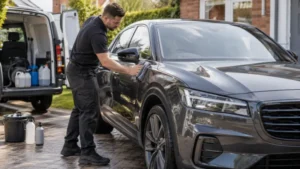
Mobile valeting solves a simple customer problem: convenience.
Instead of asking the customer to travel to a fixed site, the service goes to homes or workplaces.
Different packages can be created for basic cleaning, interior care and regular maintenance.
| Factor | Details |
| Startup cost | Low–medium |
| Difficulty | Medium |
| Revenue model | Per vehicle or package |
| Best suited to | Hands-on founders |
The concept can initially be tested within one local area before additional equipment, vehicles or employees are considered.
10. Digital Products

Digital products include templates, spreadsheets, downloadable planners, educational resources, design assets and specialist industry tools.
Unlike traditional retail, the same digital item may be sold repeatedly without holding physical stock.
| Factor | Details |
| Startup cost | Low |
| Difficulty | Medium |
| Revenue model | Per download or subscription |
| Best suited to | Creative or knowledge-based founders |
The challenge is usually not production alone but finding a sufficiently specific audience willing to pay.
More possibilities can be compared among these low-cost business ideas with high profit potential.
UK Businesses Show That Good Ideas Often Begin With Problems
A business idea does not need to emerge from a formal brainstorming session.
Well-known UK businesses demonstrate several different routes.
Deliveroo grew around the opportunity to make restaurant food more conveniently available through delivery.
what3words developed around the difficulty of communicating precise locations.
Dyson shows another route: improving an existing product rather than inventing an entirely new product category.
Monzo entered the established banking industry but approached the customer experience from a mobile-first perspective.
The lesson is not that a founder should copy these companies.
It is that ideas can come from spotting:
- Frustration.
- Poor customer experience.
- Changing technology.
- Inconvenience.
- Inefficient existing solutions.
A new entrepreneur therefore does not need to create an entirely new market. Improving how an established problem is solved can be enough.
Do New Businesses Need Licences or Insurance?
Legal requirements depend heavily on the business model.
A freelance designer has different obligations from a food business, builder or market trader.
Depending on the activity, a founder may need to investigate:
- Local authority permissions.
- Food registrations.
- Market trading requirements.
- Professional qualifications.
- Public liability insurance.
- Professional indemnity insurance.
- Employers’ liability insurance.
- Vehicle cover.
- Data protection requirements.
- Terms and conditions.
These issues should be considered before substantial money is committed.
A simple-looking business can become expensive if licensing, specialist equipment or insurance is discovered only after the founder has already invested.
What If the First Business Idea Fails?
The possibility of failure should influence how an idea is tested, but it should not prevent experimentation.
A founder can reduce risk by keeping initial fixed costs low, avoiding unnecessary debt, maintaining another income source where practical and setting a maximum amount of money that can be lost during testing.
Consider the difference between testing an idea for £300 and discovering the same weak demand after investing £30,000.
The first is a commercial experiment. The second can become a serious financial problem.
Understanding why some startups succeed while others fail can also help founders pay attention to demand, pricing, cash flow and operating costs before expanding.
Stopping a weak idea is not automatically failure. It can be evidence that the validation process worked.
Found a Business Idea? What to Do Next
Once an idea appears promising, the founder should move from brainstorming to evidence.
1. Define the Customer
Be specific about exactly who is expected to buy.
2. Confirm the Problem
Identify the problem being solved and how customers currently deal with it.
3. Research Competitors
Competition is not automatically bad. It can demonstrate that customers already spend money in the market.
4. Speak to Potential Customers
Ask about existing behaviour rather than simply asking whether the idea sounds good.
5. Test Willingness to Pay
Paid trials, deposits and actual orders provide stronger evidence than compliments or social media engagement.
6. Calculate Costs
Include equipment, software, marketing, insurance, delivery and ongoing operating expenses.
7. Establish Pricing
The price needs to cover the genuine cost of serving the customer.
8. Check Legal Requirements
Investigate registration, licences, insurance and sector-specific rules.
9. Choose a Business Structure
Decide whether the business should initially operate as a sole trader or use another suitable structure.
10. Create a Simple Business Plan
Document the customer, problem, product, pricing, competitors, marketing strategy and financial assumptions.
11. Launch the Smallest Viable Version
Avoid spending months building features customers have never requested.
12. Measure Results
Track enquiries, conversions, revenue, costs, repeat customers and customer feedback.
13. Improve Before Scaling
Marketing cannot permanently rescue an offer that customers do not genuinely value.
Final Thoughts
Thinking “I want to start a business but have no ideas” does not mean entrepreneurship is out of reach.
The founder does not need to discover a revolutionary concept. A better objective is to identify one customer group, understand one meaningful problem and test one affordable solution.
The sequence can be surprisingly simple:
Find a problem → Test a solution → Win a customer → Learn → Improve → Scale carefully.
The business idea becomes valuable only when real customers demonstrate that they are willing to pay for it.
FAQs
What Business Should Someone Start If They Have No Ideas?
Start with existing skills and customer problems. Freelancing, cleaning, tutoring, pet care, gardening and virtual assistance are relatively simple models to investigate.
What Is the Easiest Business to Start in the UK?
Skills-based services are generally among the easiest because they can often be tested without premises, large inventories or employees.
What Business Can Be Started With Almost No Money?
Freelancing, virtual assistance, tutoring and certain digital services can potentially be tested using equipment the founder already owns.
How Much Money Is Needed Before Starting a Business?
There is no universal amount. Some service businesses require very little capital, while retail, food, vehicle-based and premises-based operations may require significantly more.
Can Someone Start a Business While Working Full-Time?
Yes. Testing a side business alongside employment can reduce financial pressure while the founder establishes whether genuine demand exists.
Does Every Business Need to Become a Limited Company?
No. The appropriate structure depends on how the business operates, its risks, finances and tax circumstances.
Does a Small Business Need Insurance?
It depends on the activity. Some insurance may be legally required in particular circumstances, while other policies are optional but commercially sensible.
How Can a Founder Know Whether an Idea Is Good?
The strongest evidence is customer behaviour. Paid trials, orders, deposits, repeat purchases and referrals demonstrate more than positive comments alone.
What Happens If the First Idea Does Not Work?
Review why demand was weak, limit further losses and use the evidence to adjust the offer or test another opportunity.
Does a Good Business Idea Have to Be Original?
No. Many successful businesses improve existing products, focus on underserved customers or provide a more convenient version of a service that already exists.