


Starting a dog walking business can look simple because the initial equipment requirements are relatively small. However, turning occasional dog walking into a reliable business requires much more than buying a few leads and finding local pet owners.
The UK continues to have a large dog-owning population, which creates ongoing demand for walking, puppy visits and other pet-care services. At the same time, the market has become increasingly professional.
Customers can compare independent walkers, local companies and online platforms before choosing who they trust with their pets.
For someone entering the market in 2026, success is therefore likely to depend on professionalism, local reputation, pricing, reliability and the ability to build recurring customers.
How Competitive Is the Dog Walking Market in the UK?
Dog walking can be a highly competitive local business, particularly in cities, commuter areas and neighbourhoods with high levels of pet ownership.
Competition does not necessarily mean the opportunity has disappeared. Dog walking remains highly localised. Most customers want someone who operates close to their home, can provide convenient collection times and is available consistently.
The real level of competition can therefore vary considerably between two neighbouring towns.
Before launching, research:
- Local Dog Walkers: Identify how many established walkers operate nearby.
- Current Prices: Compare solo, group and short-walk prices.
- Customer Reviews: Look at what customers praise and complain about.
- Service Gaps: Check whether competitors avoid evenings, weekends or certain areas.
- Specialist Services: Look for opportunities involving puppies, older dogs or solo walks.
- Availability: An area may have many walkers but still have waiting lists.
Finding an underserved part of the local market can be more valuable than simply competing on price.
Is the Dog Walking Industry Growing or Struggling in 2026?
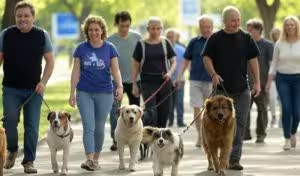
The wider UK pet-care sector remains significant in 2026. Dog ownership continues to support demand for services ranging from walking to grooming, boarding, veterinary care and pet products.
Dog walking businesses are not universally growing, however. The market is becoming more professional and competitive.
Customers increasingly expect walkers to demonstrate reliability, insurance, safe handling practices and good communication. This creates difficulties for poorly organised operators but opportunities for businesses that build a professional reputation.
Rising household costs can also affect discretionary pet spending. Some owners may reduce optional services, while people who work long hours, commute or cannot exercise their dogs adequately may continue treating dog walking as an important regular expense.
Rather than viewing the sector as simply growing or declining, it is better to see it as a maturing market where stronger operators are increasingly separated from casual providers.
Is Starting a Dog Walking Business Still Worth It?
Dog walking can still be worthwhile because it has relatively low barriers to entry compared with businesses requiring premises, large inventories or expensive machinery.
It can work particularly well for someone who already understands dogs and lives in an area with strong local demand.
Possible advantages include:
- Low Initial Overheads: A basic service can be launched without commercial premises.
- Recurring Customers: Many owners book several walks every week.
- Flexible Growth: Owners can begin alone before expanding.
- Additional Services: Puppy visits, pet sitting and related services can increase revenue.
- Local Customer Base: Businesses do not have to compete nationally.
There are disadvantages as well. Travel time, bad weather, cancellations and unpredictable dog behaviour can make the business more demanding than it first appears.
The opportunity is strongest when the owner treats dog walking as a professional service rather than casual paid exercise.
What Are the Chances of Making a Dog Walking Business Sustainable and Profitable?
A dog walking business can become sustainable when enough recurring customers are concentrated within a manageable geographical area.
The number of clients alone does not determine profitability. A walker who spends large amounts of time driving between individual appointments can make less money than somebody serving fewer clients in one neighbourhood.
Profitability is influenced by:
- Number of paid walks completed each day
- Average price per walk
- Solo versus group walking
- Travel distances
- Vehicle expenses
- Insurance costs
- Customer cancellation rates
- Seasonal changes
- Time spent on unpaid administration
- Additional pet-care services
For example, four clients located within the same neighbourhood may be commercially more useful than six clients spread across a large town.
New businesses should therefore monitor revenue per working hour, not simply the number of bookings.
Building recurring weekly schedules is particularly important because predictable bookings make revenue easier to manage.
Why Do Some Dog Walking Businesses Fail?
Dog walking businesses commonly struggle when owners underestimate the business side of the service.
Problems can include taking every customer regardless of location, charging prices that do not cover travel time, accepting incompatible dogs and relying heavily on occasional bookings.
Other reasons include:
- Poor Reliability: Repeated cancellations quickly damage trust.
- Weak Pricing: Low prices can create plenty of work without enough profit.
- Large Service Areas: Excessive travel reduces productive walking time.
- No Customer Policies: Cancellation and payment disputes become difficult to manage.
- Poor Dog Matching: Incompatible group dogs increase safety risks.
- Limited Marketing: Depending entirely on referrals can slow early growth.
- Taking Too Many Dogs: Overloading schedules can reduce service quality.
- No Financial Planning: Tax, insurance, fuel and replacement equipment still need to be funded.
Some businesses also grow too quickly. Adding more dogs is not always beneficial if service quality or safety declines.
What Makes a Dog Walking Business Better Than Its Competitors?
Customers are handing over responsibility for an animal they consider part of their family. Trust can therefore matter more than having the cheapest rate.
A strong business can differentiate itself through reliability and transparency.
Useful competitive advantages include:
- Consistent Walker: Customers know who is caring for their dog.
- Clear Updates: Owners receive confirmation after walks.
- Professional Insurance: Appropriate cover demonstrates responsible operation.
- Pet First Aid Knowledge: This improves preparedness for emergencies.
- Reliable Scheduling: Customers can depend on agreed collection times.
- Individual Dog Assessments: Dogs are matched carefully before group walking.
- Transparent Prices: Customers understand exactly what they are paying for.
- Strong Reviews: Genuine local testimonials help reduce uncertainty for new customers.
Small extras such as walk updates, photographs or notes about behaviour can also improve customer retention when handled professionally.
How Can a Small Dog Walking Startup Compete With Larger Companies?
A small business does not necessarily need to operate like a large pet-care company.
Large businesses often benefit from marketing budgets, technology and wider coverage. Small operators can compete through personal service.
An independent walker can know every dog’s routine, temperament and preferences. Customers may also value dealing directly with the person who actually walks their dog.
Smaller businesses can compete by focusing on:
- A defined local neighbourhood
- Personal relationships with owners
- Flexible appointment arrangements
- Reliable communication
- Specialist solo walks
- Smaller carefully matched groups
- Consistent service quality
- Strong local recommendations
Trying to serve an entire city from the beginning can weaken these advantages. Becoming one of the most trusted walkers within a smaller service area can be a stronger strategy.
How to Start a Dog Walking Business Step by Step?
Research Local Demand and Competitors
Start by searching for walkers within your intended service area. Compare prices, customer reviews, availability and services.
Speak with local dog owners when appropriate to understand what they struggle to find.
Decide What Services You Will Offer
Possible services include:
- Solo dog walks
- Group walks
- Puppy visits
- Senior dog visits
- Feeding visits
- Weekend walks
- Holiday pet visits
Starting with a limited range can make the business easier to manage.
Gain Experience and Complete Relevant Training
Formal qualifications are not generally required simply to provide ordinary dog walking services, but practical competence is essential.
Experience should include understanding canine body language, lead handling, recall, group behaviour and emergency situations.
Pet first aid and canine behaviour training can strengthen professional credibility.
Work Out Start-Up Costs and Set Your Prices
Calculate expenses before deciding what customers should pay.
Potential costs include:
- Insurance
- First aid training
- Leads and equipment
- Waterproof clothing
- Marketing
- Website costs
- Vehicle expenses
- Software
- Accounting expenses
Prices should cover both visible walking time and less obvious work such as travelling, collecting dogs, communicating with clients and administration.
Check Legal Requirements and Arrange Insurance
Check the rules applying in your local area before taking customers.
Local authorities can use Public Spaces Protection Orders to control where dogs can go, where leads are required and how many dogs an individual can walk at once.
Professional walkers should also consider suitable insurance, particularly public liability and cover relating to animals in their care.
Prepare Contracts and Client Policies
Written agreements help reduce misunderstandings.
Include policies covering:
- Payment
- Cancellations
- Emergency veterinary treatment
- Off-lead permission
- Key handling
- Dog behaviour
- Illness
- Extreme weather
- Holidays
Collect emergency contact and veterinary details before the first walk.
Build Your Brand and Start Finding Clients
Choose a professional business name and create consistent contact information.
Marketing can then focus heavily on the local area through referrals, community groups, online search visibility, local partnerships and recommendations from existing customers.
How Much Does It Cost to Start a Dog Walking Business in the UK?
Dog walking can be started relatively cheaply compared with many businesses, but the actual budget depends on how professionally the operation is set up.
Someone walking a handful of nearby dogs may need relatively little equipment. A walker collecting several animals by vehicle may face considerably higher costs.
Common start-up expenses include:
| Expense | Why It May Be Needed |
| Insurance | Financial protection against certain business risks |
| Pet First Aid Course | Emergency preparedness |
| Walking Equipment | Leads, spare equipment and waste bags |
| First Aid Kit | Handling minor emergencies |
| Clothing | Waterproof and high-visibility clothing |
| Marketing | Flyers, signage and digital promotion |
| Website | Local visibility and enquiries |
| Vehicle Setup | Safe collection and transportation |
| Software | Scheduling, payments and invoicing |
Keep unnecessary spending low during the first few months. A professional business does not require an expensive office or elaborate branding before it has customers.
How Much Should You Charge and How Much Profit Can You Make?
There is no single correct UK dog walking price because local income levels, competition and service types vary.
Prices should reflect:
- Walk duration
- Solo or group service
- Travel requirements
- Location
- Number of dogs from one household
- Weekend requirements
- Specialist handling
- Collection time
Avoid setting prices simply by finding the cheapest competitor and charging less.
Suppose a walker charges £15 and completes five paid walks per working day. That would produce £75 in daily gross revenue before expenses and tax.
A group model can increase revenue per hour because several clients pay for the same walking period. However, group walking also brings additional responsibilities around compatibility, transport and control.
Profit should therefore be calculated after deducting genuine business costs rather than treating all customer payments as earnings.
What Legal Requirements, Insurance and Dog Walking Rules Apply in 2026?
Ordinary dog walking does not generally require a single nationwide dog-walker licence. However, several laws and local requirements can affect how the service operates.
Local councils may introduce Public Spaces Protection Orders covering lead requirements, dog-exclusion areas, fouling and the maximum number of dogs permitted with one person.
There is no single national maximum number of dogs that every professional walker can take at once. Local restrictions and insurance conditions may set their own limits.
Anyone responsible for a dog must also keep it under suitable control. Professional walkers using vehicles should ensure dogs are safely restrained during transport.
Particular care is needed around livestock. Changes that came into force in England and Wales in March 2026 strengthened rules relating to livestock worrying and increased potential penalties.
Tax responsibilities also depend on income and individual circumstances. The UK trading allowance can apply to qualifying gross trading income of up to £1,000. Once a business becomes established, accurate financial records become particularly important.
What Should You Check Before Accepting a New Dog?
A meet-and-greet should take place before committing to regular walks.
Ask the owner about:
- Age and breed
- Medical conditions
- Medication
- Recall
- Lead behaviour
- Behaviour around other dogs
- Behaviour around strangers
- Prey drive
- Bite history
- Known fears
- Emergency contacts
- Veterinary practice
- Feeding restrictions
- Permission to provide treats
- Off-lead permission
Not every dog will be suitable for group walks.
Reactive dogs may require solo walks or more specialised handling. A walker should be prepared to decline a client when the dog’s needs exceed their skills or business setup.
How Can You Get Your First Dog Walking Clients?
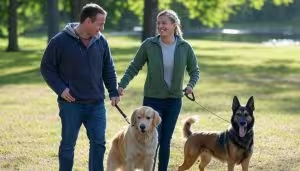
Getting the first few customers is often harder than gaining customers after a reputation has been established.
Focus initially on a small geographical area.
Useful approaches include:
- Ask friends and neighbours for referrals
- Create a professional local online presence
- Encourage genuine customer reviews
- Join relevant community groups where promotion is permitted
- Build relationships with pet shops and groomers
- Introduce the service to local dog owners naturally
- Use flyers in appropriate local locations
- Offer an introductory meet-and-greet
Do not rely entirely on discounts. Customers attracted only by the cheapest price may leave when another low-priced option appears.
Trust, convenience and reliability usually create stronger long-term customers.
How Can You Build Customer Loyalty and Recurring Income?
Recurring bookings are one of the foundations of a sustainable dog walking business.
A customer booking five walks every week is generally more valuable than several irregular customers requiring one-off appointments.
Retention improves when businesses provide:
- Consistent service
- Reliable communication
- Simple payment arrangements
- Clear policies
- Familiar walkers
- Regular updates
- Safe dog handling
- Easy booking
Remember important information about each dog and keep records updated.
Customers who feel confident leaving their dog and home access with a walker are less likely to change provider simply to save a small amount.
What Are the Biggest Challenges of Running a Dog Walking Business?
Dog walking involves more physical and operational work than many new operators expect.
Weather is an obvious challenge. Rain, cold and summer heat can all affect schedules.
Other common difficulties include:
- Last-minute cancellations
- Vehicle expenses
- Unpaid travel time
- Difficult dog behaviour
- Client key management
- Cleaning muddy dogs
- Busy lunchtime schedules
- Illness or injury
- Holiday cover
- Managing several customer expectations
Extreme weather should also be considered from an animal-welfare perspective. Walks may need to be shortened, moved to cooler times or replaced with brief home visits when conditions are unsafe.
Having clear procedures before these situations arise makes the business easier to run.
When Should You Expand or Add New Pet Services?
Growth should usually come after the core dog walking operation has become reliable and consistently booked.
Possible additions include:
- Puppy visits
- Pet sitting
- Cat visits
- Weekend services
- Holiday care
- Additional walking staff
Some activities, particularly boarding or day care, can involve additional licensing and operational requirements. Check the applicable rules before advertising them.
Hiring staff also changes the business significantly because employment, training, insurance and quality control become more important.
Expansion should solve a genuine customer demand rather than simply increase the number of services listed on a website.
Final Thoughts
Starting a dog walking business in the UK in 2026 remains realistic, but the market is more professional than the idea of simply getting paid to walk dogs suggests.
Demand exists, but competition means new businesses need a clear local position. Reliability, safe handling, sensible pricing and recurring customers are likely to matter more than trying to become the largest dog walking service immediately.
Small operators can compete effectively with bigger businesses by providing consistent personal service and becoming highly trusted within a defined neighbourhood.
Treat the business professionally from the beginning. Research your market, understand each dog, protect your finances, establish clear policies and build customer relationships gradually. A well-managed local customer base can provide a stronger foundation than rapid expansion without reliable systems.
Frequently Asked Questions
Is Dog Walking Profitable in the UK?
It can be profitable when prices properly account for walking time, travel, administration and operating costs. Profitability usually improves when recurring clients are located close together and schedules have minimal unpaid gaps.
How Hard Is It to Get Dog Walking Clients?
It depends heavily on location and competition. New walkers may take time to establish trust, but recommendations and positive reviews can make customer acquisition easier once several regular clients have been secured.
Can a Small Dog Walking Business Compete With Bigger Companies?
Yes. Small walkers can compete through personal service, consistent carers, local knowledge, flexibility and stronger owner relationships rather than attempting to match larger companies on scale.
Can You Start a Dog Walking Business With Little Money?
Yes. Dog walking has relatively low entry costs if you begin locally without expensive premises or vehicles. However, appropriate insurance, equipment and basic professional systems should still be included in the initial budget.
Do You Need Qualifications to Become a Dog Walker?
There is generally no mandatory national dog walking qualification for ordinary walking services. Practical dog-handling ability is essential, while canine behaviour and pet first aid training can improve competence and customer confidence.
How Many Dogs Can You Legally Walk at Once?
There is no single UK-wide number applying in every location. Local authorities can impose limits through local rules, and insurers may also set conditions. Walkers should check the requirements where they operate.
Can You Start a Dog Walking Business Without a Car?
Yes. A car is not essential when customers live within a compact service area and walks can begin directly from their homes. Transport becomes more useful when serving wider areas or operating group collection routes.