

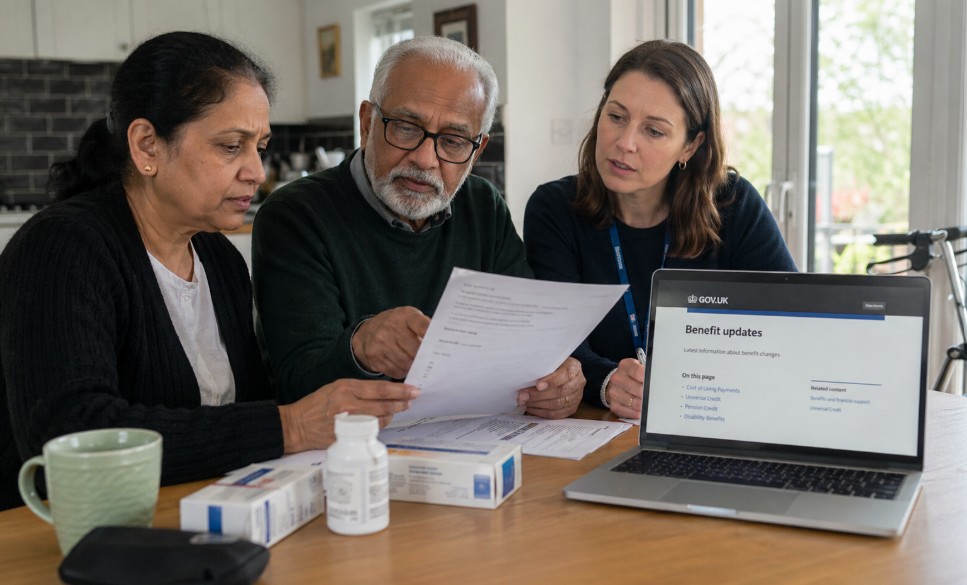
The latest update that DWP confirms 177 medical conditions qualifying for new benefit rates has significant implications for millions of people across the UK.
In simple terms, this means more individuals may now be eligible for Personal Independence Payment (PIP), with enhanced weekly support reaching up to £114.60 for daily living needs.
This change is not just about adding conditions, it reflects how health impacts everyday life and the rising cost of living.
Key highlights:
- Over 3.7 million people currently receive PIP in the UK
- The list now includes 177 medical conditions, with 92 newly recognised
- Payments can reach up to £194.60 per week depending on eligibility
- Qualification depends on how your condition affects daily life, not the diagnosis alone
Understanding how these changes apply to you could make a meaningful difference to your financial support.
What Does “DWP Confirms 177 Medical Conditions Qualifying for New Benefit Rates” Mean for You?

When the Department for Work and Pensions (DWP) confirmed this updated list, it wasn’t simply publishing medical categories, it was reinforcing a broader approach to disability support.
The focus is on how a condition impacts your ability to live independently, rather than the condition itself.
This announcement ties directly to Personal Independence Payment (PIP), a benefit designed to support individuals dealing with long-term physical or mental health challenges.
The inclusion of 92 additional conditions signals a shift towards recognising a wider range of health issues, including less visible or fluctuating conditions.
A DWP spokesperson explained:
“Our priority is ensuring that support reflects the real challenges people face in their daily lives, not just their medical diagnosis.”
For you, this means that even if your condition was previously overlooked, there may now be a stronger case for eligibility under the revised framework.
What Is Personal Independence Payment (PIP) and How Does It Work?
Personal Independence Payment is a tax-free, non-means-tested benefit aimed at helping people manage the extra costs associated with long-term health conditions or disabilities. It is available regardless of your employment status, income, or savings.
PIP is divided into two key components: daily living and mobility. You may qualify for one or both depending on how your condition affects your routine.
Understanding the Two Core Components
The daily living component focuses on essential everyday activities such as preparing meals, managing medication, maintaining personal hygiene, and communicating effectively.
The mobility component, on the other hand, evaluates your ability to move around safely and plan or follow journeys without assistance.
These components are assessed separately, meaning you could receive different rates for each depending on your specific circumstances.
Who Is Eligible for PIP?
Eligibility for PIP is not determined by the name of your condition alone. Instead, the DWP assesses how consistently your condition affects your ability to perform routine activities safely, reliably, and independently. This ensures a more personalised approach to support.
A senior policy advisor noted:
“PIP is about functionality. Two people with the same condition can receive different outcomes based on how it impacts their daily lives.”
This approach ensures that support is tailored to individual needs rather than generalised medical labels, making the system more fair and practical.
How Much Could You Receive Under the New DWP Benefit Rates in 2026?

The 2026 update introduced a 3.8% increase in PIP payments, reflecting inflation and rising living costs. Depending on your assessment, you could receive either standard or enhanced rates.
PIP Weekly Payment Rates (2026):
| Component | Standard Rate | Enhanced Rate |
| Daily Living | £76.70 | £114.60 |
| Mobility | £30.30 | £80.00 |
If you qualify for both enhanced components, your total weekly payment could reach £194.60, equivalent to £778.40 every four weeks.
Monthly Payment Breakdown:
| Payment Type | Weekly Amount | Four-Week Total |
| Standard (Both Components) | £107.00 | £428.00 |
| Enhanced (Both Components) | £194.60 | £778.40 |
These updated figures highlight how the new benefit rates can provide meaningful financial relief, particularly for those facing ongoing healthcare and mobility expenses.
Which Types of Medical Conditions Qualify for the New DWP Benefit Rates?
The list of 177 conditions covers a wide spectrum of physical and mental health issues. Rather than presenting a long, overwhelming list, it’s more useful to understand how these conditions are grouped. Below is a numbered and simplified version of the qualifying conditions:
Full List of 177 Medical Conditions
- Anaemia
- Haemolytic disorders
- Metabolic red cell disorders
- Clotting disorders
- Platelet disorders
- Blood disorders
- Viral diseases
- Bacterial diseases
- Protozoal diseases
- Other infectious diseases
- Cancers of the gastrointestinal tract
- Cancers of the respiratory tract
- Cancers of the genitourinary tract
- Cancers of the haematological system
- Cancers of the skin
- Cancer of the brain and spinal cord
- Cancers of bone
- Breast cancer
- Unknown primary cancers
- Cancers of the adrenal gland
- Other cancers
- Other sarcomas
- Hyperlipidaemia
- Inborn errors of metabolism
- Amyloidosis
- Porphyria
- Obesity
- Other metabolic diseases
- Personality disorder
- Specific learning disorder
- Stress reactions
- Anxiety disorders
- Obsessive compulsive disorder
- Mixed anxiety and depressive disorders
- Somatoform and dissociative disorders
- Mood disorders
- Psychotic disorders
- Cognitive disorders
- Eating disorders
- Substance misuse disorders
- Factitious disorder
- Learning disability (global)
- Autistic spectrum disorders
- Hyperkinetic disorder (ADHD)
- Conduct disorder
- Enuresis
- Faecal soiling (encopresis)
- Other psychiatric disorders of childhood
- Cerebrovascular disease
- Epilepsy
- Non-epileptic disturbance of consciousness
- Movement disorders
- Multiple sclerosis
- Benign tumours
- Hydrocephalus
- Headache disorders
- Head injury
- Spinal cord compression
- Degenerative neurological diseases
- Cerebral palsy
- Spina bifida
- Ataxia
- Neuropathy
- Peripheral nerve injury
- Muscle diseases
- Muscular dystrophy
- Neurological infections
- Other neurological disorders
- Diseases of conjunctiva, cornea, eyelids and lacrimal apparatus
- Uveitis
- Glaucoma
- Visual injuries
- Vitreous disease
- Diseases of the retina and optic nerve
- Cataract
- Refractive errors
- Eye movement disorders
- Visual field defects
- Other vision disorders
- Conductive hearing loss
- Sensorineural hearing loss
- Mixed hearing loss
- Other hearing and balance disorders
- Aneurysm
- Cardiac arrhythmias
- Cardiac failure
- Cardiomyopathy
- Congenital heart disease
- Heart transplantation
- Hypertension
- Ischaemic heart disease
- Pericarditis
- Valve disease
- Peripheral arterial disease
- Peripheral venous disease
- Other cardiovascular diseases
- Diseases of the oesophagus, stomach and duodenum
- Diseases of the small bowel
- Inflammatory bowel disease
- Diseases of the colon
- Diseases of the rectum and anus
- Irritable bowel syndrome
- Benign tumours of the gastrointestinal tract
- Abdominal hernias
- Congenital GI disorders
- Other gastrointestinal diseases
- Chronic hepatitis
- Cirrhosis
- Liver failure
- Liver transplantation
- Gallbladder and biliary diseases
- Pancreatic diseases
- Infections and parasites
- Skin rashes and inflammatory conditions
- Bullous diseases
- Blood vessel and lymphatic disorders
- Collagen and connective tissue diseases
- Burns
- Other skin diseases
- Osteoarthritis
- Chronic pain syndromes
- Inflammatory arthritis
- Crystal deposition disorders
- Osteonecrosis
- Metabolic and endocrine disorders
- Genetic disorders and malformations
- Benign bone tumours
- Fracture complications
- General musculoskeletal diseases
- Shoulder disorders
- Elbow disorders
- Wrist and hand disorders
- Neck disorders
- Non-specific back pain
- Specific back pain
- Hip disorders
- Knee disorders
- Ankle and foot disorders
- Amputations
- Injuries and dislocations
- Regional musculoskeletal disorders
- Systemic lupus erythematosus (SLE)
- Antiphospholipid syndrome
- Systemic sclerosis
- Sjogren’s syndrome
- Vasculitis
- Other autoimmune diseases
- Urinary incontinence
- Kidney disease
- Renal failure
- Bladder and urinary tract diseases
- Female reproductive system disorders
- Other genitourinary diseases
- Hypothalamic and pituitary diseases
- Pancreatic endocrine disorders
- Thyroid disease
- Adrenal disease
- Parathyroid disease
- Other endocrine diseases
- Upper respiratory tract diseases
- Chronic obstructive pulmonary disease (COPD)
- Bronchiectasis
- Cystic fibrosis
- Asthma
- Pulmonary fibrosis
- Pneumoconiosis
- Granulomatous lung disease
- Pleural disease
- Lung transplantation
- Heart and lung transplantation
- Pulmonary embolism
- Respiratory infections
- Lower respiratory tract diseases
- Multisystem disorders
- Extremes of age conditions
- Hypersensitivity diseases
- Immune system disorders
What matters most is not the category itself, but how the condition affects your daily functioning. For instance, two individuals with arthritis may experience vastly different levels of difficulty in mobility or self-care.
This broader classification ensures that the system remains inclusive while still focusing on real-life impact.
Do You Automatically Qualify If Your Condition Is on the DWP List?
The short answer is no. Being diagnosed with one of the 177 conditions does not guarantee eligibility for PIP.
The DWP uses a points-based system to evaluate how your condition affects specific activities. These include tasks like cooking, dressing, communicating, and moving around. You must demonstrate that your condition significantly impacts these areas on a regular basis.
Many applicants assume that inclusion on the list is enough, but the assessment goes deeper. It considers whether you can perform tasks safely, repeatedly, and within a reasonable time.
Understanding this distinction is essential, as it helps you prepare a stronger application and avoid common misunderstandings.
How Does the DWP Assess Your Eligibility for PIP?

The assessment process is designed to evaluate your daily challenges in a structured and evidence-based manner.
Step-by-Step PIP Assessment Process
- Initial claim via phone
- Completion of the PIP2 form
- Submission of medical evidence
- Assessment with a healthcare professional
Each stage plays an important role in building a complete picture of your situation. The PIP2 form, in particular, is critical as it allows you to explain in detail how your condition affects your daily activities.
What Criteria Are Used During Evaluation?
The DWP assesses your ability to carry out daily living and mobility activities, such as preparing food, managing personal care, communicating, and moving around.
What matters most is whether you can perform these tasks safely, repeatedly, and within a reasonable time.
A healthcare assessor explained:
“We look beyond symptoms and focus on how consistently someone can manage everyday activities.”
This approach ensures that decisions are based on practical limitations rather than theoretical diagnoses, making the assessment more accurate and personalised.
What Evidence Should You Provide to Support Your PIP Claim?
Providing strong evidence can significantly improve your chances of a successful claim. The DWP relies on detailed documentation to understand your situation.
Key types of evidence include:
- Medical reports from specialists
- GP letters outlining your condition
- Care plans or support needs
- Personal statements describing daily challenges
The more clearly you can demonstrate the impact of your condition, the more accurately your claim can be assessed. This is where many applications succeed or fail.
How Can You Apply for the £114 Weekly DWP Payment Successfully?
Applying for PIP involves several steps, and careful attention to detail is crucial throughout the process. A well-prepared application can make a significant difference in the outcome.
Application Process Explained
The process begins by contacting the DWP via phone. This initial contact date is important because it can be used to backdate your payments if your claim is approved.
After this, you will receive the PIP2 form, which requires detailed information about how your condition affects your daily life.
Taking time to complete this form thoroughly and accurately is essential, as it forms the foundation of your entire application.
Common Mistakes to Avoid When Applying
- Providing incomplete or vague answers
- Failing to include supporting evidence
- Underestimating the impact of your condition
I once spoke to a claimant named Sarah while researching this topic, and her experience highlighted how critical detail can be.
She told me:
“I initially downplayed my struggles because I didn’t want to seem dramatic. After reapplying with more detail, I finally got the support I needed.”
Her story reflects a common issue, many people unintentionally weaken their applications by not fully explaining their challenges. Learning from such real experiences can make a significant difference in your own claim.
Why Has the DWP Updated the List of 177 Medical Conditions?

The Department for Work and Pensions has expanded the list to reflect changing economic conditions and a better understanding of health needs.
Rising inflation and the ongoing cost of living crisis have increased financial pressure on many households, making support more important than ever.
At the same time, awareness of mental health conditions and long-term illnesses has grown, prompting a more inclusive approach.
Several key factors behind the update include:
- Rising living costs and economic pressures
- Greater recognition of mental health conditions
- An increase in the number of benefit claimants
With over 3.9 million active Personal Independence Payment cases in 2026, the system has had to adapt. The addition of 92 new conditions ensures support reaches those who need it most.
What Should You Do Next If You Think You Qualify for DWP Benefits?
If you believe your condition may qualify under the updated criteria, the next step is to take action. Start by reviewing how your condition affects your daily life and gathering relevant evidence.
It may also be helpful to seek guidance from support organisations or advisors who specialise in benefit applications. Taking a structured and informed approach can significantly improve your chances of success.
Ultimately, understanding the full scope of DWP confirms 177 medical conditions qualifying for new benefit rates can help you make better decisions and access the support available to you.
Conclusion
The update that DWP confirms 177 medical conditions qualifying for new benefit rates highlights a more inclusive and practical approach to financial support in the UK.
By focusing on how conditions affect daily life, PIP ensures fairer assessments and targeted assistance.
Understanding the criteria, application process, and evidence requirements can help you take informed steps towards securing the support you may be entitled to.
Frequently Asked Questions
Can you receive PIP if you have a temporary medical condition?
PIP is generally intended for long-term conditions expected to last at least 12 months. Temporary conditions may not qualify unless they have a prolonged impact.
Is PIP affected by your income or savings in the UK?
No, PIP is a non-means-tested benefit, meaning your income and savings do not affect your eligibility.
How long does a PIP award usually last?
Awards can vary from a few years to ongoing, depending on the nature and severity of your condition.
Can someone help you fill in the PIP application form?
Yes, you can seek help from family members, carers, or advisory organisations to complete your application accurately.
What happens if your health condition worsens after approval?
You can report a change in circumstances to the DWP, which may lead to a reassessment and potentially higher payments.
Are reassessments mandatory for all PIP claimants?
Most claimants will undergo periodic reassessments, although some long-term cases may have extended review periods.
Can you receive other benefits alongside PIP?
Yes, PIP can be claimed alongside other benefits such as Universal Credit or Employment and Support Allowance.