
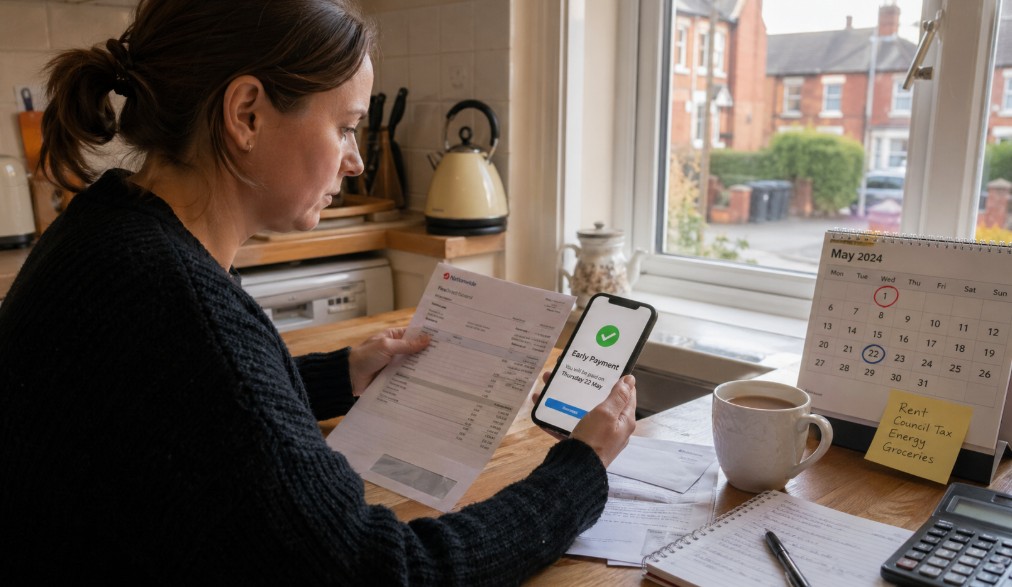
The DWP announced early payment dates due to May bank holidays, meaning millions of UK claimants will receive their benefits earlier than usual in May 2026.
If your payment is due on Monday 4 May or Monday 25 May, it will instead arrive on the previous Friday.
While this ensures you receive your money on time, it also means you may need to stretch your budget for longer until your next payment.
Key things you should know:
- Payments due 4 May → paid 1 May 2026
- Payments due 25 May → paid 22 May 2026
- Applies to Universal Credit, State Pension, PIP and more
- Early payment does not mean extra money
- Normal schedule resumes after the bank holidays
Understanding these changes is essential to avoid financial stress and manage your payments effectively.
When Will DWP Payments Be Made Early Due to the May Bank Holidays in 2026?
If you are expecting a benefit payment in early or late May, the DWP has confirmed that payment dates will shift due to bank holidays. This happens every year, but it often catches claimants off guard.
Payment schedule overview:
| Original Payment Date | New Payment Date | Reason |
| Monday 4 May 2026 | Friday 1 May 2026 | Early May Bank Holiday |
| Monday 25 May 2026 | Friday 22 May 2026 | Spring Bank Holiday |
These changes apply automatically, so you do not need to take any action. However, you should be aware that receiving money earlier means a longer gap before your next payment. This simple timing shift can have a real impact on your budgeting cycle.
Why Has the DWP Announced Early Payment Dates for May Bank Holidays?

The reason behind the DWP announced early payment dates due to May bank holidays is straightforward.
Government departments, including the DWP, and banking institutions do not operate on public holidays. As a result, payments cannot be processed on those days.
A DWP spokesperson explained:
“Bank holidays affect when payments can be processed, so we ensure claimants receive their money on the last working day beforehand.”
Because banks are closed and payment systems are inactive, the only practical solution is to move payments forward. This ensures that you still receive your funds on time, rather than experiencing a delay after the bank holiday.
Another official added:
“Knowing when payments will arrive helps households manage their budgets, especially around busy bank holiday periods.”
This highlights an important point, while the system is designed to prevent disruption, it still requires you to stay informed and plan your spending carefully. Awareness is key to avoiding unnecessary financial pressure.
Which DWP Benefits Will Be Affected by the May 2026 Bank Holiday Changes?
The May 2026 bank holidays will cause some benefit payments to be made earlier than usual. This is a standard process by the Department for Work and Pensions (DWP) and HM Revenue and Customs (HMRC) to ensure payments are not delayed.
If your payment falls on a bank holiday, it will usually be paid on the previous working day. This is not an extra payment, just an earlier one. Understanding this can help you plan your finances more effectively.
Full List of Affected Benefits and Payments
A wide range of benefits will be affected by the May bank holiday schedule. These include both DWP and HMRC payments, covering millions of households across the UK.
- Universal Credit
- State Pension
- Personal Independence Payment (PIP)
- Attendance Allowance
- Carer’s Allowance
- Employment and Support Allowance (ESA)
- Jobseeker’s Allowance (JSA)
- Income Support
- Pension Credit
HMRC and Other Government Payments Impacted
- Child Benefit
- Guardian’s Allowance
These payments will follow the same early schedule if they fall on the affected dates. If your payment date does not fall on a bank holiday, it will be paid as normal. This distinction is important to avoid unnecessary confusion.
Will Universal Credit Payments Be Paid Early in May 2026?
Yes, Universal Credit payments will be made early if your scheduled payment date falls on either 4 May or 25 May. Since Universal Credit is typically paid monthly, this shift can be particularly noticeable.
Unlike weekly benefits, monthly payments require careful budgeting. If you receive your Universal Credit early, you will need to make that payment last longer until your next scheduled date.
For example, if your payment is brought forward by three days, you are effectively stretching your budget across a longer period. This can be challenging, especially during a time when household expenses may already be high.
How Will State Pension Payments Change During the May Bank Holidays?

State Pension payments follow a structured schedule based on your National Insurance number. However, bank holidays can disrupt this pattern, particularly for those paid on Mondays.
Payment pattern overview:
| NI Number Ending | Normal Payment Day |
| 00–19 | Monday |
| 20–39 | Tuesday |
| 40–59 | Wednesday |
| 60–79 | Thursday |
| 80–99 | Friday |
If your payment falls on a Monday (00–19), it will be affected by both May bank holidays. This means you may receive your pension early more than once in the same month.
A government representative stated:
“State Pension payments will follow the same early schedule, ensuring pensioners are not left waiting over bank holiday periods.”
This ensures consistency but also highlights the importance of planning ahead, especially for pensioners relying on fixed incomes.
Who Will Be Most Affected by the Early DWP Payment Schedule?
While the early payment schedule announced by the Department for Work and Pensions (DWP) due to the May bank holidays applies to many claimants, the level of impact varies depending on when and how you usually receive your benefits.
Some people may notice only a small change, while others could experience a more noticeable disruption to their usual budgeting routine, especially if their regular payment day falls on a bank holiday.
In general, those with fixed payment days that land on bank holidays will be most affected. In May 2026, both bank holidays fall on Mondays, meaning claimants with Monday payment schedules are likely to receive their money earlier than usual, potentially more than once within the same month.
National Insurance Number Payment Patterns
Claimants whose payments are scheduled for Mondays are among the most affected. This includes many State Pension recipients, particularly those whose National Insurance numbers end between 00 and 19.
Because both May bank holidays occur on a Monday, these individuals may receive multiple early payments within a short period, which can impact budgeting if not planned carefully.
Weekly vs Four-Weekly Payment Impact
The impact also depends on your payment frequency:
- Weekly payments: Claimants may notice multiple early payments within the same month if their usual payment day coincides with both bank holidays.
- Four-weekly payments: Payments may arrive earlier, resulting in a longer gap before the next payment, meaning funds need to last longer than usual.
Not all claimants will experience the changes in the same way. Understanding your payment schedule and frequency is essential to avoid surprises and manage your finances effectively during the May 2026 bank holiday period.
What Should You Do If Your Payment Date Falls on a Bank Holiday?

If your payment is due on a bank holiday, the most important step is to stay informed and prepared. You do not need to contact the DWP or HMRC, as changes are applied automatically.
Practical steps to follow:
- Check your bank account regularly
- Review your Universal Credit journal
- Confirm details in your award notice
- Plan your spending ahead of time
Taking these steps ensures you remain in control of your finances and avoid unnecessary stress. Being proactive is far more effective than reacting after a problem arises.
How Can Early Benefit Payments Affect Your Monthly Budget?
Early payments can create a false sense of financial security. Receiving money sooner may feel beneficial, but it actually extends the time until your next payment.
From my experience analysing claimant behaviour, this is where most financial pressure occurs.
I once spoke to a Universal Credit claimant named Sarah, who shared her experience:
“When my payment came early, I thought it was a bonus at first. But by the end of the month, I realised I had to stretch it for nearly a week longer. That’s when it became difficult.”
She explained how small expenses added up quickly, leaving her short before the next payment arrived. Her situation highlights a common misunderstanding, early payments are not additional income.
This real-world example shows why budgeting becomes crucial during bank holiday periods. Adjusting your spending habits, even slightly, can make a significant difference.
What Happens If Your DWP or HMRC Payment Does Not Arrive on Time?

If your payment does not arrive as expected, there are clear steps you should follow before raising concerns.
First, check your bank account and ensure there are no processing delays. Payments can sometimes take time to appear, depending on your bank.
Next, verify your payment schedule through your Universal Credit account or official correspondence. Mistakes are rare but possible.
If the issue persists, contact the relevant authority:
- DWP for benefits and pensions
- HMRC for Child Benefit and related payments
It is important to avoid contacting them immediately without checking the basics, as most issues are resolved quickly at the bank level.
What Should Claimants Remember About DWP Early Payment Dates in May 2026?
The main takeaway from the early payment dates announced by the Department for Work and Pensions (DWP) is simple: your payment amount stays the same, only the timing changes.
These adjustments are designed to ensure you receive your benefits on time during the May bank holidays.
While early payments are helpful, they can affect your budgeting if not managed carefully. Keeping track of your payment dates and planning ahead can prevent financial pressure later in the month.
Key Points to Remember
- Early payments are not extra payments, they are simply paid in advance
- Your usual payment schedule will return after the bank holiday period
- Budget carefully to ensure your money lasts until the next payment
- Check your payment date in advance to avoid confusion
- Plan ahead for any bills or expenses that fall later in the month
By staying informed and adjusting your budget accordingly, you can manage these temporary changes confidently and avoid unnecessary financial stress.
Conclusion
The DWP announced early payment dates due to May bank holidays ensures you receive your benefits on time, but it requires careful planning.
While payments arriving early can be helpful, they also mean your money must last longer until the next cycle. By understanding the new dates, checking your payment schedule, and managing your budget wisely, you can avoid unnecessary stress.
Staying informed and prepared will help you navigate these temporary changes smoothly and maintain financial stability throughout May.
Frequently Asked Questions
How do bank holidays affect benefit payment schedules in the UK?
Bank holidays delay processing, so payments are issued on the previous working day instead.
Can early DWP payments cause delays in the next payment cycle?
No, the next payment will still follow your normal schedule, but the gap may feel longer.
Do early payments apply to all claimants automatically?
Yes, if your payment falls on a bank holiday, it will be adjusted automatically.
How can you check your exact Universal Credit payment date?
You can log into your Universal Credit account and view your payment schedule in your journal.
Are Child Benefit payments included in early May payments?
Yes, Child Benefit is managed by HMRC and follows the same early payment rules.
What is the best way to manage money when payments arrive early?
Create a budget that spreads your funds across the extended period until your next payment.
Will payment dates change again later in 2026?
Yes, future bank holidays may also affect payment schedules depending on the calendar.