

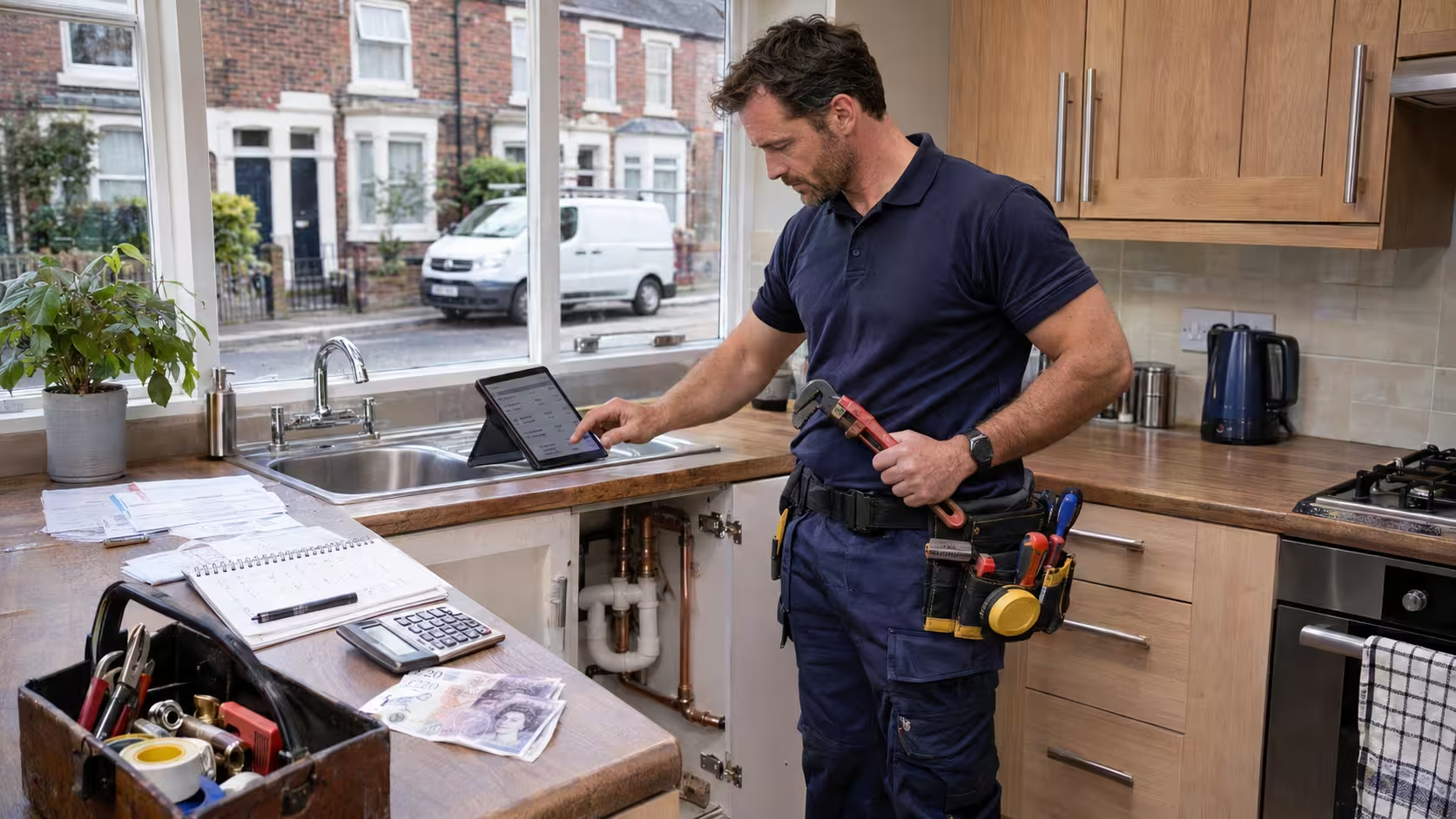
The self-employed plumber hourly rate in the UK typically ranges from £40 to £60 in 2026, with an average charge of approximately £50 per hour for standard domestic plumbing work.
Experienced plumbers, emergency specialists and professionals operating in London can charge considerably more, depending on the work involveHowever, there is an important financial difference between what a self-employed plumber charges customers and what they actually earn.
A plumber charging £50 an hour does not necessarily take home £50. Running a plumbing business involves vehicle expenses, fuel, specialist tools, insurance, materials, advertising, bookkeeping, unpaid travel and tax obligations.
We analysed published UK trade pricing benchmarks, compared regional charging patterns and examined the financial considerations involved in operating a self-employed plumbing business. Our review focuses on sustainable business pricing rather than simply multiplying an hourly rate by a standard working week.
For anyone considering self-employment, understanding these figures is particularly important because higher hourly charges do not automatically translate into higher personal income.
What Is the Average Self Employed Plumber Hourly Rate in the UK in 2026?
A typical self-employed plumber charges approximately £40–£60 per hour for routine work during normal business hours. Rates vary depending on experience, location, specialist qualifications and whether the service involves an emergency.
The average market benchmark of £50 per hour is a useful starting point, but not a fixed national tariff.
| Plumber category | Hourly rate | Indicative daily charge |
| Newly established qualified plumber | £35–£45 | £280–£360 |
| General self-employed plumber | £40–£60 | £320–£480 |
| Experienced independent plumber | £50–£75 | £350–£550 |
| Specialist plumbing contractor | £60–£90+ | £450–£650+ |
| London-based specialist | £65–£110+ | £450–£750+ |
| Emergency plumber | £75–£150 | Usually charged per call-out |
These are indicative market and pricing ranges, not official regulated rates. Daily charges are independent pricing estimates rather than guaranteed multiples of eight hourly charges.
The strongest difference between employed and self-employed plumbing work is that independent professionals control their charges but also carry their own financial risks.
For example, a plumber charging £50 per hour for six billable hours generates £300 in labour revenue. Yet the day may involve another two hours travelling, collecting materials, preparing quotations and completing administration.
This is why our analysis places greater importance on billable hours and operating expenses than on the advertised hourly rate alone.
The same distinction applies to related skilled trades, including the self-employed electrician hourly rate, where independent contractors must recover business expenses through their customer charges.
How Do Self-Employed Plumber Hourly Rates Vary Across UK Regions?
Location is one of the strongest influences on plumber pricing.
A plumbing business operating in central London may face higher parking charges, congestion-related costs, insurance premiums and travel delays than a similar business in a smaller town.
However, lower regional prices do not always mean lower profitability. Businesses with shorter travel distances, cheaper premises or reliable repeat customers may retain more income despite charging less.
Our review suggests the following indicative regional pricing bands for standard planned plumbing work.
| UK region | Indicative hourly rate | Indicative daily rate |
| Greater London | £65–£100 | £450–£700 |
| South East England | £55–£85 | £400–£600 |
| South West England | £45–£70 | £320–£500 |
| West Midlands | £40–£65 | £300–£450 |
| East Midlands | £40–£65 | £300–£450 |
| North West England | £40–£65 | £300–£450 |
| North East England | £35–£60 | £280–£420 |
| Yorkshire and Humber | £40–£65 | £300–£450 |
| Scotland | £40–£70 | £300–£500 |
| Wales | £35–£60 | £280–£420 |
| Northern Ireland | £35–£60 | £280–£420 |
These ranges are broad editorial planning estimates informed by trade-pricing guides. They should not be presented as statistically measured regional averages.
Why Are Plumbers More Expensive in London?
London plumbers can command higher charges because of several operating conditions.
Parking restrictions, congestion, expensive commercial vehicles, customer demand and longer journey times can increase the cost of delivering even a relatively simple repair.
Consider two plumbers undertaking the same £100 repair.
The first works locally and spends 15 minutes travelling. The second spends an hour travelling across London and pays for parking.
Although the customer receives a similar service, the second plumber may need a higher minimum charge to maintain the same level of profitability.
Are Rural Plumbers Always Cheaper?
Not necessarily.
Rural plumbers may face lower overheads but travel considerably longer distances between customers.
A plumber travelling 40 miles between appointments has to recover additional fuel and vehicle expenses while losing time that could otherwise be billed.
This is why a local call-out charge can sometimes matter more than the hourly rate.
How Much Does a Self-Employed Plumber Charge Per Day?
A typical plumber day rate in the UK ranges from approximately £320 to £480, with £400 representing a commonly published average.
Daily pricing is often preferred for bathroom installations, plumbing renovations and projects requiring several consecutive hours.
However, an eight-hour booking does not always mean eight fully productive or chargeable hours.
| Daily charge | 5 billable hours | 6 billable hours | 8 billable hours |
| £300 | £60/hour | £50/hour | £37.50/hour |
| £350 | £70/hour | £58.33/hour | £43.75/hour |
| £400 | £80/hour | £66.67/hour | £50/hour |
| £450 | £90/hour | £75/hour | £56.25/hour |
| £500 | £100/hour | £83.33/hour | £62.50/hour |
The table demonstrates how the effective hourly revenue changes according to the number of hours that can actually be billed.
For a self-employed plumber working on a larger installation, a day rate can offer predictable income and reduce the administrative burden of billing individual hours.
Nevertheless, the quote should define the expected working day, materials, exclusions and circumstances that could create additional charges.
A similar commercial calculation applies to self-employed carpenters, who frequently price complete projects rather than charge customers for every individual hour.
How Much Can a Self-Employed Plumber Earn Per Year in the UK?
Annual earnings depend on three variables: the hourly charge, the number of billable hours and the cost of operating the business.
A plumber charging £50 per hour will not generate £104,000 simply by working 40 hours a week for 52 weeks.
That calculation assumes every hour is billable, there are no holidays and no time is spent acquiring customers or managing the business.
A more realistic financial model separates working hours from customer-billable hours.
For our example, we assume:
- 44 working weeks annually.
- 25 billable hours per week.
- 1,100 annual billable hours.
- £12,000 in annual operating expenses.
- Labour-only revenue, excluding VAT and materials.
Estimated Annual Plumbing Business Earnings
| Hourly charge | Annual revenue | Business expenses | Profit before personal tax |
| £40 | £44,000 | £12,000 | £32,000 |
| £50 | £55,000 | £12,000 | £43,000 |
| £65 | £71,500 | £12,000 | £59,500 |
These scenarios are financial models, not survey results or guaranteed industry earnings.
Our calculations show that increasing the hourly charge from £40 to £50 represents a 25% price increase and raises annual revenue by £11,000 when billable hours remain unchanged.
However, achieving a higher rate also depends on customer demand and the plumber’s ability to secure sufficient work.
An experienced plumber charging £65 per hour with fewer bookings may generate less annual revenue than someone charging £50 with a consistent schedule.
For business owners, maintaining a profitable combination of price, demand and efficiency is more important than maximising the advertised hourly charge.
How Much Does a Self-Employed Plumber Take Home After Tax?
Take-home income is a major consideration for anyone leaving employment to start a plumbing business.
Self-employed plumbers generally pay Income Tax and National Insurance based on taxable profits rather than total sales revenue.
For the 2026–27 tax year, the standard Personal Allowance is £12,570.
In England, Wales and Northern Ireland, the main Income Tax rates for non-savings income are:
| Taxable income band | Rate |
| Personal Allowance, normally up to £12,570 | 0% |
| Basic-rate band | 20% |
| Higher-rate band | 40% |
| Additional-rate band | 45% |
Scotland has different Income Tax bands and rates.
For self-employed individuals, Class 4 National Insurance generally applies at:
- 6% on profits above £12,570 up to £50,270.
- 2% on profits above £50,270.
Class 2 contributions are generally treated as paid when profits meet the relevant threshold. Voluntary payments may be appropriate in some lower-profit circumstances.
Example: A Plumber Charging £50 Per Hour
Consider an established sole-trader plumber generating £55,000 annually from labour.
| Financial calculation | Amount |
| Annual turnover | £55,000 |
| Allowable business expenses | £12,000 |
| Taxable trading profit | £43,000 |
| Income Tax | £6,086 |
| Class 4 National Insurance | £1,825.80 |
| Total estimated personal tax and NI | £7,911.80 |
| Estimated annual take-home income | £35,088.20 |
| Monthly equivalent | £2,924.02 |
Under these assumptions, the plumber retains approximately 63.8% of total turnover after business expenses, Income Tax and Class 4 National Insurance.
Business expenses consume 21.8% of turnover, while the illustrated personal tax and NI bill represents approximately 18.4% of the resulting trading profit.
How Does Take-Home Pay Change at Different Hourly Rates?
| Hourly rate | Annual turnover | Profit before tax | Estimated take-home |
| £40 | £44,000 | £32,000 | £26,948 |
| £50 | £55,000 | £43,000 | £35,088 |
| £65 | £71,500 | £59,500 | £45,821 |
The figures use the same 1,100 billable hours, £12,000 expenses and 2026–27 tax assumptions.
They assume a sole trader in England, Wales or Northern Ireland with no other taxable income, a full Personal Allowance and no additional tax adjustments.
They exclude pension contributions, student loans and payments on account. They are not limited-company salary or dividend calculations.
A plumber increasing charges from £40 to £50 per hour could increase modelled after-tax income by approximately 30.2%, provided the additional price does not reduce booked work.
This also explains why professional plumbers must consider their personal finances, long-term pension savings and business reserves when setting prices.
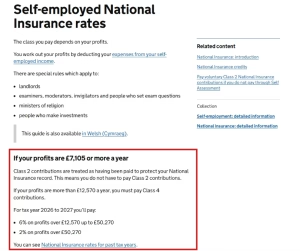
HMRC’s official 2026–27 Class 4 National Insurance rates for self-employed workers.
What Business Expenses Reduce a Self-Employed Plumber’s Earnings?
Running a plumbing business involves considerably more than purchasing pipes and fittings.
A self-employed plumber must finance the equipment, transport, insurance and administrative systems required to deliver services professionally.
We created the following illustrative annual operating budget to demonstrate how these expenses affect profitability.
| Business expense | Example annual cost |
| Van lease and maintenance | £3,200 |
| Fuel and parking | £2,200 |
| Tools and equipment | £1,500 |
| Business and vehicle insurance | £1,300 |
| Marketing and customer acquisition | £900 |
| Accounting and software | £1,000 |
| Phone and internet | £500 |
| Training and protective equipment | £600 |
| Banking, subscriptions and miscellaneous expenses | £800 |
| Total | £12,000 |
These are illustrative budgeting assumptions, not measured national expense averages. Actual allowable tax deductions depend on the accounting method, business use and relevant HMRC rules.
Vehicle and Fuel Costs
A van is often one of the largest financial commitments for a self-employed plumber.
It may be needed to transport tools, pipe fittings, replacement components and installation equipment.
Vehicle expenses can involve finance payments, fuel, insurance, maintenance and repairs.
A plumber should understand how much can be claimed for a van when self-employed, particularly because HMRC provides different methods for calculating business vehicle expenses.
For the 2026–27 tax year, HMRC’s simplified-expenses mileage rates for eligible cars and goods vehicles are 55p per business mile for the first 10,000 miles and 25p thereafter.
Using simplified mileage generally means the same vehicle’s actual fuel, insurance and maintenance costs cannot also be claimed separately.
The appropriate calculation depends on the vehicle and accounting circumstances.
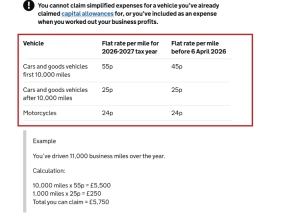
HMRC’s 2026–27 simplified business mileage rates for self-employed people using cars or vans.
Insurance and Professional Protection
Plumbers work inside residential and commercial properties, often around expensive fixtures, floors and electrical equipment.
Unexpected water damage can create substantial liability.
Public liability insurance is therefore a significant commercial consideration, even though it is not generally compulsory for every independent plumbing business.
Employers’ liability insurance will normally be required when a business employs staff, subject to applicable exemptions.
The cost of appropriate cover varies according to business activities, turnover, insurance limits and claims history.
Plumbers using vehicles for work should also confirm that their policy covers the actual business activities undertaken.
Understanding the cost of adding business use to car insurance can help when comparing transport arrangements, although a dedicated work van may need a different policy.
Equipment and Administrative Expenses
Professional plumbers may need drain inspection equipment, pipe cutters, testing instruments, specialist hand tools and protective equipment.
Bookkeeping, invoicing and customer management also require time and money.
The choice of accounting software can become particularly important as a plumbing business grows, especially when VAT registration or Making Tax Digital obligations apply.
For pricing purposes, the crucial principle is that every business expense must ultimately be recovered through sufficient profitable work.
How Should a Self-Employed Plumber Calculate Their Minimum Hourly Rate?
Copying a competitor’s hourly charge is not necessarily a sustainable pricing strategy.
A plumber with an owned van, an established customer base and low marketing expenses may operate profitably at a different rate from someone financing equipment and paying substantial advertising costs.
A more financially reliable approach begins with the income the business needs to generate.
Minimum hourly rate = (Target annual pre-tax profit + Annual operating costs) ÷ Annual billable hours
Suppose a plumber wants to generate £42,000 in annual business profit before personal tax.
Their estimated annual expenses are £12,000, and they expect to bill 1,100 hours.
The calculation is:
(£42,000 + £12,000) ÷ 1,100 = £49.09 per hour
Charging approximately £50 per hour would therefore meet the target under those assumptions, before allowing for additional contingencies.
Why Billable Hours Matter More Than Working Hours
A self-employed plumber might spend 40 hours each week working on the business but bill only 25.
The remaining time could be used for travelling, quoting, purchasing supplies, dealing with customers and completing paperwork.
The effective billing utilisation rate is:
25 ÷ 40 × 100 = 62.5%
This means 37.5% of working time is not directly invoiced.
Improving scheduling efficiency can therefore have a substantial financial effect without increasing advertised rates.
For example, reducing unnecessary travel and combining appointments within the same postcode area can create additional chargeable capacity.
How Much Do Self-Employed Plumbers Charge for Common Plumbing Jobs?
Customers often prefer a fixed price for straightforward repairs rather than an uncertain hourly bill.
For plumbers, fixed-price quotations can also protect profitability when the expected work and associated risks are understood.
The following figures are illustrative labour-only pricing examples based on general hourly charges and reasonable job-duration assumptions. They are not independently measured UK averages.
| Plumbing job | Illustrative labour charge | Pricing considerations |
| Repairing a leaking tap | £70–£120 | Minimum visit charge |
| Replacing a kitchen tap | £100–£200 | Access and fittings |
| Unblocking a sink trap | £60–£140 | Severity of blockage |
| Replacing a toilet | £130–£300 | Removal and installation |
| Replacing a radiator | £150–£350 | Pipework and system work |
| Diagnosing a hidden leak | £80–£180+ | Investigation time |
| Emergency pipe repair | £120–£300+ | Urgency and materials |
The final quotation may also include parts, disposal, parking, travel and VAT where applicable.
A simple tap repair may take less than an hour, but travelling to the property, diagnosing the issue and obtaining materials can make a low hourly-only charge commercially unrealistic.
For larger installations, fixed quotes should establish whether the customer or plumber is responsible for providing sanitaryware, fittings and other materials.
How Much Do Emergency Self-Employed Plumbers Charge?
Emergency plumbing is one of the higher-priced areas of the trade.
In 2026, emergency plumber charges commonly fall between £75 and £150 per hour, with the average emergency call-out fee in published pricing guides around £110.
Urgent work can command a higher rate because plumbers must respond quickly, rearrange existing bookings and potentially work outside normal business hours.
Emergency charges may involve:
- A minimum attendance fee.
- An hourly labour rate.
- An evening, weekend or bank holiday premium.
- Materials and replacement components.
- Additional travel or parking charges.
For example, an emergency job might have a £110 call-out fee and a separate £100 hourly labour charge, producing a £210 bill before materials or VAT.
However, some businesses include the first hour within the call-out fee. Customers should confirm this before accepting the appointment.
From a business perspective, emergency services can generate higher revenue per booking, but availability does not guarantee demand.
A plumber remaining on call overnight may receive no bookings while still sacrificing personal time.
This makes emergency pricing substantially different from ordinary scheduled maintenance.
Is It Better to Charge an Hourly Rate or a Fixed Plumbing Price?
Both models have advantages, but they suit different work.
| Pricing method | Best suited to | Commercial advantage |
| Hourly rate | Diagnosis and uncertain repairs | Charges for actual time |
| Fixed-price quotation | Tap, toilet and standard installations | Predictable customer cost |
| Day rate | Renovations and larger projects | More stable booked income |
| Emergency call-out | Urgent repairs | Recovers response and availability costs |
| Maintenance agreement | Landlords and commercial properties | More predictable recurring work |
An hourly structure works well when the problem cannot be diagnosed accurately before attendance.
Fixed-price jobs are better when the scope is clear and the plumber understands the likely labour and material requirements.
We would generally favour transparent fixed-price quotations for repeatable services and clearly agreed hourly charging for uncertain diagnostic work.
However, an independent plumber should not absorb unlimited additional work under a fixed quotation.
Written terms should explain how hidden defects, customer-requested changes and unexpected repairs will be handled.
Do Self-Employed Plumbers Have to Register for VAT?
Self-employed plumbers do not automatically need to charge VAT.
In 2026, compulsory VAT registration generally applies when taxable turnover exceeds £90,000 over the previous rolling 12 months, or the business expects to exceed the threshold within the next 30 days.
A plumber can also choose voluntary registration below the threshold.
For ordinary standard-rated plumbing services, VAT is generally charged at 20%, although particular building services can qualify for different VAT treatment under specific conditions.
Consider a plumber whose standard labour charge is £50 per hour.
| Pricing example | Amount |
| Labour excluding VAT | £50 |
| VAT at 20% | £10 |
| Customer charge including VAT | £60 |
VAT collected from customers is not automatically business profit. Registered businesses account for VAT payable to HMRC and eligible recoverable input VAT.
For businesses serving private households, VAT registration can affect price competitiveness because domestic customers cannot normally reclaim VAT.
Commercial customers who are VAT registered may be more accustomed to comparing prices excluding recoverable VAT.
Our analysis also highlights the importance of monitoring turnover from materials as well as labour. VAT registration is assessed using relevant taxable turnover, not simply the plumber’s personal earnings.
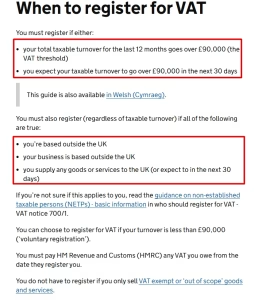
The £90,000 VAT registration threshold and the conditions that require a UK business to register.
How Does Making Tax Digital Affect Self-Employed Plumbers?
Making Tax Digital for Income Tax is another important compliance issue for plumbers operating as sole traders.
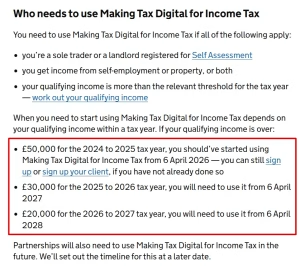
The programme began applying to eligible self-employed individuals from April 2026 and will expand in further stages.
| Qualifying income | Relevant income year | MTD start date |
| More than £50,000 | 2024–25 | 6 April 2026 |
| More than £30,000 | 2025–26 | 6 April 2027 |
| More than £20,000 | 2026–27 | 6 April 2028 |
Qualifying income is generally the combined gross income from self-employment and property sources before expenses, subject to the detailed eligibility rules.
A plumber with £55,000 in gross income and £12,000 of expenses has £43,000 in trading profit.
For Making Tax Digital, the relevant income is generally the £55,000 gross figure, not the £43,000 profit.
However, the date on which MTD becomes compulsory depends on the qualifying income reported for the relevant earlier tax year and the individual’s circumstances.
Eligible plumbers must maintain digital financial records using compatible software and submit the required quarterly updates.
Understanding Making Tax Digital is therefore important for business owners who previously maintained basic spreadsheets or paper receipts.
HMRC’s phased Making Tax Digital for Income Tax thresholds and implementation dates.
What Qualifications and Legal Requirements Affect Plumber Rates?
Plumbing expertise can influence pricing, but qualifications must also match the work undertaken.
General plumbing work and gas engineering are not interchangeable.
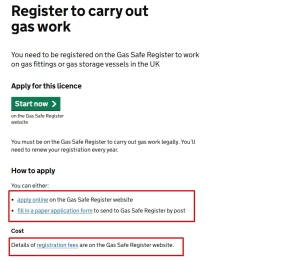
For work on gas fittings and gas appliances, engineers must hold the required Gas Safe registration and relevant competencies.
A plumber who is not Gas Safe registered may undertake appropriate water-system work within their competence, but cannot independently carry out regulated gas work.
Customers should therefore check whether a contractor is appropriately qualified for the specific task rather than assuming that all plumbers can legally work on gas boilers.
Official UK requirements for engineers carrying out gas work.
What Is the Difference Between a Self-Employed Plumber and a Plumbing Subcontractor?
A self-employed plumber working directly for homeowners generally invoices customers for completed services.
A plumbing subcontractor may instead undertake work for building contractors, developers or construction businesses.
Some construction contracts fall within the Construction Industry Scheme (CIS).
Under CIS, applicable deductions are normally:
| CIS status | Standard deduction |
| Registered and verified subcontractor | 20% |
| Unregistered or unverified subcontractor | 30% |
| Qualifying gross-payment status | 0% |
CIS deductions generally apply to the relevant payment after adjustments for qualifying materials and other excluded amounts.
They represent advance payments towards tax and National Insurance rather than a separate final tax charge.
Private householders commissioning work on their own homes are not normally CIS contractors.
Subcontractors should therefore distinguish their quoted labour charges, CIS deductions and actual taxable business profits.
The same consideration affects other construction trades, including independent plasterers and contractors undertaking projects for larger building businesses.
Is It More Profitable to Be a Self-Employed Plumber Than an Employed Plumber?
Self-employment can offer higher earning potential, but the financial comparison depends on more than advertised hourly rates.
Employed plumbers may receive contractual salaries, employer pension contributions, paid holidays and other employment benefits.
Self-employed plumbers must generally organise their own savings, retirement provision, insurance and protection against periods without work.
| Financial factor | Employed plumber | Self-employed plumber |
| Income structure | Salary or wages | Variable business revenue |
| Control over pricing | Usually limited | Greater control |
| Paid annual leave | Normally provided | Must self-fund |
| Pension arrangements | Workplace scheme where eligible | Self-arranged |
| Tools and equipment | Often employer supplied | Usually business-funded |
| Insurance | Often employer arranged | Business responsibility |
| Customer acquisition | Usually employer managed | Owner responsible |
| Potential earnings | More predictable | Potentially higher but less predictable |
For someone moving into self-employment, the biggest risk is often not a lack of technical skill but insufficient business planning.
A plumber could move from a secure job into a business charging £60 per hour and still experience financial difficulties if customer bookings are inconsistent.
A cash reserve and carefully managed startup expenditure can therefore be particularly valuable.
For those purchasing vehicles and equipment, understanding available startup business loans may be useful, provided borrowing costs are incorporated into financial planning.
How Can Self-Employed Plumbers Increase Their Profit Without Raising Hourly Rates?
Higher prices are not the only route to greater profitability.
Our financial model highlights several operational improvements that can increase retained income.
Improve Scheduling and Reduce Travel
Grouping appointments geographically can reduce wasted driving time and fuel consumption.
An additional three billable hours each week at £50 per hour would generate £150 in weekly labour revenue.
Across 44 working weeks, this represents £6,600 of additional annual revenue before extra expenses and tax.
Introduce a Minimum Visit Charge
A minimum attendance charge can prevent short appointments from becoming unprofitable.
For example, a plumber may establish a £75 first-hour minimum and charge £50 for subsequent hours.
The customer should know whether travel and the first hour of labour are included.
Develop Repeat Commercial Customers
Landlords, letting agents, facilities managers and local businesses can provide recurring work.
Regular customers may reduce advertising expenditure and time spent securing individual bookings.
However, commercial customers can also negotiate lower rates or require longer payment terms.
The business must therefore evaluate the total profitability of each agreement.
Control Material Costs and Payment Delays
Reliable suppliers, accurate material estimates and efficient stock management can reduce unnecessary expenses.
Plumbers should also establish payment terms before commencing larger projects and avoid funding substantial customer materials without appropriate contractual protection.
Late payments can create cash-flow problems even where the project appears profitable.
Invest in Specialist Skills
Appropriate specialist qualifications can broaden the range of work offered and potentially support premium pricing.
However, every qualification carries a financial cost, and demand must justify the investment.
The most profitable specialisation is not necessarily the one with the highest hourly rate. It is the one that produces sufficient work at an appropriate margin.
How Can Customers Compare Self-Employed Plumber Charges?
Customers should avoid choosing a plumber solely because the advertised hourly rate is the lowest.
An experienced plumber charging £60 per hour might complete a job in one hour, while a less experienced contractor charging £40 might require three hours.
In that example, the total labour costs would be £60 and £120 respectively.
The cheaper hourly rate would result in a higher final bill.
Before agreeing to work, customers should establish whether the quotation includes labour, materials, VAT, travel, minimum attendance charges and any relevant guarantees.
They should also confirm insurance and legally required credentials where applicable.
For straightforward maintenance tasks, customers may compare the services of a specialist plumber with those of a self-employed handyman.
However, a handyman should not undertake regulated gas work or any other tasks requiring qualifications or competence they do not possess.
What Are the Biggest Financial Mistakes New Self-Employed Plumbers Make?
Several common mistakes can undermine the profitability of a new plumbing business.
- Underestimating expenses: Charging only enough to cover personal living costs without allowing for vehicle repairs, insurance, equipment and administration.
- Assuming every working hour is billable: Preparing forecasts based on 40 paid hours every week when actual customer-billable time is substantially lower.
- Ignoring VAT thresholds: Failing to monitor taxable turnover as the business grows.
- Not saving for tax: Treating the full bank balance as money available for personal spending rather than reserving funds for future HMRC liabilities.
- Offering vague quotations: Starting larger jobs without agreeing material responsibilities, payment schedules and additional-work arrangements.
- Relying entirely on one customer: Allowing a single contractor or commercial customer to account for most business income without considering the effect of losing that contract.
Our analysis suggests that consistent profitability is usually built through pricing discipline, predictable cash flow and operational efficiency rather than headline rates alone.
Conclusion
The self-employed plumber hourly rate in the UK generally falls between £40 and £60 in 2026, with an average benchmark of approximately £50 per hour. Experienced specialists, London-based plumbers and emergency contractors can charge more.
However, hourly charges should never be confused with take-home earnings.
Our illustrative financial model shows that a plumber billing 1,100 hours annually at £50 per hour could generate £55,000 in revenue and retain approximately £35,088 after £12,000 of business expenses and estimated Income Tax and National Insurance.
For new and established plumbing businesses alike, sustainable pricing requires realistic assumptions about working hours, overheads, taxes, qualifications and customer demand.
A professionally managed plumbing business should aim not simply to charge more, but to turn a reliable volume of work into sustainable long-term income.
Frequently Asked Questions
How much should a self-employed plumber charge per hour in the UK?
A common 2026 benchmark is £40–£60 per hour, although charges vary by region, qualifications, experience and the complexity of the work.
Is £50 an hour good for a self-employed plumber?
£50 per hour can be a commercially reasonable rate, provided the business secures sufficient billable work and controls vehicle, insurance, equipment and administrative expenses.
How much can a self-employed plumber earn per day?
Standard day rates commonly range from approximately £320 to £480, while specialist and London-based work can command higher charges.
Can a self-employed plumber earn £60,000 a year?
Yes, it is possible to generate £60,000 or more in annual turnover. However, turnover is not personal income, and expenses and tax reduce the amount available to take home.
Do plumbers charge VAT on labour?
VAT-registered plumbers generally charge VAT on standard-rated labour. Compulsory registration normally applies once relevant taxable turnover exceeds the £90,000 threshold.
Do self-employed plumbers need public liability insurance?
It is not generally a universal legal requirement, but it provides important protection against qualifying claims and may be required by commercial customers.
Can a plumber claim van expenses against tax?
Qualifying business-use vehicle expenses may be deductible. The treatment depends on whether the plumber uses simplified mileage expenses or the applicable actual-cost method.
How many billable hours does a self-employed plumber work?
There is no fixed national figure. Travel, administration, quotations and unpaid downtime reduce billable time, so each business should calculate its own realistic annual total.
Do self-employed plumbers pay National Insurance?
Yes, Class 4 National Insurance generally applies when taxable self-employed profits exceed £12,570, subject to the applicable rates and circumstances.
Is hourly or fixed-price plumbing work better?
Hourly charging is useful for uncertain repairs, while fixed-price quotations suit predictable installations. The best option depends on the scope, risk and financial requirements of the work.