
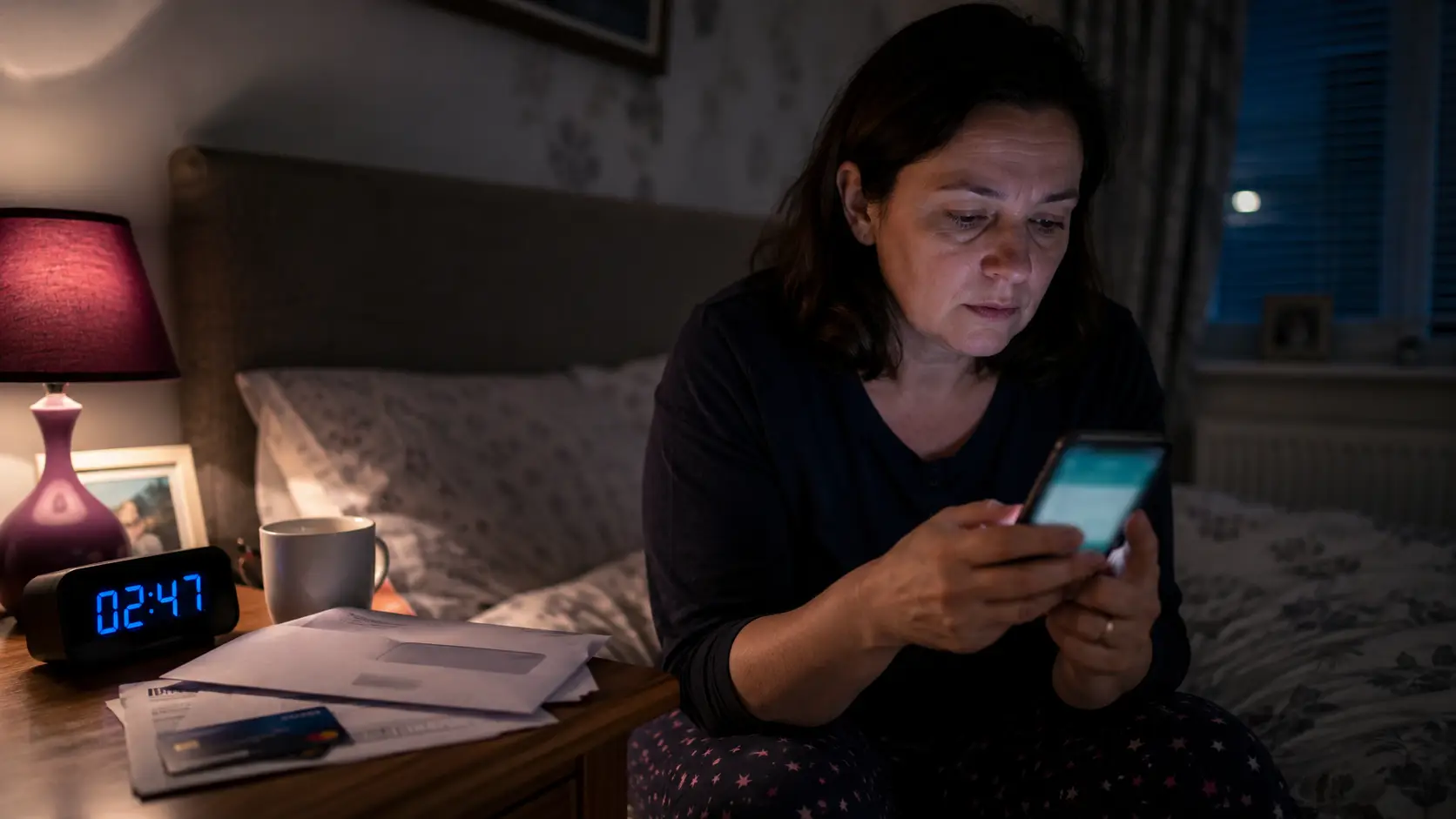
DWP payments commonly enter bank accounts overnight or during the early hours of the scheduled payment date. Many recipients see the money between midnight and 6 am, although some banks may display it shortly before midnight or later in the morning.
There is no official deposit hour that applies to every benefit, claimant or bank. The Department for Work and Pensions sets the payment date, but the receiving bank’s processing system determines when the funds appear in the available balance.
Key Takeaways:
- Most DWP payments appear overnight or early in the morning.
- Midnight to 6 am is a commonly reported window, not a guarantee.
- A payment can appear around 11.30 pm on the previous evening.
- Some claimants may wait until 2 am, 3 am, 6 am or later.
- Weekend and bank-holiday payments are usually made earlier.
- A payment is not necessarily late because it is absent at midnight.
The scheduled date therefore provides a more reliable benchmark than any particular time shown by another claimant’s bank.
Does The DWP Pay Benefits At Exactly Midnight?
DWP does not state that every payment will arrive at exactly midnight. Midnight is widely expected because many banks process incoming credits during overnight system runs.
The payment may appear shortly after midnight, but another bank could credit the same type of benefit at 2 am, 3 am, 6 am or later. A bank may also update its mobile application at a different time from its core account balance.
This means that two claimants with the same benefit and scheduled date can receive access to their money several hours apart without either payment being officially late.
A payment should not normally be reported missing at 12.01 am. The claimant should wait until the scheduled payment date has begun, check for bank service problems and confirm that the date has not changed because of a weekend or public holiday.
Why Do DWP Payment Times Differ Between Banks?
DWP controls when a payment is due, while banks and other payment service providers control how incoming credits are processed and displayed.
The Typical Payment Journey
- DWP schedules the payment for an agreed date.
- Payment information enters the relevant payment system.
- The receiving institution processes the incoming credit.
- The available balance and transaction list are updated.
- The claimant receives access to the cleared funds.
This sequence explains why an identical payment date does not create an identical deposit time for every customer.
DWP Payment Date Versus Bank Processing Time
Benefits are usually paid directly into a bank, building society or credit union account. The payment date confirms when the money should be credited, but official guidance does not promise an exact hour.
Bank processing can affect when the credit appears, whether it is immediately available and when a notification is sent. An app notification arriving late does not necessarily mean the balance was updated late.
How Does Bacs Affect The Arrival Time?
Bacs Direct Credit operates through a three-day cycle. Payment files are submitted on day one, processed and delivered to receiving institutions on day two, and credited to recipients on entry day, or day three.
The system establishes the entry date, but receiving institutions can run their internal account updates at different times overnight. Consequently, Bacs helps explain why funds are available on the payment date without proving that every payment must appear at midnight.
What Time Do Different DWP Benefits Usually Reach The Bank?

The likely time of day is broadly similar across DWP benefits because bank processing remains the main variable. What changes more clearly is how often each benefit is paid.
Benefit Payment Frequency
| Benefit | Normal Payment Frequency | Typical Account Timing |
| Universal Credit | Once a month | Usually overnight or early morning |
| Personal Independence Payment | Every four weeks | Depends on the receiving bank |
| State Pension | Every four weeks | Commonly processed overnight |
| Employment and Support Allowance | Every two weeks | Depends on the receiving bank |
| Jobseeker’s Allowance | Every two weeks | Depends on the receiving bank |
| Carer’s Allowance | Weekly in advance or every four weeks | Depends on the selected schedule |
| Attendance Allowance | Usually every four weeks | Depends on the receiving bank |
| Pension Credit | Usually every four weeks | Commonly processed overnight |
These frequencies are official general schedules, although individual award letters should take priority.
Universal Credit is normally paid seven days after a monthly assessment period ends and then on the same calendar date each month. Claimants in Scotland can request one or two monthly payments, while Universal Credit is normally paid twice monthly in Northern Ireland.
Official statistics recorded 8.3 million people on Universal Credit in Great Britain in February 2026, rather than the approximately six million cited in older competitor coverage.
Payment amount and arrival time must also be separated. For 2026/27, monthly Universal Credit standard allowances are £338.58 for a single claimant under 25, £424.90 for a single claimant aged 25 or over, £528.34 for a couple both under 25 and £666.97 where one or both are aged 25 or over. Work allowances are £427 with housing support and £710 without it, while earnings above the applicable allowance reduce Universal Credit by 55p for every £1 earned.
Capital below £6,000 is disregarded; capital between £6,000 and £16,000 can reduce payments by £4.35 for each £250 or part of £250, and entitlement normally ends above £16,000. These calculations affect the amount received, not the hour it reaches the bank.
Can DWP Payments Arrive Before Midnight Or After 6 am?
Yes. A payment may appear late on the previous evening, during the early hours or after 6 am, depending on the receiving institution.
Reported DWP Payment Windows
| Reported Time | What It May Mean |
| Around 11.30 pm | The bank displays the credit shortly before the scheduled date |
| Midnight to 1 am | Overnight processing has started |
| Around 2 am to 3 am | The institution uses a later processing run |
| Between 3 am and 6 am | The payment remains within a commonly reported window |
| After 6 am | Processing or account updates have taken longer |
| Later in the day | Further checking may be appropriate if the due date has arrived |
The midnight-to-6 am range comes from bank-specific customer guidance rather than a universal DWP commitment.
A payment appearing before midnight does not necessarily mean DWP has paid early. It may simply reflect how the bank labels or displays a credit intended for the following day.
Similarly, an account notification received after 6 am does not establish that the payment was late. The claimant should check the available balance directly before drawing that conclusion.
What Happens When A DWP Payment Is Due On A Weekend Or Bank Holiday?

A benefit due on a weekend or bank holiday is usually paid on the working day before. This can make the money appear earlier than the claimant’s normal date.
The Previous-Working-Day Rule
The official benefit payment rules state:
“If your payment date is on a weekend or a bank holiday you’ll usually be paid on the working day before.”
Typical changes include:
- A Saturday payment moving to Friday.
- A Sunday payment moving to Friday.
- A Monday bank-holiday payment moving to the preceding Friday.
- Christmas or Easter dates creating a longer gap between working days.
Child Benefit can follow different published arrangements, particularly where regional bank holidays affect only part of the UK. Claimants should therefore check the specific dates for that payment rather than assuming every benefit moves in the same way.
Will An Early Payment Change The Next Payment Date?
An early weekend or bank-holiday payment does not normally change the underlying schedule. The following payment generally returns to its usual date or weekday.
For example, a Monday payment moved to Friday remains the payment for Monday. It is not an additional payment and does not normally start a new weekly, four-weekly or monthly cycle.
Budgeting After An Early Benefit Payment
An early payment may need to last longer before the next scheduled payment. Claimants should budget from the original due date rather than treating the earlier banking day as the beginning of a shorter payment period.
This is particularly important around Christmas, New Year and Easter, when several non-working days can fall close together.
How Can Someone Confirm When A DWP Payment Is Due?
The most dependable payment date is the one shown in the claimant’s official account, statement, decision letter or award notice.
Universal Credit statements normally show the monthly amount before payment, and the payment is usually made seven days after the assessment period ends. After the first payment, it normally arrives on the same calendar date each month.
PIP decision letters state the first payment date, the usual payment weekday, the award period and whether the claim will be reviewed. State Pension letters similarly explain what to expect, while the regular payment day is linked to the final two digits of the National Insurance number.
Previous transactions can help identify a pattern, but they should not override official information. A bank holiday, first-payment timetable, change of circumstances or updated bank details can alter what the claimant expects to see.
Comparing payment times with friends or social-media users is unreliable because their banks, benefits, payment cycles and locations may differ.
What Should Someone Do If A DWP Payment Has Not Arrived?

A missing payment should be checked methodically. It should not automatically be treated as delayed simply because it was not available at midnight.
Checks To Complete Before Contacting DWP
Payment Checklist:
- Confirm the date in the award letter or online account.
- Check whether the date falls on a weekend or bank holiday.
- Review the available balance and recent transactions.
- Look for bank service-status warnings.
- Check whether account details were recently changed.
- Review any messages requesting information or evidence.
- Confirm whether deductions changed the expected amount.
- Ask whether the bank has rejected or returned the payment.
Universal Credit claimants can verify assessment periods, payment dates and monthly statements through the official Universal Credit payment guidance. PIP recipients can compare their decision letter with the official PIP payment schedule.
Some accounts may impose their own incoming-payment or balance limits. Such limits are provider-specific banking conditions, not general DWP rules, and should be checked directly with the institution.
Who Should Be Contacted First: The Bank Or DWP?

The claimant should usually ask the bank whether an incoming payment is pending, delayed, rejected or returned. If the institution confirms that nothing has been received and the official payment date has passed, the relevant benefit office should be contacted.
Universal Credit claimants can use their online journal or helpline. Other claimants should use the contact details on their award letter, such as the PIP enquiry service, Pension Service or relevant benefit office.
National Insurance numbers, passwords, account details and claim information should never be posted publicly while seeking help.
Conclusion
The answer to “what time do DWP payments go in bank” is that most payments appear overnight or during the early morning of the scheduled date. Midnight to 6am is a commonly reported window, while some banks may show funds around 11.30pm on the previous evening or after 6am.
No single deposit hour applies to every claimant. The official payment date, benefit schedule and receiving bank’s processing system all need to be considered.
When a payment is missing, the claimant should confirm the date, check weekend or bank-holiday arrangements, review the available balance and speak to the bank before contacting the relevant benefit office.
FAQs
What Does A DWP Payment Look Like On A Bank Statement?
The reference can vary according to the benefit and receiving institution. The amount and date should be compared with the claimant’s official statement or award information.
Can A Bank See A DWP Payment Before It Appears?
Some banks may be able to identify an incoming or pending credit. However, not every institution displays pending Bacs payments to customers.
Can Benefits Be Paid Into A Credit Union Account?
Benefits are usually payable into a suitable bank, building society or credit union account. The account must be able to receive the relevant electronic payment.
What Happens If DWP Has The Wrong Bank Details?
Incorrect, closed or restricted account details can cause a payment to be rejected or returned. The claimant should contact the relevant benefit office promptly and confirm the correct details securely.
Can Someone Change Their Benefit Payment Account?
Claimants can normally request a change through the service responsible for their benefit. The change should be made before the next payment is processed wherever possible.
Why Can A First Benefit Payment Take Longer?
A first payment may involve an assessment period, entitlement checks or a different initial schedule. Universal Credit usually takes around five weeks from the claim date to the first payment.
Can Deductions Change The Arrival Time?
Deductions can reduce the amount received because of earnings, repayments or other adjustments. They do not normally determine the bank’s overnight processing time.
Note: The arrival times in this article are reported banking windows, not guaranteed DWP deposit hours. Unrelated account-provider figures—including transfer minimums, reference-character limits, payee-name limits and provider-specific £5,000, £7,500 or £10,000 balance restrictions—have not been presented as DWP rules. Older Universal Credit allowance figures supplied in competitor content were replaced with verified 2026/27 values to avoid giving readers outdated financial information.