

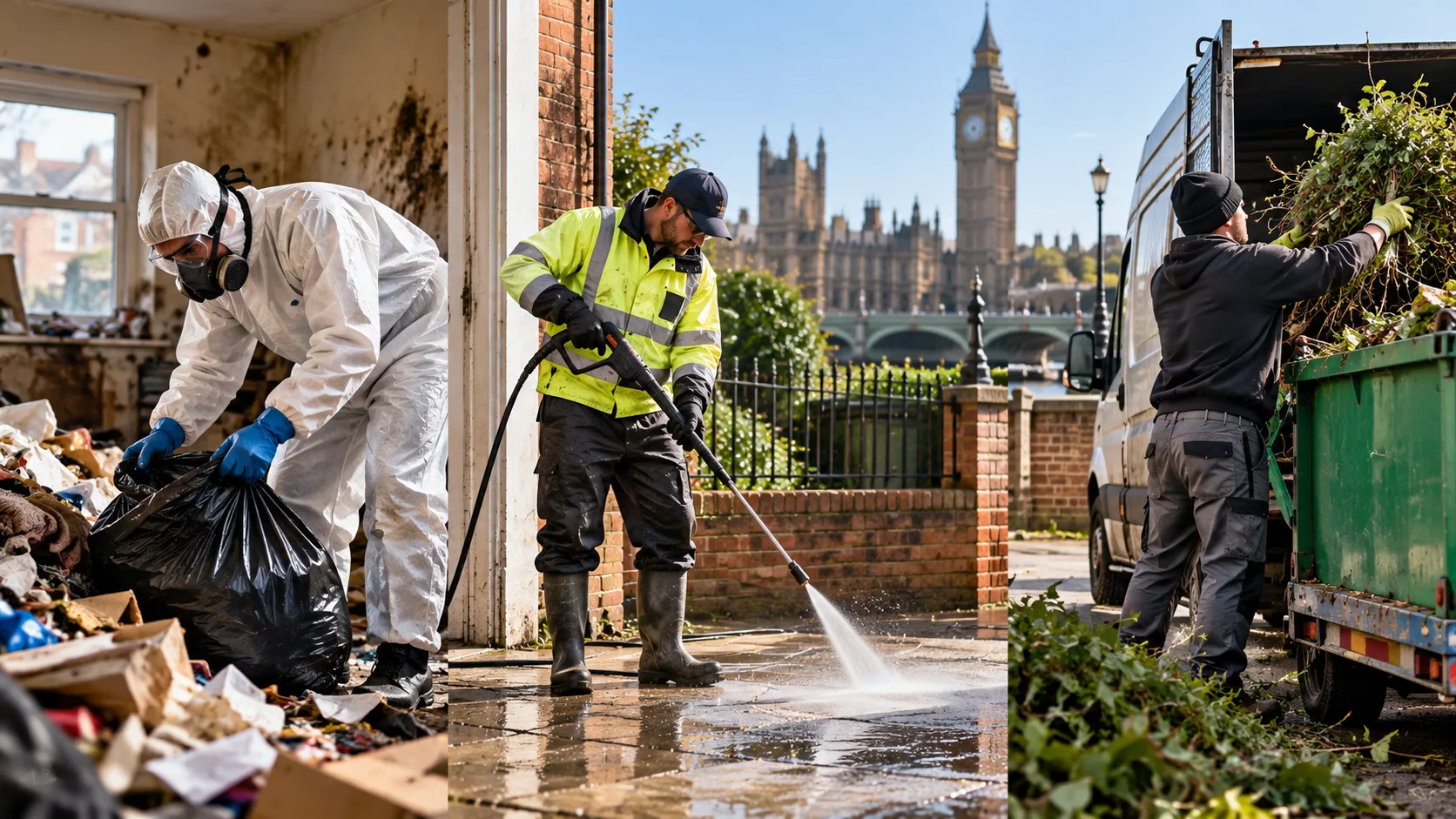
Making money does not always involve a comfortable office, a laptop or a fashionable business idea. Some profitable opportunities involve cleaning stubborn grease, removing rubbish, dealing with unpleasant smells or completing jobs that most people would rather pay someone else to handle.
These are often called dirty ways to make money, but dirty does not mean dishonest or illegal. In many cases, it simply means doing essential, unpleasant or physically demanding work that other people avoid.
From cleaning wheelie bins and collecting dog waste to clearing properties and maintaining commercial kitchens, there are legitimate services that can generate extra income or develop into independent businesses.
The opportunity is not necessarily that these services command exceptionally high prices. It is that customers have a recurring problem, may lack the equipment or time to solve it, and are willing to pay for a reliable solution.
Below are 20 legal ways to make money doing dirty work in the UK, including estimated setup expenses, illustrative customer charges, potential customers and important legal considerations.
What Are Dirty Ways to Make Money?
Dirty ways to make money are legitimate activities involving unpleasant, messy, physically demanding or socially overlooked work.
Some involve working with rubbish, animal waste or dirty household equipment. Others involve maintaining neglected properties, removing unwanted materials or providing specialist sanitation services.
There are three reasons these businesses can attract paying customers:
- Discomfort: Customers dislike the mess, smell or effort involved.
- Convenience: Customers prefer paying someone who can complete the work efficiently.
- Specialisation: Certain jobs need equipment, training or expertise that ordinary households do not possess.
However, unusual work is not automatically profitable. Some businesses have high disposal costs, substantial insurance requirements or significant occupational hazards.
For people exploring low-cost business ideas with high profit, the most practical starting point is usually a straightforward service that can be delivered safely without purchasing expensive machinery.
What Are the 20 Best Dirty Ways to Make Money Legally?
1. Start a Dog Waste Removal Service
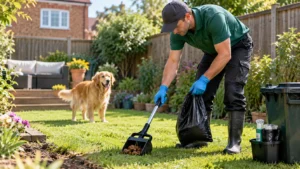
Collecting dog waste is one of the least glamorous services imaginable, which makes it a useful starting point for anyone comfortable with unpleasant work.
Some pet owners struggle to maintain their gardens because of long working hours, mobility limitations or multiple pets. A reliable dog waste collection service can help keep outdoor areas clean and usable.
You could offer weekly garden cleaning, one-off clearances or scheduled visits to properties with several dogs.
Unlike many other cleaning businesses, the core equipment is relatively inexpensive. The main challenge is attracting enough customers within a small geographical area to reduce travel time.
| Business factor | Details |
| Illustrative customer charge | £12–£30 per routine garden visit |
| Initial equipment budget | £50–£150 |
| Potential customers | Dog owners, landlords and pet-friendly accommodation |
| Important consideration | Hygiene, waste classification and lawful disposal arrangements |
Begin by approaching dog walkers, pet groomers and local pet owners. A monthly subscription can make the income more predictable.
For example, 20 customers paying £15 per weekly visit could generate approximately £1,200 in gross revenue over four weeks, before transport, equipment, disposal, tax and other expenses.
If you transport waste away from customers’ properties, check the applicable waste-carrier requirements before offering that part of the service.
2. Clean Dirty Wheelie Bins
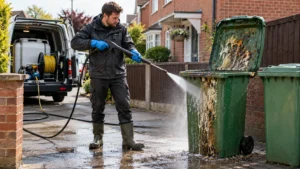
Household wheelie bins regularly accumulate food residue, liquids and unpleasant smells. During warmer weather, neglected bins can become particularly unpleasant.
A wheelie-bin cleaning service addresses a simple problem that repeats throughout the year.
You can offer individual cleans or regular collections scheduled around local refuse collection days. Customers generally find this convenient because their bins are empty when cleaned.
| Business factor | Details |
| Illustrative customer charge | £5–£12 per bin |
| Initial equipment budget | £150–£800 for a small compliant setup |
| Potential customers | Households, apartment managers and small businesses |
| Important consideration | Wastewater containment, drainage rules and safe cleaning chemicals |
One way to improve profitability is to build a route covering several houses on the same street.
Cleaning ten bins in one location is generally more efficient than travelling across town for ten individual appointments.
Do not allow contaminated wash water or chemicals to enter surface-water drains. Commercial cleaning systems may require suitable collection and disposal arrangements.
3. Make Money Cleaning Greasy Ovens
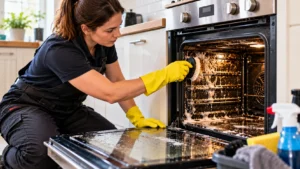
Oven cleaning is another dirty job that can become a specialised home-service business.
Baked-on grease, burnt food and deposits around oven doors are difficult to remove using ordinary household products.
Some households postpone the work for months, particularly when their appliances require substantial cleaning.
A specialist cleaner can focus exclusively on ovens, hobs and extractor components, developing repeat customers and referrals.
| Business factor | Details |
| Illustrative customer charge | £50–£110 per domestic oven |
| Initial equipment budget | £150–£500 |
| Potential customers | Homeowners, landlords and letting agents |
| Important consideration | Chemical safety, appliance protection and ventilation |
A useful business strategy is to approach letting agents and landlords who regularly need appliances cleaned between tenancies.
Offer fixed prices for standard ovens and separate quotations for double ovens, range cookers and heavily contaminated appliances.
Use manufacturer-compatible products and appropriate safety procedures. Never mix incompatible cleaning chemicals.
4. Offer End-of-Tenancy Deep Cleaning
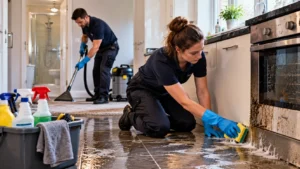
Moving out of a rented property can be stressful, and the final clean is often one of the most demanding tasks.
Kitchens may contain grease, bathrooms may have limescale, and carpets or cupboards may require extra attention.
This creates opportunities for professional cleaners who can deliver a carefully documented service.
| Business factor | Details |
| Illustrative customer charge | £140–£350 for a smaller property, depending on condition |
| Initial equipment budget | £200–£700 |
| Potential customers | Tenants, landlords, estate agents and property managers |
| Important consideration | Written scope, insurance, chemical safety and accurate service claims |
A strong approach is to create a detailed cleaning checklist and provide customers with photographs of completed work where they have consented.
Focus on clear expectations rather than advertising a guaranteed deposit return, because deposit decisions involve tenancy obligations and the property’s condition.
Landlords and letting agents may supply repeat work when they are satisfied with the standard of cleaning.
5. Provide Hoarded Property Clearance and Cleaning
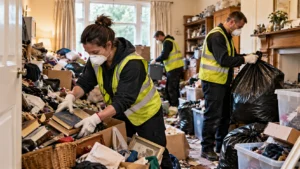
Some properties accumulate large quantities of possessions over many years.
Clearing such spaces can be physically demanding and emotionally sensitive, especially when the homeowner has a hoarding disorder or the property belongs to someone who has died.
This is not simply a rubbish collection business. It requires communication, respect for personal belongings and careful planning.
| Business factor | Details |
| Illustrative customer charge | £250–£800+ for a smaller, defined clearance |
| Initial equipment budget | £400–£1,500+, excluding major disposal costs |
| Potential customers | Property owners, executors and housing providers |
| Important consideration | Consent, safeguarding, manual handling and potentially hazardous materials |
Work from an agreed inventory, separate valuable possessions from unwanted material, and obtain clear authorisation before disposal.
Do not assume that everything inside a cluttered property is rubbish.
Properties containing needles, human waste, asbestos, vermin contamination or other hazardous substances should be assessed by appropriately trained specialists.
Starting by working with an established clearance company is safer than accepting complex jobs without experience.
6. Clean Blocked Gutters
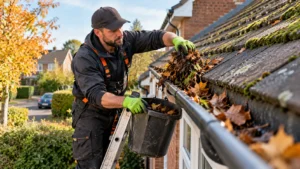
Leaves, moss and debris can accumulate inside roof gutters, preventing rainwater from flowing correctly.
Homeowners and commercial property managers may pay for cleaning to help prevent overflowing water and related maintenance problems.
The work is particularly relevant in areas with mature trees and during autumn.
| Business factor | Details |
| Illustrative customer charge | £40–£120 for a straightforward domestic job |
| Initial equipment budget | £250–£1,200 for suitable ground-based equipment |
| Potential customers | Homeowners, property managers and small commercial premises |
| Important consideration | Working-at-height risk, access restrictions and insurance |
For beginners, suitable ground-operated gutter vacuum systems may reduce the need to work at height, although the site must still be assessed.
The risks are real. Following a serious gutter-related fall, HSE Lead Inspector Sophie Neale described the incident as “tragic but avoidable” in a January 2026 enforcement report.
Her published comments emphasised that proper fall-prevention or mitigation measures could have prevented the injuries.
The lesson for an aspiring operator is that potential revenue must never outweigh safe access arrangements.
Regular maintenance plans can create repeat business, particularly with landlords and property-management companies.
7. Earn Money Unblocking Household Drains
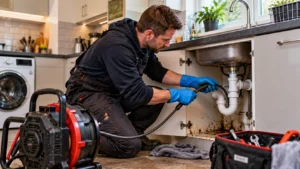
Blocked sinks, slow-draining showers and unpleasant drain odours are problems that property owners often want resolved quickly.
Basic drain maintenance can create paid opportunities for people with suitable plumbing experience.
However, there is an important distinction between straightforward domestic maintenance and specialist drainage work involving sewers, confined spaces or potentially contaminated systems.
| Business factor | Details |
| Illustrative customer charge | £60–£150 for a basic, accessible callout |
| Initial equipment budget | £200–£1,000 for basic tools and safety equipment |
| Potential customers | Homeowners, landlords and small businesses |
| Important consideration | Contamination, chemical exposure and competence |
Beginners should consider joining an established plumbing or drainage company before operating independently.
Work should be limited to tasks within the operator’s training, equipment and insurance cover.
Confined-space work, high-pressure jetting and sewage-related operations can require specialist equipment and procedures.
Avoid attempting them as casual side jobs.
8. Work as a Pest Control Technician
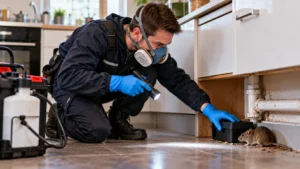
Dealing with rats, mice, cockroaches and other pests is unpleasant for many people.
This creates a market for professionals who can identify infestations, assess risks and implement appropriate control measures.
Pest management can also involve food businesses, warehouses, accommodation providers and commercial premises.
| Business factor | Details |
| Illustrative customer charge | £120–£300 for a defined inspection and treatment package |
| Initial equipment budget | Training and specialist equipment costs vary considerably |
| Potential customers | Restaurants, landlords, warehouses and households |
| Important consideration | Competence, approved products, training and chemical controls |
An effective way to enter this industry is through employment or training with an established pest-management provider.
Professional pest control involves more than placing traps or applying chemicals. It requires accurate pest identification, monitoring, prevention and responsible treatment.
Certain products have restrictions concerning who may purchase or use them and the conditions under which they can be applied.
Once properly trained, an operator could develop contracts for regular inspections and preventative services.
9. Remove Graffiti From Walls and Shopfronts
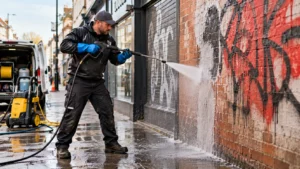
Unwanted graffiti can affect the appearance of shops, commercial buildings, public facilities and privately owned walls.
Property owners may pay for professional removal rather than attempting the work themselves.
Cleaning methods depend on the underlying surface, paint type and location.
| Business factor | Details |
| Illustrative customer charge | £80–£250 for a small, accessible area |
| Initial equipment budget | £300–£1,500 |
| Potential customers | Retailers, landlords, property managers and authorised contractors |
| Important consideration | Property-owner permission, surface damage and chemical runoff |
The key is avoiding unnecessary damage.
Brickwork, painted surfaces, glass and historic materials may require different techniques. Aggressive methods can permanently damage the surface being cleaned.
Start with training and a controlled test area, then document the finished work with the customer’s permission.
A particularly useful market is commercial property management, where clients may have several buildings requiring occasional maintenance.
10. Offer Patio and Driveway Pressure Washing
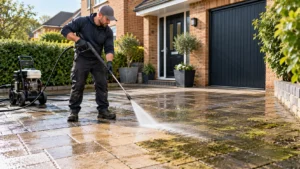
Outdoor paving accumulates dirt, algae, moss and stains.
Pressure washing can produce visible results, which makes before-and-after photographs useful for marketing.
Homeowners may book the service before selling a property, hosting an event or carrying out seasonal maintenance.
| Business factor | Details |
| Illustrative customer charge | £80–£250 for a modest patio or driveway |
| Initial equipment budget | £250–£1,000 |
| Potential customers | Homeowners, landlords and local businesses |
| Important consideration | Slip hazards, surface damage, runoff and equipment safety |
The business can expand into cleaning garden paths, outdoor seating areas and selected commercial surfaces.
However, avoid treating every surface with the same pressure.
Soft stone, damaged paving, pointing and certain coatings may be unsuitable for aggressive cleaning.
Also factor drying time, travel, water access and equipment maintenance into quotations.
For someone comparing these opportunities with other unusual business ideas in the UK, pressure washing has the advantage of an easy-to-understand service and visually demonstrable results.
11. Start an Upholstery and Mattress Cleaning Business
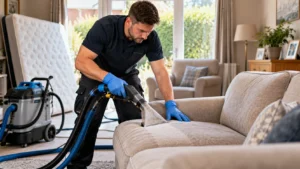
Mattresses, sofas and upholstered chairs collect dust, stains and everyday dirt.
Some households would rather restore their existing furniture than replace it.
A trained upholstery cleaner can provide specialist cleaning that ordinary household vacuuming cannot deliver.
| Business factor | Details |
| Illustrative customer charge | £50–£120 per standard sofa |
| Initial equipment budget | £300–£1,500 |
| Potential customers | Households, hotels and furnished-rental operators |
| Important consideration | Fabric identification, drying times and chemical compatibility |
Before accepting work, identify the fabric and check its cleaning instructions.
Certain materials can shrink, bleed colour or become permanently damaged when treated incorrectly.
It is also important not to promise complete stain removal or sanitisation without an appropriate method.
A useful marketing approach is to offer packages combining sofa, chair and mattress cleaning.
Repeat work may arise from hotels, landlords and holiday-accommodation operators.
12. Clean Extremely Dirty Car Interiors
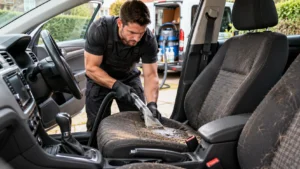
Car interiors can become heavily soiled through food spills, pet hair, mud and everyday use.
Some vehicle owners want a thorough interior clean before selling their car. Others need help after family trips, pet transport or prolonged neglect.
Professional interior detailing can become a service for someone comfortable with painstaking cleaning work.
| Business factor | Details |
| Illustrative customer charge | £40–£120 for an interior deep clean |
| Initial equipment budget | £200–£800 |
| Potential customers | Car owners, used-car dealers and small fleets |
| Important consideration | Electrical components, fabric safety and wastewater management |
Begin with services such as vacuuming, stain treatment, upholstery care and interior surface cleaning.
Extra charges may be appropriate for extensive pet hair or heavily stained seats, provided they are disclosed before work begins.
Used-car dealers can be valuable customers because presentation may affect buyer confidence.
Avoid ozone treatments, aggressive chemicals or specialist mould work without the relevant training and safeguards.
13. Provide Commercial Kitchen Deep Cleaning
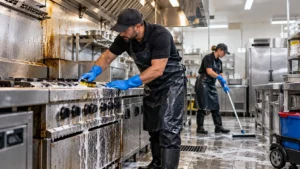
Commercial kitchens can accumulate heavy grease around cooking equipment, floors and hard-to-reach surfaces.
Restaurants, takeaways and catering businesses may need specialist cleaning outside normal operating hours.
This is potentially a valuable business-to-business service, but it requires proper training and more demanding safety procedures than ordinary domestic cleaning.
| Business factor | Details |
| Illustrative customer charge | £250–£800+ for a defined small-kitchen deep clean |
| Initial equipment budget | £500–£2,500+, depending on equipment |
| Potential customers | Restaurants, commercial caterers and hospitality operators |
| Important consideration | Chemical controls, fire risks, hygiene and equipment isolation |
One potential advantage is repeat commercial work.
Customers may require periodic visits, allowing providers to build a schedule of contract clients.
However, kitchen extraction systems and ductwork should be treated as a separate specialist service.
Cleaning them properly can require specific training, access equipment and evidence of completed work.
Never advertise specialist fire-safety compliance or certification unless the service genuinely meets the relevant standard.
14. Clear Overgrown Gardens and Garden Waste
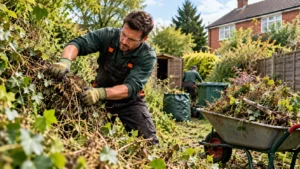
Neglected gardens can contain weeds, fallen branches, accumulated leaves and unwanted vegetation.
Homeowners may not have the time, equipment or physical ability to restore these spaces.
Garden clearance can therefore generate money through both one-off cleanups and regular maintenance.
| Business factor | Details |
| Illustrative customer charge | £100–£300 for a defined small-to-medium clearance |
| Initial equipment budget | £200–£1,000 |
| Potential customers | Homeowners, landlords and property managers |
| Important consideration | Waste handling, tools, wildlife and manual handling |
Start with manageable work such as removing weeds, clearing leaves, tidying beds and cutting back suitable vegetation.
Tree surgery, chainsaw operations and other higher-risk activities require additional competence and controls.
If you remove garden waste from clients’ properties, verify your waste registration requirements and use authorised disposal arrangements.
Garden clearance can be combined with routine maintenance to create repeat bookings.
15. Earn Money Cleaning Up After Festivals and Events

Festivals, outdoor markets, sporting events and large celebrations can leave substantial amounts of litter.
Organisers may employ cleaning staff or appoint specialist contractors to clear sites.
The work often involves unsociable hours, repetitive physical activity and unpleasant weather.
| Business factor | Details |
| Illustrative earnings scenario | £120–£200 gross for an eight-hour contracted shift |
| Initial equipment budget | Often minimal for employees; higher for independent contractors |
| Potential customers | Event organisers, venues and cleaning contractors |
| Important consideration | Employment status, safety training and hazardous litter |
Working for an established contractor is generally the easiest starting point.
Independent operators could eventually offer small-event cleanup packages for community events and private venues.
However, safety planning matters. Broken glass, sharp objects, heavy waste and vehicle movements can make cleanup work hazardous.
For contractors, the example gross shift figure is not necessarily take-home pay. Equipment, insurance, travel and unpaid time must be accounted for.
16. Build a House Clearance and Junk Removal Business
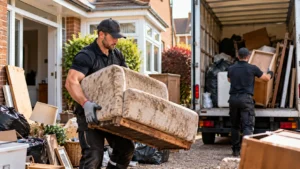
Property owners sometimes need entire rooms, garages or houses cleared.
This may happen before a sale, after a tenancy, during renovation or following a bereavement.
A professional clearance service removes authorised unwanted items and arranges lawful disposal or reuse.
| Business factor | Details |
| Illustrative customer charge | £180–£600+ for a small or medium clearance |
| Initial equipment budget | £500–£2,000+, excluding the vehicle |
| Potential customers | Landlords, executors, homeowners and letting agents |
| Important consideration | Waste-carrier registration, disposal fees and waste documentation |
The service can generate substantial invoices, but gross revenue is particularly misleading in this industry.
A job involving bulky items may require several workers, vehicle fuel and expensive disposal arrangements.
Waste Minister Mary Creagh warned in May 2026 that waste operators had abused weaknesses in the regulatory system, describing the problem in an official statement as:
“Waste cowboys have abused the system for too long.”
The government’s announced reforms will introduce a more stringent permit-based system for waste handlers in 2027.
For legitimate operators, transparent pricing, proper registration and records showing lawful disposal should be treated as business essentials.
An efficient clearance business can also distinguish items suitable for authorised reuse, donation or recycling instead of sending everything directly for disposal.
17. Collect and Sell Scrap Metal Legally
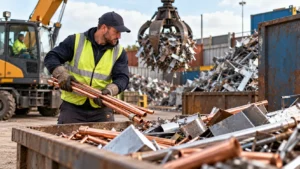
Unwanted metal can have recycling value, but collecting and trading scrap is not as simple as picking up discarded objects and selling them.
UK scrap-metal businesses operate under specific legal requirements.
In England and Wales, dealing in scrap metal generally requires a council-issued site or mobile collector’s licence.
| Business factor | Details |
| Income model | Revenue depends on lawful sourcing, metal type, weight and current buying prices |
| Initial equipment budget | £500–£2,000+, excluding vehicle and licence expenses |
| Potential customers | Businesses, authorised property clearances and recycling buyers |
| Important consideration | Dealer licensing, ownership checks, records and permitted payment methods |
Anyone considering this opportunity should first verify the licensing position and understand the distinction between trading in scrap and merely disposing of incidental waste.
In England and Wales, scrap dealers cannot buy scrap metal for cash. The law requires permitted traceable payment methods and identity checks.
Never collect material without the owner’s permission or assume that an item left outside a property has been abandoned.
Dan Cooke, speaking for the Chartered Institution of Wastes Management in May 2026, emphasised the industry’s responsibility to remain alert to illegal waste transport and dumping.
His published position reinforces an important business point: compliant operators must compete on reliability and legitimate service, not unlawful shortcuts.
18. Help Clean Up Minor Water Damage
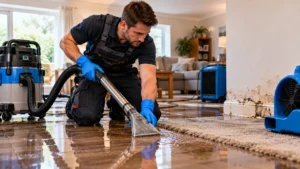
Water damage can leave homes with soaked flooring, dirty surfaces and damaged belongings.
Some property owners need assistance with minor, non-contaminated water cleanup following a small leak.
This is different from professional flood restoration, sewage cleanup or structural drying.
| Business factor | Details |
| Illustrative customer charge | £150–£400 for a limited, accessible cleanup |
| Initial equipment budget | £300–£1,500 for basic suitable equipment |
| Potential customers | Homeowners, landlords and maintenance contractors |
| Important consideration | Electrical safety, contamination, mould and structural damage |
Beginners should limit their work to safe activities within their competence.
Water-damaged buildings may contain hidden electrical hazards, contaminated materials or structural problems.
Major flooding, sewage ingress and significant mould contamination should be assessed by trained professionals.
With appropriate experience, water-damage work can develop into specialist restoration services, but that transition requires investment in equipment, training and insurance.
19. Offer Grave Cleaning and Memorial Maintenance
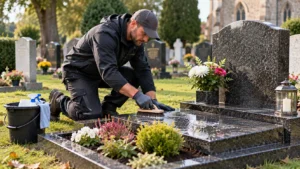
Maintaining a grave is a sensitive responsibility, particularly for families who live far away or cannot visit regularly.
A respectful grave-maintenance service could include removing fallen leaves, light cleaning with suitable methods and tending approved plants.
Unlike many other dirty jobs, this service depends heavily on discretion and care.
| Business factor | Details |
| Illustrative customer charge | £30–£80 for a routine maintenance visit |
| Initial equipment budget | £50–£250 |
| Potential customers | Families and authorised memorial-care providers |
| Important consideration | Cemetery rules, permission and stone conservation |
Always check the cemetery or burial-ground regulations and obtain appropriate permission.
Historic and delicate gravestones can be damaged by household chemicals, aggressive brushing or pressure washing.
Avoid making structural repairs or moving headstones unless you are appropriately qualified and authorised.
A subscription arrangement for periodic visits may suit relatives who want ongoing maintenance.
Photographs can be provided with consent to demonstrate completed work.
20. Work in Specialist Biohazard and Sanitation Cleaning
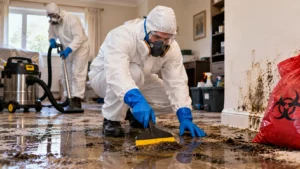
Some cleaning jobs involve contamination that ordinary domestic cleaners should not handle.
Examples include certain sewage incidents, biological contamination and premises requiring controlled specialist cleaning.
These services can be legally provided by appropriately trained and equipped businesses, but they are not suitable as an untrained weekend side hustle.
| Business factor | Details |
| Income model | Specialist quotations based on site assessment and risk |
| Initial equipment budget | Often several thousand pounds once training, PPE and equipment are included |
| Potential customers | Approved facilities, specialist contractors and property managers |
| Important consideration | Biological hazards, controlled waste, training and insurance |
The most appropriate entry route is employment or supervised training with an established specialist provider.
Workers may need specific protective equipment, risk assessments, decontamination procedures, occupational-health arrangements and compliant waste handling.
A higher customer invoice does not necessarily mean a high profit margin because specialist work can involve substantial overheads.
The business case depends on professional competence and safe delivery rather than a willingness to tolerate unpleasant conditions.
Which Dirty Jobs Are Best for Beginners?
Not all 20 opportunities are equally suitable for someone seeking quick additional income.
For a beginner with a modest budget, relatively straightforward services may include dog waste collection, basic oven cleaning, car interior cleaning and carefully scoped garden maintenance.
These services have understandable customer needs and can often be tested in a small local area.
More complex activities, including pest control, hazardous cleaning, specialist drainage and waste trading, have higher barriers to entry.
A useful principle is to start where the gap between your existing skills and the work’s safety requirements is small.
Entrepreneurs who want to avoid major upfront investment can explore starting a business with little or no money, while recognising that insurance, equipment and compliance expenses cannot always be eliminated.
How Much Money Can You Realistically Make From Dirty Jobs?
Actual earnings depend on location, competition, workload, pricing and running costs.
A useful illustration is a small cleaning business completing eight £80 appointments per week.
That generates:
- Weekly gross revenue: 8 × £80 = £640
- Four-week gross revenue: £640 × 4 = £2,560
Suppose the business spends £600 over that period on cleaning materials, transport, marketing, insurance allocations and other operating costs.
The remaining £1,960 is a simplified operating surplus before personal tax and any additional expenses.
It is not necessarily the owner’s take-home income.
Businesses should also allow for cancellations, unpaid travel time, equipment replacement and periods without customers.
This distinction is crucial because a service earning £60 per appointment may be less profitable than one charging £40 if the first requires substantially more travel and supplies.
Understanding the real cost of running a UK startup can help new operators avoid mistaking high sales figures for sustainable profitability.
How Can You Start a Dirty Job Business in the UK?
Successful local service businesses usually begin with a clear problem and a narrowly defined customer group.
Choose One Service
Start with a service you can perform competently and safely.
Trying to launch five different cleaning businesses simultaneously can create unnecessary equipment expenses and make marketing confusing.
Check the Legal Requirements
Determine whether the activity requires specific licences, registrations, training or insurance.
Pay particular attention to transporting waste, professional pesticide use, working at height and handling dangerous substances.
Requirements can differ across England, Scotland, Wales and Northern Ireland.
Calculate Your Minimum Profitable Price
Before quoting, account for:
- Materials and disposable supplies
- Transport and parking
- Equipment depreciation and maintenance
- Insurance, licensing and disposal costs
- Travel, administration and other unpaid time
For example, charging £50 for a job that takes two hours onsite and another hour travelling creates only £16.67 in gross revenue per total hour, before costs.
Find Your First Customers
Start with a small geographical area.
Build relationships with landlords, letting agents, property managers or other businesses whose customers regularly need the service.
A professional Google Business Profile, genuine customer reviews and clear service photographs can help customers understand what you offer.
Avoid misleading before-and-after pictures or invented testimonials.
Develop Repeat Business
Subscriptions and maintenance contracts can be more predictable than relying entirely on one-off jobs.
Examples include monthly wheelie-bin cleaning, regular pet-waste removal, seasonal gutter maintenance and recurring commercial cleaning.
These are examples of boring business models that can be commercially attractive because they solve recurring problems.
The priority should be reliable service and customer retention rather than expanding as quickly as possible.
Are Dirty Ways to Make Money Legal in the UK?
Yes, many are entirely legal, but the activity must be carried out lawfully.
A house clearance business can operate legally while an unregistered operator who unlawfully transports or dumps rubbish may commit offences.
Similarly, an appropriately trained pest-control professional can provide legitimate services, while an untrained person using restricted chemicals may breach relevant rules.
Waste handlers are particularly important to check. The Environment Agency requires relevant businesses to register as waste carriers, brokers or dealers under the existing arrangements, and the government has announced further reforms for 2027.
The official waste-carrier registration guidance explains the process for England.
Anyone offering potentially hazardous cleaning should also follow applicable health and safety rules, including suitable risk assessments and training.
Legal does not necessarily mean low-risk, unregulated or suitable for beginners.
Do You Have to Pay Tax on Dirty Job Income?
Income from legally operated side businesses can still be subject to tax.
HMRC provides a trading allowance of up to £1,000 in qualifying gross trading income per tax year.
If your qualifying gross trading income is no more than £1,000, you generally do not need to report it, although exceptions apply.
When gross trading income exceeds £1,000, registration for Self Assessment is generally required, subject to your circumstances.
Importantly, the allowance concerns gross receipts rather than profit.
For example, earning £1,200 from cleaning work and spending £500 on supplies does not mean your gross trading income falls below the £1,000 threshold.
The applicable reporting and deduction rules depend on the circumstances.
Consult HMRC’s official trading allowance guidance and understand when a business needs to register with HMRC.
What Are the Biggest Mistakes People Make With Dirty Job Businesses?
One common mistake is assuming that unpleasant work automatically attracts premium prices.
Customers still compare convenience, quality, reliability and cost.
Another mistake is buying expensive specialist machinery before demonstrating that enough local customers are willing to pay.
Working without adequate insurance or regulatory compliance can create far greater financial problems than an unsuccessful marketing campaign.
Pricing mistakes are equally dangerous. A large clearance invoice may look attractive until landfill charges, labour, transport and other costs have been deducted.
A sensible operator monitors the profitability of individual jobs, not just total monthly sales.
Developing consistent operations is essential if a small side hustle is eventually going to become a profitable business within its first year.
Final Thoughts
Some of the most practical money-making opportunities are hidden in jobs that other people avoid.
Cleaning ovens, removing unwanted waste, maintaining neglected gardens and restoring dirty vehicles may not sound exciting, but they solve real problems for paying customers.
For beginners, the strongest approach is usually to choose a relatively low-risk service, test local demand and build a reputation for completing work properly.
For more experienced operators, specialist cleaning, pest management and regulated waste services can provide additional opportunities, provided the right qualifications and business controls are in place.
The important distinction is that earning money from dirty work is legitimate; cutting corners on safety, taxation or waste disposal is not.
A successful business does not need to be glamorous. It needs customers who value the service, pricing that covers the true costs and an operator who can deliver consistently.
FAQs About Dirty Ways to Make Money
What Is the Easiest Dirty Job to Start With Little Money?
Dog waste collection, basic car interior cleaning and selected domestic cleaning services may be relatively accessible for beginners. The best option depends on existing equipment, ability, local demand and compliance requirements.
Can You Make £100 a Day Doing Dirty Jobs?
Yes, generating £100 in daily gross revenue is possible in some service businesses. For example, two £50 cleaning appointments would reach that figure. However, actual bookings are not guaranteed, and gross revenue is not profit.
Can You Make Money Cleaning Dog Poo?
Yes. Dog waste removal is a legitimate service. Operators can charge per visit or offer recurring maintenance packages, provided they follow applicable hygiene and waste-handling requirements.
Do You Need a Licence to Start a Cleaning Business?
There is no single UK cleaning-business licence covering every type of cleaning.
Nevertheless, specific activities may need registration, specialist qualifications, permits or other controls. Requirements depend on the work and where it is performed.
Are Cash-in-Hand Dirty Jobs Legal?
Receiving payment in cash is not automatically illegal. However, taxable income must be handled correctly, and relevant records should be kept. Certain sectors have specific restrictions; for example, scrap-metal dealers in England and Wales cannot legally buy scrap metal using cash.
Can a Dirty Job Become a Full-Time Business?
Yes. Some local service businesses begin with one operator and expand through repeat customers, commercial contracts and additional staff. Sustainable expansion depends on demand, pricing, quality control, regulatory compliance and cash flow.