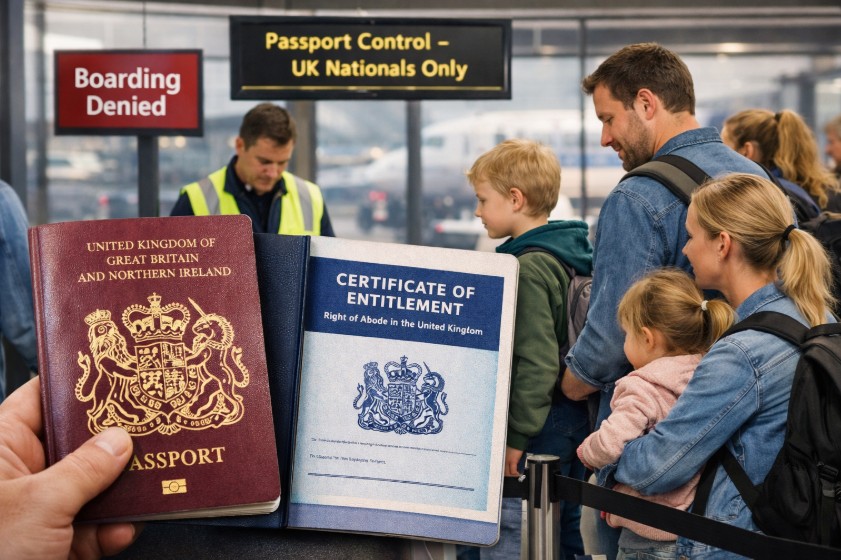
The UK passport rules dual citizenship changes taking effect on 25 February 2026 mean you can no longer enter the UK using only your non-British passport if you are a British dual national.
You must now present either a valid British passport or a certificate of entitlement. Without one, you risk being denied boarding before you even reach the UK border.
Key points you need to know:
- Dual nationals can no longer rely solely on a foreign passport to travel to the UK
- Airlines and carriers must check documents before departure
- The certificate of entitlement costs £589
- Children and babies are included in the new requirements
- Irish passport holders are exempt
These changes are already causing disruption, confusion and political debate. Keep reading to understand how these new rules could affect your travel plans and what you must do before flying.
What Are the New UK Passport Rules for Dual Citizenship From 25 February 2026?

From 25 February 2026, the UK is tightening how British nationality must be presented at the border. Under the previous approach, many dual nationals, particularly those whose second nationality came from a non-visa country, could travel to the UK using that foreign passport alone. That flexibility is now ending.
Under the new UK passport rules dual citizenship framework, you must show one of the following when travelling to the UK:
- A valid British passport
- A Certificate of Entitlement attached to your other passport
Without one of these documents, airlines, ferry operators or rail carriers may refuse to let you board. Importantly, the check is happening before you depart, not simply on arrival in Britain.
The Home Office has confirmed the position clearly:
“From 25 February 2026, all dual British citizens will need to present either a valid British passport or certificate of entitlement when travelling to the UK. Without one, carriers cannot verify they are a British citizen, which may lead to delays or refused boarding.”
This is not a minor procedural tweak. It represents a structural change in how British citizenship must be demonstrated at the point of travel.
Why Is the UK Changing Entry Checks for British Dual Nationals Now?
The reform is closely linked to the introduction of the Electronic Travel Authorisation (ETA) system. The ETA will require non-visa nationals to apply for advance digital permission before travelling to the UK, similar to the US ESTA model.
However, dual British citizens cannot apply for an ETA. Because you are British, the system expects you to travel as a British national, not as a foreign visitor.
The government argues that this approach modernises and streamlines the UK border. A Home Office spokesperson stated:
“This requirement applies to all British citizens regardless of other nationality and is the same approach taken by other countries, including the United States, Canada and Australia.”
In other words, the UK is aligning its practice with countries that require their citizens to enter and leave using national documentation.
Yet critics argue that communication has not been adequate and that many dual nationals were unaware of the impending shift until shortly before the deadline.
Who will Be Affected by the UK Passport Rules Dual Citizenship, And Who Is Exempt?

The new UK passport rules dual citizenship changes affect a broad cross-section of people. This includes:
- British dual nationals living abroad
- Expats who have not renewed a UK passport in years
- Residents of the UK travelling on a foreign passport
- Newly naturalised citizens who have not yet applied for a British passport
- Children and babies who hold British citizenship
According to 2021 census data, over one million UK residents hold dual nationality. A significant proportion may not currently hold a valid British passport.
Irish passport holders are exempt due to the Common Travel Area arrangements. Other dual nationals, including EU, Swiss, Australian, Canadian and US citizens with British nationality, are affected.
The practical consequence is simple: even if you have lived in the UK for decades, paid taxes and own property, you cannot rely on your foreign passport alone.
What Documents Do You Now Need Under the UK Passport Rules Dual Citizenship Changes?
To comply with the new UK passport rules dual citizenship changes, dual nationals must now present specific documents that clearly prove their right to enter and live in the UK.
British Passport Requirements
The most straightforward solution is to travel using a valid British passport. For adults, a standard application costs approximately £100. Processing times vary and can take several weeks, particularly during peak periods.
If you are applying from abroad, additional steps may apply. You may need to provide original documents such as citizenship certificates or birth certificates. Some applicants have reported complications when original paperwork is unavailable or located in another country.
The British passport offers the clearest and simplest proof of nationality, reducing the likelihood of disruption at departure.
Certificate Of Entitlement Overview
The alternative is a Certificate of Entitlement. This digital document is linked to your non-British passport and confirms your right of abode in the UK. The cost is approximately £589, significantly higher than a passport.
For families, this fee can multiply quickly. If you are travelling with children who are dual nationals but do not hold British passports, each child would require their own certificate or passport.
Applicants overseas may need to attend biometric appointments at designated centres, sometimes requiring travel to major cities. This has proven challenging for older applicants and those living far from consular services.
How Much Will the New UK Passport Rules for Dual Citizenship Cost You?
Understanding the cost implications is essential, as the new UK passport rules for dual citizenship introduce both direct application fees and additional hidden expenses for many travellers.
Direct Application Costs
The financial impact of the new UK passport rules dual citizenship changes is one of the most controversial aspects.
| Document | Approximate Cost | Who It Applies To | Validity |
| British Passport (Adult) | £100 | British citizens | 10 years |
| British Passport (Child) | Lower than adult fee | British citizen minors | 5 years |
| Certificate Of Entitlement | £589 | Dual nationals using foreign passport | Linked to passport validity |
| ETA (Not Available To British Dual Nationals) | £16 (rising to £20) | Non-British visa-free travellers | Short-term travel |
The contrast between a £16 ETA and a £589 certificate has prompted claims that dual nationals are placed at a financial disadvantage compared with foreign visitors.
Indirect And Hidden Costs
Beyond official fees, there are indirect costs:
- Travel to biometric centres
- Courier fees and notarisation costs
- Lost travel bookings
- Delayed family visits
- Work disruption
For pensioners or families on fixed incomes, these added burdens can feel disproportionate. Campaign group the3million has criticised the rollout.
Its head of policy and advocacy said:
“The Home Office has not done enough to warn dual nationals of the serious impact this will have on them.”
Calls have been made for a temporary grace period or low-cost interim solution, but as of now, the requirement stands.
Can an Airline Refuse You Boarding Under the New UK Passport Rules Dual Citizenship?

Yes, and this is where the real disruption occurs. Carriers are legally required to check that passengers meet entry requirements before departure. If they transport someone who lacks the correct documentation, they can face penalties.
As a result, airlines may refuse boarding if you cannot show a British passport or Certificate of Entitlement.
Ryanair has indicated it may take a pragmatic approach in certain circumstances, stating:
“We will allow a passenger to board a flight to the UK if we are satisfied that the passenger is a British national, an Irish national or is in possession of any other status in the UK.”
However, this is not a guaranteed policy across all carriers. Reliance on airline discretion introduces uncertainty.
The Home Office has clarified that carriers may, at their discretion, accept an expired British passport as alternative documentation. Additionally, individuals who previously held a British passport can apply for an Emergency Travel Document if urgent entry is required.
Nonetheless, the safest approach is to hold valid documentation before travelling.
What Should You Do If You Are Abroad Without A British Passport?
If you are currently overseas and do not hold a valid British passport, your next steps depend on your circumstances.
If you previously held a British passport, you may be eligible to apply for an Emergency Travel Document. This is typically used for urgent situations.
If you have never held a British passport, you should begin an application as soon as possible. Be prepared to provide original documentation and allow sufficient processing time.
If travel is imminent, consider:
- Contacting your airline for guidance
- Checking whether an expired British passport may be accepted
- Applying urgently for the appropriate documentation
Avoid assuming that your foreign passport will suffice.
What About Children Travelling Under the New UK Passport Rules Dual Citizenship Requirements?

The rules apply equally to minors. Even if one parent holds a valid British passport, a dual-national child must present their own British passport or Certificate of Entitlement. This has significant implications for families planning holidays or reunions.
Families have reported cancelling trips or facing unexpected expenses of hundreds or even thousands of pounds to secure certificates for multiple children.
Planning ahead is therefore critical. If your child holds British citizenship but has never had a UK passport, begin the process early.
Is There Going to Be a Grace Period or Transition?
Political pressure has mounted in the lead-up to implementation. Opposition figures and industry bodies have urged the government to introduce a temporary transition period.
The Association of British Travel Agents has described “considerable confusion and uncertainty”. Liberal Democrat representatives have called for a grace period to prevent families being stranded abroad.
However, at present, there is no confirmed transition period. Border Force retains discretion upon arrival, but that does not prevent carriers from refusing boarding in the first place.
Travellers should plan on the basis that the rules will be enforced as written.
Practical Checklist to Stay Compliant with UK Passport Rules Dual Citizenship
To minimise disruption under the new UK passport rules dual citizenship requirements, proactive preparation is essential. Before booking or undertaking travel to the UK, you should:
- Confirm whether you hold British citizenship
- Check whether your British passport is valid
- Apply early if renewal is required
- Ensure children have individual documentation
- Avoid relying on ETA eligibility
It is also advisable to keep copies of supporting documents and confirmation emails during the application process.
Early action reduces uncertainty and limits the risk of last-minute cancellations or denied boarding. Preparation remains the most reliable safeguard against disruption.
Comparison Table – British Passport Vs Certificate Of Entitlement Vs ETA
Understanding the differences between a British passport, a Certificate of Entitlement, and an ETA is essential if you want to avoid disruption under the new UK passport rules dual citizenship requirements.
| Feature | British Passport | Certificate Of Entitlement | ETA |
| Available To British Citizens | Yes | Yes | No |
| Required For Dual Nationals | Yes (Preferred) | Yes (Alternative) | Not Applicable |
| Cost | ~£100 Adult | £589 | £16–£20 |
| Processing Time | Several Weeks | Several Weeks | Typically Fast |
| Risk Of Boarding Refusal Without It | High | High | Not Relevant |
This comparison clearly shows that, while both a British passport and a Certificate of Entitlement satisfy the legal requirement, renewing or applying for a British passport is generally the most practical, cost-effective, and reliable long-term solution.
Conclusion
The UK passport rules dual citizenship reforms represent a major shift in how British nationality must be shown at the border.
From 25 February 2026, dual nationals can no longer rely solely on a foreign passport to enter the UK. While the government describes the changes as modernisation, critics highlight communication gaps and rising costs.
Your priority should be preparation: check documents, renew your British passport if needed, and ensure children are included. Acting early and understanding the new requirements can help you avoid travel disruption and navigate the updated system with confidence.
FAQs About UK Passport Rules Dual Citizenship
Do Dual British Citizens always need a British Passport to enter the UK?
From 25 February 2026, you must present either a valid British passport or a certificate of entitlement. A non-British passport alone is no longer sufficient.
Can you apply for an ETA instead of a British Passport?
No. If you are a British citizen, you are not eligible for an ETA. You must use British documentation.
What happens if your British passport has expired?
Carriers may accept an expired passport at their discretion, but this is not guaranteed. Renewing in advance is strongly recommended.
Is the Certificate of Entitlement permanent?
It is linked to your foreign passport’s validity and must be renewed if that passport expires.
Are Irish-British dual citizens affected?
Irish passport holders are exempt due to Common Travel Area arrangements.
Do babies need their own British Passport?
Yes. The rules apply individually, including to infants.
Could the government introduce a grace period?
Calls have been made for a transition period, but no confirmed grace period currently exists.