

Last updated: 29 June 2026
Editorial note: This article has been checked against JD Sports Fashion plc’s FY26 financial results, current Hip customer-service information, UK consumer-rights guidance and reports from retail and national news outlets.
Some location-specific details have been reported by the media rather than announced through a standalone JD Sports regulatory statement. Customers and employees should therefore check official channels for updates affecting their individual circumstances.
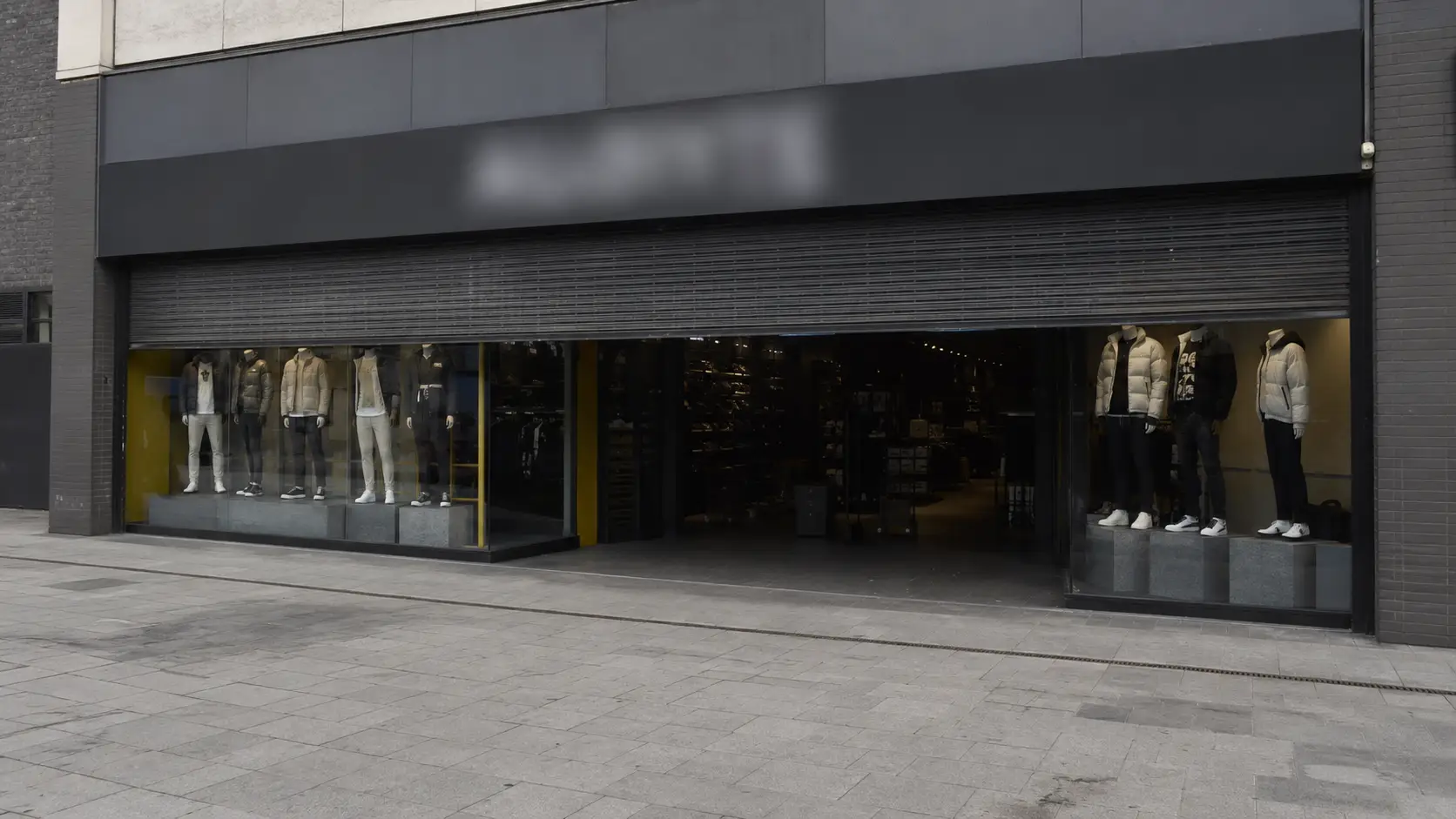
JD Sports is closing the final two physical Hip stores in Manchester and Leeds as it reduces smaller locations and concentrates on larger stores, digital retail and more efficient use of its property portfolio. The closures will end Hip’s standalone high-street presence, but current reports indicate that the premium fashion retailer will continue operating online.
The decision should not automatically be interpreted as evidence that either Hip or JD Sports is going out of business. JD Sports’ latest financial results show a profitable global group, although the company has acknowledged weaker UK sales, reduced earnings and challenging consumer conditions.
Key takeaways:
- The Manchester Hip store was reported to close on 28 June 2026.
- The Leeds store was expected to close before the end of June 2026.
- Hip is reported to be continuing as an online retailer.
- JD Sports is moving towards “fewer, bigger, better” JD stores.
- Customers should confirm return, gift-card and outstanding-order arrangements through official Hip channels.
- The number of employees affected and any redeployment arrangements have not been publicly detailed in the reviewed sources.
Quick Answer
JD Sports is closing Hip’s remaining Manchester and Leeds stores as part of a wider review of its physical retail estate. The move is consistent with JD Sports’ publicly stated transition towards fewer but larger stores, greater operational efficiency and continued investment in digital commerce.
However, JD Sports has not publicly released detailed financial figures for the individual Hip locations. It is therefore more accurate to describe the closures as being consistent with the group’s wider strategy rather than claiming that one specific factor caused them.
Hip’s website remained operational when this article was reviewed, and media reports state that the brand will continue online.
What Are the JD Sports Hip Store Closures?

Hip is a premium footwear, streetwear and contemporary fashion retailer with roots in Leeds. The brand became known for carrying established and emerging labels, limited footwear releases and higher-end casual clothing.
JD Sports brought Hip into its retail portfolio in 2014. Hip subsequently operated stores in Leeds and Manchester alongside its online business.
Reports published during 2026 state that JD Sports is closing both remaining physical Hip shops. Once both closures are completed, Hip will no longer have a standalone bricks-and-mortar presence.
Which Hip stores are affected?
| Location | Address reported | Reported position as of 29 June 2026 |
| Manchester | 63 Thomas Street | Reported to have closed on 28 June 2026 |
| Leeds | Vicar Lane | Expected to close before the end of June 2026 |
The dates above are based on contemporaneous media reports. Customers planning to visit either location should check Hip’s official store information before travelling.
Is Hip closing completely?
Current reporting does not indicate that the Hip name or website is being discontinued. Instead, the business is expected to continue as an online-only retailer.
This distinction is important. A company can withdraw from physical shops without ending the underlying brand. Nevertheless, future trading arrangements may change, so statements about Hip’s long-term position should be treated as current information rather than a permanent guarantee.
Why Is JD Sports Closing Hip Stores?
JD Sports has not published store-level accounts explaining the precise commercial performance of its Manchester and Leeds Hip branches. Any explanation must therefore distinguish between the company’s documented group strategy and conclusions drawn by outside observers.
The closures appear consistent with four broader considerations.
JD Sports is Reducing and Improving Its Store Estate
In its FY26 results, JD Sports referred to its continuing transition towards “fewer, bigger, better” JD stores in the UK.
At 31 January 2026, the group reported 410 JD-branded UK stores, compared with 434 one year earlier. During the financial year, it recorded 17 UK JD openings and 41 closures. These figures relate to the wider JD estate and should not be interpreted as financial data for Hip specifically.
The strategy involves concentrating investment in stores that can offer wider ranges, improved layouts and stronger links between physical and digital shopping.
UK Trading Conditions Have Been Challenging
JD Sports reported that its UK organic sales declined by 2.5% during FY26. The company attributed this partly to softer footwear demand, end-of-cycle product lines, difficult comparisons with the previous year and a challenging consumer environment.
Lower footfall was also recorded, although the company said store conversion remained strong. This suggests that shoppers who entered stores were still purchasing, but fewer people were visiting overall.
These group-level conditions provide relevant context, but they do not prove that either Hip store was individually loss-making.
Specialist Brands Can Reach More Customers Online
A specialist retailer does not necessarily need a large physical network to maintain national reach. Moving Hip online allows the brand to sell throughout the UK without maintaining standalone premises in each city.
Potential advantages include:
- National access to products from a single platform.
- Centralised stock and fulfilment.
- Lower property-related costs.
- More targeted digital marketing.
- Faster adjustment of product ranges.
Online-only retail also has limitations. Customers cannot inspect products physically, try on footwear before ordering or attend in-store launches. Returns and delivery performance therefore become particularly important to customer satisfaction.
JD Sports is Prioritising Larger Retail Experiences
JD Sports continues to invest in larger stores, relocations and flagship locations while closing or converting other sites. Larger shops can carry broader product ranges, support brand partnerships and provide more space for services and product launches.
The closure of two small specialist stores can therefore take place alongside investment elsewhere. Store closures do not always mean a retailer is abandoning physical retail; they may form part of a redistribution of investment.
Is JD Sports in Financial Difficulty?

The Hip closures alone do not establish that JD Sports is facing business failure. However, it would also be misleading to suggest that the group is unaffected by financial or trading pressures.
For the 52 weeks ending 31 January 2026, JD Sports reported:
| Financial measure | FY26 result | Year-on-year movement |
| Group sales | £12.662 billion | Up 10.5% on a reported basis |
| Operating profit | £787 million | Down 12.8% |
| Profit before tax | £629 million | Down 12.0% |
| Free cash flow | £462 million | Up 36.3% |
| UK organic sales | £3.110 billion | Down 2.5% |
These results show a large, profitable international group whose total sales increased, partly reflecting acquisitions and new space. At the same time, profits and UK organic sales declined.
The balanced conclusion is that JD Sports remains a substantial operating business but is responding to weaker areas of performance, cost pressures and changing customer demand. Readers should not use the closure of two Hip stores as evidence of insolvency or as a standalone basis for an investment decision.
How Do the Closures Fit JD Sports’ Wider Strategy?
JD Sports ended FY26 with 4,811 stores across 36 countries, excluding its gym franchise and other franchise operations. During the year, stores were both opened and closed across different regions and retail brands.
This pattern reflects active portfolio management rather than a simple retreat from physical shops. The group reported 289 openings and 325 closures across all fascias, with those totals including relocations.
JD Sports has also been working on its e-commerce platforms, distribution operations, store replenishment and omnichannel services. The group said a wider e-commerce re-platforming programme was planned to reach the UK and Europe later in 2026.
The closure of Hip’s two physical stores fits this approach in three ways:
- It removes two standalone locations from a smaller retail concept.
- It preserves access to the brand through online trading.
- It allows investment to be directed towards larger stores and group-wide technology.
That does not mean every future store decision will follow the same model. Locations are normally assessed according to customer demand, lease arrangements, costs, strategic importance and expected returns.
What Do the Closures Mean for Hip Customers?

Customers should still be able to shop through Hip’s website while the online business continues. However, the closure of the physical shops may affect how in-store purchases, exchanges and outstanding collections are handled.
Existing Online Orders
A store closure does not ordinarily cancel an online order. The seller remains responsible for supplying the goods or providing an appropriate remedy where an order cannot be completed.
Customers should retain:
- Order-confirmation emails.
- Payment records.
- Delivery and tracking information.
- Return postage evidence.
- Copies of messages sent to customer service.
Hip’s official contact page directs online-order enquiries to its customer-service form or telephone support rather than individual shops.
Online Returns
At the time this article was checked, Hip’s published policy stated that customers had 28 days from receiving an online order to return it. Policies can change, particularly when physical stores close, so customers should read the current conditions before sending anything back.
Separate statutory rights also apply to many online purchases. Under UK distance-selling rules, consumers normally have 14 days after receiving qualifying goods to tell the seller that they wish to cancel. They then generally have another 14 days to return the goods.
Some products and circumstances are excluded from change-of-mind rights. Personalised items, sealed hygiene-sensitive products and goods that deteriorate quickly may be treated differently.
In-store Purchases
There is no general legal right to return a non-faulty item bought in a physical shop simply because the customer has changed their mind. Any such return normally depends on the retailer’s policy.
Customers who bought from Manchester or Leeds should contact Hip promptly if they need to make a return. They should not assume that another JD-owned store is required to accept the item unless Hip or JD Sports expressly confirms this.
Faulty or Incorrectly Described Goods
Statutory rights for faulty goods are separate from a retailer’s voluntary change-of-mind policy. Products should be of satisfactory quality, fit for purpose and as described.
The closing of a physical shop does not by itself remove these rights while the responsible trading company remains active. Customers should contact the seller and keep evidence of the purchase and fault.
Gift Cards and Store Credit
The reviewed reports did not provide detailed information about Hip gift cards, store credit or vouchers following the closures. Customers should therefore avoid assuming that a voucher can automatically be used at JD Sports, Size? or another group retailer.
Anyone holding a gift card should check its terms and contact Hip before making purchasing decisions based on its expected value.
What Could the Closures Mean for Employees?
Public reporting reviewed for this article did not specify:
- How many Manchester or Leeds employees were affected.
- Whether staff were offered roles elsewhere.
- Whether formal redundancies were required.
- What consultation arrangements took place.
It would therefore be inappropriate to speculate about individual employment outcomes.
Where a UK role is made redundant, eligible employees may have employment rights concerning consultation, notice, suitable alternative employment and statutory redundancy pay. Eligibility depends on factors including employment status, length of service and the circumstances of the dismissal.
Affected workers should rely on written information from their employer and seek guidance from ACAS, GOV.UK, a trade union or a qualified employment adviser where necessary.
What Does This Mean for the UK High Street?

The Hip closures reflect a broader change in how retailers use physical property.
High-street stores continue to provide benefits such as product discovery, personal service and immediate purchases. However, retailers must balance those advantages against rent, business rates, staffing, energy, maintenance and stock-holding costs.
As a result, many retail groups are adopting a mixed model:
- Fewer small or overlapping shops.
- Larger stores in stronger locations.
- Greater online availability.
- Digital stock checking and fulfilment.
- Physical stores used as brand destinations.
For Manchester and Leeds, the closure also removes stores with a particular identity within the premium streetwear market. The cultural or local significance of a shop cannot always be measured solely through group-level financial results.
Timeline of Hip and JD Sports
| Year | Development |
| 1987 | Hip is reported to have been founded in Leeds as an independent fashion retailer. |
| 2014 | JD Sports brings Hip into its retail portfolio. |
| June 2023 | Hip opens its Manchester store on Thomas Street. |
| 2026 | Reports emerge that the Manchester and Leeds branches will close. |
| 28 June 2026 | The Manchester store is reported to have closed. |
| End of June 2026 | The Leeds store is expected to close, subject to final confirmation. |
| After the closures | Hip is reported to continue as an online-only retailer. |
Confirmed Information and Unverified Assumptions
Supported by Current Reporting or Official Information
- The affected stores are in Manchester and Leeds.
- Manchester was reported to close on 28 June 2026.
- Leeds was expected to close before the end of June.
- Hip is reported to be continuing online.
- JD Sports has publicly described a strategy of operating “fewer, bigger, better” JD stores.
- JD Sports recorded lower UK organic sales and lower group profit in FY26.
- The wider group continued to make sales, generate cash and operate thousands of stores internationally.
Not Established by the Reviewed Evidence
- The two Hip branches were individually unprofitable.
- That JD Sports is insolvent or close to failure.
- That every employee was made redundant.
- Gift cards can be transferred to another JD-owned brand.
- All Hip products and brands will remain available indefinitely.
- The closures are caused by one factor alone.
- A wider closure of every JD Sports location is planned.
Common Misconceptions

- “Hip is going out of business”: That is not what current reports say. Hip is expected to continue online after its physical stores close. Nevertheless, customers should monitor the official website for any later change.
- “All JD Sports stores are closing”: This is false. The announcement concerns Hip’s final standalone stores. JD Sports continues to operate hundreds of UK stores and thousands internationally.
- “The closures prove JD Sports is failing”: Two closures do not prove business failure. JD Sports reported £12.662 billion in FY26 sales and £629 million in statutory profit before tax, although both its earnings and UK organic sales faced pressure.
- “Customers lose their legal rights when a shop closes”: Closing a branch does not automatically remove statutory consumer rights. The practical returns process may change, but customers can still contact the responsible retailer regarding undelivered, faulty or incorrectly described goods.
- “Every item can be returned because the store is closing”: There is no automatic right to return a non-faulty item purchased in a shop unless the retailer’s policy allows it. Online purchases and faulty goods are covered by different rules.
What Happens Next?
The main development will be Hip’s transition away from standalone shops. Its website is expected to become the principal place for product launches, customer orders and brand communication.
Customers should watch official channels for information about:
- The final position of the Leeds store.
- Outstanding store collections.
- Changes to online or in-store returns.
- Gift cards and store credit.
- Customer-service arrangements.
- Clearance activity, if officially announced.
- Future product launches and brand availability.
JD Sports is also likely to continue reviewing its estate. A portfolio review can result in closures, openings, relocations and larger replacement stores, so future decisions should be assessed individually rather than treated as evidence of one group-wide outcome.
Conclusion
The closure of Hip’s Manchester and Leeds stores brings the brand’s physical high-street presence to an end after decades of association with premium footwear and streetwear. Current reports indicate that Hip will continue online, meaning the closures are a change in retail format rather than the confirmed disappearance of the brand.
For JD Sports, the move is consistent with its publicly stated focus on fewer, larger stores, digital investment and more disciplined portfolio management. The group remains profitable and generates substantial sales, although weaker UK demand and lower earnings provide important financial context.
Customers should use official Hip information for orders, returns and gift cards, while employees should rely on direct employer communications concerning their roles. Until JD Sports publishes further details, claims about individual store profitability, staff outcomes or a wider closure programme should be treated cautiously.
Frequently Asked Questions
Why is JD Sports closing the Hip stores?
The closures are consistent with JD Sports’ strategy of reducing smaller locations, investing in larger stores and strengthening digital retail. JD Sports has not publicly disclosed detailed financial reasons for each Hip branch.
Which Hip stores are closing?
The affected stores are on Thomas Street in Manchester and Vicar Lane in Leeds.
When did the Manchester Hip store close?
Media reports state that the Manchester branch closed on 28 June 2026.
When will the Leeds Hip store close?
The Leeds store was reported to be closing before the end of June 2026. Customers should check official information before travelling because the precise final trading arrangements may change.
Is Hip going out of business?
Current reports say that Hip will continue operating online. No permanent guarantee can be given about future trading, but its website remained active when this article was reviewed.
Can customers still return Hip orders?
Hip’s current published policy permits qualifying online returns within 28 days of receipt. Customers also have statutory rights for eligible online purchases and faulty goods. The latest official policy should always be checked.
Can an item bought at Hip be returned to JD Sports?
Customers should not assume that another group brand will accept a Hip return. They should contact Hip customer service for confirmation.
Will Hip gift cards still work?
No detailed closure-specific gift-card guidance was identified in the reviewed sources. Cardholders should check the applicable terms and contact Hip directly.
Is JD Sports closing all its UK shops?
No. JD Sports continues to operate a substantial UK store network. It is reviewing and reshaping that estate through a combination of openings, closures, conversions and relocations.
Is JD Sports in financial trouble?
JD Sports experienced lower profit and weaker UK organic sales in FY26, but it remained profitable and reported £12.662 billion in group sales. The Hip closures alone are not evidence of insolvency.
When did JD Sports acquire Hip?
JD Sports brought Hip into its portfolio in 2014.
What should employees affected by the closures do?
Employees should obtain written information from their employer about consultation, alternative roles, notice and redundancy arrangements. ACAS, GOV.UK and qualified employment advisers can provide independent guidance.
Sources: