

Last checked: 2nd July 2026
Editorial Note:
This article examines Asda’s reported workforce reduction, its 2026 redundancy proposals and its financial position using the company’s published trading update, official UK employment guidance and reporting from established business-news organisations.
The figures require careful interpretation. Around 7,500 roles disappeared from Asda’s reported workforce during 2025, but this does not mean 7,500 employees were dismissed through one redundancy programme. Similarly, the widely reported £730 million figure refers to annual finance costs, not Asda’s total debt.
This is informational, not financial or legal advice. Employees affected by redundancy should check their contract, official communications from Asda, trade union guidance and current government information.
Quick Answer: Has Asda Gone into Administration?
No, Asda has not announced that it has entered administration or is preparing to stop trading.
The supermarket is under significant pressure from falling sales, high borrowing costs, weaker earnings and continued restructuring. However, financial pressure is not the same as insolvency.
Asda reported £3.1 billion in net debt at the end of 2025, down from £3.6 billion a year earlier. It also reported £1.3 billion in cash and £2.1 billion in total liquidity. These figures do not remove the risks facing the business, but they provide important context when assessing claims that Asda could be about to collapse.
Key Highlights:
- Asda has not entered administration and continues to operate normally
- Financial pressure does not automatically mean insolvency
- Net debt reduced to £3.1 billion by the end of 2025
- The company holds £1.3 billion in cash and £2.1 billion in liquidity
- Current figures suggest risk, but not immediate collapse
What Happened to the 7,500 Asda Roles?
Asda’s reported workforce fell by nearly 7,500 roles during 2025. The decline was spread across different parts of the business and should not be described as one sudden round of 7,500 compulsory redundancies.
An annual workforce figure can change for several reasons.
Factors affecting employee numbers:
- Compulsory or voluntary redundancies
- Temporary contracts ending
- Project-based roles finishing
- Vacancies not being replaced
- Outsourcing or employee transfers
- Business disposals
- Changes to the companies included in group accounts
Asda said the reduction was primarily connected to the completion of Project Future, its separation from Walmart’s technology systems, and the disposal of the Leon restaurant business.
An Asda spokesperson said: “The headcount reduction is not linked to Asda’s finance costs.”
That is an official company position. It does not mean debt was irrelevant to Asda’s wider cost pressures, but there is insufficient evidence to claim that borrowing costs directly caused every one of the 7,500 roles to disappear.
How Did Project Future Affect Asda Job Losses?
Project Future was Asda’s programme to separate more than 2,500 legacy systems from former owner Walmart and move the supermarket onto its own technology platforms.
The transition involved systems supporting checkouts, payroll, stock management, online shopping and depot operations. As the project reached completion, some specialist employees and contractors were no longer required.
Asda acknowledged that the system cutover caused disruption during 2025, including inconsistent stock availability, depot problems and difficulties with its website and app. The company later said its platforms had stabilised and availability had returned to more than 95%.
The official Asda FY2025 trading update states that Project Future had been completed and core systems stabilised by March 2026.
Allan Leighton, Asda’s executive chairman, said the business had “an improved customer offer, stable core systems [and] a strengthened balance sheet.”
Project completion therefore helps explain part of the workforce decline. It does not explain every Asda redundancy or employment change announced during 2026.
Are Asda Making Redundancies in 2026?

Yes. Separate redundancy proposals have emerged during 2026, but these should not be confused with the earlier 7,500-role workforce reduction.
More than 150 management, warehouse and distribution positions were reportedly placed at risk in January after weak Christmas trading. The proposed changes included more than 80 management roles and plans affecting parcel and transport operations.
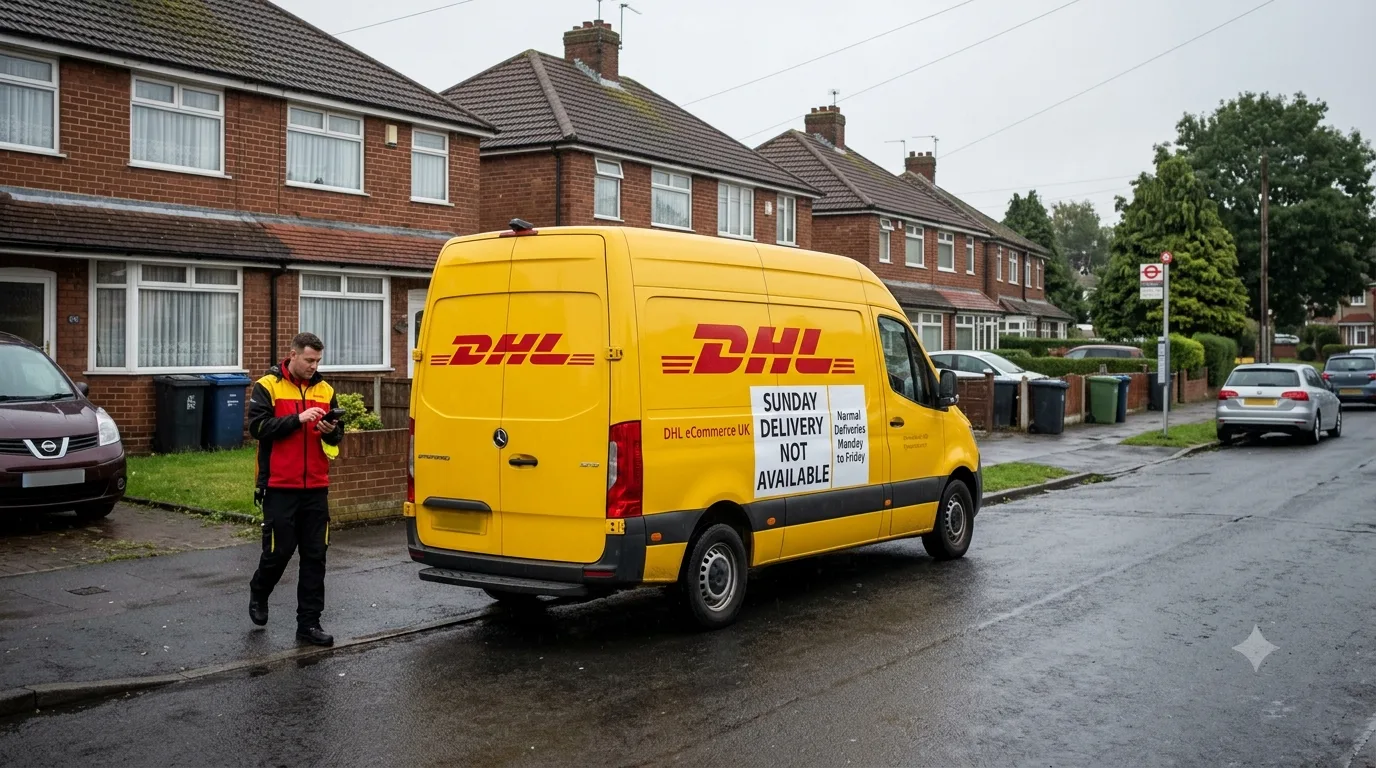
A later restructuring involving George at Asda could result in up to 1,000 job losses. The supermarket is moving its online clothing operation from three sites to one DHL-operated facility in Derby. Around 1,250 workers were expected to transfer to DHL, while the automated destination site was expected to require substantially fewer employees.
Being placed “at risk” does not mean an employee has already been dismissed. It normally means a proposed change is subject to consultation before final decisions are made.
Asda Managers’ Redundancies: Why Were Roles Put at Risk?
The proposed management cuts followed weak Christmas trading, with sales down 4.2% and market share falling to 11.4%.
The restructuring aims to simplify management, reorganise transport and outsource some parcel services. Asda said its parcel network was outdated, with fewer than half of stores offering next-day collection, and it plans to expand this through a partnership with Evri.
Overall, the changes are intended to improve efficiency, though they may reduce roles through consolidation and outsourcing.
Asda Job Losses and Redundancies: A Clear Timeline
Key Developments:
| Period | Development | Employment impact | Status |
| 2024–2025 | Head-office and technology restructuring | Hundreds of roles are affected by separate changes | Previously announced |
| 2025 financial year | Overall workforce reduction | Nearly 7,500 fewer reported roles | Reflected in annual reporting |
| January 2026 | Distribution and management restructuring | More than 150 roles at risk | Consultation reported |
| June 2026 | George online clothing consolidation | Up to 1,000 potential job losses | Proposed restructuring |
| End of 2025 | Net debt reduction | Debt fell from £3.6bn to £3.1bn | Confirmed result |
These numbers should not simply be added together because they cover different periods, employment categories and stages of consultation.
How Much Debt Does Asda Have?
Asda reported net debt of £3.1 billion at the end of 2025, representing a £500 million reduction from the previous year.
The reported £730 million figure is not Asda’s total debt. It represents the annual cost of servicing its financing arrangements during 2025.
The Main Figures Explained the Following:
| Figure | What it means |
| Nearly 7,500 | Reduction in Asda’s reported workforce |
| More than £730m | Reported annual finance costs |
| £3.1bn | Net debt at the end of 2025 |
| £989m | Pre-tax loss for 2025 |
| £764m | Adjusted EBITDA after rent |
| £2.1bn | Reported total liquidity |
Asda’s finance costs reportedly increased from approximately £611 million in 2024 to more than £730 million in 2025.
Finance costs may include interest and other expenses associated with borrowing. A company can reduce its net debt while its annual finance costs rise because interest rates, loan terms and financing fees can change.
Why Is Asda Under Financial Pressure in 2026?

Asda’s challenges stem from multiple pressures rather than a single issue. Sales excluding fuel dropped by 3.3% to £21 billion in 2025, while adjusted EBITDA after rent fell sharply by 33.1% to £764 million.
The company also reported a pre-tax loss of £989 million, up from £599 million the previous year, with total sales including fuel declining to £25.9 billion.
Key factors include:
- Exceptional costs from the Walmart system separation and property revaluation
- Investment in lower prices to regain customers, reducing short-term margins
- Rising finance costs limiting funds for operations and improvements
These combined pressures highlight the complexity of Asda’s financial situation
Why Is Asda Losing Customers?
Asda has faced weaker price perception, operational disruption and intense competition from Tesco, Sainsbury’s, Aldi and Lidl.
The Project Future technology change affected stock movements, online grocery operations and the customer experience. Asda later reported that availability had recovered to an eight-year high of 95%.
The company is now attempting to restore its traditional value positioning. Its FY2025 update said price investment had created a gap of between 4% and 7% against traditional competitors.
There were also signs of improvement during early 2026. Asda said monthly like-for-like sales moved from a decline in January and February to growth in March, although Reuters later reported a 0.8% year-on-year decline for the first quarter as a whole.
The mixed figures suggest that Asda’s performance may be stabilising, but a sustained recovery has not yet been established.
Is Asda’s Debt Responsible for the Job Cuts?
Debt is a major source of pressure, but it would be misleading to say it directly caused every Asda job loss. The relationship is more indirect.
How Can Financial Pressure Affect Employment?
- Higher finance costs reduce financial flexibility.
- Lower sales weaken operating income.
- Price reductions put pressure on profit margins.
- Management looks for efficiency savings.
- Restructuring, outsourcing and automation can reduce staffing requirements.
Other causes include the completion of Project Future, the Leon disposal, distribution changes and warehouse automation.
Asda’s own statement rejects a direct connection between the annual headcount reduction and finance costs. Responsible reporting should therefore present debt as part of the wider commercial context rather than as a proven single cause.
What Is Asda’s Redundancy Policy?

Asda’s complete current internal redundancy policy is not publicly available in sufficient detail to confirm what every affected worker will receive.
Under general UK rules, a redundancy process may involve consultation, fair selection criteria, consideration of alternative roles, notice and redundancy pay.
The UK Government’s official redundancy guidance explains employees’ statutory rights, while the ACAS redundancy pay guidance describes how statutory payments are calculated.
Statutory redundancy pay usually depends on age, continuous service and weekly earnings. Employees normally require at least two years of continuous service to qualify, although contractual or enhanced arrangements may provide more favourable terms.
Workers should not assume that older reports about Asda redundancy packages still apply in 2026. The terms can vary between restructurings and should be confirmed through current written documentation.
Could Asda Go Out of Business?
There is no confirmed evidence that Asda is preparing to enter administration or cease trading. Nevertheless, the business faces meaningful risks: high finance costs, lower earnings, reduced market share and the need to fund a multi-year turnaround.
There are also indicators of resilience. Net debt fell by £500 million, the company reported £1.3 billion in cash and £2.1 billion in liquidity, and Asda said most of its borrowings were secured into the next decade.
Whether Asda can recover will depend on its ability to:
- generate sufficient cash;
- meet financing obligations;
- restore sales growth;
- improve customer confidence;
- maintain competitive prices;
- Avoid damaging service through excessive cost reduction.
Job cuts and annual losses are warning signs, but they do not independently prove that a company will fail.
Will Aldi Overtake Asda?
Aldi remains a serious competitive threat because of its strong value reputation, simpler operating model and appeal to price-conscious households.
Whether Aldi overtakes Asda depends on the measurement period and future market-share performance. It should not be presented as a certain outcome.
Asda’s ability to defend its position will depend on whether it can sustain lower prices, maintain stock availability and improve store and online service while managing its debt.
Reducing employment can lower costs, but cuts that weaken shelf availability, delivery performance or customer service could make recovery more difficult.
Confirmed Facts and Claims to Treat Carefully
Confirmed:
- Asda’s reported workforce fell by nearly 7,500 roles.
- Net debt stood at £3.1 billion at the end of 2025.
- Finance costs exceeded £730 million.
- Adjusted EBITDA after rent fell to £764 million.
- Separate 2026 redundancy proposals affected management and logistics roles.
Claims requiring context:
- The 7,500 roles were not necessarily one redundancy programme.
- £730 million is not Asda’s total debt.
- Asda has not announced that it is in administration.
- Up to 1,000 George roles were at risk through a proposed restructuring, not necessarily already lost.
- Debt contributed to financial pressure but was not proven to be the sole cause of every job reduction.
Keeping these distinctions clear prevents financial and employment reporting from becoming misleading.
Conclusion
Asda is attempting to rebuild its competitive position while dealing with expensive borrowing, declining annual sales and extensive operational change.
Its workforce reduction reflects completed technology work, organisational changes and business disposals as well as separate redundancy proposals. Debt is an important part of the commercial pressure, but it cannot responsibly be presented as the sole explanation for every lost role.
Asda has reduced its net debt and reported signs of improving availability and sales momentum. However, high finance costs, weakened earnings and intense supermarket competition mean its turnaround remains uncertain.
Frequently Asked Questions
Is Asda in trouble financially?
Asda is under significant pressure from high finance costs, weaker earnings and falling annual sales. However, it continues to trade, has reported substantial liquidity and has not announced that it is insolvent.
Is Asda in trouble in 2026?
Asda faces a difficult turnaround in 2026, including restructuring and market-share pressure. Its early-year trading showed some improvement, but a sustained recovery has not yet been confirmed.
Are Asda making redundancies?
Yes. More than 150 management and distribution roles were reported at risk in early 2026, while a separate George logistics restructuring could lead to up to 1,000 job losses.
Did Asda make 7,500 employees redundant?
Not necessarily. Asda’s workforce fell by nearly 7,500 roles, but the figure includes several types of organisational change and should not be described as one mass redundancy exercise.
Are Asda managers being made redundant?
More than 80 management roles were reportedly included in a distribution restructuring proposal announced after weak Christmas trading. Roles placed at risk remain subject to the relevant process and final decisions.
What is Asda’s redundancy policy?
The exact current policy depends on Asda’s internal terms and the relevant restructuring. Employees should check consultation documents, contracts, company communications and official employment guidance.
How much debt does Asda have?
Asda reported net debt of £3.1 billion at the end of 2025, down by £500 million from the previous year.
Why are Asda’s finance costs so high?
Asda carries substantial borrowing associated with its ownership and financing structure. Interest rates, fees and lending terms can make the annual cost of servicing that borrowing significant.
Could Asda go out of business?
There is no confirmed announcement that Asda will stop trading or enter administration. Its future depends on sales recovery, cash generation, refinancing and the success of its turnaround.
Why is Asda losing customers?
Operational disruption, inconsistent availability, weaker price perception and strong competition have contributed. Asda says its availability and value position have since improved.
Will Aldi overtake Asda?
Aldi could continue to challenge Asda’s market position, but an overtake is not certain. Future rankings will depend on sales, store expansion, prices and customer demand.
Is Asda replacing warehouse workers with robots?
Automation is a significant part of the George clothing distribution proposal. The new DHL-operated site is expected to require fewer roles, but automation does not explain all Asda job losses.