
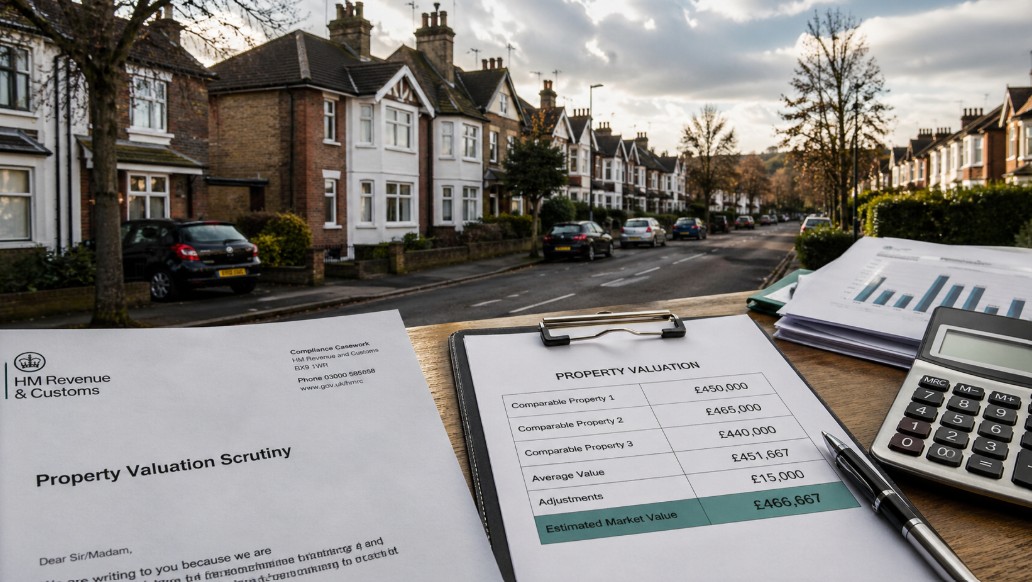
HMRC property valuation scrutiny is entering a more aggressive and data-driven phase in 2026, particularly affecting inheritance tax (IHT) reporting across the UK.
With referrals to the Valuation Office Agency (VOA) rising by 23.5%, HMRC is no longer accepting property valuations at face value and is actively challenging discrepancies.
This shift places executors, property owners, and estate planners under increased pressure to ensure accuracy and compliance.
Key highlights:
- HMRC is intensifying checks on property valuations in IHT returns
- VOA referrals increased from 11,845 to 14,631 in one year
- AI and data tools are improving detection of valuation inconsistencies
- Incorrect valuations can lead to penalties, tax liabilities, and delays
Understanding these developments is essential for staying compliant and avoiding costly penalties.
Why Is HMRC Property Valuation Scrutiny Increasing in 2026?

The rise in HMRC property valuation scrutiny is not accidental. It reflects a broader strategy to close tax gaps and ensure that estates are accurately reported.
With inheritance tax receipts reaching £8.5 billion in 2025/26, HMRC has identified property valuations as a critical area for revenue recovery.
Several factors are driving this increase. Rising house prices have pushed more estates above the £325,000 threshold, while frozen tax bands mean more families are now liable for inheritance tax. At the same time, HMRC has enhanced its enforcement capabilities.
An HMRC spokesperson stated:
“Where discrepancies are identified in property valuations, we are increasingly using data-led approaches to ensure the correct amount of tax is paid.”
This combination of economic pressure and technological advancement has made property valuation a central focus of tax compliance in 2026.
What Does HMRC Property Valuation Scrutiny Mean for UK Property Owners?
For UK property owners, this heightened scrutiny introduces a new level of accountability. Property valuations are no longer treated as simple estimates but as critical financial declarations subject to verification.
Executors and beneficiaries must now ensure that valuations reflect accurate market conditions at the time of assessment.
Even small discrepancies can trigger further enquiries, particularly if HMRC identifies inconsistencies through its data systems.
In practical terms, this means property owners must approach valuations with greater diligence, ensuring that documentation and supporting evidence are both credible and defensible.
How Is the Valuation Office Agency (VOA) Involved in Property Valuation Checks?

The Valuation Office Agency plays a central role in supporting HMRC’s enforcement strategy. As scrutiny intensifies, the VOA is increasingly tasked with reviewing property valuations submitted in IHT returns.
The Role of the VOA in Supporting HMRC
The Valuation Office Agency plays a crucial role in verifying property valuations submitted to HMRC. It acts as an independent body that assesses whether reported values align with market conditions.
Why Referrals to the VOA Are Rising?
Referrals to the VOA have increased sharply, signalling a clear shift in HMRC’s enforcement approach. Cases that might previously have gone unchallenged are now being reviewed in detail.
How VOA Assessments Impact Property Valuations?
When the VOA reviews a valuation, it may request additional evidence or propose a revised figure. This can directly affect the amount of inheritance tax owed and may lead to further investigation if discrepancies persist.
What Triggers HMRC Property Valuation Investigations?
HMRC uses a combination of data analysis and market comparison to identify valuations that require further scrutiny.
Common triggers include:
- Property values significantly below comparable market sales
- Large differences between probate value and eventual sale price
- Lack of formal valuation evidence
- High-value or unique properties
- Inconsistent information across tax documents
These triggers highlight the importance of consistency and transparency when reporting property values.
How Can Executors Ensure Accurate Property Valuations for Inheritance Tax?

Executors carry a legal responsibility to ensure that property valuations are accurate, well-supported, and compliant with HMRC expectations. In the current environment, a cautious and evidence-led approach is essential.
To minimise risk and ensure reliability, executors should:
- Obtain a formal valuation from a RICS-qualified surveyor
- Retain detailed records of comparable property transactions
- Clearly document the property’s condition, features, and any limitations
- Seek professional legal or tax advice for complex or high-value estates
Comparison of Valuation Approaches:
| Valuation Type | Reliability Level | HMRC Acceptance | Risk Level |
| Estate agent estimate | Medium | Limited | Higher |
| Online property tools | Low | Minimal | High |
| RICS professional valuation | High | Strong | Low |
Adopting a structured and well-documented valuation process significantly reduces the likelihood of disputes and ensures smoother estate administration.
What Are the Financial Consequences of Incorrect Property Valuations?
Errors in property valuation can lead to substantial financial consequences. HMRC may impose additional inheritance tax, along with interest and penalties, if a property is found to be undervalued.
In more serious cases, executors may face personal liability, particularly where negligence or insufficient due diligence is identified. This raises the stakes considerably, making accuracy a critical priority.
A legal expert highlights the risk clearly:
“If an executor fails to report a property value properly, there can be financial consequences such as additional tax and interest, potentially by the executor personally.”
Real-world perspective:
While researching this topic, I came across a UK homeowner who experienced this first-hand. They shared:
“We thought the estate agent’s valuation was enough, but HMRC challenged it months later. It delayed everything and cost us thousands more in tax.”
This example illustrates how relying on informal estimates can lead to costly and avoidable complications.
How Is Technology Changing HMRC Property Valuation Scrutiny?
Technology is transforming how HM Revenue & Customs conducts property valuation scrutiny in 2026.
What was once a manual process is now data-driven, enabling faster detection of discrepancies and increasing both the number of checks and the accuracy expected in Inheritance Tax (IHT) valuations
Use of Artificial Intelligence and Data Matching
HMRC now leverages artificial intelligence and advanced data matching tools to analyse property valuations against extensive datasets.
These systems can process large volumes of information quickly, identifying patterns and anomalies that would be difficult to detect through manual review alone.
By comparing submitted valuations with internal and external data sources, HMRC can flag inconsistencies early in the process.
Cross-Referencing Property Market Data
One of the most significant advancements lies in HMRC’s ability to cross-reference property valuations with real-time and historical market data.
This includes examining:
- Previous sale prices of the same property
- Comparable property transactions within the same area
- Regional pricing trends and fluctuations
- Property-specific characteristics such as size, location, and condition
This layered analysis allows HMRC to determine whether a valuation aligns with genuine market conditions, reducing reliance on subjective estimates.
Increased Accuracy in Detecting Discrepancies
With these technological capabilities, the margin for error has narrowed considerably. Even minor inconsistencies can now trigger further investigation, making it essential for executors and property owners to ensure valuations are thoroughly evidenced and professionally prepared.
An industry expert summarised the shift clearly:
“Data analytics has transformed HMRC’s ability to identify inconsistencies, making property valuation scrutiny far more precise and proactive.”
As a result, compliance is no longer just about providing a reasonable estimate, it requires a defensible, data-backed valuation that can withstand detailed scrutiny.
Why Are More UK Estates Falling Under HMRC Property Valuation Scrutiny?

The rise in HMRC property valuation scrutiny is closely linked to structural changes in the UK property and tax landscape.
Increasing property values mean that more estates are crossing the inheritance tax threshold, even without significant changes in wealth.
At the same time, frozen tax thresholds and demographic shifts are amplifying the number of taxable estates.
Key Factors Driving Increased Scrutiny:
- Rising property and asset values across the UK
- Frozen inheritance tax thresholds since 2009
- Expanded use of data analytics and AI by HMRC
- Stronger focus on compliance and revenue recovery
Inheritance Tax Overview:
| Factor | Impact on Estates |
| Rising house prices | Higher overall estate valuations |
| Frozen £325,000 threshold | More estates become taxable |
| 40% IHT rate above threshold | Increased financial liability |
| AI-driven HMRC checks | Greater likelihood of investigation |
Ian Dyall, Head of Estate Planning, explains:
“The rise in inheritance tax receipts reflects long-term structural factors, including frozen thresholds and accumulated property wealth.”
What Evidence Is Required to Support Property Valuations in the UK?
Providing strong supporting evidence is essential when facing HM Revenue & Customs property valuation scrutiny. Without proper documentation, even reasonable valuations can be questioned or rejected.
To support your valuation effectively, you should combine expert input with clear, verifiable data. This typically includes:
- Professional valuation reports from qualified surveyors
- Comparable sales data from similar properties in the same area
- Detailed descriptions of the property’s condition, size, and unique features
In addition, supplementary materials can further strengthen your position. Photographs, renovation records, and historical transaction data help create a complete and transparent picture of the property’s value.
Ultimately, well-prepared documentation shows due diligence and credibility. This reduces the risk of disputes and helps streamline any review process, making it less likely that your valuation will face prolonged investigation.
How Can Property Owners and Executors Prepare for HMRC Scrutiny in 2026?
Preparation is key to navigating the new phase of HMRC property valuation scrutiny. Executors and property owners should take a proactive approach to compliance.
To stay prepared, focus on a few key actions:
- Obtain professional valuations early in the process
- Keep detailed records of all property-related information
- Review valuations if market conditions change
- Respond promptly to HMRC enquiries
- Seek expert advice when dealing with complex estates
By taking these steps, individuals can reduce the risk of disputes and ensure smoother estate administration.
Conclusion
HMRC property valuation scrutiny is clearly entering a more rigorous phase in 2026, driven by rising property values, frozen tax thresholds, and advanced data analytics.
Executors and property owners must now prioritise accuracy, transparency, and professional guidance when reporting property values.
As scrutiny intensifies, the risks associated with incorrect valuations are growing. However, with the right preparation and expert support, individuals can navigate these changes effectively and avoid unnecessary financial consequences.
FAQs About
How long does an HMRC property valuation check usually take?
HMRC property valuation checks can take several weeks or even months, depending on the complexity of the estate and whether additional evidence is required.
Can HMRC challenge a valuation after probate is granted?
Yes, HMRC can revisit valuations after probate if discrepancies are identified later.
Is a professional valuation always necessary?
While not legally required, professional valuations significantly reduce the risk of HMRC challenges.
Do property market changes affect valuations?
Yes, fluctuating market conditions can impact property values and may lead to reassessment.
Are rental properties treated differently for valuation?
Rental properties are assessed similarly but may require additional income-based valuation considerations.
What happens if HMRC disagrees with a valuation?
HMRC may request further evidence, adjust the valuation, and recalculate tax liabilities.
Can disputes with HMRC be appealed?
Yes, taxpayers can challenge HMRC decisions through formal appeal processes if they disagree with the outcome.