

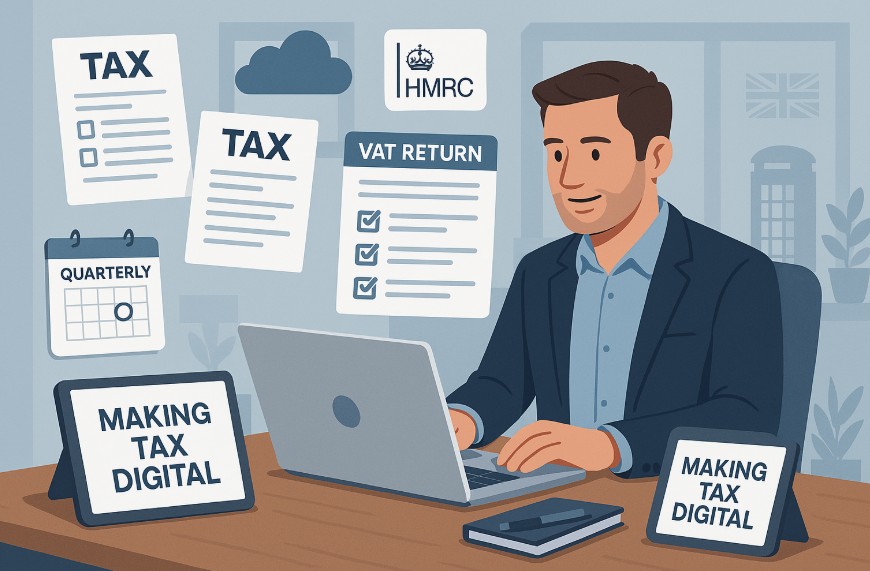
In 2024, over 95% of UK adults were regular internet users, according to data from the Office for National Statistics. This shift to a digital-first society has influenced everything from banking to healthcare and now, the UK’s tax system. Making Tax Digital (MTD) is a major government-led initiative introduced by HM Revenue and Customs (HMRC) to transform how individuals and businesses interact with the tax system.
As part of the government’s broader Tax Administration Strategy, MTD is designed to reduce the tax gap by requiring the digital submission of records, regular updates throughout the year, and the use of compatible software for reporting.
But what does this actually mean in practice? How does it affect businesses and individuals? And what should you do to stay compliant?
This guide explores everything you need to know about Making Tax Digital from who it affects to how you can register, and why it’s shaping the future of UK taxation.
What Does Making Tax Digital Mean for the UK Tax System?
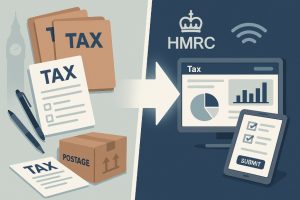
Making Tax Digital is not simply a technological upgrade. It represents a fundamental change in the way taxpayers manage their financial records and interact with HMRC. Under this initiative, businesses and individuals are required to keep digital records of their income and expenses, submit quarterly tax updates, and use HMRC-approved software for filing.
The primary goal is to reduce the tax gap, the difference between the amount of tax owed and what HMRC actually collects. Inaccurate or late filings, often due to human error or misinterpretation of tax rules, are a major contributor to this shortfall. HMRC has published evaluations indicating that MTD is already proving effective in reducing this gap, particularly in the VAT segment.
By digitising tax processes, MTD seeks to create a more accurate, transparent, and efficient system. It enables taxpayers to maintain up-to-date financial records and eliminates the burden of annual tax returns through real-time reporting.
How Has the Making Tax Digital Rollout Progressed?
Making Tax Digital is being implemented in phases to give businesses, landlords, and self-employed individuals time to adapt. The journey began with VAT and will eventually include other forms of tax such as Income Tax and Corporation Tax.
The first phase launched in April 2019, requiring VAT-registered businesses with taxable turnover above the £85,000 threshold to comply with MTD rules. From April 2022, this was extended to all VAT-registered businesses, regardless of turnover.
Looking ahead, the government has set out the following timeline for MTD for Income Tax Self Assessment (ITSA):
- From April 2026, MTD for ITSA will apply to self-employed individuals and landlords with a business or property income above £50,000.
- From April 2027, it will be extended to those earning over £30,000.
A pilot programme for MTD for ITSA is currently live, allowing eligible businesses and agents to voluntarily participate. This testing phase helps refine the system before it becomes mandatory.
Secondary legislation introduced in 2019 and updated in 2022 provides the legal framework for MTD compliance. It sets out requirements for digital record-keeping and outlines how returns must be submitted to HMRC.
Who Needs to Follow the Making Tax Digital Rules?
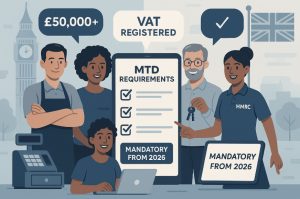
The scope of MTD is expanding, but currently it applies to:
- All VAT-registered businesses, regardless of turnover. This includes sole traders, partnerships, limited companies, and non-profits that are registered for VAT.
- Self-employed individuals and landlords with income over £50,000, from April 2026.
- Individuals with income over £30,000 from self-employment or property, from April 2027.
Even businesses that fall below the VAT threshold can voluntarily opt into MTD for VAT to benefit from digital record-keeping and reporting.
However, HMRC does acknowledge that MTD may not be suitable for everyone. Exemptions may be granted in cases where individuals or businesses cannot use digital tools due to age, disability, or lack of internet access. Religious grounds and insolvency may also qualify as valid reasons for exemption. These must be applied for directly with HMRC and are assessed on a case-by-case basis.
How Are Tax Returns Submitted Under Making Tax Digital?
Submitting tax information under MTD is fundamentally different from traditional methods. Instead of filing an annual return, taxpayers must now maintain digital records throughout the year and send quarterly updates to HMRC using compatible software.
The aim is to simplify the process by breaking it into smaller, manageable tasks and keeping HMRC informed of your financial position in near real time. This also allows for more timely tax calculations, helping businesses avoid surprises at year-end.
A digital submission typically involves:
- Recording income and expenses digitally, using software or apps
- Generating quarterly summaries through that software
- Submitting these summaries directly to HMRC via an authorised API
For VAT, this means recording all VAT-related transactions digitally, including dates, amounts, and VAT rates. Any adjustments made to rectify errors must also be recorded.
If you’re using a spreadsheet to manage your accounts, you’ll need bridging software, a tool that connects your spreadsheet to HMRC’s systems to allow for digital submission.
What Are the Key Benefits of the UK’s Digital Tax System?

One of the most notable benefits of Making Tax Digital is the improved accuracy it brings to tax reporting. Manual entries and paper-based records are prone to errors, especially when figures are copied between spreadsheets, forms, and HMRC’s portal.
By automating these processes through compatible software, taxpayers significantly reduce the risk of making costly mistakes. This is particularly important as HMRC estimates that errors in tax submissions cost the Exchequer over £9 billion annually.
In addition to accuracy, MTD brings several other advantages:
- Real-time visibility into your tax obligations, making it easier to manage cash flow and budgeting
- Greater efficiency by reducing administrative workloads and minimising the time spent on compliance
- Enhanced transparency, both for businesses and HMRC
- Improved productivity, as businesses can focus on growth rather than paperwork
The move to digital also supports flexible working, with cloud-based systems enabling businesses to manage tax from virtually anywhere.
What Challenges Do Businesses Face with Making Tax Digital?
While MTD offers numerous advantages, the transition may present challenges, especially for small businesses or those unfamiliar with digital tools.
Cost is a common concern. Most MTD-compatible software products are subscription-based and may incur monthly fees, typically ranging from £10 to £30. Though not exorbitant, this is still a new expense for businesses that previously relied on manual methods.
Digital literacy also plays a role. Some business owners, particularly older generations, may struggle with adopting new technologies. There may also be issues with reliable internet access in rural areas, further complicating compliance.
Another challenge lies in the need for system compatibility. Businesses must ensure that their existing accounting systems integrate seamlessly with HMRC’s digital infrastructure. This often requires updating or replacing older software.
Lastly, there’s the risk of penalties. The MTD penalty system is points-based: late submissions accrue points, and accumulating enough points results in a £200 fine. Continued non-compliance leads to further penalties. Therefore, staying organised and keeping to submission deadlines is essential.
What Are the Deadlines and Compliance Requirements for MTD?
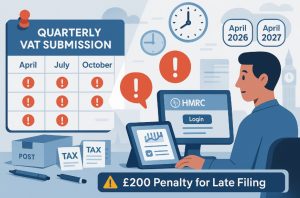
Deadlines for compliance vary depending on the type of tax and business structure. However, for most VAT-registered businesses, MTD is already mandatory.
Here’s a quick overview of key dates:
| Requirement | Deadline/Effective Date |
| MTD for VAT (over £85,000 turnover) | April 2019 |
| MTD for all VAT-registered businesses | April 2022 |
| MTD for ITSA (income > £50,000) | April 2026 |
| MTD for ITSA (income > £30,000) | April 2027 |
All businesses must submit their quarterly returns using HMRC-recognised software. Once registered, HMRC confirms your enrolment via email. You must wait for this confirmation before submitting any data.
If you miss a submission, a penalty point is issued. When you reach the threshold (which varies depending on the submission frequency), a £200 fine applies. Further penalties are added for continued lateness.
How Can Businesses Prepare for Making Tax Digital?
Preparation is key to a smooth MTD transition. Start by evaluating your current accounting practices. If you’re still using spreadsheets or paper records, now is the time to move to digital solutions.
Choose MTD-compatible accounting software that fits your business needs and confirm that it’s authorised to connect with HMRC. Software vendors usually offer onboarding support and training modules to help with the transition.
Educate your team on the new processes and set up reminders for quarterly submissions. If you work with an accountant, confirm they are MTD-ready and can support you with ongoing compliance.
It’s also wise to test your digital systems ahead of deadlines and consider signing up for HMRC’s pilot programmes if you’re eligible.
What Does Making Tax Digital Mean for Accountants and Bookkeepers?
The role of accountants and bookkeepers is evolving as MTD takes hold. While some manual tasks are being automated, new opportunities are emerging in advisory services and software support.
Accountants now serve as digital guides for their clients, helping them:
- Select and implement compatible software
- Train staff on using digital systems
- Review and verify digital records
- Submit quarterly updates and end-of-period statements
This shift fosters closer collaboration between businesses and their accountants, enabling proactive financial planning based on real-time data rather than retrospective reports.
How Does Digital Tax Filing Compare to Traditional Methods?
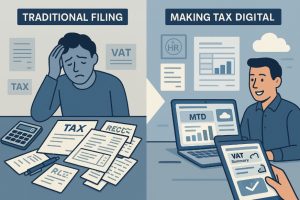
| Feature | Traditional Filing | Making Tax Digital (MTD) |
| Submission Method | Manual / Paper | Digital software |
| Record Keeping | Paper-based | Digital, cloud-based |
| Error Risk | High | Reduced with automation |
| HMRC Communication | By post | Real-time updates |
| Compliance | Basic | Regulated software required |
MTD replaces outdated methods with an intuitive, responsive digital system that enhances efficiency and clarity for both taxpayers and HMRC.
Is Making Tax Digital the Future of UK Tax?
Without a doubt, MTD is shaping the future of tax compliance in the UK. The government’s long-term vision is to digitise all business taxes, including Corporation Tax and more complex areas of self-assessment.
By embracing digital tools now, businesses gain a competitive edge. They benefit from greater efficiency, better financial insights, and easier compliance. As more phases of MTD roll out, being prepared and proactive will ensure a smoother transition and fewer disruptions.
FAQs About Making Tax Digital
What is the purpose of Making Tax Digital?
MTD is designed to reduce tax errors and improve compliance by requiring digital record-keeping and quarterly updates to HMRC.
Is Making Tax Digital mandatory for all businesses?
It is mandatory for all VAT-registered businesses and will expand to include self-employed individuals and landlords above specific income thresholds.
How do I register for Making Tax Digital?
You can register via HMRC’s online portal using your Government Gateway credentials. You’ll also need your VAT number and business details.
Can I be exempt from Making Tax Digital?
Yes, if you are unable to use digital tools due to disability, age, location, or religious beliefs, you can apply for an exemption through HMRC.
What if I already use accounting software?
Check if your software is MTD-compatible. Most major platforms like QuickBooks, Xero, and Sage are supported, but you’ll need to confirm.
When will MTD apply to Income Tax?
It applies from April 2026 for income over £50,000 and from April 2027 for income over £30,000. A pilot programme is currently running.
What records do I need to keep digitally?
You must keep records of income, expenses, VAT transactions, and adjustments in a digital format. These records must be preserved for at least six years.