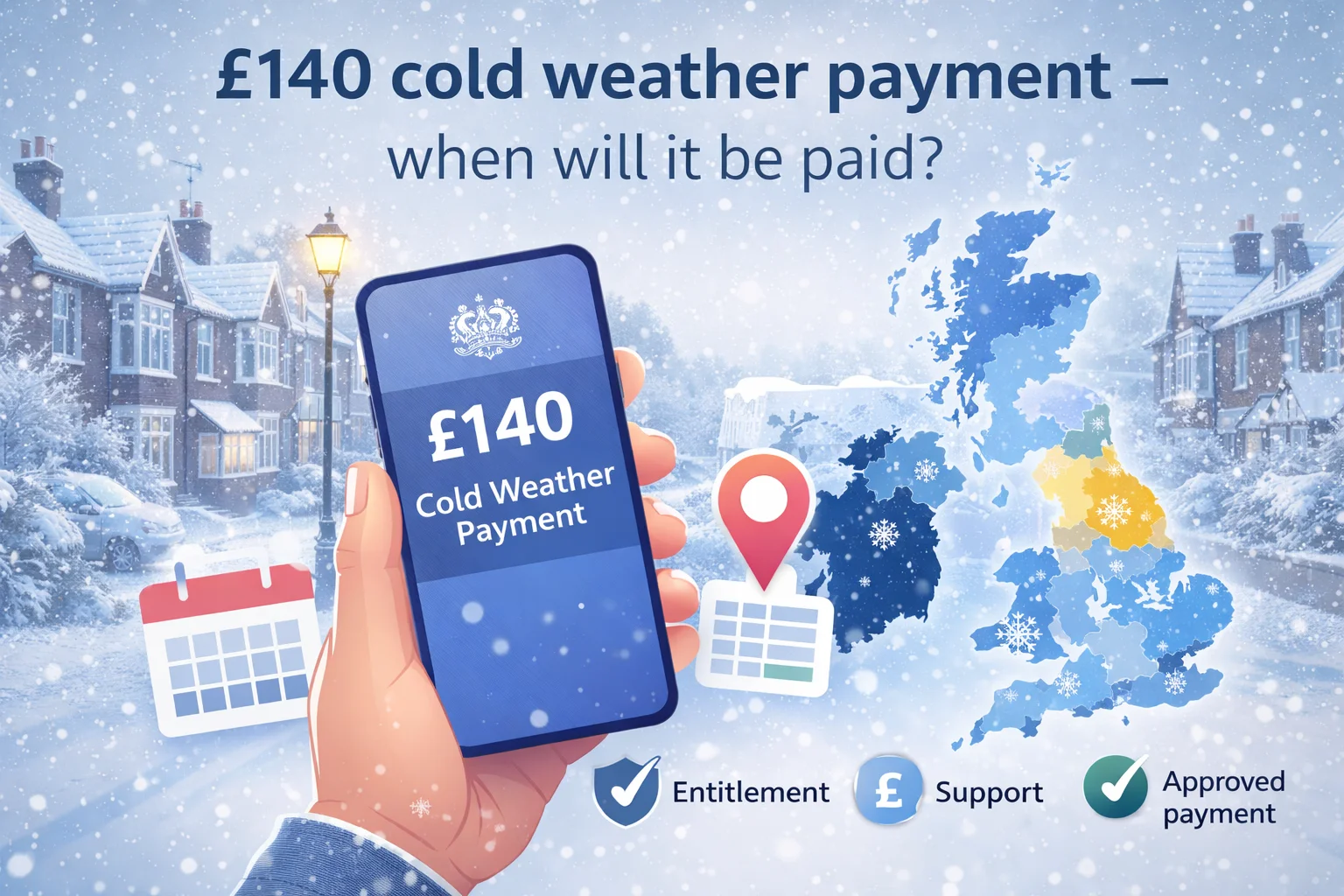
This winter across the UK has seen prolonged periods of freezing temperatures, leading many people entitled to support to ask the same question: when will the £140 Cold Weather Payment be paid into my account?
Rather than a fixed date, Cold Weather Payments are released based on actual weather conditions in your local area and your benefit status. In this blog, I explain how the system works, when to expect the money, what to do if nothing arrives, how this support interacts with other benefits, and where to find official information. My aim is to give you clear, accurate information you can act on, without guesswork.
The government’s official guidance is laid out on the Cold Weather Payment page on GOV.UK, which confirms eligibility criteria, payment processes, and timing details that I summarise and explain below.
What Is the Cold Weather Payment and Who Qualifies for It?
The Cold Weather Payment is a winter support payment made by the UK government to help eligible people with additional heating costs during prolonged cold weather.
It is designed to respond only when there is sustained freezing temperature, specifically, when the average temperature in your postcode area is zero degrees Celsius or lower for seven consecutive days between 1 November and 31 March in a given winter. Eligible claimants receive £25 for each such qualifying cold spell.
This payment is different from regular benefit payments. It is tied directly to weather conditions and is separate from the Winter Fuel Payment, which is a one‑off annual payment paid on age and eligibility criteria, usually in autumn or early winter rather than in response to freezing spells.
Eligibility for a Cold Weather Payment depends on the benefits you already receive. According to the Cold Weather Payment eligibility information on GOV.UK, you may qualify if you are on income‑related support such as Pension Credit, Income Support, income‑based Jobseeker’s Allowance (JSA), income‑related Employment and Support Allowance (ESA), Universal Credit (with specific conditions), or certain other means‑tested benefits.
The list of qualifying benefits is set by statute and designed to target support to people on lower incomes or with defined needs during cold weather.
It is also important to note that this scheme does not operate in Scotland. Instead, Scottish residents access a separate Winter Heating Payment scheme that follows different rules.
Do I Need to Apply to Get the Cold Weather Payment?
One of the key features of the Cold Weather Payment is that you do not need to apply for it. If you are already receiving one of the qualifying benefits and your local area experiences a qualifying cold spell, the payment should be issued automatically.
This principle of automatic payment is intended to reduce the burden on claimants and speed support to people who need it.
When the weather trigger happens, the Department for Work and Pensions (DWP) uses data from the Met Office and other official sources to determine where freezing conditions have occurred. Once conditions are met, the system flags eligible benefit claimants in those areas and initiates a payment.
The system is designed to be hands‑off for most people: you do not have to write, call, or submit a new claim just to get this payment, assuming you are on a recognised benefit.
The Cold Weather Payment is paid into the same bank or building society account that you use for your regular benefit payments, so you should receive it alongside or shortly after your scheduled benefit payments once the processing period is completed.
There are rare cases where administrative or record mismatches mean the automated system can’t make the payment. In those cases, manual intervention by a benefits office might be needed, which I explain in detail further below.
When Will the Cold Weather Payment Be Paid?
The question most people want answered When will the Cold Weather Payment be paid? has a clear logic once you understand the process.
Cold Weather Payments are not paid on one single calendar date. Instead, they are tied to specific weather conditions in your postcode. Once a period of seven consecutive days at or below zero degrees Celsius has occurred, the payment becomes due.
At that point, the official guidance on “when you’ll get paid” states that you should receive the payment within 14 working days of the cold spell ending. This means that you need to know two pieces of information: the date the cold period ended in your area and your usual benefit payment schedule.
The table below summarises how this works:
| Event | Action and Timing |
| Cold weather meets the eligibility criteria | Weather data triggers a payment flag for your postcode |
| Department for Work and Pensions processes | DWP initiates payment based on your benefit record |
| Payment issued | Paid into your benefit account within 14 working days of cold spell ending |
For example, if your postcode recorded the seven days of freezing weather ending on a Sunday, and your benefits are paid weekly on a Friday, the payment process will begin after the cold spell ends, and you should see the £25 payment within 14 working days.
This timeline remains consistent regardless of whether multiple cold spells occur in short succession.
Because each qualifying cold spell triggers a separate payment of £25, the total you receive over a season, commonly talked about as £140 in media and public discussion, is really the aggregate sum of multiple £25 payments issued over time.
How Much Could I Receive This Winter?
Your total Cold Weather Payment for a season depends entirely on how many qualifying cold spells occur in your postcode area. There is no statutory cap on the number of payments you can receive, as long as separate qualifying periods continue to occur.
The table below illustrates a typical payment pattern:
| Number of Qualifying Cold Spells | Total Cold Weather Payment Received |
| 1 | £25 |
| 2 | £50 |
| 3 | £75 |
| 4 | £100 |
| 5 | £125 |
| 6 | £150 |
In practice, many areas of the UK have experienced multiple periods of extended frost this winter, and households there may already have received several £25 payments without noticing how they add up. The often‑quoted “£140 Cold Weather Payment” is therefore not a single fixed payment but a running total based on separate £25 instalments.
What Should I Do If I Think I’m Due a Payment but Haven’t Received It?
Although Cold Weather Payments are designed to be automatic, there can be cases where eligible claimants do not see the payment in their bank account at the expected time. If you believe this has happened to you, there are two key checks to make:
Check Whether Your Area Qualified
The first step is to confirm whether your postcode area actually met the cold weather criteria for the payment you expect. For residents of Northern Ireland, the official government site provides a Cold Weather Payment checker that allows you to enter your postcode and see whether qualifying weather conditions were met there.
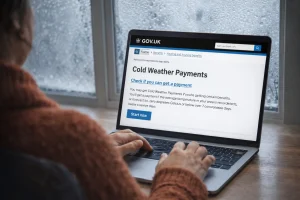
If you are in England or Wales, the GOV.UK Cold Weather Payment page includes a similar postcode check tool that shows where and when cold weather criteria were triggered. These tools are maintained by the relevant government departments and use official weather data to confirm whether conditions were met.
Contact the Appropriate Benefits Service
If the postcode checker confirms that your area did qualify for a payment but you still haven’t received it, the next step is to contact the benefits office that administers your claim. Because Cold Weather Payment eligibility is linked to the benefit you receive, the relevant contact depends on which benefit you are claiming:
- If you receive Universal Credit, sign in to your online account and add a note to your journal explaining that you believe a Cold Weather Payment is due. If you cannot use the online system, you can contact the Universal Credit helpline using the telephone number provided in your correspondence from the Department for Work and Pensions.
- If you receive other qualifying benefits such as Pension Credit, Income Support, JSA or ESA, you should contact Jobcentre Plus or the Pension Service. They can check your benefit record, confirm whether your details are up to date, and ensure that the payment has been processed or is scheduled to be.
Often a missing payment is the result of a mismatch between your benefit record and the automated system’s data requirements. A customer service adviser can usually resolve this with a record update or a manual payment process.
Does the Cold Weather Payment Affect Other Benefits?
It is important to understand how Cold Weather Payments interact with other benefits you might receive. According to the official guidance, these payments are separate from your other benefits and are not counted as income for benefit assessment purposes. Therefore, they should not reduce the amount you receive in Universal Credit, Pension Credit, or other statutory benefits.
This is different from some other types of payments or support where additional income could be taken into account for means‑tested assessments.
Because Cold Weather Payments are specifically designated as seasonal support, the Department for Work and Pensions excludes them from such calculations, which protects your ongoing benefit entitlement.
This distinction is also why Cold Weather Payments are often discussed alongside the Winter Fuel Payment. While both schemes provide financial support to help with heating costs in the winter, they serve different purposes and operate under different rules.
The Winter Fuel Payment is a regular annual payment based on age and eligibility, not tied to weather conditions, and is usually paid in the late autumn or early winter months, before most Cold Weather Payments are triggered.
Where Can I Find Official Information and Tools?
If you want the latest information or need to verify your eligibility or payment status, refer to the official government resources:
- The main Cold Weather Payment page on GOV.UK provides comprehensive guidance about eligibility, payment schedules, and how the scheme works.
- The Cold Weather Payment postcode checker allows you to see whether your area has recorded qualifying cold weather periods.
These government pages are updated throughout the winter season and reflect the most current official position on where and when payments have been triggered.