
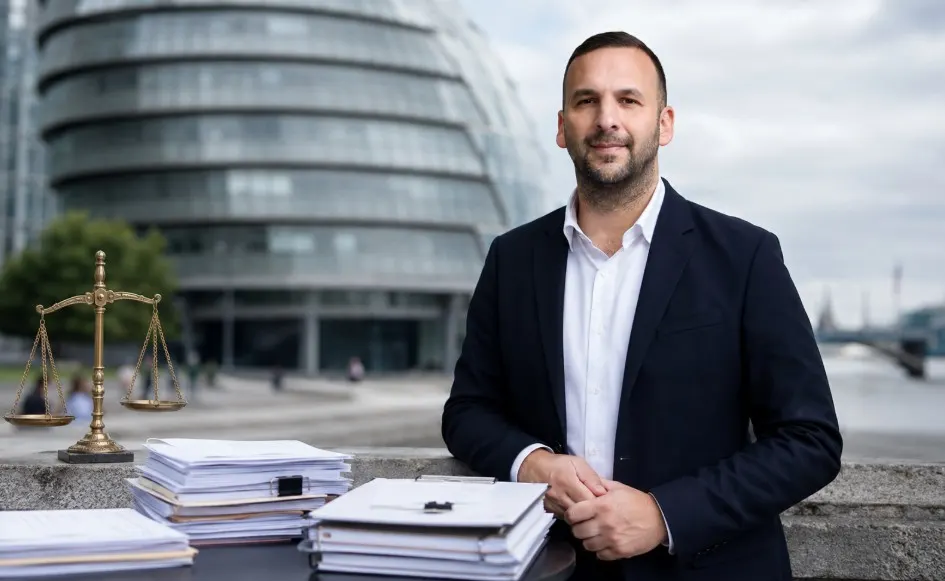
The Zack Polanski council tax case gained attention after allegations that the Green Party leader had not paid council tax while living on a houseboat in east London.
Following an ethics review, the Greater London Authority (GLA) concluded that the matter fell outside the London Assembly’s Code of Conduct and took no further action.
However, the inquiry did not determine whether council tax was legally owed, leaving questions about liability and accountability unresolved.
Key Highlights:
- Zack Polanski was cleared by a GLA ethics inquiry.
- The investigation focused on conduct rules, not tax liability.
- The GLA said the matter related to private living arrangements.
- Polanski stated any non-payment was due to a misunderstanding.
- He said he would pay any council tax found to be owed.
- The case has sparked debate about transparency and accountability.
What Happened in the Zack Polanski Unpaid Council Tax Case?
The controversy emerged after reports suggested that Zack Polanski and his partner lived on a narrowboat moored at a marina in east London for several years without paying council tax.
Questions were raised when electoral records reportedly showed the marina as his registered address, while he maintained that he also had accommodation elsewhere as a lodger. The issue quickly became politically sensitive because Polanski serves as a London Assembly member and is a prominent figure within the Green Party.
Critics argued that someone involved in public decision-making should have ensured their own tax affairs were fully understood and compliant.
As media scrutiny increased, the matter was referred to the Greater London Authority’s monitoring officer for consideration under the Assembly’s ethics framework.
Why Was Zack Polanski Investigated Over Council Tax?
The investigation stemmed from complaints submitted by Conservative Assembly Member Neil Garratt and supported by Labour figures.
They argued that the circumstances potentially raised concerns about compliance with public standards and the Assembly’s Code of Conduct.
The Houseboat and East London Marina Background
At the centre of the dispute was whether the houseboat constituted Polanski’s primary residence and whether council tax should have been paid during the period he lived there. Reports indicated the vessel was moored near the boundary of two local authorities, creating additional complexity regarding which council, if any, had jurisdiction.
Polanski stated that he believed charges associated with the mooring arrangement covered any applicable fees and obligations. He also argued that the circumstances involved an unusual housing arrangement that was not straightforward to assess.
The Political Accountability Question
Critics contended that the matter was relevant because London Assembly members help scrutinise budgets and council tax-related decisions affecting residents.
Key concerns raised by complainants:
- Whether council tax obligations had been properly understood.
- Whether public confidence could be affected.
- Whether the matter reflected on standards expected of elected representatives.
- Whether Assembly members should be held to higher accountability standards.
These arguments formed the basis of the formal complaint submitted to the GLA.
What Did the GLA Inquiry Find About Zack Polanski?
The inquiry concluded that no further action was necessary. The monitoring officer determined that the matter primarily concerned Polanski’s personal living arrangements rather than conduct directly connected to his official role as a London Assembly member.
The key finding was not that council tax was definitely not owed, but that the issue lacked a sufficient connection to his Assembly responsibilities to fall within the Code of Conduct framework.
Inquiry Findings Overview:
| Inquiry Area | Outcome |
| Code of Conduct Review | No breach found |
| GLA Investigation Status | Closed |
| Further Action | None required |
| Tax Liability Decision | Not determined |
| Official Role Connection | Insufficient connection found |
A governance specialist might summarise the distinction as follows:
“An ethics inquiry assesses conduct within a public role, whereas tax liability remains a separate matter determined through the appropriate legal and administrative processes.”
This distinction is critical for understanding why Polanski was cleared despite ongoing discussion about whether council tax may have been payable.
Does Being Cleared Mean No Council Tax Was Owed?
One of the most misunderstood aspects of the case is the meaning of the word “cleared”.
The GLA’s decision only addressed whether Polanski breached ethical rules governing London Assembly members. It did not determine the legal position regarding council tax.
According to evidence provided during the inquiry, discussions with the relevant local authorities were still ongoing regarding whether council tax applied, the period involved, and any amount potentially due.
Ethics Inquiry vs Council Tax Assessment
| Issue | Responsible Authority |
| Assembly conduct rules | Greater London Authority |
| Council tax liability | Relevant local council |
| Property valuation matters | Valuation authorities |
| Tax collection | Local authority |
As a result, the inquiry’s closure should not be interpreted as a final determination on council tax obligations themselves.
What Was Zack Polanski’s Explanation for the Council Tax Issue?
Throughout the investigation, Polanski maintained that there was never any intention to avoid paying tax or gain a financial advantage.
Financial Hardship and Unconventional Housing
In his witness statement, Polanski explained that he had previously experienced financial hardship and housing insecurity. He noted that for several years he lived as a property guardian, occupying vacant buildings under licence agreements at relatively low cost.
According to his account, these arrangements often included utilities and council tax management within broader accommodation fees. This shaped his expectations when later moving onto the narrowboat.
Mooring Fees and Council Tax Assumptions
Polanski stated that he believed the fees paid for the mooring arrangement potentially covered charges associated with the site. He argued that the unusual nature of the housing arrangement contributed to a misunderstanding regarding whether separate council tax payments were required.
Factors cited in his explanation:
- Previous experience with property guardianship arrangements.
- Belief that certain charges were covered through mooring fees.
- Uncertainty regarding local authority boundaries.
- Complexity of houseboat taxation rules.
- Lack of intention to evade payment.
These explanations formed a central part of his evidence to investigators.
Apology And Promise to Pay Any Sums Due
Polanski acknowledged that greater care could have been taken to understand the tax implications of living on a houseboat.
He apologised for what he described as an unintentional mistake and stated that he would pay any council tax ultimately found to be due. Reports also indicated he would consider making an equivalent charitable donation if no liability existed.
A local government compliance expert could reasonably observe:
“Where liability is unclear, proactive engagement with councils and prompt clarification are generally viewed as responsible steps regardless of the final outcome.”
His commitment to resolving the issue became an important part of the public response.
How Does Council Tax Usually Apply to Houseboats in the UK?
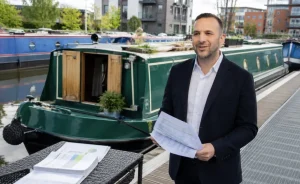
Houseboat council tax rules can be more complicated than traditional residential properties. Liability often depends on several factors, including whether the vessel serves as a person’s sole or main residence and whether it occupies a permanent mooring.
Typical Council Tax Considerations for Houseboats:
| Factor | Potential Impact |
| Permanent mooring | May increase likelihood of assessment |
| Sole residence status | Often relevant to liability |
| Local authority jurisdiction | Determines collection authority |
| Residential use | Important assessment factor |
| Mooring agreement terms | May affect obligations |
In practice, individuals living on boats are generally advised to seek written confirmation from the relevant council rather than relying on assumptions about fees or site arrangements.
The complexity of these rules helps explain why disputes occasionally arise regarding liability.
Why Did Critics Still Condemn the Outcome?
Despite the inquiry’s decision, some critics argued that the situation raised broader concerns about political accountability. Neil Garratt maintained that the handling of the issue reflected a casual approach towards establishing whether tax obligations existed.
Critics suggested that elected representatives should exercise greater diligence in understanding financial responsibilities, particularly when involved in public policy discussions.
Supporters of Polanski, however, pointed to the inquiry outcome, his apology, and his stated willingness to pay any outstanding sums as evidence that the matter should be considered resolved from an ethics perspective.
The disagreement illustrates how political criticism can continue even after a formal investigation reaches a conclusion.
What Should People Living on Boats or in Unusual Housing Check About Council Tax?
The case highlights practical lessons for anyone living in non-traditional accommodation. Rather than assuming charges are included within rent, licence fees, or mooring payments, residents should verify obligations directly with the relevant authority.
Recommended actions:
- Contact the local council for written clarification.
- Review tenancy or mooring agreements carefully.
- Keep records of all housing-related payments.
- Confirm which authority has jurisdiction.
- Seek professional advice if uncertainty remains.
Taking these steps can help prevent disputes and ensure compliance with local taxation requirements. Clear communication is often the most effective way to avoid misunderstandings.
What Does the Zack Polanski Council Tax Case Mean for UK Politics?
The Zack Polanski council tax case highlights the increasing scrutiny faced by public figures and the distinction between personal administrative issues and formal misconduct.
The GLA’s inquiry concluded that the allegations related to private living arrangements and therefore fell outside the Assembly’s conduct rules. However, the case continued to attract public attention because many voters expect elected representatives to manage their financial responsibilities carefully.
“Public trust is influenced not only by formal findings but also by how clearly officials explain complex situations and respond when concerns are raised.” — Governance and Ethics Adviser
The case also illustrates how housing arrangements, council tax liability, and political accountability can become closely linked in public debate, even when no formal breach of conduct is found.
Conclusion
The Zack Polanski unpaid council tax case highlights the difference between an ethics investigation and a council tax liability assessment. While the GLA cleared him of breaching the London Assembly Code of Conduct, the inquiry did not determine whether council tax was owed.
The controversy underscores the importance of understanding tax obligations in unconventional housing arrangements and reinforces broader discussions about transparency, accountability, and public trust in political leadership.
Frequently Asked Questions
Can a UK houseboat be liable for council tax?
Yes. If a houseboat is used as a sole or primary residence and meets relevant criteria, council tax may apply.
Did the GLA determine whether Zack Polanski owed council tax?
No. The inquiry only examined whether he breached the London Assembly Code of Conduct.
Why did the GLA close the investigation?
Officials concluded that the matter related to private living arrangements rather than his official Assembly role.
What is a property guardian?
A property guardian occupies vacant buildings under licence agreements, often in exchange for lower housing costs.
Why was the location of the marina important?
The site reportedly sat near the boundary of two local authorities, creating uncertainty about jurisdiction and liability.
Did Zack Polanski apologise during the controversy?
Yes. He described the situation as an unintentional mistake and apologised for not clarifying his obligations sooner.
Could council tax still become payable after the inquiry?
Yes. Local councils can still determine liability independently of the GLA ethics investigation.