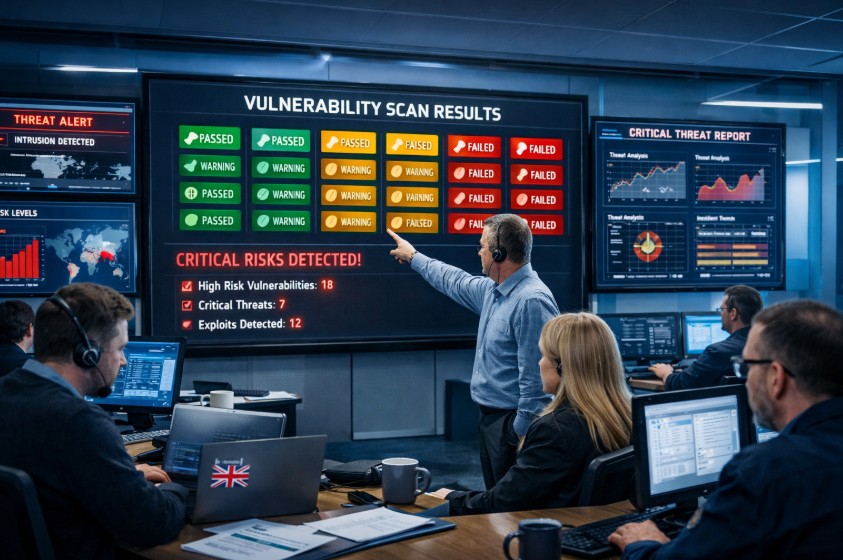
Many UK organisations approach cybersecurity assessments as tick-box exercises, conducting an annual penetration test or vulnerability scan to satisfy compliance requirements. While these assessments provide valuable insights at a specific moment, they offer only a snapshot of your security posture that becomes outdated almost immediately.
The reality is that cyber threats don’t pause between your scheduled assessments. Your infrastructure changes constantly, new vulnerabilities emerge daily, and attackers continuously develop novel techniques to exploit weaknesses. Relying on periodic testing leaves significant gaps in your defences that cybercriminals can exploit.
Understanding why continuous security assessment has become essential will help you build a more resilient approach to protecting your organisation. Let’s examine the limitations of one-off testing and why ongoing vigilance matters.
Why One-Off Scans Are Not Enough for Cybersecurity in a Rapidly Changing Threat Landscape?
Your Environment Never Stands Still
Between security assessments, your IT environment undergoes constant transformation. Developers push new code to production, system administrators install software updates, and business requirements drive infrastructure changes. Each modification potentially introduces new vulnerabilities that weren’t present during your last assessment.
A comprehensive vulnerability scanning service provides continuous monitoring that identifies weaknesses as they emerge. Without this ongoing visibility, you might deploy a misconfigured server or introduce a vulnerable application that remains undetected for months until your next scheduled test.
Cloud environments amplify this challenge. The ease of spinning up new resources means that shadow IT and unauthorised deployments can create security gaps that annual testing simply won’t catch. Continuous assessment ensures that your security posture keeps pace with your evolving IT infrastructure.
New Vulnerabilities Emerge Daily

Software vendors discover and disclose vulnerabilities constantly. A system that appeared secure during last quarter’s assessment might now contain a critical flaw with a publicly available exploit. The time between vulnerability disclosure and active exploitation continues to shrink, often measured in days rather than weeks.
Zero-day vulnerabilities and newly disclosed weaknesses create windows of opportunity that attackers exploit aggressively. Organisations conducting only periodic assessments remain blind to these emerging threats until their next scheduled scan, potentially leaving critical systems vulnerable for extended periods.
Regular scanning enables you to identify which systems require urgent patching when new vulnerabilities surface. This proactive approach significantly reduces your exposure window and prevents cyber attackers from exploiting known weaknesses before you’re aware they affect your environment.
Attack Techniques Evolve Rapidly
Cybercriminals continuously refine their methods, developing new ways to bypass security controls and exploit human behaviour. A penetration test conducted twelve months ago examined how attackers might have operated then, not how they’re working today.
Threat actors share tools, techniques, and procedures within their communities, meaning that successful attack methods spread quickly. What constitutes best practice in security defence must evolve to counter these advancing threats. Point-in-time testing can’t reveal whether your current defences remain effective against the latest attack techniques.
Regular security assessments ensure that your controls adapt to the changing threat landscape. They provide opportunities to test new defensive measures and identify where attackers might find success with modern tactics that weren’t prevalent during previous assessments.
Compliance Requires Continuous Vigilance

Many regulatory frameworks and industry standards now recognise that periodic testing isn’t sufficient. GDPR, Cyber Essentials Plus, and PCI DSS increasingly emphasise continuous monitoring and regular vulnerability management rather than annual assessments.
Demonstrating compliance means showing that you maintain robust security controls throughout the year, not just during the weeks surrounding your scheduled audit. Regulators and customers want evidence of ongoing vigilance, particularly when processing sensitive data or operating critical systems.
Continuous assessment provides the documentation needed to demonstrate due diligence. You’ll have audit trails showing that vulnerabilities were identified promptly and remediated according to their severity, rather than allowing them to persist between annual tests.
Remediation Takes Time
Discovering vulnerabilities during an annual test often reveals more issues than you can address immediately. Some fixes require significant development work, system redesigns, or business process changes that take months to implement properly.
By the time you’ve remediated the findings from your last assessment, it’s nearly time for the next one. This cycle means you’re perpetually working with outdated information, never achieving a clear view of your current security posture.
Continuous scanning allows you to manage remediation more effectively by identifying issues as they arise. You can address problems incrementally rather than facing an overwhelming list of findings once a year. This approach enables better resource allocation and ensures that critical vulnerabilities receive immediate attention.
To Summarise
Moving beyond one-off assessments doesn’t mean abandoning penetration testing or comprehensive security reviews. Rather, it means integrating these deep-dive assessments with ongoing monitoring that maintains visibility between scheduled tests.
This layered approach combines the thoroughness of manual testing with the consistency of automated scanning. UK organisations adopting continuous vulnerability management demonstrate stronger security postures and greater resilience against the evolving threats that target businesses of all sizes.
By embracing ongoing assessment, you’ll transform security from a periodic event into a continuous practice that protects your organisation every day of the year.