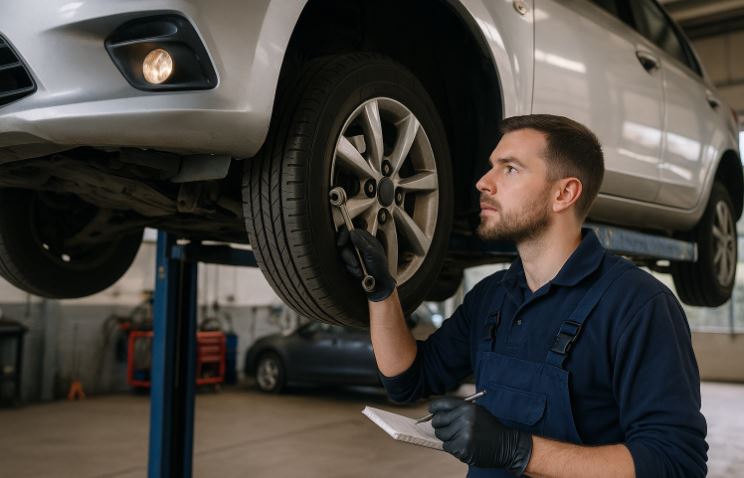
Road safety in the UK is taken seriously, and every vehicle owner has a legal responsibility to maintain their car to a safe and roadworthy standard.
The laws governing vehicle maintenance are designed to protect drivers, passengers, and the wider public from preventable accidents caused by mechanical failure or neglect.
Whether someone drives daily or occasionally, essential components must always remain in proper working order. Understanding which parts are legally required to be maintained can help motorists avoid fines, penalty points, and safety risks on UK roads.
Which Car Parts Must Be Kept in Good Condition by Law in the UK?
UK law outlines clear requirements for maintaining a roadworthy vehicle, mainly through the Road Traffic Act and MOT regulations. These rules ensure that critical components are functioning correctly and do not pose danger to the driver or others.
Compliance Protects Everyone
Maintaining legal standards is not only about avoiding penalties, it plays a direct role in reducing accidents, improving visibility, and ensuring vehicles remain safe in a range of conditions. Motorists who stay informed about their responsibilities contribute to a safer and more reliable road network.
This framework sets the foundation for understanding the broader safety standards enforced across the country.
Why Does UK Law Require Strict Vehicle Maintenance?
UK law enforces strict vehicle maintenance standards because car faults are one of the major contributors to road accidents. Issues such as worn tyres, faulty brakes, and broken lights can dramatically increase the likelihood of collisions.
Public Safety as the Central Priority
The legislation ensures:
- Drivers remain safe in all weather conditions
- Vehicles operate within acceptable environmental limits
- Dangerous defects are identified early
- Roads remain safe for pedestrians and cyclists
Consistent maintenance creates a culture of responsibility that benefits everyone on the road.
Which Safety-Critical Components Are Most Heavily Regulated?
Safety-critical components receive the most attention under UK law because they directly influence vehicle control, stopping distance, and protection during emergencies.
Some of the most heavily regulated safety components include:
- Brakes must work effectively without pulling or grinding
- Tyres are legally required tread depth of at least 1.6mm
- The steering system must operate smoothly without excessive play
- Seatbelts must function properly and lock securely
- Airbags must remain intact and without warning faults
Regular Inspections Matter
Drivers are encouraged to routinely check these components before long journeys. MOT tests provide a formal assessment, but problems can develop between yearly checks.
How Do Tyres, Brakes, and Steering Affect Roadworthiness?
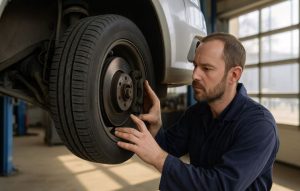
These three components, tyres, brakes, and steering, form the backbone of a safe and controllable vehicle. Defects in any of them can cause dangerous situations, especially during emergency manoeuvres or wet conditions.
Tyres and Their Legal Requirements
Tyres are often overlooked, yet they are the only point of contact between the vehicle and the road. UK law requires a tread depth of at least 1.6mm across the central three-quarters of the tyre. Bulges, cuts, and exposed cords can result in MOT failure or fines.
Brake System Expectations
Brakes must deliver consistent stopping power. Issues such as squeaking, grinding, or a soft brake pedal may indicate worn pads, leaking fluid, or drum/shoe faults. Brake imbalance between wheels is also considered unsafe and illegal.
Steering System Responsibilities
Steering components, including power steering pumps, columns, and joints, must not have excessive free play. Faults can dramatically affect control and stability, especially at higher speeds or sharp turns.
What Lighting and Visibility Requirements Must Drivers Follow?
Lighting is one of the most common areas of legal enforcement in the UK. Visibility-related components ensure the vehicle can be seen in low-light environments while also helping the driver see clearly ahead.
The following lighting and visibility elements must always remain in good working condition:
- Headlights both dipped, and the main beam must function correctly
- Indicators and hazard lights are crucial for signalling intentions
- Brake lights illuminate instantly when braking
- Number plate lights must keep plates visible at night
- Windscreen wipers and washers are critical for maintaining clear visibility
Windscreen and Mirror Condition
Windscreens must not have cracks larger than 10mm in the driver’s primary line of vision or larger than 40mm in other areas. Mirrors must be secure and provide a clear view of the road.
How Do Emissions and Exhaust Standards Impact Legal Compliance?
To reduce pollution, the UK enforces strict emissions standards. These requirements vary depending on the type of engine and vehicle age but apply to almost all road-legal cars.
Exhaust System Requirements
Exhaust systems must:
- Be properly mounted
- Show no major leaks
- Maintain noise within legal limits
A missing or faulty catalytic converter or DPF (diesel particulate filter) can result in immediate MOT failure.
Emissions Testing
Petrol and diesel vehicles must pass annual emissions checks during MOT testing. Excessive smoke, failed sensors, or high pollutant output can lead to legal consequences.
For drivers looking for a complete breakdown of these rules, the legal car maintenance requirements in the UK provide a helpful foundation for understanding how emissions tie into roadworthiness.
Which Structural and Mechanical Parts Must Remain in Good Condition?
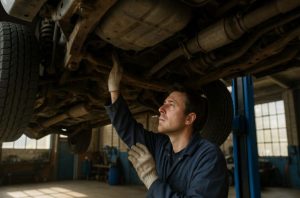
The structural integrity of a vehicle determines how well it withstands impacts and resists wear. Mechanical soundness ensures smooth operation and safety.
Essential structural and mechanical components requiring maintenance include:
- Chassis and bodywork must be free from dangerous corrosion
- Suspension system must not leak, break, or sag
- The fuel system must not leak and must close securely
- Doors and bonnet/boot catches must open and close safely
Frame Integrity and Corrosion
Rust is a major issue for older vehicles. If corrosion affects structural points, such as mounting brackets, sills, or suspension anchor points, it can fail the MOT and be considered unsafe for road use.
How Do MOT Tests Ensure These Components Meet Legal Standards?
The annual MOT test is the UK’s primary method for ensuring vehicles remain legally safe to drive. It assesses most components linked to roadworthiness and environmental impact.
What MOT Examiners Look For?
Examiners check for:
- Working lights
- Effective brakes
- Tyre condition
- Steering and suspension
- Exhaust emissions
- Secure bodywork and structure
- Visibility issues
- Fluid leaks
Advisory Notices
Even when parts pass, some may receive advisories indicating upcoming wear. Drivers are encouraged to address these sooner rather than later.
What Should Drivers Do to Stay Compliant Throughout the Year?
Staying compliant is not simply about passing the annual MOT. Regular maintenance throughout the year ensures vehicles remain safe and legally roadworthy.
Monthly Quick Checks
Drivers can adopt simple habits such as:
- Checking oil and coolant levels
- Inspecting tyre wear
- Ensuring lights work
- Testing brakes for responsiveness
Professional Servicing
Annual servicing, whether interim or full, helps catch faults that motorists may not notice. This includes checks on filters, fluids, belts, hoses, and key structural elements.
Keeping Records
Maintaining service receipts, MOT certificates, and repair histories protects drivers during insurance claims and when selling the vehicle.
Conclusion
Maintaining a roadworthy vehicle isn’t just a legal requirement, it’s a vital responsibility for every motorist in the UK.
By understanding which parts must remain in good condition, drivers can prevent breakdowns, reduce accident risks, and avoid costly penalties. Consistent checks, professional servicing, and awareness of evolving regulations all contribute to safer journeys.
When vehicles are properly maintained, the entire transport system benefits, ensuring smoother traffic flow and greater protection for everyone who shares the road.
FAQs
Which car parts fail MOT tests most often?
Tyres, brakes, lights, and suspension components are the most common causes of MOT failures due to wear or neglect.
How often should I check my tyre pressure?
Drivers should check tyre pressure at least once a month or before long trips to stay safe and compliant.
Do small windscreen chips need repair?
Yes, especially if they’re in the driver’s view. Chips can expand and cause MOT failure if ignored.
Are broken lights illegal even if it’s daytime?
Yes. Faulty lights can result in penalties because they affect signalling and night-time safety.
Can corrosion make a car illegal to drive?
If rust affects structural areas, it can fail the MOT and be considered unsafe for road use.