

Some of the world’s most successful businesses started with ideas that sounded completely ridiculous.
Selling ordinary rocks as pets, charging advertisers for individual website pixels, manufacturing smiling sponges and putting drinking water into beer-style cans hardly seem like conventional routes to building a multimillion-dollar company.
Yet these strange concepts became commercially successful businesses.
What makes these stories particularly interesting is that many founders did not invent revolutionary technology.
Instead, they recognised unusual customer behaviour, created memorable products or discovered better ways to market everyday items.
We examined 15 weird business ideas that made millions, drawing on publicly reported financial results, company histories and founder interviews.
Rather than focusing only on the headline sales figures, our analysis considers the business models, marketing strategies, customer demand and commercial risks behind their success.
For entrepreneurs, the most valuable lesson is that a business does not necessarily need an entirely original invention. Sometimes, an unexpected approach to an ordinary product can create an entirely new market.
What Are the Top 15 Weird Business Ideas That Made Millions?
The following businesses range from short-lived novelty trends to internationally recognised companies generating billions in annual revenue.
| Business idea | Reported financial achievement | Our commercial durability rating |
| 1. Pet Rock | Approximately $6 million in historical gross sales | 38% |
| 2. Million Dollar Homepage | More than $1 million in advertising sales | 25% |
| 3. Snuggie | Reportedly more than $500 million in cumulative sales | 65% |
| 4. Crocs | $3.33 billion in Crocs brand revenue in 2025 | 87% |
| 5. Airbnb | $12.2 billion in revenue in 2025 | 86% |
| 6. SPAM | More than 9 billion cans sold historically | 92% |
| 7. Silly Bandz | More than $100 million in reported annual sales during its peak | 35% |
| 8. Shake Weight | Approximately $40 million in reported sales by 2010 | 31% |
| 9. Tamagotchi | 100 million devices shipped by July 2025 | 89% |
| 10. GoPro | Approximately $652 million in revenue in 2025 | 66% |
| 11. Rainbow Loom | More than 8 million kits sold by September 2014 | 55% |
| 12. Poo-Pourri | Reported to have grown into a $500 million-scale business | 83% |
| 13. Scrub Daddy | More than $2.9 billion in reported cumulative sales | 91% |
| 14. Squatty Potty | Approximately $16.8 million in trailing annual revenue before its 2021 acquisition | 75% |
| 15. Liquid Death | $263 million in reported retail sales in 2023 | 76% |
How we calculated the ratings: These are our editorial assessments of commercial durability, not independently audited performance scores, investment returns or probabilities of success. Each rating considers repeat customer demand (40%), competitive differentiation (30%) and resilience against imitation or changing trends (30%).
Financial figures refer to different reporting periods and measures. They should not be interpreted as a like-for-like revenue ranking.
1. Pet Rock: Making Millions by Selling Ordinary Stones
Founder: Gary Dahl
Launched: 1975
Reported commercial achievement: Approximately 1.5 million units sold
Our commercial durability rating: 38%
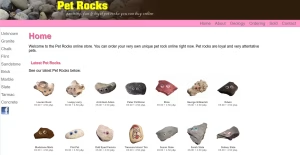
Pet Rock remains one of the most extraordinary examples of successful novelty marketing.
American advertising executive Gary Dahl developed the idea after hearing friends complain about the responsibilities of owning pets.
His solution was a pet requiring absolutely no attention: an ordinary rock.
Each stone came inside a cardboard carrying case with breathing holes, a straw nest and a humorous instruction manual describing how owners should train and care for their new companion.
The product sold for approximately $3.95.
Dahl estimated that roughly 1.5 million Pet Rocks were sold during the short-lived craze, implying nearly $6 million in gross sales at the original retail price.
The rocks themselves were inexpensive. Much of the perceived value came from the packaging, instructions and humour.
Why Did This Strange Business Idea Work?
Pet Rock was not really selling stones. It was selling an entertaining experience.
Customers purchased the product because it was funny, inexpensive enough to give as a novelty present and easy to explain to friends.
Our analysis highlights three important commercial advantages.
First, production was relatively simple. Second, the packaging created a recognisable identity. Third, the unusual concept attracted substantial public attention.
However, the business also demonstrates the dangers of depending on a temporary trend.
Demand increased rapidly before fading.
Business lesson: A simple product with memorable branding can generate exceptional sales, but novelty alone rarely guarantees long-term customer retention.
2. Million Dollar Homepage: Selling Website Pixels for $1 Each
Founder: Alex Tew
Launched: 2005
Reported commercial achievement: Approximately $1.04 million in gross sales
Our commercial durability rating: 25%
One of the strangest internet business success stories came from a British student.
Alex Tew created the Million Dollar Homepage to help fund his university education.
His concept was remarkably straightforward.
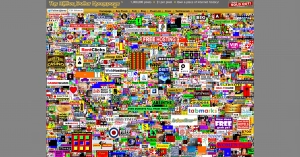
He created a website containing one million advertising pixels and offered them for sale at $1 each, generally in blocks of at least 100 pixels.
Businesses purchasing the pixels could display small images linked to their websites.
At first, the idea appeared commercially unrealistic. Why would an advertiser pay for a tiny space on an unfamiliar website?
The answer was publicity.
The unusual business model attracted media attention, which increased website traffic and encouraged more advertisers to participate.
By January 2006, Tew had sold the available space, with the final block auctioned for $38,100. The project generated approximately $1.04 million in gross sales.
What Made the Million Dollar Homepage Successful?
The business converted curiosity into a commercial asset.
Advertisers were not simply purchasing tiny advertising spaces. They were purchasing visibility within an internet phenomenon.
The model also benefited from a fixed supply.
Only one million pixels were available, creating a natural limit that made the proposition more interesting as sales increased.
However, our 25% durability rating reflects the difficulty of reproducing this model.
Once competitors copied the concept, the original novelty became less valuable.
Business lesson: Unusual advertising formats can attract attention, but founders need to distinguish between a profitable one-off campaign and a business capable of generating recurring revenue.
3. Snuggie: Turning a Blanket With Sleeves Into a Multimillion-Dollar Product
Introduced: 2008
Business model: Direct-response advertising and retail distribution
Reported commercial achievement: More than 30 million blankets sold
Our commercial durability rating: 65%
A blanket with sleeves does not sound like an innovative product.
Nevertheless, Snuggie became one of the best-known examples of a simple household item transformed into a major commercial success.
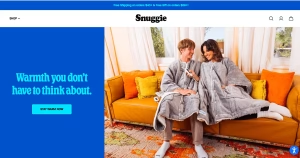
The design allowed customers to remain warm while keeping their hands available for reading, using a laptop or watching television.
Although similar products had existed before, Snuggie gained attention through memorable television advertisements.
The adverts demonstrated an everyday inconvenience and immediately presented the product as the solution.
Industry accounts have reported more than 30 million Snuggie sales and cumulative sales of approximately $500 million.
How Did Snuggie Make Millions?
Its commercial strength came from combining a straightforward demonstration with broad retail appeal.
Customers could understand the product within seconds.
The advertisements were memorable, while the relatively accessible selling price encouraged impulse purchases and gifting.
Once the product established demand through television, broader retail distribution helped it reach additional customers.
From a financial perspective, the important feature was not the complexity of the invention.
It was the ability to reach a large audience with a message that required almost no explanation.
Business lesson: An ordinary product can achieve extraordinary results when its benefits are demonstrated clearly and supported by effective distribution.
4. Crocs: How Unusual Footwear Became a Billion-Dollar Brand
Launched: 2002
Industry: Footwear and fashion
Crocs brand revenue in 2025: Approximately $3.33 billion
Our commercial durability rating: 87%
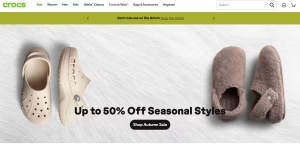
Crocs demonstrates how unconventional product design can become a competitive advantage.
When the company’s distinctive foam clogs entered the market, their appearance divided opinion.
Some people considered the shoes unattractive. Others appreciated their comfort, practicality and lightweight construction.
Instead of abandoning the unusual design, Crocs built a recognisable brand around it.
The company expanded its customer base across different age groups, professions and lifestyles.
Healthcare workers, hospitality employees, casual footwear buyers and fashion-conscious consumers all found reasons to purchase the product.
By 2025, the Crocs brand generated approximately $3.33 billion in annual revenue.
That figure relates to the Crocs brand rather than the company’s entire footwear portfolio.
Why Did Crocs Become So Successful?
Crocs benefited from an identifiable combination of practical utility and brand recognition.
Its footwear was comfortable, easy to clean and visually distinctive.
The company also developed accessories, including Jibbitz charms, which encouraged personalisation.
Collaborations and limited-edition products subsequently helped Crocs remain culturally relevant.
From our perspective, this is considerably more sustainable than a business relying entirely on novelty.
Customers have practical reasons to continue purchasing the product even after the initial excitement disappears.
Business lesson: Being different can strengthen a brand when the underlying product also provides genuine customer value.
5. Airbnb: Turning Spare Rooms Into a Global Marketplace
Founders: Brian Chesky, Joe Gebbia and Nathan Blecharczyk
Business launched: 2008
2025 annual revenue: Approximately $12.2 billion
Our commercial durability rating: 86%
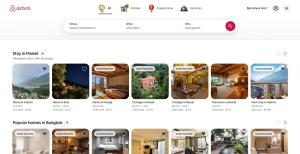
Airbnb is not a novelty product, but its early concept was unconventional enough to attract considerable scepticism.
The original idea developed when Brian Chesky and Joe Gebbia offered accommodation using air mattresses in their San Francisco apartment.
They recognised that people needed affordable accommodation during major events while some property owners had unused space.
The concept eventually developed into a marketplace connecting hosts with travellers.
What initially sounded like an uncomfortable alternative to hotels became a global accommodation business.
Airbnb reported approximately $12.2 billion in revenue and $2.5 billion in net income for 2025.
How Did Airbnb Turn a Strange Idea Into Billions?
Airbnb’s business model differs substantially from businesses that manufacture products.
The platform connects accommodation providers and guests rather than owning most of the properties being booked.
This marketplace structure allows the company to expand its available accommodation without purchasing a hotel for every new destination.
However, scaling the business also required addressing trust, payments, customer support, regulations and quality control.
The most important commercial breakthrough was therefore not simply persuading strangers to share accommodation.
It was developing systems that made those transactions more practical.
Business lesson: An unusual idea can become a large business when technology, trust and distribution transform previously unused assets into services customers are willing to purchase.
6. SPAM: The Unconventional Canned Meat That Became a Global Brand
Introduced: 1937
Company: Hormel Foods
Reported achievement: More than 9 billion cans sold historically
Our commercial durability rating: 92%
SPAM might seem an unusual inclusion in a discussion of weird business ideas.
Yet its success demonstrates that products initially viewed as unconventional can become commercially important through convenience, affordability and adaptability.
The canned meat product launched in 1937 and gained substantial international exposure during the Second World War.
Its long shelf life, portability and versatility helped establish demand.
Over time, SPAM developed a particularly strong presence in several Asian and Pacific markets.
Hormel Foods has reported more than 9 billion cans sold across the brand’s history.
Unlike Pet Rock or Silly Bandz, SPAM did not depend entirely on a short period of consumer excitement.
It became a repeat-purchase food product.
Why Has SPAM Remained Commercially Successful?
The brand has been able to adapt to different consumer preferences and food cultures.
Customers use it in sandwiches, rice dishes, breakfast meals and regional recipes.
The company has also refreshed the product through new varieties and promotional partnerships.
This highlights an important distinction between unusual products and sustainable businesses.
A product may initially attract attention because it is different, but continuing success generally requires a reason for customers to purchase it repeatedly.
Business lesson: Long-term profitability often depends more on repeat demand and practical usefulness than on the originality of the initial concept.
7. Silly Bandz: The Rubber Bands That Became a $100 Million Craze
Entrepreneur: Robert Croak
Peak popularity: Around 2010
Reported achievement: More than $100 million in annual sales during the craze
Our commercial durability rating: 35%
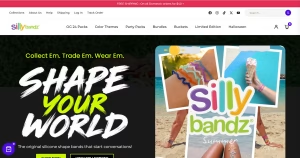
Silly Bandz turned an ordinary rubber band into a collectible fashion accessory.
The bands came in colourful shapes representing animals, letters, characters and other designs.
Children could wear them as bracelets before removing them to reveal their original shapes.
The concept quickly became popular in schools, playgrounds and social groups.
Robert Croak’s business benefited from the product’s relatively low selling price and the desire among children to collect different designs.
At the height of the trend, Croak reported annual sales exceeding $100 million.
What Made Silly Bandz So Profitable?
The product encouraged multiple purchases.
Customers rarely needed just one band. They wanted collections, different colours and new designs.
Social interaction also played an important role.
Children exchanged the accessories with friends, creating additional visibility without the company needing to pay for every recommendation.
However, Silly Bandz also demonstrates the commercial weakness of products that are easy to copy.
Competing manufacturers entered the market, and enthusiasm eventually declined.
Our rating reflects this limited long-term defensibility rather than dismissing the scale of the original success.
Business lesson: Collectibility can increase purchase frequency, but trend-dependent businesses should protect cash flow and avoid accumulating excessive inventory.
8. Shake Weight: Making Millions From an Unusual Fitness Product
Introduced: 2009
Reported achievement: Approximately $40 million in sales by 2010
Our commercial durability rating: 31%
The Shake Weight became famous for its unusual appearance and advertising.
Unlike a conventional dumbbell, the device was designed to move back and forth through an oscillating mechanism.
The product’s television advertisements attracted attention partly because viewers found them humorous.
This attention helped produce substantial sales.
By 2010, reports placed Shake Weight sales at approximately $40 million.
However, the product’s commercial success should not be confused with scientific proof of its advertised exercise benefits.
Its effectiveness attracted criticism, and the unusual design did not necessarily make it superior to established training equipment.
What Can Entrepreneurs Learn From Shake Weight?
The business demonstrates the extraordinary reach of entertaining advertising.
The product’s demonstrations were memorable enough to generate discussions, television parodies and word-of-mouth exposure.
This additional publicity helped extend the reach of its marketing.
Nevertheless, founders should recognise that public attention does not automatically establish product quality.
A novelty fitness product may achieve strong early sales while facing challenges with repeat purchases, customer satisfaction and credibility.
Business lesson: Viral marketing can increase awareness, but a sustainable brand requires product claims that can withstand scrutiny.
9. Tamagotchi: Building a Global Business Around Digital Pets
Introduced: 1996
Company: Bandai
Reported achievement: 100 million units shipped worldwide by July 2025
Our commercial durability rating: 89%
Tamagotchi transformed the concept of pet ownership into an electronic entertainment experience.
The original handheld devices allowed users to feed, clean, entertain and care for a digital character.
Although the underlying technology was relatively simple, the product introduced an engaging emotional connection.
Owners became responsible for keeping their virtual pets happy and healthy.
This created repeat interaction with a relatively inexpensive toy.
Bandai reported that cumulative worldwide shipments had reached 100 million units by the end of July 2025.
Why Has Tamagotchi Survived Beyond Its Original Craze?
The brand successfully moved beyond the initial 1990s trend.
New devices, updated features, collaborations and nostalgic releases helped introduce Tamagotchi to additional generations.
Taro Tsuji, Bandai’s managing director and Chief Tamagotchi Officer, has explained the importance of developing relationships between consumers and products.
As he observed in the company’s official interview:
“The value of content lies not in its specs but in the relationships it generates.”
This insight provides a useful explanation of Tamagotchi’s commercial appeal.
Customers are not purchasing only electronic components.
They are purchasing an experience that encourages emotional attachment and interaction.
Business lesson: Products that create ongoing engagement and emotional value can develop into long-lasting brands.
10. GoPro: Turning Action Photography Into a Major Camera Business
Founder: Nick Woodman
Founded: 2002
2025 annual revenue: Approximately $652 million
Our commercial durability rating: 66%
GoPro began with a relatively unusual ambition: helping surfers and adventure enthusiasts capture their experiences without relying on another person to operate a camera.
Founder Nick Woodman recognised the difficulty of recording action sports from the participant’s perspective.
The company developed compact cameras designed for mounting on equipment, helmets and other accessories.
GoPro subsequently became associated with surfing, cycling, skiing, diving and other outdoor activities.
Its customer-created videos also helped promote the brand.
Instead of demonstrating products exclusively through conventional advertisements, GoPro could show footage recorded by real users.
Why Is GoPro an Important Financial Case Study?
GoPro achieved substantial commercial success, but its recent financial performance also illustrates why revenue is not the same as profitability.
The company reported approximately $652 million in revenue for 2025, alongside a GAAP net loss of around $93 million.
Increasing competition, changing consumer preferences and product-development expenses have affected its business.
GoPro also developed subscription and service offerings to diversify beyond individual camera sales.
This is an important reminder for aspiring entrepreneurs.
A company can sell millions of products, build a globally recognised brand and still face significant financial challenges.
Business lesson: Creating a new product category is valuable, but protecting profitability becomes increasingly important as competitors enter the market.
11. Rainbow Loom: Turning Small Rubber Bands Into a Multimillion-Dollar Toy Business
Inventor: Cheong Choon Ng
Developed: 2010
Reported achievement: More than 8 million kits and 40 million packets of bands sold by September 2014
Our commercial durability rating: 55%
Rainbow Loom developed from an ordinary family activity.
Cheong Choon Ng wanted to make rubber-band bracelets with his daughters but found the process difficult using his fingers.
He created a simple plastic loom to make bracelet weaving easier.
After developing the product, Ng initially struggled to persuade retailers to stock it.
The breakthrough came when videos demonstrated how people could use the loom to create different designs.
YouTube tutorials helped turn the activity into a global crafting trend.
By September 2014, Ng’s company had sold more than 8 million loom kits and 40 million packets of rubber bands.
How Did Rainbow Loom Become Successful?
Rainbow Loom combined an inexpensive physical product with a creative activity.
Customers could continually experiment with new patterns, colours and designs.
Video tutorials helped educate the market while encouraging further purchases.
In a published first-person interview with The Guardian, Ng explained that he initially approached toy stores without success.
The experience highlights a familiar problem for innovative businesses.
Customers may not immediately understand a new product simply because it is placed on a shelf.
Demonstration can be essential.
Business lesson: Educational content can become a powerful customer-acquisition channel when buyers need to understand how a product works.
12. Poo-Pourri: Building a Business Around an Embarrassing Everyday Problem
Founder: Suzy Batiz
Launched: 2007
Reported commercial achievement: A business described at the $500 million scale
Our commercial durability rating: 83%
Poo-Pourri proved that even an uncomfortable topic can become a commercially attractive market.
The product is a spray used in the toilet bowl before use to help control unpleasant odours.
Founder Suzy Batiz recognised that the problem was common but rarely discussed openly.
Instead of presenting the product through conventional household-cleaning advertisements, the brand adopted humorous messaging.
Its advertising was deliberately entertaining, making customers more comfortable discussing an otherwise embarrassing issue.
The company eventually developed into a major consumer-products business.
What Was the Secret Behind Poo-Pourri’s Growth?
The brand combined three important advantages.
The first was a clear consumer problem.
The second was distinctive marketing that people wanted to share.
The third was a product category capable of generating repeat sales.
In a Forbes interview, Suzy Batiz explained that her approach was to establish the brand and distribution before expanding aggressively into additional products.
That strategy eventually supported the broader ~Pourri product range.
For entrepreneurs, this is an especially useful distinction.
The humour attracted customers, but the practical product and brand identity provided reasons for continued demand.
Business lesson: Businesses can turn overlooked or embarrassing problems into attractive markets when they address real customer needs with approachable branding.
13. Scrub Daddy: How a Smiling Sponge Generated Billions in Sales
Founder: Aaron Krause
Major breakthrough: Shark Tank appearance in 2012
Reported achievement: More than $2.9 billion in cumulative sales since its television appearance
Our commercial durability rating: 91%
Scrub Daddy is a strong example of a product whose unusual appearance disguises a practical innovation.
At first glance, it looks like an ordinary sponge shaped into a smiling face.
However, the material changes firmness depending on water temperature.
The sponge becomes firmer in cold water and softer in warm water, allowing users to adjust how they clean different surfaces.
Founder Aaron Krause demonstrated the product on Shark Tank, where he secured support from investor Lori Greiner.
The business subsequently expanded through retail distribution, product development and consumer demonstrations.
Greiner’s business website reports that Scrub Daddy has generated more than $2.9 billion in sales since its television appearance.
Why Did Scrub Daddy Become a Billion-Dollar Success?
The product benefits from differentiation that customers can experience directly.
Its unusual shape makes it memorable, while its cleaning performance encourages practical use.
Its facial design also performs a functional role.
The openings can help users clean utensils and reach certain surfaces.
More importantly, cleaning products represent a category with continued consumer demand.
Although a sponge can last through numerous uses, customers eventually replace worn cleaning accessories.
This creates a more sustainable model than a novelty item purchased once purely for entertainment.
Business lesson: The strongest unusual products combine recognisable design with a functional advantage that customers can understand and experience.
14. Squatty Potty: Turning a Bathroom Stool Into a Multimillion-Dollar Company
Fonded: 2011
Business model: Consumer products and bathroom accessories
Reported achievement: Approximately $16.8 million in trailing annual revenue before acquisition
Our commercial durability rating: 75%
Squatty Potty entered the market with an unconventional proposition.
The product was a footstool designed to change the user’s seated position while using the toilet.
Although the concept might initially appear strange, the company marketed it around comfort and bathroom ergonomics.
Its memorable advertising, including a humorous unicorn-themed campaign, helped the product become widely recognised.
The company also appeared on Shark Tank, increasing its public exposure.
In 2021, Aterian announced the acquisition of Squatty Potty’s business assets.
At the time, the acquired business had approximately $16.8 million in unaudited trailing annual revenue and $4.7 million in operating income.
The acquisition announcement included approximately $19 million in upfront cash consideration, alongside additional arrangements.
What Makes Squatty Potty Different From a Temporary Fad?
The business was based on a specific consumer use rather than entertainment alone.
Its branding made the product memorable, but customers could also evaluate its practical benefits.
The company additionally expanded into related bathroom accessories.
From a financial perspective, its acquisition offers evidence of commercial value beyond social-media popularity.
Business lesson: A product addressing an overlooked everyday activity can become attractive when effective branding is combined with a credible customer proposition.
15. Liquid Death: Selling Ordinary Water With an Extraordinary Brand

Founder: Mike Cessario
Launched commercially: 2019
Reported achievement: $263 million in retail sales in 2023
Our commercial durability rating: 76%
Liquid Death demonstrates how dramatically brand positioning can change consumer perceptions of an ordinary product.
The company sells packaged drinking water and other beverages.
Its distinctive name, bold packaging and unconventional advertising make it appear closer to an entertainment or lifestyle brand than a conventional bottled-water company.
Rather than promoting water through familiar images of mountains, wellness and purity, Liquid Death adopted humorous and deliberately provocative marketing.
The idea attracted substantial attention.
The company reported approximately $263 million in retail sales in 2023 and achieved a reported valuation of $1.4 billion during its 2024 fundraising.
Importantly, retail sales and company revenue are different financial measures, while valuation is not a measure of profit.
Why Did Liquid Death Become Successful?
The business recognised that customers do not always make purchasing decisions based only on functional differences.
Water is a familiar and highly competitive product category.
Liquid Death differentiated its offer through branding, packaging and cultural identity.
Its association with entertainment, live events and distinctive advertising helped attract particular consumer groups.
However, beverage distribution is capital-intensive.
Production, transport, retailer margins and marketing can consume significant amounts of revenue.
Our analysis therefore gives Liquid Death a relatively strong differentiation score while recognising the risks associated with operating in a competitive consumer-products industry.
Business lesson: Creative positioning can make an ordinary product commercially distinctive, but branding must ultimately support sustainable unit economics.
What Do These Weird Million-Dollar Businesses Have in Common?
Although their products differ considerably, our analysis identified several recurring commercial characteristics.
1. They Are Easy to Explain
Pet Rock, Snuggie and Scrub Daddy demonstrate how a straightforward concept can become commercially valuable when customers immediately understand its purpose.
A complicated product usually requires additional advertising, demonstrations and customer education.
By contrast, a smiling sponge that changes texture in different water temperatures or a blanket with sleeves can be explained within seconds.
This simplicity creates an advantage in digital advertising, where businesses often have limited time to attract attention.
From our analysis, many successful unusual products share three characteristics: an immediately recognisable feature, a simple customer benefit and an easy-to-remember identity.
2. They Turn Everyday Problems Into Business Opportunities
Several businesses in our list succeeded by identifying problems that conventional companies had overlooked.
Poo-Pourri addressed bathroom odours.
Squatty Potty focused on bathroom ergonomics.
GoPro made it easier for individuals to record activities from their own perspective.
These problems were not necessarily new, but their solutions differed from traditional products.
For founders searching for similar opportunities, studying how successful startups identify customer problems can help distinguish genuine demand from temporary consumer curiosity.
A business idea becomes financially attractive when customers consider the problem important enough to justify spending money.
3. Their Marketing Is Often More Memorable Than Their Products
Unusual businesses frequently benefit from advertising that encourages people to share the concept with friends.
Liquid Death uses unconventional branding.
Squatty Potty developed humorous advertising.
The Million Dollar Homepage turned its business model into a public spectacle.
In these examples, the product or promotional campaign gave people something interesting to discuss.
This can reduce dependence on conventional advertising, although viral attention is neither predictable nor free.
Businesses still need marketing budgets, suitable distribution channels and systems capable of converting interest into purchases.
4. They Understand the Value of Differentiation
Crocs, Liquid Death and Scrub Daddy all compete in established consumer markets.
Footwear, drinking water and cleaning products were available long before these businesses launched.
Their success depended partly on creating noticeable differences within familiar categories.
Crocs developed a distinctive shape and comfort proposition.
Liquid Death built an unconventional identity around packaged water.
Scrub Daddy combined a memorable appearance with practical material properties.
For entrepreneurs, differentiation can involve design, packaging, functionality, customer experience or a new way of delivering an existing service.
The strongest businesses generally offer more than unusual appearances. They provide benefits customers continue to value after the initial excitement disappears.
5. Successful Founders Know When to Expand
Tamagotchi, Crocs and Scrub Daddy demonstrate the importance of extending a successful product into a broader commercial proposition.
New collections, accessories and related products can create additional revenue opportunities.
However, expanding too quickly can increase inventory risk and operating expenses.
A company may experience impressive early demand without having sufficient cash to finance large-scale expansion.
Founders therefore need to balance product innovation with disciplined financial management.
Understanding how to scale a business without compromising quality becomes particularly important when an unusual product suddenly attracts national or international attention.
Which Weird Business Ideas Have the Strongest Long-Term Potential?
Not every business generating millions in sales becomes a sustainable company.
Our commercial durability assessments distinguish between products that depend heavily on temporary popularity and those capable of generating demand over longer periods.
| Business | Our durability rating | Primary strength | Main commercial risk |
| SPAM | 92% | Established repeat demand | Changing dietary preferences |
| Scrub Daddy | 91% | Practical differentiation | Competing cleaning products |
| Tamagotchi | 89% | Recognised entertainment brand | Changing consumer interests |
| Crocs | 87% | Brand recognition and product utility | Fashion cycles |
| Airbnb | 86% | Scalable marketplace | Regulation and competition |
| Poo-Pourri | 83% | Clear customer problem | Product imitation |
| Liquid Death | 76% | Distinctive branding | Distribution costs and competition |
| Squatty Potty | 75% | Practical product proposition | Limited repeat purchases |
| GoPro | 66% | Specialised technology | Smartphone and camera competition |
| Snuggie | 65% | Straightforward consumer appeal | Easy imitation |
| Rainbow Loom | 55% | Creative customer engagement | Toy trends |
| Pet Rock | 38% | Exceptional novelty appeal | Short-lived demand |
| Silly Bandz | 35% | Collectibility and social sharing | Trend dependence |
| Shake Weight | 31% | Memorable advertising | Product credibility and durability |
| Million Dollar Homepage | 25% | Original advertising concept | Difficult to repeat |
These percentages represent our editorial assessment, not verified company success rates or financial returns.
An especially interesting finding is that the strangest businesses do not always receive the highest ratings.
Products with a practical purpose, established distribution and reasons for customers to return generally have stronger commercial characteristics than businesses dependent on one viral moment.
How Much Profit Can a Weird Business Idea Actually Make?
One of the biggest mistakes aspiring entrepreneurs make is assuming that a company generating millions in revenue must also be generating millions in profit.
Revenue measures the money earned from sales before expenses.
Gross profit deducts the direct cost of producing or purchasing the goods sold.
Net profit accounts for additional operating expenses, financing costs, taxes and other relevant items.
These differences are particularly important for consumer-product businesses.
A successful novelty product may attract significant sales while requiring substantial spending on manufacturing, storage, delivery, advertising and retailer commissions.
Example: The Economics of an Unusual Consumer Product
Consider a hypothetical UK entrepreneur selling an unconventional household product online.
| Financial component | Amount per unit |
| Selling price | £25 |
| Manufacturing and packaging | £8 |
| Fulfilment and delivery | £3 |
| Advertising cost per sale | £5 |
| Payment processing and platform fees | £2 |
| Contribution before fixed overheads | £7 |
| Contribution margin | 28% |
In this example, the product contributes £7 towards the company’s fixed costs and eventual profit for every unit sold.
If the company has £3,500 in monthly fixed operating costs, it must sell 500 units to cover those costs, assuming the same contribution per unit.
At 1,000 units sold, monthly revenue would reach £25,000, but the operating surplus before tax, financing costs and other unmodelled expenses would be approximately £3,500.
The figures are illustrative rather than industry benchmarks.
Returns, damaged stock, discounts, VAT treatment and additional operating expenses could change the outcome considerably.
This explains why founders should examine whether a startup can realistically become profitable in its first year instead of concentrating exclusively on headline sales.
Why Do Profit Margins Matter More Than Viral Popularity?
A product generating £1 million in annual revenue with a 5% net profit margin earns £50,000 in net profit.
Another business generating £400,000 with a 25% net profit margin earns £100,000.
The smaller company earns twice as much profit despite generating considerably less revenue.
This distinction matters when evaluating unusual businesses.
Pet Rock’s estimated historical sales demonstrate successful novelty marketing, but do not establish the founder’s precise net profit.
Similarly, Liquid Death’s retail sales and fundraising valuation do not establish how much profit the company earned.
The most commercially valuable idea is not necessarily the one receiving the most media attention.
It is the one capable of converting customer demand into sustainable cash flow and attractive returns over time.
Can You Start a Weird Business Idea in the UK With Less Than £1,000?
Yes. Some unusual businesses can be tested with relatively modest budgets, particularly when founders use existing equipment, limited inventory, pre-orders or digital products.
However, a small initial budget does not eliminate financial or legal responsibilities.
The following are illustrative business concepts inspired by the successful companies examined above.
| Unusual business idea | Illustrative test budget | Potential revenue model |
| Personalised novelty gifts | £200–£500 | Direct product sales |
| Unconventional digital greeting cards | £50–£200 | Downloads and subscriptions |
| Humorous pet accessories | £300–£800 | Ecommerce sales |
| Collectible stationery | £200–£600 | Product bundles |
| Custom desk accessories | £250–£700 | Direct-to-consumer sales |
| Niche subscription content | £50–£300 | Monthly subscriptions |
| Personalised party merchandise | £300–£900 | Event and online orders |
| Creative educational activity kits | £400–£1,000 | Product kits and refills |
The budgets are planning illustrations, not verified average startup costs. They exclude some potential expenses, including insurance, professional advice, premises, additional marketing and regulatory compliance.
For entrepreneurs with limited savings, exploring how to start a business without significant upfront investment can help establish whether a concept should begin as a part-time project.
What Should a UK Entrepreneur Check Before Launching?
The practical requirements depend on the product.
A novelty gift company may need to consider general product safety and consumer protection requirements.
A food or drink business may need to address food safety, labelling and registration obligations.
A children’s toy company must consider applicable toy safety requirements.
An ecommerce business should also evaluate consumer cancellation and returns rules, advertising claims, privacy obligations and intellectual property rights.
Entrepreneurs should not assume that a product is exempt from regulation simply because it is humorous, inexpensive or marketed as a novelty.
How Can You Test a Weird Business Idea Before Spending Thousands?
The biggest lesson from these 15 businesses is not that every unusual concept deserves investment.
It is that founders should test whether potential customers are prepared to spend money before committing substantial resources.
Step 1: Identify a Specific Customer Problem
Start with a clear customer rather than a broad product category.
For example, instead of planning to sell unusual household accessories to everyone, target people searching for original housewarming gifts.
This helps determine the product’s design, price and marketing strategy.
Step 2: Research Existing Competitors
An unusual idea may already exist in a different market.
Search online marketplaces, specialist retailers, social platforms and consumer review websites.
Look for customer complaints, missing features and opportunities to improve existing products.
Competition is not automatically negative.
It can indicate that customers are already spending money in the category.
Step 3: Create a Minimum Viable Product
A minimum viable product, or MVP, is the simplest version of an offering that can be tested with genuine customers.
For a novelty item, this might involve a small production run or functional prototype.
For a digital concept, it could involve a basic landing page and one paid service.
Avoid purchasing large quantities of stock before establishing demand.
Step 4: Measure Willingness to Pay
Positive feedback is encouraging, but purchases offer stronger evidence.
A useful test might involve offering a product to 100 relevant potential customers and recording how many purchase or place a genuine pre-order.
If 12 buy, the observed conversion rate is 12%.
However, that percentage applies only to the particular test group and conditions. It does not establish the conversion rate that a larger business would achieve.
Repeat the experiment across different customers and marketing channels before forecasting substantial future sales.
Step 5: Calculate the Unit Economics
Determine how much revenue remains after fulfilling each order and paying the variable costs associated with acquiring the customer.
Important figures include selling price, product costs, delivery, payment fees, returns and customer acquisition expenses.
A product that sells quickly can still lose money if acquiring and serving customers costs more than the revenue it generates.
Step 6: Assess Repeat Purchase Potential
Ask whether customers are likely to buy again.
Pet Rock demonstrates that one-time novelty demand can generate substantial revenue.
Scrub Daddy illustrates the additional commercial advantage of a product category where replacement purchases are possible.
Where repeat purchases are unlikely, founders may need new products, premium versions, gift ranges or other ways to maintain revenue.
Step 7: Expand Only When the Evidence Supports It
Once the product demonstrates consistent sales, manageable costs and satisfactory customer feedback, the business can begin evaluating further investment.
Possible expansion routes include retail partnerships, additional products, wholesale distribution and international sales.
The objective should be sustainable growth rather than producing the highest possible sales figure in the shortest period.
What Are the Biggest Risks of Starting a Weird Business?
Unconventional business concepts can create substantial opportunities, but their financial risks are often underestimated.
- Short product life cycles: Novelty products may experience strong demand followed by a rapid decline, leaving companies holding unsold inventory.
- Competition and imitation: Simple products can be copied quickly, particularly when their main advantage is appearance rather than protected technology or brand loyalty.
- High customer acquisition costs: Viral success stories can create unrealistic expectations about free publicity. Many startups must pay consistently to attract customers.
- Manufacturing and supply-chain problems: Rapid demand growth can expose weaknesses in suppliers, quality control, fulfilment and working capital.
- Weak repeat purchasing: A humorous product may generate initial excitement without providing customers with a reason to return.
- Regulatory and intellectual property issues: Businesses must consider product safety, trademarks, design rights, advertising standards and other applicable obligations.
One of our strongest observations is that founders should treat unusual products as commercial experiments rather than guaranteed opportunities.
The initial concept can attract attention, but operational discipline ultimately determines whether the business survives.
Final Thoughts
The 15 weird business ideas that made millions demonstrate that commercial success does not always begin with conventional thinking.
Gary Dahl transformed ordinary stones into a multimillion-dollar novelty. Alex Tew generated more than $1 million by selling advertising pixels. Scrub Daddy turned a smiling sponge into a business with billions in reported cumulative sales.
Meanwhile, Crocs, Tamagotchi, Airbnb and Liquid Death demonstrate how distinctive business concepts can develop into internationally recognised brands.
What separates the strongest businesses from temporary crazes is their ability to convert initial curiosity into continued customer demand.
Our analysis suggests that unusual ideas have the greatest commercial potential when they combine memorable positioning, practical customer value, effective distribution and disciplined financial management.
For aspiring UK entrepreneurs, the most productive starting point is not to invent something deliberately bizarre.
It is to identify an overlooked problem, test a distinctive solution and determine whether people will genuinely pay for it.
A business idea can sound strange to everyone else and still make perfect commercial sense to its customers.
Frequently Asked Questions About Weird Business Ideas That Made Millions
1. What Is the Weirdest Business Idea That Made Millions?
Pet Rock is one of the most famous examples. Gary Dahl reportedly sold approximately 1.5 million ordinary stones packaged as humorous pets, generating nearly $6 million in gross sales during the 1970s craze.
2. Can a Stupid Business Idea Actually Become Profitable?
Yes. A concept that initially appears ridiculous can become profitable when customers understand its appeal and are willing to pay more than the full cost of delivering it. Scrub Daddy, Snuggie and Poo-Pourri demonstrate different ways unusual products can achieve substantial sales.
3. Which Weird Business Idea Made the Most Money?
Among the examples covered, Airbnb generated approximately $12.2 billion in annual revenue in 2025. However, it operates a global accommodation marketplace rather than a conventional novelty-product business, so direct comparisons require care.
4. What Are Some Weird Business Ideas That Could Work in the UK?
Potential ideas include personalised novelty gifts, unusual pet accessories, themed craft kits, humorous desk products, distinctive household accessories and niche subscription services. Their success would depend on market testing, pricing, competition and operating costs.
5. Do You Need a Lot of Money to Start an Unusual Business?
Not necessarily. Digital products, personalised merchandise and small-batch novelty items can sometimes be tested with limited investment. Manufacturing-intensive products, food businesses and regulated consumer goods may require significantly more capital.
6. Why Do Weird Businesses Become Popular So Quickly?
Unusual products can benefit from curiosity, humour, social sharing and memorable demonstrations. However, rapid popularity does not guarantee long-term demand or profitability.
7. Is a Viral Product Always a Successful Business?
No. Viral popularity measures attention, while business success depends on sales, customer satisfaction, margins, cash flow and the ability to remain commercially relevant. A heavily shared product can still be unprofitable.
8. How Can Entrepreneurs Protect an Unusual Business Idea?
Depending on the circumstances, founders may consider trademark registration, design protection, patents, copyright and contractual safeguards. Not every concept qualifies for intellectual property protection, and business ideas alone are not automatically protected.
9. Which Weird Businesses Have the Highest Durability Ratings?
Our editorial assessment places SPAM at 92%, Scrub Daddy at 91% and Tamagotchi at 89%. These ratings reflect their established consumer demand, differentiation and longevity rather than independently verified probabilities of future success.
10. What Is the Most Important Lesson From These Million-Dollar Business Ideas?
The strongest lesson is that originality alone is insufficient. A successful business needs customers willing to pay, an understandable value proposition, effective distribution and finances that support continued operations.