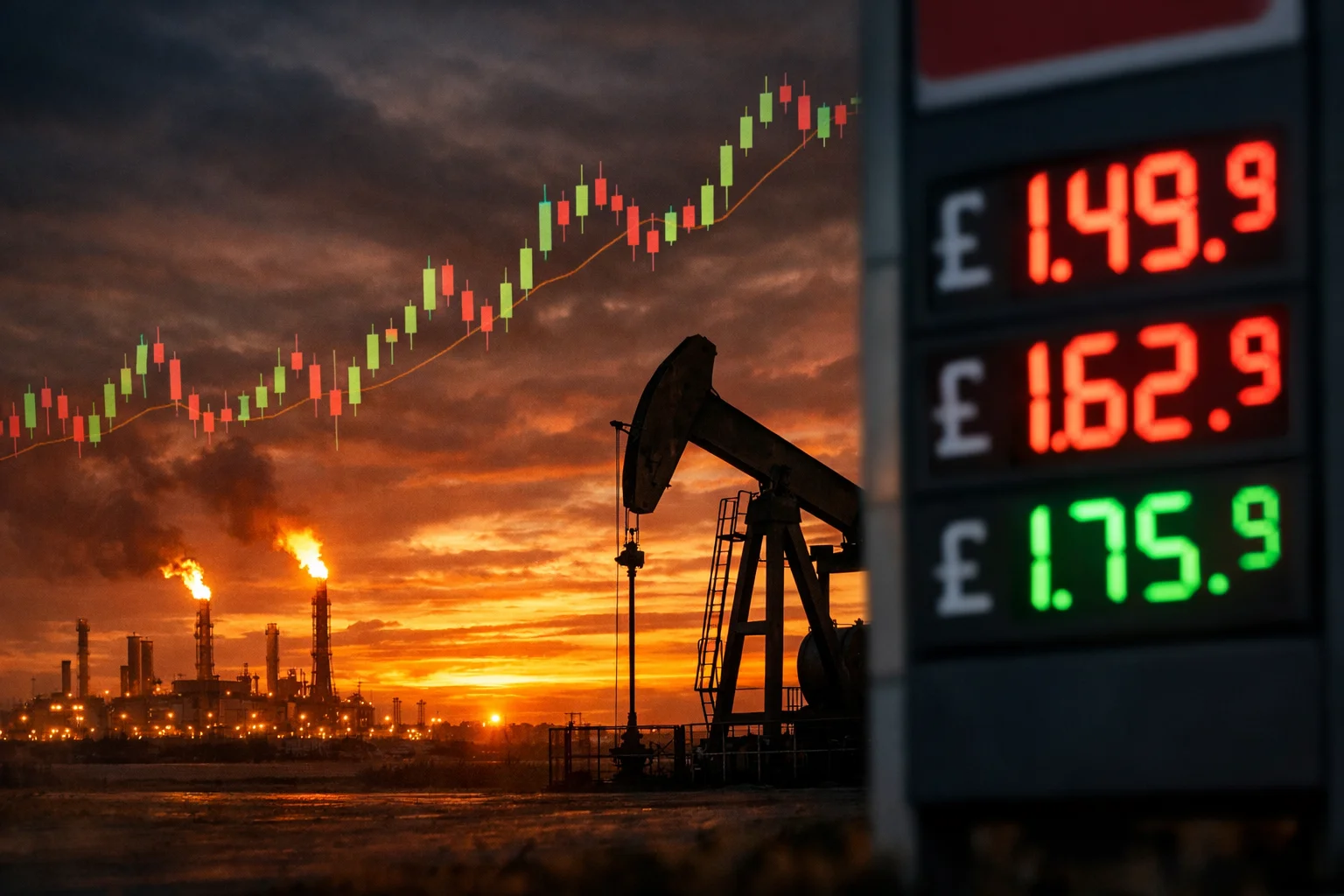
Oil markets have reacted sharply to escalating tensions in the Middle East, prompting urgent questions about how much has oil prices gone up and what it means for the UK.
In just a few days, Brent crude has climbed by roughly 8–10%, rising from around $72 (£57) per barrel to nearly $80 (£62–£64), marking a significant short-term surge.
While prices remain below the peaks seen in previous global crises, the speed of the increase has raised concerns about fuel costs, inflation and business expenses.
Key developments include:
- A near 9% jump in Brent crude prices
- Heightened risk around the Strait of Hormuz
- Potential petrol price rises within weeks
- Possible knock-on effects on inflation and energy bills
Let’s explore what this means in detail.
How Much Has Oil Prices Gone Up Since the Latest Middle East Escalation?
The most immediate question, how much has oil prices gone up, can be answered with clear figures from global markets.
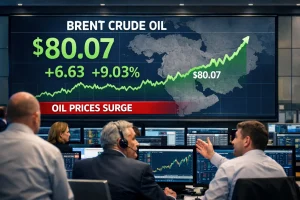
At the end of last week, Brent crude closed at approximately $72.87 per barrel (around £54–£55). By early Monday trading following the escalation, it had climbed to roughly $79.41 per barrel, representing a rise of about 9%. During intraday trading, Brent briefly touched $82 per barrel (£61).
Meanwhile, West Texas Intermediate rose from roughly $67 per barrel (£50) to around $72.79 (£54), an increase of approximately 8.6%.
Recent Oil Price Movements
| Benchmark | Previous Close (USD) | Latest Price (USD) | Approx. GBP Equivalent | Percentage Increase |
| Brent Crude | $72.87 | $79.41–$82 | £54 → £61 | ~9–10% |
| WTI Crude | $67.00 | $72.79 | £50 → £54 | ~8.6% |
While a 9–10% rise may not match the extreme spikes seen during the early days of the Ukraine war, it is significant given the short timeframe. Markets have effectively added a “risk premium” to prices to account for potential supply disruption.
Energy analyst Jorge Leon of Rystad Energy summarised the situation succinctly:
“The most immediate and tangible development affecting oil markets is the effective halt of traffic through the Strait of Hormuz… Unless de-escalation signals emerge swiftly, we expect a significant upward repricing of oil.”
The phrase “upward repricing” captures the core issue: even without a confirmed supply collapse, the possibility alone is enough to push prices sharply higher.
What Triggered the Sudden Rise in Oil Prices This Week?
The latest oil price surge was triggered by escalating military action involving the United States, Israel, and Iran. Air strikes on Iranian targets were followed by retaliatory missile and drone attacks across the region, raising fears that critical oil infrastructure or shipping routes could become targets.
Markets respond quickly to geopolitical instability because oil remains one of the world’s most strategically sensitive commodities. The Middle East accounts for a substantial share of global production, and even the perception of risk can move prices dramatically.
Robin Mills, chief executive at Qamar Energy, explained the speed of the reaction:
“The jump in prices will feed through almost immediately because oil traders are very much following the news too.”
In addition to direct military exchanges, reports of vessels being struck near the Strait of Hormuz and warnings to shipping companies have amplified fears of disruption. Insurance costs for tankers have reportedly risen, and some ships have paused or rerouted journeys.
The combination of military escalation, shipping uncertainty, and heightened rhetoric has created the perfect conditions for oil markets to surge.
Why is the Strait of Hormuz So Critical to Global Oil Prices?
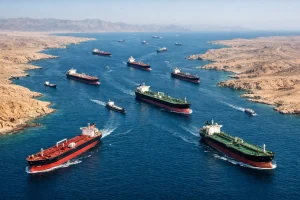
The Strait of Hormuz is a narrow waterway connecting the Persian Gulf to the Gulf of Oman and the Arabian Sea. Roughly 20% of the world’s seaborne oil trade, around 21 million barrels per day, passes through it.
When tensions rise in this region, markets respond swiftly because the strait represents a critical bottleneck.
Recent developments include:
- Reports of vessels being struck near the Strait
- Warnings issued to ships about transit risks
- Tankers anchoring outside the passage amid insurance concerns
- Claims that shipping activity has slowed significantly
Even the perception of restricted passage can lift prices dramatically. As John Wyn Evans of Rathbones noted:
“From a global perspective, pretty much everything hinges on the Strait of Hormuz.”
Importantly, while shipping has not fully stopped, the uncertainty alone has been enough to drive prices higher.
Is the Current Oil Price Surge Driven by Actual Supply Disruption or Market Speculation?
At present, much of the rise appears to reflect market anticipation rather than confirmed, large-scale supply loss. Production infrastructure has not been widely reported as destroyed, and global oil supply has not collapsed.
However, oil markets are forward-looking. Traders price in probability, not just present reality. If even a 20–30% chance of disruption exists, that risk is embedded in futures contracts.
Saul Kavonic, head of energy research at MST Marquee, noted:
“The market isn’t panicking… There is more clarity that so far, oil transport and production infrastructure hasn’t been a primary target by any side.”
This distinction matters. The current spike reflects uncertainty and insurance against worst-case scenarios. If shipping through Hormuz resumes normally, prices could stabilise. Conversely, confirmed blockades or attacks on production facilities could drive oil much higher.
How Could Oil Prices Move Next if the Conflict Continues?
Oil’s trajectory from here depends almost entirely on how events unfold in the Middle East. Markets typically price in three broad scenarios.
Short-term Volatility Expectations
In the immediate term, price swings are likely to remain sharp. Traders are reacting to headlines in real time. Even minor reports of shipping incidents can trigger rapid buying or selling.
If tensions ease quickly, some of the recent gains could unwind. Oil markets have historically corrected when geopolitical fears fail to translate into prolonged supply disruption.
Medium-term Escalation Risks
If the conflict expands or shipping routes face sustained interference, Brent crude could move into the $90–$100 per barrel range (£67–£74).
Simon Williams of the RAC has suggested that sustained oil above $80 could noticeably impact pump prices, and at $100 per barrel, UK motorists could see petrol approach 150p per litre.
Such levels would place renewed pressure on inflation and household budgets.
Role of OPEC+ Production Increases
OPEC+ has announced plans to increase output by 206,000 barrels per day. However, whether this will meaningfully offset disruption remains uncertain. Markets may doubt that incremental supply increases can compensate for large-scale shipping constraints.
When Will UK Motorists Feel the Impact at Petrol and Diesel Pumps?
Crude oil price changes do not immediately appear at UK forecourts. There is typically a lag of around two weeks between wholesale movements and retail price adjustments.
Currently, the average UK petrol price stands at approximately 133.2p per litre, with diesel at around 142.7p per litre.
If oil remains near or above $80 per barrel, upward pressure on these figures is likely.
The RAC has indicated that pump prices could rise modestly if elevated crude prices persist. However, because more than half of UK fuel costs are tax, including fuel duty and VAT, pump prices are somewhat cushioned compared with other countries.
How Much Could UK Petrol Prices Rise if Oil Reaches $80, $90, or $100?
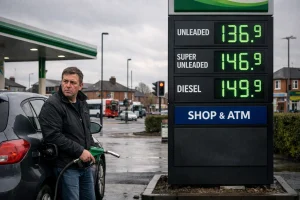
As global oil markets fluctuate, the key question for UK drivers is how higher crude prices could affect what they pay at the pump.
Price Sensitivity of UK Fuel Markets
The UK fuel pricing structure includes:
- Fuel duty (around 52–53p per litre)
- VAT (20%)
- Wholesale fuel cost (linked to crude oil)
- Retail margin
Crude oil accounts for roughly 26–29% of the pump price. Therefore, a 10% increase in global oil prices may translate to around a 2–3% increase at the pump.
Estimated Pump Price Scenarios
To illustrate the potential impact, the table below outlines how different Brent crude price levels could influence UK petrol prices if elevated levels are sustained.
Potential UK Petrol Price Scenarios:
| Brent Price (USD) | Approx. GBP | Estimated Petrol Price | Likely Impact |
| $80 | £60 | ~136p per litre | Modest increase |
| $90 | £67 | 140p+ per litre | Noticeable rise |
| $100 | £74 | Near 150p per litre | Significant pressure |
These estimates assume prices remain elevated for several weeks rather than retreating quickly.
Edmund King, president of the AA, warned:
“The magnitude and duration of pump price increases depends on how long the conflict goes on.”
This underlines that duration, rather than a brief surge, will determine whether motorists experience only marginal increases or a more sustained squeeze on household budgets.
Will Higher Oil Prices Increase UK Household Energy Bills?
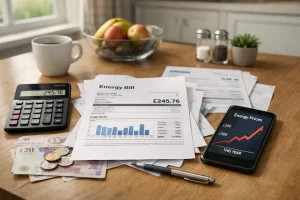
In the short term, many UK households are protected by the Ofgem energy price cap, which sets maximum rates for standard variable tariffs. The current cap has already been determined for the quarter.
However, if wholesale oil and gas prices remain high, the impact could appear in the subsequent price cap period.
Edward Allenby of Oxford Economics explained:
“Ofgem have already published their price cap for Q2, so any upward pressure would only start to come through from July.”
Wholesale costs now account for less than half of the overall cap calculation, limiting immediate passthrough. Nevertheless, sustained increases could influence future adjustments.
In Northern Ireland, where around 62.5% of homes use heating oil, the impact has already been visible. Some households have reported increases of more than £100 for 500 litres of heating oil in just a few days.
Northern Ireland Heating Oil Example:
| Date | 500 Litres Price | Increase |
| 26 February | £307.38 | — |
| Early March | £395–£425 | £88–£118 |
Such volatility highlights how regional exposure can amplify the effect of global price swings.
Could Rising Oil Prices Push UK Inflation Higher Again?
Energy costs are a primary driver of headline inflation. When oil rises, transport, manufacturing, and food distribution become more expensive.
Subitha Subramaniam of Sarasin & Partners warned:
“If they remain elevated, it will start to cascade into other prices such as food, agriculture and industrial commodities.”
The Bank of England has recently reduced interest rates to 3.75%, with further cuts previously expected. However, sustained energy inflation could complicate that trajectory.
Higher oil prices increase input costs for businesses, which may pass those costs to consumers. If inflation accelerates, the Bank may choose to pause rate cuts.
The outcome depends heavily on duration. A brief spike may have a limited long-term impact. A prolonged surge could shift the inflation outlook meaningfully.
What Does This Oil Price Surge Mean for UK Startups and Small Businesses?

For UK startups and SMEs, rising oil prices translate into tangible cost pressures across multiple operational channels. Unlike larger corporations, smaller firms often have less capacity to absorb unexpected input cost increases.
Operational Cost Pressures
Businesses reliant on delivery fleets, supplier shipments or imported materials may see:
- Increased transport and logistics expenses
- Higher supplier surcharges
- Rising packaging and manufacturing costs
Retailers, hospitality businesses, and service providers may experience indirect inflation through higher utility and food prices.
Strategic Financial Considerations
To mitigate risk during volatile periods, businesses may consider:
- Reviewing fuel surcharge clauses in contracts
- Optimising logistics and delivery routes
- Renegotiating supplier agreements
- Evaluating energy procurement strategies
Proactive planning and cost monitoring can help reduce exposure. Scenario analysis, for example, modelling operations at $80, $90 or $100 oil, may allow businesses to prepare contingency pricing or budgeting measures.
What Indicators Should Businesses and Consumers Monitor in the Coming Weeks?
Oil markets remain highly sensitive to developments in the Strait of Hormuz. Key indicators include shipping traffic data, insurance conditions for tankers, and official announcements from OPEC+.
In the UK, attention should also focus on:
- Weekly petrol and diesel price updates
- Ofgem’s wholesale price monitoring
- Bank of England policy signals
- Sterling–US dollar exchange rate movements
A stronger pound can slightly offset higher dollar-denominated oil prices.
Conclusion
In direct answer to the central question, how much oil prices have gone up, Brent crude has risen by roughly 9–10% in the days following the Middle East escalation, briefly moving above $82 per barrel (£61), while WTI has gained about 8.6%. The rise reflects geopolitical risk and fears of disruption through the Strait of Hormuz.
For the UK, short-term effects may be modest but noticeable at petrol stations. Longer-term impacts will depend on whether tensions ease or escalate further.
FAQs
Why do oil prices react so quickly to geopolitical tensions?
Oil is globally traded and highly sensitive to supply risk. Even the possibility of disruption can shift futures contracts immediately.
How does the exchange rate affect UK fuel prices?
Oil is priced in US dollars. A stronger pound reduces the cost of imports, slightly cushioning pump prices.
Can OPEC fully stabilise the oil market during conflicts?
OPEC can increase production, but shipping bottlenecks or regional instability may still limit supply.
Are current oil prices higher than during the Ukraine crisis?
No. Prices exceeded $100 per barrel after Russia’s invasion of Ukraine. Current levels remain below those peaks.
How do rising oil prices affect public transport costs?
Higher fuel costs can increase bus and coach operating expenses, which may eventually lead to fare adjustments.
Could a prolonged oil spike cause a recession?
If oil surpasses $100 and remains elevated, inflationary pressure and reduced consumer spending could slow growth.
What practical steps can households take to reduce fuel expenses?
Driving efficiently, comparing fuel prices locally, and considering alternative transport options can help mitigate higher costs.