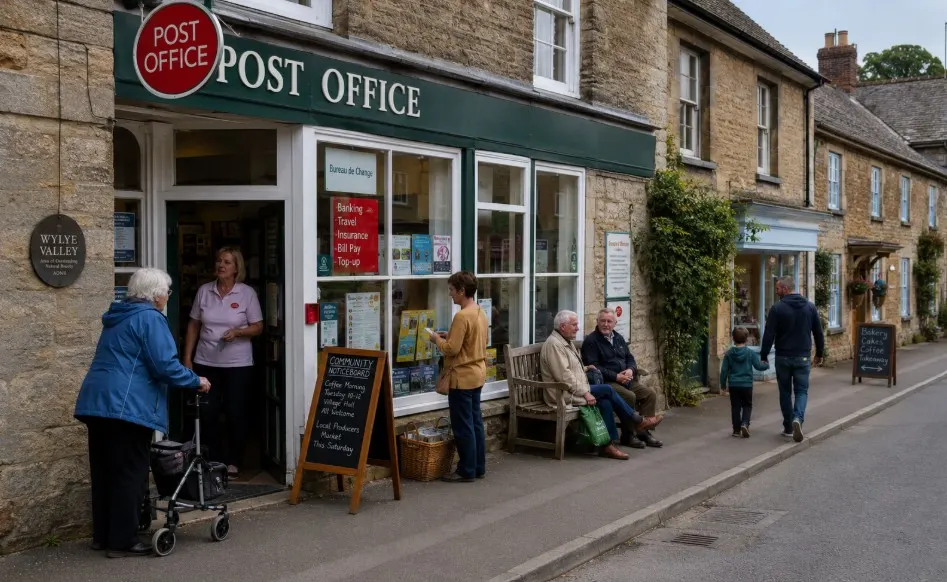
Rural post office closure risks are increasing in 2026 as rising business rates and operating costs place greater financial pressure on small branches.
Many rural locations face higher tax bills, raising concerns about the long-term viability of services that communities rely on every day.
Key Highlights:
- Rising business rates are increasing financial pressure on rural branches.
- Around 600 additional Post Offices could become liable for business rates.
- Closures may reduce access to postal, banking, and cash services.
- Elderly residents, small businesses, and rural communities could be most affected.
- Business rates relief and targeted support have been proposed as solutions.
This article explores the factors driving rural post office closure risks, the potential impact on communities, and measures that could help protect these essential local services.
Why Are Rural Post Office Closure Risks Increasing In 2026?
The primary driver behind growing closure concerns is the sharp increase in business rates affecting many branches. Following the first post-pandemic revaluation, approximately 600 additional Post Office branches across the UK have become liable for business rates for the first time.
Many rural branches operate on relatively small profit margins. As a result, even modest increases in costs can have a disproportionate impact on financial viability.
Alongside higher National Insurance contributions, increased wage costs, and ongoing inflationary pressures, business rates have become another significant burden.
“Post Offices are a lifeline for many communities. There is a structural unfairness in how the tax burden falls across the Post Office network.” — Neil Brocklehurst, Chief Executive, Post Office
The concern is not simply about profitability. It is about whether essential services can continue to be delivered in communities where alternative options may be limited or non-existent.
How Are Business Rates Putting Rural Post Offices Under Pressure?
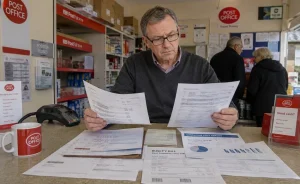
The latest figures indicate that Post Office branches collectively face an additional £29 million in business rates costs during the 2026/27 financial year. According to commissioned research, the network is expected to pay approximately £43 million in business rates overall.
Key Business Rates Statistics:
| Metric | 2026/27 Estimate |
| Additional network-wide business rates burden | £29 million |
| Total business rates payable | £43 million |
| Average branch business rates bill | £3,700 |
| Branches paying over £5,000 | 25% |
| Branches paying over £10,000 | Nearly 10% |
| Additional branches becoming liable | 600 |
For many rural operators, the issue is compounded by the fact that relatively small changes in rateable values can trigger substantially higher liabilities. Unlike larger retailers that benefit from economies of scale, rural branches often serve smaller populations and generate lower revenues.
The result is a growing concern that some postmasters may struggle to absorb rising costs without additional support. This financial pressure explains why targeted business rates relief has become a major industry request.
What Services Could Communities Lose If Rural Post Offices Close?
A rural Post Office often delivers multiple services under one roof. The loss of a branch can therefore affect residents in several ways simultaneously.
Everyday Postal and Parcel Services
Many residents depend on local branches for sending parcels, collecting deliveries, returning online purchases, and accessing mail-related services. For businesses operating in rural areas, these services are often essential for customer fulfilment and day-to-day operations.
Banking, Cash Withdrawals and Bill Payments
As traditional bank branches continue to disappear from high streets, Post Offices increasingly serve as important financial access points.
Services commonly provided include:
- Cash withdrawals
- Cash deposits
- Bill payments
- Banking transactions
- Pension and benefit access
For residents who prefer in-person transactions or have limited digital access, these services remain critically important.
The closure of a rural branch can force people to travel significant distances simply to access basic financial services, creating additional costs and inconvenience.
Who Would Be Most Affected by Rural Post Office Closures?
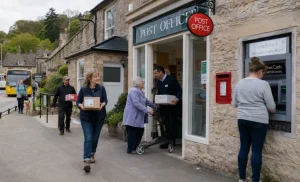
The impact would not be evenly distributed across communities. Certain groups are more dependent on local branches than others.
Older residents are among the most vulnerable. Many rely on face-to-face services and may be less comfortable using digital alternatives. Similarly, individuals without reliable internet access could face additional barriers if services become increasingly online.
Disabled residents may also encounter difficulties if alternative branches require longer journeys or limited public transport options.
Small businesses are another group at risk. Rural entrepreneurs frequently use local Post Offices for parcel deliveries, banking services, and customer communications. Losing a nearby branch could increase operating costs and reduce efficiency.
The consequences therefore extend beyond convenience and can affect social inclusion, economic participation, and quality of life.
How Could Closures Affect Local Shops, Startups and Rural Economies?
The importance of rural Post Offices extends beyond postal services. In many villages, they help drive local economic activity by attracting visitors who often use nearby businesses during the same trip. As rural post office closure risks grow, concerns about their impact on local economies are increasing.
Reduced Village Footfall
Many rural Post Offices operate within convenience stores, village shops, or mixed retail premises. This creates regular customer traffic that benefits surrounding businesses.
If a branch closes, customer numbers may fall, affecting nearby retailers. In smaller villages, the loss of a key service can place additional pressure on independent businesses and increase the risk of further closures.
Higher Costs for Small Businesses
Rural startups and small businesses often rely on local Post Offices for services such as parcel dispatch, cash deposits, and banking transactions.
When a branch closes, business owners may need to travel further, leading to:
- Increased transport costs
- More time away from business operations
- Reduced efficiency
- Greater delivery-related challenges
For businesses operating on tight margins, these extra costs can be significant.
Weaker Local Employment and Community Resilience
Rural Post Offices support local jobs both directly and indirectly. Nearby businesses also benefit from the customer activity generated by these branches.
Beyond economics, Post Offices help maintain community connections and support village centres. Closures can reduce employment opportunities and remove an important local service hub.
Community Economic Impact:
| Area | Potential Impact |
| Local retail | Reduced customer visits |
| Small businesses | Higher operating costs |
| Employment | Fewer local jobs |
| Banking access | Increased travel requirements |
| Community cohesion | Reduced social interaction |
These effects illustrate why rural post offices are frequently viewed as economic anchors rather than standalone businesses.
Why Are Rural Branches More Vulnerable Than Urban Post Offices?
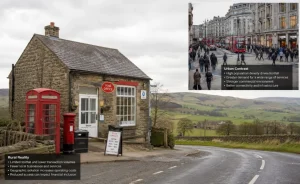
Rural branches face a unique combination of challenges. Population density is lower, customer volumes are often smaller, and transport links can be limited. This means revenues tend to be lower while operational costs remain relatively fixed.
In addition, rural branches are more likely to serve communities with ageing populations and limited access to alternative services. Their social value is often higher than their commercial value.
The business rates revaluation has exposed this vulnerability. Branches that were previously exempt can now face substantial tax liabilities despite generating modest turnover.
This creates a situation where socially important services may become financially difficult to sustain without external support or policy intervention.
What Does the Dibden Purlieu Example Reveal About Rising Costs?
The experience of Dibden Purlieu Post Office in Hampshire provides a practical illustration of the pressures facing many rural operators.
Postmaster Paul Patel reported that his annual business rates bill increased from £5,089 to £7,154. At the same time, his rateable value rose by more than £1,000, further increasing costs.
“These rising costs come on top of increased tax and National Insurance contributions linked to the higher minimum wage. Altogether, it means my outgoings are rising by thousands of pounds a year.” — Paul Patel, Postmaster
While each branch operates under different circumstances, this example demonstrates how multiple cost increases can accumulate rapidly and place significant pressure on rural businesses.
The situation highlights why many industry stakeholders are calling for a more targeted approach to supporting community-focused services.
Could Government Support Reduce Rural Post Office Closure Risks?
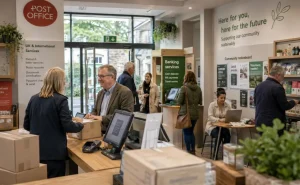
Government intervention remains one of the most discussed solutions. The Post Office network continues to benefit from commitments designed to maintain nationwide coverage, including support for branches operating in less commercially viable locations.
Industry representatives have suggested that targeted business rates relief could provide immediate assistance to vulnerable branches.
“The unique social contribution that Post Offices deliver in communities should be recognised and protected.” — Neil Brocklehurst, Chief Executive, Post Office
The Government has also highlighted wider support measures for businesses, including broader business rates reforms and initiatives aimed at supporting high streets.
Whether these measures are sufficient to address rural-specific challenges remains a subject of ongoing debate.
What Practical Solutions Could Help Protect Rural Post Offices?
Protecting rural post offices will require a combination of policy support, innovation, and community engagement. These branches play a vital role in providing essential services and supporting local economies.
Potential solutions include:
- Business rates relief for rural branches.
- Improved remuneration for postmasters.
- Expansion of community hub models.
- Investment in branch modernisation.
Digital transformation may also help improve efficiency while maintaining important in-person services. However, any changes must consider the needs of residents who continue to rely on physical access to postal, banking, and government services.
Ultimately, addressing rural post office closure risks requires recognising the broader value these branches provide to communities across the UK.
Conclusion
The growing rural post office closure risks highlight a challenge that extends far beyond rising business costs. For many villages, Post Offices remain essential hubs that support local economies, provide access to banking and postal services, and help maintain community connections.
As business rates, employment costs, and operational pressures continue to increase, the future of some rural branches remains uncertain.
Targeted support, fairer taxation policies, and continued investment in community-focused services could play a crucial role in ensuring these vital institutions remain accessible across the UK.
FAQs About Rural Post Office Closure Risks
How many Post Office branches could become newly liable for business rates?
Around 600 additional Post Office branches across the UK are expected to become liable for business rates following recent changes to the system.
What is the average business rates bill for a Post Office branch in 2026/27?
Research suggests the average Post Office branch will face a business rates bill of approximately £3,700 during the 2026/27 financial year.
Why do rural residents still rely on physical Post Office branches?
Many residents depend on local branches for postal services, banking transactions, cash withdrawals, bill payments, and face-to-face support.
Are Post Office branches owned by the Government?
The Post Office is state-owned, but the majority of branches are operated independently by postmasters as small businesses.
How do Post Office closures affect access to cash?
Closures can reduce access to cash withdrawals and deposits, particularly in areas where bank branches have already shut down.
Could digital services fully replace rural Post Offices?
While digital services continue to expand, many residents still require in-person support due to accessibility, connectivity, or personal preference reasons.
What support is the Post Office asking the Government to provide?
The organisation is calling for targeted business rates relief and policies that recognise the social and economic value of rural branches.