
If you are wondering how many unauthorised absences are allowed from school before a fine, the rule in England is clear.
Schools must consider issuing a penalty notice when a child reaches 10 unauthorised sessions (equivalent to 5 days) within a rolling 10-school-week period.
While this threshold sounds strict, fines are usually a last resort after schools try to support families and improve attendance.
Key points you should know:
- 10 sessions equal 5 full school days
- The period is rolling across 10 school weeks
- Fines start at £80 per parent per child
- Increase to £160 if unpaid within 28 days
- Schools typically warn and support before fining
Understanding these rules helps you avoid penalties and ensures your child stays on track with their education.
What Is Unauthorised Absence from School in the UK?

Unauthorised absence refers to any time your child misses school without permission from the school or without a valid reason.
Schools record attendance carefully, and anything not approved by the headteacher is typically marked as unauthorised.
This distinction matters because unauthorised absences are the ones that count towards the legal threshold for fines. In contrast, authorised absences, such as illness or approved leave, do not contribute to enforcement action.
According to government guidance, attendance is not just encouraged, it is a legal responsibility for parents. Schools and local authorities monitor patterns closely, and repeated unauthorised absence can quickly escalate.
How Many Unauthorised Absences Are Allowed from School Before a Fine in England?
Under the national framework introduced in 2024, schools must consider issuing a fine when a child accumulates 10 sessions of unauthorised absence within a rolling 10-week period. This rule applies consistently across England to ensure fairness and transparency.
Because each school day is divided into two sessions (morning and afternoon), this threshold is equivalent to 5 full days of missed school without permission.
Importantly, these sessions:
- Do not need to be consecutive
- Can build up gradually over time
- Can span across different school terms or academic periods
A Department for Education spokesperson explains:
“The national threshold ensures consistency across England, so all families are treated fairly when it comes to school attendance enforcement.”
This system is designed to allow early intervention while maintaining a balanced and supportive approach before enforcement is considered.
What Counts as Unauthorised Absence in UK Schools?
Understanding what counts as unauthorised absence in UK schools is essential for parents, as even a single mistake can lead to warnings or fines if the rules are not followed correctly.
Common Examples of Unauthorised Absences
Certain situations are almost always recorded as unauthorised if permission has not been granted in advance by the school:
- Taking holidays during term time without approval
- Keeping your child at home for personal, social, or leisure reasons
- Missing school without informing the school of a valid reason
- Repeated lateness after the register has officially closed
These types of absences are closely monitored, especially when they begin to form a pattern over time.
Situations That May Be Considered Authorised
Some absences are valid and may be approved by the school, depending on the circumstances:
- Illness or necessary medical appointments
- Religious observance days
- Exceptional family circumstances approved by the headteacher
A real parent experience highlights how easily absences can be misunderstood:
“I thought keeping my child home for a family event would be fine, but the school marked it as unauthorised and warned me it could count towards a fine.”
This shows how important it is to seek approval in advance and communicate clearly with the school to avoid unintended consequences.
How Do School Attendance Sessions Work in England?

Schools divide each day into two sessions: morning and afternoon. Attendance is recorded for each session separately, which means even missing half a day counts.
This system allows schools to track attendance more precisely and identify patterns early. For example, frequent lateness or missing afternoons can still accumulate towards the penalty threshold.
| Attendance Type | Sessions Counted |
| Full school day missed | 2 sessions |
| Morning only missed | 1 session |
| Afternoon only missed | 1 session |
Understanding how sessions work is essential, as fines are based on total sessions missed rather than full days, which can catch many parents off guard.
How Do 10 Sessions of Unauthorised Absence Add Up to a Fine?
The 10-session threshold may initially seem high, but in reality, it can be reached more quickly than expected. Even a short period of absence can meet the limit under the session-based system.
For example:
- 5 consecutive days off school = 10 sessions
- 10 separate mornings missed = 10 sessions
- Repeated lateness across several weeks can also accumulate
To better understand how this happens in real life, one parent shared their experience after receiving a warning from their child’s school.
They explained that the absences were not intentional but built up over time due to a mix of minor issues.
The parent described the situation like this:
“At first, it was just a couple of mornings where my child was late due to traffic and one day off for a family event. Then we took a short three-day break during term time thinking it wouldn’t be a big issue. But the school later showed us that all those sessions had added up to ten within a few weeks.”
They further added:
“We genuinely didn’t realise that missing just half days or being late could count the same way. By the time we understood it, we had already reached the threshold where a fine could be considered.”
This example clearly highlights how a combination of small absences, lateness, occasional days off, and short trips, can quickly accumulate under the session-based system.
It also shows why schools emphasise early communication and awareness, as many parents only realise the impact once they are close to or have already reached the limit.
How Much Is the Fine for Unauthorised School Absence in the UK?
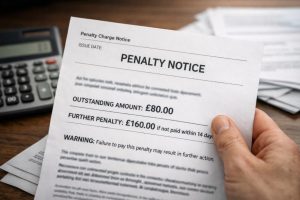
With stricter attendance policies in place, understanding the fines for unauthorised school absence is more important than ever for parents.
Current Fine Structure Under 2024 Rules
The penalty notice system has been standardised across England to ensure consistency between schools and local authorities.
The amount you pay depends on how quickly the fine is settled and whether it is a repeated offence.
- £80 if paid within 21 days
- £160 if paid within 28 days
- Second offence: £160 (no early payment discount)
- Third offence: possible prosecution
School Absence Fine Breakdown in England
| Offence Level | Fine Amount | Deadline |
| First offence (early payment) | £80 | Within 21 days |
| First offence (late payment) | £160 | Within 28 days |
| Second offence (within 3 years) | £160 | No reduction |
| Third offence | Court action | Court decision |
It is important to remember that fines are issued per parent, per child, meaning the total cost can increase significantly depending on family circumstances.
When Do Parents Get Fined for Unauthorised School Absences?
Fines are not issued immediately. Schools and local authorities typically follow a structured process before taking enforcement action.
In most cases, you can expect:
- Attendance monitoring
- Warning letters
- Meetings with school staff
- Support plans to improve attendance
A local authority officer stated:
“Penalty notices are intended as a last resort. Our priority is always to work with families to improve attendance before considering enforcement.”
This approach ensures that families are supported rather than penalised unnecessarily.
Can You Be Fined for Taking Your Child on Holiday During Term Time?

Yes, taking your child on holiday during term time without prior approval is one of the most common reasons parents receive fines in the UK.
Schools take attendance seriously, and holidays are rarely authorised unless there are truly exceptional circumstances.
Situations that often lead to fines include booking cheaper holidays during term time, extending trips beyond agreed dates, or travelling abroad during school weeks. Cost savings or convenience are not considered valid reasons for absence.
In rare cases, exceptions may apply, such as bereavement or serious family emergencies. However, these decisions are made at the discretion of the headteacher and are assessed individually based on the circumstances
What Happens If You Do Not Pay a School Absence Fine?
If a penalty notice is not paid within the required timeframe, the situation can escalate into legal action. The fine is intended to act as an alternative to court, so ignoring it can lead to more serious consequences.
Possible outcomes include:
- Being summoned to a magistrates’ court
- Receiving fines of up to £2,500
- Parenting orders or supervision orders
- Community service in some cases
In more serious situations, legal records may be affected. It is therefore important to deal with fines promptly and communicate with authorities if there are any issues.
How Can You Avoid a Fine for Unauthorised School Absences?
Avoiding fines is largely about communication and planning. Schools prefer to support families rather than issue penalties.
To reduce risk:
- Inform the school immediately about absences
- Provide medical evidence when needed
- Request permission in advance
- Avoid term-time holidays
- Respond to school communications promptly
If your child faces challenges such as anxiety or health issues, schools can provide support plans to help improve attendance.
Conclusion
Knowing how many unauthorised absences are allowed from school before a fine helps you stay compliant with UK education laws. The key threshold, 10 sessions within 10 weeks, is straightforward, but easy to reach if attendance is not monitored carefully.
Fines are not designed to punish but to ensure children receive consistent education. By maintaining communication with your child’s school, planning absences responsibly, and addressing issues early, you can avoid penalties altogether.
Ultimately, regular school attendance supports not only academic success but also your child’s long-term development and wellbeing.
FAQs About Unauthorised School Absences and Fines in the UK
Can a child be absent without a fine if attendance improves later?
Yes, improvement can reduce the likelihood of a fine. Schools may choose to monitor progress instead of escalating immediately.
Do fines apply to both parents or just one?
Fines are usually issued to each parent separately, meaning both may be liable.
Can schools issue fines immediately without warning?
No, fines are typically a last resort after warnings and support measures.
Does persistent lateness count as unauthorised absence?
Yes, repeated lateness after registration closes can count as unauthorised sessions.
Are school absence rules the same across all UK regions?
No, this guidance applies mainly to England. Scotland, Wales, and Northern Ireland have different rules.
Can medical absences ever be marked as unauthorised?
Yes, if proper evidence is not provided or the school does not accept the reason.
What is the maximum penalty for repeated school absence offences?
If prosecuted, fines can reach up to £2,500, along with additional legal consequences.