
Selling clothes you no longer wear used to mean taking bags to a charity shop, organising a car boot sale or spending time creating complicated marketplace listings. Vinted has made the process considerably simpler.
If you are wondering how to sell on Vinted, the basic process is straightforward. Create an account, photograph your item, add an accurate description and price, publish the listing and wait for a buyer. Once somebody buys it, use the shipping method selected for the order, send the parcel and receive your money through your Vinted Balance.
One major attraction for UK sellers is that Vinted currently does not charge standard sellers a fee for listing or selling an item. The buyer normally pays the applicable Buyer Protection charge in addition to the item price.
However, getting an item listed and getting it sold at a good price are two different things.
From photographs and descriptions to pricing, postage, tax and Vinted Pro, this guide explains how selling on Vinted works in the UK in 2026.
What Is Vinted and How Does Selling Work?
Vinted is an online marketplace best known for second-hand fashion, although its UK catalogue now extends beyond clothes into categories including home products, electronics, entertainment, hobbies, collectables and sports equipment.
Some products remain prohibited, so sellers should check the catalogue rules before listing anything unusual.
The typical transaction works like this:
Seller lists item → Buyer purchases item → Buyer selects shipping → Seller posts item → Buyer receives item → Transaction completes → Seller gets paid
The important difference between Vinted and some other online marketplaces is its seller-fee model.
For ordinary sellers, there is currently no standard listing fee or selling commission deducted from the advertised item price. Buyer Protection is charged to the purchaser instead.
That makes the platform particularly attractive for people clearing out wardrobes and selling relatively inexpensive items where marketplace commission could otherwise reduce the return considerably.
How to Sell on Vinted Step by Step?
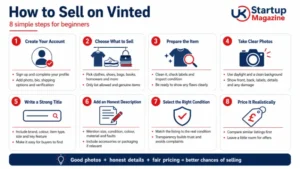
1. Create Your Vinted Account
The first step is opening a Vinted account through the app or website.
Vinted currently allows sign-up using methods including email, Google, Apple ID and Facebook. The platform is designed for people aged 18 or over. A parent or guardian must create and oversee an account if somebody under 18 wants to use the service.
Once registered, spend a few minutes completing your profile.
A credible profile can help buyers feel more confident, particularly when you have not yet accumulated reviews.
Consider adding:
- A Profile Picture
- A Short Profile Description
- Your Preferred Shipping Options
- Account Verification Where Available
Do not worry if your profile has no reviews initially. Every established Vinted seller started with zero feedback.
2. Decide What You Want to Sell
Go through your wardrobe, cupboards, children’s belongings or other suitable possessions and identify items you genuinely no longer need.
Typical possibilities include:
- Clothing
- Shoes
- Bags
- Accessories
- Children’s Items
- Books
- Homeware
- Games
- Collectables
- Selected Electronics
- Sports Items
Do not assume that everything can be sold.
Counterfeit goods, certain regulated products and other prohibited items cannot be listed. An item that does not fit an eligible Vinted catalogue category may also be unsuitable for the marketplace.
For branded products, be particularly careful about authenticity. Using an unrelated luxury brand simply to attract searches can result in the listing being removed.
3. Prepare the Item Before Photographing It
Presentation matters.
Before uploading your listing, examine the item properly.
For clothing, this could mean:
- Washing It Where Appropriate
- Removing Lint
- Checking Pockets
- Straightening Creases
- Looking for Stains
- Inspecting Zips and Buttons
- Checking for Holes or Damage
You should not try to disguise imperfections.
A £10 jumper with a clearly photographed small mark may still sell. A £10 jumper advertised as immaculate and delivered with an undisclosed stain is far more likely to result in a complaint.
Vinted specifically asks sellers to disclose flaws such as stains, holes, tears, missing parts, broken zips, odours, fading, stretching or alterations.
Accurate listings protect both the buyer and the seller.
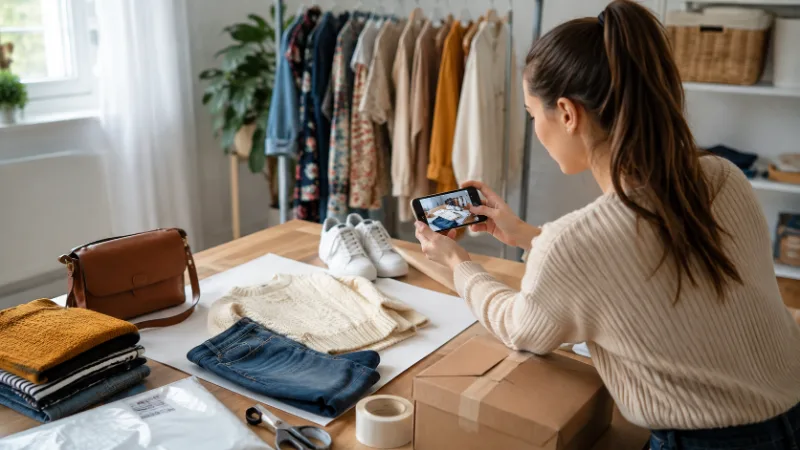
4. Take Clear Vinted Photos
Photographs can make or break a listing.
You do not need professional equipment. A modern smartphone, good daylight and a clean background are usually sufficient.
For clothing, consider photographing:
- The Full Front
- The Full Back
- Brand Label
- Size Label
- Material or Care Label
- Close-Up Details
- Any Damage or Wear
For shoes, include the soles.
For bags, photograph the inside.
For electronics, show the screen, connections, accessories and visible condition where relevant.
Avoid relying on stock images from retailers. Vinted expects listings to show the actual item being sold, and standardised commercial photographs can also make an account appear to be selling commercially.
Natural light generally works better than a heavily edited photograph because buyers want to know what colour and condition they will actually receive.
5. Write a Search-Friendly Vinted Title
Treat your title like a miniature search result.
A weak title might be:
Nice Dress
A much stronger title would be:
Zara Black Midi Dress Size 12 Long Sleeve
Include the details a buyer is likely to search for naturally.
Useful title elements include:
Brand + Colour + Product Type + Size + Distinguishing Feature
For example:
- Nike Grey Hoodie Men’s Medium
- Levi’s 501 Blue Jeans W32 L32
- Next Floral Midi Dress Size 10
- Adidas White Trainers UK Size 6
- Ralph Lauren Navy Polo Shirt Large
Avoid filling titles and descriptions with unrelated brand names or excessive hashtags. Vinted warns that misleading branding and unrelated keywords can lead to listings being hidden or removed.
6. Write an Honest Description
Your description should answer the questions a sensible buyer is likely to ask.
Include:
- Exact Item Type
- Brand
- Size
- Condition
- Colour
- Material Where Relevant
- Approximate Measurements If Helpful
- Faults or Damage
- Whether Accessories or Original Packaging Are Included
You do not need to write an essay.
For example:
Black Zara midi dress in UK size 12. Worn twice and in very good condition. Long sleeves with a fitted waist and back zip. No stains, tears or alterations. Selling because it no longer fits.
Specific descriptions reduce unnecessary messages and also make disagreements about condition less likely.
Vinted can treat products as significantly not as described where important details are inaccurate or omitted, including the wrong size, colour, material, missing components or undisclosed damage.
7. Choose the Correct Condition
Do not automatically select the highest condition available.
Buyers expect the condition selected in the listing to match what arrives.
If an item has visible wear, photograph it and explain it.
Being transparent might appear to reduce the price you can charge, but hiding faults is usually a false economy. A realistic description is more likely to produce a smooth transaction and positive review.
8. Decide How Much to Sell It For
Pricing is one of the most important parts of learning how to sell on Vinted successfully.
Search Vinted for the same item or similar products before choosing your price.
Compare:
- Brand
- Condition
- Size
- Style
- Original Retail Price
- Similar Listings
- How Common the Item Is
Do not price solely according to what you originally paid.
A jumper that cost £60 three years ago is not automatically worth £45 today.
At the same time, avoid immediately pricing everything at the lowest amount you would accept. Vinted buyers frequently make offers, so leaving a reasonable amount of negotiating room can be useful.
For example, if you would happily accept £18, you might initially test a price around £20 to £22 depending on competing listings.
The key is being realistic rather than attaching sentimental value to an item.
Does Vinted Charge Sellers Fees?
For ordinary sellers, Vinted currently charges no fee to upload an item and no standard selling fee when it sells. The completed item price is added to the seller’s Vinted Balance.
The buyer pays additional costs that can include:
- Shipping
- Buyer Protection
- Optional Verification Services Where Applicable
Sellers can also choose to pay for promotional tools such as Bumps, which can temporarily give a listing more visibility in search results and member feeds.
Paid promotion is optional. A good listing does not need to be bumped simply because it has not sold immediately.
What Happens When Someone Buys Your Item?
Once a buyer purchases an item, Vinted will provide the relevant shipping instructions through the order.
With integrated shipping, the buyer selects and pays for an available delivery option at checkout. The seller then receives the appropriate digital label or shipping code.
UK shipping providers currently shown by Vinted include options such as:
- Evri
- InPost
- Yodel
- DPD
- Royal Mail
- DHL Express
Availability can depend on the order, location and item.
Follow the shipping instructions shown for that particular transaction rather than assuming every parcel is handled in the same way.
Using a different label from the Vinted-generated option can create tracking and transaction problems.
How to Package a Vinted Parcel Properly?
Good packaging is part of being a reliable seller.
For clothing, a strong mailing bag may be suitable where permitted. Fragile products, shoes and electronics generally need considerably more protection.
Vinted recommends sturdy external packaging, filling empty spaces where necessary and sealing parcels securely.
Before sending a higher-value item, it is sensible to photograph:
- The Item Before Packing
- The Item Inside the Packaging
- The Sealed Parcel
Vinted itself recommends keeping photographs of the item and package because they may be helpful if there is a delivery dispute.
Also retain any postage evidence until the transaction has fully completed.
How Long Do You Have to Post a Vinted Item?
Sellers are normally expected to send their parcel within five business days after the purchase, unless an extension has been agreed with the buyer.
If the order is not sent within the required period, it can be automatically cancelled and the buyer refunded.
Posting quickly can also help your seller reputation.
If you know you cannot send something promptly, communicating with the buyer is better than simply ignoring the transaction.
When Do You Get Paid on Vinted?
Payment is not normally transferred directly to your bank account the moment somebody presses Buy.
Your earnings first go through the transaction process and are eventually placed in your Vinted Balance once the order has completed.
For an ordinary seller, Vinted says that once everything is OK, or any reported issue has been resolved, payment moves from pending to available balance. Bank withdrawals may then take up to five business days to appear.
UK sellers withdrawing funds need an eligible GBP bank account in the UK.
You can either:
- Withdraw Available Money to Your Bank
- Keep It in Your Vinted Balance
- Use Your Balance Towards Purchases on Vinted
How to Sell Faster on Vinted?
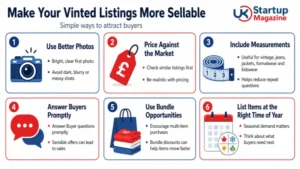
Creating a listing is easy. Creating one people actually want to buy requires more thought.
Use Better Photos
The first photograph should immediately show what the product is.
Avoid:
- Dark Rooms
- Messy Backgrounds
- Blurry Images
- Items Scrunched on the Floor
- Filters That Change the Colour
Clean, straightforward photographs usually create more confidence.
Price Against the Market
If 20 similar jackets are listed between £15 and £25, pricing yours at £60 without a compelling reason will probably make selling difficult.
Search before listing.
Include Measurements on Difficult-to-Size Items
Measurements can be particularly useful for:
- Vintage Clothing
- Jeans
- Jackets
- Formalwear
- Children’s Clothing
- Items Where Label Sizing Is Unusual
Providing this information upfront can reduce repetitive messages.
Answer Buyers Promptly
A buyer asking for a measurement or additional photograph may already be close to purchasing.
A useful response can turn interest into a sale.
Consider Reasonable Offers
You do not have to accept every discount request.
However, rejecting a £19 offer on an item listed for £20 simply because you want the full price may not always make commercial sense.
Decide your minimum acceptable price before listing.
Use Bundle Opportunities
If buyers like several items from your wardrobe, combined purchases can help you move more stock while saving time on individual transactions.
Vinted also recommends offering discounts for multiple-item purchases where the relevant account features permit it.
List Items at the Right Time of Year
Seasonality matters.
Heavy coats may be easier to attract interest in as colder weather approaches, while summer dresses, holiday clothing and sandals naturally become more relevant as temperatures rise.
Think like the buyer: what are people likely to need next?
What Sells Well on Vinted?
There is no guaranteed list of products that will always sell because demand changes with price, season, fashion and availability.
However, products are generally easier to sell when they combine several attractive characteristics:
- Recognisable Brand
- Popular Style
- Good Condition
- Accurate Sizing
- Competitive Price
- Clear Photos
- Seasonal Relevance
Everyday clothing can sell just as successfully as expensive designer products if the price reflects its second-hand value.
Children’s clothes can also work well in groups because children quickly grow out of items that may still have plenty of use left.
The same principle applies across Vinted: buyers tend to want good value, not simply the lowest price.
Should You Send an Offer When Someone Favourites Your Item?
If somebody favourites your item, Vinted allows sellers to contact them through the relevant conversation and make an offer.
This can be useful, but there is no need to immediately slash the price every time somebody presses the heart button.
For example:
Listed Price: £25
Potential Offer: £22
A modest discount may be enough to turn somebody who is considering the item into a buyer.
If the listing already has substantial interest, waiting may make more sense.
How to Avoid Vinted Scams When Selling?
A simple rule will prevent many problems:
Keep the transaction inside Vinted.
Vinted itself advises members not to leave the platform during the trading process.
Be cautious if somebody asks you to:
- Move the Conversation to WhatsApp
- Click an Unfamiliar Payment Link
- Accept Payment Directly
- Send the Item Before the Vinted Order Exists
- Share Unnecessary Bank Information
- Provide Passwords or Verification Codes
You do not need to hand over online banking credentials simply because somebody wants to buy your jumper.
Check the transaction directly inside the Vinted app or website rather than trusting a screenshot or unexpected message saying payment has been made.
Using two-step verification and a unique password also gives your account an additional layer of security. Vinted advises changing credentials and reviewing login activity immediately if an account appears to have been compromised.
Do You Pay Tax When Selling on Vinted in the UK?
This is one of the most misunderstood parts of selling online.
Selling 30 items on Vinted does not automatically mean you owe tax.
Since January 2024, digital platforms have had additional obligations to collect and report information about certain sellers to HMRC.
For sales of goods, HMRC says a seller can fall outside the platform-reporting requirement when they make fewer than 30 sales and receive no more than €2,000, roughly £1,700, during the calendar year.
That is a reporting rule, not a new £1,700 tax-free allowance.
Selling Your Own Unwanted Possessions
If you are simply selling clothes, shoes or household possessions that you originally bought for personal use, you will usually not owe Income Tax simply because you sold them.
HMRC specifically says people selling unwanted personal possessions will probably not have Income Tax to pay on those sales.
There can be separate Capital Gains Tax considerations for certain individual possessions sold for more than £6,000, but that is very different from selling ordinary used clothing from your wardrobe.
Buying Products Specifically to Resell for Profit
The position changes when you start trading.
HMRC says you are probably trading if you:
- Buy Goods Intending to Resell Them for Profit
- Make Goods With the Intention of Selling Them
Trading income needs to be considered alongside the £1,000 annual trading allowance.
If total gross trading income exceeds £1,000 in the tax year, you may need to tell HMRC and potentially register for Self Assessment depending on your circumstances.
Remember that the UK tax year runs from 6 April to 5 April, while platform reporting may be calculated by calendar year.
Those are two different measurement periods.
If selling has moved beyond clearing out your belongings and become regular buying and reselling for profit, keep proper records and check the latest HMRC guidance.
Can You Run a Business on Vinted?
Yes, but you should understand the distinction between a normal Vinted account and Vinted Pro.
Vinted says commercial selling is permitted only for Pro sellers under its catalogue rules. UK sole traders and registered companies can be eligible for Vinted Pro.
Vinted may regard activity as commercial where, for example, someone:
- Sells With the Aim of Making Regular Income or Profit
- Sells Large Quantities of New Products
- Offers Multiple Similar Products in Different Sizes or Colours
- Represents a Business
- Regularly Buys Stock Specifically for Resale
That is particularly relevant if you see Vinted as more than a place to empty your wardrobe.
A person who starts buying branded coats from charity shops specifically to resell them every week is operating very differently from somebody selling six old coats from their own cupboard.
What Changes With Vinted Pro?
Professional sellers have additional obligations.
For example, consumers buying from a Vinted Pro seller generally have a 14-day right of withdrawal, and Vinted’s Pro process gives the buyer 14 calendar days after delivery to report issues or exercise applicable return rights before payment is released.
Pro sellers also need to supply business and identification information during registration and may have additional product-information requirements.
Anyone intending to develop Vinted into a genuine resale business should therefore treat it as a business from the beginning rather than trying to disguise commercial activity as casual decluttering.
Common Vinted Selling Mistakes to Avoid
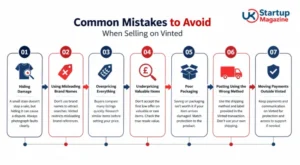
Hiding Damage
- A small stain does not necessarily stop an item selling.
- An undisclosed stain can create a dispute.
- Photograph faults clearly.
Using Misleading Brand Names
- Do not call an unbranded handbag “Chanel style” simply to attract Chanel searches.
- Vinted specifically restricts misleading brand references.
Overpricing Everything
- Buyers can compare dozens of competing listings in seconds.
- Research similar items before deciding what yours is worth.
Underpricing Valuable Items
- The opposite mistake can also cost you money.
- Check the model, brand and likely resale value before accepting the first low offer on something unusual.
Poor Packaging
- Saving 30p on packaging is not worthwhile if a £70 item arrives damaged.
- Match the protection to the product.
Posting Using the Wrong Shipping Method
- Use the shipping instructions attached to the actual Vinted transaction. Integrated shipping orders should use the generated label or code supplied for that order.
Moving Payments Outside Vinted
- Keeping payment and communication within the platform gives both parties a clearer transaction record and access to Vinted’s processes if something goes wrong.
Is Selling on Vinted Worth It?
For someone clearing out unwanted possessions, Vinted can be an attractive option because listing is straightforward and ordinary sellers currently have no standard selling commission deducted from the item’s advertised price.
It works particularly well when you have:
- Several Unwanted Items
- Time to Take Good Photos
- Access to Convenient Parcel Drop-Off Options
- Realistic Price Expectations
- Suitable Packaging Available
The financial return on one £4 T-shirt may not feel significant.
Sell 20 genuinely unwanted items averaging £10 each, however, and the value sitting unused around a home becomes easier to appreciate.
For entrepreneurs, the opportunity is slightly different. Vinted can form part of a resale business, but commercial activity needs to follow Vinted Pro requirements and normal UK tax and consumer-law obligations.
Final Thoughts
Learning how to sell on Vinted is not complicated. The basic process takes only a few steps: choose an item, take clear photographs, describe it accurately, set a sensible price, publish the listing and send the parcel when somebody buys it.
The sellers most likely to have a smooth experience are not necessarily those with the cheapest products. They are the ones who make buying easy.
Use accurate titles. Show the true condition. Answer sensible questions. Price against comparable products. Package orders properly and send them within the required timeframe.
For occasional sellers, Vinted can turn clothes and other possessions that are gathering dust into useful extra cash without a standard seller commission.
And if selling develops from an occasional clear-out into regular buying and reselling for profit, recognise the change. At that point, Vinted Pro, record-keeping and HMRC rules become part of running the activity properly rather than simply clearing out a wardrobe.
Frequently Asked Questions
Is It Free to Sell on Vinted?
Yes. Standard sellers currently pay no fee to upload or sell an item on Vinted. Buyers normally pay Buyer Protection and shipping charges on top of the item price.
Who Pays for Postage on Vinted?
With Vinted’s integrated shipping, the buyer chooses and pays for the available shipping option during checkout, and the seller receives the appropriate label or code.
How Long Do I Have to Send a Vinted Parcel?
Vinted normally requires sellers to send an order within five business days unless the buyer agrees to extend the deadline.
When Does Vinted Pay the Seller?
For standard sellers, earnings become available after the transaction completes. Vinted says withdrawals to a bank account can then take up to five business days.
Do I Need a Printer to Sell on Vinted?
Not necessarily. Some delivery methods provide digital codes while others may require a printable label. Follow the shipping instructions shown for the individual transaction.
Can I Sell Without Showing My Face on Vinted?
Yes. Your listing needs clear photographs of the item, but there is no requirement to model clothing yourself.
Can I Sell Brand-New Clothes on Vinted?
Eligible new items can be listed, but repeatedly selling large quantities of new stock can be considered commercial activity. Commercial selling should be carried out through Vinted Pro.
Do I Pay Tax If I Sell More Than 30 Items on Vinted?
Not automatically. The 30-sale figure relates to platform reporting rules. Whether tax is due depends on the nature of your activity and applicable tax rules. Selling your own unwanted possessions is very different from buying stock specifically to resell for profit.
How Much Can I Earn on Vinted Before Paying Tax?
There is no special Vinted tax-free threshold. If you are genuinely trading, the UK’s trading allowance is generally up to £1,000 of gross trading income per tax year. Selling ordinary personal possessions you no longer need is treated differently and will usually not create an Income Tax liability.
Can I Use Vinted as a Side Hustle?
Potentially, but regular buying and reselling for profit can amount to trading. It can also be considered commercial selling by Vinted, meaning Vinted Pro and UK tax obligations become relevant.