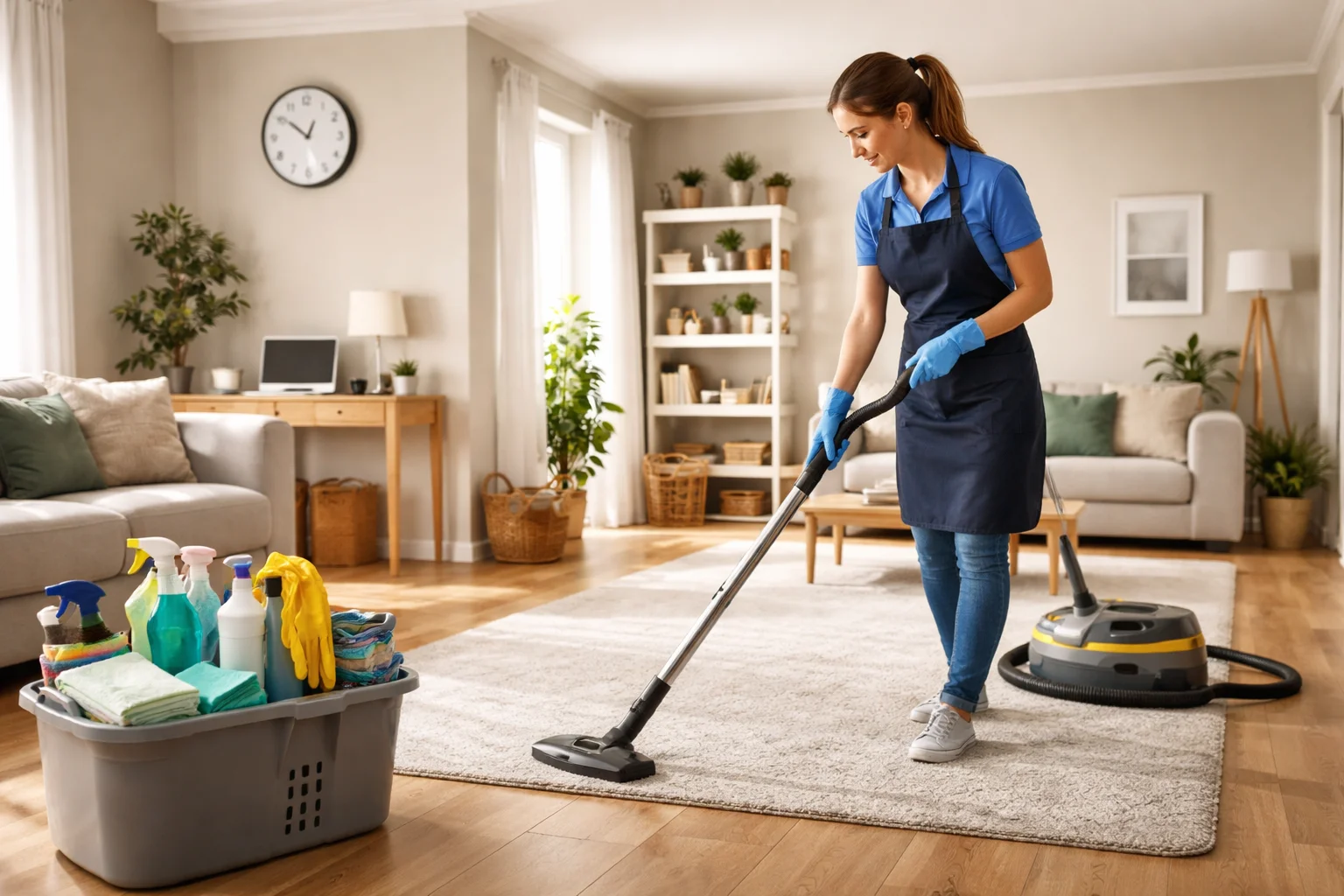
The self employed cleaner hourly rate UK in 2026 typically ranges between £14 and £20 per hour, although prices can reach £25 or more for specialist services or high demand areas like London. Your exact rate should reflect factors such as location, experience, property size, and whether you provide your own equipment.
Understanding the correct pricing is important because charging too little can reduce profits while charging too much may make it difficult to attract clients.
Key takeaways to know before setting your rate:
- Most independent cleaners charge £14 to £20 per hour across the UK
- London and the South East often have higher hourly rates
- Specialist cleaning jobs can reach £25 to £35 per hour
- Many cleaners require a minimum booking of two hours
- Weekly household cleaning usually costs £60 to £120
By understanding market averages and pricing factors, you can set a competitive and sustainable cleaning rate in 2026.
What Is The Average Self Employed Cleaner Hourly Rate UK In 2026?

The average self employed cleaner hourly rate UK in 2026 generally falls between £14 and £20 per hour, depending on the type of service and location. Independent cleaners typically charge less than agencies because they do not have additional overhead costs such as administration fees or large staffing expenses.
Across many UK towns and cities, homeowners prefer self employed cleaners because they often provide consistent service and more affordable pricing. Agencies tend to charge higher hourly fees because their prices include insurance, background checks, and replacement staff if a cleaner is unavailable.
Typical price benchmarks across the UK include:
- Self employed cleaners often charge £14 to £20 per hour
- Cleaning agencies usually charge £20 to £30 per hour
- Specialist cleaning services may reach £25 to £35 per hour or more
- Most cleaners request a minimum booking of two hours
- Many households spend £60 to £120 weekly for regular cleaning
This means a typical weekly cleaning session lasting three to four hours can cost between £45 and £80 when hiring an independent cleaner.
| Cleaner Type | Typical Hourly Rate |
| Self employed cleaner | £14 – £20 |
| Cleaning agency | £20 – £30 |
| Specialist cleaning services | £25 – £35+ |
Rates may increase if the job includes deep cleaning tasks, specialised equipment, or travel to higher demand areas. Cleaners with strong client reviews and experience can also justify slightly higher prices.
Why Do Self Employed Cleaner Hourly Rates Vary Across The UK?
The self employed cleaner hourly rate UK is not fixed nationwide because several regional and economic factors influence pricing. While many cleaners operate within the £14 to £20 hourly range, rates can increase significantly in certain areas due to higher living costs and strong demand.
Cities with busy professional populations often require more domestic cleaning services. At the same time, travel costs, parking restrictions, and housing types can also impact how much cleaners charge.
Key reasons hourly rates vary across the UK include:
- Local cost of living differences
- Demand for domestic cleaning services
- Travel time and transport costs
- Parking availability and congestion charges
- Property size and complexity
- Number of cleaning companies operating in the area
Which UK Regions Have The Highest Cleaning Rates?
London consistently has the highest cleaning prices in the UK, with hourly rates commonly reaching £18 to £30. Higher living costs, congestion charges, and strong demand for domestic services contribute to these prices.
The South East of England also maintains relatively high cleaning rates, especially in cities like Brighton and Reading where household incomes are higher.
Midlands cities such as Birmingham often see moderate prices between £12 and £20 per hour, reflecting balanced demand and living costs.
Northern regions including Manchester or Liverpool often have slightly lower averages around £10 to £15 per hour, although urban demand can push prices upward.
Scotland and Wales tend to have lower average rates overall, though larger cities like Edinburgh and Cardiff may approach national averages.
Understanding regional pricing helps cleaners remain competitive while ensuring their rates reflect local market expectations.
What Factors Affect How Much You Should Charge As A Self-Employed Cleaner?

Setting the right hourly rate requires more than simply matching competitors. Several business and practical factors influence how much a self employed cleaner should charge in the UK.
Your level of experience plays a major role. Cleaners who have built strong reputations and positive client reviews often command higher hourly rates because customers trust their reliability and quality of work.
Location also affects pricing. Cleaners operating in cities with higher living costs must often charge more to cover travel expenses and daily business costs.
Important factors that influence your hourly rate include:
- Experience and reputation within the local market
- Travel distance between client locations
- Cleaning supplies and equipment costs
- Property size and number of rooms
- Frequency of cleaning visits
- Insurance and professional coverage
- Local demand for cleaners
Many cleaners also adjust their rates depending on the condition of the property. Homes that have not been cleaned regularly may require additional time and effort.
“One cleaner I spoke with in Manchester explained that new clients often underestimate the time required for a first clean. She told me that a house which looks tidy at first glance can easily take an extra hour or two because of hidden dust, kitchen grease, and bathroom limescale. According to her, setting realistic hourly rates helped her avoid undercharging. She also mentioned that experienced cleaners learn to recognise difficult jobs quickly. That experience often justifies charging slightly more than beginners.”
How Much Do Different Types Of Cleaning Jobs Pay In The UK?
Not all cleaning work pays the same hourly rate. Different services require different levels of effort, equipment, and expertise. As a result, some types of cleaning jobs command higher prices than standard domestic cleaning.
Routine household cleaning usually involves tasks such as vacuuming, dusting, mopping floors, and cleaning bathrooms or kitchens. These services generally sit at the lower end of the pricing scale because they are regular and predictable.
More specialised cleaning services require additional effort and technical skills. For example, deep cleaning often involves removing stubborn dirt, sanitising appliances, and cleaning areas that are normally missed during routine visits.
| Cleaning Service | Average Hourly Rate |
| Domestic cleaning | £12 – £18 |
| Deep cleaning | £20 – £25 |
| End of tenancy cleaning | £25 – £35 |
| Commercial cleaning | £15 – £25 |
| Eco friendly cleaning | £20 – £30 |
| Post construction cleaning | £25 – £35 |
End of tenancy cleaning often commands higher prices because it requires thorough cleaning of the entire property. Landlords or letting agents may expect detailed tasks such as appliance interiors, cupboard cleaning, and stain removal.
Eco friendly cleaning services can also charge higher hourly rates because specialised products and environmentally safe methods are used.
“A cleaner working in London once explained that end of tenancy cleaning is one of the most demanding jobs in the industry. She said the work is far more detailed than regular weekly cleaning because every corner must meet landlord standards. According to her experience, kitchens and bathrooms alone can take several hours when grease and limescale have built up over time. She also mentioned that clients often underestimate the effort involved. Because of that, many cleaners charge premium rates for these jobs.”
How Does Property Size Affect The Total Cleaning Cost?
Property size plays a major role in determining the total cleaning cost, even when the hourly rate stays the same. Larger homes naturally require more time because there are more rooms, surfaces, and bathrooms to clean.
While hourly pricing provides a basic estimate, the final cost usually depends on how many hours the cleaner needs to complete the job.
Typical cleaning times based on property size include:
| Property Size | Typical Cleaning Time | Estimated Cost Per Visit |
| Studio flat | 2–3 hours | £40 – £75 |
| 2–3 bedroom house | 3–4 hours | £60 – £120 |
| 4 bedroom home | 4–6 hours | £90 – £180 |
| Large 5 bedroom property | 6–8 hours | £140 – £240 |
Bathrooms and kitchens usually require the most cleaning time because they require sanitisation and detailed surface cleaning.
Other factors related to property size also increase cleaning time:
- Larger floor areas and carpets
- Multiple bathrooms
- Staircases and hallways
- Large kitchens with multiple appliances
- Higher dust levels due to increased foot traffic
Some optional tasks can also increase the overall cost of cleaning. Interior oven cleaning, window cleaning, and detailed skirting board cleaning are often charged separately.
Should You Charge More For One-Off Or Deep Cleaning Jobs?
Yes. Most cleaners charge higher hourly rates for one off or deep cleaning jobs because they require more effort than regular cleaning visits.
When a cleaner visits a home regularly, dirt and dust are easier to manage. However, one time jobs often involve heavier cleaning tasks and longer working hours.
Reasons why one off cleaning is priced higher include:
- Homes may not have been cleaned for weeks or months
- More detailed tasks are usually required
- Stubborn dirt or stains take longer to remove
- Extra products and equipment may be needed
Common higher priced cleaning jobs include:
- End of tenancy cleaning
- Move in or move out cleaning
- Deep spring cleaning
- Post renovation cleaning
These services often require several hours of work and may involve multiple rooms that need detailed attention. Because of the additional effort involved, many cleaners charge £20 to £35 per hour for these types of jobs.
How Can You Set A Competitive Self Employed Cleaner Hourly Rate In The UK?

Setting the right price is essential if you want to attract clients while maintaining a profitable cleaning business. A competitive hourly rate should reflect local market conditions, your experience, and the costs involved in running your service.
If your rates are too low, you may struggle to cover expenses or earn a sustainable income. However, pricing too high without experience or strong reviews may make it difficult to secure regular clients.
Many successful cleaners adjust their rates gradually as they gain experience and build a loyal customer base.
How Do You Research Local Cleaner Prices?
Before setting your own rate, it is important to understand what other cleaners charge in your area.
You can research local pricing by:
- Checking online cleaning platforms such as Bark
- Reviewing local cleaner advertisements
- Reading community forums and neighbourhood groups
- Comparing cleaning company websites
- Asking local homeowners about typical cleaning costs
This research gives you a clear understanding of the average self employed cleaner hourly rate UK in your specific area.
What Costs Should You Include In Your Cleaning Rates?
Your hourly price must cover both your time and the operating costs of running your business.
Important expenses to consider include:
- Cleaning supplies and equipment
- Fuel or travel costs
- Insurance coverage
- Business marketing
- Tax and bookkeeping
- Equipment maintenance
“A self employed cleaner in Birmingham explained that many beginners forget to include travel time when calculating their rates. She told me that driving between several homes each day can add up quickly in fuel costs. Over time she adjusted her pricing to cover these expenses properly. She also said that once she built a loyal client base, she was able to increase her hourly rate slightly without losing customers. Her advice was simple. Charge fairly for your time and the quality of service you provide.”
Building long term relationships with clients also helps stabilise income. Regular weekly bookings provide consistent work and reduce time spent searching for new customers.
What Are The Benefits Of Hiring A Self-Employed Cleaner Instead Of An Agency?
Many homeowners prefer self employed cleaners because they often provide a more personalised and affordable service.
Independent cleaners usually operate with lower overhead costs, which means their hourly rates are typically lower than agency services.
Benefits of hiring a self employed cleaner include:
- Lower hourly prices compared with agencies
- Direct communication with the cleaner
- Flexible scheduling options
- Personalised cleaning services
- Consistent cleaner for every visit
Many clients appreciate having the same cleaner regularly because it builds trust and familiarity. Independent cleaners are also more likely to adapt their services based on individual household needs. This flexibility makes them popular for weekly domestic cleaning.
What Challenges Do Self-Employed Cleaners Face In The UK?
While self employment offers flexibility, cleaners also face several challenges when running their own business.
Unlike agency employees, independent cleaners must manage every aspect of their work. This includes finding clients, handling finances, and maintaining equipment.
Common challenges include:
- Fluctuating demand for cleaning services
- Competition from large cleaning companies
- Physical demands of cleaning work
- Managing tax and financial records
- Purchasing cleaning supplies and equipment
Income can also vary depending on seasonal demand. For example, holiday periods may reduce bookings if clients travel or cancel appointments.
Despite these challenges, many cleaners successfully build stable businesses by maintaining good client relationships and offering reliable service.
How Can Self-Employed Cleaners Increase Their Hourly Rate?
Increasing your hourly rate is possible once you gain experience and establish a strong reputation in your local market.
Many cleaners gradually raise their prices as they build trust with long term clients.
Ways to increase your hourly rate include:
- Offering specialist services such as deep cleaning
- Using eco friendly cleaning products
- Building strong client reviews and testimonials
- Targeting higher income neighbourhoods
- Providing reliable and consistent service
- Improving efficiency and work quality
Specialised services often allow cleaners to charge premium prices because they require more expertise. Cleaners who build strong client relationships also benefit from referrals, which can lead to higher demand and better pricing opportunities.
What Should UK Homeowners Know Before Hiring A Cleaner?

Before hiring a cleaner, homeowners should take time to understand the services offered and the pricing structure.
Different cleaners may charge hourly rates or fixed prices depending on the job.
Important things homeowners should check include:
- The cleaner’s experience and client reviews
- Whether cleaning supplies are included
- Insurance coverage for accidents or damage
- Minimum booking hours
- A clear agreement about tasks and expectations
Getting a clear quote before booking helps avoid misunderstandings and ensures both parties agree on the service provided.
Conclusion
Understanding the self employed cleaner hourly rate UK in 2026 helps both cleaners and homeowners make informed decisions. Across most regions, independent cleaners typically charge between £14 and £20 per hour, while specialist services may reach £25 to £35 or more.
The right hourly rate depends on several factors including location, property size, cleaning frequency, and the experience of the cleaner. Urban areas such as London often have higher prices due to demand and living costs.
For self employed cleaners, setting competitive rates requires balancing affordability with business expenses and time. Researching local prices and understanding operating costs can help create a sustainable pricing structure.
For homeowners, hiring an independent cleaner often provides flexible and personalised services at lower prices compared with agencies.
FAQs
How Much Do Self-Employed Cleaners Charge Per Hour In The UK?
Self employed cleaners in the UK usually charge between £14 and £20 per hour. Prices may increase in major cities or for specialised cleaning services.
Is It Cheaper To Hire A Self-Employed Cleaner Than An Agency?
Yes, self employed cleaners often charge lower hourly rates because they do not have agency overhead costs. Agencies usually include insurance and administrative services in their pricing.
Do Self-Employed Cleaners Bring Their Own Cleaning Supplies?
Many self employed cleaners provide their own cleaning equipment and products. However, some may prefer to use products supplied by the homeowner.
How Many Hours Does It Take To Clean An Average UK House?
Cleaning a typical 2 to 3 bedroom house usually takes around three to four hours. The time required may increase depending on the property’s condition and size.
Can Self-Employed Cleaners Charge More For Weekend Work?
Yes, some cleaners charge higher rates for evening or weekend appointments. This reflects limited availability and higher demand during those times.
What Is The Minimum Booking Time For A Cleaner In The UK?
Most cleaners require a minimum booking of two hours. This ensures the visit is worthwhile considering travel time and preparation.
How Can A New Cleaner Decide Their Hourly Rate?
New cleaners can research local market prices and compare rates in their area. Starting slightly below the average and increasing rates as experience grows is a common strategy.