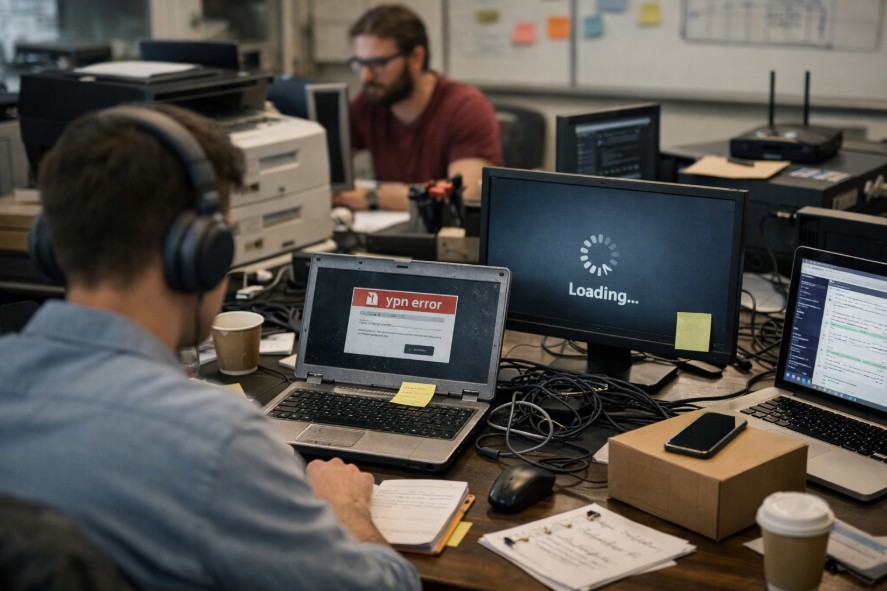
For more than a decade, startups have been told that more technology means more advantage. More tools, more platforms, more integrations, more dashboards.
Yet for many founders, this abundance has quietly turned into friction. Bloated software stacks, rising subscription costs, overlapping tools, and constant maintenance have started to slow teams down rather than speed them up.
As 2026 approaches, a growing number of founders are asking a different question: is it finally time to simplify? This shift is not about rejecting technology, but about choosing it more carefully. Instead of chasing every new SaaS product, startups are increasingly focused on clarity, efficiency, and sustainability.
So, is 2026 shaping up to be the year startups simplify their tech choices for good? Let’s explore what’s changing, why it matters, and how founders are responding.
Why Have Startup Tech Stacks Become So Complicated?

Startup tech stacks rarely become complex overnight. Complexity usually builds gradually, driven by speed, experimentation, and short-term problem solving. In the early days, founders choose tools that solve immediate needs, often without considering how those tools will interact six or twelve months later.
As teams grow, new challenges emerge: collaboration, analytics, customer support, marketing automation, compliance, and infrastructure scaling. Each challenge often brings a new platform into the mix. Over time, the stack becomes crowded, fragmented, and expensive.
There is also a cultural factor at play. For years, startup culture celebrated “stack sophistication” as a sign of maturity. Using enterprise-grade tools was seen as a badge of credibility, even if those tools duplicated existing functionality.
By 2026, many startups will recognise that complexity itself has a cost, not just financially, but operationally and strategically.
Are Founders Rethinking the “More Tools = More Growth” Mindset?
The assumption that more tools automatically drive growth is being challenged. Founders are increasingly noticing that productivity drops when teams spend too much time switching between platforms, managing integrations, or troubleshooting software conflicts.
Rather than enabling focus, overbuilt stacks often fragment attention. This is especially problematic for early-stage startups where small teams need to move quickly and stay aligned.
Several trends are reinforcing this mindset shift:
- Remote and hybrid teams require simpler, more unified systems
- Bootstrapped and lean startups are prioritising cost control
- Founders want clearer visibility into data without juggling dashboards
In 2026, growth is less about how many tools a startup uses and more about how effectively those tools support decision-making and execution.
What Role Does Cost Pressure Play in Tech Simplification?
Rising SaaS costs are one of the biggest drivers behind tech stack consolidation. Many startups entered subscription contracts during periods of aggressive growth, only to realise later that they were paying for features they barely used.
As funding environments tighten and profitability becomes a priority, founders are scrutinising recurring expenses more closely. Software subscriptions are often among the easiest costs to reduce without harming core operations.
This has led to a renewed focus on:
- All-in-one platforms that replace multiple tools
- Open-source or lower-cost alternatives
- Paying only for features that directly support business goals
By 2026, simplification is no longer just a technical decision; it’s a financial strategy.
How Are Infrastructure and Hosting Decisions Changing?
One of the most significant areas where startups are simplifying is infrastructure. In previous years, many founders felt pressured to adopt complex cloud architectures from day one, even when their product and user base were still small.
Today, there is a growing awareness that infrastructure should evolve with the business, not outpace it. Startups are increasingly choosing stable, scalable foundations that are easy to manage, rather than overly engineered systems that demand constant attention.
This is where careful research into providers matters. Many founders now turn to independent review platforms like Web Hosting Companies to compare hosting options clearly and objectively, rather than relying on marketing claims alone.
Choosing the right hosting early can reduce technical debt and avoid painful migrations later.
The emphasis in 2026 is shifting towards reliability, transparency, and long-term suitability.
Are All-in-One Platforms Replacing Specialist Tools?
The Appeal of Consolidation
All-in-one platforms are gaining traction because they reduce fragmentation. Instead of managing separate tools for CRM, email marketing, analytics, and customer support, startups can operate from a single ecosystem.
This consolidation offers several benefits:
- Fewer integrations to maintain
- Centralised data and reporting
- Lower combined subscription costs
For small teams, this can dramatically improve clarity and efficiency.
Where Specialised Tools Still Make Sense
That said, simplification does not mean abandoning specialist tools entirely. In areas where performance or compliance is critical, niche solutions can still outperform general platforms.
The difference in 2026 is intentionality. Founders are more deliberate about why they add a tool, not just what it does. Every addition must justify its place in the stack.
Is Simpler Tech Improving Team Productivity?
Productivity is one of the clearest indicators of whether a tech stack is working. Many startups that have simplified report noticeable improvements in how teams collaborate and execute.
When systems are easier to understand, onboarding becomes faster. When workflows are clearer, mistakes decrease. When data lives in fewer places, decisions happen more quickly.
Here’s a comparison many founders are making when reviewing their stacks:
| Complex Tech Stack | Simplified Tech Stack |
| Multiple overlapping tools | Fewer, well-integrated tools |
| High monthly SaaS spend | Controlled, predictable costs |
| Frequent context switching | Clear, focused workflows |
| Steep learning curve | Faster onboarding |
By 2026, productivity is increasingly measured not by output alone, but by how smoothly teams operate day to day.
What Does Simplification Mean for Startup Scalability?

Scaling Without Rebuilding Everything
One fear founders often have is that simplifying early will limit future growth. In reality, overly complex systems are more likely to break under pressure.
Modern simplified stacks are designed with scalability in mind. They may start lean, but they allow for modular expansion when needed. This approach avoids the “rip and replace” cycles that drain time and morale.
Building for Adaptability
Scalability in 2026 is less about raw capacity and more about adaptability. Startups want systems that can evolve without forcing dramatic changes every year.
A simplified foundation makes it easier to introduce new features, markets, or integrations when the time is right.
Are Investors Encouraging Leaner Tech Decisions?
Investors are playing a subtle but important role in this shift. While flashy technology once impressed pitch decks, many investors now look more closely at operational discipline.
A lean, well-reasoned tech stack signals that founders understand trade-offs and can manage resources responsibly. It also reduces risk, particularly for early-stage companies where technical missteps can be costly.
In due diligence conversations, questions are increasingly focused on:
- Why specific tools were chosen
- How systems support revenue and retention
- Whether the stack can scale efficiently
Simplification aligns well with these expectations.
How Can Startups Decide What to Keep and What to Cut?
Simplifying a tech stack does not mean starting from scratch. Most startups approach it as a gradual process, reviewing tools against real usage and value.
A practical way to assess tools is to ask:
| Question | Why It Matters |
| Does this tool directly support our core goals? | Keeps focus on outcomes |
| Is it actively used by the team? | Identifies dead weight |
| Does it duplicate another tool? | Reduces overlap |
| Is the cost justified by value? | Controls spending |
These questions help founders make calm, evidence-based decisions rather than emotional ones.
Will 2026 Mark a Permanent Shift Toward Simplicity?
While trends come and go, the move toward simplification feels structural rather than temporary. It is driven by economic realities, team dynamics, and hard-earned lessons from the last decade of rapid SaaS expansion.
Startups are no longer trying to look big before they are big. Instead, they are prioritising resilience, clarity, and long-term efficiency. Technology remains a powerful enabler, but only when it serves the business rather than complicates it.
In that sense, 2026 may not be the year startups abandon technology, but it could very well be the year they finally learn to use less of it, more wisely.
Final Thoughts: Is Simpler the New Smart?
The question is no longer whether startups can build complex tech stacks, but whether they should. As 2026 approaches, the smartest founders are those who understand that simplicity is not a limitation, but a competitive advantage.
By choosing fewer, better-aligned tools, startups free themselves to focus on what truly matters: building great products, serving customers, and growing sustainably. If there is a defining tech trend for the next phase of startup evolution, simplification may well be it.