
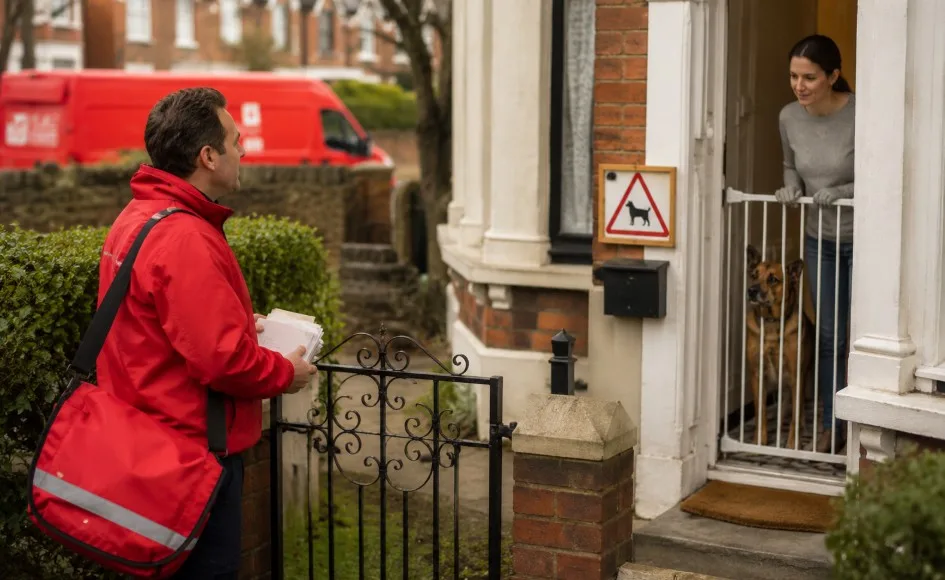
Royal Mail’s Dog Awareness campaign aims to reduce dog attacks on postal workers while helping households receive deliveries safely. Even friendly dogs can become protective when someone approaches the front door or letterbox.
The campaign encourages owners to secure their dogs before opening the door, display a visible warning sign, and follow simple safety measures. These steps help protect postal workers, prevent delivery disruptions, and support responsible dog ownership.
Key takeaways:
- Royal Mail recommends securing dogs before opening the front door.
- A visible dog warning sign helps alert postal workers.
- Most incidents occur at the front door or through the letterbox.
- Deliveries may be suspended if a postal worker feels unsafe.
- Simple preventative measures can protect both dogs and delivery staff.
What Is the Royal Mail Dog Warning Policy in the UK?
The Royal Mail dog warning policy forms part of its Dog Awareness campaign, which aims to reduce dog-related incidents involving postal workers.
Rather than focusing on specific breeds, the campaign recognises that even well-behaved dogs can react unexpectedly when someone approaches the home.
Dogs naturally protect their territory, so Royal Mail advises owners to secure their pets before opening the front door. The guidance promotes practical prevention by using warning signs, controlling access to the entrance, and keeping dogs away from delivery staff
“Even the most lovable dog can become unpredictable if it believes it is protecting its home or family. Keeping dogs secure before opening the door is one of the simplest ways to prevent avoidable incidents.” — Royal Mail Dog Awareness Guidance
Royal Mail reports that dog attacks still occur every week, often within seconds of the front door being opened. The campaign encourages responsible ownership to help keep deliveries safe for everyone.
Why Is Royal Mail Asking Dog Owners to Display a Dog Warning Sign?
One of the most recognisable elements of the campaign is the official Royal Mail dog warning sign. The sign asks homeowners to inform delivery workers that a dog is present and requests a few moments to secure the animal before the door is opened.
Rather than acting as a legal requirement, the sign serves as a practical communication tool. It gives postal workers advance notice and reduces the likelihood of a dog unexpectedly rushing towards the entrance.
What Does the Royal Mail Dog Warning Sign Say?
The official printable sign carries a clear and simple message:
“I HAVE A DOG. Please wait whilst I secure my dog before opening the door.”
Its purpose is straightforward. When displayed prominently on a front door or nearby window, it encourages the postal worker to pause briefly while the homeowner places the dog in a secure room or enclosed garden.
Benefits of displaying the warning sign
- Alerts postal workers before the door is opened.
- Gives owners time to secure their dog safely.
- Reduces the chance of sudden confrontations.
- Supports uninterrupted mail deliveries.
- Demonstrates responsible pet ownership.
A warning sign is most effective when used alongside other safety measures rather than as the only precaution. Owners should still make sure the dog cannot reach the front entrance before opening the door.
Is the Dog Warning Sign Legally Required?
The Royal Mail dog warning sign is recommended, not legally required. It helps alert postal workers but does not remove the owner’s responsibility to keep their dog under control.
If a dog threatens or injures a postal worker, the owner may still be legally responsible, even if a warning sign is displayed. The distinction between recommended guidance and legal responsibility is summarised below.
Guidance comparison:
| Royal Mail Recommendation | Legal Position |
| Display a visible dog warning sign | Recommended safety measure, not a legal requirement |
| Secure the dog before opening the door | Strongly advised to reduce foreseeable risks |
| Install additional safety measures where needed | May demonstrate responsible risk management |
| Prevent contact with postal workers | Owner remains responsible for controlling their dog |
Understanding this difference helps owners focus on preventing incidents rather than relying solely on signage. A visible warning is helpful, but responsible handling of the dog is what ultimately keeps everyone safe.
Where Do Most Dog Attacks on Postal Workers Happen?
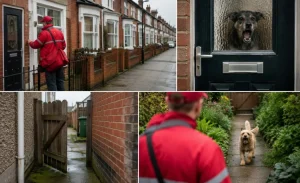
Many people assume dog attacks happen only after a postal worker enters a property, but most incidents occur at the front door. Dogs may react quickly when someone knocks, rings the bell, or the door is opened.
Royal Mail also reports that around 18% of attacks occur through letterboxes, where dogs attempt to bite hands delivering mail. Other incidents happen when dogs escape through open doors or gates and reach the front of the property.
Common Locations for Dog-Related Incidents:
| Location | Why the Risk Exists |
| Front door | Dogs may rush forward when the door opens. |
| Letterbox | Dogs may bite hands delivering mail. |
| Front garden | Loose dogs may approach delivery workers. |
| Side gate | Dogs can unexpectedly reach the front. |
| Driveway or pathway | Dogs may quickly reach visitors. |
Recognising these common risk areas allows homeowners to take simple precautions that help protect both postal workers and their pets.
How Can UK Dog Owners Keep Postal Workers Safe During Deliveries?
The best way to prevent delivery-related dog incidents is to establish a simple routine before answering the door. Most incidents occur because a dog instinctively protects its home rather than showing aggression.
Securing your dog before opening the door helps protect visitors, avoids delivery disruptions, and keeps your pet calm. Royal Mail also advises owners to think beyond the front door. Letterboxes, side gates, and gardens can all create opportunities for unexpected contact if a dog has unrestricted access.
Before Opening the Door
Creating a simple routine before opening the door can make a noticeable difference. Whenever the doorbell rings or someone knocks, owners should ensure their dog is safely away from the entrance before greeting the visitor.
Recommended safety steps:
- Place the dog in a separate room or secure back garden before opening the door.
- Never open the front door while the dog is standing directly behind you.
- Wait until the dog is calm before greeting the postal worker.
- Supervise children and avoid allowing them to answer the door if the dog is loose.
- If expecting multiple deliveries, keep the dog secured until all visitors have left.
These small habits can reduce the likelihood of sudden reactions and make deliveries safer for everyone involved.
Letterbox and Parcel Safety
Letterboxes are another common risk area because dogs often react to movement or unfamiliar sounds. Installing a letter cage or external mailbox can prevent contact between the dog and postal workers while making deliveries safer and more convenient.
Garden, Gate and Shared Entrance Safety
Outdoor areas should not be overlooked. Dogs can quickly reach the front of a property through an open side gate or unsecured garden entrance, sometimes before the owner realises they have escaped.
For homes with shared entrances or communal access, keeping dogs under close control during delivery times is equally important. If a pet regularly reacts to strangers entering shared spaces, owners should consider additional barriers or alternative delivery arrangements.
“Most dog bite incidents can be prevented through simple changes in household routines. Securing the dog before opening the door protects postal workers, visitors and the dog itself.” — Professor Carri Westgarth, Chair in Human-Animal Interaction, University of Liverpool
Developing these habits not only reduces risks but also helps dogs remain calmer during everyday deliveries.
Can Royal Mail Stop Delivering Post Because of a Dog?
Yes, Royal Mail may suspend or change deliveries if a postal worker believes a dog poses a safety risk. In most cases, deliveries resume once suitable safety measures, such as securing the dog or installing an external letterbox, are in place.
For example, a homeowner opens the door while their Labrador is standing behind them. The dog rushes towards the postperson barking loudly, causing the worker to feel unsafe and report the incident.
If the owner had secured the dog before opening the door, the delivery could have been completed safely. Simple precautions help keep deliveries running without interruption.
What Could Happen If a Dog Bites a Postman or Delivery Worker?
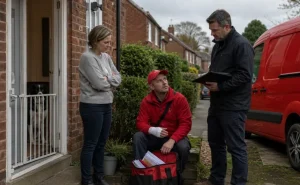
A dog bite involving a postal worker can lead to legal action, compensation claims, and changes to future delivery arrangements.
Serious attacks may also cause lasting physical and emotional harm. Under UK law, owners must keep their dogs under proper control, and incidents can be investigated by the police even if they occur on private property.
Confirmed Legal Responsibilities for Dog Owners
Responsible dog ownership means anticipating situations where a pet may react unexpectedly. As postal workers regularly visit homes, owners should take reasonable steps to reduce foreseeable risks.
Key responsibilities include:
- Keeping the dog under control when visitors arrive.
- Preventing access to the front door during deliveries.
- Maintaining secure gates, fences, and entrances.
- Taking steps to prevent repeat incidents.
- Cooperating with Royal Mail if delivery arrangements need to change.
Meeting these responsibilities helps protect both household members and delivery workers.
Practical Consequences Beyond Legal Action
The impact of a dog bite can extend beyond legal proceedings. Injuries may require medical treatment, postal workers may need time off work, and deliveries to the property could be changed while safety concerns are addressed.
Potential outcomes following a delivery-related dog incident
| Immediate Impact | Longer-Term Impact |
| Injury to the postal worker | Possible legal investigation |
| Interrupted deliveries | Temporary or altered delivery arrangements |
| Medical treatment | Compensation or insurance claims |
| Incident reported to Royal Mail | Increased focus on future delivery safety |
| Distress for the owner and dog | Ongoing responsibility to improve safety measures |
“Protecting postal workers starts with responsible dog ownership. Simple preventative measures taken before answering the door can prevent injuries that have lifelong consequences.” — Royal Mail Safety Campaign Representative
Understanding these potential outcomes highlights why preventing incidents is far easier than dealing with the legal, financial, and personal consequences afterwards.
What Are Common Misunderstandings About the Royal Mail Dog Warning?
Several misconceptions surround the Royal Mail Dog Awareness campaign. Some people think it targets certain breeds or that a warning sign removes the owner’s responsibility. In reality, the guidance applies to all dogs and focuses on preventing incidents.
Even friendly, well-trained dogs can react instinctively when someone approaches their home, which is why owners are encouraged to secure them before deliveries.
Fact Check: Royal Mail Dog Warning Policy
| Common Claim | Reality |
| Only aggressive breeds pose a risk. | Any dog can react protectively. |
| A warning sign removes liability. | Owners remain responsible for controlling their dog. |
| Letterbox bites are uncommon. | Around 18% of attacks occur through letterboxes. |
| Postal workers must always deliver. | Deliveries may be suspended if safety is at risk. |
| Friendly dogs never bite. | Even calm pets can react defensively. |
Understanding these facts helps owners avoid common myths and follow practical safety measures.
What Should Responsible Dog Owners Do in 2026?
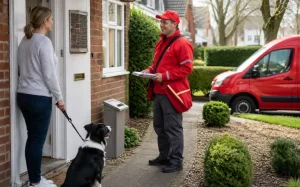
Responsible dog ownership means more than providing food and exercise. It also involves taking simple precautions to keep visitors, including postal workers, safe during deliveries.
Royal Mail recommends securing your dog before opening the door, displaying a warning sign where appropriate, keeping gates closed, and considering a letter cage or external mailbox.
For example, a family with an energetic spaniel places the dog in the kitchen before answering the door instead of trying to hold it back.
The postal worker can complete the delivery safely, and the dog stays calm. Adopting these simple habits helps prevent incidents, reduces stress for pets, and supports safe, uninterrupted deliveries throughout the year.
Conclusion
The Royal Mail Dog Warning Policy is designed to prevent incidents rather than punish dog owners. It recognises that even gentle dogs may react instinctively when someone approaches the front door or letterbox.
Simple precautions, such as securing your dog before opening the door, displaying a warning sign, and keeping access points secure, help protect postal workers, visitors, and pets. Following this guidance supports responsible ownership and helps ensure deliveries continue safely.
Frequently Asked Questions
Does Royal Mail provide a free dog warning poster?
Yes. Royal Mail provides a printable warning sign that homeowners can display to alert postal workers that a dog is present.
Should a dog always be secured before answering the door?
Yes. Royal Mail recommends securing dogs before opening the door, as many incidents happen within seconds of it being opened.
Can Royal Mail refuse to deliver to a property with a loose dog?
Yes. Deliveries may be suspended or changed if a postal worker believes the situation is unsafe.
Are letter cages worth installing?
Yes. They help prevent dogs from reaching hands through the letterbox and reduce the risk of injury.
What should owners of flats or shared entrances do?
Keep dogs under control in communal areas and consider additional barriers or alternative delivery arrangements if needed.
Can a friendly family dog still bite a postal worker?
Yes. Even dogs with no history of aggression may react protectively when someone approaches their home.
What should someone do if their dog has previously reacted to a delivery?
Review your delivery routine, secure the dog before opening the door, and work with Royal Mail to maintain safe delivery arrangements if required.