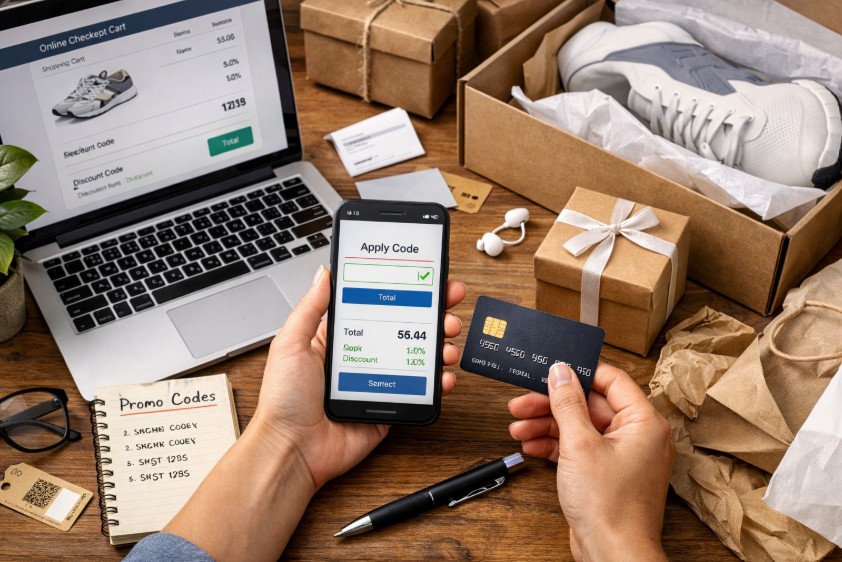
Here’s the thing about shopping somewhere new online: it really shouldn’t feel like solving a puzzle. Yet countless first-time shoppers blow past legitimate savings because nobody showed them the ropes.
Whether you’re tracking down a first time buyer discount code or wondering why that promo suddenly won’t work when you’re ready to pay, this guide has your back. We’ll cover everything, tracking down real codes, confirming they’re legitimate, understanding what “eligible” actually means, and smoothly navigating checkout without watching your hard-earned discount vanish into thin air.
How First-Time Buyers Benefit From Discount Code When Shopping Online?
First-Time Buyer Discount Code Basics (Eligibility, Value, and Common Rules)

Knowing the fundamentals saves you from spinning your wheels and makes sure those promised savings actually materialize when you check out. Different brands draw the “new customer” line in wildly different places, and understanding their specific rules separates getting a solid deal from hitting a brick wall.
New Customer Discount Code Eligibility Checkpoints
Stores don’t all agree on what “new” means. Some track your email. Others flag when you created your account. A handful even monitor your delivery address or card details. Used those same credentials before? You might be out of luck, even with a fresh email address.
Geography counts too; plenty of welcome deals shut out specific states or anyone ordering internationally. Single-use restrictions are basically universal, and you’ll typically need to hit a spending minimum before anything activates.
Prove the Discount Code for First-time Buyers is Legit Before Wasting Time
Sketchy codes broadcast warning signs: links that go nowhere, pushy browser extension installs, or never-ending “verify you’re human” screens. Stick with trusted sources, welcome emails, text message sign-ups, official site headers, or confirmed partner platforms, to dodge scams. Before you load up a complete shopping cart, validate the code with one inexpensive item.
Tons of shoppers chasing streetwear and lifestyle brands will test a kith discount code on their maiden purchase, and running a quick single-item test proves the code’s alive before you invest time curating a full order. This simple verification trick prevents headaches and confirms you’re not chasing expired or fraudulent promotions.
Typical First Order Promo Code Formats You’ll See
These deals show up in a few common shapes: percentages knocked off your total (think 10% or 15%), flat dollar reductions ($10 or $20), complimentary shipping, or bonus items bundled with purchase. Plenty of retailers fence off certain merchandise, sale racks, special collaborations, brand-new releases, from promo eligibility entirely.
Welcome campaigns frequently run on tight deadlines: 24-hour countdowns, week-long windows, or strict “first order only” gates. That first purchase discount code working perfectly today could be completely dead tomorrow once the promotional period closes.
Grasping eligibility criteria and code structures is just the start, your account configuration and cart-building approach before hitting checkout actually determines whether those savings unlock or not.
Pre-checkout Setup for Maximum First Purchase Savings
Arranging everything properly before you click “checkout” separates smooth sailing from error-message hell. Tiny choices around account creation, shopping cart tactics, and payment selection compound quickly.
Account Setup That Helps You Qualify for a First Purchase Discount Code
Opening an account usually unlocks superior welcome deals compared to guest checkout. Subscribe to newsletters and text alerts before browsing, timing really matters since certain brands dispatch codes instantly while others make you wait 15 minutes or more.
Email aliasing tricks (like yourname+store@gmail.com) might help you qualify again, but tread carefully, sophisticated systems detect this pattern and may revoke your discount or freeze your account outright.
Cart-building Strategy to Meet Minimum Spend Without Overbuying
Mix essentials with smart add-ons to clear spending hurdles without cramming your cart full of junk you’ll never use. Consider cost-per-wear or lasting utility, particularly for clothing or kicks, so you’re investing strategically instead of impulse-buying.
Eyeing limited drops? Assemble a “primary/backup” cart in case inventory disappears; this approach still gets you across the minimum, so you can deploy your first order promo code without last-second panic.
Payment and Shipping Choices That Reduce the Final Cost
Weigh delivery costs against free-shipping minimums, occasionally adding one cheap item to qualify for free delivery beats paying $8 in shipping fees. Local pickup (where offered) eliminates shipping charges. Certain payment routes unlock bonus savings: rewards credit cards, Shop Pay incentives, or buy-now-pay-later platforms can stack nicely, though watch yourself with BNPL if budget discipline matters to you.
You’ve dialed in your account, cleared the spending floor, and picked the shrewdest payment route, time to actually apply that first order promo code without triggering the annoying errors that sabotage most rookie buyers right at checkout.
Redeeming a First Order Promo Code Without Errors (Step-by-Step)
Sixty-one percent of corporate strategists identify weak implementation as the primary culprit when new strategic initiatives crash and burn. Checkout operates identically, possessing a code means nothing if you can’t deploy it correctly. Here’s your execution playbook.
Best-practice Checkout Flow (Desktop + Mobile)
Mobile interfaces frequently bury promo fields behind “Add promo code” or “Have a discount?” expandable sections, hit these before entering payment credentials. Optimal sequence: punch in your code first, verify the discount line appears in your order summary, lock down shipping details, then process payment. Grab screenshots of your cart breakdown and active discount; when things break, you’ve got documentation for support teams.
Fixes for the Most Common “Promo Code Not Working” Messages
“Not valid for items in cart” typically signals excluded merchandise, swap them for full-price goods or ditch collaborations. “Minimum spend not met” can surface when excluded products don’t contribute to the threshold calculation; toss in an eligible item or pull the problem product.
“Expired” warnings often stem from timezone mismatches; dig through your welcome email for an updated code. “Already used” indicates account or email duplication, stop hammering the system or you’ll trigger a temporary lockout.
Returns and Exchanges Impact on Your First-time Buyer Discount Code
Return part of your haul and drop below the minimum spend? Some merchants will reclaim the discount through restocking penalties or retroactive adjustments. Exchange policies vary wildly; confirm whether size swaps preserve your promo eligibility. Store credit situations can block re-application down the road, so scrutinize the fine print before initiating any returns.
Nailing your new customer discount code redemption feels great, but experienced shoppers understand how to stack compatible savings on that foundational discount to maximize overall order value.
Quick Reference: First-Time Buyer Discount Code Checklist (Copy/Paste)
More than half of organizational leaders botch plan execution (https://www.achieveit.com/resources/blog/the-latest-strategic-planning-and-execution-trends-and-statistics/), and shoppers who skip fundamentals meet the same fate, here’s your ready-to-use checklist so you avoid that trap.
- Eligibility: Fresh email, new account, unused address, or different payment method (verify specific requirements)
- Signup: Email plus SMS (sequence matters for optimal offers)
- Cart: Qualified merchandise only; clear minimum spending bar
- Apply code early: Validate discount appears as a line item before finalizing
- Combine tactics: Cashback portals plus shipping threshold optimization (when rules permit)
- Save proof: Capture screenshots of the cart and order confirmation
- Know return rules: Grasp how returns influence discount qualification
Armed with timing insights and campaign cycle knowledge, here’s a streamlined reference you can pull up whenever you’re deploying a first-time buyer discount code, bookmark this for instant retrieval.
Wrapping Up Your First-Order Savings Journey
Deploying a first-time buyer discount code doesn’t need to feel murky or stressful. Master eligibility boundaries, validate codes early, construct an intelligent cart, and execute a clean checkout sequence, you’ll convert welcome campaigns into genuine savings consistently.
Remember that solid execution demolishes guesswork, confirm, test, document, and keep your workflow straightforward. The tactics outlined here translate across most retailers, and once you’ve internalized the fundamentals, you’ll shop confidently while protecting your wallet. Begin with one reliable code, follow the checklist religiously, and claim the savings you’ve rightfully earned.
Common Questions About First-Time Buyer Discounts
Can I use a first-time buyer discount code on sale items or clearance?
Most retailers prohibit welcome promos on sale and clearance inventory. Review the terms or validate with a full-price item first to confirm compatibility.
If I check out as a guest, will I still qualify for a new customer discount code?
Typically no. The majority of welcome campaigns mandate account creation and email/SMS enrollment to activate, so establish your account before shopping for optimal results.
Can I use more than one discount code for first-time buyers in the same order?
Rarely. Most payment systems permit just one promotional code per transaction, though you can frequently layer a code with free-shipping thresholds or cashback programs.
Why does my first order promo code work on desktop but not on mobile?
Mobile promo entry fields occasionally hide or malfunction. Purge your mobile browser cache, migrate to the app if one exists, or finalize checkout via desktop instead.