


For most adult babysitters in the UK, £13–£17 per hour is a reasonable starting range, while experienced childcare professionals may charge £18–£22 or more, particularly in London.
However, the right price depends on much more than your age. The number of children, their care requirements, your qualifications, travel costs and booking times can significantly affect what a family should pay.
We analysed published childcare-platform rates, the latest UK wage announcements and the practical costs involved in providing babysitting services. Our findings suggest that setting a fixed hourly charge without calculating expenses can leave babysitters earning considerably less than expected.
Importantly, the UK Government has confirmed a 3.9% increase in statutory minimum-wage rates from April 2027, creating a new benchmark for childcare workers whose arrangements qualify for minimum-wage protection.
How Much Should You Charge for Babysitting Per Hour in 2027?
A reasonable babysitting rate should reflect the level of care provided rather than simply matching the cheapest local advertisement.
Our suggested 2027 pricing ranges are:
| Babysitter category | Suggested hourly charge |
| Teen babysitter aged 16–17 | £9–£12 |
| Beginner aged 18–20 | £12–£15 |
| Beginner adult aged 21+ | £14–£16 |
| Experienced babysitter | £15–£19 |
| Qualified childcare professional | £17–£22 |
| Experienced London babysitter | £16–£22+ |
These are indicative pricing recommendations, not government-approved fees or measured 2027 averages. Where the babysitter is legally a worker or employee, the applicable statutory minimum must be met.
What Do the Latest 2026 Babysitting Figures Show?
Babysitting platforms report different averages because their customer bases and booking arrangements differ.
- Babysits: £11.38 per hour nationally in its 2026 analysis.
- KidSitter: £12.85 nationally and £14.49 in London in its October 2026 estimates.
- Bubble: Approximately £15.31 per hour nationally in its 2026 platform analysis.
- Childcare.co.uk: Around £13.68 nationally in its published childcare pricing data.
These differences are important. An experienced babysitter booked through a professional childcare platform may charge more than a student providing occasional care for a neighbouring family.
For 2027, our assessment is that independent adult babysitters should generally investigate the £14–£17 range first, before adjusting their prices to local demand and experience.
How Much Should Babysitters Charge in Different UK Cities?
Location remains an important pricing factor because household budgets, childcare demand and transport expenses differ.
The following comparison combines Babysits’ published 2026 city averages with our suggested 2027 charging ranges.
| UK city | 2026 published average | Suggested 2027 range |
| London | £12.79 | £14–£19 |
| Edinburgh | £11.87 | £13–£17 |
| Bristol | £11.60 | £13–£17 |
| Glasgow | £11.28 | £12–£16 |
| Birmingham | £10.80 | £12–£16 |
| Bradford | £10.10 | £11–£15 |
The suggested ranges are not forecasts of citywide averages. They provide a starting point for individual quotes.
In London, a qualified sitter caring for an infant may reasonably quote above £20 per hour. Meanwhile, a newer sitter in a smaller town might begin at a lower price while building experience and references.
Our analysis suggests comparing at least five local babysitting profiles with similar responsibilities before finalising a rate. Advertised prices are not necessarily the prices agreed for completed bookings.
What Will the UK Minimum Wage Be for Babysitters in 2027?
The Government’s October 2026 announcement confirmed new minimum-wage rates effective from 1 April 2027.
| Age group | April 2026 rate | April 2027 rate |
| 21 and over | £12.71 | £13.21 |
| 18–20 | £10.85 | £11.27 |
| 16–17 | £8.00 | £8.31 |
| Eligible apprentices | £8.00 | £8.31 |
All four categories increase by approximately 3.9%.
Babysitters should distinguish between genuinely self-employed casual services and employment arrangements. Statutory minimum-wage entitlement depends on employment status, age and the circumstances of the work; calling someone self-employed does not automatically remove their employment rights.
A person employed regularly by a family may have different entitlements from an independent sitter accepting occasional bookings.
For a more detailed explanation of these changes, see the minimum wage analysis and the Government’s official wage rates.
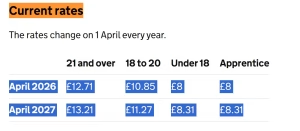
UK National Minimum Wage rates for April 2026 and April 2027. Take this screenshot from the official GOV.UK National Minimum Wage and National Living Wage rates page.
How Should You Calculate Your Babysitting Charges?
Rather than choosing a single price for every booking, we recommend separating your standard fee from additional responsibilities.
A practical formula is:
Total babysitting fee = Standard hourly rate × booked hours + agreed additional charges
Consider a babysitter charging £15 per hour for one child.
| Booking requirement | Example charge |
| Standard care for one child | £15/hour |
| Second child | +£2/hour |
| Finish after midnight | +£2/hour for late hours |
| Three-hour minimum booking | £45 |
| Bank holiday booking | 20% premium |
| Additional agreed travel cost | Based on actual expense |
These are example pricing policies, not mandatory industry charges.
For instance, a four-hour booking involving two children would cost £68 when calculated at £17 per hour.
Should You Charge More for Two or Three Children?
Usually, yes. Caring for several children involves additional supervision, competing needs and potentially more complex bedtime routines.
A practical starting point is an extra £1–£3 per hour for each additional child, depending on ages and responsibilities.
However, additional children do not always create the same amount of extra work. Looking after two sleeping school-aged children is different from supervising three toddlers who need active care.
How Much Should You Charge for Overnight Babysitting?
Overnight work requires a different pricing discussion.
An illustrative overnight quote might range from £140 to £200 for an extended booking, but the actual fee should depend on the length of the shift, whether the babysitter can sleep, the children’s needs and the employment arrangement.
Agree in advance whether the price covers every hour or combines a flat overnight amount with additional charges for active care.
Do not automatically assume that sleeping hours can be paid below the applicable statutory minimum. Working-time and minimum-wage rules can affect overnight employment arrangements.
Should You Charge Extra for Last-Minute Babysitting?
Short-notice requests can justify a premium where you have to rearrange your schedule or incur additional travel expenses.
For example, applying a 20% premium to a £15 hourly charge produces £18 per hour.
We would avoid increasing prices unexpectedly after accepting a booking. Transparent fees are more effective for building repeat business.
How Much Money Can You Actually Make From Babysitting?
Babysitting can generate useful supplementary income, but gross earnings and actual take-home income are different.
Consider a babysitter charging £15 per hour.
| Weekly workload | Weekly gross income | Four-week gross income |
| One four-hour booking | £60 | £240 |
| Two four-hour bookings | £120 | £480 |
| Three four-hour bookings | £180 | £720 |
| Four four-hour bookings | £240 | £960 |
These calculations assume every scheduled booking is completed. They exclude tax, transport, platform fees and other costs.
We also analysed the impact of unpaid time on an example booking.
Suppose a sitter earns £60 for four hours but spends £6 travelling, £2 on booking-related fees and another 30 minutes on travel and administration.
Their remaining earnings before tax are £52, representing approximately £11.56 per total hour committed.
That is notably below the advertised £15 hourly charge.
For anyone developing babysitting into a regular service, understanding startup profitability helps explain why revenue alone is not enough to judge financial performance.
What Are the Babysitting Tax Rules for 2027?
One of the most important changes for people earning money from babysitting is the Government’s announced increase in the trading allowance.
Under the rules applying in the 2026/27 tax year, qualifying individuals can generally receive up to £1,000 in gross trading income without having to report it to HMRC, subject to exceptions.
However, the October 2026 Budget announced that the trading allowance and associated Self Assessment reporting threshold will increase to £3,000 from 6 April 2027, subject to the Finance Bill becoming law.
| Tax year | Trading allowance |
| 2026/27 | £1,000 |
| 2027/28 | £3,000 planned |
The new threshold is particularly relevant to students and part-time babysitters providing occasional paid services.
For example, a babysitter completing four hours per week at £15 per hour for 40 weeks earns £2,400 in gross annual income.
Under the announced 2027/28 rules, that would fall within the proposed £3,000 trading allowance, assuming the individual qualifies and has no other trading income that takes them above the threshold.
The allowance applies to qualifying gross trading receipts, not simply the profit remaining after expenses. It does not mean that every type of employment income is covered.
Babysitters should keep records of payments and check whether their activity amounts to self-employment. They should also review their combined income from other qualifying activities.
The Government’s trading allowance announcement explains the proposed change.
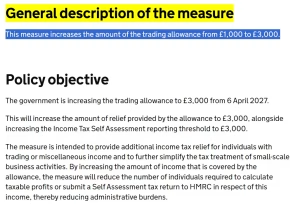
HMRC’s announcement increasing the Income Tax trading allowance from £1,000 to £3,000 for the 2027/28 tax year.
What Should New Babysitters Do Before Charging Their First Client?
Babysitting is a relatively accessible form of part-time income, but parents are purchasing a service involving significant responsibility.
The most valuable preparation includes gaining practical childcare experience, obtaining appropriate first-aid training, gathering genuine references and agreeing clear emergency procedures.
The NSPCC recommends babysitters should be at least 16, although the UK does not have a single statutory minimum babysitting age. Younger teenagers should not assume they are suitable for unsupervised childcare simply because they have looked after siblings.
For anyone considering babysitting as a side hustle, we recommend testing demand locally before spending heavily on advertising or equipment.
Does a Babysitter Need to Register With Ofsted?
In England, occasional babysitting and childcare provided in a child’s own home may be exempt from compulsory Ofsted registration. The precise rules depend on the care arrangement.
In official guidance published in June 2026, Jayne Coward, Ofsted’s Deputy Director for Early Years Regulatory Policy and Practice, explains that nannies working in children’s own homes are exempt from compulsory registration but may join the voluntary register.
Her guidance also distinguishes nanny arrangements from childcare involving children from more than two families simultaneously, which can trigger different registration requirements.
This matters financially because professional childcare arrangements may involve additional training, safeguarding, insurance and compliance costs.
Babysitters should not assume the same exemptions apply when caring for children in their own homes. Requirements also differ across the UK’s nations.
How Can You Find Regular Babysitting Clients?
A reliable client base is often more valuable than charging the highest possible rate for occasional bookings.
Start with local recommendations, genuine parent testimonials, childcare platforms and clear availability.
We suggest using a simple pricing sheet covering your hourly charge, minimum booking duration, additional-child fees, late finishes, payment arrangements and cancellation terms.
For regular work, confirm the terms in writing. If your arrangement becomes employment, the law may require additional written particulars and provide statutory rights. The distinction is explained in more detail in the article about working without a contract.
Babysitting can also be one of several low-cost businesses worth exploring, provided the necessary safeguarding, training and insurance requirements are considered.
How Can You Increase Babysitting Rates Without Losing Regular Families?
We recommend reviewing fees every six to twelve months rather than applying automatic increases without considering customer demand.
A simple approach is to compare comparable local rates, calculate your costs and give regular clients advance notice.
For example, increasing an hourly fee from £14 to £15 represents approximately a 7.1% increase.
A higher rate may be justified after completing relevant first-aid training, gaining substantial childcare experience or taking on additional responsibilities.
However, an increase should not be presented as an official inflation adjustment unless it actually reflects a published inflation measure.
For many babysitters, maintaining dependable weekly bookings at a sustainable rate can produce more predictable income than repeatedly chasing occasional premium-priced jobs.
Final Thoughts
For 2027, we consider £14–£17 per hour a practical starting point for many adult babysitters in the UK, with higher prices for experienced professionals and more demanding bookings.
The confirmed increase in minimum-wage rates and the planned expansion of the trading allowance are two important developments for anyone earning regular childcare income.
Ultimately, successful babysitting pricing balances four things: children’s safety, local affordability, the babysitter’s expertise and the actual cost of providing the service.
A rate that reflects all four is more sustainable than simply choosing the lowest or highest figure advertised online.
Frequently Asked Questions
How much should a 16-year-old charge for babysitting in 2027?
Approximately £9–£12 per hour may be a starting point for a suitable, experienced 16-year-old providing casual babysitting. Where statutory minimum-wage rules apply, the announced 2027 rate is £8.31 per hour for eligible workers aged 16–17.
How much should I charge for babysitting two children?
For example, a £15 standard hourly rate could increase to £17 for two children. The final price depends on their ages, care requirements and your experience.
How much should I charge for babysitting for five hours?
At £15 per hour, five hours would cost £75 before any agreed travel, late-night or additional-child charges.
Is £20 an hour too much for babysitting?
Not necessarily. An experienced babysitter in London or someone providing specialist childcare may justify £20 per hour or more.
Can I earn £100 a day babysitting?
Yes. Seven hours at £15 per hour would generate £105 in gross income, provided you secure the booking and can safely meet the family’s requirements.
Do I need to pay tax on babysitting money?
It depends on your employment status, total income and applicable allowances. The Government has announced an increase in the trading allowance to £3,000 from April 2027, subject to legislation.
Should I charge less when the children are asleep?
Not automatically. You remain responsible for the children’s safety and must respond to emergencies. Any different overnight rate should be agreed in advance and comply with applicable employment law.