

For entrepreneurs researching the Starbucks franchise cost in the UK, there is one important point to understand before looking at investment figures: Starbucks does not currently sell a conventional single-store franchise package in Britain with a published franchise fee and standard investment amount.
The company operates a mixture of company-owned and licensed Starbucks stores, with established business partners operating a large proportion of its UK locations.
That distinction matters.
Some franchise websites quote figures such as a £25,000 franchise fee, 6% to 8% royalties or a £500,000 minimum investment as though these are fixed Starbucks UK charges. Starbucks does not currently publish a universal UK fee schedule confirming those amounts.
For planning purposes, opening and developing a substantial Starbucks licensed location could still require several hundred thousand pounds, with industry estimates frequently putting major projects somewhere around £500,000 to £1.5 million or more.
However, the actual amount depends heavily on the store format, property, construction requirements, equipment, staffing, working capital and commercial agreement.
There is another significant development for investors in 2026.
Starbucks introduced a new UK licensee model focused on more clearly defined regional growth opportunities. The change does not mean an individual can simply purchase a Starbucks franchise, but it does reinforce the importance of licensed partners to the company’s future UK expansion.
For established businesses with strong finances, retail or hospitality experience, suitable property opportunities and the ability to operate at scale, Starbucks therefore remains an interesting business proposition.
How Much Does a Starbucks Franchise Cost in the UK?
There is no single official Starbucks franchise price for the UK.
Unlike many traditional franchise businesses, Starbucks does not publish a document stating that an entrepreneur can pay a certain franchise fee, invest a fixed amount and open one Starbucks coffee shop.
A sensible investor should therefore separate two figures.
The first is the official cost, which Starbucks does not publicly standardise for every UK licensed operator.
The second is the realistic project budget, which can potentially run from approximately £500,000 into seven figures depending on the proposed location and format.
| Cost Area | Current Position |
| Official UK Starbucks franchise fee | No universal public figure |
| Official minimum investment | No universal public figure |
| Official minimum liquid capital | No universal public figure |
| Official minimum net worth | No universal public figure |
| Royalty/licence payments | Commercial terms apply, but no universal public UK percentage |
| Property costs | Depends entirely on location and format |
| Store construction and fit-out | Potentially one of the largest expenses |
| Coffee equipment and technology | Required to Starbucks standards |
| Recruitment and pre-opening costs | Depends on store size and staffing |
| Initial inventory | Depends on expected trading volume |
| Working capital | Significant reserve likely to be required |
| Indicative overall planning budget | Potentially £500,000–£1.5m+ for substantial projects |
The final figure can be dramatically affected by property.
An operator converting an existing retail or hospitality site may face very different economics from a company constructing a new drive-thru coffee shop requiring planning permission, extensive building works, parking, access infrastructure and external works.
For that reason, entrepreneurs should treat the £500,000 to £1.5 million range as an investment-planning benchmark rather than an official Starbucks quotation.
Does Starbucks Actually Franchise in the UK?
Image – Source
Not in the conventional sense most entrepreneurs associate with franchising.
A traditional franchise normally allows an approved franchisee to pay an initial fee in exchange for the right to use a brand, business system, products and intellectual property within an agreed territory.
Starbucks relies heavily on licensed operators.
The commercial result can look similar from the customer’s perspective because the location carries Starbucks branding, serves Starbucks products and follows Starbucks operating standards.
Behind the counter, however, the ownership arrangement can be very different.
| Area | Traditional Franchise | Starbucks Licensed Model |
| Typical applicant | Individual entrepreneur or company | Often established business/operator |
| Single-store opportunity | Frequently available | Not the main UK growth model |
| Published franchise fee | Often available | No universal UK figure published |
| Royalty structure | Usually published or disclosed during recruitment | Commercial licence terms |
| Property | Franchisee normally finds suitable premises | Strategic locations and portfolios can be important |
| Brand standards | Controlled by franchisor | Closely controlled by Starbucks |
| Multi-site experience | Helpful but not always essential | Potentially highly valuable |
| Regional development | Depends on franchise | Important under Starbucks’ 2026 UK strategy |
For entrepreneurs comparing Starbucks with more conventional opportunities, the wider market of franchise business opportunities in the UK demonstrates how different the entry requirements can be between brands.
What Changed With Starbucks Licensing in 2026?
This is one of the biggest gaps in older Starbucks franchise articles.
In March 2026, Starbucks publicly outlined a new UK licensee model intended to create clearer cooperation between Starbucks and its licensed partners.
The company described licensed stores as critical to its expansion plans and said its new approach would provide greater clarity around where and how stores are developed.
Starbucks UK Store Development Director Darren King summed up the strategy by saying:
“Our licensed business is absolutely critical to our growth.”
The emphasis is increasingly on sustainable regional development rather than multiple operators competing for the same locations.
From an investor’s perspective, that suggests Starbucks is thinking beyond the traditional model of an entrepreneur finding one empty shop and applying to turn it into a Starbucks.
The opportunity is more strategically aligned with established operators capable of identifying attractive territories, developing suitable sites and potentially expanding across multiple locations.
How Big Is the Starbucks UK Licensed Business?
Licensing is not a minor part of Starbucks’ British business.
Starbucks finished FY2025 with 1,304 UK stores.
Of those, approximately:
| Store Type | Number | Approximate Share |
| Licensed stores | 906 | 70% |
| Company-operated stores | 398 | 30% |
| Total | 1,304 | 100% |
That means around seven out of every ten Starbucks locations in the UK were operated by licensees at that point.
Starbucks also opened 92 UK stores during FY2025 and announced plans for more than 75 additional stores during FY2026.
Its longer-term UK plan has included approximately 500 further stores over five years.
For entrepreneurs, these figures confirm two things simultaneously.
Starbucks still sees significant potential in the UK, but much of that expansion is likely to involve carefully selected commercial partners rather than an open franchise programme for thousands of individual owner-operators.
What Does the 23.5 Degrees Acquisition Tell Potential Investors?
One of the best examples of the scale involved in Starbucks licensing is 23.5 Degrees.
The company became Starbucks’ first UK franchised business partner in 2013 and eventually developed into its largest licensed UK operator.
Starbucks acquired 23.5 Degrees in October 2024.
The transaction involved approximately 113 stores and 1,650 employees, moving a substantial group of previously licensed stores into Starbucks’ company-operated portfolio.
This is useful context for anyone searching for the cost of one Starbucks franchise.
Starbucks’ major UK partnerships can develop into sizeable regional businesses rather than simply individual cafés owned by separate franchisees.
It reinforces the idea that financial capacity matters, but operational scalability can matter just as much.
Who Is Most Likely to Qualify for a Starbucks Licence?
Having enough money does not automatically make an applicant suitable.
Starbucks’ model is better suited to businesses that can demonstrate professional management, operational infrastructure and experience handling customer-facing locations.
A strong prospective operator would typically be able to demonstrate multi-site retail or hospitality expertise, substantial financial capacity, experienced management, access to suitable property, recruitment capability, operational systems and the ability to maintain strict brand standards.
Property access may become especially valuable where an operator controls sites in areas Starbucks considers attractive for future development.
Examples could include roadside locations, retail parks, high streets, transport locations and neighbourhood centres.
This is fundamentally different from a first-time entrepreneur purchasing a relatively small franchise and personally managing one shop.
Is £500,000 Really the Minimum Investment?
£500,000 is one of the most frequently quoted figures online for a Starbucks franchise in Britain.
It should not be described as a current universal official minimum.
There is no current public Starbucks UK document saying every prospective licensee must provide exactly £500,000 in liquid capital.
Similarly, the often-repeated claim that applicants require a £1.5 million minimum net worth should not be presented as an official current UK rule without confirmation from Starbucks.
That does not mean a £500,000 budget is excessive.
Quite the opposite.
For a sophisticated coffee shop development requiring property costs, building works, equipment, professional fees, employees and sufficient cash reserves, spending can quickly reach several hundred thousand pounds.
The distinction is simply that estimated project cost and official applicant requirement are not the same thing.
An investor should not build a funding plan around figures copied from franchise directories and assume Starbucks will use identical numbers.
What Could Push the Starbucks Setup Cost Above £1 Million?
Store format can completely change the investment.
A relatively straightforward conversion within an existing building could be substantially cheaper than constructing a standalone drive-thru.
New-build or heavily converted locations may require substantial spending on planning, drainage, electricity capacity, plumbing, ventilation, accessibility, parking, road access, external landscaping and specialist food-and-beverage installations before coffee equipment is even considered.
Prime locations also carry expensive property commitments.
Rent, service charges, deposits and business rates can materially change the economics of a store.
Businesses considering an investment of this scale should therefore understand the wider cost of running a UK startup rather than focusing exclusively on the opening budget.
The cost of getting the doors open is only the first part of the financial model.
What Are the Main Ongoing Starbucks Store Costs?
A licensed operator still has to run a real hospitality business after making the initial investment.
Labour can be one of the largest operating expenses, particularly for stores trading for long hours seven days a week.
Other major costs include rent, business rates, utilities, ingredients, packaging, insurance, maintenance, cleaning, waste management, card processing, technology and local management.
There are then commercial payments associated with operating under Starbucks’ licensed model.
Starbucks’ corporate reporting confirms that its licensed-store model generates income through areas including royalties and the sale of products and supplies.
What it does not provide is one universal public UK royalty percentage that applies to every operator.
This is why the commonly quoted 6% to 8% royalty should not automatically be inserted into a business plan as though it were confirmed.
The actual commercial terms need to come from the agreement offered to the operator.
How Much Revenue Can a Starbucks Franchise Make?
There is no dependable official figure for the revenue of an average UK licensed Starbucks store.
Claims that a Starbucks franchise automatically generates £400,000 to £700,000 per year are too simplistic.
A motorway drive-thru, shopping-centre café, city-centre store and suburban neighbourhood location can have completely different customer volumes and cost structures.
Historical information from individual licensees demonstrates that significant turnover does not necessarily translate into equally large profits.
For example, Cobra Coffee reported sales of approximately £28.8 million across 66 licensed Starbucks locations for the year ending January 2023, while pre-tax profit was approximately £493,000.
Those figures should not be divided by 66 and treated as a forecast for a new Starbucks.
They represent one established operator, across a portfolio of locations, during a specific accounting period.
What they do illustrate is a much more important business lesson: high revenue is not the same thing as high profit.
How Profitable Is Starbucks in the UK?
Starbucks itself provides an even stronger illustration of this point.
For FY2025, Starbucks Coffee Company (UK) Limited reported approximately £556.3 million in revenue, up around 6% year on year.
Customer transaction volumes increased by approximately 2%.
Yet the business also reported an operating loss of £29.8 million.
Costs of goods sold increased by 10.1%, while wage and benefit costs increased by 7.8%.
These are company-level results rather than figures for individual licensed stores, so they cannot be used to calculate what a licensee will make.
They do, however, demonstrate why investors should be cautious about online claims promising 10%, 15% or 20% profit margins simply because the Starbucks name is above the door.
The UK coffee market is competitive, and labour, ingredients, utilities and property remain substantial expenses.
A recognised brand can drive customer demand. It cannot remove business risk.
Starbucks Still Has Significant Commercial Strength
The risk picture should not obscure the brand’s advantages.
Starbucks has one of the most recognisable coffee brands in the world, a nationwide UK footprint and an established loyalty ecosystem.
During FY2025, Starbucks Rewards sales in the UK increased by approximately 45%, accounting for around 42% of UK sales, while active membership increased by about 41%.
For a store operator, that level of digital engagement can be commercially valuable.
Customers are already familiar with the brand, menu, mobile application, rewards programme and seasonal product launches.
An independent café would normally need to build that awareness from scratch.
This combination of customer recognition, product development, digital infrastructure and national marketing is one of the reasons operating under Starbucks can be commercially attractive despite the high investment requirements.
What Should an Investor Model Before Approaching Starbucks?
From a startup-investment perspective, the most important numbers are not simply the franchise fee or store construction bill.
A serious proposal should model sales, gross margin, labour, occupancy costs, other operating expenditure, finance costs, central management overhead and working capital.
It should also stress-test what happens if sales are 10% to 20% below expectations.
That downside case is particularly important for expensive hospitality locations because rent, loan repayments and core staffing costs do not fall proportionately when customer numbers decline.
Investors should therefore calculate the point at which monthly contribution covers all fixed costs.
The wider question of how quickly a startup can become profitable becomes especially important when hundreds of thousands of pounds are tied up in the store before opening day.
Cash runway should be modelled separately from accounting profit.
Can a First-Time Entrepreneur Open One Starbucks?
For most first-time founders, Starbucks is unlikely to be the easiest route into franchising.
The UK model increasingly favours established operating capability, suitable real estate and strategic regional development.
Someone with £500,000 sitting in a bank account but no retail, restaurant or multi-site experience should therefore not assume that capital alone creates an opportunity.
This is where comparing other franchises becomes useful.
For example, the McDonald’s franchise cost relates to a much more conventional franchise system in which approved individuals can become owner-operators.
Entrepreneurs specifically interested in coffee can also compare the structure and estimated Costa Coffee franchise cost before deciding which business model best fits their capital and operating experience.
The right opportunity is not necessarily the biggest brand.
It is the one whose capital requirements, operating structure and growth expectations fit the investor.
How Do You Apply for a Starbucks Franchise in the UK?
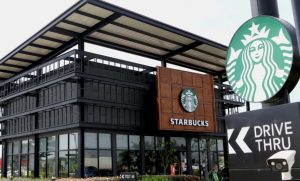
Image – Source
This is another area where older articles can be misleading.
There is no universal online process where an individual pays an application fee, completes a standard UK Starbucks franchise form and receives a store.
Starbucks’ 2026 strategy is centred on licensed partnerships and regional development.
Prospective businesses should therefore prepare as if they were pitching a substantial commercial partnership rather than buying an off-the-shelf franchise.
A credible proposal would normally need to explain the applicant’s existing business, ownership structure, financial resources, operating history, management team, property capability, proposed region, development opportunities and ability to maintain Starbucks’ operating standards.
Potential applicants should use Starbucks’ current official UK corporate and licensing information rather than relying on old downloadable forms or third-party franchise websites.
A Starbucks careers website should also not be confused with the process of becoming a licensed business operator.
How Long Could It Take to Open a Starbucks?
There is no official universal six-month or 12-month opening timetable applicable to every UK Starbucks licensed development.
A location requiring only limited conversion may move very differently from a new drive-thru development requiring planning approval and construction.
Site acquisition alone can take months.
Planning, lease negotiations, legal due diligence, construction, utilities, equipment installation, recruitment, training, inspections and pre-opening preparation can extend the schedule considerably.
Rather than assuming a fixed timeframe, investors should create a development programme for the specific property being proposed.
What Are the Biggest Risks of Becoming a Starbucks Licensee?
The first risk is capital concentration.
Committing several hundred thousand pounds or more to one hospitality project can leave little room for underperformance.
The second is property risk. A premium brand cannot compensate indefinitely for an unsuitable site, difficult access or insufficient traffic.
The third is operating-cost inflation. Starbucks’ own UK results demonstrate how quickly wage and input-cost increases can affect financial performance.
There is also limited freedom compared with an independent coffee business. Brand standards, store appearance, equipment, products and operational procedures must remain consistent with Starbucks requirements.
Finally, investors need to consider opportunity cost. Capital invested into one Starbucks development could potentially finance several smaller businesses or another franchise with lower entry requirements.
These risks do not make Starbucks unattractive.
They simply mean the investment needs to be evaluated as a serious multi-year commercial project rather than an opportunity to buy a famous logo.
Is a Starbucks Licence Worth the Investment?
For the right operator, it could be.
The strength of the opportunity is obvious: powerful brand recognition, an established customer base, sophisticated digital engagement, proven products and continuing UK expansion.
Starbucks’ commitment to hundreds of additional British stores indicates that the company still sees long-term growth opportunities.
The barrier is that becoming part of this growth is not simply a question of paying a franchise fee.
An applicant needs to bring something commercially valuable to the partnership.
That could be operating expertise, regional knowledge, property, infrastructure, management capability or the ability to develop multiple locations.
For a well-capitalised retail or hospitality group, those requirements may make sense.
For a first-time founder looking to operate one café personally, a more conventional franchise could provide a clearer path.
Our Startup View on the Starbucks Franchise Cost
The biggest mistake an entrepreneur can make is treating £500,000 as the price of a Starbucks franchise.
It is better viewed as an indication of the scale of capital that a substantial branded coffee development can consume.
There is no publicly advertised UK Starbucks package saying an investor pays £500,000, hands over a fixed franchise fee and receives the right to operate one store.
The business case needs to be built from the property upwards.
An experienced operator should first establish realistic customer volumes, average transaction value, gross margin, labour requirements, occupancy costs, operating expenses and required return on invested capital.
Only then should the investor decide what the site is worth.
That is the difference between buying into a famous brand and making a disciplined commercial investment.
Conclusion
The Starbucks franchise cost in the UK cannot be reduced to one official number because Starbucks does not currently operate a conventional publicly priced single-store franchise programme.
Industry planning estimates suggest that substantial Starbucks developments could require somewhere around £500,000 to £1.5 million or more, but these figures should not be confused with official Starbucks investment requirements.
The more important development is Starbucks’ new UK licensing strategy.
Licensed stores represented roughly 70% of its 1,304-location UK estate at the end of FY2025, and Starbucks continues to see licensed partners as central to future growth.
For established operators with strong finances, hospitality or retail expertise, suitable property and ambitions to grow across a region, that could create significant opportunities.
For individual first-time entrepreneurs, the challenge is not simply raising enough money. It is demonstrating that they have the operational capability and commercial infrastructure expected from a Starbucks licensing partner.
Anyone evaluating the opportunity should therefore verify the latest terms directly with Starbucks, build a location-specific financial model and avoid basing investment decisions on old franchise-fee or royalty figures repeated across third-party websites.
Featured Image – Source
FAQs About Starbucks Franchise Cost
Can You Buy a Starbucks Franchise in the UK?
Not as a conventional publicly advertised single-store franchise. Starbucks primarily expands through company-operated stores and selected licensed business partners.
What Is the Minimum Starbucks Investment in the UK?
Starbucks does not publish one universal current UK minimum investment. Industry planning figures commonly start around several hundred thousand pounds, but actual costs depend on the project.
Does Starbucks Charge a £25,000 Franchise Fee?
A £25,000 figure appears on older franchise websites, but Starbucks does not currently publish it as a universal UK franchise fee. Applicants should verify commercial terms directly.
Does Starbucks Charge 6% to 8% Royalties?
Starbucks earns royalties and other revenue from licensed businesses, but there is no universal current UK royalty percentage publicly published for every licensee.
How Many Starbucks Stores Are Licensed in the UK?
Starbucks reported 906 licensed UK locations out of 1,304 stores at the end of FY2025, equivalent to approximately 70% of its UK estate.
Can Someone Open Just One Starbucks Shop?
Starbucks’ current UK approach is focused on strategic licensed partnerships and regional development rather than an open single-unit franchise programme for individual investors.
How Much Profit Can a Starbucks Owner Make?
There is no official average profit figure for a UK Starbucks licensee. Profitability depends on sales, rent, labour, ingredients, finance costs, operating expenses and the commercial terms of the licence.
Is Starbucks Still Expanding in the UK?
Yes. Starbucks opened 92 UK stores in FY2025 and announced plans for more than 75 additional stores in FY2026, alongside longer-term plans for hundreds of further locations.