Is the traditional toy store vanishing from the British high street? Is The Entertainer, the UK’s largest toy retailer, pulling back due to deeper industry issues, or is it simply evolving to meet new demands?
These are the questions surfacing across towns and cities as The Entertainer confirms multiple store closures throughout the UK. The news has sparked concern among families, shoppers, and retail workers who grew up with the brand and viewed it as a staple of community life. Yet, as the retail landscape shifts, so does the strategy of even the most iconic companies.
In this blog, we examine the real reasons behind the closures, explore the brand’s new direction, and uncover what the UK toy chain Entertainer store closure says about the state of modern retail.
Why Has The Entertainer Closed Several of Its Stores in the UK?
Over the past year, The Entertainer has shut down several stores across the UK, including high street locations in Dundee, Edinburgh, Luton, Croydon, and Barrow-in-Furness, with the Poole high street store confirmed for closure in January 2026 following lease expiry. On the surface, these closures might suggest financial trouble. However, the company insists this is not the case.
Andrew Murphy OBE, Group Chief Executive at The Entertainer, explained:
“Like most large national retailers, we continuously assess potential new locations while deciding whether to renew those shops which have reached the end of their lease arrangements.”
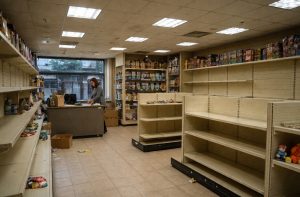
The closures are part of a strategic consolidation plan. The company is moving away from underperforming or costly standalone stores and focusing resources on more profitable locations, Tesco concessions, and its online platform.
Which UK Locations Have Recently Seen Entertainer Store Closures?
Store closures at The Entertainer are no longer limited to 2024 or early 2025 and have continued into 2026, reinforcing that this is an ongoing strategic review rather than a short-term contraction. Most recently, the Poole high street store has been confirmed for closure in January 2026 following the expiry of its lease, making it the latest location affected by shifting footfall patterns and rising operating costs.
Across the UK, these closures are largely driven by local commercial realities rather than national financial distress. In most cases, decisions have been taken where leases have reached their natural end, footfall has declined, or long-term profitability could no longer be justified. At the same time, the business continues to redirect resources towards stronger locations, Tesco concessions, and its growing online operation.
Store closures have been confirmed in the following towns and cities from late 2024 through to January 2026:
| Location | Centre/Street | Closure Date | Reason Stated |
|---|---|---|---|
| Poole | High Street | Jan 2026 | Lease expired |
| Dundee | Wellgate Centre | Jan 2025 | Lease not renewed |
| Edinburgh | Cameron Toll | Jan 2025 | Shift to stronger location |
| Luton | Luton Point | Jan 2025 | Lease ended |
| Croydon | Whitgift Centre | Feb 2025 | Declining footfall |
| Barrow-in-Furness | Dalton Road | May 2025 | No longer profitable |
| Wandsworth | Town Centre | Early 2025 | Business costs |
| Brent Cross | Shopping Centre | 2025 | Strategic relocation |
| Haslemere | High Street | 2025 | Shift in consumer traffic |
In many cases, the closures reflect a combination of declining town-centre foot traffic, rising business costs, and lease agreements reaching renewal points without viable terms.
The addition of the Poole closure in January 2026 highlights that this review process is still active rather than concluded. Several affected locations are being replaced by Tesco concessions or, in some cases, repositioned into higher-performing retail areas with more sustainable long-term prospects.
Are Rising Business Costs Forcing These Closures?
While The Entertainer remains Britain’s largest toy retailer, rising operational costs have placed undeniable pressure on certain store locations. Increased National Insurance contributions, higher energy prices, and escalating business rates have made some high-street units commercially unviable, particularly where footfall has continued to decline.
One insider explained that, in several cases, stores were not closed because of poor brand performance but because the cost of operating in specific locations could no longer be justified. In towns such as Barrow-in-Furness, the decision ultimately came down to basic profitability rather than wider concerns about the health of the business.
Keith Stenhouse, Head of Region at The Entertainer, commented on the Barrow-in-Furness closure:
“We are sad to be closing our Barrow-in-Furness store as of 3rd May and would like to thank our customers and staff for their loyalty and support.”
The company has consistently reiterated that these closures are not a sign of financial instability. Instead, they reflect the realities of a changing retail economy in which only certain types of locations remain sustainable, particularly as consumer habits continue to shift toward convenience-led shopping and hybrid retail models.
What Was the Community Impact of Closing Stores Like Barrow-in-Furness?
Some closures had a strong emotional and local impact, particularly in towns where the store played a community role.
In Barrow-in-Furness, for instance, The Entertainer had replaced the former Argos on Dalton Road in 2017 and had since become a fixture in the town centre. It wasn’t just a place to buy toys, it became known for engaging with local charities and creating a welcoming space for families.
John Edwards, a former manager of the Barrow store, shared his experience:
“I’m incredibly sad about this. The Entertainer was a dream job for seven years. We worked so hard to make it a part of the community, it was more than a shop. It was somewhere kids were excited to go.”
The store regularly hosted events, supported Business Improvement District (BID) initiatives, and even donated toys to the children’s ward at Furness General Hospital. Its closure, Edwards said, is another “victim of retail parks” pulling footfall away from town centres.
Is The Entertainer Still Opening New Stores?
Interestingly, yes. Despite some closures, The Entertainer has continued to open stores in stronger-performing areas such as Exeter and Milton Keynes. These are seen as key investment locations, offering better footfall, lower lease costs, or proximity to family-oriented shopping centres.
At the same time, the company has scaled back or cancelled some planned openings due to financial and leasing challenges. Rising costs in 2024 and early 2025 caused a reassessment of several expansion plans.
What’s clear is that the retailer is not retreating, it’s redirecting its efforts towards more promising ground.
Is The Entertainer Now Open on Sundays?
In a significant shift away from long-standing practice, The Entertainer has broken decades of tradition by trialling Sunday trading across selected UK stores. Historically, the retailer remained closed on Sundays in line with its founding principles, making this one of the most notable behavioural changes in the company’s modern history.
The Sunday opening trial began in late 2025 and is scheduled to run through to Easter 2026. Around 150 stores are taking part in the trial, marking a cautious but meaningful move toward extended opening hours rather than a full nationwide rollout. The company has positioned this as a test-and-learn approach, allowing it to assess customer demand, staffing impact, and commercial performance before committing to any permanent change.
The decision reflects broader shifts in how families shop. Weekend retail patterns have changed considerably in recent years, with Sundays increasingly viewed as a practical day for combined shopping trips rather than a pause in trading. Many families now expect access to non-essential retailers alongside supermarkets and leisure destinations, particularly in retail parks and larger shopping centres.
There is also a clear alignment with The Entertainer’s expanding presence inside Tesco stores. As Tesco locations already operate extended and Sunday hours, opening standalone Entertainer stores on Sundays in selected areas helps create consistency across formats and better matches customer expectations formed through supermarket shopping habits.
However, the trial does not apply universally. Not all Entertainer stores are opening on Sundays, and availability varies depending on location, local trading conditions, and staffing considerations. High street stores and Tesco concessions may operate under different hours, meaning customers are still advised to check individual store listings before visiting.
Rather than signalling a complete departure from the brand’s values, the Sunday trading trial reflects a pragmatic response to changing consumer behaviour. It forms part of a wider effort to modernise store operations while maintaining flexibility, particularly as the retailer continues to balance traditional high street locations with supermarket partnerships and digital growth.
How Has The Entertainer’s Ownership Structure Changed?
In August 2025, founder Gary Grant officially transferred ownership of the company to an Employee Ownership Trust (EOT). This move is designed to protect the long-term future of the business while empowering its workforce.
Under the EOT model, employees indirectly own shares in the company, giving them a greater stake in its success. Grant’s decision to step back was strategic, not reactive.
This transition helps The Entertainer retain its family values while embracing modern governance structures, making it more resilient in the current economic climate.
How the 2,000+ Tesco Partnership Replaces Standalone Stores?
One of the most significant strategic shifts for The Entertainer has been the rapid expansion of its partnership with Tesco, which now places Entertainer toy concessions in more than 2,000 Tesco locations across the UK, including a growing number of Tesco Express stores. This scale marks a fundamental change in how the retailer reaches customers, moving beyond reliance on traditional high street units.

The “store-in-store” model allows families to purchase toys as part of their regular supermarket visits, reflecting the way shopping habits have evolved. Rather than making a separate trip to a standalone toy shop, customers can browse a curated selection of products alongside their weekly groceries, increasing convenience while maintaining physical brand visibility.
These Tesco concessions also benefit from extended opening hours, including Sundays in many locations, which helps the brand align more closely with modern expectations around availability and accessibility.
From an operational perspective, the model significantly reduces overheads by sharing space, staffing infrastructure, and footfall with a major supermarket partner, making it a more resilient format than some standalone stores.
By expanding into over 2,000 Tesco sites, The Entertainer has effectively created a nationwide retail network that reaches suburban and rural communities often underserved by high street toy shops.
This partnership does not replace physical retail entirely, but it increasingly acts as a substitute for underperforming standalone locations, allowing the business to maintain scale and relevance while adapting to the realities of the current retail environment.
How Does In-Store Shopping Compare to Online and Tesco Concessions?
As shopping habits shift, retailers are experimenting with multiple formats. Here’s how each of The Entertainer’s channels stacks up:
| Feature | Standalone Stores | Tesco Concessions | Online Platform |
| Overhead Costs | High | Lower (shared resources) | Lowest |
| Customer Experience | Full brand experience | Limited but convenient | Remote and efficient |
| Product Range | Broad | Select stock only | Full catalogue |
| Accessibility | Urban high streets | Suburban/supermarket-based | Nationwide |
| Opening Hours | Standard retail hours | Aligned with Tesco hours | 24/7 |
The data shows that online and partner formats offer flexibility and scale, which explains the shift.
The EOT Era: How Employee Ownership is Redefining The Entertainer’s Strategy?
In August 2025, The Entertainer reached a historic milestone: the company transitioned to 100% employee ownership through an Employee Ownership Trust (EOT). This wasn’t just a change in paperwork; it was a fundamental shift in the retailer’s DNA that explains many of the recent closures and strategic pivots we are seeing in 2026.
From “Staff” to “Partners”
By moving into an EOT, founder Gary Grant ensured that the company’s profits no longer just benefit a small group of shareholders, but are shared among the thousands of people working in the stores and warehouses. Every employee is now a Partner with a direct financial interest in the company’s bottom line.
This “Partner” mindset is the secret engine behind two major changes that have surprised the retail industry:
-
The End of the Sunday Trading Ban: For over 40 years, The Entertainer famously remained closed on Sundays for religious and family reasons. However, in late 2025 and into 2026, the company launched a Sunday trading trial. In an EOT model, this decision is often driven by the partners themselves; they recognize that to compete with Amazon and Smyths—and to increase their own year-end profit-share—the stores must be open when customers want to shop.
-
Strategic “Pruning” of Stores: Unlike a traditional corporation that might close stores to satisfy distant investors, The Entertainer’s current closures are about protecting the collective. If a standalone store in a location like Barrow-in-Furness or Poole is draining resources, it directly reduces the profit-share for all other employees. Closing non-viable stores is now seen as a way to keep the overall “pot” healthy for the workforce.
Why This Matters for the Future?
The EOT structure makes The Entertainer more resilient than many of its high-street competitors. While other chains struggle with “vulture capitalism” or heavy debt, The Entertainer is debt-free and driven by people who have a “skin in the game.”
“The transition to an EOT means that our people are no longer just witnessing the company’s evolution—they are the ones benefiting from it. Every decision, from the Tesco ‘Toy Box’ expansion to the closure of underperforming leases, is made with the long-term sustainability of the partners in mind.” — Retail Industry Analyst, 2026
This shift explains why the Tesco partnership has accelerated so rapidly. These concessions are high-margin and low-overhead, representing the most efficient way to generate the profits that now go directly back into the pockets of the workers.
What Is the Future Outlook for The Entertainer?
Despite store closures, The Entertainer is far from retreating. The company maintains a robust network of over 160 standalone stores, nearly 1,000 Tesco locations, and a strong e-commerce platform.
New initiatives include:
- A Sunday trading trial starting September 2025
- Continued investment in successful locations
- Expanded digital capabilities and logistics
Rather than signalling decline, the UK toy chain Entertainer store closure reflects a strategic evolution — one that positions the brand for continued relevance in a changing marketplace.
FAQs About The Entertainer and the Toy Retail Landscape
Why has The Entertainer closed multiple stores?
Closures are due to rising costs and non-viable lease renewals, not financial instability.
Are these closures permanent or will some stores relocate?
Some closures may lead to relocations to better-performing or partner locations.
Is The Entertainer still operating in the UK?
Yes. It remains the UK’s largest toy retailer with over 1,000 operating sites.
How does employee ownership affect the company?
It ensures long-term sustainability and gives staff more involvement in business performance.
Can customers still shop in-store?
Absolutely. Stores are still open nationwide, especially within Tesco branches.
What’s the benefit of the Tesco partnership?
It brings toys to convenient locations with extended hours and shared operational costs.
Will more stores close in 2026?
The company will continue assessing leases, but is also planning expansions where viable.