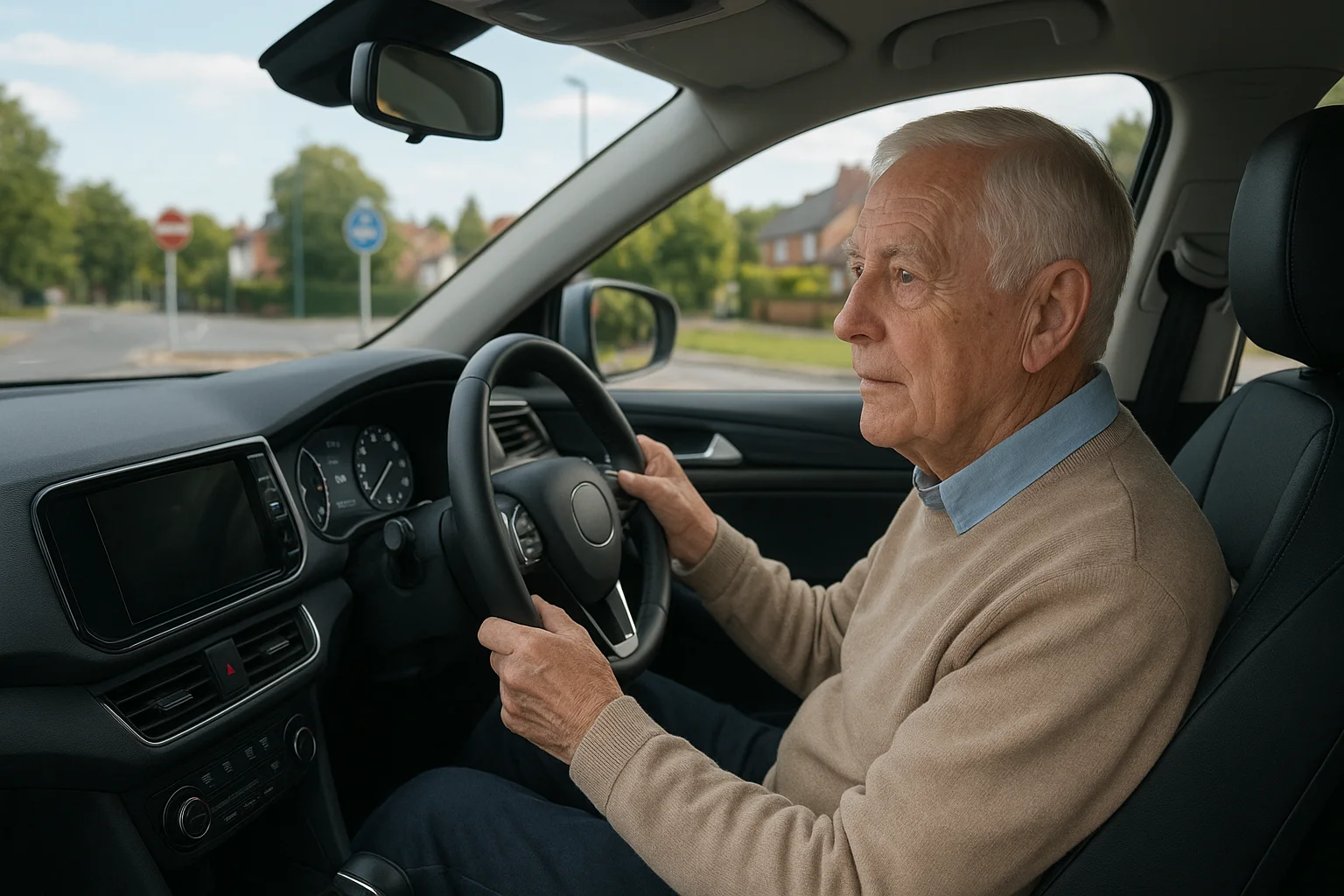
If you’re a driver in the UK, you might have heard whispers about upcoming changes to driving licence rules, especially if you’re approaching your 70s. It can be difficult to keep up with shifting regulations, particularly when there’s a mix of confirmed updates and speculative proposals being reported in the news.
That’s why we’ve broken down what’s officially changing, what’s being reviewed, and how these potential updates could affect drivers of all ages across the country.
While no sweeping new laws have been enforced yet, there are strong indications that change is on the horizon. These updates are largely influenced by public safety concerns, the growing population of older drivers, and technological advances like digital licences. In particular, the self-declaration process for medical conditions,
which allows drivers to decide whether they’re fit to drive, has come under scrutiny, prompting the government to investigate how it can improve road safety without limiting mobility.
Let’s take a detailed look at where things stand in 2025 and what may lie ahead for drivers in the UK.
Is the Government Changing Driving Licence Rules for the Over-70s?
As of now, the UK government has not officially announced any new changes to driving licence rules for drivers aged 70 and above. However, recent reports have suggested that reforms may be coming as part of a broader review of road safety and licensing systems.
Media speculation has included potential measures such as mandatory eyesight tests at age 70 and every three years after, as well as more rigorous checks for cognitive conditions like dementia. These reports have fuelled concern among elderly motorists, but the government has clarified that “the current renewal at age 70 process remains as is.”
While discussions are underway, any formal updates are likely to be shared through the upcoming Road Safety Strategy, expected towards the end of 2025. Until then, drivers over 70 should continue to follow the existing three-year renewal process and remain proactive about their medical fitness to drive.
What Are the Current Licence Renewal Rules for Drivers Over 70?
Under the current legislation, specifically Section 99(1)(a) of the Road Traffic Act 1988, drivers in the UK must renew their driving licence every three years once they reach the age of 70. This is in contrast to the ten-year renewal cycle for drivers under 70.
An important part of this process is the self-declaration system, where drivers are responsible for reporting any medical condition or disability that may affect their ability to drive safely. This includes conditions like deteriorating eyesight, epilepsy, heart issues, or cognitive impairments.
If a driver fails to declare a relevant condition, it could result in penalties, revocation of their licence, or even prosecution if the condition leads to an accident. The DVLA also accepts reports from third parties, including doctors, opticians, or concerned family members.
Once a condition is reported, the DVLA may:
- Request medical information from the driver’s GP or specialist
- Arrange a driving assessment, medical examination, or eyesight test
- Make a decision about whether the driver can continue to hold a licence
Why Is the Over-70 Licence System Being Reviewed?

The current system for older drivers is facing increasing scrutiny due to high-profile incidents where medical conditions may have gone undeclared. One such case involved a 91-year-old woman with dementia who caused a fatal accident in 2020.
The 2024 Fatal Accident Inquiry (FAI) into the incident concluded that the crash could have been prevented if the driver’s cognitive ability had been properly assessed at the time of her licence renewal.
This tragedy sparked widespread concern about the effectiveness of the self-declaration model, especially as the UK’s driving population continues to age. According to the DVLA, there has already been a 2023 Call for Evidence exploring whether changes are needed in how medical fitness to drive is assessed.
Some of the questions under consideration include:
- Should certain conditions disqualify individuals from driving?
- Is self-declaration reliable enough?
- Should age-based mandatory testing be introduced?
The DVLA is currently analysing the responses and research collected, which will help inform possible legislative changes in the near future.
What Changes Could Be Introduced for Elderly Drivers?
At present, any suggestions of specific changes are speculative, but several possibilities have emerged through official reports and public discussions. These include:
- Mandatory Eye Tests:
There is growing support for requiring drivers aged 70 and above to take compulsory eye tests every three years, coinciding with licence renewal. This was previously hinted at in the government’s 2019 Road Safety Statement. - Stricter Medical Verification:
Future renewals might require evidence of good health, such as a signed letter from a GP, medical records, or test results,rather than relying solely on the driver’s own assessment. - Disqualification for Certain Medical Conditions:
There may be legal grounds to prevent individuals with cognitive conditions, such as dementia, from driving. Coroners and safety experts have publicly supported this approach. - Revised Self-Declaration Policies:
The DVLA might tighten the guidelines on what must be declared and how medical information is verified before a licence is issued or renewed.
These measures aim to strike a balance between maintaining personal freedom and ensuring the safety of all road users.
How Could These Changes Be Enforced Legally?
Any new regulations would likely be introduced using existing powers under the Road Traffic Act 1988. This act allows the government to adjust licensing rules through secondary legislation, such as statutory instruments, without needing to pass a brand-new law through Parliament.
For example, the government could introduce a new regulation requiring all drivers over the age of 70 to pass a certified eyesight test before renewing their licence. This would be enforceable under the existing legislative framework, making implementation relatively straightforward once a decision is made.
What Else Is Changing in the UK Driving Licence System in 2025?
While much of the attention is on older drivers, several wider reforms are being rolled out that will affect motorists across all age groups.
Digital Driving Licences
One of the most significant updates is the introduction of digital driving licences, currently in a pilot phase. These licences can be stored on a smartphone and are designed to improve accessibility and reduce processing times. The digital licence may include features like:
- Real-time updates to licence status
- Integration with official apps
- Easier renewal processes
Though optional at first, this could become the standard form of licence in the future.
Learner Driver and Test Updates
Learner drivers can also expect several changes, particularly in the structure of the DVSA driving test. Updates will include:
- Greater emphasis on hazard perception
- Night driving components
- Eco-friendly driving assessments
The probationary period for new drivers may also be extended, with zero tolerance for mobile phone use.
How Are Licence Categories and Vehicle Rules Being Revised?
Changes are also being made to licence categories, particularly those introduced post-1997. Notable updates include:
- Drivers with a Category B licence can now tow a trailer with a Maximum Authorised Mass (MAM) of up to 3,500 kg without taking an additional test.
- Flexibility is being increased for those who hold automatic-only licences, particularly with the rise in electric vehicle (EV) adoption.
These changes are designed to reflect the reality of modern driving demands and promote driver flexibility and efficiency.
What Are the Brexit-Related Licence Updates for UK and EU Drivers?
Brexit has led to notable changes in how UK and EU drivers handle licences:
- EU licence holders residing in the UK must now exchange their licences within 12 months of becoming a resident.
- UK drivers travelling to the EU may require an International Driving Permit (IDP) depending on the specific country’s agreements.
- Additional documentation, such as Green Cards for insurance and VE103B certificates for hire vehicles, may be necessary when driving abroad.
It’s essential for drivers affected by these rules to check the latest DVLA and international travel guidance before making any assumptions.
Table: Summary of Key Driving Licence Rule Changes
| Area of Change | Description of Change or Proposal | Who It Affects |
| Over-70 Licence Renewals | Possible compulsory eye tests; stricter medical checks | Drivers aged 70 and above |
| Self-Declaration Rules | Under review; may require medical proof for certain conditions | All drivers |
| Digital Driving Licence | Pilot scheme via app; optional at rollout | All UK drivers |
| DVSA Driving Test Updates | Hazard perception, night driving, eco techniques | Learner and new drivers |
| Towing Rule Updates | Category B drivers can tow up to 3,500 kg MAM | Post-1997 licence holders |
| EU Licence Exchange | Must convert EU licence within 12 months | EU drivers living in the UK |
How Can Drivers Prepare for These Driving Licence Rule Changes?
While many of the proposed updates are still under review, it’s a good idea for drivers to be proactive. Here’s how:
- Stay informed by checking the DVLA website and official government announcements
- Renew your licence on time, especially if you’re nearing 70 or older
- Keep medical records up to date, and report any new conditions
- Get an eye test even if it’s not yet compulsory, it could save lives
- Use the digital services offered by the DVLA to manage your licence easily
Being prepared ensures that when changes come into effect, you’re already in compliance.
FAQs – UK Driving Licence Rule Changes
Will drivers over 70 be required to take an eye test?
Not yet, but it’s under serious consideration. Compulsory eye tests every three years could become part of the licence renewal process for elderly drivers.
What is the current renewal rule for over-70s?
Drivers aged 70 and above must renew their driving licence every three years and declare any medical conditions.
Can the DVLA deny a licence based on health?
Yes. The DVLA can revoke or deny a licence if medical conditions make someone unfit to drive, based on assessments or third-party reports.
Is the digital driving licence available to everyone?
Currently, it’s being tested in pilot schemes. A broader rollout is expected soon, but it will initially be optional.
How does Brexit affect driving licences?
EU licence holders in the UK must exchange their licences. UK drivers in the EU may require IDPs depending on local rules.
Are there new rules for learner drivers?
Yes. The driving test is being updated, and probationary periods are becoming stricter with a focus on safety.
When will the new Road Safety Strategy be published?
The government is expected to release the updated Road Safety Strategy in late 2025, outlining key decisions.