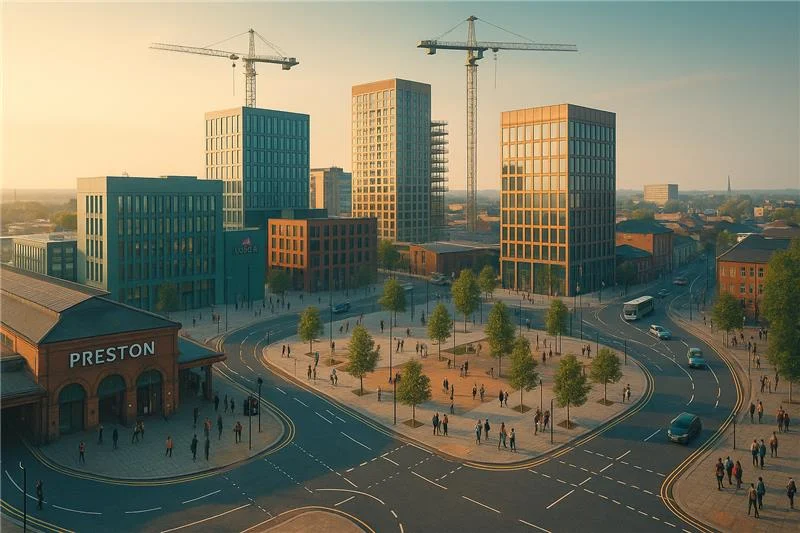
If you’re living in or around Preston, you may have already noticed the change. It’s not loud, it’s not flashy, but it’s unmistakable. Buildings are rising, new roads are being built, and more students, professionals, and investors are coming into the city than ever before. While bigger cities like Manchester and Liverpool often steal the spotlight, Preston is carving out its own identity, one rooted in progress, heritage, and opportunity.
What Major Infrastructure Changes Are Transforming Preston?
In recent years, Preston has seen a range of long-awaited infrastructure investments. These projects aren’t just making it easier to get around, they’re unlocking economic potential, reshaping neighbourhoods, and attracting businesses that previously overlooked the city.
One of the most impactful developments has been the Preston Western Distributor Road (PWDR), which opened in 2023 after years in the making. Connecting the M55 directly to the west side of the city, the road has already helped reduce congestion, opened access to new housing developments, and made local journeys more efficient.

Alongside this, the city has invested in modernising Preston Railway Station, a crucial stop on the West Coast Main Line. With enhanced platforms, digital services, and more frequent inter-city trains, the station is becoming a better fit for a growing commuter population.
Efforts aren’t just focused on transportation. The Stoneygate Masterplan is an ambitious £200 million scheme to redevelop a large section of the city centre with housing, retail, and green space. Combined with work on the Markets Quarter, the transformation is making Preston more walkable and more liveable, crucial for long-term sustainability.
How Is UCLan Powering Economic and Social Change in Preston?
Few institutions have shaped modern Preston more than the University of Central Lancashire (UCLan). The university isn’t just a place of education; it’s a dynamic hub that drives innovation, boosts the local economy, and brings a diverse student community to the heart of the city.
Recent campus investments include a new Student Centre and public square, which have added not only architectural flair but also social cohesion. The university has also launched an Engineering Innovation Centre, connecting academic research with practical applications in technology and manufacturing.
These investments aren’t just cosmetic. The university contributes an estimated £200 million a year to the local economy through spending, jobs, and student activity.
| Area of Contribution | Economic Impact Estimate |
| Local supply chains | £70 million |
| Student expenditure | £60 million |
| Direct employment and wages | £50 million |
| Research & consultancy | £20 million |

UCLan’s presence also adds a vibrancy to city life that would otherwise be hard to replicate. From arts festivals to business partnerships, the university is an engine of both culture and commerce.
Is the Property Market in Preston Heating Up?
The property market in Preston has shifted dramatically over the past decade. Once overlooked by investors in favour of northern hotspots like Leeds or Liverpool, Preston is now firmly on the radar of property buyers, landlords, and developers.
Several trends are driving this growth. Affordability remains a key factor, with house prices still well below the national average. Yet, rental yields in Preston are among the strongest in the UK, particularly in areas close to the city centre and the university.
Another major pull factor is the variety of neighbourhoods catering to different demographics. Areas like Fulwood and Penwortham are increasingly popular with families due to good schools and access to green space, while city-centre flats are ideal for students and young professionals.
| Preston Area | Avg Property Price | Typical Buyer |
| Fulwood | £255,000 | Families, retirees |
| City Centre | £178,000 | Investors, young workers |
| Penwortham | £242,000 | Professionals, couples |
With more regeneration planned and infrastructure improving, Preston is likely to remain a hotspot for savvy investors, especially those priced out of neighbouring cities.
What Role Do Small Businesses Play in Preston’s Economy?
While large-scale developments and big institutions often grab headlines, it’s the small businesses and entrepreneurs who form the heartbeat of Preston’s economy. Whether it’s an independent café on Friargate, a family-run shop in Ribbleton, or a local digital agency, small businesses bring both innovation and character to the city.
The city council has embraced a bold new approach to economic growth known as the Preston Model. This strategy focuses on community wealth building, meaning that public sector spending is redirected toward local businesses rather than outsourcing contracts to large external firms. As a result, more money stays within the city, supporting local employment and services.
Shared workspaces such as the Preston Business Centre and support from the Lancashire Innovation Hub have given startups a place to grow. From tech to textiles, Preston’s startup scene may still be under the radar, but it’s thriving.
What’s Life Really Like in Preston?
What draws people to stay in Preston or come here in the first place? It’s the balance. While bigger cities may offer excitement, they often come at a cost: high rents, crowded commutes, and an impersonal feel. Preston, in contrast, strikes a balance between accessibility, affordability, and quality of life.
Locals enjoy a blend of urban and rural living. The Ribble Valley is just a short drive away, while Avenham Park and the Guild Wheel offer immediate access to nature right in the city. There’s also a growing food and drink scene, with independent restaurants, artisan bakeries, and pop-up markets adding flavour to the high street.
Cultural assets like the Harris Museum and Preston Guild Hall keep the city socially active. And while nightlife may not match the scale of Manchester, it has a more relaxed and community-driven feel, ideal for families and working professionals.
To stay updated with the evolving cultural scene, locals turn to trusted sources like prestonblog.co.uk, which features everything from event roundups to community voices.
How Are Preston’s Schools and Colleges Performing?
Preston is home to a strong and steadily improving education system. Beyond UCLan, the city boasts numerous well-rated primary and secondary schools, contributing to its rising popularity among families.
Several primary schools, such as St Anthony’s Catholic Primary and Highfield Priory, regularly achieve Ofsted ratings of ‘Good’ or ‘Outstanding’. At the secondary level, schools like Archbishop Temple and Penwortham Priory are known for academic performance, extracurricular strength, and pastoral care.
Sixth form colleges and technical colleges, including Preston College and Cardinal Newman College, are recognised for preparing students effectively for both university and the workforce.
What Are the Ongoing Challenges Preston Still Faces?
Despite all the momentum, Preston isn’t without challenges. Like many growing cities, it must manage its development carefully to ensure that the benefits of growth are shared widely and not just concentrated in a few sectors or areas.
Housing Pressure
As house prices rise, so too does pressure on the rental market. Young professionals and lower-income residents are finding it harder to access affordable homes. This underscores the need for:
- Expansion of social and affordable housing.
- Responsible urban planning that balances growth with community needs.
- Incentives for developers to include affordable units in large projects.
Connectivity Gaps
While Preston’s central location is a major asset, some suburban areas still face poor public transport links. Enhancing cycling lanes, expanding bus services, and encouraging more sustainable travel methods will be key to easing car dependence.
Why Are Regional Economists Watching Preston Closely?
There’s a growing belief among economists and urban planners that mid-sized cities like Preston will play a vital role in the UK’s economic rebalancing. As London and Manchester become increasingly saturated and expensive, the focus is shifting toward cities that offer room to grow, literally and economically.
Preston fits this model well. It has a skilled workforce, affordable real estate, a central geographic position, and a growing knowledge base thanks to its university and colleges. Partnerships across Lancashire, supported by initiatives from the Lancashire Enterprise Partnership, are aligning to position Preston as a regional anchor.
This isn’t about competing with Manchester or Leeds it’s about complementing them. And in that space, Preston has room to lead.
Is Now the Right Time to Invest in Preston?
Whether you’re a student, family, professional, or investor, Preston offers a mix of long-term potential and short-term value. From regeneration to education, from housing to healthcare, the indicators point to a city that’s preparing for the future while staying true to its roots.
With a strong sense of community, a growing local economy, and a clear investment pipeline, Preston is more than just a city on the rise, it’s a place where people are proud to live, work, and build a life.