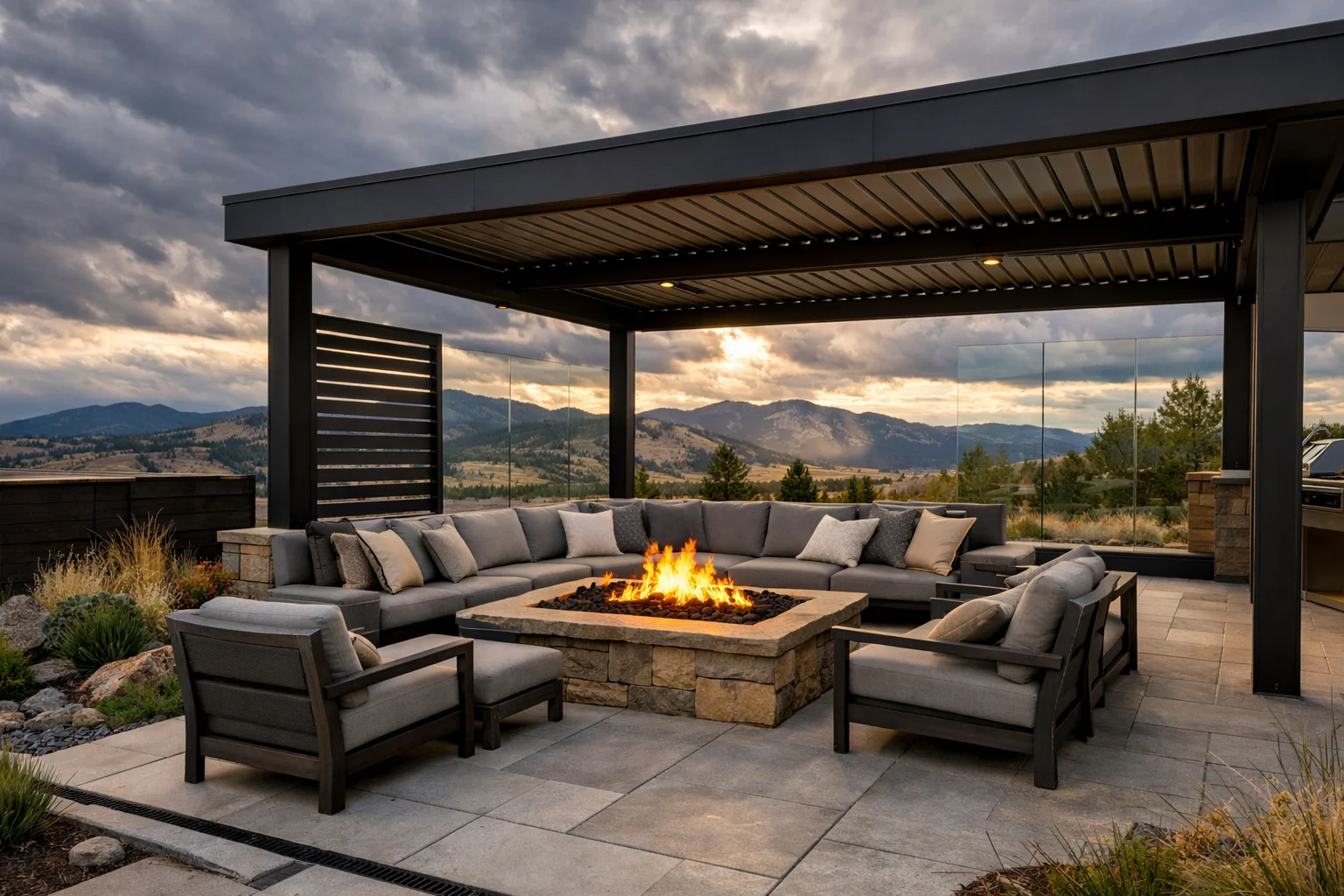
Here’s the thing about Colorado weather: it refuses to cooperate. You might start your Saturday morning sipping coffee in full sunshine, then by lunchtime you’re dodging clouds, and come dinner? You’re sweeping hail off the deck. It’s maddening. The high-altitude UV obliterates your patio furniture way faster than you’d think possible.
Freeze–thaw cycles turn even professionally installed patios into cracked messes. Wind tears through pergolas like they’re made of paper. Snow dumps from your roof directly onto your favorite seating spot. And wildfire smoke? It can ruin your outdoor plans for entire weeks at a time.
If you genuinely want outdoor living spaces Colorado homeowners can actually enjoy throughout the year, not just those fleeting perfect days in June you need more than a collection of attractive Pinterest screenshots.
You need a plan built around climate reality. This guide breaks down layout strategies, material selection, drainage essentials, heating options, and winterization techniques that hold up along the Front Range, in mountain communities, and everywhere in between.
Outdoor Living Space Design Ideas Built Around Year-Round Comfort
Let’s flip those climate constraints into functional zones that genuinely extend your usable season instead of limiting it to eight perfect weeks per year.
Colorado Springs sits right where the Rockies meet the Front Range incredible mountain views, relentless sunshine, and wind that won’t quit. The city’s blend of historic neighborhoods, newer developments, and hillside lots means outdoor spaces regularly contend with sloped terrain, exposed sites, and temperature swings that feel downright theatrical.
Homeowners here absolutely value outdoor living, but they need designs capable of handling hail, wind, and sudden storms without turning into maintenance nightmares.
For projects where details and durability genuinely matter, it helps to partner with luxury home builders in colorado springs so your outdoor zones integrate seamlessly with the overall custom home plan from properly engineered drainage routes to cover structures actually rated for local snow loads. Professionals who understand regional soils and permitting requirements save you from costly corrections down the road.
Use Zones That Expand Your Usable Season
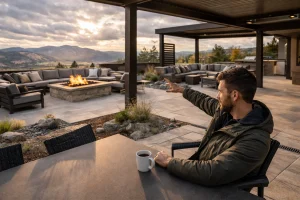
Design a morning sun coffee nook where frost melts first, and create an afternoon shade lounge protected from brutal west-facing glare. Your all-weather dining zone demands overhead cover plus lighting for those dark winter evenings.
The cooking zone requires serious wind management, baffle walls or strategic positioning to keep flames stable instead of dancing wildly. And don’t overlook a hot/cold recovery zone: thoughtful spa placement, plunge areas, or even a sauna vestibule extends shoulder-season use dramatically.
Smart Adjacency Planning (Indoors ↔ Outdoors)
Map the kitchen-to-grill travel path, serving counter locations, and storage access so entertaining doesn’t become an endless relay race. Position mudrooms near patio entry points for snow gear drop-off zones.
Entertainment flow genuinely matters, align seating toward TV screens or fire features outdoors while maintaining clear sightlines from your living room. Get adjacency wrong and you’ll deal with smoke invading through open windows or ice forming exactly where you walk most frequently.
Colorado Climate Reality Check for Outdoor Living Spaces Colorado Homeowners
Before you get excited about decorative pavers or start shopping for that dream fire pit, take a hard look at what you’re actually building against. Colorado’s climate isn’t simply cold winters. It’s relentlessly, exhaustingly unpredictable.
Key Conditions That Drive Design Decisions
Freeze–thaw cycles absolutely destroy footings, grout, and stone surfaces. Here’s how it works: water infiltrates tiny cracks, freezes overnight, expands with force, and splits apart finishes that looked flawless last August.
The high-altitude UV exposure is genuinely punishing; composite decking loses color, fabrics shred apart, and sealers degrade at speeds you wouldn’t see at sea level. According to industry analysis, there is so much more viability for outdoor living spaces in Colorado than in other climates, which means thoughtful planning pays dividends assuming you build for long-term resilience.
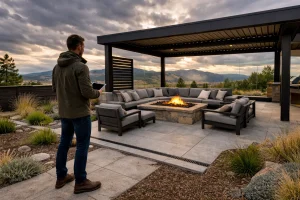
Then there’s wind. Strong gusts and microbursts flip your expensive umbrellas, stress pergola joints until they fail, and push barbecue smoke straight into your house. Snow loads require structurally sound covers, and you absolutely must plan placement zones that dodge roof avalanches.
Hail season shows up whenever it feels like its impact-rated materials become the difference between minor inconvenience and expensive replacement. Wildfire smoke season means your outdoor cooking setup needs a real ventilation strategy.
Colorado Microclimates to Plan Around
Front Range properties face totally different challenges compared to mountain towns or Western Slope homes. Sun intensity shifts. Wind patterns change. Snowpack sticks around longer or melts faster. Growing seasons expand or contract based on elevation and exposure.
But site-specific factors matter even more than regional patterns: Does your lot slope? Do neighboring structures create shade pockets? Are you dealing with expansive clay soil that heaves and shifts? Or rocky ground that drains immediately? Map all of this before breaking ground.
Colorado Outdoor Patio Design That Survives Freeze–Thaw and Looks High-End
Once you’ve mapped use zones, focus on what’s literally underfoot a patio surface that won’t crack, shift around, or look terrible after one Colorado winter.
Patio Surface Options (Pros, Cons, Best Uses)
Concrete with properly placed control joints and annual sealing handles freeze–thaw cycles well if poured correctly from the start. Porcelain pavers on pedestal systems offer excellent drainage plus easy individual replacement.
Natural stone slate, sandstone, granite delivers premium aesthetics but varies wildly in slip resistance, so test samples before committing your budget. Segmental pavers demand proper base depth to resist frost heave. Decomposed granite with stabilizers works for low-ice pathways but won’t survive repeated snow shoveling.
Base, Slope, and Drainage Fundamentals (Non-negotiables)
Pitch your patios away from the house foundation minimum 1/4 inch per foot, no exceptions. Install channel drains wherever water naturally collects. Permeable pavers and infiltration trenches dramatically reduce ice sheets and problematic runoff. Route gutter downspouts and snowmelt discharge away from refreeze zones. Skip proper drainage and you’re guaranteeing problems.
Outdoor Kitchen Colorado Planning: Wind, Code, Utilities, and Winterization
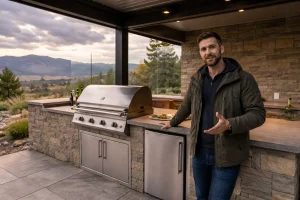
A wind-smart, properly winterized outdoor kitchen Colorado homeowners can operate beyond brief summer cookouts delivers the absolute highest lifestyle return if you plan utilities and placement correctly from day one.
Layouts That Function in Wind and Cold
Check prevailing wind patterns before finalizing your grill location. Baffle walls redirect harsh gusts without blocking those views you paid for.
Heat zoning matters on cold evenings, strategic grill, side burner, and warming drawer placement keeps prep work comfortable instead of miserable. Design serving lines with adequate landing zones, trash pullouts, and beverage stations so workflow doesn’t create frustrating bottlenecks.
Utility Planning (Gas, Electric, Water) Done Safely
Size gas lines accounting for altitude performance, install accessible shutoffs, and use outdoor-rated flex connectors. Electrical circuits absolutely require GFCI protection for refrigeration, lighting, heaters, and speakers. Water lines demand isolation valves, blow-out ports, and heat tape wherever freeze risk exists. Skip winterization details and you’re guaranteeing burst pipes.
Common Questions About Colorado Outdoor Living Spaces
Best Materials for a Patio in Colorado Freeze–thaw Conditions?
Porcelain pavers on pedestals, properly sealed concrete with control joints, or segmental pavers over deep gravel bases handle freeze–thaw best. Natural stone needs sealing and slip-resistance testing.
Ideal Patio Slope for Drainage in Colorado Outdoor Patio Design?
Minimum 1/4 inch per foot away from your home. Steeper slopes (up to 2%) work better for snow runoff and prevent ice buildup near entries.
Ways to Block Wind on a Patio Without Losing Mountain Views?
Use slatted walls, glass windbreaks, or motorized screens with adjustable fabric openness. Layered screening frames views while cutting gusts by 50% or more.
Final Thoughts on Colorado Outdoor Living Success
Planning outdoor living spaces Colorado homeowners can genuinely enjoy year-round isn’t about chasing whatever’s trending on social media, it’s about understanding freeze–thaw mechanics, wind patterns, UV degradation, and snow loads before committing a budget. Choose surfaces that survive ground movement, utilities you can actually winterize, and covers engineered to handle snow weight.
Layer thoughtful adjacency, wind-aware cooking zones, and drought-tolerant Colorado backyard landscaping ideas for spaces that look premium while functioning reliably season after season.
Never skip drainage or permitting they’re literally the difference between a decade of enjoyment and expensive emergency repairs. With the right approach from the start, your outdoor room transforms into a legitimate four-season retreat.