
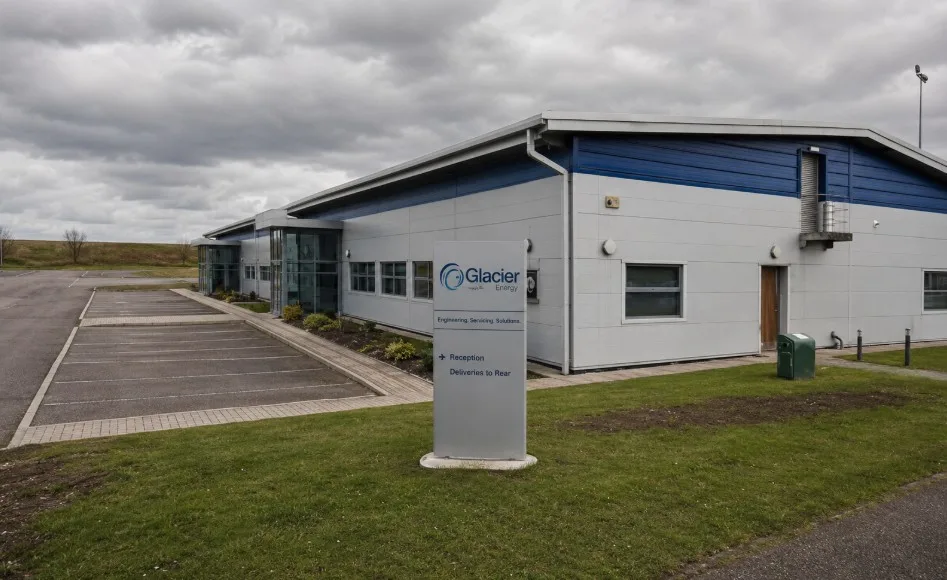
Glacier Energy Manufacturing administration was driven by sustained financial losses, weakening demand in the North Sea oil and gas sector, and slower growth in renewable energy markets.
Despite turnaround efforts following the acquisition of the historic Francis Brown fabrication business, the manufacturing division struggled to secure enough work and funding to remain sustainable.
The company eventually entered administration, leading to 53 job losses and the closure of manufacturing operations.
Key Points:
- Glacier Energy Manufacturing Limited entered administration in October 2025.
- The company experienced losses from December 2024 onwards.
- Weak North Sea oil and gas investment significantly reduced demand.
- Renewable and new energy opportunities failed to scale quickly enough.
- The Rotherham site closed in July 2025 as part of cost-cutting measures.
- All 53 employees were made redundant.
- The wider Glacier Group continues trading through its other divisions.
What Is Glacier Energy Manufacturing Administration About?
Glacier Energy Manufacturing Limited was a specialist engineering and fabrication business within the wider Glacier Group, an Aberdeen-based energy services company.
The division was formed after Glacier acquired the long-established Francis Brown fabrication business in Stockton-on-Tees in August 2024 to expand manufacturing capabilities and target opportunities in traditional and renewable energy markets.
However, worsening market conditions and rising losses created significant financial pressure, leading directors to place the business into administration to protect creditors’ interests.
Company Overview:
| Detail | Information |
| Company Name | Glacier Energy Manufacturing Limited |
| Parent Company | Glacier Group |
| Headquarters | Aberdeen, Scotland |
| Main Manufacturing Site | Stockton-on-Tees |
| Administration Date | October 2025 |
| Joint Administrators | Adele MacLeod and Clare Boardman (Teneo Financial Advisory) |
| Jobs Lost | 53 |
These facts provide important context for understanding why the business ultimately entered administration.
Why Did Glacier Energy Manufacturing Enter Administration?
The collapse of Glacier Energy Manufacturing was not caused by a single event. Instead, several interconnected challenges gradually weakened the business.
The company’s core customer base remained heavily linked to North Sea oil and gas activity. As investment levels declined and large-scale capital projects became less common, demand for fabrication and engineering services reduced significantly.
At the same time, the anticipated growth in new energy markets did not arrive quickly enough to replace lost revenue. This created a difficult trading environment where the company struggled to generate sustainable income.
A statement issued by the parent company highlighted these challenges:
“Despite significant efforts to turnaround the business, due to market challenges and the current fiscal regime, activity levels in the North Sea oil and gas market have been significantly impacted and new energy markets slow to materialise.”
As losses continued to increase, the business required substantial additional funding to reach a break-even position. Without access to sufficient capital, administration became unavoidable.
How Did the Francis Brown Acquisition Shape Glacier Energy Manufacturing’s Future?
The acquisition of Francis Brown in August 2024 was a major step in Glacier Energy Manufacturing’s growth strategy. Completed through a pre-pack administration deal, it aimed to strengthen manufacturing capabilities and expand opportunities across oil and gas, hydrogen, and renewable energy markets.
While the deal provided access to facilities, skilled workers, and industry expertise, it also increased exposure to difficult market conditions.
As demand weakened, expected growth opportunities failed to develop quickly enough to support the expanded operations.
The August 2024 Pre-Pack Acquisition
Francis Brown was a well-established engineering and fabrication business with a history spanning more than a century. By acquiring the company, Glacier Group aimed to strengthen its manufacturing footprint and position itself for future opportunities in energy transition projects.
Key areas targeted for growth included:
- Hydrogen infrastructure
- Renewable energy developments
- Industrial fabrication
- Energy engineering services
Despite the strategic rationale behind the acquisition, integrating and restructuring the business required significant investment.
Why the Stockton-on-Tees Site Became Central to the Collapse?
The Stockton-on-Tees facility became the centre of Glacier Energy Manufacturing’s operations following the acquisition. However, expected contract volumes did not materialise as market conditions softened.
Customers increasingly focused on maintenance and repair work rather than large-scale capital projects, reducing demand for fabrication services. This lack of new business placed growing pressure on revenues and contributed to the financial losses that ultimately led to administration.
Although the acquisition created long-term potential, difficult trading conditions prevented the Stockton operation from achieving sustainable growth
What Role Did the North Sea Oil and Gas Downturn Play?
The decline in North Sea oil and gas activity was arguably the most significant factor behind Glacier Energy Manufacturing administration.
Many engineering businesses rely on major investment projects for sustained growth. When energy companies reduce spending, the effects often ripple throughout the supply chain.
Market Pressures Affecting the Business:
| Market Challenge | Impact on Glacier Energy Manufacturing |
| Reduced capital expenditure projects | Fewer fabrication contracts |
| Lower oil and gas investment | Declining demand |
| Policy and fiscal uncertainty | Delayed customer decisions |
| Slow renewable market growth | Insufficient replacement revenue |
Administrators noted that shortly after incorporation, the company experienced a noticeable reduction in major projects within traditional energy markets.
One administrator statement explained:
“Customers focused on repairs and maintenance to existing infrastructure rather than new investments.”
This shift significantly reduced opportunities for specialist manufacturing work and undermined the company’s recovery efforts. The downturn demonstrates how closely engineering firms remain tied to wider industry investment cycles.
How Did Financial Losses Build Before the Administration?
Glacier Energy Manufacturing’s financial decline was gradual rather than sudden. After acquiring Francis Brown, the business faced weaker demand in oil and gas markets while growth in new energy sectors remained slower than expected.
Falling revenues, high operating costs, and ongoing losses increased financial pressure throughout 2025. Despite cost-cutting efforts and attempts to secure new work, the company lacked sufficient funding to achieve a sustainable recovery
Losses From December 2024
Financial difficulties began emerging only months after the company’s formation. Administrators reported that losses were already evident by December 2024.
Weak demand across the company’s core markets meant revenues consistently fell below expectations. Although management explored new opportunities, these initiatives failed to offset declining traditional business.
Why Was the Rotherham Site Closed in July 2025?
As losses increased, directors sought ways to reduce operational costs. One major decision involved the closure of the Rotherham site during July 2025.
The closure resulted in approximately 20 redundancies and formed part of a broader effort to stabilise finances.
Funding Gap and Strategic Review
By September 2025, trading conditions had deteriorated further. A strategic review identified a significant funding requirement before the business could realistically return to profitability.
Financial Timeline:
| Date | Key Event | Outcome |
| August 2024 | Francis Brown acquired | Manufacturing division created |
| December 2024 | Losses begin | Financial pressure emerges |
| July 2025 | Rotherham site closure | Cost reduction measures introduced |
| September 2025 | Strategic review completed | Funding gap identified |
| October 2025 | Administration begins | Business enters insolvency process |
Without access to the required investment, directors concluded that administration represented the most responsible course of action.
What Happened to Employees After Glacier Energy Manufacturing Collapsed?
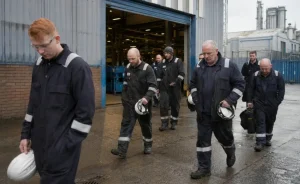
The administration had an immediate impact on the workforce. All 53 employees ultimately lost their jobs as manufacturing operations ceased. The redundancies affected skilled engineers, fabrication specialists and support staff across the business.
For many employees, the collapse represented the loss of highly specialised roles within a challenging labour market.
Employee Impact:
- 53 total redundancies
- Manufacturing operations ceased
- Stockton-on-Tees facility closed
- Earlier redundancies occurred at the Rotherham site
- Skilled engineering roles were affected
The workforce impact highlights the wider social consequences often associated with industrial business failures.
What Does the Administration Mean for Creditors and Suppliers?
Administration aims to protect creditors while maximising potential recoveries from remaining assets. In the case of Glacier Energy Manufacturing, administrators indicated that unsecured creditors were unlikely to receive significant distributions.
The company reportedly carried debts when entering administration, while numerous creditors submitted claims during the insolvency process.
According to the administrators:
“It remains unlikely that sufficient funds will be realised to enable a distribution to be made to unsecured creditors.”
This outcome is unfortunately common when businesses enter administration after sustained periods of financial decline. Suppliers, contractors and service providers connected to the company may therefore face financial losses resulting from unpaid obligations.
Is the Wider Glacier Group Still Trading After the Manufacturing Administration?
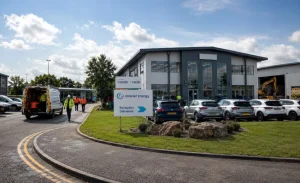
A common misconception is that the administration resulted in the collapse of the entire Glacier Group. In reality, only Glacier Energy Manufacturing Limited entered administration, while the wider group continues operating through its remaining engineering and industrial service divisions.
The group still provides services across multiple sectors, including heat transfer equipment support, on-site machining, inspection services, non-destructive testing, and equipment maintenance and refurbishment. These divisions continue serving customers across energy and industrial markets.
As a result, the administration should be viewed as the failure of one manufacturing subsidiary rather than the collapse of the wider organisation, which continues trading through its established operations.
What Does the Future Hold After the Glacier Energy Manufacturing Administration?
While Glacier Energy Manufacturing Limited has ceased trading, the wider Glacier Group continues to operate through its mechanical solutions, inspection services, and specialist engineering divisions.
For former employees, creditors, and industry stakeholders, the administration process will focus on asset realisation and creditor claims. More broadly, the case highlights the ongoing challenges facing UK manufacturers that rely heavily on traditional energy markets.
As investment patterns shift towards renewable and low-carbon projects, engineering firms may need to diversify their services, strengthen financial resilience, and adapt more quickly to changing market conditions to remain competitive.
Conclusion
Glacier Energy Manufacturing administration highlights the challenges many engineering firms face during economic transition.
Despite ambitions for growth following the Francis Brown acquisition, declining North Sea demand, slower renewable expansion, and ongoing financial losses created significant pressure.
The collapse resulted in 53 redundancies, while the wider Glacier Group continued operating through other divisions. The case shows how market conditions, funding access, and timing can shape business survival.
Frequently Asked Questions
What was Glacier Energy Manufacturing Limited’s company number?
Glacier Energy Manufacturing Limited was registered under company number SC817573.
Who were the appointed administrators?
Adele MacLeod and Clare Boardman of Teneo Financial Advisory were appointed as joint administrators.
Was Glacier Energy Manufacturing the same as Glacier Group?
No. Glacier Energy Manufacturing Limited was a subsidiary within the wider Glacier Group. The parent company continues to operate through other divisions.
How many jobs were affected by the administration?
A total of 53 jobs were lost when the manufacturing business ceased trading.
Why were unsecured creditor payouts expected to be limited?
Administrators indicated that insufficient funds were likely to be realised from the administration process to support meaningful distributions to unsecured creditors.
Did renewable energy opportunities help save the business?
Although the company explored opportunities in renewable and hydrogen-related sectors, these markets developed too slowly to offset declining traditional energy revenues.
What does this case reveal about UK manufacturing risks in 2026?
The case highlights ongoing risks including market dependency, reduced capital investment, funding challenges and uncertainty during the transition from traditional energy markets to newer sectors.