
Education is no longer limited to classrooms and fixed schedules. Online tutoring is reshaping how students learn by making help available anytime and anywhere. With just a laptop or phone, learners can connect with skilled tutors, get quick answers, and study at their own pace.
This flexible approach supports different learning styles and helps students feel more confident. Parents enjoy better access to academic support, while teachers can reach more students beyond local limits.
As technology becomes part of daily life, online tutoring is turning learning into a more personal, convenient, and results-driven experience for students of all ages.
The Evolution of Digital Learning
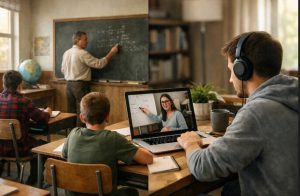
This jump to virtual classrooms wasn’t some sudden flip of a switch. Years of groundwork preceded it, then circumstances forced rapid acceleration, and the results convinced even the doubters.
From Traditional Classrooms to Virtual Spaces
Remember distance learning in the old days? Course materials crawled through postal systems, arriving weeks behind schedule. Now? Online tutoring platforms beam live instruction across continents instantly.
Certified educators connect with learners regardless of state boundaries or time zones. The impact of online tutoring on education becomes tangible when rural kids finally access AP courses their local schools simply cannot staff. Or when adults juggling night shifts squeeze degree programs into unconventional hours.
Take organizations like Proximity Learning, they’ve stepped up to address critical staffing shortages head-on. Schools grappling with chronic teacher vacancies now collaborate with specialized virtual providers, maintaining robust course catalogs and guaranteeing qualified instruction in every classroom, even when local recruitment hits dead ends.
Current Market Growth and Adoption
Numbers don’t lie about education’s trajectory. Half of all high-poverty schools and 46 percent of public schools offer high-impact or high-dosage tutoring as of May, up from 39 percent of all public schools and 47 percent of high-poverty schools in October 2023.
That rapid expansion isn’t happening because administrators feel adventurous, it’s driven by documented outcomes they can’t dismiss when accountability metrics and graduation numbers are on the line.
Districts commit resources based on evidence, not hunches. They’re watching data that demonstrates concrete achievement improvements when students receive targeted, consistent support that traditional classroom ratios physically cannot deliver.
Key Benefits Reshaping Education

Why did virtual instruction catch fire so quickly? You need to examine the practical advantages schools and families encounter every single day. These aren’t abstract theories, they’re solutions to pressing, real-world educational obstacles.
Personalized Learning at Scale
Here’s the brutal truth about conventional classrooms, teachers must aim their lessons somewhere in the middle, inevitably boring advanced students while losing struggling ones. On the basis of type, the online segment has been gaining significant share in global private tutoring market and is estimated to reach $27,576.8 million by 2030 at a CAGR of 11.3.
Digital systems monitor every single interaction, pinpointing precisely where comprehension breaks down and adjusting content instantly. Maybe your geometry concept clicks through visual demonstration. Another student needs tactile manipulation.
Sophisticated algorithms spot these learning patterns faster than any human observer could. The online tutoring benefits transcend mere convenience, they fundamentally improve the match between teaching approach and individual learning requirements.
Breaking Geographic Barriers
Rural school districts wrestle with unique staffing nightmares that virtual teaching elegantly resolves. Picture this, a certified physics instructor in Portland now teaches students scattered across small-town Montana, where recruiting local expertise proves virtually impossible. Commute time evaporates, along with the transportation costs burdening families seeking extra academic support.
This geographic freedom democratizes educational access in genuinely transformative ways. Students in underserved communities aren’t trapped by whatever teaching talent happens to reside nearby. They tap into specialists anywhere, gaining identical quality instruction available to their suburban counterparts.
Technology Driving the Transformation

The sophisticated tools powering today’s virtual classrooms would’ve felt like pure fantasy just ten years ago. Yet they’ve integrated so seamlessly that students barely register the complex systems operating behind their screens.
AI and Adaptive Systems
Here’s what matters, artificial intelligence doesn’t replace human educators, it dramatically amplifies their effectiveness. Machine learning algorithms dissect response patterns, anticipate upcoming struggle points, and recommend targeted interventions before minor gaps balloon into failing grades.
Natural language processing delivers instant feedback on written assignments, liberating teachers to concentrate on higher-level mentoring instead of basic grammar policing.
These systems operate relentlessly, tracking engagement signals that reveal wandering attention and modifying lesson tempo accordingly. Technology manages routine assessment tasks while human educators focus on relationship building and emotional support that no algorithm can genuinely address.
Interactive Digital Tools
Virtual whiteboards enable real-time collaboration between teachers and students, annotating problems jointly despite physical separation. Screen sharing converts any resource into immediate instructional material, while recording features ensure no student loses content due to temporary absences. Gamification elements requiring elaborate physical classroom preparation deploy instantly in digital environments, transforming mundane practice problems into competitive challenges that spike motivation.
These aren’t shallow gimmicks, they’re research-validated engagement techniques proven to enhance retention and completion metrics. Students raised on interactive entertainment naturally respond better to instruction incorporating similar dynamics organically.
The Future Landscape
Current capabilities merely hint at possibilities defining education’s next evolution. The future of online education looks radically different from even today’s impressive systems, propelled by emerging technologies and evolving pedagogical insights.
Emerging Trends
Virtual reality classrooms will enable chemistry students to manipulate molecular structures in authentic three-dimensional space, rendering abstract concepts tangibly concrete.
AI tutors will deliver round-the-clock support for straightforward questions, seamlessly escalating complex issues to human instructors. Blockchain credentials will transparently document micro-skills, creating portable learning records following students across institutions and career transitions.
These innovations won’t eliminate human connection, they’ll enhance it, managing technical delivery while teachers concentrate on mentoring relationships technology fundamentally cannot replicate.
Skills-Based Learning
Traditional degree programs are yielding ground to competency-based certifications documenting specific capabilities employers actually value. Virtual platforms excel at efficiently delivering and assessing these focused learning experiences.
Students progressively stack credentials, constructing careers through continuous upskilling rather than front-loaded education followed by knowledge stagnation.
This evolution fundamentally restructures higher education’s economics and accessibility, dismantling barriers previously preventing working adults from advancing professionally.
Your Questions About Virtual Tutoring Answered

What Makes Online Instruction Effective for Different Learning Styles?
Digital platforms simultaneously deliver multimodal content, visual diagrams, audio explanations, interactive simulations, written text. Students engage material through preferred channels while developing comfort with alternative approaches, cultivating cognitive flexibility serving them beyond individual lessons.
How Do Virtual Teachers Build Meaningful Student Relationships?
Consistent individual interaction, personalized feedback, and regular progress celebrations forge bonds frequently surpassing traditional classroom connections. Students commonly report greater comfort asking questions privately versus raising hands publicly, yielding deeper engagement and trust despite physical distance separating participants.
Can Online Tutoring Address Special Education Needs Adequately?
Absolutely. Screen-sharing and digital annotation facilitate IEP accommodations effortlessly. Recording capabilities allow students reviewing content repeatedly at personal paces. Virtual settings reduce sensory overwhelm some students experience in bustling classrooms while assistive technologies integrate seamlessly into lesson delivery.
Wrapping Up the Virtual Revolution
Education’s transformation through digital delivery isn’t approaching, it’s actively unfolding right now, generating measurable outcomes validating the model’s effectiveness.
Students gain qualified instruction access regardless of geography, teachers reach learners impossible to serve through traditional frameworks, and families discover flexibility accommodating increasingly complex schedules.
This isn’t about eliminating human connection but expanding it, leveraging technology to overcome barriers previously constraining educational opportunity. Schools and families adopting these tools aren’t experimenting with unproven novelties but implementing demonstrated solutions to persistent challenges that have frustrated educators for generations.