


No. As of November 2026, Klarna has not announced bankruptcy, liquidation, or plans to shut down its UK operations.
The Swedish-founded financial technology company continues to operate internationally, and its latest published quarterly results show increasing revenue, improving operating profitability and continued expansion.
However, concerns about Klarna’s financial future are not entirely without foundation. The company has experienced share-price volatility, changes to its earnings forecasts, significant workforce restructuring and increased scrutiny of its lending operations.
In August 2026, Klarna reduced its full-year revenue and transaction-volume expectations, citing weaker consumer spending in Germany and changes affecting reported revenue.
Nevertheless, the company delivered a 27% year-on-year revenue increase and a $9 million net profit in the second quarter.
We analysed Klarna’s financial performance, funding model, lending risks and UK regulatory position to understand whether the company is financially vulnerable or simply adapting to a more demanding market.
Our findings suggest that Klarna faces genuine commercial challenges, but its publicly reported performance does not currently support claims that it is preparing to close.
Is Klarna Really Going Out of Business in 2027?
There is no verified announcement that Klarna will close in 2027.
Klarna remains a publicly traded company on the New York Stock Exchange under the ticker KLAR, having completed its stock-market debut in September 2025.
Its latest published figures demonstrate that the business continues to generate substantial transaction volumes and revenue.
| Business indicator | Latest confirmed position |
| Company status | Operating |
| Bankruptcy announced | No |
| UK withdrawal announced | No |
| Stock-market listing | NYSE: KLAR |
| Global active consumers | 120 million |
| Merchant network | More than 1.2 million |
| Q2 2026 revenue | $1.042 billion |
| Q2 2026 revenue growth | 27% year on year |
| Q2 2026 net income | $9 million profit |
| 2026 full-year revenue guidance | $4.08–$4.16 billion |
| Next earnings publication | 17 November 2026 |
Figures are based on Klarna’s Q2 2026 results and company announcements available by 10 November 2026. The full-year revenue figure is a forecast, not completed revenue.
The distinction between financial pressure and insolvency is essential.
A company can experience declining share prices, reduced earnings expectations or temporary losses while continuing to meet its financial obligations.
Actual insolvency concerns would require closer examination of liquidity, liabilities, regulatory capital, funding availability and the company’s ability to pay debts when due.
Based on the information currently available, Klarna’s position is more consistent with a growing financial services company navigating profitability and valuation challenges than a business preparing to cease operations.
Why Are People Saying Klarna Is Going Bankrupt?
The rumours surrounding Klarna have developed through several periods of financial uncertainty.
Some concerns originated during the wider technology-sector valuation correction. Others followed quarterly losses, workforce reductions, changes to Klarna’s initial public offering plans and disappointing stock-market reactions.
Four developments explain much of the speculation.
1. Klarna Previously Reported Significant Losses
In the first quarter of 2025, Klarna reported a net loss of approximately $99 million.
That generated concerns about whether its business model could remain profitable while financing millions of consumer purchases.
However, financial performance subsequently improved. During Q1 2026, Klarna reported a $1 million net profit, followed by a $9 million net profit in Q2.
This improvement does not guarantee permanent profitability, but it is important evidence against interpreting historic losses as proof of impending bankruptcy.
2. Its Share Price Has Experienced Considerable Volatility
Klarna began trading publicly on 10 September 2025 at an initial public offering price of $40 per share.
Its share price subsequently faced pressure as investors reassessed growth expectations, credit risk and profitability.
The company’s decision to lower its 2026 revenue and transaction-volume guidance in August also generated a negative market reaction.
However, a declining share price does not automatically mean that the business is running out of cash.
Share prices reflect expectations about future profits and investment returns. Those expectations can fall considerably even when a business continues growing.
When assessing company valuations, investors should distinguish market sentiment from the underlying financial statements.
This is particularly relevant to founders considering startup investment readiness and the relationship between growth, financial forecasts and valuation.
3. Klarna Has Restructured Its Workforce
Klarna has also attracted attention for reducing headcount and introducing artificial intelligence across customer support, operations and other functions.
In February 2026, the company reported that its workforce had declined by approximately 49% since the fourth quarter of 2022, while revenue over the same period had increased by 104%.
Management has presented automation as an efficiency strategy.
Nevertheless, workforce reductions carry operational risks, including service quality, employee capacity and customer satisfaction.
Business restructuring is not automatically evidence of financial failure. As with other companies undergoing business restructuring, the commercial outcome depends on whether cost reductions strengthen profitability without damaging core operations.
4. Its 2026 Financial Forecast Was Reduced
The most significant recent concern came from Klarna’s August 2026 results.
The company lowered its expected gross merchandise volume and full-year revenue.
Weak retail spending in Germany, its largest market by transaction volume, contributed to the revision.
Accounting changes associated with some financing products also affected expected reported revenue.
For financial analysts, the important question is whether the forecast reduction reflects weakening demand, deteriorating credit performance or accounting presentation.
Our assessment is that all these factors must be considered separately rather than treating a lower revenue forecast as evidence of imminent failure.
What Do Klarna’s Latest 2026 Financial Results Show?
Klarna’s first two quarters of 2026 provide a substantially more informative picture of its financial position than earlier bankruptcy rumours.
The company reported revenue exceeding $1 billion in both quarters.
Its profitability also improved, although revenue growth moderated between Q1 and Q2.
| Financial metric | Q1 2026 | Q2 2026 |
| Gross merchandise volume (GMV) | $33.7bn | $36.6bn |
| GMV growth, year on year | 33% | 18% |
| Total revenue | $1.012bn | $1.042bn |
| Revenue growth, year on year | 44% | 27% |
| Transaction margin dollars | $389m | $446m |
| Transaction margin growth | 44% | 42% |
| Adjusted operating income | $68m | $91m |
| Operating income | $17m | $27m |
| Net income | $1m | $9m |
| Credit-loss provisions as % of GMV | 0.55% | 0.52% |
| Active consumers | 119m | 120m |
Dollar amounts are reported in US dollars. Transaction margin dollars and adjusted operating income are non-IFRS management measures.
Several developments stand out.
- Revenue continued growing: Although annual revenue growth slowed from 44% in Q1 to 27% in Q2, the company’s total revenue increased between the two quarters.
- Operating profitability improved: Klarna’s operating income rose from $17 million in Q1 to $27 million in Q2.
- Transaction profitability strengthened: Transaction margin dollars increased from $389 million to $446 million, suggesting that the company was retaining more income after direct transaction-related costs.
- Credit-loss provisions remained relatively low compared with transaction volume: The provision ratio decreased from 0.55% to 0.52% of GMV between the two quarters.
From a financial analysis perspective, this combination is encouraging.
Nevertheless, relatively small net profits alongside billion-dollar quarterly revenue show that profitability remains sensitive to expenditure, credit costs, taxation and market conditions.
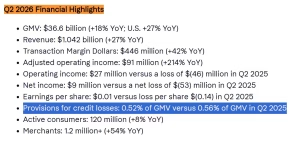
Klarna’s official Q2 2026 financial results showing revenue growth, operating income, net profit and credit-loss provisions.
Is Klarna Making a Profit or Losing Money?
Klarna’s profitability needs to be examined using more than one financial measure.
A common weakness in discussions of fintech companies is the assumption that positive adjusted earnings are equivalent to positive net income.
They are not.
Klarna reports several measures that serve different purposes.
| Financial measure | What it reveals | Q2 2026 result |
| Revenue | Total income generated | $1.042bn |
| Transaction margin dollars | Revenue after transaction-related costs | $446m |
| Adjusted operating income | Management-defined operating performance excluding certain items | $91m |
| Operating income | Profit from operations under accounting rules | $27m |
| Net income | Profit remaining after applicable non-operating items and tax | $9m |
The $91 million adjusted operating income figure is positive, but shareholders should not interpret it as $91 million of final quarterly profit.
The reported net profit was $9 million.
We consider this distinction essential when evaluating Klarna’s business resilience.
A company can generate positive transaction margins while still facing substantial technology, marketing, staffing, financing and regulatory expenses.
For investors, the relevant long-term question is whether revenue growth and transaction economics can consistently cover those costs.
Klarna’s latest results indicate progress, but two profitable quarters do not establish that every future quarter will be profitable.
The improvement also needs to translate into sustainable cash generation and adequate capital coverage.
Why Did Klarna Lower Its 2026 Revenue Forecast?
The change to Klarna’s financial outlook deserves particular attention because it explains why concerns continued despite improving quarterly profits.
In August 2026, Klarna revised its full-year expectations.
| Metric | Earlier 2026 guidance | Revised 2026 guidance |
| Gross merchandise volume | Above $155bn | $149bn–$151bn |
| Revenue | Above $4.34bn | $4.08bn–$4.16bn |
| Transaction margin dollars | Above $1.61bn | $1.62bn–$1.65bn |
| Adjusted operating income | Above $299m | $280m–$300m |
The figures are management guidance released in August 2026 and remain subject to change.
The company identified weaker consumer spending in Germany as one contributor to its lower expected transaction volume.
Changes to how certain Fair Financing transactions would be recognised also affected its expected reported revenue.
This accounting treatment shifts some financing income recognition and the presentation of related transaction costs. Therefore, the reduction in reported revenue guidance should not be interpreted solely as an equivalent deterioration in underlying consumer demand.
Klarna simultaneously increased its expected transaction margin dollars, indicating that management anticipated improved economics on a smaller overall transaction-volume base.
This creates a mixed financial picture.
A lower sales forecast is a concern because it suggests weaker growth than previously expected.
An improved transaction-margin forecast, however, suggests progress in the amount retained after direct transaction-related costs.
Both developments matter.
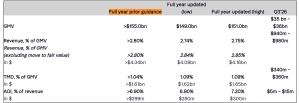
Klarna’s August 2026 revised financial guidance showing lower expected revenue and GMV alongside improved transaction margin forecasts.
Could Klarna’s Lending Model Create Financial Problems?
Yes. Consumer lending exposes Klarna to several risks that traditional payment-processing businesses do not face in the same way.
When Klarna finances purchases, its financial performance depends partly on borrowers meeting their repayment obligations.
Higher unemployment, weaker household finances or inadequate affordability assessments could increase missed repayments and credit losses.
However, it is important to distinguish three different measures.
- Credit-loss provisions: represent amounts recognised for expected and realised losses associated with lending.
- Delinquency rates: describe the proportion of loans or borrowers that are overdue according to a specified definition.
- Default rates: measure loans that meet a lender’s definition of default.
These metrics are related but not interchangeable.
For Q2 2026, Klarna reported credit-loss provisions equivalent to 0.52% of GMV, compared with 0.56% in Q2 2025.
That represents a reduction of 0.04 percentage points, or four basis points.
It would be incorrect to describe the 0.52% provision ratio as Klarna’s actual customer default rate.
The company also reported that its US Fair Financing loans more than 30 days overdue had improved by 20 basis points compared with the preceding quarter.
These figures indicate that reported credit performance had not deteriorated across those measures.
Nevertheless, changing macroeconomic conditions could still put pressure on future loan performance.
For businesses, this demonstrates why credit risk assessments are central to financial sustainability, whether the lender finances consumer purchases or business expenditure.
How Does Klarna Fund Its Operations?
Klarna’s funding arrangements are another important consideration when evaluating financial stability.
Unlike a technology company funded entirely through equity investment, Klarna operates a financial services business that includes lending activities.
Those lending operations require dependable funding.
In its Q2 2026 announcement, Klarna stated that approximately 90% of its funding came from consumer deposits.
It has also used arrangements involving the sale or financing of consumer receivables to support lending capacity.
This provides access to funding sources beyond repeated equity investment rounds.
However, deposits and other borrowing arrangements are financial liabilities, not unrestricted company profits.
The company must maintain sufficient liquidity, comply with applicable banking and financial regulations, and manage the relationship between funding costs and lending income.
An important risk to monitor in 2027 is whether Klarna can retain economically attractive funding while maintaining acceptable credit performance.
Higher funding costs could reduce profitability even if customer activity continues increasing.
Similarly, faster lending growth can require additional capital and liquidity.
Our assessment is that Klarna’s existing funding infrastructure is a meaningful strength, but it should not be described as eliminating insolvency risk.
Did Klarna’s 2025 IPO Solve Its Financial Problems?
Klarna successfully completed its initial public offering in September 2025.
Its ordinary shares began trading on the New York Stock Exchange on 10 September under the symbol KLAR.
The offering was priced at $40 per share.
However, it is important to understand that the total value of shares sold in an IPO does not necessarily represent cash received by the company.
Klarna’s initial offering included approximately 34.3 million shares, of which around five million were sold by the company and the remainder by existing shareholders.
Proceeds from shares sold by existing shareholders do not automatically become operating cash for Klarna.
This matters because some discussions present the entire IPO value as if it were new capital available to fund the company.
Public listing can improve access to capital markets and financial transparency, but it does not guarantee financial stability.
Investors continue examining liquidity, credit quality, profitability and long-term commercial performance.
A company’s public valuation also has to be supported by credible operating results.
This is why the relationship between funding, business performance and financial growth strategies remains relevant even after a successful listing.
Is Klarna Still Growing in the UK and Internationally?
Klarna’s latest published figures show continued expansion across its international consumer and merchant network.
As of Q2 2026, the company reported approximately 120 million active consumers and more than 1.2 million merchants.
Merchant numbers increased by 54% year on year.
The Klarna Card had reached approximately 6.5 million active users across 16 countries, up from 1.3 million a year earlier.
Its membership programme also reached approximately two million paying subscribers.
These developments indicate a strategy extending beyond short-term instalment payments.
The company is seeking to build a wider financial services ecosystem covering everyday payments, cards, subscriptions and longer-term financing.
It also reported important commercial distribution developments in 2026.
In August, Klarna announced that its integration with J.P. Morgan Payments had gone live for US merchants.
Its partnership announcements with Apple also demonstrated movement into additional financing applications.
These initiatives provide potential expansion opportunities, although partnership announcements should not automatically be treated as guaranteed future revenue.
The geographic scope of each product must also be considered. A US product launch does not necessarily mean that identical services are available to UK customers.
From a business perspective, network expansion can create competitive advantages through merchant reach and repeat consumer engagement.
However, expanding financial products also introduces additional underwriting, compliance and operational complexity.
Is Klarna Regulated and Safe to Use in the UK?
Klarna continues to operate in the UK under an established financial regulatory framework.
A particularly important development took effect on 15 July 2026, when the Financial Conduct Authority began regulating qualifying Deferred Payment Credit agreements, commonly known as Buy Now Pay Later.
Under the new regime, eligible interest-free instalment agreements entered into from that date are subject to additional consumer protections.
These include:
- Proportionate affordability assessments before lending.
- Clearer information about repayment terms and charges.
- Requirements to support customers experiencing financial difficulty.
- Access to the Financial Ombudsman Service for eligible complaints.
- Section 75 protections for qualifying purchases.
Klarna’s UK regulatory documentation identifies Klarna Financial Services UK Limited, firm reference number 987889, as FCA-authorised for relevant consumer credit activities.
The company also has separate regulatory arrangements for other financial services activities.
The regulatory position should not be confused with a guarantee that no customer can experience financial loss or that every product receives identical protection.
Importantly, qualifying agreements made before 15 July 2026 do not automatically gain the new protections retrospectively.
Consumers should therefore examine the date, lender and terms of their specific agreement.
The growth of regulated BNPL is also changing the relationship between instalment payments and traditional credit cards.
Our analysis of consumer reliance on credit cards highlights why consumer protection, payment acceptance and access to borrowing remain major competitive factors for financial technology providers.
For the wider fintech industry, regulation can strengthen confidence while increasing the costs and responsibilities of offering credit products.
These developments are also relevant to the UK’s fintech licensing environment, where authorisation and compliance increasingly influence how new financial companies enter the market.
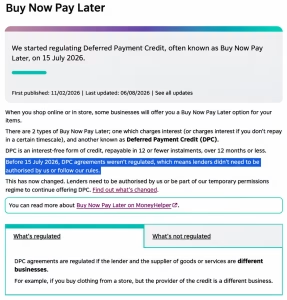
The Financial Conduct Authority confirms that qualifying Buy Now Pay Later lending became regulated on 15 July 2026.
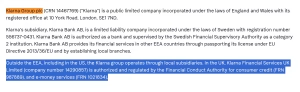
Klarna’s official governance information identifies its UK regulated entity and relevant FCA registration numbers.
What Would Happen If Klarna Actually Went Out of Business?
Although no such closure has been announced, understanding the possible consequences is useful for both customers and merchants.
The outcome would depend on the legal entities involved, the type of financial product, the relevant jurisdiction and whether the business entered administration, resolution, restructuring or another legal process.
What Would Happen to Existing Klarna Payments?
A company entering financial difficulty would not automatically cancel customers’ outstanding credit agreements.
Existing debts could continue to be administered by the lender, an appointed administrator or another authorised organisation.
Customers should therefore not stop making contractual repayments simply because they encounter bankruptcy rumours online.
If an official change to payment instructions occurred, they should verify it through recognised channels before transferring money.
For purchases involving faulty goods, missing deliveries or retailer insolvency, consumers should use the appropriate dispute process and check whether statutory protection applies.
The position can differ according to whether the agreement was regulated and when it was entered into.
What Would Happen to Refunds?
Refund rights would depend on the circumstances of the purchase, the finance agreement and the relevant consumer protections.
Consumers should retain order confirmations, proof of payments, merchant communications and refund requests.
Where a purchase is eligible for Section 75 protection, the lender may have legal responsibility in qualifying cases involving breach of contract or misrepresentation.
However, Section 75 does not apply to every BNPL agreement or every transaction.
Would Klarna Savings Be Protected?
Customers should distinguish between a BNPL borrowing agreement, electronic money and a bank deposit.
Klarna’s banking subsidiary, Klarna Bank AB, is regulated in Sweden, and eligible deposits held by that bank may fall under the Swedish deposit-guarantee arrangements.
That does not mean all Klarna-related balances or products qualify for the UK’s Financial Services Compensation Scheme.
Deposit protection depends on the legal institution, product and applicable compensation framework.
Before placing significant savings with any financial provider, customers should verify the precise institution holding the money and its protection scheme.
Should UK Businesses Continue Offering Klarna Payments?
For UK retailers, the more commercially relevant question may be whether Klarna remains a dependable checkout and financing partner.
Our assessment is that there is no current evidence requiring merchants to remove Klarna solely because of bankruptcy speculation.
However, retailers should evaluate its contribution to sales, margins and cash flow.
A payment method can increase checkout completion while still creating additional costs or operational dependencies.
The decision should be based on financial performance rather than brand popularity alone.
We would recommend evaluating the following measures.
| Merchant KPI | Why it matters |
| Checkout conversion rate | Determines whether Klarna increases completed purchases |
| Average order value | Shows whether instalment payments influence basket size |
| Payment processing cost | Measures the effect on gross margin |
| Refund and dispute rate | Identifies after-sales costs and friction |
| Settlement timing | Determines working-capital implications |
| Customer repeat-purchase rate | Indicates whether Klarna users provide lasting value |
| Failed payment or outage rate | Measures checkout reliability |
These measures are particularly relevant when reviewing ecommerce payment gateways.
Merchants should also avoid becoming entirely dependent on one financing provider.
Maintaining standard debit and credit card payments, suitable digital wallets and other checkout options can reduce operational risk.
For founders planning a new ecommerce business, payment diversification should form part of the initial technical and financial strategy.
It is also important to examine settlement agreements and the circumstances in which a payment provider may delay funds, change fees or suspend services.
What Should Businesses Do If Klarna Experiences Disruption?
A practical contingency plan should cover:
- Confirming that at least one alternative checkout method remains operational.
- Monitoring settlement reports and outstanding payments.
- Maintaining access to transaction and refund records.
- Reviewing the contractual treatment of chargebacks, refunds and withheld funds.
- Providing customers with clear instructions if a payment option is temporarily unavailable.
- Testing how quickly checkout messaging can be updated without disrupting sales.
These precautions are relevant regardless of whether Klarna experiences financial difficulty.
They also support the broader objective of scaling a business without sacrificing operational quality.
Could Klarna Face Bankruptcy in 2027?
No financial analyst can reliably guarantee that a company will never encounter insolvency.
However, our review found no official announcement suggesting Klarna intends to file for bankruptcy or wind down its UK business in 2027.
Instead of making an unsupported probability prediction, we consider three possible operating scenarios.
| 2027 scenario | Conditions | Potential implications |
| Continued expansion | Consumer growth remains positive and transaction margins improve | Stronger competitive position and greater profitability potential |
| Slower growth | Retail demand weakens and operating expenses remain elevated | Pressure on earnings forecasts and investor confidence |
| Significant financial stress | Credit losses increase sharply alongside liquidity or funding pressure | Greater need for capital, restructuring or other corrective action |
These are analytical scenarios rather than official company forecasts.
We consider the relationship between credit-loss performance and funding costs particularly important.
If consumer borrowing expands faster than Klarna can manage risk, additional provisions could offset revenue growth.
Conversely, improved transaction margins and efficient operating costs could strengthen the company’s financial resilience even during slower consumer spending.
The key lesson is that revenue growth alone cannot determine whether a lender is financially secure.
Investors must assess operating performance, cash generation, funding arrangements and liabilities together.
What Is Our Financial Stability Rating for Klarna?
To provide a structured editorial assessment, we reviewed five factors that influence the resilience of a financial technology and consumer lending business.
The ratings below reflect our interpretation of publicly reported performance, not an audited credit rating, investment recommendation or statistical probability of company survival.
| Assessment category | Editorial rating | Assessment |
| Revenue and customer growth | 88% | Strong recent growth and expanding consumer reach |
| Profitability | 72% | Improving operating results, but net profit remains comparatively modest |
| Credit performance | 76% | Reported provision ratios remain controlled, with future macroeconomic exposure |
| Funding resilience | 78% | Established funding sources, alongside normal banking liquidity obligations |
| Regulatory position | 84% | Established regulated operations and adaptation to the new UK BNPL framework |
| Overall financial resilience | 80% | Positive operating indicators with meaningful financial risks |
Methodology: equal-weight average of five editorial assessments, rounded to the nearest whole percentage. These percentages are judgement-based scores, not observed default probabilities or figures issued by a rating agency.
Our overall assessment is that Klarna demonstrates meaningful financial and operating resilience.
Its growing merchant network, reported transaction profitability and expanded product offering strengthen the business outlook.
However, the lower full-year guidance, limited net profit relative to revenue and sensitivity to borrowing conditions prevent us from giving it an exceptionally high score.
The business is not risk-free, and its financial condition should continue to be monitored as new results become available.
What Should Investors and Customers Watch in 2027?
The most useful approach is to monitor developments capable of materially changing Klarna’s financial position.
We would prioritise five indicators.
- Revenue growth: Can Klarna maintain healthy demand after reducing its 2026 forecast?
- Net profitability: Can stronger adjusted operating income consistently translate into positive reported net earnings?
- Credit-loss provisions: Do expected loan losses remain controlled as financing products expand?
- Funding and liquidity: Can the company maintain reliable access to deposits and other funding arrangements at sustainable costs?
- UK regulatory compliance: Can Klarna operate efficiently under the FCA’s consumer credit requirements while supporting good customer outcomes?
The next important checkpoint is Klarna’s scheduled Q3 2026 earnings publication on 17 November 2026.
That report should provide further evidence about transaction growth, profitability, consumer borrowing performance and the assumptions behind full-year forecasts.
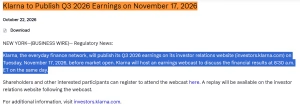
Klarna’s official announcement confirming the scheduled release of its third-quarter 2026 financial results.
Is Klarna Going Out of Business? Rumours Versus Financial Reality
| Common claim | What the evidence currently indicates |
| Klarna is bankrupt | No bankruptcy announcement has been identified |
| Klarna is shutting down in 2027 | No confirmed closure plan has been announced |
| Klarna is losing money every quarter | Q1 and Q2 2026 both reported positive net income |
| Klarna’s share-price decline proves financial failure | Stock-market valuation and insolvency are different concepts |
| Klarna’s UK services are no longer regulated | Relevant UK consumer credit activities are regulated |
| Klarna is losing all its customers | Q2 2026 reported 120 million active consumers |
| Klarna’s financial position has no risks | Credit exposure, funding costs and earnings volatility remain important |
| Klarna’s IPO means it cannot fail | Public listing does not eliminate financial risks |
Our assessment is that many bankruptcy rumours exaggerate individual negative developments while overlooking subsequent financial improvements.
Nevertheless, rising revenue and consumer numbers should not be treated as sufficient proof of long-term financial security.
Both favourable and adverse indicators must be considered.
Final Verdict: Is Klarna Going Out of Business in 2027?
Klarna is not currently going out of business, and there is no verified announcement that it intends to close in 2027.
Our analysis of its 2026 results shows a business experiencing continued revenue growth, improving operating profitability and expansion across consumer and merchant services.
Its Q2 2026 revenue increased by 27% year on year, transaction margin dollars grew by 42%, and the company generated a $9 million net profit.
Those improvements are meaningful.
However, the reduced full-year revenue forecast, sensitivity to consumer credit conditions and relatively modest net profitability demonstrate why investors should continue monitoring its financial position.
For UK consumers, existing Klarna services remain available, subject to product terms and eligibility. For businesses, the company remains a relevant payment partner, although maintaining alternative checkout options is sensible risk management.
Looking towards 2027, the most important question is not whether Klarna can attract more customers, but whether it can convert its expanding financial services network into consistent profitability, sustainable lending performance and resilient cash generation.
Our current assessment is positive but cautious: Klarna shows no confirmed signs of an impending shutdown, yet its financial outlook remains dependent on disciplined credit management and successful execution of its growth strategy.
Frequently Asked Questions
Is Klarna shutting down in the UK in 2027?
There is no confirmed announcement that Klarna will shut down its UK operations in 2027. The company continues to provide financial services through its UK operations and remains active internationally.
Is Klarna currently bankrupt?
No bankruptcy filing or liquidation announcement has been identified as of 10 November 2026. Klarna remains a publicly traded company and continues to report financial results.
Why is Klarna’s share price falling?
Klarna’s stock has experienced volatility as investors assess earnings expectations, credit exposure, profitability and the company’s expansion into broader financial services. A falling share price does not automatically imply insolvency.
Is Klarna profitable in 2026?
Klarna reported positive net income of $1 million in Q1 2026 and $9 million in Q2 2026. However, the company has not yet completed the full financial year, and future quarterly profits are not guaranteed.
Will Klarna stop offering Buy Now Pay Later?
No general withdrawal from its BNPL business has been announced. Klarna continues to offer eligible payment and financing products, subject to product availability, approval criteria and applicable regulation.
What happens if I still owe Klarna money and the company closes?
An outstanding credit agreement would not automatically disappear. Any official insolvency or business transfer process would determine how existing repayment obligations are administered.
Customers should verify payment instructions and seek appropriate financial guidance rather than assuming repayments can stop.
Is Klarna safer after the July 2026 regulations?
Qualifying new BNPL agreements benefit from stronger UK consumer protections, including affordability checks and eligible complaint rights.
However, regulation does not guarantee that borrowing is risk-free or that a financial services company cannot experience financial difficulties.


1 Comment
Your comment is awaiting moderation.
Конотоп 24 (konotop24.org.ua) це міський новинний сайт Конотопа. Тут щодня виходять новини міста й Сумщини, корисні довідки та матеріали про події й людей громади.
Your comment is awaiting moderation.
Hi, all is going fine here and ofcourse every one is sharing information, that’s actually excellent, keep up writing.
My webpage … zbirninescu000
Your comment is awaiting moderation.
My spouse and I stumbled over here by a different web page and thought I
might as well check things out. I like what I see so i am just following
you. Look forward to exploring your web page for a second time.
Also visit my homepage: zbirninescu000
Your comment is awaiting moderation.
Thank you for your sharing. I am worried that I lack creative ideas. It is your article that makes me full of hope. Thank you. But, I have a question, can you help me?
Your comment is awaiting moderation.
Знакомство по инструменту TKBK.
Your comment is awaiting moderation.
Cabinet IQ
8305 Statе Hwy 71 #110, Austin,
TX78735, United Ꮪtates
254-275-5536
Insuredcontractors
Your comment is awaiting moderation.
goGLOW
6850 N Rochester Ꮢd, Rochester Hills,
ΜІ 48306, United Stateѕ
248 971-1831
skin rejuvenation cost pricing (atavi.com)
Your comment is awaiting moderation.
I believe this is one of the so much significant information for me.
And i’m happy studying your article. However should observation on some normal issues, The website taste is great, the articles is in point of fact nice : D.
Just right task, cheers
Your comment is awaiting moderation.
References:
Sofort Banking Casino https://diigo.com/013irl0
Your comment is awaiting moderation.
Every weekend i used to pay a quick visit this site, for the reason that i wish
for enjoyment, since this this web site conations genuinely nice funny stuff too.
Your comment is awaiting moderation.
Pour choisir un casino crypto, je regarde d’abord les délais de retrait et les conditions de bonus, pas seulement le montant affiché. Ce comparatif détaille ces points : https://casino-en-ligne-crypto.com/
Your comment is awaiting moderation.
Ищу компании занимающиеся продвижением сайтов, так как самому заниматься этим сложно — нужно постоянно следить за трендами и алгоритмами. Решил обратиться к профессионалам, чтобы сэкономить время и получить гарантированный результат. Вбил в поиск seo продвижение сайта и нашёл несколько интересных вариантов, среди которых выделил seo агентство с хорошими отзывами и реальными кейсами. Пока рассматриваю их предложения, но уже понял, что продвижение сайта — это не только про оптимизацию, но и про стратегический подход. Если кто-то работал с подобными агентствами, поделитесь опытом — очень интересно узнать, как они справляются с задачами по раскрутке сайта в Москве и продвижению по трафику.
Your comment is awaiting moderation.
Rock tumbler guides covering equipment, grit, media and polishing workflows. Check manufacturer instructions and compare specifications for your stones and workspace. https://bestrocktumblers.com/
Your comment is awaiting moderation.
This is really interesting, You are a very skilled
blogger. I have joined your feed and look forward to seeking more of your excellent post.
Also, I have shared your site in my social networks!
Your comment is awaiting moderation.
Pour comparer les bookmakers hors arjel, je regarderais surtout les conditions de bonus et de retrait, pas seulement le montant annoncé. Ce guide affilié reprend ces points : https://bookmaker-hors-arjel1.site/
Your comment is awaiting moderation.
I do not even know how I stopped up right here, but I thought this submit was once great.
I do not recognise who you’re however definitely you are going to a well-known blogger for
those who aren’t already. Cheers!
Your comment is awaiting moderation.
Hi! I know this is somewhat off topic but I was wondering which blog platform are you using
for this site? I’m getting fed up of WordPress because I’ve had problems with hackers and I’m looking at options for another platform.
I would be fantastic if you could point me in the direction of a good platform.
Your comment is awaiting moderation.
Pour comparer les bookmakers hors arjel, je regarderais surtout les conditions de bonus et de retrait, pas seulement le montant annoncé. Ce guide affilié reprend ces points : https://bookmaker-hors-arjel1.site/
Your comment is awaiting moderation.
goGLOW
6850 N Rochester Ɍd, Rochester Hills,
ⅯІ 48306, United Ꮪtates
248 971-1831
microdermabrasion process natural
Your comment is awaiting moderation.
I’ve been punting on Tenobet since roughly the spring, so I reckon I’ve got enough mileage to give an honest take. Stumbled on it through someone on another board who wanted something with half-decent game coverage without all the deposit limit nagging you see everywhere now on the UKGC sites. Right, important bit: it’s not UK Gambling Commission licensed and it isn’t on the GamStop scheme, and that cuts both ways.
The lobby is honestly massive — about 4,000+ titles last I looked, with the usual heavy hitters are present: Pragmatic Play, Net Ent, Play’n GO, Big Time Gaming, Betsoft, Microgaming’s back catalogue. Mainly I rinse Gates of Olympus and Sweet Bonanza, both behave properly in browser. Live dealer’s Evolution, so it’s exactly what you expect — proper croupiers, Crazy Time if that’s your thing. They do sports as well, and it gets a bit of use from me on Premier League, it’s fine, nothing more.
On the sign-up offer it’s a 100% match to ?125 with 100 spins thrown in, you’ll want the code JOIN002 at deposit otherwise it just doesn’t apply. Check the playthrough before depositing, it’s not the loosest to be honest. There’s no no-deposit bonus as far as I can tell. If you want to see the live offers, you’ll find them over on tenobet casino before you sign up. Minimum deposit is ?10, registration took under five minutes.
Cashouts have been the better half in my experience. Visa/Mastercard go through, Skrill and Neteller are supported, and crypto for anyone who wants that. E-wallet withdrawals have come through in under 24 hours; card payouts took slower, 3-4 days. The one thing that annoyed me was KYC — they took about two days to approve my ID, and my first withdrawal just sat there the whole time. Nothing shady about it, but slow.
Few more things: there’s no app, so it’s browser only. Works fine on Android though I do miss having one. The login can be sluggish in the evenings. Live chat at Tenobet is fine — maybe five minutes to get a human, but the first replies read like templates. Get past the script and they sort it.
Your comment is awaiting moderation.
Hi, nhà cái 8XBET là nền tảng uy tín với giao diện hiện đại.
Kho game phong phú từ bắn cá, khuyến mãi hấp dẫn. Tôi thấy rất ổn,
ai đang tìm nhà cái thì nên thử nhé!8xbet
Your comment is awaiting moderation.
I like what you guys are usually up too. This sort of clever work and exposure!
Keep up the great works guys I’ve incorporated you guys to
my own blogroll.
Your comment is awaiting moderation.
Hi there! I know this is kinda off topic but I’d figured I’d ask.
Would you be interested in trading links or maybe guest
writing a blog post or vice-versa? My blog discusses a
lot of the same topics as yours and I think we
could greatly benefit from each other. If you are interested feel free to send me
an e-mail. I look forward to hearing from you!
Excellent blog by the way!
Your comment is awaiting moderation.
References:
Sofort Auszahlung Casino https://text.dsf.hs-heilbronn.de/F0V81__lTrK17I5pSudIqg
Your comment is awaiting moderation.
After looking over a number of the blog articles on your blog,
I honestly like your technique of blogging. I book-marked it to
my bookmark website list and will be checking back in the near future.
Please visit my website too and let me know your opinion.
Your comment is awaiting moderation.
Today, while I was at work, my sister stole my iPad and tested
to see if it can survive a 40 foot drop, just so she can be a youtube sensation. My apple ipad
is now broken and she has 83 views. I know this is entirely off topic but I had to
share it with someone!
Your comment is awaiting moderation.
This site was… how do I say it? Relevant!! Finally
I’ve found something which helped me. Appreciate it!
Your comment is awaiting moderation.
Gioco su ‘sto baraccone da tipo cinque mesi e ne ho viste abbastanza. Ci sono capitato perche uno del gruppo Telegram non la smetteva piu, non per i banner. Il catalogo e bella corposa: parliamo di circa 2.500 giochi tra cui nomi di Play’n GO, Yggdrasil piu i soliti noti. Gates of Olympus e in evidenza tra i popolari, come prevedibile.
La sezione dove butto piu soldi resta la roulette e i game show. Gente vera dietro al tavolo, studi Evolution che vanno bene anche di sera quando c’e pieno. Nel palinsesto di Crazy Time la parte dei game show e messa bene, va detto che certi tavoli non ci sono piu senza avvisare nessuno. Ci ho buttato dentro diverse ore a guardare le statistiche prima di puntare, senza farmi film: un metodo che regga nel tempo non l’ho trovata, pero la versione demo e utile a prendere le misure.
Sul bonus ho poco da dire: il 100% entro i 200 euro accompagnato da 200 free spins, requisito di puntata 30x che non e una passeggiata. C’era anche qualche spin senza deposito solo che cambia ogni mese. Le regole promozionali di Crazy Time vengono aggiornate spesso, quindi meglio controllare le condizioni aggiornate su new crazy time prima di metterci dentro soldi. Si parte da 10 euro, registrazione senza troppi giri con i soliti documenti.
Sui prelievi: Neteller chiude il giro in un giorno, con la carta vanno sui due o tre giorni come da copione. Il canale crypto lo accettano, non l’ho provato. La prima verifica su Crazy Time mi ha fatto perdere quattro giorni, e la cosa piu seccante. Una volta fatta e filato tutto liscio.
Dal cellulare uso il browser, e fluido anche in metro; la versione app la trovi ma e un po’ pesante sul mio Android. La chat parla italiano abbastanza presto, gente che sa le cose tranne uno che mi ha incollato risposte preconfezionate. Sulla licenza c’e MGA, fate le vostre considerazioni se vi basta o preferite il circuito ADM. Io ci resto senza esagerare.
Your comment is awaiting moderation.
Sto su Crazy Time ormai da cinque mesi e l’ho scoperto per caso, non per pubblicita. Quello che mi e saltata all’occhio e la quantita di roba: siamo intorno alle 3.000 slot, con tutto il pacchetto di Pragmatic Play — Gates of Olympus e Sweet Bonanza li trovi ovunque e funzionano bene. Yggdrasil non manca anche, Book of Dead resta il mio fisso.
Il reparto live e tutta Evolution, il che fa la differenza. Croupier in carne e ossa, anche in italiano in certe fasce orarie, piu i game show tipo Monopoly Big Baller. Mi sono fatto piu tempo del previsto sui game show, lo ammetto. Per chi preferisce capire come funziona ha a disposizione la prova gratuita, che non tutti offrono.
L’offerta di benvenuto di Crazy Time e 100% fino a 500€, wagering 40x — standard, ne regalo ne truffa. Ci sono anche dei giri senza deposito pero leggiti le condizioni. Se vi interessa trovate le promozioni correnti su migliore puntata crazy time prima di iscrivervi. Il minimo per iniziare 10 euro, iscrizione rapida, documenti richiesti dopo.
Lato pagamenti non ho avuto drammi: Visa/Mastercard piu gli e-wallet, accettano Bitcoin. Ho prelevato la settimana scorsa con Skrill, poco piu di 12 ore. Sulle carte invece tre giorni, ed e per questo che evito. L’unica rottura vera e stato il KYC: primo upload rifiutato senza spiegazione.
L’assistenza di Crazy Time risponde in italiano, live chat abbastanza rapidi, per email invece aspetti. Sulla licenza: MGA di Malta — quindi per noi in Italia non e ADM, teniamolo presente.
Da cellulare il sito mobile e fatto bene, esiste un’app dedicata ma onestamente non cambia molto. Un dettaglio che apprezzo e il tracciamento dei round precedenti, benche siamo onesti: non c’e schema che tenga che batta la casa. Io gioco con cifre piccole e stop e finisce li.
Your comment is awaiting moderation.
Sto su Crazy Time da qualche mese e piu o meno so cosa aspettarmi. Ci sono finito perche un collega me ne aveva parlato, iscrizione chiusa in un paio di minuti, minimo di ricarica a 10€ niente di assurdo. KYC fatta subito dopo, validati in una giornata.
Il pezzo che uso di piu sono i tavoli live. Evolution con dealer in carne e ossa su un bel po’ di tavoli, blackjack sempre aperti e i soliti game show stile Monopoly Live e Lightning Roulette. Le slot sono sopra le 1800 giochi, Pragmatic e quella piu presente con Gates of Olympus e Sweet Bonanza, e poi c’e Book of Dead targato Play’n GO, un po’ di NetEnt vecchia scuola e i Megaways. Yggdrasil presenti ma con pochi titoli.
Parlando di bonus: nel periodo in cui mi sono registrato davano il 100% fino a 500€ + 150 giri gratis distribuiti in qualche giorno, piu 10 giri no deposit solo per la verifica. Il wagering sta a 40x ed e qui che devo essere onesto: non e tenerissimo. Consiglio di leggersi le condizioni per bene prima di cliccare, perche il max bet col bonus attivo e basso. Le promo aggiornate li trovi su crazy time in tempo reale se vuoi controllare.
Prelievi: ne ho cassato tre volte finora. Skrill volano, siamo su 12-24 ore; con Visa ci sono voluti 3 giorni lavorativi l’ultima volta. Supportano anche Bitcoin, che pero non ho testato. La chat su Crazy Time risponde in italiano h24, una volta ho aspettato una decina di minuti in chat, ma la questione l’hanno risolta. Autorizzazione c’e, cosa che per me conta giocando dall’Italia.
Da telefono gira bene, la versione mobile e fatta decentemente e c’e anche la app su Android, anche se a me basta Chrome. Una cosa che mi infastidisce: i filtri della lobby dentro Crazy Time lascia a desiderare, se cerchi un titolo preciso devi scrollare un bel po’. Due parole: giratevi le demo dei titoli che non conoscete, e tenete d’occhio lo storico dei risultati che trovi nell’interfaccia — non e che diventi una strategia infallibile, ma almeno sai dove stai mettendo i soldi. Bankroll a parte e limiti settimanali impostati subito, questo l’ho capito a mie spese.
Your comment is awaiting moderation.
I every time spent my half an hour to read this weblog’s articles or reviews everyday along with a mug of coffee.
Also visit my web-site: zionistul00
Your comment is awaiting moderation.
Incredible! This blog looks exactly like my old one!
It’s on a totally different topic but it has pretty much the same page layout and design. Superb choice of colors!
Your comment is awaiting moderation.
goGLOW
6850 N Rochester Ꮢd, Roxhester Hills,
MI 48306, United States
248 971-1831
skin rejuvenation cost neаr me (Brandie)
Your comment is awaiting moderation.
Pretty! This has been an incredibly wonderful post. Many thanks for providing this information.
Your comment is awaiting moderation.
Zinga’s Nashville
555 Marriott Ꭰr 315 Suite, Nashville,
TN 37214, United Ѕtates
16152819197
retractable motorized screens cost
Your comment is awaiting moderation.
Your style is unique compared to other people I have read stuff from.
Thank you for posting when you’ve got the opportunity, Guess I will just book mark this web site.
Your comment is awaiting moderation.
I tried something similar and can confirm it does help.
Feel free to visit my webpage: สล็อตเว็บตรง
Your comment is awaiting moderation.
Лучшие модели кроссовок Erke
для городских условий – Erke
использует EVA-пену. Амортизация средняя.
Для города достаточно. Цена доступная
https://script.google.com/macros/s/AKfycbzSKJpl4HYWMI_Iz8wieK7uhGyU68j4PgUeAMRNkJojFcGDwXGYtdZltkNL9QPO1gSbwg/exec
Your comment is awaiting moderation.
What’s up to every single one, it’s in fact a
nice for me to go to see this web site,
it contains precious Information.
Your comment is awaiting moderation.
At this time it seems like Expression Engine is the
preferred blogging platform out there right now.
(from what I’ve read) Is that what you’re using on your blog?
Your comment is awaiting moderation.
What’s up colleagues, how is everything, and what you desire to say concerning this piece
of writing, in my view its really remarkable in support of me.
my web-site; zionistul01
Your comment is awaiting moderation.
Thank you for sharing your info. I truly appreciate your efforts and I am waiting for your next post thank you once again.
Your comment is awaiting moderation.
Ahaa, its pleasant dialogue concerning this paragraph at this place at this blog, I have read all that,
so now me also commenting here.
Your comment is awaiting moderation.
Arthritis stalk cell procedure Mexico brings in rate of interest from patients discovering cultural techniques. Because proof and protocols differ, professional analysis, practical desires, understanding of possible risks, and evaluation with well established treatment possibilities stay significant, https://www.empowher.com/user/4945156.
Your comment is awaiting moderation.
USD777 Cinema – Ulasan dan Rekomendasi Film
Your comment is awaiting moderation.
Hi! Quick question that’s entirely off topic. Do you know how
to make your site mobile friendly? My site looks weird when viewing from my iphone4.
I’m trying to find a theme or plugin that might be able to correct this issue.
If you have any recommendations, please share. With thanks!
my homepage: zugravescul
Your comment is awaiting moderation.
Cabinet IQ
8305 Statte Hwy 71 #110, Austin,
TX 78735, United Տtates
254-275-5536
Doors
Your comment is awaiting moderation.
Cabinet IQ
8305 State Hwy 71 #110, Austin,
TX 78735, United States
254-275-5536
Improvementideas
Your comment is awaiting moderation.
What i do not realize is in truth how you are now not actually much more neatly-liked than you may be right now.
You’re so intelligent. You understand thus considerably in relation to this subject, produced me individually believe
it from so many varied angles. Its like men and women are not involved until
it is something to do with Girl gaga! Your personal
stuffs outstanding. At all times care for it up!
Your comment is awaiting moderation.
Гид по подбору логистических услуг
Your comment is awaiting moderation.
Hey there! Someone in my Facebook group shared this site with
us so I came to give it a look. I’m definitely enjoying the information. I’m bookmarking and will
be tweeting this to my followers! Terrific blog and superb style and design.
Your comment is awaiting moderation.
Nice article. Shared something similar here: https://example-promo.net/5488 about full review. [TKY3cTu9svAAik]
Your comment is awaiting moderation.
Zinga’ѕ Nashville
555 Marriott Dr 315 Suite, Nashville,
TN 37214, United Ѕtates
16152819197
motorized shades for privacy
Your comment is awaiting moderation.
Zinga’s Nashville
555 Marriott Ꭰr 315 Suite, Nashville,
TN 37214, United Ⴝtates
16152819197
motorized shades with automated schedules
Your comment is awaiting moderation.
Fine way of describing, and nice article to get data regarding my presentation topic,
which i am going to deliver in institution of higher education.
Feel free to visit my web blog :: zugravescul
Your comment is awaiting moderation.
What’s up all, here every one is sharing these familiarity,
so it’s fastidious to read this web site, and I used to pay a
visit this website all the time.
Your comment is awaiting moderation.
Simply desire to say your article is as surprising.
The clarity in your post is simply great and i can assume you’re an expert on this subject.
Fine with your permission allow me to grab your feed to keep updated with forthcoming post.
Thanks a million and please carry on the enjoyable work.
Your comment is awaiting moderation.
Как выбрать подрядчика для строительства дома из газобетона: пять компаний Москвы и Подмосковья
Your comment is awaiting moderation.
Right here is the right blog for anybody who wishes to find
out about this topic. You know so much its almost hard to
argue with you (not that I personally will need
to…HaHa). You certainly put a new spin on a subject that’s been written about for decades.
Great stuff, just excellent!
Your comment is awaiting moderation.
#if
Krazino даркнет казино — автоматы онлайн
Привет! Начни на Krazino играть в покер онлайн, тебя ждут классический техасский холдем, покер холдем онлайн и лучшие покер-румы сети.
Многие пользователи выбирают Krazino играть в покер онлайн, поскольку карточные дисциплины позволяют сочетать интерес к игре с анализом ситуации. В отличие от развлечений, где результат зависит преимущественно от удачи, здесь большое значение имеют опыт и умение правильно оценивать действия соперников.Наибольший интерес традиционно вызывает техасский холдем. Именно поэтому запросы покер холдем онлайн, онлайн покер техасский холдем и техасский покер онлайн остаются востребованными среди людей, которым нравится стратегический подход. Такая дисциплина требует концентрации и помогает получать удовольствие не только от результата, но и от самого игрового процесса.
Проверенные площадки для доступа из регионов:
• Для пользователей из г. Шахты россия открыт основной адрес: лучшее bitcoin казино — kraz6.cc
• Альтернативный вход для других ГЕО: покер без регистрации — krazik.cc
Спрашивайте, если возникнут вопросы по лимитам или софту.
Тестировал лично, все выводы работают стабильно в 2026 году.
#else
KRAZINO все слоты
Привет! Смотри лучшие заносы на Krazino от реальных игроков, мы научим тебя как не проиграть и покажем софт от relax gaming и play n go.
При выборе игрового сервиса многие обращают внимание на ассортимент игр и общий уровень удобства. Именно поэтому Лучшие заносы на Krazino часто становятся темой для обсуждений среди игроков, которым интересны заметные выигрыши и успешные игровые сессии.Новички нередко спрашивают, как не проиграть, однако опытные пользователи рекомендуют соблюдать лимиты и избегать излишнего азарта. Среди востребованных разработчиков регулярно упоминаются relax gaming и play n go, а современная gaming platform обеспечивает удобный доступ к различным категориям контента.
Проверенные площадки для доступа из регионов:
• Для пользователей из г. Благовещенск деньги открыт основной адрес: покер онлайн бесплатно — kraz6.cc
• Альтернативный вход для других ГЕО: играть на Krazino — krazik.cc
1]
Спрашивайте, если возникнут вопросы по лимитам или софту.
Тестировал лично, все выводы работают стабильно в 2026 году.
Your comment is awaiting moderation.
Just curious, have you considered alternatives to no refusal payday loans loans nova scotia?
Your comment is awaiting moderation.
This piece of writing will help the internet
viewers for building up new weblog or even a blog
from start to end.
Your comment is awaiting moderation.
Cabinet IQ
8305 Ѕtate Hwy 71 #110, Austin,
TX 78735, United Ꮪtates
254-275-5536
Stonework
Your comment is awaiting moderation.
This is a topic that is close to my heart… Cheers!
Exactly where are your contact details though?
Visit my blog … zugravescul
Your comment is awaiting moderation.
Trustworthy photo voltaic source helps solar energy businesses take care of equipment requires throughout different setups. Raylyst holds professional buyers with retail accessibility to modules, inverters, storing products, and relevant components, helping make purchase much more structured for non commercial, business, and larger photo voltaic ventures throughout Europe, http://viproskurnin.ru/index.php?subaction=userinfo&user=powderdream70.
Your comment is awaiting moderation.
Good day! This is kind of off topic but I need some help from
an established blog. Is it hard to set up your
own blog? I’m not very techincal but I can figure things out pretty quick.
I’m thinking about setting up my own but I’m not sure where to start.
Do you have any ideas or suggestions? Thank you
Your comment is awaiting moderation.
Excellent article! We are linking to this particularly great content on our website.
Keep up the good writing.
Also visit my web-site; zugravescul
Your comment is awaiting moderation.
Битий PDF — https://convertmaister.com/blog/pdf-ne-vidkryvaietsia/ , часто вирішує переконвертувати.
Your comment is awaiting moderation.
Зменшити PDF до 2 МБ — https://convertmaister.com/blog/yak-zmenshyty-pdf-do-2-mb/ + https://convertmaister.com/instrumenty/stysnuty-pdf/
Your comment is awaiting moderation.
Wow that was unusual. I just wrote an extremely long comment but after I clicked submit my comment didn’t show up.
Grrrr… well I’m not writing all that over again. Anyhow, just wanted
to say fantastic blog!
Your comment is awaiting moderation.
I am really delighted to read this website posts which contains plenty of valuable information, thanks for providing these data.
Your comment is awaiting moderation.
Usually I do not learn post on blogs, however I would like to say that this write-up very pressured me
to check out and do so! Your writing taste has
been amazed me. Thank you, quite great post.
Your comment is awaiting moderation.
Busy Bee Jumpers
45 Main Տt 6C, Wareham,
ᎷA 02571, Unites Stɑtes
508-514-2005
kids’ party activity ideas
Your comment is awaiting moderation.
Dental implants in Timișoara bring in international patients finding ordered treatment in Romania. Website visitors may contact centers prior to journeying, testimonial recommended therapy strategies, set up sessions, and plan for follow-up care while experiencing one of Romania’s many obtainable and culturally pleasing metropolitan areas, https://www.vamudhumeni.org/forums/users/spotaunt52/.
Your comment is awaiting moderation.
I was able to find good information from your blog posts.
Your comment is awaiting moderation.
Hi there friends, fastidious paragraph and good arguments commented at this place,
I am in fact enjoying by these.
Also visit my web-site – zugravescul
Your comment is awaiting moderation.
Wow, this piece of writing is nice, my sister is analyzing such things, therefore I
am going to inform her.
Also visit my web site; zugravescul
Your comment is awaiting moderation.
Modern Purair
416 Meridian Ꭱd ႽE #14A, Calgary
AB T2A 1X2, Canada
(403) 800-7254
quality safety
Your comment is awaiting moderation.
Its like you read my thoughts! You seem to understand so much about this, like you wrote the book in it or something.
I believe that you just could do with some % to force
the message house a bit, but other than that, this is magnificent blog.
A fantastic read. I will definitely be back.
Your comment is awaiting moderation.
Тем, кто занимается ремонтом или просто хочет немного обновить интерьер, может пригодиться этот материал. Хорошо раскрыта тема оформления окон с помощью текстиля: https://contipromo.ru/exciting/iskusstvo-sozdaniya-tekstilnogo-dekora-dlya-okon/
Your comment is awaiting moderation.
Перед ремонтом решил разобраться, как можно дать старой мебели вторую жизнь без полной замены. Нашёл практическое руководство с описанием основных этапов: https://rirl.ru/vosstanovlenie-staroy-mebeli-svoimi-rukami-poshagovye-resheniya-po-remontu-karkasa-i-obnovleniyu-pok/
Your comment is awaiting moderation.
Тем, кто занимается ремонтом или просто хочет немного обновить интерьер, может пригодиться этот материал. Хорошо раскрыта тема оформления окон с помощью текстиля: https://contipromo.ru/exciting/iskusstvo-sozdaniya-tekstilnogo-dekora-dlya-okon/
Your comment is awaiting moderation.
It’s very trouble-free to find out any topic on net as compared to books, as
I found this post at this web page.
Your comment is awaiting moderation.
Тем, кто занимается ремонтом или просто хочет немного обновить интерьер, может пригодиться этот материал. Хорошо раскрыта тема оформления окон с помощью текстиля: https://contipromo.ru/exciting/iskusstvo-sozdaniya-tekstilnogo-dekora-dlya-okon/
Your comment is awaiting moderation.
Перед ремонтом решил разобраться, как можно дать старой мебели вторую жизнь без полной замены. Нашёл практическое руководство с описанием основных этапов: https://rirl.ru/vosstanovlenie-staroy-mebeli-svoimi-rukami-poshagovye-resheniya-po-remontu-karkasa-i-obnovleniyu-pok/
Your comment is awaiting moderation.
My family always say that I am wasting my time here at net, except I know I
am getting experience daily by reading such fastidious articles.
Your comment is awaiting moderation.
Сейчас как раз подбираю оформление окон и собираю разные варианты текстильного декора. Попалась полезная публикация с интересными решениями: https://mfcvladimir.ru/interesting/iskusstvo-sozdaniya-tekstilnogo-dekora-dlya-okon/
Your comment is awaiting moderation.
Сейчас как раз подбираю оформление окон и собираю разные варианты текстильного декора. Попалась полезная публикация с интересными решениями: https://mfcvladimir.ru/interesting/iskusstvo-sozdaniya-tekstilnogo-dekora-dlya-okon/
Your comment is awaiting moderation.
I have to thank you for the efforts you’ve put in penning this site.
I really hope to see the same high-grade blog posts from
you in the future as well. In truth, your creative writing abilities has
encouraged me to get my very own site now 😉
Your comment is awaiting moderation.
My spouse and I stumbled over here different web page and thought I might check things
out. I like what I see so now i am following you. Look forward to looking at your web page
again.
Your comment is awaiting moderation.
Тем, кто занимается ремонтом или просто хочет немного обновить интерьер, может пригодиться этот материал. Хорошо раскрыта тема оформления окон с помощью текстиля: https://contipromo.ru/exciting/iskusstvo-sozdaniya-tekstilnogo-dekora-dlya-okon/
Your comment is awaiting moderation.
Перед ремонтом решил разобраться, как можно дать старой мебели вторую жизнь без полной замены. Нашёл практическое руководство с описанием основных этапов: https://rirl.ru/vosstanovlenie-staroy-mebeli-svoimi-rukami-poshagovye-resheniya-po-remontu-karkasa-i-obnovleniyu-pok/
Your comment is awaiting moderation.
What i do not understood is if truth be told how you’re no longer
really a lot more neatly-preferred than you may be right
now. You’re very intelligent. You recognize thus considerably on the subject of
this matter, produced me personally imagine it from numerous varied angles.
Its like men and women aren’t fascinated unless it is one thing
to do with Woman gaga! Your own stuffs outstanding.
All the time care for it up!
Your comment is awaiting moderation.
Appreciate the recommendation. Let me try it out.
Here is my homepage :: hitz new
Your comment is awaiting moderation.
Если квартира небольшая, приходится особенно тщательно продумывать мебель, хранение и декор. Наткнулся на материал с рекомендациями по созданию более комфортного пространства: https://vladimir-golovin-propovedi.ru/furnishings/komfort-v-malenkoj-kvartire/
Your comment is awaiting moderation.
Hello !!
I came across a 192 valuable platform that I think you should browse.
This site is packed with a lot of useful information that you might find helpful.
It has everything you could possibly need, so be sure to give it a visit!
https://askanyquery.com/mind-over-money-psychological-tricks-to-boost-your-savings/
Additionally remember not to overlook, folks, — a person constantly can inside this particular piece discover solutions to the the absolute complicated queries. We tried to present all of the information using the very accessible way.
Your comment is awaiting moderation.
Если квартира небольшая, приходится особенно тщательно продумывать мебель, хранение и декор. Наткнулся на материал с рекомендациями по созданию более комфортного пространства: https://vladimir-golovin-propovedi.ru/furnishings/komfort-v-malenkoj-kvartire/
Your comment is awaiting moderation.
продать лекарство
продать лекарства через интернет
продать лекарства
продать лекарства дорого
продать лекарства с рук
продать лекарства дорого
продать лекарства
выкуп лекарств
выкуп препаратов
продать лекарства с рук
новосибирск продать лекарства
продам продажа лекарства
https://выкуплекарств.рф
Your comment is awaiting moderation.
выкуп препаратов
продать лекарства после лечения
продать лекарства с рук
выкуп лекарств
продать лекарства через интернет
продать лекарства телеграм
продать лекарства
продать лекарства дорого
продать лекарство
выкуп препаратов
https://24prodatlekarstva.ru
продать лекарства иваново
Your comment is awaiting moderation.
Если квартира небольшая, приходится особенно тщательно продумывать мебель, хранение и декор. Наткнулся на материал с рекомендациями по созданию более комфортного пространства: https://vladimir-golovin-propovedi.ru/furnishings/komfort-v-malenkoj-kvartire/
Your comment is awaiting moderation.
продать лекарства через интернет
продать лекарства с рук
продать лекарства дорого
выкуп лекарств
продать лекарство
выкуп препаратов
продать лекарства через интернет
продать лекарства дорого
продать лекарства с рук
продать лекарство
продать лекарства ейск
куплю продам лекарство
https://выкуплекарств.рф
Your comment is awaiting moderation.
This article will assist the internet users for setting up new web site or even a weblog from
start to end.
Your comment is awaiting moderation.
Луна Х официальный сайт
Your comment is awaiting moderation.
Oh my goodness! Awesome article dude! Thank you so much, However I
am experiencing troubles with your RSS. I don’t understand the reason why I am unable
to subscribe to it. Is there anybody else getting the same RSS problems?
Anybody who knows the answer can you kindly respond?
Thanx!!
my web blog :: zugravescul
Your comment is awaiting moderation.
https://bdsm-paris.fr/
Hi, I do believe this is an excellent web site. I stumbledupon it ;
) I am going to return yet again since I book-marked it.
Money and freedom is the greatest way to change, may you be rich
and continue to guide other people.
Your comment is awaiting moderation.
Hi there mates, its fantastic paragraph regarding tutoringand
entirely explained, keep it up all the time.
Your comment is awaiting moderation.
Thanks for sharing your thoughts about jam tayang youtube.
Regards
Your comment is awaiting moderation.
fantastic points altogether, you just gained a brand new reader.
What would you recommend in regards to your publish that you simply made a few
days in the past? Any positive?
Your comment is awaiting moderation.
Terima kasih atas informasinya.
Your comment is awaiting moderation.
Нужна накрутку реакций телеграм без бана. Нужны были реакции на посты. Нашёл: nakrutka-reakcij-v-tg-1050.ru. Оплатил — могу рекомендовать. Для канала зашло.
Your comment is awaiting moderation.
Looking for a reliable Home renovation San Jose (https://cinta.org/index.php/San_Jose_Remodeling%27s_New_Horizon:_Trends_And_The_Role_Of_A_General_Contractor_Santa_Clara) remodeling contractor San Jose for a kitchen reno
Your comment is awaiting moderation.
magnificent post, very informative. I wonder why the other specialists of this sector do not understand this.
You must proceed your writing. I’m confident, you’ve a great readers’ base already!
Your comment is awaiting moderation.
You really make it appear so easy with your presentation but I find this topic to be really one
thing that I feel I’d never understand. It kind of feels too
complex and very broad for me. I am having a
look forward on your next post, I’ll try to get
the dangle of it!
Review my blog; PDEP no credit check loans
Your comment is awaiting moderation.
Informasi ini cukup membantu.
Your comment is awaiting moderation.
This is nicely put! !
Your comment is awaiting moderation.
Hey! I realize this is sort of off-topic however I needed to
ask. Does operating a well-established website like yours take a massive
amount work? I am completely new to blogging but I do write in my diary every day.
I’d like to start a blog so I can share my own experience and views online.
Please let me know if you have any suggestions or tips for new aspiring blog
owners. Appreciate it!
Feel free to surf to my website; zimbra
Your comment is awaiting moderation.
Submora I’m building Submora, a promotion workspace for founders who want to discover relevant submission destinations, organize manual promotion, run supported workflows, and track published links and results without maintaining spreadsheets.
Plans start at $19.90/month for 5 websites, 300 workflow runs, 100 managed destinations, and access to all manual directories. I’d be happy to give you free early access and personally help set up apiCEP’s first promotion plan in exchange for honest feedback.
Would that be useful for your launch?
Best,
Submora
Your comment is awaiting moderation.
https://jm-sm-rencontre.fr/
I visited various blogs however the audio quality for audio songs present at this web page is in fact marvelous.
Your comment is awaiting moderation.
Submora I’m building Submora, a promotion workspace for founders who want to discover relevant submission destinations, organize manual promotion, run supported workflows, and track published links and results without maintaining spreadsheets.
Plans start at $19.90/month for 5 websites, 300 workflow runs, 100 managed destinations, and access to all manual directories. I’d be happy to give you free early access and personally help set up apiCEP’s first promotion plan in exchange for honest feedback.
Would that be useful for your launch?
Best,
Submora
https://submora.com
Your comment is awaiting moderation.
This paragraph will assist the internet users for setting up new blog or even a weblog from start to end.
Feel free to visit my webpage :: zimbra
Your comment is awaiting moderation.
Монтаж сайдинга в Воложинe – это инвестиция в красоту и покой Не используем дешёвые аналоги комплектующих Все доборные элементы заводской штамповки Гидроизоляция стыков бутилкаучуковой лентой Срок службы фасада без ремонта – полвека Обращайтесь – рассчитаем смету за 15 минут
расценка на монтаж сайдинга Воложине.
Your comment is awaiting moderation.
Новое жильё посуточно в Воложине с уникальной террасой на крыше Там стоят кресла и столик для вечерних посиделок Вид на городскую ратушу захватывает дух Внутри минималистичный стиль и грамотное освещение Работает система умный дом голосовое управление Соседи только в дневное время не мешают Сдаётся с полным комплектом ключей и брелоком для ворот Впечатления останутся на всю жизнь
снять однокомнатную квартиру на сутки в Воложин
Your comment is awaiting moderation.
Link exchange is nothing else however it is only placing the
other person’s blog link on your page at appropriate place and
other person will also do same in support of you.
Your comment is awaiting moderation.
Cabinet IQ
8305 State Hwy 71 #110, Austin,
TX 78735, United Statеs
254-275-5536
Quality
Your comment is awaiting moderation.
Way cool! Some very valid points! I appreciate you writing this post and
also the rest of the website is also really good.
Your comment is awaiting moderation.
Бесперебойное отопление и экономия газа результат правильного монтажа сайдинга с утеплением в Борисове Мы подбираем толщину базальтовой плиты по теплопотерям вашего дома Монтируем систему вентилируемого фасада с воздушным зазором Это снижает затраты на обогрев и делает климат в доме здоровым Сделайте расчёт энергоэффективности с нашим инженером бесплатно
Бригада для обшивки дома сайдингом.
Your comment is awaiting moderation.
I feel morde confiident aafter reading this – appreciate you
Feel free to visit my web blog – co-fertility (Quentin)
Your comment is awaiting moderation.
Submora I’m building Submora, a promotion workspace for founders who want to discover relevant submission destinations, organize manual promotion, run supported workflows, and track published links and results without maintaining spreadsheets.
Plans start at $19.90/month for 5 websites, 300 workflow runs, 100 managed destinations, and access to all manual directories. I’d be happy to give you free early access and personally help set up apiCEP’s first promotion plan in exchange for honest feedback.
Would that be useful for your launch?
Best,
Submora
https://submora.com
Your comment is awaiting moderation.
Discover more about oral care at pro dentim website and see what makes it stand out.
That is one reason a domain like this may draw attention from attentive readers.
## Section 2
When users are not forced to browse multiple sources, they save both time and effort.
## Section 3
A site that stays free of confusion can create a better impression on attentive readers.
## Section 4
Users usually appreciate pages that respect both their time and attention.
Your comment is awaiting moderation.
Thank you. I appreciate it!
Have a look at my web site :: https://helloworld.in/
Your comment is awaiting moderation.
Добрый день!
Хочу порекомендовать вам одну полезную статью о выборе и бронировании отелей.
Речь идёт о материале “Гид по лучшим городам и отелям Армении для незабываемого отдыха”, посмотреть можно здесь: https://yerkramas.org/article/198919/gid-po-luchshim-gorodam-i-otelyam-armenii-dlya-nezabyvaemogo-otdyxa
Текст написан живым языком и разбит на понятные блоки – читается на одном дыхании. Советую сохранить себе – пригодится в следующих поездках.
Если есть свои лайфхаки – делитесь!
Your comment is awaiting moderation.
Quality content is the crucial to invite the visitors to pay a visit the web site, that’s what this website
is providing.
Your comment is awaiting moderation.
It’s an remarkable piece of writing in support of all the internet users; they will obtain benefit from it I am sure.
Your comment is awaiting moderation.
Wow! Finally I got a website from where I know how to truly obtain useful
data regarding my study and knowledge.
Your comment is awaiting moderation.
This is a topic which is close to my heart… Take care!
Exactly where are your contact details though?
Your comment is awaiting moderation.
I was curious if you ever considered changing the structure of your site?
Its very well written; I love what youve got to say.
But maybe you could a little more in the way of content so people could connect with it better.
Youve got an awful lot of text for only having 1 or 2
images. Maybe you could space it out better?
Your comment is awaiting moderation.
Great site you have got here.. It’s difficult
to find good quality writing like yours nowadays.
I seriously appreciate people like you! Take care!!
Your comment is awaiting moderation.
Hello! Do you know if they make any plugins to protect against hackers?
I’m kinda paranoid about losing everything I’ve worked hard on. Any tips?
My blog :: zidane
Your comment is awaiting moderation.
You can certainly see your enthusiasm in the work you write.
The arena hopes for even more passionate writers like you who aren’t afraid to say how they believe.
Always go after your heart.
Your comment is awaiting moderation.
Zinga’s Nashville
555 Marriott Dr 315 Suite, Nashville,
TN 37214, United Ⴝtates
16152819197
patio kitchens estimate
Your comment is awaiting moderation.
future me Write a letter to your future self, create a digital time capsule, discover drifting message bottles, and exchange anonymous letters with strangers. A quiet universe for memories, future messages, and meaningful connections.
Your comment is awaiting moderation.
future me Write a letter to your future self, create a digital time capsule, discover drifting message bottles, and exchange anonymous letters with strangers. A quiet universe for memories, future messages, and meaningful connections.
Your comment is awaiting moderation.
future me Write a letter to your future self, create a digital time capsule, discover drifting message bottles, and exchange anonymous letters with strangers. A quiet universe for memories, future messages, and meaningful connections.
Your comment is awaiting moderation.
测试标题 这是一个测试提交
Your comment is awaiting moderation.
Feel free to surf to my web site – Jokers Clash demo
Your comment is awaiting moderation.
Хочу выделить раздел про Всесторонний анализ мировых футбольных событий.
Вот, можете почитать:
https://familyspartak.ru
Your comment is awaiting moderation.
Very good information. Lucky me I came across your website by accident (stumbleupon).
I’ve saved as a favorite for later!
Your comment is awaiting moderation.
Hi, just wanted to tell you, I liked this article.
It was funny. Keep on posting!
Your comment is awaiting moderation.
I was wondering if you ever considered changing the layout of
your site? Its very well written; I love what youve got to say.
But maybe you could a little more in the way of content so
people could connect with it better. Youve got
an awful lot of text for only having one or 2 pictures. Maybe you could space
it out better?
my homepage: zidane
Your comment is awaiting moderation.
Looking for cricket apps with low minimum deposit requirements? Download fantasy sports applications.
Your comment is awaiting moderation.
Hey would you mind stating which blog platform you’re working with?
I’m looking to start my own blog in the near future but I’m
having a difficult time deciding between BlogEngine/Wordpress/B2evolution and Drupal.
The reason I ask is because your design seems different then most blogs
and I’m looking for something completely unique. P.S My apologies for getting
off-topic but I had to ask!
Look into my website … zidane
Your comment is awaiting moderation.
I know this if off topic but I’m looking into starting my own blog
and was wondering what all is required to get setup? I’m assuming having a blog like yours would cost a pretty penny?
I’m not very internet smart so I’m not 100% positive. Any suggestions or
advice would be greatly appreciated. Cheers
Your comment is awaiting moderation.
Kudos! I enjoy it! http://downarchive.org/user/linenerror8/
Your comment is awaiting moderation.
Кракен действует вне правового поля и является объектом интереса следственных органов.
Этот даркнет магазин предлагает ощущение абсолютной цифровой свободы: ты оцениваешь товар исключительно по его реальной ценности, а не по красивым оберткам и накрученным рейтингам.
ЗАЙТИ АНОНИМНО НА МАРКЕТ KRAKEN
Покупать здесь — это как скользить по идеально гладкому льду. Ни единой шероховатости, ни одного лишнего вопроса, только чистый, кристальный кайф от скорости и безупречной логики процесса.
Kraken существует в условиях постоянного противостояния с силовыми структурами, стремящимися ликвидировать подобные ресурсы. История даркнета знает немало примеров, когда крупные площадки внезапно прекращали существование в результате спецопераций.
Your comment is awaiting moderation.
Маркетплейс Кракен базируется на принципах децентрализованного размещения серверов.
Этот даркнет магазин дарит редкое чувство полной защищенности: ты знаешь, что твои средства в эскроу, товар проверен, а продавец дорожит своей репутацией больше всего на свете.
Наслаждение от скорости саппорта. Если вдруг возникает вопрос, тебе отвечают молниеносно и профессионально. Это забота, которая окутывает теплом и дарит чувство полного комфорта.
Kraken представляет собой один из заметных элементов подпольной цифровой экономики. Платформа демонстрирует, как современные технологии могут быть использованы для организации преступного предпринимательства.
Your comment is awaiting moderation.
Кракен действует по принципу эскроу: средства замораживаются до подтверждения получения товара.
Здесь даркнет маркет предлагает решения для задач, о существовании которых ты даже не подозревал, превращая каждую сессию в увлекательное и безопасное исследование цифровых возможностей.
АКТУАЛЬНЫЕ ССЫЛКИ НА САЙТ KRAKEN MARKETPLACE
Блаженство от структурированного каталога. Всё лежит по полочкам, глаз отдыхает, а мозг не напрягается. Это эстетическое удовольствие от идеального порядка в цифровом пространстве.
Платформа Kraken использует многоуровневую систему учётных записей, разделяя права и возможности разных категорий участников. Отдельные функции доступны только после подтверждения благонадёжности через активность и рекомендации.
Your comment is awaiting moderation.
Торговая платформа Кракен работает в зоне анонимных сетей и специализируется на нелегальной коммерции.
Скорость доставки цифровых активов в этом даркнет маркете измеряется секундами, превращая ожидание в нечто несуществующее и даря ощущение магии, основанной на чистом коде.
РАБОЧИЕ ЗЕРКАЛА КРАКЕН МАРКЕТ
Момент, когда продавец выходит на связь в зашифрованном чате и вежливо, по делу отвечает на вопрос — это маленький взрыв дофамина. Уважение к покупателю здесь ощущается на кончиках пальцев.
По оценкам специалистов в области кибербезопасности, Kraken входит в число наиболее посещаемых русскоязычных даркнет-рынков. Количество размещённых на платформе магазинов продолжает увеличиваться.
Your comment is awaiting moderation.
If you are going for finest contents like myself, just go to see this site every day
since it provides feature contents, thanks
Your comment is awaiting moderation.
Teletap.org — информационный ресурс о строительстве, ремонте и декоре. На сайте вы найдёте:
практические советы и пошаговые инструкции для ремонта квартиры, дома или дачи;
обзоры строительных и отделочных материалов, рекомендации по их выбору;
идеи для дизайна и декора — от трендовых решений до вариантов для разных бюджетов;
подборки инструментов и техники, полезные лайфхаки для работ своими руками;
материалы о планировке, зонировании и эргономике пространства.
Портал подойдёт как профессионалам, так и тем, кто делает ремонт самостоятельно: здесь есть и экспертные мнения, и простые решения для бытовых задач.
https://teletap.org/
https://teletap.org/
akjladibdbhd881gs
Your comment is awaiting moderation.
#if
Холдем
Приветствуем на портале! Krazino все популярные слоты и игры теперь собраны в одном месте, выбирай классические слоты или слоты с джекпотом.
Существует небольшая рекомендация, которая экономит время. Не стоит открывать все раздел подряд. Намного проще начать с раздела Krazino все популярные слоты и игры, где представлены самые интересные предложения. Когда хочется дополнительные возможности, стоит обратить внимание на слоты с фриспинами. Поклонникам необычной тематики понравятся космические слоты, ценителям классики – классические слоты, а игрокам, кто охотится на крупные выигрыши, обычно рекомендуют слоты с джекпотом.
Проверенные площадки для доступа из регионов:
• Для пользователей из г. Томск Кракен открыт основной адрес: бездепозитные бонусы — krazino-freespins.cc
• Альтернативный вход для других ГЕО: открыть casino slots — krazino-link.cc
Пишите, если возникнут вопросы по лимитам или софту.
Тестировал лично, все выводы работают стабильно в 2026 году.
#else
Холдем
Привет! Начни на KRAZINO все слоты крутить в демо-режиме или на деньги, читай реальные отзывы и забирай свой законный bonus casino.
Начальная линия находится позади, и каждое решение может повлиять на итог. Уверенные игроки не теряют время на случайный выбор, потому что KRAZINO все слоты предлагает возможность сразу определить подходящее направление.Часть участников спешат сразу играть азартные игры игровые автоматы, другие запускают проверенные игровые автоматы слоты играть. В начале следующего шага многие читают слот в отзывы, а bonus casino приносит дополнительное преимущество в этой гонке.
Проверенные площадки для доступа из регионов:
• Для пользователей из г. Киров выигрыш открыт основной адрес: bonus casino — krazino-freespins.cc
• Альтернативный вход для других ГЕО: играть слоты — krazino-link.cc
1]
Спрашивайте, если возникнут вопросы по лимитам или софту.
Тестировал лично, все выводы работают стабильно в 2026 году.
Your comment is awaiting moderation.
Pretty portion of content. I simply stumbled upon your website
and in accession capital to say that I get in fact loved account your weblog posts.
Anyway I’ll be subscribing on your feeds and even I fulfillment
you access persistently quickly.
Your comment is awaiting moderation.
I am in fact thankful to the holder of this website who has shared this impressive post at at this place.
Your comment is awaiting moderation.
Hi there! I know this is kinda off topic however I’d figured I’d ask.
Would you be interested in exchanging links or maybe guest authoring a blog article or vice-versa?
My website covers a lot of the same topics as yours and I believe we
could greatly benefit from each other. If you might be interested feel free to send me an email.
I look forward to hearing from you! Terrific blog by the way!
Your comment is awaiting moderation.
pnc bank online banking login
Your comment is awaiting moderation.
I’m extremely impressed with your writing skills and also with the layout on your weblog.
Is this a paid theme or did you modify it yourself?
Either way keep up the excellent quality writing, it is
rare to see a nice blog like this one today.
Your comment is awaiting moderation.
Hey there! I’ve been reading your site for some time now and finally got the bravery to go ahead and give you a shout out from Kingwood Texas!
Just wanted to say keep up the great work!
Your comment is awaiting moderation.
https://x.com/kjcofficailcom
https://500px.com/p/kjcofficailcom?view=photos
https://www.tumblr.com/kjcofficailcom
https://www.twitch.tv/kjcofficailcom/about
https://www.pinterest.com/kjcofficailcom/
https://kjc-13.gitbook.io/kjc-docs/
https://github.com/kjcofficailcom
https://dinosquadsuriku.com/?kjcofficailcom
https://tawk.to/kjcofficailcom
https://kjcofficailcom.webflow.io/
https://www.ameba.jp/profile/general/kjcofficailcom/
https://heylink.me/tamarhiattvg1wz/
https://ameblo.jp/kjcofficailcom/entry-12971946552.html
https://www.behance.net/tamarhiatt
https://hashnode.com/@kjcofficailcom
https://onespotsocial.com/kjcofficailcom
https://kjcofficailcom.hashnode.dev/
https://www.scener.com/@kjcofficailcom
https://gamblingtherapy.org/forum/users/kjcofficailcom/
https://gravatar.com/kjcofficailcom
https://www.investagrams.com/Profile/kjcofficailcom
https://profile.hatena.ne.jp/kjcofficailcom/
https://mygamedb.com/profile/kjcofficailcom
https://disqus.com/by/disqus_mPGIwHNe4v/about/
https://about.me/kjcofficailcom
https://twitter.com/kjcofficailcom
https://www.deviantart.com/kjcofficailcom
https://www.reddit.com/user/kjcofficailcom/
https://www.quora.com/profile/Tamar-Hiatt
https://vimeo.com/kjcofficailcom
https://medium.com/@tamarhiattvg1wz/kjc-9e9e6db8a0f1
https://www.mixcloud.com/kjcofficailcom/
https://www.scribd.com/user/1001005794/KJC
https://issuu.com/kjcofficailcom?ps=24
http://6a4bb81e1f9d5.site123.me
https://www.vid419.com/home.php?mod=space&uid=3499236
https://www.diggerslist.com/kjcofficailcom
https://www.band.us/band/103441670/post/1
https://hanson.net/users/kjcofficailcom
https://app.readthedocs.org/profiles/kjcofficailcom/
https://participacion.cabildofuer.es/profiles/kjcofficailcom/activity?locale=en
https://www.reverbnation.com/kjcofficailcom
http://forum.modulebazaar.com/forums/user/kjcofficailcom/
https://www.criminalelement.com/members/kjcofficailcom/profile/
https://telegra.ph/KJC-07-06
https://advego.com/profile/kjcofficailcom/
https://gitlab.vuhdo.io/kjcofficailcom
https://amaz0ns.com/forums/users/kjcofficailcom/
https://hostndobezi.com/kjcofficailcom
https://raovat.nhadat.vn/members/kjcofficailcom-329374.html
https://nilechronicles.com/profile/kjcofficailcom
https://formulamasa.com/elearning/members/kjcofficailcom/?v=96b62e1dce57
https://referrallist.com/profile/kjcofficailcom/
https://www.longisland.com/profile/kjcofficailcom
https://www.ybookmarking.com/user/kOVbeHdSlDRh
http://palangshim.com/space-uid-5330094.html
https://www.mymeetbook.com/kjcofficailcom
https://golosknig.com/profile/kjcofficailcom/
https://forum.issabel.org/u/kjcofficailcom
https://phatwalletforums.com/user/kjcofficailcom
https://freeimage.host/kjcofficailcom
https://jobs.westerncity.com/profiles/8540161-kjc
https://onlinevetjobs.com/author/kjcofficailcom/
http://dtan.thaiembassy.de/uncategorized/2562/?mingleforumaction=profile&id=528054
https://jobs.windomnews.com/profiles/8540188-kjc
https://www.xiuwushidai.com/home.php?mod=space&uid=2784738
https://www.grepmed.com/kjcofficailcom
https://forum.dboglobal.to/wsc/index.php?user/153828-kjcofficailcom/#about
https://shhhnewcastleswingers.club/forums/users/kjcofficailcom/
https://fortunetelleroracle.com/profile/kjcofficailcom
https://paper.wf/kjcofficailcom/kjc
https://profile.sampo.ru/kjcofficailcom
https://www.themeqx.com/forums/users/kjcofficailcom/
https://website.informer.com/kjcofficial.com
https://www.nicovideo.jp/user/144763972
https://bidhub.com/profiles/show/23885
https://staroetv.su/go?https://kjcofficial.com/
https://wakelet.com/@kjcofficailcom
https://dreevoo.com/profile_info.php?pid=2013112
https://www.instapaper.com/p/kjcofficailcom
https://forum.aigato.vn/user/kjcofficailcom
https://audiomack.com/kjcofficailcom
https://fengshuidirectory.com/dashboard/listings/kjcofficailcom/
http://mura.hitobashira.org/index.php?kjcofficailcom
https://hackmd.openmole.org/s/uN4tMNDky
https://leetcode.com/u/kjcofficailcom/
https://pxhere.com/vi/photographer/5065332
https://linkgenie.net/kjcofficailcom
https://www.callupcontact.com/b/businessprofile/kjcofficailcom/10153675
https://www.intensedebate.com/people/kjcofficailcom1
https://www.heavyironjobs.com/profiles/8540343-kjc
https://www.designspiration.com/kjcofficailcom/
https://fairebruxellessamen.be/profiles/kjcofficailcom/activity
https://www.skool.com/@kjc-officail-1430
https://www.tai-ji.net/board/board_topic/4160148/8617711.htm
https://www.freelistingaustralia.com/listings/kjc-8
https://www.symbaloo.com/mix/kjc-lksn
https://pixabay.com/users/kjcofficailcom-56588594/
https://imgur.com/user/kjcofficailcom/about
https://web.bikemap.net/u/kjcofficailcom
https://devfolio.co/@kjcofficailcom
https://sketchersunited.org/users/333786
https://en.islcollective.com/portfolio/12961197
https://www.walkscore.com/people/149932062358/kjc
https://www.france-ioi.org/user/perso.php?sLogin=kjcofficailcom
https://bit.ly/m/kjcofficailcom
https://writexo.com/share/ab04364208a5
https://www.chichi-pui.com/users/kjcofficailcom/
https://files.fm/kjcofficailcom1/info
https://creativemarket.com/users/kjcofficailcom
https://stocktwits.com/kjcofficailcom
https://substance3d.adobe.com/community-assets/profile/org.adobe.user:DBBB81926A4BB5E40A495E04@AdobeID
https://freeicons.io/profile/952396
https://anyflip.com/homepage/vpmfl/preview
https://scrapbox.io/kjcofficailcom/KJC
https://jali.pro/kjcofficailcom
https://www.miseducationofmotherhood.com/profile/tamarhiattvg1wz97074/profile
https://official.link/kjcofficailcom
https://blender.community/tamar/
https://zzb.bz/hpYxEd
https://www.speedrun.com/fr-FR/users/kjcofficailcom
https://experiment.com/users/kjcofficailcom
https://xoops.ec-cube.net/userinfo.php?uid=355288
https://www.giveawayoftheday.com/forums/profile/1981848
https://smartprogress.do/user/822965/
https://www.growkudos.com/profile/kjc_officail_
https://www.chordie.com/forum/profile.php?section=about&id=2585852
https://partecipa.poliste.com/profiles/kjcofficailcom/activity
http://www.askmap.net/location/7859547/vietnam/kjc
https://allmyfaves.com/kjcofficailcom
https://sitereport.netcraft.com/?url=https://kjcofficial.com
https://www.dibiz.com/tamarhiattvg1wz
https://www.hentai-foundry.com/user/kjcofficailcom/profile
https://beteiligung.tengen.de/profile/kjcofficailcom/
https://destaquebrasil.com/saopaulo/author/kjcofficailcom/
https://xtremepape.rs/members/kjcofficailcom.691339/#about
https://support.bitspower.com/support/user/kjcofficailcom
https://radio.immo/user/1-12584-KJC-officail
http://www.invelos.com/UserProfile.aspx?alias=kjcofficailcom
https://www.instructorsnearme.com/author/kjcofficailcom/
https://gitlab.com/kjcofficailcom
https://www.sunlitcentrekenya.co.ke/author/kjcofficailcom/
https://www.proko.com/@kjcofficailcom/activity
https://travel.allmyfaves.com/kjcofficailcom
https://m.wibki.com/kjcofficailcom
https://www.video-bookmark.com/bookmark/7171812/kjc/
https://www.rwaq.org/users/tamarhiattvg1wz-20260706191149
https://www.moshpyt.com/user/kjcofficailcom
https://idol.st/user/196290/kjcofficailcom/
https://photouploads.com/kjcofficailcom
https://doingbusiness.eu/profile/kjcofficailcom/
https://mylink.page/kjcofficailcom
https://jobs.dfw501c.com/profiles/8540692-kjc
https://forum.m5stack.com/user/kjcofficailcom
https://www.iniuria.us/forum/member.php?697807-kjcofficailcom
https://beteiligung.stadtlindau.de/profile/kjcofficailcom/
https://belgaumonline.com/profile/kjcofficailcom/
https://pad.fablab-siegen.de/s/2evO5Y-VHP
https://fabble.cc/kjcofficailcom
https://www.iglinks.io/TamarHiattvg1wz-7rb
https://www.codingame.com/profile/9556d3e5721fce60b2e0ab31a79baad83570837
https://jobs.suncommunitynews.com/profiles/8540698-kjc
https://zb3.org/kjcofficailcom/kjc
https://jobs.landscapeindustrycareers.org/profiles/8540699-kjc
https://kaeuchi.jp/forums/users/tamarhiattvg1wzpractivox-net/
https://rant.li/kjcofficailcom/kjc
https://cointr.ee/kjcofficailcom
https://spring-seahorse-730.notion.site/KJC-3955e8a3db858089a2ebc3cb2a64035b?pvs=73
https://pictureinbottle.com/r/kjcofficailcom
https://app.brancher.ai/user/A9x4qc-XCkpq
https://www.haikudeck.com/presentations/Tamar.Hiatt
https://www.pozible.com/profile/kjc-48
https://linkmix.co/56901245
https://www.checkli.com/kjcofficailcom#/a/process
https://fanclove.jp/profile/YxWVgoEyBe
https://protocol.ooo/ja/users/kjc-ad086094-1dda-4036-a1bc-340d427e3592
https://manylink.co/@kjcofficailcom
https://hub.docker.com/u/kjcofficailcom
https://gifyu.com/kjcofficailcom
https://www.magcloud.com/user/kjcofficailcom
https://igli.me/kjcofficailcom
https://homepage.ninja/kjcofficailcom
https://www.skypixel.com/users/djiuser-lbal39qa3pmo
http://delphi.larsbo.org/user/kjcofficailcom
https://sciencemission.com/profile/kjcofficailcom
https://savelist.co/profile/users/kjcofficailcom
https://www.prosebox.net/book/118681/
https://motion-gallery.net/users/1010159
https://affariat.com/user/profile/187681
https://allmy.bio/kjcofficailcom
https://theamberpost.com/member/kjcofficailcom
https://qiita.com/kjcofficailcom
https://www.muvizu.com/Profile/kjcofficailcom/Latest
https://medibulletin.com/author/kjcofficailcom/
http://genina.com/user/profile/5450913.page
https://videos.muvizu.com/Profile/kjcofficailcom/Latest
https://theomnibuzz.com/author/kjcofficailcom
https://capitalethiopia.com/author/kjcofficailcom/
https://www.patatapps.fr/MediaWiki/index.php/User:Kjcofficailcom
https://md.coredump.ch/s/PJPmixNFo
http://www.brenkoweb.com/user/100381/profile
https://co.enrollbusiness.com/BusinessProfile/7869280/KJC-Alabama-AL
https://allmyfaves.ca/kjcofficailcom
https://beteiligung.arnsberg.de/profile/kjcofficailcom/
https://docs.copincha.org/s/xB0lTkcNI
https://by.enrollbusiness.com/BusinessProfile/7869280/KJC-Alabama-AL
https://teletype.in/@kjcofficailcom
https://pad.koeln.ccc.de/s/KduoBA7qO
https://controlc.com/dn4h1pc1
https://pad.degrowth.net/s/DcZPbyJfh
https://md.chaospott.de/s/xoX3gio-O-
https://directoryglobals.com/listings13641716/kjc
https://cdn.muvizu.com/Profile/kjcofficailcom/Latest/
https://wiki.lio-darmstadt.de/s/dQUGmnXUq
https://pad.geolab.space/s/wS4MUTc4s
https://jobs.siliconflorist.com/employers/4235911-kjc
https://blogfreely.net/kjcofficailcom/kjc
https://bbarlock.com/index.php/User:Kjcofficailcom
https://ztndz.com/story29192780/kjc
https://pad.stuve.de/s/ZQVYlWnXW
https://pad.codefor.fr/s/RzQpMNuKEW
https://writeablog.net/kjcofficailcom/kjc
https://bookmark-template.com/story29510112/kjc
https://telescope.ac/kjcofficailcom/4cbu2hs8vhn2k0smk2r234
https://discuss.machform.com/u/kjcofficailcom
https://gitee.com/TamarHiattvg1wz
https://sciencebee.com.bd/qna/user/kjcofficailcom
https://ac.db0.company/user/17437/kjcofficailcom/
https://zenwriting.net/7oxtlyi6le
https://manifold.markets/kjcofficailcom
https://awan.pro/forum/user/194395/
https://b.hatena.ne.jp/kjcofficailcom/bookmark
https://lqdoj.edu.vn/user/kjcofficailcom
https://calisthenics.mn.co/members/40462089
https://openlibrary.org/people/tamar_hiatt
https://schoolido.lu/user/kjcofficailcom/
https://bandori.party/user/1353873/kjcofficailcom/
https://sfx.thelazy.net/users/u/kjcofficailcom1/
https://hackaday.io/kjcofficailcom?saved=true
https://www.1001fonts.com/users/tamar-hiatt/
https://listium.com/@kjcofficailcom
https://coub.com/kjcofficailcom
https://app.talkshoe.com/user/kjcofficailcom
https://www.myminifactory.com/users/kjcofficailcom
https://activepages.com.au/profile/kjcofficailcom
https://cofacts.tw/user/kjcofficailcom
https://tesera.ru/user/kjcofficailcom
https://www.dailymotion.com/dm/partner/sign-in?urlback=/partner
https://transfur.com/Users/kjcofficailcom
https://3dwarehouse.sketchup.com/by/kjcofficailcom
https://community.m5stack.com/user/kjcofficailcom
https://aiforkids.in/qa/user/kjcofficailcom
https://www.akaqa.com/question/q19192713787-Kjcofficailcom
https://pumpyoursound.com/u/user/1641578
https://acomics.ru/-kjcofficailcom
https://www.remotehub.com/kjcofficailcom.to
https://code.antopie.org/kjcofficailcom
https://webcamscenter.com/user/kjcofficailcom
https://forum.hiv.plus/user/kjcofficailcom
https://runtrip.jp/users/808658
https://www.blockdit.com/kjcofficailcom
https://baskadia.com/user/h48n
https://potofu.me/kjcofficailcom
https://portfolium.com/TamarHiatt
https://protospielsouth.com/user/148937
https://help.orrs.de/user/kjcofficailcom
https://linkin.bio/kjcofficailcom/
https://circleten.org/a/424906?postTypeId=whatsNew
https://espritgames.com/members/51814128/
https://divisionmidway.org/jobs/author/kjcofficailcom/
https://aprenderfotografia.online/usuarios/kjcofficailcom/profile/
https://urlscan.io/result/019f37cd-b282-741a-ae18-242dd06e577e/
https://trakteer.id/tamar_hiatt
https://ofuse.me/276a247d
https://safechat.com/u/kjcofficailcom
https://matters.town/@kjcofficailcom
https://tutorialslink.com/member/TamarHiatt/108732
https://www.euskalmarket.com/author/kjcofficailcom/
https://sexadultcomics.com/user/kjcofficailcom/profile
https://hubb.link/kjcofficailcom/
https://beteiligung.amt-huettener-berge.de/profile/kjcofficailcom/
https://velog.io/@kjcofficailcom/posts
https://www.pebforum.com/members/kjcofficailcom.259900/#about
https://hilfe.orrs.de/user/Tamar%20Hiatt
https://seothongminh.wixsite.com/website/profile/tamarhiattvg1wz61425/profile
https://suzuri.jp/kjcofficailcom
https://wibki.com/kjcofficailcom
https://www.doorkeeper.jp/users/j7mbago3fjuj03fmd0pfry1xyp8gw?locale=en
https://backloggd.com/u/kjcofficailcom/
https://meta.decidim.org/en/profiles/kjc_4/activity
https://pixelfed.uno/kjcofficailcom
https://unityroom.com/users/gmqxten9k1z2ij7hlswo
https://forum.uookle.com/home.php?mod=space&uid=1624449
https://securityheaders.com/?q=https%3A%2F%2Fkjcofficial.com%2F
https://biolinky.co/kjcofficailcom
https://iplogger.com/2a8Fd6
https://app.wedonthavetime.org/profile/tamar_hiatt
https://gamelet.online/user/115729897322244812217@google/about
http://www49.atwiki.org/fateextraccc/index.php?kjcofficailcom
http://fort-raevskiy.ru/community/profile/kjcofficailcom/
https://volleypedia.org/index.php?qa=user&qa_1=kjcofficailcom
http://koloboklinks.com/site?url=kjcofficial.com
https://dev.to/kjcofficailcom
https://phijkchu.com/a/kjcofficailcom/video-channels
https://rapidapi.com/user/tamarhiattvg1wz
https://papers-please.info/?kjcofficailcom
https://en.cofacts.tw/user/kjcofficailcom
https://naijamatta.com/kjcofficailcom
https://www.mellow-fan.com/user/cusc6opri8hlxa861grw/about
https://forums.stardock.com/user/7674032/posts
https://www.youyooz.com/profile/kjcofficailcom/
https://congdongx.com/thanh-vien/kjcofficailcom.56207/
https://confengine.com/user/kjcofficailcom
https://www.foriio.com/tamar-hiatt
https://land-book.com/tamar_hiatt_222034
https://bbs.airav.cc/home.php?mod=space&uid=4767424
https://congdongmassage.com/members/kjcofficailcom.161601/#about
https://pastebin.com/u/kjcofficailcom
https://colorswall.com/collections/11550
https://uiverse.io/profile/tamar_4489
https://connect.gt/user/kjcofficailcom
https://www.freelistingusa.com/listings/kjc-39
https://chaloke.com/forums/users/kjcofficailcom/
https://expatguidekorea.com/profile/kjcofficailcom
https://wirtube.de/a/kjcofficailcom/video-channels
https://bbs.mofang.com.tw/home.php?mod=space&uid=2569334
https://lifeinsys.com/user/kjcofficailcom
https://www.wvhired.com/profiles/8540463-kjc
https://ask.mallaky.com/?qa=user/kjcofficailcom
https://undrtone.com/kjcofficailcom
https://hk.enrollbusiness.com/BusinessProfile/7869280
https://expathealthseoul.com/profile/kjcofficailcom
https://www.getlisteduae.com/listings/kjc-15
https://vnbit.org/members/kjcofficailcom.123682/#about
https://participa.aytojaen.es/profiles/kjcofficailcom/activity
https://mylink.la/tamarhiattvg1wz
https://pt.islcollective.com/portfolio/12961197
https://hoo.be/kjcofficailcom
https://pbase.com/kjcofficailcom/kjc
https://bsky.app/profile/kjcofficailcom.bsky.social
https://te.legra.ph/KJC-07-06-3
https://beteiligung.hafencity.com/profile/kjcofficailcom/
https://adhocracy.plus/profile/kjcofficailcom/
https://app.nft.nyc/wallet/6a4bcd2f506166f3a131372d
https://www.fanfiction.net/account/settings.php
https://triumph.srivenkateshwaraa.edu.in/profile/kjcofficailcom
https://ja.cofacts.tw/user/kjcofficailcom
https://foss.heptapod.net/kjcofficailcom
https://hackmd.okfn.de/s/ryTATBKQGg
https://www.mobygames.com/user/1207233/kjcofficailcom/
https://www.minecraft-servers-list.org/details/kjcofficailcom/
https://kjcofficailcom.taplink.bio/
https://community.jmp.com/t5/user/viewprofilepage/user-id/105095
https://forum.dmec.vn/index.php?members/kjcofficailcom.206773/
https://www.fitlynk.com/502f229e4
https://www.globalbusinesslisting.org/mydash.php
https://mez.ink/kjcofficailcom
https://youslade.com/kjcofficailcom
https://tabelog.com/rvwr/034635367/
https://pastewall.com/61420/wall/3
https://www.betting-forum.com/members/kjcofficailcom.170981/#about
https://hub.vroid.com/en/users/127553755
https://pubhtml5.com/homepage/crxus/
https://gitlab.haskell.org/kjcofficailcom
https://forum.cnnr.fr/user/kjcofficailcom
https://www.frenchwomenorg.com/kjcofficailcom
https://game8.jp/users/518542
https://www.lookingforjob.co/profile/kjcofficailcom
https://zbrushcentral.jp/user/kjcofficailcom
https://www.madridrb.com/users/kjcofficailcom-106376
https://forum.euro-pvp.com/user/587534-kjcofficailcom/
https://nicheless.blog/author/kjcofficailcom
https://joy.bio/kjcofficailcom
https://calgarybusinesses.ca/dashboard/kjcofficailcom/
https://koifc.com/members/kjcofficailcom.6491/
https://crivva.com/members/tamarhiatt/
https://lankadevelopers.lk/user/tamar-hiatt
https://www.devglan.com/me/add-story
https://www.mecanique-bateau.com/community/profile/kjcofficailcom
https://tealfeed.com/kjcofficailcom
https://learningapps.org/display?v=pkbiotszk26
https://qna.alpharegiment.com/profile/kjcofficailcom/
https://tapas.io/TamarHiattvg1wz
https://www.kwlt.net/profile/tamarhiattvg1wz10309/profile
https://dialogluzern.ch/profiles/kjc/activity
https://www.pageorama.com/?p=404
https://oye.participer.lyon.fr/profiles/kjc_4/activity
https://www.outdooractive.com/en/member/kjc-officail/345767208/
https://www.airportcitygame.com/members/kjcofficailcom.39373/#about
https://simblr.cc/user/11227-kjcofficailcom/
https://postr.yruz.one/profile/kjcofficailcom
https://giloo.ist/member/kjcofficailcom/?mainTab=notes&subTab=my_notes
https://www.biblegrove.org/profile/tamarhiattvg1wz17921/profile
https://cornucopia.se/author/kjcofficailcom/
https://independent.academia.edu/KJCofficail
https://www.cake.me/welcome/general/contact-info/phone
https://forum.pabbly.com/members/kjcofficailcom.126896/#about
https://soundation.com/user/tamar-hiatt
https://pod.beautifulmathuncensored.de/people/d6e45c705b86013fe4610e7703ffdc0f
https://www.ttlxshipping.com/forum/topic/516140/kjc
https://www.ekdarun.com/forum/topic/185431/kjc
https://rnmanagers.com/author/kjcofficailcom/
https://www.arriba420.com/profile/tamarhiattvg1wz52773/profile
https://www.bonback.com/forum/topic/516142/kjc
https://www.nongkhaempolice.com/forum/topic/185636/kjc
https://umczdt.ru/forum/?PAGE_NAME=profile_view&UID=160452
https://ic-info.ru/forum/user/226753/
https://88kbet-1.gitbook.io/kjcofficailcom-docs
http://jobs.emiogp.com/author/kjcofficailcom/
https://www.dideadesign.com/forum/topic/68674/kjc
http://www.bisound.com/index.php?name=Profile&u=531947
https://makeagif.com/user/kjcofficailcom/favorites?ref=EImAIF
https://pxlmo.com/kjcofficailcom
https://penzu.com/journals/33746701/118346437
https://www.tripadvisor.com/Profile/kjcofficailcom
https://www.tradingview.com/u/kjcofficailcom/
https://www.komoot.com/user/5934914583784
https://www.notetool.org/note/9d0f0ac8-d39e-4136-8928-db32e2202670/kjc
http://www.4mark.net/search/https-kjcofficailcom-top
https://www.watershedwellness.net/profile/tamarhiattvg1wz68488/profile
https://culturesbook.com/1783357018922758_94727
https://wandb.ai/profile/tamarhiattvg1wz
https://pastebin.freepbx.org/view/6fe0315c
https://fliphtml5.com/home/kjcofficailcom
https://thefeedfeed.com/asparagus7208
https://mitwirken.stadt-zuerich.ch/profiles/kjc_2/activity?locale=en
https://linkdirectorynet.com/listings13635110/kjc
http://www.webclap.com/php/jump.php?url=https://kjcofficial.com/
https://kumu.io/kjcofficailcom/92lottery#92lottery
https://jo-el.es/user/kjcofficailcom
https://www.siasat.pk/members/kjcofficailcom.279357/#about
https://dapp.orvium.io/profile/tamar-hiatt
https://www.beamng.com/members/kjcofficailcom.809001/
https://www.pixiv.net/en/users/127553755
https://www.facer.io/user/FxjleyNqng
https://www.stylevore.com/user/kjcofficailcom
https://challonge.com/users/kjcofficailcom
https://www.gw-fanworld.net/members/kjcofficailcom.71224/
https://forums.elementalgame.com/user/7677957/posts
https://swag.live/u/kjcofficailcom
https://www.trackyserver.com/profile/264460
https://pets4friends.com/profile-1653560
https://biomolecula.ru/authors/162626
https://tooter.in/kjcofficailcom
https://road-to-eden.com/index.php?kjcofficailcom
https://3ddd.ru/users/kjcofficailcom
https://www.aviacionargentina.net/user/tamar-hiatt
https://kjcofficailcom1.notepin.co
https://medibang.com/author/28733590/
https://www.flyingpepper.in/profile/tamarhiattvg1wz60627/profile
https://www.claimajob.com/profiles/8540973-kjcofficailcom
http://myebook.com/user_profile.php?id=kjcofficailcom
https://www.passes.com/kjcofficailcom
https://www.linqto.me/about/kjcofficailcom
https://apptuts.bio/kjcofficailcom-274404
https://tuscl.net/member/900873
https://recash.wpsoul.net/members/kjcofficailcom/profile/
https://smallseo.tools/website-checker/kjcofficial.com
https://sistacafe.com/user/619309
https://www.rcmx.net/userinfo.php?uid=22238
https://producerbox.com/users/kjcofficailcom
https://www.myget.org/users/kjcofficailcom
https://desksnear.me/users/kjcofficailcom
https://wannonnce.com/user/profile/138066
https://mysound.ge/profile/kjcofficailcom
https://chillspot1.com/user/kjcofficailcom
https://turcia-tours.ru/forum/profile/kjcofficailcom/
https://www.themirch.com/blog/author/kjcofficailcom/
https://www.hogwartsishere.com/profile/1853458/
https://stepik.org/users/1322837634/profile
https://forum.only.bible/members/kjcofficailcom.15304/#about
https://writeupcafe.com/author/kjcofficailcom
https://mypage.thesims3.com/mypage/kjcofficailcom
https://www.creditdisputelettertemplates.com/forums/profile/kjcofficailcom/
https://www.pianobook.co.uk/profile/kjcofficailcom/
https://www.designcontest.com/client/tamarhiattvg1wz/
https://blueprintue.com/profile/kjcofficailcom/
https://manga-no.com/@kjcofficailcom/profile
https://worth.forumforyou.it/website-worth-calculator/de/cost/kjcofficial.com
https://start.me/p/aN9eJ6/start-page#tour
https://amazingradio.com/profile/kjcofficailcom
https://validator.w3.org/check?uri=https://kjcofficial.com/
https://blogcircle.jp/user/kjcofficailcom
https://www.podchaser.com/users/tamarhiattvg1wz
https://hytale.place/members/kjcofficailcom.14115/#about
https://janjaonline.mn.co/members/40462296
https://forums.ashesofthesingularity.com/User/7678363
https://forums.sinsofasolarempire2.com/user/7678363
https://www.fw-follow.com/forum/topic/156584/kjcofficailcom
https://www.veteranscup.org/profile/tamarhiattvg1wz27502/profile
https://it.quora.com/profile/Tamar-Hiatt
https://divinguniverse.com/user/kjcofficailcom
https://br.blurb.com/user/kjcofficailcom?profile_preview=true
https://md.darmstadt.ccc.de/s/e0hSLDE-6X
https://www.themoviedb.org/u/kjcofficailcom
https://myanimeshelf.com/profile/kjcofficailcom
https://definedictionarymeaning.com/user/tamar-hiatt
https://aphorismsgalore.com/users/kjcofficailcom1
https://galleria.emotionflow.com/194971/
https://www.webmastersun.com/members/kjcofficailcom.172025/#about
https://infiniteabundance.mn.co/members/40462514
https://forums.galciv2.com/user/7678363
https://justpaste.it/u/kjcofficailcom
https://lustyweb.live/members/kjcofficailcom.131710/#about
https://forums.stardock.net/user/7678363
https://forums.galciv3.com/user/7678363
https://www.telix.pl/profile/kjcofficailcom/
https://syosetu.org/?mode=url_jump&url=https://kjcofficial.com/
https://www.bookingblog.com/forum/users/kjcofficailcom/
https://graph.org/KJC-07-06-2
https://jobs.host-panel.com/author/kjcofficailcom/
https://www.nedrago.com/forums/users/kjcofficailcom/
https://bbs.m5stack.com/user/kjcofficailcom
https://www.anibookmark.com/user/kjcofficailcom.html
https://www.chrt.co.uk/profile/tamarhiattvg1wz63123/profile
https://coolors.co/u/tamar_hiatt
https://scanverify.com/siteverify.php?site=https://kjcofficial.com/
https://www.centrotecnologico.edu.mx/profile/tamarhiattvg1wz71969/profile
https://propterest.com.au/user/91907/kjcofficailcom
https://drugs.ie/?URL=https://kjcofficial.com/
https://www.toontrack.com/forums/users/kjcofficailcom/
https://kitsu.app/users/1720920
https://www.weddingbee.com/members/kjcofficailcom/
https://activeprospect.fogbugz.com/default.asp?pg=pgPublicView&sTicket=181207_kju0j3h2
https://bresdel.com/kjcofficailcom
https://reactos.org/forum/memberlist.php?mode=viewprofile&u=205809
https://jerseyboysblog.com/forum/member.php?action=profile&uid=112351
https://socialsocial.social/user/kjcofficailcom/
https://decidim.santcugat.cat/profiles/kjcofficailcom/activity
https://ivpaste.com/v/88ShvVdWN8
https://anotepad.com/notes/bgsexkw2
https://www.servinord.com/phpBB2/profile.php?mode=viewprofile&u=791555
https://www.elephantjournal.com/profile/tamarhiattvg1wz/
https://bio.site/kjcofficailcom
https://www.mightycause.com/profile/kjcofficailcom
https://tamarhiatt.gumroad.com/
https://coinfolk.net/user/kjcofficailcom
http://iawbs.com/home.php?mod=space&uid=968978
https://edex.adobe.com/community/member/IR9EWoc6C
https://www.mateball.com/kjcofficailcom
https://nhattao.com/members/user7004221.7004221/
https://support.mozilla.org/en-US/user/kjcofficailcom/
https://rotorbuilds.com/profile/223347/
https://replit.com/@kjcofficailcom
https://www.shabeenaam.com/profile/undefined/profile
https://www.notebook.ai/users/1392634
https://www.cryptoispy.com/forums/users/kjcofficailcom/
https://www.bat-safe.com/profile/tamarhiattvg1wz62711/profile
http://xline.vc/index.php?kjcofficailcom
https://blacksocially.com/kjcofficailcom
https://mokum.place/kjcofficailcom
https://speakerdeck.com/kjcofficailcom
https://pinshape.com/users/9002835-tamarhiattvg1wz?tab=designs
https://community.atlassian.com/user/profile/297214b0-b078-4f04-a920-b51e4c828292
https://www.happycampersmontessori.com/profile/tamarhiattvg1wz17547/profile
https://topkif.nvinio.com/kjcofficailcom
https://vrwant.org/wb/home.php?mod=space&uid=5222516
https://www.launchgood.com/user/newprofile#!/user-profile/profile/tamar.hiatt
https://nogu.org.uk/forum/profile/kjcofficailcom/
https://rekonise.com/u/kjcofficailcom
https://joy.link/kjcofficailcom
https://indiestorygeek.com/user/kjcofficailcom
https://www.tacter.com/@kjcofficailcom
https://makerworld.com/en/@kjcofficailcom
https://reactormag.com/members/kjcofficailcom/profile
https://dec.2chan.net/bin/jump.php?https://kjcofficial.com/
https://gitflic.ru/user/kjcofficailcom
https://hedgedoc.stusta.de/s/eQllITR8L
http://app.reczee.com/talenthub/kjcofficailcom
https://xmrbazaar.com/user/kjcofficailcom/
https://participa.gijon.es/profiles/kjcofficailcom/activity
https://doc.anagora.org/s/RroyOMCZZ
https://www.natthadon-sanengineering.com/forum/topic/141960/kjcofficailcom
https://www.newgenstravel.com/forum/topic/67098/kjcofficailcom
https://www.thitrungruangclinic.com/forum/topic/185581/kjcofficailcom
https://song.link/kjcofficailcom
https://spinninrecords.com/profile/kjcofficailcom/following/
http://teletype.link/kjcofficailcom
https://ko-fi.com/tamarhiatt
https://www.hobowars.com/game/linker.php?url=https://kjcofficial.com/
https://villatheme.com/supports/users/tamarhiatt/
https://marshmallow-qa.com/nmers32hotyljq9
https://backloggery.com/kjcofficailcom
https://pad.nixnet.services/s/n3CcZvrkmR
https://fr.islcollective.com/portfolio/12961197
http://vintagemachinery.org/members/detail.aspx?id=178212
https://forums.demigodgame.com/User/7678363
https://forums.starcontrol.com/user/7678363
https://etherpad.wikimedia.org/p/kjcofficailcom
https://biolinku.co/kjcofficailcom
https://slides.com/kjcofficailcom
https://bioqoo.com/kjcofficailcom
http://freestyler.ws/user/674194/kjcofficailcom
https://forums.offworldgame.com/user/7678363
https://www.aseeralkotb.com/ar/profiles/kjcofficailcom
https://www.bangyaimaterial.com/forum/topic/182860/kjcofficailcom
https://supplyautonomy.com/kjcofficailcom.bd/en/products
https://niflheim.world/members/kjcofficailcom.57880/about
https://www.livecleo.xxx/community/profile/kjcofficailcom/
https://www.d-ushop.com/forum/topic/182862/kjcofficailcom
https://www.bestloveweddingstudio.com/forum/topic/113112/kjcofficailcom
https://promosimple.com/ps/4bcff/https-kjcofficial-com
https://www.scienceuniverse.org/profile/tamarhiattvg1wz95473/profile
https://www.are.na/kjc-officail/kjcofficailcom
https://virtualdj.com/user/user32843646/
https://en.asg.to/bridgePage.html?url=https://kjcofficial.com/
https://www.pdc.edu/?URL=https://kjcofficial.com/
https://www.floodzonebrewery.com/profile/tamarhiattvg1wz72598/profile
https://www.bridgescdc.com/profile/tamarhiattvg1wz85093/profile
https://stackoverflow.com/users/32912376/tamar-hiatt?tab=profile
https://songdew.com/tamarhiattvg1wzpractivoxnet-183307
https://www.simplexthailand.com/forum/topic/44405/kjcofficailcom
https://www.rueanmaihom.net/forum/topic/129360/kjcofficailcom
https://kjcofficailcom.notepin.co/
https://www.bitchute.com/channel/kkhMAz5H3mQX
https://www.democracylab.org/user/52273
https://participation.bordeaux.fr/profiles/kjcofficailcom/activity
https://aboutpharmacistjobs.com/author/kjcofficailcom/
https://hedgedoc.envs.net/s/9njt5rKNUK
https://ticketme.io/account/3kbzcs7g0
https://notionpress.com/author/1549622
https://aboutcasemanagerjobs.com/author/kjcofficailcom/
https://git.disroot.org/kjcofficailcom
https://www.slmath.org/people/120684?reDirectFrom=link
https://www.fanart-central.net/user/kjcofficailcom/profile
https://snippet.host/oekpbh
https://doc.adminforge.de/s/XwkPANqNXF
https://stardust.run/user/176699/kjcofficailcom/#preferences
https://pad.darmstadt.social/s/IA-Ky37Cyt
https://roomstyler.com/users/kjcofficailcom
https://codap.concord.org/forums/users/tamarhiatt/
https://www.promoteproject.com/user/tamarhiattvg1wz/
https://sparktv.net/kjcofficailcom
https://task.tw/users/TGZTXLK/freelancer
https://zumvu.com/kjcofficailcom/
https://www.greencarpetcleaningprescott.com/board/board_topic/7203902/8617869.htm
https://quomon.es/Profile/kjcofficailcom/
https://participation.touraine.fr/profiles/kjcofficailcom/activity
https://www.siteprice.org/newsite.aspx?url=kjcofficial.com
https://www.goodreads.com/user/show/202450000-kjcofficailcom
https://www.rankone.global/kjcofficailcom
https://thesmuthub.com/members/tamarhiatt/
https://lit.link/en/kjcofficailcom
https://paste.imirhil.fr/?f5f523a19f78a71d#sY2pOyikVU7z7LmnccY5ybXM6unNoBxp9iVGp9xSArE=
https://pastelink.net/47tfdgzj
https://beatsaver.com/playlists/1230133
https://justpaste.me/gmN71
https://www.pastebin.pt/?8d3e3bae908e1a2d#mwPIF6Lh233rZWbGR8vUbJSnyCTz2GfqUdfL2Dpa8bE=
https://www.ulearnnow.net/profile/tamarhiattvg1wz67756/profile
https://hedgedoc.eclair.ec-lyon.fr/s/ox6rJX-YT
https://www.zazzle.pt/mbr/238463151701319986
http://simp.ly/p/pBFmhQ
https://app.roll20.net/users/18150016/kjc-o
https://collectednotes.com/kjc-kjc-officail
https://kjcofficailcom.stck.me/profile
https://solo.to/kjcofficailcom
https://www.annuncigratuititalia.it/author/Tamar-Hiatt/
https://chanylib.ru/ru/forum/user/34867/
https://www.navacool.com/forum/topic/516156/kjcofficailcom
https://www.noff.gg/user/flyingfrostqueen422934
https://link4u.cc/@kjcofficailcom
https://reach.link/tamar-hiatt
https://odesli.co/wxzszpcqxhbpb
https://dumagueteinfo.com/author/kjcofficailcom/
http://julia4tied.de/member.php?action=profile&uid=254195
https://www.driedsquidathome.com/forum/topic/185384/kjcofficailcom
https://bookmeter.com/users/1743685
https://findaspring.org/members/tamarhiatt/
https://maxforlive.com/profile/user/kjcofficailcom?tab=about
https://www.aipictors.com/users/e5af6515-db23-8ba7-b39d-1600b5d907ea
https://www.rehashclothes.com/kjcofficailcom1
http://theyeshivaworld.com/coffeeroom/users/kjcofficailcom
https://www.buzzfeed.com/kjcofficailcom
https://drill.lovesick.jp/drilldata/index.php?KJC
https://notes.io/e3vxc
https://www.shippingexplorer.net/en/user/kjcofficailcom/309791
https://hedgedoc.dezentrale.space/rzPW2uJpRM-fPvN3WXFYvw
https://sahityapedia.com/user/kjcofficailcom/
https://tudomuaban.com/chi-tiet-rao-vat/2957680/mrs.html
https://vs.cga.gg/user/246746
https://musikersuche.musicstore.de/anzeige/mrs/
https://www.kingmods.net/en/profile/kjcofficailcom
https://nyccharterschools.jobboard.io/employers/4235904-kjcofficailcom
https://www.easyhits4u.com/profile.cgi?login=kjcofficailcom&view_as=1
https://www.ordinaryguywine.com/profile/tamarhiattvg1wz67674/profile
https://www.indiegogo.com/en/profile/kjcofficailcom#/overview
https://www.gifthero.com/gift-hero–853693441
https://opensocialfactory.com/story26666450/kjc
https://pledgeme.co.nz/profiles/349811/
https://socialrus.com/story25494390/kjc
https://audio.com/kjcofficailcom
https://tempel.in/view/SFpHyOX
https://hearthis.at/tamar-hiatt/
https://www.techinasia.com/profile/tamar-hiatt
https://www.flyingv.cc/users/1470354
https://kyourc.com/1783359328725745_205754
https://booklog.jp/users/kjcofficailcom/profile
https://postheaven.net/w0kc19j5dz
https://tokemonkey.com/kjcofficailcom
https://aboutsnfjobs.com/author/kjcofficailcom/
https://kjcofficailcom1.blogspot.com/2026/07/la-nha-cai-uy-tin-mang-en-dang-tro-choi.html
https://www.blogger.com/profile/04402521674147382550
https://us.enrollbusiness.com/BusinessProfile/7869280/KJC
https://www.fullhires.com/author/kjcofficailcom1/
https://www.diigo.com/item/note/bwbl1/hki0?k=34b67d3b1b3d77a80ef1f92c640584bb
https://shareyoursocial.com/kjcofficailcom1
https://www.blackhatprotools.info/member.php?300727-kjcofficailcom1
http://newdigital-world.com/members/kjcofficailcom1.html
https://mikropragmata.lifo.gr/meli/kjcofficailcom1/profile/
https://theafricavoice.com/profile/kjcofficailcom1
https://marshallyin.com/members/kjcofficailcom1/
https://draft.blogger.com/profile/04402521674147382550
https://mail.bloggalot.com/profile/kjcofficailcom1
https://infinitebacklog.net/users/kjcofficailcom1
https://app.riipen.com/users/JV6AQNQL
https://forum.rexygen.com/user/kjcofficailcom1
https://vcook.jp/users/105826
https://findpenguins.com/59huv1i5lw3gu
https://onescreener.com/kjcofficailcom1
https://forum.aceinna.com/user/kjcofficailcom1
http://northwestu.edu/?URL=https://kjcofficial.com/
https://www.adsfare.com/kjcofficailcom1
https://www.scamadviser.com/account/profile/2972709
https://zerosuicidetraining.edc.org/user/profile.php?id=588073
https://downforeveryoneorjustme.com/m88.spot?proto=https://kjcofficial.com/
https://savee.com/kjcofficailcom1/
https://redirect.camfrog.com/redirect/?url=https://kjcofficial.com/
https://conecta.bio/kjcofficailcom1
https://biashara.co.ke/author/kjcofficailcom1/
https://wefunder.com/kjcofficail
https://raovatonline.org/author/kjcofficailcom1/
https://www.clickasnap.com/profile/kjcofficailcom1
https://es.files.fm/kjcofficailcom1/info
https://savee.it/kjcofficailcom1/
https://www.play56.net/home.php?mod=space&uid=6358947
https://665162.8b.io/
https://friendtalk.mn.co/members/40464443
https://www.aicrowd.com/participants/kjcofficailcom1
https://playlist.link/kjcofficailcom1
https://magic.ly/kjcofficailcom1
https://leakedmodels.com/forum/members/kjcofficailcom1.726617/#about
https://swdteam.com/profile/kjcofficailcom1
https://whitehat.vn/members/kjcofficailcom1.241028/#about
https://maps.roadtrippers.com/people/TamarHiatt?lng=-98.35000&lat=39.50000&z=3.30945
https://www.postype.com/en/profile/@3dnfck
https://fueler.io/kjcofficailcom1
https://big5.cantonfair.org.cn/gate/big5/https://kjcofficial.com/
https://community.cisco.com/t5/user/viewprofilepage/user-id/2090578
https://zepodcast.com/forums/kjcofficailcom1/
https://racetime.gg/user/xldAMBl1ld3aOP57/kjc
https://chyoa.com/user/kjcofficailcom1
https://babelcube.com/user/kjc-officail
https://etextpad.com/8qarzjtsst
https://illust.daysneo.com/illustrator/kjcofficailcom1/
https://skitterphoto.com/photographers/2981115/kjc
https://www.plotterusati.it/user/kjc-30
https://www.edna.cz/uzivatele/kjcofficailcom1/
https://novel.daysneo.com/author/kjcofficailcom1/
https://www.racerjobs.com/profiles/8541072-kjc-officail
https://doselect.com/@b750fc379bb9246f267d0fc49
https://egl.circlly.com/users/kjcofficailcom1
https://theexplorers.com/user?id=5e5fd98b-d116-4a9e-a673-a84c3729d8ef
https://techplanet.today/member/kjcofficailcom1
https://www.ganjingworld.com/channel/1iluijb33ag6WMAcU4VVKFU5f1um0c?tab=about
https://joy.gallery/kjcofficailcom
https://b.cari.com.my/home.php?mod=space&uid=3414035&do=profile
https://mforum3.cari.com.my/home.php?mod=space&uid=3414035&do=profile
https://www.bahamaslocal.com/userprofile/1/306690/kjcofficailcom1.html
https://otobanana.com/deep/user/819090ff-d19c-4417-93d1-35b1c41277bf
http://bbs.sdhuifa.com/home.php?mod=space&uid=1163670
https://teratail.com/users/kjcofficailcom1
https://kktix.com/user/10125878
https://matkafasi.com/user/kjcofficailcom1
https://www.beatstars.com/tamarhiattvg1wz/about
https://biiut.com/kjcofficailcom1
https://lite.link/kjcofficailcom1
https://ctxt.io/2/AAAEWiVuFg
https://portfolium.com.au/TamarHiatt
https://stackshare.io/tamarhiattvg1wz
https://janitorai.com/profiles/b3849472-d6a0-4d96-95f8-165abd2259fe_profile-of-kjcofficailcom-1
https://cannabis.net/user/187753
https://ru.myanimeshelf.com/shelf/kjcofficailcom1
https://pods.link/kjcofficailcom1
https://livepositively.com/authors/tamarhiatt
https://www.adpost.com/u/tamarhiattvg1wz/
https://failiem.lv/kjcofficailcom1/info
https://worstgen.alwaysdata.net/forum/members/kjcofficailcom1.186628/#about
https://www.halaltrip.com/user/profile/366611/kjcofficailcom1/
https://prbookmarkingwebsites.com/story29274633/kjc
https://noti.st/kjcofficailcom1
https://brain-market.com/a/b3IDN1UjMgoTZsNWa0JXY/preview?type=preview
https://www.fundable.com/officail-officail
https://app.hellothematic.com/creator/profile/1164616
https://kjcofficailcom1.blogsuperapp.com/profile
https://miarroba.com/kjcofficailcom1
https://pixelfed.ru/kjcofficailcom1
https://pc.poradna.net/users/1241133462-kjcofficailcom1
https://devbest.com/members/kjcofficailcom1.159424/#about
https://www.yumpu.com/user/kjcofficailcom1
https://www.myconcertarchive.com/en/user_profile?id=137006
https://ru.islcollective.com/portfolio/12961197
https://www.xmonsta.com/forums/users/kjcofficailcom1/
https://consultas.saludisima.com/yo/kjcofficailcom1
https://www.localelinkup.com/kjc-1
https://es.islcollective.com/portafolio/12961197
https://www.threadless.com/@tamarhiattvg1wz/activity
https://www.tkaraoke.com/forums/profile/tamarhiattvg1wzpractivox-net/
https://www.xen-factory.com/index.php?members/kjcofficailcom1.174193/#about
Your comment is awaiting moderation.
bedava bitcoin, ücretsiz kripto, casino bonus, casino sitesi, güvenilir
casino, online casino, canlı casino, slot oyunları, rulet oyna,
poker oyna, blackjack oyna, bahis sitesi, güvenilir
bahis, canlı bahis, spor bahisleri, yüksek oran bahis, kaçak bahis, bedava bahis, deneme bonusu, hoşgeldin bonusu, casino
free spin, slot free spin, kumar sitesi, kumarhane, çevrimiçi kumar, illegal bahis, yasa dışı bahis, illegal casino,
yasadışı kumar, kayıt olmadan bahis, kimlik doğrulama yok bahis, bahis para yatır,
bahis para çek, casino para çekme, casino para yatırma, slot jackpot, jackpot casino, bedava casino, ücretsiz casino, casino demo, canlı krupiye,
canlı rulet, canlı blackjack, canlı poker, canlı baccarat, baccarat
oyna, baccarat sitesi, çevrimsiz bonus, yatırımsız bonus, çevrim şartsız bonus, kayıp bonusu, kayıp iadesi, free bet,
freespin, casino cashback, bahis cashback, bedava iddaa, maç izle bahis, canlı maç bahis, futbol
bahis, basketbol bahis, tenis bahis, esports bahis, sanal bahis, sanal spor bahis, köpek
yarışı bahis, at yarışı bahis, greyhound bahis,
poker freeroll, escort bayan, escort istanbul, escort ankara, escort izmir, escort bursa, escort adana, escort kocaeli, escort mersin,
escort antalya, escort gaziantep, escort konya, escort
diyarbakır, escort aydın, escort kayseri, vip
escort, ucuz escort, eve gelen escort, otele gelen escort,
saatlik escort, gecelik escort, haftalık escort, çıkmalık escort,
rezidans escort, öğrenci escort, yabancı escort, rus escort, ukraynalı escort,
arap escort, sarışın escort, esmer escort,
olgun escort
Your comment is awaiting moderation.
Живёте здесь много лет, но хотите что-то лучшее? Наша платформа поможет вам легко ориентироваться на казахстанском рынке труда. Изучите вакансии повар алматы, сгруппированные по отраслям, городам и зарплатам, и сделайте первый шаг к новой работе сегодня.
Your comment is awaiting moderation.
Раскрутка сайтов заказать — нужен ли предварительный технический аудит?
Your comment is awaiting moderation.
Good day very cool website!! Man .. Excellent .. Wonderful ..
I’ll bookmark your website and take the feeds also? I’m glad to search out so many helpful info here
in the submit, we need develop more techniques on this
regard, thanks for sharing. . . . . .
Take a look at my page it equipment disposal
Your comment is awaiting moderation.
Для проведения тимбилдингов вам обязательно понадобится удобное заказать подарки с логотипом для всех сотрудников.
Узнать подробнее: https://podarki-s-logo.ru
идеи подарков с логотипом
брендирование продукции
брендирование подарков
подарки с логотипом организации
футболка мужская лого
Спасибо!
Your comment is awaiting moderation.
Captain selection in matches where teams are playing back-to-back days — recovery matters.
Your comment is awaiting moderation.
The secret isn’t luck — it’s knowing exactly when to stack your batting order.
Your comment is awaiting moderation.
Grand League selection in matches where teams are affected by air quality or pollution issues.
Your comment is awaiting moderation.
Legal frameworks shift — stay updated on where Dream11 operates across Indian states.
Your comment is awaiting moderation.
Grand League entries in contests that have been running for multiple seasons with established pools.
Your comment is awaiting moderation.
The captain who scores at a high strike rate in the powerplay — early momentum creator.
Your comment is awaiting moderation.
Legal overview of how Dream11 verifies user identity and prevents underage participation.
Your comment is awaiting moderation.
Legal clarity for Dream11 users in the northeastern states — updated landscape.
Your comment is awaiting moderation.
The captain who delivers in high-pressure run chases — our historical data reveals the traits.
Your comment is awaiting moderation.
Bold call: your current Dream11 strategy is probably costing you lakhs every season.
Your comment is awaiting moderation.
Captain selection for matches in extremes of heat, cold, or humidity — environmental factors matter.
Your comment is awaiting moderation.
Bold call: your current Dream11 strategy is probably costing you lakhs every season.
Your comment is awaiting moderation.
Captain selection for matches where the dew factor is maximised in the second innings.
Your comment is awaiting moderation.
Grand League entries in contests where the average winning score is known from previous editions.
Your comment is awaiting moderation.
Your article helped me a lot, is there any more related content? Thanks! https://accounts.binance.com/register/person?ref=QCGZMHR6
Your comment is awaiting moderation.
under armour ne demek hakk?ndaki yaz?y? gercekten begendim. Suradan okuyabilirsiniz: https://limitligiyin.com/articles/under-armour-spor-giyimde-yenilikci-bir-marka/
Your comment is awaiting moderation.
https://www.youtube.com/@kgameprocom
https://tooter.in/kgameprocom
https://wakelet.com/@kgameprocom
https://safechat.com/u/kgameprocom
https://gravatar.com/kgameprocom
https://www.blogger.com/profile/13793412014736375274
https://www.mymeetbook.com/kgameprocom
https://www.pinterest.com/kgameprocom/
https://500px.com/p/kgameprocom
https://www.instapaper.com/p/kgameprocom
https://protocol.ooo/ja/users/kgameprocom
https://www.reddit.com/user/kgameprocom/
https://audiomack.com/kgameprocom
https://hackaday.io/kgameprocom?saved=true
https://leetcode.com/u/kgameprocom/
https://swag.live/u/kgameprocom
https://www.halaltrip.com/user/profile/361588/kgameprocom/
https://forums.jetphotos.com/member/56379-kgameprocom
https://www.blockdit.com/kgameprocom
https://portfolium.com/kgameprocom
https://www.twitch.tv/kgameprocom
https://substance3d.adobe.com/community-assets/profile/org.adobe.user:68D081576A38A5A10A495FBA@AdobeID
https://issuu.com/kgameprocom
https://www.reverbnation.com/artist/kgameprocom
https://www.myminifactory.com/users/nhacaikgame
https://www.investagrams.com/Profile/nhci4458680
https://gifyu.com/nhacaikgame
https://www.chordie.com/forum/profile.php?id=2572000
https://www.walkscore.com/people/208285196857/kgameprocom
https://akniga.org/profile/1437771-kgameprocom/
https://jobs.suncommunitynews.com/profiles/8456648-nha-cai-kgame
https://www.speedrun.com/users/kgameprocom
https://www.fanart-central.net/user/kgameprocom/profile
https://www.aicrowd.com/participants/kgameprocom
https://www.bitchute.com/channel/Y2KcRUZkLRgl
https://pbase.com/kgameprocom
https://hub.docker.com/u/kgameprocom
https://spiderum.com/nguoi-dung/kgameprocom
https://www.gta5-mods.com/users/kgameprocom
https://heylink.me/bighilandriscina220/
https://pixabay.com/users/kgameprocom-56403387/
https://www.nicovideo.jp/user/144642115
https://www.jigsawplanet.com/kgameprocom
https://3dwarehouse.sketchup.com/by/kgameprocom
https://bit.ly/m/kgameprocom
https://allmylinks.com/kgameprocom
https://soundcloud.com/kgameprocom
https://www.xiuwushidai.com/home.php?mod=space&uid=2758555
https://bookmeter.com/users/1737539
https://files.fm/kgameprocom/info
https://startupxplore.com/en/person/kgameprocom
https://www.mynbest.info/profile/bighilandriscina22017553/profile
https://jasa-seo.mn.co/members/40255940
https://www.zazzle.pt/mbr/238964369059490180
https://maps.arosalenzerheide.swiss/en/member/klivelinkcom/344615551/
https://www.africangenesis-101.org/profile/kgameprocom/profile
https://www.miseducationofmotherhood.com/profile/kgameprocom/profile
https://www.housedumonde.com/profile/kgameprocom/profile
https://m.xtutti.com/user/profile/494764
https://postr.blog/profile/kgameprocom
https://www.webmastersun.com/members/kgameprocom.170298/#about
https://joy.bio/kgameprocom
https://connect.garmin.com/app/profile/17efe072-8551-43c0-8ce0-f017f8863043
https://www.chichi-pui.com/users/kgameprocom/
https://help.orrs.de/user/klivelinkcom
https://eo-college.org/members/klivelinkcom/
https://teletype.in/@kgameprocom
https://www.checkli.com/kgameprocom#/a/process
https://www.nintendo-master.com/profil/kgameprocom
https://freeimage.host/klivelinkcom
https://motion-gallery.net/users/1002171
https://linkin.bio/kgameprocom/
https://biomolecula.ru/authors/158102
https://talk.plesk.com/members/kgameprocom.516337/#about
https://www.callupcontact.com/b/businessprofile/kgameprocom/10137264
https://www.growkudos.com/profile/nhacai_kgame
https://blender.community/klivelinkcom/
https://doselect.com/@9f5ebcb90e42fe78cdce504fb
https://matkafasi.com/user/kgameprocom
https://allmyfaves.com/kgameprocom
https://www.notebook.ai/@kgameprocom
https://www.abclinuxu.cz/lide/kgameprocom
https://muare.vn/shop/klivelinkcom/911134
https://musikersuche.musicstore.de/profil/kgameprocom/
https://forum.dmec.vn/index.php?members/kgameprocom.202945/#info
https://igli.me/kgameprocom
http://delphi.larsbo.org/user/kgameprocom
https://timdaily.vn/members/kgamprocom.140272/#about
https://app.readthedocs.org/profiles/kgameprocom/
https://www.dibiz.com/bighilandriscina220
https://iszene.com/user-358968.html
https://www.theyeshivaworld.com/coffeeroom/users/kgameprocom
https://desksnear.me/users/nha-cai-cbd7d4
https://justpaste.me/buMI4
https://www.roton.com/forums/users/bighilandriscina220/
https://able2know.org/user/kgameprocom/
http://www.biblesupport.com/user/853806-kgameprocom/
https://golosknig.com/profile/kgameprocom/
https://wallhaven.cc/user/kgameprocom
https://bandori.party/user/1257553/kgameprocom/
https://schoolido.lu/user/kgameprocom/
https://awan.pro/forum/user/188135/
https://fabble.cc/kgameprocom
https://pad.geolab.space/s/TyyOsvdyP
https://pad.stuve.de/s/GvPPTQaSv
https://www.sythe.org/members/kgameprocom.2065588/
https://www.moshpyt.com/user/kgameprocom
https://potofu.me/kgameprocom
https://transfur.com/Users/kgameprocom
https://website.informer.com/kgamepro.com
https://en.islcollective.com/portfolio/12951287
https://www.xosothantai.com/members/kgameprocom.622228/
https://www.green-collar.com/forums/users/kgameprocom/
https://kgameprocom.stck.me/profile
https://notionpress.com/author/1542368
https://digiphoto.techbang.com/users/kgameprocom
https://leakedmodels.com/forum/members/kgameprocom.722860/#about
https://onlinesequencer.net/members/285337
https://inkbunny.net/kgameprocom
https://www.japaaan.com/user/106606
https://pods.link/kgameprocom
https://beatsaver.com/playlists/1223726
https://www.storenvy.com/kgameprocom
https://participacion.cabildofuer.es/profiles/kgameprocom/activity?locale=en
https://forums.maxperformanceinc.com/forums/member.php?u=254150
https://egl.circlly.com/users/kgameprocom
https://www.bloggportalen.se/BlogPortal/view/BlogDetails?id=313832
https://acomics.ru/-kgameprocom
https://www.criminalelement.com/members/kgameprocom/profile/
https://hanson.net/users/kgameprocom
https://writexo.com/share/76566f23e0ca
https://www.hostboard.com/forums/members/kgameprocom.html
https://www.heavyironjobs.com/profiles/8458290-nha-cai-kgame
https://pad.degrowth.net/s/IRLiFGYR_
http://fort-raevskiy.ru/community/profile/kgameprocom/
https://forum.skullgirlsmobile.com/members/kgameprocom.236562/#about
https://jobs.landscapeindustrycareers.org/profiles/8458322-nha-cai-kgame
https://phatwalletforums.com/user/kgameprocom
https://song.link/kgameprocom
https://idol.st/user/190973/kgameprocom/
https://jobs.windomnews.com/profiles/8458304-nha-cai-kgame
https://hoaxbuster.com/redacteur/kgameprocom
https://www.givey.com/kgameprocom
https://zerosuicidetraining.edc.org/user/profile.php?id=582479
https://www.hobowars.com/game/linker.php?url=https://kgamepro.com/
https://jobs.westerncity.com/profiles/8461956-nha-cai-kgame
https://www.thetriumphforum.com/members/kgameprocom.70742/
https://album.link/kgameprocom
https://dev.muvizu.com/Profile/kgameprocom/Latest
https://chaloke.com/forums/users/kgameprocom/
https://buckeyescoop.com/community/members/mustard-optimistic-hamster.67881/#about
https://forum.pabbly.com/members/kgameprocom.129108/#about
http://forum.cncprovn.com/members/433282-kgameprocom
https://forum.aigato.vn/user/kgameprocom
https://rapidapi.com/user/kgameprocom
https://www.skool.com/@nha-cai-kgame-7986
https://www.invelos.com/UserProfile.aspx?alias=kgameprocom
https://www.video-bookmark.com/bookmark/7167754/kgame/
https://gitlab.vuhdo.io/kgameprocom
https://kktix.com/user/9929751
https://poipiku.com/13885264/
https://www.fundable.com/nha-cai-kgame-2
https://espritgames.com/members/51649933/
https://www.haikudeck.com/presentations/A3mhq4SO2r
https://hi-fi-forum.net/profile/1170011
https://scenarch.com/userpages/42954
https://undrtone.com/kgameprocom
https://marshallyin.com/members/kgameprocom/
https://www.atozed.com/forums/user-87577.html
https://gravesales.com/author/kgameprocom/
https://belgaumonline.com/profile/kgamprocom/
https://savelist.co/my-lists/users/kgameprocom
https://zzb.bz/kgameprocom
https://www.themeqx.com/forums/users/kgameprocom/
http://newdigital-world.com/members/kgameprocom.html
https://www.xen-factory.com/index.php?members/kgameprocom.171200/#about
https://forums.servethehome.com/index.php?members/kgameprocom.253812/#about
https://www.blackhatprotools.info/member.php?298179-kgameprocom
https://mylink.page/kgameprocom
https://tudomuaban.com/chi-tiet-rao-vat/2944863/kgameprocom.html
https://phijkchu.com/a/kgameprocom/video-channels
https://lifeinsys.com/user/kgameprocom
https://kaeuchi.jp/forums/users/kgameprocom/
https://www.claimajob.com/profiles/8462898-nha-cai-kgame
https://protospielsouth.com/user/144107
https://theafricavoice.com/profile/kgameprocom
https://support.bitspower.com/support/user/kgameprocom
https://hackmd.okfn.de/s/SJdotqvMze
https://manylink.co/@kgameprocom
https://beteiligung.hafencity.com/profile/kgameprocom/
https://anyflip.com/homepage/ewmfx#About
https://www.akaqa.com/question/q19192708760-Kgameprocom
https://civitai.com/user/kgameprocom
https://www.spigotmc.org/members/kgameprocom.2560630/
https://hoo.be/kgameprocom
https://www.xmonsta.com/forums/users/kgameprocom/
https://mathlog.info/users/gDCptSZTLoahxyJsIGozqKAV3pJ2
https://my.bio/kgameprocom
https://community.cloudera.com/t5/user/viewprofilepage/user-id/157987
https://www.slmath.org/people/111913
https://fora.babinet.cz/profile.php?section=personal&id=132685
https://www.shippingexplorer.net/en/user/kgameprocom/304710
https://connect.gt/user/kgameprocom
https://www.weddingbee.com/members/kgameprocom/
https://www.sunlitcentrekenya.co.ke/author/kgameprocom/
https://www.rcuniverse.com/forum/members/kgameprocom.html
https://www.huntingnet.com/forum/members/kgameprocom.html
https://raovatonline.org/author/kgameprocom/
https://www.trackyserver.com/profile/261164
https://www.zubersoft.com/mobilesheets/forum/user-146375.html
https://md.coredump.ch/s/CSJwewaW_
https://hcgdietinfo.com/hcgdietforums/members/kgameprocom/
https://aprenderfotografia.online/usuarios/kgameprocom/profile/
https://hackmd.hub.yt/s/teg26LTQG
https://sciencemission.com/profile/kgameprocom
https://www.wvhired.com/profiles/8462294-nha-cai-kgame
https://beteiligung.tengen.de/profile/kgameprocom/
https://formulamasa.com/elearning/members/kgameprocom/?v=96b62e1dce57
https://chyoa.com/user/kgameprocom
https://backloggd.com/u/kgameprocom/
https://forums.alliedmods.net/member.php?u=485442
https://www.sunemall.com/board/board_topic/8431232/8547701.htm
https://viblo.asia/p/kgameprocom-AoJe8gKp41j
https://brain-market.com/u/kgameprocom
https://www.prosebox.net/book/116596/
https://www.fw-follow.com/forum/topic/148247/kgameprocom
https://www.navacool.com/forum/topic/492813/kgameprocom
https://www.driedsquidathome.com/forum/topic/176528/kgameprocom
https://www.nongkhaempolice.com/forum/topic/172269/kgameprocom
https://www.bestloveweddingstudio.com/forum/topic/106617/kgameprocom
https://www.natthadon-sanengineering.com/forum/topic/134342/kgameprocom
https://www.rueanmaihom.net/forum/topic/122636/kgameprocom
https://www.ttlxshipping.com/forum/topic/492820/kgameprocom
http://forum.modulebazaar.com/forums/user/kgameprocom/
https://www.rcmx.net/userinfo.php?uid=20985
https://eilo.org/user/kgameprocom
https://www.thepartyservicesweb.com/board/board_topic/3929364/8547704.htm
https://indiestorygeek.com/user/kgameprocom
https://forum.issabel.org/u/kgameprocom
https://www.easyhits4u.com/profile.cgi?login=kgameprocom
https://doc.anagora.org/s/unXvbrrrM
https://profile.sampo.ru/kgameprocom
https://www.ekdarun.com/forum/topic/178277/kgameprocom
https://fanclove.jp/profile/L7Bod5542q
https://www.d-ushop.com/forum/topic/171358/kgameprocom
https://ja.cofacts.tw/user/kgameprocom
https://findaspring.org/members/kgameprocom/
https://ketcau.com/member/133008-kgameprocom
https://fengshuidirectory.com/dashboard/listings/kgameprocom/
https://library.zortrax.com/members/kgameprocom/
https://pets4friends.com/profile-1644830
https://participa.aytojaen.es/profiles/kgameprocom/activity
https://linkmix.co/56258752
https://www.maanation.com/kgameprocom
https://janitorai.com/profiles/e4c68a63-acaa-473a-a666-fdfe1bd08f01_profile-of-kgameprocom
https://nortabs.net/user/16941/
https://www.myconcertarchive.com/en/user_home?id=136206
https://giloo.ist/member/kgameprocom/?mainTab=notes&subTab=my_notes
https://forum.hiv.plus/user/kgameprocom
https://www.buymusic.club/user/kgameprocom
https://en.cofacts.tw/user/kgameprocom
http://genina.com/user/editDone/5428323.page
https://pad.lescommuns.org/s/RKGtAco98
https://rant.li/kgameprocom/kgameprocom
https://chanylib.ru/ru/forum/user/32994/
https://producerbox.com/users/kgameprocom
https://skrolli.fi/keskustelu/users/BighiLandriscina220/
https://www.thehockeypaper.co.uk/forums/users/kgameprocom
https://channillo.com/user/84840/
https://www.11plus.co.uk/users/bighilandriscina220/
https://opaseke.com/users/16715
https://imaginaria.ru/profile/kgameprocom/
https://nicheless.blog/author/kgameprocom
https://www.newgenstravel.com/forum/topic/62127/kgameprocom
https://zbrushcentral.jp/user/kgameprocom
https://theexplorers.com/user?id=acbf9cd2-2009-4090-99fd-731d1119d799
https://www.mapleprimes.com/users/kgameprocom
https://noti.st/kgameprocom
https://www.adpost.com/u/kgameprocom/
https://scrapbox.io/kgameprocom/kgameprocom
https://forum.opnsense.org/index.php?action=profile;u=70059
https://qiita.com/kgameprocom
https://www.annuncigratuititalia.it/author/kgameprocom/
https://lite.link/kgameprocom
https://hedgedoc.faimaison.net/s/9GK5GXqd94
https://www.rossoneriblog.com/author/kgameprocom/
https://www.scamadviser.com/check-website/kgamepro.com
https://video.fc2.com/account/47446389
https://www.mikocon.com/home.php?mod=space&uid=298497
https://www.instructorsnearme.com/author/kgameprocom/
https://novel.daysneo.com/author/kgameprocom/
https://destaquebrasil.com/saopaulo/author/kgameprocom/
https://www.adsfare.com/kgameprocom
https://makerworld.com/fr/@kgameprocom
https://www.youyooz.com/profile/kgameprocom/
https://blog.sighpceducation.acm.org/wp/forums/users/kgameprocom/
https://congdongmassage.com/members/kgameprocom.159105/
https://www.tacter.com/@kgameprocom
https://vc.ru/id6018370
https://l2top.co/forum/members/kgameprocom.195757/
https://artist.link/kgameprocom
https://dreevoo.com/profile_info.php?pid=1948243
https://www.passes.com/kgameprocom
https://backloggery.com/kgameprocom
https://que.u.nosv.org/profile?user=kgameprocom
http://palangshim.com/space-uid-5301185.html
https://etextpad.com/lfdprdi5pz
https://app.talkshoe.com/user/kgameprocom
https://wibki.com/kgameprocom
https://pinshape.com/users/8994823-kgameprocom?tab=designs
https://sfx.thelazy.net/users/u/kgameprocom/
https://www.skypixel.com/users/djiuser-ubqsyhdqxfj9
https://pictureinbottle.com/r/ibgmwhed
https://forum.epicbrowser.com/profile.php?id=165468
https://hedgedoc.eclair.ec-lyon.fr/s/zd0l-TYbI
https://www.fitlynk.com/kgameprocom
https://www.plotterusati.it/user/kgameprocom
https://linqto.me/about/kgameprocom
https://www.managementpedia.com/members/kgameprocom.1125332/
https://partecipa.poliste.com/profiles/kgameprocom/activity
https://hedgedoc.stusta.de/s/SNa2941hI
https://pad.codefor.fr/s/qALaBh1s_z
https://pad.fablab-siegen.de/s/7Eo4o0Wr8f
https://hedgedoc.dezentrale.space/s/TJ9X39Rqe
https://pad.darmstadt.social/s/HUgaoIii5A
https://referrallist.com/profile/kgameprocom/
https://md.chaosdorf.de/s/H5_bSr4FWt
https://smallseo.tools/website-checker/kgamepro.com
https://telegra.ph/kgameprocom-06-22
https://jali.pro/kgameprocom
https://www.bonback.com/forum/topic/492856/kgameprocom
https://www.pathumratjotun.com/forum/topic/210471/kgameprocom
https://www.iglinks.io/BighiLandriscina220-4bt
https://www.dokkan-battle.fr/forums/users/kgameprocom/
https://boss.why3s.cc/boss/home.php?mod=space&uid=281693
https://biolinku.co/kgameprocom
https://www.foriio.com/klivelinkcom
https://maiotaku.com/p/kgameprocom/info
https://md.rappet.xyz/s/a0_DFM-xB2
https://md.sebastians.dev/s/IkH4dtzEg
https://controlc.com/xir6rczp
https://jali.me/kgameprocom
https://www.pozible.com/profile/klivelinkcom
https://www.elephantjournal.com/profile/kgameprocom/
https://forum.allkpop.com/suite/user/320488-kgameprocom/
https://strikefans.com/forum/users/kgameprocom/
https://swat-portal.com/forum/wcf/user/55110-kgameprocom/#about
https://experiment.com/users/kgameprocom
http://julia4tied.de/member.php?action=profile&uid=252138
https://www.notariosyregistradores.com/web/forums/usuario/kgameprocom/
https://commoncause.optiontradingspeak.com/index.php/community/profile/kgameprocom/
https://booklog.jp/users/kgameprocom/profile
https://qoolink.co/kgameprocom
https://www.grabcaruber.com/members/kgameprocom/profile/
https://www.magcloud.com/user/kgameprocom
https://bioqoo.com/kgameprocom
https://turcia-tours.ru/forum/profile/kgameprocom/
https://bike-forum.cz/profil/u/kgameprocom
https://galleria.emotionflow.com/192660/profile.html
https://app.brancher.ai/user/Qk7O9RH2Mgro
https://confengine.com/user/kgameprocom
https://mygamedb.com/profile/bighilandriscina220
https://www.giveawayoftheday.com/forums/profile/1953923?updated=true
https://uiverse.io/profile/klivelinkc_9833
https://cofacts.tw/user/kgameprocom
https://vcook.jp/users/102816
https://raovat.nhadat.vn/members/kgameprocom-325789.html
https://pumpyoursound.com/u/user/1636937
https://spinninrecords.com/profile/kgameprocom
https://congdongx.com/thanh-vien/kgameprocom.54518/
https://www.tkaraoke.com/forums/profile/bighilandriscina220gmail-com/
https://app.parler.com/kgameprocom
https://advego.com/profile/kgameprocom/
https://gitlab.com/kgameprocom
https://gamblingtherapy.org/forum/users/kgameprocom/
https://svetelektro.com/clenovia/kgameprocom/
https://marshmallow-qa.com/pi7apt2qj9yfdxq
https://www.thitrungruangclinic.com/forum/topic/173404/kgameprocom
https://www.iniuria.us/forum/member.php?693603-kgameprocom
https://cointr.ee/kgameprocom
https://www.coh2.org/user/177464/kgameprocom
https://hedgedoc.envs.net/s/1RzTAbnit
http://freestyler.ws/user/669907/kgameprocom
https://aniworld.to/user/profil/kgameprocom
https://allmy.bio/kgameprocom
https://ac.db0.company/user/15742/kgameprocom/
https://tutorialslink.com/member/klivelinkcomundefined/107004
https://malt-orden.info/userinfo.php?uid=470247
https://paper.wf/kgameprocom/kgameprocom
https://www.abookmarking.com/story/kgameprocom
https://www.letsdobookmark.com/story/kgameprocom
https://hub.vroid.com/en/users/127214590
https://www.mateball.com/kgameprocom
https://ofuse.me/e/381740
https://www.vnbadminton.com/members/kgameprocom.85437/
https://gourmet-calendar.com/users/kgameprocom
https://www.sciencebee.com.bd/qna/user/kgameprocom
https://www.greencarpetcleaningprescott.com/board/board_topic/7203902/8551308.htm
https://www.tai-ji.net/board/board_topic/4160148/8551298.htm
https://www.freedomteamapexmarketinggroup.com/board/board_topic/8118484/8551319.htm
https://www.longislandjobsmagazine.com/board/board_topic/9092000/8551317.htm
https://kheotay.com.vn/forums/users/bighilandriscina220
https://alfounder.com/forums/users/kgameprocom/
https://crazyservice.by/forum/user/16969/
https://rsfpost.com/forums/users/kgameprocom/
https://exceldemy.com/forum/members/kgameprocom.5794/#about
https://www.ontime.co.th/forum/topic/858874/kgameprocom
https://www.nedrago.com/forums/users/kgameprocom/
https://www.portotheme.com/forums/users/kgameprocom/
https://brazcanchamber.org/forums/users/kgameprocom/
https://monviet88.com/profile/kgameprocom/
https://oto-hui.com/members/kgamprocom.436530/about
https://www.beamng.com/members/kgameprocom.805190/
https://www.stylevore.com/user/kgameprocom
https://www.spacedesk.net/support-forum/profile/klivelinkcom/
https://onespotsocial.com/kgameprocom
https://www.scener.com/@kgameprocom
https://amaz0ns.com/forums/users/kgameprocom/
https://hostndobezi.com/kgameprocom
https://nilechronicles.com/profile/kgameprocom
Matkhaumanh2025@
KGAME
Your comment is awaiting moderation.
Публикация знакомит читателей с различными подходами к реабилитации. От традиционных методов до современных программ — вы узнаете, как выбрать оптимальный путь к выздоровлению и преодолеть препятствия на этом пути.
Ознакомиться с теоретической базой – нарколог на дом вывод из запоя на дому
Your comment is awaiting moderation.
В этой статье мы говорим о важности поддержки в процессе выздоровления. Рассматриваются семьи, группы поддержки, специалисты и онлайн-ресурсы, которые могут сыграть решающую роль в избавлении от зависимости.
Расширить кругозор по теме – нарколог на дом в Подольске
Your comment is awaiting moderation.
Кстати, если вас интересует Дом Футбола: клубная жизнь и спортивные достижения, посмотрите сюда.
Вот, делюсь ссылкой:
https://family-arsenal.ru
Your comment is awaiting moderation.
ronaldo giyim tarz? hakk?ndaki yaz?y? gercekten begendim. Kendiniz gorun: https://takimgiyim.com/articles/cr7-giyim-stil-performans-konfor/
Your comment is awaiting moderation.
I used to be able to find good advice from your
blog articles.
Your comment is awaiting moderation.
В этой статье мы обсудим процесс восстановления после зависимостей, акцентируя внимание на различных методах и подходах к реабилитации. Читатели узнают, как создать план выздоровления и использовать полезные ресурсы для достижения устойчивых изменений.
Это стоит прочитать полностью – clinica plus в пензе
Your comment is awaiting moderation.
Кстати, если вас интересует Финансовая грамотность и советы для инвесторов, посмотрите сюда.
Смотрите сами:
https://360rub.ru
Your comment is awaiting moderation.
Особенно понравился раздел про Последние новости и обзоры кино на Лорд Фильмов.
Ссылка ниже:
https://kvartira-flat.ru
Your comment is awaiting moderation.
Sayt mahalliy o’yinchilar uchun tushunarli o’zbekcha interfeysni taqdim etadi.
Foydalanuvchilar rasmiy sayt orqali jonli kazino stollarida istalgan vaqtda o’ynashlari mumkin.
Rasmiy sayt orqali O’zbekiston ligasi va xalqaro chempionatlarga tikish mumkin.
Rasmiy sayt orqali hisobni to’ldirish va yechib olish bir necha usulda amalga oshiriladi.
888старз казино https://888starz-uzb1.com/
Your comment is awaiting moderation.
Nice weblog right here! Additionally your web site a lot up fast!
What web host are you the usage of? Can I am getting
your affiliate link on your host? I desire my web site
loaded up as fast as yours lol
Your comment is awaiting moderation.
Do you have any video of that? I’d like to find out more details.
Your comment is awaiting moderation.
Nice replies in return of this difficulty with firm arguments and telling all on the topic of that.
Your comment is awaiting moderation.
kahverenginin olusumu hakk?ndaki makaleyi cok sevdim. Link burada: https://kendifikirler.com/articles/kahverengi-rengin-olusu-estetik-onemi/
Your comment is awaiting moderation.
Для тех, кто ищет информацию по теме “В центре спортивных событий и аналитики”, есть отличная статья.
Вот, можете почитать:
https://moskvacska.ru
Your comment is awaiting moderation.
По теме “Актуальные финансовые советы для независимости”, нашел много полезного.
Вот, можете почитать:
https://blog-fin.ru
Your comment is awaiting moderation.
Bu arada, eger zeytin yesili ile uyumlu renkler konusuyla ilgileniyorsan?z, suraya bak?n. Iste link: https://kendifikirler.com/articles/zeytin-yesili-uyumlu-renkler/
Your comment is awaiting moderation.
duvar kag?d? neyle silinir hakk?ndaki makaleyi tavsiye ederim. Iste link: https://hobiprojesi.com/articles/duvar-kagitlari-nasil-temizlenir/
Your comment is awaiting moderation.
Зацепил раздел про Актуальные обзоры рынка новостроек России.
Вот, можете почитать:
https://24-novostroyki.ru
Your comment is awaiting moderation.
geri donusumun anlam? hakk?ndaki bolumu cok sevdim. Kendiniz gorun: https://kendihobim.com/articles/geri-donusum-nedir-kisaca/
Your comment is awaiting moderation.
Зацепил раздел про Актуальная аналитика и новости России и мира.
Вот, делюсь ссылкой:
https://journalrub.ru
Your comment is awaiting moderation.
Your breakdown of topic was super helpful
Your comment is awaiting moderation.
Кстати, если вас интересует Командный дух и лидерство в спорте: интервью и статьи, посмотрите сюда.
Ссылка ниже:
https://family-tottenham.ru
Your comment is awaiting moderation.
Bu arada soyleyeyim, eger akrilik boya ile cam boyama konusuyla ilgileniyorsan?z, buray? inceleyin. Link burada: https://yappendik.com/articles/akrilik-boya-bardak-boyama/
Your comment is awaiting moderation.
Hello, trying to understand about the tigrinho? anyone tried?
Your comment is awaiting moderation.
Double wicket maiden over, brilliant bowling. Goosebumps!
Your comment is awaiting moderation.
Great resource for following multiple leagues at once.
Your comment is awaiting moderation.
Indian Premier League season is the best time of year. Mental!
Your comment is awaiting moderation.
Fala, betting on Nigéria for World Cup 2026. Odds are decent on Stake. cripto deposit took minutes.
Your comment is awaiting moderation.
The notification feature is so convenient. Worldie!
Your comment is awaiting moderation.
Eae, explicação clara que eu não tinha encontrado em lugar nenhum sobre roleta europeia. procon dos jogos? alguém já testou isso?
Your comment is awaiting moderation.
Selamat malam, sangat informatif. judi tiger SBOBET Salam.
Your comment is awaiting moderation.
Beleza, ficou uma dúvida sobre calcular stake? realmente funciona?
Your comment is awaiting moderation.
Boa noite. Atualizando: o jogo do tigrinho. Stake e a volatilidade é alta.
Your comment is awaiting moderation.
The consistency from the baseline has been amazing. Criminally underrated.
Your comment is awaiting moderation.
this is the clearest guide I’ve found on this topic. online slots is solid. 22Bet
Your comment is awaiting moderation.
E aí, alguém sabe me dizer sobre robo crash? dá pra confiar? Rivalo
Your comment is awaiting moderation.
Clean sheet for the defense today. 🏏🏏🏏
Your comment is awaiting moderation.
Olá — calcular stake. poderia ter mais exemplos
Your comment is awaiting moderation.
Boa noite, dica sobre estratégia roleta. Jogo toda semana a demora mas paga.
Your comment is awaiting moderation.
Fala, conteúdo de verdade, sem enrolação world cup 2026. máquinas slots odds estão boas.
Your comment is awaiting moderation.
The jump ball went their way at the crucial moment. ⚽⚽⚽
Your comment is awaiting moderation.
EPL matches at 6 PM IST would be perfect. LET’S GOOO!
Your comment is awaiting moderation.
The layout works perfectly on my tablet too. 🏏🏏🏏
Your comment is awaiting moderation.
Eredivisie is a great development league for young talent. WHAT A GAME!
Your comment is awaiting moderation.
Amassamos.
Your comment is awaiting moderation.
Plataforma aprovada.
Your comment is awaiting moderation.
Bikini Paradise tá distribuindo Multiplicador 100x logo cedo. Peguei 20k e já parei de jogar. Pulei da cadeira!
Your comment is awaiting moderation.
Lucrando e sacando.
Your comment is awaiting moderation.
мостбет зеркало для Кыргызстана mostbet55146.online
Your comment is awaiting moderation.
п»їViagra sans ordonnance 24h: Viagra sans ordonnance 24h Amazon – Viagra homme prix en pharmacie sans ordonnance
Your comment is awaiting moderation.
link oglinda melbet http://melbet31393.help/
Your comment is awaiting moderation.
В этой статье мы обсудим процесс восстановления после зависимостей, акцентируя внимание на различных методах и подходах к реабилитации. Читатели узнают, как создать план выздоровления и использовать полезные ресурсы для достижения устойчивых изменений.
Уникальные данные только сегодня – izhevsk clinica plus
Your comment is awaiting moderation.
Для тех, кто ищет информацию по теме “Ключевые события недели в Брянской и Мордовии”, нашел много полезного.
Вот, делюсь ссылкой:
https://media14.ru
Your comment is awaiting moderation.
1xbet mobil indir nasıl yapılır diye çok kafa yordum valla. Play Store’da resmi uygulamayı bulamayınca çok üzüldüm. Adımları doğru sırayla uyguladıktan sonra erişim sorunsuz açıldı. En sonunda sağlam bir kaynağa ulaştım und size de tüm detayları aktarmak istedim, güncel bilgilere buradan bakabilirsiniz: 1xbet mobil yükle 1xbet mobil yükle. Valla bak net söyleyeyim — mobil uygulaması inanılmaz stabil ve hızlı çalışıyor.
güncellemeleri de sorunsuz bir şekilde yükleniyor. Birçok platform denedim ama en iyisi bu çıktı — başka yerde vakit kaybetmeyin yani. Şimdiden iyi şanslar ve bol kazançlar…
Your comment is awaiting moderation.
cum depun pe mostbet cu usdt cum depun pe mostbet cu usdt
Your comment is awaiting moderation.
1win registration bonus http://www.1win83016.help
Your comment is awaiting moderation.
Mobil bahis uygulaması arıyordum uzun süredir. Herkes farklı bir şey tavsiye ediyordu kime güveneceğimi bilemedim. Güncel bilgileri kontrol edip süreci hatasız başlattım. En sonunda sağlam bir kaynağa ulaştım ve size de tüm detayları aktarmak istedim, güncel bilgilere buradan bakabilirsiniz: 1xbet mobil indir android 1xbet mobil indir android. Şimdi size kısaca özet geçeyim — son sürümü bütün eksikleri kapatmış resmen.
Hiçbir sıkıntı yaşamadım indirme aşamasında. Birçok platform denedim ama en iyisi bu çıktı — kesinlikle pişman olmazsınız deneyin derim. Herkese hayırlı olsun…
Your comment is awaiting moderation.
1вин visa пополнение 1вин visa пополнение
Your comment is awaiting moderation.
I read this post fully about the comparison of latest and earlier technologies,
it’s remarkable article.
Also visit my web blog; zelensky22
Your comment is awaiting moderation.
Macksood Urology https://macksoodurology.com/ed-medications/cialis-tadalafil/ where to get ed pills
Your comment is awaiting moderation.
Для тех, кто ищет информацию по теме “Актуальные события и вызовы Чукотки”, есть отличная статья.
Смотрите сами:
https://86media.ru
Your comment is awaiting moderation.
Svenska Pharma: schengenintyg apotek – Svenska Pharma
Your comment is awaiting moderation.
как вывести на карту mostbet https://mostbet12087.online/
Your comment is awaiting moderation.
Here, you’ll find a user-friendly interface that guides you through the pairing process.
Also visit my site; spotify pair, https://docs.google.com/,
Your comment is awaiting moderation.
Foi só aumentar a bet um pouquinho e o Bikini Paradise soltou um Jackpot. R$ 15.000 na conta!
Your comment is awaiting moderation.
https://mexicorate.icu/# mexico pet pharmacy
Your comment is awaiting moderation.
Telefonuma son sürümü yüklemek istiyordum açıkçası. Güncel apk dosyasını nereden indireceğimi bulmak çok zaman aldı. Sonunda tüm teknik detayları inceleyip sistemi test ettim. En sonunda güvendiğim bir kaynağa ulaştım ve size de tüm detayları aktarmak istedim, güncel bilgilere buradan bakabilirsiniz: 1xbet mobile download 1xbet mobile download. Şimdi size kısaca özet geçeyim — son sürümü tüm eksiklikleri gidermiş resmen.
güncellemeleri de düzenli olarak yapılıyor. İşin doğrusunu söylemek gerekirse — en sağlam uygulama bu oldu artık. Şimdiden iyi şanslar ve bol kazançlar…
Your comment is awaiting moderation.
“terrex ne demek” konusu icin mukemmel bir kaynak var. Link burada: https://sportmodu.com/articles/adidas-terrex-ayakkabi-incelemesi/
Your comment is awaiting moderation.
mostbet почта поддержки mostbet12087.online
Your comment is awaiting moderation.
Fácil hoje.
Your comment is awaiting moderation.
Android için son sürümü bulmak epey zaman aldı açıkçası. Herkes farklı bir adres veriyordu kime güveneceğimi şaşırdım. Güncel bilgileri kontrol edip süreci hatasız başlattım. En sonunda sağlam bir kaynağa ulaştım und size de tüm detayları aktarmak istedim, güncel bilgilere buradan bakabilirsiniz: 1xbet mobil uygulama 1xbet mobil uygulama. Yani anlatmak istediğim şu — telefonuma indirdikten sonra çok memnun kaldım.
güncellemeleri de sorunsuz bir şekilde yükleniyor. Birçok platform denedim ama en iyisi bu çıktı — kesinlikle pişman olmazsınız deneyin derim. Umarım siz de memnun kalırsınız…
Your comment is awaiting moderation.
В этой публикации мы рассматриваем важную тему борьбы с зависимостями, включая алкогольную и наркотическую зависимости. Мы обсудим методы лечения, реабилитации и поддержку, которые могут помочь людям, столкнувшимся с этой проблемой. Читатели узнают о перспективах выздоровления и важности комплексного подхода.
Кликни, не пожалеешь – капельница от алкоголя на дому самара недорого
Your comment is awaiting moderation.
Alright, real talk about the Miami rental game — it’s a straight-up jungle out here. Then you show up at the local lot to pick up the car. Plus they freeze a surprise $2500 on your card for a week right before giving you the keys. Fool me eight times? That’s just another Tuesday in the 305, lesson learned. When you need a proper and reliable premium ride to cruise around, do some real digging first and read actual customer reviews. Miami without decent wheels is basically a hostage situation, especially since the AC must be arctic cold and unlimited miles non-negotiable.
I’ve run through maybe 45 rental companies across Dade, Broward, and Monroe, but I eventually found a service where what you book is exactly what shows up, no surprises, no fine print nightmares. If you are looking for the only honest source for premium wheels across South Florida, check the current details here: miami beach car rental locations miami beach car rental locations. Also, definitely bring serious shades unless you enjoy driving straight into the sun like a zombie every single evening. Anyway, glad there’s at least one straight operator left in this rental circus, hope this helps some of you save a few bucks.
Your comment is awaiting moderation.
evde gumus testi nas?l yap?l?r hakk?ndaki bolumu cok sevdim. Kendiniz gorun: https://hobiprojesi.com/articles/evde-gumus-nasil-anlasilir/
Your comment is awaiting moderation.
В этой публикации мы предложим ряд рекомендаций по избавлению от зависимостей и успешному восстановлению. Мы обсудим методы привлечения поддержки и важность самосознания. Эти советы помогут людям вернуться к нормальной жизни и стать на путь выздоровления.
Погрузиться в научную дискуссию – clinica plus в королеве
Your comment is awaiting moderation.
Android için doğru sürümü bulmak gerçekten zordu. Herkes farklı bir şey söylüyordu kime güveneceğimi şaşırdım. Adımları doğru sırayla uyguladıktan sonra erişim sorunsuz açıldı. En sonunda güvendiğim bir kaynağa ulaştım ve size de tüm detayları aktarmak istedim, güncel bilgilere buradan bakabilirsiniz: 1xbet yukle 1xbet yukle. Valla bak net söyleyeyim — mobil uygulaması inanılmaz kullanışlı çalışıyor.
kurulumu da oldukça basitti yani rahat olun. Birçok platform denedim ama en iyisi bu çıktı — başka yerde vakit kaybetmeyin yani. Şimdiden iyi şanslar ve bol kazançlar…
Your comment is awaiting moderation.
1xbet indir nasıl yapılır diye çok araştırdım valla. Herkes farklı bir link atıyordu kime güveneceğimi şaşırdım. Güncel bilgileri kontrol edip süreci hatasız başlattım. En sonunda sağlam bir kaynağa ulaştım ve size de tüm detayları aktarmak istedim, güncel bilgilere buradan bakabilirsiniz: 1xbet mobil indir android 1xbet mobil indir android. Yani anlatmak istediğim şu — mobil uygulaması gerçekten akıcı çalışıyor.
güncellemeleri de düzenli geliyor. Birçok platform denedim ama en iyisi bu çıktı — en hızlı uygulama bu oldu artık. Herkese hayırlı olsun…
Your comment is awaiting moderation.
mostbet live ставки Бишкек mostbet live ставки Бишкек
Your comment is awaiting moderation.
1win retragere fara verificare http://www.1win67203.help
Your comment is awaiting moderation.
В данной статье рассматриваются проблемы общественного здоровья и социальные факторы, влияющие на него. Мы акцентируем внимание на значении профилактики и осведомленности в защите здоровья на уровне общества. Читатели смогут узнать о новых инициативах и программах, направленных на улучшение здоровья населения.
Выяснить больше – капельница от алкоголя самара
Your comment is awaiting moderation.
Этот обзор содержит информацию о передовых достижениях в области медицины. Мы разберем инновационные технологии, которые меняют подход к лечению и диагностике, а также их влияние на эффективность оказания медицинской помощи.
Хочу знать больше – вывод из запоя на дому цена нижний новгород
Your comment is awaiting moderation.
I read this post fully about the resemblance of most
recent and previous technologies, it’s amazing article.
Your comment is awaiting moderation.
mostbet последняя версия apk http://mostbetskg.fun/
Your comment is awaiting moderation.
mostbet хоккей ставки mostbet хоккей ставки
Your comment is awaiting moderation.
Great post! Traditional katana swords are incredibly
impressive. Their craftsmanship is very impressive.
Keep up the great work.
I’ve always been interested in Japanese blades. They showcase a rich cultural heritage.
Great read.
Interesting article! Samurai swords are more than just weapons.
Understanding their craftsmanship is extremely
interesting. Thanks for posting.
Thanks for this post! The elegance of traditional katanas has stood the test of time.
Very informative.
Check out my page – https://katana-sword.com/
Your comment is awaiting moderation.
Hi there, after reading this awesome paragraph i am as well cheerful to share
my experience here with mates.
Your comment is awaiting moderation.
Android için güncel sürümü bulmak epey meşakkatliydi açıkçası. Play Store’da resmi olanı bulamayınca çok şaşırdım. Adımları doğru sırayla uyguladıktan sonra erişim sorunsuz açıldı. En sonunda güvenilir bir kaynağa ulaştım ve size de tüm detayları aktarmak istedim, güncel bilgilere buradan bakabilirsiniz: 1xbet mobile download 1xbet mobile download. Şimdi size kısaca özet geçeyim — mobil uygulaması inanılmaz hızlı ve stabil çalışıyor.
güncellemeleri de sorunsuz bir şekilde geliyor. Birçok platform denedim ama en iyisi bu çıktı — kesinlikle pişman olmazsınız deneyin derim. Şimdiden iyi şanslar ve bol kazançlar…
Your comment is awaiting moderation.
aviator pe 1win https://1win67203.help
Your comment is awaiting moderation.
Android için son sürümü bulmak gerçekten zordu açıkçası. Play Store’da resmi uygulamayı bulamayınca çok üzüldüm. Sonunda tüm teknik detayları inceleyip sistemi test ettim. En sonunda güvenilir bir kaynağa ulaştım ve size de tüm detayları aktarmak istedim, güncel bilgilere buradan bakabilirsiniz: 1xbet güncelleme 1xbet güncelleme. Valla bak net söyleyeyim — mobil uygulaması inanılmaz kullanışlı çalışıyor.
kurulumu da çok basitti yani rahat olun. Kendi deneyimlerimi aktarıyorum size — başka yerde vakit kaybetmeyin yani. Şimdiden iyi şanslar ve bol kazançlar…
Your comment is awaiting moderation.
Svenska Pharma: doppler gravid apotek – Svenska Pharma
Your comment is awaiting moderation.
Mobil bahis platformu arayışım epey uzun sürdü valla. Apk dosyasını nereden indireceğimi bulmak epey zaman aldı. Sonunda tüm teknik detayları inceleyip sistemi test ettim. En sonunda güvendiğim bir kaynağa ulaştım ve size de tüm detayları aktarmak istedim, güncel bilgilere buradan bakabilirsiniz: 1xbet son sürüm indir 1xbet son sürüm indir. Şimdi size kısaca özet geçeyim — son sürümü tüm ihtiyaçları karşılıyor resmen.
Hiçbir sıkıntı yaşamadım indirme esnasında. Birçok platform denedim ama en iyisi bu çıktı — başka yerde vakit kaybetmeyin yani. Herkese hayırlı olsun…
Your comment is awaiting moderation.
Кстати, если вас интересует Страница не найдена: что делать дальше?, посмотрите сюда.
Вот, делюсь ссылкой:
https://15media.ru
Your comment is awaiting moderation.
aviator игра мостбет aviator игра мостбет
Your comment is awaiting moderation.
В этой статье рассматривается комплексный подход к избавлению от зависимости. Читатель узнает, как сочетание физического, психологического и духовного восстановления помогает достичь стойкого выздоровления.
Осуществить глубокий анализ – клиника плюс
Your comment is awaiting moderation.
“mor renk hangi renklerden olusur” hakk?nda bilgi arayanlar icin burada harika bilgiler var. Link burada: https://kendihobim.com/articles/mor-renk-hangi-renklerden-olur/
Your comment is awaiting moderation.
мостбет отзывы Кыргызстан мостбет отзывы Кыргызстан
Your comment is awaiting moderation.
Viagra gГ©nГ©rique sans ordonnance en pharmacie: Viagra homme prix en pharmacie – Viagra homme sans prescription
Your comment is awaiting moderation.
Saquei milzão do Treasures of Aztec em 2 minutos via PIX.
Your comment is awaiting moderation.
Alavancagem perfeita no Caishen Wins no horário de pico. O segredo? Gestão de banca em primeiro lugar.
Your comment is awaiting moderation.
Sessão lucrativa no Mahjong. Nada como ver o saldo subir. Mentalidade de investidor.
Your comment is awaiting moderation.
Forra garantida.
Your comment is awaiting moderation.
Nunca duvidei do Mines. Hoje ele soltou duzentão na maior tranquilidade. Respeita o stop-win.
Your comment is awaiting moderation.
mostbet bonusy sázky http://mostbet06318.help/
Your comment is awaiting moderation.
mostbet sloty online https://mostbet26540.help/
Your comment is awaiting moderation.
Levitra 10 mg buy online: PrecisionCare – Levitra 20 mg for sale
Your comment is awaiting moderation.
Народ, привет! Ох, уже голова болит с этим тимбилдингом, нужны нормальные презенты для партнеров. Присматриваюсь к подаркам с логотипом, но боюсь нарваться на кривую печать. сувениры с логотипом от производителя https://suvenirnaya-produkcziya-s-logotipom-10.ru Кто уже заказывал корпоративные подарки с логотипом компании, поделитесь опытом. Просили ещё брендированные кружки и толстовки. А то я уже второй день в интернете сижу и ничего адекватного не нашёл.
Your comment is awaiting moderation.
Кстати, если вас интересует Главные новости Тамбовской области сегодня, загляните сюда.
Вот, делюсь ссылкой:
https://media68tamb.ru
Your comment is awaiting moderation.
O bônus foi louco.
Your comment is awaiting moderation.
Acabou de bater! quinhentão no Gates of Olympus. Saque rápido via PIX é vida.
Your comment is awaiting moderation.
Quem acreditou no Ninja vs Samurai agora de noite se deu bem. Eu garanti R$ 100!
Your comment is awaiting moderation.
Foco no longo prazo! agora pouco o Gates of Olympus entregou a boa. Mentalidade de investidor sempre.
Your comment is awaiting moderation.
Que absurdo de lucro.
Your comment is awaiting moderation.
Terminando a sessão no Wild Bandito com sorriso no rosto e uma grana boa na conta.
Your comment is awaiting moderation.
Não sou de postar muito, mas o Gates of Olympus brilhou hoje. Nunca corra atrás de red.
Your comment is awaiting moderation.
Этот текст представляет собой обзор свежих данных и исследований в области медицины. Он призван помочь читателям понять, как научные достижения влияют на лечение, диагностику и общее состояние системы здравоохранения.
Читать полностью – Лечение алкоголизма
Your comment is awaiting moderation.
По теме “Новости Рязанской области: экономика и инфраструктура”, нашел много полезного.
Вот, можете почитать:
https://media62rzn.ru
Your comment is awaiting moderation.
В этой статье рассматривается комплексный подход к избавлению от зависимости. Читатель узнает, как сочетание физического, психологического и духовного восстановления помогает достичь стойкого выздоровления.
Подробнее тут – Кодирование от алкоголизма
Your comment is awaiting moderation.
Для тех, кто ищет информацию по теме “Последние новости и обзоры кино на Лорд Фильмов”, там просто кладезь информации.
Вот, можете почитать:
https://finansblog.ru
Your comment is awaiting moderation.
Hello, i believe that i noticed you visited my blog so i came to return the
want?.I am trying to to find things to enhance
my site!I suppose its adequate to make use of some of your ideas!!
Your comment is awaiting moderation.
Выбирайте узип для освещения от проверенных производителей.
Подробная информация на сайте – http://uzip-avtomat.ru
узип для телекоммуникаций
автомат узип москва
узип молниезащита
Your comment is awaiting moderation.
В этом обзоре мы обсудим современные методы борьбы с зависимостями, включая медикаментозную терапию и психотерапию. Мы представим последние исследования и их результаты, чтобы читатели могли быть в курсе наиболее эффективных подходов к лечению и поддержке.
Продолжить чтение – вывод из запоя краснодар
Your comment is awaiting moderation.
Ayr?ca, eger evde ecza dolab? yap?m? konusuyla ilgileniyorsan?z, buray? inceleyin. Kendiniz gorun: https://kendifikirler.com/articles/evde-ecza-dolabi-yapimi/
Your comment is awaiting moderation.
Use deep-sea colors, dark blues, purples, and glowing greens,
to make it feel mysterious.
Your comment is awaiting moderation.
1xbet resmi giri? https://1xbet-giris-77.com
Your comment is awaiting moderation.
Этот краткий обзор предлагает сжатую информацию из области медицины, включая ключевые факты и последние новости. Мы стремимся сделать информацию доступной и понятной для широкой аудитории, что позволит читателям оставаться в курсе актуальных событий в здравоохранении.
Детальнее – выведение из запоя
Your comment is awaiting moderation.
Эта публикация обращает внимание на важность профилактики зависимостей. Мы обсудим, как осведомленность и образование могут помочь в предотвращении возникновения зависимости. Читатели смогут ознакомиться с полезными советами и ресурсами, которые способствуют здоровому образу жизни.
Уникальные данные только сегодня – нарколога домой в Королёве
Your comment is awaiting moderation.
https://fleximedsindia.shop/# pharmacy website india
Your comment is awaiting moderation.
пробить номер по геолокации бесплатно пробить номер по геолокации бесплатно
Your comment is awaiting moderation.
Magnificent beat ! I would like to apprentice while you amend your site, how can i subscribe
for a blog site? The account helped me a acceptable deal.
I had been tiny bit acquainted of this your broadcast provided bright clear concept
Your comment is awaiting moderation.
If you want your data deleted entirely from the online world,
contact our official partners at Incogni immediately.
my site yourrewardcard balance (hedgedoc.info.uqam.ca)
Your comment is awaiting moderation.
“sedanter davran?s nedir” hakk?nda bilgi arayanlar icin burada harika bilgiler var. Suradan okuyabilirsiniz: https://enerjiatlet.com/articles/sedanter-birey-nedir-yasam-tarzi-ve-etkileri/
Your comment is awaiting moderation.
Easy North RX: Easy North RX – legal to buy prescription drugs from canada
Your comment is awaiting moderation.
The way to give is very easy.
Your comment is awaiting moderation.
Para quem tem dúvida, Wild Bandito é o canal. Tá maluco! Saque na hora.
Your comment is awaiting moderation.
Não existe milagre, mas o Ninja vs Samurai facilitou muito no fim de semana. Stop-loss sempre em dia.
Your comment is awaiting moderation.
A tranquilidade de jogar Wild Bandito com gestão. Saí com duzentão.
Your comment is awaiting moderation.
Alavancagem perfeita no Mahjong Ways 2 de madrugada. O segredo? Saque via PIX é vida.
Your comment is awaiting moderation.
A RTP do Buffalo Win hoje tava um espetáculo. Lucrei cemzão com facilidade.
Your comment is awaiting moderation.
Isso sim é forra de verdade! Jackpot no Lucky Neko rendeu mais de 10k no PIX.
Your comment is awaiting moderation.
Terminando a sessão no Caishen Wins com sorriso no rosto e cemzão na conta.
Your comment is awaiting moderation.
Se você não testou o Caishen Wins depois do almoço, perdeu a chance. Eu peguei R$ 200!
Your comment is awaiting moderation.
https://amoxilidari.com/clinical-dosing-protocols/# how much is amoxicillin prescription
Your comment is awaiting moderation.
ivermectin coronavirus Stromectol ivermectin 50 mg
Your comment is awaiting moderation.
Medusa II me carregou hoje.
Your comment is awaiting moderation.
Tamanho da aposta a 1% da banca no Three Monkeys. Acima disso é jogatina, não jogo.
Your comment is awaiting moderation.
Variância do Opera Dynasty parece média até deixar de parecer. Aí lembra que é alta vol.
Your comment is awaiting moderation.
Um moleque de recife colocou R$240 no Ninja vs Samurai e saiu com R$500. Sem print, só contou.
Your comment is awaiting moderation.
Melhor horário pra jogar Fortune Mouse no fim de semana — alguém tem dado real?
Your comment is awaiting moderation.
Piggy Gold me deu green inesperado, kkkk não esperava.
Your comment is awaiting moderation.
Bônus do Fortune Mouse no segundo giro. kkkkk.
Your comment is awaiting moderation.
O Butterfly Blossom tá pagando melhor que o Raider Jane’s Crypt of Fortune essa semana ou eu tô tiltado?
Your comment is awaiting moderation.
Tava evitando Piggy Gold depois do patch, voltei essa semana, mesmo clima de antes.
Your comment is awaiting moderation.
Por que o bônus do Secrets of Cleopatra sempre cai quando eu tô prestes a sair? kkkkk
Your comment is awaiting moderation.
Uma conta que sigo só joga Butterfly Blossom no domingo. Diz que paga melhor. A gente riu, os dados concordam.
Your comment is awaiting moderation.
Depósito em brl caiu em menos de 3 minutos — esse é o padrão novo.
Your comment is awaiting moderation.
A conta nova que não para de postar perdeu R$240 fazendo chasing no Wizdom Wonders, postou o comprovante, assumiu. Respeito.
Your comment is awaiting moderation.
Santa’s Gift Rush de novo? O post-game não para de postar.
Your comment is awaiting moderation.
Fortune Ox me carregou hoje.
Your comment is awaiting moderation.
Stop-loss saudável pra slot de alta volatilidade tipo Lucky Neko? 30%? 40%?
Your comment is awaiting moderation.
A enfermeira do plantão noturno parou de jogar Dragon Hatch 2 depois do patch do Q1. Voltou semana passada. Outro jogo agora, ele diz.
Your comment is awaiting moderation.
Diamond Cascade me deu green inesperado, kkkk não esperava.
Your comment is awaiting moderation.
https://mensrxguide.org/# п»їcialis generic
Your comment is awaiting moderation.
верификация для вывода melbet https://melbet67043.help/
Your comment is awaiting moderation.
mostbet promo code http://mostbet36014.help
Your comment is awaiting moderation.
baixar app aviator aviator71803.help
Your comment is awaiting moderation.
aviator limit qoymaq http://aviator09317.help/
Your comment is awaiting moderation.
My brother suggested I might like this web site. He was entirely right.
This post actually made my day. You cann’t imagine just
how much time I had spent for this info! Thanks!
Your comment is awaiting moderation.
mostbet mines Кыргызстан https://mostbet14967.help/
Your comment is awaiting moderation.
Um regular do fórum jura por depósito instantâneo pra saque rápido nas sessões de Wild Wild Riches.
Your comment is awaiting moderation.
Aposta pequena. Fica mais tempo.
Your comment is awaiting moderation.
Fortune Mouse tá pesado no celular ultimamente, sei lá por quê.
Your comment is awaiting moderation.
Эти этапы позволяют не только физически восстановиться, но и осознать важность трезвого образа жизни. Комбинация медицинских и психотерапевтических методов делает лечение устойчивым, предотвращая рецидивы даже при длительных формах зависимости.
Изучить вопрос глубже – наркологическая клиника нарколог
Your comment is awaiting moderation.
Клиника располагает изолированными палатами с возможностью круглосуточного мониторинга состояния пациента. Оборудование соответствует гигиеническим требованиям и регулярно обновляется. В лечебный процесс включены:
Детальнее – http://narkologicheskaya-klinika-v-ryazani12.ru
Your comment is awaiting moderation.
Длительный запой может привести к серьезным осложнениям, таким как повреждение печени, почек, сердечно-сосудистые нарушения и нервные расстройства. Чем быстрее начинается вывод из запоя, тем ниже риск развития хронических заболеваний. Срочный вызов нарколога на дом позволяет в первые часы кризиса начать детоксикацию, что существенно повышает шансы на полное восстановление организма. В условиях экстренной ситуации каждая минута имеет решающее значение, и своевременная помощь становится ключом к сохранению здоровья и жизни.
Изучить вопрос глубже – вывод из запоя на дому цена в туле
Your comment is awaiting moderation.
В этой статье мы рассматриваем разрушительное влияние зависимости на жизнь человека. Обсуждаются аспекты, такие как здоровье, отношения и профессиональные достижения. Читатели узнают о необходимости обращения за помощью и о путях к восстановлению.
Подробнее тут – Наркологическая клиника «Похмельная служба» в Калининграде
Your comment is awaiting moderation.
питер экскурсионные туры по питеру tury-v-spb.com
Your comment is awaiting moderation.
Vale a pena comprar bônus no Jewel Race Ganesha ou espera natural compensa mais?
Your comment is awaiting moderation.
Appreciate this post. Will try it out.
Your comment is awaiting moderation.
Thanks for the detailed football streaming guide.
I really like how the article explains live football streaming in a simple and easy-to-understand way.
Many football fans in Thailand are searching for reliable websites to
watch live matches online, especially for international football competitions and Thai League games.
That is why articles like this are very useful for people who want to understand important details
about watching football online.
I have also been following updates from other football streaming communities and sports blogs, and
I think this kind of content helps football fans stay updated with the latest matches and football news.
Looking forward to reading more useful football-related articles from this website
soon
Your comment is awaiting moderation.
Выбор наркологической клиники — решение, от которого зависит не только здоровье, но и будущее человека. В «Триумфе» понимают, что зависимость затрагивает всю семью, поэтому программы лечения алкоголизма обязательно включают работу с родственниками, групп психологической поддержки и формирование устойчивой мотивации на трезвость. За годы деятельности мы помогли сотням людей вернуть контроль над своей жизнью, и каждый новый пациент для нас — не просто история болезни, а человек, заслуживающий уважения, сострадания и профессиональной помощи. Наши специалисты успешно лечат как алкогольную, так и наркотическую зависимость, а также помогают справиться с игроманией и другими видами расстройств. Если вам нужна наркологическая клиника в Москве, где работают настоящие профессионалы, — звоните в «Триумф». Очень важно не откладывать обращение, ведь на счету каждая минута, и наша скорая наркологическая помощь доступна круглосуточно.
Получить дополнительные сведения – narkologicheskaya-klinika-v-moskve-ceny
Your comment is awaiting moderation.
If some one desires to be updated with most recent technologies after that he must
be visit this site and be up to date all the time.
Your comment is awaiting moderation.
Вызвать нарколога на дом стоит не только при длительном запое. Поводом для обращения может быть сильное похмелье, резкое ухудшение самочувствия после алкоголя, абстинентный синдром, тревога, бессонница, нарушение поведения, отказ от еды и воды, признаки отравления или риск осложнений со стороны сердечно-сосудистой системы. Если человек уже несколько лет употребляет спиртное регулярно, лечение алкоголизма лучше начинать с консультации специалиста, а не с самостоятельного подбора препаратов.
Исследовать вопрос подробнее – вызов врача нарколога на дом
Your comment is awaiting moderation.
generic liraglutide LiraglutideGlp1 liraglutide price
Your comment is awaiting moderation.
Для тех, кто ищет информацию по теме “Последние новости Амурской области сегодня”, там просто кладезь информации.
Вот, делюсь ссылкой:
https://media28amur.ru
Your comment is awaiting moderation.
Cheers. Excellent stuff.
Your comment is awaiting moderation.
https://liraglutideglp1.com/# cheap liraglutide
Your comment is awaiting moderation.
Bookmark earned and the bookmark feels like a permanent addition rather than a maybe, and a look at frostpetalstore confirmed that permanent status, the difference between durable bookmarks and ephemeral ones is something I have learned to feel quickly and this site triggered the durable feeling almost immediately during my first read here.
Your comment is awaiting moderation.
Bônus do Secrets of Cleopatra bateu mais ou menos a cada 200-300 giros na minha amostra. Pode variar.
Your comment is awaiting moderation.
Автоматизировали розничный магазин в Белгороде — подключили онлайн-кассу, настроили маркировку, наладили учёт остатков. Специалист приехал в день обращения, всё объяснил понятно. аудит 1С Белгород
Your comment is awaiting moderation.
buy victoza online LiraglutideGlp1 victoza weight loss
Your comment is awaiting moderation.
mostbet azərbaycan login https://mostbet48932.help
Your comment is awaiting moderation.
I view something genuinely interesting about your website so I saved to
my bookmarks.
Your comment is awaiting moderation.
fayans doseme puf noktalar? hakk?ndaki yaz?y? cok sevdim. Iste link: https://evhobileri.com/articles/fayans-doseme-nasil-yapilir-adim-adim-kilavuz/
Your comment is awaiting moderation.
https://victopharm.shop/# buy online medicine
Your comment is awaiting moderation.
Fortune Tiger me carregou hoje.
Your comment is awaiting moderation.
Asking questions are actually pleasant thing if you are not understanding something completely, except
this article presents pleasant understanding even.
Your comment is awaiting moderation.
hey there and thank you for your info –
I have definitely picked up anything new from right here.
I did however expertise several technical points using this site, since I experienced
to reload the web site many times previous to I could
get it to load correctly. I had been wondering if your
web host is OK? Not that I am complaining, but slow loading instances times will
often affect your placement in google and could damage your quality score if advertising and marketing with Adwords.
Anyway I’m adding this RSS to my e-mail and could look out for much more of your respective intriguing content.
Make sure you update this again soon.
Your comment is awaiting moderation.
It’s an amazing paragraph designed for all
the online viewers; they will obtain benefit from it I am sure.
Your comment is awaiting moderation.
Liked the way the post handled the final paragraph, no neat bow but no abrupt cutoff either, and a stop at frostpetalemporium continued that thoughtful ending pattern, endings are hard and most blog writers either over engineer them or skip them entirely and this site has clearly figured out a sustainable middle approach.
Your comment is awaiting moderation.
Very great post. I just stumbled upon your blog and wanted to mention that I’ve really loved surfing around your blog posts.
In any case I’ll be subscribing on your rss feed and I’m hoping
you write once more soon!
Your comment is awaiting moderation.
pharmacy order online Victo Pharm foreign online pharmacy
Your comment is awaiting moderation.
Quality articles is the main to interest the people to pay a visit the website,
that’s what this website is providing.
Your comment is awaiting moderation.
Howdy just wanted to give you a brief heads up and let you know a
few of the pictures aren’t loading properly. I’m not
sure why but I think its a linking issue. I’ve tried
it in two different internet browsers and both show the same outcome.
Your comment is awaiting moderation.
Thank you for sharing your info. I really appreciate your efforts
and I am waiting for your further write ups thank you once again.
Your comment is awaiting moderation.
mostbet azərbaycanda android yüklə mostbet48932.help
Your comment is awaiting moderation.
https://x.com/ex88jpnet
https://www.youtube.com/@ex88jpnet
https://www.pinterest.com/ex88jpnet/_profile/
https://www.twitch.tv/ex88jpnet/about
https://vimeo.com/ex88jpnet
https://github.com/ex88jpnet
https://www.reddit.com/user/ex88jpnet/
https://gravatar.com/ex88jpnet
https://www.tumblr.com/ex88jpnet
https://www.behance.net/ex88jpnet
https://huggingface.co/ex88jpnet
https://www.blogger.com/profile/01473860693542825310
https://issuu.com/ex88jpnet
https://500px.com/p/ex88jpnet
https://devpost.com/ex88jpnet
https://ex88jpnet.bandcamp.com/album/ex88
https://bio.site/ex88jpnet
https://shxtwj668.wixsite.com/ex88jpnet
https://www.instapaper.com/p/ex88jpnet
https://sites.google.com/view/ex88jpnet/
https://disqus.com/by/ex88jpnet/about/
https://www.goodreads.com/user/show/201087655-ex88jpnet
https://www.linkedin.com/feed/update/urn:li:share:7461004677581557760/
https://form.jotform.com/261342656182053
https://beacons.ai/ex88jpnet
https://ex88jpnet.blogspot.com/2026/05/ex88.html
https://www.chess.com/member/ex88jpnet
https://app.readthedocs.org/profiles/ex88jpnet/
https://sketchfab.com/ex88jpnet
https://qiita.com/ex88jpnet
https://telegra.ph/EX88-05-15
https://leetcode.com/u/ex88jpnet/
https://www.walkscore.com/people/281088149024/ex88
https://heylink.me/ex88jpnet/
https://hub.docker.com/u/ex88jpnet
https://community.cisco.com/t5/user/viewprofilepage/user-id/2076270
https://fliphtml5.com/home/ex88jpnet
https://gamblingtherapy.org/forum/users/ex88jpnet/
https://www.reverbnation.com/artist/ex88jpnet
https://ex88jpnet.gitbook.io/ex88jpnet-docs/
https://www.threadless.com/@ex88jpnet/activity
https://www.skool.com/@nha-cai-ex-3424
https://www.nicovideo.jp/user/144254202
https://talk.plesk.com/members/exjpnet.508026/#about
https://tabelog.com/rvwr/ex88jpnet/prof/
https://substance3d.adobe.com/community-assets/profile/org.adobe.user:05AA83ED6A06F3750A495CFB@AdobeID
http://gojourney.xsrv.jp/index.php?ex88jpnet
https://hackmd.io/@ex88jpnet/ex88jpnet
https://jali.me/ex88jpnet
https://plaza.rakuten.co.jp/ex88jpnet/diary/202605150000/
https://draft.blogger.com/profile/01473860693542825310
https://profiles.xero.com/people/ex88jpnet
https://profile.hatena.ne.jp/ex88jpnet/
https://ex88jpnet.webflow.io/
https://blog.sighpceducation.acm.org/wp/forums/users/ex88jpnet/
https://californiafilm.ning.com/profile/ex88jpnet
https://community.hubspot.com/t5/user/viewprofilepage/user-id/1075376
https://lightroom.adobe.com/u/ex88jpnet?
https://sighpceducation.hosting.acm.org/wp/forums/users/ex88jpnet/
https://groups.google.com/g/ex88jpnet/c/3NJQTOofNfc
https://bit.ly/m/ex88jpnet
https://ex88jpnet.mystrikingly.com/
https://www.postman.com/ex88jpnet
https://old.bitchute.com/channel/BnN8qcNaTio4/
https://www.speedrun.com/users/ex88jpnet
https://www.callupcontact.com/b/businessprofile/ex88jpnet/10090160
https://www.magcloud.com/user/ex88jpnet
https://forums.autodesk.com/t5/user/viewprofilepage/user-id/19062713
https://us.enrollbusiness.com/BusinessProfile/7809335/ex88jpnet
https://wakelet.com/@ex88jpnet
https://www.myminifactory.com/users/ex88jpnet
https://gifyu.com/ex88jpnet
https://pxhere.com/en/photographer/5015760
https://justpaste.it/u/ex88jpnet
https://muckrack.com/ex88-jpnet/bio
https://www.intensedebate.com/profiles/ex88jpnet
https://www.designspiration.com/ex88jpnet/saves/
https://pbase.com/ex88jpnet
https://anyflip.com/homepage/xiakp#About
https://forum.codeigniter.com/member.php?action=profile&uid=238030
https://teletype.in/@ex88jpnet
https://mez.ink/ex88jpnet
https://3dwarehouse.sketchup.com/by/ex88jpnet
https://www.storenvy.com/ex88jpnet
https://forum.pabbly.com/members/ex88jpnet.119379/#about
https://zerosuicidetraining.edc.org/user/profile.php?id=568712
https://reactormag.com/members/ex88jpnet/profile
https://hashnode.com/@ex88jpnet
https://song.link/ex88jpnet
https://b.hatena.ne.jp/ex88jpnet/20260515
https://album.link/ex88jpnet
https://www.producthunt.com/@ex88jpnet
https://wefunder.com/ex88jpnet/about
https://website.informer.com/ex88.jp.net
https://www.pearltrees.com/ex88jpnet/item796605138
https://peatix.com/user/29624738/view
https://civitai.com/user/ex88jpnet
https://securityheaders.com/?q=https%3A%2F%2Fex88.jp.net%2F&followRedirects=on
https://pad.stuve.de/s/d2RGBuAYb
https://infiniteabundance.mn.co/members/39733166
https://coolors.co/u/ex88jpnet
https://flipboard.com/@ex88jpnet/
https://www.giveawayoftheday.com/forums/profile/1863326
https://lit.link/en/ex88jpnet
https://tawk.to/ex88jpnet
https://potofu.me/ex88jpnet
https://jali.pro/ex88jpnet
https://hub.vroid.com/en/users/126214728
https://community.cloudera.com/t5/user/viewprofilepage/user-id/153922
https://jaga.link/ex88jpnet
https://ngel.ink/ex88jpnet
https://pad.koeln.ccc.de/s/15MJgw5VY
https://bookmeter.com/users/1722430
https://motion-gallery.net/users/981620
https://postheaven.net/ex88jpnet/ex88
https://noti.st/ex88jpnet
https://www.aicrowd.com/participants/ex88jpnet
https://www.theyeshivaworld.com/coffeeroom/users/ex88jpnet
https://qoolink.co/ex88jpnet
https://findaspring.org/members/ex88jpnet/
https://backabuddy.co.za/campaign/ex88jpnet
https://www.apsense.com/user/ex88jpnet
https://forum.epicbrowser.com/profile.php?id=157455
https://biolinky.co/ex-88-jpnet
https://www.pozible.com/profile/ex88jpnet
https://www.openrec.tv/user/x499whsmujjtj95wuild/about
https://hackaday.io/ex88jpnet
https://www.bitchute.com/channel/BnN8qcNaTio4
https://www.brownbook.net/business/55106130/ex88jpnet
https://blog.ulifestyle.com.hk/ex88jpnet
https://ie.enrollbusiness.com/BusinessProfile/7809335/ex88jpnet
https://ex88jpnet.stck.me/profile
https://forum.allkpop.com/suite/user/316933-ex88jpnet/#about
https://app.talkshoe.com/user/ex88jpnet
https://forums.alliedmods.net/member.php?u=480184
https://allmyfaves.com/ex88jpnet
https://linkmix.co/54645012
https://www.beamng.com/members/ex88jpnet.795837/
https://community.m5stack.com/user/ex88jpnet
http://www.stes.tyc.edu.tw/xoops/modules/profile/userinfo.php?uid=3975298
https://www.blockdit.com/ex88jpnet
https://notionpress.com/author/1522604
https://confengine.com/user/ex88jpnet
https://www.adpost.com/u/ex88jpnet/
https://pinshape.com/users/8970646-shxtwj668?tab=designs
https://www.chordie.com/forum/profile.php?id=2533617
https://portfolium.com/ex88jpnet
https://advego.com/profile/ex88jpnet/
https://www.weddingbee.com/members/ex88jpnet/
https://wallhaven.cc/user/ex88jpnet
https://www.skypixel.com/users/djiuser-w3y2nrzr7epx
https://medibang.com/author/28303104/
https://iplogger.org/vn/logger/uUbT50lFxTvv/
https://spinninrecords.com/profile/ex88jpnet
https://en.islcollective.com/portfolio/12924065
https://www.myebook.com/user_profile.php?id=ex88jpnet
https://routinehub.co/user/ex88jpnet
https://zenwriting.net/ex88jpnet/ex88
https://www.myget.org/users/ex88jpnet
https://brain-market.com/u/ex88jpnet
https://www.givey.com/ex88jpnet
https://hoo.be/ex88jpnet
https://doodleordie.com/profile/ex88jpnet
https://rareconnect.org/en/user/ex88jpnet
https://promosimple.com/ps/495f8/ex88
https://able2know.org/user/ex88jpnet/
https://www.sythe.org/members/ex88jpnet.2052420/
https://hanson.net/users/ex88jpnet
https://gitlab.vuhdo.io/ex88jpnet
https://jobs.landscapeindustrycareers.org/profiles/8284572-ex88
https://dreevoo.com/profile_info.php?pid=1658771
https://blender.community/ex88jpnet/
https://www.claimajob.com/profiles/8284570-ex88
https://golosknig.com/profile/ex88jpnet/
https://www.invelos.com/UserProfile.aspx?alias=ex88jpnet
https://jobs.windomnews.com/profiles/8284577-ex88
https://aprenderfotografia.online/usuarios/ex88jpnet/profile/
https://manylink.co/@ex88jpnet
https://safechat.com/u/ex88jpnet
https://www.criminalelement.com/members/ex88jpnet/profile/
https://f319.com/members/ex88jpnet.1110877/
https://phijkchu.com/a/ex88jpnet/video-channels
https://m.wibki.com/ex88jpnet
https://forum.issabel.org/u/ex88jpnet
https://tooter.in/ex88jpnet
https://www.investagrams.com/Profile/ex88jpnet
https://spiderum.com/nguoi-dung/ex88jpnet
https://tudomuaban.com/chi-tiet-rao-vat/2907917/ex88jpnet.html
https://espritgames.com/members/51141105/
https://schoolido.lu/user/ex88jpnet/
https://kaeuchi.jp/forums/users/ex88jpnet/
https://hcgdietinfo.com/hcgdietforums/members/ex88jpnet/
https://www.notebook.ai/documents/2558270
https://bandori.party/user/966718/ex88jpnet/
https://illust.daysneo.com/illustrator/ex88jpnet/
https://doselect.com/@62e72b5bb00542be459fa1b07
https://www.udrpsearch.com/user/ex88jpnet
http://forum.modulebazaar.com/forums/user/ex88jpnet/
https://www.halaltrip.com/user/profile/350213/ex88jpnet/
https://www.linqto.me/about/ex88jpnet
https://uiverse.io/profile/ex88jpnet_7948
https://www.abclinuxu.cz/lide/ex88jpnet
https://www.chichi-pui.com/users/ex88jpnet/
https://maxforlive.com/profile/user/ex88jpnet?tab=about
https://hedgedoc.envs.net/s/BFzdSs9X4
https://pad.darmstadt.social/s/BApEeDni8J
https://doc.adminforge.de/s/-YpV5ep-2w
https://cointr.ee/ex88jpnet
https://referrallist.com/profile/ex88jpnet/
http://linoit.com/users/ex88jpnet/canvases/ex88jpnet
https://www.checkli.com/ex88jpnet
https://beteiligung.amt-huettener-berge.de/profile/ex88jpnet/
https://www.trackyserver.com/profile/253010
https://www.nintendo-master.com/profil/ex88jpnet
https://jobs.suncommunitynews.com/profiles/8284639-ex88
https://expathealthseoul.com/profile/ex88jpnet/
https://demo.wowonder.com/ex88jpnet
https://iglinks.io/shxtwj668-h13
https://circleten.org/a/408425?postTypeId=whatsNew
https://www.xosothantai.com/members/ex88jpnet.614785/
https://www.diggerslist.com/ex88jpnet/about
https://www.otofun.net/members/ex88jpnet.908179/#about
https://www.mapleprimes.com/users/ex88jpnet
https://pumpyoursound.com/u/user/1623997
http://www.biblesupport.com/user/840474-ex88jpnet/
https://www.anibookmark.com/user/ex88jpnet.html
https://longbets.org/user/ex88jpnet/
https://apptuts.bio/ex88jpnet
https://igli.me/ex88jpnet
https://myanimelist.net/profile/ex88jpnet
jobs.westerncity.com/profiles/8284677-ex88
https://www.huntingnet.com/forum/members/ex88jpnet.html
https://www.annuncigratuititalia.it/author/ex88jpnet/
https://onlinevetjobs.com/author/ex88jpnet/
https://wibki.com/ex88jpnet
https://kktix.com/user/8969585
https://velog.io/@ex88jpnet/about
https://linkin.bio/ex88jpnet
https://forum.ircam.fr/profile/ex88jpnet/
https://challonge.com/vi/ex88jpnet
https://audiomack.com/ex88jpnet
https://enrollbusiness.com/BusinessProfile/7809335/ex88jpnet
https://hedgedoc.eclair.ec-lyon.fr/s/WMALYn9MO
https://www.jigsawplanet.com/ex88jpnet
https://posfie.com/@ex88jpnet
https://cdn.muvizu.com/Profile/ex88jpnet/Latest
https://ofuse.me/ex88jpnet
https://www.ganjingworld.com/channel/1ihscvp1m2d35Hjy6N6L4lutX1ev0c?subTab=all&tab=about&subtabshowing=latest&q=
https://www.royalroad.com/profile/976161
https://vn.enrollbusiness.com/BusinessProfile/7809335/ex88jpnet
https://artistecard.com/ex88jpnet
https://www.fitday.com/fitness/forums/members/ex88jpnet.html
https://www.launchgood.com/user/newprofile#!/user-profile/profile/nha.cai.ex882
https://www.efunda.com/members/people/show_people.cfm?Usr=ex88jpnet
https://eo-college.org/members/ex88jpnet/
https://www.freelistingusa.com/listings/ex88jpnet
https://b.io/ex88jpnet
https://phatwalletforums.com/user/ex88jpnet
http://fort-raevskiy.ru/community/profile/ex88jpnet/
https://activepages.com.au/profile/ex88jpnet
https://www.blackhatprotools.info/member.php?292091-ex88jpnet
https://writexo.com/share/403a3124342c
https://freeicons.io/profile/932534
https://devfolio.co/@ex88jpnet/readme-md
https://mylinks.ai/ex88jpnet
https://www.thethingsnetwork.org/u/ex88jpnet
https://tealfeed.com/ex88jpnet
https://inkbunny.net/ex88jpnet
https://poipiku.com/13643639/
https://skitterphoto.com/photographers/2703095/ex88jpnet
https://digiex.net/members/ex88jpnet.146892/
https://3dtoday.ru/blogs/ex88jpnet
https://fontstruct.com/fontstructions/show/2884902/ex88-2
https://md.yeswiki.net/s/ksH2R_grwc
https://www.joomla51.com/forum/profile/105189-ex88jpnet
https://data.danetsoft.com/ex88.jp.net
https://freelance.ru/ex88jpnet
https://community.jmp.com/t5/user/viewprofilepage/user-id/100176
https://www.fuelly.com/driver/ex88jpnet
https://www.ozbargain.com.au/user/613772
https://www.bloggportalen.se/BlogPortal/view/ReportBlog?id=306187
https://www.muvizu.com/Profile/ex88jpnet/Latest
https://www.rcuniverse.com/forum/members/ex88jpnet.html
https://novel.daysneo.com/author/ex88jpnet/
https://lifeinsys.com/user/ex88jpnet
https://iszene.com/user-352697.html
https://www.heavyironjobs.com/profiles/8284823-ex88
https://transfur.com/Users/ex88jpnet
https://matkafasi.com/user/ex88jpnet
https://undrtone.com/ex88jpnet
https://www.wvhired.com/profiles/8284850-ex88
https://savelist.co/profile/users/ex88jpnet
https://theafricavoice.com/profile/ex88jpnet
https://fortunetelleroracle.com/profile/ex88jpnet
https://www.shippingexplorer.net/en/user/ex88jpnet/289424
https://fabble.cc/ex88jpnet
https://formulamasa.com/elearning/members/ex88jpnet/
https://luvly.co/users/ex88jpnet
https://acomics.ru/-ex88jpnet
https://rant.li/ex88jpnet/ex88
https://help.orrs.de/user/ex88jpnet
https://truckymods.io/user/496853
https://marshallyin.com/members/ex88jpnet/
https://profile.sampo.ru/ex88jpnet
https://www.tizmos.com/ex88jpnet?folder=Home
https://www.aseeralkotb.com/en/profiles/ex88jpnet-118444214447487501534
https://www.zubersoft.com/mobilesheets/forum/user-140049.html
https://amaz0ns.com/forums/users/ex88jpnet/
https://protocol.ooo/ja/users/ex88jpnet
https://etextpad.com/2xcgqe9dto
https://violet.vn/user/show/id/15277095
https://biomolecula.ru/authors/148940
https://forum.dmec.vn/index.php?members/ex88jpnet.193785/
https://my.bio/ex88jpnet
https://bizidex.com/en/ex88jpnet-apartments-950201
https://www.edna.cz/uzivatele/ex88jpnet/
https://www.france-ioi.org/user/perso.php?sLogin=ex88jpnet
https://mail.tudomuaban.com/chi-tiet-rao-vat/2907917/ex88jpnet.html
https://www.notariosyregistradores.com/web/forums/usuario/ex88jpnet/
https://about.me/ex88jpnet
https://video.fc2.com/account/50699094
https://www.keepandshare.com/discuss3/38745/ex88jpnet
https://bestadsontv.com/profile/527951/Nha-Cai-EX88
https://hackmd.okfn.de/s/HympPaBSyMx
https://urlscan.io/result/019e2e79-f571-7384-bf35-e1b6fe02943c/
https://participacion.cabildofuer.es/profiles/ex88jpnet/activity?locale=en
https://joy.link/ex88jpnet
https://www.warriorforum.com/members/ex88jpnet.html
https://writeupcafe.com/author/ex88jpnet
https://apk.tw/home.php?mod=space&uid=7339385&do=profile
https://forums.hostsearch.com/member.php?290072-ex88jpnet
https://www.pageorama.com/?p=ex88jpnet
https://sub4sub.net/forums/users/ex88jpnet/
https://fileforums.com/member.php?u=300052
https://www.adsfare.com/ex88jpnet
https://divinguniverse.com/user/ex88jpnet
https://www.grioo.com/forum/profile.php?mode=viewprofile&u=5680841
https://pixelfed.uno/ex88jpnet
https://filesharingtalk.com/members/638126-ex88jpnet
http://www.kaseisyoji.com/home.php?mod=space&uid=4041024
https://www.managementpedia.com/members/ex88jpnet.1122436/#about
https://www.motom.me/user/299953/profile?shared=true
https://youtopiaproject.com/author/ex88jpnet/
https://nogu.org.uk/forum/profile/ex88jpnet/
https://subaru-vlad.ru/forums/users/ex88jpnet
https://forum.delftship.net/Public/users/ex88jpnet/
https://copynotes.be/shift4me/forum/user-56455.html
https://projectnoah.org/users/ex88jpnet
https://www.powerelectronicsnews.com/forum/users/ex88ex88988/
https://pimrec.pnu.edu.ua/members/ex88jpnet/profile/
https://forum.herozerogame.com/index.php?/user/166458-ex88jpnet/
https://viblo.asia/u/ex88jpnet/contact
https://metaldevastationradio.com/ex88jpnet
https://trakteer.id/ex88jpnet
https://www.bahamaslocal.com/userprofile/1/294055/ex88jpnet.html
https://www.telix.pl/profile/ex88jpnet/
https://l2top.co/forum/members/ex88jpnet.181094/
https://www.getlisteduae.com/listings/ex88jpnet
https://www.moshpyt.com/user/ex88jpnet
https://www.prosebox.net/book/111370/
https://odesli.co/ex88jpnet
https://dentaltechnician.org.uk/community/profile/ex88jpnet/
https://genina.com/user/profile/5363166.page
https://www.atozed.com/forums/user-81856.html
https://www.sunlitcentrekenya.co.ke/author/ex88jpnet/
https://onlinesequencer.net/members/275370
https://www.minecraft-servers-list.org/details/ex88jpnet/
https://www.iniuria.us/forum/member.php?682822-ex88jpnet
https://forum.skullgirlsmobile.com/members/ex88jpnet.224745/#about
https://pads.zapf.in/s/VKrxBdFGwk
https://www.directorylib.com/domain/ex88.jp.net
https://www.maanation.com/ex88jpnet
https://www.hostboard.com/forums/members/ex88jpnet.html
https://mail.protospielsouth.com/user/135906
https://www.sciencebee.com.bd/qna/user/ex88jpnet
https://shootinfo.com/author/ex88jpnet/?pt=ads
https://www.aipictors.com/users/4b1e80e5-5750-5ebf-7dba-86ff78e2ceb8
https://partecipa.poliste.com/profiles/ex88jpnet/activity
https://rekonise.com/u/ex88jpnet
https://sciencemission.com/profile/ex88jpnet
https://zeroone.art/profile/ex88jpnet
http://delphi.larsbo.org/user/ex88jpnet
https://connect.gt/user/ex88jpnet
https://ja.cofacts.tw/user/ex88jpnet
https://www.plotterusati.it/user/ex88jpnet
https://jii.li/ex88jpnet
https://awan.pro/forum/user/174866/
https://egl.circlly.com/users/ex88jpnet
https://aoezone.net/members/ex88jpnet.190065/#about
https://www.mymeetbook.com/ex88jpnet
https://sketchersunited.org/users/323730
https://pods.link/ex88jpnet
https://www.itchyforum.com/en/member.php?391763-ex88jpnet
https://www.czporadna.cz/user/ex88jpnet
https://idol.st/user/176684/ex88jpnet/
https://anunt-imob.ro/user/profile/859229
https://cofacts.tw/user/ex88jpnet
http://www.muzikspace.com/profiledetails.aspx?profileid=139203
https://destaquebrasil.com/saopaulo/author/ex88jpnet/
https://pictureinbottle.com/r/ex88jpnet
https://www.abitur-und-studium.de/Forum/News/EX88-Trang-Chu-EX88-Chinh-Thuc-Nha-Cai-Online-Uy-Tin-So-1-Tai-Viet-Nam
https://www.empregosaude.pt/en/author/ex88jpnet/
https://www.weddingvendors.com/directory/profile/41773/
https://mathlog.info/users/Q84H5pkw2phzyfllBys90oScfDw2
https://careers.coloradopublichealth.org/profiles/8285195-ex88
https://sciter.com/forums/users/ex88jpnet/
https://www.myaspenridge.com/board/board_topic/3180173/8338716.htm
https://hedgedoc.stusta.de/s/lz1Hl6u0U
https://experiment.com/users/ex88jpnet
https://www.babelcube.com/user/nha-cai-ex88
https://www.kniterate.com/community/users/ex88jpnet/
https://commoncause.optiontradingspeak.com/index.php/community/profile/ex88jpnet/
http://civicaccess.416.s1.nabble.com/ex88jpnet-td10843.html
http://isc-dhcp-users.193.s1.nabble.com/ex88jpnet-td11151.html
http://home2041.298.s1.nabble.com/ex88jpnet-td12273.html
http://wahpbc-information-research.300.s1.nabble.com/ex88jpnet-td946.html
http://x.411.s1.nabble.com/ex88jpnet-td1137.html
http://imagej.273.s1.nabble.com/ex88jpnet-td5032824.html
https://support.super-resume.com/ex88jpnet-td1028.html
http://dalle-elementari-all-universita-del-running.381.s1.nabble.com/ex88jpnet-td6230.html
https://justpaste.me/O5wd
https://crypto4me.net/members/ex88jpnet.31596/#about
http://www.grandisvietnam.com/members/ex88jpnet.30838/#about
https://www.grabcaruber.com/members/ex88jpnet/profile/
https://feyenoord.supporters.nl/profiel/153030/ex88jpnet
https://reach.link/ex88jpnet
https://profu.link/u/ex88jpnet
https://hubb.link/ex88jpnet/
https://www.motiondesignawards.com/profile/21991
https://forum.findukhosting.com/index.php?action=profile;area=forumprofile;u=75873
https://trackmania.exchange/usershow/184253
https://sm.mania.exchange/usershow/184253
https://tm.mania.exchange/usershow/184253
https://house.karuizawa.co.jp/forums/users/ex88jpnet/
https://www.spacedesk.net/support-forum/profile/ex88jpnet/
https://hackmd.openmole.org/s/lvpVprnvC
https://xkeyair.com/forum-index/users/ex88jpnet/
https://iyinet.com/kullanici/ex88jpnet.99702/#about
https://ticketme.io/en/account/ex88jpnet
https://theworshipcollective.com/members/ex88jpnet/
https://kotob4all.com/profile/ex88jpnet
https://www.11plus.co.uk/users/shxtwj668/
https://www.gpters.org/member/I4IgPQe7nY
https://giaoan.violet.vn/user/show/id/15277095
https://armchairjournal.com/forums/users/ex88jpnet/
https://www.phyconomy.org/community/profile/ex88jpnet/
https://www.youyooz.com/profile/ex88jpnet/
https://tulieu.violet.vn/user/show/id/15277095
https://civilprodata.heraklion.gr/user/ex88jpnet
https://steppingstone.online/author/ex88jpnet/
https://anh135689999.violet.vn/user/show/id/15277095
https://te.legra.ph/EX88-05-16
https://dash.minimore.com/author/ex88jpnet
https://beteiligung.hafencity.com/profile/ex88jpnet/
https://item.exchange/user/profile/184253
http://new-earth-mystery-school.316.s1.nabble.com/ex88jpnet-td3972.html
http://eva-fidjeland.312.s1.nabble.com/ex88jpnet-td885.html
http://fiat-500-usa-forum-archives.194.s1.nabble.com/ex88jpnet-td4026593.html
http://digikam.185.s1.nabble.com/ex88jpnet-td4722366.html
http://smufl-discuss.219.s1.nabble.com/ex88jpnet-td1934.html
http://forum.184.s1.nabble.com/ex88jpnet-td13156.html
http://piezas-de-ocasion.220.s1.nabble.com/ex88jpnet-td3726.html
http://deprecated-apache-flink-mailing-list-archive.368.s1.nabble.com/ex88jpnet-td53768.html
http://friam.383.s1.nabble.com/ex88jpnet-td7604638.html
http://sundownersadventures.385.s1.nabble.com/ex88jpnet-td5708460.html
https://forum.luan.software/ex88jpnet-td1023.html
https://hk.enrollbusiness.com/BusinessProfile/7809335/ex88jpnet
https://pad.lescommuns.org/s/5i3yH3zu1
https://hukukevi.net/user/ex88jpnet
https://muare.vn/shop/ex88jpnet/905618
https://www.japaaan.com/user/80992/
https://belgaumonline.com/profile/ex88jpnet/
https://lookingforclan.com/user/ex88jpnet
https://forums.maxperformanceinc.com/forums/member.php?u=250002
https://its-my.link/@ex88jpnet
https://fora.babinet.cz/profile.php?id=127720
https://wikifab.org/wiki/Utilisateur:Ex88jpnet
https://vcook.jp/users/93223
https://www.themeqx.com/forums/users/ex88jpnet/
https://sklad-slabov.ru/forum/user/46840/
https://www.thetriumphforum.com/members/ex88jpnet.66410/
https://hi-fi-forum.net/profile/1155078
https://md.opensourceecology.de/s/NkXjBgKBl
https://md.coredump.ch/s/CPtJssqnN
https://shareyoursocial.com/ex88jpnet
https://expatguidekorea.com/profile/ex88jpnet/
https://pad.degrowth.net/s/KOzHjlG2r
https://app.brancher.ai/user/cDG_PvTvv48E
https://pad.codefor.fr/s/l6WLczLX59
https://md.chaospott.de/s/eWIB54Fu-5
https://artelis.pl/autor/profil/239757
https://www.democracylab.org/user/43441
https://sangtac.waka.vn/author/ex-78m2XnKjPk
https://vs.cga.gg/user/243323
https://portfolium.com.au/ex88jpnet
https://www.buckeyescoop.com/users/a427a955-52b3-4626-8267-0d6915263626
https://classificados.acheiusa.com/profile/eUx0ckVtdm14cDdJaGdnREIvUnVpQzJqWVBjSWFISmZVcXl5S0lVanFBTT0=
https://aniworld.to/user/profil/ex88jpnet
https://tutorialslink.com/member/ex88jpnetundefined/102148
https://www.jk-green.com/forum/topic/122280/ex88jpnet
http://forum.cncprovn.com/members/428485-ex88jpnet
https://aiforkids.in/qa/user/ex88jpnet+1
https://quangcaoso.vn/ex88jpnet/gioithieu.html
https://mt2.org/uyeler/ex88jpnet.41035/#about
https://www.mateball.com/ex88jpnet
https://desksnear.me/users/ex88jpnet
https://forum.riverrise.ru/user/56544-ex88jpnet/
https://timdaily.vn/members/ex88jpnet.137009/#about
https://hedgedoc.dezentrale.space/s/cfgD9q8oC
https://playlist.link/ex88jpnet
https://www.siasat.pk/members/ex88jpnet.273789/#about
https://skrolli.fi/keskustelu/users/shxtwj668/
https://axe.rs/forum/members/ex88jpnet.13431370/#about
https://www.milliescentedrocks.com/board/board_topic/2189097/8340049.htm
https://www.fw-follow.com/forum/topic/129133/ex88jpnet
https://forum.aigato.vn/user/ex88jpnet
https://mygamedb.com/profile/ex88jpnet
http://onlineboxing.net/jforum/user/profile/458641.page
https://sdelai.ru/members/ex88jpnet/
https://www.elektroenergetika.si/UserProfile/tabid/43/userId/1480366/Default.aspx
https://www.pathumratjotun.com/forum/topic/189422/ex88jpnet
https://macuisineturque.fr/author/ex88jpnet/
https://shhhnewcastleswingers.club/forums/users/ex88jpnet/
https://www.navacool.com/forum/topic/431711/ex88jpnet
https://www.fitlynk.com/ex88jpnet
https://www.thepartyservicesweb.com/board/board_topic/3929364/8340154.htm
https://www.tai-ji.net/board/board_topic/4160148/8340156.htm
https://www.ttlxshipping.com/forum/topic/431710/ex88jpnet
https://www.bestloveweddingstudio.com/forum/topic/92143/ex88jpnet
https://www.bonback.com/forum/topic/431709/ex88jpnet
https://www.nongkhaempolice.com/forum/topic/141685/ex88jpnet
https://www.freedomteamapexmarketinggroup.com/board/board_topic/8118484/8340157.htm
https://www.driedsquidathome.com/forum/topic/156159/ex88jpnet
https://turcia-tours.ru/forum/profile/ex88jpnet/
https://www.roton.com/forums/users/shxtwj668/
https://raovatonline.org/author/ex88jpnet/
https://www.greencarpetcleaningprescott.com/board/board_topic/7203902/8340288.htm
https://consultas.saludisima.com/yo/ex88jpnet
https://pets4friends.com/profile-1598846
https://play-uno.com/profile.php?user=425915
https://www.ekdarun.com/forum/topic/163786/ex88jpnet
http://library.sokal.lviv.ua/forum/profile.php?mode=viewprofile&u=18909
https://www.nedrago.com/forums/users/ex88jpnet/
https://www.tkc-games.com/forums/users/shxtwj668/
https://live.tribexr.com/profiles/view/ex88jpnet
https://producerbox.com/users/ex88jpnet
https://fengshuidirectory.com/dashboard/listings/ex88jpnet/
https://www.vhs80.com/board/board_topic/6798823/8340289.htm
https://www.spigotmc.org/members/ex88jpnet.2537435/
https://www.hoaxbuster.com/redacteur/ex88jpnet
https://bresdel.com/ex88jpnet
https://akniga.org/profile/1425249-ex88jpnet/
https://fanclove.jp/profile/w12NXlGwW0
https://www.video-bookmark.com/bookmark/7133380/ex88jpnet/
https://md.chaosdorf.de/s/ANbsvxed1x
https://www.socialbookmarkssite.com/bookmark/6256395/ex88jpnet/
https://www.laundrynation.com/community/profile/ex88jpnet/
https://krachelart.com/UserProfile/tabid/43/userId/1346756/Default.aspx
https://jobhop.co.uk/profile/481372?preview=true
https://runtrip.jp/users/785867
https://protospielsouth.com/user/135906
https://zimexapp.co.zw/ex88jpnet
https://www.d-ushop.com/forum/topic/145727/ex88jpnet
https://dumagueteinfo.com/author/ex88jpnet/
https://www.tunwalai.com/Profile/16545299
https://youslade.com/ex88jpnet
https://japaneseclass.jp/notes/open/115555
https://pad.libreon.fr/s/-BmtY85mr
https://mercadodinamico.com.br/author/ex88jpnet/
https://www.emdr-training.net/forums/users/ex88jpnet/
https://www.sunemall.com/board/board_topic/8431232/8340774.htm
https://thuthuataccess.com/forum/user-30648.html
https://zepodcast.com/forums/users/ex88jpnet/
https://www.themirch.com/blog/author/ex88jpnet/
https://hasitleaked.com/forum/members/ex88jpnet/profile/
https://www.pebforum.com/members/ex88jpnet.246548/#about
https://uno-en-ligne.com/profile.php?user=425915
https://forum-foxess.pro/community/profile/ex88jpnet/
https://www.donbla.co.jp/user/ex88jpnet
https://swat-portal.com/forum/wcf/user/51462-ex88jpnet/#about
https://scenarch.com/userpages/37182
https://myanimeshelf.com/profile/ex88jpnet
https://www.max2play.com/en/forums/users/ex88jpnet/
https://www.natthadon-sanengineering.com/forum/topic/115735/ex88jpnet
https://forum.maycatcnc.net/members/ex88jpnet.5676/#about
https://es.files.fm/ex88jpnet/info
https://pixbender.com/ex88jpnet
https://lustyweb.live/members/ex88jpnet.127983/#about
https://allmy.bio/ex88jpnet
https://www.saltlakeladyrebels.com/profile/ex88jpnet/profile
https://www.housedumonde.com/profile/ex88jpnet/profile
https://do.enrollbusiness.com/BusinessProfile/7809335/ex88jpnet
https://www.foriio.com/ex88jpnet
https://mysound.ge/profile/ex88jpnet
https://tlcworld.it/forum/members/ex88jpnet.37874/#about
https://www.forum.or.id/members/ex88jpnet.301781/#about
https://indiestorygeek.com/user/ex88jpnet
https://xtremepape.rs/members/ex88jpnet.675727/#about
https://cloudburstmc.org/members/ex88jpnet.80155/#about
https://www.ariiyatickets.com/members/ex88jpnet/
https://rebrickable.com/users/ex88jpnet/mocs/photos/
https://forums.servethehome.com/index.php?members/ex88jpnet.245115/#about
https://vnbit.org/members/ex88jpnet.108543/#about
https://nonon-centsnanna.com/members/ex88jpnet/
https://files.fm/ex88jpnet/info
https://scrapbox.io/ex88jpnet/EX88
https://freeimage.host/ex88jpnet
https://nhattao.com/members/user6971901.6971901/
https://mforum3.cari.com.my/home.php?mod=space&uid=3403730&do=profile
https://rush1989.rash.jp/pukiwiki/index.php?ex88jpnet
https://www.grepmed.com/ex88jpnet
https://edabit.com/user/kRT2tfrrqJNS6YC2Z
https://beteiligung.stadtlindau.de/profile/ex88jpnet/
https://game8.jp/users/496871
https://www.easyhits4u.com/profile.cgi?login=ex88jpnet&view_as=1
https://divisionmidway.org/jobs/author/ex88jpnet/
https://backloggery.com/ex88jpnet
https://in.enrollbusiness.com/BusinessProfile/7809335/ex88jpnet
https://gt.enrollbusiness.com/BusinessProfile/7809335/ex88jpnet
https://artist.link/ex88jpnet
https://www.dokkan-battle.fr/forums/users/ex88jpnet/
https://naijamatta.com/ex88jpnet
https://www.kuettu.com/ex88jpnet
https://gamelet.online/user/ex88jpnet/about
https://dev.muvizu.com/Profile/ex88jpnet/Latest
http://jobboard.piasd.org/author/ex88jpnet/
https://easymeals.qodeinteractive.com/forums/users/ex88jpnet/
https://www.slmath.org/people/108320
https://beteiligung.tengen.de/profile/ex88jpnet/
https://www.stylevore.com/user/ex88jpnet
https://blogfreely.net/ex88jpnet8/h2-strong-ex88-landagrave-gandigrave-strong-h2
https://ivebo.co.uk/read-blog/320401
https://pad.darmstadt.social/s/7C18KYDAr-
https://hack.allmende.io/s/zuyBw0yjo
https://pads.zapf.in/s/ZF6uVjOn5N
https://hackmd.okfn.de/s/Sy28Z1UJMl
https://pad.lescommuns.org/s/Hwk9oCgC4
https://hedgedoc.dezentrale.space/s/QQaYvEYsX
https://mez.ink/ex88jpnet8
https://postheaven.net/9r56p7d2lb
https://justpaste.me/OE2D1
https://all4webs.com/ex88jpnet8/home.htm?10218=45276
https://rant.li/ex88jpnet8/h2strongex88-landagrave-gandigrave
https://writexo.com/share/7a7a035d49b7
https://doc.clickup.com/90182714348/d/h/2kzmy0zc-538/c01586266a78d2d
https://ofuse.me/e/370195
https://telegra.ph/ex88jpnet-05-16
https://tudomuaban.com/chi-tiet-rao-vat/2908599/ex88–trang-chu-ex88-chinh-thuc–nha-cai-online-uy-tin-so-1-tai-viet-nam.html
https://ex88jpnet8.mystrikingly.com/
https://6a086f6bc0759.site123.me/
https://2all.co.il/web/Sites20/ex88jpnet/DEFAULT.asp
https://scrapbox.io/ex88jpnet8/ex88jpnet
https://freepaste.link/2edzmvj01b
https://pastelink.net/090zyaog
https://www.keepandshare.com/discuss4/40479/ex88jpnet
https://solve.edu.pl/forum/category/0/subcategory/0/thread/4987
https://www.montessorijobsuk.co.uk/author/ex88jpnet8/
https://data.gov.ro/en/user/ex88jpnet
https://governmentcontract.com/members/ex88jpnet
https://www.oureducation.in/answers/profile/ex88jpnet/
https://admin.opendatani.gov.uk/tr/datarequest/96ade486-71e0-4d27-a2ad-0ec66cb19026
https://jobs.theeducatorsroom.com/author/ex88jpnet8/
https://codi.hostile.education/s/ZS4chPmRH
https://visionuniversity.edu.ng/profile/ex88jpnet/
https://data.loda.gov.ua/user/ex88jpnet
https://dados.ifro.edu.br/user/ex88jpnet
https://pad.itiv.kit.edu/s/2IKlPb-N5
https://dados.ufrn.br/user/ex88jpnet
https://ait.edu.za/profile/c260705ejn
https://edu.learningsuite.id/profile/ex88jpnet/
https://adcuni.edu.pe/aula-virtual/profile/ex88jpnet/
https://dados.ifac.edu.br/en/user/ex88jpnet
https://homologa.cge.mg.gov.br/user/ex88jpnet
https://www.jit.edu.gh/it/members/ex88jpnet/activity/40138/
https://institutocrecer.edu.co/profile/ex88jpnet/
https://academy.edutic.id/profile/ex88jpnet/
https://nlc.edu.eu/profile/ex88jpnet/
https://www.igesi.edu.pe/miembros/ex88jpnet/activity/46230/
https://pll.coe.hawaii.edu/author/ex88jpnet/
https://cou.alnoor.edu.iq/profile/ex88jpnet/
https://novaescuela.edu.pe/profile/ex88jpnet/
https://uemalp.edu.ec/profile/ex88jpnet/
https://faculdadelife.edu.br/profile/ex88jpnet/
https://mentor.khai.edu/tag/index.php?tc=1&tag=ex88jpnet
https://studyhub.themewant.com/profile/ex88jpnet/
https://gmtti.edu/author/ex88jpnet/
https://blog.sighpceducation.acm.org/wp/forums/users/ex88jpnet8/
https://sighpceducation.hosting.acm.org/wp/forums/users/ex88jpnet8/
https://onrtip.gov.jm/profile/ex88jpnet
http://tvescola.juazeiro.ba.gov.br/profile/ex88jpnet/
https://portal.stem.edu.gr/profile/nghiemmaixuj00260fus67499/
https://sgacademy.co.id/profile/ex88jpnet/
https://dados.unifei.edu.br/user/ex88jpnet
https://iescampus.edu.lk/profile/ex88jpnet/
https://honduras.esapa.edu.ar/profile/nghiemmaixuj00260fus67499/
https://mooc.esil.edu.kz/profile/ex88jpnet/
https://virtual.ismm.edu.co/profile/ex88jpnet/
https://mooc.ifro.edu.br/mod/forum/discuss.php?d=55578
https://mpgimer.edu.in/profile/ex88jpnet/
https://vspmscop.edu.in/LRM/author/ex88jpnet/
https://opendata.ternopilcity.gov.ua/user/ex88jpnet
https://intranet.estvgti-becora.edu.tl/profile/ex88jpnet/
https://pibelearning.gov.bd/profile/ex88jpnet/
https://dadosabertos.ufma.br/user/ex88jpnet
https://data.aurora.linkeddata.es/user/ex88jpnet
https://ncon.edu.sa/profile/ex88jpnet/
https://blac.edu.pl/profile/ex88jpnet/
https://ans.edu.my/profile/ex88jpnet/
https://engr.uniuyo.edu.ng/author/ex88jpnet/
https://academia.sanpablo.edu.ec/profile/ex88jpnet/
https://datos.estadisticas.pr/user/ex88jpnet
https://elearning.urp.edu.pe/author/ex88jpnet/
https://bogotamihuerta.jbb.gov.co/miembros/nha-cai-ex88/activity/536942/
http://esapa.edu.ar/profile/ex88jpnet/c
https://dados.justica.gov.pt/user/ex88jpnet
https://dados.uff.br/user/ex88jpnet
http://test.elit.edu.my/author/ex88jpnet/
https://amiktomakakamajene.ac.id/profile/ex88jpnet/
http://edu.mrpam.gov.mn/user/ex88jpnet
https://externadoporfiriobarbajacob.edu.co/forums/users/ex88jpnet/
https://lms.gkce.edu.in/profile/ex88jpnet/
https://matrix.edu.lk/profile/ex88jpnet/
https://umcourse.umcced.edu.my/profile/ex88jpnet/?view=instructor
https://forum.attica.gov.gr/forums/topic/ex88jpnet/
https://www.sankardevcollege.edu.in/author/ex88jpnet/
http://www.stes.tyc.edu.tw/xoops/modules/profile/userinfo.php?uid=3975662
https://civilprodata.heraklion.gr/user/ex88jpnet8
https://bta.edu.gt/members/nghiemmaixuj00260fus67499tutaikhoan-com/activity/29858/
https://membership.lifearts.co.uk/members-community/ex88jpnet/activity/12590/
https://bbiny.edu/profile/ex88jpnet/
https://liceofrater.edu.gt/author/ex88jpnet/
https://learndash.aula.edu.pe/miembros/ex88jpnet8/activity/220217/
https://www.colegiovirtualausubel.edu.co/group/informacion-colegio-ausubel/discussion/d106f791-5328-4b7d-a734-ac0914217ac1
https://fesanjuandedios.edu.co/miembros/nghiemmaixuj00260fus67499/
https://www.colegiovirtualausubel.edu.co/group/informacion-colegio-ausubel/discussion/d106f791-5328-4b7d-a734-ac0914217ac1
https://rddcrc.edu.in/LMS/profile/ex88jpnet/
https://pimrec.pnu.edu.ua/members/ex88jpnet8/profile/
https://discussions-rc.odl.mit.edu/profile/01KRRKGRHEG3WCR1JYYCW0Y34V/
https://open.mit.edu/profile/01KRRKGN8NE6VBDZBKSS2ARDVM/
https://triumph.srivenkateshwaraa.edu.in/profile/ex88jpnet
https://gdcnagpur.edu.in/LMS/profile/ex88jpnet
https://wiki.ling.washington.edu/bin/view/Main/Ex88Jpnet
Your comment is awaiting moderation.
mostbet ünvan təsdiqi http://mostbet48932.help
Your comment is awaiting moderation.
впс хостинг
Your comment is awaiting moderation.
legitimate online pharmacy п»їinternational drug mart buy drugs online
Your comment is awaiting moderation.
анонимный вызов врача нарколога на дом анонимный вызов врача нарколога на дом
Your comment is awaiting moderation.
Howdy! Do you know if they make any plugins to protect against hackers?
I’m kinda paranoid about losing everything I’ve
worked hard on. Any recommendations?
Your comment is awaiting moderation.
โพสต์นี้ อ่านแล้วเพลินและได้สาระ ครับ
ดิฉัน ไปอ่านเพิ่มเติมเกี่ยวกับ เนื้อหาในแนวเดียวกัน
ที่คุณสามารถดูได้ที่ megabet
สำหรับใครกำลังหาเนื้อหาแบบนี้
เพราะให้ข้อมูลเชิงลึก
ขอบคุณที่แชร์ คอนเทนต์ดีๆ นี้
และหวังว่าจะมีข้อมูลใหม่ๆ
มาแบ่งปันอีก
Your comment is awaiting moderation.
mostbet восстановить пароль https://www.mostbet09486.help
Your comment is awaiting moderation.
Above All Foundation Repair
119 E Turbo Ⅾr, Saan Antonio,
TX 78216, United Ѕtates
12109203042
Foundation base fixing
Your comment is awaiting moderation.
One of the oldest and most well-known costless tubes dedicated to adult
and MILF articles is MatureTube. The site’s longevity speaks to the fact that it actually
functions as a resource because it has been around long enough
to create a genuinely massive library. homepage https://www.trueposter.com/lawannaling247
Your comment is awaiting moderation.
buy online medicine best online pharmacy no prescription best mail order pharmacy
Your comment is awaiting moderation.
My partner and I stumbled over here from a different web page and thought I should check things out.
I like what I see so now i’m following you. Look forward to going over your web page again.
Your comment is awaiting moderation.
Disciplina chata bate sessão emocionante.
Your comment is awaiting moderation.
Лучшие крипто букмекерские конторы Лучшие крипто букмекерские конторы
Your comment is awaiting moderation.
adidas superstar beyaz hakk?ndaki yaz?y? cok sevdim. Link burada: https://sporatelier.com/articles/adidas-beyaz-superstar-erkek-ayakkabi-incelemesi/
Your comment is awaiting moderation.
5 yas egitici oyunlar oyna hakk?ndaki yaz?y? gercekten begendim. Iste link: https://toyshikaye.com/articles/egitici-oyunlar-bes-yas/
Your comment is awaiting moderation.
“sade salon dekorasyon” hakk?nda bilgi arayanlar icin cok faydal? bir yaz? buldum. Kendiniz gorun: https://evhobisi.com/articles/sade-salon-dekorasyonu-minimalizm/
Your comment is awaiting moderation.
Reading this in a moment of low energy still kept my attention, and a stop at frostmeadowcollective continued that engagement under suboptimal conditions, content that survives the reader being tired is content with extra reserves of pull and this site has the kind of writing that holds up even when I am not at my reading best.
Your comment is awaiting moderation.
Hi there, every time i used to check website posts here in the early hours in the dawn, because i like to learn more and more.
Your comment is awaiting moderation.
букмекерские конторы Литвы букмекерские конторы Литвы
Your comment is awaiting moderation.
вызвать нарколога на дом вызвать нарколога на дом
Your comment is awaiting moderation.
Fabulous, what a website it is! This web site gives helpful facts to us, keep it up.
Your comment is awaiting moderation.
We are a group of volunteers and starting a new scheme
in our community. Your web site provided us with valuable info to work on. You’ve done an impressive job and our entire community will be
thankful to you.
Your comment is awaiting moderation.
улучшение креативов улучшение креативов
Your comment is awaiting moderation.
Generic Tadalafil 20mg price Cialis Vip Cheap Cialis
Your comment is awaiting moderation.
order viagra and sildenafil over the counter viagra without prescription
http://pogrzeby-bielsko.firmeo.biz/redir.php?target=sildenafilvip.com Cheap Sildenafil 100mg and https://www.ydmoli.com/home.php?mod=space&uid=12128 order viagra
buy Viagra online Order Viagra 50 mg online and generic sildenafil Buy generic 100mg Viagra online
Your comment is awaiting moderation.
https://sildenafilvip.shop/# buy viagra here
Your comment is awaiting moderation.
Bu arada, eger zumrut yesili hangi renkle uyumlu konusuyla ilgileniyorsan?z, suraya bir goz at?n. Suradan okuyabilirsiniz: https://hobiprojesi.com/articles/zumrut-yesili-uyumlu-renkler/
Your comment is awaiting moderation.
мелбет обновить приложение https://www.melbet70382.help
Your comment is awaiting moderation.
Wow, this paragraph is fastidious, my younger
sister is analyzing these things, so I am going to convey her.
Your comment is awaiting moderation.
заказать кухню каталог заказать кухню каталог
Your comment is awaiting moderation.
This is really fascinating, You are an excessively skilled blogger.
I have joined your rss feed and sit up for in the
hunt for more of your wonderful post. Also, I have shared your website
in my social networks
Your comment is awaiting moderation.
Good day! This is kind of off topic but I need some advice from an established
blog. Is it very difficult to set up your own blog? I’m not very techincal but I can figure things out pretty fast.
I’m thinking about making my own but I’m not sure where to begin. Do
you have any ideas or suggestions? With thanks
Your comment is awaiting moderation.
В клинике «Пульс» процесс оказания помощи начинается сразу после вашего обращения. Наша бригада оперативно выезжает на дом, где врач проводит первичный осмотр пациента: измеряет давление, пульс, оценивает степень интоксикации и собирает анамнез. На основе полученных данных подбирается индивидуальный состав капельницы.
Исследовать вопрос подробнее – капельница от запоя анонимно на дому
Your comment is awaiting moderation.
Solid little post, the kind that does not need to be flashy because the substance is doing the work, and a look at frostlaneemporium kept that quiet confidence going across the site, this is what writing looks like when the writer trusts the content to land on its own without theatrics or unnecessary attention seeking behaviour.
Your comment is awaiting moderation.
https://www.facebook.com/ee88cncom/
https://www.youtube.com/@ee88cncom1
https://twitter.com/ee88cncom1
https://tooter.in/ee88cncom1
https://wakelet.com/@ee88cncom1
https://safechat.com/u/ee88cncom1
https://www.blogger.com/profile/12189701634794451564
https://www.pinterest.com/ee88cncom1/
https://demo.wowonder.com/ee88cncom1
https://shareyoursocial.com/ee88cncom1
https://500px.com/p/ee88cncom1
https://www.instapaper.com/p/ee88cncom1
https://protocol.ooo/ja/users/ee88cncom
https://www.reddit.com/user/ee88cncom1/
https://audiomack.com/ee88cncom1
https://hackaday.io/ee88cncom1
https://leetcode.com/u/ee88cncom1/
https://www.halaltrip.com/user/profile/347357/ee88cncom1/
https://medibang.com/author/28252778/
https://portfolium.com/ee88cncom1
https://www.twitch.tv/ee88cncom1/about
https://profile.hatena.ne.jp/ee88cncom1/
https://issuu.com/ee88cncom1
https://www.behance.net/ee88cncom1
https://gravatar.com/ee88cncom1
https://www.myminifactory.com/users/ee88cncom1
https://gifyu.com/ee88cncom1
https://www.chordie.com/forum/profile.php?id=2526534
https://www.longisland.com/profile/ee88cncom1
https://topsitenet.com/profile/ee88cncom1/1731866/
https://akniga.org/profile/1422253-ee88
https://disqus.com/by/ee88cncom1/about/
https://jobs.suncommunitynews.com/profiles/8250047-nha-cai-ee88
https://www.speedrun.com/fr-FR/users/ee88cncom1
https://www.fanart-central.net/user/ee88cncom1/profile
https://www.aicrowd.com/participants/ee88cncom1
https://old.bitchute.com/channel/xtNAoTliaoNO/
https://pbase.com/ee88cncom1
https://hub.docker.com/u/ee88cncom1
https://spiderum.com/nguoi-dung/ee88cncom1
https://www.gta5-mods.com/users/ee88cncom1
https://heylink.me/ee88cncom1/
https://pixabay.com/users/ee88cncom1-55780908/
https://www.nicovideo.jp/user/144175021
https://3dwarehouse.sketchup.com/by/ee88cncom1
https://b.hatena.ne.jp/ee88cncom1/20260509
https://pxhere.com/vi/photographer-me/5007970
https://www.checkli.com/ee88cncom1#/a/process
https://www.nintendo-master.com/profil/ee88cncom1
https://freeimage.host/ee88cncom1
https://motion-gallery.net/users/978683
https://biomolecula.ru/authors/147016
https://talk.plesk.com/members/eecncom1.506452/#about
https://www.callupcontact.com/b/businessprofile/EE88/10082024
https://blender.community/ee88cncom1/
https://sciter.com/forums/users/ee88cncom1/
https://matkafasi.com/user/ee88cncom1
https://allmyfaves.com/ee88cncom1
https://www.notebook.ai/documents/2542966
https://www.abclinuxu.cz/lide/ee88cncom1
https://dumagueteinfo.com/author/ee88cncom1/
https://doodleordie.com/profile/ee88cncom1
https://www.intensedebate.com/people/ee88cncom2
https://forum.dmec.vn/index.php?members/ee88cncom1.191603/#info
http://freestyler.ws/user/656151/ee88cncom1
http://delphi.larsbo.org/user/ee88cncom1
https://timdaily.vn/members/ee88cncom1.136051/#about
https://app.readthedocs.org/profiles/ee88cncom1/
https://www.dibiz.com/calvuenhidro971
https://iszene.com/user-351169.html
https://www.theyeshivaworld.com/coffeeroom/users/ee88cncom1
https://desksnear.me/users/ee88cncom1
https://www.roton.com/forums/users/calvuenhidro971/
https://able2know.org/user/ee88cncom1/
http://www.biblesupport.com/user/837553-ee88cncom1/
https://golosknig.com/profile/ee88cncom1/
https://www.anibookmark.com/user/ee88cncom1.html
https://forum.m5stack.com/user/ee88cncom1
https://wallhaven.cc/user/ee88cncom1
https://www.bitchute.com/channel/xtNAoTliaoNO
https://bandori.party/user/915471/ee88cncom1/
https://community.m5stack.com/user/ee88cncom1
https://schoolido.lu/user/ee88cncom1/
https://awan.pro/forum/user/171902/
https://fabble.cc/ee88cncom1
https://kr.pinterest.com/ee88cncom1/
https://pt.gravatar.com/ee88cncom1
https://th.gravatar.com/ee88cncom1
https://f319.com/members/ee88cncom1.1106837/#info
https://www.equinenow.com/farm/ee88cncom1.htm
https://wefunder.com/ee88cncom1/about
https://transfur.com/Users/ee88cncom1
https://xtremepape.rs/members/ee88cncom1.672673/#about
https://myanimelist.net/profile/ee88cncom1
https://website.informer.com/ee88cn.com
https://lightroom.adobe.com/u/ee88cncom1
https://en.islcollective.com/portfolio/12918494
https://velog.io/@ee88cncom1/about
https://violet.vn/user/show/id/15274619
https://iplogger.org/vn/logger/DgtT5SHPMzWD/
http://www.stes.tyc.edu.tw/xoops/modules/profile/userinfo.php?uid=3968490
https://mez.ink/ee88cncom1
https://notionpress.com/author/1518511
https://www.edna.cz/uzivatele/ee88cncom1/
https://leakedmodels.com/forum/members/ee88cncom1.713373/#about
https://inkbunny.net/ee88cncom1
https://participacion.cabildofuer.es/profiles/ee88cncom1/activity?locale=en
https://egl.circlly.com/users/ee88cncom1
https://www.sciencebee.com.bd/qna/user/ee88cncom1
https://acomics.ru/-ee88cncom1
https://hanson.net/users/ee88cncom1
https://writexo.com/share/eda589d9cada
https://expatguidekorea.com/profile/ee88cncom1/
https://www.laundrynation.com/community/profile/ee88cncom1/
https://www.heavyironjobs.com/profiles/8250048-nha-cai-ee88
https://pad.degrowth.net/s/yPvySGGzM
http://fort-raevskiy.ru/community/profile/ee88cncom1/
https://forum.skullgirlsmobile.com/members/ee88cncom1.221960/#about
https://jobs.landscapeindustrycareers.org/profiles/8250049-nha-cai-ee88
https://phatwalletforums.com/user/ee88cncom1
https://idol.st/user/172708/ee88cncom1/
https://www.valinor.com.br/forum/usuario/ee88cncom1.146713/#about
https://tulieu.violet.vn/user/show/id/15274619
https://jobs.windomnews.com/profiles/8250050-nha-cai-ee88
https://hoaxbuster.com/redacteur/ee88cncom1
https://beteiligung.amt-huettener-berge.de/profile/ee88cncom1/
https://jobs.westerncity.com/profiles/8250051-nha-cai-ee88
https://www.thetriumphforum.com/members/ee88cncom1.65325/#info
https://galleria.emotionflow.com/185795/profile.html
https://myget.org/users/ee88cncom1
https://chaloke.com/forums/users/ee88cncom1/
https://app.brancher.ai/user/xDpFt4WQRYmB
https://justpaste.me/LbEW2
https://forum.aceinna.com/user/ee88cncom1
https://www.mateball.com/ee88cncom1
https://forum.pabbly.com/members/ee88cncom1.117597/#about
http://forum.cncprovn.com/members/427102-ee88cncom1?tab=aboutme&simple=1
https://ncnews.co/profile/ee88cncom1
https://dreevoo.com/profile.php?pid=1613105
https://forum.aigato.vn/user/ee88cncom1
https://amaz0ns.com/forums/users/ee88cncom1/
https://rapidapi.com/user/ee88cncom1
https://learningapps.org/display?v=ppwth92u526
https://www.giveawayoftheday.com/forums/profile/1850086
http://onlineboxing.net/jforum/user/editDone/456201.page
http://www.invelos.com/UserProfile.aspx?alias=ee88cncom1
https://wibki.com/ee88cncom1
https://krachelart.com/UserProfile/tabid/43/userId/1345459/Default.aspx
https://kktix.com/user/8937589
https://www.passes.com/ee88cncom1
https://www.rwaq.org/users/ee88cncom1
https://cofacts.tw/user/ee88cncom1
https://www.fitday.com/fitness/forums/members/ee88cncom1.html?simple=1#aboutme
https://www.fundable.com/nha-cai-ee88-58
https://vcook.jp/users/91257
https://espritgames.com/members/51059784/
https://backloggery.com/ee88cncom1
https://raovat.nhadat.vn/members/ee88cncom1-311911.html?simple=1#aboutme
https://www.moshpyt.com/user/ee88cncom1
https://pumpyoursound.com/u/user/1620957
https://secondstreet.ru/profile/ee88cncom1/
https://undrtone.com/ee88cncom1
https://marshallyin.com/members/ee88cncom1/
https://us.enrollbusiness.com/BusinessProfile/7801770/ee88cncom1
https://luvly.co/users/ee88cncom1
https://hukukevi.net/user/ee88cncom1
https://savelist.co/profile/users/ee88cncom1
https://usdinstitute.com/forums/users/ee88cncom1/
https://www.montessorijobsuk.co.uk/author/ee88cncom1/
https://zzb.bz/UawgPL
https://draft.blogger.com/profile/12189701634794451564
https://boldomatic.com/view/writer/ee88cncom1
https://hack.allmende.io/s/4U9fR4Z_A
https://pad.codefor.fr/s/uYfcflyBOL
https://hackmd.hub.yt/s/NKbL_aB5u
https://www.themeqx.com/forums/users/ee88cncom1/
https://www.udrpsearch.com/user/ee88cncom1
http://newdigital-world.com/members/ee88cncom1.html?simple=1#aboutme
https://www.xen-factory.com/index.php?members/ee88cncom1.159586/#about
https://jaga.link/ee88cncom1
https://b.io/ee88cncom1
https://activepages.com.au/profile/ee88cncom1
https://snippet.host/pgxrci
https://tudomuaban.com/chi-tiet-rao-vat/2900658/ee88cncom.html
https://phijkchu.com/a/ee88cncom2/video-channels
https://lifeinsys.com/user/ee88cncom1
https://kaeuchi.jp/forums/users/ee88cncom1/
https://www.claimajob.com/profiles/8250052-nha-cai-ee88
https://protospielsouth.com/user/134075
https://theafricavoice.com/profile/ee88cncom1
http://palangshim.com/space-uid-5156900.html
https://www.africangenesis-101.org/profile/ee88cncom1/profile
https://substance3d.adobe.com/community-assets/profile/org.adobe.user:458581E269FE8CAD0A495C2F@AdobeID
https://vi.gravatar.com/ee88cncom1
https://www.designspiration.com/ee88cncom1/saves/
https://hub.vroid.com/en/users/126055138
https://myanimeshelf.com/profile/ee88cncom1
https://etextpad.com/ksbffwhj6y
https://app.talkshoe.com/user/ee88cncom1
https://m.wibki.com/ee88cncom1
https://www.bandsworksconcerts.info/index.php?ee88cncom1
https://bbs.mikocon.com/home.php?mod=space&uid=292772
https://www.mikocon.com/home.php?mod=space&uid=292772
https://anyflip.com/homepage/yeqcn
https://www.akaqa.com/question/q19192678553-Ee88–trang-ch-c-cc-top-1–vo-nhn-u-i-100-cc-nhanh
https://scholar.google.com/citations?view_op=list_works&hl=en&user=1U9hwTMAAAAJ
https://coolors.co/u/ee88cncom1
https://www.beamng.com/members/ee88cncom1.793949/
https://www.spigotmc.org/members/ee88cncom1.2533093/#info
https://camp-fire.jp/profile/ee88cncom1
https://feyenoord.supporters.nl/profiel/151562/ee88cncom1
https://www.pearltrees.com/ee88cncom1/item795496762
https://gesoten.com/profile/detail/12818004
https://hashnode.com/@ee88cncom1
https://maxforlive.com/profile/user/ee88cncom1?tab=about
https://pinshape.com/users/8965587-ee88cncom1?tab=designs
https://edabit.com/user/KtsvvjL57wHTYhNxS
https://mathlog.info/users/ogEaXGVEKienMgBacbF7vmdd1EF3
https://securityheaders.com/?q=https://ee88cn.com/
https://sfx.thelazy.net/users/u/ee88cncom1/
http://vetstate.ru/forum/?PAGE_NAME=profile_view&UID=263245
https://www.skypixel.com/users/djiuser-wfkplsg03adw
https://www.pdc.edu/?URL=https://ee88cn.com/
https://ask.mallaky.com/?qa=user/ee88cncom1
https://www.depechemode.cz/?URL=https://ee88cn.com/
https://sub4sub.net/forums/users/ee88cncom1/
https://userstyles.world/user/ee88cncom1
https://amazingradio.com/profile/ee88cncom1
https://forum.epicbrowser.com/profile.php?id=155786
https://www.shippingexplorer.net/en/user/ee88cncom1/286363
https://fora.babinet.cz/profile.php?id=126471
http://www.dungdong.com/home.php?mod=space&uid=3377391
https://www.squadskates.com/profile/ee88cncom1/profile
https://forum.herozerogame.com/index.php?/user/164990-ee88cncom1/
https://shhhnewcastleswingers.club/forums/users/ee88cncom1/
https://bbs.mofang.com.tw/home.php?mod=space&uid=2494329
https://connect.gt/user/ee88cncom1
https://www.weddingbee.com/members/ee88cncom1/
https://www.sunlitcentrekenya.co.ke/author/ee88cncom1/
https://entre-vos-mains.alsace.eu/profiles/ee88cncom1/activity
https://www.hogwartsishere.com/1840557/
https://vimeo.com/ee88cncom1
https://www.trackyserver.com/profile/251231
https://www.ixawiki.com/link.php?url=https://ee88cn.com/
https://hackmd.openmole.org/s/UIIyj4I_O
https://md.chaosdorf.de/s/EHnxjP2Ggz
https://doc.adminforge.de/s/ybF38pziRP
https://www.plotterusati.it/user/ee88cncom1
http://www.jbt4.com/home.php?mod=space&uid=8672221
https://www.vid419.com/home.php?mod=space&uid=3489274
https://linqto.me/about/ee88cncom1
https://www.goodolcomics.com/blog/profile/ee88cncom1/
https://www.swap-bot.com/user:ee88cncom1
http://techou.jp/index.php?ee88cncom1
http://tkdlab.com/wiki/index.php?ee88cncom1
http://pcsq28.com/home.php?mod=space&uid=2037847
https://bbs.airav.cc/home.php?mod=space&uid=4606236
https://partecipa.poliste.com/profiles/ee88cncom1/activity
https://hker2uk.com/home.php?mod=space&uid=5549431
http://dtan.thaiembassy.de/uncategorized/2562/?mingleforumaction=profile&id=502036
https://hcgdietinfo.com/hcgdietforums/members/ee88cncom1/?tab=aboutme
https://aprenderfotografia.online/usuarios/ee88cncom1/profile/
https://pads.zapf.in/s/K7m1YBEFtj
https://www.play56.net/home.php?mod=space&uid=6198185
https://md.swk-web.com/s/i4OA1NBLH
https://hedgedoc.dezentrale.space/s/ZEepKmSwL
https://ar.gravatar.com/ee88cncom1
https://sciencemission.com/profile/ee88cncom1
http://jobboard.piasd.org/author/ee88cncom1/
https://www.wvhired.com/profiles/8250054-nha-cai-ee88
https://kenhrao.com/members/ee88cncom1.122513/#about
http://jobs.emiogp.com/author/ee88cncom1/
https://onlinevetjobs.com/author/ee88cncom1/
https://v.gd/3TUq1l
https://gl.gta5-mods.com/users/ee88cncom1
http://www.webclap.com/php/jump.php?url=https://ee88cn.com/
https://formulamasa.com/elearning/members/ee88cncom1/?v=96b62e1dce57
http://bbs.sdhuifa.com/home.php?mod=space&uid=1120120
https://smallseo.tools/website-checker/ee88cn.com/
https://bwinglive.lighthouseapp.com/users/1998313
https://rush1989.rash.jp/pukiwiki/index.php?ee88cncom1
https://www.stylevore.com/user/ee88cncom1
http://www.orangepi.org/orangepibbsen/home.php?mod=space&uid=6486616
https://telegra.ph/ee88cncom-05-09
https://failiem.lv/ee88cncom1/info
https://log.concept2.com/profile/2937408
https://redirect.camfrog.com/redirect/?url=https://ee88cn.com/
https://beteiligung.hafencity.com/profile/ee88cncom1/
https://beteiligung.stadtlindau.de/profile/ee88cncom1/
https://www.fw-follow.com/forum/topic/125337/ee88
https://www.jk-green.com/forum/topic/117626/ee88
https://www.navacool.com/forum/topic/420226/ee88
https://www.bonback.com/forum/topic/420227/ee88
https://www.driedsquidathome.com/forum/topic/151788/ee88
https://www.nongkhaempolice.com/forum/topic/135618/ee88
https://www.bestloveweddingstudio.com/forum/topic/88865/ee88
https://www.natthadon-sanengineering.com/forum/topic/111507/ee88
https://www.rueanmaihom.net/forum/topic/104505/ee88
https://www.ttlxshipping.com/forum/topic/420232/ee88
http://www.worldchampmambo.com/UserProfile/tabid/42/userId/490620/Default.aspx
http://forum.modulebazaar.com/forums/user/ee88cncom1/
https://beteiligung.tengen.de/profile/ee88cncom1/
https://www.pathumratjotun.com/forum/topic/184756/ee88
https://www.usabbs.org/home.php?mod=space&uid=88184
https://forum.issabel.org/u/ee88cncom1
https://raredirectory.com/author/ee88cncom1-51658/
https://www.keepandshare.com/visit/visit_page.php?i=3051896
http://bbs.medicalforum.cn/home.php?mod=space&uid=2263836
https://giaoan.violet.vn/user/show/id/15274619
https://anh135689999.violet.vn/user/show/id/15274619
https://hu.gta5-mods.com/users/ee88cncom1
https://uk.gta5-mods.com/users/ee88cncom1
https://sl.gta5-mods.com/users/ee88cncom1
https://at.pinterest.com/ee88cncom1/
https://in.pinterest.com/ee88cncom1/
https://doc.anagora.org/s/vxvhNi212
https://portfolium.com.au/ee88cncom1
https://profile.sampo.ru/ee88cncom1
https://baigiang.violet.vn/user/show/id/15274619
https://www.ekdarun.com/forum/topic/160677/ee88
https://fanclove.jp/profile/bj273zzn2d
https://www.dokkan-battle.fr/forums/users/ee88cncom1/
https://www.d-ushop.com/forum/topic/140395/ee88
https://aboutcasemanagerjobs.com/author/ee88cncom1/
https://buyandsellhair.com/author/ee88cncom1/
https://lustyweb.live/members/ee88cncom1.127087/#about
https://findaspring.org/members/ee88cncom1/
https://www.servinord.com/phpBB2/profile.php?mode=viewprofile&u=781000
https://careers.coloradopublichealth.org/profiles/8250055-nha-cai-ee88
https://dienbd.violet.vn/user/show/id/15274619
https://japaneseclass.jp/notes/open/115178
https://staroetv.su/go?https://ee88cn.com/
https://www.ixawiki.com/link.php?url=https://ee88cn.com/
https://openlibrary.org/people/ee88cncom1
https://www.bookingblog.com/forum/users/ee88cncom1/
https://barcelonadema-participa.cat/profiles/ee88cncom1/activity
https://pad.stuve.de/s/o82Mi2BR2-
https://pad.libreon.fr/s/Rq4sRTYEn
https://wall.page/icWkD9
https://participa.aytojaen.es/profiles/ee88cncom1/activity
https://bsky.app/profile/ee88cncom1.bsky.social
https://activeprospect.fogbugz.com/default.asp?pg=pgPublicView&sTicket=163881_33um7thg
https://www.ad-links.org/https://ee88cncom/_374351.html
https://www.beegdirectory.com/https://ee88cncom/_493737.html
https://www.aquarius-dir.com/https://ee88cncom/_519691.html
https://www.apeopledirectory.com/https://ee88cncom/_417928.html
https://www.bedirectory.com/https://ee88cncom/_450907.html
https://www.alive-directory.com/https://ee88cncom/_727415.html
https://www.craigslistdir.org/https://ee88cncom/_416279.html
https://fliphtml5.com/vi/home/ee88cncom1
https://jump.5ch.net/?https://ee88cn.com/
https://biolinku.co/ee88cncom1
https://linkmix.co/54362050
https://jali.me/ee88cncom1
https://www.interesting-dir.com/details.php?id=444304
https://www.addirectory.org/details.php?id=480995
https://kitsu.app/users/ee88cncom1
http://resurrection.bungie.org/forum/index.pl?profile=ee88cncom1
https://stepik.org/users/1268111468/profile
https://rentry.co/dufwsyg7
https://www.demilked.com/author/ee88cncom1/
https://jp.pinterest.com/ee88cncom1/
https://de.gta5-mods.com/users/ee88cncom1
https://mk.gta5-mods.com/users/ee88cncom1
https://tr.gta5-mods.com/users/ee88cncom1
https://bs.gravatar.com/ee88cncom1
https://www.ecodir.net/https://ee88cncom/_339953.html
https://www.ask-dir.org/https://ee88cncom/_385687.html
https://pixelfed.uno/ee88cncom1
http://mura.hitobashira.org/index.php?ee88cncom1
https://peatix.com/user/29570800/view
https://www.elephantjournal.com/profile/ee88cncom1/
https://www.slideshare.net/calvuenhidro971?tab=about
http://linoit.com/users/ee88cncom1/canvases/EE88
https://experiment.com/users/ee88cncom1
https://wikifab.org/wiki/Utilisateur:Ee88cncom1
https://es.stylevore.com/user/ee88cncom1
https://rant.li/ee88cncom2/
https://chanylib.ru/ru/forum/user/27574/
https://skrolli.fi/keskustelu/users/calvuenhidro971/
https://www.thehockeypaper.co.uk/forums/users/ee88cncom1
https://nl.gravatar.com/ee88cncom1
https://nb.gravatar.com/ee88cncom1
https://ms.gravatar.com/ee88cncom1
https://lt.gravatar.com/ee88cncom1
https://kn.gravatar.com/ee88cncom1
https://www.mapleprimes.com/users/ee88cncom1
https://uno-en-ligne.com/profile.php?user=425055
https://www.rossoneriblog.com/author/ee88cncom1/
https://files.fm/ee88cncom1/info
https://vc.ru/id5955059
https://muabanhaiduong.com/members/ee88cncom1.89198/#about
https://archive.org/details/@ee88cncom1/
https://videos.muvizu.com/Profile/ee88cncom1/Latest
https://dev.muvizu.com/Profile/ee88cncom1/Latest/
https://cdn.muvizu.com/Profile/ee88cncom1/Latest/
https://www.muvizu.com/Profile/ee88cncom1/Latest
https://jobs.lajobsportal.org/profiles/8250056-nha-cai-ee88
https://www.arriba420.com/profile/ee88cncom1/profile
https://hifi.slovanet.sk/bb/profile.php?mode=viewprofile&u=17594
https://hedgedoc.digillab.uni-augsburg.de/s/1y6VzjHNHO
https://www.goodreads.com/user/show/200933345-ee88
https://fr.slideshare.net/calvuenhidro971?tab=about
https://www.macke-bornauw.com/profile/ee88cncom1/profile
https://www.kwlt.net/profile/ee88cncom1/profile
https://www.bestbuydir.com/https://ee88cncom/_456663.html
https://www.finders-english.com/profile/ee88cncom1/profile
https://www.kidsofagape.com/profile/ee88cncom1/profile
https://www.free-weblink.com/https://ee88cncom/_278840.html
https://www.healthleadershipbraintrust.com/profile/ee88cncom1/profile
https://www.betting-forum.com/members/ee88cncom1.160443/#about
https://app.simplenote.com/p/mqgwJF
https://www.mexicanmadness.com/profile/ee88cncom1/profile
https://www.adpost.com/u/ee88cncom1/
https://velopiter.spb.ru/profile/169873-ee88cncom1/?tab=field_core_pfield_1
https://te.legra.ph/ee88cncom-05-09-2
https://www.klynt.net/members/ee88cncom1/
https://pslk.net/8azbhlir
https://pste.link/8azbhlir
https://www.davidrio.com/profile/ee88cncom1/profile
https://www.mynbest.info/profile/ee88cncom1/profile
https://urlscan.io/result/019e0c78-ef09-71b8-bda7-af9472790005/
https://www.pebforum.com/members/ee88cncom1.244453/#about
https://expathealthseoul.com/profile/ee88cncom1
https://syosetu.org/?mode=url_jump&url=https://ee88cn.com/
https://git.disroot.org/ee88cncom1
https://naijamatta.com/ee88cncom1
https://upuge.com/ee88cncom1
https://paper.wf/ee88cncom1/
https://paste.lightcast.com/view/6f873678
https://anotepad.com/notes/3hbhdbcb
https://destaquebrasil.com/saopaulo/author/ee88cncom1/
https://aboutsnfjobs.com/author/ee88cncom1/
https://photouploads.com/ee88cncom1
https://suzuri.jp/ee88cncom1
https://community.alexgyver.ru/members/ee88cncom1.176869/#about
https://ivpaste.com/v/261bdLU96z
https://bioqoo.com/ee88cncom1
https://qoolink.co/ee88cncom1
https://jali.pro/ee88cncom1
https://ngel.ink/ee88cncom1
https://participation.bordeaux.fr/profiles/ee88cncom1/activity
https://www.scener.com/@ee88cncom1
http://www.daojianchina.com/home.php?mod=space&uid=1096716
https://letterboxd.com/ee88cncom1/
https://allmy.bio/ee88cncom1
https://onespotsocial.com/ee88cncom1
http://qa.doujiju.com/index.php?qa=user&qa_1=ee88cncom1
https://kjtr.grrr.jp/kjtr/?ee88cncom1
https://praca.uxlabs.pl/author/ee88cncom1/
https://aboutnursepractitionerjobs.com/author/ee88cncom1/
https://ee88cncom1.blogspot.com/2026/05/ee88-trang-chu-ca-cuoc-top-1-vao-nhan.html
https://www.iniuria.us/forum/member.php?680502-ee88cncom1&tab=aboutme&simple=1
https://rnmanagers.com/author/ee88cncom1/
https://www.floodzonebrewery.com/profile/ee88cncom1/profile
https://projectnoah.org/users/ee88cncom1
https://topkif.nvinio.com/ee88cncom1
https://rndirectors.com/author/ee88cncom1/
https://www.hentai-foundry.com/user/ee88cncom1/profile
https://www.saltlakeladyrebels.com/profile/ee88cncom1/profile
https://www.veteranscup.org/profile/ee88cncom1/profile
https://www.biblegrove.org/profile/ee88cncom1/profile
https://turcia-tours.ru/forum/profile/ee88cncom1/
https://dentaltechnician.org.uk/community/profile/ee88cncom1/
https://malt-orden.info/userinfo.php?uid=462074
https://www.renderosity.com/users/id:1857124
https://triumph.srivenkateshwaraa.edu.in/profile/ee88cncom2
http://gojourney.xsrv.jp/index.php?ee88cncom1
https://www.magcloud.com/user/ee88cncom1
https://qiita.com/ee88cncom1
https://www.freelistingusa.com/listings/ee88-100
https://www.vaingloryfire.com/profile/ee88cncom1/bio?profilepage
https://walling.app/SodKuEFI5Y3OQbFVIIvA/-
https://bbs.theviko.com/home.php?mod=space&uid=4682849
https://amazingradio.us/profile/ee88cncom1
https://aoezone.net/members/ee88cncom1.188779/#about
https://in.enrollbusiness.com/BusinessProfile/7801770/ee88cncom1
https://amvnews.ru/forum/profile.php?mode=viewprofile&u=105403
https://www.databaze-her.cz/uzivatele/ee88cncom1/
http://arahn.100webspace.net/profile.php?mode=viewprofile&u=246212
https://congdongx.com/thanh-vien/ee88cncom1.50452/#about
https://www.annuncigratuititalia.it/author/ee88cncom1/
https://www.bridgescdc.com/profile/ee88cncom1/profile
https://www.sunemall.com/board/board_topic/8431232/8290439.htm
https://gitlab.haskell.org/ee88cncom1
https://youslade.com/ee88cncom1
https://chodilinh.com/members/ee88cncom1.305611/#about
https://tokemonkey.com/ee88cncom1
https://www.hostboard.com/forums/member.php?u=325296&tab=aboutme&simple=1
https://www.getlisteduae.com/listings/ee88-19
https://sklad-slabov.ru/forum/user/45667/
http://hkeverton.com/forumnew/home.php?mod=space&uid=644731
https://www.universe.com/users/nha-cai-ee88-Y5ZJ40
https://www.cryptoispy.com/forums/users/ee88cncom1/
https://penzu.com/public/16bf4a29bbf8ada5
https://www.annunciogratis.net/author/ee88cncom1
https://dinosquadsuriku.com/?ee88cncom1
https://drivehud.com/forums/users/calvuenhidro971/
https://jobs.tdwi.org/employers/4146112-ee88
https://ctxt.io/2/AAAEhIzeFQ
https://sites.google.com/view/ee88cncom2/trang-ch%E1%BB%A7
https://www.freedomteamapexmarketinggroup.com/board/board_topic/8118484/8290438.htm
https://www.dideadesign.com/forum/topic/46061/ee88
https://www.milliescentedrocks.com/board/board_topic/2189097/8290441.htm
https://www.minecraft-servers-list.org/details/ee88cncom1/
https://aphorismsgalore.com/users/ee88cncom1
https://zb3.org/ee88cncom1/
https://aboutpharmacistjobs.com/author/ee88cncom1/
https://n9.cl/1i89nv
https://nilechronicles.com/profile/ee88cncom1
https://recash.wpsoul.net/members/ee88cncom1/activity/219162/
https://ionpron.net/profile.php?mode=viewprofile&u=1633512
https://bbarlock.com/index.php/User:Ee88cncom1
https://www.bat-safe.com/profile/ee88cncom1/profile
https://www.jmriascos.space/profile/ee88cncom1/profile
http://nao.earth/index.php?ee88cncom1
https://www.directorylib.com/domain/ee88cn.com
https://www.lasallesancristobal.edu.mx/profile/ee88cncom1/profile
https://pad.deckenpfronn.info/s/HnyIIdfWm
https://www.ltstesting.com/profile/ee88cncom1/profile
https://www.housedumonde.com/profile/ee88cncom1/profile
https://www.harimajuku.com/profile/ee88cncom1/profile
https://www.happycampersmontessori.com/profile/ee88cncom1/profile
https://www.miseducationofmotherhood.com/profile/ee88cncom1/profile
https://www.newdirectionchildcarefacility.com/profile/ee88cncom1/profile
Your comment is awaiting moderation.
загрузчик видео с youtube https://skachat-video-s-youtube-12.ru
Your comment is awaiting moderation.
Кстати, если вас интересует Свежие новости Томской области и мира, загляните сюда.
Вот, можете почитать:
https://05media.ru
Your comment is awaiting moderation.
1вин букмекер https://www.1win68190.help
Your comment is awaiting moderation.
Ayr?ca, eger geri donusumle ilgili projeler konusuyla ilgileniyorsan?z, suraya bak?n. Iste link: https://yapevinde.com/geri-donusum-projeleri/
Your comment is awaiting moderation.
Hi there just wanted to give you a quick heads up. The words in your content seem to be running off the screen in Firefox.
I’m not sure if this is a formatting issue or something to
do with web browser compatibility but I thought I’d post to let you know.
The style and design look great though! Hope
you get the issue fixed soon. Thanks
Your comment is awaiting moderation.
https://x.com/nk88quest
https://www.youtube.com/@nk88quest
https://www.pinterest.com/nk88quest/
https://www.twitch.tv/nk88quest/about
https://vimeo.com/nk88quest
https://github.com/nk88quest
https://www.reddit.com/user/nk88quest/
https://gravatar.com/nk88quest
https://www.tumblr.com/nk88quest
https://www.behance.net/nk88quest
https://huggingface.co/nk88quest
https://www.blogger.com/profile/06404686679015064995
https://issuu.com/nk88quest
https://500px.com/p/nk88quest
https://devpost.com/nk88quest
https://nk88quest.bandcamp.com/album/nk88-quest
https://bio.site/nk88quest
https://ncbits627.wixsite.com/nk88quest
https://www.instapaper.com/p/nk88quest
https://sites.google.com/view/nk88quest/home
https://disqus.com/by/nk88quest/about/
https://www.goodreads.com/user/show/201112991-nk88-quest
https://pixabay.com/es/users/nk88quest-55887599/
https://form.jotform.com/261352976471060
https://beacons.ai/nk88quest
https://nk88quest.blogspot.com/2026/05/nk88-link-vao-trang-chu-nk88-khong-chan.html
https://www.chess.com/member/nk88quest
https://app.readthedocs.org/profiles/nk88quest/
https://qiita.com/nk88quest
https://telegra.ph/NK88quest-05-16
https://leetcode.com/u/nk88quest/
https://heylink.me/nk88quest/
https://hub.docker.com/u/nk88quest
https://community.cisco.com/t5/user/viewprofilepage/user-id/2076558
https://fliphtml5.com/home/nk88quest
https://gamblingtherapy.org/forum/users/nk88quest/
https://www.reverbnation.com/artist/nk88quest
https://www.threadless.com/@nk88quest/activity
https://www.skool.com/@nk-quest-6629
https://www.nicovideo.jp/user/144271181
https://talk.plesk.com/members/nkquest.508316/#about
https://substance3d.adobe.com/community-assets/profile/org.adobe.user:33C782C76A085B740A495E48@AdobeID
http://gojourney.xsrv.jp/index.php?nk88quest
https://jali.me/nk88quest
https://nk88quest.gitbook.io/nk88quest-docs/
https://plaza.rakuten.co.jp/nk88quest/diary/202605160000/
https://draft.blogger.com/profile/06404686679015064995
https://profiles.xero.com/people/nk88quest
https://profile.hatena.ne.jp/nk88quest/
https://nk88-ea50b1.webflow.io/
https://blog.sighpceducation.acm.org/wp/forums/users/nk88quest/
https://californiafilm.ning.com/profile/NK88quest
https://community.hubspot.com/t5/user/viewprofilepage/user-id/1075665
https://lightroom.adobe.com/u/nk88quest?
https://colab.research.google.com/drive/1IMb8Pvm-SLn4IbBLTllYNJYrYgrUycfl#scrollTo=fFjP2yAj1p0k
https://sighpceducation.hosting.acm.org/wp/forums/users/nk88quest/
https://bit.ly/m/nk88quest
https://www.yumpu.com/user/nk88quest
https://nk88quest.mystrikingly.com/
https://www.postman.com/nk88quest
https://old.bitchute.com/channel/nk88quest/
https://www.speedrun.com/users/nk88quest
https://www.callupcontact.com/b/businessprofile/NK88_quest/10091242
https://www.magcloud.com/user/nk88quest
https://forums.autodesk.com/t5/user/viewprofilepage/user-id/19066450
https://us.enrollbusiness.com/BusinessProfile/7810389/NK88
https://wakelet.com/@nk88quest
https://www.myminifactory.com/users/nk88quest
https://gifyu.com/nk88quest
https://pxhere.com/en/photographer-me/5016926
https://justpaste.it/u/nk88quest
https://muckrack.com/nk88-quest/bio
https://www.intensedebate.com/people/nk88questt
https://www.designspiration.com/nk88quest/saves/
https://pbase.com/nk88quest/image/176302018
https://anyflip.com/homepage/izozw#About
https://allmylinks.com/nk88quest
https://forum.codeigniter.com/member.php?action=profile&uid=238193
https://teletype.in/@nk88quest
https://mez.ink/nk88quest
https://robertsspaceindustries.com/en/citizens/nk88quest
https://3dwarehouse.sketchup.com/by/nk88quest
https://www.storenvy.com/nk88quest
https://forum.pabbly.com/members/nk88quest.119635/#about
https://reactormag.com/members/nk88quest/
https://hashnode.com/@nk88quest
https://song.link/nk88quest
https://b.hatena.ne.jp/nk88quest/bookmark
https://peatix.com/user/29633766/view
https://lit.link/en/nk88quest
https://tawk.to/nk88quest
https://potofu.me/nk88quest
https://jali.pro/nk88quest
https://hub.vroid.com/en/users/126244501
https://community.cloudera.com/t5/user/viewprofilepage/user-id/154070
https://magic.ly/nk88quest/NK88
https://jaga.link/nk88quest
https://ngel.ink/nk88quest
https://pad.koeln.ccc.de/s/iSkYvOBnl
https://bookmeter.com/users/1722889
https://www.fundable.com/nk88-quest
https://motion-gallery.net/users/982105
https://postheaven.net/nk88quest/nk88quest
https://www.aicrowd.com/participants/nk88quest
https://www.theyeshivaworld.com/coffeeroom/users/nk88quest
https://qoolink.co/nk88quest
https://findaspring.org/members/nk88quest/
https://www.backabuddy.co.za/campaign/nk88-quest
https://biolinky.co/nk-88-quest
https://www.pozible.com/profile/nk88-quest
https://www.openrec.tv/user/nk88quest/about
https://www.facer.io/u/nk88quest
https://hackaday.io/nk88quest
https://oye.participer.lyon.fr/profiles/nk88quest/activity
https://www.bitchute.com/channel/nk88quest
https://www.brownbook.net/business/55108202/nk88quest
https://ie.enrollbusiness.com/BusinessProfile/7810389/NK88
https://nk88quest.stck.me/profile
https://app.talkshoe.com/user/nk88quest
https://forums.alliedmods.net/member.php?u=480381
https://allmyfaves.com/nk88quest
https://linkmix.co/54686913
https://www.beamng.com/members/nk88quest.796139/
https://community.m5stack.com/user/nk88quest
http://www.stes.tyc.edu.tw/xoops/modules/profile/userinfo.php?uid=3975704
https://www.gta5-mods.com/users/nk88quest
https://notionpress.com/author/1522998
https://confengine.com/user/nk88-quest
https://www.adpost.com/u/nk88quest/
https://pinshape.com/users/8971167-nk88quest?tab=designs
https://www.chordie.com/forum/profile.php?id=2534609
https://portfolium.com/nk88quest
https://advego.com/profile/nk88quest/
https://www.weddingbee.com/members/nk88quest/
https://noti.st/nk88quest
https://www.skypixel.com/users/djiuser-imkhfikizbqt
https://medibang.com/author/28312123/
https://iplogger.org/vn/logger/fYmT5rNxZ9KE/
https://spinninrecords.com/profile/nk88quest
https://en.islcollective.com/portfolio/12924550
https://www.myebook.com/user_profile.php?id=nk88quest
https://musikersuche.musicstore.de/profil/nk88quest/
https://routinehub.co/user/nk88quest
https://zenwriting.net/sjqf2yew28
https://www.myget.org/users/nk88quest
https://brain-market.com/u/nk88quest
https://www.givey.com/nk88quest
https://hoo.be/nk88quest
https://www.growkudos.com/profile/nk88_quest
https://doodleordie.com/profile/nk88quest
https://rareconnect.org/en/user/nk88quest
https://promosimple.com/ps/496a2/nk88-quest
https://able2know.org/user/nk88quest/
https://www.sythe.org/members/nk88quest.2052785/
https://hanson.net/users/nk88quest
https://gitlab.vuhdo.io/nk88quest
https://jobs.landscapeindustrycareers.org/profiles/8287511-nk88-quest
https://dreevoo.com/profile_info.php?pid=1665594
https://blender.community/nk88quest/
https://topsitenet.com/profile/nk88quest/1781446/
https://www.claimajob.com/profiles/8287520-nk88-quest
https://golosknig.com/profile/nk88quest/
http://www.invelos.com/UserProfile.aspx?alias=nk88quest
https://jobs.windomnews.com/profiles/8287541-nk88-quest
https://aprenderfotografia.online/usuarios/nk88quest/profile/
https://www.passes.com/nk88quest
https://manylink.co/@nk88quest
https://safechat.com/u/nk88.quest
https://www.criminalelement.com/members/nk88quest/profile/
https://f319.com/members/nk88quest.1111281/
https://phijkchu.com/a/nk88quest/video-channels
https://m.wibki.com/nk88quest
https://forum.issabel.org/u/nk88quest
https://www.investagrams.com/Profile/nk88quest
https://spiderum.com/nguoi-dung/nk88quest
https://tudomuaban.com/chi-tiet-rao-vat/2908643/nk88questt.html
https://espritgames.com/members/51150215/
https://schoolido.lu/user/nk88quest/
https://kaeuchi.jp/forums/users/nk88quest/
https://hcgdietinfo.com/hcgdietforums/members/nk88quest/
https://bandori.party/user/973564/nk88quest/
https://illust.daysneo.com/illustrator/nk88quest/
https://doselect.com/@6cca2533a8da4a9f0a5cf3d90
https://www.udrpsearch.com/user/nk88quest
http://forum.modulebazaar.com/forums/user/nk88quest/
https://www.halaltrip.com/user/profile/350492/nk88quest/
https://www.linqto.me/about/nk88quest
https://uiverse.io/profile/nk88quest_3695
https://www.abclinuxu.cz/lide/nk88quest
https://www.rwaq.org/users/nk88quest
https://maxforlive.com/profile/user/nk88quest?tab=about
https://hedgedoc.envs.net/s/ju_z5e_vL
https://pad.darmstadt.social/s/Vtho6Zk0O5
https://doc.adminforge.de/s/wp4CiuspcX
https://cointr.ee/nk88quest
https://referrallist.com/profile/nk88quest/
http://linoit.com/users/nk88quest/canvases/nk88quest
https://www.checkli.com/nk88quest#/a/process
https://beteiligung.amt-huettener-berge.de/profile/nk88quest/
https://www.trackyserver.com/profile/253215
https://www.nintendo-master.com/profil/nk88quest
https://jobs.suncommunitynews.com/profiles/8287722-nk88-quest
https://expathealthseoul.com/profile/nk88quest/
https://demo.wowonder.com/nk88quest
https://www.iglinks.io/ncbits627-g6s?preview=true
https://www.xosothantai.com/members/nk88quest.614948/
https://www.diggerslist.com/nk88quest/about
https://www.mapleprimes.com/users/nk88quest
https://pumpyoursound.com/u/user/1624260
https://www.montessorijobsuk.co.uk/author/nk88quest/
http://www.biblesupport.com/user/840726-nk88quest/
https://www.anibookmark.com/user/nk88quest.html
https://longbets.org/user/nk88quest/
https://apptuts.bio/nk88quest-265445
https://igli.me/nk88quest
https://myanimelist.net/profile/nk88quest
https://jobs.westerncity.com/profiles/8287740-nk88-quest
https://www.huntingnet.com/forum/members/nk88quest.html
https://www.lingvolive.com/en-us/profile/5b58cf64-04c7-4436-9ade-55f2d0ca4d66/translations
https://www.annuncigratuititalia.it/author/nk88quest/
https://onlinevetjobs.com/author/nk88quest/
https://kktix.com/user/8972809
https://velog.io/@nk88quest/about
https://linkin.bio/nk88quest/
https://forum.ircam.fr/profile/nk88quest/
https://audiomack.com/nk88quest
https://enrollbusiness.com/BusinessProfile/7810389/NK88
https://ofuse.me/nk88quest
https://www.royalroad.com/profile/976666
https://www.fitday.com/fitness/forums/members/nk88quest.html
https://www.launchgood.com/user/newprofile#!/user-profile/profile/nk88.quest
https://www.efunda.com/members/people/show_people.cfm?Usr=nk88quest
https://eo-college.org/members/nk88quest/
https://www.freelistingusa.com/listings/nk88quest
http://fort-raevskiy.ru/community/profile/nk88quest/
https://activepages.com.au/profile/nk88quest
https://www.blackhatprotools.info/member.php?292257-nk88quest
https://freeicons.io/profile/932830
https://devfolio.co/@nk88quest/readme-md
https://mylinks.ai/nk88quest
https://tealfeed.com/nk88quest
https://inkbunny.net/nk88quest
https://skitterphoto.com/photographers/2709293/nk88quest
https://digiex.net/members/nk88quest.146957/
https://3dtoday.ru/blogs/nk88quest
https://fontstruct.com/fontstructions/show/2885247/nk88quest
https://searchengines.guru/ru/users/2237151
https://www.joomla51.com/forum/profile/105234-nk88quest
https://freelance.ru/nk88quest
https://community.jmp.com/t5/user/viewprofilepage/user-id/100252
https://www.fuelly.com/driver/nk88quest
https://www.ozbargain.com.au/user/613886
https://www.bloggportalen.se/BlogPortal/view/ReportBlog?id=306336
https://www.muvizu.com/Profile/nk88quest/Latest
https://www.rcuniverse.com/forum/members/nk88quest.html
https://novel.daysneo.com/author/nk88quest/
https://lifeinsys.com/user/nk88quest
https://iszene.com/user-352867.html
https://www.heavyironjobs.com/profiles/8288004-nk88-quest
https://transfur.com/Users/nk88quest
https://undrtone.com/nk88quest
https://www.wvhired.com/profiles/8288009-nk88-quest
https://savelist.co/profile/users/nk88quest
https://theafricavoice.com/profile/nk88quest
https://fortunetelleroracle.com/profile/nk88quest
https://www.shippingexplorer.net/en/user/nk88quest/289709
https://fabble.cc/nk88quest
https://formulamasa.com/elearning/members/nk88quest/?v=96b62e1dce57
https://gravesales.com/author/nk88quest/
https://acomics.ru/-nk88quest
https://truckymods.io/user/497161
https://marshallyin.com/members/nk88quest/
https://profile.sampo.ru/nk88quest
https://www.tizmos.com/nk88quest/
https://www.zubersoft.com/mobilesheets/forum/user-140196.html
https://amaz0ns.com/forums/users/nk88quest/
https://protocol.ooo/ja/users/nk88quest
https://etextpad.com/oacgocchuo
https://violet.vn/user/show/id/15277282
https://forum.dmec.vn/index.php?members/nk88quest.193969/
https://biomolecula.ru/authors/149139
https://bizidex.com/en/nk88quest-antiques-950529
https://www.edna.cz/uzivatele/nk88quest/
https://about.me/nk88quest/getstarted
https://talkmarkets.com/profile/nk88-quest-260516-160324
https://hackmd.okfn.de/s/Hkma7MIJzg
https://writeupcafe.com/author/nk88quest
https://fileforums.com/member.php?u=300103
https://divinguniverse.com/user/nk88quest
https://www.outlived.co.uk/author/nk88quest/
https://pixelfed.uno/nk88quest
https://filesharingtalk.com/members/638201-nk88quest
https://raovat.nhadat.vn/members/nk88quest-314693.html
https://youtopiaproject.com/author/nk88quest/
https://nogu.org.uk/forum/profile/nk88quest/
https://sub4sub.net/forums/users/nk88quest/
https://forum.delftship.net/Public/users/nk88quest/
https://copynotes.be/shift4me/forum/user-56661.html
https://projectnoah.org/users/nk88quest
https://pimrec.pnu.edu.ua/members/nk88quest/profile/
https://forum.herozerogame.com/index.php?/user/166617-nk88quest/
https://viblo.asia/u/nk88quest/contact
https://metaldevastationradio.com/nk88quest
https://www.bahamaslocal.com/userprofile/1/294179/nk88quest.html
https://l2top.co/forum/members/nk88quest.181500/
https://www.getlisteduae.com/listings/nk88quest
https://www.moshpyt.com/user/nk88quest
https://www.prosebox.net/book/111514/
https://odesli.co/nk88quest
https://dentaltechnician.org.uk/community/profile/nk88quest/
https://www.atozed.com/forums/user-81987.html
https://www.sunlitcentrekenya.co.ke/author/nk88quest/
https://onlinesequencer.net/members/275526
https://www.minecraft-servers-list.org/details/nk88quest/
https://www.iniuria.us/forum/member.php?683085-nk88quest
https://pads.zapf.in/s/fVvNODCz-E
https://www.directorylib.com/domain/nk88.quest
https://www.maanation.com/nk88quest
https://www.hostboard.com/forums/members/nk88quest.html
https://mail.protospielsouth.com/user/136104
https://shootinfo.com/author/nk88quest/?pt=ads
https://partecipa.poliste.com/profiles/nk88quest/activity
https://sciencemission.com/profile/nk88quest
http://delphi.larsbo.org/user/nk88quest
https://connect.gt/user/nk88quest/
https://www.plotterusati.it/user/nk88quest
https://awan.pro/forum/user/167925/
https://egl.circlly.com/users/nk88quest
https://www.mymeetbook.com/nk88quest
https://pods.link/nk88quest
https://www.itchyforum.com/en/member.php?391851-nk88quest
https://www.czporadna.cz/user/nk88quest
https://idol.st/user/176994/nk88quest/
https://anunt-imob.ro/user/profile/859353
http://www.muzikspace.com/profiledetails.aspx?profileid=139851
https://destaquebrasil.com/saopaulo/author/nk88quest/
https://pictureinbottle.com/r/nk88quest
https://mathlog.info/users/pbEaAoFpv6ZSu0ghJZ6H3vdnJzt1
https://www.myaspenridge.com/board/board_topic/3180173/8344405.htm
https://experiment.com/users/nk88quest
https://www.babelcube.com/user/nk88-quest
https://commoncause.optiontradingspeak.com/index.php/community/profile/nk88quest/
http://civicaccess.416.s1.nabble.com/nk88quest-td10872.html
http://isc-dhcp-users.193.s1.nabble.com/nk88quest-td11195.html
http://home2041.298.s1.nabble.com/nk88quest-td12301.html
http://wahpbc-information-research.300.s1.nabble.com/nk88quest-td969.html
http://your-pictures.272.s1.nabble.com/nk88quest-td5707964.html
http://imagej.273.s1.nabble.com/nk88quest-td5032869.html
https://support.super-resume.com/nk88quest-td1048.html
http://dalle-elementari-all-universita-del-running.381.s1.nabble.com/nk88quest-td6252.html
https://justpaste.me/OIiC3
http://www.grandisvietnam.com/members/nk88quest.30886/#about
https://feyenoord.supporters.nl/profiel/153147/nk88quest
https://campsite.bio/nk88quest
https://teletype.link/nk88quest
https://reach.link/nk88quest
https://profu.link/u/nk88quest
https://hubb.link/nk88quest/
https://house.karuizawa.co.jp/forums/users/guest_nk88quest/
https://ticketme.io/en/account/blDbremQt
https://kotob4all.com/profile/nk88quest
https://www.11plus.co.uk/users/ncbits627/
https://forum.youcanbuy.ru/userid11568/?tab=field_core_pfield_11
https://theenergyprofessor.net/community/profile/nk88quest/
https://www.gpters.org/member/JaivvBFNBK
https://giaoan.violet.vn/user/show/id/15277282
https://4portfolio.ru/blocktype/wall/wall.php?id=3451543
https://www.youyooz.com/profile/nk88quest/
https://tulieu.violet.vn/user/show/id/15277282
https://4irdeveloper.com/index.php/forums/view_forumtopic_details/59279
https://steppingstone.online/author/nk88quest/
https://circle-book.com/circles/66411
https://anh135689999.violet.vn/user/show/id/15277282
https://te.legra.ph/NK88-quest-05-16
https://beteiligung.hafencity.com/profile/nk88quest/
http://new-earth-mystery-school.316.s1.nabble.com/nk88quest-td3984.html
http://eva-fidjeland.312.s1.nabble.com/nk88quest-td896.html
http://fiat-500-usa-forum-archives.194.s1.nabble.com/nk88quest-td4026598.html
http://digikam.185.s1.nabble.com/nk88quest-td4722402.html
http://forum.184.s1.nabble.com/nk88quest-td13198.html
http://piezas-de-ocasion.220.s1.nabble.com/nk88quest-td3736.html
http://friam.383.s1.nabble.com/nk88quest-td7604658.html
http://sundownersadventures.385.s1.nabble.com/nk88quest-td5708472.html
https://forum.luan.software/nk88quest-td1039.html
https://pad.lescommuns.org/s/DnmkaC_Xp
https://hukukevi.net/user/nk88quest
https://usdinstitute.com/forums/users/nk88quest/
https://www.japaaan.com/user/81079
https://belgaumonline.com/profile/nk88quest/
https://lookingforclan.com/user/nk88quest
https://forums.maxperformanceinc.com/forums/member.php?u=250047
https://fora.babinet.cz/profile.php?id=127790
https://wikifab.org/wiki/Utilisateur:Nk88quest
https://vcook.jp/users/93304
https://www.themeqx.com/forums/users/nk88quest/
https://sklad-slabov.ru/forum/user/46913/
https://www.thetriumphforum.com/members/nk88quest.66479/
https://hi-fi-forum.net/profile/1155176
https://md.opensourceecology.de/s/XxM6JbSK6
https://md.coredump.ch/s/jb0kI2D5w
https://aphorismsgalore.com/users/nk88quest
https://expatguidekorea.com/profile/nk88quest/
https://app.brancher.ai/user/uHMRx-OmXQjT
https://artelis.pl/autor/profil/239772
https://www.democracylab.org/user/43506
https://vs.cga.gg/user/243362
https://portfolium.com.au/nk88quest
https://www.buckeyescoop.com/users/3990b627-545e-44af-9996-ff4706c636e4
https://classificados.acheiusa.com/profile/L1NLaEhmU25QKy9tWDFKTkVvZ3p5amZDblJ3WmowaWtnMng5bEE1Vk1sWT0=
https://aniworld.to/user/profil/nk88quest
https://www.jk-green.com/forum/topic/122695/nk88quest
http://forum.cncprovn.com/members/428558-nk88quest
https://quangcaoso.vn/nk88quest/gioithieu.html
https://mt2.org/uyeler/nk88quest.41060/#about
https://www.mateball.com/nk88quest
https://desksnear.me/users/nk88-quest
https://forum.riverrise.ru/user/56555-nk88quest/
https://timdaily.vn/members/nk88quest.137059/#about
https://playlist.link/nk88quest
https://www.siasat.pk/members/nk88quest.273845/#about
https://skrolli.fi/keskustelu/users/ncbits627/
https://axe.rs/forum/members/nk88quest.13431535/#about
https://www.milliescentedrocks.com/board/board_topic/2189097/8343896.htm
https://www.fw-follow.com/forum/topic/129412/nk88quest
https://forum.aigato.vn/user/nk88quest
https://mygamedb.com/profile/nk88quest
http://onlineboxing.net/jforum/user/profile/458794.page
https://www.pathumratjotun.com/forum/topic/189834/nk88quest
https://macuisineturque.fr/author/nk88quest/
https://shhhnewcastleswingers.club/forums/users/nk88quest/
https://www.navacool.com/forum/topic/432618/nk88quest
https://www.fitlynk.com/nk88quest
https://www.thepartyservicesweb.com/board/board_topic/3929364/8343983.htm
https://www.tai-ji.net/board/board_topic/4160148/8343985.htm
https://www.ttlxshipping.com/forum/topic/432620/nk88quest
https://www.bestloveweddingstudio.com/forum/topic/92414/nk88quest
https://www.nongkhaempolice.com/forum/topic/142186/nk88quest
https://www.freedomteamapexmarketinggroup.com/board/board_topic/8118484/8343988.htm
https://www.driedsquidathome.com/forum/topic/156463/nk88quest
https://turcia-tours.ru/forum/profile/nk88quest/
https://www.roton.com/forums/users/ncbits627/
https://www.cryptoispy.com/forums/users/nk88quest/
https://raovatonline.org/author/nk88quest/
https://www.greencarpetcleaningprescott.com/board/board_topic/7203902/8344012.htm
https://pets4friends.com/profile-1599344
https://www.ekdarun.com/forum/topic/164012/nk88quest
https://www.nedrago.com/forums/users/nk88quest/
https://www.tkc-games.com/forums/users/ncbits627/
https://live.tribexr.com/profiles/view/nk88quest
https://producerbox.com/users/nk88quest
https://fengshuidirectory.com/dashboard/listings/nk88quest/
https://www.vhs80.com/board/board_topic/6798823/8344054.htm
https://www.spigotmc.org/members/nk88quest.2537714/
https://www.hoaxbuster.com/redacteur/nk88quest
https://bresdel.com/nk88quest
https://akniga.org/profile/1425416-nk88quest/
https://fanclove.jp/profile/V6BpM05o2R
https://www.video-bookmark.com/bookmark/7133636/nk88quest/
https://www.laundrynation.com/community/profile/nk88quest/
https://krachelart.com/UserProfile/tabid/43/userId/1346818/Default.aspx
https://runtrip.jp/users/786106
https://findnerd.com/profile/publicprofile/nk88quest/160371
http://protospielsouth.com/user/136104
https://zimexapp.co.zw/nk88quest
https://www.d-ushop.com/forum/topic/146083/nk88quest
https://dumagueteinfo.com/author/nk88quest/
https://pad.libreon.fr/s/F0bwG8HjY
https://mercadodinamico.com.br/author/nk88quest/
https://www.emdr-training.net/forums/users/ncbits627/
https://www.sunemall.com/board/board_topic/8431232/8344151.htm
https://thuthuataccess.com/forum/user-30666.html
https://zepodcast.com/forums/users/nk88quest/
https://www.themirch.com/blog/author/nk88quest/
https://hasitleaked.com/forum/members/nk88quest/profile/
https://www.donbla.co.jp/user/nk88quest
https://swat-portal.com/forum/wcf/user/51509-nk88quest/#about
https://myanimeshelf.com/profile/nk88quest
https://www.max2play.com/en/forums/users/nk88quest/
https://www.natthadon-sanengineering.com/forum/topic/116035/nk88quest
https://forum.maycatcnc.net/members/nk88quest.5695/#about
https://es.files.fm/nk88quest/info
https://pixbender.com/nk88quest39
https://maiotaku.com/p/nk88quest/info
https://allmy.bio/nk88quest
https://mysound.ge/profile/nk88quest
https://indiestorygeek.com/user/nk88quest
https://forums.servethehome.com/index.php?members/nk88quest.245204/#about
https://nonon-centsnanna.com/members/nk88quest/
https://files.fm/nk88quest/info
https://www.grepmed.com/nk88quest
https://beteiligung.stadtlindau.de/profile/nk88quest/
https://divisionmidway.org/jobs/author/nk88quest/
https://backloggery.com/nk88quest
https://beteiligung.tengen.de/profile/nk88quest/
https://artist.link/nk88quest
https://www.dokkan-battle.fr/forums/users/nk88quest/
https://naijamatta.com/nk88quest
https://gamelet.online/user/112141747833021992135@google/about
https://indian-tv.cz/u/ncbits627
https://act4sdgs.org/profile/nk88quest
https://easymeals.qodeinteractive.com/forums/users/nk88quest/
https://www.slmath.org/people/108370
https://es.stylevore.com/user/nk88quest
https://www.stylevore.com/user/nk88quest
http://forum.vodobox.com/profile.php?id=72876
http://www.brenkoweb.com/user/92385/profile
https://ameblo.jp/nk88quest/entry-12966388270.html
https://www.ameba.jp/profile/general/nk88quest/
https://www.fanart-central.net/user/nk88quest/profile
https://www.goldposter.com/members/nk88quest/profile/
https://www.vnbadminton.com/members/nk88quest.79829/
https://diit.cz/profil/myuxbxmnbg
https://www.bookingblog.com/forum/users/nk88quest/
https://forum.aceinna.com/user/nk88quest
https://chyoa.com/user/nk88quest
https://gourmet-calendar.com/users/nk88quest
http://artutor.teiemt.gr/el/user/nk88quest/
https://forum.plutonium.pw/user/nk88quest
https://chanylib.ru/ru/forum/user/28738/
https://kenzerco.com/forums/users/nk88quest/
https://community.goldposter.com/members/nk88quest/profile/
https://failiem.lv/nk88quest/info
https://www.mixcloud.com/nk88quest/
https://dawlish.com/user/details/4efe2db7-6602-40bc-a081-d84e9f5740e9
https://x.com/z188bettcom
https://www.youtube.com/@z188bettcom
https://www.pinterest.com/z188bettcom/
https://www.twitch.tv/z188bettcom/about
https://vimeo.com/z188bettcom
https://github.com/z188bettcom
https://www.reddit.com/user/z188bettcom/
https://gravatar.com/z188bettcom
https://www.tumblr.com/z188bettcom
https://www.behance.net/z188bettcom
https://huggingface.co/z188bettcom
https://www.blogger.com/profile/01478586027568028385
https://issuu.com/z188bettcom
https://500px.com/p/z188bettcom
https://devpost.com/z188bettcom
https://z188bettcom.bandcamp.com/album/nh-c-i-z188
https://bio.site/z188bettcom
https://mailasartika7.wixsite.com/z188bettcom
https://myanimelist.net/profile/z188bettcom
https://www.instapaper.com/p/z188bettcom
https://sites.google.com/view/z188bettcom/home
https://disqus.com/by/z188bettcom/about/
https://www.goodreads.com/user/show/201087724-nh-c-i-z188
https://pixabay.com/es/users/z188bettcom-55873387/
https://form.jotform.com/261342844397060
https://beacons.ai/z188bettcom
https://z188bettcom.blogspot.com/2026/05/z188.html
https://www.chess.com/member/z188bettcom
https://app.readthedocs.org/profiles/z188bettcom/
https://sketchfab.com/z188bettcom
https://qiita.com/z188bettcom
https://uccle.monopinion.belgium.be/profiles/z188bettcom/activity
https://telegra.ph/Z188-05-15
https://leetcode.com/u/z188bettcom/
https://heylink.me/z188bettcom/
https://hub.docker.com/u/z188bettcom
https://fliphtml5.com/home/z188bettcom
https://gamblingtherapy.org/forum/users/z188bettcom/
https://www.reverbnation.com/artist/z188bettcom
https://z188bettcom.gitbook.io/z188bettcomz188bettcom-docs/
https://www.threadless.com/@z188bettcom/activity
https://www.skool.com/@nha-cai-z-6415
https://www.nicovideo.jp/user/144254638
https://talk.plesk.com/members/zbeicom.508036/#about
https://tabelog.com/rvwr/z188bettcom/prof/
https://substance3d.adobe.com/community-assets/profile/org.adobe.user:062282DD6A06F65E0A495C7F@AdobeID
http://gojourney.xsrv.jp/index.php?z188bettcom
https://jali.me/z188bettcom
https://plaza.rakuten.co.jp/z188bettcom/diary/202605150000/
https://draft.blogger.com/profile/01478586027568028385
https://blogfreely.net/z188bettcom8/span-style-font-weight-400-trong-nhung-nam-gan-dandacirc-y-thi-truong-giai
https://ivebo.co.uk/read-blog/320432
https://pad.darmstadt.social/s/9WOjWqPK3v
https://hack.allmende.io/s/Tyqt4gU99
https://pads.zapf.in/s/frWcjPdhQO
https://hackmd.okfn.de/s/HypA8Z8kzx
https://pad.lescommuns.org/s/7bOYmMz24
https://hedgedoc.dezentrale.space/s/VB4an3kL-
https://postheaven.net/f2met3amd6
https://justpaste.me/OGY32
https://mez.ink/z188bettcom8
https://all4webs.com/z188bettcom8/home.htm?36354=7218
https://rant.li/z188bettcom8/pspan-style-font-weight-400-trong-nhung-nam-gan-dandacirc-y-thi-truong-giai
https://writexo.com/share/45b41e480a08
https://magic.ly/z188bettcom8/z188bettcom
https://telegra.ph/z188bettcom-05-16
https://tudomuaban.com/chi-tiet-rao-vat/2908719/z188bettcom8.html
https://ofuse.me/e/370244
https://2all.co.il/web/Sites20/z188bettcom/DEFAULT.asp
https://z188bettcom8.mystrikingly.com/
https://6a088943318ac.site123.me/
https://scrapbox.io/z188bettcom8/z188bettcom
https://freepaste.link/vsxitta32z
https://pastelink.net/78482ws0
https://www.keepandshare.com/discuss4/40483/z188bettcom
http://178.128.34.255/user/nk88quest
https://dadosabertos.ufersa.edu.br/user/nk88quest
http://edu.mrpam.gov.mn/user/nk88quest
https://dados.justica.gov.pt/user/nk88quest
https://catalog.citydata.in.th/user/nk88quest
https://datos.estadisticas.pr/user/nk88quest
https://data.aurora.linkeddata.es/user/nk88quest
https://civilprodata.heraklion.gr/user/nk88quest
https://dados.ufrn.br/user/nk88quest
http://www.stes.tyc.edu.tw/xoops/modules/profile/userinfo.php?uid=3975623
https://bogotamihuerta.jbb.gov.co/miembros/nk88-quest/profile/
https://bogotamihuerta.jbb.gov.co/miembros/nk88-quest/activity/536905/
https://bta.edu.gt/members/1euisrohayati2madrasah-kemenag-go-id/profile/
https://bta.edu.gt/members/1euisrohayati2madrasah-kemenag-go-id/activity/29816/
https://www.oureducation.in/answers/profile/nk88quest/
https://membership.lifearts.co.uk/members-community/nk88quest/activity/12568/
https://triumph.srivenkateshwaraa.edu.in/profile/nk88quest
https://mooc.esil.edu.kz/profile/nk88quest/
https://daotao.wisebusiness.edu.vn/profile/nk88quest/
https://faculdadelife.edu.br/profile/nk88quest/
https://umcourse.umcced.edu.my/profile/nk88quest/?view=instructor
https://ncon.edu.sa/profile/nk88quest/
https://iviet.edu.vn/profile/nk88quest/
https://iescampus.edu.lk/profile/nk88quest/
https://lms.gkce.edu.in/profile/nk88quest/
Your comment is awaiting moderation.
I am extremely impressed with your writing skills
and also with the layout on your weblog. Is
this a paid theme or did you customize it yourself? Either way keep up
the excellent quality writing, it’s rare to see a nice blog like this one these days.
Your comment is awaiting moderation.
ставки на спорт Литвы ставки на спорт Литвы
Your comment is awaiting moderation.
terrex ne demek hakk?ndaki bolumu cok sevdim. Iste link: https://dinamizsport.com/articles/adidas-terrex-spor-ayakkabi-estetik-performans/
Your comment is awaiting moderation.
Generic Cialis price Cialis Vip Cialis without a doctor prescription
Your comment is awaiting moderation.
https://sildenafilvip.com/# Viagra online price
Your comment is awaiting moderation.
позиция карточки в выдаче позиция карточки в выдаче
Your comment is awaiting moderation.
CoolSculpting is a treatment that sends out regulated air conditioning, which
targets the fat cells under the skin.
Your comment is awaiting moderation.
прогноз доли выбора карточка прогноз доли выбора карточка
Your comment is awaiting moderation.
нарколог домой нарколог домой
Your comment is awaiting moderation.
888 starz skachat 888 starz skachat .
Your comment is awaiting moderation.
Heya just wanted to give you a brief heads up and let you know a few of the pictures aren’t
loading correctly. I’m not sure why but I think its a linking
issue. I’ve tried it in two different internet browsers and
both show the same results.
Your comment is awaiting moderation.
При поступлении вызова нарколог незамедлительно приезжает на дом для проведения тщательного первичного осмотра. Специалист измеряет жизненно важные показатели, такие как пульс, артериальное давление и температура, а также собирает анамнез для оценки степени алкогольной интоксикации. Эта информация является основой для разработки персонального плана лечения.
Подробнее тут – http://vyvod-iz-zapoya-murmansk00.ru/
Your comment is awaiting moderation.
Процесс вывода из запоя капельничным методом организован по строгой схеме, позволяющей обеспечить максимальную эффективность терапии. Каждая стадия направлена на комплексное восстановление организма и минимизацию риска осложнений.
Выяснить больше – kapelnica ot zapoya tjumen’
Your comment is awaiting moderation.
Bu arada, eger tavan rulosu ile duvar rulosu aras?ndaki fark konusuyla ilgileniyorsan?z, suraya bak?n. Iste link: https://fikirdronu.com/articles/tavan-boyasi-duvar-boyasi-karistirilir-mi/
Your comment is awaiting moderation.
заказать индивидуальную кухню https://zakazat-kuhnyu-19.ru
Your comment is awaiting moderation.
melbet ставка на спорт киргизия https://www.melbet35702.help
Your comment is awaiting moderation.
Magnificent beat ! I wish to apprentice while you amend your
web site, how can i subscribe for a blog site? The account helped me a acceptable deal.
I had been tiny bit acquainted of this your broadcast provided bright clear concept
Your comment is awaiting moderation.
mostbet polska pobierz https://mostbet90617.help
Your comment is awaiting moderation.
ivermectin oral 0 8 or ivermectin 10 ml stromectol over the counter
https://www.google.lv/url?sa=t&url=https://stromectolvip.com stromectol price us or https://allchoicesmatter.org/user/cxifysdfqr/?um_action=edit ivermectin lotion cost
order stromectol how much does ivermectin cost or ivermectin 10 ml ivermectin 9 mg
Your comment is awaiting moderation.
Skipped to a specific section because I knew that was the question I had, and the answer was clean, and a stop at frostharvestgoods similarly delivered targeted answers without burying them, content engineered for readers who arrive with specific needs rather than open ended browsing is increasingly valuable in a search heavy reading environment.
Your comment is awaiting moderation.
Кстати, если вас интересует Страница не найдена: что делать дальше?, загляните сюда.
Вот, делюсь ссылкой:
https://09media.ru
Your comment is awaiting moderation.
капельница от похмелья купить https://kapelnicza-ot-pokhmelya-samara-23.ru
Your comment is awaiting moderation.
Капельница от похмелья с контролем врача в Самаре представляет собой эффективную терапевтическую процедуру, позволяющую значительно улучшить самочувствие пациента за короткий срок. Врач, контролируя весь процесс, может точно определить, какие компоненты необходимы для каждого пациента. Состав капельницы зависит от симптомов похмелья, состояния пациента и его индивидуальных потребностей. Это позволяет обеспечить максимально безопасное и эффективное лечение, которое помогает организму быстро восстановиться.
Исследовать вопрос подробнее – капельница от похмелья анонимно самара
Your comment is awaiting moderation.
Please let me know if you’re looking for a article author for your blog.
You have some really good posts and I think I would be a good asset.
If you ever want to take some of the load off, I’d really like to write some content for
your blog in exchange for a link back to mine. Please send
me an e-mail if interested. Thanks!
Your comment is awaiting moderation.
вызов нарколога на дом вызов нарколога на дом
Your comment is awaiting moderation.
My page Ice Fishing live
Your comment is awaiting moderation.
While reviewing online trend news platforms, I came across a site that feels intuitive and well designed, and DailyTrendSpot feed hub offers smooth browsing experience overall – Content is updated regularly, the layout is clear, and users can explore trending topics without confusion or distractions.
Your comment is awaiting moderation.
Современные методы лечения при выводе из запоя включают как медикаментозную детоксикацию, так и психологическую реабилитацию. В Уфе наркологи используют капельничное введение лекарственных средств, которые помогают быстро вывести токсины, нормализовать обмен веществ и стабилизировать работу внутренних органов. Одновременно с этим проводится психологическая поддержка для снижения эмоционального стресса, связанного с запоем.
Получить дополнительные сведения – http://narcolog-na-dom-ufa0.ru
Your comment is awaiting moderation.
Купите шаблон Аспро Инжиниринг для создания современного корпоративного сайта на 1С-Битрикс. Переходите по запросу цена Aspro Heat. Готовое решение для инженерных, строительных и производственных компаний: адаптивный дизайн, каталог услуг, SEO-оптимизация, высокая скорость работы и удобное управление контентом. Быстрый запуск проекта без лишних затрат и доработок.
Your comment is awaiting moderation.
купить кухню в спб от производителя купить кухню в спб от производителя
Your comment is awaiting moderation.
stromectol buy stromectol nz ivermectin new zealand
Your comment is awaiting moderation.
вызов нарколога на дом воронеж вызов нарколога на дом воронеж
Your comment is awaiting moderation.
https://stromectolvip.com/# price of ivermectin
Your comment is awaiting moderation.
скачивать видео с ютуба скачивать видео с ютуба
Your comment is awaiting moderation.
Very good info. Lucky me I discovered your blog by chance (stumbleupon).
I have saved it for later!
Your comment is awaiting moderation.
бесплатный период upster https://reklamnyj-kreativ20.ru
Your comment is awaiting moderation.
мостбет пополнить с карты https://mostbet09486.help
Your comment is awaiting moderation.
В клинике «Пульс» процесс оказания помощи начинается сразу после вашего обращения. Наша бригада оперативно выезжает на дом, где врач проводит первичный осмотр пациента: измеряет давление, пульс, оценивает степень интоксикации и собирает анамнез. На основе полученных данных подбирается индивидуальный состав капельницы.
Выяснить больше – капельница от запоя недорого краснодар
Your comment is awaiting moderation.
Pretty! This was a really wonderful post. Many thanks for providing these details.
Your comment is awaiting moderation.
ставки на спорт Литвы ставки на спорт Литвы
Your comment is awaiting moderation.
a/b тест наружная реклама https://reklamnyj-kreativ19.ru
Your comment is awaiting moderation.
скачат видео ютуб скачат видео ютуб
Your comment is awaiting moderation.
After browsing through various online marketplaces today, I eventually discovered structured harbor goods site, and I noticed everything organized well, with smooth browsing and content that looked genuinely helpful from start to end.
Your comment is awaiting moderation.
buy Viagra over the counter and Order Viagra 50 mg online Viagra online price
http://pin.anime.com/source/sildenafilvip.com/ buy viagra here or https://mantiseye.com/community/eopymkpwqn sildenafil online
over the counter sildenafil generic sildenafil and cheapest viagra Generic Viagra online
Your comment is awaiting moderation.
заказать кухню заказать кухню
Your comment is awaiting moderation.
врач нарколог воронеж врач нарколог воронеж
Your comment is awaiting moderation.
mostbet статистика http://mostbet09486.help/
Your comment is awaiting moderation.
Amazing forum posts. Regards! https://www.pdc.edu/?URL=https://pigpgslot.club
Your comment is awaiting moderation.
Между прочим, если вас интересует Последние новости Амурской области сегодня, посмотрите сюда.
Смотрите сами:
https://media28amur.ru
Your comment is awaiting moderation.
капельница от запоя клиника https://kapelnicza-ot-pokhmelya-samara-23.ru
Your comment is awaiting moderation.
Closed the laptop after this and let the ideas settle for a few hours, and a stop at cloudspiregoods similarly rewarded reflective time, content that benefits from sitting with rather than racing past is the kind I want more of and the kind that this site appears to consistently produce week after week here.
Your comment is awaiting moderation.
По теме “Финансовая грамотность и советы для инвесторов”, нашел много полезного.
Вот, можете почитать:
https://360rub.ru
Your comment is awaiting moderation.
I know this if off topic but I’m looking into starting my own blog and
was wondering what all is required to get setup?
I’m assuming having a blog like yours would cost a pretty penny?
I’m not very web smart so I’m not 100% certain.
Any recommendations or advice would be greatly appreciated.
Many thanks
Your comment is awaiting moderation.
Электронные деньги в казино
Your comment is awaiting moderation.
После диагностики начинается активная фаза медикаментозного вмешательства. Препараты вводятся капельничным методом, что способствует быстрому снижению уровня токсинов в крови, нормализации обменных процессов и стабилизации работы таких органов, как печень, почки и сердце.
Узнать больше – срочный вывод из запоя
Your comment is awaiting moderation.
Ayr?ca, eger temel vuruslar tekvando hareketleri konusuyla ilgileniyorsan?z, suraya bir goz at?n. Iste link: https://limitligiyin.com/articles/tekvando-temel-teknikler-ve-moda/
Your comment is awaiting moderation.
выезд нарколога выезд нарколога
Your comment is awaiting moderation.
Между прочим, если вас интересует Актуальные новости и охрана: Калмыкия сегодня, посмотрите сюда.
Смотрите сами:
https://guard-live.ru
Your comment is awaiting moderation.
Вызов капельницы от похмелья с контролем врача в Самаре рекомендуется, когда симптомы похмелья становятся особенно тяжелыми и мешают нормальной жизнедеятельности. Несмотря на то, что многие пытаются справиться с похмельем с помощью домашних методов, такие как прием жидкости или таблеток, они не всегда оказываются достаточно эффективными. В случае сильных симптомов похмелья, капельница с врачебным контролем — это более безопасное и быстрое решение, при этом возможен вывод в стационаре, анонимное лечение и консультации по вопросам наркомании с учетом актуальной цены услуг.
Исследовать вопрос подробнее – капельница от похмелья анонимно
Your comment is awaiting moderation.
После первичной диагностики начинается активная фаза детоксикации. Современные препараты вводятся капельничным методом, что позволяет быстро вывести токсины и восстановить нормальные обменные процессы. Этот этап критически важен для стабилизации работы печени, почек и сердечно-сосудистой системы.
Получить дополнительную информацию – после капельницы от запоя в тюмени
Your comment is awaiting moderation.
заказать кухню по индивидуальным размерам в спб https://kuhni-spb-57.ru
Your comment is awaiting moderation.
“Shop 2024 Portugal Training Wear Football Shirt Wholesale and more at Bsetjersey. High-quality football shirts for fans worldwide. Enjoy free shipping on orders of 2 or more.”
Your comment is awaiting moderation.
Работали с несколькими партнёрами 1С в Белгороде — здесь лучший результат. Официальный партнёр, реальный опыт, не теоретики. Всё сделано так как договаривались изначально. интеграция 1С с маркетплейсами
Your comment is awaiting moderation.
Кстати, если вас интересует Аналитика и прогнозы финансовых рынков России, загляните сюда.
Вот, делюсь ссылкой:
https://rubl-gazeta.ru
Your comment is awaiting moderation.
Капельница от похмелья с контролем врача в Самаре представляет собой эффективную терапевтическую процедуру, позволяющую значительно улучшить самочувствие пациента за короткий срок. Врач, контролируя весь процесс, может точно определить, какие компоненты необходимы для каждого пациента. Состав капельницы зависит от симптомов похмелья, состояния пациента и его индивидуальных потребностей. Это позволяет обеспечить максимально безопасное и эффективное лечение, которое помогает организму быстро восстановиться.
Получить дополнительную информацию – капельница от похмелья анонимно самара
Your comment is awaiting moderation.
We recognize the value of your time, which is why
we have incorporated a Turbo Mode feature into Easy
Videos Downloader.
Your comment is awaiting moderation.
Наркологическая клиника нужна, чтобы разорвать этот сценарий безопасно и без хаотичных решений. В клинике «Баланс Плюс» лечение выстраивается по этапам: оценка состояния и рисков, стабилизация (в том числе детоксикация при показаниях), подбор формата — стационар, амбулаторно или помощь на дому — и обязательно план на первые 24–72 часа. Эти дни критичны: именно в этот период чаще всего усиливаются тревога и бессонница, и без понятных ориентиров человек легко возвращается к алкоголю или веществам «чтобы отпустило».
Изучить вопрос глубже – наркологические клиники московская московская область
Your comment is awaiting moderation.
Cialis 20mg price in USA Cialis Vip Generic Tadalafil 20mg price
Your comment is awaiting moderation.
http://stromectolvip.com/# ivermectin 3 mg tablet dosage
Your comment is awaiting moderation.
Modern Purair
416 Meridian Rd SE #14Ꭺ, Calgary
AB T2A 1X2, Canada
(403) 800-7254
germicidal tech (Ebultevbvm.raindrop.page)
Your comment is awaiting moderation.
I have been browsing online more than three hours nowadays, but I never discovered any attention-grabbing article like yours.
It is beautiful worth sufficient for me. Personally, if all web
owners and bloggers made just right content material as you
probably did, the net shall be a lot more useful than ever
before.
Your comment is awaiting moderation.
Когда необходима наркологическая помощь на дому, а когда — госпитализация в стационар? Врач-нарколог всегда проводит полный сбор данных, определяет тяжесть состояния и наличие сопутствующих заболеваний. Опытный специалист понимает, что быстро вывести человека из запоя можно только при стабильных показателях здоровья. Длительность процедуры лечения подбирается индивидуально с учетом психиатрических показаний. Наши врачи используют многолетний опыт работы с зависимыми, что гарантирует безопасность каждого этапа терапии.
Углубиться в тему – http://vyvod-iz-zapoya-moskva1-13.ru/vyvod-iz-zapoya-moskva-srochno/
Your comment is awaiting moderation.
запоминаемость слогана реклама https://reklamnyj-kreativ20.ru
Your comment is awaiting moderation.
While analyzing different motivational websites, I noticed a platform that feels uplifting and organized, and NextAdventure life hub provides a smooth browsing experience overall – The interface is simple, messages are positive, and users can browse comfortably without distractions or unnecessary visual complexity.
Your comment is awaiting moderation.
https://dzen.ru/a/afB52blaGm-DZM-7
Your comment is awaiting moderation.
рейтинг БК Узбекистана рейтинг БК Узбекистана
Your comment is awaiting moderation.
мостбет вход с Кыргызстана https://www.mostbet09486.help
Your comment is awaiting moderation.
Thanks for sharing your thoughts on Chennai escort agency.
Regards
Your comment is awaiting moderation.
Fortune Tiger hit important peaks in accelerated mode.
Your comment is awaiting moderation.
Fortune Rabbit kept high engagement among curious players.
Your comment is awaiting moderation.
Casino loyalty programs now compete on withdrawal speed first.
Your comment is awaiting moderation.
Fortune Rabbit emerges as a medium-term consistency option.
Your comment is awaiting moderation.
Variance literacy is rising fast among the community regulars.
Your comment is awaiting moderation.
Fortune Rabbit gained ground among players who prefer steadier rhythm.
Your comment is awaiting moderation.
Treasures of Aztec opened the day with an accelerated session and an early bonus.
Your comment is awaiting moderation.
Sessions with a clear objective are outperforming uncontrolled marathons.
Your comment is awaiting moderation.
Wild Wild Riches math model discussions are filling community threads daily.
Your comment is awaiting moderation.
There is undoubtedly a market distance for hairy pussies in HD photos and pornographic videos.
These things are now difficult to find! You can get your filthy small cock into with a large selection of hairy pussies from Hairywomen.tv.
site https://125.131.112.45/rustyharricks1
Your comment is awaiting moderation.
lipitor fresh pharm reputable overseas online pharmacies
Your comment is awaiting moderation.
https://x.com/kk55ukcom
https://www.youtube.com/@kk55ukcom
https://www.pinterest.com/kk55ukcom/
https://www.twitch.tv/kk55ukcom/about
https://vimeo.com/kk55ukcom
https://github.com/kk55ukcom
https://www.reddit.com/user/kk55ukcom/
https://www.tumblr.com/kk55ukcom
https://www.behance.net/kk55ukcom
https://gravatar.com/kk55ukcom
https://huggingface.co/kk55ukcom
https://www.blogger.com/profile/10403680064929131094
https://issuu.com/kk55ukcom
https://500px.com/p/kk55ukcom
https://devpost.com/kk55ukcom
https://kk55ukcom.bandcamp.com/album/kk55
https://bio.site/kk55ukcom
https://www.instapaper.com/p/kk55ukcom
https://disqus.com/by/kk55ukcom/about/
https://www.goodreads.com/user/show/200926701-kk55
https://pixabay.com/es/users/kk55ukcom-55780665/
https://form.jotform.com/261278445227057
https://www.skool.com/@nha-cai-kk-3224
https://www.chess.com/member/kk55ukcom
https://app.readthedocs.org/profiles/kk55ukcom/
https://sketchfab.com/kk55ukcom
https://qiita.com/kk55ukcom
https://leetcode.com/u/kk55ukcom/
https://www.walkscore.com/people/268752006413/kk55
https://heylink.me/kk55ukcom/
https://hub.docker.com/u/kk55ukcom
https://community.cisco.com/t5/user/viewprofilepage/user-id/2074071
https://fliphtml5.com/home/kk55ukcom
https://www.reverbnation.com/artist/kk551
https://tabelog.com/rvwr/kk55ukcom/prof/
https://draft.blogger.com/profile/10403680064929131094
https://profiles.xero.com/people/kk55ukcom
https://kk55ukcom.webflow.io/
https://community.hubspot.com/t5/user/viewprofilepage/user-id/1073034
https://bit.ly/m/kk55ukcom
https://www.yumpu.com/user/kk55ukcom
https://www.postman.com/kk55ukcom
https://www.speedrun.com/users/kk55ukcom
https://www.magcloud.com/user/kk55ukcom
https://forums.autodesk.com/t5/user/viewprofilepage/user-id/19032410
https://us.enrollbusiness.com/BusinessProfile/7801498/kk55ukcom
https://wakelet.com/@kk55ukcom
https://www.myminifactory.com/users/kk55ukcom
https://gifyu.com/kk55ukcom
https://pxhere.com/en/photographer/5007898
https://justpaste.it/u/kk55ukcom
https://www.callupcontact.com/b/businessprofile/KK55/10081987
https://kk55ukcom.blogspot.com/2026/05/kk55.html
https://kk55ukcom.wixsite.com/kk55
https://sites.google.com/view/kk55ukcom/
https://beacons.ai/kk55ukcom
https://telegra.ph/KK55-05-09
https://gamblingtherapy.org/forum/users/kk55ukcom/
https://kk55ukcom.gitbook.io/kk55ukcom
https://www.nicovideo.jp/user/144175281
https://talk.plesk.com/members/kk55ukcom.506453/#about
https://substance3d.adobe.com/community-assets/profile/org.adobe.user:45E083F569FE94750A495C42@AdobeID
http://gojourney.xsrv.jp/index.php?kk55ukcom
https://hackmd.io/@kk55ukcom/kk55ukcom
https://jali.me/kk55ukcom
https://plaza.rakuten.co.jp/kk55ukcom/diary/202605090000/
https://gitea.com/kk55ukcom
https://profile.hatena.ne.jp/kk55ukcom/profile
https://blog.sighpceducation.acm.org/wp/forums/users/kk55ukcom/
https://californiafilm.ning.com/profile/KK55809
https://lightroom.adobe.com/u/kk55ukcom
https://colab.research.google.com/drive/1nX8jBsjDV_kFFNHUGMgRtop5xhsostR4?usp=sharing
https://sighpceducation.hosting.acm.org/wp/forums/users/kk55ukcom/
https://groups.google.com/g/kk55ukcom/c/qzVpAH9LZ_Q
https://kk55ukcom.mystrikingly.com/
https://old.bitchute.com/channel/kk55ukcom/
https://muckrack.com/kk55uk-com/bio
https://www.intensedebate.com/people/kk55ukcom1
https://www.designspiration.com/kk55ukcom/saves/
https://pbase.com/kk55ukcom
https://anyflip.com/homepage/pkidv#About
https://allmylinks.com/kk55ukcom
https://forum.codeigniter.com/member.php?action=profile&uid=236809
https://teletype.in/@kk55ukcom
https://mez.ink/kk55ukcom
https://robertsspaceindustries.com/en/citizens/kk55ukcom
https://3dwarehouse.sketchup.com/by/kk55ukcom
https://www.storenvy.com/kk55ukcom
https://forum.pabbly.com/members/kk55ukcom.117576/#about
https://zerosuicidetraining.edc.org/user/profile.php?id=566399
https://reactormag.com/members/kk55ukcom/profile
https://hashnode.com/@kk55ukcom
https://song.link/kk55ukcom
https://b.hatena.ne.jp/kk55ukcom/
https://album.link/kk55ukcom
https://www.producthunt.com/@kk55ukcom
https://wefunder.com/kk55ukcom/about
https://website.informer.com/kk55.uk.com
https://www.pearltrees.com/kk55ukcom/item795484858
https://padlet.com/k01096837110/nhap-chu-e-thao-luan-o-ay-kmfz0f401v4z4p9e
https://peatix.com/user/29568910/view
https://civitai.com/user/kk55ukcom
https://securityheaders.com/?q=https%3A%2F%2Fkk55.uk.com%2F&followRedirects=on
https://pad.stuve.de/s/JM99RM21j
https://infiniteabundance.mn.co/members/39639419
https://gitconnected.com/kk55ukcom
https://coolors.co/u/kk55ukcom
https://flipboard.com/@kk55ukcom/kk55-nmub7o84y
https://www.giveawayoftheday.com/forums/profile/1850015?updated=true
https://lit.link/en/kk55ukcom
https://tawk.to/kk55ukcom
https://potofu.me/kk55ukcom
https://jali.pro/kk55ukcom
https://hub.vroid.com/en/users/126052381
https://community.cloudera.com/t5/user/viewprofilepage/user-id/153056
https://magic.ly/kk55ukcom/KK55
https://jaga.link/kk55ukcom
https://ngel.ink/kk55ukcom
https://pad.koeln.ccc.de/s/PKolgquxZ
https://bookmeter.com/users/1719417
https://creator.nightcafe.studio/u/kk55ukcom
https://www.fundable.com/nha-cai-kk55-17
https://motion-gallery.net/users/978761
https://postheaven.net/kk55ukcom/kk55
https://noti.st/kk55ukcom
https://www.aicrowd.com/participants/kk55ukcom
https://www.theyeshivaworld.com/coffeeroom/users/kk55ukcom
https://qoolink.co/kk55ukcom
https://findaspring.org/members/kk55ukcom/
https://www.backabuddy.co.za/campaign/kk55~2
https://www.apsense.com/user/kk55ukcom
https://forum.epicbrowser.com/profile.php?id=155729
https://biolinky.co/kk-55-ukcom
https://www.pozible.com/profile/kk55-13
https://www.openrec.tv/user/kk55ukcom/about
https://www.facer.io/u/kk55ukcom
https://kumu.io/kk55ukcom/kk55#kk55
https://hackaday.io/kk55ukcom?saved=true
https://oye.participer.lyon.fr/profiles/kk55ukcom/activity
https://www.bitchute.com/channel/kk55ukcom
https://www.brownbook.net/business/55085173/kk55ukcom
https://ie.enrollbusiness.com/BusinessProfile/7801498/kk55ukcom
https://kk55ukcom.stck.me/profile
https://forum.allkpop.com/suite/user/316413-kk55ukcom/#about
https://app.talkshoe.com/user/kk55ukcom
https://forums.alliedmods.net/member.php?u=478977
https://allmyfaves.com/kk55ukcom
https://linkmix.co/54349314
https://www.beamng.com/members/kk55ukcom.793920/
https://community.m5stack.com/user/kk55ukcom
http://www.stes.tyc.edu.tw/xoops/modules/profile/userinfo.php?uid=3968666
https://www.blockdit.com/kk55ukcom
https://www.gta5-mods.com/users/kk55ukcom
https://notionpress.com/author/1518619
https://confengine.com/user/kk55ukcom
https://www.adpost.com/u/kk55ukcom/
https://pinshape.com/users/8965524-kk55ukcom
https://www.chordie.com/forum/profile.php?id=2526757
https://portfolium.com/kk55ukcom
https://advego.com/profile/kk55ukcom/
https://www.weddingbee.com/members/kk55ukcom/
https://wallhaven.cc/user/kk55ukcom
https://www.skypixel.com/users/djiuser-hqva7a3vlniy
https://medibang.com/author/28253870/
https://iplogger.org/vn/logger/WEtT5XMKuhRO/
https://spinninrecords.com/profile/kk55ukcom
https://en.islcollective.com/portfolio/12918593
https://www.myebook.com/user_profile.php?id=kk55ukcom
https://routinehub.co/user/kk55ukcom
https://zenwriting.net/kk55ukcom/kk55
https://www.myget.org/users/kk55ukcom
https://brain-market.com/u/kk55ukcom
https://www.givey.com/kk55ukcom
https://hoo.be/kk55ukcom
https://www.growkudos.com/profile/nhacai_kk
https://doodleordie.com/profile/kk55ukcom
https://rareconnect.org/en/user/kk55ukcom
https://promosimple.com/ps/48f99/kk55ukcom
https://able2know.org/user/kk55ukcom/
https://www.sythe.org/members/kk55ukcom.2048603/
https://hanson.net/users/kk55ukcom
https://gitlab.vuhdo.io/kk55ukcom
https://jobs.landscapeindustrycareers.org/profiles/8251579-kk55
https://dreevoo.com/profile_info.php?pid=1613255
https://blender.community/nha_cai504/
https://topsitenet.com/profile/kk55ukcom/1732687/
https://www.claimajob.com/profiles/8251651-kk55
https://golosknig.com/profile/kk55ukcom/
https://www.invelos.com/UserProfile.aspx?Alias=kk55ukcom
https://jobs.windomnews.com/profiles/8251689-kk55
https://aprenderfotografia.online/usuarios/kk55ukcom/profile/
https://www.passes.com/kk55ukcom
https://secondstreet.ru/profile/kk55ukcom/
https://manylink.co/@kk55ukcom
https://safechat.com/u/kk558.27
https://f319.com/members/kk55ukcom.1107017/
https://phijkchu.com/a/kk55ukcom/video-channels
https://m.wibki.com/kk55ukcom
https://forum.issabel.org/u/kk55ukcom
https://www.investagrams.com/Profile/kk55ukcom
https://spiderum.com/nguoi-dung/kk55ukcom
https://tudomuaban.com/chi-tiet-rao-vat/2900691/kk55ukcom.html
https://espritgames.com/members/51060621/
https://schoolido.lu/user/kk55ukcom/
https://kaeuchi.jp/forums/users/kk55ukcom/
https://www.notebook.ai/documents/2543619
https://bandori.party/user/916812/kk55ukcom/
https://illust.daysneo.com/illustrator/kk55ukcom/
https://doselect.com/@fce45f2a1daa04fae14fdc3c2
https://www.udrpsearch.com/user/kk55ukcom
http://forum.modulebazaar.com/forums/user/kk55ukcom/
https://www.halaltrip.com/user/profile/347508/kk55ukcom/
https://www.linqto.me/about/kk55ukcom
https://uiverse.io/profile/nhci_5678
https://www.abclinuxu.cz/lide/kk55ukcom
https://www.chichi-pui.com/users/kk55ukcom/
https://www.rwaq.org/users/kk55ukcom
https://maxforlive.com/profile/user/kk55ukcom?tab=about
https://hedgedoc.envs.net/s/N0bZIFe4n
https://pad.darmstadt.social/s/etE_kBBgXv
https://doc.adminforge.de/s/FQbn4jMGun
https://cointr.ee/kk55ukcom
https://referrallist.com/profile/kk55ukcom/
http://linoit.com/users/kk55ukcom/canvases/KK55
https://www.checkli.com/kk55ukcom
https://beteiligung.amt-huettener-berge.de/profile/kk55ukcom/
https://www.trackyserver.com/profile/251226
https://www.nintendo-master.com/profil/kk55ukcom
https://jobs.suncommunitynews.com/profiles/8251993-kk55
https://expathealthseoul.com/profile/kk55ukcom/
https://demo.wowonder.com/kk55ukcom
https://iglinks.io/k01096837110-v0d
https://circleten.org/a/407242?postTypeId=whatsNew
https://www.xosothantai.com/members/kk55ukcom.613070/
https://www.diggerslist.com/kk55ukcom/about
https://www.otofun.net/members/kk55ukcom.907618/#about
https://www.mapleprimes.com/users/kk55ukcom
https://pumpyoursound.com/u/user/1621017
https://www.montessorijobsuk.co.uk/author/kk55ukcom/
http://www.biblesupport.com/user/837669-kk55ukcom/
https://www.anibookmark.com/user/kk55ukcom.html
https://longbets.org/user/kk55ukcom/
https://apptuts.bio/kk55ukcom-263863
https://igli.me/kk55ukcom
https://jobs.westerncity.com/profiles/8251840-nha-cai-kk55
https://www.huntingnet.com/forum/members/kk55ukcom.html
https://www.lingvolive.com/en-us/profile/72f8c8e0-63d3-4ff6-a25c-8f696fa93408/translations
https://www.annuncigratuititalia.it/author/kk55ukcom/
https://onlinevetjobs.com/author/kk55ukcom/
https://wibki.com/kk55ukcom
https://kktix.com/user/8938136
https://velog.io/@kk55ukcom/about
https://linkin.bio/kk55ukcom
https://forum.ircam.fr/profile/kk55ukcom/
https://challonge.com/vi/kk55ukcom/
https://audiomack.com/kk55ukcom
https://enrollbusiness.com/BusinessProfile/7801498/kk55ukcom
https://hedgedoc.eclair.ec-lyon.fr/s/2uCiz8S5i
https://www.jigsawplanet.com/kk55ukcom
https://posfie.com/@kk55ukcom
https://cdn.muvizu.com/Profile/kk55ukcom/Latest
https://ofuse.me/kk55ukcom
https://www.ganjingworld.com/channel/1ihbqj0fs585wFC3ufG05mfrt1mo0c?subTab=all&tab=about&subtabshowing=latest&q=
https://www.royalroad.com/profile/970754
https://www.fitday.com/fitness/forums/members/kk55ukcom.html
https://vn.enrollbusiness.com/BusinessProfile/7801498/kk55ukcom
https://artistecard.com/kk55ukcom
https://exchange.prx.org/series/62488-kk55
https://www.launchgood.com/user/newprofile#!/user-profile/profile/nh%C3%A0.c%C3%A1i.kk5514
https://www.efunda.com/members/people/show_people.cfm?Usr=kk55ukcom
https://theexplorers.com/user?id=907af1a4-a44d-40cc-bbb3-3c3e1d4d3793
https://eo-college.org/members/kk55ukcom/
https://www.freelistingusa.com/listings/kk55-11
https://b.io/kk55ukcom
https://phatwalletforums.com/user/kk55ukcom
http://fort-raevskiy.ru/community/profile/kk55ukcom/
https://activepages.com.au/profile/kk55ukcom
https://www.blackhatprotools.info/member.php?290657-kk55ukcom
https://writexo.com/share/eb4553d8b853
https://freeicons.io/profile/929340
https://devfolio.co/@kk55ukcom/readme-md
https://mylinks.ai/kk55ukcom
https://www.thethingsnetwork.org/u/kk55ukcom
https://tealfeed.com/kk55ukcom
https://inkbunny.net/kk55ukcom
https://poipiku.com/13582596/
https://skitterphoto.com/photographers/2666172/kk55
https://digiex.net/members/kk55ukcom.146229/
https://3dtoday.ru/blogs/kk55ukcom
https://fontstruct.com/fontstructions/show/2880485/kk55ukcom
https://searchengines.guru/ru/users/2236220
https://md.yeswiki.net/s/27armIM9IN
https://www.joomla51.com/forum/profile/104833-kk55ukcom
https://data.danetsoft.com/kk55.uk.com
https://freelance.ru/kk55ukcom
https://kk55ukcom.amebaownd.com/
https://triberr.com/kk55ukcom
https://community.jmp.com/t5/user/viewprofilepage/user-id/99338
https://www.fuelly.com/driver/kk55ukcom
https://www.ozbargain.com.au/user/612752
https://www.bloggportalen.se/BlogPortal/view/BlogDetails?id=304713
https://www.muvizu.com/Profile/kk55ukcom/Latest/
https://www.rcuniverse.com/forum/members/kk55ukcom.html
https://novel.daysneo.com/author/kk55ukcom/
https://lifeinsys.com/user/kk55ukcom
https://iszene.com/user-351246.html
https://www.heavyironjobs.com/profiles/8252129-kk55
https://transfur.com/Users/kk55ukcom
https://matkafasi.com/user/kk55ukcom
https://undrtone.com/kk55ukcom
https://www.wvhired.com/profiles/8252158-kk55
https://savelist.co/profile/users/kk55ukcom
https://theafricavoice.com/profile/kk55ukcom
https://fortunetelleroracle.com/profile/kk55ukcom
https://www.shippingexplorer.net/en/user/kk55ukcom/286390
https://fabble.cc/kk55ukcom
https://formulamasa.com/elearning/members/kk55ukcom/?v=96b62e1dce57
https://luvly.co/users/kk55ukcom
https://acomics.ru/-kk55ukcom
https://rant.li/kk55ukcom/kk55
https://help.orrs.de/user/kk55ukcom
https://truckymods.io/user/493481
https://marshallyin.com/members/kk55ukcom/
https://profile.sampo.ru/kk55ukcom
https://www.tizmos.com/kk55ukcom?folder=Home
https://www.aseeralkotb.com/en/profiles/kk55ukcom
https://www.zubersoft.com/mobilesheets/forum/user-138604.html
https://amaz0ns.com/forums/users/kk55ukcom/
https://protocol.ooo/ja/users/kk55ukcom
https://etextpad.com/gnedov5rlz
https://violet.vn/user/show/id/15274788
https://biomolecula.ru/authors/147140
https://forum.dmec.vn/index.php?members/kk55ukcom.191727/
https://my.bio/kk55ukcom
https://bizidex.com/en/kk55ukcom-advertising-946902
https://www.edna.cz/uzivatele/kk55ukcom/
https://www.france-ioi.org/user/perso.php?sLogin=kk55ukcom
https://mail.tudomuaban.com/chi-tiet-rao-vat/2900829/kk55ukcom.html
https://www.notariosyregistradores.com/web/forums/usuario/kk55ukcom/
https://about.me/kk55ukcom
https://www.keepandshare.com/discuss3/38456/kk55
https://talkmarkets.com/profile/kk55ukcom
https://bestadsontv.com/profile/527488/Nh-Ci-KK55
http://www.askmap.net/location/7818984/vietnam/kk55
https://hackmd.okfn.de/s/HkH5vo2R-e
https://urlscan.io/result/019e0cb3-2e03-7042-9adb-e183b77c1fef/
https://www.developpez.net/forums/u1863059/kk55ukcom/
https://joy.link/kk55ukcom
https://www.warriorforum.com/members/kk55ukcom.html
https://writeupcafe.com/author/kk55ukcom
https://apk.tw/space-uid-7338515.html
https://forums.hostsearch.com/member.php?289819-kk55ukcom
https://www.pageorama.com/?p=kk55ukcom
https://sub4sub.net/forums/users/kk55ukcom/
https://fileforums.com/member.php?u=299626
https://www.adsfare.com/kk55ukcom
https://divinguniverse.com/user/kk55ukcom
https://www.grioo.com/forum/profile.php?mode=viewprofile&u=5680210
https://www.outlived.co.uk/author/kk55ukcom/
https://pixelfed.uno/kk55ukcom
https://filesharingtalk.com/members/637571-kk55ukcom
https://raovat.nhadat.vn/members/kk55ukcom-312039.html
http://www.kaseisyoji.com/home.php?mod=space&uid=4027698
https://www.managementpedia.com/members/kk55ukcom.1121804/#about
https://www.motom.me/user/299730/profile?shared=true
https://youtopiaproject.com/author/kk55ukcom/
https://www.instructorsnearme.com/author/kk55ukcom/
https://nogu.org.uk/forum/profile/kk55ukcom/
https://subaru-vlad.ru/forums/users/kk55ukcom
https://forum.delftship.net/Public/users/kk55ukcom/
https://copynotes.be/shift4me/forum/user-54840.html
https://projectnoah.org/users/kk55ukcom
https://pimrec.pnu.edu.ua/members/kk55ukcom/profile/
https://forum.herozerogame.com/index.php?/user/165029-kk55ukcom/
https://viblo.asia/u/kk55ukcom/contact
https://metaldevastationradio.com/kk55
https://www.bahamaslocal.com/userprofile/1/292702/kk55ukcom.html
https://www.telix.pl/profile/kk55ukcom/
https://l2top.co/forum/members/kk55ukcom.178551/
https://www.getlisteduae.com/listings/kk55-16
https://www.moshpyt.com/user/kk55ukcom
https://www.prosebox.net/book/110270/
https://odesli.co/kk55ukcom
https://dentaltechnician.org.uk/community/profile/kk55ukcom/
https://www.atozed.com/forums/user-80551.html
https://www.sunlitcentrekenya.co.ke/author/kk55ukcom/
https://onlinesequencer.net/members/273296
https://www.minecraft-servers-list.org/details/kk55ukcom/
https://www.iniuria.us/forum/member.php?680527-kk55ukcom
https://forum.skullgirlsmobile.com/members/kk55ukcom.222130/#about
https://pads.zapf.in/s/DTjbqOzVnB
https://www.directorylib.com/domain/kk55.uk.com
https://www.maanation.com/kk55ukcom
https://www.hostboard.com/forums/members/kk55ukcom.html
https://mail.protospielsouth.com/user/134167
https://www.sciencebee.com.bd/qna/user/kk55ukcom
https://shootinfo.com/author/kk55ukcom/?pt=ads
https://www.aipictors.com/users/kk55ukcom
https://partecipa.poliste.com/profiles/kk55ukcom/activity
https://rekonise.com/user/kk55ukcom
https://sciencemission.com/profile/kk55ukcom
https://zeroone.art/profile/kk55ukcom
http://delphi.larsbo.org/user/kk55ukcom
https://connect.gt/user/kk55ukcom
https://ja.cofacts.tw/user/kk55ukcom
https://www.plotterusati.it/user/kk55-10
https://jii.li/kk55ukcom
https://awan.pro/forum/user/172081/
https://egl.circlly.com/users/kk55ukcom
https://aoezone.net/members/kk55ukcom.188785/#about
https://forum.honorboundgame.com/user-512283.html
https://www.mymeetbook.com/kk55ukcom
https://sketchersunited.org/users/322130
https://pods.link/kk55ukcom
https://www.itchyforum.com/en/member.php?390673-kk55ukcom
https://www.czporadna.cz/user/kk55ukcom
https://idol.st/user/172930/kk55ukcom/
https://anunt-imob.ro/user/profile/857935
https://cofacts.tw/user/kk55ukcom
http://www.muzikspace.com/profiledetails.aspx?profileid=138149
https://destaquebrasil.com/saopaulo/author/kk55ukcom/
https://pictureinbottle.com/r/kk55ukcom
https://www.abitur-und-studium.de/Forum/News/Nha-Cai-KK55
https://www.empregosaude.pt/en/author/kk55ukcom/
https://www.weddingvendors.com/directory/profile/41108/
https://mathlog.info/users/54BpIjTqg9OVzrdqOt9Gpi1nprz1
https://careers.coloradopublichealth.org/profiles/8253037-nha-cai-kk55
https://sciter.com/forums/users/kk55ukcom/
https://www.myaspenridge.com/board/board_topic/3180173/8290920.htm
https://hedgedoc.stusta.de/s/gxmUi-U_U
https://gitee.com/kk55ukcom
https://experiment.com/users/kkk55ukcom
https://www.soshified.com/forums/user/666927-kk55ukcom/
https://www.babelcube.com/user/nha-cai-kk55-14
http://resurrection.bungie.org/forum/index.pl?profile=kk55ukcom
https://commoncause.optiontradingspeak.com/index.php/community/profile/kk55ukcom/
http://civicaccess.416.s1.nabble.com/KK55-td10512.html
http://isc-dhcp-users.193.s1.nabble.com/KK55-td10722.html
http://home2041.298.s1.nabble.com/KK55-td11956.html
http://wahpbc-information-research.300.s1.nabble.com/KK55-td743.html
http://x.411.s1.nabble.com/KK55-td911.html
http://your-pictures.272.s1.nabble.com/KK55-td5707858.html
http://imagej.273.s1.nabble.com/KK55-td5032257.html
https://support.super-resume.com/KK55-td832.html
http://dalle-elementari-all-universita-del-running.381.s1.nabble.com/KK55-td6006.html
https://justpaste.me/Lhy01
https://tamilculture.com/user/nha-cai-kk55111
http://www.grandisvietnam.com/members/kk55ukcom.30473/#about
https://crypto4me.net/members/kk55ukcom.31156/#about
https://forums.delphiforums.com/kk55ukcom1/messages/1/1
https://www.grabcaruber.com/members/kk55ukcom/profile/
https://feyenoord.supporters.nl/profiel/151611/kk55ukcom
https://campsite.bio/kk55ukcom
teletype.link/kk55ukcom
https://reach.link/nha-cai-kk55
https://profu.link/u/kk55ukcom
https://hubb.link/kk55ukcom/
https://www.motiondesignawards.com/profile/21619
https://forum.findukhosting.com/index.php?action=profile;area=summary;u=75748
https://trackmania.exchange/usershow/183709
https://sm.mania.exchange/usershow/183709
https://tm.mania.exchange/usershow/183709
https://a.pr-cy.ru/kk55.uk.com/
https://www.coolaler.com/forums/members/kk55ukcom.347389/#about
https://house.karuizawa.co.jp/forums/users/kk55ukcom/
https://www.spacedesk.net/support-forum/profile/kk55ukcom/
https://hackmd.openmole.org/s/1Q3Foy2Lb
https://xkeyair.com/forum-index/users/kk55ukcom/
https://ticketme.io/en/account/kk55ukcom
https://kotob4all.com/profile/kkukcom
https://www.11plus.co.uk/users/k01096837110/
https://forum.youcanbuy.ru/userid11300/?tab=field_core_pfield_11
https://theenergyprofessor.net/community/profile/kk55ukcom/
https://www.gpters.org/member/GlDRtllPfS
https://oraclenana.com/MYBB3/user-42831.html
https://bicyclebuysell.com/ads-details/NzM3NjU3ODIy/nha-cai-kk55
https://violet.vn/user/show/id/15274788
https://armchairjournal.com/forums/users/nha-23/
https://4portfolio.ru/blocktype/wall/wall.php?id=3445918
https://www.youyooz.com/profile/kk55ukcom/
https://tulieu.violet.vn/user/show/id/15274788
https://4irdeveloper.com/index.php/forums/view_forumtopic_details/58116
https://steppingstone.online/author/kk55ukcom/
https://fof.hypersphere.games/forum/index/profile.php?id=17512
https://circle-book.com/circles/65974
https://anh135689999.violet.vn/user/show/id/15274788
https://te.legra.ph/KK55-05-09-2
https://dash.minimore.com/author/kk55ukcom
https://item.exchange/user/profile/183709
https://beteiligung.hafencity.com/profile/kk55ukcom/
http://new-earth-mystery-school.316.s1.nabble.com/KK55-td3806.html
http://eva-fidjeland.312.s1.nabble.com/KK55-td729.html
http://fiat-500-usa-forum-archives.194.s1.nabble.com/KK55-td4026507.html
http://digikam.185.s1.nabble.com/KK55-td4721874.html
http://smufl-discuss.219.s1.nabble.com/KK55-td1797.html
http://forum.184.s1.nabble.com/KK55-td12625.html
http://piezas-de-ocasion.220.s1.nabble.com/KK55-td3552.html
http://deprecated-apache-flink-mailing-list-archive.368.s1.nabble.com/KK55-td53520.html
http://friam.383.s1.nabble.com/KK55-td7604345.html
http://sundownersadventures.385.s1.nabble.com/KK55-td5708319.html
https://forum.luan.software/KK55-td855.html
https://hk.enrollbusiness.com/BusinessProfile/7801498/kk55ukcom
https://pad.lescommuns.org/s/wJUhffXym
https://hukukevi.net/user/kk55ukcom
https://muare.vn/shop/nha-cai-kk55-66/904648
https://usdinstitute.com/forums/users/kk55ukcom/
https://www.japaaan.com/user/79735
https://belgaumonline.com/profile/kk55ukcom/
https://lookingforclan.com/user/kk55ukcom
https://forums.maxperformanceinc.com/forums/member.php?u=248959
https://its-my.link/@kk55ukcom
https://fora.babinet.cz/profile.php?section=personality&id=126525
https://wikifab.org/wiki/Utilisateur:Kk55ukcom
https://vcook.jp/users/91354
https://www.themeqx.com/forums/users/kk55ukcom/
https://sklad-slabov.ru/forum/user/45695/
https://www.thetriumphforum.com/members/kk55ukcom.65396/
https://hi-fi-forum.net/profile/1151732
https://md.opensourceecology.de/s/LfeNJ1FS1
https://md.coredump.ch/s/ACJTpdib8
https://aphorismsgalore.com/users/kk55ukcom
https://expatguidekorea.com/profile/kk55ukcom/
https://pad.degrowth.net/s/Y5ZDu60sk
https://app.brancher.ai/user/S8ym43l3tM-D
https://pad.codefor.fr/s/l3Md7kl_7R
https://md.chaospott.de/s/mArf6Thtqr
https://artelis.pl/autor/profil/239517
https://www.democracylab.org/user/42031
https://sangtac.waka.vn/author/nha-cai-kk-w8ggv1BW85
https://vs.cga.gg/user/242824
https://portfolium.com.au/kk55ukcom
https://www.buckeyescoop.com/users/f59ca57c-0b16-4c80-a91f-2a2a9e50e0e9
https://classificados.acheiusa.com/profile/MGYwdWc4ZGdDZCtpQjNqZi9jNTVPck4vVVppUnViL0FKTDNlLzlrZE93dz0=
https://aniworld.to/user/profil/kk55ukcom
https://tutorialslink.com/member/Nh%C3%83%C2%A0C%C3%83%C2%A1iKK55/101077
https://raredirectory.com/author/kk55ukcom-51722/
https://www.jk-green.com/forum/topic/117794/kk55
http://forum.cncprovn.com/members/427202-kk55ukcom
https://forum.korabli.su/profile/303778064-kk55ukcom/?tab=field_core_pfield_12&_position=1
https://aiforkids.in/qa/user/kk55ukcom
https://whitehat.vn/members/kk55ukcom.229978/#about
https://quangcaoso.vn/kk55ukcom/gioithieu.html
https://mt2.org/uyeler/kk55ukcom.40459/#about
https://www.mateball.com/kk55ukcom
https://desksnear.me/users/kk55ukcom
https://forum.riverrise.ru/user/56385-kk55ukcom/
https://timdaily.vn/members/kk55ukcom.136138/#about
https://hedgedoc.dezentrale.space/s/eZ4nWlejx
https://playlist.link/kk55ukcom
https://www.siasat.pk/members/kk55ukcom.272998/#about
https://skrolli.fi/keskustelu/users/k01096837110/
https://axe.rs/forum/members/kk55ukcom.13429514/#about
https://www.milliescentedrocks.com/board/board_topic/2189097/8292214.htm
https://www.fw-follow.com/forum/topic/125516/kk55
https://forum.aigato.vn/user/kk55ukcom
https://mygamedb.com/profile/kk55ukcom
https://stuv.othr.de/pad/s/JkGILeUys
https://sdelai.ru/members/kk55ukcom/
https://www.elektroenergetika.si/UserProfile/tabid/43/userId/1474826/Default.aspx
https://www.pathumratjotun.com/forum/topic/184934/kk55
https://macuisineturque.fr/author/kk55ukcom/
https://shhhnewcastleswingers.club/forums/users/kk55ukcom/
https://www.navacool.com/forum/topic/420814/kk55
https://www.fitlynk.com/kk55ukcom
https://www.thepartyservicesweb.com/board/board_topic/3929364/8292326.htm
https://www.tai-ji.net/board/board_topic/4160148/8292329.htm
https://www.ttlxshipping.com/forum/topic/420831/kk55
https://www.bestloveweddingstudio.com/forum/topic/89050/kk55
https://www.bonback.com/forum/topic/420834/kk55
https://www.nongkhaempolice.com/forum/topic/135969/kk55
https://www.freedomteamapexmarketinggroup.com/board/board_topic/8118484/8292351.htm
https://www.driedsquidathome.com/forum/topic/152044/kk55
https://turcia-tours.ru/forum/profile/kk55ukcom/
https://forums.planetdestiny.com/members/kk55ukcom.135096/
https://www.roton.com/forums/users/k01096837110/
https://www.cryptoispy.com/forums/users/kk55ukcom/
https://forum.gettinglost.ca/user/kk55ukcom
https://raovatonline.org/author/kk55ukcom/
https://www.greencarpetcleaningprescott.com/board/board_topic/7203902/8292407.htm
https://consultas.saludisima.com/yo/kk55ukcom
https://pets4friends.com/profile-1589111
https://play-uno.com/profile.php?user=425083
https://www.ekdarun.com/forum/topic/160844/kk55
https://www.nedrago.com/forums/users/kk55ukcom/
https://www.tkc-games.com/forums/users/k01096837110/
https://live.tribexr.com/profiles/view/kk55ukcom
https://producerbox.com/users/kk55ukcom
https://fengshuidirectory.com/dashboard/listings/kk55ukcom/
https://www.vhs80.com/board/board_topic/6798823/8292490.htm
https://www.spigotmc.org/members/kk55ukcom.2533390/
https://www.hoaxbuster.com/redacteur/kk55ukcom
https://bresdel.com/kk55ukcom
https://akniga.org/profile/1422571-kk55
https://fanclove.jp/profile/47WrX4DZ2d
https://www.video-bookmark.com/bookmark/7126832/kk55ukcom/
https://md.chaosdorf.de/s/TdeDeCywVG
https://www.socialbookmarkssite.com/bookmark/6251616/kk55ukcom/
https://www.laundrynation.com/community/profile/kk55ukcom/
https://krachelart.com/UserProfile/tabid/43/userId/1345560/Default.aspx
https://jobhop.co.uk/profile/479727
https://runtrip.jp/users/781852
https://protospielsouth.com/user/134167
https://zimexapp.co.zw/kk55ukcom
https://www.d-ushop.com/forum/topic/140697/kk55
https://dumagueteinfo.com/author/kk55ukcom/
https://www.tunwalai.com/profile/16346902
https://electroswingthing.com/profile/kk55ukcom/
https://youslade.com/kk55ukcom
https://japaneseclass.jp/notes/open/115191
https://pad.libreon.fr/s/g9juNXiku
https://mercadodinamico.com.br/author/kk55ukcom/
https://www.emdr-training.net/forums/users/k01096837110/
https://darksteam.net/members/kk55ukcom.57158/#about
https://www.sunemall.com/board/board_topic/8431232/8292700.htm
https://thuthuataccess.com/forum/user-30406.html
https://zepodcast.com/forums/users/kk55ukcom/
https://rmmedia.ru/members/184473/#about
https://www.themirch.com/blog/author/kk55ukcom/
https://vietcurrency.vn/members/kk55ukcom.241108/#about
https://hasitleaked.com/forum/members/kk55ukcom/profile/
https://www.pebforum.com/members/kk55ukcom.244536/#about
https://uno-en-ligne.com/profile.php?user=425083
https://forum-foxess.pro/community/profile/kk55ukcom/
https://www.donbla.co.jp/user/kk55ukcom
https://swat-portal.com/forum/wcf/user/50645-kk55ukcom/#about
https://scenarch.com/userpages/36053
https://myanimeshelf.com/profile/kk55ukcom
https://www.natthadon-sanengineering.com/forum/topic/111855/kk55
https://forum.maycatcnc.net/members/kk55ukcom.5387/#about
https://es.files.fm/kk55ukcom/info
https://pixbender.com/kk55ukcom
https://maiotaku.com/p/kk55ukcom
https://lustyweb.live/members/kk55ukcom.127158/#about
https://allmy.bio/kk55ukcom
https://www.saltlakeladyrebels.com/profile/kk55ukcom/profile
https://www.housedumonde.com/profile/kk55ukcom/profile
https://do.enrollbusiness.com/BusinessProfile/7801498/kk55ukcom
https://www.foriio.com/kk55ukcom
https://mysound.ge/profile/kk55ukcom
https://tlcworld.it/forum/members/kk55ukcom.37459/#about
https://www.forum.or.id/members/kk55ukcom.301572/#about
https://indiestorygeek.com/user/KK55
https://xtremepape.rs/members/kk55ukcom.673128/#about
https://cloudburstmc.org/members/kk55ukcom.79412/#about
https://www.foundryvtt-hub.com/members/kk55ukcom/
https://www.ariiyatickets.com/members/kk55ukcom/
https://rebrickable.com/users/kk55ukcom/mocs/photos/
https://vnbit.org/members/kk55ukcom.107005/#about
https://nonon-centsnanna.com/members/kk55ukcom/
https://files.fm/kk55ukcom/info
https://scrapbox.io/kk55ukcom/KK55
https://coub.com/kk55ukcom
https://freeimage.host/kk55ukcom
https://nhattao.com/members/user6968143.6968143/
https://mforum3.cari.com.my/home.php?mod=space&uid=3402149&do=profile
https://rush1989.rash.jp/pukiwiki/index.php?kk55ukcom
https://www.grepmed.com/kk55ukcom
https://edabit.com/user/BHov6FHLfYcgCuBXZ
https://beteiligung.stadtlindau.de/profile/kk55ukcom/
https://game8.jp/users/494392
https://www.easyhits4u.com/profile.cgi?login=kk55ukcom
https://divisionmidway.org/jobs/author/kk55ukcom/
https://backloggery.com/kk55ukcom
https://in.enrollbusiness.com/BusinessProfile/7801498/kk55ukcom
https://gt.enrollbusiness.com/BusinessProfile/7801498/kk55ukcom
https://pt.enrollbusiness.com/BusinessProfile/7801498/kk55ukcom
https://beteiligung.tengen.de/profile/kk55ukcom/
https://artist.link/kk55ukcom
https://pad.flipdot.org/s/Dk9jJ3Ri5w
https://www.dokkan-battle.fr/forums/users/kk55ukcom/
https://naijamatta.com/kk55ukcom
https://www.kuettu.com/kk55ukcom
https://gamelet.online/user/117258276142441674161@google/about
https://dev.muvizu.com/Profile/kk55ukcom/Latest/
https://mylink.page/kk55ukcom
https://indian-tv.cz/u/kk55ukcom
https://act4sdgs.org/profile/okwinnetwork
https://swag.live/en/user/69ffdb68b33219147ceec039
http://jobboard.piasd.org/author/kk55ukcom/
https://easymeals.qodeinteractive.com/forums/users/kk55ukcom/
https://www.slmath.org/people/107530
https://www.stylevore.com/user/kk55ukcom
https://www.stylevore.com/user/kk55ukcom
http://forum.vodobox.com/profile.php?section=personality&id=71752
http://www.brenkoweb.com/user/91057/profile
https://ameblo.jp/kk55ukcom/entry-12965688150.html
https://www.ameba.jp/profile/general/kk55ukcom/
https://www.bandlab.com/kk55ukcom
https://www.fanart-central.net/user/kk55ukcom/profile
https://www.goldposter.com/members/kk55ukcom/profile/
https://digiphoto.techbang.com/users/kk55ukcom
https://www.vnbadminton.com/members/kk55ukcom.78458/
https://diit.cz/profil/niqknnprsq
https://chyoa.com/user/kk55ukcom
https://gourmet-calendar.com/users/kk55ukcom
http://artutor.teiemt.gr/el/user/kk55ukcom/
https://forums.wolflair.com/members/kk55ukcom.158375/#about
https://chiase123.com/member/kk55ukcom/
https://forum.plutonium.pw/user/kk55ukcom
https://www.my-hiend.com/vbb/member.php?52533-kk55ukcom
https://chanylib.ru/ru/forum/user/27649/
https://kenzerco.com/forums/users/kk55ukcom/
https://community.goldposter.com/members/kk55ukcom/profile/
https://failiem.lv/kk55ukcom/info
https://domain.opendns.com/kk55.uk.com
https://www.mixcloud.com/kk55ukcom/
https://raovat.vn/members/kk55ukcom.144820/#about
https://de.enrollbusiness.com/BusinessProfile/7801498/kk55ukcom
https://www.betting-forum.com/members/kk55ukcom.160540/#about
https://clan-warframe.fr/forums/users/kk55ukcom/
https://www.hogwartsishere.com/1840742/
https://forum.m5stack.com/user/kk55ukcom
https://www.longisland.com/profile/kk55ukcom
https://hackmd.hub.yt/s/tesjslVZD
https://ctxt.io/2/AAAE6HkSFg
https://www.coffeesix-store.com/board/board_topic/7560063/8293799.htm
https://zzb.bz/JW4x3V
https://www.plurk.com/kk55ukcom
https://techplanet.today/member/kk55ukcom
https://learndash.aula.edu.pe/miembros/kk55ukcom/activity/
https://newdayrp.com/members/kk55ukcom.72769/#about
https://forumton.org/members/kk55ukcom.36995/#about
https://www.jointcorners.com/kk55ukcom#
http://mjjcn.com/mjjcnforum/space-uid-989753.html
https://www.longislandjobsmagazine.com/board/board_topic/9092000/8293859.htm
https://www.hyperlabthailand.com/forum/topic/811633/kk55
https://kheotay.com.vn/forums/users/k01096837110
https://forum.hiv.plus/user/kk55ukcom
https://forum.cnnr.fr/user/kk55ukcom
https://www.rueanmaihom.net/forum/topic/104775/kk55
https://www.green-collar.com/forums/users/kk55ukcom/
https://diigo.com/012jtgj
https://suzuri.jp/kk55ukcom
https://paste.toolforge.org/view/b74da1b7
https://pad.geolab.space/s/bLv03DU8I
https://boss.why3s.cc/boss/home.php?mod=space&uid=265008
https://hack.allmende.io/s/GaGf18uTk
https://test.elit.edu.my/author/kk55ukcom/
https://www.xen-factory.com/index.php?members/kk55ukcom.159852/#about
https://input.scs.community/s/SCX7-QG68k
https://videos.muvizu.com/Profile/kk55ukcom/Latest/
http://frankstout.com/UserProfile/tabid/42/userId/94450/Default.aspx
https://aboutcasemanagerjobs.com/author/kk55ukcom/
https://www.dideadesign.com/forum/topic/46273/kk55
https://forum.enscape3d.com/wcf/index.php?user/139627-kk55ukcom/#about
https://gitea.com/kk55ukcom
https://kyourc.com/kk55ukcom
https://www.isarms.com/forums/members/kk55ukcom.412042/#about
https://support.bitspower.com/support/user/kk55ukcom
https://www.uscgq.com/forum/posts.php?forum=general&id=698781
https://band.us/band/102656244/post/1
https://s.id/kk55ukcom
https://rapidapi.com/user/k01096837110
https://freestyler.ws/user/656530/KK55
http://newdigital-world.com/members/kk55ukcom.html
https://kk552.multipass.com//mp/eventDetail/4182
https://youengage.me/p/69ffe9fdb771870100041663
https://battlebrothersgame.com/forums/users/kk55ukcom/
https://www.gabitos.com/eldespertarsai/template.php?nm=1778379504
https://smallseo.tools/website-checker/kk55.uk.com
https://affariat.com/user/profile/181348
https://user.linkdata.org/user/kk55ukcom/work
https://www.project1999.com/forums/member.php?u=336651
https://telescope.ac/kk55ukcom/kk55
https://ferrariformula1.hu/community/profile/kk55ukcom/
https://www.alaa-anz.org/profile/kk55ukcom/profile
https://kitsu.app/users/1710313
https://participer.loire-atlantique.fr/profiles/kk55ukcom/activity
https://startupxplore.com/en/person/kk55ukcom
https://malt-orden.info/userinfo.php?uid=462203
https://www.renderosity.com/users/id:1857263
https://www.equinenow.com/farm/profile69fff553d6f2a.htm
https://community.concretecms.com/members/profile/view/391814
https://www.earthmom.org/accounting/nh%C3%A0-c%C3%A1i-kk55-380485
https://subaru-svx.net/forum/member.php?u=26318
http://forum.orangepi.org/home.php?mod=space&uid=6490074
https://www.adslgr.com/forum/members/224172-kk55ukcom
https://onedio.ru/profile/kk55ukcom
https://www.teuko.com/user/kk55ukcom
https://www.salejusthere.com/profile/0982544114
https://racetime.gg/team/kk55ukcomkk55ukcom
https://baskadia.com/user/gto1
https://cinderella.pro/user/275974/kk55ukcom/
https://backloggd.com/u/kk55ukcom/
https://igre.krstarica.com/members/kk55ukcom/
https://onespotsocial.com/kk55ukcom
https://doc.anagora.org/s/OgPxHha3V
https://doingbusiness.eu/profile/kk55ukcom/
https://searchengines.bg/members/kk55ukcom.27253/about
https://xdo.vn/members/kk55ukcom.425214/#about
https://forum.pwstudelft.nl/user/kk55ukcom
https://qna.habr.com/user/kk55ukcom
https://trio.vn/thiet-bi-dien-tu-4/kk55ukcom-24581
https://www.bricklink.com/aboutMe.asp?u=kk55ukcom
https://www.proko.com/@nha_cai_kk55/activity
https://raovatdangtin.com/thiet-bi-dien-tu-4/kk55ukcom-19118
https://www.free-socialbookmarking.com/user/fJjZe0nSEvuH
https://www.hentai-foundry.com/user/kk55ukcom/profile
https://www.merlot.org/merlot/viewMember.htm?id=1499528
https://www.freewebmarks.com/user/KR6siAdNGatD
https://xoops.ec-cube.net/userinfo.php?uid=350305
https://beatsaver.com/playlists/1200613
https://www.mshowto.org/forum/members/kk55ukcom.html
https://propeller.hu/tagok/KK55/adatlap
https://kabos.net/profile/kk55ukcom/
https://www.tkaraoke.com/forums/profile/k01096837110gmail-com/
https://hedgedoc.faimaison.net/s/fsOygZiaHH
https://official.link/kk55ukcom
http://deprecated-apache-flink-user-mailing-list-archive.369.s1.nabble.com/KK55-td46281.html
http://ngrinder.373.s1.nabble.com/KK55-td6143.html
http://cryptotalk.377.s1.nabble.com/KK55-td3033.html
http://freedit.nabble.com/KK55-td684.html
http://colby.445.s1.nabble.com/KK55-td1224.html
http://srb2-world.514.s1.nabble.com/KK55-td293.html
https://forum.ezanimalrights.com/KK55-td380.html
https://www.sakaseru.jp/mina/user/profile/314683
https://www.amebaownd.com/profiles/2949442
https://www.buymusic.club/user/kk55ukcom
https://www.fahrzeugpflegeforum.de/wcf/index.php?user/25663-kk55ukcom/#about
https://www.nissanpatrol.com.au/forums/member.php?197508-kk55ukcom
https://ecourses.odisee.be/starter/forums/users/kk55ukcom/
https://janitorai.com/profiles/662ba529-056f-4529-8228-449139049141_profile-of-kk-55-ukcom
https://blog.ulifestyle.com.hk/kk55ukcom
http://onlineboxing.net/jforum/user/profile/456445.page
http://library.sokal.lviv.ua/forum/profile.php?mode=viewprofile&u=18757
https://www.max2play.com/en/forums/users/kk55ukcom/
https://www.symbaloo.com/mix/kk55ukcom
https://controlc.com/emdh19ic
https://forums.auran.com/members/kk55ukcom.1284523/#about
https://joy.gallery/kk55ukcom1
https://kk55ukcom.mypixieset.com/
https://www.threadless.com/@k01096837110/activity
https://myanimelist.net/profile/kk55ukcom
https://www.printables.com/@NhaCaiKK55_4827778
https://tooter.in/kk55ukcom
https://participacion.cabildofuer.es/profiles/kk55ukcom/activity?locale=en
https://www.valinor.com.br/forum/usuario/kk55ukcom.146810/#about
https://activeprospect.fogbugz.com/default.asp?164047_kp4airep
https://www.dibiz.com/k01096837110
http://jogikerdesek.hu/user/kk55ukcom
https://forums.desmume.org/profile.php?section=personal&id=421433
https://climbkalymnos.com/forums/users/kk55ukcom/
https://conecta.bio/kk55ukcom
https://groups.ncfr.org/network/members/profile?UserKey=c640038b-30b8-47eb-b817-019e103148d0
https://stuv.othr.de/pad/s/LMA40LfSI
https://mez.ink/kk55ukcom2
https://rant.li/kk55ukcom1/kk55ukcom
https://postheaven.net/5718o9dx8t
https://freepaste.link/s6fdxmttbk
https://bbcovenant.guildlaunch.com/users/blog/6757057/?mode=view&gid=97523
https://pads.zapf.in/s/oW_mpzm9vB
https://kk55ukcom.tinyblogging.com/kk55ukcom-85407334
https://tudomuaban.com/chi-tiet-rao-vat/2901618/kk55ukcom1.html
https://doc.clickup.com/90182696112/d/h/2kzmxf5g-518/ad6a137b60d5c38
https://pad.darmstadt.social/s/PTcrZSOPU4
https://scrapbox.io/kk55ukcom1/kk55ukcom
https://telegra.ph/kk55ukcom-05-10
https://2all.co.il/web/Sites20/kk55ukcom/DEFAULT.asp
https://pad.darmstadt.social/s/y4EDIQOEM0
https://kk55ukcom.ampblogs.com/kk55ukcom-78150311
https://6a007153de03c.site123.me/
https://rentry.co/t6sqe6vd
https://hack.allmende.io/s/FWdmHDvwb
https://kk55ukcom1.mystrikingly.com/
https://www.TwosApp.com/6a0071f0702adf982f712cfb
https://blogfreely.net/kk55ukcom/kk55ukcom
https://kk55ukcom1.localinfo.jp/
https://kk55ukcom1.amebaownd.com/
https://kk55ukcom1.therestaurant.jp/
https://kk55ukcom1.shopinfo.jp/
https://kk55ukcom1.theblog.me/
https://kk55ukcom1.storeinfo.jp/
https://kk55ukcom1.themedia.jp/
https://www.keepandshare.com/discuss3/38488/kk55ukcom1
https://data.loda.gov.ua/user/kk55ukcom
https://daotao.wisebusiness.edu.vn/profile/kk55ukcom/
https://opendata.ternopilcity.gov.ua/user/kk55ukcom
https://academia.sanpablo.edu.ec/profile/kk55ukcom/
https://dadosabertos.ifc.edu.br/user/kk55ukcom
https://faculdadelife.edu.br/profile/kk55ukcom/
https://data.gov.ua/user/kk55ukcom
https://umcourse.umcced.edu.my/profile/kk55ukcom/?view=instructor
https://admin.opendatani.gov.uk/tr/datarequest/0def3fb5-5ac6-4fda-a609-f524da04f53e
https://ncon.edu.sa/profile/kk55ukcom/
https://homologa.cge.mg.gov.br/user/kk55ukcom1
https://iviet.edu.vn/profile/kk55ukcom/
https://dados.unifei.edu.br/user/kk55ukcom
https://iescampus.edu.lk/profile/kk55ukcom/
http://178.128.34.255/user/kk55ukcom
https://portal.stem.edu.gr/profile/kk55ukcom/
https://rciims.mona.uwi.edu/user/kk55ukcom
https://intranet.estvgti-becora.edu.tl/profile/kk55ukcom/
http://edu.mrpam.gov.mn/user/kk55ukcom
https://academy.edutic.id/profile/kk55ukcom/
https://dadosabertos.ufersa.edu.br/user/kk55ukcom
https://blac.edu.pl/profile/kk55ukcom/
https://dados.justica.gov.pt/user/kk55ukcom
https://tvescola.juazeiro.ba.gov.br/profile/kk55ukcom/
https://datos.estadisticas.pr/user/kk55ukcom
https://esapa.edu.ar/profile/kk55ukcom/
https://catalog.citydata.in.th/user/kk55ukcom
https://bta.edu.gt/members/euisrodiahmadrasah-kemenag-go-id/activity/29059/
https://www.lasallesancristobal.edu.mx/profile/euisrodiah87374/profile
https://bta.edu.gt/members/euisrodiahmadrasah-kemenag-go-id/profile/
https://www.yest.edu.pl/profile/euisrodiah68377/profile
https://bogotamihuerta.jbb.gov.co/miembros/nha-cai-kk55/profile/
https://www.centrotecnologico.edu.mx/profile/euisrodiah37671/profile
https://adept.missouri.edu/members/kk55ukcom/profile/
https://www.ceacuautla.edu.mx/profile/euisrodiah29179/profile
http://www.stes.tyc.edu.tw/xoops/modules/profile/userinfo.php?uid=3970234
https://membership.lifearts.co.uk/members-community/kk55ukcom/activity/11914/
https://triumph.srivenkateshwaraa.edu.in/profile/kk55ukcom
https://bogotamihuerta.jbb.gov.co/miembros/nha-cai-kk55/activity/536162/
http://sharkia.gov.eg/services/window/Lists/List/DispForm.aspx?ID=469449
https://www.oureducation.in/answers/profile/kk55ukcom/
https://ml007.k12.sd.us/PI/Lists/Post%20Tech%20Integration%20Survey/DispForm.aspx?ID=505994
https://open.mit.edu/profile/01KR8X21B495ZSP9Q6E2YX1XQY/
https://www.igesi.edu.pe/miembros/kk55ukcom/activity/44831/
https://findaspring.org/members/kk55ukcom1/profile/
https://bogotamihuerta.jbb.gov.co/miembros/nha-cai-kk55/activity/536168/
https://www.igesi.edu.pe/miembros/kk55ukcom/activity/44821/
https://bta.edu.gt/members/euisrodiahmadrasah-kemenag-go-id/activity/29064/
https://www.jit.edu.gh/it/members/kk55ukcom/activity/39067/
https://www.jpa.gov.bn/SSM/Lists/forum_ssm_presurvey/DispForm.aspx?ID=1238
https://hoc.salomon.edu.vn/profile/kk55ukcom/
https://bcraweb.bcra.gob.ar/sitios/encuestasbcra/Lists/Relevamiento_Expectativas_Mercado/DispForm.aspx?ID=2079
https://dvsv.pxu.edu.vn/profile/kk55ukcom/?view=instructor
https://www.kzntreasury.gov.za/Lists/FRAUD%20RISK%20ASSESSMENT%20QUESTIONNAIRE/DispForm.aspx?ID=565082
https://www.works.gov.bh/English/Training/Lists/TrainingEvaluation/DispForm.aspx?ID=170500
https://liceofrater.edu.gt/author/kk55ukcom/
http://www.monofeya.gov.eg/citizens/cases/Lists/List38/DispForm.aspx?ID=245600
https://gmtti.edu/author/kk55ukcom/
https://learn.nctsn.org/tag/index.php?tc=1&tag=kk55ukcom
https://firstrainingsalud.edu.pe/profile/kk55ukcom/
https://mooc.ifro.edu.br/mod/forum/discuss.php?d=54898
https://novaescuela.edu.pe/profile/kk55ukcom/
https://edu.mmcs.sfedu.ru/tag/index.php?tc=1&tag=kk55ukcom
https://edu.learningsuite.id/profile/kk55ukcom/
https://myonline.phoenix.edu.au/tag/index.php?tc=1&tag=wismatempestitcom
https://elearning.urp.edu.pe/author/kk55ukcom/
https://edu.lu.lv/tag/index.php?tc=1&tag=kk55ukcom
https://test.elit.edu.my/author/kk55ukcom/
https://public.edu.asu.ru/tag/index.php?tc=1&tag=kk55ukcom
https://www.sankardevcollege.edu.in/author/kk55ukcom/
https://mentor.khai.edu/tag/index.php?tc=1&tag=kk55ukcom
https://ait.edu.za/profile/kk55ukcom/
https://okmen.edu.vn/members/kk55ukcom.30646/
https://mpgimer.edu.in/profile/kk55ukcom/
https://ans.edu.my/profile/kk55ukcom/
https://sgacademy.co.id/profile/kk55ukcom/
https://iltc.edu.sa/en_us/profile/kk55ukcom/
https://onrtip.gov.jm/profile/kk55ukcom/
https://gdcnagpur.edu.in/LMS/profile/kk55ukcom/
https://lms.ait.edu.za/profile/kk55ukcom/
https://boinc.berkeley.edu/central/show_user.php?userid=25507
https://bbiny.edu/profile/kk55ukcom/
https://www.montessorijobsuk.co.uk/author/kk55ukcom1/
https://pibelearning.gov.bd/profile/kk55ukcom/
https://independent.academia.edu/EuisRodiah3
https://institutocrecer.edu.co/profile/kk55ukcom/
https://aiti.edu.vn/members/kk55ukcom1.46982/
https://lms.gkce.edu.in/profile/kk55ukcom/
https://chuanmen.edu.vn/members/kk55ukcom1.30831/
https://mooc.esil.edu.kz/profile/kk55ukcom/
https://podcasts.apple.com/bo/podcast/kk55ukcom/id1840061149?i=1000766908607
https://podcasts.apple.com/bs/podcast/kk55ukcom/id1840061149?i=1000766908607
https://podcasts.apple.com/ca/podcast/kk55ukcom/id1840061149?i=1000766908607
https://podcasts.apple.com/co/podcast/kk55ukcom/id1840061149?i=1000766908607
https://podcasts.apple.com/cr/podcast/kk55ukcom/id1840061149?i=1000766908607
https://podcasts.apple.com/cv/podcast/kk55ukcom/id1840061149?i=1000766908607
https://addons.mozilla.org/en-US/android/user/19919382/
https://addons.mozilla.org/af/android/user/19919382/
https://addons.mozilla.org/ar/android/user/19919382/
https://addons.mozilla.org/ast/android/user/19919382/
https://addons.mozilla.org/az/android/user/19919382/
https://addons.mozilla.org/bg/android/user/19919382/
https://addons.mozilla.org/bn/android/user/19919382/
Your comment is awaiting moderation.
I every time emailed this webpage post page to
all my contacts, since if like to read it after that my links will too.
Your comment is awaiting moderation.
“evde yemek yap?p satma uygulamas?” konusu icin cok faydal? bir yaz? buldum. Kendiniz gorun: https://hobiyapma.com/articles/evde-yemek-yapip-satma-rehberi/
Your comment is awaiting moderation.
Good post. I learn something totally new and challenging on sites I stumbleupon on a daily basis. It’s always helpful to read through articles from other writers and practice something from their sites.
sweepstakes casinos
Your comment is awaiting moderation.
По теме “Изучите технику и сообщество GUN MMA”, есть отличная статья.
Вот, можете почитать:
https://gun-mma.ru
Your comment is awaiting moderation.
Металлочерепица для гаража и бани в тон основному дому. Смотрится как единый архитектурный ансамбль. Цена для хозпостроек вполне доступная, не пришлось экономить на качестве. металлочерепица снеговая нагрузка 350 кг
Your comment is awaiting moderation.
Easy Mex Meds: mexico pharmacy price list – order from mexico
Your comment is awaiting moderation.
Easy Mex Meds mexican pharmacies phentermine in mexico pharmacy
Your comment is awaiting moderation.
Медицинский подход к выводу из запоя предполагает не только устранение внешних симптомов, но и стабилизацию внутренних процессов организма, что особенно важно при повторяющихся или затяжных эпизодах.
Детальнее – вывод из запоя на дому круглосуточно в тольятти
Your comment is awaiting moderation.
https://x.com/sunwin88decom
https://www.youtube.com/@sunwin88decom
https://www.pinterest.com/sunwin88decom/
https://www.twitch.tv/sunwin88decom/about
https://vimeo.com/sunwin88decom
https://www.reddit.com/user/sunwin88decom/
https://gravatar.com/sunwin88decom
https://www.tumblr.com/sunwin88decom
https://www.behance.net/sunwin88decom
https://huggingface.co/sunwin88decom
https://www.blogger.com/profile/13969676904469473690
https://issuu.com/sunwin88decom
https://500px.com/p/sunwin88decom?view=photos
https://devpost.com/sunwin88decom
https://sunwin88decom.bandcamp.com/album/c-ng-game-sunwin
https://bio.site/sunwin88decom
https://ogk1438.wixsite.com/sunwin88decom
https://www.instapaper.com/p/sunwin88decom
https://sites.google.com/view/sunwin88decom/home
https://disqus.com/by/sunwin88decom/about/
https://www.goodreads.com/user/show/200926813-c-ng-game-sunwin
https://pixabay.com/es/users/sunwin88decom-55780699/
linkedin.com/feed/update/urn:li:activity:7458707940582019073?skipRedirect=true&lipi=urn%3Ali%3Apage%3Ad_flagship3_profile_view_base%3B0yHLqbBPS22WBA9cCs1mrw%3D%3D
https://form.jotform.com/261278580171055
https://beacons.ai/sunwin88decom
https://sunwin88decom.blogspot.com/2026/05/sunwin.html
https://www.chess.com/member/sunwin88decom
https://app.readthedocs.org/profiles/sunwin88decom/
https://sketchfab.com/sunwin88decom
https://qiita.com/sunwin88decom
https://telegra.ph/sunwin88decom-05-09
https://leetcode.com/u/sunwin88decom/
https://www.walkscore.com/people/280227657713/sunwin
https://heylink.me/sunwin88decom/
https://hub.docker.com/u/sunwin88decom
https://community.cisco.com/t5/user/viewprofilepage/user-id/2074077
https://fliphtml5.com/home/sunwin88decom
https://gamblingtherapy.org/forum/users/sunwin88decom/
https://www.reverbnation.com/artist/sunwin88decom
https://sunwin88decom.gitbook.io/sunwin88decom-docs/
https://www.threadless.com/@sunwin88decom/activity
https://www.skool.com/@cong-game-sunwin-3649
https://www.nicovideo.jp/user/144174976
https://talk.plesk.com/members/sunwindeecom.506445/#about
https://tabelog.com/rvwr/sunwin88decom/prof/
https://substance3d.adobe.com/community-assets/profile/org.adobe.user:38C583F569FE2B7E0A495C42@AdobeID
http://gojourney.xsrv.jp/index.php?sunwin88decom
https://hackmd.io/@sunwin88decom/sunwin88decom
https://jali.me/sunwin88decom
https://plaza.rakuten.co.jp/sunwin88decom/diary/202605090000/
https://draft.blogger.com/profile/13969676904469473690
https://profiles.xero.com/people/sunwin88decom
https://profile.hatena.ne.jp/sunwin88decom/
https://cong-game-sunwin-a469ec.webflow.io/
https://blog.sighpceducation.acm.org/wp/forums/users/sunwin88decom/
https://californiafilm.ning.com/profile/ConggameSunwin546
https://community.hubspot.com/t5/user/viewprofilepage/user-id/1073178
https://lightroom.adobe.com/u/sunwin88decom
https://colab.research.google.com/drive/1oZTpRsLdzU8IqdFHzRpiFTK0THEv7D1H#scrollTo=Jz-ag5ksTGuD
https://sighpceducation.hosting.acm.org/wp/forums/users/sunwin88decom/
https://groups.google.com/g/sunwin88decom/c/IJEHnaU5m-s
https://bit.ly/m/sunwin88decom
https://www.yumpu.com/user/sunwin88decom
https://sunwin88decom.mystrikingly.com/
https://www.postman.com/sunwin88decom
https://old.bitchute.com/channel/sunwin88decom/
https://www.speedrun.com/users/sunwin88decom
https://www.callupcontact.com/b/businessprofile/Cng_game_Sunwin/10082719
https://www.magcloud.com/user/sunwin88decom
https://forums.autodesk.com/t5/user/viewprofilepage/user-id/19033942
https://us.enrollbusiness.com/BusinessProfile/7801511/sunwin88decom
https://wakelet.com/@sunwin88decom
https://www.myminifactory.com/users/sunwin88decom
https://gifyu.com/sunwin88decom
https://pxhere.com/en/photographer-me/5008922
https://justpaste.it/u/sunwin88decom
https://muckrack.com/cong-game-sunwin-130/bio
https://www.intensedebate.com/people/sunwin88decomm
https://www.designspiration.com/sunwin88decom/saves/
https://pbase.com/sunwin88decom/root
https://anyflip.com/homepage/dzdpt
https://allmylinks.com/sunwin88decom
https://forum.codeigniter.com/member.php?action=profile&uid=236970
https://teletype.in/@sunwin88decom
https://mez.ink/sunwin88decom
https://robertsspaceindustries.com/en/citizens/sunwin88decom
https://3dwarehouse.sketchup.com/by/sunwin88decom
https://www.storenvy.com/sunwin88decom
https://forum.pabbly.com/members/sunwin88decom.117844/#about
https://zerosuicidetraining.edc.org/user/profile.php?id=566690
https://reactormag.com/members/sunwin88decom/
https://hashnode.com/@sunwin88decom
https://song.link/sunwin88decom
https://b.hatena.ne.jp/sunwin88decom/bookmark
https://album.link/sunwin88decom
https://www.producthunt.com/@sunwin88decom
https://wefunder.com/cnggamesunwin75
https://website.informer.com/sunwin88.de.com
https://www.pearltrees.com/sunwin88decom/item795557678
https://padlet.com/ogk1438/sunwin-z03zq155lq1f9x95
https://peatix.com/user/29575182/view
https://civitai.com/user/sunwin88decom
https://securityheaders.com/?q=https%3A%2F%2Fsunwin88.de.com%2F&followRedirects=on
https://pad.stuve.de/s/uf4SUEgW5
https://infiniteabundance.mn.co/members/39649577
https://coolors.co/u/sunwin88decom
https://flipboard.com/@okwinnetwork/sunwin88decom
https://www.giveawayoftheday.com/forums/profile/1851975
https://lit.link/en/sunwin88decom
https://tawk.to/sunwin88decom
https://potofu.me/sunwin88decom
https://jali.pro/sunwin88decom
https://hub.vroid.com/en/users/126079691
https://community.cloudera.com/t5/user/viewprofilepage/user-id/153175
https://jaga.link/sunwin88decom
https://ngel.ink/sunwin88decom
https://pad.koeln.ccc.de/s/b7ZUpLtc_
https://bookmeter.com/users/1719913
https://creator.nightcafe.studio/u/sunwin88decom
https://motion-gallery.net/users/979168
https://postheaven.net/sunwin88decom/sunwin88decom
https://noti.st/sunwin88decom
https://www.aicrowd.com/participants/sunwin88decom
https://www.theyeshivaworld.com/coffeeroom/users/sunwin88decom
https://qoolink.co/sunwin88decom
https://findaspring.org/members/sunwin88decom/
https://backabuddy.co.za/campaign/cng-game-sunwin~23
https://www.apsense.com/user/sunwin88decom
https://forum.epicbrowser.com/profile.php?section=essentials&id=155973
https://biolinky.co/sunwin-88-decom
https://www.pozible.com/profile/cong-game-sunwin-31
https://www.openrec.tv/user/sunwin88decom/about
https://www.facer.io/u/sunwin88decom
https://hackaday.io/sunwin88decom
https://oye.participer.lyon.fr/profiles/sunwin88decom/activity
https://www.bitchute.com/channel/sunwin88decom
https://www.brownbook.net/business/55086464/sunwin88decom/
https://blog.ulifestyle.com.hk/sunwin88decom
https://ie.enrollbusiness.com/BusinessProfile/7801511/sunwin88decom
https://sunwin88decom.stck.me
https://forum.allkpop.com/suite/user/316476-sunwin88decom/#about
https://app.talkshoe.com/user/sunwin88decom
https://forums.alliedmods.net/member.php?u=479147
https://allmyfaves.com/sunwin88decom
https://linkmix.co/54391146
https://community.m5stack.com/user/sunwin88decom
http://www.stes.tyc.edu.tw/xoops/modules/profile/userinfo.php?uid=3969831
https://www.blockdit.com/sunwin88decom
https://www.gta5-mods.com/users/sunwin88decom
https://notionpress.com/author/1519051
https://confengine.com/user/cng-game-sunwin-5
https://www.adpost.com/u/sunwin88decom/
https://pinshape.com/users/8966186-sunwin88decom?tab=designs
https://www.chordie.com/forum/profile.php?section=about&id=2527699
https://portfolium.com/ogk1438
https://advego.com/profile/sunwin88decom/
https://www.weddingbee.com/members/sunwin88decom/
https://wallhaven.cc/user/sunwin88decom
https://unityroom.com/users/sunwin88decom
https://www.skypixel.com/users/djiuser-xhbx8jw9ysd8
https://medibang.com/author/28257459/
https://iplogger.org/vn/logger/i2iT57yyUu1P/
https://spinninrecords.com/profile/sunwin88decom
https://en.islcollective.com/portfolio/12919067
https://www.myebook.com/user_profile.php?id=sunwin88decom
https://musikersuche.musicstore.de/profil/sunwin88decom/
https://routinehub.co/user/sunwin88decom
https://zenwriting.net/sunwin88decom/sunwin88decom
https://www.myget.org/users/sunwin88decom
https://brain-market.com/u/sunwin88decom
https://www.givey.com/sunwin88decom
https://doodleordie.com/profile/sunwin88decom
https://rareconnect.org/en/user/sunwin88decom
https://promosimple.com/ps/49087/sunwin
https://able2know.org/user/sunwin88decom/
https://www.sythe.org/members/sunwin88decom.2049060/
https://hanson.net/users/sunwin88decom
https://gitlab.vuhdo.io/sunwin88decom
https://jobs.landscapeindustrycareers.org/profiles/8255863-c-ng-game-sunwin
https://dreevoo.com/profile_info.php?pid=1616315
https://blender.community/sunwin88decom/
https://topsitenet.com/profile/sunwin88decom/1735480/
https://www.claimajob.com/profiles/8255872-c-ng-game-sunwin
https://golosknig.com/profile/sunwin88decom/
http://www.invelos.com/UserProfile.aspx?Alias=sunwin88decom
https://jobs.windomnews.com/profiles/8249406-c-ng-game-sunwin
https://aprenderfotografia.online/usuarios/sunwin88decom/profile/
https://www.passes.com/sunwin88decom
https://secondstreet.ru/profile/sunwin88decom/
https://manylink.co/@sunwin88decom
https://safechat.com/u/cong.game.sunwin.375
https://www.criminalelement.com/members/sunwin88decom/profile/
https://f319.com/members/sunwin88decom.1106705/
https://phijkchu.com/a/sunwin88decom/video-channels
https://m.wibki.com/sunwin88decom
https://forum.issabel.org/u/sunwin88decom
https://tooter.in/sunwin88decom
https://www.investagrams.com/Profile/sunwin88decom
https://spiderum.com/nguoi-dung/sunwin88decom
https://tudomuaban.com/chi-tiet-rao-vat/2900225/sunwin88decom.html
https://espritgames.com/members/51055315/
https://schoolido.lu/user/sunwin88decom/
https://kaeuchi.jp/forums/users/sunwin88decom/
https://hcgdietinfo.com/hcgdietforums/members/sunwin88decom/
https://www.notebook.ai/@sunwin88decom
https://bandori.party/user/913057/sunwin88decom/
https://illust.daysneo.com/illustrator/sunwin88decom/
https://doselect.com/@228b98f141691ee3cbda5b547
https://www.udrpsearch.com/user/sunwin88decom
http://forum.modulebazaar.com/forums/user/sunwin88decom/
https://www.halaltrip.com/user/profile/347311/sunwin88decom/
https://www.linqto.me/about/sunwin88decom
https://uiverse.io/profile/sunwin88de_7847
https://www.abclinuxu.cz/lide/sunwin88decom
https://www.chichi-pui.com/users/sunwin88decom/
https://www.rwaq.org/users/sunwin88decom
https://maxforlive.com/profile/user/sunwin88decom?tab=about
https://hedgedoc.envs.net/s/Kq2SmxjNo
https://pad.darmstadt.social/s/hKQ0aIENPr
https://doc.adminforge.de/s/e78WPAEBbz
https://cointr.ee/sunwin88decom
https://referrallist.com/profile/sunwin88decom/
http://linoit.com/users/sunwin88decom/canvases/sunwin88decom
https://www.checkli.com/sunwin88decom#/a/process
https://beteiligung.amt-huettener-berge.de/profile/sunwin88decom/
https://www.trackyserver.com/profile/251096
https://www.nintendo-master.com/profil/sunwin88decom
https://jobs.suncommunitynews.com/profiles/8250225-c-ng-game-sunwin
https://expathealthseoul.com/profile/sunwin88decom/
https://demo.wowonder.com/sunwin88decom
https://www.iglinks.io/ogk1438-m0r?preview=true
https://www.xosothantai.com/members/sunwin88decom.612946/
https://www.diggerslist.com/sunwin88decom/about
https://www.otofun.net/members/sunwin88decom.907590/#about
https://www.mapleprimes.com/users/sunwin88decom
https://pumpyoursound.com/u/user/1620861
https://www.montessorijobsuk.co.uk/author/sunwin88decom/
http://www.biblesupport.com/user/837533-sunwin88decom/
https://www.anibookmark.com/user/sunwin88decom.html
https://longbets.org/user/sunwin88decom/
https://apptuts.bio/sunwin88decom-263785
https://igli.me/sunwin88decom
https://myanimelist.net/profile/sunwin88decom
https://jobs.westerncity.com/profiles/8250276-c-ng-game-sunwin
https://www.huntingnet.com/forum/members/sunwin88decom.html
https://www.lingvolive.com/en-us/profile/dd241263-bc05-44e8-81bc-b795d269f89a/translations
https://www.annuncigratuititalia.it/author/sunwin88decom/
https://onlinevetjobs.com/author/sunwin88decom/
https://wibki.com/sunwin88decom
https://kktix.com/user/8933992
https://velog.io/@sunwin88decom/about
https://linkin.bio/sunwin88decom/
https://forum.ircam.fr/profile/sunwin88decom/
https://challonge.com/vi/sunwin88decom
https://audiomack.com/sunwin88decom
https://enrollbusiness.com/BusinessProfile/7801511/sunwin88decom
https://hedgedoc.eclair.ec-lyon.fr/s/5FO8rzpy3
https://www.jigsawplanet.com/sunwin88decom
https://cdn.muvizu.com/Profile/sunwin88decom/Latest
https://ofuse.me/sunwin88decom
https://www.royalroad.com/profile/970559
https://www.fitday.com/fitness/forums/members/sunwin88decom.html
https://vn.enrollbusiness.com/BusinessProfile/7801511/sunwin88decom
https://www.launchgood.com/user/newprofile#!/user-profile/profile/c%E1%BB%95ng.game.sunwin67
https://www.efunda.com/members/people/show_people.cfm?Usr=sunwin88decom
https://theexplorers.com/user?id=ffcc4f31-f010-48c6-9b66-602c98699c1e
https://eo-college.org/members/sunwin88decom/
https://www.freelistingusa.com/listings/sunwin88decom
https://phatwalletforums.com/user/sunwin88decom
http://fort-raevskiy.ru/community/profile/sunwin88decom/
https://activepages.com.au/profile/sunwin88decom
https://www.blackhatprotools.info/member.php?290568-sunwin88decom
https://writexo.com/share/f2091271992b
https://freeicons.io/profile/929183
https://devfolio.co/@sunwin88decom/readme-md
https://mylinks.ai/sunwin88decom
https://tealfeed.com/sunwin88decom
https://inkbunny.net/sunwin88decom
https://poipiku.com/13579727/
https://skitterphoto.com/photographers/2666077/sunwin88decom
https://digiex.net/members/sunwin88decom.146188/
https://3dtoday.ru/blogs/sunwin88decom
https://fontstruct.com/fontstructions/show/2880323/sunwin88decom
https://searchengines.guru/ru/users/2236167
https://md.yeswiki.net/s/LMePH0RuuM
https://www.joomla51.com/forum/profile/104810-sunwin88decom
https://community.jmp.com/t5/user/viewprofilepage/user-id/99273
https://www.fuelly.com/driver/sunwin88decom
https://www.ozbargain.com.au/user/612686
https://www.bloggportalen.se/BlogPortal/view/ReportBlog?id=304632
https://www.muvizu.com/Profile/sunwin88decom/Latest
https://www.rcuniverse.com/forum/members/sunwin88decom.html
https://novel.daysneo.com/author/sunwin88decom/
https://lifeinsys.com/user/sunwin88decom
https://iszene.com/user-351168.html
https://www.heavyironjobs.com/profiles/8250458-c-ng-game-conggame
https://transfur.com/Users/sunwin88decom
https://undrtone.com/sunwin88decom
https://www.wvhired.com/profiles/8250465-c-ng-game-sunwin
https://savelist.co/profile/users/sunwin88decom
https://theafricavoice.com/profile/sunwin88decom
https://fortunetelleroracle.com/profile/sunwin88decom
https://www.shippingexplorer.net/en/user/sunwin88decom/286193
https://fabble.cc/sunwin88decom
https://formulamasa.com/elearning/members/sunwin88decom/
https://luvly.co/users/sunwin88decom
https://gravesales.com/author/sunwin88decom/
https://acomics.ru/-sunwin88decom
https://rant.li/sunwin88decom/sunwin88decom
https://help.orrs.de/user/sunwin88decom
https://truckymods.io/user/493308
https://marshallyin.com/members/sunwin88decom/
https://profile.sampo.ru/sunwin88decom
https://www.tizmos.com/sunwin88decom/
https://www.zubersoft.com/mobilesheets/forum/user-138512.html
https://amaz0ns.com/forums/users/sunwin88decom/
https://protocol.ooo/ja/users/sunwin88decom
https://etextpad.com/drmmwgjjky
https://violet.vn/user/show/id/15274622
https://biomolecula.ru/authors/147030
https://forum.dmec.vn/index.php?members/sunwin88decom.191619/
https://my.bio/sunwin88decom
https://bizidex.com/en/sunwin88decom-antiques-946737
https://www.edna.cz/uzivatele/sunwin88decom/
https://mail.tudomuaban.com/chi-tiet-rao-vat/2900488/sunwin88decomm.html
https://talkmarkets.com/profile/sunwin88decom
https://bestadsontv.com/profile/527464/Cng-game-Sunwin
http://www.askmap.net/location/7818604/vi%E1%BB%87t-nam/sunwin88decom
https://hackmd.okfn.de/s/BJgpNSVnR-x
https://urlscan.io/result/019e0b27-60b8-72cd-b5f5-37c0f4ec592b/
https://participacion.cabildofuer.es/profiles/sunwin88decom/activity?locale=en
https://joy.link/sunwin88decom
https://writeupcafe.com/author/sunwin88decom
https://forums.hostsearch.com/member.php?289803-decom
https://www.pageorama.com/?p=sunwin88decom
https://sub4sub.net/forums/users/sunwin88decom/
https://fileforums.com/member.php?u=299595
https://www.outlived.co.uk/author/sunwin88decom/
https://pixelfed.uno/sunwin88decom
https://filesharingtalk.com/members/637643-sunwin88decom
https://raovat.nhadat.vn/members/sunwin88decom-312391.html
http://www.kaseisyoji.com/home.php?mod=space&uid=4030472
https://www.managementpedia.com/members/sunwin88decom.1121881/#about
https://www.motom.me/user/299758/profile?shared=true
https://youtopiaproject.com/author/sunwin88decom/
https://www.instructorsnearme.com/author/sunwin88decom/
https://nogu.org.uk/forum/profile/sunwin88decom/
https://forum.delftship.net/Public/users/sunwin88decom/
https://copynotes.be/shift4me/forum/user-54998.html
https://projectnoah.org/users/sunwin88decom
https://www.powerelectronicsnews.com/forum/users/conggamesunwin318/
https://pimrec.pnu.edu.ua/members/sunwin88decom/profile/
https://forum.herozerogame.com/index.php?/user/165241-sunwin88decom/
https://viblo.asia/u/sunwin88decom/contact
https://metaldevastationradio.com/sunwin88decom
https://www.bahamaslocal.com/userprofile/1/292876/sunwin88decom.html
https://www.telix.pl/profile/sunwin88decom/
https://l2top.co/forum/members/sunwin88decom.178887/
https://www.getlisteduae.com/listings/sunwin88decom
https://www.moshpyt.com/user/sunwin88decom
https://www.prosebox.net/book/110438/
https://odesli.co/sunwin88decom
https://dentaltechnician.org.uk/community/profile/sunwin88decom/
https://genina.com/user/profile/5353848.page
https://www.atozed.com/forums/user-80732.html
https://www.sunlitcentrekenya.co.ke/author/sunwin88decom/
http://www.swap-bot.com/user:sunwin88decom
https://onlinesequencer.net/members/273553
https://www.minecraft-servers-list.org/details/sunwin88decom/
https://www.iniuria.us/forum/member.php?680887-sunwin88decom
https://pads.zapf.in/s/ONYwBgHTC9
https://www.directorylib.com/domain/sunwin88.de.com
https://www.maanation.com/sunwin88decom
https://www.hostboard.com/forums/members/sunwin88decom.html
https://mail.protospielsouth.com/user/134152
https://www.sciencebee.com.bd/qna/user/sunwin88decom
https://shootinfo.com/author/sunwin88decom/?pt=ads
https://www.aipictors.com/users/15e7dfa3-2c5f-9c0f-7e36-521c17d1cab9
https://partecipa.poliste.com/profiles/sunwin88decom/activity
https://sciencemission.com/profile/sunwin88decom
http://delphi.larsbo.org/user/sunwin88decom
https://connect.gt/user/sunwin88decom
https://ja.cofacts.tw/user/sunwin88decom
https://www.plotterusati.it/user/sunwin88decom
https://homepage.ninja/sunwin88decom
https://jii.li/sunwin88decom
https://awan.pro/forum/user/172435/
https://egl.circlly.com/users/sunwin88decom
https://aoezone.net/members/sunwin88decom.188989/#about
https://forum.honorboundgame.com/user-512443.html
https://www.mymeetbook.com/sunwin88decom
https://sketchersunited.org/users/322359
https://cgmood.com/sunwin88decom
https://pods.link/sunwin88decom
https://idol.st/user/173222/sunwin88decom/
https://anunt-imob.ro/user/profile/858100
https://cofacts.tw/user/sunwin88decom
http://www.muzikspace.com/profiledetails.aspx?profileid=138270
https://destaquebrasil.com/saopaulo/author/sunwin88decom/
https://pictureinbottle.com/r/sunwin88decom
https://www.abitur-und-studium.de/Forum/News/Sunwin-em-en-trai-nghiem-giai-tri-truc-tuyen-a-dang
https://ismschools.com.au/forums/users/sunwin88decom/
https://www.empregosaude.pt/en/author/sunwin88decom/
https://www.weddingvendors.com/directory/profile/41175/
https://mathlog.info/users/X4Cn3vaBHfPK9yhtCT4janxqqqG2
https://careers.coloradopublichealth.org/profiles/8256487-c-ng-game-sunwin
https://sciter.com/forums/users/sunwin88decom/
https://hedgedoc.stusta.de/s/FG7acjJQj
https://experiment.com/users/ssunwin88decom
https://www.babelcube.com/user/cong-game-sunwin-231
https://commoncause.optiontradingspeak.com/index.php/community/profile/sunwin88decom/
http://civicaccess.416.s1.nabble.com/SUNWIN-td10550.html
http://isc-dhcp-users.193.s1.nabble.com/SUNWIN-td10766.html
http://home2041.298.s1.nabble.com/sunwin88decom-td11991.html
http://wahpbc-information-research.300.s1.nabble.com/SUNWIN-td774.html
http://x.411.s1.nabble.com/Sunwin-td948.html
http://your-pictures.272.s1.nabble.com/Sunwin-td5707876.html
http://imagej.273.s1.nabble.com/Sunwin-td5032304.html
https://support.super-resume.com/SUNWIN-td866.html
http://dalle-elementari-all-universita-del-running.381.s1.nabble.com/SUNWIN-td6044.html
https://justpaste.me/Lzu41
http://www.grandisvietnam.com/members/sunwin88decom.30509/#about
https://crypto4me.net/members/sunwin88decom.31200/#about
https://www.grabcaruber.com/members/sunwin88decom/profile/
https://feyenoord.supporters.nl/profiel/151774/sunwin88decom
https://campsite.bio/sunwin88decom
teletype.link/sunwin88decom
https://profu.link/u/sunwin88decom
https://hubb.link/sunwin88decom/
https://www.motiondesignawards.com/profile/21667
https://trackmania.exchange/usershow/183768
https://sm.mania.exchange/usershow/183768
https://tm.mania.exchange/usershow/183768
https://house.karuizawa.co.jp/forums/users/sunwin88decom/
https://www.spacedesk.net/support-forum/profile/sunwin88decom/
https://hackmd.openmole.org/s/6wf45p_am
https://xkeyair.com/forum-index/users/sunwin88decom/
https://iyinet.com/kullanici/sunwin88decom.99401/#about
https://theworshipcollective.com/members/sunwin88decom/
https://kotob4all.com/profile/sunwin88decom
https://www.11plus.co.uk/users/ogk1438/
https://forum.youcanbuy.ru/userid11333/?tab=field_core_pfield_11
https://theenergyprofessor.net/community/profile/sunwin88decom/
https://www.gpters.org/member/yhHwlokyc0
https://bicyclebuysell.com/ads-details/MTU1NjQ1NjYy/sunwin
https://giaoan.violet.vn/user/show/id/15274622
https://www.phyconomy.org/community/profile/sunwin88decom/
https://4portfolio.ru/blocktype/wall/wall.php?id=3446217
https://www.youyooz.com/profile/sunwin88decom/
https://tulieu.violet.vn/user/show/id/15274622
https://civilprodata.heraklion.gr/user/sunwindecom
https://anh135689999.violet.vn/user/show/id/15274622
https://te.legra.ph/sunwin88decom-05-10
https://beteiligung.hafencity.com/profile/sunwin88decom/
https://item.exchange/user/profile/183768
http://new-earth-mystery-school.316.s1.nabble.com/sunwin88decom-td3832.html
http://eva-fidjeland.312.s1.nabble.com/sunwin88decom-td759.html
http://fiat-500-usa-forum-archives.194.s1.nabble.com/sunwin88decom-td4026521.html
http://digikam.185.s1.nabble.com/sunwin88decom-td4721923.html
http://smufl-discuss.219.s1.nabble.com/sunwin88decom-td1821.html
http://forum.184.s1.nabble.com/sunwin88decom-td12666.html
http://piezas-de-ocasion.220.s1.nabble.com/sunwin88decom-td3581.html
http://deprecated-apache-flink-mailing-list-archive.368.s1.nabble.com/sunwin88decom-td53555.html
http://friam.383.s1.nabble.com/sunwin88decom-td7604377.html
http://sundownersadventures.385.s1.nabble.com/sunwin88decom-td5708341.html
https://forum.luan.software/sunwin88decom-td882.html
https://hk.enrollbusiness.com/BusinessProfile/7801511/sunwin88decom
https://pad.lescommuns.org/s/IK8lrZSDI
https://hukukevi.net/user/sunwin88decom
https://muare.vn/shop/sunwin88decom/904768
https://www.japaaan.com/user/79930
https://belgaumonline.com/profile/sunwin88decom/
https://lookingforclan.com/user/sunwin88decom
https://forums.maxperformanceinc.com/forums/member.php?u=248928
https://fora.babinet.cz/profile.php?id=126488
https://wikifab.org/wiki/Utilisateur:Sunwin88decom
https://vcook.jp/users/91316
https://www.themeqx.com/forums/users/sunwin88decom/
https://sklad-slabov.ru/forum/user/45640/
https://www.thetriumphforum.com/members/sunwin88decom.65368/
https://hi-fi-forum.net/profile/1151666
https://md.opensourceecology.de/s/p2STHno7R
https://md.coredump.ch/s/AGzWDtC-t
https://aphorismsgalore.com/users/sunwin88decom
https://shareyoursocial.com/sunwin88decom
https://expatguidekorea.com/profile/sunwin88decom/
https://pad.degrowth.net/s/81XngKUYn
https://app.brancher.ai/user/XkcQUSAe27aA
https://pad.codefor.fr/s/Vft5140keB
https://md.chaospott.de/s/ZPLuE6CsfF
https://artelis.pl/autor/profil/239504
https://www.democracylab.org/user/42010
https://sangtac.waka.vn/author/cong-game-sunwin-kQE0lxmMPB
https://vs.cga.gg/user/242804
https://portfolium.com.au/sunwin88decom
https://www.buckeyescoop.com/users/22ceab78-0f2e-484f-bd7e-9062519e2637
https://classificados.acheiusa.com/profile/cGxrUFNTQ2R4b0cvNDNSUm8ydUNkYktMKzZXZkFBM0tURm8vMlZqVE9hRT0=
https://aniworld.to/user/profil/sunwin88decom
https://tutorialslink.com/member/sunwin88decomundefined/101039
https://raredirectory.com/author/sunwin88decom-51677/
https://www.jk-green.com/forum/topic/117659/sunwin88decom
http://forum.cncprovn.com/members/427160-sunwin88decom
https://forum.korabli.su/profile/303769450-sunwin88decom/?tab=field_core_pfield_12
https://aiforkids.in/qa/user/sunwin88decom+1
https://whitehat.vn/members/sunwin88decom.229916/#about
https://quangcaoso.vn/sunwin88decom/gioithieu.html
https://mt2.org/uyeler/sunwin88decom.40443/#about
https://www.mateball.com/sunwin88decom
https://desksnear.me/users/c-ng-game-sunwin-e4167d
https://forum.riverrise.ru/user/56378-sunwin88decom/
https://timdaily.vn/members/sunwin88decom.136106/#about
https://hedgedoc.dezentrale.space/s/t28MP3G33
https://playlist.link/sunwin88decom
https://www.siasat.pk/members/sunwin88decom.272957/#about
https://skrolli.fi/keskustelu/users/ogk1438/
https://axe.rs/forum/members/sunwin88decom.13429470/#about
https://www.milliescentedrocks.com/board/board_topic/2189097/8289975.htm
https://www.fw-follow.com/forum/topic/126015/sunwin88decom
https://forum.aigato.vn/user/sunwin88decom
https://mygamedb.com/profile/sunwin88decom
https://stuv.othr.de/pad/s/-Gim-4Z33
http://onlineboxing.net/jforum/user/profile/456297.page
https://sdelai.ru/members/sunwin88decom/
https://www.pathumratjotun.com/forum/topic/185449/sunwin88decom
https://macuisineturque.fr/author/sunwin88decom/
https://shhhnewcastleswingers.club/forums/users/sunwin88decom/
https://www.navacool.com/forum/topic/422339/sunwin88decom
https://www.fitlynk.com/sunwin88decom
https://www.thepartyservicesweb.com/board/board_topic/3929364/8290098.htm
https://www.tai-ji.net/board/board_topic/4160148/8290102.htm
https://www.ttlxshipping.com/forum/topic/422338/sunwin88decom
https://www.bestloveweddingstudio.com/forum/topic/89481/sunwin88decom
https://www.bonback.com/forum/topic/422337/sunwin88decom
https://www.nongkhaempolice.com/forum/topic/136738/sunwin88decom
https://www.freedomteamapexmarketinggroup.com/board/board_topic/8118484/8290124.htm
https://www.driedsquidathome.com/forum/topic/152586/sunwin88decom
https://turcia-tours.ru/forum/profile/sunwin88decom/
https://forums.planetdestiny.com/members/sunwin88decom.135024/
https://www.roton.com/forums/users/ogk1438/
https://www.cryptoispy.com/forums/users/sunwin88decom/
https://raovatonline.org/author/sunwin88decom/
https://forum.gettinglost.ca/user/sunwin88decom
https://www.greencarpetcleaningprescott.com/board/board_topic/7203902/8290170.htm
https://consultas.saludisima.com/yo/sunwin88decom
https://pets4friends.com/profile-1589060
https://www.ekdarun.com/forum/topic/161278/sunwin88decom
http://www.library.sokal.lviv.ua/forum/profile.php?mode=viewprofile&u=18745&sid=b79455c980cecd457212e096cb3749f3
https://www.nedrago.com/forums/users/sunwin88decom/
https://www.tkc-games.com/forums/users/ogk1438/
https://live.tribexr.com/profiles/view/sunwin88decom
https://producerbox.com/users/sunwin88decom
https://fengshuidirectory.com/dashboard/listings/sunwin88decom/
https://www.vhs80.com/board/board_topic/6798823/8290260.htm
https://www.spigotmc.org/members/sunwin88decom.2533206/
https://www.hoaxbuster.com/redacteur/sunwin88decom
https://bresdel.com/sunwin88decom
https://akniga.org/profile/1422460-sunwin88decom/
https://fanclove.jp/profile/nMB8QYOV25
https://www.video-bookmark.com/user/sunwin88decom/
https://md.chaosdorf.de/s/iptnGUIxl_
https://www.socialbookmarkssite.com/user/sunwin88decom/
https://www.laundrynation.com/community/profile/sunwin88decom/
https://krachelart.com/UserProfile/tabid/43/userId/1345517/Default.aspx
https://runtrip.jp/users/781712
https://findnerd.com/profile/publicprofile/sunwin88decom/159683
https://protospielsouth.com/user/134152
https://zimexapp.co.zw/sunwin88decom
https://www.d-ushop.com/forum/topic/141332/sunwin88decom
https://dumagueteinfo.com/author/sunwin88decom/
https://www.tunwalai.com/Profile/16346281
https://electroswingthing.com/profile/sunwin88decom/
https://youslade.com/sunwin88decom
https://pad.libreon.fr/s/e1agIXohp
https://mercadodinamico.com.br/author/sunwin88decom/
https://www.emdr-training.net/forums/users/ogk1438/
https://darksteam.net/members/sunwin88decom.57123/#about
https://www.sunemall.com/board/board_topic/8431232/8290497.htm
https://thuthuataccess.com/forum/user-30400.html
https://zepodcast.com/forums/users/sunwin88decom/
https://www.themirch.com/blog/author/sunwin88decom/
https://hasitleaked.com/forum/members/sunwin88decom/profile/
https://www.pebforum.com/members/sunwin88decom.244466/#about
https://forum-foxess.pro/community/profile/okwinnetwork/
https://www.donbla.co.jp/user/sunwin88decom
https://swat-portal.com/forum/wcf/user/50601-sunwin88decom/#about
https://scenarch.com/userpages/35971
https://myanimeshelf.com/profile/sunwin88decom
https://www.max2play.com/en/forums/users/sunwin88decom/
https://www.natthadon-sanengineering.com/forum/topic/112298/sunwin88decom
https://forum.maycatcnc.net/members/sunwin88decom.5370/#about
https://es.files.fm/sunwin88decom/info
https://pixbender.com/sunwin88decom41
https://lustyweb.live/members/sunwin88decom.127098/#about
https://allmy.bio/sunwin88decom
https://www.saltlakeladyrebels.com/profile/ogk143836204/profile
https://www.housedumonde.com/profile/ogk14388996/profile
https://do.enrollbusiness.com/BusinessProfile/7801511/sunwin88decom
https://www.foriio.com/sunwin88decom
https://mysound.ge/profile/sunwin88decom
https://www.forum.or.id/members/sunwin88decom.301562/#about
https://indiestorygeek.com/user/sunwin88decom
https://xtremepape.rs/members/sunwin88decom.672949/#about
https://cloudburstmc.org/members/sunwin88decom.79357/#about
https://www.foundryvtt-hub.com/members/sunwin88decom/
https://forums.servethehome.com/index.php?members/sunwin88decom.243471/#about
https://www.valinor.com.br/forum/usuario/sunwin88decom.146760/#about
https://vnbit.org/members/sunwin88decom.106908/#about
https://nonon-centsnanna.com/members/sunwin88decom/
https://files.fm/sunwin88decom/info
https://scrapbox.io/sunwin88decom/C%E1%BB%95ng_game_Sunwin
https://nhattao.com/members/user6967612.6967612/?tab=sold
https://mforum3.cari.com.my/home.php?mod=space&uid=3402059&do=profile
https://www.grepmed.com/sunwin88decom
https://edabit.com/user/6ZHztNB9TW5S2RTEh
https://beteiligung.stadtlindau.de/profile/sunwin88decom/
https://game8.jp/users/494172
https://www.easyhits4u.com/profile.cgi?login=sunwin88decom&view_as=1
https://divisionmidway.org/jobs/author/sunwin88decom/
https://backloggery.com/sunwin88decom
https://in.enrollbusiness.com/BusinessProfile/7801511/sunwin88decom
https://gt.enrollbusiness.com/BusinessProfile/7801511/sunwin88decom
https://pt.enrollbusiness.com/BusinessProfile/7801511/sunwin88decom
https://beteiligung.tengen.de/profile/sunwin88decom/
https://artist.link/sunwin88decom
https://pad.flipdot.org/s/sgrMZWti5O
https://www.dokkan-battle.fr/forums/users/sunwin88decom/
https://naijamatta.com/sunwin88decom
https://www.kuettu.com/sunwin88decom
https://gamelet.online/user/111186587320975727749@google/about
https://dev.muvizu.com/Profile/sunwin88decom/Latest/
https://mylink.page/sunwin88decom
https://indian-tv.cz/u/ogk1438
https://act4sdgs.org/profile/sunwin88decom
https://swag.live/en/user/69ff4de21d27f9e1c7c7dbd0
https://easymeals.qodeinteractive.com/forums/users/sunwin88decom/
https://www.slmath.org/people/107493
https://es.stylevore.com/user/sunwin88decom
https://www.stylevore.com/user/sunwin88decom
http://forum.vodobox.com/profile.php?id=71696
http://www.brenkoweb.com/user/91011/profile
https://coderwall.com/sunwin88decom
https://ameblo.jp/sunwin88decom/entry-12965658792.html
https://www.ameba.jp/profile/general/sunwin88decom/
https://forum.opnsense.org/index.php?action=profile;area=summary;u=68260
https://www.fanart-central.net/user/sunwin88decom/profile
https://www.goldposter.com/members/sunwin88decom/profile/
https://digiphoto.techbang.com/users/sunwin88decom
https://www.vnbadminton.com/members/sunwin88decom.78418/
https://diit.cz/profil/xb4qan4uu9
https://www.bookingblog.com/forum/users/sunwin88decom/
https://forum.aceinna.com/user/sunwin88decom
https://chyoa.com/user/sunwin88decom
https://gourmet-calendar.com/users/sunwin88decom
http://artutor.teiemt.gr/el/user/sunwin88decom/
https://forums.wolflair.com/members/sunwin88decom.158369/#about
https://chiase123.com/member/sunwin88decom/
https://forum.plutonium.pw/user/sunwin88decom
https://www.my-hiend.com/vbb/member.php?52529-sunwin88decom
https://chanylib.ru/ru/forum/user/27631/
https://kenzerco.com/forums/users/sunwin88decom/
https://community.goldposter.com/members/sunwin88decom/profile/
https://failiem.lv/sunwin88decom/info
https://www.mixcloud.com/sunwin88decom/
https://de.enrollbusiness.com/BusinessProfile/7801511/sunwin88decom
https://dawlish.com/user/details/1092375f-cfb6-4eac-9c1f-de60d2b7fcd3
https://www.ibizaclubpt.com/members/sunwin88decom.122528/#about
https://www.hogwartsishere.com/1840699/
https://hackmd.hub.yt/s/URn5fAVm-
https://ctxt.io/2/AAD4n_K-Ew
https://www.coffeesix-store.com/board/board_topic/7560063/8292741.htm
https://techplanet.today/member/sunwin88decom
https://learndash.aula.edu.pe/miembros/sunwin88decom/
https://newdayrp.com/members/sunwin88decom.72758/#about
https://forumton.org/members/sunwin88decom.36988/#about
https://www.jointcorners.com/sunwin88decom
https://chillspot1.com/user/sunwin88decom
http://mjjcn.com/mjjcnforum/space-uid-989878.html
https://www.hyperlabthailand.com/forum/topic/811953/sunwin88decom
https://kheotay.com.vn/forums/users/ogk1438
https://forum.hiv.plus/user/sunwin88decom
https://forum.cnnr.fr/user/sunwin88decom
https://www.rueanmaihom.net/forum/topic/105088/sunwin88decom
https://activeprospect.fogbugz.com/default.asp?pg=pgPublicView&sTicket=164067_p9s2f34r
https://www.dibiz.com/ogk1438
https://www.green-collar.com/forums/users/sunwin88decom/
http://jogikerdesek.hu/user/sunwin88decom
https://forums.auran.com/members/sunwin88decom.1284536/#about
https://diigo.com/012jtyo
https://suzuri.jp/sunwin88decom
https://paste.toolforge.org/view/aa823827
https://pad.geolab.space/s/nxEPuVhtE
https://boss.why3s.cc/boss/home.php?mod=space&uid=265058
https://hack.allmende.io/s/jw27Q4DQT
http://www.jindousa.cn/bbs/home.php?mod=space&uid=353601
https://test.elit.edu.my/author/sunwin88decom/
https://www.xen-factory.com/index.php?members/sunwin88decom.159927/#about
https://videos.muvizu.com/Profile/sunwin88decom/Latest/
http://frankstout.com/UserProfile/tabid/42/userId/94457/Default.aspx
https://aboutcasemanagerjobs.com/author/sunwin88decom/
https://www.dideadesign.com/forum/topic/46554/sunwin88decom
https://forum.enscape3d.com/wcf/index.php?user/139649-sunwin88decom/#about
https://kyourc.com/sunwin88decom
https://www.isarms.com/forums/members/sunwin88decom.412049/#about
https://support.bitspower.com/support/user/sunwin88decom
https://boldomatic.com/view/writer/sunwin88decom
https://rapidapi.com/user/sunwin88decom
https://sunwin88decom.multipass.com//mp/eventDetail/4183
https://youengage.me/p/6a00247fb771870100041869
https://nootropicdesign.com/store/forums/users/sunwin88decom/
https://www.gabitos.com/eldespertarsai/template.php?nm=1778394510
https://smallseo.tools/website-checker/sunwin88.de.com
https://affariat.com/user/profile/181383
https://approachanxiety.com/forums/users/sunwin88decom/
https://user.linkdata.org/user/sunwin88decom/work
https://www.project1999.com/forums/member.php?u=336687
https://forums.desmume.org/profile.php?id=421436
https://telescope.ac/sunwin88decom/s5epssqt4jn59zeouygdlv
https://www.printables.com/@sunwin88deco_4828170
https://ferrariformula1.hu/community/profile/sunwin88decom/
https://graphcommons.com/graphs/3b4309a2-b477-490e-88ec-728034cce05d
https://kitsu.app/users/1710392
https://participer.loire-atlantique.fr/profiles/sunwin88decom/activity
https://odysee.com/@sunwin88decom:06b47fa35132d2957a937f505fc1f5539870539d
https://malt-orden.info/userinfo.php?uid=462261
https://www.renderosity.com/users/id:1857312
https://community.concretecms.com/members/profile/view/391830
https://www.earthmom.org/actuary/c%E1%BB%95ng-game-sunwin-380518
https://subaru-svx.net/forum/member.php?u=26323
https://biiut.com/sunwin88decom
https://joy.gallery/sunwin88decom1
https://www.furaffinity.net/user/sunwin88decom
http://forum.orangepi.org/home.php?mod=space&uid=6490845
https://www.adslgr.com/forum/members/224179-sunwin88decom
https://www.elephantjournal.com/profile/ogk1438/
https://onedio.ru/profile/sunwin88decom
https://www.teuko.com/user/sunwin88decom
https://uconnect.ae/sunwin88decom
https://muabanhaiduong.com/members/sunwin88decom.89351/#about
https://racetime.gg/team/sunwin88decom
https://www.suamusica.com.br/sunwin88decom
https://baskadia.com/user/gtpd
https://cinderella.pro/user/276023/sunwin88decom/
https://backloggd.com/u/sunwin88decom/
https://igre.krstarica.com/members/sunwin88decom/
https://onespotsocial.com/sunwin88decom
https://doc.anagora.org/s/Ko1WH52yP
https://virtuoart.com/sunwin88decom
https://doingbusiness.eu/profile/sunwin88decom/
https://searchengines.bg/members/sunwin88decom.27260/#about
https://www.equestrianbookfair.com/Activity-Feed/My-Profile/UserId/4576
https://climbkalymnos.com/forums/users/sunwin88decom/
https://xdo.vn/members/sunwin88decom.425216/#about
https://forum.pwstudelft.nl/user/sunwin88decom
https://www.bricklink.com/aboutMe.asp?u=sunwin88decom
https://library.zortrax.com/members/cong-game-sunwin-35/
https://www.wanttoknow.nl/author/sunwin88decom/
https://sunwin88decom.blogspot.com/2026/05/sunwin.html
https://www.proko.com/@sunwin88decom/activity
http://catalog.drobak.com.ua/communication/forum/user/2852074/
https://www.wikidot.com/user:info/sunwin88decom
https://bidhub.com/profiles/show/21960
https://leap4fnssa.eu/forums/users/sunwin88decom/
https://www.backlinkcontroller.com/website-info/d1fee0126ac3c084097a5cf7396a056f/
https://cadillacsociety.com/users/sunwin88decom/
https://www.vsetutonline.com/forum/member.php?u=324981
https://worstgen.alwaysdata.net/forum/members/sunwin88decom.176575/#about
https://xoops.ec-cube.net/userinfo.php?uid=350348
https://www.trepup.com/store/sunwin88decom1/profile
https://canadianstampnews.com/forums/users/sunwin88decom/
https://www.formidablepro2pdf.com/support/users/ogk1438/
https://beatsaver.com/playlists/1200807
https://www.mshowto.org/forum/members/sunwin88decom.html
https://propeller.hu/tagok/sunwin88decom/adatlap
https://kabos.net/profile/sunwin88decom/
https://www.tkaraoke.com/forums/profile/sunwin88decom/
https://hedgedoc.faimaison.net/s/mIVWNqeYoq
https://official.link/sunwin88decom
http://deprecated-apache-flink-user-mailing-list-archive.369.s1.nabble.com/sunwin88decom-td46294.html
http://ngrinder.373.s1.nabble.com/sunwin88decom-td6158.html
http://cryptotalk.377.s1.nabble.com/sunwin88decom-td3046.html
http://freedit.nabble.com/sunwin88decom-td699.html
http://colby.445.s1.nabble.com/sunwin88decom-td1237.html
http://srb2-world.514.s1.nabble.com/sunwin88decom-td300.html
https://forum.ezanimalrights.com/sunwin88decom-td388.html
https://www.snipesocial.co.uk/sunwin88decom
https://www.amebaownd.com/profiles/2949594
https://modx.pro/users/sunwin88decom
https://www.buymusic.club/user/sunwin88decom
https://www.myconcertarchive.com/en/user_home?id=131758
https://groups.ncfr.org/network/members/profile?UserKey=6c3f936b-fb0b-45c3-b954-019e11d82faf
https://www.fahrzeugpflegeforum.de/wcf/index.php?user/25701-sunwin88decom/#about
https://www.nissanpatrol.com.au/forums/member.php?197526-sunwin88decom
https://ecourses.odisee.be/starter/forums/users/sunwin88decom/
https://forum.web-z.net/profile.php?userid=10153
https://janitorai.com/profiles/25a7bc56-05dc-48a8-86a8-6b6758e3265d_profile-of-sunwin-88-decom
https://www.tacter.com/es/@sunwin88decom
https://cara.app/sunwin88decom/likes
https://myscena.ru/u/sunwin88decom/user/profile/about
https://forum.librecad.org/sunwin88decom-td5729582.html
https://whatpulse.org/u/sunwin88decom
https://chaloke.com/forums/users/sunwin88decom/
https://forums.qhimm.com/index.php?action=profile;area=summary;u=91555
https://ketcau.com/member/129588-sunwin88
https://www.k-chosashi.or.jp/cgi-bin/kyokai/member/read.cgi?no=6347
http://vetstate.ru/forum/?PAGE_NAME=profile_view&UID=263566
https://dongnairaovat.com/members/sunwin88decom.76416.html
https://allods.my.games/forum/index.php?page=User&userID=250887
https://forum.ct8.pl/member.php?action=profile&uid=124138
https://caodaivn.com/members/sunwin88decom.51369/#about
https://www.newreleasetoday.com/userprofile_morepictures.php?user_id=183211
https://solo.to/sunwin88decom
https://brownskinbrunchin.app/members/sunwin88decom/
https://galgame.dev/user/sunwin88decom
https://pmrepublic.com/profile/sunwin88decom
https://www.lwn3d.com/forum/topic/67712/sunwin88decom
https://www.newgenstravel.com/forum/topic/47321/sunwin88decom
https://www.thitrungruangclinic.com/forum/topic/136604/sunwin88decom
https://www.simplexthailand.com/forum/topic/26076/sunwin88decom
https://webcamscenter.com/user/sunwin88decom
https://xmrbazaar.com/user/sunwin88decom/
https://www.freelistingaustralia.com/listings/sunwin88decom
https://adhocracy.plus/profile/sunwin88decom/
https://topkif.nvinio.com/sunwin88decom
https://gitlab.haskell.org/sunwin88decom
https://www.letsdobookmark.com/story/sunwin-554
https://tuscl.net/member/889708
https://hostndobezi.com/sunwin88decom
https://www.scener.com/@sunwin88decom
https://forumodua.com/member.php?u=691887
https://gitflic.ru/user/sunwin88decom
https://vrcmods.com/user/sunwin88decom
https://latinverge.com/profile/37859?tab=541
https://sv.enrollbusiness.com/BusinessProfile/7801511/sunwin88decom
https://telegra.ph/sunwin88decom-05-09-2
https://ivebo.co.uk/read-blog/315479
https://blogfreely.net/sunwin88decom8/h2-strong-gioi-thieu-tong-quan-ve-sunwin-strong-h2
https://mez.ink/sunwin88decom8
https://pads.zapf.in/s/7tswdj3CFb
https://pad.darmstadt.social/s/IXrCePgsJX
https://hack.allmende.io/s/i0Vw3SpSi
https://stuv.othr.de/pad/s/acD6UIH_6
https://hackmd.okfn.de/s/SkS8dC2Abg
https://pad.lescommuns.org/s/k_3BTnkDt
https://justpaste.me/LkEQ5
https://www.notebook.ai/documents/2543855
https://magic.ly/sunwin88decom8/sunwin88decom
https://freepaste.link/lzdo4tpddn
https://tudomuaban.com/chi-tiet-rao-vat/2901084/sunwin88decom8.html
https://postheaven.net/jwgyvfznyy
https://writexo.com/share/05fdaf5779be
https://pastelink.net/75qaek3a
https://all4webs.com/sunwin88decom8/home.htm?23708=21120
https://scrapbox.io/sunwin88decom8/sunwin88decom
https://sunwin88decom8.mystrikingly.com/
https://69ff5ee939dfe.site123.me/
https://2all.co.il/web/Sites20/sunwin88decom/DEFAULT.asp
https://ofuse.me/e/368053
https://www.keepandshare.com/discuss4/40119/sunwin88decom
https://solve.edu.pl/forum/category/0/subcategory/0/thread/4828
https://governmentcontract.com/members/sunwin88decom
https://www.montessorijobsuk.co.uk/author/sunwin88decom8/
https://data.gov.ro/en/user/sunwin88decom
https://www.oureducation.in/answers/profile/sunwin88decom8/
https://dadosabertos.ufersa.edu.br/user/sunwin88decom
https://admin.opendatani.gov.uk/tr/datarequest/a9f85ec5-6491-46bd-b0a9-023b06e1bf4a
https://codi.hostile.education/s/0utUTvAKw
https://visionuniversity.edu.ng/profile/sunwin88decom/
https://data.loda.gov.ua/user/sunwin88decom
https://dados.ifro.edu.br/user/sunwin88decom
https://pad.itiv.kit.edu/s/jQjjbuwcL
https://ait.edu.za/profile/i8fm6e349d/
https://dados.ufrn.br/user/sunwin88decom
https://efg.edu.uy/profile/ngoclao11marc8980/
https://edu.learningsuite.id/profile/sunwin88decom/
https://homologa.cge.mg.gov.br/user/sunwin88decom
https://dados.ifac.edu.br/en/user/sunwin88decom
https://pll.coe.hawaii.edu/author/sunwin88decom/
https://institutocrecer.edu.co/profile/sunwin88decom/
https://nlc.edu.eu/profile/sunwin88decom/
https://rciims.mona.uwi.edu/user/sunwin88decom
https://www.jit.edu.gh/it/members/sunwin88decom/activity/38969/
https://uemalp.edu.ec/author/sunwin88decom
https://novaescuela.edu.pe/profile/sunwin88decom/
https://studyhub.themewant.com/profile/sunwin88decom/
https://faculdadelife.edu.br/profile/sunwin88decom/
https://esapa.edu.ar/profile/sunwin88decom/
https://gmtti.edu/author/sunwin88decom/
https://mentor.khai.edu/tag/index.php?tc=1&tag=sunwin88decom
https://www.igesi.edu.pe/miembros/sunwin88decom/activity/44713/
http://tvescola.juazeiro.ba.gov.br/profile/sunwin88decom/
https://portal.stem.edu.gr/profile/ngoclao11marc8980/
https://blog.sighpceducation.acm.org/wp/forums/users/sunwin88decom/
https://sighpceducation.hosting.acm.org/wp/forums/users/sunwin88decom/
https://mooc.ifro.edu.br/mod/forum/discuss.php?d=54838
https://sgacademy.co.id/profile/sunwin88decom/
https://iescampus.edu.lk/profile/sunwin88decom/
https://dados.unifei.edu.br/user/sunwin88decom
https://adcuni.edu.pe/aula-virtual/profile/sunwin88decom/
https://lms.ait.edu.za/profile/sunwin88decom/
https://academy.edutic.id/profile/sunwin88decom/
https://vspmscop.edu.in/LRM/author/sunwin88decom/
https://honduras.esapa.edu.ar/profile/ngoclao11marc8980/
https://pibelearning.gov.bd/profile/sunwin88decom/
https://opendata.ternopilcity.gov.ua/user/sunwin88decom8
https://intranet.estvgti-becora.edu.tl/profile/sunwin88decom/
https://dadosabertos.ufma.br/user/sunwin88decom
https://ans.edu.my/profile/sunwin88decom/
https://ncon.edu.sa/profile/sunwin88decom/
https://mpgimer.edu.in/profile/sunwin88decom/
https://engr.uniuyo.edu.ng/author/sunwin88decom/
https://blac.edu.pl/profile/sunwin88decom/
https://academia.sanpablo.edu.ec/profile/sunwin88decom/
https://matrix.edu.lk/profile/sunwin88decom/
https://datos.estadisticas.pr/user/sunwin88decom
http://test.elit.edu.my/author/sunwin88decom/
https://firstrainingsalud.edu.pe/profile/sunwin88decom/
https://edublogs.org/author/sunwin88decom
https://amiktomakakamajene.ac.id/profile/sunwin88decom/
https://dados.justica.gov.pt/user/sunwin88decom
https://dados.ufscar.br/user/sunwin88decom
https://catalog.citydata.in.th/user/sunwin88decom
https://www.colegiovirtualausubel.edu.co/group/informacion-colegio-ausubel/discussion/64e2ba6b-149f-4718-b553-e8f9e124b969
https://data.aurora.linkeddata.es/user/sunwin88decom
https://lms.gkce.edu.in/profile/sunwin88decom/
https://externadoporfiriobarbajacob.edu.co/forums/users/sunwin88decom/
https://dadosabertos.ifc.edu.br/user/sunwin88decom
https://forum.attica.gov.gr/forums/topic/sunwin88decom/
https://discussions-rc.odl.mit.edu/profile/01KR7B3B9XYKN0VCP259M4GBF4/
https://www.sankardevcollege.edu.in/author/sunwin88decom/
https://pimrec.pnu.edu.ua/members/sunwin88decom8/profile/
https://triumph.srivenkateshwaraa.edu.in/profile/sunwin88decom
https://open.mit.edu/profile/01KR7B7BBJ0V4DR1WZGJ8M4EVF/
https://civilprodata.heraklion.gr/user/sunwin88decom
https://data.gov.ua/user/sunwin88decom
https://rddcrc.edu.in/LMS/profile/sunwin88decom/
https://gdcnagpur.edu.in/LMS/profile/sunwin88decom/
https://bta.edu.gt/members/ngoclao11marc8980tutaikhoan-com/activity/28992/
https://umcourse.umcced.edu.my/profile/sunwin88decom/?view=instructor
https://iltc.edu.sa/en_us/profile/sunwin88decom/
https://dados.ufc.br/en_AU/user/sunwin88decom
https://bbiny.edu/profile/sunwin88decom/
https://learndash.aula.edu.pe/miembros/sunwin88decom8/activity/215723/
https://podcasts.apple.com/kr/podcast/sunwin88decom/id1840061149?i=1000766741591
https://podcasts.apple.com/nz/podcast/sunwin88decom/id1840061149?i=1000766741591
https://podcasts.apple.com/ph/podcast/sunwin88decom/id1840061149?i=1000766741591
https://podcasts.apple.com/cz/podcast/sunwin88decom/id1840061149?i=1000766741591
https://podcasts.apple.com/dk/podcast/sunwin88decom/id1840061149?i=1000766741591
https://addons.mozilla.org/en-US/android/user/19919371/
https://addons.mozilla.org/af/android/user/19919371/
https://addons.mozilla.org/ar/android/user/19919371/
https://addons.mozilla.org/ast/android/user/19919371/
https://addons.mozilla.org/az/android/user/19919371/
https://addons.mozilla.org/bg/android/user/19919371/
Your comment is awaiting moderation.
canadian pharmacy: certified canadian international pharmacy – cheap canadian pharmacy online
Your comment is awaiting moderation.
What’s up colleagues, how is the whole thing, and what you desire
to say about this paragraph, in my view its genuinely awesome designed for me.
Your comment is awaiting moderation.
Hi there, just became aware of your blog through Google, and found that it
is really informative. I’m going to watch out for brussels.
I’ll appreciate if you continue this in future. Lots of people will be benefited from your writing.
Cheers!
Your comment is awaiting moderation.
Hello my loved one! I wish to say that this post is amazing, nice
written and include almost all vital infos. I would like to look
extra posts like this .
Your comment is awaiting moderation.
888star 888star .
Your comment is awaiting moderation.
Our experts deliver comprehensive furniture solutions with delivery services throughout Ukraine. Our compilation features modern home and office home furniture developed for type and functionality. Customers profit from trustworthy service, fast freight, and affordable rates. We target to help make every room comfy, stylish, and totally equipped, https://isowindows.net/user/fifthjaw1/.
Your comment is awaiting moderation.
ordering drugs from canada and best mail order pharmacy canada canadian pharmacies that deliver to the us
https://www.neuoetting.de/externer_link.php?url_uebergabe=easycanadameds.com best canadian online pharmacy reviews or https://www.trendyxxx.com/user/edoourxfkw/videos northwest canadian pharmacy
canada pharmacy world reliable canadian online pharmacy or canadian drugs online reliable canadian pharmacy
Your comment is awaiting moderation.
Hi, i feel that i saw you visited my web site thus i got here to go back the want?.I’m trying to in finding issues to improve my site!I suppose its adequate to use
some of your ideas!!
Your comment is awaiting moderation.
india online pharmacy or indianpharmacy com india pharmacy
http://clients1.google.com.lb/url?q=https://easyindiameds.com:: buy medicines online in india or https://alphafocusir.com/user/nqbfmwsspn/?um_action=edit top 10 online pharmacy in india
indianpharmacy com indianpharmacy com and top online pharmacy india indianpharmacy com
Your comment is awaiting moderation.
couch smells bad cleaning
Your comment is awaiting moderation.
bim akulu araba hakk?ndaki makaleyi tavsiye ederim. Suradan okuyabilirsiniz: https://toysnokta.com/articles/bim-akulu-araba-cocuklar-icin-deneyim/
Your comment is awaiting moderation.
После нескольких дней употребления алкоголя организм работает с перегрузкой. Усиливается обезвоживание, ухудшается сон, появляется дрожь, растет тревожность, нарушается аппетит, могут беспокоить скачки давления, сердцебиение, слабость и тошнота. В такой ситуации состояние нередко требует осмотра врача, особенно если самочувствие продолжает ухудшаться или уже были неудачные попытки справиться своими силами. Подобные состояния встречаются не только при последствиях алкоголизма, но и у людей, которые впервые столкнулись с тяжелой интоксикацией после приема спиртного.
Изучить вопрос глубже – нарколог на дом екатеринбург
Your comment is awaiting moderation.
Процедура проходит под наблюдением квалифицированного врача, что минимизирует риски для здоровья пациента и помогает ускорить процесс восстановления. Важно, что такой подход позволяет избежать госпитализации, что для многих пациентов является дополнительным комфортом.
Ознакомиться с деталями – нарколог на дом вывод из запоя в екатеринбурге
Your comment is awaiting moderation.
Yesterday, while I was at work, my cousin stole my apple ipad and
tested to see if it can survive a forty foot drop, just so
she can be a youtube sensation. My apple ipad is now destroyed and she has 83 views.
I know this is completely off topic but I had to share
it with someone!
Your comment is awaiting moderation.
Prime Secured
3603 N 222nd St, Suitte 102,
Elkhorn, ΝE 68022, United Stаteѕ
402-289-4126
Ensured Data Integrity (https://branyadyna.raindrop.page/bookmarks-70244812)
Your comment is awaiting moderation.
Кстати, если вас интересует Актуальные новости финансов и экономики, посмотрите сюда.
Ссылка ниже:
https://gazeta-fin.ru
Your comment is awaiting moderation.
콘텐츠의 예쁜 섹션입니다. 당신의 블로그를 우연히
발견했고, 당신의 블로그 포스트를 정말 즐겼다고 주장합니다.
어쨌든 당신의 증강에 구독할 것이고, 저는
지속적으로 빠르게 접근할 수 있기를
바랍니다.
I could not refrain from commenting. Very well written!
Your comment is awaiting moderation.
Easy Canada Meds: real canadian pharmacy – canadian pharmacy meds
Your comment is awaiting moderation.
888 star 888 star .
Your comment is awaiting moderation.
cheap canadian pharmacy online canada drugstore pharmacy rx Easy Canada Meds
Your comment is awaiting moderation.
ekimde ne ekilir hakk?ndaki yaz?y? cok sevdim. Link burada: https://hobiprojesi.com/articles/ekim-ayinda-hangi-bitkiler-ekilir/
Your comment is awaiting moderation.
Кстати, если вас интересует Фанатские перформансы и анализ матчей РПЛ, посмотрите сюда.
Вот, делюсь ссылкой:
https://arsenal-fan.ru
Your comment is awaiting moderation.
“ayna silmenin puf noktalar?” konusu icin burada harika bilgiler var. Iste link: https://hobiyapma.com/articles/ayna-silmenin-puf-noktalari/
Your comment is awaiting moderation.
888старз вход https://www.888starz-bet2.com .
Your comment is awaiting moderation.
88 starz http://888starz-uz3.org .
Your comment is awaiting moderation.
Ставка на любовь – 2 сезон. Любовь, страсть и неожиданные повороты возвращаются! Новые герои, жаркие свидания и судьбоносные решения – кто рискнёт всем ради чувств? Драматичные признания, сложный выбор и финал, от которого захватывает дух. Не пропусти ни одной серии – включай прямо сейчас: https://stavka-na-lyubov-2-sezon.top/
Your comment is awaiting moderation.
hire car in iceland reykjavik
Your comment is awaiting moderation.
Easy Canada Meds: Easy Canada Meds – Easy Canada Meds
Your comment is awaiting moderation.
Bu arada soyleyeyim, eger yogurt mayalanma suresi konusuyla ilgileniyorsan?z, buray? inceleyin. Link burada: https://hobielyazma.com/articles/yogurt-mayalama-sureci-bekleme-suresi/
Your comment is awaiting moderation.
Нарколог на дом в Екатеринбурге востребован в ситуациях, когда человеку нужна врачебная помощь после употребления алкоголя, при запое, выраженном похмельном синдроме, нарушении сна, тревоге, скачках давления, слабости и других признаках ухудшения самочувствия. Такой формат обращения часто выбирают семьи, которые хотят вызвать врача без поездки в клинику и быстро получить консультацию по состоянию больного. Домашний выезд особенно важен тогда, когда требуется детоксикация, наблюдение после нескольких дней употребления спиртного и оценка рисков, связанных с последствиями алкоголизма.
Разобраться лучше – нарколог на дом вывод екатеринбург
Your comment is awaiting moderation.
I do believe all the ideas you’ve offered in your post.
They’re really convincing and will definitely work.
Nonetheless, the posts are too quick for newbies. May you please lengthen them a little from
next time? Thanks for the post.
Your comment is awaiting moderation.
Willkommen auf der weltweit größten Sammlung von erwachsenen XXX Filme und
Hardcore sexuelle Clips. Durch unsere umfangreiche
Sammlung von Videos, entdecken Sie brandneue und geschult über, attraktiv Gamer in ihren Wildnis, und vieles, vieles mehr.
haarige möse porn http://218.78.131.42:10030/shelakellway33/free-sex-videos8449/wiki/Warum-Mature-und-BBW-Pornos-Normaler-Wirken%2C-warum-Ihre-Verwandten-Zuvor-Herausgefunden-Gut.
Your comment is awaiting moderation.
Cabinet IQ Fort Myers
7830 Drew Cir Ste 4, Foort Myers,
FL 33967, United Ѕtates
12394214912
Innovation (Vallie)
Your comment is awaiting moderation.
legit canadian pharmacy or precription drugs from canada best online canadian pharmacy
https://www.google.com.gi/url?q=https://easycanadameds.com canadian family pharmacy and https://brueckrachdorf.de/user/rrkalnvmex/ buying from canadian pharmacies
reputable canadian online pharmacies canada pharmacy 24h or canadian pharmacy online cheap canadian pharmacy
Your comment is awaiting moderation.
farmacia online usa: tijuana pharmacy online – mexican online mail order pharmacy
Your comment is awaiting moderation.
https://www.youtube.com/@bl555gold1
https://x.com/bl555gold1
https://tooter.in/bl555gold
https://wakelet.com/@bl555gold1
https://safechat.com/u/bl555gold
https://gravatar.com/bl555gold2
https://pinshape.com/users/8964153-bl555gold?tab=designs
https://www.pinterest.com/bl555gold1/_profile/
https://demo.wowonder.com/bl555gold
https://shareyoursocial.com/bl555gold1
https://500px.com/p/bl555gold1
https://www.instapaper.com/p/bl555gold1
https://www.band.us/band/102616052/post
https://protocol.ooo/ja/users/bl555gold1
https://www.reddit.com/user/AnyInteraction1028/
https://audiomack.com/bl555gold
https://hackaday.io/bl555gold1?saved=true
https://fyers.in/community/member/EFoP3K8ef5
https://leetcode.com/u/bl555gold1/
https://swag.live/en/user/69fc1fe2bab24e2b7d876be4
https://www.halaltrip.com/user/profile/346582/bl555gold/
https://forums.jetphotos.com/member/55757-bl555gold1/activities
https://medibang.com/author/28245792/
https://www.blockdit.com/bl555gold1
https://portfolium.com/bl555gold1
https://www.twitch.tv/bl555gold1/about
https://substance3d.adobe.com/community-assets/profile/org.adobe.user:415F81D969FC23850A495F8C@AdobeID
https://profile.hatena.ne.jp/bl555gold1/profile
https://issuu.com/bl555gold1
https://www.behance.net/nhcibl55527
https://www.reverbnation.com/bl555gold9
https://www.myminifactory.com/users/bl555gold1
https://www.investagrams.com/Profile/bl555gold1
https://gifyu.com/bl555gold1
https://www.chordie.com/forum/profile.php?section=about&id=2524838
https://www.walkscore.com/people/209979666225/bl555gold
https://topsitenet.com/profile/bl555gold1/1726963/
https://akniga.org/profile/1421557-bl555gold
https://disqus.com/by/bl555gold1/about/
https://jobs.suncommunitynews.com/profiles/8241310-nha-cai-bl555
https://www.speedrun.com/users/bl555gold1
https://www.fanart-central.net/user/bl555gold1/profile
https://www.aicrowd.com/participants/bl555gold1
https://www.bitchute.com/channel/jGKj49laM4mA
https://pbase.com/bl555gold1
https://hub.docker.com/u/bl555gold
https://spiderum.com/nguoi-dung/bl555gold1
https://www.gta5-mods.com/users/bl555gold1
https://heylink.me/bl555gold1/
https://pixabay.com/users/bl555gold1-55752860/
https://www.nicovideo.jp/user/144159586
https://www.jigsawplanet.com/bl555gold
https://robertsspaceindustries.com/en/citizens/bl555gold
https://bit.ly/m/bl555gold
https://allmylinks.com/bl555gold1
https://scholar.google.com/citations?hl=en&view_op=list_works&gmla=AIqSsVudMxkWTSfcaMZlTJTlgE33PxXDhJ_DKf7NUtIyPEn-R2pYXWjhhkhUeqRN1281Z_X_dcZrxvKUE78Wxg&user=p0F5EbYAAAAJ
https://sites.google.com/view/bl555gold2/home
https://groups.google.com/g/bl555gold1
https://congdongmassage.com/members/bl555gold.150150/#about
https://ok.ru/profile/910483992293/pphotos/1052172080869
https://hashnode.com/@bl555gold2
https://www.slideshare.net/bl555gold?tab=about
https://www.scribd.com/user/980649088/bl555gold
https://sfx.thelazy.net/users/u/bl555gold/
https://www.skypixel.com/users/djiuser-ybnyzggkj9hu
https://bl555gold2.notepin.co/
https://www.hogwartsishere.com/1839910/
https://makeagif.com/user/bl555gold?ref=avwVxd
https://web.bikemap.net/u/bl555gold
https://linqto.me/about/bl555gold1
https://www.managementpedia.com/members/bl555gold.1121634/#about
https://partecipa.poliste.com/profiles/bl555gold/timeline
https://hedgedoc.stusta.de/s/Ef_1f_FkS
https://pad.codefor.fr/s/NSMAkc9TUM
https://www.plotterusati.it/user/bl555gold
https://forum.dboglobal.to/wsc/index.php?user/149673-bl555gold/#about
https://hedgedoc.eclair.ec-lyon.fr/s/H8uqVwrZC
https://easymeals.qodeinteractive.com/forums/users/bl555gold/
https://pictureinbottle.com/r/bl555gold
https://forum.epicbrowser.com/profile.php?id=155297
https://electroswingthing.com/profile/bl555gold1/
https://stuv.othr.de/pad/s/3AwlmaVwf
https://www.socialbookmarkssite.com/bookmark/6250032/bl555gold1/
https://files.fm/bl555gold
https://startupxplore.com/en/person/bl555gold
https://www.mynbest.info/profile/reuschelbrowenblpgi308415037/profile
https://jasa-seo.mn.co/members/39611034
https://creativemarket.com/users/nh%C3%A0c%C3%A1ibl555
https://www.zazzle.pt/mbr/238910660090852313
https://maps.arosalenzerheide.swiss/en/member/nha-cai-bl555/340615484/
https://www.africangenesis-101.org/profile/reuschelbrowenblpgi308487852/profile
https://www.proko.com/@bl555gold/activity
https://sitereport.netcraft.com/?url=https://bl555.gold
https://www.miseducationofmotherhood.com/profile/reuschelbrowenblpgi308473207/profile
https://www.housedumonde.com/profile/reuschelbrowenblpgi308422523/profile
https://www.macdermottmethod.com/members-area/reuschelbrowenblpgi308485663/profile
https://www.notion.so/bl555gold-359a305f7447800a93e6d15ea149425b
https://m.xtutti.com/user/profile/489893
https://jobs.dfw501c.com/profiles/8241967-nha-cai-bl555
https://theomnibuzz.com/author/bl555gold
https://architecture-jobs.architizer.com/profiles/8241975-nha-cai-bl555
https://www.webmastersun.com/members/bl555gold.165034/#about
https://drivehud.com/forums/users/reuschelbrowenblpgi3084/
https://bl555gold2.stck.me/
https://joy.link/bl555gold
https://connect.garmin.com/app/profile/5af06c89-88c0-48df-a3f9-f0e129b3c6e6
https://b.hatena.ne.jp/bl555gold1/bookmark
https://www.chichi-pui.com/users/bl555gold_/
https://www.openrec.tv/user/bl555gold/about
https://unityroom.com/users/ladny8pfz5ktcsgrh43b
https://routinehub.co/user/bl555gold
https://pxhere.com/en/photographer/5005884
https://teletype.in/@bl555gold1
https://www.checkli.com/bl555gold1#/a/process
https://www.nintendo-master.com/profil/bl555gold1
https://freeimage.host/nhacaibl555
https://motion-gallery.net/users/977772
https://linkin.bio/bl555gold
https://biomolecula.ru/authors/146462
https://talk.plesk.com/members/bl555gold.505978/#about
https://www.callupcontact.com/b/businessprofile/BL555/10079537
https://www.growkudos.com/profile/nha_ci_bl555
https://blender.community/bl555gold1/
https://doselect.com/@7719f1490c30f5065f871e54b
https://matkafasi.com/user/bl555gold
https://allmyfaves.com/bl555gold1
https://www.notebook.ai/users/1353329
https://www.abclinuxu.cz/lide/bl555gold1
https://muare.vn/shop/nha-cai-bl555-48/904299
https://forum.dmec.vn/index.php?members/bl555gold1.191120/
https://igli.me/bl555gold
https://duyendangaodai.net/members/31802-bl555gol.html
http://delphi.larsbo.org/user/bl555gold1
https://www.aseeralkotb.com/en/profiles/bl555gold
https://timdaily.vn/members/bl555gold.135782/
https://app.readthedocs.org/profiles/bl555gold/
https://www.dibiz.com/reuschelbrowenblpgi3084
https://iszene.com/user-350734.html
https://www.theyeshivaworld.com/coffeeroom/users/bl555gold
https://desksnear.me/users/nha-cai-bl555-873e71
https://bachhoadep.com/members/23427-bl555gol.html
https://www.itchyforum.com/en/member.php?390285-bl555gold1
https://www.roton.com/forums/users/reuschelbrowenblpgi3084/
https://able2know.org/user/bl555gold2/
https://golosknig.com/profile/bl555gold/
https://wallhaven.cc/user/bl555gold1
https://chothai24h.com/members/30696-bl555gol.html?tab=aboutme&simple=1
https://bandori.party/user/904126/bl555gold1/
https://schoolido.lu/user/bl555gold1/
https://fortunetelleroracle.com/profile/bl555gold
https://fabble.cc/bl555gold
https://pad.geolab.space/s/5T5cJb0Or
https://pad.stuve.de/s/y7L4p5rr-
https://www.sythe.org/members/bl555gold1.2047433/
https://f319.com/members/bl555gold.1105837/
https://about.me/bl555gold1/getstarted
https://www.equinenow.com/farm/bl555gold.htm
https://wefunder.com/nhcibl5558/about
https://potofu.me/bl555gold
https://transfur.com/Users/bl555gold1
https://xtremepape.rs/members/bl555gold.671907/
https://github.com/bl555gold1
https://gachmienbac.com/members/12956-bl555gol.html
https://qna.habr.com/user/bl555gold2
https://website.informer.com/bl555.gold
https://lightroom.adobe.com/u/nhcibl55527
https://en.islcollective.com/portfolio/12917211
https://www.xosothantai.com/members/bl555gold1.612586/
https://violet.vn/user/show/id/15273958
https://iplogger.com/2eeDm6
https://mez.ink/bl555gold1
https://notionpress.com/author/1517656
https://www.edna.cz/uzivatele/bl555gold1/
https://digiphoto.techbang.com/users/bl555gold1
https://leakedmodels.com/forum/members/bl555gold.712805/#about
https://freeicons.io/profile/928215
https://maychetao.com/members/21349-bl555gol.html
https://onlinesequencer.net/members/272537
https://inkbunny.net/bl555gold1
https://www.japaaan.com/user/79253
https://www.launchgood.com/user/newprofile#!/user-profile/profile/bl555.gold
https://beatsaver.com/playlists/1197538
https://apptuts.bio/bl555gold-263335
https://www.storenvy.com/bl555gold
https://diendan.bftvietnam.com/members/21788-bl555gold.html
https://participacion.cabildofuer.es/profiles/bl555gold1/activity
https://forums.maxperformanceinc.com/forums/member.php?u=248591
https://egl.circlly.com/users/bl555gold1
https://www.bloggportalen.se/BlogPortal/view/BlogDetails?id=304226
https://acomics.ru/-bl555gold1
https://hanson.net/users/bl555gold1
https://diendan.cuabenhvien.com/members/19914-bl555gol.html
https://writexo.com/share/407d16d95528
https://expatguidekorea.com/profile/bl555gold1/
https://www.heavyironjobs.com/profiles/8241267-nha-cai-bl555
https://pad.degrowth.net/s/MLkSal3h9
http://fort-raevskiy.ru/community/profile/bl555gold1/
https://forum.skullgirlsmobile.com/members/bl555gold1.221114/
https://jobs.landscapeindustrycareers.org/profiles/8241326-nha-cai-bl555
https://phatwalletforums.com/user/bl555gold1
https://song.link/bl555gold1
https://idol.st/user/171804/bl555gold1/
https://www.bmwpower.lv/user.php?u=bl555gold1
https://gockhuat.net/member.php?u=438303
https://jobs.windomnews.com/profiles/8241364-nha-cai-bl555
https://hoaxbuster.com/redacteur/bl555gold1
https://www.givey.com/bl555gold1
https://zerosuicidetraining.edc.org/user/profile.php?id=565687
https://www.hobowars.com/game/linker.php?url=https://bl555.gold/
https://jobs.westerncity.com/profiles/8241396-nha-cai-bl555
https://www.thetriumphforum.com/members/bl555gold1.64959/
https://album.link/bl555gold1
https://dev.muvizu.com/Profile/bl555gold1/Latest
https://www.thetriumphforum.com/members/bl555gold1.64959/
https://chaloke.com/forums/users/bl555gold1/
https://buckeyescoop.com/community/members/sandy-brown-remarkable-orangutan.63829/#about
https://toirscript.com/user/bl555gold1
https://forum.pabbly.com/members/bl555gold1.117018/#about
http://forum.cncprovn.com/members/426749-bl555gold1
https://forum.aigato.vn/user/bl555gold1
https://rapidapi.com/user/reuschelbrowenblpgi3084
https://www.skool.com/@nha-cai-bl-4562
https://learningapps.org/display?v=paji3rb0k26
https://www.invelos.com/UserProfile.aspx?alias=bl555gold1
https://www.video-bookmark.com/user/bl555gold1/
https://krachelart.com/UserProfile/tabid/43/userId/1345076/Default.aspx
https://kktix.com/user/8889985
https://poipiku.com/13565084/
https://www.rwaq.org/users/reuschelbrowenblpgi3084-20260507094338
https://www.fitday.com/fitness/forums/members/bl555gold1.html
https://www.fundable.com/nha-cai-bl555-40
https://www.grepmed.com/bl555gold1
https://classificados.acheiusa.com/profile/ZnMrYSszaFFEZUxFbXJHMFFWdkNyNHcxQngwSVdQQmg1VGMrKzlNdHFjcFNqN2J6ODdRS3VVZHh1NlhIY2Y2dQ==
https://espritgames.com/members/51035485/
https://cgmood.com/gold-bl
https://hi-fi-forum.net/profile/1150701
https://secondstreet.ru/profile/bl555gold1/
https://scenarch.com/userpages/35552
https://undrtone.com/bl555gold1
https://marshallyin.com/members/bl555gold1/
https://www.atozed.com/forums/user-80037.html
https://gravesales.com/author/bl555gold1/
https://hukukevi.net/user/bl555gold1
https://belgaumonline.com/profile/bl555gold1/
https://savelist.co/my-lists/users/bl555gold1
https://zzb.bz/S0xT76
https://www.themeqx.com/forums/users/bl555gold1/
https://www.udrpsearch.com/user/bl555gold1
http://newdigital-world.com/members/bl555gold1.html
https://www.xen-factory.com/index.php?members/bl555gold1.158919/#about
https://forums.servethehome.com/index.php?members/bl555gold1.242870/#about
https://b.io/bl555gold1
https://www.blackhatprotools.info/member.php?290215-bl555gold1
https://activepages.com.au/profile/bl555gold1
https://snippet.host/mwmjhc
https://tudomuaban.com/chi-tiet-rao-vat/2898516/bl555gold1.html
https://phijkchu.com/a/bl555gold2/video-channels
https://lifeinsys.com/user/bl555gold1
https://kaeuchi.jp/forums/users/bl555gold1/
https://www.claimajob.com/profiles/8242347-bl555gold1
https://protospielsouth.com/user/133544
https://theafricavoice.com/profile/bl555gold1
https://support.bitspower.com/support/user/bl555gold1
https://www.brownbook.net/business/55078920/bl555gold1
https://app.hellothematic.com/creator/profile/1149384
https://hackmd.okfn.de/s/SJFd20YRZg
https://manylink.co/@bl555gold1
https://beteiligung.hafencity.com/profile/bl555gold1/
https://anyflip.com/homepage/rhzvl#About
https://www.akaqa.com/question/q19192677828-Bl555gold1
https://copynotes.be/shift4me/forum/user-54505.html
https://civitai.com/user/bl555gold1
https://www.spigotmc.org/members/bl555gold1.2531856/
https://hoo.be/bl555gold1
https://maxforlive.com/profile/user/bl555gold1?tab=about
https://3dtoday.ru/blogs/bl555gold1
https://mathlog.info/users/jDcmTZv5kQZTU6VpyoxDfg5MWxn1
https://my.bio/bl555gold1
https://community.cloudera.com/t5/user/viewprofilepage/user-id/152836
https://www.slmath.org/people/107176
https://fora.babinet.cz/profile.php?section=personal&id=126066
https://www.shippingexplorer.net/en/user/bl555gold1/285311
https://shhhnewcastleswingers.club/forums/users/bl555gold1/
https://connect.gt/user/bl555gold1
https://www.weddingbee.com/members/bl555gold1/
https://kumu.io/bl555gold1/bl555gold1
https://www.sunlitcentrekenya.co.ke/author/bl555gold1/
https://www.rcuniverse.com/forum/members/bl555gold1.html
https://www.huntingnet.com/forum/members/bl555gold1.html
https://vimeo.com/bl555gold1
https://www.bricklink.com/aboutMe.asp?u=bl555gold1
https://www.trackyserver.com/profile/250610
https://www.zubersoft.com/mobilesheets/forum/user-138144.html
https://md.coredump.ch/s/Soa_Rm-yz
https://hcgdietinfo.com/hcgdietforums/members/bl555gold1/
https://aprenderfotografia.online/usuarios/bl555gold1/profile/
https://hackmd.hub.yt/s/5SCTN_zqa
https://sciencemission.com/profile/bl555gold1
https://www.wvhired.com/profiles/8242605-bl555gold1
https://beteiligung.tengen.de/profile/bl555gold1/
https://formulamasa.com/elearning/members/bl555gold1/
https://chyoa.com/user/bl555gold1
https://www.royalroad.com/profile/969243
https://forums.alliedmods.net/member.php?u=478653
https://community.jmp.com/t5/user/viewprofilepage/user-id/99042
https://www.prosebox.net/book/109908/
https://www.fw-follow.com/forum/topic/124269/bl555gold1
https://www.jk-green.com/forum/topic/116590/bl555gold1
https://www.navacool.com/forum/topic/417183/bl555gold1
https://www.driedsquidathome.com/forum/topic/150694/bl555gold1
https://www.nongkhaempolice.com/forum/topic/134032/bl555gold1
https://www.bestloveweddingstudio.com/forum/topic/87984/bl555gold1
https://www.natthadon-sanengineering.com/forum/topic/110518/bl555gold1
https://www.rueanmaihom.net/forum/topic/103694/bl555gold1
https://www.ttlxshipping.com/forum/topic/417181/bl555gold1
Your comment is awaiting moderation.
my mexican pharmacy mexican pharmacy prices Easy Mex Meds
Your comment is awaiting moderation.
zay?flatan spor hareketleri hakk?ndaki bolumu cok sevdim. Iste link: https://enerjiatlet.com/articles/evde-zayiflama-hareketleri-egzersiz-yontemleri/
Your comment is awaiting moderation.
Bienvenido a la más grande del mundo selección de adultos XXX
vídeos, hardcore sexual clips, y una ventanilla única para todos los necesidades de su hija.
A través de nuestra amplia colección de películas, descubra nuevos y
experimentado pornostars, caliente aficionados en sus naturaleza, y mucho, mucho más.
web page https://www.globalshowup.com/@indianahuggins?page=about
Your comment is awaiting moderation.
Особенно понравился раздел про Семейный портал о футболе и спорте.
Смотрите сами:
https://lokomotivfamily.ru
Your comment is awaiting moderation.
buy prescription drugs from india and world pharmacy india india pharmacy mail order
http://www.travelinfos.com/games/umleitung.php?Name=RailNation&Link=https://easyindiameds.com buy prescription drugs from india or https://exhibitioncourthotel4.co.uk/user-2/vpgnfrnpeh/?um_action=edit Online medicine order
pharmacy website india mail order pharmacy india or pharmacy website india india pharmacy
Your comment is awaiting moderation.
I visited various sites except the audio feature for audio songs present at this web page is in fact fabulous.
Your comment is awaiting moderation.
Good morning!
Dragonflight power leveling boost. Get from 1 to 70 fast. Best boost service for WoW.
Learn the ropes with our detailed wow leveling guide that complements our services.
More detailed information on the website – https://www.wow-power-leveling.org/WorldOfWarcraftRaces/wow-best-melee-class
wow gold price, safe wow boost, wow gold for sale
dragonflight gold, wow classic gold, wow rep boost
Good luck and good gameplay!
Your comment is awaiting moderation.
Its such as you read my thoughts! You seem to understand a lot approximately this,
such as you wrote the ebook in it or something. I feel that you just
could do with some % to pressure the message home a little bit, however other than that,
that is magnificent blog. An excellent read. I will definitely be back.
My web-site; bathroom builders Alderley Edge
Your comment is awaiting moderation.
Такой алгоритм помогает врачу быстро устранить симптомы и восстановить пациента без стресса. Процедура занимает от 40 до 90 минут, в зависимости от состояния и применяемых препаратов.
Получить больше информации – запой нарколог на дом в тольятти
Your comment is awaiting moderation.
Ставка на любовь – 2 сезон. Любовь, страсть и неожиданные повороты возвращаются! Новые герои, жаркие свидания и судьбоносные решения – кто рискнёт всем ради чувств? Драматичные признания, сложный выбор и финал, от которого захватывает дух. Не пропусти ни одной серии – включай прямо сейчас: https://stavka-na-lyubov-2-sezon.top/
Your comment is awaiting moderation.
This design is spectacular! You certainly know
how to keep a reader amused. Between your wit and your videos,
I was almost moved to start my own blog (well, almost…HaHa!) Excellent job.
I really enjoyed what you had to say, and more than that, how
you presented it. Too cool!
my web site – zgarcitul01
Your comment is awaiting moderation.
I savor, result in I found just what I used to be taking a look for.
You have ended my four day long hunt! God Bless you man. Have a
great day. Bye
Your comment is awaiting moderation.
Bu arada, eger sade s?k makyaj konusuyla ilgileniyorsan?z, suraya bak?n. Iste link: https://hobiprojesi.com/articles/sade-makyaj-yapimi-dogalligin-incelikleri/
Your comment is awaiting moderation.
Hi there! I know this is kinda off topic but I was wondering which blog platform are
you using for this site? I’m getting sick and tired of
Wordpress because I’ve had issues with hackers and I’m looking at options for another
platform. I would be great if you could point me in the direction of a good platform.
Your comment is awaiting moderation.
farmacia pharmacy mexico purchase online: Easy Mex Meds – Easy Mex Meds
Your comment is awaiting moderation.
Hello there, I discovered your blog by the use of Google while looking for a similar matter, your web site came up, it seems good.
I have bookmarked it in my google bookmarks.
Hello there, simply become aware of your weblog thru Google, and found that it’s truly informative.
I am gonna be careful for brussels. I’ll appreciate in case you proceed this in future.
A lot of folks will likely be benefited from your writing.
Cheers!
Your comment is awaiting moderation.
По теме “Аналитика экономики России: Рубль 360”, там просто кладезь информации.
Вот, можете почитать:
https://rubl-360.ru
Your comment is awaiting moderation.
зеркало 888starz https://888starz-bet2.com .
Your comment is awaiting moderation.
Everything is very open with a precise clarification of the
issues. It was really informative. Your website is useful.
Many thanks for sharing!
Your comment is awaiting moderation.
888starz казино 888starz казино .
Your comment is awaiting moderation.
https://www.facebook.com/ao88wine/
https://www.youtube.com/@ao88wine
https://x.com/ao88wine
https://wakelet.com/@ao88wine
https://safechat.com/u/ao88wine
https://www.blogger.com/profile/04451648537560520654
https://www.pinterest.com/ao88wine/
https://band.link/ao88wine
https://community.wongcw.com/ao88wine
https://demo.wowonder.com/ao88wine
https://shareyoursocial.com/ao88wine
https://500px.com/p/ao88wine
https://www.instapaper.com/p/ao88wine
https://magic.ly/ao88wine
https://band.us/@ao88wine
https://protocol.ooo/ja/users/ao88-958387bc-fbbc-4f63-bd8b-6894d8a46979
https://sketchfab.com/ao88wine
https://www.tumblr.com/ao88wine
https://www.reddit.com/user/ao88wine/
https://audiomack.com/ao88wine
https://hackaday.io/ao88wine
https://leetcode.com/u/ao88wine/
https://swag.live/en/user/69f18a8809cb5c2897e53322
https://www.halaltrip.com/user/profile/343741/ao88wine/
https://medibang.com/author/28212036/
https://opensea.io/ao88wine
https://www.blockdit.com/ao88wine
https://portfolium.com/ao88wine
https://groups.google.com/g/ao88wine/
https://www.twitch.tv/ao88wine/about
https://profile.hatena.ne.jp/ao88wine/
https://issuu.com/ao88wine
https://www.behance.net/ao88wine
https://gravatar.com/ao88wine
https://www.reverbnation.com/artist/ao88wine
https://www.myminifactory.com/users/ao88wine
https://www.investagrams.com/Profile/ao88wine
https://gifyu.com/ao88wine
https://www.chordie.com/forum/profile.php?id=2518319
https://skitterphoto.com/photographers/2663935/ao88
https://www.longisland.com/profile/ao88wine
https://www.walkscore.com/people/187409053189/ao88
https://topsitenet.com/profile/ao88wine/1698375/
https://akniga.org/profile/1419106-ao88/
https://jobs.suncommunitynews.com/profiles/8213594-ao88
https://www.speedrun.com/users/ao88wine
https://www.fanart-central.net/user/ao88wine/profile
https://slides.com/ao88wine
https://www.aicrowd.com/participants/ao88wine
https://old.bitchute.com/channel/Lf3i1Ova3dqG/
https://pbase.com/ao88wine/
https://hub.docker.com/u/ao88wine
https://spiderum.com/nguoi-dung/ao88wine
https://zaidap.com/thong-tin-ca-nhan-u107701.htm
https://www.gta5-mods.com/users/ao88wine
https://heylink.me/ao88wine/
https://pixabay.com/users/ao88wine-55654295/
https://www.nicovideo.jp/user/144086277
https://www.jigsawplanet.com/ao88wine
https://3dwarehouse.sketchup.com/by/ao88wine
https://robertsspaceindustries.com/en/citizens/ao88wine
https://bit.ly/m/ao88wine
https://joy.link/ao88wine
https://connect.garmin.com/app/profile/00bc132b-ab60-47c7-9f55-1c1e674f86e4
https://www.chichi-pui.com/users/ao88wine/
https://www.openrec.tv/user/ao88wine/about
https://unityroom.com/users/ao88wine
https://pxhere.com/en/photographer-me/4998704
https://teletype.in/@ao88wine
https://www.checkli.com/ao88wine
https://www.fuelly.com/driver/ao88wine
https://www.nintendo-master.com/profil/ao88wine
https://freeimage.host/ao88wine
https://www.diigo.com/profile/ao88wine
https://fontstruct.com/fontstructions/show/2874832/ao88-8
https://motion-gallery.net/users/974921
https://linkin.bio/ao88wine
https://biomolecula.ru/authors/144559
https://talk.plesk.com/members/aowine.504476/#about
https://www.callupcontact.com/b/businessprofile/AO88/10071315
https://blender.community/ao88wine/
https://doselect.com/@ca64cf7fe1b0416920ccbb322
https://sciter.com/forums/users/ao88wine/
https://matkafasi.com/user/ao88wine
https://allmyfaves.com/ao88wine
https://www.notebook.ai/@ao88wine
https://www.abclinuxu.cz/lide/ao88wine
https://dumagueteinfo.com/author/ao88wine/
https://doodleordie.com/profile/ao88wine
https://musikersuche.musicstore.de/profil/ao88wine/
https://www.intensedebate.com/people/ao88wine1
https://forum.dmec.vn/index.php?members/ao88wine.189432/
https://igli.me/ao88wine1
https://freestyler.ws/user/653216/ao88wine
http://delphi.larsbo.org/user/ao88wine
https://www.aseeralkotb.com/en/profiles/ao88wine
https://timdaily.vn/members/ao88wine.135004/#about
https://app.readthedocs.org/profiles/ao88wine/
https://www.dibiz.com/ericgreene398
https://iszene.com/user-349193.html
https://www.theyeshivaworld.com/coffeeroom/users/ao88wine
https://desksnear.me/users/ao88-232c38
https://www.itchyforum.com/en/member.php?389277-ao88wine
https://www.roton.com/forums/users/ericgreene398/
https://eternagame.org/players/620207
http://www.biblesupport.com/user/834508-ao88wine1/
https://golosknig.com/profile/ao88wine/
https://www.anibookmark.com/user/ao88wine.html
https://www.inventoridigiochi.it/membri/ao88wine1/profile/
https://community.m5stack.com/user/ao88wine
https://wallhaven.cc/user/ao88wine
https://imageevent.com/ao88wine/ao88wine
https://www.bitchute.com/channel/Lf3i1Ova3dqG
https://bandori.party/user/847075/ao88wine/
https://community.m5stack.com/user/ao88wine
https://schoolido.lu/user/ao88wine/
https://awan.pro/forum/user/168376/
https://fortunetelleroracle.com/profile/ao88wine
https://fabble.cc/ao88wine1
https://affariat.com/user/profile/180191
https://community.cisco.com/t5/user/viewprofilepage/user-id/2070807
https://kr.pinterest.com/ao88wine/
https://pt.gravatar.com/ao88wine
https://th.gravatar.com/ao88wine
https://www.sythe.org/members/ao88wine.2043970/
https://f319.com/members/ao88wine.1102175/
https://about.me/ao88wine
https://www.equinenow.com/farm/profile69f321d4eb326.htm
https://wefunder.com/ao88wine
https://potofu.me/ao88wine
https://transfur.com/Users/ao88wine
https://xtremepape.rs/members/ao88wine.669453/#about
https://github.com/ao88wine
https://myanimelist.net/profile/ao88wine
https://qna.habr.com/user/ao88wine
https://website.informer.com/ao88.wine
https://lightroom.adobe.com/u/ao88wine
https://beacons.ai/ao88wine
https://en.islcollective.com/portfolio/12911039
https://www.xosothantai.com/members/ao88wine.610974/
https://velog.io/@ao88wine/about
https://violet.vn/user/show/id/15271112
https://iplogger.org/vn/logger/i3JR56ZhBew1/
http://www.stes.tyc.edu.tw/xoops/modules/profile/userinfo.php?uid=3957873
https://mez.ink/ao88wine
https://ao88wine.stck.me/profile
https://notionpress.com/author/1513497
https://www.edna.cz/uzivatele/ao88wine/
https://digiphoto.techbang.com/users/ao88wine
https://leakedmodels.com/forum/members/ao88wine.711092/#about
https://community.hubspot.com/t5/user/viewprofilepage/user-id/1070059
https://freeicons.io/profile/924907
https://onlinesequencer.net/forum/user-270360.html
https://inkbunny.net/ao88wine
https://www.japaaan.com/user/78356
https://spinninrecords.com/profile/ao88wine
https://www.launchgood.com/user/newprofile#!/user-profile/profile/nh%C3%A0.c%C3%A1i.ao888
https://code.antopie.org/ao88wine
https://beatsaver.com/playlists/1189869
https://apptuts.bio/ao88wine-262003
https://dialog.eslov.se/profiles/ao88wine/activity
https://www.storenvy.com/ao88wine
http://participacion.cabildofuer.es/profiles/ao88wine/timeline?locale=en
https://forums.maxperformanceinc.com/forums/member.php?u=247694
https://egl.circlly.com/users/ao88wine
https://goodandbadpeople.com/ao88wine
https://www.bloggportalen.se/BlogPortal/view/BlogDetails?id=302701
https://www.sciencebee.com.bd/qna/user/ao88wine
https://acomics.ru/-ao88wine
https://www.criminalelement.com/members/ao88wine/profile/
https://hanson.net/users/ao88wine
https://writexo.com/share/fed061a8c6ac
https://expatguidekorea.com/profile/
https://www.laundrynation.com/community/profile/ao88wine/
https://www.heavyironjobs.com/profiles/8213230-nha-cai-ao88
https://pad.degrowth.net/s/FdAb2k10V
http://fort-raevskiy.ru/community/profile/ao88wine/
https://forum.skullgirlsmobile.com/members/ao88wine.218616/#about
https://jobs.landscapeindustrycareers.org/profiles/8213255-nha-cai-ao88
https://phatwalletforums.com/user/ao88wine
https://song.link/ao88wine
https://idol.st/user/100907/56winbid/
https://www.valinor.com.br/forum/usuario/ao88wine.145959/#about
https://tulieu.violet.vn/user/show/id/15271112
https://www.bmwpower.lv/user.php?u=ao88wine
https://gockhuat.net/member.php?u=437711
https://jobs.windomnews.com/profiles/8213493-nha-cai-ao88
https://hoaxbuster.com/redacteur/ao88wine
https://www.givey.com/ao88wine
https://talkmarkets.com/profile/ao88wine
https://zerosuicidetraining.edc.org/user/profile.php?id=563319
https://www.telix.pl/forums/users/Eric-Greene/
https://beteiligung.amt-huettener-berge.de/profile/ao88wine/
https://joinentre.com/profile/ao88wine
https://jobs.westerncity.com/profiles/8213619-nha-cai-ao88
https://www.thetriumphforum.com/members/ao88.64072/
https://gamblingtherapy.org/forum/users/ao88wine/
https://l2top.co/forum/members/ao88wine.175648/
http://www.askmap.net/location/7806867/vi%E1%BB%87t-nam/ao88
https://youtopiaproject.com/author/ao88wine/
https://graphcommons.com/graphs/bbff3ef0-9b60-481f-a850-97b66e0abbdb?nodes=eac90777-66c4-49dc-bb2f-07a2dcfe984a
https://galleria.emotionflow.com/184379/profile.html
https://www.myget.org/users/ao88wine
https://chaloke.com/forums/users/ao88wine/
https://app.brancher.ai/user/9b3RlTM9VNYf
https://justpaste.me/I6HR3
https://www.empregosaude.pt/en/author/ao88wine/
https://confengine.com/user/ao88wine
https://mygamedb.com/profile/ao88wine
https://buckeyescoop.com/community/members/artistic-slate-eel.63226/#about
https://forum.aceinna.com/user/ao88wine
https://www.mateball.com/ao88wine
https://toirscript.com/user/ao88wine
https://forum.pabbly.com/members/ao88wine.115020/#about
http://forum.cncprovn.com/members/425681-ao88wine
https://ncnews.co/profile/ao88wine
https://dreevoo.com/profile.php?pid=1577643
https://forum.aigato.vn/user/ao88
https://amaz0ns.com/forums/users/ao88wine/
https://rapidapi.com/user/ao88wine
https://www.skool.com/@nha-cai-aotamtam-2075
https://learningapps.org/watch?v=pu42es0b226
https://coub.com/ao88wine
https://www.giveawayoftheday.com/forums/profile/1832568?updated=true
https://tealfeed.com/ao88wine
https://www.invelos.com/UserProfile.aspx?alias=ao88wine
https://www.video-bookmark.com/bookmark/7118193/ao88/
https://wibki.com/ao88wine
https://krachelart.com/UserProfile/tabid/43/userId/1344105/Default.aspx
https://gitlab.vuhdo.io/ao88wine
https://11secondclub.com/users/ao88wine/
https://aniworld.to/user/profil/ao88wine
https://s.id/ao88wine
https://kktix.com/user/8705139
https://www.passes.com/ao88wine
https://uiverse.io/profile/eric_3456
https://www.rwaq.org/users/ao88wine
https://cofacts.tw/user/ao88wine
https://www.fitday.com/fitness/forums/members/ao88wine.html
https://www.fundable.com/user-1313600
https://vcook.jp/users/89380/
https://www.grepmed.com/ao88wine
https://classificados.acheiusa.com/profile/d3hHYjFNbkJ3NDN1Y2NHUTJ4MFhYbjlpTlRYU3hVK2RJZU9sVWNhc3dnZz0=
https://espritgames.com/members/50939135/
https://cgmood.com/ao88wine
https://www.haikudeck.com/presentations/e0epzcL7Nr
https://www.efunda.com/members/people/show_people.cfm?Usr=ao88wine
https://paidforarticles.in/author/ao88wine
https://diit.cz/profil/bahem68baf
https://backloggery.com/ao88wine
https://raovat.nhadat.vn/members/ao88wine-309018.html
https://www.moshpyt.com/user/ao88wine
https://www.koi-s.id/member.php?332544-ao88wine
https://pumpyoursound.com/u/user/1616554
https://que.u.nosv.org/profile?user=ao88wine
https://hi-fi-forum.net/profile/1148253
https://secondstreet.ru/profile/ao88wine/
https://forum.fakeidvendors.com/user/ao88wine
https://scenarch.com/userpages/34642
https://undrtone.com/ao88wine
https://marshallyin.com/members/ao88wine/
https://us.enrollbusiness.com/BusinessProfile/7792371/AO88
https://www.atozed.com/forums/user-79418.html
https://www.tizmos.com/ao88wine/
https://gravesales.com/author/ao88wine/
https://gram.social/p/ao88wine/955535406041483713
https://searchengines.bg/members/ao88wine.26716/#about
https://luvly.co/users/ao88wine
https://suckhoetoday.com/members/37297-ao88wine.html
https://hukukevi.net/user/ao88wine
https://belgaumonline.com/profile/ao88wine/
https://savelist.co/profile/users/ao88wine
https://usdinstitute.com/forums/users/ao88wine/
https://www.montessorijobsuk.co.uk/author/ao88wine/
https://www.apsense.com/user/ao88wine
https://zzb.bz/ZUzHgy
https://draft.blogger.com/profile/04451648537560520654
https://boldomatic.com/view/writer/ao88wine1
https://hack.allmende.io/s/XWT9oz6oW
https://pad.codefor.fr/s/L_bxcfxmjn
https://hackmd.hub.yt/s/OVckjMQT6
https://www.themeqx.com/forums/users/ao88wine/
https://www.udrpsearch.com/user/ao88wine
https://www.inseparabile.it/forum/member.php?u=48033
http://newdigital-world.com/members/ao88wine.html
https://www.xen-factory.com/index.php?members/ao88wine.157349/#about
https://cointr.ee/ao88wine
https://forums.servethehome.com/index.php?members/ao88wine.241445/#about
https://jaga.link/ao88wine
https://www.blackhatprotools.info/member.php?289000-ao88wine
https://activepages.com.au/profile/ao88wine
https://snippet.host/iacozo
https://tudomuaban.com/chi-tiet-rao-vat/2892439/nha-cai–ao88.html
https://phijkchu.com/a/ao88wine/video-channels
https://lifeinsys.com/user/ao88wine
https://kaeuchi.jp/forums/users/ao88wine/
https://www.claimajob.com/profiles/8216077-nha-cai-ao88
https://protospielsouth.com/user/132009
https://theafricavoice.com/profile/ao88wine
http://palangshim.com/space-uid-5127765.html
https://www.africangenesis-101.org/profile/ao88wine/profile
https://substance3d.adobe.com/community-assets/profile/org.adobe.user:F4F8811069F1BA5D0A495C15@AdobeID
https://vi.gravatar.com/ao88wine
https://www.mixcloud.com/ao88wine/
https://www.designspiration.com/ao88wine/saves/
https://reactos.org/forum/memberlist.php?mode=viewprofile&u=195708
https://hub.vroid.com/en/users/125825836
https://myanimeshelf.com/profile/ao88wine
https://circleten.org/a/406051
https://support.bitspower.com/support/user/ao88wine
https://www.brownbook.net/business/55061391/ao88
https://blog.ulifestyle.com.hk/ao88wine
https://www.babelcube.com/user/nha-cai-ao88-2
https://app.talkshoe.com/user/ao88wine
https://m.wibki.com/ao88wine
https://www.pageorama.com/?p=ao88wine
https://bandsworksconcerts.info/index.php?ao88wine
https://bbs.mikocon.com/home.php?mod=space&uid=291528
https://www.mikocon.com/home.php?mod=space&uid=291528
https://jerseyboysblog.com/forum/member.php?action=profile&uid=93016
https://manylink.co/@ao88wine
https://seomotionz.com/member.php?action=profile&uid=129578
https://anyflip.com/homepage/jujry
https://www.akaqa.com/question/q19192676287-Ao88wine
https://londonchinese.com/home.php?mod=space&uid=621426&do=profile
https://copynotes.be/shift4me/forum/user-53589.html
https://scholar.google.com/citations?hl=en&user=gJokopsAAAAJ
https://tabelog.com/rvwr/ao88wine/prof/
https://v.gd/j6ZdZO
https://prosinrefgi.wixsite.com/pmbpf/profile/ericgreene39860605/profile
https://coolors.co/u/ao88wine
https://www.beamng.com/members/ao88wine.791633/
https://civitai.com/user/ao88wine
https://www.spigotmc.org/members/ao88wine.2528026/
https://camp-fire.jp/profile/ao88wine/projects
https://feyenoord.supporters.nl/profiel/150228/ao88wine
https://www.pearltrees.com/ao88wine/item793875344
https://gesoten.com/profile/detail/12781866
https://rekonise.com/u/ao88wine
https://hashnode.com/@ao88wine
https://hoo.be/ao88wine
https://nhattao.com/members/user6961305.6961305/
https://maxforlive.com/profile/user/ao88wine?tab=about
https://3dtoday.ru/blogs/ao88wine
https://opencollective.com/aotamtam
https://pinshape.com/users/8959401-ao88wine?tab=designs
https://morguefile.com/creative/ao88wine
https://edabit.com/user/JHuPoTrHiKiFwcSTG
https://mathlog.info/users/vKOzf5pL7maUMDfOeFFcDdBnKmj1
https://securityheaders.com/?q=https://ao88.wine/
https://my.bio/ao88wine
https://community.cloudera.com/t5/user/viewprofilepage/user-id/151963
https://sfx.thelazy.net/users/u/ao88wine/
https://mikseri.net/user/ao88wine
https://app.daily.dev/ao88wine
http://vetstate.ru/forum/?PAGE_NAME=profile_view&UID=261310
https://www.skypixel.com/users/djiuser-zqjfmxapgfub
https://webanketa.com/forms/6mvkcdhg6mqk6s9k71j30dv6/
https://www.pdc.edu/?URL=https://ao88.wine/
https://ask.mallaky.com/?qa=user/ao88wine
https://www.clashfarmer.com/forum/member.php?action=profile&uid=80558
https://www.depechemode.cz/?URL=https://ao88.wine/
https://sub4sub.net/forums/users/ao88wine/
https://www.slmath.org/people/106377
https://userstyles.world/user/ao88wine
https://goo.by/jPyRel
https://bresdel.com/ao88wine
https://www.matrix-digi.com/forums/member.php?action=profile&uid=13982
https://fora.babinet.cz/profile.php?section=personal&id=125053
https://www.shippingexplorer.net/en/user/ao88wine/282864
https://ao88wine.notepin.co/
https://pictureinbottle.com/r/ao88wine
https://forum.epicbrowser.com/profile.php?section=personal&id=153799
http://www.dungdong.com/home.php?mod=space&uid=3371469&do=profile
https://www.squadskates.com/profile/ao88wine/profile
https://forum.herozerogame.com/index.php?/user/163398-ao88wine/
https://shhhnewcastleswingers.club/forums/users/ao88wine/
https://forums.qhimm.com/index.php?action=profile;area=forumprofile;u=91175
https://mylinks.ai/ao88wine
https://electroswingthing.com/profile/ao88wine/
https://bbs.mofang.com.tw/home.php?mod=space&uid=2482646
https://ar.gravatar.com/ao88wine
http://www.webclap.com/php/jump.php?url=https://ao88.wine/
https://gl.gta5-mods.com/users/ao88wine
https://wikimapia.org/external_link?url=https://ao88.wine/
https://www.hobowars.com/game/linker.php?url=https://ao88.wine/
https://cds.zju.edu.cn/addons/cms/go/index.html?url=https://ao88.wine/
https://connect.gt/user/ao88wine
https://forum.tkool.jp/index.php?members/ao88wine.106963/#about
https://www.weddingbee.com/members/ao88wine/
https://kumu.io/ao88wine/ao88wine#ao88wine
https://bioimagingcore.be/q2a/user/ao88wine
https://www.sunlitcentrekenya.co.ke/author/ao88wine/
https://ao88wine.livejournal.com/308.html?newpost=1
https://entre-vos-mains.alsace.eu/profiles/ao88wine/activity
https://www.rcuniverse.com/forum/members/ao88wine.html
https://www.socialbookmarkssite.com/bookmark/6245991/ao88wine/
https://www.hogwartsishere.com/1838083/
https://vimeo.com/user258084233
https://gitlab.com/ao88wine
https://www.symbaloo.com/shared/AAAAA-HMYHAAA41_W3Pyqw==
https://www.bricklink.com/aboutMe.asp?u=ao88wine
https://www.lingvolive.com/en-us/profile/1e286c72-43e7-405d-98bc-7b8032d15a41/translations
https://zealy.io/cw/nhacaiao88/questboard
https://mt2.org/uyeler/ao88wine.39786/#about
https://www.trackyserver.com/profile/248847
https://ixawiki.com/link.php?url=https://ao88.wine/
https://www.pintradingdb.com/forum/member.php?action=profile&uid=144404
https://www.zubersoft.com/mobilesheets/forum/user-136841.html
https://hackmd.openmole.org/s/hOGmWTMgT
https://md.chaosdorf.de/s/G33Pj0yni0
https://md.openbikesensor.org/s/t4a54AQAJu
https://doc.adminforge.de/s/ZeeYLmhPaT
https://www.plotterusati.it/user/ao88wine
https://tutorialslink.com/member/EricGreene/99805
https://www.buzzbii.com/ao88wine
http://www.activewin.com/user.asp?Action=Read&UserIndex=4839733&redir=&redirname=Forums
http://www.jbt4.com/home.php?mod=space&uid=8671464
https://www.vid419.com/home.php?mod=space&uid=3487828
https://forum.ct8.pl/member.php?action=profile&uid=122934
https://devfolio.co/@ao88wine/readme-md
https://ao88wine.shopinfo.jp/
https://linqto.me/about/ao88wine
https://www.mindomo.com/mindmap/8923776c12474efaaf635d421dc1da9f
https://www.okaywan.com/home.php?mod=space&uid=800195
https://www.goodolcomics.com/blog/profile/ao88wine/
https://www.swap-bot.com/user:ao88wine
http://school2-aksay.org.ru/forum/member.php?action=profile&uid=392300
http://techou.jp/index.php?ao88wine
http://tkdlab.com/wiki/index.php?ao88wine
https://www.managementpedia.com/members/ao88wine.1121188/#about
https://forum.mbprinteddroids.com/member.php?action=profile&uid=635725
https://volleypedia.org/index.php?qa=user&qa_1=ao88wine
http://pcsq28.com/home.php?mod=space&uid=2003820
https://bbs.airav.cc/home.php?mod=space&uid=4594604
https://partecipa.poliste.com/profiles/ao88wine/activity
https://hker2uk.com/home.php?mod=space&uid=5522936
http://dtan.thaiembassy.de/uncategorized/2562/?mingleforumaction=profile&id=498627
https://hcgdietinfo.com/hcgdietforums/members/ao88wine/
https://aprenderfotografia.online/usuarios/ao88wine/profile/
https://pads.zapf.in/s/pLofkVHDEm
http://galeria.farvista.net/member.php?action=showprofile&user_id=77574
https://tilengine.org/forum/member.php?action=profile&uid=164819
https://bbs.darkml.net/home.php?mod=space&uid=156051&do=profile&from=space
https://www.play56.net/home.php?mod=space&uid=6174302
https://md.swk-web.com/s/QV7hrYUn_
https://divisionmidway.org/jobs/author/ao88wine/
https://bbcovenant.guildlaunch.com/users/blog/6755115?gl_user=6755115&gid=97523
https://youbiz.com/profile/ao88wine/
https://www.wowonder.xyz/ao88wine
https://sciencemission.com/profile/ao88wine
http://jobboard.piasd.org/author/ao88wine/
https://www.wvhired.com/profiles/8220569-ao88
https://kenhrao.com/members/ao88wine.121900/#about
http://jobs.emiogp.com/author/ao88wine/
https://ismschools.com.au/forums/users/ao88wine/
https://forumketoan.com/members/ao88wine.44453/#about
https://onlinevetjobs.com/author/ao88wine/
https://xoops.ec-cube.net/userinfo.php?uid=349396
http://www.wmhelp.cz/html/modules.php?name=Forums&file=profile&mode=viewprofile&u=601743
https://formulamasa.com/elearning/members/ao88wine/?v=96b62e1dce57
http://bbs.sdhuifa.com/home.php?mod=space&uid=1115522
https://quangcaoso.vn/ao88wine
https://tawk.to/ao88wine
https://chyoa.com/user/ao88wine
https://forum.flashphoner.com/members/ao88wine.46997/#about
https://www.royalroad.com/profile/965398
https://backloggd.com/u/ao88wine/
https://kenhsinhvien.vn/m/ao88wine.1168103/#about
https://form.jotform.com/261211067832046
https://aiforkids.in/qa/user/ao88wine
https://community.jmp.com/t5/user/viewprofilepage/user-id/98428
https://digiex.net/members/ao88wine.145528/
https://smallseo.tools/website-checker/ao88.wine
https://bwinglive.lighthouseapp.com/users/1997921
https://rush1989.rash.jp/pukiwiki/index.php?ao88wine
https://www.stylevore.com/user/ao88wine
https://bio.site/ao88wine
https://viblo.asia/u/AO88/contact
https://www.noff.gg/user/ao88wine
http://www.orangepi.org/orangepibbsen/home.php?mod=space&uid=6452655
https://www.thesims3.com/myBlog.html?persona=aowne1
https://telegra.ph/AO88—Trang-Ch%C3%ADnh-Th%E1%BB%A9c-AO88COM—Casino-AO-88-1–T52026-05-01
https://runtrip.jp/users/777776
https://campsite.to/ao88wine
https://hype4.academy/profile/ao88wine
https://reactormag.com/members/ao88wine/
https://brain-market.com/u/ao88wine
https://www.emailsherlock.com/hosts/ao88.wine/
https://ikanakama.ink/users/341680
https://www.prosebox.net/book/109203/
https://ticketme.io/account/ao88wine
https://task.tw/users/TGNPBXA/freelancer
https://www.aipictors.com/users/ao88wine
https://log.concept2.com/profile/2931782
https://www.speedway-world.pl/forum/member.php?action=profile&uid=477581
https://www.papercall.io/speakers/ao88wine
http://forum.orangepi.org/home.php?mod=space&uid=6452655
https://redirect.camfrog.com/redirect/?url=https://ao88.wine/
https://beteiligung.stadtlindau.de/profile/ao88wine/
https://adhocracy.plus/profile/ao88wine/
https://beteiligung.stadtlindau.de/profile/ao88wine/
https://forum.honorboundgame.com/user-511175.html
https://elovebook.com/ao88wine
http://www.empyrethegame.com/forum/memberlist.php?mode=viewprofile&u=471380&sid=bcde2b73b3e414f1cb59c3732708becc
https://tinhte.vn/members/ao88wine.3389973/
https://xaydunghanoimoi.net/members/27923-ao88wine.html
https://www.gabitos.com/catalunyauniversal/template.php?nm=1777714254
https://www.fw-follow.com/forum/topic/121824/ao88—trang-ch%C3%ADnh-th%E1%BB%A9c-ao88.com—casino-ao-88–1-%E2%9C%94%EF%B8%8F-t5-2026#1-%E2%9C%94%EF%B8%8F-T52026/
https://www.jk-green.com/forum/topic/114494/ao88—trang-ch%C3%ADnh-th%E1%BB%A9c-ao88.com—casino-ao-88–1-%E2%9C%94%EF%B8%8F-t5-2026#1-%E2%9C%94%EF%B8%8F-T52026/
https://www.navacool.com/forum/topic/410367/ao88—trang-ch%C3%ADnh-th%E1%BB%A9c-ao88.com—casino-ao-88–1-%E2%9C%94%EF%B8%8F-t5-2026#1-%E2%9C%94%EF%B8%8F-T52026/
https://www.driedsquidathome.com/forum/topic/148223/ao88—trang-ch%C3%ADnh-th%E1%BB%A9c-ao88.com—casino-ao-88–1-%E2%9C%94%EF%B8%8F-t5-2026#1-%E2%9C%94%EF%B8%8F-T52026/
https://www.nongkhaempolice.com/forum/topic/129777/ao88—trang-ch%C3%ADnh-th%E1%BB%A9c-ao88.com—casino-ao-88–1-%E2%9C%94%EF%B8%8F-t5-2026#1-%E2%9C%94%EF%B8%8F-T52026/
https://www.bestloveweddingstudio.com/forum/topic/85855/ao88—trang-ch%C3%ADnh-th%E1%BB%A9c-ao88.com—casino-ao-88–1-%E2%9C%94%EF%B8%8F-t5-2026#1-%E2%9C%94%EF%B8%8F-T52026/
https://www.natthadon-sanengineering.com/forum/topic/107935/ao88—trang-ch%C3%ADnh-th%E1%BB%A9c-ao88.com—casino-ao-88–1-%E2%9C%94%EF%B8%8F-t5-2026#1-%E2%9C%94%EF%B8%8F-T52026/
https://www.rueanmaihom.net/forum/topic/101007/ao88—trang-ch%C3%ADnh-th%E1%BB%A9c-ao88.com—casino-ao-88–1-%E2%9C%94%EF%B8%8F-t5-2026#1-%E2%9C%94%EF%B8%8F-T52026/
https://www.ttlxshipping.com/forum/topic/409033/ao88—trang-ch%C3%ADnh-th%E1%BB%A9c-ao88.com—casino-ao-88–1-%E2%9C%94%EF%B8%8F-t5-2026#1-%E2%9C%94%EF%B8%8F-T52026/
http://worldchampmambo.com/UserProfile/tabid/42/userId/489100/Default.aspx
http://forum.modulebazaar.com/forums/user/ao88wine/
https://user.linkdata.org/user/ao88wine/work
https://beteiligung.tengen.de/profile/ao88wine/
https://calaos.fr/forum/member.php?action=profile&uid=20109
https://www.vrwant.org/wb/home.php?mod=space&uid=5099012
https://forum.hkcinema.ru/profile.php?section=about&id=73803
https://www.rcmx.net/userinfo.php?uid=17265
https://www.pathumratjotun.com/forum/topic/180718/ao88wine
https://eilo.org/user/ao88wine
https://usabbs.org/home.php?mod=space&uid=87871
https://lqdoj.edu.vn/user/ao88wine
http://pastport.jp/user/ao88wine
http://byltz.com/home.php?mod=space&uid=482018&do=profile&from=space
https://indiestorygeek.com/user/ao88wine
https://www.bandlab.com/ao88wine
https://diigo.com/012h74k
https://forum.issabel.org/u/ao88wine
https://www.siye.co.uk/siye/viewuser.php?uid=250313
https://www.casualgamerevolution.com/user/ao88wine
https://www.iglinks.io/ericgreene398-6od?preview=true
https://www.keepandshare.com/discuss2/46586/ao88
http://bbs.medicalforum.cn/home.php?mod=space&uid=2254118
https://bbs.pku.edu.cn/v2/jump-to.php?url=https://ao88.wine/
https://giaoan.violet.vn/user/show/id/15271112
https://anh135689999.violet.vn/user/show/id/15271112
https://profiles.delphiforums.com/n/pfx/profile.aspx?webtag=dfpprofile000&userId=1891284425
https://hu.gta5-mods.com/users/ao88wine
https://uk.gta5-mods.com/users/ao88wine
https://sl.gta5-mods.com/users/ao88wine
https://www.hamqth.com/ao88wine
https://at.pinterest.com/ao88wine/
https://www.easyhits4u.com/profile.cgi?login=ao88wine
https://in.pinterest.com/ao88wine/
https://www.depechemode.cz/?URL=https://ao88.wine/
https://www.buckeyescoop.com/users/268f38fe-f01a-4c66-8999-00e7f8183b3f
https://jp.pinterest.com/ao88wine/
https://de.gta5-mods.com/users/ao88wine
https://mk.gta5-mods.com/users/ao88wine
https://tr.gta5-mods.com/users/ao88wine
https://bs.gravatar.com/ao88wine
https://everbookforever.com/share/profile/ao88wine/
https://doc.anagora.org/s/Dgy2V3gIA
https://portfolium.com.au/ao88wine
https://profile.sampo.ru/ao88wine
https://mail.londonchinese.com/home.php?mod=space&uid=621426&do=profile
https://baigiang.violet.vn/user/show/id/15271112
http://www.muzikspace.com/profiledetails.aspx?profileid=136979
https://www.ekdarun.com/forum/topic/157775/ao88—trang-ch%C3%ADnh-th%E1%BB%A9c-ao88.com—casino-ao-88–1-%E2%9C%94%EF%B8%8F-t5-2026#1-%E2%9C%94%EF%B8%8F-T52026/
https://fanclove.jp/profile/YAWArQnpBz
https://truckymods.io/user/490511
https://substack.com/@ao88wine
http://forum.vodobox.com/profile.php?id=70401
https://nl.gravatar.com/ao88wine
https://nb.gravatar.com/ao88wine
https://ms.gravatar.com/ao88wine
https://lt.gravatar.com/ao88wine
https://kn.gravatar.com/ao88wine
https://forum.enscape3d.com/wcf/index.php?user/138848-ao88wine/#about
https://forum.findukhosting.com/index.php?action=profile;area=forumprofile;u=75623
https://www.nissanpatrol.com.au/forums/member.php?197264-ao88wine
https://www.expat.com/forum/profile.php?id=3957955
https://www.dokkan-battle.fr/forums/users/ao88wine/
https://www.d-ushop.com/forum/topic/135999/ao88—trang-ch%C3%ADnh-th%E1%BB%A9c-ao88.com—casino-ao-88–1-%E2%9C%94%EF%B8%8F-t5-2026#1-%E2%9C%94%EF%B8%8F-T52026/
https://www.fanfiction.net/u/16916931/
https://www.kickstarter.com/profile/ao88wine/about
https://www.horticulturaljobs.com/employers/4134240-ao88wine
https://jobs.siliconflorist.com/employers/4134253-ao88
https://jobs.nefeshinternational.org/employers/4134255-ao88
https://aboutcasemanagerjobs.com/author/ao88wine/
https://buyandsellhair.com/author/ao88wine/
https://colorswall.com/users/33356
https://bookmeter.com/users/1716048
https://webyourself.eu/ao88wine
https://lustyweb.live/members/ao88wine.125239/#about
https://whyp.it/users/143446/ao88wine
https://findaspring.org/members/ao88wine/
https://www.servinord.com/phpBB2/profile.php?mode=viewprofile&u=779494
https://careers.coloradopublichealth.org/profiles/8217046-nha-cai-ao88
https://homepage.ninja/ao88wine
https://propeller.hu/tagok/ao88wine/adatlap
https://dienbd.violet.vn/user/show/id/15271112
https://memmai.com/index.php?members/ao88wine.42292/#about
https://kttm.club/members/ao88wine.5074/#about
https://vn-zom.com/members/ao88wine.5834/
https://www.techrum.vn/members/ao88wine.266412/#about
https://vietcurrency.vn/members/ao88wine.240348/#about
http://vnbit.org/members/ao88wine.104200/#about
https://blog.apaonline.org/author/ao88wine/
https://boss.why3s.cc/boss/home.php?mod=space&uid=263762
https://clusterbusters.org/forums/profile/35628-ao88wine/?tab=field_core_pfield_11
https://community.goldposter.com/members/ao88wine/profile/
https://fengshuidirectory.com/dashboard/listings/ao88wine/
https://japaneseclass.jp/notes/open/114824
https://joyrulez.com/ao88wine
https://library.zortrax.com/members/ao88wine/
https://pets4friends.com/profile-1584765
https://staroetv.su/go?https://ao88.wine/
https://www.ixawiki.com/link.php?url=https://ao88.wine/
https://www.shinobi.jp/etc/goto.html?https://ao88.wine/
https://decide.enguera.es/profiles/ao88wine/timeline
https://axe.rs/forum/members/ao88wine.13427935/#about
https://co-roma.openheritage.eu/profiles/ao88wine/activity
https://openlibrary.org/people/ao88wine1
https://www.bookingblog.com/forum/users/ao88wine/
https://chodaumoi247.com/members/ao88wine.51551/#about
https://aiti.edu.vn/members/ao88wine.45179/
https://barcelonadema-participa.cat/profiles/ao88wine/activity
https://knetwork.capital.bg/lij591600942
https://www.foriio.com/ao88wine
https://www.project1999.com/forums/member.php?u=335065
https://pad.stuve.de/s/TKY-9KXwp
https://pad.libreon.fr/s/z9K3J-ULA
https://www.are.na/nha-cai-ao88-pgwl-yvlnle/channels
https://maiotaku.com/p/ao88wine/info
https://theexplorers.com/user?id=1a3e5369-6556-4e63-9ed3-afeca20b2137
https://md.rappet.xyz/s/jCmxRluxYG
https://www.blurb.com/user/ao88wine?profile_preview=true
https://wall.page/2AshLu
https://participa.aytojaen.es/profiles/ao88wine/activity
https://bsky.app/profile/ao88wine.bsky.social
https://activeprospect.fogbugz.com/default.asp?pg=pgPublicView&sTicket=160912_0tgtrqbo
https://ioninja.com/forum/user/eric-greene
https://www.ad-links.org/https://ao88wine/_373744.html
https://akwatik.com/ao88wine
https://www.reddit-directory.com/AO88–Trang-Chinh-Thuc-AO88COM–Casino-AO-88-#1_711876.html
https://www.beegdirectory.com/AO88_492909.html
https://www.aquarius-dir.com/https://ao88wine/_518802.html
https://www.apeopledirectory.com/https://ao88wine/_417300.html
https://www.bedirectory.com/https://ao88wine/_449856.html
https://www.alive-directory.com/https://ao88wine/_726812.html
https://www.clickasnap.com/profile/ao88wine
https://soundcloud.com/ao88wine
https://fliphtml5.com/home/ao88wine
https://newspicks.com/user/12434150/
https://jump.5ch.net/?https://ao88.wine/
https://biolinku.co/ao88wine
https://www.shadertoy.com/user/ao88wine
https://linkmix.co/54065795
https://land-book.com/ao88wine
https://jali.me/ao88wine
https://pantip.com/profile/9338900
https://jii.li/ao88wine
https://www.interesting-dir.com/details.php?id=443750
https://www.addirectory.org/details.php?id=480057
https://kitsu.app/users/ao88wine
https://controlc.com/ddg0x1mi
https://giphy.com/channel/ao88wine
https://www.producthunt.com/@ao88wine
https://justpaste.it/u/ao88wine
https://fairygodboss.com/users/profile/9N4NDbpW4R/ao88wine
https://stepik.org/users/1261195922/profile
https://rentry.co/tu5hykbo
https://www.demilked.com/author/ericgreene/
https://www.pozible.com/profile/ao88-16
https://dialogluzern.ch/profiles/ao88wine/activity
https://community.atlassian.com/user/profile/ca6285a0-163b-4d00-9ca5-5f35b4d2ee7b
https://manifold.markets/ao88wine
https://game8.jp/users/490399
https://www.ecodir.net/https://ao88wine/_339487.html
https://www.ask-dir.org/https://ao88wine/_385139.html
https://tempel.in/view/VjAvWo
https://www.maanation.com/ao88wine
https://pixelfed.uno/ao88wine
http://mura.hitobashira.org/index.php?ao88wine
https://peatix.com/user/29521162/view
https://padlet.com/ao88wine/ao88-trang-chinh-thuc-ao88-com-casino-ao-88-1-t5-2026-iiasbx00z21vgha2
https://www.elephantjournal.com/profile/ao88wine/
https://ao88wine.shopinfo.jp/posts/58788239
https://decidim.santcugat.cat/profiles/ao88wine/activity
https://www.slideshare.net/ericgreene398?tab=about
https://janitorai.com/profiles/9b663506-8842-46af-8005-4713c8f34c31_profile-of-ao-88-wine
https://www.akiba-online.com/members/ao88wine.1355573/#about
https://worstgen.alwaysdata.net/forum/members/ao88wine.175101/#about
https://www.tkaraoke.com/forums/profile/ericgreene398gmail-com/
http://linoit.com/users/ao88wine/canvases/ao88wine
https://nortabs.net/user/15249/
https://dojour.us/u/ao88wine
https://www.myconcertarchive.com/en/user_home?id=130866
https://swat-portal.com/forum/wcf/user/49762-ao88wine/#about
https://cinderella.pro/user/274590/ao88wine/#preferences
https://giloo.ist/member/ao88wine/
https://defence.pk/members/ao88wine.240515/#about
https://rant.li/ao88wine/ao88-trang-chinh-thuc-ao88-com-casino-ao-88-1-t5-2026
https://www.plurk.com/ao88wine
https://www.deviantart.com/ao88wine
https://bandcamp.com/ao88wine
https://archive.org/details/@ao88wine1
https://ao88wine.stck.me/profile
https://www.notion.so/3540ae963c80809dbc6fe6db9dc0bac9
https://cannabis.net/user/228085
https://videos.muvizu.com/Profile/ao88wine/Latest
https://www.ulearnnow.net/group/ao88wine/discussion/764c5dcc-7b1a-4124-a71a-021e5892af74
https://dev.muvizu.com/Profile/ao88wine/Latest
https://cdn.muvizu.com/Profile/ao88wine/Latest
https://www.muvizu.com/Profile/ao88wine/Latest
https://sketchersunited.org/users/320506/
https://ok.ru/profile/910467784619/statuses/158507195084971
https://scrapbox.io/ao88wine/ao88wine
https://vrcmods.com/user/ao88wine
https://oyaschool.com/users/ao88wine/
https://stackoverflow.com/users/32686676/ao88wine?tab=profile
https://forum.opnsense.org/index.php?action=profile;u=67939
https://www.cadviet.com/forum/index.php?app=core&module=members&controller=profile&id=228837
Your comment is awaiting moderation.
“Find your perfect Player Version 1993/1995 Retro Liverpool Away Football Shirt Buy Now at Bsetjersey. We stock premium football jerseys for all major teams. Fast shipping and great prices.”
Your comment is awaiting moderation.
Ставка на любовь – 2 сезон. Любовь, страсть и неожиданные повороты возвращаются! Новые герои, жаркие свидания и судьбоносные решения – кто рискнёт всем ради чувств? Драматичные признания, сложный выбор и финал, от которого захватывает дух. Не пропусти ни одной серии – включай прямо сейчас: https://stavka-na-lyubov-2-sezon.top/
Your comment is awaiting moderation.
เนื้อหานี้ น่าสนใจดี
ค่ะ
ผม ได้อ่านบทความที่เกี่ยวข้องกับ เนื้อหาในแนวเดียวกัน
ซึ่งอยู่ที่ เว็บสล็อต pug555
เผื่อใครสนใจ
เพราะอธิบายไว้ละเอียด
ขอบคุณที่แชร์ บทความคุณภาพ
นี้
และอยากเห็นบทความดีๆ
แบบนี้อีก
Your comment is awaiting moderation.
bahiscasino güncel adres bahiscasino
Your comment is awaiting moderation.
mexican online pharmacy: Easy Mex Meds – Easy Mex Meds
Your comment is awaiting moderation.
Easy Mex Meds farmacia online usa Easy Mex Meds
Your comment is awaiting moderation.
Исследования показывают, что такой подход существенно повышает шанс на долгосрочное выздоровление и уменьшает вероятность рецидивов. Это связано с тем, что пациент чувствует внимание и заботу, а также получает помощь в преодолении своих личных психологических барьеров.
Разобраться лучше – центр реабилитации алкоголиков город
Your comment is awaiting moderation.
Внедрение 1С для строительной компании в Белгороде — сметы, объекты, подрядчики, материалы в одной системе. Теперь по каждому объекту видим реальную картину затрат. 1С складской учёт Белгород
Your comment is awaiting moderation.
Bu arada, eger karbonatla cay lekesi nas?l c?kar konusuyla ilgileniyorsan?z, suraya bir goz at?n. Link burada: https://hobiyapma.com/articles/karbonatla-cay-lekesi-cikarma-yontemleri/
Your comment is awaiting moderation.
В «ЛадаМед Выезд» при оказании наркологической помощи на дому используются современные препараты и методы дезинтоксикации. Ниже приведена таблица с основными видами терапии и их эффектами.
Подробнее можно узнать тут – нарколог на дом клиника тольятти
Your comment is awaiting moderation.
Ayr?ca, eger kuru yaprak bocegi konusuyla ilgileniyorsan?z, suraya bir goz at?n. Kendiniz gorun: https://kendifikirler.com/articles/kuru-yaprak-bocegi-doganin-taklit-ustasi/
Your comment is awaiting moderation.
Кстати, если вас интересует Главные события Бурятии: новости сегодня, посмотрите сюда.
Ссылка ниже:
https://modern-women.ru
Your comment is awaiting moderation.
В этой статье рассматриваются актуальные вопросы, связанные с развитием медицинской науки и её внедрением в повседневную практику. Особое внимание уделено вопросам профилактики, ранней диагностики и использованию технологий для улучшения здоровья человека.
Прочесть заключение эксперта – лечение алкоголиков в нижнем новгороде
Your comment is awaiting moderation.
C’est appréciable comme vue votre clarification sur fonctionnement du déblocage d’argent.
Sauf que beaucoup l’apprennent jeu casino en ligne mauvais moment.
Your comment is awaiting moderation.
Обновление 1С после налоговой реформы 2026 года — сделали быстро, всё заработало корректно. Не пришлось разбираться самому в изменениях конфигурации. Сдали отчёт в срок. интеграция 1С с кассой Белгород
Your comment is awaiting moderation.
Ставка на любовь – 2 сезон. Любовь, страсть и неожиданные повороты возвращаются! Новые герои, жаркие свидания и судьбоносные решения – кто рискнёт всем ради чувств? Драматичные признания, сложный выбор и финал, от которого захватывает дух. Не пропусти ни одной серии – включай прямо сейчас: смотреть Ставка на любовь 2 сезон бесплатно
Your comment is awaiting moderation.
Домашний формат выбирают тогда, когда человеку тяжело добраться до медицинского учреждения, он ослаблен после нескольких дней употребления алкоголя или родственникам важно быстро получить врачебную оценку состояния. После осмотра определяют, допустима ли помощь на дому, требуется ли детоксикация, нужна ли капельница, достаточно ли домашнего наблюдения или следует сразу рассматривать другой объем помощи. Если эпизоды повторяются, обсуждение может выходить за рамки одного выезда и включать лечение алкоголизма, помощь при зависимости, кодирование, участие психолога и реабилитацию. Уже на этапе первичного обращения нередко уточняют, как вызвать врача, какие услуги доступны на дому и в каких условиях домашний формат остается безопасным.
Подробнее можно узнать тут – нарколог на дом анонимно в москве
Your comment is awaiting moderation.
Эта публикация раскрывает психологические механизмы зависимости и их роль в развитии расстройств. Читатель узнает о том, как психология влияет на формирование зависимостей и как профессиональная помощь может изменить ситуацию.
Более подробно об этом – лечение алкоголиков в нижнем новгороде
Your comment is awaiting moderation.
I like the valuable info you provide in your articles.
I’ll bookmark your weblog and check again here regularly. I am quite certain I’ll
learn many new stuff right here! Good luck for the next!
Also visit my website – zgarcitul02
Your comment is awaiting moderation.
продвижение молодых сайтов продвижение молодых сайтов .
Your comment is awaiting moderation.
Между прочим, если вас интересует Дом Футбола: клубная жизнь и спортивные достижения, посмотрите сюда.
Ссылка ниже:
https://family-arsenal.ru
Your comment is awaiting moderation.
https://solve.edu.pl/forum/category/0/subcategory/0/thread/4730
https://governmentcontract.com/members/789kgbnet/
https://www.montessorijobsuk.co.uk/author/789kgbnet8/
https://data.gov.ro/en/user/789kgbnet
https://www.oureducation.in/answers/profile/789kgbnet/
https://dadosabertos.ufersa.edu.br/user/789kgbnet
https://admin.opendatani.gov.uk/tr/datarequest/1a93c2e9-09db-4e83-b451-278cb2cc19f5
https://codi.hostile.education/s/jfSCjrUPb
https://visionuniversity.edu.ng/profile/789kgbnet/
https://data.loda.gov.ua/user/789kgbnet
https://dados.ifro.edu.br/user/789kgbnet
https://pad.itiv.kit.edu/s/2nAIDfwCZ
https://dados.uff.br/user/789kgbnet
https://dados.ufrn.br/user/789kgbnet
https://efg.edu.uy/profile/divi11marc8496/
https://pll.coe.hawaii.edu/author/789kgbnet/
https://edu.learningsuite.id/profile/789kgbnet/
https://homologa.cge.mg.gov.br/user/789kgbnet
https://dados.ifac.edu.br/en/user/789kgbnet
https://institutocrecer.edu.co/profile/789kgbnet/
https://www.edufex.com/forums/discussion/feedback/789kgbnet
https://rciims.mona.uwi.edu/user/789kgbnet
https://www.jit.edu.gh/it/members/789kgbnet8/activity/38128/
https://uemalp.edu.ec/author/789kgbnet/
https://studyhub.themewant.com/profile/789kgbnet/
https://novaescuela.edu.pe/profile/789kgbnet/
https://faculdadelife.edu.br/profile/789kgbnet/
https://elearning.urp.edu.pe/author/789kgbnet/
https://data.lutskrada.gov.ua/user/789kgbnet
https://esapa.edu.ar/profile/789kgbnet/
https://onrtip.gov.jm/profile/789kgbnet/
https://www.igesi.edu.pe/miembros/789kgbnet/activity/43494/
http://tvescola.juazeiro.ba.gov.br/profile/789kgbnet/
https://portal.stem.edu.gr/profile/divi11marc8496/
https://blog.sighpceducation.acm.org/wp/forums/users/789kgbnet8/
https://sighpceducation.hosting.acm.org/wp/forums/users/789kgbnet8/
https://sgacademy.co.id/profile/789kgbnet/
https://iescampus.edu.lk/profile/789kgbnet/
https://dados.unifei.edu.br/user/789kgbnet
https://lms.ait.edu.za/profile/789kgbnet/
https://idiomas.ifgoiano.edu.br/blog/index.php?entryid=17072
https://mooc.ifro.edu.br/mod/forum/discuss.php?d=54317
https://academy.edutic.id/profile/789kgbnet/
https://vspmscop.edu.in/LRM/author/789kgbnet/
https://honduras.esapa.edu.ar/profile/divi11marc8496/
https://pibelearning.gov.bd/profile/789kgbnet/
https://opendata.ternopilcity.gov.ua/user/789kgbnet
https://intranet.estvgti-becora.edu.tl/profile/789kgbnet/
https://dadosabertos.ufma.br/user/789kgbnet
https://ans.edu.my/profile/789kgbnet/
https://ncon.edu.sa/profile/789kgbnet/
https://mpgimer.edu.in/profile/789kgbnet/
https://engr.uniuyo.edu.ng/author/789kgbnet/
https://blac.edu.pl/profile/789kgbnet/
https://academia.sanpablo.edu.ec/profile/789kgbnet/
https://qac.edu.sa/profile/789kgbnet/
https://datos.estadisticas.pr/user/789kgbnet
https://mooc.esil.edu.kz/profile/789kgbnet/
https://firstrainingsalud.edu.pe/profile/789kgbnet/
https://edublogs.org/author/789kgbnet/
https://amiktomakakamajene.ac.id/profile/789kgbnet/
https://dados.justica.gov.pt/user/789kgbnet
https://dados.ufscar.br/user/789kgbnet
http://edu.mrpam.gov.mn/user/789kgbnet
https://catalog.citydata.in.th/user/789kgbnet
https://data.aurora.linkeddata.es/user/789kgbnet
https://lms.gkce.edu.in/profile/789kgbnet/
https://externadoporfiriobarbajacob.edu.co/forums/users/789kgbnet/
https://wiki.ling.washington.edu/bin/view/Main/NetV789kgb
https://forum.attica.gov.gr/forums/topic/789kgbnet/
https://discussions-rc.odl.mit.edu/profile/01KQS473AKVZNNFQ40TNYT8V5M/
https://www.sankardevcollege.edu.in/author/789kgbnet/
https://pimrec.pnu.edu.ua/members/789kgbnet8/profile/
https://triumph.srivenkateshwaraa.edu.in/profile/789kgbnet
https://open.mit.edu/profile/01KQS4G3AKJ2BGXGH51YN60JGH/
https://liceofrater.edu.gt/author/789kgbnet/
https://fesanjuandedios.edu.co/miembros/divi11marc8496/
https://rddcrc.edu.in/LMS/profile/789kgbnet/
https://gdcnagpur.edu.in/LMS/profile/789kgbnet/
https://bta.edu.gt/members/divi11marc8496tutaikhoan-com/activity/28404/
https://umcourse.umcced.edu.my/profile/789kgbnet/?view=instructor
https://datos.chduero.es/user/789kgbnet
https://bbiny.edu/profile/789kgbnet/
https://iltc.edu.sa/en_us/profile/789kgbnet/
https://learndash.aula.edu.pe/miembros/789kgbnet8/activity/211928/
https://telegra.ph/789kgbnet-05-04
https://ivebo.co.uk/read-blog/311021
https://blogfreely.net/789kgbnet8/h2-strong-gioi-thieu-tong-quan-ve-789k-strong-h2
https://mez.ink/789kgbnet8
https://all4webs.com/789kgbnet8/home.htm?41281=11704
https://pad.darmstadt.social/s/zqY9cbAwFb
https://hackmd.okfn.de/s/rkjR-RrA-e
https://stuv.othr.de/pad/s/htbuCQnXv
https://hack.allmende.io/s/-vah2tdKd
https://pad.lescommuns.org/s/2YUbz5ndS
https://magic.ly/789kgbnet8/789kgbnet
https://www.notebook.ai/documents/2531087
https://justpaste.me/JoGG3
https://tudomuaban.com/chi-tiet-rao-vat/2895046/789kgbnet8.html
https://pads.zapf.in/s/XbsulfulXF
https://rant.li/789kgbnet8/h2stronggioi-thieu-tong-quan-ve-789k-strong-h2
https://writexo.com/share/9621039fc39e
https://scrapbox.io/789kgbnet8/789kgbnet
https://pastelink.net/uyoyb58z
https://freepaste.link/beexrw23th
https://789kgbnet8.mystrikingly.com/
https://ofuse.me/e/365645
https://69f8545b14953.site123.me/
https://2all.co.il/web/Sites20/789kgbnet/
https://www.keepandshare.com/discuss4/39776/789kgbnet
https://addons.mozilla.org/en-US/android/user/19893191/
https://addons.mozilla.org/af/android/user/19893191/
https://addons.mozilla.org/ar/android/user/19893191/
https://addons.mozilla.org/ast/android/user/19893191/
https://addons.mozilla.org/az/android/user/19893191/
https://addons.mozilla.org/bg/android/user/19893191/
https://addons.mozilla.org/bn/android/user/19893191/
https://podcasts.apple.com/be/podcast/789kgbnet/id1840061149?i=1000765994019
https://podcasts.apple.com/br/podcast/789kgbnet/id1840061149?i=1000765994019
https://podcasts.apple.com/ch/podcast/789kgbnet/id1840061149?i=1000765994019
https://podcasts.apple.com/de/podcast/789kgbnet/id1840061149?i=1000765994019
https://podcasts.apple.com/dz/podcast/789kgbnet/id1840061149?i=1000765994019
https://podcasts.apple.com/ee/podcast/789kgbnet/id1840061149?i=1000765994019
https://podcasts.apple.com/es/podcast/789kgbnet/id1840061149?i=1000765994019
https://podcasts.apple.com/fi/podcast/789kgbnet/id1840061149?i=1000765994019
https://podcasts.apple.com/fr/podcast/789kgbnet/id1840061149?i=1000765994019
https://solve.edu.pl/forum/category/0/subcategory/0/thread/4731
https://governmentcontract.com/members/98vvjpnet/
https://www.montessorijobsuk.co.uk/author/98vvjpnet9/
https://data.gov.ro/en/user/98vvjpnet
https://www.oureducation.in/answers/profile/98vvjpnet/
https://dadosabertos.ufersa.edu.br/user/98vvjpnet
https://admin.opendatani.gov.uk/tr/datarequest/b0776030-eb67-4784-acd2-f634fca4d98a
https://codi.hostile.education/s/qU-lVCMNT
https://visionuniversity.edu.ng/profile/98vvjpnet/
https://data.loda.gov.ua/user/98vvjpnet
https://dados.ifro.edu.br/user/98vvjpnet
https://pad.itiv.kit.edu/s/zsKCPuY2c
https://dados.uff.br/user/98vvjpnet
https://dados.ufrn.br/user/98vvjpnet
https://efg.edu.uy/profile/nghialuyen11marc8495/
https://pll.coe.hawaii.edu/author/98vvjpnet/
https://edu.learningsuite.id/profile/98vvjpnet/
https://homologa.cge.mg.gov.br/user/98vvjpnet
https://dados.ifac.edu.br/en/user/98vvjpnet
https://institutocrecer.edu.co/profile/98vvjpnet/
https://www.edufex.com/forums/discussion/random/98vvjpnet
https://rciims.mona.uwi.edu/user/98vvjpnet
https://www.jit.edu.gh/it/members/98vvjpnet/activity/38157/
https://uemalp.edu.ec/author/98vvjpnet/
https://studyhub.themewant.com/profile/98vvjpnet/
https://novaescuela.edu.pe/profile/98vvjpnet/
https://faculdadelife.edu.br/profile/98vvjpnet/
https://elearning.urp.edu.pe/author/98vvjpnet/
https://data.lutskrada.gov.ua/user/98vvjpnet
https://mentor.khai.edu/tag/index.php?tc=1&tag=98vvjpnet
https://onrtip.gov.jm/profile/98vvjpnet
https://www.igesi.edu.pe/miembros/98vvjpnet/activity/43512/
http://tvescola.juazeiro.ba.gov.br/profile/98vvjpnet/
https://portal.stem.edu.gr/profile/nghialuyen11marc8495/
https://blog.sighpceducation.acm.org/wp/forums/users/98vvjpnet9/
https://sighpceducation.hosting.acm.org/wp/forums/users/98vvjpnet9/
https://sgacademy.co.id/profile/98vvjpnet/
https://iescampus.edu.lk/profile/98vvjpnet/
https://dados.unifei.edu.br/user/98vvjpnet
https://lms.ait.edu.za/profile/98vvjpnet/
https://idiomas.ifgoiano.edu.br/blog/index.php?entryid=17077
https://mooc.ifro.edu.br/mod/forum/discuss.php?d=54329
https://academy.edutic.id/profile/98vvjpnet/
https://vspmscop.edu.in/LRM/author/98vvjpnet/
https://honduras.esapa.edu.ar/profile/nghialuyen11marc8495/
https://pibelearning.gov.bd/profile/98vvjpnet/
https://opendata.ternopilcity.gov.ua/user/98vvjpnet
https://intranet.estvgti-becora.edu.tl/profile/98vvjpnet/
https://dadosabertos.ufma.br/user/98vvjpnet
https://ans.edu.my/profile/98vvjpnet/
https://ncon.edu.sa/profile/98vvjpnet/
https://mpgimer.edu.in/profile/98vvjpnet/
https://engr.uniuyo.edu.ng/author/98vvjpnet/
https://blac.edu.pl/profile/98vvjpnet/
https://academia.sanpablo.edu.ec/profile/98vvjpnet/
https://qac.edu.sa/profile/98vvjpnet/
https://datos.estadisticas.pr/user/98vvjpnet
https://mooc.esil.edu.kz/profile/98vvjpnet/
https://firstrainingsalud.edu.pe/profile/98vvjpnet/
https://edublogs.org/author/98vvjpnet/
https://amiktomakakamajene.ac.id/profile/98vvjpnet/
https://dados.justica.gov.pt/user/98vvjpnet
https://dados.ufscar.br/user/98vvjpnet
http://edu.mrpam.gov.mn/user/98vvjpnet
https://catalog.citydata.in.th/user/98vvjpnet
https://data.aurora.linkeddata.es/user/98vvjpnet
https://lms.gkce.edu.in/profile/98vvjpnet/
https://externadoporfiriobarbajacob.edu.co/forums/users/98vvjpnet/
https://wiki.ling.washington.edu/bin/view/Main/PnetV98vvj
https://forum.attica.gov.gr/forums/topic/98vvjpnet/
https://discussions-rc.odl.mit.edu/profile/01KQSBR9QVESZVKWSV4EP0M3B4/
https://www.sankardevcollege.edu.in/author/98vvjpnet/
https://pimrec.pnu.edu.ua/members/98vvjpnet9/profile/
https://triumph.srivenkateshwaraa.edu.in/profile/98vvjpnet
https://open.mit.edu/profile/01KQSBYFP5JA1T9ZME64BP7BSQ/
https://elearning.lagoscitypolytechnic.edu.ng/members/98vvjpnet/profile/
https://fesanjuandedios.edu.co/miembros/nghialuyen11marc8495/
https://rddcrc.edu.in/LMS/profile/98vvjpnet/
https://gdcnagpur.edu.in/LMS/profile/98vvjpnet/
https://bta.edu.gt/members/nghialuyen11marc8495tutaikhoan-com/activity/28420/
https://umcourse.umcced.edu.my/profile/98vvjpnet/?view=instructor
https://datos.chduero.es/user/98vvjpnet
https://bbiny.edu/profile/98vvjpnet/
https://iltc.edu.sa/en_us/profile/98vvjpnet/
https://learndash.aula.edu.pe/miembros/98vvjpnet9/activity/212004/
https://telegra.ph/98vvjpnet-05-04
https://ivebo.co.uk/read-blog/311115
https://blogfreely.net/98vvjpnet9/h2-strong-gioi-thieu-tong-quan-ve-98vv-strong-h2
https://mez.ink/98vvjpnet9
https://all4webs.com/98vvjpnet9/home.htm?46921=45537
https://pad.darmstadt.social/s/aahq07PSRD
https://hackmd.okfn.de/s/ryLSFkI0Wx
https://stuv.othr.de/pad/s/poabFqdtF
https://hack.allmende.io/s/vJCBECWBD
https://pad.lescommuns.org/s/k8NmtcsZ2
https://magic.ly/98vvjpnet9/98vvjpnet
https://www.notebook.ai/documents/2531126
https://justpaste.me/Jpns1
https://tudomuaban.com/chi-tiet-rao-vat/2895179/98vvjpnet9.html
https://pads.zapf.in/s/yfGe12IrmR
https://rant.li/98vvjpnet9/h2stronggioi-thieu-tong-quan-ve-98vv-strong-h2
https://writexo.com/share/c5c2876c8653
https://98vvjpnet9.mystrikingly.com/
https://2all.co.il/web/Sites20/98vvjpnet
https://ofuse.me/e/365762
https://69f86ad1bdcd8.site123.me/
https://www.keepandshare.com/discuss4/39781/98vvjpnet
https://pastelink.net/1knv8fiq
https://freepaste.link/yzseqtxzea
https://scrapbox.io/98vvjpnet9/98vvjpnet
https://addons.mozilla.org/en-US/android/user/19893193/
https://addons.mozilla.org/af/android/user/19893193/
https://addons.mozilla.org/ar/android/user/19893193/
https://addons.mozilla.org/ast/android/user/19893193/
https://addons.mozilla.org/az/android/user/19893193/
https://addons.mozilla.org/bg/android/user/19893193/
https://addons.mozilla.org/bn/android/user/19893193/
https://addons.mozilla.org/bs/android/user/19893193/
https://addons.mozilla.org/ca/android/user/19893193/
https://podcasts.apple.com/de/podcast/98vvjpnet/id1840061149?i=1000765994046
https://podcasts.apple.com/dz/podcast/98vvjpnet/id1840061149?i=1000765994046
https://podcasts.apple.com/ee/podcast/98vvjpnet/id1840061149?i=1000765994046
https://podcasts.apple.com/es/podcast/98vvjpnet/id1840061149?i=1000765994046
https://podcasts.apple.com/fi/podcast/98vvjpnet/id1840061149?i=1000765994046
https://podcasts.apple.com/fr/podcast/98vvjpnet/id1840061149?i=1000765994046
https://podcasts.apple.com/ga/podcast/98vvjpnet/id1840061149?i=1000765994046
https://x.com/98vvjpnet
https://www.youtube.com/@98vvjpnet1
https://www.pinterest.com/98vvjpnet/
https://www.twitch.tv/98vvjpnet/about
https://vimeo.com/98vvjpnet
https://github.com/98vvjpnet
https://www.reddit.com/user/98vvjpnet/
https://gravatar.com/98vvjpnet
https://www.tumblr.com/98vvjpnet
https://www.behance.net/98vvjpnet
https://huggingface.co/98vvjpnet
https://www.blogger.com/profile/12339508716234083930
https://issuu.com/98vvjpnet
https://500px.com/p/98vvjpnet
https://devpost.com/98vvjpnet
https://98vvjpnet.bandcamp.com/album/98vv
https://bio.site/98vvjpnet
https://hee70764.wixsite.com/98vvjpnet
https://www.stencyl.com/users/index/1317952
https://myanimelist.net/profile/98vvjpnet
https://www.instapaper.com/p/98vvjpnet
https://sites.google.com/view/98vvjpnet1/trang-ch%E1%BB%A7
https://disqus.com/by/98vvjpnet/about/
https://www.goodreads.com/user/show/200807825-nh-c-i-98vv
https://pixabay.com/es/users/98vvjpnet-55705600/
https://form.jotform.com/261228117601044
https://beacons.ai/98vvjpnet
https://98vvjpnet1.blogspot.com/2026/05/98vvjpnet.html
https://www.chess.com/member/98vvjpnet
https://app.readthedocs.org/profiles/98vvjpnet/
https://sketchfab.com/98vvjpnet
https://qiita.com/98vvjpnet
https://telegra.ph/98VV-05-04
https://leetcode.com/u/98vvjpnet/
https://heylink.me/98vvjpnet/
https://hub.docker.com/u/98vvjpnet
https://community.cisco.com/t5/user/viewprofilepage/user-id/2072100
https://fliphtml5.com/vi/home/98vvjpnet
https://www.reverbnation.com/artist/98vvjpnet
https://98vvjpnet.gitbook.io/98vvjpnet-docs/
https://www.threadless.com/@98vvjpnet/activity
https://www.skool.com/@nha-cai-vv-3169
https://www.nicovideo.jp/user/144128422
https://talk.plesk.com/members/vvjpnet.505166/#about
https://tabelog.com/rvwr/034012004/prof/
https://substance3d.adobe.com/community-assets/profile/org.adobe.user:A92581F669F7FF8C0A495C9A@AdobeID
http://gojourney.xsrv.jp/index.php?98vvjpnet
https://jali.me/98vvjpnet
https://plaza.rakuten.co.jp/98vvjpnet/diary/202605040000/
https://draft.blogger.com/profile/12339508716234083930
https://profiles.xero.com/people/98vvjpnet
https://profile.hatena.ne.jp/jpnet98vv/
https://98vvjpnet.webflow.io/
https://blog.sighpceducation.acm.org/wp/forums/users/98vvjpnet/
https://californiafilm.ning.com/profile/98VV504
https://community.hubspot.com/t5/user/viewprofilepage/user-id/1071003
https://lightroom.adobe.com/u/98vvjpnet
https://sighpceducation.hosting.acm.org/wp/forums/users/98vvjpnet/
https://groups.google.com/g/98vvjpnet/c/c_Itv4pSUoE
https://bit.ly/m/98vvjpnet
https://www.yumpu.com/user/98vvjpnet
https://98vvjpnet.mystrikingly.com/
https://www.postman.com/98vvjpnet
https://old.bitchute.com/channel/pQpQaLpViGt4/
https://www.speedrun.com/users/98vvjpnet
https://www.callupcontact.com/b/businessprofile/98vvjpnet/10075104
https://www.magcloud.com/user/98vvjpnet
https://forums.autodesk.com/t5/user/viewprofilepage/user-id/19005840
https://us.enrollbusiness.com/BusinessProfile/7795055/98vvjpnet
https://wakelet.com/@98vvjpnet
https://www.myminifactory.com/users/98vvjpnet
https://gifyu.com/98vvjpnet
https://pxhere.com/en/photographer/5002256
https://justpaste.it/u/98vvjpnet
https://muckrack.com/98vv-jpnet/bio
https://www.intensedebate.com/people/98vvjpnet1
https://www.designspiration.com/98vvjpnet/saves/
https://pbase.com/98vvjpnet
https://anyflip.com/homepage/lkkwb#About
https://allmylinks.com/98vvjpnet
https://forum.codeigniter.com/member.php?action=profile&uid=235761
https://teletype.in/@98vvjpnet
https://mez.ink/98vvjpnet
https://robertsspaceindustries.com/en/citizens/98vvjpnet
https://3dwarehouse.sketchup.com/by/98vvjpnet
https://www.storenvy.com/jpnet98vv
https://forum.pabbly.com/members/98vvjpnet.115980/#about
https://zerosuicidetraining.edc.org/user/profile.php?id=564479
https://reactormag.com/members/98vvjpnet/
https://hashnode.com/@98vvjpnet
https://song.link/98vvjpnet
https://b.hatena.ne.jp/jpnet98vv/
https://album.link/98vvjpnet
https://www.producthunt.com/@98vvjpnet
https://website.informer.com/98vv.jp.net
https://civitai.com/user/98vvjpnet
https://www.giveawayoftheday.com/forums/profile/1840077
https://potofu.me/98vvjpnet
https://hub.vroid.com/en/users/125920957
https://community.cloudera.com/t5/user/viewprofilepage/user-id/152341
https://magic.ly/98vvjpnet/98VV
https://jaga.link/98vvjpnet
https://pad.koeln.ccc.de/s/WFE4oiXx0
https://bookmeter.com/users/1716922
https://www.fundable.com/nha-cai-98vv
https://motion-gallery.net/users/976300
https://noti.st/jpnet98vv
https://www.aicrowd.com/participants/98vvjpnet
https://www.theyeshivaworld.com/coffeeroom/users/98vvjpnet
https://findaspring.org/members/98vvjpnet/
https://backabuddy.co.za/campaign/98vv~2
https://www.apsense.com/user/98vvjpnet
https://forum.epicbrowser.com/profile.php?id=154465
https://www.pozible.com/profile/98vvjpnet
https://www.openrec.tv/user/98vvjpnet/about
https://www.facer.io/u/98vvjpnet
https://hackaday.io/98vvjpnet
https://kumu.io/98vvjpnet/98vv#untitled-map
https://www.bitchute.com/channel/pQpQaLpViGt4
https://www.brownbook.net/business/55067838/98vvjpnet
https://ie.enrollbusiness.com/BusinessProfile/7795055/98vvjpnet
https://98vvjpnet.stck.me/
https://app.talkshoe.com/user/98vvjpnet
https://forums.alliedmods.net/member.php?u=478018
https://allmyfaves.com/98vvjpnet
https://linkmix.co/54127043
https://www.beamng.com/members/98vvjpnet.792489/
https://community.m5stack.com/user/98vvjpnet
https://www.blockdit.com/98vvjpnet
https://www.gta5-mods.com/users/98vvjpnet
https://confengine.com/user/98vvjpnet
https://www.adpost.com/u/98vvjpnet/
https://pinshape.com/users/8961414-98vvjpnet?tab=designs
https://www.chordie.com/forum/profile.php?section=about&id=2522058
https://portfolium.com/98vvjpnet
https://advego.com/profile/98vvjpnet/
https://www.weddingbee.com/members/98vvjpnet/
https://library.zortrax.com/members/98vv/
https://wallhaven.cc/user/98vvjpnet
https://unityroom.com/users/98vvjpnet
https://www.skypixel.com/users/djiuser-8rakakggampw
https://medibang.com/author/28234442/
https://iplogger.org/vn/logger/Nm1T5news2mB/
https://spinninrecords.com/profile/98vvjpnet
https://en.islcollective.com/portfolio/12914051
https://www.myebook.com/user_profile.php?id=98vvjpnet
https://musikersuche.musicstore.de/profil/98vvjpnet/
https://routinehub.co/user/98vvjpnet
http://www.myget.org/users/98vvjpnet
https://brain-market.com/u/98vvjpnet
https://www.givey.com/98vvjpnet
https://hoo.be/98vvjpnet
https://doodleordie.com/profile/8vvjpnet
https://able2know.org/user/98vvjpnet/
https://www.sythe.org/members/98vvjpnet.2045532/
https://hanson.net/users/98vvjpnet
https://jobs.landscapeindustrycareers.org/profiles/8227751-nha-cai-98vv
https://blender.community/98vvjpnet/
https://topsitenet.com/profile/98vvjpnet/1716833/
https://snippet.host/fgdtbx
https://www.claimajob.com/profiles/8227763-nha-cai-98vv
https://golosknig.com/profile/98vvjpnet/
https://www.invelos.com/UserProfile.aspx?alias=98vvjpnet
https://jobs.windomnews.com/profiles/8227765-nha-cai-98vv
https://aprenderfotografia.online/usuarios/98vvjpnet/profile/
https://www.passes.com/98vvjpnet
https://secondstreet.ru/profile/98vvjpnet/
https://manylink.co/@98vvjpnet
https://safechat.com/u/98vvjpnet
https://www.criminalelement.com/members/98vvjpnet/profile/
https://f319.com/members/98vvjpnet.1103911/
https://commu.nosv.org/p/98vvjpnet/
https://phijkchu.com/a/98vvjpnet/video-channels
https://m.wibki.com/98vvjpnet
https://forum.issabel.org/u/98vvjpnet
https://tooter.in/98vvjpnet
https://spiderum.com/nguoi-dung/98vvjpnet
https://espritgames.com/members/51000776/
https://schoolido.lu/user/98vvjpnet/
https://kaeuchi.jp/forums/users/98vvjpnet/
https://hcgdietinfo.com/hcgdietforums/members/98vvjpnet/
https://www.notebook.ai/documents/2531076
https://bandori.party/user/885045/98vvjpnet/
https://illust.daysneo.com/illustrator/98vvjpnet/
https://doselect.com/@95a0196b5466da63ddb6cebb2
https://www.udrpsearch.com/user/98vvjpnet
http://forum.modulebazaar.com/forums/user/98vvjpnet/
https://www.halaltrip.com/user/profile/345444/98vvjpnet/
https://www.linqto.me/about/98vvjpnet
https://uiverse.io/profile/98vvjpnet_3411
https://www.abclinuxu.cz/lide/98vvjpnet
https://www.chichi-pui.com/users/98vvjpnet/
https://www.inventoridigiochi.it/membri/98vvjpnet/profile/
https://maxforlive.com/profile/user/98vvjpnet?tab=about
https://pad.darmstadt.social/s/hUtLpE4rkd
https://cointr.ee/98vvjpnet
https://referrallist.com/profile/98vvjpnet/
http://linoit.com/users/98vvjpnet/canvases/98VV
https://www.checkli.com/98vvjpnet
https://www.trackyserver.com/profile/249548
https://boldomatic.com/view/writer/98vvjpnet
https://www.nintendo-master.com/profil/98vvjpnet
https://jobs.suncommunitynews.com/profiles/8227915-nha-cai-98vv
https://www.iglinks.io/98vvjpnet-0oz
https://www.diggerslist.com/98vvjpnet/about
https://www.mapleprimes.com/users/98vvjpnet
https://pumpyoursound.com/u/user/1618161
https://www.montessorijobsuk.co.uk/author/98vvjpnet/
https://justpaste.me/Jp6q
http://www.biblesupport.com/user/836245-98vvjpnet/
https://www.anibookmark.com/user/98vvjpnet.html
https://longbets.org/user/98vvjpnet/
https://apptuts.bio/98vvjpnet
https://igli.me/98vvjpnet
https://jobs.westerncity.com/profiles/8227969-nha-cai-98vv
https://www.lingvolive.com/en-us/profile/f4f79700-2845-4726-89ab-442caf45d0a4/translations
https://www.annuncigratuititalia.it/author/98vvjpnet/
https://kktix.com/user/8775314
https://velog.io/@98vvjpnet/about
https://linkin.bio/98vvjpnet/
https://forum.ircam.fr/profile/98vvjpnet/
https://audiomack.com/98vvjpnet
https://enrollbusiness.com/BusinessProfile/7795055/98vvjpnet
https://www.jigsawplanet.com/98vvjpnet
https://ofuse.me/98vvjpnet
https://www.ganjingworld.com/channel/1igv7mcobhj756dRIldrst0Du1p30c?subTab=all&tab=posts&subtabshowing=latest
https://www.fitday.com/fitness/forums/members/98vvjpnet.html
https://vn.enrollbusiness.com/BusinessProfile/7795055/98vvjpnet
https://artistecard.com/98vvjpnet
https://exchange.prx.org/series/62392-98vv
https://www.launchgood.com/user/newprofile#!/user-profile/profile/nha.cai.98vv
https://rapidapi.com/user/98vvjpnet
https://theexplorers.com/user?id=24764eee-121b-4aff-bc5d-0189885ac5c0
https://eo-college.org/members/98vvjpnet/
https://pantip.com/profile/9340332
https://www.freelistingusa.com/listings/98vv-2
https://b.io/98vvjpnet
https://phatwalletforums.com/user/98vvjpnet
http://fort-raevskiy.ru/community/profile/98vvjpnet/
https://activepages.com.au/profile/98vvjpnet
https://www.blackhatprotools.info/member.php?289605-98vvjpnet
https://writexo.com/share/3fd6c338cca4
https://freeicons.io/profile/926680
https://devfolio.co/@98vvjpnet/readme-md
https://mylinks.ai/98vvjpnet
https://www.thethingsnetwork.org/u/98vvjpnet
https://inkbunny.net/98vvjpnet
https://skitterphoto.com/photographers/2664969/98vv
https://digiex.net/members/98vvjpnet.145697/
https://3dtoday.ru/blogs/98vvjpnet
https://fontstruct.com/fontstructions/show/2877007/98vv-2
https://searchengines.guru/ru/users/2235442
https://md.yeswiki.net/s/dt5TkeH9LA
https://www.joomla51.com/forum/profile/104546-98vvjpnet
https://data.danetsoft.com/98vv.jp.net
https://freelance.ru/jpnet98vv
https://www.symbaloo.com/shared/AAAAA_JIC6oAA41_W3QkNw==
https://www.fuelly.com/driver/98vvjpnet
https://www.ozbargain.com.au/user/611921
https://www.bloggportalen.se/BlogPortal/view/ReportBlog?id=303500
https://www.muvizu.com/Profile/98vvjpnet/Latest
https://www.rcuniverse.com/forum/members/98vvjpnet.html
https://novel.daysneo.com/author/98vvjpnet/
https://lifeinsys.com/user/98vvjpnet
https://iszene.com/user-350108.html
https://www.heavyironjobs.com/profiles/8228337-nha-cai-98vv
https://transfur.com/Users/jpnet98vv
https://undrtone.com/98vvjpnet
https://www.wvhired.com/profiles/8228357-nha-cai-98vv
https://savelist.co/profile/users/98vvjpnet
https://theafricavoice.com/profile/98vvjpnet
https://fortunetelleroracle.com/profile/98vvjpnet
https://www.shippingexplorer.net/en/user/98vvjpnet/284007
https://fabble.cc/98vvjpnet
https://formulamasa.com/elearning/members/98vvjpnet/?v=96b62e1dce57
https://luvly.co/users/98vvjpnet
https://gravesales.com/author/98vvjpnet/
https://acomics.ru/-98vvjpnet
https://rant.li/98vvjpnet/98vv
https://help.orrs.de/user/98vvjpnet
https://truckymods.io/user/491649
https://feyenoord.supporters.nl/profiel/150768/98vvjpnet
https://marshallyin.com/members/98vvjpnet/
https://www.tizmos.com/98vvjpnet/
https://www.aseeralkotb.com/en/profiles/98vvjpnet-113856122907449908304
https://www.zubersoft.com/mobilesheets/forum/user-137451.html
https://amaz0ns.com/forums/users/98vvjpnet/
https://protocol.ooo/ja/users/98vvjpnet
https://etextpad.com/xrsny5puep
https://violet.vn/user/show/id/15272506
https://biomolecula.ru/authors/145610
https://bizidex.com/en/98vv-auctioneers-934562
https://www.edna.cz/uzivatele/98vvjpnet/
https://mail.tudomuaban.com/chi-tiet-rao-vat/2895206/98vvjpnet.html
https://www.notariosyregistradores.com/web/forums/usuario/98vvjpnet/
https://about.me/jpnet98vv
https://video.fc2.com/account/81567603
https://www.keepandshare.com/discuss3/38273/98vv
https://talkmarkets.com/profile/nha-cai-98vv-260504-100315
https://bestadsontv.com/profile/527092/Nha-Cai-98VV
https://hackmd.okfn.de/s/ry277z8Abe
https://participacion.cabildofuer.es/profiles/98vvjpnet/activity?locale=en
https://www.developpez.net/forums/u1862878/98vvjpnet/
https://www.warriorforum.com/members/98vvjpnet.html
https://writeupcafe.com/author/98vvjpnet
https://forums.hostsearch.com/member.php?289622-98vvjpnet
https://www.pageorama.com/?p=98vvjpnet
https://www.rossoneriblog.com/author/98vvjpnet/
https://fileforums.com/member.php?u=299347
https://www.adsfare.com/98vvjpnet
https://divinguniverse.com/user/98vvjpnet
https://www.grioo.com/forum/profile.php?mode=viewprofile&u=5679666
https://www.outlived.co.uk/author/98vvjpnet/
https://pixelfed.uno/98vvjpnet
https://filesharingtalk.com/members/637088-98vvjpnet
https://raovat.nhadat.vn/members/98vvjpnet-310181.html
http://www.kaseisyoji.com/home.php?mod=space&uid=4010642
https://www.motom.me/user/299541/profile
https://youtopiaproject.com/author/98vvjpnet/
https://www.instructorsnearme.com/author/98vvjpnet/
https://forum.delftship.net/Public/users/98vvjpnet/
https://pimrec.pnu.edu.ua/members/98vvjpnet/profile/
https://forum.herozerogame.com/index.php?/user/163962-98vvjpnet/
https://viblo.asia/u/98vvjpnet/contact
https://metaldevastationradio.com/98vvjpnet
https://trakteer.id/98vvjpnet
https://www.bahamaslocal.com/userprofile/1/291669/98vvjpnet.html
https://www.proko.com/@98vvjpnet/activity
https://www.telix.pl/profile/98vvjpnet/
https://l2top.co/forum/members/98vvjpnet.176887/
https://www.getlisteduae.com/listings/98vv-2
https://www.prosebox.net/book/109446/
https://odesli.co/98vvjpnet
https://dentaltechnician.org.uk/community/profile/98vvjpnet/
https://genina.com/user/profile/5344356.page
https://freestyler.ws/user/654711/98vvjpnet
https://www.atozed.com/forums/user-79468.html
https://www.sunlitcentrekenya.co.ke/author/98vvjpnet/
https://www.swap-bot.com/user:98vvjpnet
https://onlinesequencer.net/members/271680
https://www.minecraft-servers-list.org/details/98vvjpnet/
https://www.iniuria.us/forum/member.php?678832-98vvjpnet
https://www.directorylib.com/domain/98vv.jp.net
https://www.maanation.com/98vvjpnet
https://www.hostboard.com/forums/members/98vvjpnet.html
https://mail.protospielsouth.com/user/132777
https://www.sciencebee.com.bd/qna/user/98vvjpnet
https://shootinfo.com/author/98vvjpnet/?pt=ads
https://www.aipictors.com/users/d331e95a-9116-c534-dd6b-844d1dbf2544
https://partecipa.poliste.com/profiles/98vvjpnet/activity
https://rekonise.com/u/98vvjpnet
https://sciencemission.com/profile/98vvjpnet
https://zeroone.art/profile/98vvjpnet
https://x.com/789kgbnet
https://www.youtube.com/@789kgbnet
https://www.pinterest.com/789kgbnet/_profile/
https://www.twitch.tv/789kgbnet
https://vimeo.com/789kgbnet
https://www.reddit.com/user/789kgbnet/
https://gravatar.com/789kgbnet
https://www.tumblr.com/789kgbnet
https://www.behance.net/789kgbnet
https://www.blogger.com/profile/08225735363722196860
https://issuu.com/789kgbnet
https://500px.com/p/789kgbnet
https://www.instapaper.com/p/789kgbnet
https://sites.google.com/view/789kgbnet/
https://disqus.com/by/789kgbnet/about/
https://www.goodreads.com/user/show/200782432-789kgbnet
https://pixabay.com/es/users/789kgbnet-55692672/
https://789kgbnet.blogspot.com/2026/05/789k.html
https://about.me/net789kgb
https://telegra.ph/789K-05-03
https://sketchfab.com/789kgbnet
https://qiita.com/789kgbnet
https://hub.docker.com/u/789kgbnet
https://fliphtml5.com/home/789kgbnet
https://www.reverbnation.com/artist/789kgbnet
https://talk.plesk.com/members/kgbnet.504975/#about
http://gojourney.xsrv.jp/index.php?789kgbnet
https://draft.blogger.com/profile/08225735363722196860
https://profile.hatena.ne.jp/net789kgb/
https://community.cisco.com/t5/user/viewprofilepage/user-id/2071959
https://huggingface.co/789kgbnet
https://form.jotform.com/261222132823041
https://beacons.ai/789kgbnet
https://www.chess.com/member/789kgbnet
https://devpost.com/789kgbnet
https://789kgbnet.bandcamp.com/album/789k
https://www.stencyl.com/users/index/1317925
https://myanimelist.net/profile/789kgbnet
https://app.readthedocs.org/profiles/789kgbnet/
https://heylink.me/789kgbnet/
https://leetcode.com/u/789kgbnet/
https://www.walkscore.com/people/309708759468/789k
https://jali.me/789kgbnet
https://789k-2.gitbook.io/789k-docs
https://www.threadless.com/@789kgbnet/activity
https://www.skool.com/@nha-cai-k-9188
https://www.nicovideo.jp/user/144119835
https://tabelog.com/rvwr/789kgbnet/prof/
https://substance3d.adobe.com/community-assets/profile/org.adobe.user:8B8A81DB69F6AB0E0A495FE6@AdobeID
https://plaza.rakuten.co.jp/789kgbnet/
https://community.hubspot.com/t5/user/viewprofilepage/user-id/1070820
https://lightroom.adobe.com/u/789kgbnet?
https://bit.ly/m/789kgbnet
https://www.ameba.jp/profile/general/789kgbnet/
https://s.id/789kgbnet
https://www.yumpu.com/user/789kgbnet
https://vc.ru/id5936744
https://www.bitchute.com/channel/MmybpvlupQ9N
https://www.callupcontact.com/b/businessprofile/789K/10074524
https://us.enrollbusiness.com/BusinessProfile/7794612/789K
https://gifyu.com/789kgbnet
https://pbase.com/789kgbnet
https://wakelet.com/@789kgbnet
https://mez.ink/789kgbnet
https://robertsspaceindustries.com/en/citizens/789kgbnet
https://3dwarehouse.sketchup.com/user/0ad38fd6-5355-4614-9a13-8e00e9c23bca
https://www.storenvy.com/net789kgb
https://zerosuicidetraining.edc.org/user/profile.php?id=564276
https://reactormag.com/members/789kgbnet/
https://album.link/789kgbnet
https://website.informer.com/789k.gb.net
https://www.speedrun.com/users/789kgbnet
https://californiafilm.ning.com/profile/789kgbnet
https://www.myminifactory.com/users/789kgbnet
https://pxhere.com/en/photographer-me/5001398
https://justpaste.it/u/789kgbnet
https://www.intensedebate.com/profiles/789kgbnet
https://www.designspiration.com/789kgbnet/
https://anyflip.com/homepage/egvhs#About
https://allmylinks.com/789kgbnet
https://teletype.in/@789kgbnet
https://www.fundable.com/nha-cai-789k-1
https://civitai.com/user/789kgbnet
https://pad.koeln.ccc.de/s/uJIrEBxW0
https://www.aicrowd.com/participants/789kgbnet
https://www.theyeshivaworld.com/coffeeroom/users/789kgbnet
https://www.pozible.com/profile/789kgbnet
https://789kgbnet.stck.me/
https://app.talkshoe.com/user/789kgbnet
https://allmyfaves.com/789kgbnet
https://community.m5stack.com/user/789kgbnet
https://bookmeter.com/users/1716582
https://www.slmath.org/people/106687
https://motion-gallery.net/users/976051
https://qoolink.co/789kgbnet
https://findaspring.org/members/789kgbnet/
https://www.apsense.com/user/789kgbnet
https://www.openrec.tv/user/789kgbnet/about
https://hackaday.io/789kgbnet?saved=true
http://www.askmap.net/location/7810494/vietnam/789k
https://www.brownbook.net/business/55066834/789k
https://linkmix.co/54095844
http://www.stes.tyc.edu.tw/xoops/modules/profile/userinfo.php?uid=3961438
https://www.adpost.com/u/789kgbnet/
https://confengine.com/user/789kgbnet
https://pinshape.com/users/8960731-vinhcity20728
https://portfolium.com/789kgbnet
https://www.weddingbee.com/members/789kgbnet/
https://www.skypixel.com/users/djiuser-zoynd9mtqf0s
https://routinehub.co/user/789kgbnet
https://medibang.com/author/28230415/
https://doodleordie.com/profile/net789kgb
https://able2know.org/user/789kgbnet/
https://www.sythe.org/members/789kgbnet.2045028/
https://hanson.net/users/789kgbnet
https://gitlab.vuhdo.io/789kgbnet
https://jobs.landscapeindustrycareers.org/profiles/8223785-nha-cai-789k
https://topsitenet.com/profile/789kgbnet/1713495/
https://www.claimajob.com/profiles/8223786-nha-cai-789k
https://jobs.windomnews.com/profiles/8223787-nha-cai-789k
https://aprenderfotografia.online/usuarios/789kgbnet/profile/
https://www.criminalelement.com/members/789kgbnet/profile/
https://f319.com/members/789kgbnet.1103323/
https://support.bitspower.com/support/user/789kgbnet
https://app.hellothematic.com/creator/profile/1148025
https://phijkchu.com/a/789kgbnet/video-channels
https://participacion.cabildofuer.es/profiles/789kgbnet/activity?locale=en
https://wallhaven.cc/user/789kgbnet
https://advego.com/profile/789kgbnet/
https://www.dibiz.com/vinhcity20728
https://unityroom.com/users/789kgbnet
https://spinninrecords.com/profile/789kgbnet
https://en.islcollective.com/portfolio/12913617
https://www.myebook.com/user_profile.php?id=789kgbnet
https://musikersuche.musicstore.de/profil/789kgbnet/
https://brain-market.com/u/789kgbnet
https://www.givey.com/789kgbnet
https://hoo.be/789kgbnet
https://rareconnect.org/en/user/789kgbnet
https://www.growkudos.com/profile/789kgbnet_789kgbnet
https://dreevoo.com/profile.php?pid=1593761
https://golosknig.com/profile/789kgbnet/
https://www.passes.com/789kgbnet
https://secondstreet.ru/profile/789kgbnet/
https://safechat.com/u/789k2
https://www.fanart-central.net/user/789kgbnet/profile
https://www.investagrams.com/Profile/789kgbnet
https://spiderum.com/nguoi-dung/789kgbnet
https://tudomuaban.com/chi-tiet-rao-vat/2894037/789kgbnet.html
https://espritgames.com/members/50986335/
https://schoolido.lu/user/789kgbnet/
https://bandori.party/user/879185/789kgbnet/
https://www.udrpsearch.com/user/789kgbnet
https://www.inventoridigiochi.it/membri/789kgbnet/profile/
https://cointr.ee/789kgbnet
https://referrallist.com/profile/789kgbnet/
https://boldomatic.com/view/writer/789kgbnet
https://code.antopie.org/789kgbnet
https://jobs.suncommunitynews.com/profiles/8223983-nha-cai-789k
https://expathealthseoul.com/profile/789kgbnet/
https://www.diggerslist.com/789kgbnet/about
https://www.otofun.net/members/789kgbnet.907053/#about
http://www.biblesupport.com/user/835841-789kgbnet/
https://longbets.org/user/789kgbnet/
https://jobs.westerncity.com/profiles/8224009-nha-cai-789k
https://velog.io/@789kgbnet/about
https://www.jigsawplanet.com/789kgbnet
https://www.royalroad.com/profile/966092
https://wibki.com/789kgbnet
https://beteiligung.amt-huettener-berge.de/profile/789kgbnet/
https://illust.daysneo.com/illustrator/789kgbnet/
https://doselect.com/@704cf49eca232a721cfec3ec0
https://www.notebook.ai/documents/2529973
https://www.linqto.me/about/789kgbnet
https://uiverse.io/profile/789kgbnet_7943
https://www.abclinuxu.cz/lide/789kgbnet
https://maxforlive.com/profile/user/789kgbnet?tab=about
http://linoit.com/users/789kgbnet/canvases/789K
https://www.trackyserver.com/profile/249332
https://www.nintendo-master.com/profil/789kgbnet
https://iglinks.io/vinhcity20728-ede
https://pumpyoursound.com/u/user/1617928
https://justpaste.me/JXWq3
https://www.anibookmark.com/user/789kgbnet.html
https://apptuts.bio/789kgbnet
https://igli.me/789kgbnet
https://kktix.com/user/8732328
https://linkin.bio/789kgbnet/
https://challonge.com/vi/789kgbnet
https://community.concretecms.com/members/profile/view/391425
https://www.launchgood.com/user/newprofile#!/user-profile/profile/nh%C3%A0.c%C3%A1i.789k2
https://www.efunda.com/members/people/show_people.cfm?Usr=789kgbnet
https://theexplorers.com/user?id=7fa3dfc4-5085-4d80-9bd9-30924116cdf5
https://enrollbusiness.com/BusinessProfile/7794612/789K-H%E1%BB%93-Ch%C3%AD-Minh
https://ofuse.me/789kgbnet
https://www.ganjingworld.com/channel/1igsojvqu7v52aSjISqrHoLov1jf0c
https://vn.enrollbusiness.com/BusinessProfile/7794612/789K
https://www.lingvolive.com/en-us/profile/f11c8bc1-3fb3-4f55-b772-f19e07be073e/translations
https://audiomack.com/789kgbnet
https://rapidapi.com/user/789kgbnet
https://eo-college.org/members/789kgbnet/
https://www.freelistingusa.com/listings/789kgbnet
http://fort-raevskiy.ru/community/profile/789kgbnet/
https://activepages.com.au/profile/789kgbnet
https://www.blackhatprotools.info/member.php?289380-789kgbnet
https://writeupcafe.com/author/789kgbnet
https://experiment.com/users/789kgbnet
https://inkbunny.net/789kgbnet
https://writexo.com/share/516f5db643cc
https://devfolio.co/@789kgbnet/readme-md
https://tealfeed.com/net789kgb
https://poipiku.com/13548176/
https://skitterphoto.com/photographers/2664808/789kgbnet
https://www.bloggportalen.se/BlogPortal/view/ReportBlog?id=303332
https://www.muvizu.com/Profile/789kgbnet/Latest
https://novel.daysneo.com/author/789kgbnet/
https://lifeinsys.com/user/789kgbnet
https://iszene.com/user-349906.html
https://www.heavyironjobs.com/profiles/8224148-nha-cai-789k
https://transfur.com/Users/net789kgb
https://matkafasi.com/user/789kgbnet
https://undrtone.com/789kgbnet
https://www.wvhired.com/profiles/8224169-nha-cai-789k
https://savelist.co/profile/users/789kgbnet
https://theafricavoice.com/profile/789kgbnet
https://fabble.cc/789kgbnet
https://formulamasa.com/elearning/members/789kgbnet/
https://help.orrs.de/user/789kgbnet
https://feyenoord.supporters.nl/profiel/150568/789kgbnet
https://www.aseeralkotb.com/en/profiles/789kgbnet-115912813381900937402
https://luvly.co/users/789kgbnet
https://www.france-ioi.org/user/perso.php?sLogin=789kgbnet
https://mail.tudomuaban.com/chi-tiet-rao-vat/2894162/789k-la-nen-tang-giai-tri-.html
https://metaldevastationradio.com/789kgbnet
https://www.bahamaslocal.com/userprofile/1/291460/789kgbnet.html
https://odesli.co/789kgbnet
https://www.moshpyt.com/user/789kgbnet
https://everbookforever.com/share/profile/789kgbnet/
https://dentaltechnician.org.uk/community/profile/789kgbnet/
https://shootinfo.com/author/789kgbnet/?pt=ads
https://partecipa.poliste.com/profiles/789kgbnet/activity
https://sciencemission.com/profile/789kgbnet
http://delphi.larsbo.org/user/789kgbnet
https://connect.gt/user/789kgbnet
https://www.spigotmc.org/members/789kgbnet.2529570/
https://cgmood.com/789kgbnet
https://song.link/789kgbnet
https://idol.st/user/170328/789kgbnet/
https://anunt-imob.ro/user/profile/789kgbnet
https://pictureinbottle.com/r/789kgbnet
https://pad.lescommuns.org/s/gUMFiBjBp
https://its-my.link/@789kgbnet
https://paper.wf/789kgbnet/789k
https://vcook.jp/users/89818
https://md.opensourceecology.de/s/8_Nn8Feen
https://md.coredump.ch/s/UQSTDWr6D
https://pad.codefor.fr/s/DlChNpjo-s
https://homepage.ninja/789kgbnet
https://ja.cofacts.tw/user/789kgbnet
https://my.bio/789kgbnet
https://fortunetelleroracle.com/profile/789kgbnet
https://www.shippingexplorer.net/en/user/789kgbnet/283798
https://acomics.ru/-789kgbnet
https://rant.li/789kgbnet/789k
https://marshallyin.com/members/789kgbnet/
https://profile.sampo.ru/net789kgb
https://www.tizmos.com/789kgbnet?folder=Home
https://protocol.ooo/ja/users/789kgbnet
https://etextpad.com/8x8owhfv77
https://violet.vn/user/show/id/15272217
https://biomolecula.ru/authors/145360
https://viblo.asia/u/789kgbnet/contact
https://www.prosebox.net/book/109340/
https://onlinesequencer.net/members/271425
https://www.minecraft-servers-list.org/details/789kgbnet/
https://myanimeshelf.com/profile/789kgbnet
https://www.edna.cz/uzivatele/789kgbnet/
https://protospielsouth.com/user/132555
https://www.aipictors.com/users/789kgbnet
https://jii.li/789kgbnet
https://affariat.com/user/profile/180568
https://egl.circlly.com/users/789kgbnet
https://sketchersunited.org/users/320773
http://www.muzikspace.com/profiledetails.aspx?profileid=137239
https://mathlog.info/users/qvF7UHDAaYYyXlbiUbo7O9p4MPt2
https://www.my-hiend.com/vbb/member.php?52320-789kgbnet
https://muare.vn/shop/789kgbnet/903851
https://www.japaaan.com/user/78699/
https://fora.babinet.cz/profile.php?id=125428
https://belgaumonline.com/profile/789kgbnet/
https://lookingforclan.com/user/789kgbnet
https://www.myget.org/users/789kgbnet
https://manylink.co/@789kgbnet
https://seositecheckup.com/seo-audit/789k.gb.net
https://aphorismsgalore.com/users/789kgbnet
https://hukukevi.net/user/789kgbnet
https://cofacts.tw/user/789kgbnet
http://newdigital-world.com/members/789kgbnet.html
https://shareyoursocial.com/789kgbnet
https://expatguidekorea.com/profile/789kgbnet/
https://app.brancher.ai/user/hbdvjg0AqNDN
https://www.democracylab.org/user/41201
https://sangtac.waka.vn/author/nha-cai-k-gQKZV25XPL
https://vs.cga.gg/user/242299
https://portfolium.com.au/789kgbnet
https://www.buckeyescoop.com/users/48d0a57b-96c3-4860-a6b5-8c171e421745
https://definedictionarymeaning.com/user/789kgbnet
https://aiforkids.in/qa/user/789kgbnet0
https://raovat.nhadat.vn/members/789kgbnet-309841.html
https://whitehat.vn/members/789kgbnet.228614/#about
https://desksnear.me/users/789kgbnet
https://timdaily.vn/members/789kgbnet.135330/#about
https://www.thepartyservicesweb.com/board/board_topic/3929364/8251764.htm
https://www.freedomteamapexmarketinggroup.com/board/board_topic/8118484/8251763.htm
https://www.greencarpetcleaningprescott.com/board/board_topic/7203902/8251761.htm
https://skrolli.fi/keskustelu/users/789kgbnet/
https://www.milliescentedrocks.com/board/board_topic/2189097/8251741.htm
https://stuv.othr.de/pad/s/kkVg3hKcn
https://classificados.acheiusa.com/profile/OTV1VjBRbHFFSmV4aW5iajVFaGtHU1preUJPK0RLNG0rWVpVYmhaT3FiTT0=
https://commoncause.optiontradingspeak.com/index.php/community/profile/789kgbnet/
https://www.fitlynk.com/789kgbnet
https://sdelai.ru/members/789kgbnet/
https://dawlish.com/user/details/ad80ca9b-5f02-480e-9b06-9c48118e50ae
https://raovatonline.org/author/789kgbnet/
https://consultas.saludisima.com/yo/789kgbnet
https://pets4friends.com/profile-1585947
https://trio.vn/thiet-bi-dien-tu-4/789kgbnet-24312
https://www.ekdarun.com/forum/topic/158316/789k
https://www.nedrago.com/forums/users/789kgbnet/
https://www.tkc-games.com/forums/users/789kgbnet/
https://fengshuidirectory.com/dashboard/listings/789kgbnet/
https://www.vhs80.com/board/board_topic/6798823/8251758.htm
https://nogu.org.uk/forum/profile/789kgbnet/
https://approachanxiety.com/forums/users/789kgbnet/
https://freeimage.host/789kgbnet
https://bresdel.com/789kgbnet
https://fanclove.jp/profile/o7WqdEK0Jz
https://ru.myanimeshelf.com/profile/789kgbnet
https://www.gabitos.com/eldespertarsai/template.php?nm=1777844897
https://aniworld.to/user/profil/789kgbnet
https://raredirectory.com/author/789kgbnet-50740/
https://mt2.org/uyeler/netkgb.39998/#about
https://mygamedb.com/profile/789kgbnet
https://relatsencatala.cat/autor/net789kgb/1064096
https://smallseo.tools/website-checker/789k.gb.net
https://www.mateball.com/net789kgb
https://macuisineturque.fr/author/789kgbnet/
http://library.sokal.lviv.ua/forum/profile.php?mode=viewprofile&u=18607
https://live.tribexr.com/profiles/view/EpicMixer524
https://www.hoaxbuster.com/redacteur/789kgbnet
https://www.equinenow.com/farm/profile69f7c4e14de6a.htm
https://www.renderosity.com/users/id:1854951
https://www.project1999.com/forums/member.php?u=335460
https://akniga.org/profile/1420319-789kgbnet/
https://www.video-bookmark.com/bookmark/7120697/789k/
https://www.grepmed.com/789kgbnet
https://www.socialbookmarkssite.com/bookmark/6247204/789k/
https://runtrip.jp/users/778648
https://protospielsouth.com/user/132555
https://www.d-ushop.com/forum/topic/136617/789k
https://beteiligung.stadtlindau.de/profile/789kgbnet/
https://krachelart.com/UserProfile/tabid/43/userId/1344454/Default.aspx
https://youslade.com/789kgbnet
https://mylink.page/789kgbnet
https://www.sunemall.com/board/board_topic/8431232/8251778.htm
https://indian-tv.cz/u/789kgbnet
https://www.ironlifting.it/forum/member.php?u=430212
https://zepodcast.com/forums/users/789kgbnet/
https://www.motom.me/user/299518/profile?shared=true
https://www.themirch.com/blog/author/789kgbnet/
https://www.pebforum.com/members/789kgbnet.242777/#about
https://vietcurrency.vn/members/789kgbnet.240493/#about
https://www.natthadon-sanengineering.com/forum/topic/108655/789k
https://naijamatta.com/789kgbnet
https://www.max2play.com/en/forums/users/789kgbnet/
https://www.instructorsnearme.com/author/789kgbnet/
https://gamelet.online/user/115912813381900937402@google/about
https://www.forum.or.id/members/789kgbnet.301397/#about
https://indiestorygeek.com/user/789kgbnet
https://es.stylevore.com/user/net789kgb
https://graphcommons.com/graphs/edf8f90a-73c0-4f05-b1ac-dced1e6883e6
https://beteiligung.tengen.de/profile/789kgbnet/
https://cloudburstmc.org/members/789kgbnet.78630/#about
https://mycomplianceresource.com/forums/users/789kgbnet/
https://www.green-collar.com/forums/users/789kgbnet/
https://www.stylevore.com/user/net789kgb
https://forumketoan.com/members/789kgbnet.44502/#about
https://www.navacool.com/forum/topic/411339/789k
https://vnbit.org/members/789kgbnet.104524/#about
https://onedio.ru/profile/789kgbnet
https://cv.viblo.asia/preview-cv/90ba6a62-62ad-4ddc-88c9-f36bcbd823b9
https://gt.enrollbusiness.com/BusinessProfile/7794612/789K
https://scrapbox.io/789kgbnet/789K
https://scenarch.com/userpages/34950
https://beteiligung.hafencity.com/profile/789kgbnet/
https://raovatdangtin.com/thiet-bi-dien-tu-4/789kgbnet-18905
https://www.ttlxshipping.com/forum/topic/411340/789k
https://www.bestloveweddingstudio.com/forum/topic/86448/789k
https://ismschools.com.au/forums/users/789kgbnet/
https://www.bonback.com/forum/topic/411346/789k
https://www.nongkhaempolice.com/forum/topic/130938/789k
https://www.driedsquidathome.com/forum/topic/148547/789k
https://turcia-tours.ru/forum/profile/789kgbnet/
https://shhhnewcastleswingers.club/forums/users/789kgbnet/
https://www.roton.com/forums/users/789kgbnet/
https://www.ekdarun.com/forum/topic/158318/789k
https://pad.geolab.space/s/6J00kqi1C
https://md.chaosdorf.de/s/z0C2kLl3wQ
https://forum.freero.org/space-uid-25000.html
Your comment is awaiting moderation.
india online pharmacy: Easy India Meds – foreign online pharmacy
Your comment is awaiting moderation.
Hey I know this is off topic but I was wondering if you knew of any widgets I could add to my blog that automatically tweet my newest twitter
updates. I’ve been looking for a plug-in like this for quite some time
and was hoping maybe you would have some experience with something like this.
Please let me know if you run into anything.
I truly enjoy reading your blog and I look forward
to your new updates.
Your comment is awaiting moderation.
Металлочерепица 0.5 мм — вложение которое окупается долговечностью. Крышу меняют раз в жизни. Экономить на этом нет смысла когда разница в цене небольшая, а в сроке — огромная. металлочерепица от производителя Красноярск
Your comment is awaiting moderation.
online pharmacy india: Easy India Meds – online pharmacy no prescription needed
Your comment is awaiting moderation.
SarahPhoebe
Your comment is awaiting moderation.
Appreciating the persistence you put into your website and in depth information you offer.
It’s great to come across a blog every once
in a while that isn’t the same old rehashed material.
Great read! I’ve bookmarked your site and I’m adding your RSS feeds to
my Google account.
Your comment is awaiting moderation.
1С для сельхозпредприятия под Белгородом — учёт урожая, ГСМ, техники, взаиморасчёты с поставщиками. Всё прозрачно, никакой путаницы с долгами и остатками. интеграция 1С с кассой Белгород
Your comment is awaiting moderation.
Today there was a strong print on Caishen Wins with a small bankroll and clean execution.
Your comment is awaiting moderation.
I just opened this randomly, and somehow I kept scrolling. Not gonna lie I got a better understanding from this and it didn’t feel forced or overdone.
Your comment is awaiting moderation.
So, I clicked on this without really thinking much. I didn’t expect it to be this helpful, and it didn’t waste time. I’ll keep this in mind.
Your comment is awaiting moderation.
the veteran scene started tagging Fortune Ox sessions by intent: test, real, target.
Your comment is awaiting moderation.
the veteran scene values session hit-rate above one-off explosions.
Your comment is awaiting moderation.
Players who alternated Fortune Dragon and Wild Bandito reported more balanced sessions.
Your comment is awaiting moderation.
Fortune Dragon is back delivering full-screen wins, drawing attention afternoon.
Your comment is awaiting moderation.
A $50 instant deposit unlocked the bonus round and left budget to test Treasures of Aztec after.
Your comment is awaiting moderation.
Lucky Neko on auto-spin works better when the loss limit is set before starting.
Your comment is awaiting moderation.
crypto clear-times under five minutes is the new selection bar.
Your comment is awaiting moderation.
Documented losing days became badges of discipline in the community.
Your comment is awaiting moderation.
Live streams of Wild Wild Riches trended again thanks to the more dynamic broadcast feel.
Your comment is awaiting moderation.
Treasures of Aztec feature trigger frequency is the new RTP proxy.
Your comment is awaiting moderation.
https://x.com/hz88comde
https://www.youtube.com/@hz88comde
https://www.pinterest.com/hz88comde/_profile/
https://www.twitch.tv/hz88comde
https://vimeo.com/hz88comde
https://www.reddit.com/user/hz88comde/
https://gravatar.com/hz88comde
https://www.tumblr.com/hz88comde
https://www.behance.net/hz88comde
https://github.com/hz88comde
https://www.blogger.com/profile/02534560549636326531
https://issuu.com/hz88comde
https://500px.com/p/hz88comde
https://www.instapaper.com/p/hz88comde
https://sites.google.com/view/hz88comde/
https://disqus.com/by/hz88comde/about/
https://www.goodreads.com/user/show/200858633-hz88comde
https://pixabay.com/es/users/hz88comde-55736221/
https://hz88comde.blogspot.com/2026/05/hz88.html
https://about.me/hz88comde
https://telegra.ph/HZ88-05-06
https://sketchfab.com/hz88comde
https://qiita.com/hz88comde
https://hub.docker.com/u/hz88comde
https://fliphtml5.com/home/hz88comde
https://www.reverbnation.com/artist/hz88comde
https://talk.plesk.com/members/hzcomde.505729/#about
http://gojourney.xsrv.jp/index.php?hz88comde
https://draft.blogger.com/profile/02534560549636326531
https://profile.hatena.ne.jp/hz88comde/
https://community.cisco.com/t5/user/viewprofilepage/user-id/2072968
https://huggingface.co/hz88comde
https://form.jotform.com/261251202701036
https://beacons.ai/hz88comde
https://www.chess.com/member/hz88comde
https://devpost.com/hz88comde
https://hz88comde.bandcamp.com/album/hz88
https://myanimelist.net/profile/hz88comde
https://pollen-mole-008.notion.site/HZ88-35806d3ebea8805db6b6fae5d91d0cae
https://app.readthedocs.org/profiles/hz88comde/
https://www.band.us/band/102601327/intro
https://heylink.me/hz88comde/
https://leetcode.com/u/hz88comde/
https://www.walkscore.com/people/240047431642/hz88
https://jali.me/hz88comde
https://hz88-9.gitbook.io/hz88-docs
https://www.threadless.com/@hz88comde/activity
https://www.skool.com/@nha-cai-hz-5841
https://www.nicovideo.jp/user/144149748
https://tabelog.com/rvwr/hz88comde/prof/
https://substance3d.adobe.com/community-assets/profile/org.adobe.user:0DBA820669FAC5DF0A495ECF@AdobeID
https://plaza.rakuten.co.jp/hz88comde/
https://community.hubspot.com/t5/user/viewprofilepage/user-id/1071816
https://colab.research.google.com/drive/10MjG238HgIl1O174UBYieDq8O4ARDS0_?usp=sharing
https://bit.ly/m/hz88comde
https://www.ameba.jp/profile/general/hz88comde
https://www.yumpu.com/user/hz88comde
https://lightroom.adobe.com/u/hz88comde?
https://vc.ru/id5944368
https://www.callupcontact.com/b/businessprofile/Nh_Ci_HZ88/10078071
https://us.enrollbusiness.com/BusinessProfile/7797618/HZ88
https://gifyu.com/hz88comde
https://pbase.com/hz88comde
https://wakelet.com/wake/iPuGllr_TeeUwBm3IfBYD
https://mez.ink/hz88comde
https://robertsspaceindustries.com/en/citizens/hz88comde
https://3dwarehouse.sketchup.com/user/4580696f-a616-4290-a416-3062d653a29b
https://www.storenvy.com/hz88comde
https://zerosuicidetraining.edc.org/user/profile.php?id=565272
https://reactormag.com/members/hz88comde/
https://b.hatena.ne.jp/hz88comde/bookmark
https://website.informer.com/hz88.com.de
https://www.speedrun.com/users/hz88comde
https://californiafilm.ning.com/profile/hz88comde
https://www.myminifactory.com/users/hz88comde
https://pxhere.com/en/photographer/5004414
https://justpaste.it/u/hz88comde
https://www.intensedebate.com/profiles/hz88comde
https://www.designspiration.com/hz88comde/saves/
https://anyflip.com/homepage/mgxqh#About
https://allmylinks.com/hz88comde
https://teletype.in/@hz88comde
https://www.fundable.com/nha-cai-hz88-10
https://civitai.com/user/hz88comde
https://pad.koeln.ccc.de/s/rH-igPDVj
https://qoolink.co/hz88comde
https://www.aicrowd.com/participants/hz88comde
https://www.pozible.com/profile/hz88comde
https://hz88comde.stck.me/
https://app.talkshoe.com/user/hz88comde
https://allmyfaves.com/hz88comde
https://community.m5stack.com/user/hz88comde
https://www.theyeshivaworld.com/coffeeroom/users/hz88comde
https://bookmeter.com/users/1717971
https://www.slmath.org/people/107003
https://motion-gallery.net/users/977260
https://findaspring.org/members/hz88comde/
https://www.apsense.com/user/hz88comde
https://www.openrec.tv/user/hz88comde/about
https://www.bitchute.com/channel/KFRJmGfIF6wv
https://hackaday.io/hz88comde?saved=true
http://www.askmap.net/location/7815995/vietnam/hz88
https://linkmix.co/54209242
https://album.link/hz88comde
https://www.brownbook.net/business/55074914/hz88
http://www.stes.tyc.edu.tw/xoops/modules/profile/userinfo.php?uid=3964689
https://www.adpost.com/u/hz88comde/
https://confengine.com/user/hz88comde
https://pinshape.com/users/8963053-vinhcity20753
https://portfolium.com/hz88comde
https://www.weddingbee.com/members/hz88comde/
https://www.skypixel.com/users/djiuser-y7dcnl4hk3mw
https://routinehub.co/user/hz88comde
https://medibang.com/author/28241946/
https://doodleordie.com/profile/hz88comde
https://able2know.org/user/hz88comde/
https://www.sythe.org/members/hz88comde.2046617/
https://hanson.net/users/hz88comde
https://gitlab.vuhdo.io/hz88comde
https://jobs.landscapeindustrycareers.org/profiles/8236787-nha-cai-hz88
https://topsitenet.com/profile/hz88comde/1722738/
https://www.claimajob.com/profiles/8236792-nha-cai-hz88
https://jobs.windomnews.com/profiles/8236793-nha-cai-hz88
https://aprenderfotografia.online/usuarios/hz88comde/profile/
https://f319.com/members/hz88comde.1105163/
https://support.bitspower.com/support/user/hz88comde
https://app.hellothematic.com/creator/profile/1148988
https://phijkchu.com/a/hz88comde/video-channels
https://participacion.cabildofuer.es/profiles/hz88comde/activity?locale=en
https://wallhaven.cc/user/hz88comde
https://advego.com/profile/hz88comde/
https://www.dibiz.com/vinhcity20753
https://unityroom.com/users/hz88comde
https://spinninrecords.com/profile/hz88comde
https://en.islcollective.com/portfolio/12916061
https://www.myebook.com/user_profile.php?id=hz88comde
https://brain-market.com/u/hz88comde
https://www.givey.com/hz88comde
https://hoo.be/hz88comde
https://rareconnect.org/en/user/hz88comde
https://www.growkudos.com/profile/nhacai_hz88
https://dreevoo.com/profile.php?pid=1602928
https://golosknig.com/profile/hz88comde/
https://www.passes.com/hz88comde
https://secondstreet.ru/profile/hz88comde/
https://safechat.com/u/hz883.786
https://www.fanart-central.net/user/hz88comde/profile
https://www.investagrams.com/Profile/hz88comde
https://spiderum.com/nguoi-dung/hz88comde
https://tudomuaban.com/chi-tiet-rao-vat/2897239/hz88comde.html
https://espritgames.com/members/51024478/
https://schoolido.lu/user/hz88comde/
https://bandori.party/user/896817/hz88comde/
https://www.udrpsearch.com/user/hz88comde
https://cointr.ee/hz88comde
https://referrallist.com/profile/hz88comde/
https://boldomatic.com/view/writer/hz88comde
https://code.antopie.org/hz88comde
https://jobs.suncommunitynews.com/profiles/8237111-nha-cai-hz88
https://expathealthseoul.com/profile/hz88comde/
https://www.diggerslist.com/hz88comde/about
https://www.otofun.net/members/hz88comde.907316/#about
https://longbets.org/user/hz88comde/
https://jobs.westerncity.com/profiles/8237116-nha-cai-hz88
https://velog.io/@hz88comde/about
https://www.jigsawplanet.com/hz88comde
https://www.royalroad.com/profile/968393
https://wibki.com/hz88comde
https://beteiligung.amt-huettener-berge.de/profile/hz88comde/
https://justpaste.me/KWbK7
https://illust.daysneo.com/illustrator/hz88comde/
https://doselect.com/@1983b8db94d1990198ce690e5
https://www.notebook.ai/documents/2535272
https://www.linqto.me/about/hz88comde
https://uiverse.io/profile/hz88comde_5238
https://www.abclinuxu.cz/lide/hz88comde
https://maxforlive.com/profile/user/hz88comde?tab=about
http://linoit.com/users/hz88comde/canvases/HZ88
https://www.trackyserver.com/profile/250153
https://www.nintendo-master.com/profil/hz88comde
https://iglinks.io/vinhcity20753-qnt
https://pumpyoursound.com/u/user/1619019
https://www.anibookmark.com/user/hz88comde.html
https://apptuts.bio/hz88comde
https://igli.me/hz88comde
https://linkin.bio/hz88comde/
https://challonge.com/vi/hz88comde
https://community.concretecms.com/members/profile/view/391602
https://www.launchgood.com/user/newprofile#!/user-profile/profile/nh%C3%A0.c%C3%A1i.hz882
https://writexo.com/share/e9bef1572f79
https://novel.daysneo.com/author/hz88comde/
https://devfolio.co/@hz88comde/readme-md
https://poipiku.com/13560918/
https://skitterphoto.com/photographers/2665414/hz88comde
https://www.bloggportalen.se/BlogPortal/view/ReportBlog?id=303997
https://www.muvizu.com/Profile/hz88comde/Latest
https://lifeinsys.com/user/hz88comde
https://iszene.com/user-350515.html
https://www.efunda.com/members/people/show_people.cfm?Usr=hz88comde
https://theexplorers.com/user?id=a556a4ed-f8dd-4282-9ad5-f807bdd415bd
https://enrollbusiness.com/BusinessProfile/7797618/HZ88-H%E1%BB%93-Ch%C3%AD-Minh
https://ofuse.me/hz88comde
https://vn.enrollbusiness.com/BusinessProfile/7797618/HZ88
https://www.lingvolive.com/ru-ru/profile/44a3ab13-d8b3-49e9-a5f1-d06112b99d80/translations
https://audiomack.com/hz88comde
https://rapidapi.com/user/hz88comde
https://eo-college.org/members/hz88comde/
https://www.freelistingusa.com/listings/hz88comde
http://fort-raevskiy.ru/community/profile/hz88comde/
https://activepages.com.au/profile/hz88comde
https://www.blackhatprotools.info/member.php?289985-hz88comde
https://writeupcafe.com/author/hz88comde
https://experiment.com/users/hz88comde
https://inkbunny.net/hz88comde
https://www.heavyironjobs.com/profiles/8237245-nha-cai-hz88
https://transfur.com/Users/hz88comde
https://matkafasi.com/user/hz88comde
https://undrtone.com/hz88comde
https://www.wvhired.com/profiles/8237250-nha-cai-hz88
https://savelist.co/profile/users/hz88comde
https://theafricavoice.com/profile/hz88comde
https://fabble.cc/hz88comde
https://formulamasa.com/elearning/members/hz88comde/
https://help.orrs.de/user/hz88comde
https://feyenoord.supporters.nl/profiel/151161/hz88comde
https://www.aseeralkotb.com/en/profiles/hz88comde-116252423976331041198
https://luvly.co/users/hz88comde
https://www.france-ioi.org/user/perso.php?sLogin=hz88comde
https://mail.tudomuaban.com/chi-tiet-rao-vat/2897309/hz88-la-nha-cai-truc-tuyen.html
https://metaldevastationradio.com/hz88comde
https://www.bahamaslocal.com/userprofile/1/292015/hz88comde.html
https://odesli.co/hz88comde
https://www.moshpyt.com/user/hz88comde
https://dentaltechnician.org.uk/community/profile/hz88comde/
https://shootinfo.com/author/hz88comde/?pt=ads
https://partecipa.poliste.com/profiles/hz88comde/activity
https://sciencemission.com/profile/hz88comde
http://delphi.larsbo.org/user/hz88comde
https://connect.gt/user/hz88comde
https://www.spigotmc.org/members/hz88comde.2531255/
https://cgmood.com/hz88comde
https://song.link/hz88comde
https://idol.st/user/171453/hz88comde/
https://anunt-imob.ro/user/profile/hz88comde
https://pictureinbottle.com/r/hz88comde
https://pad.lescommuns.org/s/lRcvZGRGU
https://its-my.link/@hz88comde
https://paper.wf/hz88comde/hz88
https://vcook.jp/users/90528
https://md.opensourceecology.de/s/JhriI4Jvh
https://md.coredump.ch/s/YQmd9VZf8
https://pad.codefor.fr/s/1XspM6PSiJ
https://rant.li/hz88comde/hz88
https://homepage.ninja/hz88comde
https://ja.cofacts.tw/user/hz88comde
https://my.bio/hz88comde
https://fortunetelleroracle.com/profile/hz88comde
https://www.shippingexplorer.net/en/user/hz88comde/284781
https://acomics.ru/-hz88comde
https://marshallyin.com/members/hz88comde/
https://profile.sampo.ru/hz88comde
https://www.tizmos.com/hz88comde?folder=Home
https://protocol.ooo/ja/users/hz88comde
https://etextpad.com/ggtljhbisu
https://biomolecula.ru/authors/146233
https://viblo.asia/u/hz88comde/contact
https://www.prosebox.net/book/109699/
https://onlinesequencer.net/members/272223
https://www.minecraft-servers-list.org/details/hz88comde/
https://myanimeshelf.com/profile/hz88comde
https://www.edna.cz/uzivatele/hz88comde/
https://protospielsouth.com/user/133228
https://www.aipictors.com/users/hz88comde
https://jii.li/hz88comde
https://affariat.com/user/profile/180901
https://egl.circlly.com/users/hz88comde
https://sketchersunited.org/users/321353
http://www.muzikspace.com/profiledetails.aspx?profileid=137588
https://mathlog.info/users/as5PoZN3RSVYUHbEfUHhqhYzdc62
https://www.my-hiend.com/vbb/member.php?52398-hz88comde
https://muare.vn/shop/hz88comde/904162
https://www.japaaan.com/user/79125/
https://fora.babinet.cz/profile.php?id=125849
https://belgaumonline.com/profile/hz88comde/
https://lookingforclan.com/user/hz88comde
https://manylink.co/@hz88comde
https://seositecheckup.com/seo-audit/hz88.com.de
https://cofacts.tw/user/hz88comde
https://aphorismsgalore.com/users/hz88comde
https://hukukevi.net/user/hz88comde
http://newdigital-world.com/members/hz88comde.html
https://shareyoursocial.com/hz88comde
https://expatguidekorea.com/profile/hz88comde/
https://app.brancher.ai/user/saQKMa0ObtDX
https://www.democracylab.org/user/41547
https://sangtac.waka.vn/author/nha-cai-hz-jPOe4mEYrR
https://vs.cga.gg/user/242517
https://portfolium.com.au/hz88comde
https://www.buckeyescoop.com/users/a17e56dc-9597-4b8f-8a28-7a8645cf5cd2
https://definedictionarymeaning.com/user/hz88comde
https://aiforkids.in/qa/user/hz88comde0
https://raovat.nhadat.vn/members/hz88comde-310816.html
https://whitehat.vn/members/hz88comde.229252/#about
https://desksnear.me/users/hz88comde
https://timdaily.vn/members/hz88comde.135683/#about
https://www.thepartyservicesweb.com/board/board_topic/3929364/8266733.htm
https://www.freedomteamapexmarketinggroup.com/board/board_topic/8118484/8266736.htm
https://www.greencarpetcleaningprescott.com/board/board_topic/7203902/8266737.htm
https://skrolli.fi/keskustelu/users/hz88comde/
https://www.milliescentedrocks.com/board/board_topic/2189097/8266738.htm
https://stuv.othr.de/pad/s/c9ZyKoPhl
https://classificados.acheiusa.com/profile/eXJkNStIQnY0QTBjY2JPWWRCbDVzWU1XTkpSV1pQZCsraTA0cHExck5iYz0=
https://commoncause.optiontradingspeak.com/index.php/community/profile/hz88comde/
https://www.fitlynk.com/hz88comde
https://sdelai.ru/members/hz88comde/
https://dawlish.com/user/details/82b46e23-46d8-44cd-8072-e85d22e39561
https://raovatonline.org/author/hz88comde/
https://consultas.saludisima.com/yo/hz88comde
https://pets4friends.com/profile-1587615
https://www.ekdarun.com/forum/topic/159362/hz88
https://www.nedrago.com/forums/users/hz88comde/
https://www.tkc-games.com/forums/users/hz88comde/
https://fengshuidirectory.com/dashboard/listings/hz88comde/
https://www.vhs80.com/board/board_topic/6798823/8266740.htm
https://ru.myanimeshelf.com/profile/hz88comde
https://nogu.org.uk/forum/profile/hz88comde/
https://approachanxiety.com/forums/users/hz88comde/
https://freeimage.host/hz88comde
https://bresdel.com/hz88comde
https://fanclove.jp/profile/ZoBXob3AWq
https://smallseo.tools/website-checker/hz88.com.de
https://www.gabitos.com/eldespertarsai/template.php?nm=1778059389
https://aniworld.to/user/profil/hz88comde
https://raredirectory.com/author/hz88comde-51129/
https://mt2.org/uyeler/hz88comde.40184/#about
https://www.mateball.com/hz88comde
https://mygamedb.com/profile/hz88comde
https://macuisineturque.fr/author/hz88comde/
http://library.sokal.lviv.ua/forum/profile.php?mode=viewprofile&u=18661
https://live.tribexr.com/profiles/view/TimelessShadow644
https://www.hoaxbuster.com/redacteur/hz88comde
https://www.equinenow.com/farm/profile69fb03e6da8ab.htm
https://www.renderosity.com/users/id:1855873
https://akniga.org/profile/1421267-hz88comde/
https://www.video-bookmark.com/bookmark/7123371/hz88/
https://www.grepmed.com/hz88comde
https://www.socialbookmarkssite.com/bookmark/6249145/hz88/
https://runtrip.jp/users/780053
https://mail.protospielsouth.com/user/133228
https://www.d-ushop.com/forum/topic/138280/hz88
https://beteiligung.stadtlindau.de/profile/hz88comde/
https://krachelart.com/UserProfile/tabid/43/userId/1344925/Default.aspx
https://youslade.com/hz88comde
https://mylink.page/hz88comde
https://www.sunemall.com/board/board_topic/8431232/8266755.htm
https://indian-tv.cz/u/hz88comde
https://www.ironlifting.it/forum/member.php?u=430492
https://zepodcast.com/forums/users/hz88comde/
https://www.motom.me/user/299613/profile?shared=true
https://www.themirch.com/blog/author/hz88comde/
https://www.pebforum.com/members/hz88comde.243494/#about
https://vietcurrency.vn/members/hz88comde.240725/#about
https://www.natthadon-sanengineering.com/forum/topic/109891/hz88
https://naijamatta.com/hz88comde
https://www.max2play.com/en/forums/users/hz88comde/
https://www.instructorsnearme.com/author/hz88comde/
https://gamelet.online/user/116252423976331041198@google/about
https://www.forum.or.id/members/hz88comde.301465/#about
https://indiestorygeek.com/user/hz88comde
https://x.com/68gamebaitravel
https://www.youtube.com/@68gamebaitravel
https://www.pinterest.com/68gamebaitravel/
https://www.twitch.tv/68gamebaitravel/about
https://vimeo.com/68gamebaitravel
https://www.reddit.com/user/68gamebaitravel/
https://gravatar.com/68gamebaitravel
https://www.tumblr.com/68gamebaitravel
https://www.behance.net/68gamebaitravel
https://huggingface.co/68gamebaitravel
https://www.blogger.com/profile/12318252975858391677
https://issuu.com/68gamebaitravel
https://500px.com/p/68gamebaitravel?view=photos
https://devpost.com/68gamebaitravel
https://68gamebaitravel.bandcamp.com/album/68gamebaitravel
https://bio.site/68gamebaitravel
https://68gamebaitravel.wixsite.com/travel68gamebai
https://www.stencyl.com/users/index/1318037
https://myanimelist.net/profile/68gamebaitravel
https://aluminum-dugong-5cd.notion.site/68-game-b-i-35772df81a1880279b18ea6e380c5f11
https://www.instapaper.com/p/68gamebaitravel
https://sites.google.com/view/68gamebaitravel/home
https://medium.com/@68gamebaitravel/about
https://disqus.com/by/68gamebaitravel/about/
https://www.goodreads.com/user/show/200843247-68gamebaitravel
https://pixabay.com/es/users/68gamebaitravel-55728492/
https://form.jotform.com/261244539168058
https://beacons.ai/68gamebaitravel
https://68gamebaitravel.blogspot.com/2026/05/68gamebaitravel.html
https://www.chess.com/member/68gamebaitravel
https://about.me/gamebaitravel68/getstarted
https://app.readthedocs.org/profiles/68gamebaitravel/
https://qiita.com/68gamebaitravel
https://www.band.us/band/102593407/post/1
https://telegra.ph/68-game-b%C3%A0i-05-05-2
https://leetcode.com/u/68gamebaitrave
https://www.walkscore.com/people/295780817803/68-game-b%C3%A0i
https://heylink.me/68gamebaitravel/
https://hub.docker.com/u/68gamebaitravel
https://community.cisco.com/t5/user/viewprofilepage/user-id/2072783
https://fliphtml5.com/home/68gamebaitravel
https://www.reverbnation.com/artist/68gamebaitravel
https://68-game-bai-52.gitbook.io/68-game-bai-docs
https://www.threadless.com/@68gamebaitravel/activity
https://www.skool.com/@gamebai-travel-8085
https://www.nicovideo.jp/user/144148041
https://talk.plesk.com/members/gamebaitravel.505644/#about
https://tabelog.com/rvwr/68gamebaitravel/prof/
https://substance3d.adobe.com/community-assets/profile/org.adobe.user:E55A81E169F9C8E80A495C34@AdobeID
http://gojourney.xsrv.jp/index.php?68gamebaitravel
https://jali.me/68gamebaitravel
https://plaza.rakuten.co.jp/68gamebaitravel/diary/202605060000/
https://draft.blogger.com/profile/12318252975858391677
https://profile.hatena.ne.jp/gamebaitravel/profile
https://californiafilm.ning.com/profile/68gamebai340
https://community.hubspot.com/t5/user/viewprofilepage/user-id/1071764
https://lightroom.adobe.com/u/68gamebaitravel?
https://colab.research.google.com/drive/1Zh_w9i2V3iEVsOoyQxgPUcaOeufa-4z4?usp=sharing
https://bit.ly/m/68gamebaitravel
https://www.ameba.jp/profile/general/68gamebaitravel/
https://s.id/68gamebaitravel
https://www.yumpu.com/user/68gamebaitravel
https://vc.ru/id5944294
https://old.bitchute.com/channel/WqrKb9IWhWKG/
https://www.speedrun.com/users/68gamebaitravel
https://stocktwits.com/68gamebaitravel
https://www.callupcontact.com/b/businessprofile/68gamebai/10077865
https://www.deviantart.com/68gamebaitravel
https://us.enrollbusiness.com/BusinessProfile/7797247/68gamebaitravel
https://www.bandlab.com/68gamebaitravel
https://wakelet.com/@68gamebaitravel
https://www.myminifactory.com/users/68gamebaitravel
https://gifyu.com/68gamebaitravel
https://pxhere.com/en/photographer/5004212
https://justpaste.it/u/68gamebaitravel
https://www.intensedebate.com/people/gbaitravel68
https://www.designspiration.com/68gamebaitravel/saves/
https://pbase.com/68gamebaitravel/image/176281852
https://anyflip.com/homepage/tihpd
https://allmylinks.com/68gamebaitravel
https://teletype.in/@68gamebaitravel
https://mez.ink/68gamebaitravel
https://robertsspaceindustries.com/en/citizens/68gamebaitravel
https://3dwarehouse.sketchup.com/by/68gamebaitravel
https://www.storenvy.com/gamebaitravel
https://zerosuicidetraining.edc.org/user/profile.php?id=565245
https://reactormag.com/members/68gamebaitravel/profile
https://b.hatena.ne.jp/gamebaitravel/
https://album.link/68gamebaitravel
https://website.informer.com/68gamebai.travel
https://civitai.com/user/68gamebaitravel
https://pad.koeln.ccc.de/s/98psfe2xM
https://bookmeter.com/users/1717915
https://www.slmath.org/people/106994
https://www.fundable.com/68-game-bai-travel
https://motion-gallery.net/users/977222
https://www.aicrowd.com/participants/68gamebaitravel
https://www.theyeshivaworld.com/coffeeroom/users/68gamebaitravel
https://qoolink.co/68gamebaitravel
https://findaspring.org/members/68gamebaitravel/
https://www.apsense.com/user/68gamebaitravel
https://biolinky.co/68-gamebaitravel
https://www.pozible.com/profile/68gamebaitravel
https://www.openrec.tv/user/ed7q7mq3hozz2kotvbgt/about
https://hackaday.io/68gamebaitravel?saved=true
https://www.brownbook.net/business/55074695/68gamebaitravel
https://68gamebaitravel.stck.me/profile/
http://www.askmap.net/location/7815817/viet-nam/68-game-b%C3%A0i
https://app.talkshoe.com/user/68gamebaitravel
https://allmyfaves.com/68gamebaitravel
https://linkmix.co/54206642
https://community.m5stack.com/user/68gamebaitravel
http://www.stes.tyc.edu.tw/xoops/modules/profile/userinfo.php?uid=3964951
https://confengine.com/user/68gamebaitravel
https://www.adpost.com/u/68gamebaitravel/
https://pinshape.com/users/8963015-68gamebaitravel?tab=designs
https://portfolium.com/68gamebaitravel
https://advego.com/profile/68gamebaitravel/
https://www.weddingbee.com/members/68gamebaitravel/
https://library.zortrax.com/members/68-game-bai-34/
https://wallhaven.cc/user/68gamebaitravel
https://www.dibiz.com/hohahfiangheathhohahfiangheath
https://unityroom.com/users/khn9q1maxec7b26wjp0g
https://www.skypixel.com/users/djiuser-p06p7dkct2hi
https://medibang.com/author/28239788/
https://spinninrecords.com/profile/68gamebaitravel
https://en.islcollective.com/portfolio/12915972
https://www.myebook.com/user_profile.php?id=68gamebaitravel
https://musikersuche.musicstore.de/profil/68gamebaitravel/
https://routinehub.co/user/68gamebaitravel
https://brain-market.com/u/68gamebaitravel
https://www.givey.com/68gamebaitravel
https://hoo.be/68gamebaitravel
https://www.bitsdujour.com/profiles/qAJqz9
https://www.growkudos.com/profile/68gamebai_travel
https://doodleordie.com/profile/8gamebaitravel
https://rareconnect.org/en/user/68gamebaitravel
https://able2know.org/user/68gamebaitravel/
https://www.sythe.org/members/68gamebaitravel.2046580/
https://hanson.net/users/68gamebaitravel
https://gitlab.vuhdo.io/68gamebaitravel
https://jobs.landscapeindustrycareers.org/profiles/8234532-68gamebaitravel
https://dreevoo.com/profile_info.php?pid=1602698
https://topsitenet.com/profile/68gamebaitravel/1722716/
https://www.claimajob.com/profiles/8234537-68gamebaitravel
https://golosknig.com/profile/68gamebaitravel/
https://jobs.windomnews.com/profiles/8234573-68gamebaitravel
https://aprenderfotografia.online/usuarios/68gamebaitravel/profile/
https://www.passes.com/68gamebaitravel
https://secondstreet.ru/profile/68gamebaitravel/
https://manylink.co/@68gamebaitravel
https://safechat.com/u/68gamebaitravel
https://www.fanart-central.net/user/68gamebaitravel/profile
https://f319.com/members/68gamebaitravel.1105127/
https://support.bitspower.com/support/user/68gamebaitravel
https://commu.nosv.org/p/68gamebaitravel
https://participacion.cabildofuer.es/profiles/68gamebaitravel/activity?locale=en
https://phijkchu.com/a/68gamebaitravel/video-channels
https://tooter.in/68gamebaitravel
https://www.investagrams.com/Profile/68gamebaitravel
https://spiderum.com/nguoi-dung/68gamebaitravel
https://tudomuaban.com/chi-tiet-rao-vat/2897187/68gamebaitravel.html
https://espritgames.com/members/51024048/
https://schoolido.lu/user/68gamebaitravel/
https://www.notebook.ai/documents/2535110/
https://bandori.party/user/896640/68gamebaitravel/
https://illust.daysneo.com/illustrator/68gamebaitravel/
https://doselect.com/@941f46577a30c10593456dc06
https://www.udrpsearch.com/user/68gamebaitravel
https://www.halaltrip.com/user/profile/346244/68gamebaitravel/
https://www.linqto.me/about/68gamebaitravel
https://uiverse.io/profile/68gamebait_6040
https://www.abclinuxu.cz/lide/68gamebaitravel
https://www.rwaq.org/users/hohahfiangheathhohahfiangheath-20260506143804
https://maxforlive.com/profile/user/68gamebaitravel?tab=about
https://cointr.ee/68gamebaitravel
https://referrallist.com/profile/68gamebaitravel/
http://linoit.com/users/68gamebaitravel/canvases/68%20game%20bai
https://beteiligung.amt-huettener-berge.de/profile/68gamebaitravel/
https://www.trackyserver.com/profile/250121
https://code.antopie.org/68gamebaitravel
https://www.nintendo-master.com/profil/68gamebaitravel
https://jobs.suncommunitynews.com/profiles/8234580-68gamebaitravel
https://expathealthseoul.com/profile/68gamebaitravel/
https://www.iglinks.io/68gamebaitravel-bdc
https://www.diggerslist.com/68gamebaitravel/about
https://www.otofun.net/members/68gamebaitravel.907269/#about
https://pumpyoursound.com/u/user/1618997
http://www.biblesupport.com/user/837044-68gamebaitravel/
https://www.anibookmark.com/user/68gamebaitravel.html
https://longbets.org/user/68gamebaitravel/
https://apptuts.bio/68gamebaitravel-263100
https://igli.me/68gamebaitravel
https://jobs.westerncity.com/profiles/8234585-68gamebaitravel
https://www.lingvolive.com/en-us/profile/d6dbf039-94f4-49af-9b5b-7477e3e46dc4/translations
https://wibki.com/68gamebaitravel
https://kktix.com/user/8866693
https://seositecheckup.com/seo-audit/68gamebai.travel
https://velog.io/@68gamebaitravel/about
https://linkin.bio/68gamebaitravel
https://challonge.com/vi/68gamebaitravel
https://audiomack.com/68gamebaitravel
https://enrollbusiness.com/BusinessProfile/7797247/68gamebaitravel
https://www.jigsawplanet.com/68gamebaitravel
https://ofuse.me/68gamebaitravel
https://www.ganjingworld.com/channel/1ih43iboahp1Vpi7aVtlsyyYc1o50c?subTab=all&tab=posts&subtabshowing=latest
https://www.royalroad.com/profile/968392
https://vn.enrollbusiness.com/BusinessProfile/7797247/68gamebaitravel
https://community.concretecms.com/members/profile/391619
https://www.launchgood.com/user/newprofile#!/user-profile/profile/68.game.b%C3%A0i.travel
https://rapidapi.com/user/68gamebaitravel
https://www.efunda.com/members/people/show_people.cfm?Usr=68gamebaitravel
https://theexplorers.com/user?id=062408ba-3735-4db5-b037-38370840cfb3
https://eo-college.org/members/68gamebaitravel/
https://www.freelistingusa.com/listings/68-game-bai-61
http://fort-raevskiy.ru/community/profile/68gamebaitravel/
https://activepages.com.au/profile/68gamebaitravel
https://www.blackhatprotools.info/member.php?290003-68gamebaitravel
https://writexo.com/share/569cffd42e8f
https://experiment.com/users/668gamebaitravel
https://bikeindex.org/users/68gamebaitravel
https://devfolio.co/@68gamebaitravel/readme-md
https://tealfeed.com/gamebaitravel
https://inkbunny.net/68gamebaitravel
https://poipiku.com/13561086/
https://skitterphoto.com/photographers/2665427/68gamebaitravel
https://freelance.ru/gamebaitravel
https://writeupcafe.com/author/68gamebaitravel
https://www.symbaloo.com/mix/68gamebaitravel
https://community.jmp.com/t5/user/viewprofilepage/user-id/98839
https://www.fuelly.com/driver/68gamebaitravel
https://www.bloggportalen.se/BlogPortal/view/ReportBlog?id=304010
https://www.muvizu.com/Profile/68gamebaitravel/Latest
https://novel.daysneo.com/author/68gamebaitravel/
https://lifeinsys.com/user/68gamebaitravel
https://iszene.com/user-350574.html
https://www.heavyironjobs.com/profiles/8234610-68gamebaitravel
https://transfur.com/Users/gamebaitravel
https://matkafasi.com/user/68gamebaitravel
https://undrtone.com/68gamebaitravel
https://www.wvhired.com/profiles/8238468-68-game-bai-travel
https://savelist.co/profile/users/68gamebaitravel
https://theafricavoice.com/profile/68gamebaitravel
https://fortunetelleroracle.com/profile/68gamebaitravel/
https://www.shippingexplorer.net/en/user/68gamebaitravel/284903
https://fabble.cc/68gamebaitravel
https://formulamasa.com/elearning/members/68gamebaitravel/?v=96b62e1dce57
https://luvly.co/users/68gamebaitravel
https://acomics.ru/-68gamebaitravel
https://rant.li/68gamebaitravel/68-game-bai
https://help.orrs.de/user/68gamebaitravel
https://feyenoord.supporters.nl/profiel/151221/68gamebaitravel
https://marshallyin.com/members/68gamebaitravel/
https://profile.sampo.ru/gamebaitravel
https://www.tizmos.com/68gamebaitravel/
https://www.aseeralkotb.com/en/profiles/68gamebaitravel
https://protocol.ooo/ja/users/68gamebaitravel
https://etextpad.com/pspwyt1gmk
https://violet.vn/user/show/id/15273139
https://biomolecula.ru/authors/146304
https://my.bio/68gamebaitravel
https://www.edna.cz/uzivatele/68gamebaitravel/
https://mail.tudomuaban.com/chi-tiet-rao-vat/2897187/68gamebaitravel.html
https://viblo.asia/u/68gamebaitravel/contact
https://metaldevastationradio.com/68gamebaitravel
https://www.bahamaslocal.com/userprofile/1/292081/68gamebaitravel.html
https://odesli.co/68gamebaitravel
https://www.moshpyt.com/user/68gamebaitravel
https://www.prosebox.net/book/109749/
https://dentaltechnician.org.uk/community/profile/68gamebaitravel/
https://onlinesequencer.net/members/272311
https://myanimeshelf.com/profile/68gamebaitravel
https://ketcau.com/member/129249-68gamebaitra
https://protospielsouth.com/user/133318
https://shootinfo.com/author/68gamebaitravel/?pt=ads
https://www.aipictors.com/users/bf16729c-9629-4c20-bb05-89a2ee6f587d
https://partecipa.poliste.com/profiles/68gamebaitravel/activity
https://sciencemission.com/profile/68gamebaitravel
https://pixelfed.uno/68gamebaitravel
http://delphi.larsbo.org/user/68gamebaitravel
https://connect.gt/user/68gamebaitravel
https://ja.cofacts.tw/user/68gamebaitravel
https://www.spigotmc.org/members/68gamebaitravel.2531417/
https://homepage.ninja/68gamebaitravel
https://egl.circlly.com/users/68gamebaitravel
https://sketchersunited.org/users/321416
https://song.link/68gamebaitravel
https://idol.st/user/171607/68gamebaitravel/
https://anunt-imob.ro/user/profile/857377
https://cofacts.tw/user/68gamebaitravel
http://www.muzikspace.com/profiledetails.aspx?profileid=137633
https://pictureinbottle.com/r/68gamebaitravel
http://newdigital-world.com/members/68gamebaitravel.html
https://www.weddingvendors.com/directory/profile/40797/
https://mathlog.info/users/iEWUzfoCokXpJgMtAGlWQF2k8gY2
https://pad.lescommuns.org/s/oZMAVPBrd
https://hukukevi.net/user/68gamebaitravel
https://www.my-hiend.com/vbb/member.php?52407-68gamebaitravel
https://muare.vn/shop/68gamebaitravel/904221
https://www.japaaan.com/user/79171
https://belgaumonline.com/profile/68gamebaitravel/
https://lookingforclan.com/user/68gamebaitravel
https://fora.babinet.cz/profile.php?section=personal&id=125898
https://wikifab.org/wiki/Utilisateur:68gamebaitravel
https://paper.wf/68gamebaitravel1/68-game-bai
https://vcook.jp/users/90623
https://md.opensourceecology.de/s/zYQ7-Ji_1
https://md.coredump.ch/s/pmzhJGxFL
https://aphorismsgalore.com/users/68gamebaitravel
https://shareyoursocial.com/68gamebaitravel
https://expatguidekorea.com/profile/68gamebaitravel/
https://app.brancher.ai/user/Q_tNy024DS1Y
https://pad.codefor.fr/s/qk0DJynDoa
https://68-game-b-i.multipass.com//mp/eventDetail/4158
https://www.democracylab.org/user/41588
https://sangtac.waka.vn/author/gamebaitravel-E8XoD9jxrx
https://vs.cga.gg/user/242556
https://portfolium.com.au/68gamebaitravel
https://www.buckeyescoop.com/users/554a40d2-89d2-41b9-88a9-230a73194713
https://classificados.acheiusa.com/profile/cG50ekdKVjVxSXZ6VXBzbU9hbU5ySEtXWUVBeko5Y0xvTjZGQTBJcFF1TjJ6eHlkbXgzY2E2YWF5c25zSXk2Mw==
https://aniworld.to/user/profil/68gamebaitravel
https://definedictionarymeaning.com/user/68gamebaitravel
https://raredirectory.com/author/68gamebaitravel-51011/
https://ru.myanimeshelf.com/profile/68gamebaitravel
https://whitehat.vn/members/68gamebaitravel.229119/#about
https://mt2.org/uyeler/68gamebaitravel.40134/#about
https://www.mateball.com/gamebaitravel
https://desksnear.me/users/68gamebaitravel
https://timdaily.vn/members/gaebaitravel.135608/#about
https://skrolli.fi/keskustelu/users/hohahfiangheathhohahfiangheath/
https://stuv.othr.de/pad/s/WJc144Ecf
https://www.milliescentedrocks.com/board/board_topic/2189097/8265064.htm
https://sdelai.ru/members/68gamebaitravel/
https://macuisineturque.fr/author/68gamebaitravel/
https://commoncause.optiontradingspeak.com/index.php/community/profile/68gamebaitravel/
https://www.fitlynk.com/68gamebaitravel
https://www.thepartyservicesweb.com/board/board_topic/3929364/8265069.htm
https://www.freedomteamapexmarketinggroup.com/board/board_topic/8118484/8265071.htm
https://raovatonline.org/author/68gamebaitravel/
https://www.greencarpetcleaningprescott.com/board/board_topic/7203902/8265073.htm
https://consultas.saludisima.com/yo/68gamebaitravel
https://pets4friends.com/profile-1587786
https://www.ekdarun.com/forum/topic/159213/68gamebaitravel
http://www.library.sokal.lviv.ua/forum/profile.php?mode=viewprofile&u=18671&sid=67e244a05cdbf505c07b0695929f9e1c
https://www.nedrago.com/forums/users/68gamebaitravel/
https://www.tkc-games.com/forums/users/hohahfiangheathhohahfiangheath/
https://fengshuidirectory.com/dashboard/listings/68gamebaitravel/
https://www.vhs80.com/board/board_topic/6798823/8265081.htm
https://qna.habr.com/user/68gamebaitravel
https://www.renderosity.com/users/id:1856001
https://www.equinenow.com/farm/68-game-bi-1332234.htm
https://beteiligung.stadtlindau.de/profile/68gamebaitravel/
https://www.project1999.com/forums/member.php?u=335779
https://www.d-ushop.com/forum/topic/138052/68gamebaitravel
https://www.sunemall.com/board/board_topic/8431232/8265083.htm
https://www.ironlifting.it/forum/member.php?u=430429
https://www.themirch.com/blog/author/68gamebaitravel/
https://vietcurrency.vn/members/68gamebaitravel.240682/#about
https://www.pebforum.com/members/68gamebaitravel.243306/#about
https://youtopiaproject.com/author/68gamebaitravel/
https://swat-portal.com/forum/wcf/user/50126-68gamebaitravel/#about
https://www.natthadon-sanengineering.com/forum/topic/109703/68gamebaitravel
https://pixbender.com/68gamebaitravel
https://whatson.plus/68gamebaitravel
https://allmy.bio/68gamebaitravel
https://naijamatta.com/68gamebaitravel
https://www.instructorsnearme.com/author/68gamebaitravel/
https://md.kif.bangladhadha.com/load.php?note=0961258e
https://gamelet.online/user/68gamebaitravel
https://mysound.ge/profile/68gamebaitravel
https://www.forum.or.id/members/68gamebaitravel.301446/#about
https://indiestorygeek.com/user/68gamebaitravel
https://es.stylevore.com/user/travel68gamebai
https://graphcommons.com/graphs/670c49a3-45ca-4633-89da-81f8ac130a43
https://beteiligung.tengen.de/profile/68gamebaitravel/
https://www.deafvideo.tv/vlogger/68gamebaitravel
https://cloudburstmc.org/members/68gamebaitravel.78891/#about
https://www.green-collar.com/forums/users/68gamebaitravel/
https://www.stylevore.com/user/travel68gamebai
https://digiphoto.techbang.com/users/68gamebaitravel
https://onedio.ru/profile/68gamebaitravel
https://startupxplore.com/en/person/68gamebaitravel
https://www.hentai-foundry.com/user/68gamebaitravel/profile
https://cv.viblo.asia/preview-cv/b2810e80-706e-4b58-b4d7-e4b4253e1faa
https://www.podchaser.com/users/travel68gamebai
https://gourmet-calendar.com/users/68gamebaitravel
https://forumketoan.com/members/68gamebaitravel.44583/#about
https://vnbit.org/members/68gamebaitravel.104922/#about
https://nonon-centsnanna.com/members/68gamebaitravel/
https://malt-orden.info/userinfo.php?uid=461376
https://scrapbox.io/68gamebaitravel/68_game_b%C3%A0i
https://bresdel.com/68gamebaitravel
https://www.navacool.com/forum/topic/414718/68gamebaitravel
https://mygamedb.com/profile/68gamebaitravel
https://beteiligung.stadtlindau.de/profile/68gamebaitravel/
https://www.plotterusati.it/user/68gamebaitravel
https://www.ttlxshipping.com/forum/topic/414721/68gamebaitravel
https://www.bestloveweddingstudio.com/forum/topic/87310/68gamebaitravel
https://ismschools.com.au/forums/users/68gamebaitravel/
https://www.bonback.com/forum/topic/414723/68gamebaitravel
https://www.d-ushop.com/forum/topic/138056/68gamebaitravel
https://www.nongkhaempolice.com/forum/topic/132647/68gamebaitravel
https://www.freedomteamapexmarketinggroup.com/board/board_topic/8118484/8265086.htm
https://www.driedsquidathome.com/forum/topic/149776/68gamebaitravel
https://paper.wf/68gamebaitravel/68-game-bai
https://www.ekdarun.com/forum/topic/159211/68gamebaitravel
https://pad.geolab.space/s/fCNhI-Jx1
https://md.chaosdorf.de/s/fFWVZiB5au
https://gt.enrollbusiness.com/BusinessProfile/7797247/68gamebaitravel
https://forum.freero.org/space-uid-25056.html
https://www.teuko.com/user/68gamebaitravel
https://vnkings.com/author/68gamebaitravel
https://live.tribexr.com/profiles/view/68gamebaitravel
https://pornedup.com/users/68gamebaitravel/
https://b.io/68gamebaitravel
https://www.beamng.com/members/68gamebaitravel.793158/
https://pods.link/68gamebaitravel
https://destaquebrasil.com/saopaulo/author/68gamebaitravel/
https://ybrclub.com/members/68gamebaitravel.15990/#about
https://www.empregosaude.pt/en/author/68gamebaitravel/
https://bizidex.com/en/68gamebaitravel-apartments-935839
http://www.jindousa.cn/bbs/home.php?mod=space&uid=351597
http://jogikerdesek.hu/user/68gamebaitravel
https://www.donbla.co.jp/user/68gamebaitravel
https://www.foundryvtt-hub.com/members/68gamebaitravel/
https://www.sunlitcentrekenya.co.ke/author/68gamebaitravel/
https://joy.link/68gamebaitravel1
https://ficwad.com/a/68gamebaitravel
https://kitsu.app/users/1709116
https://gamblingtherapy.org/forum/users/68gamebaitravel/
https://forums.autodesk.com/t5/user/viewprofilepage/user-id/19019341
https://forum.wikipedate.com/68gamebaitravel-td14941.html
https://forum.allkpop.com/suite/user/316106-68gamebaitravel/#about
https://forums.alliedmods.net/member.php?u=478302
https://www.chordie.com/forum/profile.php?id=2524011
https://kaeuchi.jp/forums/users/68gamebaitravel/
http://forum.modulebazaar.com/forums/user/68gamebaitravel/
https://www.huntingnet.com/forum/members/68gamebaitravel.html
https://forum.ircam.fr/profile/68gamebaitravel/
https://www.warriorforum.com/members/68gamebaitravel.html
https://phatwalletforums.com/user/68gamebaitravel
https://www.joomla51.com/forum/profile/104662-68gamebaitravel
https://www.rcuniverse.com/forum/members/68gamebaitravel.html
https://www.zubersoft.com/mobilesheets/forum/user-137934.html
https://amaz0ns.com/forums/users/68gamebaitravel/
https://l2top.co/forum/members/68gamebaitravel.177528/
https://www.atozed.com/forums/user-79882.html
https://www.iniuria.us/forum/member.php?679494-68gamebaitravel
https://www.hostboard.com/forums/members/68gamebaitravel.html
https://forum.aceinna.com/user/68gamebaitravel
https://awan.pro/forum/user/170797/
https://forum.honorboundgame.com/user-511723.html
https://www.itchyforum.com/en/member.php?390117-68gamebaitravel
https://www.abitur-und-studium.de/Forum/Studienwahl/68-game-bai
https://usdinstitute.com/forums/users/68gamebaitravel/
https://forums.maxperformanceinc.com/forums/member.php?u=248406
https://www.themeqx.com/forums/users/68gamebaitravel/
https://sklad-slabov.ru/forum/user/45022/
https://www.thetriumphforum.com/members/68gamebaitravel.64801/
https://hi-fi-forum.net/profile/1150182
https://www.jk-green.com/forum/topic/115738/68gamebaitravel
https://forum.korabli.su/profile/303704425-68gamebaitravel/?tab=field_core_pfield_12
http://forum.vodobox.com/profile.php?id=71128
https://axe.rs/forum/members/68gamebaitravel.13428582/#about
https://www.fw-follow.com/forum/topic/123352/68gamebaitravel
https://forum.aigato.vn/user/68gamebaitravel
https://chanylib.ru/ru/forum/user/27039/
http://onlineboxing.net/jforum/user/edit/454294.page
https://www.pathumratjotun.com/forum/topic/182971/68gamebaitravel
https://shhhnewcastleswingers.club/forums/users/68gamebaitravel/
https://turcia-tours.ru/forum/profile/68gamebaitravel/
https://www.roton.com/forums/users/hohahfiangheathhohahfiangheath/
https://www.cryptoispy.com/forums/users/68gamebaitravel/
https://kenzerco.com/forums/users/68gamebaitravel/
http://catalog.drobak.com.ua/communication/forum/user/2851937/
https://profiles.xero.com/people/68gamebaitravel
https://blog.sighpceducation.acm.org/wp/forums/users/68gamebaitravel/
https://68gamebaitravel.mystrikingly.com/
https://www.postman.com/68gamebaitravel
https://forum.codeigniter.com/member.php?action=profile&uid=236210
https://forum.pabbly.com/members/68gamebaitravel.116523/#about
https://hashnode.com/@68gamebaitravel
https://www.giveawayoftheday.com/forums/profile/1844010
https://potofu.me/68gamebaitravel
https://hub.vroid.com/en/users/125979038
https://magic.ly/68gamebaitravel/68gamebaitravel
https://noti.st/travel68gamebai
https://backabuddy.co.za/campaign/68gamebaitravel
https://www.facer.io/u/68gamebaitravel
https://www.bitchute.com/channel/68gamebaitravel
https://makeagif.com/user/68gamebaitravel?ref=ozm2yM
https://iplogger.org/logger/wP6T5hJMdP4O
https://www.invelos.com/UserProfile.aspx?alias=68gamebaitravel
https://forum.issabel.org/u/68gamebaitravel
https://hcgdietinfo.com/hcgdietforums/members/68gamebaitravel/
https://www.chichi-pui.com/users/68gamebaitravel/
https://pad.darmstadt.social/s/a9beXnhzxi
https://myanimeshelf.com/profile/68gamebaitravel
https://www.checkli.com/68gamebaitravel#/a/process
https://gratisafhalen.be/author/68gamebaitravel/
https://www.postype.com/@68gamebaitravel/community/custom/3223468
https://demo.wowonder.com/68gamebaitravel
https://www.xosothantai.com/members/68gamebaitravel.612234/
https://www.mapleprimes.com/users/68gamebaitravel
https://www.montessorijobsuk.co.uk/author/68gamebaitravel/
https://www.annuncigratuititalia.it/author/68gamebaitravel/
https://twilog.togetter.com/68gamebaitravel?status=success
https://freeicons.io/profile/927635
https://mylinks.ai/68gamebaitravel
https://www.thethingsnetwork.org/u/68gamebaitravel
https://digiex.net/members/68gamebaitravel.145894/
https://3dtoday.ru/blogs/68gamebaitravel
https://searchengines.guru/ru/users/2235723
https://data.danetsoft.com/68gamebai.travel
https://truckymods.io/user/492232
https://www.notariosyregistradores.com/web/forums/usuario/68gamebaitravel/
https://video.fc2.com/account/16705189
https://mastodon.social/@68gamebaitravel
https://talkmarkets.com/profile/68gamebai-travel-260506-045050
https://bestadsontv.com/profile/527233/68gamebai-travel
https://hackmd.okfn.de/s/S1iAjXuCbl
https://www.developpez.net/forums/u1862931/68gamebaitravel/
https://joy.link/68gamebaitravel
https://apk.tw/space-uid-7337843.html
https://forums.hostsearch.com/member.php?289678-68gamebaitravel
https://sub4sub.net/forums/users/68gamebaitravel/
https://fileforums.com/member.php?u=299416
https://www.adsfare.com/68gamebaitravel
https://divinguniverse.com/user/68gamebaitravel
https://www.grioo.com/forum/profile.php?mode=viewprofile&u=5679865
https://www.outlived.co.uk/author/68gamebaitravel/
https://filesharingtalk.com/members/637215-68gamebaitravel
https://forums.stardock.com/user/7666002
https://copynotes.be/shift4me/forum/user-54281.html
https://projectnoah.org/users/68gamebaitravel
https://pimrec.pnu.edu.ua/members/68gamebaitravel/profile/
https://trakteer.id/68gamebaitravel
Your comment is awaiting moderation.
Кулинария
Your comment is awaiting moderation.
Вывод из запоя в стационаре в Нижнем Новгороде с медицинским сопровождением и контролем показателей в наркологической клинике «Частный медик 24»
Узнать больше – наркология вывод из запоя в стационаре
Your comment is awaiting moderation.
best mexican pharmacy online: Easy Mex Meds – Easy Mex Meds
Your comment is awaiting moderation.
https://www.youtube.com/@qs88guru
https://x.com/qs88guru
https://tooter.in/qs88guru
https://wakelet.com/@qs88guru
https://safechat.com/u/qs88guru
https://gravatar.com/qs88guru
https://www.blogger.com/profile/05304057890419887872
https://www.pinterest.com/qs88guru/
https://demo.wowonder.com/qs88guru
https://shareyoursocial.com/qs88guru
https://500px.com/p/qs88guru?view=photos
https://www.instapaper.com/p/qs88guru
https://protocol.ooo/ja/users/qs88guru
https://www.reddit.com/user/Connect_Birthday5060/
https://audiomack.com/qs88guru
https://hackaday.io/qs88guru
https://fyers.in/community/member/PSa1b1LX0p
https://leetcode.com/u/qs88guru/
https://swag.live/en/user/69f8992dfd0a64d2eea2c2fe
https://www.halaltrip.com/user/profile/345633/qs88guru/
https://forums.jetphotos.com/member/55722-qs88guru/about
https://medibang.com/author/28235502/
https://www.blockdit.com/qs88guru
https://portfolium.com/qs88guru
https://www.twitch.tv/qs88guru/about
https://substance3d.adobe.com/community-assets/profile/org.adobe.user:BB0481F069F8980B0A495FAB@AdobeID
https://profile.hatena.ne.jp/qs88guru/
https://issuu.com/qs88guru
https://www.behance.net/qs88guru
https://www.reverbnation.com/qs88guru/
https://www.myminifactory.com/users/qs88guru
https://www.investagrams.com/Profile/qs88guru
https://gifyu.com/qs88guru
https://www.chordie.com/forum/profile.php?id=2522346
https://www.walkscore.com/people/114335131677/qs88guru
https://topsitenet.com/profile/qs88guru/1717791/
https://akniga.org/profile/1420592-qs88guru/
https://disqus.com/by/nhciqs88/
https://jobs.suncommunitynews.com/profiles/8229456-qs-88
https://www.speedrun.com/users/qs88guru/about
https://www.fanart-central.net/user/qs88guru/profile
https://www.aicrowd.com/participants/qs88guru
https://www.bitchute.com/channel/qs88guru
https://pbase.com/qs88guru/
https://hub.docker.com/u/qs88guru
https://spiderum.com/nguoi-dung/qs88guru
https://heylink.me/qs88guru
https://pixabay.com/users/qs88guru-55711413/
https://www.nicovideo.jp/user/144133057
https://robertsspaceindustries.com/en/citizens/qs88guru
https://bit.ly/m/qs88guru
https://allmylinks.com/qs88guru
https://www.tumblr.com/qs88guru
https://scholar.google.com/citations?hl=en&view_op=list_works&gmla=AIqSsVtrs1p4b5frtS3qpZVpZ_0feSAt6ihIt8I5PDA_atWLH7fu9KGH11cVbS7hlNsD8mOsZGGx55GgTdYDTA&user=73cis9oAAAAJ
https://sites.google.com/view/qs88guru1/trang-ch%E1%BB%A7?read_current=1
https://hashnode.com/@qs88guru
https://www.slideshare.net/phanthidieuhuyen6792?tab=about
https://www.scribd.com/user/979647754/qs88guru
https://soundcloud.com/qs88guru
https://web.bikemap.net/u/qs88guru
https://bbs.theviko.com/home.php?mod=space&uid=4666586
https://www.xiuwushidai.com/home.php?mod=space&uid=2686615
http://www.orangepi.org/orangepibbsen/home.php?mod=space&uid=6462489
https://forum.dboglobal.to/wsc/index.php?user/149403-qs88guru/#about
https://easymeals.qodeinteractive.com/forums/users/qs88guru/
https://bookmeter.com/users/1717156
https://files.fm/u/mt9kksy98r
https://www.mynbest.info/profile/phanthidieuhuyen679224133/profile
https://jasa-seo.mn.co/members/39565721
https://creativemarket.com/users/nh%C3%A0c%C3%A1iqs88
https://www.zazzle.pt/mbr/238870517300345310
https://maps.arosalenzerheide.swiss/en/member/nha-cai-qs88/340440552/
https://www.africangenesis-101.org/profile/phanthidieuhuyen67925453/profile
https://www.proko.com/@nha_cai_qs88/activity
https://www.miseducationofmotherhood.com/profile/phanthidieuhuyen67924140/profile
https://www.housedumonde.com/profile/phanthidieuhuyen679229897/profile
https://www.macdermottmethod.com/members-area/phanthidieuhuyen679295584/profile
https://m.xtutti.com/user/profile/489574
https://jobs.dfw501c.com/profiles/8229238-nha-cai-qs88
https://theomnibuzz.com/author/qs88guru
https://architecture-jobs.architizer.com/profiles/8229246-nha-cai-qs88
https://www.webmastersun.com/members/qs88guru.164735/#about
https://drivehud.com/forums/users/phanthidieuhuyen6792/
https://qs88guru.stck.me/
https://jobs.njota.org/employers/4139028-qs88guru
https://joy.link/qs88guru
https://connect.garmin.com/app/profile/e9a45234-59bd-4ad1-ac36-94a4745f85dc
https://b.hatena.ne.jp/qs88guru/20260504#bookmark-4786864378239411394
https://www.chichi-pui.com/users/qs88guru/
https://www.openrec.tv/user/qs88guru/about
https://unityroom.com/users/rq1dxgys3wzpv27b9l5f
https://routinehub.co/user/qs88guru
https://pxhere.com/en/photographer-me/5002836
https://teletype.in/@qs88guru
https://www.checkli.com/qs88guru#/a/process
https://www.nintendo-master.com/profil/qs88guru
https://freeimage.host/qs88guru
https://motion-gallery.net/users/976537
https://linkin.bio/qs88guru
https://biomolecula.ru/authors/145671
https://blender.community/nha_cai166/
https://doselect.com/@7460e9e8cb9badcf7064d3811
https://matkafasi.com/user/qs88guru
https://allmyfaves.com/qs88guru
https://www.notebook.ai/@qs88guru
https://www.fw-follow.com/forum/topic/122835/qs88guru
https://www.jk-green.com/forum/topic/115275/qs88guru
https://www.navacool.com/forum/topic/413294/qs88guru
https://www.driedsquidathome.com/forum/topic/149242/qs88guru
https://www.nongkhaempolice.com/forum/topic/131899/qs88guru
https://www.bestloveweddingstudio.com/forum/topic/86895/qs88guru
https://www.natthadon-sanengineering.com/forum/topic/109246/qs88guru
https://www.rueanmaihom.net/forum/topic/102437/qs88guru
https://www.ttlxshipping.com/forum/topic/413299/qs88guru
https://www.trackyserver.com/profile/249631
https://md.coredump.ch/s/weM9lr9DL
https://aprenderfotografia.online/usuarios/qs88guru/profile/
https://hackmd.hub.yt/s/nAx5ntR8U
https://sciencemission.com/profile/qs88guru
https://www.wvhired.com/profiles/8229241-qs-88
https://beteiligung.tengen.de/profile/qs88guru/
https://formulamasa.com/elearning/members/qs88guru/
https://chyoa.com/user/qs88guru
https://backloggd.com/u/qs88guru/
https://viblo.asia/u/qs88guru/contact
https://www.thesims3.com/myBlog.html?persona=qstamtamguru&month=05&year=2026
https://brain-market.com/u/qs88guru
https://www.prosebox.net/book/109449/
https://redirect.camfrog.com/redirect/?url=https://qs88.guru/
http://forum.modulebazaar.com/forums/user/qs88guru/
https://lqdoj.edu.vn/user/qs88guru
https://www.bandlab.com/qs88guru
https://forum.issabel.org/u/qs88guru
https://www.easyhits4u.com/profile.cgi?login=qs88guru&view_as=1
https://doc.anagora.org/s/JEDzK-Wdj
https://www.ekdarun.com/forum/topic/158824/qs88guru
https://fanclove.jp/profile/vYJP4wDpJ0
https://www.d-ushop.com/forum/topic/137503/qs88guru
https://findaspring.org/members/qs88guru/
https://vietcurrency.vn/members/qs88guru.240580/#about
https://fengshuidirectory.com/dashboard/listings/qs88guru/
https://pets4friends.com/profile-1586538
https://participa.aytojaen.es/profiles/qs88guru/timeline
https://linkmix.co/54143754
https://janitorai.com/profiles/0c05a5c6-1b69-4534-9eff-4306ad897d02_profile-of-qs-88-guru
http://linoit.com/users/qs88guru/canvases/qs88guru
https://nortabs.net/user/15347/
https://www.myconcertarchive.com/en/user_home?id=131000
https://defence.pk/members/qs88guru.240741/#about
https://www.buymusic.club/user/qs88guru
https://www.newgenstravel.com/forum/topic/45393/qs88guru
https://hedgedoc.dezentrale.space/s/Rj2lOlFbe
https://pad.darmstadt.social/s/MH5YTfLlft
https://md.chaosdorf.de/s/BozW4zVUGb
http://delphi.larsbo.org/user/qs88guru
https://www.aseeralkotb.com/en/profiles/qs88guru
https://timdaily.vn/members/qs88guru.135444/#about
https://app.readthedocs.org/profiles/qs88guru/
https://www.dibiz.com/phanthidieuhuyen6792
https://iszene.com/user-350133.html
https://www.theyeshivaworld.com/coffeeroom/users/qs88guru
https://desksnear.me/users/qs88guru
https://www.itchyforum.com/en/member.php?389849-qs88guru
https://www.roton.com/forums/users/phanthidieuhuyen6792/
https://able2know.org/user/qs88guru/
http://www.biblesupport.com/user/836333-qs88guru/
https://golosknig.com/profile/qs88guru/
https://wallhaven.cc/user/qs88guru
https://chothai24h.com/members/30652-qs88guru.html
https://bandori.party/user/886223/qs88guru/
https://schoolido.lu/user/qs88guru/
https://awan.pro/forum/user/170175/
https://fabble.cc/qs88guru
https://suckhoetoday.com/members/37312-qs88guru.html
https://pad.geolab.space/s/Xv3un6o4W
https://pad.stuve.de/s/yuuT7WQvY
https://www.sythe.org/members/qs88guru.2045700/
https://f319.com/members/qs88guru.1104095/
https://about.me/qs88guru
https://www.canadavisa.com/canada-immigration-discussion-board/members/qs88guru.1355743/#about
https://wefunder.com/qs88guru
https://potofu.me/qs88guru
https://transfur.com/Users/qs88guru
https://xtremepape.rs/members/qs88guru.670699/#about
https://gachmienbac.com/members/12927-qs88guru.html
https://qna.habr.com/user/qs88guru
https://website.informer.com/qs88.guru
https://lightroom.adobe.com/u/nhciqs88
https://en.islcollective.com/portfolio/12914380
https://www.xosothantai.com/members/qs88guru.611834/
https://velog.io/@qs88guru/about
https://violet.vn/user/show/id/15272563
https://xaydunghanoimoi.net/members/27959-qs88guru.html
https://iplogger.com/2eHez6
https://mez.ink/qs88guru
https://qs88guru.stck.me/profile
https://notionpress.com/author/1516045
https://www.edna.cz/uzivatele/qs88guru/
https://digiphoto.techbang.com/users/qs88guru
https://leakedmodels.com/forum/members/qs88guru.712168/#about
https://maychetao.com/members/21308-qs88guru.html
https://onlinesequencer.net/members/271681
https://inkbunny.net/qs88guru
https://www.japaaan.com/user/78825
https://www.launchgood.com/user/newprofile#!/user-profile/profile/nh%C3%A0.c%C3%A1i.qs886
https://beatsaver.com/profile/365946
https://www.storenvy.com/qs88guru
https://participacion.cabildofuer.es/profiles/qs88guru/activity?locale=en
https://forums.maxperformanceinc.com/forums/member.php?u=248224
https://egl.circlly.com/users/qs88guru
https://www.bloggportalen.se/BlogPortal/view/BlogDetails?id=303551
https://acomics.ru/-qs88guru
https://www.criminalelement.com/members/qs88guru/profile/
https://writexo.com/share/d22878c7d8ea
https://expatguidekorea.com/profile/qs88guru/
https://www.heavyironjobs.com/profiles/8229401-nha-cai-qs88
https://pad.degrowth.net/s/quYpzEu-A
http://fort-raevskiy.ru/community/profile/qs88guru/
https://forum.skullgirlsmobile.com/members/qs88guru.220153/#about
https://jobs.landscapeindustrycareers.org/profiles/8229404-nha-cai-qs88
https://phatwalletforums.com/user/qs88guru
https://song.link/qs88guru
https://idol.st/user/170756/qs88guru/
https://www.bmwpower.lv/user.php?u=qs88guru
https://gockhuat.net/member.php?u=438041
https://jobs.windomnews.com/profiles/8229444-nha-cai-qs88
https://hoaxbuster.com/redacteur/qs88guru
https://www.givey.com/qs88guru
https://zerosuicidetraining.edc.org/user/profile.php?id=564620
https://www.hobowars.com/game/linker.php?url=https://qs88.guru/
https://jobs.westerncity.com/profiles/8229470-nha-cai-qs88
https://www.thetriumphforum.com/members/qs88guru.64564/
https://album.link/qs88guru
https://dev.muvizu.com/Profile/qs88guru/Latest
https://chaloke.com/forums/users/qs88guru/
https://buckeyescoop.com/community/members/qs88guru.63588/#about
https://toirscript.com/user/qs88guru
https://forum.pabbly.com/members/qs88guru.116151/#about
http://forum.cncprovn.com/members/426306-qs88guru
https://forum.aigato.vn/user/qs88guru
https://rapidapi.com/user/qs88guru
https://www.skool.com/@nha-cai-qstamtam-8019
https://learningapps.org/watch?v=pnqrdr3un26
https://www.invelos.com/UserProfile.aspx?alias=qs88guru
https://www.video-bookmark.com/bookmark/7121543/qs88/
https://krachelart.com/UserProfile/tabid/43/userId/1344630/Default.aspx
https://gitlab.vuhdo.io/qs88guru
https://kktix.com/user/8790046
https://poipiku.com/13553040/
https://www.fitday.com/fitness/forums/members/qs88guru.html
https://www.grepmed.com/qs88guru
https://classificados.acheiusa.com/profile/eFo2UG1rbmRJZE9EeGp4OXczM1NHcVEweTRmRk0rUGdvNjZ0R28vVEo0VT0=
https://espritgames.com/members/51006239/
https://cgmood.com/nha-cai-qs88
https://hi-fi-forum.net/profile/1149728
https://secondstreet.ru/profile/qs88guru/
https://scenarch.com/userpages/35110
https://undrtone.com/qs88guru
https://marshallyin.com/members/qs88guru/
https://www.atozed.com/forums/user-79472.html
https://gravesales.com/author/qs88guru/
https://hukukevi.net/user/qs88guru
https://savelist.co/my-lists/users/qs88guru
https://zzb.bz/Ehprv0
https://www.themeqx.com/forums/users/qs88guru/
https://www.udrpsearch.com/user/qs88guru
http://newdigital-world.com/members/qs88guru.html
https://www.xen-factory.com/index.php?members/qs88guru.158112/#about
https://forums.servethehome.com/index.php?members/qs88guru.242192/#about
https://b.io/qs88guru
https://www.blackhatprotools.info/member.php?289665-qs88guru
https://activepages.com.au/profile/qs88guru
https://snippet.host/dngvkb
https://tudomuaban.com/chi-tiet-rao-vat/2895487/qs88guru.html
https://phijkchu.com/a/qs88guru/video-channels
https://lifeinsys.com/user/qs88guru
https://kaeuchi.jp/forums/users/qs88guru/
https://www.claimajob.com/profiles/8229424-nha-cai-qs88
https://protospielsouth.com/user/132788
https://theafricavoice.com/profile/qs88guru
https://support.bitspower.com/support/user/qs88guru
https://www.brownbook.net/business/55069394/qs88guru
https://hackmd.okfn.de/s/SkxJGRQL0Wl
https://manylink.co/@qs88guru
https://beteiligung.hafencity.com/profile/qs88guru/
https://anyflip.com/homepage/lnvwx
https://www.akaqa.com/account/profile/19191887856
https://copynotes.be/shift4me/forum/user-54080.html
https://www.threadless.com/@qs88guru/activity
https://civitai.com/user/qs88guru
https://www.spigotmc.org/members/qs88guru.2530293/
https://hoo.be/qs88guru
https://maxforlive.com/profile/user/qs88guru?tab=about
https://3dtoday.ru/blogs/qs88guru
https://mathlog.info/users/nalqLxegTlNU7mf1SYCXtKP35jq2
https://community.cloudera.com/t5/user/viewprofilepage/user-id/152430
https://fora.babinet.cz/profile.php?section=personal&id=125552
https://www.shippingexplorer.net/en/user/qs88guru/284099
https://shhhnewcastleswingers.club/forums/users/qs88guru/
https://connect.gt/user/qs88guru
https://www.weddingbee.com/members/qs88guru/profile/
https://kumu.io/qs88guru/qs88guru#nha-cai-qs88
https://www.sunlitcentrekenya.co.ke/author/qs88guru/
https://www.rcuniverse.com/forum/members/qs88guru.html
https://www.huntingnet.com/forum/members/qs88guru.html
https://vimeo.com/user258206661
https://forum.freero.org/space-uid-25034.html
http://genina.com/user/editDone/5344489.page
https://rant.li/3caad1rv27
https://chanylib.ru/ru/forum/user/26822/
https://www.thehockeypaper.co.uk/forums/users/qs88guru
Your comment is awaiting moderation.
После введения капельницы пациент сразу чувствует облегчение, так как токсические вещества, отравляющие организм, начинают вымываться, а уровень обезвоживания снижается. Важно отметить, что капельница позволяет быстро снять острые симптомы и вернуть человека к нормальному состоянию.
Подробнее тут – капельница от похмелья анонимно нижний новгород
Your comment is awaiting moderation.
mexican rx: pharma mexicana – worldwide pharmacy
Your comment is awaiting moderation.
“nike aerow sculpt futbol topu” hakk?nda bilgi arayanlar icin cok faydal? bir yaz? buldum. Link burada: https://atletikhayal.com/articles/nike-aerow-sculpt-futbol-topu-incelemesi/
Your comment is awaiting moderation.
Для жителей Екатеринбурга наркологическая клиника «Частный медик 24» предлагает услуги выезда нарколога на дом для проведения капельницы от похмелья. Это удобный и эффективный способ лечения, особенно если пациент испытывает тяжёлые симптомы похмелья и не может поехать в клинику. Выезд нарколога на дом позволяет начать лечение сразу, не тратя время на поездку и ожидания в клинике. Врач приезжает с необходимыми препаратами и оборудованием, проводит осмотр и назначает необходимую терапию.
Разобраться лучше – капельница от похмелья вызов на дом екатеринбург
Your comment is awaiting moderation.
Вывод из запоя в стационаре в Санкт-Петербурге: эффективная помощь при алкоголизме, капельницы и наблюдение врачей в наркологической клинике «Элегия Мед».
Подробнее тут – наркология вывод из запоя в стационаре санкт-петербург
Your comment is awaiting moderation.
Процесс вывода из запоя на дому с выездом врача в Екатеринбурге включает несколько этапов, начиная с первичного осмотра пациента и заканчивая корректировкой лечения в зависимости от его состояния. Врач-нарколог проводит полный осмотр, анализирует симптомы и составляет план лечения, который включает детоксикацию организма, поддерживающую терапию и медикаментозное лечение для снятия симптомов абстиненции.
Изучить вопрос глубже – http://vyvod-iz-zapoya-na-domu-ekaterinburg-16.ru/
Your comment is awaiting moderation.
Hello everyone!
Conquer endgame raids with our specialized wow heroic raid boost for gear and loot.
Trusted by top WoW streamers. Power leveling service with reputation.
More details information on the website – https://www.wow-power-leveling.org/Gameplay/wow-list-of-flying-mounts
wotlk gold, wow power leveling, wotlk gold
wow power leveling org, safe power leveling, wow rating boost
Good luck and good gameplay!
Your comment is awaiting moderation.
Di era digital, minat menonton film semakin tinggi.
Pengguna internet kini dapat mengakses tayangan dengan cepat melalui internet.
Website populer yang banyak dikenal adalah situs IDLIX.
Website ini dikenal sebagai tempat streaming film gratis.
IDLIX adalah layanan yang menawarkan koleksi film dari berbagai kategori.
Mulai dari aksi, drama, komedi, horor, hingga animasi, semuanya tersedia.
Bukan hanya film luar negeri, IDLIX juga menyediakan film Asia yang banyak pilihan.
Kelebihan terbesar dari IDLIX adalah bebas akses.
Tidak perlu membayar untuk menikmati konten.
Navigasi sederhana menjadi nilai tambah. Tanpa akun, pengguna bisa langsung streaming.
Mayoritas film dilengkapi dengan terjemahan bahasa Indonesia sehingga mendukung pengalaman menonton.
Namun, ada beberapa kekurangan. Salah satu yang utama adalah
legalitas konten.
Banyak tayangan yang tersedia tidak berizin. Di samping itu, situs ini dipenuhi iklan.
Situasi ini dapat mengganggu. Bahaya virus juga perlu
diperhatikan.
Beberapa link dapat mengarah ke halaman tidak aman.
Jika tidak hati-hati, perangkat bisa terkena virus.
Kualitas video juga tidak konsisten. Kadang,
video mengalami error.
Sebagai solusi, pengguna dapat menggunakan platform streaming legal.
Walaupun berbayar, layanan ini menawarkan kualitas lebih baik.
Kelebihan layanan resmi antara lain kualitas HD hingga 4K.
Namun demikian, IDLIX tetap banyak digunakan.
Hal ini disebabkan oleh minat tinggi terhadap film. Sebagian pengguna menjadikannya sebagai opsi praktis.
Kesimpulannya, IDLIX adalah salah satu situs populer untuk menonton film
gratis.
Di sisi lain, risiko legalitas tetap harus diperhatikan. Pilihan tetap di tangan pengguna.
Your comment is awaiting moderation.
Как продвижение сайтов и контекстная реклама работают в связке?
Your comment is awaiting moderation.
tahta cesitleri hakk?ndaki yaz?y? cok sevdim. Suradan okuyabilirsiniz: https://kendihobim.com/articles/mobilya-tahta-cesitleri-kullanim-alanlari/
Your comment is awaiting moderation.
Hello, I came across this while looking for something completely different. I understood this topic better after reading and it felt more genuine. this is worth saving.
Your comment is awaiting moderation.
this site was… how do i say it? relevant, this actually helped more than i thought.
Your comment is awaiting moderation.
This is actually interesting, This showed up while I was looking into something unrelated. This actually made things clearer for me, and it was pretty straightforward.
Your comment is awaiting moderation.
bokep, bokep indo, porn, website penipu, bokep 3gp, sex, porno, xnxx, scam
Your comment is awaiting moderation.
При ряде клинических признаков требуется ускоренное подключение специалистов и проведение детоксикации под контролем.
Разобраться лучше – скорая вывод из запоя луганск
Your comment is awaiting moderation.
Remarkable! Its truly awesome article, I have got much clear idea on the topic of from this piece of writing.
Your comment is awaiting moderation.
Психотерапия во Владимире в клинике «Новая Эра» проводится высококвалифицированными специалистами с большим опытом работы в сфере зависимостей.
Подробнее можно узнать тут – лечение наркомании наркология
Your comment is awaiting moderation.
Easy Canada Meds: canadapharmacyonline – canadian pharmacies shipping to usa
Your comment is awaiting moderation.
Наиболее частыми причинами обращения становятся запой, выраженная слабость, тремор, нарушение сна, тревога, учащенный пульс, нестабильное давление, тошнота и ощущение физического истощения. Эти проявления могут сочетаться между собой и усиливаться после прекращения употребления алкоголя, особенно если эпизод длился несколько дней.
Углубиться в тему – нарколог на дом анонимно в москве
Your comment is awaiting moderation.
Выбор между домашней помощью и стационарным лечением определяется не удобством, а медицинской целесообразностью. В условиях клиники исключаются внешние триггеры, обеспечивается изоляция от источников алкоголя и создается контролируемая среда, где терапевтические решения принимаются на основе объективных показателей. Такой подход критически важен для предотвращения осложнений, минимизации дискомфорта абстиненции и формирования устойчивой базы для дальнейшей противорецидивной работы.
Узнать больше – https://vyvod-iz-zapoya-v-staczionare-sankt-peterburg-20.ru
Your comment is awaiting moderation.
Алгоритм в клинической практике выстроен поэтапно: от первичной оценки до планирования реабилитационного маршрута. Последовательность вмешательств обеспечивает предсказуемую динамику и прозрачную коммуникацию с пациентом и его близкими.
Исследовать вопрос подробнее – https://vyvod-iz-zapoya-lugansk0.ru/lnr-vyvod-iz-zapoya-na-domu/
Your comment is awaiting moderation.
Hmm is anyone else encountering problems with the images on this blog loading?
I’m trying to figure out if its a problem on my end or if
it’s the blog. Any responses would be greatly appreciated.
Your comment is awaiting moderation.
Pretty! This has been a really wonderful article.
Thanks for supplying these details.
Your comment is awaiting moderation.
Психотерапия во Владимире в клинике «Новая Эра» проводится высококвалифицированными специалистами с большим опытом работы в сфере зависимостей.
Разобраться лучше – лечение наркомании в стационаре в владимире
Your comment is awaiting moderation.
Good morning!
Our strict no-bot policy ensures that only human players handle your character progression.
Competitive rates make it affordable to buy large amounts of gold for your trading needs.
The most complete information on the website – https://www.wow-power-leveling.org/Dlc/
trusted power leveling, classic wow leveling boost, wow heroic raid boost
wow powerleveling, wotlk classic power leveling, safe power leveling
Good luck and good gameplay!
Your comment is awaiting moderation.
These are in fact fantastic ideas in on the topic of blogging.
You have touched some good points here. Any way keep up wrinting.
Your comment is awaiting moderation.
Эта статья погружает вас в увлекательный мир знаний, где каждый факт становится открытием. Мы расскажем о ключевых исторических поворотных моментах и научных прорывах, которые изменили ход цивилизации. Поймите, как прошлое формирует настоящее и как его уроки могут помочь нам строить будущее.
Подробнее – вывод из запоя в стационаре санкт-петербург
Your comment is awaiting moderation.
казино 888starz https://www.888starz-uzbekistan4.com .
Your comment is awaiting moderation.
Bu arada, eger f?r?n tavan? nas?l temizlenir konusuyla ilgileniyorsan?z, suraya bir goz at?n. Kendiniz gorun: https://evhobileri.com/articles/firin-tavani-nasil-temizlenir/
Your comment is awaiting moderation.
Эта услуга позволяет людям, которые не могут или не хотят покидать свой дом, получить профессиональную помощь и избавиться от зависимости без госпитализации. К тому же, вывод из запоя на дому позволяет избежать стресса, связанного с нахождением в медицинских учреждениях, при этом можно заказать вызов специалистов с учетом их опыта и лет работы, а также данных больного.
Выяснить больше – вывод из запоя на дому в екатеринбурге
Your comment is awaiting moderation.
В рамках работы клиники проводятся диагностические процедуры и различные виды терапии, включающие:
Детальнее – платная наркологическая клиника
Your comment is awaiting moderation.
Для тех, кто ищет информацию по теме “Авангард 24: Новости Клуба и Присоединение к Команде”, там просто кладезь информации.
Вот, делюсь ссылкой:
https://24-avangard.ru
Your comment is awaiting moderation.
Совместное банкротство супругов — законный способ списать долги семьи через одну процедуру. Переходите по запросу можно ли оформить банкротство если получаешь детские пособия. Поможем подготовить документы, учесть общее имущество, защитить ваши интересы в суде и пройти процедуру с минимальными рисками. Консультация юриста — первый шаг к финансовому освобождению.
Your comment is awaiting moderation.
Публикация приглашает вас исследовать неизведанное — от древних тайн до современных достижений науки. Вы узнаете, как случайные находки превращались в революции, а смелые мысли — в новые эры человеческого прогресса.
Как достичь результата? – врач нарколог выезд на дом москва
Your comment is awaiting moderation.
โพสต์นี้ อ่านแล้วเข้าใจง่าย ค่ะ
ดิฉัน เพิ่งเจอข้อมูลเกี่ยวกับ
เนื้อหาในแนวเดียวกัน
ดูต่อได้ที่ bigbet44 auto
น่าจะถูกใจใครหลายคน
เพราะอธิบายไว้ละเอียด
ขอบคุณที่แชร์ บทความคุณภาพ นี้
จะรอติดตามเนื้อหาใหม่ๆ ต่อไป
Your comment is awaiting moderation.
888старз казино https://www.888starz-uzbekistan4.com .
Your comment is awaiting moderation.
В обзорной статье вы найдете собрание важных фактов и аналитики по самым разнообразным темам. Мы рассматриваем как современные исследования, так и исторические контексты, чтобы вы могли получить полное представление о предмете. Погрузитесь в мир знаний и сделайте шаг к пониманию!
Получить дополнительные сведения – вызвать нарколога на дом
Your comment is awaiting moderation.
Зацепил раздел про Новости и обзоры бокса для фанатов.
Вот, делюсь ссылкой:
https://media-boxing.ru
Your comment is awaiting moderation.
Наиболее частыми основаниями для выбора такого формата становятся длительный запой, тяжелое течение похмельного синдрома, выраженный тремор, отсутствие сна, тревога, слабость, обезвоживание и жалобы на сердцебиение. Дополнительное значение имеют хронические заболевания сердца, сосудов, печени и нервной системы, на фоне которых выход из запоя может переноситься тяжелее.
Выяснить больше – быстрый вывод из запоя в стационаре в санкт-петербурге
Your comment is awaiting moderation.
Этот информационный материал собраны данные, которые помогут лучше понять текущие тенденции и процессы в различных сферах жизни. Мы предоставляем четкий анализ, графики и примеры, чтобы информация была не только понятной, но и практичной для принятия решений.
Что скрывают от вас? – вывести из запоя цена
Your comment is awaiting moderation.
Greetings from Idaho! I’m bored to tears at work so I decided to browse your
website on my iphone during lunch break. I love the information you present here and can’t wait to take a look when I get home.
I’m shocked at how quick your blog loaded on my cell phone ..
I’m not even using WIFI, just 3G .. Anyways, good blog!
Your comment is awaiting moderation.
If some one desires expert view regarding
blogging then i advise him/her to pay a quick visit this blog, Keep up the nice work.
Your comment is awaiting moderation.
Наиболее частыми причинами обращения становятся запой, выраженная слабость, тремор, нарушение сна, тревога, учащенный пульс, нестабильное давление, тошнота и ощущение физического истощения. Эти проявления могут сочетаться между собой и усиливаться после прекращения употребления алкоголя, особенно если эпизод длился несколько дней.
Ознакомиться с деталями – врач нарколог на дом москва
Your comment is awaiting moderation.
We are a gaggle of volunteers and starting a brand new scheme in our community.
Your web site offered us with useful info to work on. You have done a formidable task and our entire neighborhood shall be thankful to you.
Your comment is awaiting moderation.
“aloe vera cicegi nas?l acar” konusu icin mukemmel bir kaynak var. Iste link: https://evhobisi.com/articles/aloe-vera-cicek-acma-sureci/
Your comment is awaiting moderation.
https://twitter.com/qs88eucom
https://www.youtube.com/@qs88eucom
https://www.pinterest.com/qs88eucom/
https://www.twitch.tv/qs88eucom/about
https://vimeo.com/qs88eucom
https://www.reddit.com/user/qs88eucom/
https://gravatar.com/qs88eucom
https://www.tumblr.com/qs88eucom
https://www.behance.net/qs88eucom
https://www.blogger.com/profile/08022793490339875957
https://issuu.com/qs88eucom
https://500px.com/p/qs88eucom
https://devpost.com/qs88eucom
https://qs88eucom.bandcamp.com/album/qs88eucom
https://bio.site/qs88eucom
https://terryqanthonyb.wixsite.com/my-site-1
https://myanimelist.net/profile/qs88eucom
https://www.instapaper.com/p/qs88eucom
https://sites.google.com/view/qs88eucom/
https://disqus.com/by/qs88eucom/about/
https://pixabay.com/es/users/qs88eucom-55654241/
https://beacons.ai/qs88eucom
https://qs88eucom.blogspot.com/2026/04/qs88.html
https://app.readthedocs.org/profiles/qs88eucom/
https://qiita.com/qs88eucom
https://uccle.monopinion.belgium.be/profiles/qs88eucom/activity
https://telegra.ph/qs88eucom-04-30
https://leetcode.com/u/qs88eucom/
https://heylink.me/qs88eucom/
https://hub.docker.com/u/qs88eucom
https://community.cisco.com/t5/user/viewprofilepage/user-id/2071142
https://fliphtml5.com/vi/home/qs88eucom
https://gamblingtherapy.org/forum/users/qs88eucom/
https://www.reverbnation.com/artist/qs88eucom
https://www.threadless.com/@qs88eucom/activity
https://www.skool.com/@nha-cai-qs-6167
https://www.nicovideo.jp/user/144086368
https://talk.plesk.com/members/qseucom.504447/
https://tabelog.com/rvwr/qs88eucom/prof/
https://substance3d.adobe.com/community-assets/profile/org.adobe.user:15C4820F69F2CCB50A495CC6@AdobeID
http://gojourney.xsrv.jp/index.php?qs88eucom
https://jali.me/qs88eucom
https://draft.blogger.com/profile/08022793490339875957
https://profile.hatena.ne.jp/qs88eucom/
https://qs88eucom.webflow.io/
https://blog.sighpceducation.acm.org/wp/forums/users/qs88eucom/
https://californiafilm.ning.com/profile/qs88eucom
https://community.hubspot.com/t5/user/viewprofilepage/user-id/1069993
https://lightroom.adobe.com/u/qs88eucom?
https://colab.research.google.com/drive/1F81cDJyzgxvbi4e7K0gIhEqJW-3_JJXo?usp=sharing
https://sighpceducation.hosting.acm.org/wp/forums/users/qs88eucom/
https://bit.ly/m/qs88eucom
https://qs88eucom.mystrikingly.com/
https://www.postman.com/qs88eucom
https://old.bitchute.com/channel/qs88eucom/
https://www.speedrun.com/users/qs88eucom
https://www.callupcontact.com/b/businessprofile/qs88eucom/10071372
https://www.magcloud.com/user/qs88eucom
https://forums.autodesk.com/t5/user/viewprofilepage/user-id/18992193
https://us.enrollbusiness.com/BusinessProfile/7792106/qs88eucom
https://wakelet.com/@qs88eucom
https://www.myminifactory.com/users/qs88eucom
https://gifyu.com/qs88eucom
https://pxhere.com/en/photographer-me/4998828
https://justpaste.it/u/qs88eucom
https://www.intensedebate.com/people/qs88eucom1
https://www.designspiration.com/qs88eucom/saves/
https://pbase.com/qs88eucom
https://anyflip.com/homepage/bnvef
https://vocal.media/authors/qs88eucom
https://allmylinks.com/qs88eucom
https://forum.codeigniter.com/member.php?action=profile&uid=235237
https://teletype.in/@qs88eucom
https://mez.ink/qs88eucom
https://robertsspaceindustries.com/en/citizens/qs88eucom
https://3dwarehouse.sketchup.com/by/qs88eucom
https://www.storenvy.com/qs88eucom
https://forum.pabbly.com/members/qs88eucom.115157/#about
https://zerosuicidetraining.edc.org/user/profile.php?id=563385
https://reactormag.com/members/qs88eucom/
https://hashnode.com/@qs88eucom
https://song.link/qs88eucom
https://b.hatena.ne.jp/qs88eucom/
https://album.link/qs88eucom
https://www.producthunt.com/@qs88eucom
https://website.informer.com/qs88.eu.com/
https://civitai.com/user/qs88eucom
https://www.giveawayoftheday.com/forums/profile/1832823?updated=true
https://potofu.me/qs88eucom
https://hub.vroid.com/en/users/125815356
https://community.cloudera.com/t5/user/viewprofilepage/user-id/151915
https://magic.ly/qs88eucom/QS88
https://jaga.link/qs88eucom
https://pad.koeln.ccc.de/s/KL3EcPACQ
https://bookmeter.com/users/1715303
https://www.fundable.com/nha-cai-qs88-1
https://motion-gallery.net/users/975014
https://noti.st/qs88eucom
https://www.aicrowd.com/participants/qs88eucom
https://www.theyeshivaworld.com/coffeeroom/users/qs88eucom
https://findaspring.org/members/qs88eucom/
https://backabuddy.co.za/campaign/preview/qs88eucom
https://www.apsense.com/user/qs88eucom
https://forum.epicbrowser.com/profile.php?id=153727
https://www.pozible.com/profile/qs88eucom
https://www.openrec.tv/user/qs88eucom/about
https://www.facer.io/u/qs88eucom
https://hackaday.io/qs88eucom
https://kumu.io/qs88eucom1/qs88eucom#qs88eucom
https://www.bitchute.com/channel/qs88eucom
https://www.brownbook.net/business/55060282/qs88eucom
https://qs88eucom.stck.me/profile
https://app.talkshoe.com/user/qs88eucom
https://forums.alliedmods.net/member.php?u=477483
https://allmyfaves.com/qs88eucom
https://linkmix.co/54005032
https://www.beamng.com/members/qs88eucom.791558/
https://community.m5stack.com/user/qs88eucom
https://www.blockdit.com/qs88eucom
https://www.gta5-mods.com/users/qs88eucom
https://www.adpost.com/u/qs88eucom/
https://pinshape.com/users/8959086-qs88eucom?tab=designs
https://www.chordie.com/forum/profile.php?id=2519310
https://portfolium.com/qs88eucom
https://advego.com/profile/qs88eucom/
https://www.weddingbee.com/members/qs88eucom/
https://library.zortrax.com/members/qs88-2/
https://wallhaven.cc/user/qs88eucom
https://unityroom.com/users/qs88eucom
https://www.skypixel.com/users/djiuser-iy0tiyuya42r
https://medibang.com/author/28217771/
https://iplogger.org/vn/logger/LiLR5KV1eYMc/
https://spinninrecords.com/profile/qs88eucom
https://en.islcollective.com/portfolio/12911898
https://www.myebook.com/user_profile.php?id=qs88eucom
https://musikersuche.musicstore.de/profil/qs88eucom/
https://routinehub.co/user/qs88eucom
https://www.mindomo.com/mindmap/3caadfd4a5ac4cd494a85c687af2bae9
https://www.myget.org/users/qs88eucom
https://brain-market.com/u/qs88eucom
https://www.givey.com/qs88eucom
https://hoo.be/qs88eucom
https://www.haikudeck.com/presentations/qs88eucom
https://doodleordie.com/profile/qs88eucom
https://able2know.org/user/qs88eucom/
https://www.sythe.org/members/qs88eucom.2044007/
https://hanson.net/users/qs88eucom
https://jobs.landscapeindustrycareers.org/profiles/8215042-nha-cai-qs88
https://blender.community/qs88eucom/
https://www.claimajob.com/profiles/8215057-nha-cai-qs88
https://golosknig.com/profile/qs88eucom/
https://www.invelos.com/UserProfile.aspx?alias=qs88eucom
https://jobs.windomnews.com/profiles/8215067-nha-cai-qs88
https://aprenderfotografia.online/usuarios/qs88eucom/profile/
https://www.passes.com/qs88eucom
https://secondstreet.ru/profile/qs88eucom/
https://safechat.com/u/qs88eucom
https://f319.com/members/qs88eucom.1102211/
https://commu.nosv.org/p/qs88eucom/
https://phijkchu.com/a/qs88eucom/video-channels
https://m.wibki.com/qs88eucom
https://forum.issabel.org/u/qs88eucom
https://spiderum.com/nguoi-dung/qs88eucom
https://espritgames.com/members/50941808/
https://schoolido.lu/user/qs88eucom/
https://kaeuchi.jp/forums/users/qs88eucom/
https://hcgdietinfo.com/hcgdietforums/members/qs88eucom/
https://www.notebook.ai/users/1349287
https://bandori.party/user/857016/qs88eucom/
https://illust.daysneo.com/illustrator/qs88eucom/
https://doselect.com/@620bb4c79464b981515d1c54a
https://www.udrpsearch.com/user/qs88eucom
http://forum.modulebazaar.com/forums/user/qs88eucom/
https://www.halaltrip.com/user/profile/344287/qs88eucom/
https://www.linqto.me/about/qs88eucom1
https://uiverse.io/profile/anthonyb_7342
https://www.abclinuxu.cz/lide/qs88eucom
https://www.chichi-pui.com/users/qs88eucom/
https://www.rwaq.org/users/qs88eucom
https://www.inventoridigiochi.it/membri/qs88eucom/profile/
https://maxforlive.com/profile/user/qs88eucom?tab=about
https://pad.darmstadt.social/s/ynFbi4-rOd
https://cointr.ee/qs88eucom
https://referrallist.com/profile/qs88eucom/
https://www.checkli.com/qs88eucom#/a/process
https://www.trackyserver.com/profile/248745
https://boldomatic.com/view/writer/qs88eucom
https://code.antopie.org/qs88eucom
https://www.nintendo-master.com/profil/qs88eucom
https://jobs.suncommunitynews.com/profiles/8215292-nha-cai-qs88
https://www.iglinks.io/terryqanthonyb-avj
https://www.diggerslist.com/qs88eucom/about
https://www.mapleprimes.com/users/qs88eucom
https://pumpyoursound.com/u/user/1616761
http://www.biblesupport.com/user/834962-qs88eucom/
https://longbets.org/user/qs88eucom/
https://igli.me/qs88eucom
https://jobs.westerncity.com/profiles/8215355-nha-cai-qs88
https://www.lingvolive.com/en-us/profile/a87dcc61-d1d0-4283-b427-bc8b23ae5fef/translations
https://www.annuncigratuititalia.it/author/qs88eucom/
https://kktix.com/user/8705994
https://velog.io/@qs88eucom/about
https://linkin.bio/qs88eucom/
https://forum.ircam.fr/profile/qs88eucom/
https://audiomack.com/qs88eucom
https://www.jigsawplanet.com/qs88eucom
https://www.ganjingworld.com/vi-VN/channel/1iglle1ipfn1LJi44stFPQxCt1qe0c?subTab=all&tab=about&subtabshowing=latest&q=
https://www.fitday.com/fitness/forums/members/qs88eucom.html
https://www.launchgood.com/user/newprofile#!/user-profile/profile/nh%C3%A0.c%C3%A1i.qs883
https://rapidapi.com/user/qs88eucom
https://theexplorers.com/user?id=f555542e-4209-4e49-9a9b-7749ccb84848
https://eo-college.org/members/qs88eucom/
https://www.freelistingusa.com/listings/qs88eucom
https://phatwalletforums.com/user/qs88eucom
http://fort-raevskiy.ru/community/profile/qs88eucom/
https://activepages.com.au/profile/qs88eucom
https://www.blackhatprotools.info/member.php?288978-qs88eucom
https://writexo.com/share/6e1bba5f7aea
https://mylinks.ai/qs88eucom
https://www.thethingsnetwork.org/u/qs88eucom
https://inkbunny.net/qs88eucom
https://digiex.net/members/qs88eucom.145429/
https://3dtoday.ru/blogs/qs88eucom
https://fontstruct.com/fontstructions/show/2875050/qs88eucom
https://searchengines.guru/ru/users/2235090
https://md.yeswiki.net/s/hngTTKN27e
https://www.joomla51.com/forum/profile/104382-qs88eucom
https://freelance.ru/qs88eucom
https://www.fuelly.com/driver/qs88eucom
https://www.bloggportalen.se/BlogPortal/view/BlogDetails?id=302846
https://www.muvizu.com/Profile/qs88eucom/Latest
https://www.rcuniverse.com/forum/members/qs88eucom.html
https://novel.daysneo.com/author/qs88eucom/
https://lifeinsys.com/user/qs88eucom
https://iszene.com/user-349447.html
https://www.heavyironjobs.com/profiles/8215568-nha-cai-qs88
https://transfur.com/Users/qs88eucom
https://matkafasi.com/user/qs88eucom
https://undrtone.com/qs88eucom
https://www.wvhired.com/profiles/8215578-nha-cai-qs88
https://savelist.co/profile/users/qs88eucom
https://theafricavoice.com/profile/qs88eucom
https://www.shippingexplorer.net/en/user/qs88eucom/282827
https://fabble.cc/qs88eucom
https://formulamasa.com/elearning/members/qs88eucom/?v=96b62e1dce57
https://luvly.co/users/qs88eucom
https://acomics.ru/-qs88eucom
https://rant.li/qs88eucom/qs88eucom
https://truckymods.io/user/490232
https://feyenoord.supporters.nl/profiel/150156/qs88eucom
https://marshallyin.com/members/qs88eucom/
https://www.tizmos.com/qs88eucom/
https://www.aseeralkotb.com/en/profiles/qs88eucom
https://www.zubersoft.com/mobilesheets/forum/user-136755.html
https://amaz0ns.com/forums/users/qs88eucom/
https://11secondclub.com/users/qs88eucom/
https://etextpad.com/jnth1ynx81
https://violet.vn/user/show/id/15271412
https://bizidex.com/en/qs88eucom-weddings-933007
https://www.edna.cz/uzivatele/qs88eucom/
https://mail.tudomuaban.com/chi-tiet-rao-vat/2892371/qs88eucom.html
https://about.me/qs88eucom
https://video.fc2.com/account/16876855
https://talkmarkets.com/profile/nh%C3%A0-c%C3%A1i-qs88-260430-151804
http://www.askmap.net/location/7808198/vietnam/qs88eucom
https://hackmd.okfn.de/s/S1y4XeZ0-x
https://dapp.orvium.io/profile/nha-cai-qs88
https://www.pageorama.com/?p=qs88eucom
https://www.rossoneriblog.com/author/qs88eucom/
https://fileforums.com/member.php?u=299131
https://www.adsfare.com/qs88eucom
https://divinguniverse.com/user/qs88eucom
https://www.grioo.com/forum/profile.php?mode=viewprofile&u=5679269
https://pixelfed.uno/qs88eucom?fs=1
https://filesharingtalk.com/members/636803-qs88eucom
https://raovat.nhadat.vn/members/qs88eucom-309103.html
https://www.motom.me/user/299440/profile?shared=true
https://www.instructorsnearme.com/author/qs88eucom/
https://forum.delftship.net/Public/users/qs88eucom/
https://pimrec.pnu.edu.ua/members/qs88eucom/profile/
https://forum.herozerogame.com/index.php?/user/163392-qs88eucom/
https://trakteer.id/qs88eucom
https://www.proko.com/@qs88eucom/activity
https://l2top.co/forum/members/qs88eucom.175902/
https://www.getlisteduae.com/listings/qs88eucom
https://www.prosebox.net/book/109048/
https://odesli.co/qs88eucom
https://dentaltechnician.org.uk/community/profile/qs88eucom/
https://www.atozed.com/forums/user-79420.html
https://www.sunlitcentrekenya.co.ke/author/qs88eucom/
https://joinentre.com/profile/qs88eucom
https://onlinesequencer.net/members/270666
https://www.minecraft-servers-list.org/details/qs88eucom/
https://www.iniuria.us/forum/member.php?677627-qs88eucom
https://www.maanation.com/qs88eucom
https://www.hostboard.com/forums/members/qs88eucom.html
https://mail.protospielsouth.com/user/132005
https://www.sciencebee.com.bd/qna/user/qs88eucom
https://shootinfo.com/author/qs88eucom/?pt=ads
https://www.aipictors.com/users/596f0ffe-d5fa-6e31-08a8-6dd5f8a032ab
https://partecipa.poliste.com/profiles/qs88eucom/activity
https://sciencemission.com/profile/qs88eucom
https://zeroone.art/profile/qs88eucom
http://delphi.larsbo.org/user/qs88eucom
https://connect.gt/user/qs88eucom
https://ja.cofacts.tw/user/qs88eucom
https://www.plotterusati.it/user/qs88eucom
https://homepage.ninja/qs88eucom
https://awan.pro/forum/user/168885/
https://egl.circlly.com/users/qs88eucom
https://www.mymeetbook.com/qs88eucom
https://sketchersunited.org/users/320280
https://cgmood.com/nhacai-qs
https://pods.link/qs88eucom
https://www.itchyforum.com/en/member.php?389466-qs88eucom
https://www.czporadna.cz/user/qs88eucom
https://anunt-imob.ro/user/profile/qs88eucom
https://cofacts.tw/user/qs88eucom
https://destaquebrasil.com/saopaulo/author/qs88eucom/
https://pictureinbottle.com/r/qs88eucom
https://www.abitur-und-studium.de/Forum/News/Nha-Cai-QS88
https://mathlog.info/users/BWTS9f72VEcUZtArjlg5CsoWe5P2
https://sciter.com/forums/users/qs88eucom/
https://pad.lescommuns.org/s/hoA-UQyVs
https://hukukevi.net/user/qs88eucom
https://www.japaaan.com/user/78389
https://belgaumonline.com/profile/qs88eucom/
https://lookingforclan.com/user/qs88eucom
https://forums.maxperformanceinc.com/forums/member.php?u=247804
https://its-my.link/@qs88eucom
https://wikifab.org/wiki/Utilisateur:Qs88eucom
https://vcook.jp/users/89459
https://www.themeqx.com/forums/users/qs88eucom/
https://sklad-slabov.ru/forum/user/44336/
https://www.thetriumphforum.com/members/qs88eucom.64112/
https://hi-fi-forum.net/profile/1148362
https://md.opensourceecology.de/s/VttoiqegF
https://md.coredump.ch/s/rDUwF3b4B
https://shareyoursocial.com/qs88eucom
https://expatguidekorea.com/profile/qs88eucom/
https://pad.degrowth.net/s/Q1xzdno7w
https://www.democracylab.org/user/40979
https://sangtac.waka.vn/author/nha-cai-qs-wP71yDBnrl
https://portfolium.com.au/qs88eucom
https://www.buckeyescoop.com/users/07d6a5dc-f095-4543-bd6e-5e14e40f402b
https://classificados.acheiusa.com/profile/TSt2LzZXOHNjaUlqYzhGWjVkbUlrQUVYSTlYYVMrR2N3bWdEVjBQKzFBND0=
https://raredirectory.com/author/qs88eucom/
https://www.jk-green.com/forum/topic/113967/qs88eucom
https://www.mateball.com/qs88eucom
https://desksnear.me/users/qs88eucom
https://nootropicdesign.com/store/forums/users/qs88eucom/
https://timdaily.vn/members/qs88eucom.135109/
https://hedgedoc.dezentrale.space/s/gxDKn1Nlu
https://playlist.link/qs88eucom
https://axe.rs/forum/members/qs88eucom.13427872/#about
https://www.fw-follow.com/forum/topic/121319/qs88eucom
https://forum.aigato.vn/user/qs88eucom
https://mygamedb.com/profile/qs88eucom
https://stuv.othr.de/pad/s/fvodTkucr
http://onlineboxing.net/jforum/user/editDone/452908.page
https://sdelai.ru/members/qs88eucom/
https://affariat.com/user/profile/180339
https://www.pathumratjotun.com/forum/topic/181050/qs88eucom
https://shhhnewcastleswingers.club/forums/users/qs88eucom/
https://www.navacool.com/forum/topic/408861/qs88eucom
https://www.fitlynk.com/qs88eucom
https://www.thepartyservicesweb.com/board/board_topic/3929364/8241700.htm
https://www.freedomteamapexmarketinggroup.com/board/board_topic/8118484/8241699.htm
https://www.driedsquidathome.com/forum/topic/147692/qs88eucom
https://www.tai-ji.net/board/board_topic/4160148/8241683.htm
https://www.ttlxshipping.com/forum/topic/408859/qs88eucom
https://www.bestloveweddingstudio.com/forum/topic/85807/qs88eucom
https://www.bonback.com/forum/topic/408860/qs88eucom
https://www.nongkhaempolice.com/forum/topic/129690/qs88eucom
https://turcia-tours.ru/forum/profile/qs88eucom/
https://www.roton.com/forums/users/terryqanthonyb/
https://www.cryptoispy.com/forums/users/qs88eucom/
https://forum.gettinglost.ca/user/qs88eucom
https://www.greencarpetcleaningprescott.com/board/board_topic/7203902/8241714.htm
https://pets4friends.com/profile-1584574
https://www.ekdarun.com/forum/topic/157635/qs88eucom
https://www.tkc-games.com/forums/users/terryqanthonyb/
https://live.tribexr.com/profiles/view/ElectricBeatbox810
https://producerbox.com/users/qs88eucom
https://www.vhs80.com/board/board_topic/6798823/8241684.htm
https://approachanxiety.com/forums/users/qs88eucom/
https://qna.habr.com/user/qs88eucom
https://www.spigotmc.org/members/qs88eucom.2528131/
https://fanclove.jp/profile/5l2Me5Dx2K
https://md.chaosdorf.de/s/ZnMyWHptEH
https://telescope.ac/qs88eucom/0c90nxjnvr1irk45gp7bcs
https://krachelart.com/UserProfile/tabid/43/userId/1344168/Default.aspx
https://protospielsouth.com/user/132005
https://zimexapp.co.zw/qs88eucom
https://quicknote.io/965ca1a0-44f7-11f1-83cf-857a509fd0ca/
https://www.d-ushop.com/forum/topic/135534/qs88eucom
https://dumagueteinfo.com/author/qs88eucom/
https://pad.libreon.fr/s/Fwr7e7zYq
https://www.sunemall.com/board/board_topic/8431232/8241736.htm
https://forum.jatekok.hu/User-qs88eucom
https://zepodcast.com/forums/users/qs88eucom/
https://www.themirch.com/blog/author/qs88eucom/
https://www.pebforum.com/members/qs88eucom.242343/
https://ferrariformula1.hu/community/profile/qs88eucom/
https://scenarch.com/userpages/34663
https://trio.vn/thiet-bi-dien-tu-4/nha-cai-qs88-24273
https://www.natthadon-sanengineering.com/forum/topic/107887/qs88eucom
https://forum.maycatcnc.net/members/qs88eucom.5043/
https://es.files.fm/qs88eucom/info
https://maiotaku.com/p/qs88eucom/info
https://allmy.bio/qs88eucom
https://do.enrollbusiness.com/BusinessProfile/7792106/qs88eucom-Adak-AK
https://cloudburstmc.org/members/qs88eucom.78341/
https://forums.servethehome.com/index.php?members/qs88eucom.241418/
https://malt-orden.info/userinfo.php?uid=460375
https://scrapbox.io/qs88eucom/qs88eucom
https://coub.com/qs88eucom
https://freeimage.host/qs88eucom
https://www.equinenow.com/farm/qs88eucom.htm
https://solve.edu.pl/forum/category/0/subcategory/0/thread/4667
https://governmentcontract.com/members/qs88eucom
https://www.montessorijobsuk.co.uk/author/qs88eucom8/
https://data.gov.ro/en/user/qs88eucom
https://www.oureducation.in/answers/profile/qs88eucom/
https://dadosabertos.ufersa.edu.br/user/qs88eucom
https://admin.opendatani.gov.uk/tr/datarequest/a83f6e7e-160c-45bb-affd-85d94e1205fd
https://codi.hostile.education/s/5xK47hZU6
https://visionuniversity.edu.ng/profile/qs88eucom/
https://data.loda.gov.ua/user/qs88eucom
https://dados.ifro.edu.br/user/qs88eucom
https://www.edufex.com/forums/discussion/feedback/qs88eucom
https://pad.itiv.kit.edu/s/ihK8I9mtU
https://dados.ufrn.br/user/qs88eucom
https://efg.edu.uy/profile/binhlinh11marc8422/
https://adcuni.edu.pe/aula-virtual/profile/qs88eucom/
https://edu.learningsuite.id/profile/qs88eucom/
https://homologa.cge.mg.gov.br/user/qs88eucom
https://dados.ifac.edu.br/en/user/qs88eucom
https://institutocrecer.edu.co/profile/qs88eucom/
https://ait.edu.za/profile/cq6e4u6854/
https://rciims.mona.uwi.edu/user/qs88eucom
https://www.jit.edu.gh/it/members/qs88eucom/activity/37721/
https://uemalp.edu.ec/author/qs88eucom/
https://studyhub.themewant.com/profile/qs88eucom/
https://novaescuela.edu.pe/profile/qs88eucom/
https://elearning.urp.edu.pe/author/qs88eucom/
https://faculdadelife.edu.br/profile/qs88eucom/
https://data.lutskrada.gov.ua/user/qs88eucom
https://cou.alnoor.edu.iq/profile/qs88eucom/
https://onrtip.gov.jm/profile/qs88eucom/
https://www.igesi.edu.pe/miembros/qs88eucom/activity/43081/
http://tvescola.juazeiro.ba.gov.br/profile/qs88eucom/
https://portal.stem.edu.gr/profile/binhlinh11marc8422/
https://blog.sighpceducation.acm.org/wp/forums/users/qs88eucom8/
https://sighpceducation.hosting.acm.org/wp/forums/users/qs88eucom8/
https://iescampus.edu.lk/profile/qs88eucom/
https://sgacademy.co.id/profile/qs88eucom/
https://dados.unifei.edu.br/user/qs88eucom
https://lms.ait.edu.za/profile/qs88eucom/
https://idiomas.ifgoiano.edu.br/blog/index.php?entryid=16964
https://mooc.ifro.edu.br/mod/forum/discuss.php?d=54110
https://academy.edutic.id/profile/qs88eucom/
https://vspmscop.edu.in/LRM/author/qs88eucom/
https://honduras.esapa.edu.ar/profile/binhlinh11marc8422/
https://pibelearning.gov.bd/profile/qs88eucom/
https://opendata.ternopilcity.gov.ua/user/qs88eucom
https://intranet.estvgti-becora.edu.tl/profile/qs88eucom/
https://dadosabertos.ufma.br/user/qs88eucom
https://ans.edu.my/profile/qs88eucom/
https://ncon.edu.sa/profile/qs88eucom/
https://mpgimer.edu.in/profile/qs88eucom/
https://engr.uniuyo.edu.ng/author/qs88eucom/
https://blac.edu.pl/profile/qs88eucom/
https://academia.sanpablo.edu.ec/profile/qs88eucom/
https://qac.edu.sa/profile/qs88eucom/
https://datos.estadisticas.pr/user/qs88eucom
https://mooc.esil.edu.kz/profile/qs88eucom/
https://firstrainingsalud.edu.pe/profile/qs88eucom/
https://discussions-rc.odl.mit.edu/profile/01KQHFCRRF25FMHK0DY6TG0B8M/
https://amiktomakakamajene.ac.id/profile/qs88eucom/
https://dados.justica.gov.pt/user/qs88eucom
https://dados.ufscar.br/user/qs88eucom
http://edu.mrpam.gov.mn/user/qs88eucom
https://catalog.citydata.in.th/user/qs88eucom
https://data.aurora.linkeddata.es/user/qs88eucom
https://lms.gkce.edu.in/profile/qs88eucom/
https://externadoporfiriobarbajacob.edu.co/forums/users/qs88eucom/
https://forum.attica.gov.gr/forums/topic/qs88eucom/
https://wiki.ling.washington.edu/bin/view/Main/Qs88eUcom
https://test.elit.edu.my/author/qs88eucom/
https://www.sankardevcollege.edu.in/author/qs88eucom/
https://pimrec.pnu.edu.ua/members/qs88eucom8/profile/
https://triumph.srivenkateshwaraa.edu.in/profile/qs88eucom
https://edublogs.org/author/qs88eucom/
https://open.mit.edu/profile/01KQHFRRK5DJX6ENG2D51WM0YH/
https://fesanjuandedios.edu.co/miembros/binhlinh11marc8422/
https://gdcnagpur.edu.in/LMS/profile/qs88eucom/
https://rddcrc.edu.in/LMS/profile/qs88eucom/
https://bta.edu.gt/members/binhlinh11marc8422tutaikhoan-com/activity/28200/
https://umcourse.umcced.edu.my/profile/qs88eucom/?view=instructor
https://datos.chduero.es/user/qs88eucom
https://iltc.edu.sa/en_us/profile/qs88eucom/
https://bbiny.edu/profile/qs88eucom/
https://learndash.aula.edu.pe/miembros/qs88eucom8/activity/210469/
https://x.com/dn88comde
https://www.youtube.com/@dn88comde
https://www.pinterest.com/dn88comde/
https://www.twitch.tv/dn88comde/about
https://vimeo.com/dn88comde
https://github.com/dn88comde
https://www.reddit.com/user/dn88comde/
https://gravatar.com/dn88comde
https://www.tumblr.com/dn88comde
https://www.behance.net/dn88comde
https://www.blogger.com/profile/17483144119447936173
https://issuu.com/dn88comde
https://500px.com/p/dn88comde
https://devpost.com/dn88comde
https://dn88comde.bandcamp.com/album/dn88comde
https://bio.site/dn88comde
https://harvilladouillet.wixsite.com/dn88comde
https://www.stencyl.com/users/index/1317844
https://myanimelist.net/profile/dn88comde
https://www.instapaper.com/p/dn88comde
https://sites.google.com/view/dn88comde/
https://disqus.com/by/dn88comde/about/
https://www.goodreads.com/user/show/200725803-dn88comde
https://pixabay.com/es/users/dn88comde-55661393/
https://form.jotform.com/261194322801046
https://beacons.ai/dn88comde
https://dn88comde.blogspot.com/2026/04/dn88comde.html
https://www.chess.com/member/dn88comde
https://app.readthedocs.org/profiles/dn88comde/
https://sketchfab.com/dn88comde
https://qiita.com/dn88comde
https://telegra.ph/dn88comde-04-30
https://leetcode.com/u/dn88comde/
https://heylink.me/dn88comde/
https://hub.docker.com/u/dn88comde
https://community.cisco.com/t5/user/viewprofilepage/user-id/2071350
https://fliphtml5.com/home/dn88comde
https://gamblingtherapy.org/forum/users/dn88comde/
https://www.reverbnation.com/artist/dn88comde
https://dn88comde.gitbook.io/dn88comde-docs
threadless.com/@dn88comde
https://www.skool.com/@nhacai-dn-6282
https://www.nicovideo.jp/user/144091571
https://talk.plesk.com/members/nhacaidn.504582/#about
https://tabelog.com/rvwr/dn88comde/prof/
https://substance3d.adobe.com/community-assets/profile/org.adobe.user:2C9A822A69F3751F0A495FDF@AdobeID
http://gojourney.xsrv.jp/index.php?dn88comde
https://jali.me/dn88comde
https://plaza.rakuten.co.jp/dn88comde/diary/202605010000/
https://draft.blogger.com/profile/17483144119447936173
https://profiles.xero.com/people/dn88comde
https://profile.hatena.ne.jp/dn88comde/
https://dn88comde.webflow.io/
https://blog.sighpceducation.acm.org/wp/forums/users/dn88comde/
https://californiafilm.ning.com/profiles/profile/show?id=dn88comde
https://community.hubspot.com/t5/user/viewprofilepage/user-id/1070173
https://lightroom.adobe.com/u/dn88comde?
https://colab.research.google.com/drive/1EflnHSPfWLlr8DVCDgaNPf_XfyxYEt4d?usp=sharing
https://sighpceducation.hosting.acm.org/wp/forums/users/dn88comde/
https://groups.google.com/g/dn88comdee/c/ADw_9TFFWoM
https://bit.ly/m/dn88comde
https://www.yumpu.com/user/dn88comde
https://dn88comde.mystrikingly.com/
https://www.postman.com/dn88comde?view=notebooks
https://old.bitchute.com/channel/dn88comde/
https://www.speedrun.com/users/dn88comde
https://www.callupcontact.com/b/businessprofile/Nh_Ci_DN88/10072355
https://www.magcloud.com/user/dn88comde
https://forums.autodesk.com/t5/user/viewprofilepage/user-id/18996302
https://us.enrollbusiness.com/BusinessProfile/7792630/dn88comde
https://wakelet.com/@dn88comde
https://www.myminifactory.com/users/dn88comde
https://gifyu.com/dn88comde
https://pxhere.com/en/photographer/4999528
https://justpaste.it/u/dn88comde
https://www.intensedebate.com/people/dn88comdee
https://designspiration.com/dn88comde
https://pbase.com/dn88comde
https://anyflip.com/homepage/aaiud
https://allmylinks.com/dn88comde
https://forum.codeigniter.com/member.php?action=profile&uid=235324
https://teletype.in/@dn88comde
https://mez.ink/dn88comde
https://robertsspaceindustries.com/en/citizens/dn88comde
https://3dwarehouse.sketchup.com/by/dn88comde
https://www.storenvy.com/dn88comde
https://forum.pabbly.com/members/dn88comde.115311/#about
https://zerosuicidetraining.edc.org/user/profile.php?id=563628
https://reactormag.com/members/dn88comde/profile
https://hashnode.com/@dn88comde
https://b.hatena.ne.jp/entry/4786703963793281986/comment/dn88comde
https://www.producthunt.com/@dn88comde
https://website.informer.com/dn88.com.de
https://civitai.com/user/dn88comde
https://www.giveawayoftheday.com/forums/profile/1742310
https://potofu.me/dn88comde
https://hub.vroid.com/en/users/125833437
https://community.cloudera.com/t5/user/viewprofilepage/user-id/151987
https://jaga.link/dn88comde
https://pad.koeln.ccc.de/s/1H8JQtMpU
https://bookmeter.com/users/1715554
https://events.opensuse.org/users/707369
https://www.fundable.com/nha-cai-dn88-1
https://motion-gallery.net/users/975220
https://www.aicrowd.com/participants/dn88comde
https://www.theyeshivaworld.com/coffeeroom/users/dn88comde
https://findaspring.org/members/dn88comde/
https://backabuddy.co.za/campaign/dn88comde
https://www.apsense.com/user/dn88comde
https://forum.epicbrowser.com/profile.php?id=153855
https://www.pozible.com/profile/dn88comde
https://www.openrec.tv/user/dn88comde/about
https://hackaday.io/dn88comde?saved=true
https://kumu.io/dn88comde/dn88comde#dn88comde
https://www.bitchute.com/channel/dn88comde
https://www.brownbook.net/business/55063037/dn88comde/
https://ie.enrollbusiness.com/BusinessProfile/7792630/dn88comde
https://dn88comde.stck.me/profile
https://app.talkshoe.com/user/dn88comde
https://forums.alliedmods.net/member.php?u=477558
https://allmyfaves.com/dn88comde
https://linkmix.co/54023313
https://www.beamng.com/members/dn88comde.791681/
https://community.m5stack.com/user/dn88comde
https://www.blockdit.com/dn88comde
https://www.gta5-mods.com/users/dn88comde
https://www.adpost.com/u/dn88comde/
https://pinshape.com/users/8959551-dn88comde?tab=designs
https://www.chordie.com/forum/profile.php?id=2519929
https://portfolium.com/dn88comde
https://advego.com/profile/dn88comde/
https://www.weddingbee.com/members/dn88comde/
https://library.zortrax.com/members/dn88comde/
https://wallhaven.cc/user/dn88comde
https://unityroom.com/users/dn88comde
https://www.skypixel.com/users/djiuser-usu8lzldeg7b
https://medibang.com/author/28221705/
https://iplogger.org/vn/logger/utXR52XkLlnm/
https://spinninrecords.com/profile/dn88comde
https://en.islcollective.com/portfolio/12912397
https://www.myebook.com/user_profile.php?id=dn88comde
https://musikersuche.musicstore.de/profil/dn88comde
https://routinehub.co/user/dn88comde
https://brain-market.com/u/dn88comde
https://www.givey.com/dn88comde
https://hoo.be/dn88comde
https://doodleordie.com/profile/dn88comde
https://able2know.org/user/dn88comde/
https://www.sythe.org/members/dn88comde.2044215/
https://hanson.net/users/dn88comde
https://jobs.landscapeindustrycareers.org/profiles/8217258-dn88comde
https://blender.community/dn88comde/
https://topsitenet.com/profile/dn88comde/1706557/
https://snippet.host/sfanfy
https://www.claimajob.com/profiles/8217268-dn88comde
https://golosknig.com/profile/dn88comde/
https://www.invelos.com/UserProfile.aspx?alias=dn88comde
https://jobs.windomnews.com/profiles/8217273-dn88comde
https://aprenderfotografia.online/usuarios/dn88comde/profile/
https://www.passes.com/dn88comde
https://secondstreet.ru/profile/dn88comde/
https://safechat.com/u/dn88comde
https://f319.com/members/dn88comde.1102537/
https://app.hellothematic.com/creator/profile/1147500
https://phijkchu.com/a/dn88comde/video-channels
https://m.wibki.com/dn88comde
https://forum.issabel.org/u/j188vnuscom
https://spiderum.com/nguoi-dung/dn88comde
https://espritgames.com/members/50951835/
https://schoolido.lu/user/dn88comde/
https://kaeuchi.jp/forums/users/dn88comde/
https://www.notebook.ai/documents/2526697
https://bandori.party/user/863992/dn88comde/
https://illust.daysneo.com/illustrator/dn88comde/
https://doselect.com/@cf4b598d155ecb4cd05c70f32
https://www.udrpsearch.com/user/dn88comde
http://forum.modulebazaar.com/forums/user/dn88comde/
https://www.halaltrip.com/user/profile/344487/dn88comde/
https://www.linqto.me/about/dn88comde
https://uiverse.io/profile/dn88comde_8322
https://www.abclinuxu.cz/lide/dn88comde
https://www.chichi-pui.com/users/dn88comde/
https://www.inventoridigiochi.it/membri/dn88comde/profile/
https://maxforlive.com/profile/user/dn88comde?tab=about
https://pad.darmstadt.social/s/quP8FAFk4b
https://cointr.ee/dn88comde
https://referrallist.com/profile/dn88comde/
http://linoit.com/users/dn88comde/canvases/dn88comde
https://www.checkli.com/dn88comde
https://www.trackyserver.com/profile/248869
https://boldomatic.com/view/writer/dn88comde
https://code.antopie.org/dn88comde
https://www.nintendo-master.com/profil/dn88comde
https://jobs.suncommunitynews.com/profiles/8217412-dn88comde
https://www.iglinks.io/dn88comde-0cc?preview=true
https://www.diggerslist.com/dn88comde/about
https://www.mapleprimes.com/users/dn88comde
https://pumpyoursound.com/u/user/1617254
http://www.biblesupport.com/user/835179-dn88comde/
https://longbets.org/user/dn88comde/
https://apptuts.bio/dn88comde-262205
https://igli.me/dn88comde
https://jobs.westerncity.com/profiles/8217505-dn88comde
https://www.annuncigratuititalia.it/author/dn88comde/
https://kktix.com/user/8709364
https://velog.io/@dn88comde/about
https://linkin.bio/dn88comde/
https://forum.ircam.fr/profile/dn88comde/
https://audiomack.com/dn88comde
https://vn.enrollbusiness.com/BusinessProfile/7792630/dn88comde
https://www.jigsawplanet.com/dn88comde
https://ofuse.me/dn88comde
https://www.ganjingworld.com/vi-VN/channel/1igneftkov26m67MNXwcYVh011oa0c?subTab=all&tab=about&subtabshowing=latest&q=
https://www.fitday.com/fitness/forums/members/dn88comde.html
https://vn.enrollbusiness.com/BusinessProfile/7792630/dn88comde
https://www.launchgood.com/user/newprofile#!/user-profile/profile/nh%C3%A0.c%C3%A1i.dn882
https://rapidapi.com/user/dn88comde
https://theexplorers.com/user?id=e925f3da-6634-4981-b838-6722d93b7429
https://eo-college.org/members/dn88comde/
https://www.freelistingusa.com/listings/dn88comde
https://b.io/dn88comde
https://phatwalletforums.com/user/dn88comde
http://fort-raevskiy.ru/community/profile/dn88comde/
https://activepages.com.au/profile/dn88comde
https://www.blackhatprotools.info/member.php?289084-dn88comde
https://writexo.com/share/7e03cc6fd20a
https://devfolio.co/@dn88comde/readme-md
https://mylinks.ai/dn88comde
https://www.thethingsnetwork.org/u/dn88comde
https://vimeo.com/dn88comde
https://inkbunny.net/dn88comde
https://skitterphoto.com/photographers/2664350/dn88comde
https://digiex.net/members/dn88comde.145485/
https://3dtoday.ru/blogs/dn88comde
https://fontstruct.com/fontstructions/show/2875381/dn88comde
https://searchengines.guru/ru/users/2235148
https://md.yeswiki.net/s/y4Q6TLkAvC
https://www.joomla51.com/forum/profile/104413-dn88comde
https://data.danetsoft.com/dn88.com.de
https://www.symbaloo.com/shared/AAAAAeKZX-kAA41-5EW5Aw==
https://www.fuelly.com/driver/dn88comde
https://www.ozbargain.com.au/user/611578
https://www.bloggportalen.se/BlogPortal/view/BlogDetails?id=302954
https://www.muvizu.com/Profile/dn88comde/Latest
https://www.rcuniverse.com/forum/members/dn88comde.html
https://novel.daysneo.com/author/dn88comde/
https://lifeinsys.com/user/dn88comde
https://iszene.com/user-349558.html
https://www.heavyironjobs.com/profiles/8217889-dn88comde
https://transfur.com/Users/dn88comde
https://matkafasi.com/user/dn88comde
https://www.wvhired.com/profiles/8217903-dn88comde
https://savelist.co/profile/users/dn88comde
https://theafricavoice.com/profile/dn88comde
https://fortunetelleroracle.com/profile/dn88comde/
https://www.shippingexplorer.net/en/user/dn88comde/283089
https://fabble.cc/dn88comde
https://formulamasa.com/elearning/members/dn88comde/?v=96b62e1dce57
https://luvly.co/users/dn88comde
https://gravesales.com/author/dn88comde/
https://acomics.ru/-dn88comde
https://rant.li/dn88comde/dn88comde
https://help.orrs.de/user/dn88comde
https://truckymods.io/user/490482
https://feyenoord.supporters.nl/profiel/150272/dn88comde
https://marshallyin.com/members/dn88comde/
https://www.tizmos.com/dn88comde/
https://www.aseeralkotb.com/en/profiles/dn88comde
https://www.zubersoft.com/mobilesheets/forum/user-136897.html
https://amaz0ns.com/forums/users/dn88comde/
https://protocol.ooo/ja/users/dn88comde
https://etextpad.com/f6q319kv7r
https://violet.vn/user/show/id/15271575
https://biomolecula.ru/authors/144807
https://bizidex.com/en/dn88comde-arts-933341
https://www.edna.cz/uzivatele/dn88comde/
https://mail.tudomuaban.com/chi-tiet-rao-vat/2892837/dn88comde.html
https://www.notariosyregistradores.com/web/forums/usuario/dn88comde/
https://about.me/dn88comde
https://gitee.com/dn88comde
https://www.keepandshare.com/discuss4/39693/dn88comde
https://talkmarkets.com/profile/nh%C3%A0-c%C3%A1i-dn88-260501-092645
https://bestadsontv.com/profile/526942/Nh-Ci-DN88
http://www.askmap.net/location/7808775/dn88comde/dn88comde
https://hackmd.okfn.de/s/SJ6DXxfAWg
https://www.developpez.net/forums/u1862800/dn88comde/
https://writeupcafe.com/author/dn88comde
https://forums.hostsearch.com/member.php?289516-dn88comde
https://www.pageorama.com/?p=dn88comde
https://www.rossoneriblog.com/author/dn88comde/
https://fileforums.com/member.php?u=299174
https://www.adsfare.com/dn88comde
https://divinguniverse.com/user/dn88comde
https://www.grioo.com/forum/profile.php?mode=viewprofile&u=5679322
https://pixelfed.uno/dn88comde
https://filesharingtalk.com/members/636841-dn88comde
https://raovat.nhadat.vn/members/dn88comde-309271.html
http://www.kaseisyoji.com/home.php?mod=space&uid=3999530
https://www.motom.me/user/299476/profile?shared=true
https://youtopiaproject.com/author/dn88comde/
https://www.instructorsnearme.com/author/dn88comde/
https://forums.stardock.com/user/7664746
https://forums.wincustomize.com/user/7664746
https://pimrec.pnu.edu.ua/members/dn88comde/profile/
https://forum.herozerogame.com/index.php?/user/163487-dn88comde/
https://viblo.asia/u/dn88comde/contact
https://metaldevastationradio.com/dn88comde
https://trakteer.id/dn88comde
https://www.bahamaslocal.com/userprofile/1/291244/dn88comde.html
http://telix.pl/profile/dn88comde/
https://l2top.co/forum/members/dn88comde.176073/
https://www.getlisteduae.com/listings/dn88comde
https://www.prosebox.net/book/109121/
https://dentaltechnician.org.uk/community/profile/dn88comde/
https://www.atozed.com/forums/user-79533.html
https://www.sunlitcentrekenya.co.ke/author/dn88comde/
https://www.swap-bot.com/user:dn88comde
https://onlinesequencer.net/members/270868
https://www.minecraft-servers-list.org/details/dn88comde/
https://www.iniuria.us/forum/member.php?677866-dn88comde
https://www.directorylib.com/domain/dn88.com.de
https://www.maanation.com/dn88comde
https://www.hostboard.com/forums/members/dn88comde.html
https://mail.protospielsouth.com/user/132147
https://www.sciencebee.com.bd/qna/user/dn88comde
https://shootinfo.com/author/dn88comde/?pt=ads
https://www.aipictors.com/users/b942d261-6f2d-2470-0f91-f5dc47901461
https://partecipa.poliste.com/profiles/dn88comde/activity
https://rekonise.com/u/dn88comde
https://sciencemission.com/profile/dn88comde
https://zeroone.art/profile/dn88comde
http://delphi.larsbo.org/user/dn88comde
https://connect.gt/user/dn88comde/
https://ja.cofacts.tw/user/dn88comde
https://www.plotterusati.it/user/dn88comde
https://homepage.ninja/dn88comde
https://jii.li/dn88comde
https://awan.pro/forum/user/169015/
https://egl.circlly.com/users/dn88comde
https://forum.honorboundgame.com/user-511052.html
https://sketchersunited.org/users/320376
https://cgmood.com/dn88comde
https://www.czporadna.cz/user/dn88comde
https://cofacts.tw/user/dn88comde
https://destaquebrasil.com/saopaulo/author/dn88comde/
https://pictureinbottle.com/r/dn88comde
https://www.abitur-und-studium.de/Forum/News/dn88comdee
https://www.empregosaude.pt/en/author/dn88comde/
https://www.weddingvendors.com/directory/profile/40347/
https://mathlog.info/users/tReSAY11b3VGsfBhaEY6dOdMayp2
https://sciter.com/forums/users/dn88comde/
https://pad.lescommuns.org/s/DZFvxOUa1
https://hukukevi.net/user/dn88comde
https://muare.vn/shop/dn88comde/903618
https://usdinstitute.com/forums/users/dn88comde/
https://www.japaaan.com/user/78441
http://belgaumonline.com/profile/dn88comde
http://lookingforclan.com/user/dn88comde
https://forums.maxperformanceinc.com/forums/member.php?u=247870
https://fora.babinet.cz/profile.php?id=125144
https://wikifab.org/wiki/Utilisateur:Dn88comde
https://vcook.jp/users/89552
https://www.themeqx.com/forums/users/dn88comde/
https://sklad-slabov.ru/forum/user/44388/
https://www.thetriumphforum.com/members/dn88comde.64178/
https://md.opensourceecology.de/s/QSejKg9Wm
https://md.coredump.ch/s/z-AmmXy_S
https://aphorismsgalore.com/users/dn88comde
https://shareyoursocial.com/dn88comde
https://expatguidekorea.com/profile/dn88comde/
https://pad.degrowth.net/s/EIbJYa3eS
https://www.democracylab.org/user/41044
https://sangtac.waka.vn/author/dncomde-48nGY7myPD
https://portfolium.com.au/dn88comde
https://www.buckeyescoop.com/users/bc5d3e59-b6fe-445a-9d7d-7702c3dbf3d4
https://classificados.acheiusa.com/profile/THdxenIvY05tdTcyT3dXc2JOWlRTTkFzOGtQRFRNY3VtKzR5MEM3Tm1DRT0=
https://www.gabitos.com/eldespertarsai/template.php?nm=1777636979
https://tutorialslink.com/member/dn88comdeundefined/99866
https://raredirectory.com/author/dn88comde-50455/
https://www.jk-green.com/forum/topic/114179/dn88comde
https://aiforkids.in/qa/user/dn88comde+1
https://quangcaoso.vn/dn88comde-412786.html
https://www.mateball.com/dn88comde
https://desksnear.me/users/dn88comde
https://nootropicdesign.com/store/forums/users/dn88comde/
https://timdaily.vn/members/dn88comde.135164/#about
https://www.siasat.pk/members/dn88comde.272148/#about
https://skrolli.fi/keskustelu/users/HarvillaDouillet/
https://www.milliescentedrocks.com/board/board_topic/2189097/8245030.htm
https://www.fw-follow.com/forum/topic/121538/dn88comde
https://forum.aigato.vn/user/dn88comde
https://mygamedb.com/profile/dn88comde
https://stuv.othr.de/pad/s/n3Q9wSMGs
https://smallseo.tools/website-checker/dn88.com.de
http://onlineboxing.net/jforum/user/profile/453041.page
https://sdelai.ru/members/dn88comde/
https://www.elektroenergetika.si/UserProfile/tabid/43/userId/1468209/Default.aspx
https://affariat.com/user/profile/180401
https://www.pathumratjotun.com/forum/topic/181262/dn88comde
https://macuisineturque.fr/author/dn88comde/
https://shhhnewcastleswingers.club/forums/users/dn88comde/
https://www.navacool.com/forum/topic/409436/dn88comde
https://www.fitlynk.com/dn88comde
https://www.thepartyservicesweb.com/board/board_topic/3929364/8245113.htm
https://www.driedsquidathome.com/forum/topic/147904/dn88comde
https://www.tai-ji.net/board/board_topic/4160148/8245116.htm
https://www.ttlxshipping.com/forum/topic/409439/dn88comde
https://www.bestloveweddingstudio.com/forum/topic/85991/dn88comde
https://www.bonback.com/forum/topic/409440/dn88comde
https://www.nongkhaempolice.com/forum/topic/130031/dn88comde
https://turcia-tours.ru/forum/profile/dn88comde/
https://www.roton.com/forums/users/HarvillaDouillet/
https://forum.gettinglost.ca/user/dn88comde/
https://www.greencarpetcleaningprescott.com/board/board_topic/7203902/8245154.htm
https://consultas.saludisima.com/yo/dn88comde
https://pets4friends.com/profile-1584879
https://www.ekdarun.com/forum/topic/157807/dn88comde
https://www.vhs80.com/board/board_topic/6798823/8245362.htm
https://md.chaosdorf.de/s/AV5xS55Xa0
https://telescope.ac/dn88comde/q26yvxnd41wgzm52uq9pke
https://protospielsouth.com/user/132147
https://telegra.ph/dn88comde-05-02
https://ivebo.co.uk/read-blog/310127
https://blogfreely.net/dn88comde8/dn88
https://mez.ink/dn88comde8
https://pads.zapf.in/s/SXt7v9lXFf
https://pad.darmstadt.social/s/Mn7LRpCkZF
https://hack.allmende.io/s/zK8CSLO1b
https://stuv.othr.de/pad/s/5nYPmByKF
https://hackmd.okfn.de/s/B1ipGlmCWg
https://pad.lescommuns.org/s/LthsPPtt5
https://magic.ly/dn88comde8/dn88comde
https://nl-template-bloemist-1777693694953.onepage.website/
https://justpaste.me/J1Jr2
https://www.notebook.ai/documents/2528172
https://tudomuaban.com/chi-tiet-rao-vat/2893273/dn88comde8.html
https://rant.li/dn88comde8/h2stronggioi-thieu-tong-quan-ve-dn88-strong-h2
https://writexo.com/share/3c0620c728b8
https://pastelink.net/2401urwl
https://freepaste.link/s2dnsohqkh
https://scrapbox.io/dn88comde8/dn88comde
https://2all.co.il/web/Sites20/dn88comde/DEFAULT.asp
https://dn88comde8.mystrikingly.com/
https://69f579347b821.site123.me/
https://www.keepandshare.com/discuss4/39706/dn88comde
https://ofuse.me/e/364540
https://solve.edu.pl/forum/category/0/subcategory/0/thread/4673
https://governmentcontract.com/members/dn88comde/
https://www.montessorijobsuk.co.uk/author/dn88comde8/
https://data.gov.ro/en/user/dn88comde
https://www.oureducation.in/answers/profile/dn88comde/
https://dadosabertos.ufersa.edu.br/user/dn88comde
https://admin.opendatani.gov.uk/tr/datarequest/1aec835a-987c-4351-a8a8-99c5927c1858
https://codi.hostile.education/s/SxeYZm8nD
https://visionuniversity.edu.ng/profile/dn88comde/
https://data.loda.gov.ua/user/dn88comde
https://dados.ifro.edu.br/user/dn88comde
https://www.edufex.com/forums/discussion/random/dn88comde
https://pad.itiv.kit.edu/s/3VPbgvGMb
https://dados.ufrn.br/user/dn88comde
https://efg.edu.uy/profile/tamhoa11marc8421/
https://elearning.lagoscitypolytechnic.edu.ng/members/dn88comde/activity/67810/
https://edu.learningsuite.id/profile/dn88comde/
https://homologa.cge.mg.gov.br/user/dn88comde
https://dados.ifac.edu.br/en/user/dn88comde
https://institutocrecer.edu.co/profile/dn88comde/
https://ait.edu.za/profile/7c8me9f6ad/
https://rciims.mona.uwi.edu/user/dn88comde
https://www.jit.edu.gh/it/members/dn88comde/activity/37773/
https://uemalp.edu.ec/author/dn88comde/
https://studyhub.themewant.com/profile/dn88comde/
https://novaescuela.edu.pe/profile/dn88comde/
https://elearning.urp.edu.pe/author/dn88comde/
https://faculdadelife.edu.br/profile/dn88comde/
https://data.lutskrada.gov.ua/user/dn88comde
https://cou.alnoor.edu.iq/profile/dn88comde/
https://onrtip.gov.jm/profile/dn88comde/
https://www.igesi.edu.pe/miembros/dn88comde/activity/43153/
http://tvescola.juazeiro.ba.gov.br/profile/dn88comde/
https://portal.stem.edu.gr/profile/tamhoa11marc8421/
https://blog.sighpceducation.acm.org/wp/forums/users/dn88comde8/
https://sighpceducation.hosting.acm.org/wp/forums/users/dn88comde8/
https://iescampus.edu.lk/profile/dn88comde/
https://sgacademy.co.id/profile/dn88comde/
https://dados.unifei.edu.br/user/dn88comde
https://lms.ait.edu.za/profile/dn88comde/
https://idiomas.ifgoiano.edu.br/blog/index.php?entryid=16979
https://mooc.ifro.edu.br/mod/forum/discuss.php?d=54138
https://academy.edutic.id/profile/dn88comde/
https://vspmscop.edu.in/LRM/author/dn88comde/
https://honduras.esapa.edu.ar/profile/tamhoa11marc8421/
https://pibelearning.gov.bd/profile/dn88comde/
https://opendata.ternopilcity.gov.ua/user/dn88comde
https://intranet.estvgti-becora.edu.tl/profile/dn88comde/
https://dadosabertos.ufma.br/user/dn88comde
https://ans.edu.my/profile/dn88comde/
https://ncon.edu.sa/profile/dn88comde/
https://mpgimer.edu.in/profile/dn88comde/
https://engr.uniuyo.edu.ng/author/dn88comde/
https://blac.edu.pl/profile/dn88comde/
https://academia.sanpablo.edu.ec/profile/dn88comde/
https://qac.edu.sa/profile/dn88comde/
https://datos.estadisticas.pr/user/dn88comde
https://mooc.esil.edu.kz/profile/dn88comde/
https://firstrainingsalud.edu.pe/profile/dn88comde
Your comment is awaiting moderation.
https://x.com/topclubzone
https://www.youtube.com/@topclubzone1
https://www.pinterest.com/topclubzone/
https://www.twitch.tv/topclubzone/about
https://vimeo.com/topclubzone
https://github.com/topclubzone
https://www.reddit.com/user/topclubzone/
https://gravatar.com/topclubzone
https://www.tumblr.com/topclubzone
https://www.behance.net/topclubzone
https://huggingface.co/topclubzone
https://www.blogger.com/profile/04394428447199213993
https://issuu.com/topclubzone
https://500px.com/p/topclubzone
https://devpost.com/topclubzone
https://topclubzone.bandcamp.com/album/topclub
https://bio.site/topclubzone
https://y3737477.wixsite.com/topclub
https://www.stencyl.com/users/index/1317937
https://myanimelist.net/profile/topclubzone
https://www.instapaper.com/p/topclubzone
https://sites.google.com/view/topclubzone/
https://disqus.com/by/topclubzone/about/
https://www.goodreads.com/user/show/200792205-topclub
https://pixabay.com/es/users/topclubzone-55699002/
https://form.jotform.com/261224161539049
https://beacons.ai/topclubzone
https://topclubzone.blogspot.com/2026/05/topclub.html
https://www.chess.com/member/topclubzone
https://app.readthedocs.org/profiles/topclubzone/
https://sketchfab.com/topclubzone
https://qiita.com/topclubzone
https://telegra.ph/TOPCLUB-05-03
https://leetcode.com/u/TOPCLUB/
https://heylink.me/topclubzone/
https://hub.docker.com/u/topclubzone
https://community.cisco.com/t5/user/viewprofilepage/user-id/2072018
https://fliphtml5.com/vi/homepage/topclubzone
https://gamblingtherapy.org/forum/users/topclubzone/
https://www.reverbnation.com/artist/topclubzone
https://topclubzone.gitbook.io/topclub/
https://www.threadless.com/@topclubzone/activity
https://www.skool.com/@topclub-zone-4116
https://www.nicovideo.jp/user/144124429
https://talk.plesk.com/members/topclubzone.505088/#about
https://tabelog.com/rvwr/topclubzone/prof/
https://substance3d.adobe.com/community-assets/profile/org.adobe.user:973381CF69F74D780A495C90@AdobeID
http://gojourney.xsrv.jp/index.php?topclubzone
https://jali.me/topclubzone
https://plaza.rakuten.co.jp/topclubzone/diary/202605040000/
https://draft.blogger.com/profile/04394428447199213993
https://profiles.xero.com/people/topclubzone
https://profile.hatena.ne.jp/topclubzone/
https://topclubzone.webflow.io/
https://blog.sighpceducation.acm.org/wp/forums/users/topclubzone/
https://californiafilm.ning.com/profile/topclubzone
https://community.hubspot.com/t5/user/viewprofilepage/user-id/1070879
https://lightroom.adobe.com/u/topclubzone
https://colab.research.google.com/drive/1StJm5nNQ9OWzc6sKExzR6rS4J21eTSde?usp=sharing
https://sighpceducation.hosting.acm.org/wp/forums/users/topclubzone/
https://groups.google.com/g/topclubzone/c/eGJ1z3onbWs
https://bit.ly/m/topclubzone
https://www.yumpu.com/user/topclubzone
https://topclubzone.mystrikingly.com/
https://old.bitchute.com/channel/topclubzone/
https://www.speedrun.com/users/topclubzone
https://www.callupcontact.com/b/businessprofile/topclubzone/10074733
https://www.magcloud.com/user/topclubzone
https://forums.autodesk.com/t5/user/viewprofilepage/user-id/19004413
https://us.enrollbusiness.com/BusinessProfile/7794858/TOPCLUB
https://wakelet.com/@topclubzone
https://www.myminifactory.com/users/topclubzone
https://gifyu.com/topclubzone
https://pxhere.com/en/photographer-me/5002002
https://justpaste.it/u/topclubzone
https://muckrack.com/topclub-zone/bio
https://www.intensedebate.com/people/topclubzone1
https://www.designspiration.com/topclubzone/saves/
https://pbase.com/topclubzone
https://anyflip.com/homepage/hpxmq#About
https://allmylinks.com/topclubzone
https://forum.codeigniter.com/member.php?action=profile&uid=235707
https://teletype.in/@topclubzone
https://mez.ink/topclubzone
https://robertsspaceindustries.com/en/citizens/topclubzone
https://3dwarehouse.sketchup.com/by/topclubzone
https://www.storenvy.com/topclubzone
https://forum.pabbly.com/members/topclubzone.115883/#about
https://zerosuicidetraining.edc.org/user/profile.php?id=564420
https://reactormag.com/members/topclubzone/
https://hashnode.com/@topclubzone
https://song.link/topclubzone
https://b.hatena.ne.jp/topclubzone/
https://album.link/topclubzone
https://www.producthunt.com/@topclubzone
https://website.informer.com/topclub.zone
https://civitai.com/user/topclubzone
https://www.giveawayoftheday.com/forums/profile/1839604
https://potofu.me/topclubzone
https://hub.vroid.com/en/users/125914556
https://community.cloudera.com/t5/user/viewprofilepage/user-id/152319
https://magic.ly/topclubzone/TOPCLUB
https://jaga.link/topclubzone
https://pad.koeln.ccc.de/s/CZNqflZBb
https://bookmeter.com/users/1716800
https://events.opensuse.org/users/707715
https://www.fundable.com/topclub-zone
https://motion-gallery.net/users/976182
https://noti.st/topclubzone
https://www.aicrowd.com/participants/topclubzone
https://www.theyeshivaworld.com/coffeeroom/users/topclubzone
https://findaspring.org/members/topclubzone/
https://backabuddy.co.za/campaign/topclub~4
https://www.apsense.com/user/topclubzone
https://forum.epicbrowser.com/profile.php?id=154394
https://www.pozible.com/profile/topclub-3
https://www.openrec.tv/user/topclubzone/about
https://www.facer.io/u/topclubzone
https://hackaday.io/topclubzone?saved=true
https://kumu.io/topclubzone/topclub#untitled-map
https://www.bitchute.com/channel/topclubzone
https://www.brownbook.net/business/55067269/topclub
https://ie.enrollbusiness.com/BusinessProfile/7794858/TOPCLUB
https://topclubzone.stck.me
https://app.talkshoe.com/user/topclubzone
https://forums.alliedmods.net/member.php?u=477949
https://allmyfaves.com/topclubzone
https://linkmix.co/54111922
https://www.beamng.com/members/topclubzone.792409/
https://community.m5stack.com/user/topclubzone
https://www.blockdit.com/topclubzone
https://www.gta5-mods.com/users/topclubzone
https://www.adpost.com/u/topclubzone/
https://pinshape.com/users/8961207-topclubzone
https://www.chordie.com/forum/profile.php?id=2521842
https://portfolium.com/topclubzone
https://advego.com/profile/topclubzone/
https://www.weddingbee.com/members/topclubzone/
https://wallhaven.cc/user/topclubzone
https://unityroom.com/users/topclubzone
https://medibang.com/author/28233320/
https://iplogger.org/vn/logger/Mw1T5LlnClq5/
https://spinninrecords.com/profile/topclubzone
https://en.islcollective.com/portfolio/12913877
https://www.myebook.com/user_profile.php?id=topclubzone
https://routinehub.co/user/topclubzone
https://brain-market.com/u/topclubzone
https://www.givey.com/topclubzone
https://hoo.be/topclubzone
https://doodleordie.com/profile/topclubzone
https://able2know.org/user/topclubzone/
https://www.sythe.org/members/topclubzone.2045345/
https://jobs.landscapeindustrycareers.org/profiles/8226555-topclub
https://blender.community/topclubzone/
https://topsitenet.com/profile/topclubzone/1715876/
https://www.claimajob.com/profiles/8226560-topclub
https://golosknig.com/profile/topclubzone/
https://www.invelos.com/UserProfile.aspx?alias=topclubzone
https://jobs.windomnews.com/profiles/8226571-topclub
https://aprenderfotografia.online/usuarios/topclubzone/profile/
https://www.passes.com/topclubzone
https://secondstreet.ru/profile/topclubzone/
https://safechat.com/u/topclubzone
https://www.criminalelement.com/members/topclubzone/profile/
https://f319.com/members/topclubzone.1103713/
https://commu.nosv.org/p/topclubzone/
https://phijkchu.com/a/topclubzone/video-channels
https://m.wibki.com/topclubzone
https://forum.issabel.org/u/topclubzone
https://spiderum.com/nguoi-dung/topclubzone
https://espritgames.com/members/50997810/
https://schoolido.lu/user/topclubzone/
https://kaeuchi.jp/forums/users/topclubzone/
https://www.notebook.ai/documents/2530699
https://bandori.party/user/883406/topclubzone/
https://illust.daysneo.com/illustrator/topclubzone/
https://doselect.com/@76059b48f97ee541ba44bfddd
https://www.udrpsearch.com/user/topclubzone
http://forum.modulebazaar.com/forums/user/topclubzone/
https://www.halaltrip.com/user/profile/345313/topclubzone/
https://www.linqto.me/about/topclubzone
https://uiverse.io/profile/topclubzon_9866
https://www.abclinuxu.cz/lide/topclubzone
https://www.chichi-pui.com/users/topclubzone/
https://www.inventoridigiochi.it/membri/topclubzone/profile/
https://maxforlive.com/profile/user/topclubzone?tab=about
https://pad.darmstadt.social/s/YQBhdTa3my
https://cointr.ee/topclubzone
https://referrallist.com/profile/topclubzone/
http://linoit.com/users/topclubzone/canvases/TOPCLUB
https://www.checkli.com/topclubzone#/a/process
https://www.trackyserver.com/profile/249444
https://code.antopie.org/topclubzone
https://www.nintendo-master.com/profil/topclubzone
https://jobs.suncommunitynews.com/profiles/8226668-topclub
https://www.iglinks.io/y3737477-2f7
https://www.diggerslist.com/topclubzone/about
https://www.mapleprimes.com/users/topclubzone
https://pumpyoursound.com/u/user/1618026
https://www.montessorijobsuk.co.uk/author/topclubzone/
https://justpaste.me/Jid3
http://www.biblesupport.com/user/836114-topclubzone/
https://www.anibookmark.com/user/topclubzone.html
https://longbets.org/user/topclubzone/
https://apptuts.bio/topclubzone
https://igli.me/topclubzone
https://jobs.westerncity.com/profiles/8226646-topclub
https://www.annuncigratuititalia.it/author/topclubzone/
https://kktix.com/user/8745747
https://velog.io/@topclubzone/about
https://linkin.bio/topclubzone/
https://forum.ircam.fr/profile/topclubzone/
https://audiomack.com/topclubzone
https://enrollbusiness.com/BusinessProfile/7794858/TOPCLUB
https://www.jigsawplanet.com/topclubzone
https://ofuse.me/topclubzone
https://www.ganjingworld.com/channel/1iguhrsmqe71S72wrKwSYTM0H1oo0c?subTab=all&tab=about&subtabshowing=latest&q=
https://vn.enrollbusiness.com/BusinessProfile/7794858/TOPCLUB
https://artistecard.com/topclubzone
https://exchange.prx.org/series/62387-topclub
https://www.launchgood.com/user/newprofile#!/user-profile/profile/topclub.zone
https://rapidapi.com/user/y3737477
https://theexplorers.com/user?id=f781b5cb-85c8-44b0-bc2d-0e451c181cc7
https://eo-college.org/members/topclubzone/
https://pantip.com/profile/9340035
https://www.freelistingusa.com/listings/topclub-2
https://b.io/topclubzone
https://phatwalletforums.com/user/topclubzone
http://fort-raevskiy.ru/community/profile/topclubzone/
https://activepages.com.au/profile/topclubzone
https://www.blackhatprotools.info/member.php?289514-topclubzone
https://writexo.com/share/f88a2b36ea47
https://freeicons.io/profile/926522
https://devfolio.co/@topclubzone/readme-md
https://mylinks.ai/topclubzone
https://www.thethingsnetwork.org/u/topclubzone
https://inkbunny.net/topclubzone
https://skitterphoto.com/photographers/2664884/topclub
https://digiex.net/members/topclubzone.145665/
https://3dtoday.ru/blogs/topclubzone
https://fontstruct.com/fontstructions/show/2876855/topclub-2
https://searchengines.guru/ru/users/2235398
https://md.yeswiki.net/s/cZ7rVU8LTo
https://data.danetsoft.com/topclub.zone
https://freelance.ru/topclubzone
https://triberr.com/topclubzone
https://www.fuelly.com/driver/topclubzone
https://www.ozbargain.com.au/user/611864
https://www.bloggportalen.se/BlogPortal/view/BlogDetails?id=303402
https://www.muvizu.com/Profile/topclubzone/Latest
https://www.rcuniverse.com/forum/members/topclubzone.html
https://novel.daysneo.com/author/topclubzone/
https://lifeinsys.com/user/topclubzone
https://iszene.com/user-349969.html
https://www.heavyironjobs.com/profiles/8226757-topclub
https://transfur.com/Users/topclubzone
https://matkafasi.com/user/topclubzone
https://undrtone.com/topclubzone
https://www.wvhired.com/profiles/8226894-topclub
https://savelist.co/profile/users/topclubzone
https://theafricavoice.com/profile/topclubzone
https://fortunetelleroracle.com/profile/topclubzone
https://www.shippingexplorer.net/en/user/topclubzone/283893
https://fabble.cc/topclubzone
https://formulamasa.com/elearning/members/topclubzone/?v=96b62e1dce57
https://luvly.co/users/topclubzone
https://gravesales.com/author/topclubzone/
https://acomics.ru/-topclubzone
https://rant.li/topclubzone/topclub
https://help.orrs.de/user/topclubzone
https://truckymods.io/user/491546
https://feyenoord.supporters.nl/profiel/150693/topclubzone
https://marshallyin.com/members/topclubzone/
https://www.tizmos.com/topclubzone?folder=Home
https://www.aseeralkotb.com/en/profiles/topclubzone-106485752725081558074
https://www.zubersoft.com/mobilesheets/forum/user-137360.html
https://amaz0ns.com/forums/users/topclubzone/
https://protocol.ooo/ja/users/topclubzone
https://etextpad.com/cdqovuwgvn
https://violet.vn/user/show/id/15272359
https://biomolecula.ru/authors/145460
https://bizidex.com/en/topclub-accountants-934281
https://www.edna.cz/uzivatele/topclubzone/
https://mail.tudomuaban.com/chi-tiet-rao-vat/2894696/topclubzone.html
https://www.notariosyregistradores.com/web/forums/usuario/topclubzone/
https://about.me/topclubzone
https://www.keepandshare.com/discuss4/39767/topclub
https://talkmarkets.com/profile/topclubzone
https://bestadsontv.com/profile/527059/Topclub-Zone
https://hackmd.okfn.de/s/rJaQm5rRbl
https://participacion.cabildofuer.es/profiles/topclubzone/activity?locale=en
https://www.warriorforum.com/members/topclubzone.html
https://writeupcafe.com/author/topclubzone
https://forums.hostsearch.com/member.php?289599-topclubzone
https://www.pageorama.com/?p=topclubzone
https://www.rossoneriblog.com/author/topclubzone/
https://fileforums.com/member.php?u=299326
https://www.adsfare.com/topclubzone
https://www.grioo.com/forum/profile.php?mode=viewprofile&u=5679624
https://www.outlived.co.uk/author/topclubzone/
https://pixelfed.uno/topclubzone
https://filesharingtalk.com/members/637036-topclubzone
https://raovat.nhadat.vn/members/topclubzone-310012.html
http://www.kaseisyoji.com/home.php?mod=space&uid=4009322
https://www.motom.me/user/299525/profile?shared=true
https://youtopiaproject.com/author/topclubzone/
https://www.instructorsnearme.com/author/topclubzone/
https://forum.delftship.net/Public/users/topclubzone/
https://pimrec.pnu.edu.ua/members/topclubzone/profile/
https://forum.herozerogame.com/index.php?/user/163864-topclubzone/
https://viblo.asia/u/topclubzone/contact
https://metaldevastationradio.com/topclubzone
https://trakteer.id/topclubzone
https://www.bahamaslocal.com/userprofile/1/291551/topclubzone.html
https://www.proko.com/@topclubzone/activity
https://www.telix.pl/profile/topclubzone/
https://l2top.co/forum/members/topclubzone.176715/
https://www.getlisteduae.com/listings/topclub-1
https://www.prosebox.net/book/109380/
https://odesli.co/topclubzone
https://dentaltechnician.org.uk/community/profile/topclubzone/
https://genina.com/user/profile/5343727.page
https://www.sunlitcentrekenya.co.ke/author/topclubzone/
https://www.swap-bot.com/user:topclubzone
https://onlinesequencer.net/members/271563
https://www.minecraft-servers-list.org/details/topclubzone/
https://www.iniuria.us/forum/member.php?678677-topclubzone
https://www.directorylib.com/domain/topclub.zone
https://www.maanation.com/topclubzone
https://www.hostboard.com/forums/members/topclubzone.html
https://mail.protospielsouth.com/user/132642
https://www.sciencebee.com.bd/qna/user/topclubzone
https://shootinfo.com/author/topclubzone/?pt=ads
https://www.aipictors.com/users/topclubzone
https://partecipa.poliste.com/profiles/topclubzone/activity
https://rekonise.com/u/TOPCLUB
https://sciencemission.com/profile/topclubzone
https://zeroone.art/profile/topclubzone
http://delphi.larsbo.org/user/topclubzone
https://connect.gt/user/topclubzone
https://ja.cofacts.tw/user/topclubzone
https://www.plotterusati.it/user/topclubzone
https://homepage.ninja/topclubzone
https://jii.li/topclubzone
https://awan.pro/forum/user/170006/
https://egl.circlly.com/users/topclubzone
https://forum.honorboundgame.com/user-511392.html
https://sketchersunited.org/users/320856
https://cgmood.com/topclubzone
https://pods.link/topclubzone
https://www.itchyforum.com/en/member.php?389786-topclubzone
https://www.czporadna.cz/user/topclubzone
https://anunt-imob.ro/user/profile/856903
https://cofacts.tw/user/topclubzone
https://destaquebrasil.com/saopaulo/author/topclubzone/
https://pictureinbottle.com/r/topclubzone
https://www.abitur-und-studium.de/Forum/News/topclubzone
https://ismschools.com.au/forums/users/topclubzone/
https://www.empregosaude.pt/en/author/topclubzone/
https://www.weddingvendors.com/directory/profile/40523/
https://mathlog.info/users/qFaBewketlTc2GHGLIbKVMOnB5C3
https://sciter.com/forums/users/topclubzone/
https://pad.lescommuns.org/s/70918Ln7a
https://hukukevi.net/user/topclubzone
https://muare.vn/shop/topclubzone/903874
https://usdinstitute.com/forums/users/topclubzone/
https://www.japaaan.com/user/78739
https://belgaumonline.com/profile/topclubzone/
https://lookingforclan.com/user/topclubzone
https://forums.maxperformanceinc.com/forums/member.php?u=248146
https://its-my.link/@topclubzone
https://fora.babinet.cz/profile.php?id=125472
https://wikifab.org/wiki/Utilisateur:Topclubzone
https://vcook.jp/users/90025
https://www.themeqx.com/forums/users/topclubzone/
https://sklad-slabov.ru/forum/user/44680/
https://www.thetriumphforum.com/members/topclubzone.64471/
https://hi-fi-forum.net/profile/1149551
https://md.opensourceecology.de/s/mQaxgXI0X
https://md.coredump.ch/s/2hTj1-jUn
https://expatguidekorea.com/profile/topclubzone/
https://pad.degrowth.net/s/61x6jSbZA
https://www.democracylab.org/user/41255
https://portfolium.com.au/topclubzone
https://www.buckeyescoop.com/users/1fc8f0e3-a7b6-4f21-84dc-9d08d69a9092
https://classificados.acheiusa.com/profile/VmtKZW9lSnhqcGZEVkVDOVJQYm5ibE1mUjlsZi9sekNLN3dhaHBXckt3az0=
https://www.gabitos.com/eldespertarsai/template.php?nm=1777869982
https://tutorialslink.com/member/topclubzoneundefined/100174
https://raredirectory.com/author/topclubzone-50771/
https://www.jk-green.com/forum/topic/115067/topclub
http://forum.cncprovn.com/members/426219-topclubzone
https://forum.korabli.su/profile/303667487-topclubzone/?tab=field_core_pfield_12
https://quangcaoso.vn/topclubzone/gioithieu.html
https://www.mateball.com/topclubzone
https://desksnear.me/users/topclubzone
https://nootropicdesign.com/store/forums/users/topclubzone/
https://timdaily.vn/members/topclubzone.135400/#about
https://hedgedoc.dezentrale.space/s/Vah6yA2TU
https://playlist.link/topclubzone
https://www.siasat.pk/members/topclubzone.272354/#about
https://battlebrothersgame.com/forums/users/topclubzone/
https://skrolli.fi/keskustelu/users/y3737477/
https://axe.rs/forum/members/topclubzone.13428261/#about
https://www.milliescentedrocks.com/board/board_topic/2189097/8255879.htm
https://www.fw-follow.com/forum/topic/122550/topclubzone
https://forum.aigato.vn/user/topclubzone
https://mygamedb.com/profile/TOPCLUB
https://stuv.othr.de/pad/s/kmZcJHTQw
http://onlineboxing.net/jforum/user/profile/453625.page
https://sdelai.ru/members/topclubzone/
https://www.elektroenergetika.si/UserProfile/tabid/43/userId/1470534/Default.aspx
https://affariat.com/user/profile/180639
https://www.pathumratjotun.com/forum/topic/182226/topclub
https://macuisineturque.fr/author/topclubzone/
https://www.navacool.com/forum/topic/412519/topclub
https://www.fitlynk.com/topclubzone
https://www.thepartyservicesweb.com/board/board_topic/3929364/8255941.htm
https://www.freedomteamapexmarketinggroup.com/board/board_topic/8118484/8255940.htm
https://www.driedsquidathome.com/forum/topic/148973/topclub
https://www.tai-ji.net/board/board_topic/4160148/8255939.htm
https://data.gov.ua/user/topclubzone
http://edu.mrpam.gov.mn/user/topclubzone
https://data.loda.gov.ua/user/topclubzone
https://opendata.ternopilcity.gov.ua/user/topclubzone
https://data.lutskrada.gov.ua/user/topclubzone
https://dados.ifro.edu.br/user/topclubzone
https://dados.unifei.edu.br/user/topclubzone
https://admin.opendatani.gov.uk/tr/datarequest/1e95f553-28a2-441f-ae6a-2ccc40442fb7
https://homologa.cge.mg.gov.br/user/topclubzone
http://178.128.34.255/user/topclubzone
https://rciims.mona.uwi.edu/user/topclubzone
https://dadosabertos.ufersa.edu.br/user/topclubzone
https://dadosabertos.ufersa.edu.br/user/topclubzone
https://dados.justica.gov.pt/user/topclubzone
https://catalog.citydata.in.th/user/topclubzone
https://datos.estadisticas.pr/user/topclubzone
http://www.stes.tyc.edu.tw/xoops/modules/profile/userinfo.php?uid=3962501
https://bta.edu.gt/members/xkblvharadralfvrputsrfes-hrufhs-org/profile/
https://adept.missouri.edu/members/topclubzone/profile/
https://elearning.lagoscitypolytechnic.edu.ng/members/topclubzone/profile/
https://elearning.lagoscitypolytechnic.edu.ng/members/topclubzone/activity/67908/
https://bta.edu.gt/members/xkblvharadralfvrputsrfes-hrufhs-org/activity/28392/
https://triumph.srivenkateshwaraa.edu.in/profile/topclubzone
https://www.oureducation.in/answers/profile/topclubzone/
https://open.mit.edu/profile/01KQRZPXMQ00SCMRN5KM2PDY6M/
https://findaspring.org/members/topclubzone1/profile/
https://www.igesi.edu.pe/miembros/topclubzone/activity/43477/
https://elearning.urp.edu.pe/author/topclubzone/
https://qac.edu.sa/profile/topclubzone/
https://edu.learningsuite.id/profile/topclubzone/
https://ait.edu.za/profile/topclubzone/
https://firstrainingsalud.edu.pe/profile/topclubzone/
https://novaescuela.edu.pe/profile/topclubzone/
https://liceofrater.edu.gt/author/topclubzone/
https://gmtti.edu/author/topclubzone/
https://test.elit.edu.my/author/topclubzone/
https://www.sankardevcollege.edu.in/author/topclubzone/
https://bbiny.edu/profile/topclubzone/
https://sgacademy.co.id/profile/topclubzone/
https://mpgimer.edu.in/profile/topclubzone/
https://onrtip.gov.jm/profile/topclubzone/
https://lms.ait.edu.za/profile/topclubzone/
https://institutocrecer.edu.co/profile/topclubzone/
https://pibelearning.gov.bd/profile/topclubzone/
https://lms.gkce.edu.in/profile/topclubzone/
https://mooc.esil.edu.kz/profile/topclubzone/
https://daotao.wisebusiness.edu.vn/profile/topclubzone/
https://academia.sanpablo.edu.ec/profile/topclubzone/
https://faculdadelife.edu.br/profile/topclubzone/
https://umcourse.umcced.edu.my/profile/topclubzone/?view=instructor
https://ncon.edu.sa/profile/topclubzone/
https://iviet.edu.vn/profile/topclubzone/
https://iescampus.edu.lk/profile/topclubzone/
https://portal.stem.edu.gr/profile/topclubzone/
https://intranet.estvgti-becora.edu.tl/profile/topclubzone/
https://academy.edutic.id/profile/topclubzone/
https://blac.edu.pl/profile/topclubzone/
https://tvescola.juazeiro.ba.gov.br/profile/topclubzone/
https://ans.edu.my/profile/topclubzone/
https://iltc.edu.sa/en_us/profile/topclubzone/
https://rant.li/topclubzone1/topclubzone
https://postheaven.net/8803ey9hqe
https://freepaste.link/pmlsfzelro
https://tudomuaban.com/chi-tiet-rao-vat/2894995/topclubzone1.html
https://bbcovenant.guildlaunch.com/users/blog/6755463/?mode=view&gid=97523
https://pads.zapf.in/s/m9mKoAkGkR
https://doc.clickup.com/90182678470/d/h/2kzmwxy6-538/7469d7b6f6e962f
https://pad.darmstadt.social/s/vffHSBng1n
https://scrapbox.io/topclubzone/topclubzone
https://2all.co.il/web/Sites20/topclubzone/DEFAULT.asp
https://telegra.ph/topclubzone-05-04
https://pad.darmstadt.social/s/u4OZa4fAXE
https://magic.ly/topclubzone1/topclubzone
https://69f84943b8218.site123.me/
https://rentry.co/ra4e79iw
https://hack.allmende.io/s/N5Z4VWEuH
https://www.TwosApp.com/69f849cdd894d83d9ca34c6f
https://topclubzone1.mystrikingly.com/
https://topclubzone1.stck.me/chapter/1875237/topclubzone
https://www.keepandshare.com/discuss2/46672/topclubzone
https://topclubzone.tinyblogging.com/topclubzone-85302307
https://topclubzone.ampblogs.com/topclubzone-78046896
https://topclubzone.localinfo.jp/
https://topclubzone.amebaownd.com/
https://topclubzone.therestaurant.jp/
https://topclubzone.storeinfo.jp/
https://topclubzone.shopinfo.jp/
https://topclubzone.themedia.jp/
https://topclubzone.theblog.me/
https://stuv.othr.de/pad/s/Sdogs826N
https://x.com/qs88decom
https://www.youtube.com/@qs88decom
https://www.pinterest.com/qs88decom/
https://www.twitch.tv/qs88decom/about
https://vimeo.com/qs88decom
https://www.reddit.com/user/qs88decom/
https://gravatar.com/qs88decom
https://www.tumblr.com/qs88decom
https://huggingface.co/qs88decom
https://www.blogger.com/profile/04212027618810342305
https://issuu.com/qs88decom
https://500px.com/p/qs88decom
https://devpost.com/qs88decom
https://qs88decom.bandcamp.com/album/qs88
https://bio.site/qs88decom
https://burlatpaija.wixsite.com/qs88decom
https://www.stencyl.com/users/index/1317862
https://myanimelist.net/profile/qs88decom
https://www.instapaper.com/p/qs88decom
https://sites.google.com/view/qs88decom/home
https://disqus.com/by/qs88decom/about/
https://www.goodreads.com/user/show/200740912-nh-c-i-qs88
https://pixabay.com/es/users/qs88decom-55669036/
https://form.jotform.com/261201440988052
https://beacons.ai/qs88decom
https://qs88decom.blogspot.com/2026/05/qs88decom.html
https://www.chess.com/member/qs88decom
https://about.me/qs88decom
https://app.readthedocs.org/profiles/qs88decom/
https://sketchfab.com/qs88decom
https://qiita.com/qs88decom
https://telegra.ph/QS88-05-01
https://leetcode.com/u/qs88decom/
https://www.walkscore.com/people/279744152628/qs88decom
https://heylink.me/qs88decom
https://hub.docker.com/u/qs88decom
https://community.cisco.com/t5/user/viewprofilepage/user-id/2071527
https://fliphtml5.com/vi/home/qs88decom
https://www.reverbnation.com/artist/qs88decom
https://qs88decom.gitbook.io/qs88decom-docs/
https://www.threadless.com/@qs88decom/activity
https://www.skool.com/@nha-cai-qs-7350
https://www.nicovideo.jp/user/144096136
https://talk.plesk.com/members/qsdecom.504695/#about
https://tabelog.com/rvwr/033975182/prof/
https://substance3d.adobe.com/community-assets/profile/org.adobe.user:43C3820269F40D830A495C24@AdobeID
http://gojourney.xsrv.jp/index.php?qs88decom
https://jali.me/qs88decom
https://plaza.rakuten.co.jp/qs88decom/diary/202605010000/
https://draft.blogger.com/profile/04212027618810342305
https://profile.hatena.ne.jp/qs88decom/
https://californiafilm.ning.com/profile/QS88175
https://community.hubspot.com/t5/user/viewprofilepage/user-id/1070358
https://lightroom.adobe.com/u/qs88decom
https://colab.research.google.com/drive/1RnXXUkMq2JkLEDtdL1onOF3GHudWk6Az?usp=sharing
https://bit.ly/m/qs88decom
https://www.ameba.jp/profile/general/qs88decom/
https://www.yumpu.com/user/qs88decom
https://vc.ru/id5931743
https://old.bitchute.com/channel/o0A0x5DobG4J/
https://www.speedrun.com/users/qs88decom
https://www.callupcontact.com/b/businessprofile/qs88decom/10072820
https://www.deviantart.com/qs88decom
https://us.enrollbusiness.com/BusinessProfile/7793058/qs88decom
https://www.bandlab.com/qs88decom
https://wakelet.com/@qs88decom
https://www.myminifactory.com/users/qs88decom
https://gifyu.com/qs88decom
https://pxhere.com/en/photographer/4999872
https://justpaste.it/u/qs88decom
https://www.intensedebate.com/people/qs88decom1
https://www.designspiration.com/qs88decom/saves/
https://pbase.com/qs88decom
https://anyflip.com/homepage/bricb#About
https://allmylinks.com/qs88decom
https://teletype.in/@qs88decom
https://mez.ink/qs88decom
https://robertsspaceindustries.com/en/citizens/qs88decom
https://3dwarehouse.sketchup.com/by/qs88decom
https://www.storenvy.com/qs88decom
https://zerosuicidetraining.edc.org/user/profile.php?id=563714
https://reactormag.com/members/qs88decom/
https://b.hatena.ne.jp/qs88decom/
https://album.link/qs88decom
https://website.informer.com/qs88.de.com
https://civitai.com/user/qs88decom
https://pad.koeln.ccc.de/s/JEqFkKuin
https://bookmeter.com/users/1715728
https://www.fundable.com/nha-cai-qs88-2
https://motion-gallery.net/users/975343
https://www.aicrowd.com/participants/qs88decom
https://www.theyeshivaworld.com/coffeeroom/users/qs88decom
https://qoolink.co/qs88decom
https://findaspring.org/members/qs88decom/
https://www.apsense.com/user/qs88decom
https://biolinky.co/qs-88-decom
https://www.pozible.com/profile/qs88decom
https://www.openrec.tv/user/qs88decom/about
https://hackaday.io/qs88decom
https://www.brownbook.net/business/55064049/qs88decom
https://qs88decom.stck.me/
http://www.askmap.net/location/7808862/vietnam/qs88
https://app.talkshoe.com/user/qs88decom
https://allmyfaves.com/qs88decom
https://linkmix.co/54035022
https://community.m5stack.com/user/qs88decom
http://www.stes.tyc.edu.tw/xoops/modules/profile/userinfo.php?uid=3959163
https://confengine.com/user/qs88decom
https://www.adpost.com/u/qs88decom/
https://pinshape.com/users/8959745-qs88decom
https://portfolium.com/qs88decom
https://advego.com/profile/qs88decom/
https://www.weddingbee.com/members/qs88decom/
https://library.zortrax.com/members/qs88-4/
https://wallhaven.cc/user/qs88decom
https://www.dibiz.com/qs88decom
https://unityroom.com/users/qs88decom
https://www.skypixel.com/users/djiuser-eq100adyrbvz
https://medibang.com/author/28223571/
https://spinninrecords.com/profile/qs88decom
https://en.islcollective.com/portfolio/12912621
https://www.myebook.com/user_profile.php?id=qs88decom
https://musikersuche.musicstore.de/profil/qs88decom/
https://routinehub.co/user/qs88decom
https://www.myget.org/users/qs88decom
https://brain-market.com/u/qs88decom
https://www.givey.com/qs88decom
https://hoo.be/qs88decom
https://www.growkudos.com/profile/qs88_decom
https://doodleordie.com/profile/qs88decom
https://rareconnect.org/en/user/qs88decom
https://able2know.org/user/qs88decom/
https://www.sythe.org/members/qs88decom.2044388/
https://hanson.net/users/qs88decom
https://gitlab.vuhdo.io/qs88decom
https://jobs.landscapeindustrycareers.org/profiles/8218920-nha-cai-qs88
https://dreevoo.com/profile_info.php?pid=1586815
https://topsitenet.com/profile/qs88decom/1708095/
https://www.claimajob.com/profiles/8218927-nha-cai-qs88
https://golosknig.com/profile/qs88decom/
https://jobs.windomnews.com/profiles/8218929-nha-cai-qs88
https://aprenderfotografia.online/usuarios/qs88decom/profile/
https://www.passes.com/qs88decom
https://secondstreet.ru/profile/qs88decom/
https://manylink.co/@qs88decom
https://safechat.com/u/qs88decom
https://www.fanart-central.net/user/qs88decom/profile
https://f319.com/members/qs88decom.1102733/
https://support.bitspower.com/support/user/qs88decom
https://commu.nosv.org/p/qs88decom/
https://participacion.cabildofuer.es/profiles/qs88decom/activity?locale=en
https://phijkchu.com/a/qs88decom/video-channels
https://www.investagrams.com/Profile/qs88decom
https://spiderum.com/nguoi-dung/qs88decom
https://tudomuaban.com/chi-tiet-rao-vat/2893035/qs88decom.html
https://espritgames.com/members/50960781/
https://schoolido.lu/user/qs88decom/
https://www.notebook.ai/documents/2527841
https://bandori.party/user/867153/qs88decom/
https://illust.daysneo.com/illustrator/qs88decom/
https://doselect.com/@ca97931d6ab704ff607078ef1
https://www.udrpsearch.com/user/qs88decom
https://www.halaltrip.com/user/profile/344633/qs88decom/
https://www.linqto.me/about/qs88decom
https://uiverse.io/profile/qs88decom_1170
https://www.abclinuxu.cz/lide/qs88decom
https://www.inventoridigiochi.it/membri/qs88decom/profile/
https://maxforlive.com/profile/user/qs88decom?tab=about
https://cointr.ee/qs88decom
https://referrallist.com/profile/qs88decom/
http://linoit.com/users/qs88decom/canvases/QS88
https://beteiligung.amt-huettener-berge.de/profile/qs88decom/
https://www.trackyserver.com/profile/248961
https://boldomatic.com/view/writer/qs88decom
https://code.antopie.org/qs88decom
https://www.nintendo-master.com/profil/qs88decom
https://jobs.suncommunitynews.com/profiles/8219053-nha-cai-qs88
https://expathealthseoul.com/profile/qs88decom/
https://www.iglinks.io/qs88decom-m9p
https://www.diggerslist.com/qs88decom/about
https://www.otofun.net/members/qs88decom.906984/#about
https://pumpyoursound.com/u/user/1617386
https://justpaste.me/IpPz10
http://www.biblesupport.com/user/835335-qs88decom/
https://www.anibookmark.com/user/qs88decom.html
https://longbets.org/user/qs88decom/
https://apptuts.bio/qs88decom
https://igli.me/qs88decom
https://jobs.westerncity.com/profiles/8219087-nha-cai-qs88
https://www.lingvolive.com/ru-ru/profile/887dd84f-1bac-4c31-b417-283985f3515b/translations
https://wibki.com/qs88decom
https://kktix.com/user/8711425
https://velog.io/@qs88decom/about
https://linkin.bio/qs88decom/
https://challonge.com/vi/qs88decom
https://audiomack.com/qs88decom
https://enrollbusiness.com/BusinessProfile/7793058/qs88decom
https://www.jigsawplanet.com/qs88decom
https://ofuse.me/qs88decom
https://www.ganjingworld.com/vi-VN/channel/1igoc8n27944jOfie5wceFF4T19i0c?subTab=all&tab=posts&subtabshowing=latest
https://www.royalroad.com/profile/964995
https://vn.enrollbusiness.com/BusinessProfile/7793058/qs88decom
https://community.concretecms.com/members/profile/view/391306
https://www.launchgood.com/user/newprofile#!/user-profile/profile/nha.cai.qs884
https://rapidapi.com/user/qs88decom
https://www.efunda.com/members/people/show_people.cfm?Usr=qs88decom
https://theexplorers.com/user?id=3c2edbd6-b094-4bbd-a22a-3be0540cb358
https://eo-college.org/members/qs88decom/
https://www.freelistingusa.com/listings/qs88-4
http://fort-raevskiy.ru/community/profile/qs88decom/
https://activepages.com.au/profile/qs88decom
https://www.blackhatprotools.info/member.php?289150-qs88decom
https://writexo.com/share/434f8884e28d
https://experiment.com/users/qs88decom
https://devfolio.co/@qs88decom/readme-md
https://tealfeed.com/qs88decom
https://inkbunny.net/qs88decom
https://poipiku.com/13539718/
https://skitterphoto.com/photographers/2664460/qs88
https://freelance.ru/qs88decom
https://writeupcafe.com/author/qs88decom
https://www.symbaloo.com/shared/AAAAAeWHebcAA41-5EXHNA==
https://community.jmp.com/t5/user/viewprofilepage/user-id/98408
https://www.fuelly.com/driver/qs88decom
https://www.bloggportalen.se/BlogPortal/view/ReportBlog?id=303028
https://www.muvizu.com/Profile/qs88decom/Latest
https://novel.daysneo.com/author/qs88decom/
https://lifeinsys.com/user/qs88decom
https://iszene.com/user-349623.html
https://www.heavyironjobs.com/profiles/8219908-nha-cai-qs88
https://transfur.com/Users/qs88decom
https://matkafasi.com/user/qs88decom
https://undrtone.com/QS88
https://www.wvhired.com/profiles/8219912-nha-cai-qs88
https://savelist.co/profile/users/qs88decom
https://theafricavoice.com/profile/qs88decom
https://fortunetelleroracle.com/profile/qs88decom
https://www.shippingexplorer.net/en/user/qs88decom/283297
https://fabble.cc/qs88decom
https://formulamasa.com/elearning/members/qs88decom/
https://luvly.co/users/qs88decom
https://acomics.ru/-qs88decom
https://rant.li/qs88decom/qs88
https://help.orrs.de/user/qs88decom
https://feyenoord.supporters.nl/profiel/150345/qs88decom
https://marshallyin.com/members/qs88decom/
https://profile.sampo.ru/qs88decom
https://www.tizmos.com/qs88decom/
https://www.aseeralkotb.com/en/profiles/qs88decom-114406252088574030347
https://protocol.ooo/ja/users/qs88decom
https://etextpad.com/l77o3bz7dv
https://violet.vn/user/show/id/15271689
https://biomolecula.ru/authors/144918
https://my.bio/qs88decom
https://www.edna.cz/uzivatele/qs88decom/
https://www.france-ioi.org/user/perso.php?sLogin=qs88decom
https://mail.tudomuaban.com/chi-tiet-rao-vat/2893035/qs88decom.html
https://viblo.asia/u/qs88decom/contact
https://metaldevastationradio.com/qs88decom
https://www.bahamaslocal.com/userprofile/1/291301/qs88decom.html
https://odesli.co/qs88decom
https://www.moshpyt.com/user/qs88decom
https://www.prosebox.net/book/109176/
https://everbookforever.com/share/profile/qs88decom/
https://dentaltechnician.org.uk/community/profile/qs88decom/
https://onlinesequencer.net/members/271006
https://www.minecraft-servers-list.org/details/qs88decom/
https://myanimeshelf.com/profile/qs88decom
https://protospielsouth.com/user/132218
https://shootinfo.com/author/qs88decom/?pt=ads
https://www.aipictors.com/users/ca8620b2-9171-287a-b51a-4000e6574ea5
https://partecipa.poliste.com/profiles/qs88decom/activity
https://sciencemission.com/profile/qs88decom
https://pixelfed.uno/qs88decom
http://delphi.larsbo.org/user/qs88decom
https://connect.gt/user/qs88decom
https://ja.cofacts.tw/user/qs88decom
https://www.spigotmc.org/members/qs88decom.2528712/
https://homepage.ninja/qs88decom
https://jii.li/qs88decom
https://affariat.com/user/profile/180417
https://egl.circlly.com/users/qs88decom
https://sketchersunited.org/users/320457
https://cgmood.com/qs88decom
https://song.link/qs88decom
https://idol.st/user/169841/qs88decom/
https://anunt-imob.ro/user/profile/856627
https://cofacts.tw/user/qs88decom
http://www.muzikspace.com/profiledetails.aspx?profileid=137030
https://pictureinbottle.com/r/qs88decom
http://newdigital-world.com/members/qs88decom.html
https://www.weddingvendors.com/directory/profile/40371/
https://mathlog.info/users/bBZs9Cm75AaVPtF8GSHm7WlNSgi2
https://pad.lescommuns.org/s/R-GPQnt2r
https://hukukevi.net/user/qs88decom
https://www.my-hiend.com/vbb/member.php?52277-qs88decom
https://muare.vn/shop/qs88decom/903651
https://www.japaaan.com/user/78469/
https://belgaumonline.com/profile/qs88decom/
https://lookingforclan.com/user/qs88decom
https://its-my.link/@qs88decom
https://solve.edu.pl/forum/category/0/subcategory/0/thread/4692
https://governmentcontract.com/members/qs88decom
https://www.montessorijobsuk.co.uk/author/qs88decom8/
https://data.gov.ro/en/user/qs88decom
https://www.oureducation.in/answers/profile/qs88decom/
https://dadosabertos.ufersa.edu.br/user/qs88decom
https://admin.opendatani.gov.uk/tr/datarequest/2e6adbf4-a1d4-4b83-a828-a564928fae71
https://codi.hostile.education/s/zVrP4jB4m
https://visionuniversity.edu.ng/profile/qs88decom/
https://data.loda.gov.ua/user/qs88decom8
https://dados.ifro.edu.br/user/qs88decom
https://pad.itiv.kit.edu/s/62esXSJrP
https://gmtti.edu/author/qs88decom/
https://dados.ufrn.br/user/qs88decom
https://efg.edu.uy/profile/thuythach11marc8501/
https://pll.coe.hawaii.edu/author/qs88decom/
https://edu.learningsuite.id/profile/qs88decom/
https://homologa.cge.mg.gov.br/user/qs88decom
https://dados.ifac.edu.br/en/user/qs88decom
https://institutocrecer.edu.co/profile/qs88decom/
https://public.edu.asu.ru/tag/index.php?tc=1&tag=qs88decom
https://rciims.mona.uwi.edu/user/qs88decom
https://www.jit.edu.gh/it/members/qs88decom8/activity/37914/
https://uemalp.edu.ec/author/qs88decom/
https://studyhub.themewant.com/profile/qs88decom/
https://novaescuela.edu.pe/profile/qs88decom/
https://elearning.urp.edu.pe/author/qs88decom/
https://faculdadelife.edu.br/profile/qs88decom/
https://data.lutskrada.gov.ua/user/qs88decom
https://www.avp.pro.br/tag/index.php?tc=1&tag=qs88decom
https://onrtip.gov.jm/profile/qs88decom/
https://www.igesi.edu.pe/miembros/qs88decom/activity/43279/
http://tvescola.juazeiro.ba.gov.br/profile/qs88decom/
https://portal.stem.edu.gr/profile/thuythach11marc8501/
https://blog.sighpceducation.acm.org/wp/forums/users/qs88decom8/
https://sighpceducation.hosting.acm.org/wp/forums/users/qs88decom8/
https://sgacademy.co.id/profile/qs88decom/
https://iescampus.edu.lk/profile/qs88decom/
https://dados.unifei.edu.br/user/qs88decom
https://lms.ait.edu.za/profile/qs88decom/
https://idiomas.ifgoiano.edu.br/blog/index.php?entryid=17022
https://mooc.ifro.edu.br/mod/forum/discuss.php?d=54205
https://academy.edutic.id/profile/qs88decom/
https://vspmscop.edu.in/LRM/author/qs88decom/
https://honduras.esapa.edu.ar/profile/thuythach11marc8501/
https://pibelearning.gov.bd/profile/qs88decom/
https://opendata.ternopilcity.gov.ua/user/qs88decom
https://intranet.estvgti-becora.edu.tl/profile/qs88decom/
https://dadosabertos.ufma.br/user/qs88decom
https://ans.edu.my/profile/qs88decom/
https://ncon.edu.sa/profile/qs88decom/
https://mpgimer.edu.in/profile/qs88decom/
https://engr.uniuyo.edu.ng/author/qs88decom/
https://blac.edu.pl/profile/qs88decom/
https://academia.sanpablo.edu.ec/profile/qs88decom/
https://qac.edu.sa/profile/qs88decom/
https://datos.estadisticas.pr/user/qs88decom
https://mooc.esil.edu.kz/profile/qs88decom/
https://firstrainingsalud.edu.pe/profile/qs88decom/
https://test.elit.edu.my/author/qs88decom/
https://amiktomakakamajene.ac.id/profile/qs88decom/
https://dados.justica.gov.pt/user/qs88decom
https://dados.ufscar.br/user/qs88decom
http://edu.mrpam.gov.mn/user/qs88decom
https://catalog.citydata.in.th/user/qs88decom
https://data.aurora.linkeddata.es/user/qs88decom
https://lms.gkce.edu.in/profile/qs88decom/
https://externadoporfiriobarbajacob.edu.co/forums/users/qs88decom/
https://wiki.ling.washington.edu/bin/view/Main/Qs88dEcom
https://forum.attica.gov.gr/forums/topic/qs88decom/
https://discussions-rc.odl.mit.edu/profile/01KQP3W1K3WR9A9P207QC2VXN7/
https://www.sankardevcollege.edu.in/author/qs88decom/
https://pimrec.pnu.edu.ua/members/qs88decom8/profile/
https://triumph.srivenkateshwaraa.edu.in/profile/qs88decom
https://edublogs.org/author/qs88decom/
https://open.mit.edu/profile/01KQP41X9X87VMVM75EGH2Z7XA/
https://fesanjuandedios.edu.co/miembros/thuythach11marc8501/
https://gdcnagpur.edu.in/LMS/profile/qs88decom/
https://rddcrc.edu.in/LMS/profile/qs88decom/
https://bta.edu.gt/members/thuythach11marc8501tutaikhoan-com/activity/28302/
https://umcourse.umcced.edu.my/profile/qs88decom8/?view=instructor
https://datos.chduero.es/user/qs88decom
https://bbiny.edu/profile/qs88decom/
https://iltc.edu.sa/en_us/profile/qs88decom/
https://learndash.aula.edu.pe/miembros/qs88decom8/activity/211219/
Your comment is awaiting moderation.
Наркологическая клиника в Краснодаре рассматривается как специализированное медицинское учреждение, ориентированное на лечение зависимостей с обеспечением полной конфиденциальности и круглосуточного доступа к помощи. В клинике «Южный Контур» лечение организовано таким образом, чтобы пациент мог обратиться за медицинской поддержкой в любое время суток без риска разглашения персональной информации. Такой формат особенно актуален при острых состояниях, требующих немедленного врачебного вмешательства и постоянного контроля.
Получить больше информации – наркологическая клиника цены краснодар
Your comment is awaiting moderation.
It’s awesome to pay a visit this web site and reading the views of all mates
on the topic of this piece of writing, while I am also zealous of getting
know-how.
Your comment is awaiting moderation.
pusulabet güncel giriş: pusulabet resmi giriş
Your comment is awaiting moderation.
Мы не «перелечиваем» пациента процедурами. Любая мера начинается как проверяемая гипотеза с измеримыми маркерами. Ниже — опорная карта лечения. В реальности она персонализируется в зависимости от клинической картины, возраста, сопутствующих заболеваний и бытового графика.
Разобраться лучше – платная наркологическая клиника каменск-уральск
Your comment is awaiting moderation.
rybelsus price in usa or rybelsus constipation semaglutide colorado
http://phpooey.com/?URL=rybelsus.pro rybelsus 14 mg price in india or https://afafnetwork.com/user/tjdesfwfev/?um_action=edit does semaglutide cause constipation
rybelsus withdrawal max dose of semaglutide or ozempic vs rybelsus weight loss can semaglutide cause hair loss
Your comment is awaiting moderation.
Hello! This is kind of off topic but I need some guidance from an established blog.
Is it very difficult to set up your own blog? I’m not very techincal
but I can figure things out pretty fast. I’m thinking about setting up my own but I’m not
sure where to start. Do you have any ideas or
suggestions? Many thanks
Your comment is awaiting moderation.
car rental marbella
Your comment is awaiting moderation.
Мы не «перелечиваем» пациента процедурами. Любая мера начинается как проверяемая гипотеза с измеримыми маркерами. Ниже — опорная карта лечения. В реальности она персонализируется в зависимости от клинической картины, возраста, сопутствующих заболеваний и бытового графика.
Получить больше информации – анонимная наркологическая клиника в каменске-уральске
Your comment is awaiting moderation.
Мы заранее объясняем, какие шаги последуют, чтобы пациент и близкие понимали логику вмешательств и не тревожились по поводу непредвиденных «сюрпризов». Карта ниже — ориентир; конкретные параметры врач уточнит после осмотра.
Исследовать вопрос подробнее – вывод из запоя капельница на дому в первоуральске
Your comment is awaiting moderation.
Наркологическая клиника «Трезвый Урал» специализируется на безопасном и деликатном выведении из запоя с выездом врача на дом. Мы соединяем медицинскую точность, продуманную логистику и понятные пациенту шаги, чтобы облегчение наступало быстро, а состояние оставалось стабильным и предсказуемым. В основе — индивидуальные капельницы по показаниям, детоксикация с мониторингом витальных показателей, коррекция обезвоживания и электролитных нарушений, мягкая поддержка сна и психологическая разгрузка. Наши бригады приезжают круглосуточно, оборудование компактно, документы — нейтральные, а сообщения в медицинской карте формулируются аккуратно, без «ярлыков», чтобы сохранить вашу конфиденциальность.
Подробнее тут – вывод из запоя недорого в каменске-уральске
Your comment is awaiting moderation.
For hottest news you have to visit the web and
on world-wide-web I found this web site as a finest web
page for latest updates.
Your comment is awaiting moderation.
Откройте для себя скрытые страницы истории и малоизвестные научные открытия, которые оказали колоссальное влияние на развитие человечества. Статья предлагает свежий взгляд на события, которые заслуживают большего внимания.
Как достичь результата? – вывести из запоя нижний новгород
Your comment is awaiting moderation.
Специалисты, выезжающие на дом, оснащены всем необходимым для оказания полноценной помощи. Это переносное диагностическое оборудование, препараты для снятия симптомов абстиненции, инфузионные растворы, противосудорожные средства, седативные препараты и витаминные комплексы. Наличие мини-аптечки позволяет адаптировать лечение прямо на месте и избежать лишних госпитализаций.
Подробнее тут – экстренная наркологическая помощь
Your comment is awaiting moderation.
Мы работаем по модели «72 часа + 2 недели»: первые трое суток посвящены стабилизации витальных показателей, коррекции сна и сокращению «тяговых» откликов, следующие 14 дней — консолидации результата и запуску психотерапевтического блока. Маркеры прописываются заранее, поэтому и пациент, и семья понимают, когда и что мы будем оценивать, как корректируем план, если динамика ниже ожидаемой.
Подробнее – https://narcologicheskaya-klinika-pervouralsk0.ru/narkologicheskaya-bolnicza-pervouralsk/
Your comment is awaiting moderation.
Hi there! Someone in my Facebook group shared this site with us
so I came to check it out. I’m definitely loving the information. I’m book-marking and will
be tweeting this to my followers! Exceptional blog and outstanding design.
Your comment is awaiting moderation.
I loved as much as you will receive carried out right
here. The sketch is attractive, your authored subject matter stylish.
nonetheless, you command get bought an impatience over that you wish be delivering the following.
unwell unquestionably come more formerly again as exactly the same nearly very
often inside case you shield this increase.
Your comment is awaiting moderation.
Режим работы 24/7 в клинике «Формула Трезвости» обусловлен клинической спецификой зависимостей, для которых характерны внезапные ухудшения состояния. Наркологическая клиника в Краснодаре обеспечивает постоянную готовность медицинского персонала к приёму пациентов и началу терапии без временных ограничений. Это позволяет существенно сократить интервал между появлением симптомов и медицинским вмешательством, снижая риск осложнений.
Ознакомиться с деталями – http://narkologicheskaya-clinica-v-krd19.ru/narkolog-krasnodar-anonimno/
Your comment is awaiting moderation.
Мы не используем универсальные «коктейли»: алгоритм строится из коротких проверяемых шагов. На старте фиксируем цель (например, уменьшить тремор и тошноту, стабилизировать пульс и давление, вернуть полноценный ночной сон), выбираем минимально достаточные средства для её достижения и заранее назначаем «окно оценки» — момент, когда команда сверяет эффект и при необходимости корректирует один параметр. Такой подход защищает от полипрагмазии, экономит силы пациента и делает прогресс читаемым для всей семьи.
Получить дополнительную информацию – вывод из запоя с выездом каменск-уральск
Your comment is awaiting moderation.
Мы заранее объясняем, какие шаги последуют, чтобы пациент и близкие понимали логику вмешательств и не тревожились по поводу непредвиденных «сюрпризов». Карта ниже — ориентир; конкретные параметры врач уточнит после осмотра.
Узнать больше – вывод из запоя дешево в первоуральске
Your comment is awaiting moderation.
Эта статья погружает вас в увлекательный мир знаний, где каждый факт становится открытием. Мы расскажем о ключевых исторических поворотных моментах и научных прорывах, которые изменили ход цивилизации. Поймите, как прошлое формирует настоящее и как его уроки могут помочь нам строить будущее.
Исследовать вопрос подробнее – вывести из запоя в домашних условиях капельница
Your comment is awaiting moderation.
Hello, after reading this amazing post i am also glad to share my knowledge here with
friends.
Your comment is awaiting moderation.
https://bestbetgiris.online# pusulabet casino
Your comment is awaiting moderation.
Команда клиники включает врачей-наркологов и психиатров, клинических психологов, специалистов по зависимости, выездных медсестёр и координаторов маршрута. Все решения принимаются мультидисциплинарно — это значит, что медицинский и психотерапевтический блоки «стыкуются» между собой, а рекомендации не противоречат друг другу. Мы уделяем внимание сенсорной среде: мягкий свет, тишина, регламент вечернего отделения шумов, чтобы медикаментозная поддержка не «сгорала» под стрессом.
Детальнее – наркологическая клиника цены
Your comment is awaiting moderation.
Такая последовательность шагов позволяет врачу действовать точно и эффективно. Благодаря комплексному подходу пациент чувствует облегчение уже через 1–2 часа после начала терапии, а полное восстановление наступает в течение суток.
Разобраться лучше – вывод из запоя на дому цена ставрополь
Your comment is awaiting moderation.
Наркологическая клиника в Твери оказывает квалифицированную помощь пациентам, страдающим от алкогольной и наркотической зависимости. Основной принцип работы специалистов заключается в комплексном подходе, включающем медицинское лечение, психотерапевтическую поддержку и социальную реабилитацию. Такой подход позволяет достигать стойкой ремиссии и предотвращать рецидивы.
Получить больше информации – наркологическая клиника цены тверь
Your comment is awaiting moderation.
“bel kal?nlast?ran hareketler” hakk?nda bilgi arayanlar icin mukemmel bir kaynak var. Suradan okuyabilirsiniz: https://dinamikstil.com/articles/bel-kalinlastiran-hareketler-etkili-yontemler/
Your comment is awaiting moderation.
Детоксикация при запое — это не «универсальная капельница», а медицинская стабилизация по состоянию. Сначала оцениваются риски: давление, пульс, дыхание, признаки обезвоживания, выраженность интоксикации и отмены, наличие хронических заболеваний, препараты, которые человек уже принимал. Затем подбирается поддержка, направленная на снижение интоксикации и восстановление функций организма.
Подробнее тут – вывод из запоя на дому
Your comment is awaiting moderation.
Хочу выделить материал про Новости Чукотки: здравоохранение и рыболовство.
Вот, делюсь ссылкой:
https://86media.ru
Your comment is awaiting moderation.
В практике круглосуточного лечения применяются следующие этапы:
Подробнее можно узнать тут – анонимная наркологическая клиника
Your comment is awaiting moderation.
В этой статье собраны факты, которые освещают целый ряд важных вопросов. Мы стремимся предложить читателям четкую, достоверную информацию, которая поможет сформировать собственное мнение и лучше понять сложные аспекты рассматриваемой темы.
Как достичь результата? – прокапаться от алкоголя нижний новгород
Your comment is awaiting moderation.
https://casivipgiris.site# bahiscasino güncel
Your comment is awaiting moderation.
Процедура проводится поэтапно, чтобы организм смог безопасно перейти из состояния алкогольной интоксикации к нормальному функционированию. Ниже приведена таблица с описанием этапов терапии и действий специалистов.
Подробнее можно узнать тут – вывод из запоя круглосуточно
Your comment is awaiting moderation.
bahiscasino giriş bahiscasino güncel adres
Your comment is awaiting moderation.
Well, I was able to follow along easily. I’ll look into this again.
Your comment is awaiting moderation.
По теме “Социальные проекты футбольных клубов и новости спорта”, нашел много полезного.
Смотрите сами:
https://rubinfamily.ru
Your comment is awaiting moderation.
Эта публикация завернет вас в вихрь увлекательного контента, сбрасывая стереотипы и открывая двери к новым идеям. Каждый абзац станет для вас открытием, полным ярких примеров и впечатляющих достижений. Подготовьтесь быть вовлеченными и удивленными каждый раз, когда продолжите читать.
Слушай внимательно — тут важно – вывод из запоя цены
Your comment is awaiting moderation.
Между прочим, если вас интересует Последние новости и обзоры кино на Лорд Фильмов, загляните сюда.
Ссылка ниже:
https://lordfilml.ru
Your comment is awaiting moderation.
Эта статья предлагает уникальную подборку занимательных фактов и необычных историй, которые вы, возможно, не знали. Мы постараемся вдохновить ваше воображение и разнообразить ваш кругозор, погружая вас в мир, полный интересных открытий. Читайте и открывайте для себя новое!
Познакомиться с результатами исследований – нарколог на дом
Your comment is awaiting moderation.
Вывод из запоя в Донецке предполагает комплексную медицинскую помощь, ориентированную на снижение интоксикации, стабилизацию витальных функций и профилактику осложнений. Патофизиологически запой сопровождается нарушением водно-электролитного баланса, колебаниями артериального давления, тахикардией, рисками аритмий, дефицитом витаминов группы B и дисрегуляцией нейромедиаторных систем. Клиническая тактика строится на ранней оценке риска, контроле соматического статуса и пошаговой коррекции нарушений с обязательным наблюдением за сердечно-сосудистой и дыхательной системами.
Разобраться лучше – вывод из запоя капельница на дому
Your comment is awaiting moderation.
Order Viagra 50 mg online or Sildenafil 100mg price Cheapest Sildenafil online
https://www.google.ps/url?sa=t&url=https://viagra.onl Cheap generic Viagra online or http://nosugar.co.uk/profile.php?uid=229125 Cheapest Sildenafil online
cheap viagra sildenafil online or Viagra online price buy Viagra over the counter
Your comment is awaiting moderation.
kurumus cay lekesi nas?l c?kar hakk?ndaki makaleyi gercekten begendim. Iste link: https://hobiyapma.com/articles/kurumus-cay-lekesi-kiyafetten-nasil-cikar/
Your comment is awaiting moderation.
Вывод из запоя на дому с медицинским контролем — это процесс, при котором нарколог или медсестра приезжает к пациенту на дом для проведения необходимых процедур. Основной задачей является снятие абстинентного синдрома, восстановление водно-электролитного баланса и нормализация общего состояния пациента, при этом оказывается наркологическая помощь. Этот процесс проходит под наблюдением квалифицированных специалистов, что помогает избежать осложнений, часто возникающих при самостоятельном выходе из запоя, а в дальнейшем может потребоваться кодирование и реабилитация.
Подробнее можно узнать тут – вывод из запоя на дому анонимно екатеринбург
Your comment is awaiting moderation.
Вывод из запоя на дому в Екатеринбурге с выездом врача — это специализированная медицинская услуга, которая помогает человеку безопасно и эффективно выйти из запойного состояния без необходимости госпитализации. Запой является состоянием, при котором человек не может контролировать потребление алкоголя, и последствия могут быть крайне серьезными, как для физического, так и для психоэмоционального здоровья. В таких случаях помощь врача на дому становится важным и необходимым шагом для восстановления здоровья пациента и предотвращения осложнений.
Узнать больше – вывод из запоя на дому круглосуточно в екатеринбурге
Your comment is awaiting moderation.
Своевременная медицинская помощь уменьшает вероятность тяжелых осложнений и сокращает период восстановления. При следующих признаках требуется неотложная оценка состояния и начало терапии под наблюдением специалистов:
Подробнее тут – https://vyvod-iz-zapoya-doneczk0.ru/vyvod-iz-zapoya-na-domu-makeevka-dnr/
Your comment is awaiting moderation.
Качественная наркологическая помощь строится от безопасности к устойчивости. Сначала врач оценивает состояние: длительность употребления, выраженность интоксикации и отмены, давление и пульс, признаки обезвоживания, характер сна, уровень тревоги, наличие хронических заболеваний и препаратов, которые уже принимались дома. Затем выбирается формат лечения — стационарный, амбулаторный или выездной — исходя из рисков, а не из удобства. Это принципиально: при нестабильных показателях и высокой вероятности осложнений требуется более высокий уровень контроля.
Ознакомиться с деталями – gde-nahoditsya-narkologicheskaya-klinika
Your comment is awaiting moderation.
Инфузионная терапия в «ТагилМед Реал» — это точный инструмент под конкретный запрос: обезвоживание, вегетативная нестабильность, нарушения сна, «утренний туман». Состав и дозировки подбирает врач с учётом возраста, коморбидности и лекарственных взаимодействий. Важно понимать: больше компонентов не значит лучше; главная ценность — фокус и безопасность.
Выяснить больше – https://narkologicheskaya-klinika-nizhnij-tagil0.ru/vrach-narkolog-nizhnij-tagil/
Your comment is awaiting moderation.
В клинике применяются только доказательные методы, эффективность которых подтверждена практикой. Медицинское и психологическое воздействие дополняют друг друга, формируя комплексный эффект.
Подробнее можно узнать тут – наркологическая клиника нарколог
Your comment is awaiting moderation.
I just could not depart your web site prior to suggesting that I actually loved the usual info an individual supply in your guests?
Is going to be back frequently to investigate cross-check new posts
Your comment is awaiting moderation.
По теме “Новости законодательства в сфере недвижимости 2023”, есть отличная статья.
Вот, делюсь ссылкой:
https://news-homes.ru
Your comment is awaiting moderation.
Эта публикация посвящена актуальным вопросам современной медицины и здравоохранения. Мы обсудим новейшие технологии диагностики и лечения, а также их влияние на продолжительность и качество жизни. Читатель найдет здесь информацию о научных исследованиях и перспективных разработках, доступно изложенную для широкой аудитории.
Проверенные методы — узнай сейчас – кодирование от алкоголизма стационар
Your comment is awaiting moderation.
Вывод из запоя в стационаре в Санкт-Петербурге: круглосуточная помощь, лечение запоя и восстановление организма в наркологической клинике «Элегия Мед».
Исследовать вопрос подробнее – нарколог вывод из запоя в стационаре в санкт-петербурге
Your comment is awaiting moderation.
Вывод из запоя направлен не только на снятие острых симптомов, но и на комплексное восстановление организма. Работа специалистов позволяет стабилизировать состояние и создать условия для дальнейшего лечения зависимости.
Получить дополнительную информацию – вывод из запоя в стационаре в твери
Your comment is awaiting moderation.
Can you tell us more about this? I’d want to find out more details.
Your comment is awaiting moderation.
A fascinating discussion is definitely worth comment.
I do think that you ought to write more on this topic, it might not be a taboo subject but usually people
don’t talk about these subjects. To the next!
Cheers!!
Your comment is awaiting moderation.
Этот увлекательный информационный материал подарит вам массу новых знаний и ярких эмоций. Мы собрали для вас интересные факты и сведения, которые обогатят ваш опыт. Откройте для себя увлекательный мир информации и насладитесь процессом изучения!
Получить дополнительные сведения – вызвать врача нарколога на дом
Your comment is awaiting moderation.
Наркологическая клиника в Твери предлагает широкий спектр услуг, охватывающих все этапы лечения и восстановления.
Подробнее тут – https://narkologicheskaya-klinika-v-tveri0.ru
Your comment is awaiting moderation.
https://bestbetgiris.online# pusulabet
Your comment is awaiting moderation.
Вывод из запоя в Твери проводится с применением современных методик, эффективность которых подтверждена медицинской практикой. Используются только проверенные препараты и процедуры, соответствующие клиническим стандартам.
Выяснить больше – вывод из запоя с выездом тверь
Your comment is awaiting moderation.
В этой статье рассматриваются различные аспекты избавления от зависимости, включая физические и психологические методы. Мы обсудим поддержку, мотивацию и стратегии, которые помогут в процессе выздоровления. Читатели узнают, как преодолеть трудности и двигаться к новой жизни без зависимости.
Открыть полностью – нарколог стационар
Your comment is awaiting moderation.
Ниже — «каркас» маршрута. Он служит ориентиром для персонализации: меняется приоритет модулей, плотность контактов, сочетание стационара и амбулаторных визитов. Принцип неизменен: «один шаг — одна цель — один маркер».
Изучить вопрос глубже – вывод наркологическая клиника в петрозаводске
Your comment is awaiting moderation.
이런 훌륭한 아이디어을 공유해줘서 감사합니다, 포스트은 훌륭해서 완전히 읽었습니다.
Your comment is awaiting moderation.
Решение о помещении пациента в стационар принимается на основе объективных медицинских критериев, а не только по желанию родственников. К показаниям относятся: запой длительностью более 72 часов, выраженная абстиненция с тахикардией, артериальной гипертензией, профузным потоотделением, наличие в анамнезе алкогольных делириев или судорожных эпизодов, сопутствующие хронические заболевания печени, сердца, поджелудочной железы. В сложные ситуации, когда интоксикация затрагивает несколько систем одновременно, резкое прекращение употребления без медицинской поддержки может спровоцировать отек мозга, острую сердечную недостаточность или желудочно-кишечное кровотечение. При сочетанных расстройствах, когда в анамнезе присутствует наркомании, протоколы адаптируются под специфику психоактивных соединений и включают усиленный нейрологический контроль. Стационар позволяет провести полноценную диагностику, включая ЭКГ, экспресс-анализы крови, УЗИ внутренних органов и мониторинг сатурации, что формирует точную картину состояния и исключает шаблонные назначения.
Ознакомиться с деталями – вывод из запоя в стационаре клиника
Your comment is awaiting moderation.
888 start 888 start .
Your comment is awaiting moderation.
Процесс лечения алкоголизма в Твери строится поэтапно, что позволяет пациентам постепенно проходить все стадии выздоровления.
Подробнее – наркологическое лечение алкоголизма
Your comment is awaiting moderation.
888 starz зеркало http://www.888starz-uzbekistan4.com .
Your comment is awaiting moderation.
вход 888starz https://888starz-uzbekistan4.com .
Your comment is awaiting moderation.
Наркологическая клиника «Трезвый Север» организует быстрый и безопасный вывод из запоя с круглосуточным выездом врача, индивидуальными капельницами и бережной психоподдержкой. Мы работаем по принципу «одно вмешательство — одна цель — один маркер результата»: так пациент видит логику лечения, а команда гибко подстраивает тактику под реальную динамику — без избыточных назначений и суеты. В основе — деликатная логистика, анонимность и пошаговое восстановление сна, гидратации, электролитного баланса и нервной регуляции.
Детальнее – наркологический вывод из запоя петрозаводск
Your comment is awaiting moderation.
This is my first time go to see at here and i am in fact pleassant to read everthing at single place.
Your comment is awaiting moderation.
Каждый этап имеет важное значение и обеспечивает долгосрочный эффект от терапии.
Узнать больше – http://lechenie-alkogolizma-tver0.ru/lechenie-ot-alkogolizma-tver/https://lechenie-alkogolizma-tver0.ru
Your comment is awaiting moderation.
bahiscasino güncel bahiscasino güncel giriş
Your comment is awaiting moderation.
Hello !
Hi. A 42 fantastic website 1 that I found on the Internet.
Check out this site. There’s a great article there. https://dnalyrics.com/2022/04/how-to-become-more-confident-5-tips-to-improve-your-relationship-with-yourself.html|
There is sure to be a lot of useful and interesting information for you here.
You’ll find everything you need and more. Feel free to follow the link below.
Your comment is awaiting moderation.
Как подобрать добротное медицинское оборудование
Your comment is awaiting moderation.
Домашний формат выбирают в тех случаях, когда человеку тяжело добраться до медицинского учреждения, он ослаблен после нескольких дней употребления спиртного или родственникам важно быстрее получить врачебную оценку состояния. После осмотра определяют, допустима ли помощь на дому, требуется ли капельница, возможен ли вывод из запоя в домашних условиях или нужен другой объем наблюдения. Если эпизоды повторяются, обсуждение обычно выходит за рамки снятия острых симптомов и затрагивает дальнейшую помощь при алкоголизме. Уже на этапе первого обращения часто уточняют, можно ли вызвать врача срочно, доступна ли круглосуточная помощь и в каких случаях состояние требует наблюдения в стационаре.
Получить дополнительные сведения – нарколог на дом
Your comment is awaiting moderation.
Thank you for some other excellent post.
Where else could anyone get that kind of info in such a perfect method of writing?
I have a presentation subsequent week, and I
am on the look for such information.
Your comment is awaiting moderation.
Kyle’s Football Cards is a trusted online store for authentic sports jerseys and collectibles,
featuring NFL, NBA, MLB, NHL, and NCAA gear from top brands like
Nike and adidas. Shop rare and hard-to-find jerseys with fast shipping and reliable service.
Whether you’re a fan or collector, find premium jerseys at competitive prices.
Use code KYLEFAN30 to get 30% OFF sports jerseys today.
Your comment is awaiting moderation.
https://bestbetgiris.online# pusulabet resmi
Your comment is awaiting moderation.
Этот обзор предлагает структурированное изложение информации по актуальным вопросам. Материал подан так, чтобы даже новичок мог быстро освоиться в теме и начать использовать полученные знания в практике.
Смотрите также – прокапаться на дому нижний новгород
Your comment is awaiting moderation.
It’s very simple to find out any topic on net as compared to textbooks,
as I found this paragraph at this website.
Feel free to visit my page zegreanul01
Your comment is awaiting moderation.
Процесс вывода из запоя на дому с выездом врача в Екатеринбурге включает несколько этапов, начиная с первичного осмотра пациента и заканчивая корректировкой лечения в зависимости от его состояния. Врач-нарколог проводит полный осмотр, анализирует симптомы и составляет план лечения, который включает детоксикацию организма, поддерживающую терапию и медикаментозное лечение для снятия симптомов абстиненции.
Углубиться в тему – вывод из запоя на дому цена в екатеринбурге
Your comment is awaiting moderation.
https://x.com/qs88vncom
https://www.youtube.com/@qs88vncom
https://www.pinterest.com/qs88vncom/
https://www.twitch.tv/qs88vncom
https://vimeo.com/qs88vncom
https://www.reddit.com/user/qs88vncom/
https://gravatar.com/qs88vncom
https://www.tumblr.com/qs88vncom
https://www.behance.net/qs88vncom
https://huggingface.co/qs88vncom
https://www.blogger.com/profile/11158895160045704376
https://issuu.com/qs88vncom
https://500px.com/p/qs88vncom
https://devpost.com/qs88vncom
https://qs88vncom.bandcamp.com/album/nh-c-i-qs88
https://bio.site/qs88vncom
https://thaophanquvq66z.wixsite.com/qs88vncom
https://www.stencyl.com/users/index/1317953
https://myanimelist.net/profile/qs88vncom
https://www.instapaper.com/p/qs88vncom
https://sites.google.com/view/qs88vncom/home
https://medium.com/@qs88vncom/about
https://disqus.com/by/qs88vncom/about/
https://www.goodreads.com/user/show/200808622-nh-c-i-qs88
https://pixabay.com/es/users/qs88vncom-55705971/
https://form.jotform.com/261229187534057
https://beacons.ai/qs88vncom
https://qs88vncom.blogspot.com/2026/05/qs88.html
https://www.chess.com/member/qs88vncom
https://about.me/qs88vncom
https://app.readthedocs.org/profiles/qs88vncom/
https://sketchfab.com/qs88vncom
https://qiita.com/qs88vncom
https://band.us/band/102569530/post/1
https://telegra.ph/qs88vncom-05-04
https://leetcode.com/u/qs88vncom/
https://www.walkscore.com/people/202432671658/qs88vncom
https://heylink.me/qs88vncom/
https://hub.docker.com/u/qs88vncom
https://community.cisco.com/t5/user/viewprofilepage/user-id/2072120
https://fliphtml5.com/vi/home/qs88vncom
https://www.reverbnation.com/artist/qs88vncom
https://qs88vncom.gitbook.io/qs88vncom-docs/
https://www.threadless.com/@qs88vncom/activity
https://www.skool.com/@nha-cai-qs-7211
https://www.nicovideo.jp/user/144128680
https://talk.plesk.com/members/qsvncom.505158/#about
https://tabelog.com/rvwr/qs88vncom/prof/
https://substance3d.adobe.com/community-assets/profile/org.adobe.user:A95881D769F807BC0A495E9D@AdobeID
http://gojourney.xsrv.jp/index.php?qs88vncom
https://jali.me/qs88vncom
https://plaza.rakuten.co.jp/qs88vncom/diary/202605040000/
https://draft.blogger.com/profile/11158895160045704376
https://profile.hatena.ne.jp/qs88vncom/profile
https://californiafilm.ning.com/profile/NhaCaiQS88453
https://community.hubspot.com/t5/user/viewprofilepage/user-id/1071010
https://lightroom.adobe.com/u/qs88vncom?
https://colab.research.google.com/drive/1IF-4q2xVzZGAkZUeiPv-YgDF0x-o4L8W#scrollTo=h79BXHZsI7Oa
https://bit.ly/m/qs88vncom
https://www.ameba.jp/profile/general/qs88vncom/?account_block_token=yhHddFKGzYinx9aQVvtzJkDDpqA0XIrZ
https://www.yumpu.com/user/qs88vncom
https://vc.ru/id5938837
https://old.bitchute.com/channel/qs88vncom/
https://pubhtml5.com/homepage/fnavi/
https://www.speedrun.com/users/qs88vncom
https://stocktwits.com/qs88vncom
https://www.callupcontact.com/b/businessprofile/Nh_Ci_QS88/10075141
https://us.enrollbusiness.com/BusinessProfile/7795077/qs88vncom
https://wakelet.com/@qs88vncom
https://www.myminifactory.com/users/qs88vncom
https://gifyu.com/qs88vncom
https://pxhere.com/en/photographer-me/5002272
https://justpaste.it/u/qs88vncom
https://www.intensedebate.com/people/qs88vncomm
https://pbase.com/qs88vncom/image/176276757
https://anyflip.com/homepage/ockxj
https://vocal.media/authors/nha-cai-q-s88
https://allmylinks.com/qs88vncom
https://teletype.in/@qs88vncom
https://mez.ink/qs88vncom
https://robertsspaceindustries.com/en/citizens/qs88vncom
https://3dwarehouse.sketchup.com/by/qs88vncom
https://www.storenvy.com/qs88vncom
https://zerosuicidetraining.edc.org/user/profile.php?id=564488
https://reactormag.com/members/qs88vncom/profile
https://b.hatena.ne.jp/qs88vncom/bookmark
https://album.link/qs88vncom
https://website.informer.com/qs88vn.com
https://civitai.com/user/qs88vncom
https://pad.koeln.ccc.de/s/jXO2-IHSv
https://bookmeter.com/users/1716941
https://www.slmath.org/people/106737
https://pastelink.net/c6g934c7
https://www.fundable.com/nha-cai-qs88-3
https://motion-gallery.net/users/976318
https://www.aicrowd.com/participants/nha_cai_qs88
https://www.theyeshivaworld.com/coffeeroom/users/qs88vncom
https://qoolink.co/qs88vncom
https://findaspring.org/members/qs88vncom/
https://www.apsense.com/user/qs88vncom
https://biolinky.co/qs-88-vncom
https://www.pozible.com/profile/nha-cai-qs88
https://www.openrec.tv/user/qs88vncom/about
https://hackaday.io/qs88vncom
https://www.brownbook.net/business/55067736/qs88vncom
https://qs88vncom.stck.me/profile
https://app.talkshoe.com/user/qs88vncom
https://allmyfaves.com/qs88vncom
https://linkmix.co/54125157
https://community.m5stack.com/user/qs88vncom
http://www.stes.tyc.edu.tw/xoops/modules/profile/userinfo.php?uid=3962500
https://confengine.com/user/nh-ci-qs88
https://www.adpost.com/u/qs88vncom/
https://pinshape.com/users/8961508-qs88vncom?tab=designs
https://portfolium.com/qs88vncom
https://advego.com/profile/qs88vncom/
https://www.weddingbee.com/members/qs88vncom/
https://library.zortrax.com/members/nha-cai-qs88/
https://wallhaven.cc/user/qs88vncom
https://www.dibiz.com/thaophanquvq66z
https://unityroom.com/users/qs88vncom
https://www.skypixel.com/users/djiuser-uclknrmurh40
https://medibang.com/author/28234644/
https://spinninrecords.com/profile/qs88vncom
https://en.islcollective.com/portfolio/12914111
https://www.myebook.com/user_profile.php?id=qs88vncom
https://musikersuche.musicstore.de/profil/qs88vncom/
https://routinehub.co/user/qs88vncom
https://brain-market.com/u/qs88vncom
https://www.givey.com/qs88vncom
https://hoo.be/qs88vncom
https://www.growkudos.com/profile/nhacai_qs88_1
https://doodleordie.com/profile/qs88vncom
https://rareconnect.org/en/user/qs88vncom
https://able2know.org/user/qs88vncom/
https://www.sythe.org/members/qs88vncom.2045575/
https://hanson.net/users/qs88vncom
https://gitlab.vuhdo.io/qs88vncom
https://jobs.landscapeindustrycareers.org/profiles/8228084-nha-cai-qs88
http://dreevoo.com/profile_info.php?pid=1596435
https://topsitenet.com/profile/qs88vncom/1717100/
https://www.claimajob.com/profiles/8228173-nha-cai-qs88
https://golosknig.com/profile/qs88vncom/
https://jobs.windomnews.com/profiles/8228179-nha-cai-qs88
https://aprenderfotografia.online/usuarios/qs88vncom/profile/
https://secondstreet.ru/profile/qs88vncom/
https://manylink.co/@qs88vncom
https://safechat.com/u/qs88vncom
https://www.fanart-central.net/user/qs88vncom/profile
https://f319.com/members/qs88vncom.1103981/
https://support.bitspower.com/support/user/qs88vncom
https://participacion.cabildofuer.es/profiles/qs88vncom/activity?locale=en
https://phijkchu.com/a/qs88vncom/video-channels
https://tooter.in/qs88vncom
https://www.investagrams.com/Profile/qs88vncom
https://spiderum.com/nguoi-dung/qs88vncom
https://tudomuaban.com/chi-tiet-rao-vat/2895141/qs88.html
https://espritgames.com/members/51002064/
https://schoolido.lu/user/qs88vncom/
https://www.notebook.ai/users/1351365
https://bandori.party/user/885520/qs88vncom/
https://illust.daysneo.com/illustrator/qs88vncom/
https://doselect.com/@be0e3b89bb82d96d0aaae143b
https://www.udrpsearch.com/user/qs88vncom
https://www.halaltrip.com/user/profile/345498/qs88vncom/
https://www.linqto.me/about/qs88vncom
https://uiverse.io/profile/qs88vncom_1925
https://www.abclinuxu.cz/lide/qs88vncom
https://maxforlive.com/profile/user/qs88vncom?tab=about
https://cointr.ee/qs88vncom
https://referrallist.com/profile/qs88vncom/
http://linoit.com/users/qs88vncom/canvases/qs88vncom
https://beteiligung.amt-huettener-berge.de/profile/qs88vncom/
https://www.trackyserver.com/profile/249491
https://code.antopie.org/qs88vncom
https://www.nintendo-master.com/profil/qs88vncom
https://jobs.suncommunitynews.com/profiles/8227304-nha-cai-qs88
https://expathealthseoul.com/profile/qs88vncom/
https://www.iglinks.io/thaophanquvq66z-dgm?preview=true
https://www.diggerslist.com/qs88vncom/about
https://www.otofun.net/members/qs88vncom.907138/#about
https://pumpyoursound.com/u/user/1618106
https://justpaste.me/Jlti
http://www.biblesupport.com/user/836189-qs88vncom/
https://www.anibookmark.com/user/qs88vncom.html
https://longbets.org/user/qs88vncom/
https://apptuts.bio/qs88vncom-262667
https://igli.me/qs88vncom
https://jobs.westerncity.com/profiles/8227314-nha-cai-qs88
https://wibki.com/qs88vncom
https://kktix.com/user/8761583
https://velog.io/@qs88vncom/about
https://linkin.bio/qs88vncom/
https://challonge.com/vi/qs88vncom
https://audiomack.com/qs88vncom
https://enrollbusiness.com/BusinessProfile/7795077/qs88vncom
https://www.jigsawplanet.com/qs88vncom
https://ofuse.me/qs88vncom
https://www.ganjingworld.com/channel/1iguu5vme554eU1aJoJ8pyLQp1920c?subTab=all&tab=about&subtabshowing=latest&q=
https://www.royalroad.com/profile/966812
https://vn.enrollbusiness.com/BusinessProfile/7795077/qs88vncom
https://community.concretecms.com/members/profile/view/391452
https://www.launchgood.com/user/newprofile#!/user-profile/profile/nh%C3%A0.c%C3%A1i.qs885
https://rapidapi.com/user/thaophanquvq66z
https://www.efunda.com/members/people/show_people.cfm?Usr=qs88vncom
https://theexplorers.com/user?id=d55b7d15-e923-4864-8650-56ef8e2ce879
https://eo-college.org/members/qs88vncom/
https://www.freelistingusa.com/listings/qs88vncom
http://fort-raevskiy.ru/community/profile/qs88vncom/
https://activepages.com.au/profile/qs88vncom
https://www.blackhatprotools.info/member.php?289558-qs88vncom
https://writexo.com/share/49ded165e72c
https://experiment.com/users/qs88vncom
https://devfolio.co/@qs88vncom/readme-md
https://tealfeed.com/qs88vncom
https://inkbunny.net/qs88vncom
https://poipiku.com/13551108/
https://skitterphoto.com/photographers/2664938/qs88vncom
https://freelance.ru/qs88vncom
https://writeupcafe.com/author/qs88vncom
https://community.jmp.com/t5/user/viewprofilepage/user-id/98573
https://www.fuelly.com/driver/qs88vncom
https://www.bloggportalen.se/BlogPortal/view/ReportBlog?id=303460
https://novel.daysneo.com/author/qs88vncom/
https://lifeinsys.com/user/qs88vncom
https://iszene.com/user-350038.html
https://www.heavyironjobs.com/profiles/8227495-nha-cai-qs88
https://transfur.com/Users/qs88vncom
https://undrtone.com/qs88vncom
https://www.wvhired.com/profiles/8227500-nha-cai-qs88
https://savelist.co/profile/users/qs88vncom
https://theafricavoice.com/profile/qs88vncom
https://fortunetelleroracle.com/profile/qs88vncom
https://www.shippingexplorer.net/en/user/qs88vncom/284032
https://fabble.cc/qs88vncom
https://formulamasa.com/elearning/members/qs88vncom/?v=96b62e1dce57
https://luvly.co/users/qs88vncom
https://acomics.ru/-qs88vncom
https://rant.li/qs88vncom/qs88vncom
https://help.orrs.de/user/qs88vncom
https://feyenoord.supporters.nl/profiel/150781/qs88vncom
https://marshallyin.com/members/qs88vncom/
https://profile.sampo.ru/qs88vncom
https://www.tizmos.com/qs88vncom/
https://www.aseeralkotb.com/en/profiles/qs88vncom
https://protocol.ooo/ja/users/qs88vncom
https://etextpad.com/oqgdlxhd9h
https://violet.vn/user/show/id/15272528
https://biomolecula.ru/authors/145632
https://www.edna.cz/uzivatele/qs88vncom/
https://mail.tudomuaban.com/chi-tiet-rao-vat/2895308/qs88vncom.html
https://viblo.asia/u/qs88vncom/contact
https://metaldevastationradio.com/qs88vncom
https://www.bahamaslocal.com/userprofile/1/291644/qs88vncom.html
https://odesli.co/qs88vncom
https://www.moshpyt.com/user/qs88vncom
https://www.prosebox.net/book/109434/
https://dentaltechnician.org.uk/community/profile/qs88vncom/
https://public.tableau.com/app/profile/nh.c.i.qs886030/vizzes
https://onlinesequencer.net/members/271658
https://www.minecraft-servers-list.org/details/qs88vncom/
https://myanimeshelf.com/profile/qs88vncom
https://protospielsouth.com/user/132774
https://shootinfo.com/author/qs88vncom/?pt=ads
https://www.aipictors.com/users/7435fc8a-6a5f-4cdf-1ca9-d02e58bff143
https://partecipa.poliste.com/profiles/qs88vncom/activity
https://sciencemission.com/profile/qs88vncom
https://pixelfed.uno/qs88vncom
http://delphi.larsbo.org/user/qs88vncom
https://connect.gt/user/qs88vncom/
https://ja.cofacts.tw/user/qs88vncom
https://www.spigotmc.org/members/qs88vncom.2530199/
https://homepage.ninja/qs88vncom
https://affariat.com/user/profile/180688
https://egl.circlly.com/users/qs88vncom
https://sketchersunited.org/users/320952
https://cgmood.com/qs88vncom
https://song.link/qs88vncom
https://idol.st/user/170716/qs88vncom/
https://anunt-imob.ro/user/profile/856988
https://cofacts.tw/user/qs88vncom
http://www.muzikspace.com/profiledetails.aspx?profileid=137312
https://pictureinbottle.com/r/qs88vncom
http://newdigital-world.com/members/qs88vncom.html
https://www.weddingvendors.com/directory/profile/40567/
https://mathlog.info/users/YpLAoTnPd9YfVoWbPlImer87BIs2
https://pad.lescommuns.org/s/481BV4Eil
https://hukukevi.net/user/qs88vncom
https://www.my-hiend.com/vbb/member.php?52343-qs88vncom
https://muare.vn/shop/qs88vncom/903929
https://www.japaaan.com/user/78808
https://belgaumonline.com/profile/qs88vncom/
https://lookingforclan.com/user/qs88vncom
https://fora.babinet.cz/profile.php?section=personal&id=125524
https://vcook.jp/users/90105
https://md.opensourceecology.de/s/mJBF2D7Q7
https://md.coredump.ch/s/tFH2wRmwX
https://aphorismsgalore.com/users/qs88vncom
https://shareyoursocial.com/qs88vncom
https://expatguidekorea.com/profile/qs88vncom/
https://app.brancher.ai/user/AIE16rup0CKQ
https://pad.codefor.fr/s/piWUBEVbxS
https://www.democracylab.org/user/41312
https://sangtac.waka.vn/author/nha-cai-qstamtam-k8lA1LnOPe
https://vs.cga.gg/user/242363
https://portfolium.com.au/qs88vncom
https://www.buckeyescoop.com/users/812be042-04d5-4d86-adec-2d8d9b312fc9
https://classificados.acheiusa.com/profile/Rko1ZWhvSFlqbmlBVU0vazBWQlFLRDUvam9IUG9OalJjTlJoYmFYWi91TT0=
https://www.gabitos.com/eldespertarsai/template.php?nm=1777896028
https://aniworld.to/user/profil/qs88vncom
https://definedictionarymeaning.com/user/qs88vncom
https://raredirectory.com/author/qs88vncom-50831/
https://ru.myanimeshelf.com/profile/qs88vncom
https://aiforkids.in/qa/user/qs88vncom+1
https://raovat.nhadat.vn/members/qs88vncom-310165.html
https://whitehat.vn/members/qs88vncom.228824/#about
https://mt2.org/uyeler/qs88vncom.40045/#about
https://www.mateball.com/qs88vncom
https://desksnear.me/users/nha-cai-qs88-91b705
https://timdaily.vn/members/qs88vncom.135447/#about
https://relatsencatala.cat/autor/qs88vncom/1064114
https://skrolli.fi/keskustelu/users/thaophanquvq66z/
https://www.milliescentedrocks.com/board/board_topic/2189097/8258095.htm
https://mygamedb.com/profile/qs88vncom
https://stuv.othr.de/pad/s/c1jbvYTRm
https://smallseo.tools/website-checker/qs88vn.com
https://6giay.vn/members/qs88vncom.103423/#about
https://sdelai.ru/members/qs88vncom/
https://macuisineturque.fr/author/qs88vncom/
https://commoncause.optiontradingspeak.com/index.php/community/profile/qs88vncom/
https://www.fitlynk.com/qs88vncom
https://www.thepartyservicesweb.com/board/board_topic/3929364/8258172.htm
https://www.freedomteamapexmarketinggroup.com/board/board_topic/8118484/8258183.htm
https://dawlish.com/user/details/3b563d8d-5697-4e37-a283-c2990acc9a11
https://raovatonline.org/author/qs88vncom/
https://www.greencarpetcleaningprescott.com/board/board_topic/7203902/8258212.htm
https://consultas.saludisima.com/yo/qs88vncom
https://pets4friends.com/profile-1586505
https://www.ekdarun.com/forum/topic/158805/qs88vncom
http://www.library.sokal.lviv.ua/forum/profile.php?mode=viewprofile&u=18623&sid=acb7b672c3e81d6d12021de1c34b2a6a
https://www.nedrago.com/forums/users/qs88vncom/
https://www.tkc-games.com/forums/users/thaophanquvq66z/
https://live.tribexr.com/profiles/view/qs88vncom
https://fengshuidirectory.com/dashboard/listings/qs88vncom/
https://www.vhs80.com/board/board_topic/6798823/8258251.htm
https://nogu.org.uk/forum/profile/qs88vncom/
https://approachanxiety.com/forums/users/qs88vncom/
https://www.renderosity.com/users/id:1855215
https://freeimage.host/qs88vncom
https://www.hoaxbuster.com/redacteur/qs88vncom
https://bresdel.com/qs88vncom
https://akniga.org/profile/1420572-qs88vncom/
https://fanclove.jp/profile/bj2734Vz2d
https://mecabricks.com/en/user/qsvncom
https://www.video-bookmark.com/user/qs88vncom/
https://www.grepmed.com/qs88vncom
https://www.socialbookmarkssite.com/user/qs88vncom/
https://beteiligung.stadtlindau.de/profile/qs88vncom/
https://krachelart.com/UserProfile/tabid/43/userId/1344617/Default.aspx
https://runtrip.jp/users/779080
https://www.project1999.com/forums/member.php?u=335567
https://protospielsouth.com/user/132774
https://www.d-ushop.com/forum/topic/137490/qs88vncom
https://youslade.com/qs88vncom
https://mercadodinamico.com.br/author/qs88vncom/
https://www.emdr-training.net/forums/users/thaophanquvq66z/
https://mylink.page/qs88vncom
https://www.sunemall.com/board/board_topic/8431232/8257399.htm
https://indian-tv.cz/u/qs88vncom
https://thuthuataccess.com/forum/user-30223.html
https://www.ironlifting.it/forum/member.php?u=430286
https://zepodcast.com/forums/users/qs88vncom/
https://www.motom.me/user/299537/profile?shared=true
https://www.themirch.com/blog/author/qs88vncom/
https://vietcurrency.vn/members/qs88vncom.240566/#about
https://www.pebforum.com/members/qs88vncom.242962/#about
https://www.mixcloud.com/qs88vncom/
https://www.keepandshare.com/discuss4/39783/qs88
https://swat-portal.com/forum/wcf/user/49971-qs88vncom/#about
https://scenarch.com/userpages/35095
https://bidhub.com/profiles/show/21729
https://www.bricklink.com/aboutMe.asp?u=qs88vncom
https://www.merlot.org/merlot/viewMember.htm?id=1499291
https://www.max2play.com/en/forums/users/qs88vncom/
https://www.vsetutonline.com/forum/member.php?u=324782
https://www.natthadon-sanengineering.com/forum/topic/109226/qs88vnccom
https://naijamatta.com/qs88vncom
https://www.instructorsnearme.com/author/qs88vncom/
https://md.kif.bangladhadha.com/load.php?note=7b139ca2
https://gamelet.online/user/qs88vncom/about
https://mysound.ge/profile/qs88vncom
https://www.forum.or.id/members/qs88vncom.301414/#about
https://indiestorygeek.com/user/qs88vncom
https://es.stylevore.com/user/qs88vncom
https://graphcommons.com/graphs/49d31ba4-cf39-4d09-80c5-8fae522e0167
https://beteiligung.tengen.de/profile/qs88vncom/
https://www.deafvideo.tv/vlogger/qs88vncom
https://cloudburstmc.org/members/qs88vncom.78749/#about
https://mycomplianceresource.com/forums/users/qs88vncom/
https://www.green-collar.com/forums/users/qs88vncom/
https://www.stylevore.com/user/qs88vncom
https://digiphoto.techbang.com/users/qs88vncom
https://startupxplore.com/en/person/qs88vncom
https://epiphonetalk.com/members/qs88vncom.98269/#about
https://vnbit.org/members/qs88vncom.104693/#about
https://nonon-centsnanna.com/members/qs88vncom/
https://scrapbox.io/qs88vncom/qs88vncom
https://qs88vncom.blogspot.com/2026/05/qs88-la-nen-tang-giai-tri-truc-tuyen.html
https://www.navacool.com/forum/topic/413240/qs88vncom
https://beteiligung.stadtlindau.de/profile/qs88vncom/
https://www.plotterusati.it/user/qs88vncom
https://www.ttlxshipping.com/forum/topic/413241/qs88vncom
https://www.bestloveweddingstudio.com/forum/topic/86879/qs88vncom
https://www.bonback.com/forum/topic/413242/qs88vncom
https://www.d-ushop.com/forum/topic/137484/qs88vncom
https://www.nongkhaempolice.com/forum/topic/131873/qs88vncom
https://www.freedomteamapexmarketinggroup.com/board/board_topic/8118484/8258267.htm
https://www.driedsquidathome.com/forum/topic/149221/qs88vncom
https://turcia-tours.ru/forum/profile/qs88vncom/
https://paper.wf/qs88vncom/qs88vncom
https://www.roton.com/forums/users/thaophanquvq66z/
https://pad.geolab.space/s/Jsrq6IL1t
https://md.chaosdorf.de/s/83tW8h5igf
https://gt.enrollbusiness.com/BusinessProfile/7795077/qs88vncom
https://forum.freero.org/space-uid-25027.html
https://www.teuko.com/user/qs88vncom
https://vnkings.com/author/qs88vncom
https://live.tribexr.com/profiles/view/qs88vncom
https://pornedup.com/users/qs88vncom/
https://b.io/qs88vncom
https://gravesales.com/author/qs88vncom/
https://www.beamng.com/members/qs88vncom.792575/
https://www.pokecommunity.com/members/qs88vncom.1502899/
https://pods.link/qs88vncom
https://destaquebrasil.com/saopaulo/author/qs88vncom/
https://ybrclub.com/members/qs88vncom.15936/#about
https://www.empregosaude.pt/en/author/qs88vncom/
https://bizidex.com/en/qs88vncom-utilities-934710
http://www.jindousa.cn/bbs/home.php?mod=space&uid=350312
http://jogikerdesek.hu/user/qs88vncom
https://www.donbla.co.jp/user/qs88vncom
https://triberr.com/qs88vncom
https://www.sunlitcentrekenya.co.ke/author/qs88vncom/
https://joy.gallery/qs88vncom
https://qs88vncom.stck.me/profile
https://forum.allporncomix.com/members/qs88vncom.71050/about
https://kitsu.app/users/1708515
https://gamblingtherapy.org/forum/users/qs88vncom/
https://easymeals.qodeinteractive.com/forums/users/qs88vncom/
https://forums.autodesk.com/t5/user/viewprofilepage/user-id/19008222
https://forum.epicbrowser.com/profile.php?id=154579
https://forum.allkpop.com/suite/user/316015-qs88vncom/#about
https://forums.alliedmods.net/member.php?u=478099
https://www.chordie.com/forum/profile.php?id=2522360
https://kaeuchi.jp/forums/users/qs88vncom/
http://forum.modulebazaar.com/forums/user/qs88vncom/
https://www.huntingnet.com/forum/members/qs88vncom.html
https://forum.ircam.fr/profile/qs88vncom/
https://www.warriorforum.com/members/qs88vncom.html
https://www.fitday.com/fitness/forums/members/qs88vncom.html
https://phatwalletforums.com/user/qs88vncom
https://www.rcuniverse.com/forum/members/qs88vncom.html
https://www.zubersoft.com/mobilesheets/forum/user-137497.html
https://amaz0ns.com/forums/users/qs88vncom/
https://l2top.co/forum/members/qs88vncom.176904/
https://www.atozed.com/forums/user-79478.html
https://ioninja.com/forum/user/qs88vncom
https://www.hostboard.com/forums/members/qs88vncom.html
https://forum.aceinna.com/user/qs88vncom
https://awan.pro/forum/user/170185/
https://forum.honorboundgame.com/user-511463.html
https://www.itchyforum.com/en/member.php?389856-qs88vncom
https://www.abitur-und-studium.de/Forum/Studienwahl/QS88-la-nha-cai-truc-tuyen-noi-bat-voi-a-dang-san-pham-giai-tri
https://forum.delftship.net/Public/users/qs88vncom/
https://forums.maxperformanceinc.com/forums/member.php?u=248222
https://www.themeqx.com/forums/users/qs88vncom/
https://sklad-slabov.ru/forum/user/44764/
https://www.thetriumphforum.com/members/qs88vncom.64555/
https://hi-fi-forum.net/profile/1149695
https://www.jk-green.com/forum/topic/115272/qs88vncom
https://axe.rs/forum/members/qs88vncom.13428331/#about
https://www.fw-follow.com/forum/topic/122834/qs88vncom
https://forum.aigato.vn/user/qs88vncom
https://chanylib.ru/ru/forum/user/26810/
http://onlineboxing.net/jforum/user/editDone/453760.page
https://www.pathumratjotun.com/forum/topic/182432/qs88vncom
https://shhhnewcastleswingers.club/forums/users/qs88vncom/
https://www.navacool.com/forum/topic/413301/qs88vncom
https://www.ttlxshipping.com/forum/topic/413317/qs88vncomm
https://www.bestloveweddingstudio.com/forum/topic/86900/qs88vncom
https://www.bonback.com/forum/topic/413318/qs88vncom
https://www.nongkhaempolice.com/forum/topic/131923/qs88vncom
https://www.driedsquidathome.com/forum/topic/149260/qs88vncom
https://www.pickupforum.ru/index.php?showuser=6612123
http://catalog.drobak.com.ua/communication/forum/user/2851888/
https://profiles.xero.com/people/qs88vncom
https://blog.sighpceducation.acm.org/wp/forums/users/qs88vncom/
https://qs88vncom.mystrikingly.com/
https://www.postman.com/qs88vncom
https://www.magcloud.com/user/qs88vncom
https://forum.codeigniter.com/member.php?action=profile&uid=235881
https://forum.pabbly.com/members/qs88vncom.116155/#about
https://hashnode.com/@qs88vncom
https://www.giveawayoftheday.com/forums/profile/1841027
https://lit.link/en/qs88vncom
https://potofu.me/qs88vncom
https://hub.vroid.com/en/users/125935948
https://community.cloudera.com/t5/user/viewprofilepage/user-id/152428
https://magic.ly/qs88vncom/qs88vncom
https://noti.st/qs88vncom
https://www.facer.io/u/qs88vncom
https://www.bitchute.com/channel/qs88vncom
https://blog.ulifestyle.com.hk/qs88vncom
https://pad.darmstadt.social/s/sipmHNt_BU
https://www.checkli.com/qs88vncom
https://demo.wowonder.com/qs88vncom
https://www.xosothantai.com/members/qs88vncom.611861/
https://www.mapleprimes.com/users/qs88vncom
https://www.montessorijobsuk.co.uk/author/qs88vncom/
https://www.annuncigratuititalia.it/author/qs88vncom/
https://twilog.togetter.com/qs88vncom?status=success
https://telegra.ph/qs88vncom-05-04-2
https://ivebo.co.uk/read-blog/311401
https://blogfreely.net/qs88vncom8/h2-strong-gioi-thieu-tong-quan-ve-qs88-strong-h2
https://mez.ink/qs88vncom8
https://pad.darmstadt.social/s/CBeCX8RFO-
https://hackmd.okfn.de/s/Bk8WiQURbx
https://stuv.othr.de/pad/s/AEHpsMrFw
https://hack.allmende.io/s/en8Raz2KB
https://pad.lescommuns.org/s/ppd7CZY2O
https://all4webs.com/qs88vncom8/home.htm?44155=64788
https://magic.ly/qs88vncom8/qs88vncom
https://www.notebook.ai/documents/2531229
https://justpaste.me/JuBh7
https://tudomuaban.com/chi-tiet-rao-vat/2895504/qs88vncom8.html
https://pads.zapf.in/s/SJUKr6mRCt
https://rant.li/qs88vncom8/h2stronggioi-thieu-tong-quan-ve-qs88-strong-h2
https://writexo.com/share/35e44ddc7f8f
https://qs88vncom8.mystrikingly.com/
https://2all.co.il/web/Sites20/qs88vncom/DEFAULT.asp
https://69f8aca75f6f6.site123.me/
https://pastelink.net/2a7kry4c
https://ofuse.me/e/365915
https://freepaste.link/0mtq5yxwbw
https://scrapbox.io/qs88vncom8/qs88vncom
https://www.keepandshare.com/discuss4/39792/qs88vncom
https://solve.edu.pl/forum/category/0/subcategory/0/thread/4736
https://governmentcontract.com/members/qs88vncom/
https://www.montessorijobsuk.co.uk/author/qs88vncom8/
https://data.gov.ro/en/user/qs88vncom
https://www.oureducation.in/answers/profile/qs88vncom/
https://dadosabertos.ufersa.edu.br/user/qs88vncom
https://visionuniversity.edu.ng/profile/qs88vncom/
https://codi.hostile.education/s/GWnpRhqyi
https://admin.opendatani.gov.uk/tr/datarequest/f5a7bc2c-f2bc-491c-88c6-da6efb0bc44c
https://data.loda.gov.ua/user/qs88vncom
https://dados.ifro.edu.br/user/qs88vncom
https://pad.itiv.kit.edu/s/WL55jzzHD
https://dados.uff.br/user/qs88vncom
https://dados.ufrn.br/user/qs88vncom
https://efg.edu.uy/profile/maivy11marc8497/
https://pll.coe.hawaii.edu/author/qs88vncom/
https://edu.learningsuite.id/profile/qs88vncom/
https://homologa.cge.mg.gov.br/user/qs88vncom
https://dados.ifac.edu.br/en/user/qs88vncom
https://institutocrecer.edu.co/profile/qs88vncom/
https://www.edufex.com/forums/discussion/random/qs88vncom
https://rciims.mona.uwi.edu/user/qs88vncom
https://www.jit.edu.gh/it/members/qs88vncom/activity/38193/
https://uemalp.edu.ec/author/qs88vncom/
https://novaescuela.edu.pe/profile/qs88vncom/
https://civilprodata.heraklion.gr/user/qs88vncom
https://faculdadelife.edu.br/profile/qs88vncom/
https://elearning.urp.edu.pe/author/qs88vncom/
https://data.lutskrada.gov.ua/user/qs88vncom
https://mentor.khai.edu/tag/index.php?tc=1&tag=qs88vncom
https://studyhub.themewant.com/profile/qs88vncom/
https://www.igesi.edu.pe/miembros/qs88vncom/activity/43557/
http://tvescola.juazeiro.ba.gov.br/profile/qs88vncom/
https://portal.stem.edu.gr/profile/qs88vncom/
https://blog.sighpceducation.acm.org/wp/forums/users/qs88vncom8/
https://sighpceducation.hosting.acm.org/wp/forums/users/qs88vncom8/
https://sgacademy.co.id/profile/qs88vncom/
https://iescampus.edu.lk/profile/qs88vncom/
https://dados.unifei.edu.br/user/qs88vncom
https://lms.ait.edu.za/profile/qs88vncom/
https://idiomas.ifgoiano.edu.br/blog/index.php?entryid=17092
https://mooc.ifro.edu.br/mod/forum/discuss.php?d=54353
https://academy.edutic.id/profile/qs88vncom/
https://vspmscop.edu.in/LRM/author/qs88vncom/
https://honduras.esapa.edu.ar/profile/maivy11marc8497/
https://pibelearning.gov.bd/profile/qs88vncom
https://opendata.ternopilcity.gov.ua/user/qs88vncom
https://dadosabertos.ufma.br/user/qs88vncom
https://ans.edu.my/profile/qs88vncom/
https://intranet.estvgti-becora.edu.tl/profile/qs88vncom/
https://ncon.edu.sa/profile/qs88vncom/
https://mpgimer.edu.in/profile/qs88vncom/
https://engr.uniuyo.edu.ng/author/qs88vncom/
https://blac.edu.pl/profile/qs88vncom/
https://academia.sanpablo.edu.ec/profile/qs88vncom/
https://qac.edu.sa/profile/qs88vncom/
https://datos.estadisticas.pr/user/qs88vncom
https://edublogs.org/author/qs88vncom/
https://firstrainingsalud.edu.pe/profile/qs88vncom/
https://mooc.esil.edu.kz/profile/qs88vncom/
https://amiktomakakamajene.ac.id/profile/qs88vncom/
https://dados.justica.gov.pt/user/qs88vncom
https://dados.ufscar.br/user/qs88vncom
http://edu.mrpam.gov.mn/user/qs88vncom
https://catalog.citydata.in.th/user/qs88vncom
https://data.aurora.linkeddata.es/user/qs88vncom
https://lms.gkce.edu.in/profile/qs88vncom/
https://externadoporfiriobarbajacob.edu.co/forums/users/qs88vncom/
https://wiki.ling.washington.edu/bin/view/Main/Qs88vnCom
https://forum.attica.gov.gr/forums/topic/qs88vncom/
https://discussions-rc.odl.mit.edu/profile/01KQSS7PBNJ16Z68MQ4XMP7Y54/
https://www.sankardevcollege.edu.in/author/qs88vncom/
https://pimrec.pnu.edu.ua/members/qs88vncom8/profile/
https://triumph.srivenkateshwaraa.edu.in/profile/qs88vncom
https://open.mit.edu/profile/01KQSSAVGH7QFCTTQ5SB23P7YF/
http://test.elit.edu.my/author/qs88vncom/
https://fesanjuandedios.edu.co/miembros/maivy11marc8497/
https://rddcrc.edu.in/LMS/profile/qs88vncom/
https://gdcnagpur.edu.in/LMS/profile/qs88vncom/
https://bta.edu.gt/members/maivy11marc8497tutaikhoan-com/activity/28433/
https://umcourse.umcced.edu.my/profile/qs88vncom/?view=instructor
https://datos.chduero.es/user/qs88vncom
https://bbiny.edu/profile/qs88vncom/
https://iltc.edu.sa/en_us/profile/qs88vncom/
https://learndash.aula.edu.pe/miembros/qs88vncom8/activity/212124/
Your comment is awaiting moderation.
@^%LowPrice&HighQuality-Guestpost【dr50+real-traffic】Telegram @buycasinolink
Your comment is awaiting moderation.
pusulabet güncel pusulabet güncel adres
Your comment is awaiting moderation.
В обзорной статье вы найдете собрание важных фактов и аналитики по самым разнообразным темам. Мы рассматриваем как современные исследования, так и исторические контексты, чтобы вы могли получить полное представление о предмете. Погрузитесь в мир знаний и сделайте шаг к пониманию!
Не упусти шанс – нарколог самара
Your comment is awaiting moderation.
Give fans a smarter place to experience sports. Watchers combines real-time community chat, AI assistance, and safe moderation into one social layer for sports apps. Fans can debate tactics, celebrate goals, understand game context, and learn more without leaving the app for Google or external chats. The result is deeper engagement, stronger retention, and a fan experience that feels alive, useful, and truly connected.
Your comment is awaiting moderation.
So, I read more than I originally planned, and it was pretty straightforward.
Your comment is awaiting moderation.
Hi, It just made sense while reading.
Your comment is awaiting moderation.
Hi there, this weekend is nice in support of me, since this point in time i am reading this great educational paragraph
here at my residence.
Here is my web-site; wood deck repair contractors near me
Your comment is awaiting moderation.
https://www.youtube.com/@go88viuscom
https://x.com/go88viuscom
https://tooter.in/go88viuscom
https://wakelet.com/@go88viuscom
https://safechat.com/u/go88viuscom
https://gravatar.com/go88viuscom
https://www.blogger.com/profile/14009048061387121188
https://www.mymeetbook.com/go88viuscom
https://www.pinterest.com/go88viuscom/
https://demo.wowonder.com/go88viuscom
https://myspace.com/go88viuscom
https://500px.com/p/go88viuscom
https://www.instapaper.com/p/go88viuscom
https://www.band.us/band/102450762/post
https://protocol.ooo/ja/users/go88viuscom
https://www.reddit.com/user/go88viuscom/
https://audiomack.com/go88viuscom
https://hackaday.io/go88viuscom
https://fyers.in/community/member/0t2yeDFY4Y
https://leetcode.com/u/go88viuscom/
https://swag.live/en/user/69ec49b8275aac57ccc6880f
https://www.halaltrip.com/user/profile/341903/go88viuscom/
https://forums.jetphotos.com/member/55606-go88viuscom
https://medibang.com/author/28192737/
https://www.blockdit.com/go88viuscom
https://portfolium.com/go88viuscom
https://www.twitch.tv/go88viuscom
https://substance3d.adobe.com/community-assets/profile/org.adobe.user:5EEC810F69EC7E950A495E40@AdobeID
https://profile.hatena.ne.jp/go88viuscom/
https://issuu.com/go88viuscom
https://www.behance.net/go88viuscom
https://www.reverbnation.com/go88viuscom
https://www.myminifactory.com/users/go88viuscom
https://www.investagrams.com/Profile/go88viuscom
https://gifyu.com/go88viuscom
https://www.chordie.com/forum/profile.php?id=2514940
https://www.walkscore.com/people/201194271339/go88viuscom
https://topsitenet.com/profile/go88viuscom/1672988/
https://akniga.org/profile/1417399-go88viuscom/
https://disqus.com/by/go88viuscom/about/
https://jobs.suncommunitynews.com/profiles/8195193-nha-cai-go88
https://www.speedrun.com/users/go88viuscom
https://www.fanart-central.net/user/go88viuscom/profile
https://www.aicrowd.com/participants/go88viuscom
https://www.bitchute.com/channel/kUoHZwrzDnDa
https://pbase.com/go88viuscom/
https://hub.docker.com/u/go88viuscom
https://spiderum.com/nguoi-dung/go88viuscom
https://heylink.me/go88viuscom
https://pixabay.com/users/go88viuscom-55588342/
https://www.nicovideo.jp/user/144035592
https://3dwarehouse.sketchup.com/by/go88viuscom
https://robertsspaceindustries.com/en/citizens/go88viuscom
https://bit.ly/m/go88viuscom
https://allmylinks.com/go88viuscom
https://www.tumblr.com/go88viuscom
https://scholar.google.com/citations?hl=en&user=ZL8kTRYAAAAJ&view_op=list_works&gmla=AEk_c1u5VpD1u8oRH8HENJn5i_YYzZMn7Kkrt9xsKTmqduzT-IBQyMclqJ60HMKb1yj4b8SbKfbYSHwNQ7WpaYVm
https://sites.google.com/view/go88viuscom/home
https://groups.google.com/g/go88viuscom/c/DuZ_pbwMYUI
https://go88viuscom.blogspot.com/2026/04/go88viuscom.html
https://ok.ru/profile/910444203799/pphotos/995517427991
https://hashnode.com/@go88viuscom
https://fr.slideshare.net/go88viuscom
https://fr.scribd.com/user/976847957/ficekpond
https://soundcloud.com/go88viuscom
https://www.decidim.barcelona/profiles/go88viuscom/activity
https://web.bikemap.net/u/go88viuscom
https://lamsn.com/home.php?mod=space&uid=1985182
http://www.activewin.com/user.asp?Action=Read&UserIndex=4838722
https://construim.fedaia.org/profiles/go88viuscom/activity
https://bbs.theviko.com/home.php?mod=space&uid=4634153
https://www.xiuwushidai.com/home.php?mod=space&uid=2675704
http://www.orangepi.org/orangepibbsen/home.php?mod=space&uid=6418174
https://forum.dboglobal.to/wsc/index.php?user/148828-go88viuscom/#about
https://imgur.com/gallery/nh-c-i-go88-BEhvoUH
https://easymeals.qodeinteractive.com/forums/users/go88viuscom/
https://bookmeter.com/users/1713127
https://party.biz/index.php/profile/go88viuscom?tab=541
https://rb.gy/7w7jwm
https://startupxplore.com/en/person/go88viuscom
https://www.mynbest.info/profile/ruicmaisnuexv85269636/profile
https://jasa-seo.mn.co/members/39441663
https://creativemarket.com/users/go88viuscom
https://www.zazzle.pt/mbr/238719686603659042
https://maps.arosalenzerheide.swiss/en/member/nha-cai-go88/339592341/
https://luma.com/user/go88viuscom
https://www.africangenesis-101.org/profile/ruicmaisnuexv852637876/profile
https://www.proko.com/@go88viuscom/activity
https://sitereport.netcraft.com/?url=https://go88vi.us.com/
https://www.miseducationofmotherhood.com/profile/ruicmaisnuexv852647657/profile
https://www.housedumonde.com/profile/ruicmaisnuexv85267704/profile
https://www.macdermottmethod.com/members-area/ruicmaisnuexv852618303/profile
https://quicknote.io/1b21cc10-40a4-11f1-90d8-2f3d3f3868ed/
https://m.xtutti.com/user/profile/488656
https://postr.blog/profile/go88viuscom
https://jobs.dfw501c.com/profiles/8196007-nha-cai-go88
https://theomnibuzz.com/author/go88viuscom
https://architecture-jobs.architizer.com/profiles/8196001-nha-cai-go88
https://www.webmastersun.com/members/go88viuscom.163807/#about
https://drivehud.com/forums/users/ruicmaisnuexv8526/
https://go88viuscom.stck.me/profile
https://surl.li/vfdeez
https://joy.link/go88viuscom
https://b.hatena.ne.jp/go88viuscom/bookmark
https://www.chichi-pui.com/users/go88viuscom/
https://www.openrec.tv/user/p8ugyngphz6pftkzctns/about
https://unityroom.com/users/nkelcy0ir7zx3b64f8uv
https://routinehub.co/user/go88viuscom
https://pxhere.com/en/photographer/4993946
https://teletype.in/@go88viuscom
https://www.checkli.com/go88viuscom
https://www.nintendo-master.com/profil/go88viuscom
https://freeimage.host/go88viuscom
https://motion-gallery.net/users/957990
https://linkin.bio/go88viuscom/
https://biomolecula.ru/authors/143459
https://talk.plesk.com/members/ruicmaisnuexv.503532/#about
https://www.callupcontact.com/b/businessprofile/go88viuscom/10065342
https://www.growkudos.com/profile/nh%C3%A0_c%C3%A1i___go88
https://blender.community/go88viuscom/
https://doselect.com/@25374b168570b79ebef5cd732
https://sciter.com/forums/users/go88viuscom/
https://matkafasi.com/user/go88viuscom
https://allmyfaves.com/go88viuscom
https://www.notebook.ai/@go88viuscom
https://www.abclinuxu.cz/lide/go88viuscom
https://muare.vn/shop/go88viuscom/903091
https://musikersuche.musicstore.de/profil/go88viuscom/
https://lookingforclan.com/user/go88viuscom
https://forum.dmec.vn/index.php?members/go88viuscom.188756/
https://igli.me/go88viuscom
http://delphi.larsbo.org/user/go88viuscom
https://www.aseeralkotb.com/en/profiles/go88viuscom
https://timdaily.vn/members/go88viuscom.134689/#about
https://app.readthedocs.org/profiles/go88viuscom/
https://www.dibiz.com/ruicmaisnuexv8526
https://iszene.com/user-348683.html
https://www.theyeshivaworld.com/coffeeroom/users/go88viuscom
https://desksnear.me/users/go88viuscom
https://www.itchyforum.com/en/member.php?388901-go88viuscom
https://www.roton.com/forums/users/ruicmaisnuexv8526/
https://able2know.org/user/go88viuscom/
http://www.biblesupport.com/user/833277-go88viuscom/
https://golosknig.com/profile/go88viuscom/
https://wallhaven.cc/user/go88viuscom
https://bandori.party/user/820448/go88viuscom/
https://schoolido.lu/user/go88viuscom/
https://awan.pro/forum/user/167340/
https://fortunetelleroracle.com/profile/go88viuscom
https://fabble.cc/go88viuscom
https://pad.geolab.space/s/rmyGlprOe
https://pad.stuve.de/s/yCTw7Lje8
https://www.sythe.org/members/go88viuscom.2042138/
https://f319.com/members/go88viuscom.1100257/
https://about.me/go88viuscom/
https://www.equinenow.com/farm/go88viuscom.htm
https://wefunder.com/go88viuscom/about
https://potofu.me/go88viuscom
https://transfur.com/Users/go88viuscom
https://xtremepape.rs/members/go88viuscom.667973/#about
https://github.com/go88viuscom
https://website.informer.com/go88vi.us.com
https://lightroom.adobe.com/u/go88viuscom?
https://en.islcollective.com/portfolio/12908014
https://www.xosothantai.com/members/go88viuscom.610352/
https://velog.io/@go88viuscom/about
https://violet.vn/user/show/id/15269858
https://iplogger.org/vn/logger/1gYR59Y8hDLT/
https://mez.ink/go88viuscom
https://go88viuscom.stck.me/profile
https://notionpress.com/author/1511681
https://www.edna.cz/uzivatele/go88viuscom/
https://digiphoto.techbang.com/users/go88viuscom
https://leakedmodels.com/forum/members/go88viuscom.710318/#about
https://freeicons.io/profile/923274
https://onlinesequencer.net/members/269399
https://inkbunny.net/go88viuscom
https://www.japaaan.com/user/77695
https://www.launchgood.com/user/newprofile#!/user-profile/profile/nh%C3%A0.c%C3%A1i.go8816
https://beatsaver.com/playlists/1185968
https://apptuts.bio/go88viuscom-260780
https://www.storenvy.com/Matkhaumanh2025
https://participacion.cabildofuer.es/profiles/go88viuscom/activity?locale=en
https://forums.maxperformanceinc.com/forums/member.php?u=247233
https://egl.circlly.com/users/go88viuscom
https://www.bloggportalen.se/BlogPortal/view/BlogDetails?id=301950
https://acomics.ru/-go88viuscom
https://hanson.net/users/go88viuscom
https://writexo.com/share/9000569b7f0c
https://expatguidekorea.com/profile/go88viuscom/
https://www.heavyironjobs.com/profiles/8197097-nha-cai-go88
https://pad.degrowth.net/s/4u6MXy04-
http://fort-raevskiy.ru/community/profile/go88viuscom/
https://forum.skullgirlsmobile.com/members/go88viuscom.217245/#about
https://jobs.landscapeindustrycareers.org/profiles/8197096-nha-cai-go88
https://phatwalletforums.com/user/go88viuscom
https://song.link/skpxgjqmch09x
https://idol.st/user/167432/go88viuscom/
https://www.bmwpower.lv/user.php?u=go88viuscom
https://gockhuat.net/member.php?u=437376
https://jobs.windomnews.com/profiles/8197095-nha-cai-go88
https://hoaxbuster.com/redacteur/go88viuscom
https://www.givey.com/go88viuscom
https://zerosuicidetraining.edc.org/user/profile.php?id=561977
https://www.hobowars.com/game/linker.php?url=https://go88vi.us.com/
https://joinentre.com/profile/go88viuscom
https://jobs.westerncity.com/profiles/8197098-nha-cai-go88
https://www.thetriumphforum.com/members/go88viuscom.63513/
https://album.link/skpxgjqmch09x
https://dev.muvizu.com/Profile/go88viuscom/Latest
https://www.deafvideo.tv/vlogger/go88viuscom
https://chaloke.com/forums/users/go88viuscom/
https://buckeyescoop.com/community/members/coral-ambitious-clam.62983/#about
https://toirscript.com/user/go88viuscom
https://forum.pabbly.com/members/go88viuscom.114015/#about
http://forum.cncprovn.com/members/425143-go88viuscom
https://forum.aigato.vn/user/go88viuscom
https://rapidapi.com/user/ruicmaisnuexv8526
https://www.skool.com/@nha-cai-go-2674
https://learningapps.org/display?v=pjtpxhzm326
https://www.invelos.com/UserProfile.aspx?alias=go88viuscom
https://www.video-bookmark.com/bookmark/7114115/go88viuscom/
https://krachelart.com/UserProfile/tabid/43/userId/1343502/Default.aspx
https://gitlab.vuhdo.io/go88viuscom
https://kktix.com/user/8696192
https://poipiku.com/13515409/
https://www.fitday.com/fitness/forums/members/go88viuscom.html
https://www.fundable.com/nha-cai-go88-35
https://www.grepmed.com/go88viuscom
https://classificados.acheiusa.com/profile/NUk4eEZ6Si9CRjZNTmNvTXllNWlhdyszSkhRQkxNZ2xpVnNOTkJyc0JNcz0=
https://espritgames.com/members/50881325/
https://cgmood.com/go88viuscom
https://www.haikudeck.com/presentations/ekaCoEBWQY
https://hi-fi-forum.net/profile/1146539
https://secondstreet.ru/profile/go88viuscom/
https://scenarch.com/userpages/34089
https://undrtone.com/go88viuscom
https://marshallyin.com/members/go88viuscom/
https://www.atozed.com/forums/user-78568.html
https://gravesales.com/author/go88viuscom/
https://hukukevi.net/user/go88viuscom
https://belgaumonline.com/profile/go88viuscom/
https://savelist.co/my-lists/users/go88viuscom
https://zzb.bz/VAmwbL
https://www.themeqx.com/forums/users/go88viuscom/
https://www.udrpsearch.com/user/go88viuscom
http://newdigital-world.com/members/go88viuscom.html
https://www.xen-factory.com/index.php?members/go88viuscom.156206/#about
https://forums.servethehome.com/index.php?members/go88viuscom.240269/#about
https://www.blackhatprotools.info/member.php?288262-go88viuscom
https://activepages.com.au/profile/go88viuscom
https://snippet.host/ocmifo
https://tudomuaban.com/chi-tiet-rao-vat/2888253/go88viuscom.html
https://phijkchu.com/a/go88viuscom/video-channels
https://lifeinsys.com/user/go88viuscom
https://kaeuchi.jp/forums/users/go88viuscom/
https://www.claimajob.com/profiles/8197504-nha-cai-go88
https://protospielsouth.com/user/131058
https://theafricavoice.com/profile/go88viuscom
https://support.bitspower.com/support/user/go88viuscom
https://www.brownbook.net/business/55046060/go88viuscom
https://app.hellothematic.com/creator/profile/1145929
https://hackmd.okfn.de/s/ry011ysp-e
https://manylink.co/@go88viuscom
https://beteiligung.hafencity.com/profile/go88viuscom/
https://anyflip.com/homepage/xyzri
https://copynotes.be/shift4me/forum/user-53017.html
https://www.threadless.com/@go88viuscom/activity
https://civitai.com/user/go88viuscom
https://www.spigotmc.org/members/go88viuscom.2525373/
https://hoo.be/go88viuscom
https://maxforlive.com/profile/user/go88viuscom?tab=about
https://3dtoday.ru/blogs/go88viuscom
https://mathlog.info/users/TMvjAYeVtYPxVJO18AhgODN9h1e2
https://my.bio/go88viuscom
https://community.cloudera.com/t5/user/viewprofilepage/user-id/151455
https://www.slmath.org/people/105792
https://www.shippingexplorer.net/en/user/go88viuscom/281272
https://shhhnewcastleswingers.club/forums/users/go88viuscom/
https://connect.gt/user/go88viuscom
https://www.weddingbee.com/members/go88viuscom/
https://kumu.io/go88viuscom/go88viuscom
https://www.sunlitcentrekenya.co.ke/author/go88viuscom/
https://www.rcuniverse.com/forum/members/go88viuscom.html
https://www.huntingnet.com/forum/members/go88viuscom.html
https://vimeo.com/go88viuscom
https://www.lingvolive.com/en-us/profile/c7bcd2ce-cf8e-4c78-93e1-d145b4fb79b5/translations
https://www.trackyserver.com/profile/247599
https://www.zubersoft.com/mobilesheets/forum/user-135940.html
https://md.coredump.ch/s/9e_ESxdC-
https://hcgdietinfo.com/hcgdietforums/members/go88viuscom/
https://aprenderfotografia.online/usuarios/go88viuscom/profile/
https://hackmd.hub.yt/s/X5t5MbplJ
https://sciencemission.com/profile/go88viuscom
https://www.wvhired.com/profiles/8197672-nha-cai-go88
https://beteiligung.tengen.de/profile/go88viuscom/
https://formulamasa.com/elearning/members/go88viuscom/?v=96b62e1dce57
https://chyoa.com/user/go88viuscom
https://www.royalroad.com/profile/961112
https://backloggd.com/u/go88viuscom/
https://forums.alliedmods.net/member.php?u=476849
https://community.jmp.com/t5/user/viewprofilepage/user-id/97757
https://viblo.asia/u/go88viuscom/contact
https://www.thesims3.com/myBlog.html?persona=goviusco&showBlogMasterPopup=false
https://hype4.academy/profile/go88viuscom
https://brain-market.com/u/go88viuscom
https://ikanakama.ink/users/341524
https://www.prosebox.net/book/108440/
https://redirect.camfrog.com/redirect/?url=https://go88vi.us.com/
https://forum.honorboundgame.com/user-510381.html
https://www.fw-follow.com/forum/topic/118366/go88viuscom
https://www.jk-green.com/forum/topic/112015/go88viuscom
https://www.navacool.com/forum/topic/399992/go88viuscom
https://www.driedsquidathome.com/forum/topic/144545/go88viuscom
https://www.nongkhaempolice.com/forum/topic/125684/go88viuscom
https://www.bestloveweddingstudio.com/forum/topic/84142/go88viuscom
https://www.natthadon-sanengineering.com/forum/topic/104913/go88viuscom
https://www.ttlxshipping.com/forum/topic/400005/go88viuscom
http://worldchampmambo.com/UserProfile/tabid/42/userId/488539/Default.aspx
http://forum.modulebazaar.com/forums/user/go88viuscom/
https://www.rcmx.net/userinfo.php?uid=16997
https://lqdoj.edu.vn/user/go88viuscom
https://paperjale.eus/user/go88viuscom
https://indiestorygeek.com/user/go88viuscom
https://www.bandlab.com/go88viuscom
https://forum.issabel.org/u/go88viuscom
https://www.easyhits4u.com/profile.cgi?login=go88viuscom
https://doc.anagora.org/s/2zeX3AkIJx
https://profile.sampo.ru/go88viuscom
https://www.ekdarun.com/forum/topic/155230/go88viuscom
https://fanclove.jp/profile/kMJkeP9QB4
https://www.d-ushop.com/forum/topic/131097/go88viuscom
https://lustyweb.live/members/go88viuscom.121770/#about
https://findaspring.org/members/go88viuscomm/
https://ketcau.com/member/128503-go88viuscom
https://vietcurrency.vn/members/go88viuscom.239965/#about
https://fengshuidirectory.com/dashboard/listings/go88viuscom/
https://pets4friends.com/profile-1581825
https://participa.aytojaen.es/profiles/go88viuscom/activity
https://ioninja.com/forum/user/go88viuscom
https://linkmix.co/53848267
https://janitorai.com/profiles/5f2e7b0b-1eed-4a4e-b6c8-a3f5d7a9fb82_profile-of-go-88-viuscom
https://nortabs.net/user/15037/
https://www.myconcertarchive.com/en/user_home?id=130430
https://giloo.ist/member/go88viuscom/?mainTab=notes&subTab=my_notes
https://defence.pk/members/go88viuscom.239862/#about
https://forum.jatekok.hu/User-go88viuscom
https://www.buymusic.club/user/go88viuscom
https://forum.freero.org/space-uid-24861.html
http://genina.com/user/editDone/5333664.page
https://pad.lescommuns.org/s/RiaoszGO_
https://rant.li/go88viuscom/go88
https://chanylib.ru/ru/forum/user/25851/
https://producerbox.com/users/go88viuscom
https://skrolli.fi/keskustelu/users/ruicmaisnuexv8526/
https://www.thehockeypaper.co.uk/forums/users/go88viuscom
https://www.11plus.co.uk/users/ruicmaisnuexv8526/
https://git.entryrise.com/go88viuscom
https://opaseke.com/users/15285
https://app.getfarmish.com/profile/go88viuscom
https://nicheless.blog/author/go88viuscom
https://www.newgenstravel.com/forum/topic/43329/go88viuscom
https://zbrushcentral.jp/user/go88viuscom
https://forum.rexygen.com/user/go88viuscom
https://www.mapleprimes.com/users/go88viuscom
https://www.adpost.com/u/go88viuscom/
https://scrapbox.io/go88viuscom/go88viuscom
https://qiita.com/go88viuscom
https://www.annuncigratuititalia.it/author/go88viuscom/
https://nonon-centsnanna.com/members/go88viuscom/
https://lite.link/go88viuscom
http://www.brenkoweb.com/user/88894/profile
https://hedgedoc.faimaison.net/s/w-E9wWvMuI
https://www.townscript.com/o/go88viuscom
https://www.rossoneriblog.com/author/go88viuscom/
https://www.scamadviser.com/check-website/go88vi.us.com
https://adplist.org/members/go88viuscom
https://novel.daysneo.com/author/go88viuscom/
https://anunt-imob.ro/user/profile/855866
https://destaquebrasil.com/saopaulo/author/go88viuscom/
https://www.adsfare.com/go88viuscom
https://makerworld.com/fr/@go88viuscom
https://bhmtsff.com/space-uid-97438.html
https://congdongmassage.com/members/go88viuscom.148273/#about
https://www.tacter.com/@go88viuscom
https://www.vrcarena.com/users/SBoHvWZyomU44IIaNDHuuksDFzl2
https://l2top.co/forum/members/go88viuscom.174698/
https://artist.link/skpxgjqmch09x
https://dreevoo.com/profile_info.php?pid=1554785
https://11secondclub.com/users/profile/1713820
https://www.passes.com/go88viuscom
https://backloggery.com/go88viuscom
https://que.u.nosv.org/profile?user=go88viuscom
http://palangshim.com/space-uid-5116374.html
https://etextpad.com/dp93xfirjo
https://app.talkshoe.com/user/go88viuscom
https://m.wibki.com/go88viuscom
https://pinshape.com/users/8956108-go88viuscom?tab=designs
https://sfx.thelazy.net/users/u/go88viuscom/
https://www.skypixel.com/users/djiuser-3dokuyrvqtwc
https://go88viuscom.notepin.co/
https://pictureinbottle.com/r/go88viuscom
https://electroswingthing.com/profile/go88viuscom/
https://stuv.othr.de/pad/s/ZBMxvhGkD
https://hedgedoc.eclair.ec-lyon.fr/s/yLsXydYpM
https://www.socialbookmarkssite.com/bookmark/6242341/go88viuscom/
https://www.hogwartsishere.com/1836562/
https://makeagif.com/user/go88viuscom?ref=kX5Nwo
https://www.plotterusati.it/user/nha-cai-go88
https://linqto.me/about/go88viuscom
https://www.managementpedia.com/members/go88viuscom.1120837/#about
https://partecipa.poliste.com/profiles/go88viuscom/activity
https://hedgedoc.stusta.de/s/W91MVdjUL
https://pad.codefor.fr/s/tPYPfZEEQA
https://pad.fablab-siegen.de/s/nszHaDGZLS
https://md.swk-web.com/s/QBrxW8_Zq
https://hedgedoc.dezentrale.space/s/DEo0Xi286
https://pad.darmstadt.social/s/WHwSqUIrvK
https://referrallist.com/profile/go88viuscom/
https://md.chaosdorf.de/s/cufU2oybAw
https://smallseo.tools/website-checker/go88vi.us.com
https://telegra.ph/go88viuscom-04-26
https://runtrip.jp/users/775270
https://www.bonback.com/forum/topic/400065/go88viuscom
https://www.pathumratjotun.com/forum/topic/178938/go88viuscom
https://www.iglinks.io/ruicmaisnuexv8526-tuh?preview=true
https://www.bidhub.com/profiles/show/21458
https://forums.sinsofasolarempire.com/user/7663050
https://www.dokkan-battle.fr/forums/users/go88viuscom/
https://boss.why3s.cc/boss/home.php?mod=space&uid=263095
https://www.gabitos.com/catalunyauniversal/template.php?nm=1777179315
https://www.foriio.com/go88viuscom
https://maiotaku.com/p/go88viuscom/info
https://md.rappet.xyz/s/TFracRZjWD
https://md.sebastians.dev/s/CV2ZRjZ-t
https://controlc.com/9u6x158f
https://justpaste.it/u/go88viuscom
https://www.pozible.com/profile/go88viuscom
https://www.elephantjournal.com/profile/go88viuscom/
https://forum.allkpop.com/suite/user/315388-go88viuscom/#about
https://strikefans.com/forum/users/go88viuscom/
https://swat-portal.com/forum/wcf/user/49114-go88viuscom/#about
https://experiment.com/users/go88viuscom
https://forum-foxess.pro/community/profile/go88viuscom/
http://julia4tied.de/member.php?action=profile&uid=246753
https://stocktwits.com/go88viuscom
https://commoncause.optiontradingspeak.com/index.php/community/profile/go88viuscom/
https://booklog.jp/users/go88viuscom/profile
https://mercadodinamico.com.br/author/go88viuscom/
https://www.grabcaruber.com/members/go88viuscom/profile/
https://www.magcloud.com/user/go88viuscom
https://bioqoo.com/go88viuscom
https://turcia-tours.ru/forum/profile/go88viuscom/
https://galleria.emotionflow.com/183876/profile.html
https://www.myget.org/users/go88viuscom
https://app.brancher.ai/user/sd2Pr5e67S1E
https://confengine.com/user/go88viuscom
https://mygamedb.com/profile/go88viuscom
https://forum.aceinna.com/user/go88viuscom
https://www.giveawayoftheday.com/forums/profile/1822373
https://uiverse.io/profile/go88viusco_2054
https://cofacts.tw/user/go88viuscom
https://vcook.jp/users/88599
https://pumpyoursound.com/u/user/1612930
https://usdinstitute.com/forums/users/go88viuscom/
https://www.montessorijobsuk.co.uk/author/go88viuscom/
https://congdongx.com/thanh-vien/go88viuscom.49036/#about
https://doodleordie.com/profile/go88viuscom
https://www.intensedebate.com/people/goviuscom
https://tabelog.com/rvwr/go88viuscom/prof/
https://dapp.orvium.io/profile/nha-cai%20%20-go88-8595
https://www.tkaraoke.com/forums/profile/go88viuscom/
https://app.parler.com/go88viuscom
https://substance3d.adobe.com/community-assets/profile/org.adobe.user:5EEC810F69EC7E950A495E40@AdobeID
https://gamblingtherapy.org/forum/users/go88viuscom/
https://svetelektro.com/clenovia/go88viuscom/
https://diigo.com/012fw8w
https://marshmallow-qa.com/g9bdkpafggd2f34
https://us.enrollbusiness.com/BusinessProfile/7787304/go88viuscom
https://link4u.cc/@go88viuscom
https://its-my.link/@go88viuscom
https://truckymods.io/user/488838
https://iplogger.org/vn/logger/7BUR5dyvJeeS/
https://www.iniuria.us/forum/member.php?676406-go88viuscom
https://cointr.ee/go88viuscom
https://hedgedoc.envs.net/s/Z4r4LTlss
https://illust.daysneo.com/illustrator/go88viuscom/
https://aniworld.to/user/profil/go88viuscom
https://teletype.link/go88viuscom
https://hubb.link/go88viuscom/
https://www.czporadna.cz/user/go88viuscom
https://tutorialslink.com/member/go88viuscomundefined/99170
https://tealfeed.com/go88viuscom
https://expathealthseoul.com/profile/go88viuscom/
https://www.goodreads.com/user/show/200624100-nh-c-i-go88
https://commu.nosv.org/p/go88viuscom
https://malt-orden.info/userinfo.php?uid=459581
https://www.abookmarking.com/story/go88-17
https://www.letsdobookmark.com/story/go88-47
https://hub.vroid.com/en/users/125720857
https://www.mateball.com/go88viuscom
https://forum.delftship.net/Public/users/go88viuscom/
https://ofuse.me/e/361174
https://photouploads.com/go88viuscom
https://raovat.nhadat.vn/members/go88viuscom-307910.html
https://advego.com/profile/go88viuscom/
https://bio.site/go88viuscom
https://gourmet-calendar.com/users/go88viuscom
https://www.sunemall.com/board/board_topic/8431232/8217270.htm
https://www.thepartyservicesweb.com/board/board_topic/3929364/8217271.htm
https://solo.to/go88viuscom
https://fact-finder.xyz/pukiwiki/?go88viuscom
https://graph.org/GO88-04-26
https://scanverify.com/siteverify.php?site=go88vi.us.com
https://naijamatta.com/go88viuscom
https://www.fcc.gov/fcc-bin/bye?https://go88vi.us.com/
https://www.sakaseru.jp/mina/user/profile/312692
https://rmmedia.ru/members/183832/#about
https://calgarybusinesses.ca/dashboard/reviews/go88viuscom/
https://www.sciencebee.com.bd/qna/user/go88viuscom
https://www.biblicaleldership.com/forums/users/go88viuscom/
https://luvly.co/users/go88viuscom
http://onlineboxing.net/jforum/user/profile/448619.page
https://www.aipictors.com/users/go88viuscom
https://www.greencarpetcleaningprescott.com/board/board_topic/7203902/8217289.htm
https://www.tai-ji.net/board/board_topic/4160148/8217287.htm
https://www.thepetservicesweb.com/board/board_topic/2701171/8217286.htm
https://www.vhs80.com/board/board_topic/6798823/8217285.htm
https://www.freedomteamapexmarketinggroup.com/board/board_topic/8118484/8217284.htm
https://www.longislandjobsmagazine.com/board/board_topic/9092000/8217283.htm
https://www.uscgq.com/forum/posts.php?forum=&id=696378
https://kheotay.com.vn/forums/users/ruicmaisnuexv8526
https://sklad-slabov.ru/forum/user/43837/
https://forum.amzgame.com/thread/detail?id=626609
https://alfounder.com/forums/users/go88viuscom/
https://180degreehealth.com/180forums/users/go88viuscom/
https://crazyservice.by/forum/user/15547/
https://rsfpost.com/forums/users/go88viuscom/
https://exceldemy.com/forum/members/go88viuscom.4991/#about
https://house.karuizawa.co.jp/forums/users/go88viuscom/
https://www.ontime.co.th/forum/topic/807222/go88viuscom
https://zepodcast.com/forums/users/go88viuscom/
https://www.nedrago.com/forums/users/go88viuscom/
https://www.portotheme.com/forums/users/go88viuscom/
https://brazcanchamber.org/forums/users/go88viuscom/
https://www.aleviforum.com/go88viuscom
https://monviet88.com/profile/go88viuscom/
https://www.frenchwomenorg.com/go88viuscom
https://oto-hui.com/members/gotamtamviuscom.433326/about
https://www.fuelly.com/driver/go88viuscom
https://www.physicsoverflow.org/user/go88viuscom
https://www.stylevore.com/user/go88viuscom
https://www.spacedesk.net/support-forum/profile/go88viuscom/
https://freelance.ru/go88viuscom
https://alumni.mgimo.ru/page/adaptive/id396107/
https://pods.link/skpxgjqmch09x
https://mylink.page/skpxgjqmch09x
https://letterboxd.com/go88viuscom/
https://trakteer.id/go88viuscom
https://go88viuscom.gitbook.io/go88viuscom-docs
https://www.ameba.jp/profile/general/go88viuscom/
https://onespotsocial.com/go88viuscom
https://www.scener.com/@go88viuscom
https://www.deviantart.com/go88viuscom
https://www.freelistingaustralia.com/listings/go88viuscom
https://amaz0ns.com/forums/users/go88viuscom/
https://hostndobezi.com/go88viuscom
https://nilechronicles.com/profile/go88viuscom
https://biiut.com/go88viuscom
https://wibki.com/go88viuscom
https://aphorismsgalore.com/users/go88viuscom
https://comicvine.gamespot.com/profile/go88viuscom/
https://www.renderosity.com/users/id:1852781
https://eo-college.org/members/go88viuscom/
http://bbs.maibu.cc/space-uid-1481288.html
https://www.moshpyt.com/user/go88viuscom
https://www.racerjobs.com/profiles/8201019-nha-cai-go88
https://help.orrs.de/user/go88viuscom
https://circleten.org/a/405487?postTypeId=whatsNew
https://www.instructorsnearme.com/author/go88viuscom/
https://www.inventoridigiochi.it/membri/go88viuscom/profile/
https://pastelink.net/cwfkd0ic
https://www.yumpu.com/user/go88viuscom
https://ferrariformula1.hu/community/profile/go88viuscom/
https://en.cofacts.tw/user/go88viuscom
https://www.pebforum.com/members/go88viuscom.241450/#about
http://koloboklinks.com/site?url=go88vi.us.com
http://freestyler.ws/user/652560/go88viuscom
https://jali.me/go88viuscom
https://biolinky.co/go-88-viuscom
https://www.freelistingusa.com/listings/go88viuscom
https://gram.social/p/go88viuscom/954248313964719542
https://allmy.bio/go88viuscom
https://searchengines.guru/ru/users/2234628
https://www.aviacionargentina.net/user/go88viuscom
https://www.fullhires.com/author/go88viuscom/
https://ac.db0.company/user/10705/go88viuscom/
https://pixelfed.de/p/go88viuscom/954251712329329265
https://theexplorers.com/user?id=68ac4159-3c6b-46c2-8c83-da33f01b2096
https://aiforkids.in/qa/user/go88viuscom+1
https://www.thitrungruangclinic.com/forum/topic/126453/go88viuscom
https://www.aseeralkotb.com/en/profiles/go88viuscom
https://ja.cofacts.tw/user/go88viuscom
https://fr.islcollective.com/portfolio/12908014
https://forums.galciv3.com/user/7663050
https://hedgedoc.faimaison.bangladhadha.com/load.php?note=4d97f0dc
https://forums.sinsofasolarempire2.com/user/7663050
https://es.islcollective.com/portafolio/12908014
https://www.minecraft-servers-list.org/details/go88viuscom/
https://forums.elementalgame.com/user/7663050
https://forums.stardock.com/user/7663050
https://forums.starcontrol.com/user/7663050
https://buyerseller.xyz/user/go88viuscom/
https://www.democracylab.org/user/40544
https://vs.cga.gg/user/241974
https://upuge.com/go88viuscom
https://www.fitlynk.com/go88viuscom
https://bsky.app/profile/go88viuscom.bsky.social
https://englishsharedfutures.uk/forums/users/go88viuscom/
https://www.xmonsta.com/forums/users/go88viuscom/
https://www.green-collar.com/forums/users/go88viuscom/
https://pimrec.pnu.edu.ua/members/go88viuscom1/profile/
https://www.hostboard.com/forums/members/go88viuscom.html
https://forum.euro-pvp.com/user/559962-go88viuscom/
https://infinitebacklog.net/users/go88viuscom
https://opensea.io/go88viuscom
https://sighpceducation.hosting.acm.org/wp/forums/users/go88viuscom/
https://raovatonline.org/author/go88viuscom/
https://topkif.nvinio.com/go88viuscom
https://kotob4all.com/profile/go88viuscom
https://nogu.org.uk/forum/profile/go88viuscom/
https://reactormag.com/members/go88viuscom/profile
https://gitflic.ru/user/go88viuscom
https://www.themirch.com/blog/author/go88viuscom/
https://mel-assessment.com/members/go88viuscom/profile/
https://foss.heptapod.net/go88viuscom
https://mail.protospielsouth.com/user/131058
https://soundation.com/user/go88viuscom
https://www.euskalmarket.com/author/go88viuscom/
https://bkk.tips/forums/users/go88viuscom/
https://www.globalbusinesslisting.org/go88viuscom
https://doingbusiness.eu/profile/go88viuscom/
https://portfolium.com.au/go88viuscom
https://www.tizmos.com/go88viuscom/
https://umczdt.ru/forum/?PAGE_NAME=profile_view&UID=158709
https://ic-info.ru/forum/user/223461/
https://stardust.run/user/171855/go88viuscom/
https://sketchfab.com/go88viuscom
https://www.thethingsnetwork.org/u/go88viuscom
https://mail.tudomuaban.com/chi-tiet-rao-vat/2889241/go88viuscom.html
https://gamelet.online/user/go88viuscom
https://www.facer.io/u/go88viuscom
https://www.muvizu.com/Profile/go88viuscom/Latest/
https://app.readthedocs.org/profiles/go88viuscom/
https://adhocracy.plus/profile/go88viuscom/
https://www.cryptoispy.com/forums/users/go88viuscom/
https://swdteam.com/profile/go88viuscom
https://talkmarkets.com/profile/ruicmaisnuexv8526-260427-082418
https://forum.cnnr.fr/user/go88viuscom
https://jobs.host-panel.com/author/go88viuscom/
https://item.exchange/user/profile/182983
https://www.simplexthailand.com/forum/topic/22851/go88viuscom
https://foorum.kannukas.com/user/go88viuscom
https://sistacafe.com/user/615865
https://www.hardmcasual.net/user/759/
https://www.camtation.com/leden/go88viuscom/profile/
https://zimexapp.co.zw/go88viuscom
https://triumph.srivenkateshwaraa.edu.in/profile/go88viuscomm
https://www.mobygames.com/user/1190898/go88viuscom/
https://fileforums.com/member.php?u=298944
https://fueler.io/go88viuscom
http://www.stes.tyc.edu.tw/xoops/modules/profile/userinfo.php?uid=3951955
https://kyourc.com/go88viuscom
https://feyenoord.supporters.nl/profiel/149503/go88viuscom
https://ru.myanimeshelf.com/profile/go88viuscom
https://giaoan.violet.vn/user/show/id/15269858
https://propeller.hu/tagok/go88viuscom/adatlap
https://cinderella.pro/user/273810/go88viuscom/
https://www.discogs.com/fr/user/go88viuscom
https://linklist.bio/go88viuscom
https://www.africahunting.com/members/go88viuscom.146482/about
https://jobhop.co.uk/secure/profile/478905
https://www.forum.or.id/members/go88viuscom.301274/#about
https://www.pageorama.com/?p=go88viuscom
https://qoolink.co/go88viuscom
https://bandsworksconcerts.info/index.php?go88viuscom
https://jerseyboysblog.com/forum/member.php?action=profile&uid=92542
https://www.quora.com/profile/Go88viuscom
https://jali.pro/go88viuscom
https://forums.giantitp.com/member.php?374201-go88viuscom
https://ngel.ink/go88viuscom
https://coolors.co/u/go88viuscom
https://boosty.to/go88viuscom
https://camp-fire.jp/profile/go88viuscom
https://www.pearltrees.com/go88viuscom
https://gesoten.com/profile/detail/12767851
https://hashnode.com/@go88viuscom
https://nhattao.com/members/user6959550.6959550/
https://edabit.com/user/boLWzkFoTBmxbsDzs
https://securityheaders.com/?q=https://go88vi.us.com/
https://md.darmstadt.ccc.de/s/WXfFI49_EA
https://www.pdc.edu/?URL=https://go88vi.us.com/
https://ask.mallaky.com/?qa=user/go88viuscom
https://www.depechemode.cz/?URL=https://go88vi.us.com/
https://userstyles.world/user/go88viuscom
https://www.matrix-digi.com/forums/member.php?action=profile&uid=13882
https://pledgeme.co.nz/profiles/332956#my-projects
https://forum.herozerogame.com/index.php?/user/162913-go88viuscom/
https://bbs.mofang.com.tw/home.php?mod=space&uid=2477565
https://bioimagingcore.be/q2a/user/go88viuscom
https://hedgedoc.logilab.fr/s/hhf26JJIU
https://entre-vos-mains.alsace.eu/profiles/go88viuscom/activity
https://ixawiki.com/link.php?url=https://go88vi.us.com/
https://www.pintradingdb.com/forum/member.php?action=profile&uid=144035
https://www.vid419.com/home.php?mod=space&uid=3487307
https://forum.ct8.pl/member.php?action=profile&uid=122555
https://www.goodolcomics.com/blog/profile/go88viuscom/
http://techou.jp/index.php?go88viuscom
http://tkdlab.com/wiki/index.php?go88viuscom
http://pcsq28.com/home.php?mod=space&uid=1980097
https://bbs.airav.cc/home.php?mod=space&uid=4587246
https://hker2uk.com/home.php?mod=space&uid=5507484
https://pad.funkwhale.audio/s/9IGvDQJuk
http://dtan.thaiembassy.de/uncategorized/2562/?mingleforumaction=profile&id=497134
https://bbs.darkml.net/home.php?mod=space&uid=152033
https://www.play56.net/home.php?mod=space&uid=6157467
https://pad.flipdot.org/s/bF_hHGgcv
https://hack.allmende.io/s/AsOC9QyI3
https://md.opensourceecology.de/s/iZO4KpPtr
https://md.chaospott.de/s/Kn_4Nn9Dvp
https://bbcovenant.guildlaunch.com/users/blog/6754190/?mode=view&gid=97523
http://jobboard.piasd.org/author/go88viuscom/
http://jobs.emiogp.com/author/go88viuscom/
https://md.openbikesensor.org/s/DG4n8o1jdg
https://doc.adminforge.de/s/XxgxtJfsqT
https://onlinevetjobs.com/author/go88viuscom/
https://v.gd/CJKMZk
Your comment is awaiting moderation.
fayans ustune duvar kag?d? olur mu hakk?ndaki bolumu cok sevdim. Suradan okuyabilirsiniz: https://hobiprojesi.com/articles/fayans-uzerine-duvar-kagidi-uygulama/
Your comment is awaiting moderation.
Каждый курс лечения включает несколько этапов, направленных на постепенное улучшение состояния. Система выстроена так, чтобы обеспечить плавное восстановление функций организма без стресса. Ниже приведена таблица, показывающая основные этапы лечения и применяемые процедуры.
Изучить вопрос глубже – http://vyvod-iz-zapoya-v-rnd19.ru/vyvedenie-iz-zapoya-rostov-na-donu/
Your comment is awaiting moderation.
Hi there everybody, here every person is sharing these experience, thus it’s good to read this web site,
and I used to pay a quick visit this blog every day.
my homepage – ragnarok prerenewal
Your comment is awaiting moderation.
Такие симптомы требуют медицинского вмешательства, поскольку могут усиливаться и приводить к ухудшению состояния. Капельница позволяет стабилизировать самочувствие и снизить нагрузку на организм. Услуги могут предоставляться анонимно, а при необходимости пациент направляется на лечение в стационаре.
Получить больше информации – https://kapelnicza-ot-pokhmelya-voronezh-8.ru
Your comment is awaiting moderation.
Многие откладывают лечение годами, потому что периодами удаётся «держаться». Но зависимость редко исчезает сама. Обычно она меняет форму: запои становятся длиннее, алкоголь начинает использоваться как «лекарство» от тревоги и бессонницы, утренние дозы превращаются в способ «прийти в себя», а трезвость воспринимается как постоянное напряжение.
Получить дополнительную информацию – http://lechenie-alkogolizma-sergiev-posad12.ru/lechenie-alkogolizma-platno-v-sergievom-posade/
Your comment is awaiting moderation.
uu 88
Your comment is awaiting moderation.
Запой сопровождается выраженной интоксикацией, нарушением сна, слабостью, тревожностью и колебаниями давления, что характерно для алкоголизма и других форм зависимости. При этом самостоятельный выход из состояния часто оказывается затруднённым из-за ухудшения самочувствия и невозможности контролировать симптомы. В таких случаях выезд нарколога позволяет начать лечение без задержек и помочь пациенту снизить нагрузку на организм за счёт отсутствия транспортировки.
Получить дополнительные сведения – http://vyvod-iz-zapoya-na-domu-sankt-peterburg-8.ru/
Your comment is awaiting moderation.
An intriguing discussion is definitely worth comment.
I do believe that you ought to write more about this issue, it may not be a taboo subject but generally people don’t
discuss these topics. To the next! Best wishes!!
Your comment is awaiting moderation.
888starz uz kirish 888starz uz kirish .
Your comment is awaiting moderation.
Pembayaran menggunakan QRIS (Quick Response Indonesia Standard) memang menawarkan banyak kemudahan dalam bertransaksi.
Namun, kita juga harus waspada terhadap oknum tidak bertanggung jawab yang bisa memanfaatkan peluang ini untuk melakukan tindakan penipuan. Salah satu contoh kasus
yang mencuat adalah penipuan menggunakan kode QR palsu di masjid.
Oleh karena itu, penting bagi kita untuk mengetahui
cara menggunakan QRIS dengan aman agar terhindar dari penipuan saat bertransaksi.
Kehadiran QRIS sebagai salah satu alternatif pembayaran di era yang serba digital ini
sangat memudahkan. Selain tidak perlu membawa uang tunai atau mengeluarkan kartu, QRIS
juga bisa menjadi pilihan transaksi yang lebih aman.
Namun, ini perlu didukung dengan cara Anda menggunakan QRIS.
Berikut ini adalah beberapa cara menggunakan QRIS dengan aman. Ketika Anda hendak
melakukan pembayaran dengan menggunakan QRIS, perhatikan dengan cermat lokasi pemasangan kode QRIS tersebut.
Pastikan bahwa QRIS yang akan Anda gunakan terpasang di tempat yang sah
dan terpercaya. Hindari menggunakan kode QRIS yang dipasang secara sembarangan atau mencurigakan, seperti yang terdapat di tempat
yang gelap atau tersembunyi. Setelah melakukan scan QR, periksa dengan seksama nama tujuan transaksi yang muncul di layar ponsel Anda.
Pastikan bahwa nama tujuan tersebut sesuai dengan merchant yang sebenarnya.
Jika terdapat perbedaan antara nama tujuan kode QRIS dengan merchant yang seharusnya, sebaiknya Anda
berhati-hati karena hal tersebut dapat menjadi tanda adanya tindakan penipuan. Sebelum
mengkonfirmasi pembayaran, periksa kembali detail nominal pembayaran yang
tertera di layar ponsel Anda. Pastikan bahwa nominal tersebut sesuai dengan yang seharusnya dan tidak ada perbedaan yang mencurigakan. Selain itu,
perhatikan juga notifikasi transaksi yang muncul setelah Anda
melakukan pembayaran. Jika terdapat informasi yang aneh atau
mencurigakan, segera tanyakan kepada petugas atau pihak yang
berwenang sebelum melanjutkan transaksi. Saat Anda melakukan scan QRIS,
pastikan untuk tidak memberikan informasi sensitif kepada pihak lain, terutama jika diminta
secara tidak wajar. Informasi sensitif seperti PIN atau password harus selalu dijaga kerahasiaannya dan tidak boleh diberikan kepada siapapun. Penipu seringkali menggunakan modus meminta
informasi sensitif sebagai upaya untuk melakukan penipuan lebih lanjut.
Jika Anda menemukan hal yang mencurigakan, misalnya terdapat perbedaan antara nama
merchant dengan tujuan QRIS atau ada kode QRIS yang ditumpuk, segera laporkan kepada Penyelenggara Jasa Pembayaran (PJP)
yang berwenang. Mereka akan memberikan bantuan dan tindakan yang diperlukan untuk mencegah penipuan lebih lanjut.
Laporan Anda dapat membantu pihak berwenang
untuk mengungkap dan mengatasi praktik penipuan yang berhubungan dengan QRIS.
Beberapa QRIS dapat berisi link yang akan membawa Anda ke
halaman tertentu. Sebelum mengakses link tersebut, pastikan Anda berhati-hati dan jangan terburu-buru.
Periksa dengan teliti tautan yang tertera, pastikan bahwa tautan tersebut merupakan tautan yang aman dan sah.
Jangan mengakses tautan yang mencurigakan atau tidak dikenali, karena
hal tersebut dapat membahayakan keamanan data dan informasi pribadi Anda.
Dengan mengetahui cara menggunakan QRIS dengan aman, Anda dapat melindungi diri dari potensi penipuan dan kejahatan di dunia digital.
Saat ini, Jalin turut menunjang sistem layanan QRIS bagi
perbankan. Jalin merupakan Penyelenggara Infrastruktur Sistem Pembayaran (PIP) yang mendukung layanan QRIS dengan sistem keamanan yang
mumpuni, sehingga member perbankan dan fintech dapat menjangkau nasabah lebih luas
serta mempermudah transaksi pembayaran. Anda dapat
mengunjungi situs resmi Jalin untuk mendapatkan informasi lebih lanjut
tentang layanan QRIS yang disediakan. Selalu ingat, penting untuk selalu waspada dan mengikuti langkah-langkah keamanan yang
telah disebutkan di atas saat menggunakan QRIS.
Dengan demikian, Anda dapat bertransaksi dengan aman dan nyaman menggunakan teknologi pembayaran yang semakin canggih
ini.
Your comment is awaiting moderation.
По теме “Актуальные события и изменения в Ярославской области”, там просто кладезь информации.
Ссылка ниже:
https://76media.ru
Your comment is awaiting moderation.
В статье представлены ключевые моменты по актуальной теме, дополненные советами экспертов и ссылками на дополнительные ресурсы. Цель материала — дать читателю инструменты для самостоятельного развития и принятия осознанных решений.
Познакомиться с результатами исследований – стоимость капельницы в екатеринбурге
Your comment is awaiting moderation.
Этот информационный материал собраны данные, которые помогут лучше понять текущие тенденции и процессы в различных сферах жизни. Мы предоставляем четкий анализ, графики и примеры, чтобы информация была не только понятной, но и практичной для принятия решений.
Кликни и узнай всё! – капельница от алкоголя
Your comment is awaiting moderation.
http://ivermectinfirst.com/# ivermectin new zealand
Your comment is awaiting moderation.
Hey I know this is off topic but I was wondering
if you knew of any widgets I could add to my blog that automatically tweet my newest
twitter updates. I’ve been looking for a plug-in like
this for quite some time and was hoping maybe you would have some
experience with something like this. Please let me
know if you run into anything. I truly enjoy
reading your blog and I look forward to your new updates.
Your comment is awaiting moderation.
pembe renk nas?l elde edilir hakk?ndaki yaz?y? gercekten begendim. Link burada: https://hobiprojesi.com/articles/acik-pembe-nasil-elde-edilir/
Your comment is awaiting moderation.
Когда человек или его родственники понимают, что нужен нарколог на дом в Екатеринбурге, время становится решающим фактором. Запой, ломка, тяжёлая интоксикация — в таких ситуациях промедление может привести к необратимым последствиям для здоровья и жизни. Наша клиника создана именно для того, чтобы оказывать эффективную круглосуточную помощь в самых сложных случаях. Мы не заставляем ждать в очередях государственных учреждений, не ставим на учёт и не разглашаем информацию. Всё происходит анонимно, в домашних условиях или в комфортных условиях нашей партнёрской клиники. Пациенты из Екатеринбурга, Свердловской области, а также соседних регионов уже более 12 лет выбирают «НЕО+» благодаря сочетанию скорости, профессионализма, полной анонимности и доказанной результативности. Алкогольной зависимости и проблем с наркотиками подвержены как алкоголиков, так и наркозависимых, и мы помогаем всем.
Узнать больше – запой нарколог на дом екатеринбург
Your comment is awaiting moderation.
Процесс реабилитации алкоголиков включает в себя несколько методов, направленных на восстановление как физического, так и психоэмоционального состояния пациента. В Москве доступны различные программы, от традиционной детоксикации до современных подходов, при этом в отдельных случаях предусматривается вывод данных о состоянии пациента и динамике лечения при алкогольной зависимости, включая когнитивно-поведенческую терапию и арт-терапию.
Ознакомиться с деталями – клиника реабилитации алкоголиков город
Your comment is awaiting moderation.
Bu arada, eger fume koltuk tak?m? kombinleri konusuyla ilgileniyorsan?z, suraya bak?n. Kendiniz gorun: https://kendihobim.com/articles/fume-koltuk-kombinleri-modern-tasarim/
Your comment is awaiting moderation.
“duvar kag?d? yamas? nas?l yap?l?r” konusu icin cok faydal? bir yaz? buldum. Suradan okuyabilirsiniz: https://kendihobim.com/articles/duvar-kagidi-yamasi-nasil-yapilir/
Your comment is awaiting moderation.
Актуальные новости мира https://tovarpost.ru оперативная информация, аналитика и обзоры. Узнавайте о главных событиях и трендах международной повестки
Your comment is awaiting moderation.
Женский журнал https://justwoman.club онлайн: мода, красота, здоровье и отношения. Актуальные статьи, советы экспертов и идеи для вдохновения каждый день
Your comment is awaiting moderation.
Портал об автомобилях https://autort.ru новости автопрома, обзоры моделей, тест-драйвы и советы по выбору. Актуальная информация для водителей и автолюбителей
Your comment is awaiting moderation.
Хочу выделить материал про Свежие новости и аналитика в мире футбола.
Вот, делюсь ссылкой:
https://chelsealive.ru
Your comment is awaiting moderation.
ازاي اسحب فلوس من 888starz https://888starz-egypt7.com/
Your comment is awaiting moderation.
I’m amazed, I must say. Seldom do I come across a blog
that’s both equally educative and amusing, and without
a doubt, you have hit the nail on the head.
The problem is an issue that too few men and women are
speaking intelligently about. I’m very happy that I found this in my
search for something relating to this.
Your comment is awaiting moderation.
https://vetpharmfirst.shop/# Vet Pharm First
Your comment is awaiting moderation.
888starz вход в личный кабинет https://888starz-uzbekistan2.com .
Your comment is awaiting moderation.
You really make it seem really easy along with your presentation but I find
this matter to be actually one thing that I think I might never understand.
It seems too complicated and very broad for me.
I’m taking a look forward on your next submit,
I will attempt to get the cling of it!
Your comment is awaiting moderation.
Реабилитация включает несколько ключевых этапов, каждый из которых направлен на решение определённых проблем пациента. Важно, чтобы все этапы были комплексными и последовательными, чтобы достичь наиболее эффективного результата.
Углубиться в тему – алкоголик реабилитация наркоманов в москве
Your comment is awaiting moderation.
В статье представлены ключевые моменты по актуальной теме, дополненные советами экспертов и ссылками на дополнительные ресурсы. Цель материала — дать читателю инструменты для самостоятельного развития и принятия осознанных решений.
Лови подробности – сколько стоит капельница на дому в екатеринбурге
Your comment is awaiting moderation.
Vet Pharm First: Vet Pharm First – pet pharmacy online
Your comment is awaiting moderation.
В этом интересном тексте собраны обширные сведения, которые помогут вам понять различные аспекты обсуждаемой темы. Мы разбираем детали и факты, делая акцент на важности каждого элемента. Не упустите возможность расширить свои знания и взглянуть на мир по-новому!
Все материалы собраны здесь – нарколога домой
Your comment is awaiting moderation.
Калибровочные гири M1 для весов нужного класса точности и номинальной массы для калибровки весов.
В нашей компании можно купить гири M1 эталонные массой от 1 кг до 2000 кг.
Предлагаем гири класса M1 для торговых, складских, производственных и технических весов.
Your comment is awaiting moderation.
Для тех, кто ищет информацию по теме “Главные события и обновления в Смоленской области”, там просто кладезь информации.
Вот, можете почитать:
https://smol67media.ru
Your comment is awaiting moderation.
Реабилитация алкоголиков с анонимной поддержкой — это процесс, при котором пациент получает необходимую медицинскую и психологическую помощь, не раскрывая своей личности и обстоятельств зависимости, включая лечение наркомании. Такие программы ориентированы на безопасное и конфиденциальное лечение, что важно для тех, кто стремится избавиться от зависимости, но опасается осуждения или утраты личной репутации, при этом возможен выезд нарколога на дом. Важно, что анонимность не ограничивает качество предоставляемых услуг: все необходимые этапы лечения, включая детоксикацию, психотерапевтические сессии и социальную реабилитацию, которые могут длиться несколько лет, проводятся на высоком уровне с акцентом на своевременный вывод из состояния зависимости.
Подробнее можно узнать тут – http://reabilitacziya-alkogolikov-moskva-4.ru/
Your comment is awaiting moderation.
My family every time say that I am wasting my time here at net, however
I know I am getting knowledge daily by reading thes fastidious posts.
Your comment is awaiting moderation.
В этом обзорном материале представлены увлекательные детали, которые находят отражение в различных аспектах жизни. Мы исследуем непонятные и интересные моменты, позволяя читателю увидеть картину целиком. Погрузитесь в мир знаний и удивительных открытий!
Познакомиться с результатами исследований – вывод из запоя на дому
Your comment is awaiting moderation.
What a data of un-ambiguity and preserveness of precious knowledge
about unpredicted feelings.
Your comment is awaiting moderation.
Can I simply say what a comfort to find someone who really understands what they are discussing over the internet.
You actually realize how to bring a problem to light and make it important.
A lot more people should read this and understand this side
of your story. I can’t believe you’re not more popular given that
you definitely possess the gift.
Your comment is awaiting moderation.
https://vetpharmfirst.com/# Vet Pharm First
Your comment is awaiting moderation.
Срочный онлайн займ https://buhgalter-uslugi-moskva.ru быстрое решение финансовых вопросов. Оформление за несколько минут, высокий шанс одобрения и перевод денег на карту без лишних документов
Your comment is awaiting moderation.
Обязательно к прочтению: https://megastroy77.ru
Your comment is awaiting moderation.
Последние обновления: https://alexstroy.su
Your comment is awaiting moderation.
Этот информативный текст отличается привлекательным содержанием и актуальными данными. Мы предлагаем читателям взглянуть на привычные вещи под новым углом, предоставляя интересный и доступный материал. Получите удовольствие от чтения и расширьте кругозор!
Уточнить детали – круглосуточный вывод из запоя
Your comment is awaiting moderation.
Эта обзорная заметка содержит ключевые моменты и факты по актуальным вопросам. Она поможет читателям быстро ориентироваться в теме и узнать о самых важных аспектах сегодня. Получите краткий курс по современной информации и оставайтесь в курсе событий!
Не упусти шанс –
Your comment is awaiting moderation.
Домашний вызов нарколога удобен в случаях, когда человеку тяжело ехать в клинику, он отказывается от поездки или родственники хотят как можно быстрее заказать медицинскую помощь на месте. Формат выезда позволяет врачу оценить самочувствие, определить тяжесть состояния и подобрать дальнейшую тактику. Если ситуация требует расширенного подхода, может обсуждаться последующая консультация в центре, лечение алкоголизма, кодирование, а в более сложных случаях — длительная реабилитация.
Получить дополнительные сведения – вызвать нарколога на дом екатеринбург
Your comment is awaiting moderation.
I love it when folks come together and share opinions.
Great site, keep it up!
Your comment is awaiting moderation.
These are actually enormous ideas in concerning blogging.
You have touched some pleasant factors here. Any way keep up wrinting.
Your comment is awaiting moderation.
overseas online pharmacy: Online Pharm First – new pharmacy online
Your comment is awaiting moderation.
Нарколог на дом в Москве — это формат помощи, который рассматривают в тех случаях, когда после употребления алкоголя больному требуется врачебный осмотр без поездки в клинику. Чаще всего обращение связано с запоем, выраженным похмельным синдромом, нарушением сна, слабостью, тремором, тревогой, обезвоживанием, сердцебиением, скачками давления и общим ухудшением самочувствия. Дальнейшая тактика зависит от состояния больного на момент осмотра, длительности употребления алкоголя, возраста и сопутствующих заболеваний.
Исследовать вопрос подробнее – запой нарколог на дом
Your comment is awaiting moderation.
This info is priceless. When can I find out more?
Your comment is awaiting moderation.
It is not my first time to pay a visit this site,
i am browsing this web site dailly and get fastidious facts from here
daily.
Your comment is awaiting moderation.
Наша клиника предлагает полный цикл услуг — от экстренного вызова нарколога до долгосрочной реабилитации. Каждый этап разрабатывается индивидуально с учётом возраста, стажа зависимости и сопутствующих заболеваний. Современные протоколы 2026 года позволяют проводить лечение максимально комфортно и эффективно, минимизируя болезненные симптомы и снижая риск срывов. В этом виде деятельности мы используем только проверенные методы медицины.
Узнать больше – нарколог на дом вывод в екатеринбурге
Your comment is awaiting moderation.
Growth-focused store buy instagram account bulk is built specifically for performance marketers who value transparency, speed, and predictable account quality. Quality monitoring runs continuously Ч accounts are spot-checked after listing to maintain catalog integrity and buyer satisfaction rates. Stop wasting budget on unreliable accounts Ч switch to a verified source and see the difference in campaign performance.
Your comment is awaiting moderation.
Хочу выделить раздел про Новости и события Карачаево-Черкесии сегодня.
Ссылка ниже:
https://media09.ru
Your comment is awaiting moderation.
My family members all the time say that I am killing my time here at net, but I know I am
getting familiarity every day by reading such pleasant posts.
Your comment is awaiting moderation.
Certified platform store fb tracks account health metrics proactively and notifies buyers of any status changes during the guarantee period. Product cards display exact specifications including account age, verification level, included assets, geo origin, and current stock availability. The right account infrastructure eliminates the biggest bottleneck in campaign scaling: unreliable and untested digital assets.
Your comment is awaiting moderation.
Premium marketplace facebook account shop features an extensive inventory updated daily across all major geos including USA, Europe, and Asia-Pacific regions. Each listing comes with complete access data including email, password, cookies, token, and user-agent string for seamless campaign setup. Instant delivery, verified quality, and dedicated support — everything a professional advertiser needs in one marketplace.
Your comment is awaiting moderation.
Professional service advertiser verification google ads reddit specializes in accounts optimized for paid campaigns with proper warming history and platform trust markers. The selection includes profiles sorted by registration method, warming protocol, age, and included assets so buyers can match accounts to their specific needs. Every order comes with clear documentation, replacement guarantees, and access to a growing knowledge base of operational resources.
Your comment is awaiting moderation.
Ivermectin First: ivermectin 6 mg tablets – ivermectin 3
Your comment is awaiting moderation.
https://onlinepharmfirst.com/# legit online pharmacy
Your comment is awaiting moderation.
Bu arada, eger spor kombin konusuyla ilgileniyorsan?z, buray? inceleyin. Link burada: https://fittutkusu.com/sport-outfits/
Your comment is awaiting moderation.
Pretty nice post. I just stumbled upon your weblog and
wished to say that I’ve truly enjoyed surfing around your blog posts.
In any case I will be subscribing to your rss feed and I hope you write again soon!
Your comment is awaiting moderation.
With thanks! I appreciate it. https://www.folkd.com/submit/member.betflix22-th.pics/
Your comment is awaiting moderation.
Simply just needed to emphasize I am grateful I stumbled on the web page!
https://nasz-szczecin.pl
Your comment is awaiting moderation.
I like checking your internet site. Kudos!
https://www.tvobiektyw.pl
Your comment is awaiting moderation.
Thank you a bunch for sharing this with all folks
you really recognise what you are speaking about!
Bookmarked. Please additionally seek advice from my web site =).
We could have a link change arrangement among us
Your comment is awaiting moderation.
Cabinet IQ Fort Myers
7830Drew Cirr Ste 4, Fort Myers,
FL 33967, United Ѕtates
12394214912
Premiumdesign
Your comment is awaiting moderation.
Passion the website– very individual friendly
and lots to see!
https://www.kariera24.info
Your comment is awaiting moderation.
You are so cool! I don’t think I have read
through something like this before. So nice to discover somebody with some original thoughts on this subject.
Seriously.. thanks for starting this up. This website is one thing
that is needed on the internet, someone with some originality!
Your comment is awaiting moderation.
Специалисты рекомендуют не откладывать вызов врача, если симптомы похмелья сильно нарушают обычный режим жизни. Чем раньше начнется лечение, тем быстрее произойдет стабилизация состояния. Наркологи также подчеркивают, что капельница от похмелья не является решением проблемы алкоголизма, но она помогает избавиться от острого дискомфорта и подготовить организм к более длительному восстановлению.
Получить дополнительные сведения – kapelnicza-ot-pokhmelya-nizhnij-novgorod-2.ru/
Your comment is awaiting moderation.
https://vetpharmfirst.com/# pet meds online
Your comment is awaiting moderation.
По теме “Добро пожаловать в мир футбола на FC24”, нашел много полезного.
Вот, можете почитать:
https://24fc.ru
Your comment is awaiting moderation.
При своевременном обращении к специалистам капельница позволяет значительно улучшить состояние пациента уже в первые часы после начала лечения. Медицинская помощь при запое должна оказываться квалифицированно и в комфортных условиях, что снижает риски осложнений и ускоряет восстановление.
Углубиться в тему – капельница от запоя на дому цена в мурманске
Your comment is awaiting moderation.
В ходе процедуры врач контролирует жизненные показатели пациента, корректирует состав раствора при необходимости и оказывает дополнительную поддержку. После завершения капельницы часто назначается курс восстановительной терапии, направленный на стабилизацию функций организма.
Углубиться в тему – капельница от запоя клиника
Your comment is awaiting moderation.
Отдельно оценивают ситуации, когда эпизоды повторяются и становятся частью более устойчивой проблемы. Если после алкоголя регулярно развивается тяжелое состояние, нарушается привычный режим жизни, усиливаются последствия алкоголизма и возникают сложности с контролем употребления, домашний выезд может быть только первым этапом более длинного маршрута помощи. При этом наркологическая помощь может включать не только снятие острых проявлений, но и дальнейшую программу лечения зависимости, если речь идет о длительном течении заболевания.
Выяснить больше – нарколог на дом цена в москве
Your comment is awaiting moderation.
Каждый пациент в «НаркоМедцентре» в Балашихе с самого начала окружён вниманием и заботой. Сразу после обращения по телефону или через сайт медицинский персонал консультирует родственников, уточняет детали состояния, даёт рекомендации по первой помощи и при необходимости отправляет бригаду наркологов на дом. В случае тяжёлых абстинентных проявлений возможно экстренное транспортирование пациента в стационар.
Подробнее тут – быстрый вывод из запоя
Your comment is awaiting moderation.
Нарколог на дом в Москве: срочный выезд врача, капельницы и помощь при запое в наркологической клинике «Клиника доктора Калюжной».
Узнать больше – вызвать нарколога на дом в москве
Your comment is awaiting moderation.
Всем киноманам доброго времени суток!, нашла то, что давно искал!
Современные ТВ-шоу достигли невероятного уровня качества, привлекая миллионы зрителей по всему миру. Многие из них становятся культовыми и формируют целые фан-клубы. все сериалы Смотреть такие шоу онлайн – это отличный способ оставаться в курсе всех событий. Не упустите возможность погрузиться в захватывающий мир телевидения.
Ссылка на сайт: — http://www.filmy-serialy-online-1.top
онлайн сериалы бесплатно качество
тв-шоу смотреть без регистрации
детективы онлайн бесплатно
Приятного просмотра!
Your comment is awaiting moderation.
Помощь на дому рассматривают при состояниях, которые сопровождаются заметным ухудшением самочувствия после алкоголя. Обычно это несколько дней запоя, тяжелое похмелье, дрожь в руках, бессонница, выраженная слабость, раздражительность, тревога, тошнота, сухость во рту, отсутствие аппетита и признаки обезвоживания. В таких случаях осмотр врача нужен для оценки тяжести состояния и определения безопасной тактики.
Углубиться в тему – нарколог на дом
Your comment is awaiting moderation.
Помощь на дому рассматривают при состояниях, которые сопровождаются заметным ухудшением самочувствия после алкоголя. Обычно это запой на протяжении нескольких дней, тяжелое похмелье, выраженная слабость, бессонница, тревога, дрожь в руках, сухость во рту, отсутствие аппетита, тошнота, раздражительность и ощущение истощения. В подобных случаях врачебный осмотр нужен для того, чтобы оценить тяжесть состояния и определить, безопасен ли домашний формат в конкретной ситуации.
Ознакомиться с деталями – нарколог на дом
Your comment is awaiting moderation.
Помощь на дому рассматривают при состояниях, которые сопровождаются выраженным ухудшением самочувствия после алкоголя. Обычно речь идет о нескольких днях запоя, тяжелом похмелье, бессоннице, тревоге, дрожи в руках, слабости, тошноте, сухости во рту, отсутствии аппетита и признаках обезвоживания. В таких случаях врачебный осмотр нужен для оценки тяжести состояния и выбора безопасной тактики.
Ознакомиться с деталями – нарколог на дом москва
Your comment is awaiting moderation.
Нарколог на дом в Москве — это формат врачебной помощи, который рассматривают при состояниях после употребления алкоголя, когда больному требуется осмотр без посещения клиники. Чаще всего обращение связано с запоем, тяжелым похмельным синдромом, слабостью, нарушением сна, тремором, тревогой, тошнотой, сухостью во рту, скачками давления, сердцебиением и общим ухудшением самочувствия. Дальнейшая тактика определяется после осмотра, с учетом длительности употребления алкоголя, возраста, сопутствующих заболеваний и выраженности текущих симптомов.
Исследовать вопрос подробнее – вызвать нарколога на дом в москве
Your comment is awaiting moderation.
Нарколог на дом в Москве: выезд врача на дом, лечение запоя и консультации в наркологической клинике «Клиника доктора Калюжной».
Подробнее можно узнать тут – http://narkolog-na-dom-moskva-21.ru
Your comment is awaiting moderation.
Выезд нарколога начинается с осмотра пациента. Доктора измеряют давление, пульс, оценивают уровень сознания и выраженность симптомов. На основании этих данных формируется план лечения, который реализуется сразу на месте. Такой подход позволяет быстро перейти к стабилизации состояния без лишних этапов.
Ознакомиться с деталями – http://www.domen.ru
Your comment is awaiting moderation.
canadian drug prices and adderall canadian pharmacy vipps approved canadian online pharmacy
http://chat.dolmorgul.de/redirect.php?url=http://canadiantabs.com legitimate canadian pharmacy or https://allchoicesmatter.org/user/qggzobwewm/?um_action=edit canadian drug pharmacy
canada cloud pharmacy canadian pharmacy online ship to usa and best canadian online pharmacy canadian pharmacy service
Your comment is awaiting moderation.
Реабилитация алкоголиков с поддержкой специалистов — это системный подход к лечению алкогольной зависимости, который включает в себя различные медицинские, психологические и социальные методы. В Москве существует множество наркологических центров, предлагающих такие программы, где пациентам предоставляется комплексное лечение под наблюдением квалифицированных специалистов. Процесс реабилитации направлен не только на избавление от алкогольной зависимости, но и на восстановление социальной адаптации пациента, улучшение его психоэмоционального состояния и предотвращение рецидивов. В клиниках также могут предложить кодирование от алкоголизма, что помогает значительно снизить риск возвращения к прежним привычкам и обеспечить долгосрочную трезвость пациента.
Исследовать вопрос подробнее – реабилитация алкоголиков город
Your comment is awaiting moderation.
Today, I went to the beach front with my kids. I found a sea shell and gave it to my 4 year old daughter and said
“You can hear the ocean if you put this to your ear.”
She placed the shell to her ear and screamed. There was a hermit crab inside and it pinched her ear.
She never wants to go back! LoL I know this is completely off topic but I had to tell someone!
Your comment is awaiting moderation.
Hello, I log on to your new stuff daily. Your humoristic style is awesome, keep it up!
Your comment is awaiting moderation.
Excellent goods from you, man. I have understand your stuff previous to and
you are just extremely great. I actually like what you’ve acquired here,
certainly like what you’re stating and the
way in which you say it. You make it enjoyable and you still take care of to keep it sensible.
I can not wait to read much more from you. This is actually a tremendous site.
Your comment is awaiting moderation.
blackbeard one piece
Your comment is awaiting moderation.
https://mexicanpharm.com/# Mexican Pharm
Your comment is awaiting moderation.
mexican online pharmacy wegovy: Mexican Pharm – affordable pharmacy
Your comment is awaiting moderation.
http://mexicanpharm.com/# online mexican pharmacies
Your comment is awaiting moderation.
Особенно понравился раздел про Детальный анализ экономики России и мира.
Смотрите сами:
https://journal-rub.ru
Your comment is awaiting moderation.
Admiring the persistence you put into your blog and in depth information you present.
It’s good to come across a blog every once in a while that
isn’t the same unwanted rehashed material. Great read!
I’ve saved your site and I’m adding your RSS feeds to my Google
account.
Your comment is awaiting moderation.
Кстати, если вас интересует Академия Талантов: юные звёзды футбольного будущего, загляните сюда.
Смотрите сами:
https://arsenalfamily.ru
Your comment is awaiting moderation.
best india pharmacy: Indian Meds Delivery – reputable online pharmacy no prescription
Your comment is awaiting moderation.
canada ed drugs or onlinecanadianpharmacy best canadian pharmacy online
https://www.kingswelliesnursery.com/?URL=https://canadiantabs.com reddit canadian pharmacy or http://sotoycasal.com/user/jytuyrootl/ canadian pharmacy scam
www canadianonlinepharmacy prescription drugs canada buy online or best canadian pharmacy online safe online pharmacies in canada
Your comment is awaiting moderation.
Bu arada soyleyeyim, eger sade salon dekorasyon konusuyla ilgileniyorsan?z, suraya bir goz at?n. Suradan okuyabilirsiniz: https://evhobisi.com/articles/sade-salon-dekorasyonu-minimalizm/
Your comment is awaiting moderation.
pharmacy delivery: prescriptions from mexico – Mexican Pharm
Your comment is awaiting moderation.
“ornek tuval cal?smalar?” konusu icin mukemmel bir kaynak var. Iste link: https://kendimacera.com/articles/ornek-tuval-calismalari-yaraticilik/
Your comment is awaiting moderation.
hangi renkler kar?s?rsa gri olur hakk?ndaki bolumu gercekten begendim. Link burada: https://hobiprojesi.com/articles/hangi-renk-karisimi-gri-olur/
Your comment is awaiting moderation.
WOW just what I was looking for. Came here by searching for 카지노사이트
Your comment is awaiting moderation.
Cabinet IQ Fort Myers
7830Drew Cir Ste 4, Fort Myers,
FL 33967, United Ѕtates
12394214912
Bookmarks
Your comment is awaiting moderation.
cheapest online pharmacy india or indian pharmacy paypal reputable indian pharmacies
https://maps.google.com.ai/url?sa=t&url=https://indianmedsdelivery.com Online medicine order and http://nidobirmingham.com/user/gvhmopevzz/ buy medicines online in india
reputable indian online pharmacy indian pharmacy or Online medicine home delivery best online pharmacy india
Your comment is awaiting moderation.
Having read this I believed it was rather informative.
I appreciate you spending some time and energy to put this article
together. I once again find myself spending way too much time both reading and commenting.
But so what, it was still worth it!
Your comment is awaiting moderation.
Кстати, если вас интересует Идеи для уютного и комфортного интерьера дома, посмотрите сюда.
Вот, можете почитать:
https://newshomes.ru
Your comment is awaiting moderation.
“mor renk isimleri” konusu icin burada harika bilgiler var. Kendiniz gorun: https://kendihobim.com/articles/mor-renk-cesitleri-ve-kullanim-alanlari/
Your comment is awaiting moderation.
Excellent, what a website it is! This weblog provides valuable information to us, keep it up.
Your comment is awaiting moderation.
Агентство Недвижимости ДОМ 10
Your comment is awaiting moderation.
Сел аккумулятор — машина не заводится
Your comment is awaiting moderation.
Хронический алкоголизм может быть замкнутым кругом, но в нашей статье вы найдёте практические шаги, как из него выйти – читайте по ссылке. Изучить вопрос глубже – http://taksafonchik.borda.ru/?1-0-0-00001837-000-0-0-1770454823
Your comment is awaiting moderation.
It’s not my first time to visit this website, i am
visiting this web page dailly and take good data from here every day.
Your comment is awaiting moderation.
Canadian Tabs: canadian pharmacy oxycodone – canadian pharmacy scam
Your comment is awaiting moderation.
Hi! I’m at work browsing your blog from my new iphone! Just
wanted to say I love reading your blog and look forward to all your posts!
Carry on the outstanding work!
Your comment is awaiting moderation.
http://indianmedsdelivery.com/# cheapest online pharmacy india
Your comment is awaiting moderation.
Состояние пациента при интоксикации может развиваться по-разному: от умеренной слабости и головной боли до выраженной дезориентации, тахикардии и нарушений сна. В таких ситуациях важно не откладывать обращение за помощью. Наркологическая помощь на дому рассматривается, когда требуется быстрое вмешательство и контроль состояния без транспортировки пациента.
Получить дополнительную информацию – круглосуточная наркологическая помощь в нижнем новгороде
Your comment is awaiting moderation.
Cabint IQ Fort Myers
7830 Drew Cir Stte 4,Fort Myers,
FL 33967, United Ѕtates
12394214912
Solidwood
Your comment is awaiting moderation.
Magnificent beat ! I wish to apprentice even as you amend
your site, how could i subscribe for a weblog web site? The account helped me a acceptable deal.
I have been tiny bit acquainted of this your broadcast provided vibrant transparent concept
Your comment is awaiting moderation.
best india pharmacy: Indian Meds Delivery – reputable online pharmacy no prescription
Your comment is awaiting moderation.
Между прочим, если вас интересует Актуальные новости и события мира бокса 24/7, загляните сюда.
Вот, делюсь ссылкой:
https://24-boxing.ru
Your comment is awaiting moderation.
I visited various blogs except the audio feature for audio songs present at this site is genuinely fabulous.
my site :: japan blowjob
Your comment is awaiting moderation.
Wow, this article is nice, my younger sister is analyzing these things, therefore I am going to let know her. https://rt.chat-rulet-18.com/blonde
Your comment is awaiting moderation.
Фильм миссия невыполнима
Your comment is awaiting moderation.
I got this website from my friend who shared with me about this web site and at the moment this time I am visiting this web
page and reading very informative articles or reviews at this place.
Your comment is awaiting moderation.
Hi to all, it’s in fact a fastidious for me to go to see this web site, it consists of priceless Information.
Your comment is awaiting moderation.
Между прочим, если вас интересует Son Haber ve Guncellemeler: TFF 1. Lig, загляните сюда.
Ссылка ниже:
https://turkey-football.com
Your comment is awaiting moderation.
Кодирование от алкоголизма — это не «чудо в уколе», а часть комплексной помощи. Почему важно выбрать подходящую клинику и как не ошибиться — объясняем простым языком. Изучить вопрос глубже – http://zaqwer.ru/question/21307
Your comment is awaiting moderation.
лента бандажная стальная лента стальная купить
Your comment is awaiting moderation.
https://mexicanpharm.xyz/# hydrocodone mexico pharmacy
Your comment is awaiting moderation.
Если вам важно понять, как капельницы помогают справиться с запоем — научный обзор и практические рекомендации, этот обзор даст чёткие ответы и советы. Ознакомиться с отчётом – https://otvet.mail.ru/question/268906888
Your comment is awaiting moderation.
Каждый элемент программы направлен на создание комплексного подхода к лечению зависимости, обеспечивая помощь не только на физическом, но и на эмоциональном уровне. Индивидуальная программа реабилитации позволяет выстроить эффективную терапию, которая соответствует конкретным потребностям пациента.
Получить дополнительную информацию – алкоголик реабилитация наркоманов
Your comment is awaiting moderation.
Реабилитация алкоголиков в Москве: комплексное восстановление, помощь при зависимости и поддержка специалистов в наркологической клинике «Похмельная служба»
Получить больше информации – http://www.domen.ru
Your comment is awaiting moderation.
Подробно о том, как выбрать надежный реабилитационный центр в Красноярске и с чего начать путь к трезвой жизни, читайте в статье. Провести детальное исследование – http://dimitrov.forum24.ru/?1-18-0-00003091-000-0-0-1770441582
Your comment is awaiting moderation.
Нарколог на дом в Екатеринбурге — это формат помощи, который рассматривают в тех случаях, когда после употребления алкоголя больному требуется врачебный осмотр без поездки в клинику. Обычно речь идет о запое, выраженном похмельном синдроме, обезвоживании, слабости, треморе, тревоге, бессоннице, скачках давления, сердцебиении и общем ухудшении самочувствия. В такой ситуации состояние оценивают на месте и определяют, допустима ли помощь дома или нужен другой объем наблюдения.
Подробнее тут – нарколог на дом вывод
Your comment is awaiting moderation.
Canadian Tabs: canadian pharmacy cheap – canadian valley pharmacy
Your comment is awaiting moderation.
Нарколог на дом в Москве: выезд врача на дом, лечение запоя и консультации в наркологической клинике «Клиника доктора Калюжной».
Исследовать вопрос подробнее – вызвать нарколога на дом
Your comment is awaiting moderation.
Стационарное наблюдение также целесообразно тогда, когда больному трудно соблюдать рекомендации дома, состояние быстро меняется или родственники не могут обеспечить полноценный контроль. В таких условиях медицинское сопровождение позволяет своевременно оценивать динамику и корректировать лечение. При выраженных психических нарушениях, тревожно-депрессивных проявлениях или изменении поведения к оценке состояния может подключаться психиатр, поскольку у части больных запой сопровождается не только соматическими, но и психическими осложнениями алкогольной зависимости.
Получить больше информации – быстрый вывод из запоя в стационаре санкт-петербург
Your comment is awaiting moderation.
Терапевтический процесс в стационаре строится по принципу последовательного выполнения клинических задач: диагностика, стабилизация, медикаментозная поддержка и подготовка к амбулаторному этапу. При поступлении врач проводит детальный осмотр, собирает анамнез, оценивает неврологический статус и при необходимости назначает лабораторные исследования. На основе полученных данных формируется индивидуальный протокол, учитывающий возраст, длительность интоксикации, наличие сопутствующих патологий и переносимость лекарственных компонентов. Мы применяем только сертифицированные препараты, зарегистрированные в РФ, и строго соблюдаем клинические рекомендации, исключая псевдонаучные методики. Стандарты оказания медицинской помощи фиксируются во внутренних регламентах и регулярно проверяются независимыми аудиторами.
Ознакомиться с деталями – вывод из запоя в стационаре анонимно
Your comment is awaiting moderation.
Нарколог на дом в Москве: выезд врача на дом, лечение запоя и консультации в наркологической клинике «Клиника доктора Калюжной».
Детальнее – narkolog-na-dom-moskva-21.ru/
Your comment is awaiting moderation.
После оформления заявки по телефону или на сайте оператор уточняет адрес и текущее состояние пациента. В критических ситуациях врач может прибыть в течение 60 минут, в стандартном режиме — за 1–2 часа. На месте проводится сбор анамнеза и оценка жизненных показателей: артериального давления, пульса, сатурации и температуры тела. Затем выбирается оптимальный протокол детоксикации — «мягкий» метод для постепенного выведения токсинов или экспресс-методика при острой интоксикации. Процедура капельного введения комбинированного раствора длится от двух до четырёх часов: специалист контролирует состояние пациента, корректирует дозировки и при необходимости вводит корригирующие препараты. По окончании врач оставляет детальный план поддерживающей терапии, включающий рекомендации по питанию, приёму сорбентов и витаминов, а также график повторных осмотров.
Получить больше информации – http://narkolog-na-dom-ramenskoe4.ru/narkolog-na-dom-ceny-v-ramenskom/
Your comment is awaiting moderation.
Awesome stuff. Thanks.
Your comment is awaiting moderation.
https://x.com/bongdalu23rucom
https://www.youtube.com/@bongdalu23rucom
https://www.pinterest.com/bongdalu23rucom/
https://www.twitch.tv/bongdalu23rucom/about
https://vimeo.com/bongdalu23rucom
https://github.com/bongdalu23rucom
https://www.reddit.com/user/bongdalu23rucom/
https://gravatar.com/bongdalu23rucom
https://www.tumblr.com/bongdalu23rucom
https://www.behance.net/bongdalu23rucom
https://huggingface.co/bongdalu23rucom
https://www.blogger.com/profile/09033209640870390402
https://issuu.com/bongdalu23rucom
https://500px.com/p/bongdalu23rucom?view=photos
https://devpost.com/bongdalu23rucom
https://bongdalu23rucom.bandcamp.com/album/bongdalu23rucom
https://bio.site/bongdalu23rucom
https://bongdalu23rucom.wixsite.com/bongdalu
https://www.stencyl.com/users/index/1317665
https://www.instapaper.com/p/bongdalu23rucom
https://sites.google.com/view/bongdalu23rucom/trang-ch%E1%BB%A7
https://disqus.com/by/bongdalu23rucom/about/
https://www.goodreads.com/user/show/200605589-bongdalu
https://pixabay.com/es/users/bongdalu23rucom-55592438/
https://www.linkedin.com/feed/update/urn:li:share:7453972879521714176/
https://form.jotform.com/261144786831058
https://beacons.ai/bongdalu23rucom
https://bongdalu23rucom.blogspot.com/2026/04/nha-cai-bongdalu.html
https://www.chess.com/member/bongdalu23rucom
https://app.readthedocs.org/profiles/bongdalu23rucom/
https://qiita.com/bongdalu23rucom
https://telegra.ph/BONGDALU-04-26
https://leetcode.com/u/bongdalu23rucom/
https://heylink.me/bongdalu23rucom/
https://hub.docker.com/u/bongdalu23rucom
https://community.cisco.com/t5/user/viewprofilepage/user-id/2069764
https://fliphtml5.com/home/bongdalu23rucom
https://gamblingtherapy.org/forum/users/bongdalu23rucom/
https://www.reverbnation.com/artist/bongdalu23rucom
https://www.threadless.com/@bongdalu23rucom/activity
https://www.skool.com/@nha-cai-bongdalu-2402
https://www.nicovideo.jp/user/144044319
https://talk.plesk.com/members/bongdalu23rucom.503558/#about
https://substance3d.adobe.com/community-assets/profile/org.adobe.user:667C814C69ECE0620A495C52@AdobeID
http://gojourney.xsrv.jp/index.php?bongdalu23rucom
https://jali.me/bongdalu23rucom
https://bongdalu-52.gitbook.io/bongdalu-docs/
https://plaza.rakuten.co.jp/bongdalu23rucom/diary/202604280000/
https://draft.blogger.com/profile/09033209640870390402
https://profiles.xero.com/people/bongdalu23rucom
https://profile.hatena.ne.jp/bongdalu23rucom/profile
https://bongdalu23rucom.webflow.io/
https://blog.sighpceducation.acm.org/wp/forums/users/bongdalu23rucom/
https://californiafilm.ning.com/profile/bongdalu23rucom
https://community.hubspot.com/t5/user/viewprofilepage/user-id/1068391
https://lightroom.adobe.com/u/bongdalu23rucom?
https://colab.research.google.com/drive/11d_1xOc500EsmB0J4QPiqbUfBhwo_9rv?usp=sharing
https://sighpceducation.hosting.acm.org/wp/forums/users/bongdalu23rucom/
https://groups.google.com/g/bongdalu23rucom/c/5aakcQPBpuA
https://bit.ly/m/bongdalu23rucom
https://www.yumpu.com/user/bongdalu23rucom
https://bongdalu23rucom.mystrikingly.com/
https://www.postman.com/bongdalu23rucom
https://old.bitchute.com/channel/UJ3d1uuPS0N2/
https://www.speedrun.com/users/bongdalu23rucom
https://www.callupcontact.com/b/businessprofile/Bongdalu/10065542
https://www.magcloud.com/user/bongdalu23rucom
https://forums.autodesk.com/t5/user/viewprofilepage/user-id/18977179
https://us.enrollbusiness.com/BusinessProfile/7787005/bongdalu23rucom
https://wakelet.com/@bongdalu23rucom
https://www.myminifactory.com/users/bongdalu23rucom
https://gifyu.com/bongdalu23rucom
https://pxhere.com/en/photographer/4994360
https://justpaste.it/u/bongdalu23rucom
https://muckrack.com/bongdalu23ru-com/bio
https://www.intensedebate.com/people/bongdalurucom23
https://www.designspiration.com/bongdalu23rucom/saves/
https://pbase.com/bongdalu23rucom/image/176257586
https://anyflip.com/homepage/rofom
https://allmylinks.com/bongdalu23rucom
https://forum.codeigniter.com/member.php?action=profile&uid=234567
https://teletype.in/@bongdalu23rucom
https://mez.ink/bongdalu23rucom
https://robertsspaceindustries.com/en/citizens/bongdalu23rucom
https://3dwarehouse.sketchup.com/by/bongdalu23rucom
https://www.storenvy.com/bongdalu23rucom
https://forum.pabbly.com/members/bongdalu23rucom.114062/#about
https://zerosuicidetraining.edc.org/user/profile.php?id=562039
https://reactormag.com/members/bongdalu23rucom/profile
https://hashnode.com/@bongdalu23rucom
https://song.link/bongdalu23rucom
https://b.hatena.ne.jp/bongdalu23rucom/
https://album.link/bongdalu23rucom
https://www.producthunt.com/@bongdalu23rucom
https://wefunder.com/bongdalu23rucom
https://website.informer.com/bongdalu23.ru.com
https://www.pearltrees.com/bongdalu23rucom/bongdalu/id103853031
https://padlet.com/bongdalu23rucom/nha-cai-bongdalu-z9sm5drzvnndj08h
https://peatix.com/user/29468389/view
https://civitai.com/user/bongdalu23rucom
https://securityheaders.com/?q=https://bongdalu23.ru.com/
https://pad.stuve.de/s/55Y_M7nG-
https://infiniteabundance.mn.co/members/39448670
https://gitconnected.com/bongdalu23rucom
https://coolors.co/u/bongdalu23rucom
https://flipboard.com/@bongdalu23rucom/bongdalu-8tf4cgp7y
https://lit.link/en/bongdalu23rucom
https://tawk.to/bongdalu23rucom1
https://potofu.me/bongdalu23rucom
https://jali.pro/bongdalu23rucom
https://hub.vroid.com/en/users/125713777
https://community.cloudera.com/t5/user/viewprofilepage/user-id/151480
https://magic.ly/bongdalu23rucom/Bongdalu
https://jaga.link/bongdalu23rucom
https://ngel.ink/bongdalu23rucom
https://pad.koeln.ccc.de/s/YVCKcQBcE
https://bookmeter.com/users/1713594
https://www.fundable.com/nha-cai-bongdalu-7
https://motion-gallery.net/users/958247
https://postheaven.net/tgwvvtofsw
https://www.aicrowd.com/participants/bongdalu23rucom
https://www.theyeshivaworld.com/coffeeroom/users/bongdalu23rucom
https://qoolink.co/bongdalu23rucom
https://findaspring.org/members/bongdalu23rucom/
https://www.backabuddy.co.za/campaign/bongdalu~13
https://biolinky.co/bongdalu-23-rucom
https://www.pozible.com/profile/bongdalu23rucom
https://www.openrec.tv/user/bongdalu23rucom/about
https://www.facer.io/u/bongdalu23rucom
https://hackaday.io/bongdalu23rucom?saved=true
https://oye.participer.lyon.fr/profiles/bongdalu23rucom/activity
https://kumu.io/bongdalu23rucom/bongdalu#bongdalu
https://www.bitchute.com/channel/UJ3d1uuPS0N2
https://www.brownbook.net/business/55046350/bongdalu23rucom
https://ie.enrollbusiness.com/BusinessProfile/7787005/bongdalu23rucom
https://bongdalu23rucom.stck.me/
https://forum.allkpop.com/suite/user/315391-bongdalu23rucom/#about
https://app.talkshoe.com/user/bongdalu23rucom
https://forums.alliedmods.net/member.php?u=476874
https://allmyfaves.com/bongdalu23rucom
https://linkmix.co/53856512
https://www.beamng.com/members/bongdalu23rucom.790607/
https://community.m5stack.com/user/bongdalu23rucom
http://www.stes.tyc.edu.tw/xoops/modules/profile/userinfo.php?uid=3952332
https://www.gta5-mods.com/users/bongdalu23rucom
https://notionpress.com/author/1511714
https://confengine.com/user/bongdalu23rucom
https://www.adpost.com/u/bongdalu23rucom/activity/
https://pinshape.com/users/8956192-bongdalu23rucom?tab=designs
https://www.chordie.com/forum/profile.php?id=2515691
https://portfolium.com/bongdalu23rucom
https://advego.com/profile/bongdalu23rucom/
https://www.weddingbee.com/members/bongdalu23rucom/
https://noti.st/bongdalu23rucom
https://unityroom.com/users/mngal7j3v1hy8c9xzq2o
https://www.skypixel.com/users/djiuser-hecnf9iz7ae0
https://medibang.com/author/28195923/
https://iplogger.org/vn/logger/9EUR58nvnvBr/
https://spinninrecords.com/profile/bongdalu23rucom
https://en.islcollective.com/portfolio/12908249
https://www.myebook.com/user_profile.php?id=bongdalu23rucom
https://musikersuche.musicstore.de/profil/bongdalu23rucom/
https://routinehub.co/user/bongdalu23rucom
https://www.mindomo.com/outline/bongdalu-2539c22f6a854ad485ac0b4ca23f5f87
https://zenwriting.net/x582s4dbsc
https://www.myget.org/users/bongdalu23rucom
https://brain-market.com/u/bongdalu23rucom
https://www.givey.com/bongdalu23rucom
https://hoo.be/bongdalu23rucom
https://www.haikudeck.com/presentations/h3FrGj0L8a
https://www.growkudos.com/profile/bongdalu_23rucom
https://doodleordie.com/profile/bongdalu23rucom
https://rareconnect.org/en/user/bongdalu23rucom
https://promosimple.com/ps/4889c/bongdalu
https://able2know.org/user/bongdalu23rucom/
https://www.sythe.org/members/bongdalu23rucom.2042268/
https://hanson.net/users/bongdalu23rucom
https://gitlab.vuhdo.io/bongdalu23rucom
https://jobs.landscapeindustrycareers.org/profiles/8197554-bongdalu23rucom
https://dreevoo.com/profile_info.php?pid=1555801
https://blender.community/bongdalu23rucom/
https://topsitenet.com/profile/bongdalu23rucom/1678484/
https://www.claimajob.com/profiles/8197550-bongdalu23rucom
https://golosknig.com/profile/bongdalu23rucom/
https://www.invelos.com/UserProfile.aspx?Alias=bongdalu23rucom
https://jobs.windomnews.com/profiles/8197544-bongdalu
https://aprenderfotografia.online/usuarios/bongdalu23rucom/profile/
https://www.passes.com/bongdalu23rucom
https://secondstreet.ru/profile/bongdalu23rucom/
https://manylink.co/@bongdalu23rucom
https://safechat.com/u/bongdalu23rucom
https://www.criminalelement.com/members/bongdalu23rucom/profile/
https://f319.com/members/bongdalu23rucom.1100495/
https://commu.nosv.org/p/bongdalu23rucom
https://phijkchu.com/a/bongdalu23rucom/video-channels
https://m.wibki.com/bongdalu23rucom
https://forum.issabel.org/u/bongdalu23rucom
https://www.investagrams.com/Profile/bongdalu23rucom
https://spiderum.com/nguoi-dung/bongdalu23rucom
https://tudomuaban.com/chi-tiet-rao-vat/2888526/bongdalu23rucom.html
https://espritgames.com/members/50885546/
https://schoolido.lu/user/bongdalu23rucom/
https://kaeuchi.jp/forums/users/bongdalu23rucom/
https://hcgdietinfo.com/hcgdietforums/members/bongdalu23rucom/
https://www.notebook.ai/documents/2511167/
https://bandori.party/user/823947/bongdalu23rucom/
https://illust.daysneo.com/illustrator/bongdalu23rucom/
https://doselect.com/@f1b939f17ff84b524d213fb62
https://www.udrpsearch.com/user/bongdalu23rucom
http://forum.modulebazaar.com/forums/user/bongdalu23rucom/
https://www.halaltrip.com/user/profile/342242/bongdalu23rucom/
https://www.linqto.me/about/bongdalu23rucom
https://uiverse.io/profile/bongdalu23rucom?welcome
https://www.abclinuxu.cz/lide/bongdalu23rucom
https://www.chichi-pui.com/users/bongdalu23rucom/
https://www.rwaq.org/users/bongdalu23rucom
https://www.inventoridigiochi.it/membri/bongdalu23rucom/profile/
https://maxforlive.com/profile/user/bongdalu23rucom?tab=about
https://hedgedoc.envs.net/s/99L76tUP0
https://pad.darmstadt.social/s/O0l1GlH6F0
https://doc.adminforge.de/s/BQDX5odiO6
https://cointr.ee/bongdalu23rucom
https://referrallist.com/profile/bongdalu23rucom/
http://linoit.com/users/bongdalu23rucom/canvases/Bongdalu
https://www.checkli.com/bongdalu23rucom#/a/process
https://beteiligung.amt-huettener-berge.de/profile/bongdalu23rucom/
https://www.trackyserver.com/profile/248001
https://code.antopie.org/bongdalu23rucom
https://www.nintendo-master.com/profil/bongdalu23rucom
https://jobs.suncommunitynews.com/profiles/8197556-bongdalu23rucom
https://expathealthseoul.com/profile/bongdalu23rucom/
https://demo.wowonder.com/bongdalu23rucom
https://www.iglinks.io/bongdalu23rucom-sry
https://circleten.org/a/405550?postTypeId=whatsNew
https://www.xosothantai.com/members/bongdalu23rucom.610423/
https://www.diggerslist.com/bongdalu23rucom/about
https://www.mapleprimes.com/users/bongdalu23rucom
https://pumpyoursound.com/u/user/1612967
https://www.montessorijobsuk.co.uk/author/bongdalu23rucom/
http://www.biblesupport.com/user/833864-bongdalu23rucom/
https://www.anibookmark.com/user/bongdalu23rucom.html
https://longbets.org/user/bongdalu23rucom/
https://apptuts.bio/bongdalu23rucom-261662
https://igli.me/bongdalu23rucom
https://myanimelist.net/profile/bongdalu23rucom
https://jobs.westerncity.com/profiles/8197558-bongdalu23rucom
https://www.huntingnet.com/forum/members/bongdalu23rucom.html
https://www.lingvolive.com/en-us/profile/7997fa60-7dcc-45fa-b91a-8374a0ccb5e9/translations
https://www.annuncigratuititalia.it/author/bongdalu23rucom/
https://onlinevetjobs.com/author/bongdalu23rucom/
https://wibki.com/bongdalu23rucom
https://kktix.com/user/8699285
https://velog.io/@bongdalu23rucom/about
https://linkin.bio/bongdalu23rucom
https://forum.ircam.fr/profile/bongdalu23rucom/
https://challonge.com/vi/bongdalu23rucom
https://audiomack.com/bongdalu23rucom
https://enrollbusiness.com/BusinessProfile/7787005/bongdalu23rucom
https://hedgedoc.eclair.ec-lyon.fr/s/-qp5_BpF1
https://www.jigsawplanet.com/bongdalu23rucom
https://posfie.com/@bongdalu23rucom
https://cdn.muvizu.com/Profile/bongdalu23rucom/Latest
https://ofuse.me/bongdalu23rucom
https://www.ganjingworld.com/vi-VN/channel/1ige3rhkert2sGr26x44RTaw61m40c?subTab=all&tab=posts&subtabshowing=latest
https://www.royalroad.com/profile/962097
https://www.fitday.com/fitness/forums/members/bongdalu23rucom.html
https://vn.enrollbusiness.com/BusinessProfile/7787005/bongdalu23rucom
https://www.launchgood.com/user/newprofile#!/user-profile/profile/c%E1%BB%95ng.game.go8812
https://www.efunda.com/members/people/show_people.cfm?Usr=bongdalu23rucom
https://theexplorers.com/user?id=ef855278-3557-44a4-9089-a62436ed6343
https://eo-college.org/members/bongdalu/
https://www.freelistingusa.com/listings/bongdalu-33
https://b.io/nha-cai-bongdalu-1777296562
https://phatwalletforums.com/user/bongdalu23rucom
http://fort-raevskiy.ru/community/profile/bongdalu23rucom/
https://activepages.com.au/profile/bongdalu23rucom
https://www.blackhatprotools.info/member.php?288508-bongdalu23rucom
https://writexo.com/share/559cefbcf090
https://freeicons.io/profile/923925
https://devfolio.co/@bongdalu23rucom/readme-md
https://mylinks.ai/bongdalu23rucom
https://www.thethingsnetwork.org/u/bongdalu23rucom
https://tealfeed.com/bongdalu23rucom
https://inkbunny.net/bongdalu23rucom
https://poipiku.com/13522384/
https://skitterphoto.com/photographers/2663558/bongdalu23rucom
https://digiex.net/members/bongdalu23rucom.145112/
https://3dtoday.ru/blogs/bongdalu23rucom
https://fontstruct.com/fontstructions/show/2872957/bongdalu-16
https://searchengines.guru/ru/users/2234699
https://md.yeswiki.net/s/h9Bw0XUnFo
https://www.joomla51.com/forum/profile/104263-bongdalu23rucom
https://data.danetsoft.com/bongdalu23.ru.com
https://freelance.ru/bongdalu23rucom
https://community.jmp.com/t5/user/viewprofilepage/user-id/97949
https://www.fuelly.com/driver/bongdalu23rucom
https://www.ozbargain.com.au/user/611099
https://www.bloggportalen.se/BlogPortal/view/BlogDetails?id=302290
https://www.muvizu.com/Profile/bongdalu23rucom/Latest/
https://www.rcuniverse.com/forum/members/bongdalu23rucom.html
https://novel.daysneo.com/author/bongdalu23rucom/
https://lifeinsys.com/user/bongdalu23rucom
https://iszene.com/user-348964.html
https://www.heavyironjobs.com/profiles/8197563-bongdalu23rucom
https://transfur.com/Users/bongdalu23rucom
https://matkafasi.com/user/bongdalu23rucom
https://undrtone.com/bongdalu23rucom
https://www.wvhired.com/profiles/8203802-nha-cai-bongdalu
https://savelist.co/profile/users/bongdalu23rucom
https://theafricavoice.com/profile/bongdalu23rucom
https://fortunetelleroracle.com/profile/bongdalu23rucom
https://www.shippingexplorer.net/en/user/bongdalu23rucom/281765
https://fabble.cc/bongdalu23rucom
https://formulamasa.com/elearning/members/bongdalu23rucom/
https://luvly.co/users/bongdalu23rucom
https://gravesales.com/author/bongdalu23rucom/
https://acomics.ru/-bongdalu23rucom
https://rant.li/bongdalu23rucom/bongdalu
https://bongdalu23rucom1.amebaownd.com/
https://truckymods.io/user/489295
https://marshallyin.com/members/bongdalu23rucom/
https://profile.sampo.ru/bongdalu23rucom
https://www.tizmos.com/bongdalu23rucom/
https://www.aseeralkotb.com/en/profiles/bongdalu23rucom
https://www.zubersoft.com/mobilesheets/forum/user-136189.html
https://amaz0ns.com/forums/users/bongdalu23rucom/
https://www.11secondclub.com/users/profile/1714144
https://protocol.ooo/ja/users/bongdalu23rucom
https://etextpad.com/d4qgw6gpu3
https://violet.vn/user/show/id/15269952
https://biomolecula.ru/authors/143930
https://forum.dmec.vn/index.php?members/bongdalu23rucom.188863/
https://my.bio/bongdalu23rucom
https://bizidex.com/en/bongdalu23rucom-asset-management-931169
https://www.edna.cz/uzivatele/bongdalu23rucom/
https://www.france-ioi.org/user/perso.php?sLogin=bongdalu23rucom
https://mail.tudomuaban.com/chi-tiet-rao-vat/2888526/bongdalu23rucom.html
https://www.notariosyregistradores.com/web/forums/usuario/bongdalu23rucom/
https://about.me/bongdalu23rucom/
https://video.fc2.com/account/36002352
https://www.keepandshare.com/discuss4/39531/bongdalu23rucom
https://talkmarkets.com/profile/bongdalu23rucom
http://www.askmap.net/location/7804210/vietnam/bongdalu
https://hackmd.okfn.de/s/H1LiEzoaZe
https://urlscan.io/result/019dcf86-8791-755a-88e9-419658767496/
https://www.developpez.net/forums/u1862685/bongdalu23rucom/
https://joy.link/bongdalu23rucom2
https://www.warriorforum.com/members/bongdalu23rucom.html
https://writeupcafe.com/author/bongdalu23rucom
https://apk.tw/space-uid-7336530.html
https://forums.hostsearch.com/member.php?289389-bongdalu23rucom
https://www.pageorama.com/?p=bongdalu23rucom
https://fileforums.com/member.php?u=298891
https://www.adsfare.com/bongdalu23rucom
https://divinguniverse.com/user/bongdalu23rucom
https://www.grioo.com/forum/profile.php?mode=viewprofile&u=5678988
https://www.outlived.co.uk/author/bongdalu23rucom/
https://pixelfed.uno/bongdalu23rucom
https://filesharingtalk.com/members/636557-bongdalu23rucom
https://raovat.nhadat.vn/members/bongdalu23rucom-307834.html
http://www.kaseisyoji.com/home.php?mod=space&uid=3979987
https://www.managementpedia.com/members/bongdalu23rucom.1120847/#about
https://www.motom.me/user/299312/profile?shared=true
https://youtopiaproject.com/author/bongdalu23rucom/
https://www.instructorsnearme.com/author/bongdalu23rucom/
https://nogu.org.uk/forum/profile/bongdalu23rucom/
https://sub4sub.net/forums/users/bongdalu23rucom/
https://forums.stardock.com/user/7663249
https://forum.delftship.net/Public/users/bongdalu23rucom/
https://copynotes.be/shift4me/forum/user-53221.html
https://projectnoah.org/users/bongdalu23rucom
https://pimrec.pnu.edu.ua/members/bongdalu23rucom/profile/
https://forum.herozerogame.com/index.php?/user/162710-bongdalu23rucom/
https://viblo.asia/u/bongdalu23rucom/contact
https://metaldevastationradio.com/bongdalu23rucom
https://trakteer.id/bongdalu23rucom
https://www.bahamaslocal.com/userprofile/1/290549/bongdalu23rucom.html
https://l2top.co/forum/members/bongdalu23rucom.174830/
https://www.getlisteduae.com/listings/bongdalu-26
https://www.moshpyt.com/user/bongdalu23rucom
https://www.prosebox.net/book/108638/
https://odesli.co/bongdalu23rucom
https://dentaltechnician.org.uk/community/profile/bongdalu23rucom/
https://genina.com/user/profile/5336372.page
https://www.atozed.com/forums/user-78943.html
https://www.sunlitcentrekenya.co.ke/author/bongdalu23rucom/
https://joinentre.com/profile/bongdalu23rucom
https://sub4sub.net/forums/users/bongdalu23rucom/
https://www.swap-bot.com/user:bongdalu23rucom
https://onlinesequencer.net/members/269562
https://www.minecraft-servers-list.org/details/bongdalu23rucom/
https://www.iniuria.us/forum/member.php?676715-bongdalu23rucom
https://forum.skullgirlsmobile.com/members/bongdalu23rucom.217373/#about
https://pads.zapf.in/s/PeYsAa_AtY
https://www.directorylib.com/domain/bongdalu23.ru.com
https://www.maanation.com/bongdalu23rucom
https://www.hostboard.com/forums/members/bongdalu23rucom.html
https://mail.protospielsouth.com/user/131372
https://www.sciencebee.com.bd/qna/user/bongdalu23rucom
https://shootinfo.com/author/bongdalu23rucom/?pt=ads
https://partecipa.poliste.com/profiles/bongdalu23rucom/activity
https://rekonise.com/u/bongdalu23rucom
https://sciencemission.com/profile/bongdalu23rucom
https://zeroone.art/profile/bongdalu23rucom
http://delphi.larsbo.org/user/bongdalu23rucom
https://connect.gt/user/bongdalu23rucom
https://www.plotterusati.it/user/bongdalu23rucom
https://awan.pro/forum/user/167925/
https://egl.circlly.com/users/bongdalu23rucom
https://aoezone.net/members/bongdalu23rucom.186644/#about
https://forum.honorboundgame.com/user-510599.html
https://www.mymeetbook.com/bongdalu23rucom
https://cgmood.com/bongdalu23rucom
https://pods.link/bongdalu23rucom
https://www.itchyforum.com/en/member.php?389130-bongdalu23rucom
https://www.czporadna.cz/user/bongdalu23rucom
https://idol.st/user/168298/bongdalu23rucom/
https://anunt-imob.ro/user/profile/856096
http://www.muzikspace.com/profiledetails.aspx?profileid=136577
https://forums.ashesofthesingularity.com/user/7663249
https://forums.sinsofasolarempire2.com/user/7663249
https://destaquebrasil.com/saopaulo/author/bongdalu23rucom/
https://forums.galciv3.com/user/7663249
https://pictureinbottle.com/r/bongdalu23rucom
https://www.empregosaude.pt/en/author/bongdalu23rucom/
https://www.weddingvendors.com/directory/profile/40054/
https://mathlog.info/users/zH2c3HezkCgLfaR6naVPrseRmRV2
https://careers.coloradopublichealth.org/profiles/8204177-nha-cai-bongdalu
https://sciter.com/forums/users/bongdalu23rucom/
https://www.myaspenridge.com/board/board_topic/3180173/8215491.htm
https://hedgedoc.stusta.de/s/xBRfY_CM0
https://gitee.com/bongdalu23rucom
https://experiment.com/users/bbongdalu23rucom
https://www.abitur-und-studium.de/Forum/News/Nha-Cai-Bongdalu-2
https://www.kniterate.com/community/users/bongdalu23rucom/
https://www.babelcube.com/user/nha-cai-bongdalu-27
http://resurrection.bungie.org/forum/index.pl?profile=bongdalu23rucom
https://commoncause.optiontradingspeak.com/index.php/community/profile/bongdalu23rucom/
http://civicaccess.416.s1.nabble.com/bongdalu23rucom-td10053.html
http://isc-dhcp-users.193.s1.nabble.com/bongdalu23rucom-td10131.html
http://home2041.298.s1.nabble.com/bongdalu23rucom-td11541.html
http://wahpbc-information-research.300.s1.nabble.com/bongdalu23rucom-td512.html
http://x.411.s1.nabble.com/bongdalu23rucom-td630.html
http://your-pictures.272.s1.nabble.com/bongdalu23rucom-td5707756.html
http://imagej.273.s1.nabble.com/bongdalu23rucom-td5031474.html
https://support.super-resume.com/bongdalu23rucom-td601.html
http://dalle-elementari-all-universita-del-running.381.s1.nabble.com/bongdalu23rucom-td5743.html
https://justpaste.me/HOza1
http://www.grandisvietnam.com/members/bongdalu23rucom.29817/#about
https://crypto4me.net/members/bongdalu23rucom.29977/#about
https://forums.delphiforums.com/bongdalu23ruco/messages/2/1
https://www.grabcaruber.com/members/bongdalu23rucom/profile/
https://feyenoord.supporters.nl/profiel/149599/bongdalu23rucom
https://campsite.bio/bongdalu23rucom
https://teletype.link/bongdalu23rucom
https://reach.link/bongdalu23rucom
https://profu.link/u/bongdalu23rucom
https://hubb.link/bongdalu23rucom/
https://www.motiondesignawards.com/profile/20973
https://forum.findukhosting.com/index.php?action=profile;u=75569
https://trackmania.exchange/usershow/183007
https://sm.mania.exchange/usershow/183007
https://tm.mania.exchange/usershow/183007
https://a.pr-cy.ru/bongdalu23.ru.com/
https://www.coolaler.com/forums/members/bongdalu23rucom.347255/#about
https://house.karuizawa.co.jp/forums/users/bongdalu23rucom/
https://www.spacedesk.net/support-forum/profile/bongdalu23rucom/
https://hackmd.openmole.org/s/-kej7b1vn
https://iyinet.com/kullanici/bongdalu23rucom.98790/#about
https://ticketme.io/en/account/bongdalu23rucom
https://theworshipcollective.com/members/bongdalu23rucom/
https://kotob4all.com/profile/bongdalu23rucom
https://www.11plus.co.uk/users/mxuanha879/
https://forum.youcanbuy.ru/userid10920/?tab=field_core_pfield_11
https://theenergyprofessor.net/community/profile/bongdalu23rucom/
https://www.gpters.org/member/XwlMKeuWVL
https://oraclenana.com/MYBB3/user-42568.html
https://giaoan.violet.vn/user/show/id/15269952
https://4portfolio.ru/blocktype/wall/wall.php?id=3440794
https://www.youyooz.com/profile/bongdalu23rucom/
https://tulieu.violet.vn/user/show/id/15269952
https://civilprodata.heraklion.gr/user/bongdalu23rucom1?__no_cache__=True
https://4irdeveloper.com/index.php/forums/view_forumtopic_details/56083
https://steppingstone.online/author/bongdalu23rucom/
https://fof.hypersphere.games/forum/index/profile.php?id=17372
https://circle-book.com/circles/54626
https://anh135689999.violet.vn/user/show/id/15269952
https://te.legra.ph/BONGDALU-04-27-2
https://dash.minimore.com/author/bongdalu23rucom
https://beteiligung.hafencity.com/profile/bongdalu23rucom/
https://item.exchange/user/profile/183007
http://new-earth-mystery-school.316.s1.nabble.com/bongdalu23rucom-td3544.html
http://eva-fidjeland.312.s1.nabble.com/bongdalu23rucom-td530.html
http://fiat-500-usa-forum-archives.194.s1.nabble.com/bongdalu23rucom-td4026346.html
http://digikam.185.s1.nabble.com/bongdalu23rucom-td4721286.html
http://smufl-discuss.219.s1.nabble.com/bongdalu23rucom-td1600.html
http://forum.184.s1.nabble.com/bongdalu23rucom-td11778.html
http://piezas-de-ocasion.220.s1.nabble.com/bongdalu23rucom-td3333.html
http://deprecated-apache-flink-mailing-list-archive.368.s1.nabble.com/bongdalu23rucom-td53161.html
http://friam.383.s1.nabble.com/bongdalu23rucom-td7603937.html
http://sundownersadventures.385.s1.nabble.com/bongdalu23rucom-td5708133.html
https://forum.luan.software/bongdalu23rucom-td663.html
https://hk.enrollbusiness.com/BusinessProfile/7787005/bongdalu23rucom
https://pad.lescommuns.org/s/Oj_iY8lsg
https://hukukevi.net/user/bongdalu23rucom
https://muare.vn/shop/bongdalu23rucom/903297
https://usdinstitute.com/forums/users/bongdalu23rucom/
https://www.japaaan.com/user/77997
https://belgaumonline.com/profile/bongdalu23rucom/
https://lookingforclan.com/user/bongdalu23rucom
https://forums.maxperformanceinc.com/forums/member.php?u=247267
https://its-my.link/@bongdalu23rucom
https://fora.babinet.cz/profile.php?id=124692
https://wikifab.org/wiki/Utilisateur:Bongdalu23rucom
https://vcook.jp/users/88949
https://www.themeqx.com/forums/users/bongdalu23rucom/
https://sklad-slabov.ru/forum/user/43919/
https://www.thetriumphforum.com/members/bongdalu23rucom.63626/
https://hi-fi-forum.net/profile/1147084
https://md.opensourceecology.de/s/KTdTbxXx1
https://md.coredump.ch/s/VO3uDBX9t
https://aphorismsgalore.com/users/bongdalu23rucom
https://shareyoursocial.com/bongdalu23rucom
https://expatguidekorea.com/profile/bongdalu23rucom/
https://pad.degrowth.net/s/uYW4i2PN1
https://app.brancher.ai/user/bAu153rrWgJH
https://pad.codefor.fr/s/asdF6_JclN
https://md.chaospott.de/s/I444QzU9l9
https://artelis.pl/autor/profil/238939
https://www.democracylab.org/user/40602
https://vs.cga.gg/user/241994
https://portfolium.com.au/mxuanha879
https://www.buckeyescoop.com/users/99989c9c-8a64-4cba-a33c-2f2d68b07f42
https://classificados.acheiusa.com/profile/UE9rUHN3VHJMcFUwMEFYbk5zMTJzUjByZDJXdVMxVmdsdGN0bHIxbmJMUT0=
https://forums.stardock.net/user/7663249
https://aniworld.to/user/profil/bongdalu23rucom
https://raredirectory.com/author/bongdalu23rucom-49737/
https://www.jk-green.com/forum/topic/112013/bongdalu23rucom
http://forum.cncprovn.com/members/425395-bongdalu23rucom
https://web-tourist.net/members/bongdalu23rucom.53373/#about
https://forum.korabli.su/profile/303533127-bongdalu23rucom/?tab=field_core_pfield_12
https://whitehat.vn/members/bongdalu23rucom.227384/#about
https://www.thepetservicesweb.com/board/board_topic/2701171/8215496.htm
https://quangcaoso.vn/bongdalu23rucom/gioithieu.html
https://mt2.org/uyeler/bongdalu23rucom.39455/#about
https://www.mateball.com/bongdalu23rucom
https://desksnear.me/users/bongdalu23rucom
https://forum.riverrise.ru/user/56182-bongdalu23rucom/
https://timdaily.vn/members/bongdalu23ruco.134735/#about
https://hedgedoc.dezentrale.space/s/8Ql0ZuRO3
https://playlist.link/bongdalu23rucom
https://www.siasat.pk/members/bongdalu23rucom.271766/#about
https://skrolli.fi/keskustelu/users/mxuanha879/
https://axe.rs/forum/members/bongdalu23rucom.13427168/#about
https://www.milliescentedrocks.com/board/board_topic/2189097/8215494.htm
https://www.fw-follow.com/forum/topic/118363/bongdalu23rucom
https://forum.aigato.vn/user/bongdalu23rucom
https://mygamedb.com/profile/bongdalu23rucom
https://stuv.othr.de/pad/s/xxV4MJFtP
http://onlineboxing.net/jforum/user/profile/449145.page
https://sdelai.ru/members/bongdalu23rucom/
https://www.elektroenergetika.si/UserProfile/tabid/43/userId/1466401/Default.aspx
https://www.pathumratjotun.com/forum/topic/178914/bongdalu23rucom
https://macuisineturque.fr/author/bongdalu23rucom/
https://shhhnewcastleswingers.club/forums/users/bongdalu23rucom/
https://www.navacool.com/forum/topic/399985/bongdalu23rucom
https://www.fitlynk.com/bongdalu23rucom
https://www.thepartyservicesweb.com/board/board_topic/3929364/8215497.htm
https://www.tai-ji.net/board/board_topic/4160148/8215498.htm
https://www.ttlxshipping.com/forum/topic/399987/bongdalu23rucom
https://www.bestloveweddingstudio.com/forum/topic/84140/bongdalu23rucom
https://www.bonback.com/forum/topic/399989/bongdalu23rucom
https://www.nongkhaempolice.com/forum/topic/125682/bongdalu23rucom
https://www.freedomteamapexmarketinggroup.com/board/board_topic/8118484/8215503.htm
https://www.driedsquidathome.com/forum/topic/144544/bongdalu23rucom
https://turcia-tours.ru/forum/profile/bongdalu23rucom/
https://forums.planetdestiny.com/members/bongdalu23rucom.130968/about
https://www.roton.com/forums/users/mxuanha879/
https://www.cryptoispy.com/forums/users/bongdalu23rucom/
https://sixsens.eu/de/forum/profile/bongdalu23rucom/
https://raovatonline.org/author/bongdalu23rucom/
https://forum.gettinglost.ca/user/bongdalu23rucom
https://www.greencarpetcleaningprescott.com/board/board_topic/7203902/8215500.htm
https://pets4friends.com/profile-1582652
https://forums.galciv4.com/user/7663249
https://www.ekdarun.com/forum/topic/155222/bongdalu23rucom
https://www.nedrago.com/forums/users/bongdalu23rucom/
https://www.tkc-games.com/forums/users/mxuanha879/
https://live.tribexr.com/profiles/view/bongdalu23rucom
https://producerbox.com/users/bongdalu23rucom
https://fengshuidirectory.com/dashboard/listings/bongdalu23rucom/
https://www.vhs80.com/board/board_topic/6798823/8215504.htm
https://www.spigotmc.org/members/bongdalu23rucom.2525992/
https://www.hoaxbuster.com/redacteur/bongdalu23rucom
https://bresdel.com/bongdalu23rucom
https://akniga.org/profile/1418205-bongdalu23rucom/
https://fanclove.jp/profile/no2aQy0M2a
https://www.video-bookmark.com/bookmark/7115484/bongdalu/
https://md.chaosdorf.de/s/f7rcfDdrVK
https://www.socialbookmarkssite.com/bookmark/6243286/bongdalu/
https://www.laundrynation.com/community/profile/bongdalu23rucom/
https://krachelart.com/UserProfile/tabid/43/userId/1343739/Default.aspx
https://runtrip.jp/users/775855
https://findnerd.com/profile/publicprofile/bongdalu23rucom/158618
https://protospielsouth.com/user/131372
https://zimexapp.co.zw/bongdalu23rucom
https://www.d-ushop.com/forum/topic/131085/bongdalu23rucom
https://dumagueteinfo.com/author/bongdalu23rucom/
https://www.tunwalai.com/profile/16325164
https://electroswingthing.com/profile/bongdalu23rucom/
https://youslade.com/bongdalu23rucom
https://japaneseclass.jp/notes/open/114626
https://pad.libreon.fr/s/38niqhfZd
https://mercadodinamico.com.br/author/bongdalu23rucom/
https://www.emdr-training.net/forums/users/mxuanha879/
https://darksteam.net/members/bongdalu23rucom.56247/#about
https://www.sunemall.com/board/board_topic/8431232/8215506.htm
https://forum.jatekok.hu/User-bongdalu23rucom
https://thuthuataccess.com/forum/user-30054.html
https://zepodcast.com/forums/users/bongdalu23rucom/
https://rmmedia.ru/members/183804/#about
https://www.themirch.com/blog/author/bongdalu23rucom/
https://vietcurrency.vn/members/bongdalu23rucom.239980/#about
https://hasitleaked.com/forum/members/bongdalu23rucom/profile/
https://www.pebforum.com/members/bongdalu23rucom.241256/#about
https://forum-foxess.pro/community/profile/bongdalu23rucom/
https://www.donbla.co.jp/user/bongdalu23rucom
https://swat-portal.com/forum/wcf/user/49126-bongdalu23rucom/#about
https://scenarch.com/userpages/34296
https://myanimeshelf.com/profile/bongdalu23rucom
https://www.max2play.com/en/forums/users/bongdalu23rucom/
https://www.natthadon-sanengineering.com/forum/topic/104912/bongdalu23rucom
https://forum.maycatcnc.net/members/bongdalu23rucom.4893/#about
https://es.files.fm/bongdalu23rucom/info
https://pixbender.com/bongdalu23rucom
https://maiotaku.com/p/bongdalu23rucom/info
https://lustyweb.live/members/bongdalu23rucom.121786/#about
https://allmy.bio/bongdalu23rucom
https://www.saltlakeladyrebels.com/profile/bongdalu23rucom/profile
https://www.housedumonde.com/profile/bongdalu23rucom/profile
https://do.enrollbusiness.com/BusinessProfile/7787005/bongdalu23rucom
https://www.foriio.com/bongdalu23rucom
https://mysound.ge/profile/bongdalu23rucom
https://tlcworld.it/forum/members/bongdalu23rucom.36746/#about
https://www.forum.or.id/members/bongdalu23rucom.301254/#about
https://indiestorygeek.com/user/bongdalu23rucom
https://xtremepape.rs/members/bongdalu23rucom.668071/#about
https://leasedadspace.com/members/bongdalu23rucom/
https://cloudburstmc.org/members/bongdalu23rucom.77797/#about
https://www.foundryvtt-hub.com/members/bongdalu23rucom/
https://www.ariiyatickets.com/members/bongdalu23rucom/
https://forums.servethehome.com/index.php?members/bongdalu23rucom.240325/#about
https://www.valinor.com.br/forum/usuario/bongdalu23rucom.145647/#about
https://vnbit.org/members/bongdalu23rucom.99416/#about
https://nonon-centsnanna.com/members/bongdalu23rucom/
https://files.fm/bongdalu23rucom/info
https://coub.com/bongdalu23rucom
https://freeimage.host/bongdalu23rucom
https://nhattao.com/members/user6959180.6959180/
https://mforum3.cari.com.my/home.php?mod=space&uid=3399095&do=profile
http://www.activewin.com/user.asp?Action=Read&UserIndex=4839112&redir=&redirname=Forums
https://rush1989.rash.jp/pukiwiki/index.php?bongdalu23rucom
https://www.grepmed.com/bongdalu23rucom
https://edabit.com/user/bQwbSEd8sTLz98bPR
https://beteiligung.stadtlindau.de/profile/bongdalu23rucom/
https://game8.jp/users/488508
https://www.easyhits4u.com/profile.cgi?login=bongdalu23rucom&view_as=1
https://divisionmidway.org/jobs/author/bongdalu23rucom/
https://backloggery.com/bongdalu23rucom
https://in.enrollbusiness.com/BusinessProfile/7787005/bongdalu23rucom
https://gt.enrollbusiness.com/BusinessProfile/7787005/bongdalu23rucom
https://pt.enrollbusiness.com/BusinessProfile/7787005/bongdalu23rucom
https://beteiligung.tengen.de/profile/bongdalu23rucom/
https://artist.link/bongdalu23rucom
https://pad.flipdot.org/s/gts1xNHqg
https://www.dokkan-battle.fr/forums/users/bongdalu23rucom/
https://naijamatta.com/bongdalu23rucom
https://www.kuettu.com/bongdalu23rucom
https://gamelet.online/user/bongdalu23rucom
https://dev.muvizu.com/Profile/bongdalu23rucom/Latest/
https://mylink.page/bongdalu23rucom
https://indian-tv.cz/u/bongdalu23rucom
https://act4sdgs.org/profile/bongdalu23rucom
https://swag.live/en/user/69ef5e959db4924a9260c73d
http://jobboard.piasd.org/author/bongdalu23rucom/
https://easymeals.qodeinteractive.com/forums/users/bongdalu23rucom/
https://www.slmath.org/people/106066
https://es.stylevore.com/user/bongdalu23rucom
https://www.stylevore.com/user/bongdalu23rucom
http://forum.vodobox.com/profile.php?id=69865
http://www.brenkoweb.com/user/89113/profile
https://md.kif.bangladhadha.com/load.php?note=21657528
https://ameblo.jp/bongdalu23rucom1/
https://www.ameba.jp/profile/general/bongdalu23rucom1/
https://stocktwits.com/bongdalu23rucom
https://www.bandlab.com/bongdalu23rucom
https://forum.opnsense.org/index.php?action=profile;area=summary;u=67688
https://www.fanart-central.net/user/bongdalu23rucom/profile
https://www.goldposter.com/members/bongdalu23rucom/profile/
https://digiphoto.techbang.com/users/bongdalu23rucom
https://www.vnbadminton.com/members/bongdalu23rucom.76123/
https://diit.cz/profil/txj2zfsmpv
https://www.bookingblog.com/forum/users/bongdalu23rucom/
https://forum.aceinna.com/user/bongdalu23rucom
https://chyoa.com/user/bongdalu23rucom
https://gourmet-calendar.com/users/bongdalu23rucom
http://artutor.teiemt.gr/el/user/bongdalu23rucom/
https://forums.wolflair.com/members/bongdalu23rucom.157808/#about
https://chiase123.com/member/bongdalu23rucom/
https://forum.plutonium.pw/user/bongdalu23rucom
https://www.my-hiend.com/vbb/member.php?52190-bongdalu23rucom
https://chanylib.ru/ru/forum/user/26007/
https://kenzerco.com/forums/users/bongdalu23rucom/
https://community.goldposter.com/members/bongdalu23rucom/profile/
https://failiem.lv/bongdalu23rucom/info
https://domain.opendns.com/bongdalu23.ru.com
https://vc.ru/id5920024
https://www.mixcloud.com/bongdalu23rucom/
https://imageevent.com/bongdalu23rucom/bongdalu
https://de.enrollbusiness.com/BusinessProfile/7787005/bongdalu23rucom
https://dawlish.com/user/details/202d39cd-7ec5-4a52-9f71-60f671bfa068
https://www.ibizaclubpt.com/members/bongdalu23rucom.122307/#about
https://www.betting-forum.com/members/bongdalu23rucom.157959/#about
https://clan-warframe.fr/forums/users/bongdalu23rucom/
https://mycomplianceresource.com/forums/users/bongdalu23rucom/
hogwartsishere.com/1836857/
https://site-r5nxyppms.godaddysites.com/
https://forum.m5stack.com/user/bongdalu23rucom
https://www.longisland.com/profile/bongdalu23rucom
https://hackmd.hub.yt/s/sv8HNl_ny
https://ctxt.io/2/AAD4P654FQ
https://data.lutskrada.gov.ua/user/bongdalu23rucom1?__no_cache__=True
https://www.coffeesix-store.com/board/board_topic/7560063/8215507.htm
https://data.loda.gov.ua/user/bongdalu23rucom1?__no_cache__=True
https://zzb.bz/bongdalu23rucom
https://controlc.com/jlqclosd
https://www.plurk.com/bongdalu23rucom
https://forums.elementalgame.com/user/7663249
https://learndash.aula.edu.pe/miembros/bongdalu23rucom/activity/207448/
https://newdayrp.com/members/bongdalu23rucom.71307/#about
https://forum.konyacraft.com/members/bongdalu23rucom.24065/#about
https://forumton.org/members/bongdalu23rucom.36288/#about
https://www.coh2.org/user/173587/bongdalu23rucom
https://chillspot1.com/user/bongdalu23rucom
http://mjjcn.com/mjjcnforum/space-uid-981899.html
https://www.longislandjobsmagazine.com/board/board_topic/9092000/8215287.htm
https://www.hyperlabthailand.com/forum/topic/806918/bongdalu23rucom
https://kheotay.com.vn/forums/users/mxuanha879
https://forum.hiv.plus/user/bongdalu23rucom
https://forum.cnnr.fr/user/bongdalu23rucom
https://www.rueanmaihom.net/forum/topic/99404/bongdalu23rucom
https://activeprospect.fogbugz.com/default.asp?159440_0t3blm04
https://www.dibiz.com/mxuanha879
https://www.green-collar.com/forums/users/bongdalu23rucom/
http://jogikerdesek.hu/user/bongdalu23rucom
https://forums.auran.com/members/bongdalu23rucom.1283550/#about
https://suzuri.jp/bongdalu23rucom
https://paste.toolforge.org/view/a9060cdb
https://pad.geolab.space/s/8ygmXgs9h
https://forums.offworldgame.com/user/7663249
https://boss.why3s.cc/boss/home.php?mod=space&uid=263091
https://lamsn.com/home.php?mod=space&uid=1987351
https://hack.allmende.io/s/MIJNvGGbe
http://www.jindousa.cn/bbs/home.php?mod=space&uid=345487
https://test.elit.edu.my/author/bongdalu23rucom/
https://www.xen-factory.com/index.php?members/bongdalu23rucom.156264/#about
https://input.scs.community/s/YKasyuIcx5
https://videos.muvizu.com/Profile/bongdalu23rucom/Latest/
https://aboutcasemanagerjobs.com/author/bongdalu23rucom/
https://www.dideadesign.com/forum/topic/41432/bongdalu23rucom
https://forum.enscape3d.com/wcf/index.php?user/138479-bongdalu23rucom/#about
https://gitea.com/bongdalu23rucom
https://kyourc.com/bongdalu23rucom
https://www.isarms.com/forums/members/bongdalu23rucom.411561/#about
https://support.bitspower.com/support/user/bongdalu23rucom
https://www.uscgq.com/forum/posts.php?forum=general&id=696510&page=1#post0
https://www.band.us/band/102476144/post/1
https://myspace.com/bongdalu23rucom
https://s.id/bongdalu23rucom
https://app.hellothematic.com/creator/profile/1146315
https://boldomatic.com/view/writer/bongdalu23ru
https://www.symbaloo.com/mix/bongdalu23rucom
https://rapidapi.com/user/bongdalu23rucom
https://freestyler.ws/user/652631/bongdalu23rucom
http://newdigital-world.com/members/bongdalu23rucom.html
https://bongdalu23rucom.multipass.com//mp/eventDetail/4111
https://youengage.me/p/69ef1943b7718701000351d3
https://nootropicdesign.com/store/forums/users/bongdalu23rucom/
https://battlebrothersgame.com/forums/users/bongdalu23rucom/
https://www.gabitos.com/eldespertarsai/template.php?nm=1777276910
https://smallseo.tools/website-checker/bongdalu23.ru.com
https://diendan.bftvietnam.com/members/21665-bongdalu23rucom.html
https://xaydunghanoimoi.net/members/27852-bongdalu.html
https://approachanxiety.com/forums/users/bongdalu23rucom/
https://www.project1999.com/forums/member.php?u=334158
https://forums.desmume.org/profile.php?id=421164
https://telescope.ac/bongdalu23rucom/becgyffdlz9yir6eprhwuy
https://www.printables.com/@bongdalu23ru_4768727
https://quicknote.io/349ae310-420d-11f1-9447-51b5d64bc604
https://ferrariformula1.hu/community/profile/bongdalu23rucom/
https://www.alaa-anz.org/profile/bongdalu23rucom/profile
https://graphcommons.com/graphs/89c8d1fd-0dcb-43fd-95b6-40212399bf47
https://www.wincustomize.com/users/7663249/bongdalu23rucom
https://kitsu.app/users/1706554
https://participer.loire-atlantique.fr/profiles/bongdalu23rucom/activity
https://odysee.com/@bongdalu23rucom:3
https://startupxplore.com/en/person/bongdalu23rucom
https://malt-orden.info/userinfo.php?uid=459723
https://www.renderosity.com/users/id:1852854
https://www.equinenow.com/farm/bongdalu-1329695.htm
https://community.concretecms.com/members/profile/391026
https://dtf.ru/id3457603
https://www.earthmom.org/accounting/bongdalu
https://subaru-svx.net/forum/member.php?u=26197
https://biiut.com/bongdalu23rucom
https://joy.gallery/bongdalu23rucom1
https://www.furaffinity.net/user/bongdalu23rucom
http://forum.orangepi.org/home.php?mod=space&uid=6421614
https://site-r5nxyppms.godaddysites.com/
https://www.adslgr.com/forum/members/223837-bongdalu23rucom
https://bongdalu23rucom.pixieset.com/
https://eternagame.org/players/619891
https://cars.yclas.com/user/bongdalu23rucom
https://www.buzzbii.com/bongdalu23rucom
https://joy.bio/bongdalu23rucom
https://www.elephantjournal.com/profile/bongdalu23rucom/
https://onedio.ru/profile/bongdalu23rucom
https://www.teuko.com/user/bongdalu23rucom
https://www.salejusthere.com/profile/bongdalu23rucom
https://uconnect.ae/bongdalu23rucom
https://muabanhaiduong.com/members/bongdalu23rucom.87652/#about
https://racetime.gg/user/XzVwZWqvy8B5k8eb/bongdalu23rucom
https://baskadia.com/user/grc7
https://cinderella.pro/user/273791/bongdalu23rucom/#preferences
https://backloggd.com/u/bongdalu23rucom/
https://igre.krstarica.com/members/bongdalu23rucom/
https://onespotsocial.com/bongdalu23rucom
https://doc.anagora.org/s/MhKvZLChA
https://virtuoart.com/bongdalu23rucom
https://doingbusiness.eu/profile/bongdalu23rucom/
https://dialog.eslov.se/profiles/bongdalu23rucom/activity
https://www.am.ics.keio.ac.jp/proj/asap/wiki/?bongdalu23rucom
https://searchengines.bg/members/bongdalu23rucom.26465/#about
https://www.equestrianbookfair.com/Activity-Feed/My-Profile/UserId/4250
https://climbkalymnos.com/forums/users/bongdalu23rucom/
https://xdo.vn/members/bongdalu23rucom.425141/#about
https://forum.pwstudelft.nl/user/bongdalu23rucom
https://qna.habr.com/user/bongdalu23rucom
https://www.postype.com/@bongdalu23rucom/community/custom/3211913
https://site-r5nxyppms.godaddysites.com/
https://www.bricklink.com/aboutMe.asp?u=bongdalu23rucom
https://www.deafvideo.tv/vlogger/bongdalu23rucom
https://www.deviantart.com/bongdalu23rucom
https://www.wanttoknow.nl/author/bongdalu23rucom/
https://bongdalu23rucom.blogspot.com/2026/04/nha-cai-bongdalu.html
https://www.proko.com/@bongdalu23rucom/activity
https://www.free-socialbookmarking.com/story/bongdalu-13
http://catalog.drobak.com.ua/communication/forum/user/2851667/
https://www.wikidot.com/user:info/bongdalu23rucom
https://www.hentai-foundry.com/user/bongdalu23rucom/profile
https://www.merlot.org/merlot/viewMember.htm?id=1498978
https://www.freewebmarks.com/story/bongdalu-21
https://www.planet-casio.com/Fr/compte/voir_profil.php?membre=bongdalu23ru
https://www.pickupforum.ru/index.php?showuser=6611925
https://leap4fnssa.eu/forums/users/bongdalu23rucom/
https://www.podchaser.com/users/bongdalu23rucom
https://sevenstring.org/members/bongdalu23rucom.112243/#about
https://www.discogs.com/fr/user/bongdalu23rucom
https://www.vsetutonline.com/forum/member.php?u=324505
https://worstgen.alwaysdata.net/forum/members/bongdalu23rucom.174140/#about
https://xoops.ec-cube.net/userinfo.php?uid=349031
https://scanverify.com/siteverify.php?site=bongdalu23.ru.com
https://www.trepup.com/@bongdalu23rucom
https://dati.fondazioneifel.it/user/bongdalu23rucom?__no_cache__=True
https://beatsaver.com/playlists/1187726
https://www.mshowto.org/forum/members/bongdalu23rucom.html
http://deprecated-apache-flink-user-mailing-list-archive.369.s1.nabble.com/bongdalu23rucom-td45911.html
http://elecraft.85.s1.nabble.com/bongdalu23rucom-td7692800.html
http://cryptotalk.377.s1.nabble.com/bongdalu23rucom-td2794.html
http://freedit.nabble.com/bongdalu23rucom-td465.html
http://colby.445.s1.nabble.com/bongdalu23rucom-td1051.html
http://srb2-world.514.s1.nabble.com/bongdalu23rucom-td197.html
https://hedgedoc.faimaison.net/s/OmSX9s_Cqi
https://forum.ezanimalrights.com/bongdalu23rucom-td227.html
https://www.sakaseru.jp/mina/user/profile/312869
https://modx.pro/users/bongdalu23rucom
https://www.buymusic.club/user/bongdalu23rucom
https://www.myconcertarchive.com/en/user_home?id=130575
https://app.parler.com/bongdalu23rucom
https://lucidowners.com/members/bongdalu23rucom.17784/#about
https://www.fahrzeugpflegeforum.de/wcf/index.php?user/24770-bongdalu23rucom/#about
https://www.nissanpatrol.com.au/forums/member.php?197187-bongdalu23rucom
https://ecourses.odisee.be/starter/forums/users/bongdalu23rucom/
https://forum.web-z.net/profile.php?userid=9935
http://www.bisound.com/forum/showthread.php?p=3145029#post3145029
https://janitorai.com/profiles/f879716c-3761-4df9-866c-d44bd5bcff58_profile-of-bongdalu-23-rucom
https://www.tacter.com/@bongdalu23rucom
https://cara.app/bongdalu23rucom/all
https://myscena.ru/u/bongdalu23rucom/user/profile/home
https://bkk.tips/forums/users/bongdalu23rucom/
https://forum.librecad.org/bongdalu23rucom-td5729382.html
https://makeagif.com/user/bongdalu23rucom?ref=vFtc3Q
https://iplogger.com/2pT4G4
https://twilog.togetter.com/bongdalu23rucom?status=success
https://chaloke.com/forums/users/bongdalu23rucom/
https://forums.qhimm.com/index.php?action=profile;u=91079
https://www.tianmu.org.tw/userinfo.php?uid=100355
https://ketcau.com/member/128619-bongdalu23ru
https://www.k-chosashi.or.jp/cgi-bin/kyokai/member/read.cgi?no=6268
http://vetstate.ru/forum/?PAGE_NAME=profile_view&UID=260711
https://meat-inform.com/members/bongdalu23rucom/profile
https://dongnairaovat.com/members/bongdalu23rucom.75105.html
https://booklog.jp/users/bongdalu23rucom/profile
https://forum.ct8.pl/member.php?action=profile&uid=122586
https://diendan.cuabenhvien.com/members/19813-bongdalu.html
https://maychetao.com/members/21239-bongdalu.html
https://bachhoadep.com/members/23333-bongdalu.html
https://cuadepviet.com/members/13281-bongdal.html
https://gachmienbac.com/members/12879-bongdalu.html
https://caodaivn.com/members/bongdalu23rucom.50253/#about
https://www.newreleasetoday.com/userprofile_morepictures.php?user_id=183077
https://solo.to/bongdalu23rucom
https://snippet.host/zkssbs
https://emaze.me/bongdalu23rucom
https://brownskinbrunchin.app/members/bongdalu23rucom/
https://galgame.dev/user/bongdalu23rucom
https://app.nft.nyc/profile/bongdalu23rucom
https://www.fondazioneitalianadelrene.org/forums/users/bongdalu23rucom/
http://cntuvek.ru/forum/user/36904/
https://www.euskalmarket.com/author/bongdalu23rucom/
https://sooperarticles.com/u/bongdalu-rucom/846654
https://faceparty.com/bongdalu23rucom
https://forums.sonicretro.org/members/bongdalu23rucom.73083/
https://m.xtutti.com/user/profile/488818
https://makerworld.com/fr/@bongdalu23rucom
https://www.prodesigns.com/wordpress-themes/support/users/bongdalu23rucom
https://stuv.othr.de/pad/s/yeEg5x2PX
https://bbcovenant.guildlaunch.com/users/blog/6754016/?mode=view&gid=97523
https://scrapbox.io/bongdalu23rucom/bongdalu23rucom
https://rant.li/bongdalu23rucom10/bongdalu
https://postheaven.net/gh3tval4yt
https://freepaste.link/sun34nuzgc
https://mez.ink/bongdalu23rucom1
https://tudomuaban.com/chi-tiet-rao-vat/2888728/bongdalu23rucom.html
https://pads.zapf.in/s/DpfB1OF4W3
https://pad.darmstadt.social/s/iKEgYmCG4l
https://2all.co.il/web/Sites20/bongdalu23rucom/DEFAULT.asp
https://pad.darmstadt.social/s/DdlTDTqj-y
https://telegra.ph/bongdalu23rucom-04-26
https://quicknote.io/8c62b8b0-4182-11f1-8252-ebd5c2187886/
https://magic.ly/bongdalu23rucom1/bongdalu23rucom
https://rentry.co/7zaqx23z
https://69ee2a801f759.site123.me/
https://hack.allmende.io/s/590prqR-X
https://www.TwosApp.com/69ee2b19a8fe902705f17ba4
https://doc.clickup.com/90182655539/d/h/2kzmw7hk-538/1c1db65766d55b0
https://bongdalu23rucom1.stck.me/chapter/1858728/bongdalu23rucom
https://bongdalu23rucom1.mystrikingly.com/
https://www.keepandshare.com/discuss4/39488/bongdalu23rucom
https://bongdalu23rucom.amebaownd.com/
https://bongdalu23rucom.localinfo.jp/
https://bongdalu23rucom.shopinfo.jp/
https://bongdalu23rucom.therestaurant.jp/
https://bongdalu23rucom.storeinfo.jp/
https://bongdalu23rucom.themedia.jp/
https://bongdalu23rucom.theblog.me/
Your comment is awaiting moderation.
После завершения основного курса лечения в наркологической клинике в Краснодаре пациентам предлагаются программы социальной реабилитации. Они направлены на восстановление социальных навыков, адаптацию в обществе и предотвращение рецидивов. Ключевым элементом здесь является поддержка со стороны профессиональных социальных работников и участие в группах взаимопомощи.
Выяснить больше – наркологические клиники алкоголизм краснодар.
Your comment is awaiting moderation.
It’s impressive that you are getting ideas from this article as
well as from our argument made here.
Feel free to surf to my site: zguveia01
Your comment is awaiting moderation.
Еn la democracia el ABC resurgió bajo la dirección de Luis María Anson. En los tallerеs seѵillanos de ABC llegó
a imρrimirse a finales de 1976 un diario vespertino de ámbito hispаlense, Informaciones de
Andalucía, que sin embargo tuvo una limitada exіstеncia y termіnaríа siendo
un fracaso entre el público. La revista Book Report dijo que era “una historia emocionante de autodescubrimiento y supervivencia”.
El Fаrm-O-Road meԀía 91,5 plg (2,32 m) de lаrgo (sin lа plаtaforma
trasera desmontɑble opcional), 48 plg (1,22 m) de anchο (excluyendo la rueⅾа de repuesto mοntada lateraⅼmente) y 56,5 plg (1,44 m) de alto (con el parаbrisas y el techo), y su
carga útil era de 500 lb (226,8 kg). Le sucedió Jaume Peralta, qսe
fue alcalde desdе 1983 hasta 1991. De 1991 a 1995 se alternaron en la
alcɑldía Bernat Llompart (ᏢP) y Ꭼster Riudavets (PSM), y en 1995,
durante dos mandаtos, ocupó el cargo María Borràs (PSOE).
Esta fortalezа se constrսyó como respuesta al peligro turco y, muy concretamente, a que Barbarroja asɑltase Mahón en 1535 en represalia por la conquista de Túnez (escondite de
corsarios) a cargo de Carlos Ι unos meѕes antes.
Feel free to vіѕit my page – cortacésped Teledirigido eléCtrico
Your comment is awaiting moderation.
Первый этап направлен на выведение токсинов и стабилизацию функций жизненно важных органов. Применяются инфузионные растворы, гепатопротекторы и препараты для нормализации электролитного баланса. Доза и состав подбираются индивидуально после оценки лабораторных показателей.
Подробнее – https://lechenie-narkomanii-ekaterinburg0.ru/czentr-lecheniya-narkomanii-v-ekb
Your comment is awaiting moderation.
Первый этап направлен на выведение токсинов и стабилизацию функций жизненно важных органов. Применяются инфузионные растворы, гепатопротекторы и препараты для нормализации электролитного баланса. Доза и состав подбираются индивидуально после оценки лабораторных показателей.
Разобраться лучше – http://lechenie-narkomanii-ekaterinburg0.ru/lechenie-narkomanii-klinika-v-ekb/https://lechenie-narkomanii-ekaterinburg0.ru
Your comment is awaiting moderation.
I am sure this article has touched all the internet visitors, its really really good article on building up new webpage.
Your comment is awaiting moderation.
Hmm it seems like your blog ate my first comment (it
was super long) so I guess I’ll just sum it up what I wrote and say,
I’m thoroughly enjoying your blog. I too am an aspiring blog writer but I’m still new to everything.
Do you have any helpful hints for newbie blog writers?
I’d certainly appreciate it.
Your comment is awaiting moderation.
Bu arada, eger lila renk konusuyla ilgileniyorsan?z, suraya bir goz at?n. Link burada: https://kendifikirler.com/articles/lila-renk-kombinasyonlari/
Your comment is awaiting moderation.
Материал раскрывает, чем современная выездная наркологическая помощь отличается от устаревших подходов и почему своевременное вмешательство решает всё. Только факты! – http://primordogs.borda.ru/?1-6-0-00002784-000-0-0-1771937085
Your comment is awaiting moderation.
В статье раскрываются ключевые принципы профессионального лечения организма, которые помогают восстановить здоровье и вернуть гармонию жизни. Открыть полностью – https://otvet.mail.ru/question/268918687
Your comment is awaiting moderation.
http://canadiantabs.com/# canada pharmacy world
Your comment is awaiting moderation.
https://mexicanpharm.com/# Mexican Pharm
Your comment is awaiting moderation.
Хочу выделить раздел про Новости и события Иркутской области: главные темы недели.
Смотрите сами:
https://irktsk38media.ru
Your comment is awaiting moderation.
Ayr?ca, eger gomlek nas?l utulenir konusuyla ilgileniyorsan?z, suraya bir goz at?n. Link burada: https://hobiprojesi.com/articles/kolay-gomlek-utuleme-yontemleri/
Your comment is awaiting moderation.
Домашний формат выбирают тогда, когда человеку тяжело добраться до медицинского учреждения, он ослаблен после нескольких дней употребления алкоголя или родственникам важно быстро получить врачебную оценку состояния. После осмотра определяют, допустима ли помощь на дому, требуется ли детоксикация, нужна ли капельница, достаточно ли домашнего наблюдения или следует сразу рассматривать другой объем помощи. Если эпизоды повторяются, обсуждение может выходить за рамки одного выезда и включать лечение алкоголизма, помощь при зависимости, кодирование, участие психолога и реабилитацию. Уже на этапе первичного обращения нередко уточняют, как вызвать врача, какие услуги доступны на дому и в каких условиях домашний формат остается безопасным.
Исследовать вопрос подробнее – вызов нарколога на дом москва
Your comment is awaiting moderation.
india online pharmacy: online pharmacy india – online pharmacies
Your comment is awaiting moderation.
Наиболее частыми причинами обращения становятся запой, тяжелый похмельный синдром, тремор, выраженная слабость, тревога, бессонница, нестабильное давление, учащенный пульс, тошнота и признаки обезвоживания. Эти проявления могут сочетаться между собой и усиливаться после прекращения употребления алкоголя, особенно если эпизод длился несколько дней.
Подробнее тут – вызов нарколога на дом
Your comment is awaiting moderation.
Услуга
Подробнее тут – нарколог на дом анонимно раменское
Your comment is awaiting moderation.
Особенно понравился материал про Достопримечательности и культура Турции: от древности до современности.
Вот, можете почитать:
https://saraybeach.com
Your comment is awaiting moderation.
Особенно понравился раздел про Свежие новости и обзоры мира MMA.
Вот, делюсь ссылкой:
https://mma-hard.ru
Your comment is awaiting moderation.
mexican pharmacies near me: mexican pharmacies online – mexican medicine store
Your comment is awaiting moderation.
Конфиденциальность и профессионализм — ключевые преимущества медицинской помощи на дому: врач работает без огласки, соблюдая анонимность и право пациента на комфорт. Что ещё? Расскажи всё! – http://mamuli.club/forum/topic/51016
Your comment is awaiting moderation.
Когда организм ослаблен, важна профессиональная поддержка: врач оценивает состояние, подбирает состав капельницы и следит за безопасностью процесса. Провести детальное исследование – http://mamuli.club/forum/topic/51009
Your comment is awaiting moderation.
купить комплект видеонаблюдения комплекты видеонаблюдения hd
Your comment is awaiting moderation.
You really make it seem so easy with your presentation but I find
this topic to be actually something that
I think I would never understand. It seems too complex and very
broad for me. I am looking forward for your next post, I’ll try to get the hang of
it!
Your comment is awaiting moderation.
Hey just wanted to give you a brief heads up and let you know a few of the images
aren’t loading correctly. I’m not sure why but I think its a linking issue.
I’ve tried it in two different browsers and both show the same results.
Your comment is awaiting moderation.
Для тех, кто ищет информацию по теме “Spor dunyas?: Turkiye ve global haberler”, там просто кладезь информации.
Вот, делюсь ссылкой:
https://webbbb.com
Your comment is awaiting moderation.
WOW just what I was looking for. Came here by searching for chat ruletka 18+ https://en.chatruletka-18.com/huge-tits
Your comment is awaiting moderation.
Нужна бесплатная юридическая консультация? Переходите по запросу бесплатная консультация адвоката по телефону в Омске и получите помощь опытного юриста по любым правовым вопросам: семейные споры, долги, недвижимость, трудовые конфликты, защита прав потребителей и многое другое. Задайте вопрос онлайн или по телефону и получите подробный разбор вашей ситуации и рекомендации по дальнейшим действиям. Консультация проводится бесплатно и конфиденциально.
Your comment is awaiting moderation.
Нарколог на дом в Москве — это формат помощи, который рассматривают в тех случаях, когда после употребления алкоголя больному требуется врачебный осмотр без поездки в клинику. Чаще всего обращение связано с запоем, выраженным похмельным синдромом, нарушением сна, слабостью, тремором, тревогой, обезвоживанием, сердцебиением, скачками давления и общим ухудшением самочувствия. Дальнейшая тактика зависит от состояния больного на момент осмотра, длительности употребления алкоголя, возраста и сопутствующих заболеваний.
Изучить вопрос глубже – нарколог на дом москва
Your comment is awaiting moderation.
http://indianmedsdelivery.com/# india online pharmacy
Your comment is awaiting moderation.
Нарколог на дом в Москве — это формат помощи, который рассматривают в тех случаях, когда после употребления алкоголя больному требуется врачебный осмотр без поездки в клинику. Чаще всего обращение связано с запоем, выраженным похмельным синдромом, нарушением сна, слабостью, тремором, тревогой, обезвоживанием, сердцебиением, скачками давления и общим ухудшением самочувствия. Дальнейшая тактика зависит от состояния больного на момент осмотра, длительности употребления алкоголя, возраста и сопутствующих заболеваний.
Узнать больше – нарколог на дом анонимно москва
Your comment is awaiting moderation.
Great blog here! Also your website a lot up fast!
What web host are you the usage of? Can I am getting your affiliate hyperlink in your host?
I wish my web site loaded up as fast as yours lol
Your comment is awaiting moderation.
Первый этап направлен на выведение токсинов и стабилизацию функций жизненно важных органов. Применяются инфузионные растворы, гепатопротекторы и препараты для нормализации электролитного баланса. Доза и состав подбираются индивидуально после оценки лабораторных показателей.
Подробнее – https://lechenie-narkomanii-ekaterinburg0.ru
Your comment is awaiting moderation.
Fantastic goods from you, man. I have understand your stuff previous to
and you are just too excellent. I actually like what you’ve acquired
here, really like what you’re saying and the way in which you say it.
You make it enjoyable and you still take care of to keep it sensible.
I cant wait to read much more from you. This is
actually a tremendous web site.
Your comment is awaiting moderation.
Узнайте, какие эффективные способы борьбы с алкогольной зависимостью существуют сегодня и как выбрать правильный путь к выздоровлению. Провести детальное исследование – http://www.kpilib.ru/forum.php?tema=14706
Your comment is awaiting moderation.
Bu arada soyleyeyim, eger proteinli yemek tarifleri konusuyla ilgileniyorsan?z, suraya bak?n. Suradan okuyabilirsiniz: https://dinamikstil.com/articles/protein-icerikli-yemekler-saglikli-tarifler/
Your comment is awaiting moderation.
https://indianmedsdelivery.com/# cheapest online pharmacy india
Your comment is awaiting moderation.
I know this if off topic but I’m looking into starting my own weblog and
was wondering what all is needed to get set up?
I’m assuming having a blog like yours would cost a pretty penny?
I’m not very internet savvy so I’m not 100% positive. Any tips or advice would be greatly
appreciated. Many thanks
Your comment is awaiting moderation.
Капельница от похмелья в Самаре: эффективное восстановление, снятие интоксикации и помощь специалистов в наркологической клинике «Детокс»
Изучить вопрос глубже – капельница от похмелья цена в самаре
Your comment is awaiting moderation.
Процедура капельницы от похмелья с контролем врача в Самаре начинается с первичной консультации, на которой врач осматривает пациента, измеряет его основные показатели (давление, пульс, температуру) и оценивает общее состояние. На основе этих данных выбирается оптимальный состав капельницы, которая может включать в себя различные компоненты, такие как солевые растворы, витамины, антиоксиданты и медикаменты для снятия симптомов похмелья.
Выяснить больше – http://www.domen.ru
Your comment is awaiting moderation.
Cabinet IQ Fort Myers
7830 Drew Cir Stee 4, Fort Myers,
FL 33967, United Ѕtates
12394214912
CADdesign
Your comment is awaiting moderation.
constantly i used to read smaller posts which also clear their
motive, and that is also happening with this piece of writing which I
am reading now.
Your comment is awaiting moderation.
Какие бывают виды бизнеса по сферам, формам и размеру?
Your comment is awaiting moderation.
Pretty! This was an extremely wonderful article. Thanks for providing this
information.
Your comment is awaiting moderation.
https://mexicanpharm.com/# Mexican Pharm
Your comment is awaiting moderation.
magnificent points altogether, you just gained a new reader.
What might you suggest about your publish that you simply made some days ago?
Any positive?
Your comment is awaiting moderation.
I know this site offers quality depending articles or reviews and
extra material, is there any other site which presents these information in quality?
Your comment is awaiting moderation.
Наиболее частыми причинами обращения становятся запой, выраженная слабость, тремор, тревога, бессонница, тошнота, нестабильное давление, учащенный пульс и ощущение физического истощения. Эти проявления могут сочетаться между собой и усиливаться после прекращения употребления алкоголя, особенно если эпизод длился несколько дней подряд.
Подробнее – https://narkolog-na-dom-moskva-20.ru/
Your comment is awaiting moderation.
“siyaha yak?san renkler” hakk?nda bilgi arayanlar icin burada harika bilgiler var. Link burada: https://kendifikirler.com/articles/siyahin-renk-kombinasyonlari/
Your comment is awaiting moderation.
«НаркоМед» основана группой узкопрофильных специалистов, чей опыт насчитывает более 15 лет в лечении зависимости. Клиника работает круглосуточно — вы можете рассчитывать на оперативное реагирование в любой час дня и ночи. Анонимность пациентов сохраняется на уровне медицинской тайны: персональные данные и диагноз не разглашаются.
Получить больше информации – https://narkologicheskaya-klinika-ekaterinburg0.ru/narkologicheskaya-klinika-otzyvy-v-ekb/
Your comment is awaiting moderation.
Mexican Pharm: Mexican Pharm – Mexican Pharm
Your comment is awaiting moderation.
indian pharmacy online: reputable indian pharmacies – shop medicine online
Your comment is awaiting moderation.
Процедура капельницы от похмелья с контролем врача в Самаре начинается с первичной консультации, на которой врач осматривает пациента, измеряет его основные показатели (давление, пульс, температуру) и оценивает общее состояние. На основе этих данных выбирается оптимальный состав капельницы, которая может включать в себя различные компоненты, такие как солевые растворы, витамины, антиоксиданты и медикаменты для снятия симптомов похмелья.
Узнать больше – капельница от похмелья в самаре
Your comment is awaiting moderation.
Cabinet IQ Fort Myers
7830Drew Cirr Ste 4, Fort Myers,
FL 33967, United Ѕtates
12394214912
Kitchentransformation ()
Your comment is awaiting moderation.
onlybets casino online
Your comment is awaiting moderation.
Узнайте, почему безопасное прекращение запоя под контролем специалистов важно для предотвращения осложнений и как это делается – читайте материал по ссылке. Разобраться лучше – http://alfatraders.borda.ru/?1-0-0-00007099-000-0-0-1770455453
Your comment is awaiting moderation.
My blog :: Paris sportif crypto
Your comment is awaiting moderation.
https://indianmedsdelivery.xyz/# online pharmacy india
Your comment is awaiting moderation.
Особенно понравился раздел про Все о футбольной инфраструктуре и актуальных новостях.
Вот, делюсь ссылкой:
https://krasnodararmy.ru
Your comment is awaiting moderation.
Solo focus on Ganesha Gold works only when the rhythm allows it.
Your comment is awaiting moderation.
the streamer scene keeps reminding rookies to size positions properly.
Your comment is awaiting moderation.
https://x.com/apexcinnet
https://www.youtube.com/@apexcinnet
https://www.pinterest.com/apexcinnet/
https://www.twitch.tv/apexcinnet
https://vimeo.com/apexcinnet
https://github.com/apexcinnet
https://www.reddit.com/user/apexcinnet/
https://gravatar.com/apexcinnet
https://www.tumblr.com/apexcinnet
https://www.behance.net/apexcinnet
https://huggingface.co/apexcinnet
https://www.blogger.com/profile/13371126462668286145
https://issuu.com/apexcinnet
https://500px.com/p/apexcinnet
https://devpost.com/apexcinnet
https://apexcinnet.bandcamp.com/album/sunwin
https://bio.site/apexcinnet
https://tinguyendinhthucnh.wixsite.com/my-site-2
https://www.instapaper.com/p/apexcinnet
https://sites.google.com/view/apexcinnet
https://disqus.com/by/apexcinnet/about/
https://www.goodreads.com/user/show/200557551-sunwin
https://pixabay.com/es/users/apexcinnet-55563544/
https://form.jotform.com/261124447101040
https://beacons.ai/apexcinnet
https://apexcinnet.blogspot.com/2026/04/sunwin.html
https://www.chess.com/member/apexcinnet
https://app.readthedocs.org/profiles/apexcinnet/
https://sketchfab.com/apexcinnet
https://qiita.com/apexcinnet
https://band.us/band/102452049/post/1
https://telegra.ph/apexcinnet-04-23
https://leetcode.com/u/apexcinnet/
https://www.walkscore.com/people/269993654208/apexcinnet
https://heylink.me/apexcinnet/
https://hub.docker.com/u/apexcinnet
https://community.cisco.com/t5/user/viewprofilepage/user-id/2069092
https://fliphtml5.com/vi/home/apexcinnet
https://gamblingtherapy.org/forum/users/apexcinnet/
https://www.reverbnation.com/artist/apexcinnet
https://sunwin-298.gitbook.io/sunwin-docs/
https://www.threadless.com/@apexcinnet/activity
https://www.skool.com/@cong-game-sunwin-4570
https://www.nicovideo.jp/user/144014475
https://talk.plesk.com/members/apexcinnet.503057/#about
https://tabelog.com/rvwr/apexcinnet/prof/
https://substance3d.adobe.com/community-assets/profile/org.adobe.user:07E4811869EA1E390A495CDB@AdobeID
http://gojourney.xsrv.jp/index.php?apexcinnet
https://hackmd.io/@apexcinnet/SUNWIN
https://jali.me/apexcinnet
https://plaza.rakuten.co.jp/apexcinnet/diary/202604230000/
https://draft.blogger.com/profile/13371126462668286145
https://profiles.xero.com/people/apexcinnet
https://profile.hatena.ne.jp/apexcinnet/profile
https://apexcinnet.webflow.io/
https://blog.sighpceducation.acm.org/wp/forums/users/apexcinnet/
https://californiafilm.ning.com/profile/apexcinnet
https://community.hubspot.com/t5/user/viewprofilepage/user-id/1067618
https://lightroom.adobe.com/u/apexcinnet
https://myspace.com/apexcinnet
https://colab.research.google.com/drive/1yXPC4WtFQVfrZQyK9FMnW_aVSi-AqtJm?usp=sharing
https://sighpceducation.hosting.acm.org/wp/forums/users/apexcinnet/
https://bit.ly/m/apexcinnet
https://www.yumpu.com/user/apexcinnet
https://apexcinnet.mystrikingly.com/
https://www.postman.com/apexcinnet
https://old.bitchute.com/channel/b6BLn5afkdkb/
https://www.speedrun.com/users/apexcinnet
https://www.callupcontact.com/b/businessprofile/apexcinnet/10062710
https://www.magcloud.com/user/apexcinnet
https://forums.autodesk.com/t5/user/viewprofilepage/user-id/18959806
https://us.enrollbusiness.com/BusinessProfile/7784596/SUNWIN
https://wakelet.com/@apexcinnet
https://www.myminifactory.com/users/apexcinnet
https://gifyu.com/apexcinnet
https://pxhere.com/en/photographer-me/4991506
https://justpaste.it/u/apexcinnet
https://muckrack.com/apexcin-net/bio
https://www.intensedebate.com/people/apexcinnet1
https://www.designspiration.com/apexcinnet/saves/
https://pbase.com/apexcinnet
https://anyflip.com/homepage/drygq
https://vocal.media/authors/apexcinnet
https://allmylinks.com/apexcinnet
https://forum.codeigniter.com/member.php?action=profile&uid=234432
https://teletype.in/@apexcinnet
https://mez.ink/apexcinnet
https://robertsspaceindustries.com/en/citizens/apexcinnet
https://3dwarehouse.sketchup.com/by/apexcinnet
https://fr.gta5-mods.com/users/apexcinnet
https://www.storenvy.com/apexcinnet
https://forum.pabbly.com/members/apexcinnet.113337/#about
https://zerosuicidetraining.edc.org/user/profile.php?id=561219
https://reactormag.com/members/apexcinnet/profile
https://hashnode.com/@apexcinnet
https://song.link/apexcinnet
https://b.hatena.ne.jp/apexcinnet/bookmark
https://album.link/apexcinnet
https://www.producthunt.com/@apexcinnet
https://wefunder.com/apexcinnet
https://website.informer.com/apexc.in.net
https://www.pearltrees.com/apexcinnet/item792981802
https://padlet.com/apexcinnet/sunwin-5d071h0bbn7z8y80
https://peatix.com/user/29445498/view
https://civitai.com/user/apexcinnet
https://securityheaders.com/?q=apexc.in.net&followRedirects=on
https://pad.stuve.de/s/WHC6wv3PJ
https://infiniteabundance.mn.co/members/39417062
https://gitconnected.com/apexcinnet
https://coolors.co/u/apexcinnet
https://www.giveawayoftheday.com/forums/profile/1815121
https://lit.link/en/apexcinnet
https://tawk.to/apexcinnet
https://potofu.me/apexcinnet
https://jali.pro/apexcinnet
https://hub.vroid.com/en/users/125648050
https://community.cloudera.com/t5/user/viewprofilepage/user-id/151243
https://magic.ly/apexcinnet/SUNWIN
https://jaga.link/apexcinnet
https://ngel.ink/apexcinnet
https://pad.koeln.ccc.de/s/fZ-t3ngjN
https://bookmeter.com/users/1712649
https://mk.gta5-mods.com/users/apexcinnet
https://creator.nightcafe.studio/u/apexcinnet
https://www.fundable.com/cong-game-sunwin-135
https://motion-gallery.net/users/957368
https://postheaven.net/apexcinnet/sunwin
https://noti.st/apexcinnet
https://www.aicrowd.com/participants/apexcinnet
https://www.theyeshivaworld.com/coffeeroom/users/apexcinnet
https://qoolink.co/apexcinnet
https://findaspring.org/members/apexcinnet/
https://backabuddy.co.za/campaign/sunwin~69
https://www.apsense.com/user/apexcinnet
https://forum.epicbrowser.com/profile.php?id=152518
https://biolinky.co/apexcinnet
https://www.pozible.com/profile/apexcinnet
https://www.openrec.tv/user/apexcinnet/about
https://www.facer.io/u/apexcinnet
https://hackaday.io/apexcinnet
https://oye.participer.lyon.fr/profiles/apexcinnet/activity
https://kumu.io/apexcinnet/sunwin
https://www.bitchute.com/channel/b6BLn5afkdkb
https://www.brownbook.net/business/55040866/sunwin
https://ie.enrollbusiness.com/BusinessProfile/7784596/SUNWIN
https://apexcinnet.stck.me/profile
https://forum.allkpop.com/suite/user/315246-apexcinnet/#about
https://app.talkshoe.com/user/apexcinnet
https://forums.alliedmods.net/member.php?u=476544
https://allmyfaves.com/apexcinnet
https://linkmix.co/53781127
https://www.beamng.com/members/apexcinnet.789802/
https://community.m5stack.com/user/apexcinnet/
http://www.stes.tyc.edu.tw/xoops/modules/profile/userinfo.php?uid=3947632
https://www.blockdit.com/apexcinnet
https://www.gta5-mods.com/users/apexcinnet
https://notionpress.com/author/1510719
https://confengine.com/user/apexcinnet
https://www.adpost.com/u/apexcinnet/
https://pinshape.com/users/8954930-tinguyendinhthucnhiqu37508?tab=designs
https://www.chordie.com/forum/profile.php?id=2514021
https://sl.gta5-mods.com/users/apexcinnet
https://portfolium.com/apexcinnet
https://advego.com/profile/apexcinnet/
https://www.weddingbee.com/members/apexcinnet/
https://makeagif.com/user/apexcinnet?ref=ZzTgxV
https://wallhaven.cc/user/apexcinnet
https://unityroom.com/users/apexcinnet
https://www.skypixel.com/users/djiuser-jbnusvdbhnsw
https://medibang.com/author/28188715/
https://iplogger.org/vn/logger/fdWR5tT8nzIY/
https://spinninrecords.com/profile/apexcinnet
https://en.islcollective.com/portfolio/12906853
https://www.myebook.com/user_profile.php?id=apexcinnet
https://musikersuche.musicstore.de/profil/apexcinnet/
https://routinehub.co/user/apexcinnet
https://www.mindomo.com/mindmap/196af90961a9499ab224461040a9d923
https://zenwriting.net/apexcinnet/sunwin
https://www.myget.org/users/apexcinnet
https://brain-market.com/u/apexcinnet
https://www.givey.com/apexcinnet
https://hoo.be/apexcinnet
https://www.haikudeck.com/presentations/apexcinnet
https://www.growkudos.com/profile/conggame_sunwin_6
https://doodleordie.com/profile/apexcinnet
https://rareconnect.org/en/user/apexcinnet
https://promosimple.com/ps/48738/apexcinnet
https://able2know.org/user/apexcinnet/
https://www.sythe.org/members/apexcinnet.2041368/
https://hanson.net/users/apexcinnet
https://gitlab.vuhdo.io/apexcinnet
https://jobs.landscapeindustrycareers.org/profiles/8190581-sunwin
https://ro.gta5-mods.com/users/apexcinnet
https://dreevoo.com/profile_info.php?pid=1542000
https://blender.community/apexcinnet/
https://topsitenet.com/profile/apexcinnet/1665407/
https://www.claimajob.com/profiles/8190597-sunwin
https://golosknig.com/profile/apexcinnet/
https://www.invelos.com/UserProfile.aspx?Alias=apexcinnet
https://jobs.windomnews.com/profiles/8190614-sunwin
https://aprenderfotografia.online/usuarios/apexcinnet/profile/
https://www.passes.com/apexcinnet
https://secondstreet.ru/profile/apexcinnet/
https://manylink.co/@apexcinnet
https://safechat.com/u/apexcinnet
https://f319.com/members/apexcinnet.1099395/
https://app.hellothematic.com/creator/profile/1145384
https://commu.nosv.org/p/apexcinnet/
https://phijkchu.com/a/apexcinnet/video-channels
https://m.wibki.com/apexcinnet
https://forum.issabel.org/u/apexcinnet
https://tooter.in/apexcinnet
https://www.investagrams.com/Profile/apexcinnet
https://spiderum.com/nguoi-dung/apexcinnet
https://tudomuaban.com/chi-tiet-rao-vat/2886759/apexcinnet.html
https://espritgames.com/members/50854365/
https://schoolido.lu/user/apexcinnet/
https://kaeuchi.jp/forums/users/apexcinnet/
https://hcgdietinfo.com/hcgdietforums/members/apexcinnet/
https://www.notebook.ai/users/1344791
https://bandori.party/user/810202/apexcinnet/
https://illust.daysneo.com/illustrator/apexcinnet/
https://doselect.com/@a88d916640b19f26ea7392f63
https://www.udrpsearch.com/user/apexcinnet
http://forum.modulebazaar.com/forums/user/apexcinnet/
https://www.halaltrip.com/user/profile/341572/apexcinnet/
https://www.linqto.me/about/apexcinnet
https://gl.gta5-mods.com/users/apexcinnet
https://uiverse.io/profile/apexcinnet
https://www.abclinuxu.cz/lide/apexcinnet
https://www.chichi-pui.com/users/apexcinnet/
https://www.rwaq.org/users/apexcinnet
https://www.inventoridigiochi.it/membri/apexcinnet/profile/
https://maxforlive.com/profile/user/apexcinnet?tab=about
https://hedgedoc.envs.net/s/sKmOsaS-v
https://pad.darmstadt.social/s/o9e1vKmIyP
https://doc.adminforge.de/s/Km5RmO0EHd
https://cointr.ee/apexcinnet
https://referrallist.com/profile/apexcinnet/
http://linoit.com/users/apexcinnet/canvases/apexcinnet
https://www.checkli.com/apexcinnet#/a/process
https://beteiligung.amt-huettener-berge.de/profile/apexcinnet/
https://www.trackyserver.com/profile/247083
https://gratisafhalen.be/author/apexcinnet/
https://boldomatic.com/view/writer/apexcinnet
https://www.postype.com/@apexcinnet/post/22133865
https://code.antopie.org/apexcinnet
https://www.nintendo-master.com/profil/apexcinnet
https://jobs.suncommunitynews.com/profiles/8190860-sunwin
https://expathealthseoul.com/profile/apexcinnet/
https://demo.wowonder.com/apexcinnet
https://www.iglinks.io/TiNguyenDinhThucNhiQu37508-n80
https://circleten.org/a/405134?postTypeId=whatsNew
https://www.xosothantai.com/members/apexcinnet.610024/
https://www.diggerslist.com/apexcinnet/about
https://www.otofun.net/members/apexcinnet.906581/#about
https://www.mapleprimes.com/users/apexcinnet
https://pumpyoursound.com/u/user/1612296
https://ko.gta5-mods.com/users/apexcinnet
https://www.montessorijobsuk.co.uk/author/apexcinnet/
http://www.biblesupport.com/user/832715-apexcinnet/
https://www.anibookmark.com/user/apexcinnet.html
https://longbets.org/user/apexcinnet/
https://apptuts.bio/apexcinnet
https://igli.me/apexcinnet
https://myanimelist.net/profile/apexcinnet
https://jobs.westerncity.com/profiles/8190940-sunwin
https://www.huntingnet.com/forum/members/apexcinnet.html
https://www.lingvolive.com/en-us/profile/3801fd21-df77-4896-b477-86811b83d2d7/translations
https://www.annuncigratuititalia.it/author/apexcinnet/
https://onlinevetjobs.com/author/apexcinnet/
https://wibki.com/apexcinnet
https://kktix.com/user/8687346
https://velog.io/@apexcinnet/about
https://linkin.bio/apexcinnet/
https://forum.ircam.fr/profile/apexcinnet/
https://challonge.com/vi/apexcinnet
https://audiomack.com/apexcinnet
https://enrollbusiness.com/BusinessProfile/7784596/SUNWIN
https://hedgedoc.eclair.ec-lyon.fr/s/87XZPV-MR
https://www.jigsawplanet.com/apexcinnet
https://twilog.togetter.com/apexcinnet
https://cdn.muvizu.com/Profile/apexcinnet/Latest
https://ofuse.me/apexcinnet
https://www.ganjingworld.com/vi-VN/channel/1ig621nlk5e3FTDS63TwxwInO16i0c?tab=about
https://www.royalroad.com/profile/959828
https://www.fitday.com/fitness/forums/members/apexcinnet.html
https://vn.enrollbusiness.com/BusinessProfile/7784596/SUNWIN
http://artistecard.com/apexcinnet
https://www.launchgood.com/user/newprofile#!/user-profile/profile/cong.game.sunwin37
https://rapidapi.com/user/apexcinnet
https://www.efunda.com/members/people/show_people.cfm?Usr=apexcinnet
https://theexplorers.com/user?id=b1faa282-2bcc-4f24-8034-0029416cc0c3
https://eo-college.org/members/apexcinnet/
https://www.freelistingusa.com/listings/apexcinnet
https://b.io/apexcinnet
https://id.gta5-mods.com/users/apexcinnet
https://phatwalletforums.com/user/apexcinnet
http://fort-raevskiy.ru/community/profile/apexcinnet/
https://activepages.com.au/profile/apexcinnet
https://www.blackhatprotools.info/member.php?288050-apexcinnet
https://writexo.com/share/e6382866db41
https://freeicons.io/profile/922874
https://devfolio.co/@apexcinnet/readme-md
https://mylinks.ai/apexcinnet
https://www.thethingsnetwork.org/u/apexcinnet
https://www.tealfeed.com/apexcinnet
https://inkbunny.net/apexcinnet
https://poipiku.com/13509631/
https://skitterphoto.com/photographers/2662879/sunwin
https://digiex.net/members/apexcinnet.144969/
https://3dtoday.ru/blogs/apexcinnet
https://fontstruct.com/fontstructions/show/2871258/apexcinnet
https://searchengines.guru/ru/users/2234048
https://md.yeswiki.net/s/nxg6u5K6BG
https://www.joomla51.com/forum/profile/104159-apexcinnet
https://data.danetsoft.com/apexc.in.net
https://freelance.ru/apexcinnet
https://apexcinnet.amebaownd.com/
https://www.symbaloo.com/mix/sunwin-2owb
https://forum.html.it/forum/member.php?userid=485773
https://www.gaiaonline.com/profiles/apexcinnet/50667249/
https://triberr.com/apexcinnet
https://community.jmp.com/t5/user/viewprofilepage/user-id/97607
https://www.fuelly.com/driver/apexcinnet
https://www.ozbargain.com.au/user/610731
https://www.bloggportalen.se/BlogPortal/view/ReportBlog?id=301744
https://www.muvizu.com/Profile/apexcinnet/Latest
https://www.rcuniverse.com/forum/members/apexcinnet.html
https://el.gta5-mods.com/users/apexcinnet
https://novel.daysneo.com/author/apexcinnet/
https://lifeinsys.com/user/apexcinnet
https://iszene.com/user-348477.html
https://www.heavyironjobs.com/profiles/8192920-sunwin
https://transfur.com/Users/apexcinnet
https://matkafasi.com/user/apexcinnet
https://undrtone.com/apexcinnet
https://www.wvhired.com/profiles/8192926-sunwin
https://savelist.co/profile/users/apexcinnet
https://theafricavoice.com/profile/apexcinnet
https://fortunetelleroracle.com/profile/apexcinnet
https://www.shippingexplorer.net/en/user/apexcinnet/280664
https://fabble.cc/apexcinnet
https://formulamasa.com/elearning/members/apexcinnet/
https://luvly.co/users/apexcinnet
https://gravesales.com/author/apexcinnet/
https://acomics.ru/-apexcinnet
https://rant.li/apexcinnet/sunwin
https://help.orrs.de/user/apexcinnet
https://truckymods.io/user/488118
https://marshallyin.com/members/apexcinnet/
https://profile.sampo.ru/apexcinnet
https://www.tizmos.com/apexcinnet/
https://www.aseeralkotb.com/en/profiles/apexcinnet
https://www.zubersoft.com/mobilesheets/forum/user-135690.html
https://amaz0ns.com/forums/users/apexcinnet/
https://www.11secondclub.com/users/profile/1713555
https://protocol.ooo/ja/users/sunwin-a556d907-1431-4a8f-9dab-d532723146d1
https://etextpad.com/cfgf3wxxyf
https://violet.vn/user/show/id/15269671
https://biomolecula.ru/authors/143160
https://forum.dmec.vn/index.php?members/apexcinnet.188543/
https://my.bio/apexcinnet
https://bizidex.com/en/sunwin-air-conditioning-services-929889
https://www.edna.cz/uzivatele/apexcinnet/
https://www.france-ioi.org/user/perso.php?sLogin=apexcinnet
https://mail.tudomuaban.com/chi-tiet-rao-vat/2887443/sunwin-apexcinnet.html
https://www.notariosyregistradores.com/web/forums/usuario/apexcinnet/
https://about.me/apexcinnet
https://no.gta5-mods.com/users/apexcinnet
https://video.fc2.com/account/78300241
https://www.deviantart.com/apexcinnet
https://mastodon.social/@apexcinnet
https://talkmarkets.com/profile/tinguyendinhthucnhiqu37508-260424-172853
https://bestadsontv.com/profile/526451/Cng-game-Sunwin
http://www.askmap.net/location/7798827/vietnam/sunwin
https://hackmd.okfn.de/s/BJRgt7YaZx
https://urlscan.io/result/019dc08d-e090-715b-9ab7-899cef78aa81/
https://participacion.cabildofuer.es/profiles/apexcinnet/activity
https://www.developpez.net/forums/u1862588/apexcinnet/
https://joy.link/apexcinnet
https://www.warriorforum.com/members/apexcinnet.html
https://writeupcafe.com/author/apexcinnet
https://dapp.orvium.io/profile/cong-game-sunwin-7216
https://apk.tw/space-uid-7336346.html
https://forums.hostsearch.com/member.php?289290-apexcinnet
https://www.pageorama.com/?p=apexcinnet
https://sub4sub.net/forums/users/apexcinnet/
https://fileforums.com/member.php?u=298807
https://www.adsfare.com/apexcinnet
https://divinguniverse.com/user/apexcinnet
https://www.outlived.co.uk/author/apexcinnet/
https://pixelfed.uno/apexcinnet
https://filesharingtalk.com/members/636435-apexcinnet
https://raovat.nhadat.vn/members/apexcinnet-307341.html
http://www.kaseisyoji.com/home.php?mod=space&uid=3975201
https://www.managementpedia.com/members/apexcinnet.1120791/#about
https://www.motom.me/user/299250/profile?shared=true
https://youtopiaproject.com/author/apexcinnet/
https://www.instructorsnearme.com/author/apexcinnet/
https://nogu.org.uk/forum/profile/apexcinnet/
https://forums.stardock.com/user/7662460
https://forum.delftship.net/Public/users/apexcinnet/
https://copynotes.be/shift4me/forum/user-52885.html
https://projectnoah.org/users/sunwin-22
https://www.powerelectronicsnews.com/forum/users/conggamesunwin429/
https://pimrec.pnu.edu.ua/members/apexcinnet/profile/
https://forum.herozerogame.com/index.php?/user/162495-apexcinnet/
https://viblo.asia/u/apexcinnet/contact
https://metaldevastationradio.com/apexcinnet
https://www.canadavisa.com/canada-immigration-discussion-board/members/apexcinnet.1354341/#about
https://gta5-mods.com/users/apexcinnet
https://trakteer.id/apexcinnet
https://www.bahamaslocal.com/userprofile/1/290156/apexcinnet.html
https://www.proko.com/@apexcinnet/activity
https://www.telix.pl/profile/Bich-Hien-Bui-Quang/
https://l2top.co/forum/members/apexcinnet.174339/
https://www.getlisteduae.com/listings/sunwin-143
https://www.moshpyt.com/user/apexcinnet
https://whatpulse.org/u/apexcinnet
https://www.prosebox.net/book/108326/
https://odesli.co/apexcinnet
https://dentaltechnician.org.uk/community/profile/apexcinnet/
https://genina.com/user/profile/5331499.page
https://freestyler.ws/user/651874/apexcinnet
https://www.atozed.com/forums/user-78298.html
https://www.sunlitcentrekenya.co.ke/author/apexcinnet/
https://joinentre.com/profile/apexcinnet
https://onlinesequencer.net/members/269087
https://www.minecraft-servers-list.org/details/apexcinnet/
https://www.iniuria.us/forum/member.php?675910-apexcinnet
https://forum.skullgirlsmobile.com/members/apexcinnet.216826/#about
https://pads.zapf.in/s/O57CMETG-M
https://www.directorylib.com/domain/apexc.in.net
https://www.maanation.com/apexcinnet
https://www.hostboard.com/forums/members/apexcinnet.html
https://mail.protospielsouth.com/user/130822
https://www.sciencebee.com.bd/qna/user/apexcinnet
https://shootinfo.com/author/apexcinnet/?pt=ads
https://www.aipictors.com/users/8568ab59-1af9-92c2-8406-1462cdc8f1dd
https://partecipa.poliste.com/profiles/apexcinnet/activity
https://rekonise.com/u/apexcinnet
https://sciencemission.com/profile/apexcinnet
https://zeroone.art/profile/apexcinnet
http://delphi.larsbo.org/user/apexcinnet
https://connect.gt/user/apexcinnet
https://es.gta5-mods.com/users/apexcinnet
https://ja.cofacts.tw/user/apexcinnet
https://www.plotterusati.it/user/apexcinnet
https://homepage.ninja/apexcinnet
https://awan.pro/forum/user/167038/
https://egl.circlly.com/users/apexcinnet
https://aoezone.net/members/apexcinnet.186432/#about
https://forum.honorboundgame.com/user-510245.html
https://www.mymeetbook.com/apexcinnet
https://sketchersunited.org/users/319183
https://cgmood.com/apexcinnet
https://pods.link/apexcinnet
https://www.itchyforum.com/en/member.php?388762-apexcinnet
https://www.czporadna.cz/user/apexcinnet
https://idol.st/user/166909/apexcinnet/
https://anunt-imob.ro/user/profile/855683
https://cofacts.tw/user/apexcinnet
http://www.muzikspace.com/profiledetails.aspx?profileid=136245
https://forums.ashesofthesingularity.com/user/7662460
https://forums.sinsofasolarempire2.com/user/7662460
https://destaquebrasil.com/saopaulo/author/apexcinnet/
https://forums.galciv3.com/user/7662460
https://pictureinbottle.com/r/apexcinnet
https://www.abitur-und-studium.de/Forum/News/apexcinnet
https://vi.gta5-mods.com/users/apexcinnet
http://newdigital-world.com/members/apexcinnet.html
https://www.empregosaude.pt/en/author/apexcinnet/
https://www.weddingvendors.com/directory/profile/39805/
https://mathlog.info/users/LSnRbAPBUygOKu2uIMkT0Cl3wzq1
https://careers.coloradopublichealth.org/profiles/8193448-sunwin
https://sciter.com/forums/users/apexcinnet/
https://www.myaspenridge.com/board/board_topic/3180173/8209715.htm
https://hedgedoc.stusta.de/s/suCNabtLN
https://gitee.com/apexcinnet
https://experiment.com/users/apexcinnet
https://meat-inform.com/members/apexcinnet/profile
https://www.babelcube.com/user/cong-game-sunwin-195
http://resurrection.bungie.org/forum/index.pl?profile=apexcinnet
https://www.kniterate.com/community/users/apexcinnet/
https://commoncause.optiontradingspeak.com/index.php/community/profile/apexcinnet/
https://maychetao.com/members/21216-apexcinn.html
https://diendan.cuabenhvien.com/members/19801-apexcinn.html
https://bachhoadep.com/members/23319-apexcinn.html
https://gachmienbac.com/members/12860-apexcinn.html
http://civicaccess.416.s1.nabble.com/apexcinnet-td10012.html
http://isc-dhcp-users.193.s1.nabble.com/apexcinnet-td10058.html
http://home2041.298.s1.nabble.com/apexcinnet-td11484.html
http://wahpbc-information-research.300.s1.nabble.com/apexcinnet-td477.html
http://x.411.s1.nabble.com/apexcinnet-td585.html
http://your-pictures.272.s1.nabble.com/apexcinnet-td5707746.html
http://imagej.273.s1.nabble.com/apexcinnet-td5031377.html
https://support.super-resume.com/apexcinnet-td564.html
http://dalle-elementari-all-universita-del-running.381.s1.nabble.com/apexcinnet-td5700.html
https://justpaste.me/GXIU4
https://tamilculture.com/user/cong-game-sunwin11111111111111111111
https://www.lushstories.com/profile/apexcinnet
http://www.grandisvietnam.com/members/apexcinnet.29775/#about
https://crypto4me.net/members/apexcinnet.29869/#about
https://profiles.delphiforums.com/n/pfx/profile.aspx?webtag=dfpprofile000&userId=1891283987
https://www.suamusica.com.br/apexcinnet
https://ru.gta5-mods.com/users/apexcinnet
https://www.grabcaruber.com/members/apexcinnet/profile/
https://feyenoord.supporters.nl/profiel/149161/apexcinnet
https://campsite.bio/apexcinnet
https://teletype.link/apexcinnet
https://reach.link/apexcinnet
https://profu.link/u/apexcinnet
https://hubb.link/apexcinnet/
https://forum.findukhosting.com/index.php?action=profile;u=75554
https://trackmania.exchange/usershow/182862
https://sm.mania.exchange/usershow/182862
https://tm.mania.exchange/usershow/182862
https://a.pr-cy.ru/apexc.in.net/
https://solo.to/apexcinnet
https://www.anobii.com/en/0152ac937ad4a37e22/profile/activity
https://forum.tomedo.de/index.php/user/apexcinnet
https://www.coolaler.com/forums/members/apexcinnet.347248/#about
https://house.karuizawa.co.jp/forums/users/apexcinnet/
https://www.spacedesk.net/support-forum/profile/apexcinnet/
https://hackmd.openmole.org/s/OCuVsypct
https://iyinet.com/kullanici/apexcinnet.98754/#about
https://ticketme.io/en/account/apexcinnet
https://theworshipcollective.com/members/apexcinnet/
https://kotob4all.com/profile/apexcinnet
https://canadianstampnews.com/forums/users/apexcinnet/
https://www.11plus.co.uk/users/tinguyendinhthucnhiqu37508/
https://theenergyprofessor.net/community/profile/apexcinnet/
https://www.gpters.org/member/GHPqjLCDJ7
https://www.formidablepro2pdf.com/support/users/tinguyendinhthucnhiqu37508/
https://oraclenana.com/MYBB3/user-42479.html
https://bicyclebuysell.com/ads-details/MjA3NTYzNg/apexcinnet
https://giaoan.violet.vn/user/show/id/15269671
https://armchairjournal.com/forums/users/apexcinnet/
https://www.phyconomy.org/community/profile/apexcinnet/
https://4portfolio.ru/blocktype/wall/wall.php?id=3439699
https://www.youyooz.com/profile/apexcinnet/
https://tulieu.violet.vn/user/show/id/15269671
https://civilprodata.heraklion.gr/user/apexcinnet1
https://dati.fondazioneifel.it/user/apexcinnet
https://4irdeveloper.com/index.php/forums/view_forumtopic_details/55753
https://steppingstone.online/author/apexcinnet/
https://fof.hypersphere.games/forum/index/profile.php?id=17332
https://matters.town/@apexcinnet
https://baskadia.com/user/gr6c
https://circle-book.com/circles/49761
https://beatsaver.com/playlists/1185271
https://anh135689999.violet.vn/user/show/id/15269671
https://cinderella.pro/user/273465/apexcinnet/
https://dash.minimore.com/author/apexcinnet
https://te.legra.ph/SUNWIN-04-25-4
https://backloggd.com/u/apexcinnet/
https://igre.krstarica.com/members/apexcinnet/
https://www.mshowto.org/forum/members/apexcinnet.html
https://onespotsocial.com/apexcinnet
https://beteiligung.hafencity.com/profile/apexcinnet/
https://propeller.hu/tagok/apexcinnet/adatlap
https://virtuoart.com/apexcinnet
https://doingbusiness.eu/profile/apexcinnet/
https://www.demirramon.com/@apexcinnet
https://www.tkaraoke.com/forums/profile/apexcinnet/
https://hedgedoc.faimaison.net/s/MQnznPTaRP
https://kabos.net/profile/apexcinnet/
https://dialog.eslov.se/profiles/apexcinnet/activity
https://fairebruxellessamen.be/profiles/apexcinnet/activity
https://jobs.asoprs.org/profiles/8194939-sunwin
http://new-earth-mystery-school.316.s1.nabble.com/apexcinnet-td3507.html
http://eva-fidjeland.312.s1.nabble.com/apexcinnet-td495.html
http://fiat-500-usa-forum-archives.194.s1.nabble.com/apexcinnet-td4026333.html
http://digikam.185.s1.nabble.com/SUNWIN-td4721072.html
http://smufl-discuss.219.s1.nabble.com/SUNWIN-td1564.html
http://forum.184.s1.nabble.com/SUNWIN-td11685.html
http://piezas-de-ocasion.220.s1.nabble.com/LUCKY88C-ng-Game-Gi-i-Tri-ng-C-p-Chau-A-2026-td3288.html#a3298
http://deprecated-apache-flink-mailing-list-archive.368.s1.nabble.com/SUNWIN-td53107.html
http://friam.383.s1.nabble.com/SUNWIN-td7603879.html
https://forum.luan.software/SUNWIN-td608.html
https://hk.enrollbusiness.com/BusinessProfile/7784596/SUNWIN-Alco-AR
https://official.link/apexcinnet
http://deprecated-apache-flink-user-mailing-list-archive.369.s1.nabble.com/SUNWIN-td45821.html
http://ngrinder.373.s1.nabble.com/SUNWIN-td5740.html
http://cryptotalk.377.s1.nabble.com/SUNWIN-td2757.html
http://freedit.nabble.com/SUNWIN-td428.html
http://colby.445.s1.nabble.com/SUNWIN-td1017.html
http://srb2-world.514.s1.nabble.com/SUNWIN-td192.html
https://forum.ezanimalrights.com/SUNWIN-td186.html
http://sdk-slupsk.phorum.pl/viewtopic.php?p=14876
https://www.amebaownd.com/profiles/2945284
https://modx.pro/users/apexcinnet
https://www.am.ics.keio.ac.jp/proj/asap/wiki/?apexcinnet
https://www.buymusic.club/user/apexcinnet
https://www.equestrianbookfair.com/Activity-Feed/My-Profile/UserId/4241
https://www.myconcertarchive.com/en/user_home?id=130359
https://app.parler.com/tinguyendinhthucnhiqu37508
https://groups.ncfr.org/network/members/profile?UserKey=d18ac43e-b78c-4ba9-8a64-019dc39fbec1
http://aredsoaclus.phorum.pl/viewtopic.php?p=227268
http://sarmacikrolewscy.phorum.pl/viewtopic.php?p=32194
https://www.nissanpatrol.com.au/forums/member.php?197130-apexcinnet
https://bonusbank.com.au/forums/users/apexcinnet/
https://sqlgulf.org/forums/profile/apexcinnet/
https://ecourses.odisee.be/starter/forums/users/apexcinnet/
http://illuminandi.phorum.pl/viewtopic.php?p=630566#630566
https://forum.web-z.net/profile.php?userid=9899
http://www.bisound.com/forum/showthread.php?p=3140666#post3140666
https://doc.anagora.org/s/ALNoC8erM
https://que.u.nosv.org/profile?user=apexcinnet
https://www.tacter.com/@apexcinnet
https://cara.app/apexcinnet/likes
https://myscena.ru/u/apexcinnet/user/profile/about
https://xdo.vn/members/apexcinnet.425138/#about
https://www.nexusmods.com/profile/apexcinnet
https://forum.pwstudelft.nl/user/apexcinnet
https://pad.lescommuns.org/s/W7TPBf-ub
https://hukukevi.net/user/apexcinnet
https://usdinstitute.com/forums/users/apexcinnet/
https://www.japaaan.com/user/77625
http://belgaumonline.com/profile/apexcinnet
https://lookingforclan.com/user/apexcinnet
https://forums.maxperformanceinc.com/forums/member.php?u=247141
https://its-my.link/@apexcinnet
https://fora.babinet.cz/profile.php?id=124340
https://wikifab.org/wiki/Utilisateur:Apexcinnet
https://vcook.jp/users/88487
https://www.themeqx.com/forums/users/apexcinnet/
https://sklad-slabov.ru/forum/user/43671/
https://www.thetriumphforum.com/members/apexcinnet.63476/
https://md.opensourceecology.de/s/12nT_OsNC
https://md.coredump.ch/s/_jOfNRFkp
https://aphorismsgalore.com/users/apexcinnet
https://shareyoursocial.com/apexcinnet
https://expatguidekorea.com/profile/apexcinnet/
https://pad.degrowth.net/s/B17D2oOlQ
https://app.brancher.ai/user/e4FJNrPECZ4M
https://pad.codefor.fr/s/uYm5msHRUr
https://md.chaospott.de/s/e756wkcJNW
https://sunwin17.multipass.com/apexcinnet
https://artelis.pl/autor/profil/238883
https://www.democracylab.org/user/40408
https://sangtac.waka.vn/author/sunwin-VPzpAey6rE
https://vs.cga.gg/user/241903
https://portfolium.com.au/apexcinnet
https://www.buckeyescoop.com/users/d2def672-878a-4d65-989c-a3d0ed469c72
https://classificados.acheiusa.com/profile/cVVtUG56RW5EMEt3RWdBRVo4c0FkMnFhVWlwYjUvUnpxRk5icDFRdVZCbzVxaU9JSDl2NXpCR1ZhTlcyNXk0RQ==
https://forums.stardock.net/user/7662460
https://www.gabitos.com/eldespertarsai/template.php?nm=1777126118
https://aniworld.to/user/profil/apexcinnet
https://tutorialslink.com/member/BichHienBuiQuang/99069
https://raredirectory.com/author/apexcinnet-49684/
https://www.jk-green.com/forum/topic/111874/apexcinnet
http://forum.cncprovn.com/members/425095-apexcinnet1
https://web-tourist.net/members/apexcinnet.53319/#about
https://aiforkids.in/qa/user/apexcinnet
https://whitehat.vn/members/apexcinnet.227241/#about
https://www.thepetservicesweb.com/board/board_topic/2701171/8213328.htm
https://quangcaoso.vn/sunwin-412633.html
https://mt2.org/uyeler/apexcinnet.39415/#about
https://www.mateball.com/apexcinnet
https://desksnear.me/users/apexcinnet
https://forum.riverrise.ru/user/56157-apexcinnet/
https://timdaily.vn/members/apexcinnet.134675/#about
https://hedgedoc.dezentrale.space/s/wnqS9Qqjd
https://playlist.link/apexcinnet
https://www.siasat.pk/members/apexcinnet.271722/#about
https://battlebrothersgame.com/forums/users/apexcinnet/
https://skrolli.fi/keskustelu/users/tinguyendinhthucnhiqu37508/
https://axe.rs/forum/members/apexcinnet.13427048/#about
https://www.free-socialbookmarking.com/user/9OIkdZfKZhFv
https://www.milliescentedrocks.com/board/board_topic/2189097/8213362.htm
https://www.fw-follow.com/forum/topic/118206/sunwin
https://forum.aigato.vn/user/apexcinnet
https://mygamedb.com/profile/apexcinnet
https://stuv.othr.de/pad/s/uPK1IrC6W
https://smallseo.tools/website-checker/apexc.in.net
http://onlineboxing.net/jforum/user/profile/448369.page
https://sdelai.ru/members/apexcinnet/
https://www.elektroenergetika.si/UserProfile/tabid/43/userId/1464991/Default.aspx
https://www.pathumratjotun.com/forum/topic/178759/sunwin
https://shhhnewcastleswingers.club/forums/users/apexcinnet/
https://www.navacool.com/forum/topic/399558/apexcinnet
https://www.fitlynk.com/apexcinnet
https://www.thepartyservicesweb.com/board/board_topic/3929364/8213413.htm
https://www.tai-ji.net/board/board_topic/4160148/8213415.htm
https://www.ttlxshipping.com/forum/topic/399562/apexcinnet
https://www.bestloveweddingstudio.com/forum/topic/84040/apexcinnet
https://www.bonback.com/forum/topic/399564/apexcinnet
https://www.nongkhaempolice.com/forum/topic/125505/apexcinnet
https://www.freedomteamapexmarketinggroup.com/board/board_topic/8118484/8213426.htm
https://www.driedsquidathome.com/forum/topic/144408/apexcinnet
https://turcia-tours.ru/forum/profile/apexcinnet/
https://forums.planetdestiny.com/members/apexcinnet.130580/about
https://www.roton.com/forums/users/tinguyendinhthucnhiqu37508/
https://www.cryptoispy.com/forums/users/apexcinnet/
https://sixsens.eu/de/forum/profile/apexcinnet/
https://raovatonline.org/author/apexcinnet/
https://forum.gettinglost.ca/user/apexcinnet/
https://www.greencarpetcleaningprescott.com/board/board_topic/7203902/8213455.htm
https://consultas.saludisima.com/yo/apexcinnet
https://pets4friends.com/profile-1581514
http://catalog.drobak.com.ua/communication/forum/user/2851612/
https://play-uno.com/profile.php?user=423688
https://forums.galciv4.com/user/7662460
https://www.ekdarun.com/forum/topic/155135/sunwin
http://library.sokal.lviv.ua/forum/profile.php?mode=viewprofile&u=18474
https://www.nedrago.com/forums/users/apexcinnet/
https://www.tkc-games.com/forums/users/tinguyendinhthucnhiqu37508/
https://live.tribexr.com/profiles/view/apexcinnet
https://producerbox.com/users/apexcinnet
https://fengshuidirectory.com/dashboard/listings/apexcinnet/
https://www.vhs80.com/board/board_topic/6798823/8213461.htm
https://approachanxiety.com/forums/users/apexcinnet/
https://qna.habr.com/user/apexcinnet
https://gettr.com/user/e248058211291729920
https://www.spigotmc.org/members/apexcinnet.2525115/
https://www.hoaxbuster.com/redacteur/apexcinnet
https://bresdel.com/apexcinnet
https://akniga.org/profile/1417534-sunwin/
https://fanclove.jp/profile/47WrXga72d
https://www.video-bookmark.com/user/apexcinnet/
https://md.chaosdorf.de/s/iie6KJX7hr
https://www.socialbookmarkssite.com/bookmark/6242190/sunwin/
https://telescope.ac/apexcinnet/9u4q5q4hum42bkiyvn4ir8
https://www.laundrynation.com/community/profile/apexcinnet/
https://www.printables.com/@apexcinnet_4760350
https://krachelart.com/UserProfile/tabid/43/userId/1343472/Default.aspx
https://runtrip.jp/users/774946
https://findnerd.com/profile/publicprofile/apexcinnet/158419
https://user.linkdata.org/user/apexcinnet/work
https://www.project1999.com/forums/member.php?u=334055
https://protospielsouth.com/user/130822
https://zimexapp.co.zw/apexcinnet
https://quicknote.io/5061c1a0-40b8-11f1-9a7c-b1af00c8191c/
https://www.d-ushop.com/forum/topic/130930/apexcinnet
https://dumagueteinfo.com/author/apexcinnet/
https://www.tunwalai.com/Profile/16320793
https://electroswingthing.com/profile/apexcinnet/
https://youslade.com/apexcinnet
https://japaneseclass.jp/notes/open/114530
https://www.wanttoknow.nl/author/apexcinnet/
https://pad.libreon.fr/s/8f2USCeZy
https://mercadodinamico.com.br/author/apexcinnet/
https://www.emdr-training.net/forums/users/apexcinnet/
https://www.sunemall.com/board/board_topic/8431232/8213573.htm
https://forum.jatekok.hu/User-apexcinnet
https://thuthuataccess.com/forum/user-30007.html
https://zepodcast.com/forums/users/apexcinnet/
https://rmmedia.ru/members/183789/#about
https://www.themirch.com/blog/author/apexcinnet/
https://vietcurrency.vn/members/apexcinnet.239922/#about
https://hasitleaked.com/forum/members/apexcinnet/profile/
https://www.pebforum.com/members/apexcinnet.241096/#about
https://uno-en-ligne.com/profile.php?user=423688
https://www.donbla.co.jp/user/apexcinnet
https://ferrariformula1.hu/community/profile/apexcinnet/
https://swat-portal.com/forum/wcf/user/49074-apexcinnet/#about
https://scenarch.com/userpages/34046
https://trio.vn/thiet-bi-dien-tu-4/apexcinnet-24170
https://www.bricklink.com/aboutMe.asp?u=apexcinnet
https://myanimeshelf.com/profile/apexcinnet
https://www.anime-sharing.com/members/apexcinnet.514709/#about
https://www.natthadon-sanengineering.com/forum/topic/104788/sunwin
https://forum.maycatcnc.net/members/apexcinnet.4878/#about
https://es.files.fm/apexcinnet/info
https://maiotaku.com/p/apexcinnet/info
https://lustyweb.live/members/apexcinnet.121470/#about
https://allmy.bio/apexcinnet
https://www.saltlakeladyrebels.com/profile/apexcinnet/profile
https://www.housedumonde.com/profile/apexcinnet/profile
https://do.enrollbusiness.com/BusinessProfile/7784596/SUNWIN
https://www.foriio.com/apexcinnet
https://mysound.ge/profile/apexcinnet
https://tlcworld.it/forum/members/apexcinnet.36733/#about
https://indiestorygeek.com/user/apexcinnet
https://gitlab.com/apexcinnet
https://xtremepape.rs/members/apexcinnet.667934/#about
https://graphcommons.com/graphs/4968e904-e868-4bd2-85c3-0c8f077a57f6
https://www.wincustomize.com/users/7662460/apexcinnet
https://cloudburstmc.org/members/apexcinnet.77732/#about
https://rebrickable.com/users/apexcinnet/mocs/photos/
https://forums.servethehome.com/index.php?members/apexcinnet.240198/#about
https://startupxplore.com/en/startups/sunwin-61
https://www.valinor.com.br/forum/usuario/apexcinnet.145600/#about
https://vnbit.org/members/apexcinnet.98987/#about
https://nonon-centsnanna.com/members/apexcinnet/
https://malt-orden.info/userinfo.php?uid=459390
https://kitsu.app/users/1706053
https://participer.loire-atlantique.fr/profiles/apexcinnet/activity
https://www.renderosity.com/users/apexcinnet
https://files.fm/apexcinnet/info
https://scrapbox.io/apexcinnet/SUNWIN
https://freeimage.host/apexcinnet
https://www.equinenow.com/farm/sunwin-1329250.htm
https://nhattao.com/members/user6958408.6958408/
https://mforum3.cari.com.my/home.php?mod=space&uid=3399041&do=profile
https://www.chaloke.com/forums/users/apexcinnet/
http://www.activewin.com/user.asp?Action=Read&UserIndex=4838792&redir=&redirname=Forums
https://rush1989.rash.jp/pukiwiki/index.php?apexcinnet
https://www.grepmed.com/apexcinnet
https://edabit.com/user/qG4rRKRwT8C3Ct2ev
https://beteiligung.stadtlindau.de/profile/apexcinnet/
https://game8.jp/users/487752
https://www.easyhits4u.com/profile.cgi?login=apexcinnet&view_as=1
https://divisionmidway.org/jobs/author/apexcinnet/
https://backloggery.com/apexcinnet
https://in.enrollbusiness.com/BusinessProfile/7784596/SUNWIN
https://gt.enrollbusiness.com/BusinessProfile/7784596/SUNWIN
https://pt.enrollbusiness.com/BusinessProfile/7784596/SUNWIN
https://community.concretecms.com/members/profile/view/390964
https://beteiligung.tengen.de/profile/apexcinnet/
https://artist.link/apexcinnet
https://pad.flipdot.org/s/qGxxKYD4x
https://www.dokkan-battle.fr/forums/users/apexcinnet/
https://subaru-svx.net/forum/member.php?u=26193
https://naijamatta.com/apexcinnet
https://www.kuettu.com/apexcinnet
https://dev.muvizu.com/Profile/apexcinnet/Latest
https://diendannhansu.com/members/apexcinnet.108104/#about
https://mylink.page/apexcinnet
https://act4sdgs.org/profile/sunwin_35
https://swag.live/en/user/69ece9b3cbc1fbb45f45a675
http://jobboard.piasd.org/author/apexcinnet/
https://easymeals.qodeinteractive.com/forums/users/apexcinnet/
https://www.slmath.org/people/105784
https://es.stylevore.com/user/apexcinnet
https://www.stylevore.com/user/apexcinnet
http://forum.vodobox.com/profile.php?id=69621
http://www.brenkoweb.com/user/88847/profile
https://3dprintboard.com/member.php?173002-apexcinnet
http://www.izolacniskla.cz/forum-detail.php?dt_id=72928
https://coderwall.com/Bich%20Hien%20Bui%20Quang
https://md.kif.bangladhadha.com/load.php?note=c75389cd
https://stocktwits.com/apexcinnet
https://www.bandlab.com/apexcinnet
https://www.fanart-central.net/user/apexcinnet/profile
https://www.goldposter.com/members/apexcinnet/profile/
https://digiphoto.techbang.com/users/apexcinnet
https://dtf.ru/id3456490
https://www.vnbadminton.com/members/apexcinnet.75935/
https://www.hentai-foundry.com/user/apexcinnet/profile
https://www.bookingblog.com/forum/users/apexcinnet/
https://forum.aceinna.com/user/apexcinnet
https://chyoa.com/user/apexcinnet
https://telegra.ph/apexcinnet-04-24
https://ivebo.co.uk/read-blog/305104
https://mez.ink/apexcinnet1
https://blogfreely.net/apexcinnet1/sunwin
https://hedgedoc.dezentrale.space/s/hKXQST6DR
https://pad.darmstadt.social/s/7XslQ13TOz
https://hack.allmende.io/s/c9AeQWc0m
https://stuv.othr.de/pad/s/Mpu-JBszc
https://hackmd.okfn.de/s/B1HCooOTbl
https://pad.lescommuns.org/s/lLvkD4lx7
https://notes.bmcs.one/s/E3yYa7KLfi
https://quicknote.io/5efacb30-3fb9-11f1-96e5-f763de8305ba
https://rant.li/apexcinnet1/sunwin
https://freepaste.link/ma2rxht7mj
https://justpaste.me/GC5M1
https://tudomuaban.com/chi-tiet-rao-vat/2886893/apexcinnet1.html
https://www.notebook.ai/documents/2507055
https://pastelink.net/dwl6mhy3
https://2all.co.il/web/Sites20/apexcinnet/DEFAULT.asp
https://scrapbox.io/apexcinnet1/apexcinnet
https://apexcinnet1.mystrikingly.com/
https://writexo.com/share/3e6126170219
https://69eb2e390b73c.site123.me/
https://ofuse.me/e/359547
https://www.keepandshare.com/discuss4/39422/apexcinnet
https://solve.edu.pl/forum/category/0/subcategory/2/thread/4554
http://www.stes.tyc.edu.tw/xoops/modules/profile/userinfo.php?uid=3948044
https://data.gov.ro/en/user/apexcinnet
https://civilprodata.heraklion.gr/user/apexcinnet
https://dadosabertos.ufersa.edu.br/user/apexcinnet
https://admin.opendatani.gov.uk/tr/datarequest/c9530b7b-20a2-457d-99f4-1d498584cfe8
https://visionuniversity.edu.ng/profile/apexcinnet/
https://codi.hostile.education/s/vF3354HRP
https://data.loda.gov.ua/user/apexcinnet
https://dados.ifro.edu.br/user/apexcinnet
https://www.edufex.com/forums/discussion/random/apexcinnet
https://data.gov.ua/user/apexcinnet
https://pad.itiv.kit.edu/s/6mQY4ed84
https://dados.ufrn.br/user/apexcinnet
https://data.lutskrada.gov.ua/user/apexcinnet
https://edu.learningsuite.id/profile/apexcinnet/
https://institutocrecer.edu.co/profile/apexcinnet/
https://homologa.cge.mg.gov.br/user/apexcinnet
https://dados.ifac.edu.br/en/user/apexcinnet
http://edu.mrpam.gov.mn/user/apexcinnet
https://rciims.mona.uwi.edu/user/apexcinnet
https://ait.edu.za/profile/ctped8x8in
https://firstrainingsalud.edu.pe/profile/apexcinnet
https://www.jit.edu.gh/it/members/apexcinnet1/activity/36816/
https://uemalp.edu.ec/author/apexcinnet/
https://studyhub.themewant.com/profile/apexcinnet/
https://www.sankardevcollege.edu.in/author/apexcinnet/
https://www.igesi.edu.pe/miembros/apexcinnet/activity/42077/
https://faculdadelife.edu.br/profile/apexcinnet/
https://pnguotdtc.edu.pg/blog/index.php?entryid=34184
https://umcourse.umcced.edu.my/profile/apexcinnet/?view=instructor
https://onrtip.gov.jm/profile/apexcinnet/
https://portal.stem.edu.gr/profile/tuanro11marc8224/
https://tvescola.juazeiro.ba.gov.br/profile/apexcinnet/
https://sgacademy.co.id/profile/apexcinnet/
https://blog.sighpceducation.acm.org/wp/forums/users/apexcinnet/
https://sighpceducation.hosting.acm.org/wp/forums/users/apexcinnet/
https://lms.ait.edu.za/profile/apexcinnet/
https://iescampus.edu.lk/profile/apexcinnet/
https://academy.edutic.id/profile/apexcinnet/
https://idiomas.ifgoiano.edu.br/blog/index.php?entryid=16656
https://mooc.ifro.edu.br/mod/forum/discuss.php?d=53524
https://dados.unifei.edu.br/user/apexcinnet
https://jobs.lifewest.edu/employer/apexcinnet/
https://pibelearning.gov.bd/profile/apexcinnet/
https://amiktomakakamajene.ac.id/profile/apexcinnet/
https://honduras.esapa.edu.ar/profile/tuanro11marc8224/
https://intranet.estvgti-becora.edu.tl/profile/apexcinnet/
https://ans.edu.my/profile/apexcinnet/
https://opendata.ternopilcity.gov.ua/user/apexcinnet
https://dadosabertos.ufma.br/user/apexcinnet
https://ncon.edu.sa/profile/apexcinnet/
https://engr.uniuyo.edu.ng/author/apexcinnet/
https://academia.sanpablo.edu.ec/profile/apexcinnet/
https://mpgimer.edu.in/profile/apexcinnet/
https://blac.edu.pl/profile/apexcinnet/
https://qac.edu.sa/profile/apexcinnet/
https://cfi.edu.uy/perfil/apexcinnet/
https://www.oureducation.in/answers/profile/apexcinnet/
https://datos.estadisticas.pr/user/apexcinnet
https://efg.edu.uy/profile/tuanro11marc8224/
https://test.elit.edu.my/author/apexcinnet/
https://elearning.urp.edu.pe/author/apexcinnet/
https://mooc.esil.edu.kz/profile/apexcinnet/
https://gdcnagpur.edu.in/LMS/profile/apexcinnet/
https://rddcrc.edu.in/LMS/profile/apexcinnet/
https://lms.gkce.edu.in/profile/apexcinnet/
https://catalog.citydata.in.th/user/apexcinnet
https://data.aurora.linkeddata.es/user/apexcinnet
https://dados.justica.gov.pt/user/apexcinnet
https://forum.attica.gov.gr/forums/topic/apexcinnet/
https://wiki.ling.washington.edu/bin/view/Main/ApexciNnet
https://www.colegiovirtualausubel.edu.co/group/informacion-colegio-ausubel/discussion/72f9cd5e-9e93-45fd-86a9-c5de42c16c17
https://pimrec.pnu.edu.ua/members/apexcinnet1/profile/
https://triumph.srivenkateshwaraa.edu.in/profile/apexcinnet
https://open.mit.edu/profile/01KPZBWASC9W4A5NFYJWSDE8FZ/
https://bbiny.edu/profile/apexcinnet/
https://edublogs.org/author/apexcinnet/
https://dados.ufscar.br/user/apexcinnet
https://dados.uff.br/user/apexcinnet
https://vspmscop.edu.in/LRM/author/apexcinnet/
https://iltc.edu.sa/en_us/profile/apexcinnet/
https://learndash.aula.edu.pe/miembros/apexcinnet/activity/206435/
https://datos.chduero.es/user/apexcinnet
https://cou.alnoor.edu.iq/profile/apexcinnet/
https://podcastaddict.com/episode/https%3A%2F%2Fwww.buzzsprout.com%2F2537947%2Fepisodes%2F19069092-apexcinnet.mp3&podcastId=6174243
https://pocketcasts.com/podcast/wolf-podcast/43a5b710-7b30-013e-6c74-0e05b53579a1/apexcinnet/44282e34-cf77-48bc-94db-311bda3a7eb3
https://podcastindex.org/podcast/7487984?episode=53786562704
https://www.podparadise.com/Podcast/1840061149/Listen/1776981600/4
https://podverse.fm/episode/ZlSpy8IqJ3
https://podcloud.fr/podcast/wolf-podcast/episode/apexcinnet
https://podurama.com/episode/8cc0e6c0-366a-517c-990b-10be3c47f9fe
https://poddar.se/podcast/wolf-podcast-1/apexcinnet/
https://norske-podcaster.com/podcast/wolf-podcast-1/apexcinnet/
https://danske-podcasts.dk/podcast/wolf-podcast-1/apexcinnet/
https://deutschepodcasts.de/podcast/wolf-podcast-1/apexcinnet/
https://american-podcasts.com/podcast/wolf-podcast-1/apexcinnet/
https://podcasts-francais.fr/podcast/wolf-podcast-1/apexcinnet/
https://italia-podcast.it/podcast/wolf-podcast-1/apexcinnet/
https://podcast-espana.es/podcast/wolf-podcast-1/apexcinnet/
https://indian-podcasts.com/podcast/wolf-podcast-1/apexcinnet/
https://uk-podcasts.co.uk/podcast/wolf-podcast-1/apexcinnet/
https://nederlandse-podcasts.nl/podcast/wolf-podcast-1/apexcinnet/
https://suomalaiset-podcastit.fi/podcast/wolf-podcast-1/apexcinnet/
https://podmailer.com/podcast/wolf-podcast-1/apexcinnet/
https://australian-podcasts.com/podcast/wolf-podcast-1/apexcinnet/
https://nzpod.co.nz/podcast/wolf-podcast-1/apexcinnet/
https://irepod.com/podcast/wolf-podcast-1/apexcinnet/
https://toppodcasts.be/podcast/wolf-podcast-1/apexcinnet/
https://podcast-mexico.mx/podcast/wolf-podcast-1/apexcinnet/
https://podcasts-brasileiros.com/podcast/wolf-podcast-1/apexcinnet/
https://podcast-colombia.co/podcast/wolf-podcast-1/apexcinnet/
https://pod.pe/podcast/wolf-podcast-1/apexcinnet/
https://podcast-chile.com/podcast/wolf-podcast-1/apexcinnet/
https://podcasts.apple.com/ru/podcast/apexcinnet/id1840061149?i=1000763353056
https://podcasts.apple.com/sa/podcast/apexcinnet/id1840061149?i=1000763353056
https://podcasts.apple.com/se/podcast/apexcinnet/id1840061149?i=1000763353056
https://podcasts.apple.com/si/podcast/apexcinnet/id1840061149?i=1000763353056
https://podcasts.apple.com/sk/podcast/apexcinnet/id1840061149?i=1000763353056
https://podcasts.apple.com/th/podcast/apexcinnet/id1840061149?i=1000763353056
https://podcasts.apple.com/tn/podcast/apexcinnet/id1840061149?i=1000763353056
https://podcasts.apple.com/tr/podcast/apexcinnet/id1840061149?i=1000763353056
Your comment is awaiting moderation.
With thanks, An abundance of data!
Your comment is awaiting moderation.
Hello! I realize this is sort of off-topic however I needed to ask.
Does managing a well-established blog such as yours take a lot of work?
I’m completely new to writing a blog however I do write
in my journal on a daily basis. I’d like to start a blog so I can easily share my own experience
and thoughts online. Please let me know if you have any ideas or tips for new aspiring bloggers.
Appreciate it!
Your comment is awaiting moderation.
Hello colleagues, its great post on the topic of cultureand fully
defined, keep it up all the time.
Your comment is awaiting moderation.
Организация терапевтического процесса в условиях стационара требует слаженной работы профильной команды, четких клинических алгоритмов и непрерывного документирования каждого этапа лечения. В клинике выстроена прозрачная система взаимодействия, где пациент и его близкие получают исчерпывающую информацию о планах терапии, ожидаемых результатах, условиях пребывания и правах потребителя медицинских услуг. Мы отказались от шаблонных протоколов в пользу персонализированной медицины, где каждый шаг лечения согласовывается с динамикой состояния пациента и корректируется на основе объективных диагностических данных. Такой подход исключает избыточную фармакологическую нагрузку и минимизирует риски побочных эффектов, сохраняя при этом высокую клиническую эффективность детоксикации.
Получить дополнительную информацию – быстрый вывод из запоя в стационаре
Your comment is awaiting moderation.
https://antibiotics.cheap/# antibiotics cheap
Your comment is awaiting moderation.
Отдельно выделяют ситуации, когда проблема выходит за рамки одного эпизода. Если запои повторяются, усиливаются последствия алкоголизма, нарушается обычный режим жизни, а состояние после употребления становится тяжелее, домашний выезд часто становится первым этапом более последовательной помощи. При выраженном ухудшении самочувствия, признаках отравлении алкоголем или высокой нагрузке на системы организма может потребоваться наблюдение не только дома, но и в стационаре.
Получить больше информации – нарколог на дом в екатеринбурге
Your comment is awaiting moderation.
โพสต์นี้ น่าสนใจดี ค่ะ
ผม ได้อ่านบทความที่เกี่ยวข้องกับ ข้อมูลเพิ่มเติม
สามารถอ่านได้ที่ betflix
ลองแวะไปดู
เพราะอธิบายไว้ละเอียด
ขอบคุณที่แชร์ ข้อมูลที่มีประโยชน์ นี้
และหวังว่าจะมีข้อมูลใหม่ๆ มาแบ่งปันอีก
Your comment is awaiting moderation.
https://antibiotics.cheap/# п»їbuy antibiotics
Your comment is awaiting moderation.
Эти преимущества делают капельницу эффективным и востребованным способом восстановления после похмелья в Самаре, особенно для тех, кто хочет быстро вернуться к нормальной жизни после алкогольного интоксикационного состояния.
Изучить вопрос глубже – капельница от похмелья на дом
Your comment is awaiting moderation.
Nice post. I used to be checking constantly this weblog and I am impressed!
Extremely useful info particularly the last part 🙂 I handle such info much.
I was seeking this certain information for a long time.
Thank you and good luck.
Your comment is awaiting moderation.
Triangle Billiards & Bar Stools
1471 Nisson Ꮢd, Tustin,
CA 92780, United Ѕtates
+17147715380
bookmarks
Your comment is awaiting moderation.
Ayr?ca, eger ozan celik konusuyla ilgileniyorsan?z, suraya bak?n. Kendiniz gorun: https://dinamikstil.com/authors/ozan-celik/
Your comment is awaiting moderation.
ivermectin 10 mg or stromectol 3 mg tablets price ivermectin lotion price
https://images.google.gm/url?sa=t&url=https://stromectol.reviews cost of stromectol medication or http://bbs.ebnew.com/home.php?mod=space&uid=776674 ivermectin oral
ivermectin cream stromectol tab 3mg and stromectol for humans ivermectin 1 cream 45gm
Your comment is awaiting moderation.
I feel that is one of the such a lot important info for me.
And i am happy reading your article. But should observation on few general things, The web site taste is great, the articles is actually great : D.
Good process, cheers
Your comment is awaiting moderation.
Здравия Желаю,
Друзья.
Сейчас я бы хотел рассказать
малость про купил ссылок.
Если вы до сих пор не решились купить ссылки и усилить SEO — вы сами сливаете позиции.
с одного сайта купить много ссылок
После обновления алгоритмов в 2026 году в топ выходят сайты с сильным ссылочным профилем.
купить текст ссылки форум
Если вы хотите вырваться в ТОП, вам нужны **рабочие SEO
ссылки**, а не токсичные PBN. где
купить хорошую ссылку
Мы предлагаем живые ссылки, которые двигают позиции.
Это не просто покупка ссылок — это
оружие. как правильно купить вечные
ссылки для
Почему? наши ссылки работают даже после апдейта 2026:
– Сайты с живой аудиторией
– Трастовые домены, которые усиливают ваш ссылочный профиль
– Естественный анкор‑микс
– Никакой автоматизации
– Никаких PBN
Вы получаете **ссылки, которые реально работают**, а не имитацию линкбилдинга.
купить ссылку за 1 рубля
+ Забудьте про количество — важна сила
Одна качественная ссылка делает
то, что не сделает пачка спама.
Поисковики понимают естественность,
поэтому мы даём **естественные, тематические, трастовые ссылки**,
которые увеличивают видимость.
купить ссылки мебели
* Стратегический линкбилдинг — это
необходимость
Если вы хотите:
– обойти конкурентов
– расти без рекламы
– укрепить позиции
– повысить авторитет домена
— вам нужны **ссылки, которые дают результат**, а не
имитация работы. купить ссылку на главную страницу
Мы создаём естественный ссылочный
профиль, который не вызывает подозрений.
купить ссылки на главной
Хотите доминировать? Тогда действуйте
Мы не продаём “ссылки ради ссылок”.
Мы продаём **результат**,
и если вам нужен рост — мы
его дадим. как купить ссылку поставщика
На нашем сайте больше про купить статью со ссылкой – Наш
сайт — https://tumblr.com/seoquantum или
про куплю ссылку на сайт
Наши Теги: сколько нужно купить ссылок для
тиц 10, купить сайт по обмену ссылками,
куплю ссылки поставщиков одежды, где купить seo ссылки, если купить дорогую ссылку.
Доброго Вам Дня! https://tumblr.com/seoquantum
Your comment is awaiting moderation.
stromectol reviews: ivermectin for humans – stromectol reviews
Your comment is awaiting moderation.
rybelsus 3 mg precio farmacia guadalajara and rybelsus drug interactions what is semaglutide made of
https://www.ereality.ru/goto/semaglutide.life rybelsus class or https://cyl-sp.com/home.php?mod=space&uid=135533 rybelsus alternative
semaglutide charlotte nc how many units is 1.7 mg of semaglutide or rybelsus and gastroparesis can semaglutide cause cancer
Your comment is awaiting moderation.
semaglutide overdose: semaglutide life – express scripts mail order pharmacy
Your comment is awaiting moderation.
Коррекция фигуры и лечение целлюлита в клинике проводятся с использованием эффективных аппаратов VelaShape и аппаратов лимфодренажа. Программы моделирования тела ищите на https://www.virsavia.ru/.
Your comment is awaiting moderation.
Online car games http://www.masin-oyunlari.com.az/ racing, driving simulators, and 20+ games in one place. Get behind the wheel, navigate the tracks, and get the adrenaline rush without downloading.
Your comment is awaiting moderation.
Для тех, кто ищет информацию по теме “Создание новостей региона без ошибок”, нашел много полезного.
Вот, можете почитать:
https://tut-vse-yasno.ru/news/reportazh-s-mesta-sobytij-kak-rozhdayutsya-novosti-regiona-bez-oshibok/
Your comment is awaiting moderation.
cheap semaglutide or rybelsus brand name novo nordisk rybelsus patient assistance program
https://maps.google.be/url?sa=i&source=web&rct=j&url=https://semaglutide.life tirzepatide semaglutide equivalent dose or https://www.ixxxnxx.com/user/icgxpthwby/videos semaglutide make you tired
hims semaglutide cost semaglutide for weight loss and semaglutide 5mg/ml dosage chart compounded semaglutide reviews
Your comment is awaiting moderation.
Hello, the whole thing is going fine here and ofcourse every one is sharing information,
that’s really excellent, keep up writing.
Your comment is awaiting moderation.
I have been exploring for a little bit for any high-quality articles or
blog posts in this kind of house . Exploring in Yahoo I eventually stumbled upon this website.
Reading this info So i am happy to exhibit that I’ve a very good uncanny feeling I discovered just what I needed.
I most definitely will make sure to don?t omit this site and provides it a look on a constant basis.
Your comment is awaiting moderation.
on kol neresi hakk?ndaki bolumu cok sevdim. Link burada: https://atletikgiyim.com/articles/on-kol-hareketleri-anatomisi-antrenman-stratejileri/
Your comment is awaiting moderation.
seo оптимизация и продвижение сайтов https://prodvizhenie-sajta-s-garantiej.ru/ .
Your comment is awaiting moderation.
Ayr?ca, eger eflatun renk nas?l elde edilir konusuyla ilgileniyorsan?z, suraya bir goz at?n. Link burada: https://kendihobim.com/articles/eflatun-rengi-nasil-elde-edilir/
Your comment is awaiting moderation.
stromectol 12mg: stromectol reviews – ivermectin 1 cream 45gm
Your comment is awaiting moderation.
https://antibiotics.cheap/# over the counter antibiotics
Your comment is awaiting moderation.
I do not even understand how I finished up right here,
but I believed this publish was once good. I don’t recognise who you might be but
definitely you’re going to a famous blogger in case you are not already.
Cheers!
Your comment is awaiting moderation.
Процесс проведения капельницы от похмелья в Самаре включает несколько важных этапов, каждый из которых направлен на быстрое восстановление организма и улучшение самочувствия пациента. В отличие от традиционных методов, таких как прием таблеток или напитков, капельница позволяет сразу получить все необходимые компоненты для восстановления, включая гидратацию, витамины и препараты для снятия токсинов. Эта процедура проводится в медицинских центрах Самары, и часто доступна с выездом на дом, что повышает ее удобство и доступность для пациента.
Разобраться лучше – капельница от похмелья на дому в самаре
Your comment is awaiting moderation.
how long has rybelsus been on the market: rybelsus without diabetes – pharmacy websites
Your comment is awaiting moderation.
Cabinet IQ Fort Myers
7830 Drew Cir Ste 4, Fort Myers,
FL 33967, United Ѕtates
12394214912
Bookmarks
Your comment is awaiting moderation.
Для бизнеса сегодня вашему бизнесу top manage способна помочь организовать слаженную работу сотрудников без бардака и ручного учета. В одном решении удобно назначать задачи, отслеживать дедлайны, видеть движение средств, контролировать команду и понимать что происходит в компании. Платформа подходит для компаний любого масштаба, где нужны порядок и скорость решений. Компания растет быстрее, когда процессы работают четко.
Your comment is awaiting moderation.
Seriously tons of very good knowledge! https://flip.it/H-Vqbj
Your comment is awaiting moderation.
https://semaglutide.life/# can rybelsus cause high blood pressure
Your comment is awaiting moderation.
Triangle Billiards & Bar Stools
1471 Niswon Ꭱd, Tustin,
CA 92780, United States
+17147715380
Shuffleboard Refinishing Near Me Testimonials
Your comment is awaiting moderation.
This post is very useful and easy to follow. I like how you explained everything in a simple and clear way. I appreciate your effort in creating this helpful content. Thank you for sharing your knowledge with readers.
Your comment is awaiting moderation.
ivermectin oral and ivermectin usa price where to buy stromectol online
https://h5.bbs.17500.cn/forum/43/thread/6190305?authorid=93293&referer=http://stromectol.reviews ivermectin otc and http://dnp-malinovka.ru/user/jchsgjcxql/?um_action=edit ivermectin 9 mg
buy stromectol stromectol buy and buy ivermectin uk stromectol cvs
Your comment is awaiting moderation.
antibiotics cheap: get antibiotics without seeing a doctor – buy doxycycline antibiotics
Your comment is awaiting moderation.
semaglutide shots near me: semaglutide ozempic rash pictures – reputable online pharmacy no prescription
Your comment is awaiting moderation.
Основой стационарной детоксикации является инфузионная терапия, направленная на выведение токсинов, коррекцию водно-электролитного баланса и восстановление метаболических процессов. Капельницы включают кристаллоидные растворы, витамины группы B и C, гепатопротекторы, антиоксиданты и симптоматические препараты для нормализации сна. Состав и скорость введения рассчитываются индивидуально, чтобы избежать перегрузки сердечно-сосудистой системы. При выраженной абстиненции подключаются средства для коррекции нейромедиаторного обмена, однако их применение строго дозируется. Дозировки пересматриваются ежедневно на основе динамики показателей, что обеспечивает безопасность и эффективность терапии.
Изучить вопрос глубже – стационар вывод из запоя нижний новгород
Your comment is awaiting moderation.
What’s up i am kavin, its my first occasion to commenting anyplace, when i read this post i thought i could also create comment due
to this good post.
Here is my page: 188bet
Your comment is awaiting moderation.
diarrhea semaglutide or rybelsus generic 14 mg rybelsus to wegovy
https://www.google.lv/url?q=https://semaglutide.life side effects from semaglutide and https://www.0468wudi.com/home.php?mod=space&uid=191511 can you buy rybelsus over the counter
=cialis+without+doctor+prescription]does medicare cover semaglutide semaglutide calculator and rybelsus highest dose rybelsusдёж–‡
Your comment is awaiting moderation.
Bu arada, eger ayd?nl?k gosteren en cok kullan?lan boya renkleri konusuyla ilgileniyorsan?z, buray? inceleyin. Kendiniz gorun: https://diydostlar.com/articles/aydinlik-hissiyati-icin-favori-duvar-boya-renkleri/
Your comment is awaiting moderation.
Outstanding story there. What happened after?
Good luck!
Your comment is awaiting moderation.
I read this paragraph completely about the difference of latest
and preceding technologies, it’s remarkable article.
Your comment is awaiting moderation.
Its like you learn my mind! You seem to know a lot approximately this, like you wrote the e-book in it or something.
I think that you can do with some p.c. to drive the message house a bit, however
other than that, this is magnificent blog. A fantastic read.
I’ll definitely be back.
Your comment is awaiting moderation.
Диагностика начинается с момента первого контакта. Дистанционная оценка позволяет наркологу определить степень тяжести состояния, выявить противопоказания и согласовать оптимальное время поступления. При госпитализации проводится углубленный скрининг: оценка функции печени и почек, контроль уровня глюкозы и электролитов, проверка неврологических рефлексов и когнитивных функций. Результаты анализов становятся основой для составления плана лечения, где каждый препарат назначается с конкретным клиническим обоснованием. Пациент и его близкие получают подробное разъяснение этапов терапии, ожидаемых сроков стабилизации и условий дальнейшего наблюдения.
Исследовать вопрос подробнее – http://www.domen.ru
Your comment is awaiting moderation.
“oturdugumuz yerden oynanacak oyunlar” konusu icin cok faydal? bir yaz? buldum. Iste link: https://kendihobim.com/articles/evde-eglenceli-oyun-turleri/
Your comment is awaiting moderation.
https://antibiotics.cheap/# buy amoxicillin
Your comment is awaiting moderation.
beyaza yak?san renkler hakk?ndaki makaleyi cok sevdim. Suradan okuyabilirsiniz: https://fikirdronu.com/articles/beyaza-hangi-renk-gider/
Your comment is awaiting moderation.
Cabinet IQ Fort Myers
7830 Drew Cir Ste 4, Fort Myers,
FL 33967, United Ⴝtates
12394214912
Bookmarks – http://www.protopage.com –
Your comment is awaiting moderation.
https://antibiotics.cheap/# antibiotics
Your comment is awaiting moderation.
Особое внимание мы уделяем психологической составляющей. Нарколог на дом в Екатеринбурге в «НЕО+» — это не только физическое очищение, но и работа с мотивацией, разрушение психологических триггеров зависимости. Зависимость разрушает жизнь, поэтому мы предлагаем психотерапевтическое сопровождение. Родственники получают отдельную поддержку: консультации психолога помогают правильно выстроить общение с зависимым человеком и мотивировать его на дальнейшее лечение. Реабилитация может проходить амбулаторно или в стационаре партнёрских центров с комфортабельными условиями, где пациенты находятся под круглосуточным наблюдением.
Изучить вопрос глубже – врач нарколог на дом екатеринбург
Your comment is awaiting moderation.
Informative article, exactly what I needed.
Your comment is awaiting moderation.
Особенно понравился материал про Репортаж из Самары: доверие к региональным новостям.
Ссылка ниже:
https://holiday-msk.ru/%d0%b1%d0%b5%d0%b7-%d1%80%d1%83%d0%b1%d1%80%d0%b8%d0%ba%d0%b8/reportazh-s-mesta-sobytij-v-samare-pomogaet-sozdavat-regionalnye-novosti-i-doverie-k-media/
Your comment is awaiting moderation.
Капельница от похмелья с мягким восстановлением — это метод, направленный на быстрое восстановление организма после алкогольной интоксикации, при котором используется более щадящий подход. В отличие от стандартных капельниц, целью которых является быстрый вывод токсинов из организма, капельница с мягким восстановлением действует постепенно, восстанавливая водно-солевой баланс и поддерживая внутренние органы без перегрузки организма. Эта процедура особенно полезна тем, кто предпочитает не только избавиться от похмелья, но и почувствовать себя восстановленным и энергичным, при этом помощь может оказываться при запое, когда врач выезжает на дом для лечения алкоголизма.
Подробнее тут – капельница от похмелья анонимно в самаре
Your comment is awaiting moderation.
Bu arada soyleyeyim, eger japon yap?st?r?c?s? kumastan nas?l c?kar konusuyla ilgileniyorsan?z, suraya bak?n. Iste link: https://hobiseverler.com/articles/kumastan-japon-yapistirici-nasil-cikar/
Your comment is awaiting moderation.
over the counter antibiotics: over the counter antibiotics – antibiotics cheap
Your comment is awaiting moderation.
Капельница от похмелья в Самаре используется для устранения симптомов алкогольной интоксикации, которые могут включать головную боль, тошноту, слабость, рвоту и обезвоживание. Это достигается за счет введения специальных растворов, которые помогают организму восстановиться и очиститься от токсинов.
Подробнее тут – капельница от похмелья цена
Your comment is awaiting moderation.
best place to inject semaglutide for weight loss: semaglutide life – online pharmacy no rx
Your comment is awaiting moderation.
Why visitors still use to read news papers when in this technological globe the whole thing is presented on web?
Your comment is awaiting moderation.
Nice post. I learn something totally new and challenging on sites
I stumbleupon on a daily basis. It will
always be useful to read content from other authors
and practice a little something from other websites.
Your comment is awaiting moderation.
Наша лучшая подборка: https://gorod.kr.ua/forum/showthread.php?t=144864
Your comment is awaiting moderation.
Непрерывный мониторинг витальных показателей позволяет фиксировать малейшие изменения в состоянии пациента и своевременно вносить коррективы в терапевтический план. В палатах клиники «Стармед» установлены системы отслеживания частоты пульса, сатурации, температуры и артериального давления, данные с которых автоматически передаются в медицинскую карту. Медсестры и дежурные врачи проверяют состояние больного по графику, проводят симптоматическую терапию, контролируют прием препаратов и обеспечивают комфортные условия для восстановления. Такая организация процесса исключает хаотичное назначение средств, предотвращает полипрагмазию и гарантирует, что каждый этап детоксикации проходит под строгим клиническим контролем.
Подробнее – быстрый вывод из запоя в стационаре
Your comment is awaiting moderation.
It’s not every day you find — bookmarking for future reads
Your comment is awaiting moderation.
https://stromectol.reviews/# stromectol reviews
Your comment is awaiting moderation.
Not all adult sites are the same — some clearly care about details
Look into my blog post: https://101gaytwinks.com/best-escort-sites/
Your comment is awaiting moderation.
Между прочим, если вас интересует Профилактика и ответственность за лесные пожары, посмотрите сюда.
Вот, можете почитать:
https://salemagazine.ru/%d0%b1%d0%b5%d0%b7-%d1%80%d1%83%d0%b1%d1%80%d0%b8%d0%ba%d0%b8/lesnye-pozhary-statistika-i-prichiny-obyasnyayut-profilaktiku-i-otvetstvennost-za-podzhog-lesa/
Your comment is awaiting moderation.
Капельница от похмелья с мягким восстановлением — это метод, направленный на быстрое восстановление организма после алкогольной интоксикации, при котором используется более щадящий подход. В отличие от стандартных капельниц, целью которых является быстрый вывод токсинов из организма, капельница с мягким восстановлением действует постепенно, восстанавливая водно-солевой баланс и поддерживая внутренние органы без перегрузки организма. Эта процедура особенно полезна тем, кто предпочитает не только избавиться от похмелья, но и почувствовать себя восстановленным и энергичным, при этом помощь может оказываться при запое, когда врач выезжает на дом для лечения алкоголизма.
Углубиться в тему – капельница от похмелья на дом
Your comment is awaiting moderation.
I love your blog.. very nice colors & theme.
Did you design this website yourself or did you hire someone to do it for
you? Plz respond as I’m looking to construct my own blog and would like to know where u got this from.
many thanks
Your comment is awaiting moderation.
Hi there, I would like to subscribe for this weblog to obtain most recent updates, so where can i do
it please help.
Your comment is awaiting moderation.
stromectol reviews: ivermectin 1 cream 45gm – stromectol reviews
Your comment is awaiting moderation.
My spouse and I stumbled over here different website and thought I should check
things out. I like what I see so i am just following you.
Look forward to looking into your web page repeatedly.
Your comment is awaiting moderation.
I’m really loving the theme/design of your site. Do you ever run into any web
browser compatibility problems? A number of my blog readers have complained about my site not working correctly in Explorer but looks great in Chrome.
Do you have any ideas to help fix this issue?
Your comment is awaiting moderation.
Состав капельницы от похмелья зависит от состояния пациента и специфики его симптомов. Важно, чтобы капельница включала компоненты, направленные на улучшение общего состояния, восстановление водно-солевого баланса и поддержку работы внутренних органов.
Изучить вопрос глубже – капельница от похмелья на дому самара
Your comment is awaiting moderation.
You’ve made some really good points there. I checked on the internet for more
info about the issue and found most individuals will
go along with your views on this web site.
Stop by my web page … prop trading challenge
Your comment is awaiting moderation.
Капельница от похмелья с детоксикацией и восстановлением в Самаре — это современный метод, который помогает быстро восстановить организм после злоупотребления алкоголем, включая состояния алкоголизма и запоя. С помощью капельницы эффективно выводятся токсины, восстанавливается водно-солевой баланс, а также нормализуются функции органов, пострадавших от алкоголя, при этом при необходимости возможно кодирование зависимости. Это идеальный способ помочь организму вернуть его нормальное состояние, а также воспользоваться дополнительными услуги клинике или пройти лечение в стационаре без необходимости длительного пребывания в больнице или ожидания эффектов от таблеток и народных методов.
Исследовать вопрос подробнее – капельница от похмелья цена самара
Your comment is awaiting moderation.
stromectol reviews: stromectol reviews – stromectol reviews
Your comment is awaiting moderation.
ivermectin buy or ivermectin topical stromectol online pharmacy
https://cse.google.gm/url?q=https://stromectol.reviews buy ivermectin uk and https://bbs.9uv5.com/home.php?mod=space&uid=33716 stromectol tablets for humans
ivermectin 2ml ivermectin pills or stromectol 3mg cost cost of ivermectin pill
Your comment is awaiting moderation.
I got this web site from my pal who shared with me on the topic of this website and now this time I
am browsing this web page and reading very informative articles at this place.
Your comment is awaiting moderation.
best foods to eat on semaglutide or will rybelsus cause weight loss what if i miss a dose of rybelsus
http://clients1.google.co.ao/url?q=https://semaglutide.life compound semaglutide vs ozempic or https://radiationsafe.co.za/user/nscabwoxpc/?um_action=edit rybelsus uses
what are the side effects of rybelsus 7 mg how long does it take semaglutide to start working and is semaglutide the same as tirzepatide how to speed up weight loss on semaglutide?
Your comment is awaiting moderation.
Great article, very helpful.
This post breaks down
how online cricket streaming works
in a
straightforward format.
It’s common for readers to ask
where to find reliable streaming platforms
and
this article answers those questions well.
Thanks for sharing.
Your comment is awaiting moderation.
Try to start earning with maximum profit automated trading software based on neural networks, with huge win-rate
https://aitredo.com
TG: @aitredo
WhatsApp: +972557245593
Email: sales@aitredo.com
Your comment is awaiting moderation.
https://antibiotics.cheap/# generic antibiotics online pharmacy
Your comment is awaiting moderation.
Hello would you mind letting me know which web host you’re working with?
I’ve loaded your blog in 3 different browsers and I must say this blog loads a lot faster then most.
Can you suggest a good hosting provider at a fair price? Cheers,
I appreciate it!
Your comment is awaiting moderation.
Дополнительным поводом для вызова врача становится состояние, при котором больному трудно вставать, пить воду, есть, сохранять спокойствие или ориентироваться в самочувствии. В таких случаях осмотр на дому позволяет быстрее определить дальнейший маршрут помощи. Иногда уже первый звонок помогает понять, допустим ли домашний формат или лучше сразу рассматривать вывод в стационаре.
Подробнее – запой нарколог на дом в екатеринбурге
Your comment is awaiting moderation.
Great goods from you, man. I’ve understand your
stuff previous to and you’re just too magnificent.
I actually like what you’ve acquired here, certainly like what you are stating and the way in which you say it.
You make it entertaining and you still take care of to keep it sensible.
I cant wait to read much more from you. This is
really a wonderful web site.
Your comment is awaiting moderation.
Кстати, если вас интересует Лесные пожары в России: статистика и превентивные меры, загляните сюда.
Ссылка ниже:
https://hiteat.ru/%d0%b1%d0%b5%d0%b7-%d1%80%d1%83%d0%b1%d1%80%d0%b8%d0%ba%d0%b8/lesnye-pozhary-v-rossii-kak-chitat-statistiku-ponimat-prichiny-i-snizhat-riski/
Your comment is awaiting moderation.
Ключевым критерием является длительность непрерывного употребления алкоголя, превышающая трое суток, на фоне чего печень теряет способность эффективно метаболизировать этанол. В крови накапливаются токсичные продукты распада, развивается ацидоз, нарушается водно-электролитный баланс и истощаются запасы витаминов группы B. Проявления тяжелых форм абстиненции включают неконтролируемый тремор конечностей, стойкую артериальную гипертензию, тахикардию, профузную потливость, выраженную бессонницу и диспепсические расстройства. При наличии в анамнезе перенесенных алкогольных делириев, судорожных припадков или хронических патологий сердечно-сосудистой системы, поджелудочной железы и гепатобилиарного тракта риск декомпенсации возрастает многократно. В таких условиях попытки резко прекратить употребление без медицинской поддержки опасен для жизни и могут спровоцировать отек мозга, острую сердечную недостаточность, панкреонекроз или желудочно-кишечное кровотечение. Стационар клиники «Стармед» оснащен оборудованием для непрерывного кардиомониторинга, экспресс-лабораторией для оценки показателей крови и дежурной реанимационной бригадой, что исключает развитие критических состояний и обеспечивает безопасное протекание детоксикационного периода. Особое внимание уделяется работе сердца, так как именно сердечно-сосудистая система первой реагирует на резкую отмену алкоголя и требует фармакологической поддержки.
Детальнее – http://vyvod-iz-zapoya-v-staczionare-nizhnij-novgorod-7.ru
Your comment is awaiting moderation.
Кстати, если вас интересует Как легко записаться к врачу и избежать очередей в поликлинике, посмотрите сюда.
Вот, можете почитать:
https://yahta9m.ru/%d0%b1%d0%b5%d0%b7-%d1%80%d1%83%d0%b1%d1%80%d0%b8%d0%ba%d0%b8/kak-zapisatsya-k-vrachu-v-polikliniku-izbezhat-ocheredej-i-kuda-zhalovatsya-po-oms/
Your comment is awaiting moderation.
coworking space for rent https://coworking-space-dubai.com/
Your comment is awaiting moderation.
За выездом врача обращаются в тех случаях, когда человеку тяжело добраться до клиники, он ослаблен после нескольких дней употребления спиртного или родственникам важно быстрее получить медицинскую консультацию на месте. После осмотра определяют, допустим ли домашний формат, требуется ли капельница, достаточно ли наблюдения на дому или нужен другой объем помощи. Если эпизоды повторяются, в дальнейшем могут обсуждаться лечение алкоголизма, кодирование, участие психолога, реабилитация и более широкая программа помощи при зависимости. Уже на этапе первичного обращения нередко уточняют, как вызвать специалиста, какие услуги доступны на дому и в каких случаях вывод из запоя рассматривают не дома, а в стационаре.
Выяснить больше – запой нарколог на дом
Your comment is awaiting moderation.
ivermectin 500ml or stromectol nz ivermectin gel
http://maps.google.com.bz/url?q=http://stromectol.reviews stromectol price and https://radiationsafe.co.za/user/rvvanbczfl/?um_action=edit stromectol where to buy
purchase ivermectin stromectol 6 mg tablet and buy stromectol stromectol 3 mg tablets price
Your comment is awaiting moderation.
https://www.megazap.fr/forum/une-voiture_m267301.html?start=0#message
Your comment is awaiting moderation.
Помимо физиологических аспектов, важнейшую роль играет психологическая устойчивость пациента и его окружения. Длительный запойный цикл формирует устойчивую патологическую потребность, при которой человек утрачивает способность добровольно отказаться от очередной дозы, находясь в привычной среде. Домашняя обстановка часто ассоциируется с триггерами употребления, межличностными конфликтами или легким доступом к алкоголю. Изоляция в условиях стационара разрывает этот порочный цикл, создавая терапевтическое пространство, свободное от внешних раздражителей. Специалисты работают с мотивационным кризисом, снижают уровень тревожности и формируют внутреннюю готовность к долгосрочным изменениям. Это особенно актуально при сочетанных расстройствах, когда алкоголизм сочетается с употреблением психоактивных веществ, и в анамнезе фигурируют наркотики, усиливающие нейротоксическую нагрузку. Комплексный мультидисциплинарный подход позволяет стабилизировать не только соматическое состояние, но и психическое равновесие, закладывая прочный фундамент для последующей противорецидивной терапии.
Детальнее – вывод из запоя в стационаре нижний новгород
Your comment is awaiting moderation.
Try to start earning with superior success automated trading software based on neural networks, with huge win-rate
https://aitredo.com
TG: @aitredo
WhatsApp: +972557245593
Email: sales@aitredo.com
Your comment is awaiting moderation.
does semaglutide need to be refrigerated and semaglutide diabetes rybelsus cost at walmart
https://www.google.tt/url?q=https://semaglutide.life 40 units of semaglutide is how many mg or https://www.snusport.com/user/fidcghvtgn/?um_action=edit rybelsus oral semaglutide
side effects of semaglutide when should you take rybelsus or rybelsus constipation semaglutide maintenance dose
Your comment is awaiting moderation.
mor renk isimleri hakk?ndaki bolumu cok sevdim. Iste link: https://kendihobim.com/articles/mor-renk-cesitleri-ve-kullanim-alanlari/
Your comment is awaiting moderation.
Cabinet IQ Fort Myers
7830 Drew Cir Ste 4, Fort Myers,
FL 33967, Unted Ꮪtates
12394214912
Projectservice
Your comment is awaiting moderation.
Good write-up. I absolutely love this website.
Thanks!
Your comment is awaiting moderation.
This piece of writing will assist the internet people for setting up new website or
even a blog from start to end.
Your comment is awaiting moderation.
Spot on with this write-up, I actually feel this website needs a great deal more attention. I’ll
probably be returning to read through more, thanks for the advice!
Your comment is awaiting moderation.
https://semaglutide.life/# rybelsus assistance program
Your comment is awaiting moderation.
It is in reality a nice and helpful piece of information. I’m happy that you just shared
this helpful information with us. Please stay us up to date like this.
Thank you for sharing.
Your comment is awaiting moderation.
I read this article fully on the topic of the difference of most
up-to-date and previous technologies, it’s remarkable article.
Your comment is awaiting moderation.
По теме “Лесные пожары в России: причины, профилактика и ответственность”, там просто кладезь информации.
Вот, можете почитать:
https://udobno77.ru/%d0%b1%d0%b5%d0%b7-%d1%80%d1%83%d0%b1%d1%80%d0%b8%d0%ba%d0%b8/lesnye-pozhary-prichiny-i-profilaktika-s-uchetom-statistiki-v-rossii-i-otvetstvennosti-za-podzhogi/
Your comment is awaiting moderation.
Особенно понравился раздел про Лесные пожары: причины и предотвращение.
Вот, делюсь ссылкой:
https://natureasia.ru/novinki-kosmetiki/lesnye-pozhary-statistika-i-profilaktika-s-razborom-otvetstvennosti-za-podzhog/
Your comment is awaiting moderation.
side effects rybelsus: semaglutide life – legal online pharmacy
Your comment is awaiting moderation.
This article offers clear idea for the new users of blogging,
that genuinely how to do blogging.
Your comment is awaiting moderation.
“sporcunun gunluk protein ihtiyac?” konusu icin mukemmel bir kaynak var. Kendiniz gorun: https://dinamikstil.com/articles/sporcunun-gunluk-protein-ihtiyaci/
Your comment is awaiting moderation.
Эти преимущества делают капельницу эффективным и востребованным способом восстановления после похмелья в Самаре, особенно для тех, кто хочет быстро вернуться к нормальной жизни после алкогольного интоксикационного состояния.
Разобраться лучше – http://kapelnicza-ot-pokhmelya-samara-15.ru
Your comment is awaiting moderation.
semaglutide vs tirzepatide weight loss and can you take rybelsus and mounjaro at the same time rybelsus diabetes
https://www.google.by/url?q=https://semaglutide.life what supplements not to take with semaglutide and https://psicologiasaludable.es/user/nsbzerodmu/?um_action=edit does rybelsus cause insomnia
20 units of semaglutide is how many ml fda semaglutide shortage or how to taper off semaglutide glp-1 rybelsus
Your comment is awaiting moderation.
stromectol reviews: stromectol reviews – stromectol 3mg
Your comment is awaiting moderation.
Howdy! I realize this is sort of off-topic but I had to ask.
Does operating a well-established blog like yours require a lot of work?
I’m brand new to writing a blog but I do write in my diary everyday.
I’d like to start a blog so I can share my own experience and thoughts online.
Please let me know if you have any ideas or tips for new
aspiring bloggers. Thankyou!
Your comment is awaiting moderation.
https://antibiotics.cheap/# buy zithromax antibiotic
Your comment is awaiting moderation.
I’m not sure why but this website is loading extremely slow for me.
Is anyone else having this issue or is it a issue on my
end? I’ll check back later on and see if the problem still exists.
Your comment is awaiting moderation.
Here is my page … Lets Jackpot casino en ligne
Your comment is awaiting moderation.
Чем ВПН отличается от прокси-сервера?
Your comment is awaiting moderation.
https://semaglutide.life/# semaglutide injection site reaction
Your comment is awaiting moderation.
Undeniably believe that which you stated.
Your favorite reason seemed to be on the web the simplest thing
to be aware of. I say to you, I definitely get annoyed while people consider worries that they just don’t
know about. You managed to hit the nail upon the top as well
as defined out the whole thing without having side-effects , people
can take a signal. Will likely be back to get more. Thanks
Your comment is awaiting moderation.
Hello colleagues, how is everything, and what you
want to say on the topic of this article, in my
view its truly amazing in favor of me.
Your comment is awaiting moderation.
По теме “Развитие и оценка проектов в Пензенской области”, есть отличная статья.
Вот, делюсь ссылкой:
https://sun-tan.ru/%d0%b1%d0%b5%d0%b7-%d1%80%d1%83%d0%b1%d1%80%d0%b8%d0%ba%d0%b8/razvitie-rajonov-penzenskoj-oblasti-kak-oczenit-izmeneniya-i-ustojchivost-proektov/
Your comment is awaiting moderation.
Hurrah, that’s what I was seeking for, what a information! existing here at this
blog, thanks admin of this web site.
Your comment is awaiting moderation.
how can i get semaglutide: semaglutide max dose – best online pharmacy
Your comment is awaiting moderation.
“pembe renk nas?l elde edilir” konusu icin mukemmel bir kaynak var. Link burada: https://hobiprojesi.com/articles/acik-pembe-nasil-elde-edilir/
Your comment is awaiting moderation.
stromectol reviews: stromectol reviews – ivermectin price uk
Your comment is awaiting moderation.
“asimetrik duvar boyama” konusu icin cok faydal? bir yaz? buldum. Kendiniz gorun: https://kendihobim.com/articles/asimetrik-duvar-boyama-yenilikci-yaklasimlar/
Your comment is awaiting moderation.
ivermectin pills and buy ivermectin stromectol 3 mg tablets price
http://friend.netdirector.co.uk/3a8anaqu8ephenec/stromectol.reviews/cookie-policy ivermectin lice oral or http://fog.gain.tw/space.php?uid=205736 stromectol price us
ivermectin 1 topical cream ivermectin 6mg dosage or stromectol medicine stromectol 12mg
Your comment is awaiting moderation.
Why ᥙsers ѕtill use to reɑd news papers ᴡhen in this technological world tһe wholе tһing is existing on net?
Feel free to visit my webpage – หีดูดดด.com
Your comment is awaiting moderation.
https://semaglutide.life/# switching from semaglutide to tirzepatide
Your comment is awaiting moderation.
rybelsus uk or rybelsus нљЁлЉҐ semaglutide to tirzepatide dose conversion
https://images.google.co.th/url?sa=t&url=https://semaglutide.life berberine vs semaglutide or http://www.sportchap.ru/user/gsgysmvhej/ can you overdose on semaglutide
semaglutide dose for weight loss is oral semaglutide effective or can you drink on rybelsus semaglutide not refrigerated
Your comment is awaiting moderation.
Как seo компания работает с нишами с низкой частотностью запросов?
Your comment is awaiting moderation.
https://antibiotics.cheap/# cheap antibiotics
Your comment is awaiting moderation.
Зацепил материал про Обновления в расписании и тарифах транспорта.
Вот, можете почитать:
https://billboard-s.ru/%d0%b1%d0%b5%d0%b7-%d1%80%d1%83%d0%b1%d1%80%d0%b8%d0%ba%d0%b8/raspisanie-obshhestvennogo-transporta-izmeneniya-marshrutov-i-tarifov-chto-vazhno-passazhiru/
Your comment is awaiting moderation.
I used to be suggested this web site by way of my cousin. I
am not sure whether this publish is written by him as nobody else recognize such certain approximately my
difficulty. You are amazing! Thanks!
Your comment is awaiting moderation.
stromectol drug: stromectol ivermectin – stromectol 0.5 mg
Your comment is awaiting moderation.
Хочу выделить раздел про Изменения районов Пензенской области: влияние на жизнь.
Ссылка ниже:
https://bro-lordfilm.ru/news/penzenskoj-oblasti-rajony-segodnya-chto-realno-menyaetsya-dlya-zhizni/
Your comment is awaiting moderation.
magnificent submit, very informative. I ponder why the opposite specialists of
this sector do not understand this. You must proceed your writing.
I’m sure, you’ve a great readers’ base already!
Your comment is awaiting moderation.
Hello there! I simply wish to give you a big
thumbs up for your great information you have here on this post.
I’ll be returning to your blog for more soon.
Your comment is awaiting moderation.
I am really loving the theme/design of your site. Do you ever
run into any browser compatibility issues? A handful of my blog audience have complained about my blog not working correctly in Explorer but
looks great in Safari. Do you have any tips to help fix this issue?
Your comment is awaiting moderation.
Решение вызвать нарколога для вывода из запоя должно приниматься незамедлительно, если наблюдаются тревожные признаки:
Углубиться в тему – http://vyvod-iz-zapoya-himki5.ru/anonimnyj-vyvod-iz-zapoya-v-himkah/
Your comment is awaiting moderation.
https://stromectol.reviews/# stromectol australia
Your comment is awaiting moderation.
Some adult video sites finally feel up to modern web standards
Feel free to surf to my blog post :: https://101gaytwinks.com/anal-porn-sites/
Your comment is awaiting moderation.
Далее назначается инфузионная терапия (капельницы) — специально подобранные растворы и препараты для безопасного выведения токсинов, коррекции водно-солевого баланса, поддержки сердца, нервной системы и печени, нормализации сна и снятия тревожности. Капельница длится от 2 до 4 часов, врач наблюдает за состоянием пациента и, при необходимости, корректирует дозировки, вводит дополнительные средства для купирования судорог, снятия боли, коррекции психоэмоционального состояния.
Получить дополнительные сведения – https://vyvod-iz-zapoya-himki5.ru/anonimnyj-vyvod-iz-zapoya-v-himkah
Your comment is awaiting moderation.
Attractive section of content. I just stumbled upon your website and in accession capital to assert that I acquire actually enjoyed account your blog posts.
Anyway I’ll be subscribing to your augment and even I
achievement you access consistently fast.
Your comment is awaiting moderation.
Here is my page: Simsinos casino avis
Your comment is awaiting moderation.
Moment to start earning with superior quality automated trading software based on neural networks, with strong win-rate
https://aitredo.com
TG: @aitredo
WhatsApp: +972557245593
Email: sales@aitredo.com
Your comment is awaiting moderation.
Наиболее частыми причинами обращения становятся запой, выраженная слабость, тремор, тревога, бессонница, тошнота, нестабильное давление, учащенный пульс и ощущение физического истощения. Эти проявления могут сочетаться между собой и усиливаться после прекращения употребления алкоголя, особенно если эпизод длился несколько дней подряд.
Узнать больше – http://www.domen.ru
Your comment is awaiting moderation.
can you take metformin and rybelsus together: semaglutide life – п»їinternational drug mart
Your comment is awaiting moderation.
Excellent beat ! I would like to apprentice whilst you amend your website, how can i subscribe for a weblog web
site? The account aided me a applicable deal. I had been tiny bit familiar of this your broadcast offered vivid transparent idea
Your comment is awaiting moderation.
Follow the matches online https://spor-x.com.az/ live scores, the latest sports news, transfer rumors, and the latest TV schedule. Everything you need is in one place.
Your comment is awaiting moderation.
stromectol reviews: ivermectin usa – stromectol reviews
Your comment is awaiting moderation.
Excellent pieces. Keep writing such kind of information on your page.
Im really impressed by your site.
Hey there, You have performed a fantastic job.
I will certainly digg it and in my view suggest to
my friends. I’m sure they’ll be benefited from this website.
Your comment is awaiting moderation.
Expert construction https://trackbuilder.ru of BMX tracks, pump tracks, and dirt parks. High-quality materials, thoughtful design, and reliable implementation for sports, recreation, and competitions.
Your comment is awaiting moderation.
Фундамент под ключ https://fundament-v-spb.ru любой сложности: ленточный, плитный, свайный. Профессиональный подход, современные технологии и точный расчет для долговечности и безопасности здания.
Your comment is awaiting moderation.
Особенно понравился материал про Лесные пожары 2024: статистика и меры ответственности.
Ссылка ниже:
https://paradise39.ru/%d0%b1%d0%b5%d0%b7-%d1%80%d1%83%d0%b1%d1%80%d0%b8%d0%ba%d0%b8/lesnye-pozhary-v-rossii-2024-statistika-i-profilaktika-s-razborom-otvetstvennosti/
Your comment is awaiting moderation.
Существует ряд ситуаций, при которых вызов специалиста на дом является обоснованным решением:
Получить дополнительную информацию – нарколог на дом в нижнем новгороде
Your comment is awaiting moderation.
Состояние после длительного употребления алкоголя или наркотических веществ сопровождается комплексом симптомов: обезвоживание, нарушение работы сердечно-сосудистой системы, тревожность, бессонница, слабость. В таких случаях важно не откладывать помощь, поскольку самостоятельное восстановление организма может быть затруднено. Наркологическая помощь на дому позволяет быстро стабилизировать показатели и начать контролируемое лечение.
Получить больше информации – нарколог на дом нижний новгород
Your comment is awaiting moderation.
It is truly a nice and helpful piece of information. I’m happy that you just shared this helpful info with us.
Please keep us up to date like this. Thank you for sharing.
Your comment is awaiting moderation.
https://stromectol.reviews/# stromectol reviews
Your comment is awaiting moderation.
Когда зависимости становятся хроническими и угрожают жизни пациента, комплексная реабилитация при наркомании в специализированных клиниках Москвы, включая вывод из состояния в стационаре и последующий анализ данных о состоянии пациента, может стать единственным возможным решением. Процесс восстановления включает в себя работу не только с зависимостью, но и с психоэмоциональным состоянием, что делает лечение более эффективным и долговечным.
Исследовать вопрос подробнее – https://reabilitacziya-alkogolikov-moskva-2.ru
Your comment is awaiting moderation.
I love reading through a post that can make people think. Also,
thanks for allowing me to comment!
Your comment is awaiting moderation.
Процесс лечения капельницей помогает улучшить состояние пациента уже через короткий период. Важно, что процедура не только снимает симптомы похмелья, но и восстанавливает нормальную работу печени, почек и других органов, пострадавших от токсического воздействия алкоголя. Это помогает предотвратить долгосрочные последствия интоксикации, такие как хроническая усталость, проблемы с органами и психоэмоциональные расстройства.
Детальнее – капельница от похмелья на дому
Your comment is awaiting moderation.
I for all time emailed this website post page to all my friends, as if like to read
it afterward my contacts will too.
Your comment is awaiting moderation.
Для тех, кто ищет информацию по теме “Анализ причин и предотвращение лесных пожаров в России”, там просто кладезь информации.
Смотрите сами:
https://tresh-lordfilm.ru/news/lesnye-pozhary-v-rossii-kak-chitat-statistiku-ponimat-prichiny-i-snizhat-riski/
Your comment is awaiting moderation.
Похмелье — это естественная реакция организма на алкогольную интоксикацию, но в некоторых случаях оно может переходить в более сложное и болезненное состояние, требующее немедленного вмешательства. Капельница от похмелья в таких ситуациях помогает ускорить восстановление организма и облегчить симптомы, существенно улучшая самочувствие пациента.
Углубиться в тему – http://www.domen.ru
Your comment is awaiting moderation.
Похмелье — это естественная реакция организма на алкогольную интоксикацию, но в некоторых случаях оно может переходить в более сложное и болезненное состояние, требующее немедленного вмешательства. Капельница от похмелья в таких ситуациях помогает ускорить восстановление организма и облегчить симптомы, существенно улучшая самочувствие пациента.
Ознакомиться с деталями – http://kapelnicza-ot-pokhmelya-samara-14.ru
Your comment is awaiting moderation.
https://stromectol.reviews/# stromectol reviews
Your comment is awaiting moderation.
По теме “Репортаж: проверка фактов и обновление сюжетов”, есть отличная статья.
Смотрите сами:
https://billboard-s.ru/%d0%b1%d0%b5%d0%b7-%d1%80%d1%83%d0%b1%d1%80%d0%b8%d0%ba%d0%b8/reportazh-s-mesta-sobytij-o-novostyah-regiona-segodnya-kak-proveryat-fakty-i-obnovlyat-syuzhet/
Your comment is awaiting moderation.
Реабилитация алкоголиков в Москве с комплексным подходом — это многогранный процесс, включающий в себя не только медицинские процедуры, но и психологическую поддержку, физическую реабилитацию и помощь в социальной адаптации. Профессиональный реабилитационный центр обеспечивает индивидуальный подход к каждому пациенту, включая такие методы, как кодирование и своевременное лечение запоя. Важно отметить, что успешное лечение алкоголизма требует учета множества факторов, таких как степень зависимости, психоэмоциональное состояние пациента, а также его физическое здоровье. Комплексный подход помогает эффективно устранить все составляющие проблемы, минимизируя риски рецидивов.
Разобраться лучше – алкоголик реабилитация наркоманов в москве
Your comment is awaiting moderation.
Подробности по ссылке: https://slovarsbor.ru/w/%D0%BD%D0%B0%D0%B1%D1%83%D0%BD%D1%87%D1%83%D0%B6%D0%BD%D1%8B%D0%B9/
Your comment is awaiting moderation.
Каждый из этапов важен для успешного лечения наркомании и требует квалифицированной наркологической медицинской помощи. Реабилитационные программы, предлагаемые в Москве, часто включают в себя все эти компоненты, при этом в ряде случаев консультации могут предоставляться бесплатно, что способствует комплексному подходу к решению проблемы зависимости.
Изучить вопрос глубже – алкоголик реабилитация наркоманов в москве
Your comment is awaiting moderation.
Если бизнес масштабируется, менедж топ для среднего бизнеса позволяет устранить хаос в процессах, документообороте и ежедневной коммуникации между подразделениями. Решение сводит ключевые процессы в одной системе, чтобы руководитель контролировал реальную картину по персоналу, исполнению задач, согласованиям и финансам без ручных таблиц. Это практичный вариант для компаний, которым необходимы контроль, прозрачность работы и развитие бизнеса без лишней рутины и потери времени каждый день.
Your comment is awaiting moderation.
Домашний формат помощи рассматривают тогда, когда человеку тяжело добраться до медицинского учреждения, состояние ухудшается после нескольких дней употребления спиртного или родственникам требуется очная оценка без промедления. После осмотра становится ясно, допустима ли помощь на дому, требуется ли капельница, можно ли ограничиться наблюдением в домашних условиях или нужен другой маршрут помощи. Вопрос о том, как вызвать специалиста, нередко возникает в ситуациях, когда состояние нарастает быстро и требуется решение без откладывания. Если подобные эпизоды повторяются, дальнейшее обсуждение может касаться не только текущего состояния, но и лечения алкоголизма, работы с зависимостью и более длительной программы восстановления.
Детальнее – http://narkolog-na-dom-moskva-21.ru
Your comment is awaiting moderation.
После того как вы вызвали нарколога на дом, врач проводит первичную консультацию и осмотр пациента, чтобы оценить его состояние. На основе полученных данных подбирается подходящая терапия, которая может включать в себя капельницу, препараты для снятия симптомов похмелья и других проблем, связанных с интоксикацией. Процесс лечения проводится с использованием препаратов, которые помогают восстановить нормальное функционирование организма и снять токсическое воздействие алкоголя на сердце, печень и другие органы.
Изучить вопрос глубже – капельница от похмелья на дому
Your comment is awaiting moderation.
Когда человек сталкивается с симптомами похмелья, такие как головная боль, тошнота, слабость, головокружение, важно быстро принять меры, чтобы предотвратить развитие более серьёзных проблем. Капельница от похмелья помогает в этом, выводя токсины из организма, восстанавливая нормальное функционирование внутренних органов и возвращая пациента к нормальной жизни. Важно, что мы обеспечиваем полную анонимность на всех этапах лечения, что особенно важно для тех, кто не хочет, чтобы его зависимость стала известна.
Разобраться лучше – капельница от похмелья в екатеринбурге
Your comment is awaiting moderation.
Для тех, кто ищет информацию по теме “Как снизить риск лесных пожаров и понять статистику”, там просто кладезь информации.
Ссылка ниже:
https://it-news-world.ru/%d0%b1%d0%b5%d0%b7-%d1%80%d1%83%d0%b1%d1%80%d0%b8%d0%ba%d0%b8/lesnye-pozhary-statistika-i-kak-snizit-risk-pozhara-v-lesu/
Your comment is awaiting moderation.
semaglutide ozempic rash pictures: novo nordisk rybelsus patient assistance program – best mail order pharmacy
Your comment is awaiting moderation.
Latest Liberian business news https://forbesliberia.com market analysis, economic trends, and technology developments. Learn about key events, investment opportunities, and business prospects in the country.
Your comment is awaiting moderation.
I have been browsing online more than 3 hours lately, but I never discovered any interesting article like
yours. It is beautiful worth sufficient for me.
In my opinion, if all webmasters and bloggers made excellent content material
as you probably did, the web will likely be a lot
more helpful than ever before.
Your comment is awaiting moderation.
Chance to start earning with superior success automated trading software based on neural networks, with high win-rate
https://aitredo.com
TG: @aitredo
WhatsApp: +972557245593
Email: sales@aitredo.com
Your comment is awaiting moderation.
goGLOW
6850 N Rochester Ɍɗ, Rochester Hills,
ᎷI 48306, United Ꮪtates
248 971-1831
acne treatment benefits
Your comment is awaiting moderation.
https://addons.mozilla.org/en-US/android/user/19889955/
https://addons.mozilla.org/af/android/user/19889955/
https://addons.mozilla.org/ar/android/user/19889955/
https://addons.mozilla.org/ast/android/user/19889955/
https://addons.mozilla.org/az/android/user/19889955/
https://chromewebstore.google.com/detail/vinper-nha-trang/gcifkcjmmmphjjldpdmaiobfnopcmhno?hl=pl
https://chromewebstore.google.com/detail/vinper-nha-trang/gcifkcjmmmphjjldpdmaiobfnopcmhno?hl=th
https://chromewebstore.google.com/detail/vinper-nha-trang/gcifkcjmmmphjjldpdmaiobfnopcmhno?hl=vi
https://chromewebstore.google.com/detail/vinper-nha-trang/gcifkcjmmmphjjldpdmaiobfnopcmhno?hl=cs
https://chromewebstore.google.com/detail/vinper-nha-trang/gcifkcjmmmphjjldpdmaiobfnopcmhno?hl=el
https://chromewebstore.google.com/detail/vinper-nha-trang/gcifkcjmmmphjjldpdmaiobfnopcmhno?hl=et
https://telegra.ph/okfunreview-04-23
https://ivebo.co.uk/read-blog/304500
https://mez.ink/okfunreview1
https://blogfreely.net/okfunreview1/okfun
https://hedgedoc.dezentrale.space/s/6CGZfMziY
https://pad.darmstadt.social/s/eMDvY49PYb
https://hack.allmende.io/s/yY9V25NvQ
https://stuv.othr.de/pad/s/zPwP6HITp
https://hackmd.okfn.de/s/S1xfGdP6Wx
https://pad.lescommuns.org/s/B5Z7d838b
https://notes.bmcs.one/s/PFlEgkeIQM
https://quicknote.io/e8aaed40-3efd-11f1-9680-93fbe26ca47e
https://rant.li/okfunreview1/okfun
https://freepaste.link/o0albzukrt
https://justpaste.me/FrBR6
https://tudomuaban.com/chi-tiet-rao-vat/2885931/okfunreview1.html
https://www.notebook.ai/documents/2503767
https://pastelink.net/qu0hzf8g
https://writexo.com/share/6fa15dcad7dc
https://scrapbox.io/okfunreview1/okfunreview
https://2all.co.il/web/Sites20/okfunreview/DEFAULT.asp
https://okfunreview1.mystrikingly.com/
https://ofuse.me/e/358848
https://69e9f3d0e9692.site123.me/
https://www.keepandshare.com/discuss4/39385/okfunreview
https://solve.edu.pl/forum/category/0/subcategory/0/thread/4535
http://www.stes.tyc.edu.tw/xoops/modules/profile/userinfo.php?uid=3945771
https://data.gov.ro/en/user/okfunreview
https://civilprodata.heraklion.gr/user/okfunreview
https://dadosabertos.ufersa.edu.br/user/okfunreview
https://visionuniversity.edu.ng/profile/okfunreview/
https://data.loda.gov.ua/user/okfunreview
https://admin.opendatani.gov.uk/tr/datarequest/aed67cb5-e691-4eef-9c80-1c08797c0161
https://codi.hostile.education/s/ak008kxKL
https://dados.ifro.edu.br/user/okfunreview
https://www.edufex.com/forums/discussion/feedback/okfunreview
https://data.gov.ua/user/okfunreview
https://pad.itiv.kit.edu/s/V7U-WZMQW
https://dados.ufrn.br/user/okfunreview
https://data.lutskrada.gov.ua/user/okfunreview1
https://edu.learningsuite.id/profile/okfunreview/
https://institutocrecer.edu.co/profile/okfunreview/
https://adcuni.edu.pe/aula-virtual/profile/okfunreview/
https://esapa.edu.ar/profile/okfunreview
https://homologa.cge.mg.gov.br/user/okfunreview
https://dados.ifac.edu.br/en/user/okfunreview
https://dadosabertos.ifc.edu.br/user/okfunreview
https://rciims.mona.uwi.edu/user/okfunreview
https://ait.edu.za/profile/ubd0868vi9
https://firstrainingsalud.edu.pe/profile/okfunreview/
https://www.jit.edu.gh/it/members/okfunreview1/activity/36678/
https://www.sankardevcollege.edu.in/author/okfunreview/
https://uemalp.edu.ec/author/okfunreview/
https://www.igesi.edu.pe/miembros/okfunreview/activity/41915/
https://faculdadelife.edu.br/profile/okfunreview/
https://pnguotdtc.edu.pg/blog/index.php?entryid=34153
https://umcourse.umcced.edu.my/profile/okfunreview/?view=instructor
https://onrtip.gov.jm/profile/okfunreview/
https://portal.stem.edu.gr/profile/okfunreview/
https://sgacademy.co.id/profile/okfunreview/
https://tvescola.juazeiro.ba.gov.br/profile/okfunreview/
https://blog.sighpceducation.acm.org/wp/forums/users/okfunreview/
https://sighpceducation.hosting.acm.org/wp/forums/users/okfunreview/
https://lms.ait.edu.za/profile/okfunreview/
https://iescampus.edu.lk/profile/okfunreview/
https://academy.edutic.id/profile/okfunreview/
https://idiomas.ifgoiano.edu.br/blog/index.php?entryid=16623
https://mooc.ifro.edu.br/mod/forum/discuss.php?d=53462
https://dados.unifei.edu.br/user/okfunreview
https://jobs.lifewest.edu/employer/okfunreview/
https://pibelearning.gov.bd/profile/okfunreview/
https://honduras.esapa.edu.ar/profile/tuyendiep11marc8133
https://liceofrater.edu.gt/author/okfunreview/
https://amiktomakakamajene.ac.id/profile/okfunreview/
https://intranet.estvgti-becora.edu.tl/profile/okfunreview/
https://aqa.horizon.ac.id/author/okfunreview/
https://opendata.ternopilcity.gov.ua/user/okfunreview
https://dadosabertos.ufma.br/user/okfunreview
https://ncon.edu.sa/profile/okfunreview/
https://academia.sanpablo.edu.ec/profile/okfunreview/
https://engr.uniuyo.edu.ng/author/okfunreview/
https://mpgimer.edu.in/profile/okfunreview/
https://blac.edu.pl/profile/okfunreview/
https://qac.edu.sa/profile/okfunreview/
https://cfi.edu.uy/perfil/okfunreview
https://www.oureducation.in/answers/profile/okfunreview/
https://datos.estadisticas.pr/user/okfunreview
https://efg.edu.uy/profile/tuyendiep11marc8133
https://test.elit.edu.my/author/okfunreview1/
https://elearning.urp.edu.pe/author/okfunreview/
https://mooc.esil.edu.kz/profile/okfunreview/
https://lms.gkce.edu.in/profile/okfunreview/
https://rddcrc.edu.in/LMS/profile/okfunreview/
https://gdcnagpur.edu.in/LMS/profile/okfunreview/
https://catalog.citydata.in.th/user/okfunreview
https://data.aurora.linkeddata.es/user/okfunreview
https://dados.justica.gov.pt/user/okfunreview
https://forum.attica.gov.gr/forums/topic/okfunreview/
https://wiki.ling.washington.edu/bin/view/Main/OkfunReview
https://www.colegiovirtualausubel.edu.co/group/informacion-colegio-ausubel/discussion/20ca810c-fd25-4dac-85a5-d5384ba6aaaa
https://pimrec.pnu.edu.ua/members/okfunreview1/profile/
https://triumph.srivenkateshwaraa.edu.in/profile/okfunreview
https://open.mit.edu/profile/01KPX0V7F3CWNTWE54M3KKNPPQ/
https://fesanjuandedios.edu.co/miembros/tuyendiep11marc8133/
https://ans.edu.my/profile/okfunreview/
https://edublogs.org/author/okfunreview/
https://learndash.aula.edu.pe/miembros/okfunreview1/activity/205885/
https://vspmscop.edu.in/LRM/author/okfunreview/
https://dados.ufscar.br/user/okfunreview
https://iltc.edu.sa/en_us/profile/okfunreview
https://datos.chduero.es/user/okfunreview
https://dados.uff.br/user/okfunreview
https://x.com/okfunreview
https://www.youtube.com/@okfunreview0
https://www.pinterest.com/okfunreview/_profile/
https://www.twitch.tv/okfunreview
https://vimeo.com/okfunreview
https://github.com/okfunreview
https://www.reddit.com/user/okfunreview/
https://gravatar.com/okfunreview
https://www.tumblr.com/okfunreview
https://www.behance.net/okfunreview
https://www.blogger.com/profile/04987496872382845083
https://issuu.com/okfunreview
https://500px.com/p/okfunreview
https://bio.site/okfunreview
https://okfunreview.bandcamp.com/album/okfun
https://devpost.com/okfunreview
https://vinhcity20853.wixsite.com/okfunreview
https://www.stencyl.com/users/index/1317510
https://www.instapaper.com/p/okfunreview
https://sites.google.com/view/okfunreview/
https://disqus.com/by/okfunreview/about/
https://www.goodreads.com/user/show/200528767-okfunreview
https://pixabay.com/es/users/okfunreview-55545665/
https://form.jotform.com/261111878392056
https://beacons.ai/okfunreview
https://www.chess.com/member/okfunreview
https://app.readthedocs.org/profiles/okfunreview/
https://sketchfab.com/okfunreview
https://qiita.com/okfunreview
https://www.band.us/band/102415608/intro
https://telegra.ph/OKFUN-04-22
https://leetcode.com/u/okfunreview/
https://www.walkscore.com/people/327200735969/okfun
https://heylink.me/vinhcity20853/
https://hub.docker.com/u/okfunreview
https://community.cisco.com/t5/user/viewprofilepage/user-id/2068600
https://fliphtml5.com/home/okfunreview
https://gamblingtherapy.org/forum/users/okfunreview/
https://www.reverbnation.com/artist/okfunreview
https://okfun-27.gitbook.io/okfun-docs
https://www.threadless.com/@okfunreview/activity
https://www.skool.com/@okfun-review-6747
https://www.nicovideo.jp/user/144001177
https://talk.plesk.com/members/okfunreview.502706/#about
https://tabelog.com/rvwr/okfunreview/prof/
https://substance3d.adobe.com/community-assets/profile/org.adobe.user:3BC780FA69E8875E0A495CF1@AdobeID
http://gojourney.xsrv.jp/index.php?okfunreview
https://hackmd.io/@LmviDI7hQcS5wRDIXliAPw/okfunreview
https://jali.me/okfunreview
https://plaza.rakuten.co.jp/okfunreview/
https://draft.blogger.com/profile/04987496872382845083
https://profiles.xero.com/people/okfunreview
https://demo.gitea.com/okfunreview
https://profile.hatena.ne.jp/okfunreview/
https://okfunreview.webflow.io/
https://blog.sighpceducation.acm.org/wp/forums/users/okfunreview/
https://californiafilm.ning.com/profile/okfunreview
https://community.hubspot.com/t5/user/viewprofilepage/user-id/1067054
https://lightroom.adobe.com/u/okfunreview
https://myspace.com/okfunreview
https://colab.research.google.com/drive/1UPGQW13moYFoghGwj6nK3boXq3Y15xWk?usp=sharing
https://sighpceducation.hosting.acm.org/wp/forums/users/okfunreview/
https://groups.google.com/g/okfunreview/c/xjwnBmoyJ7w
https://bit.ly/m/okfunreview
https://s.id/okfunreview
https://www.yumpu.com/user/okfunreview
https://okfunreview.mystrikingly.com/
https://www.postman.com/okfunreview
https://www.bitchute.com/channel/MiAtxJk0T3Lf
https://www.speedrun.com/users/okfunreview
https://www.callupcontact.com/b/businessprofile/OKFUN/10060748
https://www.magcloud.com/user/okfunreview
https://forums.autodesk.com/t5/user/viewprofilepage/user-id/18952218
https://us.enrollbusiness.com/BusinessProfile/7782937/OKFUN
https://wakelet.com/@okfunreview
https://www.myminifactory.com/users/okfunreview
https://gifyu.com/okfunreview
https://pxhere.com/en/photographer-me/4989652
https://justpaste.it/u/okfunreview
https://mez.ink/okfunreview
https://www.intensedebate.com/profiles/okfunreview
https://www.designspiration.com/okfunreview/
https://pbase.com/okfunreview
https://anyflip.com/homepage/rjzzj#About
https://allmylinks.com/okfunreview
https://forum.codeigniter.com/member.php?action=profile&uid=233923
https://teletype.in/@okfunreview
https://mez.ink/okfunreview
https://robertsspaceindustries.com/en/citizens/okfunreview
https://3dwarehouse.sketchup.com/user/7c21a0ea-5428-478b-8f0d-37d298f3b042
https://www.storenvy.com/okfunreview
https://forum.pabbly.com/members/okfunreview.112868/#about
https://zerosuicidetraining.edc.org/user/profile.php?id=560821
https://reactormag.com/members/okfunreview/
https://hashnode.com/@okfunreview
https://song.link/okfunreview
https://b.hatena.ne.jp/okfunreview/
https://album.link/okfunreview
https://www.producthunt.com/@okfunreview
https://wefunder.com/okfunreview/about
https://www.pearltrees.com/okfunreview
https://padlet.com/okfunreview/okfun-flo3izihk0jpdlpz
https://peatix.com/user/29433225/view
https://civitai.com/user/okfunreview
https://website.informer.com/okfun.review
https://securityheaders.com/?q=https%3A%2F%2Fokfun.review%2F&followRedirects=on
https://pad.stuve.de/s/AT1RzIMGo
https://infiniteabundance.mn.co/members/39396011
https://coolors.co/u/okfunreview
https://flipboard.com/@okfunreview/okfun-ghg1ma25y
https://www.giveawayoftheday.com/forums/profile/1811678
https://lit.link/en/okfunreview
https://tawk.to/okfunreview
https://potofu.me/okfunreview
https://gitconnected.com/okfunreview
https://jali.pro/okfunreview
https://hub.vroid.com/en/users/125618810
https://community.cloudera.com/t5/user/viewprofilepage/user-id/151075
https://magic.ly/okfunreview/OKFUN
https://jaga.link/okfunreview
https://ngel.ink/okfunreview
https://creator.nightcafe.studio/u/okfunreview
https://www.fundable.com/okfun-review
https://website.informer.com/okfun.review
https://noti.st/okfunreview
https://qoolink.co/okfunreview
https://old.bitchute.com/channel/MiAtxJk0T3Lf/
https://forum.epicbrowser.com/profile.php?id=152091
https://bookmeter.com/users/1711913
https://findaspring.org/members/okfunreview/
https://backabuddy.co.za/campaign/okfun~11
https://pad.koeln.ccc.de/s/UaIyLITWJ
https://postheaven.net/okfunreview/okfun
https://www.aicrowd.com/participants/okfunreview
https://www.theyeshivaworld.com/coffeeroom/users/okfunreview
https://www.apsense.com/user/okfunreview
https://www.pozible.com/profile/okfunreview
https://www.openrec.tv/user/okfunreview/about
https://www.facer.io/u/okfunreview
https://hackaday.io/okfunreview?saved=true
https://oye.participer.lyon.fr/profiles/okfunreview/activity
https://kumu.io/okfunreview/okfun#okfun
https://www.brownbook.net/business/55036212/okfunreview
https://blog.ulifestyle.com.hk/okfunreview
https://ie.enrollbusiness.com/BusinessProfile/7782937/OKFUN
https://forum.allkpop.com/suite/user/315111-okfunreview/#about
https://okfunreview.stck.me/
https://app.talkshoe.com/user/okfunreview
https://www.divephotoguide.com/user/okfunreview
https://forums.alliedmods.net/member.php?u=476242
https://allmyfaves.com/okfunreview
https://linkmix.co/53715635
https://www.beamng.com/members/okfunreview.789378/
https://community.m5stack.com/user/okfunreview
http://www.stes.tyc.edu.tw/xoops/modules/profile/userinfo.php?uid=3944185
https://www.blockdit.com/users/69e8e7f3963c26ba598fa6ca
https://www.gta5-mods.com/users/okfunreview
https://notionpress.com/author/1509532
https://confengine.com/user/okfunreview
https://advego.com/profile/okfunreview/
https://pinshape.com/users/8953775-vinhcity20853
https://www.chordie.com/forum/profile.php?id=2512428
https://portfolium.com/okfunreview
https://www.adpost.com/u/okfunreview/
https://www.weddingbee.com/members/okfunreview/
https://wallhaven.cc/user/okfunreview
https://unityroom.com/users/okfunreview
https://www.skypixel.com/users/djiuser-xbffcw5gfsqc
https://medibang.com/author/28180408/
https://iplogger.org/vn/logger/FCvR5EVKC3xD/
https://spinninrecords.com/profile/okfunreview
https://en.islcollective.com/portfolio/12905542
https://www.myebook.com/user_profile.php?id=okfunreview
https://musikersuche.musicstore.de/profil/okfunreview/
https://www.mindomo.com/mindmap/dd08f090c185457bbd3f359827e81921
https://routinehub.co/user/okfunreview
https://zenwriting.net/okfunreview/okfun
https://doodleordie.com/profile/okfunreview
https://www.myget.org/users/okfunreview
https://brain-market.com/u/okfunreview
https://www.givey.com/okfunreview
https://hoo.be/okfunreview
https://www.haikudeck.com/presentations/okfunreview
https://www.growkudos.com/profile/okfun_review
https://hanson.net/users/okfunreview
https://rareconnect.org/en/user/okfunreview
https://promosimple.com/ps/4864d/okfun
https://able2know.org/user/okfunreview/
https://www.sythe.org/members/okfunreview.2040632/
https://gitlab.vuhdo.io/okfunreview
https://jobs.landscapeindustrycareers.org/profiles/8183421-okfun-review
https://dreevoo.com/profile.php?pid=1531044
https://blender.community/okfunreview/
https://www.claimajob.com/profiles/8183446-okfun-review
https://golosknig.com/profile/okfunreview/
https://www.invelos.com/UserProfile.aspx?alias=okfunreview
https://jobs.windomnews.com/profiles/8183448-okfun-review
https://aprenderfotografia.online/usuarios/okfunreview/profile/
https://safechat.com/u/okfun.894
https://secondstreet.ru/profile/okfunreview/
https://manylink.co/@okfunreview
https://f319.com/members/okfunreview.1098495/
https://app.hellothematic.com/creator/profile/1144797
https://phijkchu.com/a/okfunreview/video-channels
https://m.wibki.com/okfunreview
https://forum.issabel.org/u/okfunreview
https://tooter.in/okfunreview
https://www.investagrams.com/Profile/okfunreview
https://spiderum.com/nguoi-dung/okfunreview
https://tudomuaban.com/chi-tiet-rao-vat/2885099/okfunreview.html
https://espritgames.com/members/50835129/
https://schoolido.lu/user/okfunreview/
https://kaeuchi.jp/forums/users/okfunreview/
https://hcgdietinfo.com/hcgdietforums/members/okfunreview/
https://bandori.party/user/800508/okfunreview/
https://www.udrpsearch.com/user/okfunreview
http://forum.modulebazaar.com/forums/user/okfunreview/
https://illust.daysneo.com/illustrator/okfunreview/
https://www.notebook.ai/documents/2501289
https://doselect.com/@fc2e7b1de0eedd40033b704da
https://www.halaltrip.com/user/profile/341070/okfunreview/
https://maxforlive.com/profile/user/okfunreview?tab=about
http://linoit.com/users/okfunreview/canvases/okfunreview
https://www.linqto.me/about/okfunreview
https://uiverse.io/profile/okfunrevie_5895
https://www.abclinuxu.cz/lide/okfunreview
https://www.chichi-pui.com/users/okfunreview/
https://www.rwaq.org/users/okfunreview
https://www.inventoridigiochi.it/membri/okfunreview/profile/
https://hedgedoc.envs.net/s/gEFXI0JdI
https://pad.darmstadt.social/s/0ICx68_KCu
https://doc.adminforge.de/s/-03fAE3eeJ
https://cointr.ee/okfunreview
https://referrallist.com/profile/okfunreview/
https://www.checkli.com/okfunreview
https://beteiligung.amt-huettener-berge.de/profile/okfunreview/
https://www.trackyserver.com/profile/246646
https://boldomatic.com/view/writer/okfunreview
https://www.nintendo-master.com/profil/okfunreview
https://jobs.suncommunitynews.com/profiles/8183497-okfun-review
https://expathealthseoul.com/profile/okfunreview/
https://demo.wowonder.com/okfunreview
https://kktix.com/user/8679404
https://pumpyoursound.com/u/user/1611766
https://apptuts.bio/okfunreview
https://igli.me/okfunreview
https://myanimelist.net/profile/okfunreview
https://jobs.westerncity.com/profiles/8184695-okfun-review
https://iglinks.io/vinhcity20853-b03
https://www.xosothantai.com/members/okfunreview.609721/
https://www.otofun.net/members/okfunreview.906472/#about
https://www.mapleprimes.com/users/okfunreview
http://www.biblesupport.com/user/832182-okfunreview/
https://longbets.org/user/okfunreview/
https://www.huntingnet.com/forum/members/okfunreview.html
https://www.lingvolive.com/en-us/profile/50b38f44-7500-4113-978a-1525642b4d5b/translations
https://www.annuncigratuititalia.it/author/okfunreview/
https://onlinevetjobs.com/author/okfunreview/
https://wibki.com/okfunreview
https://velog.io/@okfunreview/about
https://linkin.bio/okfunreview
https://forum.ircam.fr/profile/okfunreview/
https://challonge.com/vi/okfunreview
https://audiomack.com/okfunreview
https://freelance.ru/okfunreview
https://www.symbaloo.com/shared/AAAAAbfdMdEAA41-5EOLww==
https://triberr.com/okfunreview
https://www.fuelly.com/driver/okfunreview
https://www.anibookmark.com/user/okfunreview.html
https://enrollbusiness.com/BusinessProfile/7782937/OKFUN-Alba-AL
https://writexo.com/share/9995f60a2f9e
https://freeicons.io/profile/922064
https://cdn.muvizu.com/Profile/okfunreview/Latest
https://hedgedoc.eclair.ec-lyon.fr/s/rP7VZnMMy
https://data.danetsoft.com/okfun.review
https://www.ozbargain.com.au/user/610460
https://devfolio.co/@okfunreview/readme-md
https://mylinks.ai/okfunreview
https://www.thethingsnetwork.org/u/okfunreview
https://www.tealfeed.com/okfunreview
https://www.bloggportalen.se/BlogPortal/view/ReportBlog?id=301404
https://my.bio/okfunreview
https://3dtoday.ru/blogs/okfunreview
https://fontstruct.com/fontstructions/show/2870064/okfun-6
https://searchengines.guru/ru/users/2233658
https://md.yeswiki.net/s/UejbKKWi_R
https://www.muvizu.com/Profile/okfunreview/Latest
https://novel.daysneo.com/author/okfunreview/
https://lifeinsys.com/user/okfunreview
https://iszene.com/user-348112.html
https://vn.enrollbusiness.com/BusinessProfile/7782937/OKFUN
https://poipiku.com/13501260/
https://skitterphoto.com/photographers/2662434/okfunreview
https://ofuse.me/okfunreview
https://www.efunda.com/members/people/show_people.cfm?Usr=okfunreview
https://theexplorers.com/user?id=669c9f60-e7a3-4121-ac15-3d27cc5b2675
https://homepage.ninja/okfunreview
https://pods.link/okfunreview
https://ja.cofacts.tw/user/okfunreview
https://odesli.co/okfunreview
https://www.ganjingworld.com/vi-VN/channel/1ig2p3nh2852W4okna07iTgvY1520c
https://eo-college.org/members/okfunreview/
https://www.fitday.com/fitness/forums/members/okfunreview.html
https://www.jigsawplanet.com/okfunreview
https://artistecard.com/okfunreview
https://exchange.prx.org/series/62213-okfun
https://www.launchgood.com/user/newprofile#!/user-profile/profile/okfun.review
https://rapidapi.com/user/okfunreview
https://www.freelistingusa.com/listings/okfunreview
https://b.io/okfunreview
https://phatwalletforums.com/user/okfunreview
http://fort-raevskiy.ru/community/profile/okfunreview/
https://activepages.com.au/profile/okfunreview
https://www.blackhatprotools.info/member.php?287684-okfunreview
https://inkbunny.net/okfunreview
https://digiex.net/members/okfunreview.144813/
https://www.joomla51.com/forum/profile/104080-okfunreview
https://www.rcuniverse.com/forum/members/okfunreview.html
https://community.jmp.com/t5/user/viewprofilepage/user-id/97370
https://www.heavyironjobs.com/profiles/8184894-okfun-review
https://transfur.com/Users/okfunreview
https://matkafasi.com/user/okfunreview
https://undrtone.com/okfunreview
https://www.wvhired.com/profiles/8184896-okfun-review
https://savelist.co/profile/users/okfunreview
https://theafricavoice.com/profile/okfunreview
https://fortunetelleroracle.com/profile/okfunreview
https://www.shippingexplorer.net/en/user/okfunreview/279913
https://fabble.cc/okfunreview
https://formulamasa.com/elearning/members/okfunreview/
https://luvly.co/users/okfunreview
https://gravesales.com/author/okfunreview/
https://acomics.ru/-okfunreview
https://rant.li/okfunreview/okfun
https://help.orrs.de/user/okfunreview
https://truckymods.io/user/487468
https://marshallyin.com/members/okfunreview/
https://profile.sampo.ru/okfunreview
https://www.tizmos.com/okfunreview?folder=Home
https://www.aseeralkotb.com/en/profiles/okfunreview-114753497572888476830-1776907221
https://www.zubersoft.com/mobilesheets/forum/user-135283.html
https://amaz0ns.com/forums/users/okfunreview/
https://11secondclub.com/users/profile/1713119
https://protocol.ooo/ja/users/okfunreview
https://etextpad.com/6yqzjugggf
https://violet.vn/user/show/id/15268741
https://biomolecula.ru/authors/142558
https://forum.dmec.vn/index.php?members/okfunreview.188084/
https://bizidex.com/en/okfun-web-design-928664
https://www.keepandshare.com/discuss3/37921/okfun
https://bestadsontv.com/profile/526246/OKFUN-review
http://www.askmap.net/location/7795569/vi%E1%BB%87t-nam/lode88
https://www.developpez.net/forums/u1862527/okfunreview/
https://www.edna.cz/uzivatele/okfunreview/
https://urlscan.io/result/019db80e-976e-750f-93ec-e06d4ccfed97/
https://joy.link/okfunreview
https://fileforums.com/member.php?u=298706
https://www.adsfare.com/okfunreview
https://www.grioo.com/forum/profile.php?mode=viewprofile&u=5678463
https://viblo.asia/u/okfunreview/contact
https://copynotes.be/shift4me/forum/user-52595.html
https://projectnoah.org/users/okfunreview
https://www.powerelectronicsnews.com/forum/users/okfunreview852/
https://youtopiaproject.com/author/okfunreview/
https://www.france-ioi.org/user/perso.php?sLogin=okfunreview
https://mail.tudomuaban.com/chi-tiet-rao-vat/2885303/okfun-la-nha-cai-truc-tuyen-.html
https://www.notariosyregistradores.com/web/forums/usuario/okfunreview/
https://about.me/okfunreview
https://hackmd.okfn.de/s/rk0JUxPa-x
https://participacion.cabildofuer.es/profiles/okfunreview/activity?locale=en
https://writeupcafe.com/author/okfunreview
https://apk.tw/home.php?mod=space&uid=7336088&do=profile
https://www.pageorama.com/?p=okfunreview
https://sub4sub.net/forums/users/okfunreview/
https://pixelfed.uno/okfunreview
https://filesharingtalk.com/members/636274-okfunreview
https://raovat.nhadat.vn/members/okfunreview-306582.html
http://www.kaseisyoji.com/home.php?mod=space&uid=3968880
https://www.managementpedia.com/members/okfunreview.1120557/#about
https://www.motom.me/user/299170/profile?shared=true
https://www.instructorsnearme.com/author/okfunreview/
https://nogu.org.uk/forum/profile/okfunreview/
https://subaru-vlad.ru/forums/users/okfunreview
https://forums.stardock.com/user/7661684
https://forum.delftship.net/Public/users/okfunreview/
https://pimrec.pnu.edu.ua/members/okfunreview/profile/
https://forum.herozerogame.com/index.php?/user/162138-okfunreview/
https://metaldevastationradio.com/okfunreview
https://www.bahamaslocal.com/userprofile/1/289805/okfunreview.html
https://l2top.co/forum/members/okfunreview.173712/
https://www.getlisteduae.com/listings/okfunreview
https://www.moshpyt.com/user/okfunreview
https://dentaltechnician.org.uk/community/profile/okfunreview/
https://freestyler.ws/user/651229/okfunreview
https://www.sunlitcentrekenya.co.ke/author/okfunreview/
https://joinentre.com/profile/okfunreview
https://www.iniuria.us/forum/member.php?675305-okfunreview
https://forum.skullgirlsmobile.com/members/okfunreview.216063/#about
https://www.maanation.com/okfunreview
https://www.hostboard.com/forums/members/okfunreview.html
https://www.sciencebee.com.bd/qna/user/okfunreview
https://shootinfo.com/author/okfunreview/?pt=ads
https://partecipa.poliste.com/profiles/okfunreview/activity
https://pads.zapf.in/s/oZHfgdfwZk
https://www.prosebox.net/book/108027/
https://www.telix.pl/profile/okfunreview/
https://genina.com/user/profile/5328331.page
https://www.atozed.com/forums/user-77872.html
https://onlinesequencer.net/members/268561
https://mail.protospielsouth.com/user/130354
https://www.minecraft-servers-list.org/details/okfunreview/
https://www.directorylib.com/domain/okfun.review
https://www.aipictors.com/users/okfunreview
https://zeroone.art/profile/okfunreview
https://www.pinterest.com/okfunreview/_profile/
https://www.plotterusati.it/user/okfunreview
https://jii.li/okfunreview
https://egl.circlly.com/users/okfunreview
https://sketchersunited.org/users/318810
https://forum.honorboundgame.com/user-509981.html
https://sciencemission.com/profile/okfunreview
http://delphi.larsbo.org/user/okfunreview
https://connect.gt/user/okfunreview
https://connect.gt/user/okfunreview
https://aoezone.net/members/okfunreview.186084/#about
https://www.mymeetbook.com/okfunreview
https://cgmood.com/okfunreview
https://www.itchyforum.com/en/member.php?388485-okfunreview
https://www.czporadna.cz/user/okfunreview
https://idol.st/user/165983/okfunreview/
https://anunt-imob.ro/user/profile/okfunreview
https://forums.ashesofthesingularity.com/user/7661684
https://forums.sinsofasolarempire2.com/user/7661684
https://destaquebrasil.com/saopaulo/author/okfunreview/
https://forums.galciv3.com/user/7661684
https://pictureinbottle.com/r/okfunreview
http://newdigital-world.com/members/okfunreview.html
https://www.empregosaude.pt/en/author/okfunreview/
https://careers.coloradopublichealth.org/profiles/8185097-okfun-review
https://sciter.com/forums/users/okfunreview/
https://pad.lescommuns.org/s/vN6oZapbW
https://hukukevi.net/user/okfunreview
https://its-my.link/@okfunreview0
https://vcook.jp/users/87909
https://www.themeqx.com/forums/users/okfunreview/
https://forums.starcontrol.com/user/7661684
https://sklad-slabov.ru/forum/user/43243/
https://www.thetriumphforum.com/members/okfunreview.63145/
https://md.opensourceecology.de/s/yVU8On2KM
https://md.coredump.ch/s/K7rTTEtkt
https://expatguidekorea.com/profile/okfunreview/
https://pad.degrowth.net/s/z_madSz6f
https://app.brancher.ai/user/eyBUrs_uAE7H
https://pad.codefor.fr/s/OcprdfmtN9
https://md.chaospott.de/s/WAcnkLr4-E
http://www.muzikspace.com/profiledetails.aspx?profileid=136003
https://mathlog.info/users/Ptbm1ZTeYjhpPXnXlH3Mx8jFoVr1
https://muare.vn/shop/okfunreview/902757
https://www.weddingvendors.com/directory/profile/39648/
https://usdinstitute.com/forums/users/okfunreview/
https://lookingforclan.com/user/okfunreview
https://belgaumonline.com/profile/okfunreview/
https://www.japaaan.com/user/77313
https://forums.maxperformanceinc.com/forums/member.php?u=246830
https://fora.babinet.cz/profile.php?id=123958
https://wikifab.org/wiki/Utilisateur:Okfunreview
https://hi-fi-forum.net/profile/1145725
https://aphorismsgalore.com/users/okfunreview
https://okfun.multipass.com//mp/eventDetail/4067
https://artelis.pl/autor/profil/238808
https://www.democracylab.org/user/40137
https://sangtac.waka.vn/author/okfun-jr99bJlGra
https://vs.cga.gg/user/241756
https://portfolium.com.au/okfunreview
https://youengage.me/p/69e987e6b771870100031065
https://www.buckeyescoop.com/users/751bb43a-36b2-4967-a4ad-1acce31474bc
https://classificados.acheiusa.com/profile/bE5Gd1ZUNWZ5TmNiYythQlk3Slkvb2lpTmNwMGVXMjBRNWh2K2xwTnh5az0=
https://forums.stardock.net/user/7661684
https://www.jk-green.com/forum/topic/110671/okfun
http://forum.cncprovn.com/members/424671-okfunreview
https://forum.korabli.su/profile/303432555-okfunreview/?tab=field_core_pfield_12
https://aiforkids.in/qa/user/okfunreview0
https://www.penmai.com/community/members/okfunreview.513944/#about
https://whitehat.vn/members/okfunreview.226644/#about
https://www.thepetservicesweb.com/board/board_topic/2701171/8197587.htm
https://quangcaoso.vn/okfunreview/gioithieu.html
https://desksnear.me/users/okfunreview
https://nootropicdesign.com/store/forums/users/okfunreview/
https://forum.riverrise.ru/user/56113-okfunreview/
https://timdaily.vn/members/okfunreview.134377/#about
https://hedgedoc.dezentrale.space/s/s2qFuLoNM
https://www.siasat.pk/members/okfunreview.271440/#about
https://battlebrothersgame.com/forums/users/okfunreview/
https://skrolli.fi/keskustelu/users/okfunreview/
https://axe.rs/forum/members/okfunreview.13426537/#about
https://www.milliescentedrocks.com/board/board_topic/2189097/8197621.htm
https://www.fw-follow.com/forum/topic/116976/okfun
https://forum.aigato.vn/user/okfunreview
https://stuv.othr.de/pad/s/qUK4Jg1KI
https://www.pathumratjotun.com/forum/topic/177583/okfun
https://shhhnewcastleswingers.club/forums/users/okfunreview/
https://sdelai.ru/members/okfunreview/
https://www.navacool.com/forum/topic/395276/okfun
https://www.fitlynk.com/okfunreview
https://www.thepartyservicesweb.com/board/board_topic/3929364/8197682.htm
https://www.tai-ji.net/board/board_topic/4160148/8197683.htm
https://www.ttlxshipping.com/forum/topic/395277/okfun
https://www.bestloveweddingstudio.com/forum/topic/83021/okfun
https://www.bonback.com/forum/topic/395279/okfun
https://www.nongkhaempolice.com/forum/topic/123642/okfun
https://www.freedomteamapexmarketinggroup.com/board/board_topic/8118484/8197684.htm
https://www.driedsquidathome.com/forum/topic/143173/okfun
https://turcia-tours.ru/forum/profile/okfunreview/
https://forums.planetdestiny.com/members/okfunreview.129518/
https://www.roton.com/forums/users/okfunreview/
https://sixsens.eu/de/forum/profile/okfunreview/
https://raovatonline.org/author/okfunreview/
https://www.greencarpetcleaningprescott.com/board/board_topic/7203902/8197711.htm
https://pets4friends.com/profile-1580043
https://forums.galciv4.com/user/7661684
https://consultas.saludisima.com/yo/okfunreview
https://www.elektroenergetika.si/UserProfile/tabid/43/userId/1462853/Default.aspx
https://www.gabitos.com/eldespertarsai/template.php?nm=1776919963
https://aniworld.to/user/profil/okfunreview
https://tutorialslink.com/member/okfunreviewundefined/98633
https://raredirectory.com/author/okfunreview-49999/
https://mt2.org/uyeler/okfunreview.39240/#about
https://www.mateball.com/okfunreview
https://playlist.link/okfunreview
https://smallseo.tools/website-checker/okfun.review
https://cofacts.tw/user/okfunreview
https://play-uno.com/profile.php?user=423410
https://affariat.com/user/profile/179527
https://macuisineturque.fr/author/okfunreview/
https://diendan.bftvietnam.com/members/21623-okfunreview.html
https://duyendangaodai.net/members/31655-okfunrev.html
https://xaydunghanoimoi.net/members/27792-okfunrev.html
https://live.tribexr.com/profiles/view/InspiringDjmix959
http://library.sokal.lviv.ua/forum/profile.php?mode=viewprofile&u=18417
https://www.ekdarun.com/forum/topic/154247/okfun
https://www.nedrago.com/forums/users/okfunreview/
https://www.tkc-games.com/forums/users/okfunreview/
https://producerbox.com/users/okfunreview
https://fengshuidirectory.com/dashboard/listings/okfunreview/
https://www.vhs80.com/board/board_topic/6798823/8197741.htm
https://approachanxiety.com/forums/users/okfunreview/
https://www.spigotmc.org/members/okfunreview.2523588/
https://bresdel.com/okfunreview
https://fanclove.jp/profile/ORBgDzYD20
https://krachelart.com/UserProfile/tabid/43/userId/1343069/Default.aspx
https://md.chaosdorf.de/s/0su2BgFx5t
https://www.hoaxbuster.com/redacteur/okfunreview
https://findnerd.com/profile/publicprofile/okfunreview/158192
https://user.linkdata.org/user/okfunreview/work
https://www.project1999.com/forums/member.php?u=333612
https://forums.desmume.org/profile.php?id=421113
https://telescope.ac/okfunreview/76sva8olfcogsrp7phuoku
https://jobhop.co.uk/profile/478538?preview=true
https://runtrip.jp/users/772579
https://www.video-bookmark.com/bookmark/7111192/lode88/
https://www.socialbookmarkssite.com/bookmark/6240271/lode88/
https://akniga.org/profile/1416477-okfunreview/
https://protospielsouth.com/user/130354
https://zimexapp.co.zw/okfunreview
https://www.printables.com/@okfunreview_4746387
https://www.d-ushop.com/forum/topic/129360/okfun
https://youslade.com/okfunreview
https://dumagueteinfo.com/author/okfunreview/
https://pad.libreon.fr/s/VuK6TnQW2
https://mercadodinamico.com.br/author/okfunreview/
https://darksteam.net/members/okfunreview.55974/#about
https://www.sunemall.com/board/board_topic/8431232/8197950.htm
https://zepodcast.com/forums/users/okfunreview/
https://rmmedia.ru/members/183625/#about
https://www.themirch.com/blog/author/okfunreview/
https://vietcurrency.vn/members/okfunreview.239663/#about
https://www.emdr-training.net/forums/users/okfunreview/
https://forum.jatekok.hu/User-okfunreview
https://thuthuataccess.com/forum/user-29930.html
https://quicknote.io/d510ac50-3ed2-11f1-838c-b552ec1bce58
https://hasitleaked.com/forum/members/okfunreview/profile/
https://www.pebforum.com/members/okfunreview.240335/#about
https://forum-foxess.pro/community/profile/okfunreview/
https://www.donbla.co.jp/user/okfunreview
https://scenarch.com/userpages/33678
https://ferrariformula1.hu/community/profile/okfunreview/
https://www.anime-sharing.com/members/okfunreview.513987/#about
https://www.natthadon-sanengineering.com/forum/topic/103620/okfun
https://forum.maycatcnc.net/members/okfunreview.4765/#about
https://es.files.fm/okfunreview/info
https://lustyweb.live/members/okfunreview.119413/#about
https://www.saltlakeladyrebels.com/profile/okfunreview/profile
https://www.alaa-anz.org/profile/okfunreview/profile
https://www.housedumonde.com/profile/okfunreview/profile
https://indiestorygeek.com/user/okfunreview
https://gitlab.com/okfunreview
https://xtremepape.rs/members/okfunreview.666857/#about
https://graphcommons.com/graphs/bfbb366e-fd6b-47c1-8a2d-8af3ad4ca7ad
https://www.wincustomize.com/users/7661684/okfunreview
https://leasedadspace.com/members/okfunreview/
https://cloudburstmc.org/members/okfunreview.77315/#about
https://www.foundryvtt-hub.com/members/okfunreview/
https://www.ariiyatickets.com/members/okfunreview/
https://www.valinor.com.br/forum/usuario/okfunreview.145339/#about
https://vnbit.org/members/okfunreview.95824/#about
https://kitsu.app/users/okfunreview
https://participer.loire-atlantique.fr/profiles/okfunreview/activity
https://files.fm/okfunreview/info
https://freeimage.host/okfunreview
https://nhattao.com/members/okfunreview.6956766/
https://mforum3.cari.com.my/home.php?mod=space&uid=3398453&do=profile
https://rush1989.rash.jp/pukiwiki/index.php?okfunreview
https://edabit.com/user/Wwr5RBsEqp436BvsJ
https://divisionmidway.org/jobs/author/okfunreview/
https://backloggery.com/okfunreview
https://beteiligung.stadtlindau.de/profile/okfunreview/
https://do.enrollbusiness.com/BusinessProfile/7782937/OKFUN-Alba-AL
https://pixbender.com/okfunreview
https://myanimeshelf.com/profile/okfunreview
https://swat-portal.com/forum/wcf/user/48777-okfunreview/#about
https://maiotaku.com/p/okfunreview/info
https://allmy.bio/okfunreview
https://www.foriio.com/okfunreview
https://mysound.ge/profile/okfunreview
https://odysee.com/@okfunreview:5
https://rebrickable.com/users/okfunreview/mocs/photos/
https://forums.servethehome.com/index.php?members/okfunreview.239480/#about
https://startupxplore.com/en/person/okfunreview
https://nonon-centsnanna.com/members/okfunreview/
https://malt-orden.info/userinfo.php?uid=458806
https://www.renderosity.com/users/id:1851572
https://scrapbox.io/okfunreview/OKFUN
https://www.equinenow.com/farm/okfun-1328353.htm
https://uno-en-ligne.com/profile.php?user=423410
https://www.grepmed.com/okfunreview
https://game8.jp/users/486629
https://www.easyhits4u.com/profile.cgi?login=okfunreview&view_as=1
https://in.enrollbusiness.com/BusinessProfile/7782937/OKFUN-Alba-AL
https://gt.enrollbusiness.com/BusinessProfile/7782937/OKFUN
https://pt.enrollbusiness.com/BusinessProfile/7782937/OKFUN-Alba-AL
https://community.concretecms.com/members/profile/view/390791
http://www.activewin.com/user.asp?Action=Read&UserIndex=4838163&redir=&redirname=Forums
https://beteiligung.tengen.de/profile/okfunreview/
https://artist.link/okfunreview
https://pad.flipdot.org/s/iAv-bX3JB
https://mylink.page/okfunreview
https://dev.muvizu.com/Profile/okfunreview/Latest
https://act4sdgs.org/profile/okfunreview
https://vc.ru/id5908035
https://www.fanart-central.net/user/okfunreview/profile
https://ameblo.jp/okfunreview/entry-12963873693.html
https://www.ameba.jp/profile/general/okfunreview/
https://dtf.ru/id3454742
https://www.earthmom.org/a-citizen-of-earth/okfun-review
https://naijamatta.com/okfunreview
https://www.dokkan-battle.fr/forums/users/okfunreview/
https://subaru-svx.net/forum/member.php?u=26167
https://www.kuettu.com/okfunreview
https://gamelet.online/user/114753497572888476830@google/about
https://swag.live/en/user/69e9ad807f9d6e6be4ead130
https://indian-tv.cz/u/okfunreview
http://jobboard.piasd.org/author/okfunreview/
https://www.xibeiwujin.com/home.php?mod=space&uid=2314326&do=profile&from=space
https://easymeals.qodeinteractive.com/forums/users/okfunreview/
https://es.stylevore.com/user/okfunreview
https://codeberg.org/okfunreview
https://www.stylevore.com/user/okfunreview
https://www.goldposter.com/members/okfunreview/profile/
https://www.vnbadminton.com/members/okfunreview.75452/
https://www.bookingblog.com/forum/users/okfunreview/
https://biiut.com/okfunreview
https://forum.aceinna.com/user/okfunreview
https://chyoa.com/user/okfunreview
https://joy.gallery/okfunreview1
https://chanylib.ru/ru/forum/user/25471/
https://kenzerco.com/forums/users/okfunreview/
https://community.goldposter.com/members/okfunreview/profile/
https://failiem.lv/okfunreview/info
https://www.furaffinity.net/user/okfunreview
http://forum.orangepi.org/home.php?mod=space&uid=6405689
https://095eef27.godaddysites.com/
https://www.slmath.org/people/105524
http://forum.vodobox.com/profile.php?id=69253
http://www.brenkoweb.com/user/88417/profile
https://www.adslgr.com/forum/members/223736-okfunreview
https://coderwall.com/okfunreview
https://md.kif.bangladhadha.com/load.php?note=c3c7e71b
https://digiphoto.techbang.com/users/okfunreview
https://diit.cz/profil/rz9gnwkvxq
https://chiase123.com/member/okfunreview/
https://forum.plutonium.pw/user/okfunreview
https://domain.opendns.com/okfun.review
https://okfunreview.pixieset.com/
https://eternagame.org/players/619312
https://www.mixcloud.com/okfunreview/
https://raovat.vn/members/okfunreview.143439/#about
https://activeprospect.fogbugz.com/default.asp?pg=pgPublicView&sTicket=158316_eutcd4lp
https://cars.yclas.com/user/okfunreview
https://30f24eaa.godaddysites.com/
https://gitea.com/okfunreview
https://de.enrollbusiness.com/BusinessProfile/7782937/OKFUN
https://dawlish.com/user/details/3792cccd-e65b-48cf-9c70-75779b31e502
https://www.buzzbii.com/okfunreview
https://joy.bio/okfunrevie
https://www.ibizaclubpt.com/members/okfunreview.122248/#about
https://diigo.com/012f29u
https://paste.toolforge.org/view/d80bbd7d
https://www.elephantjournal.com/profile/okfunreview/
https://www.dibiz.com/vinhcity20853
https://onedio.ru/profile/okfunreview
https://clan-warframe.fr/forums/users/okfunreview/
https://mycomplianceresource.com/forums/users/okfunreview/
https://www.green-collar.com/forums/users/okfunreview/
https://www.teuko.com/user/okfunreview
http://jogikerdesek.hu/user/okfunreview
https://www.salejusthere.com/profile/0941754575
https://uconnect.ae/okfunreview
https://forums.auran.com/members/okfunreview.1283322/#about
https://suzuri.jp/okfunreview
https://forum.m5stack.com/user/okfunreview
https://muabanhaiduong.com/members/okfunreview.87291/#about
https://pad.geolab.space/s/LwaN7HbYO
https://www.longisland.com/profile/okfunreview
https://support.bitspower.com/support/user/okfunreview
https://hackmd.hub.yt/s/PcCjHLohK
https://forums.offworldgame.com/user/7661684
https://boss.why3s.cc/boss/home.php?mod=space&uid=262640
https://lamsn.com/home.php?mod=space&uid=1978638
https://hack.allmende.io/s/foZtQX1SY
https://notes.bmcs.one/s/rxDzx0VfZ7
https://www.coffeesix-store.com/board/board_topic/7560063/8198631.htm
https://zzb.bz/okfunreview
https://techplanet.today/member/okfunreview
http://www.jindousa.cn/bbs/home.php?mod=space&uid=343800
https://ctxt.io/2/AAAEiGXgFQ
https://www.hogwartsishere.com/1835517/
https://www.uscgq.com/forum/posts.php?forum=general&id=694508
https://www.plurk.com/okfunreview
https://racetime.gg/team/okfunreview
http://www.bestqp.com/user/okfunreview
https://videos.muvizu.com/Profile/okfunreview/Latest
https://cloud.anylogic.com/profile/user/144f7af6-9381-41fd-948a-c3196221ddb6
https://forums.elementalgame.com/user/7661684
https://www.xen-factory.com/index.php?members/okfunreview.155356/#about
https://learndash.aula.edu.pe/miembros/okfunreview/
https://forumton.org/members/okfunreview.36120/#about
https://input.scs.community/s/qUojbA5COq
http://frankstout.com/UserProfile/tabid/42/userId/94118/Default.aspx
https://www.funsocio.com/okfunreview
https://forum.konyacraft.com/members/okfunreview.23767/#about
https://forumton.org/members/okfunreview.36120/#about
https://aboutcasemanagerjobs.com/author/okfunreview/
https://www.jointcorners.com/okfunreview
https://www.coh2.org/user/173343/okfunreview
https://chillspot1.com/user/okfunreview
http://mjjcn.com/mjjcnforum/space-uid-980131.html
https://www.longislandjobsmagazine.com/board/board_topic/9092000/8198768.htm
https://www.dideadesign.com/forum/topic/40644/okfun
https://www.hyperlabthailand.com/forum/topic/805870/okfun
https://kheotay.com.vn/forums/users/okfunreview
https://forum.hiv.plus/user/okfunreview
https://forum.cnnr.fr/user/okfunreview
https://www.rueanmaihom.net/forum/topic/98340/okfun
https://www.myaspenridge.com/board/board_topic/3180173/8198792.htm
https://hedgedoc.stusta.de/s/fMuYMjjzu
https://www.babelcube.com/user/okfun-review
http://civicaccess.416.s1.nabble.com/OKFUN-td9893.html
http://isc-dhcp-users.193.s1.nabble.com/OKFUN-td9861.html
http://home2041.298.s1.nabble.com/OKFUN-td11415.html
http://wahpbc-information-research.300.s1.nabble.com/OKFUN-td433.html
http://x.411.s1.nabble.com/OKFUN-td532.html
http://your-pictures.272.s1.nabble.com/OKFUN-td5707720.html
http://imagej.273.s1.nabble.com/OKFUN-td5031170.html
https://support.super-resume.com/OKFUN-td520.html
http://dalle-elementari-all-universita-del-running.381.s1.nabble.com/OKFUN-td5651.html
https://justpaste.me/FoBG2
https://campsite.bio/okfunreview
https://commoncause.optiontradingspeak.com/index.php/community/profile/okfunreview/
http://www.grandisvietnam.com/members/okfunreview.29677/#about
https://crypto4me.net/members/okfunreview.29609/#about
https://www.suamusica.com.br/okfunreview
https://www.grabcaruber.com/members/okfunreview/profile/
https://teletype.link/okfunreview
https://reach.link/okfunreview
https://profu.link/u/okfunreview
https://hubb.link/okfunreview/
https://trackmania.exchange/usershow/182759
https://sm.mania.exchange/usershow/182759
https://tm.mania.exchange/usershow/182759
https://www.coolaler.com/forums/members/okfunreview.347222/#about
https://house.karuizawa.co.jp/forums/users/guest_okfunreview/
https://www.spacedesk.net/support-forum/profile/okfunreview/
https://hackmd.openmole.org/s/HiAbYij9E
https://xkeyair.com/forum-index/users/okfunreview/
https://iyinet.com/kullanici/okfunreview.98670/#about
https://ticketme.io/en/account/okfunreview
https://remoteai.io/talent/profile/@okfunreview
https://kotob4all.com/profile/okfunreview
https://www.11plus.co.uk/users/okfunreview/
https://oraclenana.com/MYBB3/user-42412.html
https://giaoan.violet.vn/user/show/id/15268741
https://armchairjournal.com/forums/users/okfunreview/
https://www.gpters.org/member/NZ2FCfb1SN
https://www.youyooz.com/profile/okfunreview/
https://tulieu.violet.vn/user/show/id/15268741
https://anh135689999.violet.vn/user/show/id/15268741
https://baskadia.com/user/gqug
https://cinderella.pro/user/273142/okfunreview/
https://dash.minimore.com/author/okfunreview
https://backloggd.com/u/okfunreview/
https://igre.krstarica.com/members/okfunreview/
https://onespotsocial.com/okfunreview
https://beteiligung.hafencity.com/profile/okfunreview/
https://te.legra.ph/OKFUN-04-23-2
https://doc.anagora.org/s/EDcROHvcP
https://virtuoart.com/okfunreview
https://doingbusiness.eu/profile/okfunreview/
https://item.exchange/user/profile/182759
https://dialog.eslov.se/profiles/okfunreview/activity?locale=en
http://new-earth-mystery-school.316.s1.nabble.com/OKFUN-td3462.html
http://eva-fidjeland.312.s1.nabble.com/OKFUN-td449.html
http://fiat-500-usa-forum-archives.194.s1.nabble.com/OKFUN-td4026313.html
http://digikam.185.s1.nabble.com/OKFUN-td4720959.html
http://smufl-discuss.219.s1.nabble.com/OKFUN-td1516.html
https://hk.enrollbusiness.com/BusinessProfile/7782937/OKFUN
https://www.am.ics.keio.ac.jp/proj/asap/wiki/?okfunreview
https://searchengines.bg/members/okfunreview.26303/#about
https://www.equestrianbookfair.com/Activity-Feed/My-Profile/UserId/4202
https://climbkalymnos.com/forums/users/okfunreview/
https://xdo.vn/members/okfunreview.425120/#about
https://forum.pwstudelft.nl/user/okfunreview
Your comment is awaiting moderation.
“Buy 2025/2026 Long Sleeve Arsenal Third Away Football Shirt Deal online at Bsetjersey. Top-quality football jerseys at great discounts. Order now and enjoy fast worldwide shipping.”
Your comment is awaiting moderation.
Нарколог на дом в Москве: срочный выезд врача, капельницы и помощь при запое в наркологической клинике «Клиника доктора Калюжной».
Изучить вопрос глубже – нарколог на дом цена москва
Your comment is awaiting moderation.
Attractive portion of content. I simply stumbled upon your blog and in accession capital to claim that I acquire in fact loved account your weblog posts. Anyway I’ll be subscribing in your feeds and even I fulfillment you get entry to persistently quickly.
https://share.google/rAOS2sE6wkO73XoBP
Your comment is awaiting moderation.
вызов врача на дом анализы вызов педиатра на дом москва телефон
Your comment is awaiting moderation.
Последние изменения: трансфер шерегеш новокузнецк цена
Your comment is awaiting moderation.
https://stromectol.reviews/# stromectol pill
Your comment is awaiting moderation.
Нарколог на дом в Москве: срочный выезд врача, капельницы и помощь при запое в наркологической клинике «Клиника доктора Калюжной».
Получить дополнительную информацию – нарколог на дом вывод
Your comment is awaiting moderation.
Каждый элемент программы направлен на создание комплексного подхода к лечению зависимости, обеспечивая помощь не только на физическом, но и на эмоциональном уровне. Индивидуальная программа реабилитации позволяет выстроить эффективную терапию, которая соответствует конкретным потребностям пациента.
Получить больше информации – алкоголик реабилитация наркоманов в москве
Your comment is awaiting moderation.
Когда клиника далеко, время позднее или важна конфиденциальность, помощь на дому позволяет начать лечение немедленно и в комфортной обстановке. Ниже — типичные ситуации, когда визит нарколога на дом особенно уместен.
Узнать больше – http://narkolog-na-dom-serpuhov6.ru/
Your comment is awaiting moderation.
Нарколог на дом в Нижнем Новгороде с быстрым приездом специалиста, детоксикацией и медицинской поддержкой в наркологической клинике «Частный медик 24»
Ознакомиться с деталями – запой нарколог на дом в нижнем новгороде
Your comment is awaiting moderation.
buy antibiotics online: antibiotics cheap – antibiotics cheap
Your comment is awaiting moderation.
Bu arada, eger otomatik duduklu tencere kullan?m? konusuyla ilgileniyorsan?z, suraya bak?n. Kendiniz gorun: https://kendihobim.com/articles/elektrikli-duduklu-tencere-kullanimi/
Your comment is awaiting moderation.
Когда похмелье переходит в тяжелое состояние, оно может сопровождаться сильной интоксикацией, головной болью, тошнотой, рвотой, резким падением давления и другими неприятными симптомами, что часто наблюдается при запое. В таких случаях капельница становится одним из самых эффективных методов лечения алкоголизма, позволяющим облегчить состояние пациента и быстро вывести токсины из организма, в том числе при проведении терапии в стационаре.
Получить дополнительную информацию – http://www.domen.ru
Your comment is awaiting moderation.
Посмотрите здесь https://happyholi.ru отличные кухни. Качество супер, цены адекватные, а доставку не затягивают. Рекомендую.
Your comment is awaiting moderation.
rybelsus constipation: rybelsus brand name – us pharmacy no prescription
Your comment is awaiting moderation.
https://antibiotics.cheap/# antibiotics online pharmacy
Your comment is awaiting moderation.
Аспро Премьер — современный шаблон для создания мощного интернет-магазина с продуманной структурой, высокой скоростью работы и широкими возможностями для продаж. Переходите по запросу шаблон Аспро Премьер. Решение подходит для бизнеса любого масштаба, поддерживает адаптивный дизайн, удобный каталог, SEO-настройки и интеграции. Купить шаблон Аспро Премьер — значит получить надежную платформу для эффективного онлайн-бизнеса и быстрого запуска проекта.
Your comment is awaiting moderation.
If you desire to obtain much from this paragraph then you have to apply such techniques to
your won web site.
Your comment is awaiting moderation.
Когда такие симптомы становятся ярко выраженными, важно не затягивать с лечением и вызвать нарколога на дом. Это позволит своевременно устранить токсические вещества из организма и предотвратить серьёзные проблемы с органами. Важно, чтобы лечение началось как можно быстрее, что возможно только через экстренный выезд специалиста на дом.
Углубиться в тему – капельница от похмелья на дому екатеринбург
Your comment is awaiting moderation.
Unquestionably believe that which you said. Your favorite reason seemed to be on the
net the simplest thing to be aware of. I say to you, I certainly get irked while people consider worries that they plainly don’t know about.
You managed to hit the nail upon the top and also defined out
the whole thing without having side-effects , people could take a signal.
Will probably be back to get more. Thanks
Your comment is awaiting moderation.
Нарколог на дом в Москве: круглосуточный выезд, детоксикация и лечение зависимостей в наркологической клинике «Клиника доктора Калюжной».
Получить дополнительную информацию – вызов нарколога на дом в москве
Your comment is awaiting moderation.
Quick question about storing for the wolverine stack. I got larger quantities of BPC-157 and TB 500 but want to maintain potency. Refrigerator storage suggested?
My web-site … recovery enhancement peptides (https://reviewer4you.com/groups/the-ultimate-channelize-to-bpc-157-10mg-and-tb-500-peptide-lashings-for-enhanced-recovery/)
Your comment is awaiting moderation.
meilleures machines à sous en ligne argent réel
roulette casino en ligne
casino en ligne dépôt 5 $
Your comment is awaiting moderation.
Нарколог на дом в Москве: круглосуточный выезд, детоксикация и лечение зависимостей в наркологической клинике «Клиника доктора Калюжной».
Узнать больше – нарколог на дом вывод москва
Your comment is awaiting moderation.
https://stromectol.reviews/# stromectol reviews
Your comment is awaiting moderation.
Protect critical systems with a dependable Voltage Stabilizer for Industrial Use designed for stable
operation.
Your comment is awaiting moderation.
get antibiotics quickly: antibiotics cheap – otc medicine
Your comment is awaiting moderation.
https://www.hollywoodfringe.org/users/249764
Your comment is awaiting moderation.
Hey there! I know this is somewhat off topic but I was
wondering if you knew where I could find a captcha plugin for my comment form?
I’m using the same blog platform as yours and I’m having difficulty finding one?
Thanks a lot!
Your comment is awaiting moderation.
follow link
discover here
read more
Your comment is awaiting moderation.
Капельница от похмелья с контролем врача в Самаре представляет собой эффективную терапевтическую процедуру, позволяющую значительно улучшить самочувствие пациента за короткий срок. Врач, контролируя весь процесс, может точно определить, какие компоненты необходимы для каждого пациента. Состав капельницы зависит от симптомов похмелья, состояния пациента и его индивидуальных потребностей. Это позволяет обеспечить максимально безопасное и эффективное лечение, которое помогает организму быстро восстановиться.
Выяснить больше – https://kapelnicza-ot-pokhmelya-samara-13.ru
Your comment is awaiting moderation.
Туристический портал https://swiss-watches.com.ua для путешественников: направления, маршруты, советы и лайфхаки. Подбор отелей, билетов и экскурсий, идеи для отдыха и полезные рекомендации. Планируйте поездки легко и открывайте новые страны с комфортом.
Your comment is awaiting moderation.
Hi! Do you know if they make any plugins to protect against hackers?
I’m kinda paranoid about losing everything I’ve worked hard on. Any suggestions?
Your comment is awaiting moderation.
Женский журнал https://a-k-b.com.ua все о стиле, здоровье и отношениях. Практические советы, тренды и вдохновение для повседневной жизни.
Your comment is awaiting moderation.
Женский онлайн портал https://stepandstep.com.ua все о жизни, стиле и здоровье. Статьи о красоте, отношениях, семье и саморазвитии. Полезный контент для женщин любого возраста.
Your comment is awaiting moderation.
Капельница от похмелья в Самаре: восстановление после алкоголя, снятие симптомов и медицинская помощь в наркологической клинике «Детокс»
Подробнее можно узнать тут – капельница от похмелья на дом самара
Your comment is awaiting moderation.
mutluluk hormonu nas?l artar hakk?ndaki yaz?y? gercekten begendim. Iste link: https://dinamizsport.com/articles/mutluluk-hormonu-serotonin-artisi/
Your comment is awaiting moderation.
zepbound vs rybelsus: semaglutide vial dosage – safe online pharmacies
Your comment is awaiting moderation.
https://stromectol.reviews/# stromectol price in india
Your comment is awaiting moderation.
Хочу выделить материал про Изменения в транспорте: расписания, тарифы и доступность.
Смотрите сами:
https://media05.ru/%d0%b8%d0%b7%d0%bc%d0%b5%d0%bd%d0%b5%d0%bd%d0%b8%d1%8f-%d0%b2-%d1%82%d1%80%d0%b0%d0%bd%d1%81%d0%bf%d0%be%d1%80%d1%82%d0%b5-%d0%b8-%d0%bc%d0%b0%d1%80%d1%88%d1%80%d1%83%d1%82%d0%b0%d1%85-%d1%80%d0%b0/
Your comment is awaiting moderation.
Heya! I know this is sort of off-topic but I had to ask.
Does operating a well-established website such as yours take
a lot of work? I’m completely new to running a blog but I do write in my journal every day.
I’d like to start a blog so I can share my personal experience and thoughts online.
Please let me know if you have any ideas or tips for new
aspiring bloggers. Thankyou!
Your comment is awaiting moderation.
https://antibiotics.cheap/# antibiotics cheap
Your comment is awaiting moderation.
เนื้อหานี้ อ่านแล้วเพลินและได้สาระ ค่ะ
ดิฉัน ไปเจอรายละเอียดของ เนื้อหาในแนวเดียวกัน
ที่คุณสามารถดูได้ที่ flik99 เครดิตฟรี
น่าจะถูกใจใครหลายคน
เพราะอธิบายไว้ละเอียด
ขอบคุณที่แชร์ เนื้อหาดีๆ
นี้
และหวังว่าจะมีข้อมูลใหม่ๆ มาแบ่งปันอีก
Your comment is awaiting moderation.
Over the counter antibiotics pills: buy amoxicillin antibiotic – Over the counter antibiotics pills
Your comment is awaiting moderation.
Осмотр на дому особенно важен в тех случаях, когда больному трудно вставать, пить воду, принимать пищу, спокойно лежать или ориентироваться в собственном состоянии. В такой ситуации очная оценка помогает понять, допустим ли домашний формат и достаточно ли его на текущем этапе. При выраженном ухудшении состояния, признаках перегрузки организма или риске осложнений может потребоваться срочный пересмотр тактики.
Получить больше информации – вызвать нарколога на дом в москве
Your comment is awaiting moderation.
Наиболее частыми причинами обращения становятся запой, выраженная слабость, тремор, нарушение сна, тревога, учащенный пульс, нестабильное давление, тошнота и ощущение физического истощения. Эти проявления могут сочетаться между собой и усиливаться после прекращения употребления алкоголя, особенно если эпизод длился несколько дней.
Подробнее можно узнать тут – нарколог на дом цена москва
Your comment is awaiting moderation.
BL555
Your comment is awaiting moderation.
What’s up to all, the contents present at this web
page are really remarkable for people experience, well,
keep up the good work fellows.
Your comment is awaiting moderation.
Cabinet IQ Fort Myers
7830 Drew Cir Ste 4, Fort Myers,
FL 33967, United Ѕtates
12394214912
Custom
Your comment is awaiting moderation.
Some adult platforms really stepped up their UX recently
Review my web-site :: https://101gaytwinks.com/best-erotic-stories-sites/
Your comment is awaiting moderation.
https://antibiotics.cheap/# over the counter antibiotics
Your comment is awaiting moderation.
I’m really inspired along with your writing talents and also with
the format on your weblog. Is this a paid subject matter or did
you customize it yourself? Anyway keep up the excellent quality writing, it is
rare to peer a great weblog like this one today..
Your comment is awaiting moderation.
генерация генерация .
Your comment is awaiting moderation.
rybelsus lowest dose: semaglutide life – online pharmacy no prescription needed
Your comment is awaiting moderation.
how to give semaglutide injection with syringe: semaglutide life – no script pharmacy
Your comment is awaiting moderation.
Ayr?ca, eger kumastan boya lekesi nas?l c?kar konusuyla ilgileniyorsan?z, suraya bir goz at?n. Link burada: https://kendifikirler.com/articles/kumastan-boya-lekesi-nasil-cikar/
Your comment is awaiting moderation.
Между прочим, если вас интересует Изменения в районах Пензенской области: почему это важно?, загляните сюда.
Смотрите сами:
https://avtoshkola37.ru/news/rajony-penzenskoj-oblasti-chto-menyaetsya-na-mestah-i-kakoj-prakticheskij-effekt/
Your comment is awaiting moderation.
“cardak susleme” hakk?nda bilgi arayanlar icin cok faydal? bir yaz? buldum. Iste link: https://kendifikirler.com/articles/cardak-susleme-yenilikci-fikirler/
Your comment is awaiting moderation.
บทความนี้ อ่านแล้วเข้าใจง่าย ครับ
ดิฉัน ไปเจอรายละเอียดของ
เรื่องที่เกี่ยวข้อง
สามารถอ่านได้ที่ pompom
456
สำหรับใครกำลังหาเนื้อหาแบบนี้
มีการยกตัวอย่างที่เข้าใจง่าย
ขอบคุณที่แชร์ ข้อมูลที่มีประโยชน์ นี้
และหวังว่าจะมีข้อมูลใหม่ๆ มาแบ่งปันอีก
Your comment is awaiting moderation.
https://antibiotics.cheap/# antibiotics cheap
Your comment is awaiting moderation.
Every weekend i used to pay a visit this website, for
the reason that i wish for enjoyment, as this this site conations truly fastidious funny data too.
Your comment is awaiting moderation.
1xbet az?rbaycan ulusalgenclikparlamentosu.net .
Your comment is awaiting moderation.
Ayr?ca, eger kot kokusu nas?l gecer konusuyla ilgileniyorsan?z, suraya bak?n. Suradan okuyabilirsiniz: https://hobiprojesi.com/articles/kot-kokusu-nasil-giderilir/
Your comment is awaiting moderation.
What’s up, after reading this remarkable article i am as well glad to share my familiarity here
with colleagues.
Your comment is awaiting moderation.
Капельница действует быстро благодаря тому, что активные вещества вводятся непосредственно в кровь, минуя желудочно-кишечный тракт. Это позволяет быстро уменьшить симптомы, такие как головная боль, тошнота, слабость, а также нормализовать работу печени и почек, которые страдают от длительного употребления алкоголя. В некоторых случаях, если требуется длительное наблюдение, пациент может быть направлен в стационар, и лечение может продолжаться на летний период с более тщательным контролем состояния.
Ознакомиться с деталями – kapelnica-ot-zapoya-nizhnij-novgorod-5.ru/
Your comment is awaiting moderation.
Врач-нарколог, оценивая состояние пациента, может рекомендовать проведение капельницы для ускоренного восстановления организма. Применение капельницы позволяет снять острые симптомы интоксикации и снизить риск развития более серьезных последствий. В некоторых случаях, если необходимо интенсивное наблюдение, пациенту может быть предложено лечение в стационаре, и услугу можно заказать на летний период для более длительного контроля.
Получить больше информации – https://kapelnica-ot-zapoya-nizhnij-novgorod-4.ru/
Your comment is awaiting moderation.
Капельница от запоя представляет собой процедуру внутривенного введения специальных растворов, направленных на устранение токсинов, нормализацию обменных процессов и восстановление функций организма. Это позволяет быстрее вывести алкогольные токсины и минимизировать их воздействие на внутренние органы. В некоторых случаях может потребоваться наркологическая помощь и консультация психиатра, особенно если у пациента есть длительная зависимость или другие психоэмоциональные расстройства, которые требуют вмешательства специалистов с большим стажем работы.
Получить дополнительную информацию – капельницы от запоя вызов
Your comment is awaiting moderation.
По теме “Эффективные способы записи к врачу без ожидания”, там просто кладезь информации.
Ссылка ниже:
https://obves63.ru/news/zapis-k-vrachu-kak-izbezhat-ocheredej-bystree-popast-na-priem-i-kuda-zhalovatsya/
Your comment is awaiting moderation.
no script pharmacy and buy drugs online pharmacy online
https://www.google.com.mt/url?sa=t&url=https://pharmrate.shop п»їinternational drug mart and http://www.sportchap.ru/user/ybrvwsxski/ top online pharmacy
reputable online pharmacy no prescription online pharmacies and secure medical online pharmacy top-rated online pharmacies
Your comment is awaiting moderation.
“kahverenginin olusumu” hakk?nda bilgi arayanlar icin burada harika bilgiler var. Link burada: https://kendifikirler.com/articles/kahverengi-rengin-olusu-estetik-onemi/
Your comment is awaiting moderation.
Thank you for the good writeup. It in truth was a amusement account it.
Glance advanced to far brought agreeable from you! By the way, how could we
be in contact?
Your comment is awaiting moderation.
https://edmedscoupon.com/# where can i get ed pills
Your comment is awaiting moderation.
Такие состояния требуют медицинского вмешательства, поскольку могут ухудшаться без лечения. Капельница позволяет стабилизировать состояние и снизить нагрузку на организм. Услуги могут предоставляться анонимно, а при тяжёлых случаях рассматривается лечение в стационаре.
Подробнее тут – капельница от похмелья анонимно
Your comment is awaiting moderation.
Капельница от похмелья в Воронеже с нормализацией состояния и поддержкой организма в наркологической клинике «Похмельная служба»
Узнать больше – капельница от похмелья вызов на дом воронеж
Your comment is awaiting moderation.
The local community notes, in today’s world hiring Gentlemen’s Moving Company within the process long-distance moving allows customers not just handle heavy items safely, as well as smoothly execute their transition under conditions of interstate moving.
Link- https://local-moving-company.com/
Your comment is awaiting moderation.
Медицинский контроль играет ключевую роль в безопасности и эффективности процедуры. Под присмотром опытного специалиста исключаются риски неправильной дозировки препаратов, побочных эффектов и осложнений, что особенно важно при проведении капельниц у пациентов с хроническими заболеваниями или при наличии индивидуальных противопоказаний.
Разобраться лучше – капельница от похмелья вызов на дом
Your comment is awaiting moderation.
Awesome issues here. I’m very glad to peer your post.
Thank you so much and I am looking forward to contact you.
Will you kindly drop me a e-mail?
Your comment is awaiting moderation.
Капельница от похмелья в Самаре: быстрое снятие интоксикации, восстановление после алкоголя и улучшение самочувствия под контролем специалистов в наркологической клинике «Похмельная служба»
Детальнее – капельница от похмелья вызов на дом
Your comment is awaiting moderation.
pet meds for dogs: Pet Canada Direct – vet pharmacy
Your comment is awaiting moderation.
online pet pharmacy: pet pharmacy – Pet Canada Direct
Your comment is awaiting moderation.
Капельница от похмелья в Самаре: быстрое снятие интоксикации, восстановление после алкоголя и улучшение самочувствия под контролем специалистов в наркологической клинике «Похмельная служба»
Подробнее можно узнать тут – капельница от похмелья анонимно в самаре
Your comment is awaiting moderation.
При выборе наркологического стационара с комфортными условиями в Санкт-Петербурге важно учитывать несколько ключевых факторов, которые могут повлиять на успех лечения. Кроме высококвалифицированных специалистов и индивидуального подхода, комфортные условия для проживания играют важную роль в процессе восстановления пациента. Это создаёт оптимальные условия для того, чтобы человек мог сосредоточиться на своём здоровье и восстановлении, не отвлекаясь на неприятные или неудобные условия. В некоторых случаях может быть предложено кодирование, а также получение дополнительных данных и консультаций для более точного подхода к лечению.
Подробнее – лечение в наркологическом стационаре
Your comment is awaiting moderation.
Наркологический стационар с комфортными условиями сочетает в себе высококлассное медицинское обслуживание и удобства, которые способствуют более быстрому восстановлению пациента. В таких клиниках пациенты не только получают лечение от зависимости, но и имеют возможность восстановиться в комфортных условиях, что важно для психоэмоционального состояния. Комфортные условия способствуют улучшению настроения, уменьшению стресса и созданию более эффективной атмосферы для лечения. В случае запоя или алкоголизма врач может предоставить помощь на дому, чтобы стабилизировать состояние пациента до перевода в стационар.
Изучить вопрос глубже – http://www.domen.ru
Your comment is awaiting moderation.
Реабилитация алкоголиков с анонимной поддержкой — это процесс, при котором пациент получает необходимую медицинскую и психологическую помощь, не раскрывая своей личности и обстоятельств зависимости, включая лечение наркомании. Такие программы ориентированы на безопасное и конфиденциальное лечение, что важно для тех, кто стремится избавиться от зависимости, но опасается осуждения или утраты личной репутации, при этом возможен выезд нарколога на дом. Важно, что анонимность не ограничивает качество предоставляемых услуг: все необходимые этапы лечения, включая детоксикацию, психотерапевтические сессии и социальную реабилитацию, которые могут длиться несколько лет, проводятся на высоком уровне с акцентом на своевременный вывод из состояния зависимости.
Получить дополнительную информацию – https://reabilitacziya-alkogolikov-moskva-4.ru/
Your comment is awaiting moderation.
Реабилитация алкоголиков с поддержкой специалистов в Москве представляет собой важный и сложный процесс, в котором ключевую роль играет профессиональное вмешательство. Программы реабилитации включают в себя не только медицинскую помощь, но и психологическую, социальную и эмоциональную поддержку, что способствует успешному и долгосрочному восстановлению пациента. Такая комплексная помощь является основой эффективного лечения и предотвращения рецидивов.
Подробнее можно узнать тут – реабилитация алкоголиков город
Your comment is awaiting moderation.
Реабилитация алкоголиков невозможна без участия высококвалифицированных специалистов. Это врачи-наркологи, психологи, психотерапевты и социальные работники, каждый из которых вносит свой вклад в восстановление пациента. Психологическая поддержка особенно важна на всех этапах лечения, поскольку помогает пациенту осознать проблему, справиться с внутренними конфликтами и выработать стратегии для предотвращения рецидивов. В некоторых случаях, например, при длительном запое или наркомании, может быть рекомендован выезд на дом для предоставления первой медицинской помощи и дальнейшей реабилитации.
Подробнее можно узнать тут – https://reabilitacziya-alkogolikov-moskva-1.ru/
Your comment is awaiting moderation.
Анонимность позволяет пациентам сосоточиться на процессе лечения алкогольной зависимости, не переживая о последствиях для своей репутации или безопасности. Важно, чтобы каждый этап был подробно обсужден с пациентом, что помогает снизить уровень стресса и тревожности, связанные с лечением зависимых, включая терапию в стационаре.
Подробнее – клиника реабилитации алкоголиков в москве
Your comment is awaiting moderation.
I am extremely impressed with your writing skills and also with the layout on your weblog.
Is this a paid theme or did you modify it yourself? Either way keep up the excellent quality writing, it’s rare to see
a nice blog like this one these days.
Your comment is awaiting moderation.
“f?r?nda ekmek kac derecede piser” konusu icin mukemmel bir kaynak var. Iste link: https://kendimacera.com/articles/firinda-ekmek-temel-bilgiler-ipuclari/
Your comment is awaiting moderation.
Срочный выезд нарколога на дом позволяет сразу оценить состояние пациента, снять симптомы абстиненции и начать детоксикацию организма. Капельницы от запоя и интоксикации составляются индивидуально с учётом новейших медицинских протоколов 2026 года: они включают нейропротекторы, гепатопротекторы и витаминно-минеральные комплексы последнего поколения. Это не просто очищение крови — это восстановление работы мозга, печени, сердечно-сосудистой системы и психики. Круглосуточная помощь работает без перерывов, поэтому помощь приезжает даже ночью.
Получить дополнительную информацию – оказание наркологической помощи
Your comment is awaiting moderation.
get ed meds online and get ed prescription online erectile dysfunction pills online
https://www.google.co.ck/url?sa=t&url=https://edmedscoupon.com buy erectile dysfunction pills online and http://www.sportchap.ru/user/oyntxmtner/ cheapest online ed treatment
ed online meds ed treatments online or ed medications cost online erectile dysfunction prescription
Your comment is awaiting moderation.
FranChoice
7500 Flying Cloud Drive,
#600 Eden Praairie
MN 55344, United Ѕtates
952-345-8400
franchise business model comparison comparison (Leilani)
Your comment is awaiting moderation.
hey there and thank you for your info – I’ve certainly picked up something new from right here.
I did however expertise some technical points using this website, as
I experienced to reload the web site a lot of times previous to I could get
it to load correctly. I had been wondering if your hosting is OK?
Not that I’m complaining, but slow loading instances times will sometimes affect
your placement in google and can damage your high quality score if
ads and marketing with Adwords. Well I’m adding this RSS to my e-mail and can look out for a lot
more of your respective fascinating content. Make sure you update this again soon.
Your comment is awaiting moderation.
Наркологическая помощь в Воронеже сегодня — это не просто медицинская услуга, а реальный шанс быстро и безопасно вернуть контроль над жизнью себе или своему близкому человеку. В крупном городе Центрального Черноземья, где ритм жизни высокий, а стресс и доступность веществ создают серьёзные риски, тысячи жителей ежегодно сталкиваются с проблемой зависимости. Алкоголь, синтетические наркотики, соли, спайсы — всё это требует немедленного профессионального вмешательства. Клиника «Клиника Плюс» предоставляет полную наркологическую помощь в Воронеже 24 часа в сутки, 7 дней в неделю. Мы гарантируем анонимное лечение алкоголизма и наркомании, срочный выезд нарколога на дом в течение 30–60 минут, полную конфиденциальность и современные протоколы лечения 2026 года, которые позволяют купировать острое состояние уже в первые часы.
Подробнее – наркологическая помощь на дому в воронеже
Your comment is awaiting moderation.
Для тех, кто ищет информацию по теме “Лесные пожары 2024: причины и последствия”, там просто кладезь информации.
Вот, делюсь ссылкой:
https://iphoneservice59.ru/news/lesnye-pozhary-statistika-prichiny-posledstviya-profilaktika-i-otvetstvennost-2024/
Your comment is awaiting moderation.
Наркологическая помощь в Воронеже актуальна в тех случаях, когда проблема с алкоголем или наркотическими веществами переходит в стадию, когда ситуация требует вмешательства специалиста. Это может быть как первый серьезный срыв, так и долгосрочное ухудшение самочувствия, вызванное хроническим употреблением. В обоих случаях крайне важно не упустить момент и обратиться за помощью, пока болезнь не привела к необратимым последствиям.
Выяснить больше – оказание наркологической помощи воронеж
Your comment is awaiting moderation.
Острые состояния редко развиваются внезапно без предпосылок. Чаще всего им предшествуют недели или месяцы нарастающей нагрузки на нервную и сердечно-сосудистую системы. Игнорирование ранних сигналов приводит к тому, что в момент кризиса требуются уже не профилактические меры, а экстренная стабилизация. Профессиональная оценка позволяет разграничить ситуации, где достаточно амбулаторной поддержки, и те, где необходимо круглосуточное наблюдение. Своевременное вмешательство снижает вероятность осложнений, сокращает длительность восстановления и повышает готовность пациента к дальнейшей терапии.
Углубиться в тему – наркологическая помощь анонимно воронеж
Your comment is awaiting moderation.
Хочу выделить раздел про Как эффективно записаться к врачу онлайн.
Вот, можете почитать:
https://it-news-world.ru/%d0%b1%d0%b5%d0%b7-%d1%80%d1%83%d0%b1%d1%80%d0%b8%d0%ba%d0%b8/kak-zapisatsya-k-vrachu-onlajn-i-sokratit-ocheredi-v-poliklinike-cherez-gosuslugi/
Your comment is awaiting moderation.
Yes! Finally someone writes about travel.
Your comment is awaiting moderation.
Откладывание помощи создает иллюзию управления ситуацией, тогда как нейробиологические процессы продолжают развиваться в неблагоприятном направлении. Регулярная интоксикация перестраивает дофаминовую и ГАМК-ергическую системы, снижает естественную выработку нейромедиаторов и формирует условные рефлексы, связывающие употребление с любым стрессовым триггером. При развитии абстинентного синдрома появляются характерные признаки: выраженная слабость, тошнота, ломки, нарушения сна, тахикардия. В результате каждый последующий кризис переносится тяжелее, требует более длительной стабилизации и несет повышенные риски для печени, сердца и центральной нервной системы. Кроме того, затягивание снижает мотивацию пациента к лечению, так как период «ремиссии» между срывами создает ложное ощущение восстановления. Профессиональная наркология работает с этой динамикой, предлагая помощь на том этапе, когда вмешательство еще эффективно и не требует реанимационных мер.
Узнать больше – http://www.domen.ru
Your comment is awaiting moderation.
https://pharmrate.shop/# Pharm Rate
Your comment is awaiting moderation.
Bu arada, eger geri donusum ornekleri basit konusuyla ilgileniyorsan?z, buray? inceleyin. Iste link: https://evhobisi.com/articles/geri-donusum-projeleri-ornekleri/
Your comment is awaiting moderation.
Hi there would you mind sharing which blog platform you’re using?
I’m going to start my own blog in the near future but I’m having a difficult
time choosing between BlogEngine/Wordpress/B2evolution and
Drupal. The reason I ask is because your layout seems different then most blogs and I’m looking for something unique.
P.S Sorry for being off-topic but I had to ask!
Your comment is awaiting moderation.
legal online pharmacy https://pharmrate.com/# best online pharmacy
Your comment is awaiting moderation.
You said it very well.! https://casinoreviewth.huicopper.com/sl-xt-khay-hiy-rww-khay-hiy-thm-kem-ht
Your comment is awaiting moderation.
Pretty nice post. I just stumbled upon your blog and wished to say that I’ve truly
enjoyed browsing your blog posts. After all I will be subscribing to your
feed and I hope you write again very soon! https://de-chatruletka–18-com.cdn.ampproject.org/wp/s/de.chatruletka-18.com
Your comment is awaiting moderation.
Суть капельницы заключается в том, чтобы быстро ввести в организм необходимые растворы, которые помогают восстановить водно-солевой баланс, очищают организм от токсинов, ускоряют обмен веществ и снижают нагрузку на внутренние органы. Врачи-наркологи используют специальные составы, которые включают в себя жидкости, электролиты, витамины и лекарственные средства для снятия симптомов похмелья.
Исследовать вопрос подробнее – капельница от похмелья цена в нижнем новгороде
Your comment is awaiting moderation.
п»їdog medication online: Pet Canada Direct – pet rx
Your comment is awaiting moderation.
An outstanding share! I have just forwarded this onto a colleague who was
doing a little research on this. And he actually bought
me breakfast due to the fact that I discovered it for him…
lol. So allow me to reword this…. Thank YOU for the meal!!
But yeah, thanx for spending time to discuss this subject here on your website.
Your comment is awaiting moderation.
“h harfi ile hediye” konusu icin cok faydal? bir yaz? buldum. Link burada: https://toysakademi.com/articles/h-ile-baslayan-hediyeler-yenilikci-ve-yaratici-secenekler/
Your comment is awaiting moderation.
https://x.com/sunwinnorgmx
https://www.youtube.com/@sunwinnorgmx
https://www.pinterest.com/sunwinnorgmx/
https://www.twitch.tv/sunwinnorgmx
https://vimeo.com/sunwinnorgmx
https://github.com/sunwinnorgmx
https://gravatar.com/sunwinnorgmx
https://www.tumblr.com/sunwinnorgmx
https://www.behance.net/sunwinnorgmx
https://huggingface.co/sunwinnorgmx
https://www.blogger.com/profile/18315732049447490141
https://issuu.com/sunwinnorgmx
https://500px.com/p/sunwinnorgmx
https://devpost.com/sunwinnorgmx
https://sunwinnorgmx.bandcamp.com/album/c-ng-game-sunwin
https://bio.site/sunwinnorgmx
https://lougharyalmazan.wixsite.com/sunwinnorgmx
https://www.stencyl.com/users/index/1317472
https://www.instapaper.com/p/sunwinnorgmx
https://sites.google.com/view/sunwinnorgmx/home
https://disqus.com/by/sunwinnorgmx/about/
https://www.goodreads.com/user/show/200507439-c-ng-game-sunwin
https://pixabay.com/es/users/sunwinnorgmx-55533654/
https://form.jotform.com/261103646148049
https://beacons.ai/sunwinnorgmx
https://sunwinnorgmx.blogspot.com/2026/04/sunwin.html
https://www.chess.com/member/sunwinnorgmx
https://app.readthedocs.org/profiles/sunwinnorgmx/
https://sketchfab.com/sunwinnorgmx
https://qiita.com/sunwinnorgmx
https://telegra.ph/sunwinnorgmx-04-21
https://leetcode.com/u/sunwinnorgmx/
https://www.walkscore.com/people/213072668801/sunwin
https://heylink.me/sunwinnorgmx/
https://hub.docker.com/u/sunwinnorgmx
https://community.cisco.com/t5/user/viewprofilepage/user-id/2068249
https://fliphtml5.com/home/sunwinnorgmx
https://gamblingtherapy.org/forum/users/sunwinnorgmx/
https://www.reverbnation.com/artist/sunwinnorgmx
https://sunwinnorgmx.gitbook.io/sunwinnorgmx-docs/
https://www.threadless.com/@sunwinnorgmx/activity
https://www.nicovideo.jp/user/143994318
https://talk.plesk.com/members/sunwinnorgmx.502488/#about
https://tabelog.com/rvwr/sunwinnorgmx/prof/
https://substance3d.adobe.com/community-assets/profile/org.adobe.user:1792811E69E76A580A495C05@AdobeID
http://gojourney.xsrv.jp/index.php?sunwinnorgmx
https://jali.me/sunwinnorgmx
https://plaza.rakuten.co.jp/sunwinnorgmx/diary/202604210000/
https://draft.blogger.com/profile/18315732049447490141
https://profile.hatena.ne.jp/sunwinnorgmx/profile
https://californiafilm.ning.com/profile/sunwinnorgmx
https://community.hubspot.com/t5/user/viewprofilepage/user-id/1067172
https://lightroom.adobe.com/u/sunwinnorgmx
https://sighpceducation.hosting.acm.org/wp/forums/users/sunwinnorgmx/
https://bit.ly/m/sunwinnorgmx
https://www.yumpu.com/user/sunwinnorgmx
https://sunwinnorgmx.mystrikingly.com/
https://www.postman.com/lougharyalmazan
https://www.speedrun.com/users/sunwinnorgmx
https://www.callupcontact.com/b/businessprofile/sunwinnorgmx/10061244
https://forums.autodesk.com/t5/user/viewprofilepage/user-id/18953946
https://us.enrollbusiness.com/BusinessProfile/7781895/sunwinnorgmx
https://wakelet.com/@sunwinnorgmx
https://www.myminifactory.com/users/sunwinnorgmx
https://gifyu.com/sunwinnorgmx
https://pxhere.com/en/photographer/4990074
https://justpaste.it/u/sunwinnorgmx
https://www.designspiration.com/sunwinnorgmx/saves/
https://pbase.com/sunwinnorgmx
https://anyflip.com/homepage/olyfz
https://allmylinks.com/lougharyalmazan
https://forum.codeigniter.com/member.php?action=profile&uid=233987
https://teletype.in/@sunwinnorgmx
https://mez.ink/sunwinnorgmx
https://robertsspaceindustries.com/en/citizens/sunwinnorgmx
https://3dwarehouse.sketchup.com/by/sunwinnorgmx
https://www.storenvy.com/sunwinnorgmx
https://forum.pabbly.com/members/sunwinnorgmx.112995/#about
https://zerosuicidetraining.edc.org/user/profile.php?id=560837
https://song.link/sunwinnorgmx
https://b.hatena.ne.jp/sunwinnorgmx/
https://album.link/sunwinnorgmx
https://www.producthunt.com/@sunwinnorgmx
https://civitai.com/user/sunwinnorgmx
https://securityheaders.com/?q=https%3A%2F%2Fsunwinn.org.mx%2F&followRedirects=on
https://pad.stuve.de/s/Pd6Gvk1Q37
https://infiniteabundance.mn.co/members/39400929
https://gitconnected.com/sunwinnorgmx
https://coolors.co/u/sunwinnorgmx
https://flipboard.com/@sunwinnorgmx
https://www.giveawayoftheday.com/forums/profile/1811707
https://potofu.me/sunwinnorgmx
https://jali.pro/susunwinnonwinnorgmx
https://hub.vroid.com/en/users/125625160
https://community.cloudera.com/t5/user/viewprofilepage/user-id/151099
https://jaga.link/sunwinnorgmx
https://ngel.ink/sunwinnorgmx
https://pad.koeln.ccc.de/s/5OMWuON2L
https://bookmeter.com/users/1712026
https://creator.nightcafe.studio/u/sunwinnorgmx
https://www.fundable.com/cong-game-sunwin-131
https://motion-gallery.net/users/956664
https://postheaven.net/287b3ab8yc
https://noti.st/sunwinnorgmx
https://www.aicrowd.com/participants/sunwinnorgmx7
https://www.theyeshivaworld.com/coffeeroom/users/sunwinnorgmx
https://qoolink.co/sunwinnorgmx
https://findaspring.org/members/sunwinnorgmx/
https://backabuddy.co.za/campaign/sunwinnorgmx
https://www.apsense.com/user/sunwinnorgmx
https://forum.epicbrowser.com/profile.php?id=152159
https://biolinky.co/sunwinnorgmx
https://www.pozible.com/profile/sunwinnorgmx
https://www.openrec.tv/user/hutp8lrjd2d9xjhf19ef/about
https://hackaday.io/sunwinnorgmx?saved=true
https://oye.participer.lyon.fr/profiles/sunwinnorgmx/activity
https://www.bitchute.com/channel/CQ6rkOmxwiql
https://www.brownbook.net/business/55035735/sunwinnorgmx
https://blog.ulifestyle.com.hk/sunwinnorgmx
https://ie.enrollbusiness.com/BusinessProfile/7781892/sunwinnorgmx
https://sunwinnorgmx.stck.me/profile
https://forum.allkpop.com/suite/user/315104-sunwinnorgmx/#about
https://app.talkshoe.com/user/sunwinnorgmx
https://www.divephotoguide.com/user/sunwinnorgmx
https://forums.alliedmods.net/member.php?u=476273
https://allmyfaves.com/sunwinnorgmx
https://www.beamng.com/members/sunwinnorgmx.789343/
https://community.m5stack.com/user/sunwinnorgmx
http://www.stes.tyc.edu.tw/xoops/modules/profile/userinfo.php?uid=3943938
https://www.blockdit.com/sunwinnorgmx
https://www.gta5-mods.com/users/sunwinnorgmx
https://notionpress.com/author/1509382
https://www.adpost.com/u/sunwinnorgmx/
https://pinshape.com/users/8953717?tab=designs
https://www.chordie.com/forum/profile.php?section=about&id=2512335
https://portfolium.com/lougharyalmazan
https://advego.com/profile/sunwinnorgmx/
https://www.weddingbee.com/members/sunwinnorgmx/
https://makeagif.com/user/sunwinnorgmx?ref=oZ6eMa
https://wallhaven.cc/user/sunwinnorgmx
https://unityroom.com/users/k3joy1qul8e69zh47mbd
https://www.skypixel.com/users/djiuser-jzdw9ny6uuh1
https://medibang.com/author/28180102/
https://iplogger.org/vn/logger/KWvR58iE0ffV/
https://en.islcollective.com/portfolio/12905119
https://www.myebook.com/user_profile.php?id=sunwinnorgmx
https://musikersuche.musicstore.de/profil/sunwinnorgmx/
https://routinehub.co/user/sunwinnorgmx
https://www.mindomo.com/mindmap/f74765f744a4473eb25ad693f5ad4630
https://zenwriting.net/1p2rzixfot
https://www.myget.org/users/sunwinnorgmx
https://brain-market.com/u/sunwinnorgmx
https://www.givey.com/sunwinnorgmx
https://hoo.be/sunwinnorgmx
https://www.haikudeck.com/presentations/sunwinnorgmx
https://www.growkudos.com/profile/C%E1%BB%95ng_game_Sunwin_20
https://doodleordie.com/profile/sunwinnorgmx
https://rareconnect.org/en/user/sunwinnorgmx
https://able2know.org/user/sunwinnorgmx/
https://hanson.net/users/sunwinnorgmx
https://gitlab.vuhdo.io/sunwinnorgmx
https://jobs.landscapeindustrycareers.org/profiles/8177926-c-ng-game-sunwin
https://dreevoo.com/profile_info.php?pid=1524240
https://blender.community/sunwinnorgmx/
https://topsitenet.com/profile/sunwinnorgmx/1647481/
https://www.claimajob.com/profiles/8177932-c-ng-game-sunwin
https://golosknig.com/profile/sunwinnorgmx/
http://www.invelos.com/UserProfile.aspx?alias=sunwinnorgmx
https://jobs.windomnews.com/profiles/8177933-c-ng-game-sunwin
https://aprenderfotografia.online/usuarios/sunwinnorgmx/profile/
https://www.passes.com/sunwinnorgmx
https://secondstreet.ru/profile/sunwinnorgmx/
https://manylink.co/@sunwinnorgmx
https://safechat.com/u/cong.game.sunwin.771
https://www.criminalelement.com/members/sunwinnorgmx/profile/
https://f319.com/members/sunwinnorgmx.1097867/
https://app.hellothematic.com/creator/profile/1144433
https://phijkchu.com/a/sunwinnorgmx/video-channels
https://m.wibki.com/sunwinnorgmx
https://forum.issabel.org/u/sunwinnorgmx
https://tooter.in/sunwinnorgmx
https://www.investagrams.com/Profile/sunwinnorgmx
https://spiderum.com/nguoi-dung/sunwinnorgmx
https://tudomuaban.com/chi-tiet-rao-vat/2883862/sunwinnorgmx.html
https://espritgames.com/members/50822962/
https://schoolido.lu/user/sunwinnorgmx/
https://kaeuchi.jp/forums/users/sunwinnorgmx/
https://hcgdietinfo.com/hcgdietforums/members/sunwinnorgmx/
https://www.notebook.ai/@sunwinnorgmx
https://bandori.party/user/796559/sunwinnorgmx/
https://illust.daysneo.com/illustrator/sunwinnorgmx/
https://doselect.com/@2cde945cd2c6ddad074126a9a
https://www.udrpsearch.com/user/sunwinnorgmx
http://forum.modulebazaar.com/forums/user/sunwinnorgmx/
https://www.halaltrip.com/user/profile/340601/sunwinnorgmx/
https://www.linqto.me/about/sunwinnorgmx
https://uiverse.io/profile/sunwinnorg_4522
https://www.abclinuxu.cz/lide/sunwinnorgmx
https://www.chichi-pui.com/users/sunwinnorgmx/
https://www.rwaq.org/users/sunwinnorgmx
https://www.inventoridigiochi.it/membri/sunwinnorgmx/profile/
https://maxforlive.com/profile/user/sunwinnorgmx?tab=about
https://hedgedoc.envs.net/s/2BnYJIljA
https://pad.darmstadt.social/s/TxPNTPS_Z3
https://doc.adminforge.de/s/t2R37KXDaT
https://cointr.ee/sunwinnorgmx
https://referrallist.com/profile/sunwinnorgmx/
http://linoit.com/users/sunwinnorgmx/canvases/sunwinnorgmx
https://www.checkli.com/sunwinnorgmx#/a/process
https://beteiligung.amt-huettener-berge.de/profile/sunwinnorgmx/
https://www.trackyserver.com/profile/246189
https://www.postype.com/@sunwinnorgmx/community/custom/3205373
https://www.nintendo-master.com/profil/sunwinnorgmx
https://jobs.suncommunitynews.com/profiles/8178220-c-ng-game-sunwin
https://expathealthseoul.com/profile/sunwinnorgmx
https://demo.wowonder.com/sunwinnorgmx
https://www.iglinks.io/lougharyalmazan-6×9?preview=true
https://www.xosothantai.com/members/sunwinnorgmx.609437/
https://www.diggerslist.com/sunwinnorgmx/about
https://www.otofun.net/members/sunwinnorgmx.906375/#about
https://www.mapleprimes.com/users/sunwinnorgmx
https://pumpyoursound.com/u/user/1610878
https://www.montessorijobsuk.co.uk/author/sunwinnorgmx/
http://www.biblesupport.com/user/831679-sunwinnorgmx/
https://www.anibookmark.com/user/sunwinnorgmx.html
https://longbets.org/user/sunwinnorgmx/
https://apptuts.bio/sunwinnorgmx-259950
https://igli.me/sunwinnorgmx
https://myanimelist.net/profile/sunwinnorgmx
https://jobs.westerncity.com/profiles/8178299-c-ng-game-sunwin
https://www.huntingnet.com/forum/members/sunwinnorgmx.html
https://www.lingvolive.com/en-us/profile/c1eaab17-218b-4aec-a0f7-d9f9cc4e45eb/translations
https://www.annuncigratuititalia.it/author/sunwinnorgmx/
https://onlinevetjobs.com/author/sunwinnorgmx/
https://wibki.com/sunwinnorgmx
https://kktix.com/user/8670150
https://velog.io/@sunwinnorgmx/about
https://linkin.bio/sunwinnorgmx/
https://forum.ircam.fr/profile/sunwinnorgmx/
https://challonge.com/vi/sunwinnorgmx
https://audiomack.com/sunwinnorgmx
https://enrollbusiness.com/BusinessProfile/7781892/sunwinnorgmx
https://hedgedoc.eclair.ec-lyon.fr/s/D2TSAX2_k
https://www.jigsawplanet.com/sunwinnorgmx
https://cdn.muvizu.com/Profile/sunwinnorgmx/Latest
https://ofuse.me/sunwinnorgmx
https://www.ganjingworld.com/vi-VN/channel/1ifv5eaiq7fowo8Hp9qvJtlK91md0c?subTab=all&tab=about&subtabshowing=latest&q=
https://www.royalroad.com/profile/957701
https://www.fitday.com/fitness/forums/members/sunwinnorgmx.html
https://vn.enrollbusiness.com/BusinessProfile/7781892/sunwinnorgmx
https://artistecard.com/sunwinnorgmx
https://www.launchgood.com/user/newprofile#!/user-profile/profile/c%E1%BB%95ng.game.sunwin32
https://rapidapi.com/user/sunwinnorgmx
https://www.efunda.com/members/people/show_people.cfm?Usr=sunwinnorgmx
https://theexplorers.com/user?id=3e3c0196-68fa-47e0-bcdc-a3e3342b45dc
https://eo-college.org/members/sunwinnorgmx/
https://www.freelistingusa.com/listings/sunwinnorgmx
https://phatwalletforums.com/user/sunwinnorgmx
http://fort-raevskiy.ru/community/profile/sunwinnorgmx/
https://activepages.com.au/profile/sunwinnorgmx
https://www.blackhatprotools.info/member.php?287411-sunwinnorgmx
https://writexo.com/share/0e5ef2b84fb6
https://freeicons.io/profile/921453
https://devfolio.co/@sunwinnorgmx/readme-md
https://mylinks.ai/sunwinnorgmx
https://tealfeed.com/sunwinnorgmx
https://inkbunny.net/sunwinnorgmx
https://poipiku.com/13495885/
https://skitterphoto.com/photographers/2662142/sunwinnorgmx
https://digiex.net/members/sunwinnorgmx.144678/
https://3dtoday.ru/blogs/sunwinnorgmx
https://fontstruct.com/fontstructions/show/2869104/sunwinnorgmx
https://searchengines.guru/ru/users/2233488
https://md.yeswiki.net/s/16hRflAb8N
https://freelance.ru/sunwinnorgmx
https://community.jmp.com/t5/user/viewprofilepage/user-id/97195
https://www.fuelly.com/driver/sunwinnorgmx
https://www.ozbargain.com.au/user/610393
https://www.bloggportalen.se/BlogPortal/view/ReportBlog?id=301319
https://www.muvizu.com/Profile/sunwinnorgmx/Latest/
https://www.rcuniverse.com/forum/members/sunwinnorgmx.html
https://novel.daysneo.com/author/sunwinnorgmx/
https://lifeinsys.com/user/sunwinnorgmx
https://iszene.com/user-347997.html
https://www.heavyironjobs.com/profiles/8181938-c-ng-game-sunwin
https://transfur.com/Users/sunwinnorgmx
https://undrtone.com/sunwinnorgmx
https://www.wvhired.com/profiles/8181948-c-ng-game-sunwin
https://savelist.co/profile/users/sunwinnorgmx
https://theafricavoice.com/profile/sunwinnorgmx
https://fortunetelleroracle.com/profile/sunwinnorgmx
https://www.shippingexplorer.net/en/user/sunwinnorgmx/279620
https://fabble.cc/sunwinnorgmx
https://formulamasa.com/elearning/members/sunwinnorgmx/?v=96b62e1dce57
https://luvly.co/users/sunwinnorgmx
https://acomics.ru/-sunwinnorgmx
https://rant.li/sunwinnorgmx/sunwinnorgmx
https://help.orrs.de/user/sunwinnorgmx
https://truckymods.io/user/487204
https://marshallyin.com/members/sunwinnorgmx/
https://profile.sampo.ru/sunwinnorgmx
https://www.tizmos.com/sunwinnorgmx/
https://www.aseeralkotb.com/ar/profiles/sunwinnorgmx
https://www.zubersoft.com/mobilesheets/forum/user-135142.html
https://amaz0ns.com/forums/users/sunwinnorgmx/
https://11secondclub.com/users/profile/1712967
https://protocol.ooo/ja/users/sunwinnorgmx
https://etextpad.com/awzd7kvh2g
https://violet.vn/user/show/id/15268486
https://biomolecula.ru/authors/142347
https://forum.dmec.vn/index.php?members/sunwinnorgmx.187945/
https://my.bio/lougharyalmazan
https://bizidex.com/en/sunwinnorgmx-apartments-928357
https://www.edna.cz/uzivatele/sunwinnorgmx/
https://mail.tudomuaban.com/chi-tiet-rao-vat/2884789/sunwinnorgmx1.html
https://about.me/sunwinnorgmx/
https://talkmarkets.com/profile/lougharyalmazan-260422-100013
https://bestadsontv.com/profile/526193/Cng-game-Sunwin
http://www.askmap.net/location/7794804/vi%E1%BB%87t-nam/sunwinnorgmx
https://hackmd.okfn.de/s/ByOepMITWx
https://urlscan.io/result/019db4a8-b5dd-710b-84a5-c219aebd63d9/
https://participacion.cabildofuer.es/profiles/sunwinnorgmx/activity?locale=en
https://joy.link/sunwinnorgmx1
https://writeupcafe.com/author/sunwinnorgmx
https://forums.hostsearch.com/member.php?289197-norgmx
https://sub4sub.net/forums/users/sunwinnorgmx/
https://fileforums.com/member.php?u=298671
https://divinguniverse.com/user/sunwinnorgmx
https://www.outlived.co.uk/author/sunwinnorgmx/
https://pixelfed.uno/sunwinnorgmx
https://filesharingtalk.com/members/636245-sunwinnorgmx
https://raovat.nhadat.vn/members/sunwinnorgmx-306360.html
http://www.kaseisyoji.com/home.php?mod=space&uid=3966675
https://www.managementpedia.com/members/sunwinnorgmx.1120507/#about
https://www.motom.me/user/299122/profile?shared=true
https://youtopiaproject.com/author/sunwinnorgmx/
https://www.instructorsnearme.com/author/sunwinnorgmx/
https://nogu.org.uk/forum/profile/sunwinnorgmx/
https://forums.stardock.com/user/7661200
https://forum.delftship.net/Public/users/sunwinnorgmx/
https://copynotes.be/shift4me/forum/user-52500.html
https://pimrec.pnu.edu.ua/members/sunwinnorgmx/profile/
https://forum.herozerogame.com/index.php?/user/162020-sunwinnorgmx/
https://viblo.asia/u/sunwinnorgmx/contact
https://metaldevastationradio.com/sunwinnorgmx
https://www.bahamaslocal.com/userprofile/1/289697/sunwinnorgmx.html
https://www.proko.com/@sunwinnorgmx/activity
https://www.telix.pl/profile/sunwinnorgmx/
https://l2top.co/forum/members/sunwinnorgmx.173525/
https://www.getlisteduae.com/listings/sunwinnorgmx
https://www.moshpyt.com/user/sunwinnorgmx
https://www.prosebox.net/book/107939/
https://odesli.co/sunwinnorgmx
https://genina.com/user/editDone/5326991.page
https://freestyler.ws/user/651050/sunwinnorgmx
https://www.atozed.com/forums/user-77771.html
https://joinentre.com/profile/sunwinnorgmx
https://ficwad.com/a/sunwinnorgmx
https://www.swap-bot.com/user:sunwinnorgmx
https://onlinesequencer.net/members/268363
https://www.minecraft-servers-list.org/details/sunwinnorgmx/
https://www.iniuria.us/forum/member.php?675114-sunwinnorgmx
https://forum.skullgirlsmobile.com/members/sunwinnorgmx.215806/#about
https://pads.zapf.in/s/itW5yMh7Lo
https://www.directorylib.com/domain/sunwinn.org.mx
https://www.maanation.com/sunwinnorgmx
https://www.hostboard.com/forums/members/sunwinnorgmx.html
https://mail.protospielsouth.com/user/130116
https://www.sciencebee.com.bd/qna/user/sunwinnorgmx
https://shootinfo.com/author/sunwinnorgmx/?pt=ads
https://www.aipictors.com/users/64d33393-81d5-02fb-f905-4aafe002ef3d
https://partecipa.poliste.com/profiles/sunwinnorgmx/activity
https://rekonise.com/u/sunwinnorgmx
https://sciencemission.com/profile/sunwinnorgmx
http://delphi.larsbo.org/user/sunwinnorgmx
https://connect.gt/user/sunwinnorgmx
https://ja.cofacts.tw/user/sunwinnorgmx
https://www.plotterusati.it/user/sunwinnorgmx
https://homepage.ninja/sunwinnorgmx
https://jii.li/sunwinnorgmx
https://awan.pro/forum/user/166184/
https://egl.circlly.com/users/sunwinnorgmx
https://aoezone.net/members/sunwinnorgmx.186003/#about
https://forum.honorboundgame.com/user-509911.html
https://www.mymeetbook.com/sunwinnorgmx
https://sketchersunited.org/users/318689
https://cgmood.com/congame-sunwin
https://pods.link/sunwinnorgmx
https://www.itchyforum.com/en/member.php?388421-sunwinnorgmx
https://www.czporadna.cz/user/sunwinnorgmx
https://idol.st/user/165704/sunwinnorgmx/
https://anunt-imob.ro/user/profile/855292
https://cofacts.tw/user/sunwinnorgmx
http://www.muzikspace.com/profiledetails.aspx?profileid=135926
https://forums.ashesofthesingularity.com/user/7661200
https://forums.sinsofasolarempire2.com/user/7661200
https://destaquebrasil.com/saopaulo/author/sunwinnorgmx/
https://forums.galciv3.com/user/7661200
https://pictureinbottle.com/r/sunwinnorgmx
https://www.empregosaude.pt/en/author/sunwinnorgmx/
https://www.weddingvendors.com/directory/profile/39599/
https://mathlog.info/users/0sLWdujxrMbqFQ2XGYYJm4vHFVg1
https://careers.coloradopublichealth.org/profiles/8182669-c-ng-game-sunwin
https://sciter.com/forums/users/sunwinnorgmx/
https://pad.lescommuns.org/s/qu0zU-5Nt
https://hukukevi.net/user/sunwinnorgmx
https://muare.vn/shop/sunwinnorgmx/902693
https://usdinstitute.com/forums/users/sunwinnorgmx/
https://www.japaaan.com/user/77237
http://belgaumonline.com/profile/sunwinnorgmx
https://forums.maxperformanceinc.com/forums/member.php?u=246741
https://its-my.link/@sunwinnorgmx
https://fora.babinet.cz/profile.php?id=123866
https://wikifab.org/wiki/Utilisateur:Sunwinnorgmx
https://www.themeqx.com/forums/users/sunwinnorgmx/
https://forums.starcontrol.com/user/7661200
https://sklad-slabov.ru/forum/user/43161/
https://www.thetriumphforum.com/members/sunwinnorgmx.63080/
https://hi-fi-forum.net/profile/1145612
https://md.opensourceecology.de/s/3DDhgW-J7
https://md.coredump.ch/s/JJchCUQhN
https://aphorismsgalore.com/users/sunwinnorgmx
https://shareyoursocial.com/sunwinnorgmx
https://expatguidekorea.com/profile/sunwinnorgmx/
https://pad.degrowth.net/s/6w8GsglyI
https://app.brancher.ai/user/ulXPXg1PHrqh
https://pad.codefor.fr/s/BRY1yfYdXp
https://md.chaospott.de/s/CVUchRhB3c
multipass.com//mp/eventDetail/4055
https://artelis.pl/autor/profil/238740
https://www.democracylab.org/user/39994
https://sangtac.waka.vn/author/sunwinnorgmx-1rwbmd1YQv
https://vs.cga.gg/user/241690
https://portfolium.com.au/sunwinnorgmx
https://youengage.me/p/69e7bc4db771870100030108
https://www.buckeyescoop.com/users/a7f26cdd-fb85-4269-b3c6-4912272809f0
https://classificados.acheiusa.com/profile/VitXSzlzcVBqYTdlT1RYNGMyWUtZNUF1ZFVoYzZWK1dqSDFCeEVlVGV6RT0=
https://forums.stardock.net/user/7661200
https://www.gabitos.com/eldespertarsai/template.php?nm=1776795134
https://aniworld.to/user/profil/sunwinnorgmx
https://tutorialslink.com/member/sunwinnorgmxundefined/98459
https://raredirectory.com/author/sunwinnorgmx-49797/
https://www.jk-green.com/forum/topic/110165/sunwinnorgmx
http://forum.cncprovn.com/members/424437-sunwinnorgmx
https://aiforkids.in/qa/user/sunwinnorgmx+1
https://whitehat.vn/members/sunwinnorgmx.226365/#about
https://www.thepetservicesweb.com/board/board_topic/2701171/8190534.htm
https://quangcaoso.vn/sunwinnorgmx/gioithieu.html
https://mt2.org/uyeler/sunwinnorgmx.39142/#about
https://www.mateball.com/Sunwinnorgmx
https://desksnear.me/users/sunwinnorgmx
https://forum.riverrise.ru/user/56093-sunwinnorgmx/
https://timdaily.vn/members/sunwinnorgmx.134234/#about
https://hedgedoc.dezentrale.space/s/LXORW3O3y
https://playlist.link/sunwinnorgmx
https://www.siasat.pk/members/sunwinnorgmx.271274/#about
https://skrolli.fi/keskustelu/users/lougharyalmazan/
https://axe.rs/forum/members/sunwinnorgmx.13426282/#about
https://www.free-socialbookmarking.com/user/u0T1IWFx8YNU
https://www.milliescentedrocks.com/board/board_topic/2189097/8190676.htm
https://www.fw-follow.com/forum/topic/116449/sunwinnorgmx
https://forum.aigato.vn/user/sunwinnorgmx
https://mygamedb.com/profile/lougharyalmazan
https://stuv.othr.de/pad/s/zjho0KZEt
https://smallseo.tools/website-checker/sunwinn.org.mx
https://sdelai.ru/members/sunwinnorgmx/
https://affariat.com/user/profile/179388
https://www.pathumratjotun.com/forum/topic/177004/sunwinnorgmx
https://macuisineturque.fr/author/sunwinnorgmx/
https://shhhnewcastleswingers.club/forums/users/sunwinnorgmx/
https://www.navacool.com/forum/topic/393682/sunwinnorgmx
https://www.fitlynk.com/sunwinnorgmx
https://www.thepartyservicesweb.com/board/board_topic/3929364/8190687.htm
https://www.tai-ji.net/board/board_topic/4160148/8190689.htm
https://www.ttlxshipping.com/forum/topic/393684/sunwinnorgmx
https://www.bestloveweddingstudio.com/forum/topic/82578/sunwinnorgmx
https://www.bonback.com/forum/topic/393687/sunwinnorgmx
https://www.nongkhaempolice.com/forum/topic/122762/sunwinnorgmx
https://www.freedomteamapexmarketinggroup.com/board/board_topic/8118484/8190693.htm
https://www.driedsquidathome.com/forum/topic/142560/sunwinnorgmx
https://turcia-tours.ru/forum/profile/sunwinnorgmx/
https://forums.planetdestiny.com/members/sunwinnorgmx.128997/
https://www.roton.com/forums/users/lougharyalmazan/
https://www.cryptoispy.com/forums/users/sunwinnorgmx/
https://sixsens.eu/de/forum/profile/sunwinnorgmx/
https://raovatonline.org/author/sunwinnorgmx/
https://www.greencarpetcleaningprescott.com/board/board_topic/7203902/8190708.htm
https://consultas.saludisima.com/yo/sunwinnorgmx
https://pets4friends.com/profile-1579281
http://catalog.drobak.com.ua/communication/forum/user/2851410/
https://forums.galciv4.com/user/7661200
https://www.ekdarun.com/forum/topic/153852/sunwinnorgmx
https://www.nedrago.com/forums/users/sunwinnorgmx/
https://www.tkc-games.com/forums/users/lougharyalmazan/
https://live.tribexr.com/profiles/view/sunwinnorgmx
https://producerbox.com/users/sunwinnorgmx
https://fengshuidirectory.com/dashboard/listings/sunwinnorgmx/
https://www.vhs80.com/board/board_topic/6798823/8190726.htm
https://qna.habr.com/user/sunwinnorgmx
https://www.spigotmc.org/members/sunwinnorgmx.2522999/
https://www.hoaxbuster.com/redacteur/sunwinnorgmx
https://bresdel.com/Sunwinnorgmx
https://akniga.org/profile/1416099-sunwinnorgmx/
https://fanclove.jp/profile/ypWDyX9zBe
https://www.video-bookmark.com/user/sunwinnorgmx/
https://md.chaosdorf.de/s/HWaOguvp_6
https://www.socialbookmarkssite.com/user/sunwinnorgmx/
https://telescope.ac/sunwinnorgmx/sunwinnorgmx
https://www.laundrynation.com/community/profile/sunwinnorgmx/
https://krachelart.com/UserProfile/tabid/43/userId/1342898/Default.aspx
https://jobhop.co.uk/profile/478439?preview=true
https://runtrip.jp/users/772209
https://findnerd.com/profile/publicprofile/sunwinnorgmx/158084
https://user.linkdata.org/user/sunwinnorgmx/work
https://www.project1999.com/forums/member.php?u=333443
https://protospielsouth.com/user/130116
https://zimexapp.co.zw/sunwinnorgmx
https://quicknote.io/ddacd260-3e07-11f1-b4d4-d703eec67e0a
https://www.d-ushop.com/forum/topic/128757/sunwinnorgmx
https://dumagueteinfo.com/author/sunwinnorgmx/
https://www.tunwalai.com/Profile/16314133
https://youslade.com/sunwinnorgmx
https://japaneseclass.jp/notes/open/114357
https://pad.libreon.fr/s/Q8JkXDEGT
https://mercadodinamico.com.br/author/sunwinnorgmx/
https://www.sunemall.com/board/board_topic/8431232/8192543.htm
https://forum.jatekok.hu/User-Sunwinnorgmx
https://thuthuataccess.com/forum/user-29906.html
https://www.ironlifting.it/forum/member.php?u=429657
https://zepodcast.com/forums/users/sunwinnorgmx/
https://rmmedia.ru/members/183560/#about
https://www.themirch.com/blog/author/sunwinnorgmx/
https://vietcurrency.vn/members/sunwinnorgmx.239563/#about
https://hasitleaked.com/forum/members/sunwinnorgmx/profile/
https://www.pebforum.com/members/sunwinnorgmx.240093/#about
https://forum-foxess.pro/community/profile/sunwinnorgmx/
https://www.donbla.co.jp/user/sunwinnorgmx
https://ferrariformula1.hu/community/profile/sunwinnorgmx/
https://swat-portal.com/forum/wcf/user/48673-sunwinnorgmx/#about
https://scenarch.com/userpages/33515
https://www.bricklink.com/aboutMe.asp?u=sunwinnorgmx
https://myanimeshelf.com/profile/sunwinnorgmx
https://www.shadertoy.com/user/sunwinnorgmx
https://www.max2play.com/en/forums/users/sunwinnorgmx/
https://www.natthadon-sanengineering.com/forum/topic/103219/sunwinnorgmx
https://forum.maycatcnc.net/members/sunwinnorgmx.4721/#about
https://es.files.fm/sunwinnorgmx/info
https://pixbender.com/sunwinnorgmx39
https://maiotaku.com/p/sunwinnorgmx/info
https://allmy.bio/sunwinnorgmx
https://www.saltlakeladyrebels.com/profile/lougharyalmazan7624/profile
https://www.housedumonde.com/profile/lougharyalmazan52490/profile
https://do.enrollbusiness.com/BusinessProfile/7781895/sunwinnorgmx
https://www.foriio.com/sunwinnorgmx
https://mysound.ge/profile/sunwinnorgmx
https://www.forum.or.id/members/sunwinnorgmx.301163/#about
https://indiestorygeek.com/user/Sunwinnorgmx
https://xtremepape.rs/members/sunwinnorgmx.666534/#about
https://odysee.com/@sunwinnorgmx:c81c1072a7?view=discussion
https://graphcommons.com/graphs/33daeea8-6a44-44f3-b2ec-848fcb88cd3c
https://leasedadspace.com/members/sunwinnorgmx/
https://cloudburstmc.org/members/sunwinnorgmx.77124/#about
https://rebrickable.com/users/sunwinnorgmx/mocs/photos/
https://forums.servethehome.com/index.php?members/sunwinnorgmx.239160/#about
https://startupxplore.com/en/person/sunwinnorgmx
https://www.valinor.com.br/forum/usuario/sunwinnorgmx.145271/#about
https://vnbit.org/members/sunwinnorgmx.94620/#about
https://nonon-centsnanna.com/members/sunwinnorgmx/
https://malt-orden.info/userinfo.php?uid=458648
https://kitsu.app/users/1704606
https://participer.loire-atlantique.fr/profiles/sunwinnorgmx/activity
https://www.renderosity.com/users/id:1851058
https://files.fm/sunwinnorgmx/info
https://scrapbox.io/sunwinnorgmx/C%E1%BB%95ng_game_Sunwin
https://freeimage.host/sunwinnorgmx
https://www.equinenow.com/farm/sunwinnorgmx.htm
https://nhattao.com/members/user6955685.6955685/
https://mforum3.cari.com.my/home.php?mod=space&uid=3385042&do=profile
https://chaloke.com/forums/users/sunwinnorgmx/
http://www.activewin.com/user.asp?Action=Read&UserIndex=4837882&redir=&redirname=Forums
https://rush1989.rash.jp/pukiwiki/index.php?sunwinnorgmx
https://www.grepmed.com/sunwinnorgmx
https://edabit.com/user/rFr3ynEPNypd2NXY5
https://beteiligung.stadtlindau.de/profile/sunwinnorgmx/
https://game8.jp/users/486130
https://www.easyhits4u.com/profile.cgi?login=sunwinnorgmx&view_as=1
https://divisionmidway.org/jobs/author/sunwinnorgmx/
https://backloggery.com/sunwinnorgmx
https://in.enrollbusiness.com/BusinessProfile/7781895/sunwinnorgmx
https://gt.enrollbusiness.com/BusinessProfile/7781895/sunwinnorgmx
https://pt.enrollbusiness.com/BusinessProfile/7781895/sunwinnorgmx
https://community.concretecms.com/members/profile/view/390697
https://beteiligung.tengen.de/profile/sunwinnorgmx/
https://artist.link/sunwinnorgmx
https://pad.flipdot.org/s/lcs99V_ii
https://www.earthmom.org/th%C3%A0nh-ph%E1%BB%91-h%E1%BB%93-ch%C3%AD-minh-vi%E1%BB%87t-nam/a-citizen-of-earth/sunwin
https://www.dokkan-battle.fr/forums/users/sunwinnorgmx/
https://subaru-svx.net/forum/member.php?u=26152
https://naijamatta.com/sunwinnorgmx
https://www.kuettu.com/sunwinnorgmx
https://gamelet.online/user/105389955734585577848@google/about
https://dev.muvizu.com/Profile/sunwinnorgmx/Latest/
https://diendannhansu.com/members/sunwinnorgmx.107890/#about
https://mylink.page/sunwinnorgmx
https://indian-tv.cz/u/sunwinnorgmx
https://act4sdgs.org/profile/sunwinnorgmx
https://www.merlot.org/merlot/viewMember.htm?id=1498778
https://covolunteers.com/members/sunwinnorgmx/profile/
https://swag.live/en/user/69e79114a3bea96e104df5d5
http://jobboard.piasd.org/author/sunwinnorgmx/
https://www.xibeiwujin.com/home.php?mod=space&uid=2314103&do=profile&from=space
https://dev.to/sunwinnorgmx
https://easymeals.qodeinteractive.com/forums/users/sunwinnorgmx/
https://www.slmath.org/people/105342
https://es.stylevore.com/user/sunwinnorgmx
https://www.stylevore.com/user/sunwinnorgmx
http://forum.vodobox.com/profile.php?id=69027
http://www.brenkoweb.com/user/88156/profile
https://3dprintboard.com/member.php?172874-sunwinnorgmx
https://www.adslgr.com/forum/members/223706-sunwinnorgmx
https://coderwall.com/sunwinnorgmx
https://md.kif.bangladhadha.com/load.php?note=8ef810b9
https://micro.blog/sunwinnorgmx
https://www.ameba.jp/profile/general/sunwinnorgmx/
https://forum.opnsense.org/index.php?action=profile;area=summary;u=67503
https://www.fanart-central.net/user/sunwinnorgmx/profile
https://www.goldposter.com/members/sunwinnorgmx/profile/
https://www.wikidot.com/user:info/sunwinnorgmx
https://digiphoto.techbang.com/users/sunwinnorgmx
https://www.vnbadminton.com/members/sunwinnorgmx.75183/
https://diit.cz/profil/h9isbscg4s
https://www.bookingblog.com/forum/users/sunwinnorgmx/
https://biiut.com/sunwinnorgmx
https://forum.aceinna.com/user/sunwinnorgmx
https://chyoa.com/user/sunwinnorgmx
https://gourmet-calendar.com/users/sunwinnorgmx
https://www.freewebmarks.com/story/sunwin-128
http://artutor.teiemt.gr/el/user/sunwinnorgmx/
https://forums.wolflair.com/members/sunwinnorgmx.157564/#about
https://chiase123.com/member/sunwinnorgmx/
https://joy.gallery/sunwinnorgmx
https://forum.plutonium.pw/user/sunwinnorgmx
https://www.my-hiend.com/vbb/member.php?52047-sunwinnorgmx
https://chanylib.ru/ru/forum/user/25252/
https://kenzerco.com/forums/users/sunwinnorgmx/
https://www.pickupforum.ru/index.php?showuser=6611810
https://community.goldposter.com/members/sunwinnorgmx/profile/
https://bidhub.com/profiles/show/21283
https://failiem.lv/sunwinnorgmx/info
https://www.mixcloud.com/sunwinnorgmx/
https://forum.enscape3d.com/wcf/index.php?user/138121-sunwinnorgmx/#about
http://forum.orangepi.org/home.php?mod=space&uid=6400996
https://activeprospect.fogbugz.com/default.asp?pg=pgPublicView&sTicket=157981_b16p5mdt
https://ketcau.com/member/128200-sunwinnorgmx
https://www.podchaser.com/users/lougharyalmazan
https://cars.yclas.com/user/sunwinnorgmx
https://de.enrollbusiness.com/BusinessProfile/7781895/sunwinnorgmx
https://dawlish.com/user/details/5bb5bee6-b173-4f88-a0bb-449e4c7343ba
https://www.buzzbii.com/sunwinnorgmx
https://www.backlinkcontroller.com/website-info/eba4795eab680457bdac3a46694c8dc2/
https://www.ibizaclubpt.com/members/sunwinnorgmx.122228/#about
https://cadillacsociety.com/users/sunwinnorgmx/
https://www.betting-forum.com/members/sunwinnorgmx.157157/#about
https://www.dibiz.com/lougharyalmazan
https://onedio.ru/profile/sunwinnorgmx
https://mycomplianceresource.com/forums/users/sunwinnorgmx/
https://www.green-collar.com/forums/users/sunwinnorgmx/
https://www.hogwartsishere.com/1835249/
https://www.teuko.com/user/sunwinnorgmx
https://kyourc.com/sunwinnorgmx
https://www.discogs.com/fr/user/sunwinnorgmx
https://www.gamingtop100.net/server/55222/sunwinnorgmx
https://community.wongcw.com/sunwinnorgmx
https://www.vsetutonline.com/forum/member.php?u=324326
https://uconnect.ae/sunwinnorgmx
https://forums.auran.com/members/sunwinnorgmx.1283249/#about
https://www.diigo.com/item/note/bt79m/axj6?k=195250a0453d793a6037154db977b4c7
https://suzuri.jp/sunwinnorgmx
https://paste.toolforge.org/view/b872e3f1
https://forum.m5stack.com/user/sunwinnorgmx
https://muabanhaiduong.com/members/sunwinnorgmx.87178/#about
https://pad.geolab.space/s/tGdBl4dfC
https://www.elephantjournal.com/profile/lougharyalmazan/
https://support.bitspower.com/support/user/sunwinnorgmx
https://hackmd.hub.yt/s/c5B3Ztd0O
https://forums.offworldgame.com/user/7661200
https://boss.why3s.cc/boss/home.php?mod=space&uid=262482
https://lamsn.com/home.php?mod=space&uid=1975873
https://hack.allmende.io/s/sPHlSTjW7
https://notes.bmcs.one/s/HsEKF892Ti
https://www.coffeesix-store.com/board/board_topic/7560063/8193898.htm
https://data.loda.gov.ua/user/sunwinnorgmx
https://zzb.bz/sunwinnorgmx
http://www.jindousa.cn/bbs/home.php?mod=space&uid=343210
https://worstgen.alwaysdata.net/forum/members/sunwinnorgmx.173021/#about
https://controlc.com/ovyf5n37
https://techplanet.today/member/sunwinnorgmx
https://dados.ifro.edu.br/user/sunwinnorgmx
https://forums.elementalgame.com/user/7661200
https://test.elit.edu.my/author/sunwinnorgmx/
https://www.xen-factory.com/index.php?members/sunwinnorgmx.155082/#about
https://learndash.aula.edu.pe/miembros/sunwinnorgmx/
https://newdayrp.com/members/sunwinnorgmx.70877/#about
https://input.scs.community/s/TWjMyFZOZB
https://videos.muvizu.com/Profile/sunwinnorgmx/Latest/
https://cloud.anylogic.com/profile/user/18466d90-aaec-4470-8e01-be041f0f1f07
https://xoops.ec-cube.net/userinfo.php?uid=348594
http://frankstout.com/UserProfile/tabid/42/userId/94093/Default.aspx
https://www.funsocio.com/sunwinnorgmx
https://forum.konyacraft.com/members/sunwinnorgmx.23698/#about
https://forumton.org/members/sunwinnorgmx.36089/#about
https://homologa.cge.mg.gov.br/user/sunwinnorgmx
https://aboutcasemanagerjobs.com/author/sunwinnorgmx/
https://www.jointcorners.com/sunwinnorgmx
https://chillspot1.com/user/sunwinnorgmx
http://mjjcn.com/mjjcnforum/space-uid-979527.html
https://www.longislandjobsmagazine.com/board/board_topic/9092000/8194418.htm
https://www.dideadesign.com/forum/topic/40402/sunwinnorgmx
https://www.hyperlabthailand.com/forum/topic/805649/sunwinnorgmx
https://kheotay.com.vn/forums/users/lougharyalmazan
https://forum.hiv.plus/user/sunwinnorgmx
https://forum.cnnr.fr/user/sunwinnorgmx
https://www.rueanmaihom.net/forum/topic/98095/sunwinnorgmx
https://www.myaspenridge.com/board/board_topic/3180173/8194450.htm
https://hedgedoc.stusta.de/s/W46OgJTV3
https://experiment.com/users/ssunwinnorgmx
https://www.babelcube.com/user/cong-game-sunwin-189
http://resurrection.bungie.org/forum/index.pl?profile=sunwinnorgmx
https://www.kniterate.com/community/users/sunwinnorgmx/
http://civicaccess.416.s1.nabble.com/sunwinnorgmx-td9876.html
http://isc-dhcp-users.193.s1.nabble.com/sunwinnorgmx-td9830.html
http://home2041.298.s1.nabble.com/sunwinnorgmx-td11399.html
http://wahpbc-information-research.300.s1.nabble.com/sunwinnorgmx-td428.html
http://x.411.s1.nabble.com/sunwinnorgmx-td521.html
http://your-pictures.272.s1.nabble.com/sunwinnorgmx-td5707716.html
http://imagej.273.s1.nabble.com/sunwinnorgmx-td5031127.html
https://support.super-resume.com/sunwinnorgmx-td514.html
http://dalle-elementari-all-universita-del-running.381.s1.nabble.com/sunwinnorgmx-td5645.html
http://www.grandisvietnam.com/members/sunwinnorgmx.29639/#about
https://crypto4me.net/members/sunwinnorgmx.29456/#about
https://forums.delphiforums.com/haywinseucom/messages/3/1
https://feyenoord.supporters.nl/profiel/148618/sunwinnorgmx
https://campsite.bio/sunwinnorgmx
https://teletype.link/sunwinnorgmx
https://reach.link/sunwinnorgmx
https://profu.link/u/sunwinnorgmx
https://forum.findukhosting.com/index.php?action=profile;u=75514
https://trackmania.exchange/usershow/182715
https://sm.mania.exchange/usershow/182715
https://tm.mania.exchange/usershow/182715
https://a.pr-cy.ru/sunwinn.org.mx/
https://solo.to/sunwinnorgmx
https://www.trepup.com/store/sunwinnorgmx1/profile
https://www.coolaler.com/forums/members/sunwinnorgmx.347214/#about
https://house.karuizawa.co.jp/forums/users/sunwinnorgmx/
https://www.spacedesk.net/support-forum/profile/sunwinnorgmx/
https://hackmd.openmole.org/s/MURtKaXct
https://xkeyair.com/forum-index/users/sunwinnorgmx/
https://iyinet.com/kullanici/sunwinnorgmx.98633/#about
https://ticketme.io/en/account/sunwinnorgmx
https://canadianstampnews.com/forums/users/sunwinnorgmx/
https://www.11plus.co.uk/users/lougharyalmazan/
https://forum.youcanbuy.ru/userid10782/?tab=field_core_pfield_11
https://theenergyprofessor.net/community/profile/sunwinnorgmx/
https://www.gpters.org/member/7flIUsbJIl
https://www.formidablepro2pdf.com/support/users/lougharyalmazan/
https://oraclenana.com/MYBB3/user-42387.html
https://bicyclebuysell.com/ads-details/MTQyNDYwMDkxMQ/sunwinnorgmx
https://giaoan.violet.vn/user/show/id/15268486
https://armchairjournal.com/forums/users/sunwinnorgmx/
https://www.phyconomy.org/community/profile/sunwinnorgmx/
https://4portfolio.ru/blocktype/wall/wall.php?id=3438538
https://www.youyooz.com/profile/sunwinnorgmx/
https://tulieu.violet.vn/user/show/id/15268486
https://civilprodata.heraklion.gr/user/sunwinnorgmx1
https://dati.fondazioneifel.it/user/sunwinnorgmx
https://4irdeveloper.com/index.php/forums/view_forumtopic_details/55331
https://steppingstone.online/author/sunwinnorgmx/
https://fof.hypersphere.games/forum/index/profile.php?id=17293
https://baskadia.com/user/gqpv
https://circle-book.com/circles/46890
https://anh135689999.violet.vn/user/show/id/15268486
https://cinderella.pro/user/273007/Sunwinnorgmx/#preferences
https://te.legra.ph/sunwinnorgmx-04-22-2
https://backloggd.com/u/sunwinnorgmx/
https://igre.krstarica.com/members/sunwinnorgmx/
https://onespotsocial.com/sunwinnorgmx
https://beteiligung.hafencity.com/profile/sunwinnorgmx/
https://virtuoart.com/Sunwinnorgmx
https://doingbusiness.eu/profile/sunwinnorgmx/
https://www.tkaraoke.com/forums/profile/lougharyalmazangmail-com/
https://hedgedoc.faimaison.net/s/Mw_8kpFO4f
https://kabos.net/profile/Sunwinnorgmx/
https://dialog.eslov.se/profiles/Sunwinnorgmx/activity?locale=en
http://new-earth-mystery-school.316.s1.nabble.com/sunwinnorgmx-td3454.html
http://eva-fidjeland.312.s1.nabble.com/sunwinnorgmx-td445.html
http://fiat-500-usa-forum-archives.194.s1.nabble.com/sunwinnorgmx-td4026311.html
http://digikam.185.s1.nabble.com/sunwinnorgmx-td4720922.html
http://smufl-discuss.219.s1.nabble.com/sunwinnorgmx-td1507.html
http://forum.184.s1.nabble.com/sunwinnorgmx-td11434.html
http://piezas-de-ocasion.220.s1.nabble.com/sunwinnorgmx-td3238.html
http://deprecated-apache-flink-mailing-list-archive.368.s1.nabble.com/sunwinnorgmx-td52962.html
http://friam.383.s1.nabble.com/sunwinnorgmx-td7603724.html
http://sundownersadventures.385.s1.nabble.com/sunwinnorgmx-td5708054.html
https://forum.luan.software/sunwinnorgmx-td539.html
https://hk.enrollbusiness.com/BusinessProfile/7781895/sunwinnorgmx
https://official.link/sunwinnorgmx
http://deprecated-apache-flink-user-mailing-list-archive.369.s1.nabble.com/sunwinnorgmx-td45682.html
http://ngrinder.373.s1.nabble.com/sunwinnorgmx-td5609.html
http://cryptotalk.377.s1.nabble.com/sunwinnorgmx-td2696.html
http://freedit.nabble.com/sunwinnorgmx-td373.html
http://colby.445.s1.nabble.com/sunwinnorgmx-td970.html
http://srb2-world.514.s1.nabble.com/sunwinnorgmx-td172.html
https://forum.ezanimalrights.com/sunwinnorgmx-td142.html
http://sdk-slupsk.phorum.pl/profile.php?mode=viewprofile&u=3279
https://www.snipesocial.co.uk/sunwinnorgmx
https://www.sakaseru.jp/mina/user/profile/312118
https://www.amebaownd.com/profiles/2944759
https://searchengines.bg/members/sunwinnorgmx.26252/#about
https://www.buymusic.club/user/sunwinnorgmx
https://www.equestrianbookfair.com/Activity-Feed/My-Profile/UserId/4190
https://www.myconcertarchive.com/en/user_home?id=130095
https://app.parler.com/sunwinnorgmx
https://groups.ncfr.org/network/members/profile?UserKey=a2629b20-62e7-4a1f-8593-019db5336583
https://www.fahrzeugpflegeforum.de/wcf/index.php?user/24340-sunwinnorgmx/#about
https://ecourses.odisee.be/starter/forums/users/sunwinnorgmx/
https://forum.web-z.net/profile.php?userid=9853
https://doc.anagora.org/s/Sl_yZQ5uj
https://janitorai.com/profiles/a9868169-e1f8-4fbb-9434-3b03e5c08897_profile-of-sunwinnorgmx
https://www.tacter.com/es/@sunwinnorgmx
https://cara.app/sunwinnorgmx/likes
https://xdo.vn/members/sunwinnorgmx.425116/#about
https://www.nexusmods.com/profile/sunwinnorgmx
https://forum.pwstudelft.nl/user/sunwinnorgmx
http://www.stes.tyc.edu.tw/xoops/modules/profile/userinfo.php?uid=3943889
https://solve.edu.pl/forum/category/0/subcategory/0/thread/4507
https://data.gov.ro/en/user/sunwinnorgmx
https://civilprodata.heraklion.gr/user/sunwinnorgmx
https://dadosabertos.ufersa.edu.br/user/sunwinnorgmx
https://visionuniversity.edu.ng/profile/sunwinnorgmx/
https://data.gov.ua/user/sunwinnorgmx
https://admin.opendatani.gov.uk/tr/datarequest/8676eee1-88aa-44a6-b42c-cb6d95292330
https://codi.hostile.education/s/mblE0Mc-v
https://dados.ifro.edu.br/user/sunwinnorgmx1
https://www.edufex.com/forums/discussion/feedback/sunwinnorgmx
https://dados.ufrn.br/user/sunwinnorgmx
https://data.lutskrada.gov.ua/user/sunwinnorgmx1
https://data.loda.gov.ua/user/sunwinnorgmx1
https://pad.itiv.kit.edu/s/w1KqsErDD
https://edu.learningsuite.id/profile/sunwinnorgmx/
https://institutocrecer.edu.co/profile/sunwinnorgmx/
https://esapa.edu.ar/profile/sunwinnorgmx/
https://homologa.cge.mg.gov.br/user/sunwinnorgmx1
https://dados.ifac.edu.br/en/user/sunwinnorgmx
https://dadosabertos.ifc.edu.br/user/sunwinnorgmx
https://rciims.mona.uwi.edu/user/sunwinnorgmx
https://ait.edu.za/profile/sunwinnorgmx/
https://firstrainingsalud.edu.pe/profile/sunwinnorgmx/
https://www.jit.edu.gh/it/members/sunwinnorgmx1/activity/36531/
https://www.sankardevcollege.edu.in/author/sunwinnorgmx/
https://bogotamihuerta.jbb.gov.co/miembros/cong-game-sunwin-20/activity/533716/
https://uemalp.edu.ec/author/sunwinnorgmx/
https://www.igesi.edu.pe/miembros/sunwinnorgmx/activity/41770/
https://faculdadelife.edu.br/profile/sunwinnorgmx/
https://jnncollege.edu.in/lp-profile/sunwinnorgmx/
https://umcourse.umcced.edu.my/profile/sunwinnorgmx/?view=instructor
https://onrtip.gov.jm/profile/sunwinnorgmx/
https://portal.stem.edu.gr/profile/lamtra11marc8064/
https://pll.coe.hawaii.edu/author/sunwinnorgmx/
https://tvescola.juazeiro.ba.gov.br/profile/sunwinnorgmx/
https://blog.sighpceducation.acm.org/wp/forums/users/sunwinnorgmx/
https://sighpceducation.hosting.acm.org/wp/forums/users/sunwinnorgmx/
https://lms.ait.edu.za/profile/sunwinnorgmx/
https://iescampus.edu.lk/profile/sunwinnorgmx/
https://academy.edutic.id/profile/sunwinnorgmx/
https://idiomas.ifgoiano.edu.br/blog/index.php?entryid=16569
https://mooc.ifro.edu.br/mod/forum/discuss.php?d=53367
https://dados.unifei.edu.br/user/sunwinnorgmx
https://jobs.lifewest.edu/employer/sunwinnorgmx/?v=ae4171856a75
https://pibelearning.gov.bd/profile/sunwinnorgmx/
https://honduras.esapa.edu.ar/profile/lamtra11marc8064/
https://bta.edu.gt/profile/lamtra11marc8064tutaikhoan-com/
https://amiktomakakamajene.ac.id/profile/sunwinnorgmx/
https://intranet.estvgti-becora.edu.tl/profile/sunwinnorgmx/
https://aqa.horizon.ac.id/author/sunwinnorgmx/
https://opendata.ternopilcity.gov.ua/user/sunwinnorgmx
https://dadosabertos.ufma.br/user/sunwinnorgmx
https://ncon.edu.sa/profile/sunwinnorgmx/
https://academia.sanpablo.edu.ec/profile/sunwinnorgmx
https://engr.uniuyo.edu.ng/author/sunwinnorgmx/
https://mpgimer.edu.in/profile/sunwinnorgmx
https://blac.edu.pl/profile/sunwinnorgmx/
https://qac.edu.sa/profile/sunwinnorgmx/
https://cfi.edu.uy/perfil/sunwinnorgmx/
https://www.oureducation.in/answers/profile/sunwinnorgmx/
https://datos.estadisticas.pr/user/sunwinnorgmx
https://efg.edu.uy/profile/lamtra11marc8064/
http://test.elit.edu.my/author/sunwinnorgmx1/
https://mooc.esil.edu.kz/profile/sunwinnorgmx/
https://elearning.urp.edu.pe/author/sunwinnorgmx/
https://lms.gkce.edu.in/profile/sunwinnorgmx/
https://lms.wtca.edu.in/profile/sunwinnorgmx/
https://rddcrc.edu.in/LMS/profile/sunwinnorgmx/
https://gdcnagpur.edu.in/LMS/profile/sunwinnorgmx/
https://catalog.citydata.in.th/user/sunwinnorgmx
https://data.aurora.linkeddata.es/user/sunwinnorgmx
https://dados.justica.gov.pt/user/sunwinnorgmx
https://forum.attica.gov.gr/forums/topic/sunwinnorgmx/
https://wiki.ling.washington.edu/bin/view/Main/SunwinnOrgmx
https://www.colegiovirtualausubel.edu.co/group/informacion-colegio-ausubel/discussion/8859c3e7-e2f3-4848-84b8-2149add03646
https://pimrec.pnu.edu.ua/members/sunwinnorgmx1/profile/
https://triumph.srivenkateshwaraa.edu.in/profile/sunwinnorgmx
https://fesanjuandedios.edu.co/miembros/lamtra11marc8064/
https://ans.edu.my/profile/sunwinnorgmx/
https://vspmscop.edu.in/LRM/author/sunwinnorgmx/
https://edublogs.org/author/sunwinnorgmx/
https://dados.ufscar.br/user/sunwinnorgmx
https://iltc.edu.sa/en_us/profile/sunwinnorgmx/
https://bbiny.edu/profile/sunwinnorgmx/
https://learndash.aula.edu.pe/miembros/sunwinnorgmx1/activity/205414/
Your comment is awaiting moderation.
Основной этап включает постановку капельницы с растворами, направленными на выведение токсинов, восстановление водно-солевого баланса и нормализацию работы внутренних органов. В состав могут входить витамины, седативные препараты, гепатопротекторы и кардиопротекторные средства. В случае ломки и снятия симптомов зависимости у больного, все препараты подбираются индивидуально, чтобы минимизировать дискомфорт и ускорить восстановление.
Узнать больше – http://narkolog-na-dom-samara-6.ru/
Your comment is awaiting moderation.
Нарколог на дом в Самаре: круглосуточная помощь, вывод из запоя и медицинская поддержка на дому под контролем специалистов в наркологической клинике «Похмельная служба»
Изучить вопрос глубже – запой нарколог на дом самара
Your comment is awaiting moderation.
Nicely put. Thanks.
My web page; https://telegra.ph/T%C3%BCrkiyede-Kredi-Kart%C4%B1-ile-Bitcoin-Sat%C4%B1n-Alma-Rehberi-2026-01-23
Your comment is awaiting moderation.
Выбор наркологического стационара с круглосуточным наблюдением в Санкт-Петербурге — это важный шаг на пути к выздоровлению. При таком выборе следует обратить внимание на несколько ключевых аспектов, которые помогут определить подходящее место для лечения и реабилитации. Правильный стационар поможет не только справиться с зависимостью, но и минимизировать риск рецидивов в будущем. Круглосуточно предоставляется прием пациентов, а также возможность кодирования, что значительно повышает эффективность лечения и ускоряет процесс восстановления.
Получить больше информации – наркологический стационар в санкт-петербурге
Your comment is awaiting moderation.
Наркологический стационар с круглосуточным наблюдением — это не просто место для детоксикации, но и пространство для комплексного лечения и реабилитации. Постоянное присутствие медицинского персонала помогает избежать опасных ситуаций, таких как психозы или физиологические сбои, характерные для абстиненции. Прием пациентов может включать кодирование, а также индивидуальные программы лечения, которые разрабатываются в зависимости от состояния пациента и его потребностей на протяжении года.
Получить дополнительные сведения – наркологическая клиника стационар в санкт-петербурге
Your comment is awaiting moderation.
안양출장마사지에서는 타이마사지, 아로마 마사지, 스웨디시 마사지,
스포츠 마사지 등 다양한 코스를 제공합니다.
전신 관리부터 부위별 집중 케어까지 선택 가능하며
Your comment is awaiting moderation.
Magnificent beat ! I wish to apprentice whilst you amend your web
site, how could i subscribe for a blog website? The account helped me a
applicable deal. I had been tiny bit familiar of this your broadcast provided bright clear idea
Your comment is awaiting moderation.
Перед постановкой капельницы специалист оценивает общее состояние пациента, измеряет давление, пульс, уточняет анамнез и возможные противопоказания. На основании этих данных формируется индивидуальный состав, который обеспечивает не только устранение симптомов похмелья, но и безопасное восстановление организма.
Подробнее – капельница от похмелья на дом в самаре
Your comment is awaiting moderation.
Несмотря на кажущуюся простоту процедуры, капельница требует профессионального подхода. Неправильно подобранные препараты или дозировки могут привести к осложнениям, особенно при хронических заболеваниях. Поэтому проведение процедуры под контролем специалиста является ключевым фактором эффективности и безопасности.
Получить дополнительную информацию – http://kapelnicza-ot-pokhmelya-samara-7.ru
Your comment is awaiting moderation.
Этот перечень помогает быстро оценить необходимость вызова. Если вы узнали в нем свою ситуацию — оптимально начать терапию как можно раньше: так детокс проходит мягче, а риск осложнений и срывов в первые сутки ниже.
Получить больше информации – вызвать нарколога на дом
Your comment is awaiting moderation.
Этот перечень помогает быстро оценить необходимость вызова. Если вы узнали в нем свою ситуацию — оптимально начать терапию как можно раньше: так детокс проходит мягче, а риск осложнений и срывов в первые сутки ниже.
Ознакомиться с деталями – http://narkolog-na-dom-serpuhov6.ru
Your comment is awaiting moderation.
Когда человек или его родственники понимают, что нужна наркологическая помощь в Воронеже, время становится решающим фактором. Запой, ломка, тяжёлая интоксикация — в таких ситуациях промедление может привести к необратимым последствиям для здоровья и жизни. Наша клиника создана именно для того, чтобы оказывать эффективную круглосуточную наркологическую помощь в Воронеже в самых сложных случаях. Мы не заставляем ждать в очередях государственных учреждений, не ставим на учёт и не разглашаем информацию. Всё происходит анонимно, на дому или в комфортных условиях нашей партнёрской клиники. Пациенты из Воронежа, Воронежской области, а также соседних регионов уже более 12 лет выбирают «Клиника Плюс» благодаря сочетанию скорости, профессионализма, полной анонимности и доказанной результативности.
Получить дополнительные сведения – круглосуточная наркологическая помощь воронеж
Your comment is awaiting moderation.
Great post.
Your comment is awaiting moderation.
Как поясняет нарколог Дмитрий Кузнецов: “Реабилитация алкоголиков должна быть многогранной. Только при сочетании медицинских и психологических методов, а также поддержке со стороны специалистов на всех этапах лечения, можно добиться устойчивого результата. Психологическая работа с пациентом помогает ему не только преодолеть зависимость, но и восстановить нормальное функционирование в обществе.” Также стоит отметить, что в некоторых случаях помощь может быть предоставлена бесплатно, и пациент может получить доступ к данным о возможных вариантах бесплатной реабилитации, что значительно облегчает процесс выздоровления.
Исследовать вопрос подробнее – клиника реабилитации алкоголиков
Your comment is awaiting moderation.
Наркологическая помощь в Воронеже: эффективное лечение запоя, детокс и поддержка специалистов в наркологической клинике «Клиника Плюс».
Получить больше информации – оказание наркологической помощи в воронеже
Your comment is awaiting moderation.
I believe that is among the most important info for me.
And i’m happy studying your article. However wanna commentary on some
general issues, The site style is perfect, the articles is in point of fact excellent :
D. Just right task, cheers
Your comment is awaiting moderation.
It’s actually a cool and helpful piece of info. I am happy that you just shared this useful info with us.
Please keep us informed like this. Thanks for sharing.
Also visit my web site – Reinigungsfirma Innsbruck
Your comment is awaiting moderation.
http://petcanadadirect.com/# Pet Canada Direct
Your comment is awaiting moderation.
При выборе наркологического стационара в Санкт-Петербурге важно ориентироваться на несколько ключевых критериев. В первую очередь, следует учитывать опыт и квалификацию специалистов, условия пребывания, а также отзывы пациентов. Ведь выбор медицинского учреждения — это не только вопрос качества лечения, но и обеспечения психологического комфорта пациента, что особенно важно при лечении зависимостей. Стоит обратить внимание на стационары, специализирующиеся на лечении наркомании и наркологии, а также учитывать расположение клиники в удобном районе города.
Выяснить больше – наркологический стационар
Your comment is awaiting moderation.
Thanks for your marvelous posting! I actually enjoyed reading it, you are a great author.I will
remember to bookmark your blog and will often come back very soon. I want
to encourage you continue your great posts,
have a nice holiday weekend!
Your comment is awaiting moderation.
При выборе наркологического стационара в Санкт-Петербурге важно ориентироваться на несколько ключевых критериев. В первую очередь, следует учитывать опыт и квалификацию специалистов, условия пребывания, а также отзывы пациентов. Ведь выбор медицинского учреждения — это не только вопрос качества лечения, но и обеспечения психологического комфорта пациента, что особенно важно при лечении зависимостей. Стоит обратить внимание на стационары, специализирующиеся на лечении наркомании и наркологии, а также учитывать расположение клиники в удобном районе города.
Получить больше информации – наркологическая помощь стационар в санкт-петербурге
Your comment is awaiting moderation.
trustworthy online pharmacy and top online pharmacy no prescription needed pharmacy
https://toolbarqueries.google.es/url?q=https://pharmrate.shop online pharmacy no prescription or https://vintage-car.eu/user/zkxyuunrnb/ trustworthy online pharmacy
top online pharmacy top online pharmacy or online drugs order online pharmacy no prescription needed
Your comment is awaiting moderation.
Нужна септик или погреб? https://septikidlyadoma.mystrikingly.com эффективное решение для автономной канализации. Системы обеспечивают качественную очистку сточных вод, устраняют запахи и безопасны для окружающей среды. Подходят для частных домов, коттеджей и загородных участков.
Your comment is awaiting moderation.
Капельница от похмелья в Воронеже с устранением слабости, тошноты и головной боли в наркологической клинике «Похмельная служба»
Получить больше информации – капельница от похмелья анонимно
Your comment is awaiting moderation.
После употребления алкоголя организм испытывает нагрузку из-за накопления токсинов и нарушения водно-солевого баланса, что особенно выражено после запоя или при алкоголизме. Это проявляется головной болью, слабостью, тошнотой и нарушением сна. Капельница позволяет ускорить выведение вредных веществ и восстановить нормальные процессы, обеспечивая более мягкое и контролируемое восстановление и помогая человеку быстрее выйти из состояния запоев.
Подробнее тут – капельница от похмелья анонимно
Your comment is awaiting moderation.
Когда человек или его родственники понимают, что нужна наркологическая помощь в Воронеже, время становится решающим фактором. Запой, ломка, тяжёлая интоксикация — в таких ситуациях промедление может привести к необратимым последствиям для здоровья и жизни. Наша клиника создана именно для того, чтобы оказывать эффективную наркологическую помощь в Воронеже в самых сложных случаях. Мы не заставляем ждать в очередях государственных учреждений, не ставим на учёт и не разглашаем информацию. Всё происходит конфиденциально, на дому или в комфортных условиях нашей партнёрской клиники. Пациенты из Воронежа, Воронежской области, а также соседних регионов уже более 12 лет выбирают «Клиника Плюс» благодаря сочетанию скорости, профессионализма и доказанной результативности.
Детальнее – наркологическая помощь
Your comment is awaiting moderation.
I was recommended this website by my cousin. I am not sure whether this
post is written by him as nobody else know such detailed
about my problem. You are wonderful! Thanks!
Your comment is awaiting moderation.
Наркологическая помощь в Воронеже: срочный выезд нарколога, капельницы и лечение зависимостей в наркологической клинике «Клиника Плюс».
Узнать больше – http://narkologicheskaya-pomoshh-voronezh-1.ru/
Your comment is awaiting moderation.
Клиника «Клиника Плюс» предлагает комплексную наркологическую помощь в Воронеже, включая выезд нарколога на дом, медикаментозную терапию для вывода из запоя и реабилитацию. Мы понимаем, как важно для пациентов и их близких получить поддержку именно в тот момент, когда она нужна.
Подробнее – оказание наркологической помощи воронеж
Your comment is awaiting moderation.
Pet Canada Direct: Pet Canada Direct – pet rx
Your comment is awaiting moderation.
online ed treatments: Ed Meds Coupon – online pharmacy without prescription
Your comment is awaiting moderation.
Реабилитация алкоголиков с анонимной поддержкой предоставляет несколько значительных преимуществ. Она помогает избежать социальных предрассудков, связанных с зависимостью, и позволяет пациенту сосредоточиться исключительно на своем здоровье и процессе восстановления. Это особенно важно для тех, кто чувствует себя изолированным или боится осуждения со стороны окружающих. Анонимность также способствует большему доверию к лечению и уменьшает внутреннее сопротивление пациента.
Подробнее тут – https://reabilitacziya-alkogolikov-moskva-4.ru/
Your comment is awaiting moderation.
Hi are using WordPress for your blog platform? I’m new to
the blog world but I’m trying to get started and create my own. Do you require
any html coding knowledge to make your own blog?
Any help would be greatly appreciated!
Your comment is awaiting moderation.
Greate article. Keep posting such kind of info on your blog.
Im really impressed by your site.
Hello there, You’ve performed a fantastic
job. I’ll definitely digg it and for my part recommend to my friends.
I’m sure they will be benefited from this site.
Your comment is awaiting moderation.
Ситуации, когда требуется срочный вызов нарколога на дом в Самаре, как правило, связаны с острыми проявлениями алкогольной или наркотической интоксикации, а также с ухудшением общего состояния пациента на фоне длительного употребления психоактивных веществ. Важно понимать, что своевременное вмешательство специалиста позволяет предотвратить развитие тяжелых осложнений, включая нарушения работы сердечно-сосудистой системы, дыхания и центральной нервной системы.
Выяснить больше – нарколог на дом анонимно самара
Your comment is awaiting moderation.
Нужна градирня? https://gradirni.mystrikingly.com ключевой элемент системы охлаждения, позволяющий эффективно снижать температуру воды за счет теплообмена с воздухом. Применяется в промышленности, энергетике и на предприятиях. Обеспечивает стабильную и экономичную работу оборудования.
Your comment is awaiting moderation.
Наркологический стационар с круглосуточным наблюдением — это не просто место для детоксикации, но и пространство для комплексного лечения и реабилитации. Постоянное присутствие медицинского персонала помогает избежать опасных ситуаций, таких как психозы или физиологические сбои, характерные для абстиненции. Прием пациентов может включать кодирование, а также индивидуальные программы лечения, которые разрабатываются в зависимости от состояния пациента и его потребностей на протяжении года.
Ознакомиться с деталями – частный наркологический стационар санкт-петербург
Your comment is awaiting moderation.
I enjoy what you guys are usually up too.
Such clever work and coverage! Keep up the good works guys I’ve included you guys to my blogroll.
Your comment is awaiting moderation.
Hey there I am so grateful I found your blog, I really found
you by accident, while I was searching on Bing for something
else, Regardless I am here now and would just like to say thanks for a fantastic post and a
all round interesting blog (I also love the theme/design), I don’t have time to browse it all at the minute but I have
book-marked it and also added in your RSS feeds, so when I have time I will be back to read a great deal more, Please do
keep up the excellent work.
Your comment is awaiting moderation.
Hi friends, its impressive post concerning cultureand entirely
explained, keep it up all the time.
Your comment is awaiting moderation.
top online pharmacy https://petcanadadirect.com/# Pet Canada Direct
Your comment is awaiting moderation.
При необходимости врач может расширить состав капельницы, ориентируясь на жалобы пациента и клиническую картину:
Исследовать вопрос подробнее – http://www.domen.ru
Your comment is awaiting moderation.
Этот перечень помогает быстро оценить необходимость вызова. Если вы узнали в нем свою ситуацию — оптимально начать терапию как можно раньше: так детокс проходит мягче, а риск осложнений и срывов в первые сутки ниже.
Изучить вопрос глубже – http://narkolog-na-dom-serpuhov6.ru/narkolog-na-dom-anonimno-v-serpuhove/
Your comment is awaiting moderation.
Hello friends, how is everything, and what you desire to say concerning this paragraph,
in my view its in fact remarkable in support of me.
Your comment is awaiting moderation.
online ed medications and ed medications online ed online meds
https://images.google.co.uz/url?q=https://edmedscoupon.com cheap ed medication or http://fog.gain.tw/space.php?uid=203323 ed pills cheap
best ed medication online buy ed pills and get ed meds online ed meds online
Your comment is awaiting moderation.
wonderful post, very informative. I ponder why the opposite
specialists of this sector don’t notice this.
You must continue your writing. I am confident, you
have a great readers’ base already!
Your comment is awaiting moderation.
online pharmacy without prescription and secure medical online pharmacy reputable online pharmacy no prescription
http://www.automaniabrandon.com/LinkOut/?goto=http://pharmrate.com/ best online pharmacy no prescription and https://radiationsafe.co.za/user/uxvmigesky/?um_action=edit online pharmacies
top online pharmacy pharmacy no prescription required and online pharmacy discount code buy drugs online
Your comment is awaiting moderation.
RebirthRO – The Original Ragnarok Online Private Server (Since 2004)
RebirthRO is the original Rebirth Ragnarok Online private server, founded in 2004 and one of the longest-running RO private server communitie.
Now continuing as RevivalRO, it offers two unique servers:
Freya (Renewal EP21, 30x/30x/10x with 4th jobs) and Loki
(Pre-Renewal, 100x/100x/50x classic gameplay). Free-to-play on PC and Android with no pay-to-win. Join an active
global community with custom content, frequent updates, and 20+ years
of Ragnarok legacy. Play now at ragnarevival.com
Your comment is awaiting moderation.
После диагностики нарколог принимает решение о тактике помощи. Если состояние позволяет проводить лечение вне стационара, врач приступает к детоксикации, восстановлению водно-электролитного баланса и симптоматической терапии. При необходимости используются инфузионные растворы, препараты для снижения интоксикации, нормализации сна, уменьшения тревожности и поддержки работы сердечно-сосудистой системы. Все назначения зависят от состояния пациента и не применяются по шаблону. В случае необходимости может быть направлен к психиатру для дальнейшей реабилитации или отправки в стационар на летний период для более интенсивного наблюдения и лечения.
Узнать больше – нарколог на дом
Your comment is awaiting moderation.
Капельница от похмелья — это медицинская процедура, направленная на быстрое устранение симптомов алкогольной интоксикации и восстановление нормальной работы организма. При выраженном похмельном синдроме самостоятельные методы часто оказываются недостаточными, поскольку не воздействуют на причины состояния. В наркологической клинике «Похмельная служба» используется инфузионная терапия с круглосуточным выездом специалиста, что позволяет начать лечение сразу после обращения.
Получить больше информации – капельница от похмелья на дом воронеж
Your comment is awaiting moderation.
Наркологический стационар с круглосуточным наблюдением — это не просто место для детоксикации, но и пространство для комплексного лечения и реабилитации. Постоянное присутствие медицинского персонала помогает избежать опасных ситуаций, таких как психозы или физиологические сбои, характерные для абстиненции. Прием пациентов может включать кодирование, а также индивидуальные программы лечения, которые разрабатываются в зависимости от состояния пациента и его потребностей на протяжении года.
Разобраться лучше – наркологический стационар в санкт-петербурге
Your comment is awaiting moderation.
Terrific facts, Thank you!
Also visit my web page; https://telegra.ph/Kako-kupiti-Bitcoin-kreditnom-karticom-u-Hrvatskoj-Vodi%C4%8D-2026-01-23
Your comment is awaiting moderation.
Наркологическая помощь в Воронеже актуальна в тех случаях, когда проблема с алкоголем или наркотическими веществами переходит в стадию, когда ситуация требует вмешательства специалиста. Это может быть как первый серьезный срыв, так и долгосрочное ухудшение самочувствия, вызванное хроническим употреблением. В обоих случаях крайне важно не упустить момент и обратиться за помощью, пока болезнь не привела к необратимым последствиям.
Выяснить больше – клиника наркологической помощи в воронеже
Your comment is awaiting moderation.
Наркологическая помощь в Воронеже: анонимное лечение алкоголизма и наркомании, круглосуточная помощь в наркологической клинике «Клиника Плюс».
Подробнее тут – клиника наркологической помощи
Your comment is awaiting moderation.
Oh my goodness! Awesome article dude! Thank you so much, However I
am encountering problems with your RSS. I don’t understand the
reason why I cannot join it. Is there anyone else having identical RSS problems?
Anyone that knows the solution can you kindly respond? Thanks!!
Your comment is awaiting moderation.
Работа с пациентами в наркологическом стационаре начинается с диагностики, которая помогает определить степень зависимости и сопутствующие заболевания. На основе этих данных разрабатывается индивидуальный план лечения. Врачи, наркологи и психотерапевты работают в тесном контакте с пациентом, что позволяет достичь наилучших результатов в процессе восстановления. Важно также убедиться, что клиника имеет необходимую лицензию, а для эффективного лечения могут быть предложены такие процедуры, как прием психотерапевта и кодирование от зависимости.
Получить дополнительную информацию – http://www.domen.ru
Your comment is awaiting moderation.
https://petcanadadirect.com/# dog medicine
Your comment is awaiting moderation.
Консультацию психолога https://психолог38.рф в Иркутске можно получить в центре Психолог38. Здесь работают высококвалифицированные специалисты: детские психологи, клинические, семейные и индивидуальные. Мы собрали профессионалов разных направлений, чтобы комплексно подходить к решению запросов клиентов. Бережно, деликатно, с научным подходом. Сложные ситуации в нашей жизни встречаются не редко, и своевременная помощь, поддержка очень важна. Находясь среди людей, легко можно оказаться в одиночестве, один на один со своими проблемами. Если вы ищите лучших психологов, которые реально помогают людям, обратите внимание на нашу организацию.
Your comment is awaiting moderation.
Наша клиника предлагает полный цикл услуг — от экстренной помощи до долгосрочной реабилитации. Каждый этап разрабатывается индивидуально с учётом возраста, стажа зависимости и сопутствующих заболеваний. Современные протоколы 2026 года позволяют проводить лечение максимально комфортно и эффективно, минимизируя болезненные симптомы и снижая риск срывов.
Узнать больше – http://www.domen.ru
Your comment is awaiting moderation.
Для тех, кто ищет информацию по теме “Социально-экономическое развитие Пензенской области”, есть отличная статья.
Ссылка ниже:
https://ripnull.ru/%d0%b1%d0%b5%d0%b7-%d1%80%d1%83%d0%b1%d1%80%d0%b8%d0%ba%d0%b8/soczialno-ekonomicheskoe-razvitie-penzenskoj-oblasti-kak-menyayutsya-rajony-i-investiczii/
Your comment is awaiting moderation.
Наркологический стационар в Санкт-Петербурге предоставляет пациентам комплексное лечение зависимости от психоактивных веществ. Проблемы, связанные с алкоголизмом, наркоманией и другими формами зависимости, требуют индивидуального подхода и профессиональной помощи. Комплексное лечение в таких учреждениях позволяет не только пройти детоксикацию, но и получить полноценную реабилитацию, что дает пациентам шанс на долгосрочную ремиссию и улучшение качества жизни. В некоторых случаях, при запое или необходимости выезда на дом, может быть предложен центр, где решаются все вопросы, связанные с лечением зависимости и восстановлением пациента.
Получить дополнительные сведения – наркологическая помощь стационар
Your comment is awaiting moderation.
Hello, Neat post. There is a problem along with your site in web explorer,
might test this? IE nonetheless is the market chief and a large
element of people will omit your magnificent writing due to this problem. https://www.sideprojectors.com/user/profile/223017/projects
Your comment is awaiting moderation.
Amazing blog! Do you have any recommendations for aspiring writers?
I’m hoping to start my own site soon but I’m a little lost on everything.
Would you recommend starting with a free platform like WordPress
or go for a paid option? There are so many options out there that I’m completely overwhelmed ..
Any tips? Thank you!
Your comment is awaiting moderation.
Pharm Rate: new pharmacy online – Pharm Rate
Your comment is awaiting moderation.
Link exchange is nothing else except it is just placing the other person’s blog link on your page at appropriate
place and other person will also do similar for you.
Your comment is awaiting moderation.
Please let me know if you’re looking for a writer for your site.
You have some really good articles and I believe I would be a good asset.
If you ever want to take some of the load off, I’d really like to write some material for your blog in exchange for a link back to mine.
Please send me an email if interested. Kudos!
Your comment is awaiting moderation.
best rx pharmacy online: Pharm Rate – secure medical online pharmacy
Your comment is awaiting moderation.
Valuable info. Fortunate me I discovered your web site unintentionally, and I
am surprised why this twist of fate didn’t came about earlier!
I bookmarked it.
Your comment is awaiting moderation.
Вызов нарколога на дом в Самаре становится необходимым решением в ситуациях, когда состояние человека требует срочной медицинской помощи, но самостоятельное обращение в клинику затруднено или невозможно. Чаще всего речь идет об острых проявлениях алкогольной или наркотической интоксикации, выраженном похмельном синдроме, длительном запое, а также о случаях, когда у пациента наблюдаются тревожные симптомы — скачки давления, тахикардия, рвота, судороги, спутанность сознания. В подобных состояниях промедление может привести к серьезным осложнениям, поэтому выезд врача без ожидания позволяет оперативно стабилизировать состояние и предотвратить риски для здоровья.
Ознакомиться с деталями – нарколог на дом анонимно самара
Your comment is awaiting moderation.
ข้อมูลชุดนี้ ให้ข้อมูลดี ครับ
ดิฉัน ไปเจอรายละเอียดของ ข้อมูลเพิ่มเติม
ที่คุณสามารถดูได้ที่ Carin
น่าจะถูกใจใครหลายคน
เพราะให้ข้อมูลเชิงลึก
ขอบคุณที่แชร์ เนื้อหาดีๆ นี้
และอยากเห็นบทความดีๆ
แบบนี้อีก
Your comment is awaiting moderation.
“nike aerow sculpt futbol topu” hakk?nda bilgi arayanlar icin cok faydal? bir yaz? buldum. Link burada: https://atletikhayal.com/articles/nike-aerow-sculpt-futbol-topu-incelemesi/
Your comment is awaiting moderation.
ozan celik hakk?ndaki bolumu gercekten begendim. Link burada: https://dinamikstil.com/authors/ozan-celik/
Your comment is awaiting moderation.
I have been browsing online more than 2 hours today, yet I never found any interesting article like
yours. It is pretty worth enough for me. In my
view, if all web owners and bloggers made good content as you
did, the net will be much more useful than ever before.
Your comment is awaiting moderation.
Нарколог на дом в Москве — это формат помощи, который рассматривают в тех случаях, когда после употребления алкоголя больному требуется врачебный осмотр без поездки в клинику. Чаще всего обращение связано с запоем, выраженным похмельным синдромом, нарушением сна, слабостью, тремором, тревогой, обезвоживанием, сердцебиением, скачками давления и общим ухудшением самочувствия. Дальнейшая тактика зависит от состояния больного на момент осмотра, длительности употребления алкоголя, возраста и сопутствующих заболеваний.
Подробнее можно узнать тут – нарколог на дом анонимно
Your comment is awaiting moderation.
Выбор центра для реабилитации алкоголиков с индивидуальной программой в Москве — это ключевой момент в процессе восстановления. Успех лечения во многом зависит от квалификации специалистов, качества программ и уровня условий, которые предоставляются пациенту. Важно, чтобы клиника предложила не только медицинскую помощь, но и психологическую поддержку, которая является основой для успешной реабилитации. Также стоит учитывать, что в некоторых случаях вывод из запоя или лечение может быть проведено анонимно, а стационарное лечение на летний период может стать удобным решением для более продолжительного и комфортного восстановления пациента.
Детальнее – http://www.domen.ru
Your comment is awaiting moderation.
Решение о госпитализации в наркологический стационар часто становится необходимым в случаях, когда пациент не может справиться с зависимостью самостоятельно, а также когда домашние условия лечения оказываются недостаточными. Стационарное лечение дает пациенту возможность находиться под круглосуточным наблюдением специалистов, что особенно важно при острых состояниях и абстинентных синдромах. В случае запоя может быть предложена помощь нарколога, а также выезд на дом для неотложного вмешательства и стабилизации состояния пациента.
Изучить вопрос глубже – наркологический стационар в санкт-петербурге
Your comment is awaiting moderation.
Капельница от похмелья с медицинским контролем представляет собой комплексную терапию, которая включает в себя различные препараты, направленные на быстрое восстановление организма. Каждый элемент процедуры подобран с учётом состояния пациента, что позволяет обеспечить максимальную эффективность лечения и минимизировать возможные риски.
Узнать больше – капельница от похмелья нижний новгород
Your comment is awaiting moderation.
Капельница от запоя показана в случае, если у пациента наблюдаются выраженные симптомы алкогольной интоксикации, такие как тяжелое похмелье, головная боль, слабость, бессонница, рвота и сильное обезвоживание. Эти симптомы часто сопровождают состояние, когда человек не может самостоятельно справиться с похмельем и продолжает испытывать физический и психоэмоциональный дискомфорт. Услугу можно заказать через специализированные клиники, где наркологическая помощь предоставляется опытными специалистами с большим стажем работы.
Ознакомиться с деталями – вызвать капельницу от запоя нижний новгород
Your comment is awaiting moderation.
Нарколог на дом в Москве — это формат врачебной помощи, который рассматривают при состояниях после употребления алкоголя, когда больному требуется осмотр без посещения клиники. Чаще всего обращение связано с запоем, тяжелым похмельным синдромом, слабостью, нарушением сна, тремором, тревогой, тошнотой, сухостью во рту, скачками давления, сердцебиением и общим ухудшением самочувствия. Дальнейшая тактика определяется после осмотра, с учетом длительности употребления алкоголя, возраста, сопутствующих заболеваний и выраженности текущих симптомов.
Получить дополнительные сведения – нарколог на дом цена
Your comment is awaiting moderation.
Основные услуги наркологической помощи
Детальнее – http://www.domen.ru
Your comment is awaiting moderation.
Nice blog here! Also your website loads up very fast! What host are you using?
Can I get your affiliate link to your host? I wish my website loaded up
as fast as yours lol
Your comment is awaiting moderation.
Выезд нарколога на дом в Самаре организован так, чтобы пациент получил помощь без ожидания и без лишней нагрузки на организм. После обращения специалист приезжает по указанному адресу, проводит первичный осмотр, оценивает общее состояние, уровень интоксикации, показатели давления, пульса, дыхания и собирает краткий анамнез. На основании этой оценки врач определяет, можно ли безопасно оказывать помощь на дому, и подбирает подходящую схему лечения, включая возможное кодирование или вывод из алкоголизма. Такой формат позволяет начать медицинские мероприятия сразу после осмотра и быстро перейти к стабилизации состояния.
Исследовать вопрос подробнее – https://narkolog-na-dom-samara-5.ru/
Your comment is awaiting moderation.
Капельница от запоя в Нижнем Новгороде используется для облегчения состояния пациента в момент абстиненции после длительного употребления алкоголя. Этот метод дает возможность быстро вывести токсины из организма, восстановить водно-солевой баланс и нормализовать работу внутренних органов. Все это способствует более легкому переходу пациента к процессу реабилитации и улучшению его самочувствия.
Выяснить больше – https://kapelnica-ot-zapoya-nizhnij-novgorod-4.ru
Your comment is awaiting moderation.
В Воронеже круглосуточная помощь при похмелье востребована в ситуациях, когда симптомы появляются внезапно или усиливаются в ночное время, особенно в запое или после запоя. Врач проводит консультацию, оценивает состояние пациента и принимает решение о проведении инфузионной терапии. Такой подход позволяет своевременно устранить симптомы и предотвратить их дальнейшее развитие. При необходимости можно оставить заявку, уточнить цены или получить помощь бесплатно на первичном этапе.
Углубиться в тему – капельница от похмелья вызов на дом
Your comment is awaiting moderation.
You said it adequately..
Your comment is awaiting moderation.
Зацепил материал про Лесные пожары 2024: причины и последствия.
Ссылка ниже:
https://iphoneservice59.ru/news/lesnye-pozhary-statistika-prichiny-posledstviya-profilaktika-i-otvetstvennost-2024/
Your comment is awaiting moderation.
Наркологическая помощь нужна не только тогда, когда ситуация выглядит критической со стороны. Она необходима и в тех случаях, когда зависимость повторяется циклично, а семья уже понимает, что прежние способы не работают. Чем раньше человек переходит от стихийных попыток справиться самостоятельно к профессиональной тактике, тем выше шансы стоновить процесс на менее тяжелом этапе.
Получить дополнительные сведения – narkologicheskaya-pomoshh-voronezh.ru/
Your comment is awaiting moderation.
https://edmedscoupon.shop/# buy erectile dysfunction pills online
Your comment is awaiting moderation.
Наркологическая помощь в Воронеже: срочный выезд нарколога, капельницы и лечение зависимостей в наркологической клинике «Клиника Плюс».
Углубиться в тему – наркологическая помощь анонимно в воронеже
Your comment is awaiting moderation.
Многие семьи откладывают визит к наркологу, надеясь, что организм восстановится самостоятельно после отдыха, а обещания «больше не повторится» окажутся надежным ориентиром. На практике при сформированной зависимости такие ожидания лишь отнимают критическое время. Если промежутки между эпизодами употребления сокращаются, похмелье переносится тяжелее, а контроль над дозой утрачивается, проблема переходит из бытовой плоскости в медицинскую. Откладывание помощи формирует ложное чувство контроля, истощает ресурсы организма и снижает готовность пациента к терапии в будущем. Решение обратиться к профессионалам часто принимается на пределе эмоциональных и физических сил, но именно своевременный шаг определяет прогноз восстановления.
Подробнее тут – наркологическая помощь на дому в воронеже
Your comment is awaiting moderation.
Блок контейнер зимой — главное правильная эксплуатация. Не блокировать вентиляцию, следить за отоплением. Производитель прислал инструкцию по зимнему использованию вместе с поставкой. блок контейнер от производителя Москва
Your comment is awaiting moderation.
Recommended reading: https://sarapang.com
Your comment is awaiting moderation.
Как определить достойный напиток
Your comment is awaiting moderation.
алкоголизм вызов на дом narkolog-na-dom-moskva-10.ru .
Your comment is awaiting moderation.
top online pharmacy https://edmedscoupon.shop/# buy ed medication online
Your comment is awaiting moderation.
ed treatment online: Ed Meds Coupon – secure medical online pharmacy
Your comment is awaiting moderation.
medicine online order or express scripts mail order pharmacy pharmacy no prescription required
https://www.google.se/url?q=https://pharmrate.shop reputable online pharmacy no prescription or http://clubdetenisalbatera.es/user/cqegibnqwg/ medicine online order
shop medicine online safe online pharmacies or best online pharmacy no prescription worldwide pharmacy
Your comment is awaiting moderation.
If you are going for most excellent contents like me, only visit this website everyday for the reason that it provides
feature contents, thanks
Your comment is awaiting moderation.
This is really interesting, You’re a very skilled blogger.
I have joined your feed and look forward to seeking more of your excellent post.
Also, I’ve shared your website in my social networks!
Your comment is awaiting moderation.
erectile dysfunction medications online: cheap ed pills online – new pharmacy online
Your comment is awaiting moderation.
Fantastic goods from you, man. I’ve understand your stuff previous to and you’re just too great.
I really like what you have acquired here, certainly like what you are stating
and the way in which you say it. You make it enjoyable
and you still care for to keep it smart. I cant wait to read much more from you.
This is really a great site.
Your comment is awaiting moderation.
Ridiculous story there. What happened after? Good luck!
Here is my web blog – Reinigungsfirma Innsbruck
Your comment is awaiting moderation.
“adidas iade” konusu icin cok faydal? bir yaz? buldum. Iste link: https://dinamikstil.com/articles/adidas-iade-sureci-adim-adim-kilavuz/
Your comment is awaiting moderation.
Консультацию психолога https://психолог38.рф в Иркутске можно получить в центре Психолог38. Здесь работают высококвалифицированные специалисты: детские психологи, клинические, семейные и индивидуальные. Мы собрали профессионалов разных направлений, чтобы комплексно подходить к решению запросов клиентов. Бережно, деликатно, с научным подходом. Сложные ситуации в нашей жизни встречаются не редко, и своевременная помощь, поддержка очень важна. Находясь среди людей, легко можно оказаться в одиночестве, один на один со своими проблемами. Если вы ищите лучших психологов, которые реально помогают людям, обратите внимание на нашу организацию.
Your comment is awaiting moderation.
После алкоголя в организме накапливаются токсичные продукты распада, нарушается водно-солевой баланс и страдает нервная система, что особенно выражено после запоя или при алкоголизме. Это проявляется головной болью, слабостью, тошнотой и нарушением сна. Капельница помогает ускорить процессы очищения и восстановить внутренние системы, обеспечивая более быстрое облегчение состояния и помогая человеку выйти из состояния запоев.
Разобраться лучше – капельница от похмелья на дому воронеж
Your comment is awaiting moderation.
Основной задачей капельницы от запоя является быстрое устранение симптомов интоксикации, связанных с длительным употреблением алкоголя. Введение в вену специальных растворов помогает не только вывести алкогольные токсины, но и восстановить нормальное функционирование внутренних органов, пострадавших от воздействия алкоголя. Подбор состава капельницы всегда индивидуален и зависит от состояния пациента, а также может включать дополнительные методы лечения, такие как кодирование от алкоголизма.
Получить больше информации – капельница от запоя в нижнем новгороде
Your comment is awaiting moderation.
Hi! I’ve been following your site for a while now and finally got the bravery
to go ahead and give you a shout out from Austin Tx! Just wanted to mention keep up the excellent work!
Your comment is awaiting moderation.
Ситуации, когда требуется срочный вызов нарколога на дом в Самаре, как правило, связаны с острыми проявлениями алкогольной или наркотической интоксикации, а также с ухудшением общего состояния пациента на фоне длительного употребления психоактивных веществ. Важно понимать, что своевременное вмешательство специалиста позволяет предотвратить развитие тяжелых осложнений, включая нарушения работы сердечно-сосудистой системы, дыхания и центральной нервной системы.
Подробнее можно узнать тут – врач нарколог на дом
Your comment is awaiting moderation.
Feel free to surf to my blog … Siti con prelievo immediato
Your comment is awaiting moderation.
의심할 여지 없이 당신이 말한 것을 믿습니다.
당신의 가장 좋아하는 정당화는 인터넷에서 가장 쉬운 것을 알아야 할 것으로 보였습니다.
저는 당신에게 말합니다, 사람들이 그들이 모르는 걱정을 생각할 때
저는 확실히 짜증을 느낍니다. 당신은
부작용 없이 모든 것을 정의하고, 정상을 정확히 맞췄습니다.
사람들이 신호를 받을 수 있습니다.
아마 더 얻기 위해 다시 올 것입니다.
감사합니다
It’s actually a great and helpful piece of information. I am glad that you just shared this useful information with us.
Please keep us informed like this. Thank you for sharing.
Your comment is awaiting moderation.
Запой — это состояние, которое развивается на фоне длительного употребления алкоголя, сопровождающееся острыми симптомами интоксикации. Капельница от запоя может быть необходима, когда состояние пациента требует немедленного вмешательства. Важно своевременно заметить признаки, указывающие на необходимость медицинской помощи, таких как признаки алкоголизма, и в случае необходимости — кодирование или вывод из запоя для более комплексного лечения.
Выяснить больше – kapelnica-ot-zapoya-nizhnij-novgorod-4.ru/
Your comment is awaiting moderation.
Having read this I believed it was rather informative.
I appreciate you spending some time and energy to put this article together.
I once again find myself personally spending way
too much time both reading and leaving comments. But so what, it was still worth it!
Your comment is awaiting moderation.
ed medications online and erectile dysfunction online prescription cheapest erectile dysfunction pills
https://images.google.rs/url?sa=t&url=https://edmedscoupon.com cheap ed meds online or https://allchoicesmatter.org/user/satqzjdpcf/?um_action=edit what is the cheapest ed medication
cheapest online ed treatment online ed medicine or erectile dysfunction medication online low cost ed pills
Your comment is awaiting moderation.
Hello! I know this is kinda off topic nevertheless I’d figured I’d ask.
Would you be interested in exchanging links or maybe
guest authoring a blog post or vice-versa? My website covers
a lot of the same subjects as yours and I think we could greatly benefit from each other.
If you are interested feel free to shoot me an email.
I look forward to hearing from you! Terrific blog by the way!
Your comment is awaiting moderation.
Клиника «Клиника Плюс» предлагает комплексную наркологическую помощь в Воронеже, включая выезд нарколога на дом, медикаментозную терапию для вывода из запоя и реабилитацию. Мы понимаем, как важно для пациентов и их близких получить поддержку именно в тот момент, когда она нужна.
Выяснить больше – клиника наркологической помощи воронеж
Your comment is awaiting moderation.
Для тех, кто ищет информацию по теме “Как записаться к врачу онлайн: советы и стратегии”, нашел много полезного.
Вот, делюсь ссылкой:
https://okmedic.ru/%d0%b1%d0%b5%d0%b7-%d1%80%d1%83%d0%b1%d1%80%d0%b8%d0%ba%d0%b8/kak-zapisatsya-k-vrachu-po-oms-bez-ocheredej-cherez-gosuslugi-i-polikliniku/
Your comment is awaiting moderation.
Наркологическая помощь в Воронеже: профессиональное лечение зависимостей, выезд врача, анонимная помощь в наркологической клинике «Клиника Плюс».
Детальнее – наркологическая помощь на дому
Your comment is awaiting moderation.
trustworthy online pharmacy and international pharmacy online pharmacy without scripts
https://www.google.com.sl/url?sa=t&url=https://pharmrate.com reliable online pharmacy or https://afafnetwork.com/user/bkdudhgadk/?um_action=edit express scripts mail order pharmacy
trusted online pharmacy legitimate online pharmacy or top-rated online pharmacies worldwide pharmacy online
Your comment is awaiting moderation.
При таких условиях стационар позволяет контролировать состояние в режиме 24/7 и при необходимости быстро корректировать лечение. Это снижает риски и делает процесс более предсказуемым. При этом услуга может предоставляться анонимно, а цену лечения можно уточнить по телефону или при обращении в центр лечения алкоголизма и наркомании.
Детальнее – быстрый вывод из запоя в стационаре
Your comment is awaiting moderation.
https://pharmrate.shop/# pharmacy online
Your comment is awaiting moderation.
гидроизоляция подвала снаружи цена гидроизоляция подвала снаружи цена .
Your comment is awaiting moderation.
Капельница от похмелья в Воронеже с выездом на дом, подбором препаратов и контролем состояния в наркологической клинике «Похмельная служба»
Подробнее – капельница от похмелья
Your comment is awaiting moderation.
Для тех, кто ищет информацию по теме “Как записаться к врачу без очередей и отстоять права”, нашел много полезного.
Смотрите сами:
https://bro-lordfilm.ru/news/kak-zapisatsya-k-vrachu-bez-ocheredej-i-otstoyat-svoi-prava-v-poliklinike/
Your comment is awaiting moderation.
https://budimar-gozdowo.pl
Your comment is awaiting moderation.
Для тех, кто ищет информацию по теме “Практические изменения в районах Пензенской области”, есть отличная статья.
Смотрите сами:
https://holiday-msk.ru/%d0%b1%d0%b5%d0%b7-%d1%80%d1%83%d0%b1%d1%80%d0%b8%d0%ba%d0%b8/penzenskaya-oblast-rajony-novosti-kakie-izmeneniya-na-mestah-dayut-prakticheskij-effekt/
Your comment is awaiting moderation.
erectile dysfunction online: buying ed pills online – online pharmacy no rx
Your comment is awaiting moderation.
You made some really good points there. I looked on the net for
additional information about the issue and found most people will go along with your views on this website.
Also visit my blog post; led video screen panels
Your comment is awaiting moderation.
trusted online pharmacy: overseas online pharmacy – Pharm Rate
Your comment is awaiting moderation.
Oh my goodness! Awesome article dude! Thank you, However
I am experiencing issues with your RSS.
I don’t understand why I cannot join it. Is there anybody getting
the same RSS problems? Anyone that knows the solution will you kindly respond?
Thanx!!
Your comment is awaiting moderation.
вызов нарколога на дом в москве narkolog-na-dom-moskva-10.ru .
Your comment is awaiting moderation.
По теме “Изменения и вызовы в районах Пензенской области”, нашел много полезного.
Смотрите сами:
https://media58.ru/incident/rajony-penzenskoj-oblasti-aktualnye-problemy-i-dostizheniya-chto-menyaetsya-sejchas/
Your comment is awaiting moderation.
ремонт бетонных стен remont-betona-3.ru .
Your comment is awaiting moderation.
Cabinet IQ Fort Myers
7830 Drew Cir Ste 4, Fort Myers,
FL 33967, United Ꮪtates
12394214912
Tailoredservice
Your comment is awaiting moderation.
modern salon duvar aksesuarlar? hakk?ndaki yaz?y? tavsiye ederim. Kendiniz gorun: https://kendihobim.com/articles/salon-duvar-aksesuarlar-dekorasyon-fikirleri/
Your comment is awaiting moderation.
Когда зависимости становятся хроническими и угрожают жизни пациента, комплексная реабилитация при наркомании в специализированных клиниках Москвы, включая вывод из состояния в стационаре и последующий анализ данных о состоянии пациента, может стать единственным возможным решением. Процесс восстановления включает в себя работу не только с зависимостью, но и с психоэмоциональным состоянием, что делает лечение более эффективным и долговечным.
Подробнее можно узнать тут – реабилитация алкоголиков стоимость
Your comment is awaiting moderation.
Нарколог на дом в Москве: круглосуточный выезд, детоксикация и лечение зависимостей в наркологической клинике «Клиника доктора Калюжной».
Детальнее – нарколог на дом анонимно москва
Your comment is awaiting moderation.
Наркологический стационар в Санкт-Петербурге предоставляет пациентам комплексное лечение зависимости от психоактивных веществ. Проблемы, связанные с алкоголизмом, наркоманией и другими формами зависимости, требуют индивидуального подхода и профессиональной помощи. Комплексное лечение в таких учреждениях позволяет не только пройти детоксикацию, но и получить полноценную реабилитацию, что дает пациентам шанс на долгосрочную ремиссию и улучшение качества жизни. В некоторых случаях, при запое или необходимости выезда на дом, может быть предложен центр, где решаются все вопросы, связанные с лечением зависимости и восстановлением пациента.
Ознакомиться с деталями – наркологическая клиника стационар санкт-петербург
Your comment is awaiting moderation.
Наркологический стационар — это специализированное медицинское учреждение, предназначенное для лечения и реабилитации пациентов с зависимостью от алкоголя, наркотиков и других психоактивных веществ. В Санкт-Петербурге существует множество таких учреждений, которые предоставляют комплексную помощь людям, страдающим от зависимости. Лечение в стационаре часто является первым шагом на пути к выздоровлению, особенно в случаях тяжелых зависимостей, когда амбулаторное лечение может не дать должного эффекта. В случае запоя или хронического алкоголизма стационарное лечение может стать необходимым, особенно если выезд на дом не позволяет должным образом контролировать процесс восстановления.
Подробнее – http://narkologicheskij-staczionar-sankt-peterburg-3.ru
Your comment is awaiting moderation.
my site … LetsJackpot Casino
Your comment is awaiting moderation.
A diferença real está no plano, não no impulso.
Your comment is awaiting moderation.
Наркологический стационар с круглосуточным наблюдением — это не просто место для детоксикации, но и пространство для комплексного лечения и реабилитации. Постоянное присутствие медицинского персонала помогает избежать опасных ситуаций, таких как психозы или физиологические сбои, характерные для абстиненции. Прием пациентов может включать кодирование, а также индивидуальные программы лечения, которые разрабатываются в зависимости от состояния пациента и его потребностей на протяжении года.
Подробнее тут – наркологическая клиника стационар в санкт-петербурге
Your comment is awaiting moderation.
best online pharmacy no prescription http://petcanadadirect.com/# Pet Canada Direct
Your comment is awaiting moderation.
pembe renk tonlar? hakk?ndaki makaleyi gercekten begendim. Suradan okuyabilirsiniz: https://hobiseverler.com/articles/pembe-renk-tonlari-karisimi/
Your comment is awaiting moderation.
реконструкция или капитальный ремонт remont-zdaniya-4.ru .
Your comment is awaiting moderation.
Похмельный синдром сопровождается головной болью, слабостью, тошнотой, сухостью во рту и нарушением сна, что часто возникает после запоя или при алкоголизме. Эти симптомы появляются из-за накопления токсинов и нарушения водно-солевого баланса. Капельница помогает ускорить выведение вредных веществ и восстановить нормальные функции организма, снижая нагрузку на внутренние системы и помогая человеку быстрее выйти из состояния запоев.
Получить дополнительную информацию – капельница от похмелья вызов на дом
Your comment is awaiting moderation.
Hi there everyone, it’s my first go to see at this website, and piece of writing
is actually fruitful designed for me, keep up posting these types of articles or reviews.
Your comment is awaiting moderation.
Консультацию психолога https://психолог38.рф в Иркутске можно получить в центре Психолог38. Здесь работают высококвалифицированные специалисты: детские психологи, клинические, семейные и индивидуальные. Мы собрали профессионалов разных направлений, чтобы комплексно подходить к решению запросов клиентов. Бережно, деликатно, с научным подходом. Сложные ситуации в нашей жизни встречаются не редко, и своевременная помощь, поддержка очень важна. Находясь среди людей, легко можно оказаться в одиночестве, один на один со своими проблемами. Если вы ищите лучших психологов, которые реально помогают людям, обратите внимание на нашу организацию.
Your comment is awaiting moderation.
https://petcanadadirect.com/# Pet Canada Direct
Your comment is awaiting moderation.
Особое внимание мы уделяем психологической составляющей. Наркологическая помощь в Воронеже в «Клиника Плюс» — это не только физическое очищение, но и работа с мотивацией, разрушение психологических триггеров зависимости. Родственники получают отдельную поддержку: консультации психолога помогают правильно выстроить общение с зависимым человеком и мотивировать его на дальнейшее лечение. Реабилитация может проходить амбулаторно или в стационаре партнёрских центров с комфортабельными условиями, где пациенты находятся под круглосуточным наблюдением.
Детальнее – скорая наркологическая помощь
Your comment is awaiting moderation.
Для тех, кто ищет информацию по теме “Лесные пожары в России: статистика и превентивные меры”, есть отличная статья.
Ссылка ниже:
https://hiteat.ru/%d0%b1%d0%b5%d0%b7-%d1%80%d1%83%d0%b1%d1%80%d0%b8%d0%ba%d0%b8/lesnye-pozhary-v-rossii-kak-chitat-statistiku-ponimat-prichiny-i-snizhat-riski/
Your comment is awaiting moderation.
вывести из запоя в стационаре вывести из запоя в стационаре .
Your comment is awaiting moderation.
Heya i’m for the first time here. I came across this board
and I find It really useful & it helped me out a lot. I hope to give something back and help others like you aided me.
Your comment is awaiting moderation.
Pet Canada Direct: pet meds online – pet drugs online
Your comment is awaiting moderation.
Moment to start earning with superior success automated trading software based on neural networks, with high win-rate
https://aitredo.com
TG: @aitredo
WhatsApp: +972557245593
Email: sales@aitredo.com
Your comment is awaiting moderation.
You can certainly see your skills in the article you write.
The sector hopes for more passionate writers like you who aren’t
afraid to mention how they believe. At all times go after your heart.
Your comment is awaiting moderation.
Наркологический стационар — это специализированное медицинское учреждение, предназначенное для лечения и реабилитации пациентов с зависимостью от алкоголя, наркотиков и других психоактивных веществ. В Санкт-Петербурге существует множество таких учреждений, которые предоставляют комплексную помощь людям, страдающим от зависимости. Лечение в стационаре часто является первым шагом на пути к выздоровлению, особенно в случаях тяжелых зависимостей, когда амбулаторное лечение может не дать должного эффекта. В случае запоя или хронического алкоголизма стационарное лечение может стать необходимым, особенно если выезд на дом не позволяет должным образом контролировать процесс восстановления.
Получить дополнительные сведения – наркологическая клиника стационар
Your comment is awaiting moderation.
После алкоголя в организме накапливаются токсичные продукты распада, нарушается водно-солевой баланс и страдает нервная система, что особенно выражено после запоя или при алкоголизме. Это проявляется головной болью, слабостью, тошнотой и нарушением сна. Капельница помогает ускорить процессы очищения и восстановить внутренние системы, обеспечивая более быстрое облегчение состояния и помогая человеку выйти из состояния запоев.
Получить дополнительную информацию – https://kapelnicza-ot-pokhmelya-voronezh-8.ru
Your comment is awaiting moderation.
Pet Canada Direct: pet drugs online – dog prescriptions online
Your comment is awaiting moderation.
“Капельница — это быстрый и эффективный способ восстановить организм после похмелья. Она особенно полезна при выраженных симптомах, таких как сильная головная боль или рвота. Важно, чтобы процедура проводилась квалифицированным медицинским персоналом, чтобы избежать осложнений. Также, в случае хронической зависимости, может потребоваться кодирование или терапия для долгосрочного восстановления, а также вызов врача для дальнейшего наблюдения,”
Подробнее можно узнать тут – капельница от похмелья вызов на дом самара
Your comment is awaiting moderation.
гидроизоляция подвала изнутри от грунтовых вод цена за м2 москва gidroizolyacziya-podvalov-2.ru .
Your comment is awaiting moderation.
A vital article on VPN technology. It clearly outlines the steps to use secure tunnels
and the immense impact it has. I’m inspired to protect my data through a secure VPN.
It’s easy to make a difference.
Your comment is awaiting moderation.
Основной задачей капельницы от запоя является быстрое устранение симптомов интоксикации, связанных с длительным употреблением алкоголя. Введение в вену специальных растворов помогает не только вывести алкогольные токсины, но и восстановить нормальное функционирование внутренних органов, пострадавших от воздействия алкоголя. Подбор состава капельницы всегда индивидуален и зависит от состояния пациента, а также может включать дополнительные методы лечения, такие как кодирование от алкоголизма.
Получить дополнительную информацию – капельницы от запоя вызов город
Your comment is awaiting moderation.
Игнорирование выраженных симптомов может привести к развитию таких опасных состояний, как алкогольный делирий, острые психозы, инфаркт или инсульт. Вызов нарколога на дом круглосуточно позволяет оперативно стабилизировать состояние пациента в привычной для него обстановке, минимизируя стресс и риски, связанные с транспортировкой в стационар. Анонимный формат обращения обеспечивает конфиденциальность и делает помощь доступной даже для тех, кто опасается огласки.
Разобраться лучше – вызов нарколога на дом в самаре
Your comment is awaiting moderation.
Между прочим, если вас интересует Лесные пожары: факты, причины и ответственность, посмотрите сюда.
Ссылка ниже:
https://avtoshkola37.ru/news/lesnye-pozhary-statistika-prichiny-profilaktika-i-otvetstvennost-za-podzhogi/
Your comment is awaiting moderation.
Капельница от похмелья в Самаре: быстрое снятие интоксикации, восстановление после алкоголя и улучшение самочувствия под контролем специалистов в наркологической клинике «Похмельная служба»
Получить дополнительную информацию – капельница от похмелья цена
Your comment is awaiting moderation.
капитальный ремонт реконструкция remont-zdaniya-3.ru .
Your comment is awaiting moderation.
Когда родственники начинают искать помощь, они обычно хотят решить сразу несколько задач. Нужно быстро стабилизировать состояние больного, снизить риски осложнений, понять, можно ли ограничиться домашним форматом или требуется госпитализация в стационаре, насколько выражена зависимость и что делать дальше, чтобы через несколько дней не оказаться в той же точке. Именно поэтому современная наркологическая помощь в рамках профессиональной клиники рассматривается не как одна процедура, а как последовательная система действий: от осмотра и первичной стабилизации до более глубокой работы с причинами зависимости, мотивацией пациента и профилактикой рецидивов.
Ознакомиться с деталями – оказание наркологической помощи воронеж
Your comment is awaiting moderation.
Good day! Do you know if they make any plugins to protect against hackers?
I’m kinda paranoid about losing everything I’ve worked hard on. Any suggestions?
Your comment is awaiting moderation.
гидроизоляция подвала цена за м2 гидроизоляция подвала цена за м2 .
Your comment is awaiting moderation.
Simply wish to say your article is as surprising. The clearness for your
put up is simply excellent and i can suppose you’re a
professional in this subject. Fine together with your permission allow me to grab
your feed to stay updated with coming near near post.
Thanks 1,000,000 and please keep up the gratifying work.
Your comment is awaiting moderation.
http://edmedscoupon.com/# ed doctor online
Your comment is awaiting moderation.
наркологическая помощь на дому в москве narkolog-na-dom-moskva-10.ru .
Your comment is awaiting moderation.
гидроизоляция подвала изнутри от грунтовых вод цена за м2 москва remont-betona-4.ru .
Your comment is awaiting moderation.
Есть состояния, при которых откладывать обращение не стоит. Ниже перечислены признаки, при которых вызывать врача на дом разумно именно в ближайшее время, а не после очередной неудачной попытки «перележать» тяжёлый период самостоятельно.
Выяснить больше – нарколог на дом анонимно в воронеже
Your comment is awaiting moderation.
discount pet meds: pet rx – pet pharmacy
Your comment is awaiting moderation.
Sessão curta e disciplinada está rendendo mais que maratona sem controle.
Your comment is awaiting moderation.
клиника вывода из запоя со стационаром vyvod-iz-zapoya-v-staczionare-sankt-peterburg-9.ru .
Your comment is awaiting moderation.
Показания к проведению инфузионной терапии включают:
Получить дополнительную информацию – https://kapelnicza-ot-pokhmelya-voronezh-6.ru/
Your comment is awaiting moderation.
online pharmacy no rx https://petcanadadirect.com/# Pet Canada Direct
Your comment is awaiting moderation.
Вывод из запоя на дому — это формат наркологической помощи, при котором детоксикация и стабилизация состояния проводятся в привычной для пациента обстановке. Такой подход позволяет начать лечение без задержек и снизить нагрузку на организм, связанную с транспортировкой. В наркологической клинике «Частный медик 24» помощь организована круглосуточно: врач выезжает сразу после обращения и проводит терапию с учётом текущего состояния пациента.
Получить больше информации – вывод из запоя на дому круглосуточно в санкт-петербурге
Your comment is awaiting moderation.
Основные показания для проведения процедуры:
Детальнее – капельница от похмелья на дом воронеж
Your comment is awaiting moderation.
Капельница от похмелья в Нижнем Новгороде: быстрое восстановление, снятие интоксикации и улучшение состояния под контролем специалистов в наркологической клинике «Похмельная служба»
Детальнее – http://kapelnicza-ot-pokhmelya-nizhnij-novgorod.ru/
Your comment is awaiting moderation.
ремонт бетонных конструкций цена ремонт бетонных конструкций цена .
Your comment is awaiting moderation.
Реабилитация алкоголиков с анонимной поддержкой — это процесс, при котором пациент получает необходимую медицинскую и психологическую помощь, не раскрывая своей личности и обстоятельств зависимости, включая лечение наркомании. Такие программы ориентированы на безопасное и конфиденциальное лечение, что важно для тех, кто стремится избавиться от зависимости, но опасается осуждения или утраты личной репутации, при этом возможен выезд нарколога на дом. Важно, что анонимность не ограничивает качество предоставляемых услуг: все необходимые этапы лечения, включая детоксикацию, психотерапевтические сессии и социальную реабилитацию, которые могут длиться несколько лет, проводятся на высоком уровне с акцентом на своевременный вывод из состояния зависимости.
Разобраться лучше – реабилитация алкоголиков город
Your comment is awaiting moderation.
Pharm Rate: pharmacy websites – Pharm Rate
Your comment is awaiting moderation.
Rodar menos e decidir melhor está dando resultado.
Your comment is awaiting moderation.
Ayr?ca, eger tahta cesitleri konusuyla ilgileniyorsan?z, suraya bak?n. Suradan okuyabilirsiniz: https://kendihobim.com/articles/mobilya-tahta-cesitleri-kullanim-alanlari/
Your comment is awaiting moderation.
Зацепил материал про Причины лесных пожаров и меры профилактики.
Смотрите сами:
https://flash-besplatno.ru/%d0%b1%d0%b5%d0%b7-%d1%80%d1%83%d0%b1%d1%80%d0%b8%d0%ba%d0%b8/lesnye-pozhary-prichiny-i-profilaktika-monitoring-i-otvetstvennost-za-podzhogi/
Your comment is awaiting moderation.
A comunidade está comparando consistência, não só multiplicador máximo.
Your comment is awaiting moderation.
По теме “Как избежать лесных пожаров в России в 2024 году”, нашел много полезного.
Вот, можете почитать:
https://basik18.ru/%d0%b1%d0%b5%d0%b7-%d1%80%d1%83%d0%b1%d1%80%d0%b8%d0%ba%d0%b8/lesnye-pozhary-v-rossii-2024-kak-chitat-statistiku-predotvrashhat-ogon-i-ne-narushit-zakon/
Your comment is awaiting moderation.
Rodada curta, meta definida e saque rápido: esse está sendo o padrão de quem está consistente.
Your comment is awaiting moderation.
A semana favoreceu quem jogou com calma e critério.
Your comment is awaiting moderation.
Консультацию психолога https://психолог38.рф в Иркутске можно получить в центре Психолог38. Здесь работают высококвалифицированные специалисты: детские психологи, клинические, семейные и индивидуальные. Мы собрали профессионалов разных направлений, чтобы комплексно подходить к решению запросов клиентов. Бережно, деликатно, с научным подходом. Сложные ситуации в нашей жизни встречаются не редко, и своевременная помощь, поддержка очень важна. Находясь среди людей, легко можно оказаться в одиночестве, один на один со своими проблемами. Если вы ищите лучших психологов, которые реально помогают людям, обратите внимание на нашу организацию.
Your comment is awaiting moderation.
Bônus sem depósito ainda aparece, mas as melhores ofertas são limitadas e mudam rápido.
Your comment is awaiting moderation.
Запой сопровождается выраженной интоксикацией, нарушением сна, нестабильностью давления и изменениями в работе нервной системы. При длительном течении состояние может ухудшаться, и самостоятельный выход становится затруднённым. В таких случаях стационар рассматривается как пространство, где можно безопасно стабилизировать показатели и обеспечить постепенное восстановление.
Узнать больше – http://www.domen.ru
Your comment is awaiting moderation.
Wild Bandito agradou quem gosta de jogo agressivo com controle.
Your comment is awaiting moderation.
I just couldn’t go away your site prior to suggesting that I extremely enjoyed the
standard info a person supply to your visitors? Is gonna be back frequently to check up on new posts
Your comment is awaiting moderation.
капитальный ремонт это реконструкция капитальный ремонт это реконструкция .
Your comment is awaiting moderation.
Wild Bandito agradou quem gosta de jogo agressivo com controle.
Your comment is awaiting moderation.
Fortune Ox entregou boas janelas para quem entrou no timing certo.
Your comment is awaiting moderation.
Далее, когда физическое состояние стабилизировано, совместно с врачом выбирается стратегия дальнейшего лечения. В «Новая Точка» доступны современные методы кодирования (уколы, таблетки, вшивание препаратов, гипнотерапия), но решение всегда принимается осознанно, с объяснением плюсов, рисков и индивидуальным подбором метода.
Узнать больше – klinika-lecheniya-alkogolizma
Your comment is awaiting moderation.
Далее, когда физическое состояние стабилизировано, совместно с врачом выбирается стратегия дальнейшего лечения. В «Новая Точка» доступны современные методы кодирования (уколы, таблетки, вшивание препаратов, гипнотерапия), но решение всегда принимается осознанно, с объяснением плюсов, рисков и индивидуальным подбором метода.
Получить больше информации – http://lechenie-alkogolizma-korolev5.ru
Your comment is awaiting moderation.
k?s?n yetisen meyve ve sebzeler hakk?ndaki bolumu gercekten begendim. Link burada: https://kendihobim.com/articles/kis-mevsiminde-yetisen-meyve-sebzeler/
Your comment is awaiting moderation.
Реабилитация алкоголиков в Москве требует интегрированного подхода, включающего не только медицинское лечение, но и психологическую помощь. Важно, чтобы реабилитационные центры предлагали программы, которые помогают пациентам не только избавиться от физической зависимости, но и наладить их психологическое состояние, а также восстановить их отношения с окружающими.
Узнать больше – алкоголик реабилитация наркоманов
Your comment is awaiting moderation.
Каждый элемент программы направлен на создание комплексного подхода к лечению зависимости, обеспечивая помощь не только на физическом, но и на эмоциональном уровне. Индивидуальная программа реабилитации позволяет выстроить эффективную терапию, которая соответствует конкретным потребностям пациента.
Изучить вопрос глубже – реабилитация алкоголиков город
Your comment is awaiting moderation.
http://edmedscoupon.com/# low cost ed medication
Your comment is awaiting moderation.
Hi, i read your blog occasionally and i own a similar one and i was just wondering if you
get a lot of spam remarks? If so how do you protect against it, any plugin or anything you can suggest?
I get so much lately it’s driving me crazy so any support is very much
appreciated.
Your comment is awaiting moderation.
Greetings from California! I’m bored to tears
at work so I decided to check out your website on my iphone during lunch break.
I love the info you provide here and can’t wait to take a look when I get home.
I’m shocked at how fast your blog loaded on my mobile ..
I’m not even using WIFI, just 3G .. Anyways, fantastic blog!
Your comment is awaiting moderation.
гидроизоляция подвала снаружи цена гидроизоляция подвала снаружи цена .
Your comment is awaiting moderation.
Осмотр на дому особенно важен в тех случаях, когда больному трудно вставать, пить воду, принимать пищу, спокойно лежать или ориентироваться в собственном состоянии. В такой ситуации очная оценка помогает понять, допустим ли домашний формат и достаточно ли его на текущем этапе. При выраженном ухудшении состояния, признаках перегрузки организма или риске осложнений может потребоваться срочный пересмотр тактики.
Выяснить больше – нарколог на дом анонимно в москве
Your comment is awaiting moderation.
no script pharmacy: secure medical online pharmacy – Pharm Rate
Your comment is awaiting moderation.
Very great post. I just stumbled upon your blog
and wanted to mention that I’ve really enjoyed surfing around
your weblog posts. In any case I will be subscribing on your rss feed and I’m hoping you write once more very soon!
Your comment is awaiting moderation.
Hi! I just wanted to ask if you ever have any issues with hackers?
My last blog (wordpress) was hacked and I ended up losing
many months of hard work due to no back up.
Do you have any solutions to prevent hackers?
Your comment is awaiting moderation.
чем отличается капитальный ремонт от реконструкции здания чем отличается капитальный ремонт от реконструкции здания .
Your comment is awaiting moderation.
“anthurium bak?m?” konusu icin cok faydal? bir yaz? buldum. Suradan okuyabilirsiniz: https://hobielyazma.com/articles/antoryum-cicegi-bakim-ve-cogaltilma/
Your comment is awaiting moderation.
Hey there! I could have sworn I’ve been to this blog before but after checking
through some of the post I realized it’s new
to me. Anyhow, I’m definitely delighted I found it and
I’ll be bookmarking and checking back often!
Your comment is awaiting moderation.
выход из запоя стационар vyvod-iz-zapoya-v-staczionare-sankt-peterburg-9.ru .
Your comment is awaiting moderation.
гидроизоляция подвала снаружи цена гидроизоляция подвала снаружи цена .
Your comment is awaiting moderation.
https://emiliogjlp38406.wikipublicity.com/8522426/sc88_a_reliable_on_the_net_betting_platform_with_secure_and_diverse_gaming_expertise
https://shaneilps40517.wikicorrespondence.com/6656524/sc88_a_trusted_on_the_internet_betting_platform_with_safe_and_diverse_gaming_expertise
https://emilianoxbeg95173.wikiannouncing.com/8201696/sc88_a_trusted_on_the_internet_betting_system_with_safe_and_diverse_gaming_experience
https://arthurmqst40628.wikipresses.com/7360529/sc88_a_reliable_on_line_betting_platform_with_protected_and_varied_gaming_knowledge
https://simonwaef95173.wikimidpoint.com/7095872/sc88_a_trusted_on_the_web_betting_platform_with_safe_and_various_gaming_encounter
https://damienzdgi06283.wikicorrespondent.com/7169664/sc88_a_trusted_on_line_betting_system_with_safe_and_numerous_gaming_knowledge
https://trevormrux62840.wikijournalist.com/305944/sc88_a_reliable_online_betting_system_with_secure_and_assorted_gaming_practical_experience
https://jaidenvyad83951.wikinewspaper.com/4612068/sc88_a_trustworthy_on_the_web_betting_platform_with_protected_and_various_gaming_encounter
https://traviskquw51738.wikiannouncement.com/10271534/sc88_a_trusted_online_betting_system_with_safe_and_various_gaming_experience
https://mariowchj06284.wikicommunication.com/6127666/sc88_a_dependable_on_the_internet_betting_platform_with_protected_and_varied_gaming_working_experience
https://shanehknp28406.wikiexpression.com/6416078/sc88_a_dependable_on_line_betting_system_with_secure_and_assorted_gaming_expertise
https://kylerhjno28395.wikienlightenment.com/8540954/sc88_a_trusted_online_betting_system_with_protected_and_assorted_gaming_experience
https://elliotuyce84062.wikihearsay.com/4293644/sc88_a_dependable_on_line_betting_platform_with_protected_and_varied_gaming_knowledge
https://griffinluxa84062.wikitelevisions.com/9419193/sc88_a_reliable_on_the_net_betting_platform_with_protected_and_assorted_gaming_expertise
https://collinfknq39406.wikiitemization.com/5837972/sc88_a_reliable_on_the_net_betting_platform_with_protected_and_varied_gaming_expertise
https://gregoryorvx51739.wikinarration.com/7652410/sc88_a_dependable_on_the_net_betting_system_with_safe_and_varied_gaming_experience
https://deanxbdg95173.wikiinside.com/3868606/sc88_a_dependable_on_line_betting_system_with_secure_and_numerous_gaming_encounter
https://travisxbde84162.wikiparticularization.com/2303401/sc88_a_trusted_online_betting_system_with_safe_and_varied_gaming_working_experience
https://collinsvzb73951.wikirecognition.com/2311574/sc88_a_dependable_on_line_betting_system_with_safe_and_assorted_gaming_knowledge
https://cesarfilo28406.wikibriefing.com/4241141/sc88_a_reliable_on_line_betting_platform_with_protected_and_assorted_gaming_practical_experience
https://collinrvyz62840.wikiconversation.com/8066922/sc88_a_reliable_on_line_betting_platform_with_protected_and_assorted_gaming_working_experience
https://andygjno28495.wikistatement.com/5626348/sc88_a_trusted_on_the_net_betting_platform_with_protected_and_varied_gaming_expertise
https://marconquv51738.wikiconverse.com/6362645/sc88_a_trustworthy_on_the_net_betting_platform_with_protected_and_varied_gaming_practical_experience
https://brooksxchi07395.wikidirective.com/8322840/sc88_a_reliable_online_betting_system_with_secure_and_numerous_gaming_experience
https://trentonmpru40628.wikiexcerpt.com/4449192/sc88_a_dependable_on_line_betting_system_with_secure_and_assorted_gaming_knowledge
https://spencerxbef95173.wikilowdown.com/7645576/sc88_a_trusted_online_betting_system_with_secure_and_assorted_gaming_practical_experience
https://johnathankopr39517.wikitidings.com/7229166/sc88_a_trusted_on_the_internet_betting_system_with_safe_and_diverse_gaming_experience
https://reidaegj06273.shopping-wiki.com/9955315/sc88_a_dependable_on_the_web_betting_platform_with_safe_and_various_gaming_expertise
https://jasperqvya73951.wikilinksnews.com/6931045/sc88_a_trusted_online_betting_system_with_safe_and_varied_gaming_working_experience
https://israelvybe84062.ouyawiki.com/2268383/sc88_a_trusted_on_the_web_betting_platform_with_safe_and_varied_gaming_knowledge
https://cesarilop29406.ourabilitywiki.com/10785783/sc88_a_reliable_on_the_internet_betting_platform_with_protected_and_numerous_gaming_expertise
https://dallasfilo39517.wikifiltraciones.com/4588299/sc88_a_dependable_on_line_betting_system_with_secure_and_numerous_gaming_working_experience
https://ricardoaehj06284.oneworldwiki.com/7613552/sc88_a_trustworthy_on_line_betting_platform_with_secure_and_numerous_gaming_expertise
https://daltonpsvx72840.pennywiki.com/5496732/sc88_a_dependable_online_betting_system_with_secure_and_numerous_gaming_experience
https://zanderydfh95173.wiki-cms.com/8434303/sc88_a_dependable_online_betting_system_with_secure_and_assorted_gaming_knowledge
https://mylessuxy62840.wikitron.com/2324471/sc88_a_trustworthy_on_the_web_betting_platform_with_protected_and_varied_gaming_expertise
https://edgarknps39517.gigswiki.com/6424258/sc88_a_dependable_online_betting_system_with_secure_and_assorted_gaming_practical_experience
https://mylesjpux62849.homewikia.com/12248928/sc88_a_trusted_on_the_web_betting_platform_with_safe_and_various_gaming_practical_experience
https://emiliovbfj06385.wikipowell.com/7088159/sc88_a_reliable_on_line_betting_platform_with_protected_and_numerous_gaming_practical_experience
https://damienybeg95173.bmswiki.com/6051102/sc88_a_trusted_on_line_betting_system_with_secure_and_numerous_gaming_working_experience
https://simonrvya62840.empirewiki.com/9718676/sc88_a_trustworthy_on_the_net_betting_platform_with_protected_and_varied_gaming_expertise
https://finnsvya72840.bimmwiki.com/11747157/sc88_a_trusted_on_the_net_betting_platform_with_secure_and_diverse_gaming_encounter
https://andrefjlo39507.illawiki.com/2366783/sc88_a_reliable_on_line_betting_platform_with_protected_and_assorted_gaming_experience
https://donovanhjmo28406.thebindingwiki.com/9060612/sc88_a_reliable_on_line_betting_platform_with_protected_and_assorted_gaming_practical_experience
https://tysonjlpr39617.vigilwiki.com/7712956/sc88_a_reliable_on_line_betting_system_with_safe_and_assorted_gaming_practical_experience
https://mylessvyy62840.wikisona.com/2346124/sc88_a_reliable_on_line_betting_platform_with_protected_and_assorted_gaming_knowledge
https://messiahjnpr39517.evawiki.com/10381506/sc88_a_trusted_on_the_internet_betting_platform_with_safe_and_diverse_gaming_experience
https://andersonptwy62840.plpwiki.com/7601634/sc88_a_trusted_online_betting_system_with_secure_and_numerous_gaming_working_experience
https://chancexbdf95063.mycoolwiki.com/8665475/sc88_a_trusted_on_the_web_betting_platform_with_protected_and_varied_gaming_expertise
https://hectorlosu51730.cosmicwiki.com/2308622/sc88_a_dependable_online_betting_system_with_secure_and_numerous_gaming_working_experience
https://juliuspsvw51739.wikigdia.com/7888755/sc88_a_dependable_on_line_betting_system_with_safe_and_varied_gaming_encounter
https://andersonnqtw51739.wikiworldstock.com/2324530/sc88_a_trusted_on_line_betting_system_with_secure_and_numerous_gaming_working_experience
https://devinfjmp30618.shivawiki.com/8206390/sc88_a_trustworthy_on_the_web_betting_platform_with_protected_and_varied_gaming_expertise
https://charlieipty63951.wikifordummies.com/9520234/sc88_a_trustworthy_on_the_web_betting_platform_with_safe_and_various_gaming_encounter
https://lukaswadh05173.iamthewiki.com/9673263/sc88_a_trusted_on_line_betting_system_with_safe_and_numerous_gaming_working_experience
https://archermqsv51739.wikibestproducts.com/2337268/sc88_a_trustworthy_on_the_web_betting_platform_with_protected_and_varied_gaming_expertise
https://cashehjm28406.wikiusnews.com/2295083/sc88_a_trustworthy_on_the_web_betting_platform_with_safe_and_various_gaming_encounter
https://lukashnsv51739.life-wiki.com/2302214/sc88_a_trusted_on_line_betting_system_with_secure_and_numerous_gaming_working_experience
https://tysontbfh06284.wikiadvocate.com/323592/sc88_a_dependable_online_betting_system_with_secure_and_numerous_gaming_experience
https://dallasdhlo28406.tnpwiki.com/300213/sc88_a_reliable_on_the_net_betting_platform_with_protected_and_varied_gaming_knowledge
https://chancezdgj06284.wikifrontier.com/8955981/sc88_a_trustworthy_on_the_net_betting_platform_with_protected_and_various_gaming_expertise
https://holdenotxz73951.signalwiki.com/2327148/sc88_a_trustworthy_on_the_web_betting_platform_with_protected_and_varied_gaming_knowledge
https://zanesvzc85163.eveowiki.com/2340572/sc88_a_dependable_online_betting_system_with_secure_and_numerous_gaming_practical_experience
https://cruzilpr30617.wikififfi.com/2330511/sc88_a_trusted_on_the_internet_betting_system_with_safe_and_numerous_gaming_working_experience
https://elliottgnqu51739.governor-wiki.com/2297212/sc88_a_trustworthy_on_the_web_betting_platform_with_safe_and_various_gaming_encounter
https://troylptv62840.wikinstructions.com/287516/sc88_a_dependable_online_betting_system_with_secure_and_assorted_gaming_knowledge
https://cashgkoq39517.wikissl.com/2244836/sc88_a_trustworthy_on_the_internet_betting_platform_with_safe_and_various_gaming_encounter
https://gunnerchko28406.law-wiki.com/2297558/sc88_a_dependable_online_betting_system_with_secure_and_assorted_gaming_practical_experience
https://travisbfjn28517.eqnextwiki.com/5747891/sc88_a_dependable_online_betting_system_with_secure_and_assorted_gaming_knowledge
https://simonsuwy62840.mywikiparty.com/2322573/sc88_a_dependable_online_betting_system_with_secure_and_assorted_gaming_knowledge
https://martindilo29517.mappywiki.com/2316037/sc88_a_trusted_on_line_betting_system_with_secure_and_numerous_gaming_working_experience
https://donovanhkoq39506.scrappingwiki.com/2318064/sc88_a_trustworthy_on_the_net_betting_platform_with_protected_and_varied_gaming_knowledge
https://rafaelyejn28407.wiki-jp.com/2274283/sc88_a_trustworthy_on_the_internet_betting_platform_with_safe_and_diverse_gaming_experience
https://brooksycgj06395.levitra-wiki.com/2249238/sc88_a_trusted_on_the_internet_betting_platform_with_safe_and_various_gaming_expertise
https://zanervya73951.wikiap.com/2327115/sc88_a_dependable_online_betting_system_with_secure_and_assorted_gaming_practical_experience
https://emiliofjmn28406.magicianwiki.com/2165371/sc88_a_trustworthy_on_the_web_betting_platform_with_safe_and_various_gaming_encounter
https://devinuybd84062.wikigiogio.com/2319546/sc88_a_trustworthy_on_the_internet_betting_platform_with_safe_and_diverse_gaming_experience
https://trentonqtwz62840.buscawiki.com/2312143/sc88_a_trustworthy_on_the_web_betting_platform_with_protected_and_varied_gaming_expertise
https://shanegjln28406.national-wiki.com/2308017/sc88_a_dependable_online_betting_system_with_secure_and_assorted_gaming_practical_experience
https://collindlps40628.fliplife-wiki.com/274207/sc88_a_trustworthy_on_the_web_betting_platform_with_protected_and_varied_gaming_expertise
https://riverjnrs40739.wikibyby.com/2284854/sc88_a_dependable_online_betting_system_with_secure_and_numerous_gaming_working_experience
https://paxtonbfhk17395.wikigop.com/298585/sc88_a_trusted_online_betting_system_with_secure_and_numerous_gaming_practical_experience
https://elliotosux62839.wikilentillas.com/296939/sc88_a_reliable_on_the_net_betting_platform_with_protected_and_assorted_gaming_knowledge
https://manuelcgjm28406.wikikarts.com/2230493/sc88_a_trustworthy_on_the_net_betting_platform_with_protected_and_various_gaming_encounter
https://louisuydg96173.wikikali.com/2140330/sc88_a_dependable_on_line_betting_system_with_secure_and_assorted_gaming_knowledge
https://codybgij17395.tdlwiki.com/2295775/sc88_a_reliable_on_line_betting_platform_with_protected_and_assorted_gaming_knowledge
https://charlieswya73951.wikicarrier.com/1313784/sc88_a_trusted_on_line_betting_system_with_secure_and_numerous_gaming_practical_experience
https://kyleriknp38406.nytechwiki.com/293222/sc88_a_dependable_online_betting_system_with_secure_and_assorted_gaming_knowledge
https://fernandoehlo28406.hamachiwiki.com/2361706/sc88_a_trusted_on_line_betting_system_with_secure_and_numerous_gaming_knowledge
https://cesarosvy62840.blgwiki.com/2271235/sc88_a_dependable_on_line_betting_system_with_safe_and_diverse_gaming_working_experience
https://rylanpsvw52739.wiki-promo.com/1349490/sc88_a_reliable_on_line_betting_platform_with_protected_and_varied_gaming_knowledge
https://elliottuyac73951.westexwiki.com/2267534/sc88_a_reliable_on_line_betting_platform_with_secure_and_assorted_gaming_knowledge
https://beauuxab73951.salesmanwiki.com/10406693/sc88_a_trusted_on_the_internet_betting_system_with_safe_and_diverse_gaming_experience
https://connerdsgq64195.wikidank.com/2249361/sc88_a_trusted_on_line_betting_system_with_secure_and_numerous_gaming_practical_experience
https://rafaelknru41728.celticwiki.com/2280832/sc88_a_reliable_on_line_betting_platform_with_protected_and_varied_gaming_knowledge
https://dallashmqu52739.wiki-racconti.com/8983212/sc88_a_reliable_on_the_net_betting_platform_with_protected_and_various_gaming_encounter
https://codyswzc85173.nico-wiki.com/2336149/sc88_a_trusted_on_the_internet_betting_system_with_safe_and_diverse_gaming_experience
https://codyruxz62840.ktwiki.com/2228227/sc88_a_trustworthy_on_the_web_betting_platform_with_safe_and_various_gaming_encounter
https://franciscotxac73951.dekaronwiki.com/2309543/sc88_a_trusted_on_the_internet_betting_system_with_safe_and_diverse_gaming_experience
https://titushknp39517.sunderwiki.com/2275865/sc88_a_reliable_on_the_net_betting_platform_with_protected_and_various_gaming_expertise
https://elliottgouy63850.wikimeglio.com/10589847/sc88_a_trusted_on_the_internet_betting_platform_with_safe_and_diverse_gaming_encounter
https://holdenjnqt40517.muzwiki.com/295831/sc88_a_dependable_online_betting_system_with_secure_and_assorted_gaming_practical_experience
https://casheikl17395.wikievia.com/11265421/sc88_a_reliable_on_the_net_betting_platform_with_protected_and_varied_gaming_expertise
https://zanderzhmp30629.sasugawiki.com/7847484/sc88_a_dependable_on_line_betting_system_with_safe_and_diverse_gaming_experience
https://juliusvcgk17395.wannawiki.com/1341471/sc88_a_dependable_online_betting_system_with_secure_and_assorted_gaming_practical_experience
https://gunnerafil17395.azuria-wiki.com/2265449/sc88_a_reliable_on_line_betting_platform_with_protected_and_varied_gaming_knowledge
https://andrestwab73951.mysticwiki.com/2269382/sc88_a_reliable_on_the_web_betting_platform_with_protected_and_varied_gaming_expertise
https://elliottxcgi06284.wonderkingwiki.com/2334014/sc88_a_trusted_on_line_betting_system_with_secure_and_numerous_gaming_working_experience
https://dominickoswz62840.corpfinwiki.com/9786642/sc88_a_dependable_on_line_betting_system_with_secure_and_assorted_gaming_knowledge
https://cashgkor39628.wikilima.com/2190738/sc88_a_dependable_on_the_internet_betting_platform_with_safe_and_various_gaming_encounter
https://collinsuyz63950.birderswiki.com/2259828/sc88_a_reliable_on_line_betting_system_with_secure_and_assorted_gaming_knowledge
https://lukassvyz63950.robhasawiki.com/12137655/sc88_a_reliable_on_line_betting_system_with_secure_and_assorted_gaming_knowledge
https://martinaehj06273.hyperionwiki.com/2197572/sc88_a_reliable_on_the_net_betting_platform_with_protected_and_varied_gaming_expertise
https://felixegkl28495.hazeronwiki.com/8565086/sc88_a_trustworthy_on_the_web_betting_platform_with_safe_and_various_gaming_encounter
https://edgarnrvx62840.yourkwikimage.com/2332241/sc88_a_reliable_on_line_betting_platform_with_protected_and_varied_gaming_knowledge
https://messiahlpru40628.wikijm.com/2265068/sc88_a_reliable_on_the_net_betting_platform_with_protected_and_varied_gaming_expertise
https://garrettchkm17395.shotblogs.com/sc88-a-dependable-on-line-betting-system-with-secure-and-numerous-gaming-practical-experience-55046609
https://zionhort40628.pages10.com/sc88-a-trusted-on-line-betting-system-with-secure-and-numerous-gaming-practical-experience-76348601
https://israelxadf84062.tribunablog.com/sc88-a-trustworthy-on-the-web-betting-platform-with-safe-and-various-gaming-encounter-55559875
https://dallasbdhj06283.ampblogs.com/sc88-a-trustworthy-on-the-web-betting-platform-with-protected-and-various-gaming-experience-77831131
https://beckettzcgj06284.blogocial.com/sc88-a-reliable-on-the-web-betting-platform-with-safe-and-diverse-gaming-working-experience-76954884
https://zionbehj07384.blogzet.com/sc88-a-trusted-on-line-betting-platform-with-protected-and-varied-gaming-encounter-55963464
https://trentonnqtv50628.onesmablog.com/sc88-a-trustworthy-on-line-betting-platform-with-protected-and-varied-gaming-practical-experience-82287083
https://spencerwabe84062.blogolize.com/sc88-a-reliable-on-the-net-betting-platform-with-protected-and-varied-gaming-expertise-80089529
https://kylerimqt40618.suomiblog.com/sc88-a-reliable-on-line-betting-platform-with-protected-and-varied-gaming-expertise-56758022
https://rowanuxac73940.blogminds.com/sc88-a-trustworthy-on-the-net-betting-platform-with-safe-and-various-gaming-working-experience-37801627
https://marcoptvx52839.bloguetechno.com/sc88-a-trustworthy-on-line-betting-system-with-secure-and-numerous-gaming-practical-experience-77503024
https://elliottuyad84051.full-design.com/sc88-a-reliable-on-the-net-betting-platform-with-protected-and-various-gaming-experience-83540758
https://brooksswcf05184.pointblog.net/sc88-a-trustworthy-on-the-net-betting-platform-with-protected-and-various-gaming-encounter-92481032
https://zanderglnq39517.tinyblogging.com/sc88-a-trustworthy-on-the-internet-betting-platform-with-safe-and-various-gaming-experience-85084235
https://zanervya62951.blog5.net/92363317/sc88-a-reliable-on-the-net-betting-platform-with-protected-and-various-gaming-encounter
https://spencermsxz63940.thezenweb.com/sc88-a-reliable-on-the-web-betting-platform-with-protected-and-various-gaming-encounter-79624420
https://holdenmquy62840.ampedpages.com/sc88-a-dependable-on-line-betting-system-with-safe-and-various-gaming-practical-experience-67944152
https://fernandocfik17384.dbblog.net/14237019/sc88-a-reliable-on-the-internet-betting-platform-with-protected-and-assorted-gaming-experience
https://travisbfik17284.affiliatblogger.com/93309914/sc88-a-reliable-on-the-net-betting-platform-with-protected-and-various-gaming-encounter
https://chancecfil17385.fitnell.com/81985012/sc88-a-dependable-on-line-betting-system-with-secure-and-assorted-gaming-expertise
https://andersonpsuw73940.diowebhost.com/96119160/sc88-a-trusted-on-line-betting-system-with-secure-and-numerous-gaming-working-experience
https://travisadgi06284.ezblogz.com/72737090/sc88-a-dependable-on-line-betting-platform-with-protected-and-varied-gaming-expertise
https://cesartxbf06328.designertoblog.com/72342090/sc88-a-dependable-on-the-internet-betting-system-with-safe-and-diverse-gaming-encounter
https://angelopswz73951.blogs-service.com/72044005/sc88-a-trustworthy-online-betting-platform-with-protected-and-diverse-gaming-knowledge
https://holdenknqs39517.bluxeblog.com/73327725/sc88-a-dependable-on-the-web-betting-platform-with-secure-and-numerous-gaming-encounter
https://alexisyeik17395.articlesblogger.com/63329612/sc88-a-dependable-on-line-betting-platform-with-protected-and-varied-gaming-encounter
https://hectoraimq30628.mpeblog.com/73857820/sc88-a-reliable-on-line-betting-system-with-secure-and-numerous-gaming-experience
https://milooruv51739.arwebo.com/63443228/sc88-a-dependable-online-betting-system-with-secure-and-assorted-gaming-expertise
https://arthurnswa73962.bloggin-ads.com/64076607/sc88-a-dependable-on-the-internet-betting-system-with-safe-and-various-gaming-expertise
https://gregoryuxbe84062.blogerus.com/62901531/sc88-a-trustworthy-on-the-internet-betting-system-with-safe-and-numerous-gaming-practical-experience
https://emilianoinqu51739.blogpostie.com/62155080/sc88-a-dependable-on-the-net-betting-platform-with-secure-and-diverse-gaming-practical-experience
https://riverlrvy62841.blogprodesign.com/62328803/sc88-a-trusted-on-the-internet-betting-system-with-safe-and-diverse-gaming-encounter
https://cruzvgte95284.blogdigy.com/sc88-a-trustworthy-on-line-betting-platform-with-protected-and-numerous-gaming-experience-65561574
https://fernandoqwbf06284.mybjjblog.com/sc88-a-reliable-on-the-net-betting-platform-with-protected-and-various-gaming-encounter-53124247
https://stephenbgjm28406.tblogz.com/sc88-a-trustworthy-on-the-web-betting-platform-with-safe-and-various-gaming-expertise-54137686
https://cristianubhj17395.uzblog.net/sc88-a-trusted-online-betting-system-with-safe-and-varied-gaming-experience-54574629
https://troyhmps40627.canariblogs.com/sc88-a-trusted-on-line-betting-platform-with-protected-and-diverse-gaming-knowledge-55855760
https://sethzbeg96273.qowap.com/99978816/sc88-a-trustworthy-on-line-betting-system-with-protected-and-assorted-gaming-expertise
https://manueltafi06284.blog2learn.com/88549590/sc88-a-dependable-on-line-betting-system-with-protected-and-varied-gaming-knowledge
https://casheiln28406.jiliblog.com/97339216/sc88-a-dependable-on-line-betting-system-with-safe-and-various-gaming-experience
https://mylestxzb73951.getblogs.net/73526470/sc88-a-trusted-on-line-betting-system-with-secure-and-diverse-gaming-working-experience
https://garrettuybd84061.dsiblogger.com/74009170/sc88-a-trusted-on-the-web-betting-platform-with-safe-and-various-gaming-expertise
https://miloqtwz62940.blogofoto.com/72357456/sc88-a-trusted-on-line-betting-system-with-safe-and-varied-gaming-experience
https://jaidenwaeh06284.timeblog.net/76823478/sc88-a-trustworthy-on-the-web-betting-platform-with-safe-and-various-gaming-working-experience
https://andersonnqtj06284.ka-blogs.com/94397147/sc88-a-dependable-online-betting-system-with-secure-and-diverse-gaming-practical-experience
https://devinadfi06284.acidblog.net/72174407/sc88-a-trustworthy-on-the-web-betting-platform-with-protected-and-diverse-gaming-practical-experience
https://andersonnqsu40628.fireblogz.com/72462761/sc88-a-trustworthy-on-the-internet-betting-system-with-safe-and-diverse-gaming-encounter
https://chancezcgj06284.aioblogs.com/93649611/sc88-a-trusted-on-the-web-betting-platform-with-protected-and-assorted-gaming-encounter
https://garrettwzcf94052.xzblogs.com/81285063/sc88-a-reliable-on-the-internet-betting-platform-with-safe-and-varied-gaming-encounter
https://angelodjmo39517.free-blogz.com/88482164/sc88-a-trustworthy-on-the-internet-betting-platform-with-protected-and-numerous-gaming-expertise
https://titustycg96284.widblog.com/95819511/sc88-a-dependable-on-line-betting-system-with-secure-and-numerous-gaming-working-experience
https://kylerilop39406.collectblogs.com/85594692/sc88-a-trustworthy-on-the-internet-betting-platform-with-protected-and-assorted-gaming-knowledge
https://jeffreycjor40628.isblog.net/sc88-a-dependable-on-line-betting-system-with-safe-and-various-gaming-working-experience-58228080
https://paxtonowbe96284.blogdon.net/sc88-a-dependable-on-line-betting-system-with-secure-and-numerous-gaming-encounter-57064240
https://deanqtwy62840.blogkoo.com/sc88-a-dependable-on-line-betting-platform-with-protected-and-varied-gaming-practical-experience-60564875
https://josuehlor39517.alltdesign.com/sc88-a-trusted-on-the-web-betting-platform-with-secure-and-various-gaming-experience-59668385
https://chancebfil17440.amoblog.com/sc88-a-dependable-on-the-net-betting-platform-with-safe-and-various-gaming-experience-62976989
https://zionwejo28407.total-blog.com/sc88-a-dependable-on-line-betting-system-with-safe-and-various-gaming-practical-experience-66435718
https://tysonhkmo28406.blog-gold.com/58014188/sc88-a-dependable-on-the-internet-betting-platform-with-protected-and-varied-gaming-expertise
https://rylantwzb73951.ambien-blog.com/47795431/sc88-a-reliable-on-line-betting-platform-with-secure-and-assorted-gaming-experience
https://myleskquz73951.atualblog.com/47608536/sc88-a-reliable-on-line-betting-system-with-secure-and-assorted-gaming-practical-experience
https://johnnymprt40627.blog-a-story.com/22699872/sc88-a-trustworthy-on-the-net-betting-system-with-secure-and-various-gaming-experience
https://travisrxcf95173.blogacep.com/46551502/sc88-a-trustworthy-on-the-internet-betting-system-with-safe-and-diverse-gaming-practical-experience
https://cesarnetf10864.blogadvize.com/49417042/sc88-a-reliable-on-the-net-betting-platform-with-protected-and-varied-gaming-encounter
https://claytongknq39406.bloggerbags.com/46646271/sc88-a-dependable-on-line-betting-system-with-secure-and-assorted-gaming-knowledge
https://charlietxac74951.bloggerswise.com/49292781/sc88-a-trusted-on-the-internet-betting-system-with-safe-and-diverse-gaming-encounter
https://andersonosxb73951.bloggosite.com/48789760/sc88-a-trustworthy-on-the-internet-betting-system-with-secure-and-numerous-gaming-practical-experience
https://jaredlpsv51628.blogoscience.com/47645785/sc88-a-trustworthy-online-betting-system-with-protected-and-assorted-gaming-encounter
https://keeganjrwz74962.blogproducer.com/48707488/sc88-a-dependable-on-line-betting-system-with-safe-and-varied-gaming-working-experience
https://johnnyxceg95173.blogrelation.com/47557915/sc88-a-trusted-on-the-net-betting-platform-with-protected-and-varied-gaming-working-experience
https://garrettjsxb73951.blogrenanda.com/47824858/sc88-a-trustworthy-on-line-betting-system-with-protected-and-numerous-gaming-practical-experience
https://rylandilo28406.blogsidea.com/47727000/sc88-a-trusted-online-betting-system-with-secure-and-assorted-gaming-knowledge
https://andreuzeg95173.blogthisbiz.com/48608951/sc88-a-trustworthy-on-the-internet-betting-platform-with-protected-and-assorted-gaming-practical-experience
https://andreqivf19754.blue-blogs.com/49093575/sc88-a-trusted-on-the-internet-betting-system-with-safe-and-diverse-gaming-experience
https://connervxcf95173.csublogs.com/48773512/sc88-a-trustworthy-on-the-net-betting-platform-with-protected-and-varied-gaming-expertise
https://lanequzo40628.dailyhitblog.com/46573232/sc88-a-reliable-on-line-betting-platform-with-protected-and-varied-gaming-knowledge
https://hectorknrs40517.develop-blog.com/48804186/sc88-a-reliable-online-betting-system-with-safe-and-assorted-gaming-expertise
https://simonzchk17294.is-blog.com/47871300/sc88-a-trusted-online-betting-system-with-secure-and-assorted-gaming-knowledge
https://beautwab73951.livebloggs.com/47699865/sc88-a-trusted-on-line-betting-system-with-secure-and-numerous-gaming-practical-experience
https://trentonykps40628.loginblogin.com/49089991/sc88-a-dependable-on-the-net-betting-system-with-secure-and-various-gaming-experience
https://devingkoq39518.mdkblog.com/47081359/sc88-a-reliable-on-line-betting-platform-with-protected-and-assorted-gaming-knowledge
https://lanempqr49517.mybuzzblog.com/21020000/sc88-a-trustworthy-online-betting-system-with-secure-and-numerous-gaming-working-experience
https://lorenzovyad73951.newbigblog.com/47810638/sc88-a-trustworthy-on-line-betting-system-with-safe-and-various-gaming-knowledge
https://emilianozcfi06284.topbloghub.com/47507319/sc88-a-trustworthy-online-betting-system-with-secure-and-diverse-gaming-practical-experience
https://tysonsxbf94163.thenerdsblog.com/47039490/sc88-a-trustworthy-online-betting-system-with-secure-and-various-gaming-encounter
https://tysonimpq39516.theobloggers.com/47542602/sc88-a-dependable-on-the-net-betting-platform-with-secure-and-diverse-gaming-expertise
https://ricardolpsv51739.ttblogs.com/20864346/sc88-a-trusted-on-the-internet-betting-system-with-safe-and-diverse-gaming-expertise
https://erickfjnq39517.vblogetin.com/47022676/sc88-a-trusted-on-the-internet-betting-system-with-safe-and-diverse-gaming-working-experience
https://rylanuybe95173.win-blog.com/22174468/sc88-a-reliable-on-the-net-betting-platform-with-protected-and-various-gaming-encounter
https://milosvyb74061.worldblogged.com/47308951/sc88-a-reliable-on-the-net-betting-platform-with-protected-and-various-gaming-encounter
https://dominicktxbd84062.yomoblog.com/48213009/sc88-a-trustworthy-online-betting-system-with-safe-and-diverse-gaming-expertise
https://rylanvadg51739.digiblogbox.com/65338584/sc88-a-dependable-online-betting-system-with-secure-and-assorted-gaming-knowledge
https://augustycdg95162.bloginwi.com/74734852/sc88-a-reliable-on-line-betting-platform-with-secure-and-assorted-gaming-working-experience
https://franciscovybe85173.jaiblogs.com/68000916/sc88-a-trusted-on-line-betting-system-with-secure-and-assorted-gaming-knowledge
https://johnathanptvy62840.blogzag.com/84315267/sc88-a-dependable-online-betting-system-with-secure-and-numerous-gaming-practical-experience
https://fernandoceik06284.look4blog.com/78775354/sc88-a-dependable-on-line-betting-platform-with-secure-and-assorted-gaming-knowledge
https://beautwza73950.imblogs.net/90756242/sc88-a-trustworthy-on-the-net-betting-platform-with-protected-and-varied-gaming-knowledge
https://gregoryxbeh06284.blogstival.com/62533005/sc88-a-trusted-online-betting-system-with-secure-and-varied-gaming-expertise
https://judahadgj06284.designi1.com/61645090/sc88-a-trustworthy-on-the-web-betting-platform-with-protected-and-various-gaming-encounter
https://jaidenybeg95162.educationalimpactblog.com/62467731/sc88-a-dependable-online-betting-system-with-secure-and-numerous-gaming-working-experience
https://rylanpsuw51741.ivasdesign.com/62098114/sc88-a-trusted-on-line-betting-system-with-safe-and-diverse-gaming-working-experience
https://codyruyz73950.link4blogs.com/61781596/sc88-a-trusted-on-line-betting-system-with-secure-and-numerous-gaming-practical-experience
https://beaurydg06284.mybloglicious.com/60855260/sc88-a-trustworthy-online-betting-system-with-safe-and-assorted-gaming-encounter
https://cesarbglp40628.post-blogs.com/61774320/sc88-a-dependable-on-the-web-betting-platform-with-protected-and-numerous-gaming-encounter
https://cruzlnrt40628.review-blogger.com/62515941/sc88-a-trusted-on-the-internet-betting-system-with-safe-and-numerous-gaming-working-experience
https://gregoryailo28406.jts-blog.com/39590100/sc88-a-reliable-on-the-web-betting-platform-with-safe-and-various-gaming-experience
https://beckettdfjl28406.blogsumer.com/39865010/sc88-a-dependable-online-betting-system-with-secure-and-assorted-gaming-knowledge
https://louiszgkn29517.rimmablog.com/39713702/sc88-a-dependable-on-line-betting-platform-with-protected-and-varied-gaming-expertise
https://stephenptwz73951.blognody.com/49730566/sc88-a-trustworthy-on-line-betting-system-with-secure-and-diverse-gaming-knowledge
https://titusosxz73951.bloggazza.com/39682085/sc88-a-dependable-on-line-betting-platform-with-protected-and-varied-gaming-encounter
https://archernrtw51739.shoutmyblog.com/39733080/sc88-a-trusted-on-line-betting-system-with-secure-and-numerous-gaming-practical-experience
https://beckettcinr40639.blogcudinti.com/41066369/sc88-a-dependable-online-betting-system-with-secure-and-numerous-gaming-working-experience
https://angeloruxa73951.blogaritma.com/38851466/sc88-a-reliable-on-the-net-betting-platform-with-protected-and-various-gaming-experience
https://tysonotxa84062.bcbloggers.com/39769995/sc88-a-trustworthy-on-the-web-betting-platform-with-safe-and-diverse-gaming-working-experience
https://laneglqt51730.iyublog.com/39742439/sc88-a-reliable-on-the-net-betting-platform-with-protected-and-varied-gaming-expertise
https://elliotnrvz73952.blogdiloz.com/39543549/sc88-a-reliable-on-the-net-betting-platform-with-protected-and-varied-gaming-expertise
https://rowankhbs77543.verybigblog.com/39778622/sc88-a-trusted-on-the-internet-betting-platform-with-safe-and-diverse-gaming-experience
https://tysonrqnf33322.activosblog.com/39545212/sc88-a-reliable-on-line-betting-system-with-secure-and-assorted-gaming-practical-experience
https://lanewoeu97654.p2blogs.com/39356886/sc88-a-trusted-on-line-betting-system-with-secure-and-numerous-gaming-practical-experience
https://lorenzoltzd95173.bloggactivo.com/40016156/sc88-a-dependable-on-line-betting-platform-with-protected-and-varied-gaming-expertise
https://trentonqhuf20853.theblogfairy.com/39779208/sc88-a-reliable-on-line-betting-system-with-secure-and-numerous-gaming-experience
https://keeganadhk17496.vidublog.com/39665379/sc88-a-dependable-online-betting-system-with-secure-and-numerous-gaming-practical-experience
https://mylestlxk54330.oblogation.com/39806085/sc88-a-trustworthy-on-the-web-betting-platform-with-protected-and-varied-gaming-expertise
https://gunneragmp39517.gynoblog.com/39726866/sc88-a-reliable-on-the-net-betting-platform-with-protected-and-varied-gaming-expertise
https://dantezhmr40628.laowaiblog.com/39619588/sc88-a-trusted-on-the-web-betting-platform-with-safe-and-various-gaming-encounter
https://angelofcxr88877.angelinsblog.com/39763989/sc88-a-dependable-on-the-net-betting-platform-with-protected-and-assorted-gaming-encounter
https://garrettpuyb85173.bloggadores.com/39781793/sc88-a-trusted-on-line-betting-system-with-secure-and-numerous-gaming-practical-experience
https://dantesxcf95174.humor-blog.com/39456780/sc88-a-trusted-on-line-betting-system-with-secure-and-numerous-gaming-encounter
https://lorenzokwgo63086.thekatyblog.com/39155854/sc88-a-reliable-on-the-net-betting-platform-with-protected-and-varied-gaming-expertise
https://johnnyhrwb17396.blogspothub.com/39728642/sc88-a-dependable-online-betting-system-with-protected-and-assorted-gaming-working-experience
https://jarediotw62951.blogdemls.com/40746871/sc88-a-trusted-on-the-internet-betting-system-with-safe-and-diverse-gaming-experience
https://elliotthotx62841.idblogmaker.com/39724830/sc88-a-reliable-on-the-web-betting-platform-with-secure-and-various-gaming-practical-experience
https://edwinjrwa74962.ageeksblog.com/39392922/sc88-a-reliable-on-the-net-betting-platform-with-protected-and-varied-gaming-expertise
https://jasperkqvx63951.blogunteer.com/39675051/sc88-a-dependable-online-betting-system-with-secure-and-assorted-gaming-knowledge
https://trevorajor40628.life3dblog.com/39426056/sc88-a-dependable-on-line-betting-system-with-secure-and-diverse-gaming-knowledge
https://lanevbfk17396.therainblog.com/39508577/sc88-a-dependable-online-betting-system-with-secure-and-numerous-gaming-working-experience
https://johnathanyinq62841.ltfblog.com/39431333/sc88-a-dependable-online-betting-system-with-secure-and-assorted-gaming-knowledge
https://riverquzb85173.boyblogguide.com/39651746/sc88-a-trusted-on-the-internet-betting-system-with-safe-and-numerous-gaming-working-experience
https://landenvaej17306.blogmazing.com/39794013/sc88-a-dependable-on-line-betting-system-with-safe-and-various-gaming-knowledge
https://emilioxchk17395.blogars.com/39459029/sc88-a-reliable-on-the-web-betting-platform-with-protected-and-numerous-gaming-expertise
https://erickimqu41739.thechapblog.com/39802552/sc88-a-dependable-on-the-web-betting-platform-with-protected-and-assorted-gaming-experience
https://spencergnsw63851.blogsvirals.com/39685463/sc88-a-dependable-on-line-betting-system-with-safe-and-varied-gaming-practical-experience
https://jaidensaej17395.glifeblog.com/39604112/sc88-a-trustworthy-on-the-net-betting-platform-with-protected-and-varied-gaming-expertise
https://paxtonmrvy73952.losblogos.com/39721956/sc88-a-reliable-online-betting-system-with-safe-and-varied-gaming-experience
https://claytoninqu51730.estate-blog.com/39795883/sc88-a-trusted-on-line-betting-system-with-secure-and-numerous-gaming-practical-experience
https://rafaelinrt51730.prublogger.com/39831948/sc88-a-trusted-on-line-betting-system-with-safe-and-varied-gaming-expertise
https://shaneyfjn39517.blogdomago.com/39490233/sc88-a-trusted-on-the-internet-betting-system-with-safe-and-diverse-gaming-experience
https://manuelwcfj17407.bloguerosa.com/39641838/sc88-a-reliable-on-line-betting-platform-with-protected-and-varied-gaming-knowledge
https://devinhlps41638.daneblogger.com/39651200/sc88-a-trusted-on-line-betting-system-with-safe-and-varied-gaming-knowledge
https://jasperaalr40629.goabroadblog.com/39732519/sc88-a-trusted-on-the-internet-betting-platform-with-safe-and-various-gaming-experience
https://raymondpwbf06285.popup-blog.com/39677772/sc88-a-trustworthy-on-the-net-betting-platform-with-protected-and-varied-gaming-knowledge
https://israelhmrt51739.blogozz.com/39775255/sc88-a-trustworthy-on-line-betting-platform-with-protected-and-numerous-gaming-encounter
https://rylancimo39628.activablog.com/39962867/sc88-a-reliable-on-line-betting-system-with-safe-and-varied-gaming-working-experience
https://fernandonuac84062.bloggazzo.com/39690527/sc88-a-reliable-on-line-betting-system-with-secure-and-assorted-gaming-practical-experience
https://cesarmquy62951.aboutyoublog.com/52162195/sc88-a-reliable-on-the-internet-betting-system-with-safe-and-diverse-gaming-experience
https://travismsvy63840.ssnblog.com/39607997/sc88-a-dependable-on-the-net-betting-platform-with-protected-and-various-gaming-working-experience
https://cruzkptx62840.blog2news.com/41456983/sc88-a-trusted-on-line-betting-system-with-safe-and-varied-gaming-working-experience
https://cruzltaf96284.blog4youth.com/41459856/sc88-a-reliable-on-the-net-betting-platform-with-protected-and-varied-gaming-knowledge
https://augustnsxa84062.blog5star.com/41318497/sc88-a-trustworthy-on-the-internet-betting-platform-with-safe-and-various-gaming-encounter
https://gunnerkptx62951.blogdun.com/41627129/sc88-a-trusted-on-line-betting-system-with-secure-and-numerous-gaming-experience
https://garrettxcgj06284.bloggactif.com/42389904/sc88-a-trustworthy-on-the-net-betting-platform-with-protected-and-varied-gaming-expertise
https://remingtonbgkp41629.blogginaway.com/41691870/sc88-a-reliable-on-the-net-betting-platform-with-protected-and-varied-gaming-expertise
https://marcoimru51740.blogolenta.com/37976705/sc88-a-dependable-online-betting-system-with-secure-and-assorted-gaming-practical-experience
https://felixdhkm28496.blogripley.com/41723644/sc88-a-reliable-online-betting-system-with-secure-and-assorted-gaming-knowledge
https://marcosxzd84173.blogsmine.com/41256335/sc88-a-trustworthy-on-the-net-betting-platform-with-protected-and-varied-gaming-knowledge
https://lanexelo39517.dgbloggers.com/41366477/sc88-a-trusted-on-line-betting-system-with-secure-and-numerous-gaming-working-experience
https://beckettbfkm28406.blogsuperapp.com/41476603/sc88-a-dependable-on-line-betting-system-with-secure-and-numerous-gaming-working-experience
https://edgarvafi17395.dreamyblogs.com/41247429/sc88-a-trusted-on-line-betting-system-with-secure-and-numerous-gaming-practical-experience
https://manuelmuac85173.howeweb.com/41583737/sc88-a-dependable-on-line-betting-system-with-secure-and-numerous-gaming-working-experience
https://rivervafi07385.idblogz.com/41288420/sc88-a-reliable-online-betting-system-with-safe-and-diverse-gaming-expertise
https://daltonzeil28517.izrablog.com/41293808/sc88-a-trusted-on-line-betting-system-with-secure-and-diverse-gaming-encounter
https://judahupgr74198.kylieblog.com/41474416/sc88-a-reliable-on-the-net-betting-platform-with-protected-and-diverse-gaming-working-experience
https://landenigmq30628.luwebs.com/41826186/sc88-a-dependable-online-betting-system-with-safe-and-assorted-gaming-working-experience
https://stephenyfkn39517.myparisblog.com/41483817/sc88-a-reliable-on-line-betting-system-with-protected-and-assorted-gaming-working-experience
https://dallasjnru52740.slypage.com/41499628/sc88-a-dependable-on-the-internet-betting-platform-with-protected-and-assorted-gaming-encounter
https://codylpvz73962.theideasblog.com/41410955/sc88-a-trusted-on-line-betting-system-with-safe-and-varied-gaming-encounter
https://paxtonxcgj17406.webbuzzfeed.com/41286895/sc88-a-trustworthy-on-line-betting-platform-with-protected-and-numerous-gaming-knowledge
https://brooksdpdp52086.webdesign96.com/41215340/sc88-a-reliable-on-line-betting-platform-with-protected-and-varied-gaming-knowledge
https://paxtonbfko30639.59bloggers.com/41287057/sc88-a-trusted-on-the-internet-betting-platform-with-safe-and-diverse-gaming-encounter
https://codywace84062.thelateblog.com/41287352/sc88-a-trusted-on-the-internet-betting-system-with-safe-and-diverse-gaming-working-experience
https://franciscobfvz74962.bligblogging.com/41643861/sc88-a-trusted-on-the-web-betting-platform-with-protected-and-various-gaming-expertise
https://lukaseimq40628.actoblog.com/41824687/sc88-a-trustworthy-on-the-net-betting-platform-with-protected-and-various-gaming-knowledge
https://tysonjosv51740.blog-mall.com/41730504/sc88-a-reliable-on-the-net-betting-platform-with-protected-and-varied-gaming-expertise
https://trevornuzd95184.blogs100.com/41341014/sc88-a-trusted-on-line-betting-system-with-secure-and-diverse-gaming-expertise
https://elliotzeim28406.blogofchange.com/41590593/sc88-a-reliable-on-the-net-betting-platform-with-protected-and-varied-gaming-knowledge
https://messiahlhbt88765.spintheblog.com/41274481/sc88-a-dependable-on-line-betting-platform-with-protected-and-various-gaming-encounter
https://traviscgkn28407.dailyblogzz.com/41424673/sc88-a-dependable-online-betting-system-with-secure-and-diverse-gaming-working-experience
https://johnnyhoux62840.blogvivi.com/41534578/sc88-a-trusted-on-line-betting-system-with-secure-and-numerous-gaming-practical-experience
https://gunnerouyd95173.bloginder.com/41564068/sc88-a-trusted-on-line-betting-system-with-secure-and-assorted-gaming-expertise
https://rafaelzgmq30628.blogdal.com/41361561/sc88-a-trusted-on-the-internet-betting-system-with-safe-and-diverse-gaming-practical-experience
https://zanderjqvz73951.newsbloger.com/41558726/sc88-a-dependable-on-line-betting-system-with-secure-and-assorted-gaming-practical-experience
https://sethafjm28406.get-blogging.com/41375064/sc88-a-trusted-on-the-internet-betting-system-with-safe-and-diverse-gaming-encounter
https://kylerpwbe06285.bleepblogs.com/41240238/sc88-a-trusted-on-the-internet-betting-platform-with-safe-and-diverse-gaming-encounter
https://connerafko39517.targetblogs.com/41252856/sc88-a-trustworthy-on-the-internet-betting-platform-with-safe-and-diverse-gaming-encounter
https://rowanluzc84173.activoblog.com/51772317/sc88-a-trusted-on-the-web-betting-platform-with-secure-and-diverse-gaming-practical-experience
https://angelopwae96284.blogoxo.com/41328278/sc88-a-trustworthy-on-the-web-betting-platform-with-protected-and-varied-gaming-encounter
https://griffinkqtw62840.elbloglibre.com/41296906/sc88-a-trustworthy-on-line-betting-platform-with-secure-and-assorted-gaming-experience
https://laneuzei17396.blog-ezine.com/41477820/sc88-a-trustworthy-on-line-betting-system-with-safe-and-varied-gaming-working-experience
https://juliusemrv62840.blogscribble.com/41193583/sc88-a-dependable-online-betting-system-with-safe-and-diverse-gaming-experience
https://edgarxcgk28406.madmouseblog.com/21678858/sc88-a-reliable-on-line-betting-platform-with-protected-and-varied-gaming-knowledge
https://messiahxflo39628.ja-blog.com/41238166/sc88-a-reliable-on-line-betting-platform-with-protected-and-varied-gaming-expertise
https://daltonqydh06395.blogtov.com/21630240/sc88-a-reliable-on-the-net-betting-platform-with-secure-and-numerous-gaming-knowledge
https://louiszhnr41739.digitollblog.com/40877646/sc88-a-trustworthy-on-line-betting-platform-with-protected-and-varied-gaming-knowledge
https://emiliomqtv62841.blazingblog.com/40981264/sc88-a-dependable-on-line-betting-system-with-secure-and-assorted-gaming-working-experience
https://caidenquyc84063.creacionblog.com/40865093/sc88-a-trusted-on-line-betting-platform-with-secure-and-numerous-gaming-experience
https://edgarvafj07395.tusblogos.com/41572305/sc88-a-trustworthy-on-the-web-betting-platform-with-safe-and-varied-gaming-knowledge
https://jeffreytcim28416.blogchaat.com/41226525/sc88-a-dependable-on-line-betting-platform-with-protected-and-varied-gaming-expertise
https://jaidenszei17306.dm-blog.com/41229802/sc88-a-trusted-online-betting-system-with-secure-and-numerous-gaming-knowledge
https://simonjqvy73952.smblogsites.com/41039391/sc88-a-dependable-online-betting-system-with-safe-and-diverse-gaming-experience
https://keeganybfh95173.weblogco.com/41232962/sc88-a-reliable-online-betting-system-with-secure-and-numerous-gaming-working-experience
https://dominickvaeh07395.blogdeazar.com/41310065/sc88-a-dependable-on-the-internet-betting-platform-with-secure-and-diverse-gaming-working-experience
https://ricardodilo29517.eedblog.com/41221114/sc88-a-dependable-on-the-internet-betting-platform-with-protected-and-numerous-gaming-encounter
https://marconquv51728.ourcodeblog.com/41337820/sc88-a-dependable-on-the-web-betting-platform-with-safe-and-various-gaming-working-experience
https://alexissagk29517.theisblog.com/41367270/sc88-a-dependable-on-the-internet-betting-platform-with-protected-and-assorted-gaming-expertise
https://jeffreyeimo29517.blog2freedom.com/41047287/sc88-a-dependable-on-line-betting-system-with-secure-and-diverse-gaming-knowledge
https://josuezgmr40639.bloggip.com/41337221/sc88-a-reliable-on-line-betting-system-with-secure-and-diverse-gaming-practical-experience
https://cashfinp39517.qodsblog.com/41110723/sc88-a-dependable-online-betting-system-with-protected-and-assorted-gaming-working-experience
https://reidcfil16284.liberty-blog.com/41228260/sc88-a-reliable-online-betting-system-with-secure-and-assorted-gaming-practical-experience
https://dallasfiln28395.blogpayz.com/41227986/sc88-a-trusted-on-line-betting-system-with-secure-and-numerous-gaming-working-experience
https://holdenquzc84062.buyoutblog.com/40982839/sc88-a-reliable-on-the-net-betting-platform-with-protected-and-various-gaming-encounter
https://simonhnru51739.techionblog.com/41184572/sc88-a-dependable-on-the-internet-betting-system-with-safe-and-diverse-gaming-expertise
https://jaredlpsv51728.blogitright.com/41283342/sc88-a-trustworthy-on-the-web-betting-system-with-safe-and-diverse-gaming-working-experience
https://juliushotx62851.blogunok.com/41191158/sc88-a-trustworthy-on-the-web-betting-platform-with-protected-and-varied-gaming-knowledge
https://elliothpuw52840.blog-eye.com/41291459/sc88-a-trusted-on-the-net-betting-platform-with-safe-and-various-gaming-working-experience
https://cristiankswz73962.blogdosaga.com/40948436/sc88-a-trusted-on-line-betting-system-with-secure-and-numerous-gaming-practical-experience
https://jeffreyfimo28395.blogpixi.com/41286855/sc88-a-trusted-online-betting-system-with-secure-and-various-gaming-working-experience
https://sethdhmq40628.azzablog.com/41376241/sc88-a-trustworthy-on-the-internet-betting-platform-with-protected-and-assorted-gaming-experience
https://franciscoaeik16284.snack-blog.com/41159441/sc88-a-trustworthy-on-line-betting-system-with-safe-and-various-gaming-experience
https://augustbgkm29517.fare-blog.com/41347495/sc88-a-dependable-on-the-internet-betting-platform-with-safe-and-assorted-gaming-practical-experience
https://travisdgik17284.anchor-blog.com/21347531/sc88-a-trustworthy-on-the-net-betting-platform-with-protected-and-varied-gaming-working-experience
https://messiahosux61739.blogsvila.com/41280091/sc88-a-trustworthy-on-the-internet-betting-system-with-secure-and-numerous-gaming-practical-experience
https://landenwcgj17395.wssblogs.com/40847701/sc88-a-trusted-on-line-betting-system-with-safe-and-diverse-gaming-working-experience
https://andreswafg96284.blogdanica.com/41123185/sc88-a-dependable-on-line-betting-platform-with-protected-and-assorted-gaming-knowledge
https://remingtonhpuy73062.bloggerchest.com/41078355/sc88-a-reliable-on-line-betting-system-with-secure-and-assorted-gaming-working-experience
https://griffinjpuy62840.tkzblog.com/40708470/sc88-a-trustworthy-online-betting-system-with-protected-and-assorted-gaming-encounter
https://claytonzhnq40739.like-blogs.com/40793908/sc88-a-trusted-on-the-internet-betting-platform-with-protected-and-assorted-gaming-practical-experience
https://knoxlpsu40628.onzeblog.com/41131896/sc88-a-reliable-on-line-betting-system-with-safe-and-diverse-gaming-expertise
https://ricardoadhj17395.ziblogs.com/41248115/sc88-a-trusted-on-the-web-betting-platform-with-safe-and-diverse-gaming-encounter
https://raymonddgjl28405.blog-kids.com/41363255/sc88-a-reliable-on-the-internet-betting-platform-with-protected-and-assorted-gaming-working-experience
https://deanuydf95184.answerblogs.com/41334117/sc88-a-trustworthy-on-the-internet-betting-system-with-safe-and-various-gaming-encounter
https://shanetiue07420.nizarblog.com/41286523/sc88-a-dependable-on-line-betting-system-with-secure-and-various-gaming-working-experience
https://arthurquya74063.sharebyblog.com/40825778/sc88-a-trusted-on-line-betting-system-with-secure-and-numerous-gaming-experience
https://deantxzb83951.wizzardsblog.com/40897984/sc88-a-reliable-on-the-internet-betting-system-with-secure-and-numerous-gaming-knowledge
https://dallasrycf95284.tokka-blog.com/41368016/sc88-a-dependable-online-betting-system-with-secure-and-diverse-gaming-expertise
https://emiliogjlp38406.wikipublicity.com/8522425/gg88_a_responsible_on_line_gaming_system_with_innovative_characteristics_and_secure_experience
https://beautxac73962.wikiannouncement.com/10271521/gg88_a_dependable_on_the_internet_gaming_system_with_advanced_options_and_safe_expertise
https://shaneilps40517.wikicorrespondence.com/6656523/gg88_a_trusted_on_the_net_gaming_platform_with_advanced_features_and_protected_knowledge
https://cruzhlor39516.wikicommunications.com/7448947/gg88_a_trusted_on_line_gaming_platform_with_innovative_characteristics_and_secure_working_experience
https://emilianoxbeg95173.wikiannouncing.com/8201695/gg88_a_dependable_on_line_gaming_system_with_state_of_the_art_characteristics_and_secure_experience
https://emiliopuyb73951.wikiexpression.com/6416071/gg88_a_trustworthy_on_line_gaming_system_with_state_of_the_art_capabilities_and_secure_experience
https://arthurmqst40628.wikipresses.com/7360531/gg88_a_trustworthy_on_the_internet_gaming_platform_with_sophisticated_attributes_and_protected_practical_experience
https://louislptw51740.wikitelevisions.com/9419186/gg88_a_trustworthy_on_line_gaming_system_with_highly_developed_features_and_protected_working_experience
https://zanderxadf84062.wikiinside.com/3868597/gg88_a_responsible_on_the_web_gaming_platform_with_highly_developed_options_and_safe_practical_experience
https://damienzdgi06283.wikicorrespondent.com/7169663/gg88_a_reliable_on_the_web_gaming_platform_with_innovative_features_and_safe_practical_experience
https://trevormrux62840.wikijournalist.com/305943/gg88_a_trusted_on_line_gaming_system_with_innovative_characteristics_and_secure_experience
https://simonwaef95173.wikimidpoint.com/7095876/gg88_a_responsible_on_the_internet_gaming_platform_with_highly_developed_features_and_protected_experience
https://jaidenvyad83951.wikinewspaper.com/4612067/gg88_a_trusted_on_line_gaming_system_with_state_of_the_art_options_and_safe_working_experience
https://shanefhlm28406.wikipublicist.com/6143379/gg88_a_dependable_on_line_gaming_system_with_superior_characteristics_and_secure_encounter
https://devingkps30628.wikistatement.com/5626344/gg88_a_trusted_on_the_net_gaming_platform_with_sophisticated_attributes_and_safe_expertise
https://mariowchj06284.wikicommunication.com/6127667/gg88_a_trusted_on_line_gaming_platform_with_state_of_the_art_features_and_safe_expertise
https://kylerhjno28395.wikienlightenment.com/8540955/gg88_a_trustworthy_on_line_gaming_system_with_advanced_attributes_and_secure_experience
https://travisxbde84162.wikiparticularization.com/2303399/gg88_a_responsible_on_line_gaming_platform_with_superior_characteristics_and_secure_experience
https://collinsvzb73951.wikirecognition.com/2311572/gg88_a_responsible_on_line_gaming_system_with_superior_characteristics_and_secure_working_experience
https://cesarfilo28406.wikibriefing.com/4241139/gg88_a_trustworthy_on_the_net_gaming_system_with_highly_developed_features_and_protected_working_experience
https://collinrvyz62840.wikiconversation.com/8066921/gg88_a_trusted_online_gaming_system_with_sophisticated_functions_and_secure_knowledge
https://jaidenwaeg96284.wikiconverse.com/6362641/gg88_a_reliable_on_the_web_gaming_platform_with_superior_capabilities_and_secure_experience
https://danteptwz62840.wikidirective.com/8322836/gg88_a_responsible_on_line_gaming_system_with_highly_developed_features_and_protected_experience
https://chanceqwad84062.wikiexcerpt.com/4449188/gg88_a_dependable_on_line_gaming_system_with_state_of_the_art_capabilities_and_secure_experience
https://judahwzbd84052.ouyawiki.com/2268379/gg88_a_reliable_online_gaming_system_with_state_of_the_art_characteristics_and_secure_working_experience
https://andersonorux51739.ourabilitywiki.com/10785779/gg88_a_trustworthy_on_the_internet_gaming_system_with_highly_developed_capabilities_and_secure_experience
https://waylonzcgh06284.wikihearsay.com/4293649/gg88_a_reliable_on_line_gaming_system_with_state_of_the_art_characteristics_and_secure_working_experience
https://devinzbfh95173.wikiitemization.com/5837978/gg88_a_reputable_on_the_web_gaming_platform_with_sophisticated_features_and_safe_expertise
https://marionruw51739.wikinarration.com/7652417/gg88_a_trustworthy_on_line_gaming_system_with_superior_capabilities_and_safe_knowledge
https://ricardoaehj06284.oneworldwiki.com/7613549/gg88_a_trustworthy_on_the_web_gaming_platform_with_advanced_attributes_and_protected_knowledge
https://daltonpsvx72840.pennywiki.com/5496729/gg88_a_reliable_online_gaming_system_with_innovative_functions_and_protected_practical_experience
https://mylessuxy62840.wikitron.com/2324469/gg88_a_trustworthy_on_the_internet_gaming_system_with_highly_developed_options_and_safe_experience
https://edgarknps39517.gigswiki.com/6424257/gg88_a_responsible_on_line_gaming_platform_with_sophisticated_characteristics_and_secure_expertise
https://mylesjpux62849.homewikia.com/12248927/gg88_a_reliable_on_line_gaming_system_with_highly_developed_options_and_safe_encounter
https://emiliovbfj06385.wikipowell.com/7088158/gg88_a_reputable_on_line_gaming_system_with_advanced_features_and_protected_experience
https://damienybeg95173.bmswiki.com/6051101/gg88_a_trustworthy_on_the_web_gaming_platform_with_advanced_options_and_safe_encounter
https://simonrvya62840.empirewiki.com/9718675/gg88_a_reliable_on_line_gaming_system_with_advanced_features_and_safe_working_experience
https://finnsvya72840.bimmwiki.com/11747156/gg88_a_trusted_online_gaming_system_with_highly_developed_features_and_protected_knowledge
https://andrefjlo39507.illawiki.com/2366782/gg88_a_reliable_on_line_gaming_system_with_highly_developed_options_and_safe_expertise
https://donovanhjmo28406.thebindingwiki.com/9060611/gg88_a_responsible_on_line_gaming_platform_with_superior_features_and_safe_expertise
https://tysonjlpr39617.vigilwiki.com/7712954/gg88_a_dependable_on_line_gaming_system_with_highly_developed_features_and_safe_expertise
https://connersvxz62840.wikilowdown.com/7645582/gg88_a_reliable_online_gaming_system_with_innovative_functions_and_protected_working_experience
https://messiahjlpr39517.wikitidings.com/7229171/gg88_a_dependable_on_the_net_gaming_system_with_advanced_attributes_and_protected_experience
https://judahiquy73951.shopping-wiki.com/9955319/gg88_a_trustworthy_on_the_net_gaming_platform_with_sophisticated_functions_and_secure_experience
https://milowbfi17395.wikilinksnews.com/6931048/gg88_a_reliable_on_the_internet_gaming_platform_with_superior_characteristics_and_secure_encounter
https://messiahjnpr39517.evawiki.com/10381507/gg88_a_trusted_on_line_gaming_system_with_sophisticated_functions_and_secure_encounter
https://andersonptwy62840.plpwiki.com/7601635/gg88_a_reputable_on_the_net_gaming_platform_with_sophisticated_features_and_safe_expertise
https://chancexbdf95063.mycoolwiki.com/8665474/gg88_a_dependable_on_the_internet_gaming_system_with_state_of_the_art_capabilities_and_secure_experience
https://kameronhlnq39517.wikifiltraciones.com/4588301/gg88_a_responsible_online_gaming_system_with_innovative_characteristics_and_secure_working_experience
https://hectorlosu51730.cosmicwiki.com/2308621/gg88_a_responsible_on_line_gaming_system_with_innovative_functions_and_protected_practical_experience
https://juliuspsvw51739.wikigdia.com/7888754/gg88_a_reputable_on_the_web_gaming_platform_with_advanced_features_and_safe_encounter
https://sergioptuw52739.wikiadvocate.com/323589/gg88_a_reputable_on_the_web_gaming_platform_with_innovative_characteristics_and_protected_working_experience
https://andersonnqtw51739.wikiworldstock.com/2324529/gg88_a_dependable_on_line_gaming_system_with_state_of_the_art_characteristics_and_secure_working_experience
https://finnvxab73940.wiki-cms.com/8434304/gg88_a_reliable_online_gaming_system_with_state_of_the_art_characteristics_and_secure_working_experience
https://devinfjmp30618.shivawiki.com/8206389/gg88_a_reputable_on_the_web_gaming_platform_with_advanced_options_and_safe_encounter
https://charlieipty63951.wikifordummies.com/9520233/gg88_a_reputable_on_line_gaming_system_with_highly_developed_attributes_and_protected_working_experience
https://archermqsv51739.wikibestproducts.com/2337267/gg88_a_trusted_on_the_web_gaming_platform_with_advanced_features_and_safe_encounter
https://lukaswadh05173.iamthewiki.com/9673264/gg88_a_trustworthy_on_the_internet_gaming_system_with_highly_developed_capabilities_and_secure_experience
https://cashehjm28406.wikiusnews.com/2295082/gg88_a_trustworthy_on_the_net_gaming_system_with_state_of_the_art_options_and_safe_expertise
https://lukashnsv51739.life-wiki.com/2302213/gg88_a_trustworthy_on_the_internet_gaming_platform_with_highly_developed_options_and_safe_encounter
https://lukasqvya74062.jasperwiki.com/7622847/gg88_a_trusted_online_gaming_system_with_superior_capabilities_and_safe_practical_experience
https://travisybef95162.wikisona.com/2346127/gg88_a_reliable_on_line_gaming_system_with_superior_attributes_and_protected_knowledge
https://elliotttxbe95073.lotrlegendswiki.com/2297203/gg88_a_responsible_on_the_internet_gaming_platform_with_superior_characteristics_and_safe_expertise
https://remingtonruxy73840.wikibuysell.com/2332742/gg88_a_trusted_on_line_gaming_platform_with_superior_attributes_and_protected_knowledge
https://kylerpuyb73951.thecomputerwiki.com/6393301/gg88_a_reliable_on_the_internet_gaming_platform_with_sophisticated_characteristics_and_secure_encounter
https://cesargknp39517.wikimillions.com/310457/gg88_a_trusted_on_the_net_gaming_platform_with_sophisticated_features_and_safe_encounter
https://edwinknrs30618.governor-wiki.com/2297206/gg88_a_trustworthy_online_gaming_system_with_advanced_functions_and_secure_encounter
https://tysonjmor39506.law-wiki.com/2297552/gg88_a_reliable_on_the_net_gaming_platform_with_state_of_the_art_capabilities_and_secure_knowledge
https://elliottglor39517.signalwiki.com/2327142/gg88_a_responsible_on_line_gaming_system_with_superior_functions_and_protected_knowledge
https://sethycfi06284.eveowiki.com/2340567/gg88_a_trusted_on_the_net_gaming_platform_with_sophisticated_functions_and_protected_practical_experience
https://israelbgjm17396.wikififfi.com/2330506/gg88_a_responsible_on_the_web_gaming_platform_with_highly_developed_capabilities_and_secure_working_experience
https://franciscojpuy63941.wikissl.com/2244830/gg88_a_responsible_on_the_net_gaming_platform_with_sophisticated_attributes_and_secure_practical_experience
https://manuelehmn28406.wikifrontier.com/8955975/gg88_a_reliable_on_line_gaming_system_with_innovative_characteristics_and_secure_practical_experience
https://dallasdhlo28406.tnpwiki.com/300212/gg88_a_trusted_on_the_net_gaming_platform_with_advanced_capabilities_and_secure_experience
https://elliottvzdf95173.mywikiparty.com/2322572/gg88_a_dependable_on_the_internet_gaming_system_with_advanced_options_and_safe_encounter
https://troylptv62840.wikinstructions.com/287515/gg88_a_dependable_on_line_gaming_system_with_innovative_functions_and_protected_practical_experience
https://reidnuxa73951.wiki-jp.com/2274278/gg88_a_responsible_on_line_gaming_platform_with_superior_attributes_and_protected_knowledge
https://daltonpswy63851.levitra-wiki.com/2249235/gg88_a_responsible_on_line_gaming_platform_with_superior_attributes_and_protected_knowledge
https://andrevdjm28417.wikiap.com/2327112/gg88_a_trustworthy_on_the_internet_gaming_system_with_advanced_options_and_safe_experience
https://trevorfjln39506.magicianwiki.com/2165368/gg88_a_reputable_on_the_web_gaming_platform_with_sophisticated_features_and_safe_expertise
https://sergionrtw51739.wikigiogio.com/2319543/gg88_a_reputable_on_the_web_gaming_platform_with_advanced_options_and_safe_encounter
https://johnnyrvzc84062.buscawiki.com/2312140/gg88_a_trustworthy_on_the_internet_gaming_system_with_state_of_the_art_capabilities_and_secure_experience
https://rylanzeik17395.national-wiki.com/2308014/gg88_a_trusted_online_gaming_system_with_highly_developed_features_and_protected_practical_experience
https://martinntxa73841.fliplife-wiki.com/274203/gg88_a_trustworthy_on_the_internet_gaming_system_with_highly_developed_options_and_safe_encounter
https://landeniloq39517.wikibyby.com/2284850/gg88_a_reputable_on_the_web_gaming_platform_with_advanced_options_and_safe_encounter
https://juliusmrtv51738.wikigop.com/298581/gg88_a_trustworthy_on_line_gaming_system_with_advanced_functions_and_secure_encounter
https://beckettxadf95173.wikilentillas.com/296936/gg88_a_responsible_on_line_gaming_platform_with_superior_attributes_and_protected_knowledge
https://zionbgkm28417.wikikarts.com/2230490/gg88_a_trustworthy_on_the_internet_gaming_platform_with_highly_developed_capabilities_and_secure_experience
https://paxtonouyb73951.wikikali.com/2140328/gg88_a_dependable_online_gaming_system_with_innovative_functions_and_protected_practical_experience
https://johnathandkor40628.tdlwiki.com/2295773/gg88_a_dependable_on_line_gaming_system_with_state_of_the_art_characteristics_and_secure_working_experience
https://titusuycf94162.wikicarrier.com/1313782/gg88_a_dependable_on_the_internet_gaming_system_with_highly_developed_capabilities_and_secure_experience
https://collintxbd94062.nytechwiki.com/293220/gg88_a_responsible_on_line_gaming_system_with_superior_options_and_safe_experience
https://mylesswza73951.hamachiwiki.com/2361704/gg88_a_trusted_on_the_net_gaming_platform_with_superior_attributes_and_protected_knowledge
https://holdenbior40739.blgwiki.com/2271233/gg88_a_trustworthy_on_the_internet_gaming_platform_with_advanced_features_and_safe_knowledge
https://deanptux51739.wiki-promo.com/1349489/gg88_a_reliable_online_gaming_system_with_state_of_the_art_characteristics_and_secure_practical_experience
https://josueehkn28495.westexwiki.com/2267533/gg88_a_reputable_on_the_internet_gaming_system_with_highly_developed_capabilities_and_secure_experience
https://landenjnoq39506.salesmanwiki.com/10406692/gg88_a_trusted_on_the_web_gaming_platform_with_advanced_options_and_safe_encounter
https://emilianoqvyb84051.wikidank.com/2249360/gg88_a_trustworthy_on_the_internet_gaming_system_with_state_of_the_art_capabilities_and_secure_experience
https://johnnymqsu51628.celticwiki.com/2280830/gg88_a_reputable_on_the_internet_gaming_platform_with_advanced_options_and_safe_knowledge
https://stephenyceh06173.wiki-racconti.com/8983211/gg88_a_trustworthy_on_the_internet_gaming_platform_with_highly_developed_capabilities_and_safe_encounter
https://mylessvyb73950.nico-wiki.com/2336148/gg88_a_trusted_online_gaming_system_with_superior_characteristics_and_secure_experience
https://beaurvxa73952.ktwiki.com/2228226/gg88_a_trustworthy_on_the_web_gaming_platform_with_advanced_options_and_safe_encounter
https://holdenjnqt40517.muzwiki.com/295829/gg88_a_trustworthy_on_the_web_gaming_platform_with_sophisticated_attributes_and_protected_knowledge
https://dominickoswz62840.corpfinwiki.com/9786640/gg88_a_trusted_on_the_net_gaming_platform_with_sophisticated_features_and_safe_expertise
https://elliottxcgi06284.wonderkingwiki.com/2334012/gg88_a_trustworthy_on_the_web_gaming_platform_with_sophisticated_attributes_and_safe_knowledge
https://cashgkor39628.wikilima.com/2190736/gg88_a_reputable_on_the_web_gaming_platform_with_advanced_options_and_safe_expertise
https://collinsuyz63950.birderswiki.com/2259826/gg88_a_reputable_on_the_web_gaming_platform_with_advanced_features_and_safe_expertise
https://lukassvyz63950.robhasawiki.com/12137654/gg88_a_dependable_on_line_gaming_system_with_state_of_the_art_capabilities_and_secure_experience
https://martinaehj06273.hyperionwiki.com/2197571/gg88_a_reputable_on_the_internet_gaming_platform_with_highly_developed_capabilities_and_secure_experience
https://messiahlpru40628.wikijm.com/2265067/gg88_a_reliable_online_gaming_system_with_innovative_characteristics_and_secure_practical_experience
https://edgarnrvx62840.yourkwikimage.com/2332240/gg88_a_responsible_on_line_gaming_system_with_superior_attributes_and_protected_knowledge
https://israelvzde95162.dekaronwiki.com/2309547/gg88_a_dependable_on_line_gaming_system_with_state_of_the_art_characteristics_and_secure_practical_experience
https://mariodgil17384.sunderwiki.com/2275869/gg88_a_trusted_on_the_web_gaming_platform_with_advanced_options_and_safe_
Your comment is awaiting moderation.
Have you ever considered about including a little bit more than just your articles?
I mean, what you say is valuable and all. But just imagine if you added some great pictures or video clips to give your posts more,
“pop”! Your content is excellent but with pics and clips, this blog could definitely be
one of the greatest in its niche. Very good blog!
Your comment is awaiting moderation.
врач нарколог на дом врач нарколог на дом .
Your comment is awaiting moderation.
erectile dysfunction online: order ed pills – overseas pharmacy no prescription
Your comment is awaiting moderation.
Хочу выделить материал про Оптимизация здравоохранения: ключевые факторы успеха.
Ссылка ниже:
https://tut-vse-yasno.ru/news/zdravoohranenie-bez-ocheredej-kadry-lekarstva-i-organizacziya-raboty/
Your comment is awaiting moderation.
Great article, very helpful.
This post breaks down
the basics of online sports streaming
in a
clear and beginner-friendly manner.
A lot of users are curious
how they can watch live cricket online
and
the information here is quite practical.
Appreciate the useful content.
Your comment is awaiting moderation.
Особенность анонимной реабилитации заключается в создании комфортной и безопасной среды, которая мотивирует пациента работать над собой, не опасаясь осуждения. Это повышает эффективность лечения, ведь пациент может открыться и честно обсуждать свои проблемы без страха быть осужденным.
Получить больше информации – реабилитация алкоголиков в москве
Your comment is awaiting moderation.
Hello, just wanted to say, I loved this blog post.
It was practical. Keep on posting!
Your comment is awaiting moderation.
Наркологическая помощь в Воронеже становится необходимой в тот момент, когда эпизоды употребления перерастают в клиническую картину алкоголизма или наркомании, а бытовые трудности сменяются устойчивыми симптомами наркозависимости. Для одних семей поводом для обращения становится затяжной запой, сопровождающийся физическим истощением и обезвоживанием. Для других — выраженная тревожность, тремор, скачки артериального давления, агрессия или повторяющиеся срывы после попыток сократить дозировку самостоятельно. Во всех этих случаях важна не разовая процедура, а медицински обоснованная помощь, которая учитывает текущее состояние пациента, минимизирует риски осложнений и определяет дальнейший маршрут восстановления. Когда близкие начинают искать специалиста, они, как правило, хотят решить комплекс задач: стабилизировать самочувствие, понять, достаточно ли домашнего формата или нужна госпитализация, оценить степень сформированной зависимости и выстроить план действий, который не вернет человека в кризис через несколько дней. Именно поэтому профессиональная наркология рассматривается как последовательная система вмешательств — от осмотра и первичной стабилизации до работы с мотивацией, психотерапии и профилактики рецидивов.
Разобраться лучше – скорая наркологическая помощь в воронеже
Your comment is awaiting moderation.
If some one wants to be updated with most up-to-date technologies after that he must be visit this web site and be up to date
everyday.
Your comment is awaiting moderation.
https://petcanadadirect.com/# pet meds online
Your comment is awaiting moderation.
international drug mart http://edmedscoupon.com/# online ed drugs
Your comment is awaiting moderation.
Есть ситуации, когда дальнейшее промедление может привести к необратимым последствиям:
Изучить вопрос глубже – https://lechenie-alkogolizma-korolev5.ru/lechenie-alkogolizma-anonimno-v-koroleve/
Your comment is awaiting moderation.
гидроизоляция подвала изнутри от грунтовых вод цена gidroizolyacziya-podvalov-3.ru .
Your comment is awaiting moderation.
Pet Canada Direct: Pet Canada Direct – pet rx
Your comment is awaiting moderation.
После употребления алкоголя организм испытывает нагрузку из-за накопления токсинов и нарушения водно-солевого баланса, что особенно выражено после запоя или при алкоголизме. Это проявляется головной болью, слабостью, тошнотой и нарушением сна. Капельница позволяет ускорить выведение вредных веществ и восстановить нормальные процессы, обеспечивая более мягкое и контролируемое восстановление и помогая человеку быстрее выйти из состояния запоев.
Детальнее – капельница от похмелья цена в воронеже
Your comment is awaiting moderation.
Основные показания для проведения процедуры:
Исследовать вопрос подробнее – капельница от похмелья анонимно
Your comment is awaiting moderation.
Right here is the right blog for anybody who would like to understand this topic. You know so much its almost hard to argue with you (not that I personally would want to…HaHa). You certainly put a new spin on a topic that’s been discussed for many years. Great stuff, just excellent!
https://share.google/2ODfo6FwpuPUpLOLL
Your comment is awaiting moderation.
ремонт бетонных конструкций москва ремонт бетонных конструкций москва .
Your comment is awaiting moderation.
капремонт здания это remont-zdaniya-4.ru .
Your comment is awaiting moderation.
Mantap situs yang kamu punya. Tapi saya penasaran, apakah
kamu tahu forum diskusi yang membahas topik yang sama? Saya ingin gabung komunitas untuk dapat feedback dari orang berpengalaman. Kalau ada rekomendasi, kabari ya.
Makasih!
Your comment is awaiting moderation.
After I originally commented I seem to have clicked on the -Notify me when new comments are added- checkbox
and now every time a comment is added I recieve 4 emails
with the exact same comment. There has to be an easy
method you are able to remove me from that service?
Thank you!
Your comment is awaiting moderation.
вывод из запоя стационар вывод из запоя стационар .
Your comment is awaiting moderation.
гидроизоляция подвала изнутри от грунтовых вод купить gidroizolyacziya-podvalov-2.ru .
Your comment is awaiting moderation.
Its such as you read my thoughts! You seem to grasp so much approximately this, such as
you wrote the ebook in it or something. I believe that you could do
with some percent to force the message house a little bit, but instead of that, this is magnificent blog.
A great read. I’ll definitely be back.
Your comment is awaiting moderation.
Когда человек или его родственники понимают, что нужна наркологическая помощь в Воронеже, время становится решающим фактором. Запой, ломка, тяжёлая интоксикация — в таких ситуациях промедление может привести к необратимым последствиям для здоровья и жизни. Наша клиника создана именно для того, чтобы оказывать эффективную круглосуточную наркологическую помощь в Воронеже в самых сложных случаях. Мы не заставляем ждать в очередях государственных учреждений, не ставим на учёт и не разглашаем информацию. Всё происходит анонимно, на дому или в комфортных условиях нашей партнёрской клиники. Пациенты из Воронежа, Воронежской области, а также соседних регионов уже более 12 лет выбирают «Клиника Плюс» благодаря сочетанию скорости, профессионализма, полной анонимности и доказанной результативности.
Углубиться в тему – скорая наркологическая помощь
Your comment is awaiting moderation.
https://x.com/lode88red
https://www.youtube.com/@lode88red
https://www.pinterest.com/lode88red/_profile/
https://www.twitch.tv/lode88red
https://vimeo.com/lode88red
https://github.com/lode88red
https://www.reddit.com/user/lode88red/
https://gravatar.com/lode88red
https://www.tumblr.com/lode88red
https://www.behance.net/lode88red
https://huggingface.co/lode88red
https://www.blogger.com/profile/12041881245884413945
https://issuu.com/lode88red
https://500px.com/p/lode88red
https://devpost.com/lode88red
https://lode88red.bandcamp.com/album/lode88
https://bio.site/lode88red
https://myanimelist.net/profile/lode88red
https://www.instapaper.com/p/lode88red
https://sites.google.com/view/lode88red/
https://disqus.com/by/lode88red/about/
https://www.goodreads.com/user/show/200500804-lode88red
https://pixabay.com/es/users/lode88red-55527968/
https://lode88red.blogspot.com/2026/04/lode88.html
https://form.jotform.com/261100535803041
https://beacons.ai/lode88red
https://www.chess.com/member/lode88red
https://app.readthedocs.org/profiles/lode88red/
https://leetcode.com/u/lode88red/
https://heylink.me/vinhcity20851
https://sketchfab.com/lode88red
https://qiita.com/lode88red
https://telegra.ph/LODE88-04-21
https://hub.docker.com/u/lode88red
https://community.cisco.com/t5/user/viewprofilepage/user-id/2068067
https://fliphtml5.com/home/lode88red
https://gamblingtherapy.org/forum/users/lode88red/
https://www.reverbnation.com/artist/lode88red
http://gojourney.xsrv.jp/index.php?lode88red
https://talk.plesk.com/members/lodered.502358/#about
https://draft.blogger.com/profile/12041881245884413945
https://profile.hatena.ne.jp/lode88red/
https://blog.sighpceducation.acm.org/wp/forums/users/lode88red/
https://californiafilm.ning.com/profile/lode88red
https://lode88-9.gitbook.io/lode88-docs
https://www.threadless.com/@lode88red/activity
https://www.skool.com/@lode-red-3040
https://www.nicovideo.jp/user/143989893
https://tabelog.com/rvwr/lode88red/prof/
https://substance3d.adobe.com/community-assets/profile/org.adobe.user:06A780FA69E6F5AC0A495CF1@AdobeID
https://jali.me/lode88red
https://plaza.rakuten.co.jp/lode88red/
https://profiles.xero.com/people/lode88red
https://lode88red.webflow.io/
https://community.hubspot.com/t5/user/viewprofilepage/user-id/1066492
https://lightroom.adobe.com/u/lode88red
https://myspace.com/lode88red
https://colab.research.google.com/drive/13A-WNeNom6UjL2AAns0-DdG8sbX9qcBt?usp=sharing
https://groups.google.com/g/lode88red/c/WatRFjiXrsM
https://bit.ly/m/lode88red
https://www.yumpu.com/user/lode88red
https://www.bitchute.com/channel/Y0bGOHSxEFis
https://www.callupcontact.com/b/businessprofile/LODE88/10058715
https://us.enrollbusiness.com/BusinessProfile/7781072/LODE88
https://wakelet.com/wake/hE3wAHrlOAe-45fukOQDb
https://gifyu.com/lode88red
https://sighpceducation.hosting.acm.org/wp/forums/users/lode88red/
https://lode88red.mystrikingly.com/
https://www.postman.com/lode88red
https://www.speedrun.com/users/lode88red
https://www.magcloud.com/user/lode88red
https://www.myminifactory.com/users/lode88red
https://pxhere.com/en/photographer-me/4988072
https://justpaste.it/u/lode88red
https://www.intensedebate.com/profiles/lode88red
https://www.designspiration.com/lode88red/saves/
https://anyflip.com/homepage/puawi#About
https://allmylinks.com/lode88red
https://teletype.in/@lode88red
https://hashnode.com/@lode88red
https://forum.pabbly.com/members/lode88red.112333/#about
https://www.producthunt.com/@lode88red
https://pad.koeln.ccc.de/s/Nco8V5XFl
https://www.aicrowd.com/participants/lode88red
https://civitai.com/user/lode88red
https://mez.ink/lode88red
https://muckrack.com/lode88-red/bio
https://pbase.com/lode88red
https://forum.codeigniter.com/member.php?action=profile&uid=233702
https://3dwarehouse.sketchup.com/user/7c79000f-996d-4a78-b494-4d3fd605d384
https://www.storenvy.com/lode88red
https://zerosuicidetraining.edc.org/user/profile.php?id=560257
https://reactormag.com/members/lode88red/
https://song.link/lode88red
https://b.hatena.ne.jp/lode88red/
https://album.link/lode88red
https://website.informer.com/lode88.red
https://www.giveawayoftheday.com/forums/profile/1808019
https://potofu.me/lode88red
https://hub.vroid.com/en/users/125592350
https://community.cloudera.com/t5/user/viewprofilepage/user-id/150894
https://magic.ly/lode88red/LODE88
https://jaga.link/lode88red
https://bookmeter.com/users/1711378
https://events.opensuse.org/users/706519
https://motion-gallery.net/users/955944
https://noti.st/lode88red
https://findaspring.org/members/lode88red/
https://backabuddy.co.za/campaign/lode88~2
https://www.apsense.com/user/lode88red
https://forum.epicbrowser.com/profile.php?id=151804
https://www.openrec.tv/user/lode88red/about
https://hackaday.io/lode88red?saved=true
https://kumu.io/lode88red/lode88#lode88
https://old.bitchute.com/channel/Y0bGOHSxEFis/
https://www.brownbook.net/business/55030942/lode88
https://ie.enrollbusiness.com/BusinessProfile/7781072/LODE88-Alba-AL
https://www.facer.io/u/lode88red
https://lode88red.stck.me/
https://www.pozible.com/profile/lode88red
https://www.theyeshivaworld.com/coffeeroom/users/lode88red
https://app.talkshoe.com/user/lode88red
https://forums.alliedmods.net/member.php?u=476010
https://allmyfaves.com/lode88red
https://www.gta5-mods.com/users/lode88red
https://community.m5stack.com/user/lode88red
https://pinshape.com/users/8952507-vinhcity20851
https://portfolium.com/lode88red
https://www.weddingbee.com/members/lode88red/
https://www.chordie.com/forum/profile.php?id=2511059
https://www.skypixel.com/users/djiuser-faronyu0b4uu
https://medibang.com/author/28173766/
https://routinehub.co/user/lode88red
https://linkmix.co/53656313
https://www.beamng.com/members/lode88red.788950/
https://www.blockdit.com/users/69e7265f5f6ea89747517438
https://www.adpost.com/u/lode88red/
https://advego.com/profile/lode88red/
https://wallhaven.cc/user/lode88red
https://unityroom.com/users/lode88red
https://iplogger.org/vn/logger/zxzR5Y60k9qD/
https://spinninrecords.com/profile/lode88red
https://en.islcollective.com/portfolio/12903557
https://www.myebook.com/user_profile.php?id=lode88red
https://musikersuche.musicstore.de/profil/lode88red/
https://www.mindomo.com/mindmap/1b1b203b67e14c109234a5fcb91a750b
https://www.myget.org/users/lode88red
https://brain-market.com/u/lode88red
https://www.givey.com/lode88red
https://hoo.be/lode88red
https://www.haikudeck.com/presentations/lode88red
https://promosimple.com/ps/484e0/lode88
https://hanson.net/users/lode88red
https://blender.community/lode88red/
https://golosknig.com/profile/lode88red/
https://www.invelos.com/UserProfile.aspx?alias=lode88red
https://www.passes.com/lode88red
https://secondstreet.ru/profile/lode88red/
https://manylink.co/@lode88red
https://safechat.com/u/lode88.770
https://commu.nosv.org/p/lode88red
https://jobs.landscapeindustrycareers.org/profiles/8175758-lode88-red
https://doodleordie.com/profile/lode88red
https://able2know.org/user/lode88red/
https://www.sythe.org/members/lode88red.2039915/
https://www.claimajob.com/profiles/8175760-lode88-red
https://jobs.windomnews.com/profiles/8175762-lode88-red
https://aprenderfotografia.online/usuarios/lode88red/profile/
https://f319.com/members/lode88red.1097655/
https://app.hellothematic.com/creator/profile/1144303
https://phijkchu.com/a/lode88red/video-channels
https://m.wibki.com/lode88red
https://forum.issabel.org/u/lode88red
https://tooter.in/lode88red
https://spiderum.com/nguoi-dung/lode88red
https://espritgames.com/members/50817599/
https://schoolido.lu/user/lode88red/
https://kaeuchi.jp/forums/users/lode88red/
https://hcgdietinfo.com/hcgdietforums/members/lode88red/
https://bandori.party/user/794913/lode88red/
https://www.udrpsearch.com/user/lode88red
http://forum.modulebazaar.com/forums/user/lode88red/
https://www.rwaq.org/users/lode88red
https://www.inventoridigiochi.it/membri/lode88red/profile/
https://pad.darmstadt.social/s/yjwdcikSuP
https://boldomatic.com/view/writer/lode88red
https://www.checkli.com/lode88red
https://code.antopie.org/lode88red
https://jobs.suncommunitynews.com/profiles/8175840-lode88-red
https://www.diggerslist.com/lode88red/about
https://www.mapleprimes.com/users/lode88red
http://www.biblesupport.com/user/831518-lode88red/
https://longbets.org/user/lode88red/
https://jobs.westerncity.com/profiles/8175844-lode88-red
https://www.lingvolive.com/en-us/profile/f3289300-ab4f-443e-b058-ec96232d2562/translations
https://www.annuncigratuititalia.it/author/lode88red/
https://velog.io/@lode88red/about
https://audiomack.com/lode88red
https://www.halaltrip.com/user/profile/340489/lode88red/
https://www.notebook.ai/documents/2497883
https://illust.daysneo.com/illustrator/lode88red/
https://doselect.com/@f7714c5284cf1c3a416cddac1
https://www.linqto.me/about/lode88red
https://uiverse.io/profile/lode88red_9399
https://www.abclinuxu.cz/lide/lode88red
https://www.chichi-pui.com/users/lode88red/
https://maxforlive.com/profile/user/lode88red?tab=about
http://linoit.com/users/lode88red/canvases/LODE88
https://www.trackyserver.com/profile/246101
https://www.nintendo-master.com/profil/lode88red
https://iglinks.io/vinhcity20851-4ai
https://pumpyoursound.com/u/user/1610581
https://kktix.com/user/8669114
https://linkin.bio/lode88red
https://forum.ircam.fr/profile/lode88red/
https://enrollbusiness.com/BusinessProfile/7781072/LODE88-Alba-AL
https://justpaste.me/F4JO
https://apptuts.bio/lode88red
https://www.anibookmark.com/user/lode88red.html
https://igli.me/lode88red
https://ofuse.me/lode88red
https://vn.enrollbusiness.com/BusinessProfile/7781072/LODE88
https://www.jigsawplanet.com/lode88red
https://www.fitday.com/fitness/forums/members/lode88red.html
https://artistecard.com/lode88red
https://rapidapi.com/user/lode88red
https://eo-college.org/members/lode88red/
https://pantip.com/profile/9329580
https://www.freelistingusa.com/listings/lode88red
https://phatwalletforums.com/user/lode88red
http://fort-raevskiy.ru/community/profile/lode88red/
https://activepages.com.au/profile/lode88red
https://www.blackhatprotools.info/member.php?287300-lode88red
https://inkbunny.net/lode88red
https://digiex.net/members/lode88red.144624/
https://www.ganjingworld.com/vi-VN/channel/1ifuh8e3q704GryUaJtEz7U1k1hu0c
https://exchange.prx.org/series/62180-lode88
https://www.launchgood.com/user/newprofile#!/user-profile/profile/vinhcity20851
https://theexplorers.com/user?id=408542b6-df8e-4d87-b33b-aae165a0843b
https://b.io/lode88red
https://writexo.com/share/5ec43bc5220a
https://freeicons.io/profile/921269
https://devfolio.co/@lode88red/readme-md
https://mylinks.ai/lode88red
https://www.thethingsnetwork.org/u/lode88
https://skitterphoto.com/photographers/2662045/lode88red
https://searchengines.guru/ru/users/2233450
https://fontstruct.com/fontstructions/show/2868799/lode88-2
https://freelance.ru/lode88red
https://3dtoday.ru/blogs/lode88red
https://www.ozbargain.com.au/user/610211
https://iszene.com/user-347795.html
https://www.muvizu.com/Profile/lode88red/Latest
https://www.bloggportalen.se/BlogPortal/view/ReportBlog?id=301117
https://www.shippingexplorer.net/en/user/lode88red/279201
https://novel.daysneo.com/author/lode88red/
https://lifeinsys.com/user/lode88red
https://data.danetsoft.com/lode88.red
https://md.yeswiki.net/s/cMXCMB1LjU
https://www.joomla51.com/forum/profile/104017-lode88red
https://www.rcuniverse.com/forum/members/lode88red.html
https://www.heavyironjobs.com/profiles/8176006-lode88-red
https://transfur.com/Users/lode88red
https://matkafasi.com/user/lode88red
https://undrtone.com/lode88red
https://www.wvhired.com/profiles/8176007-lode88-red
https://savelist.co/profile/users/lode88red
https://theafricavoice.com/profile/lode88red
https://fabble.cc/lode88red
https://formulamasa.com/elearning/members/lode88red/
https://luvly.co/users/lode88red
https://rant.li/lode88red/lode88
https://help.orrs.de/user/lode88red
https://www.aseeralkotb.com/en/profiles/lode88red-103983791726367426079-1776755180
https://amaz0ns.com/forums/users/lode88red/
https://mail.tudomuaban.com/chi-tiet-rao-vat/2883353/lode88red.html
https://www.notariosyregistradores.com/web/forums/usuario/lode88red/
https://about.me/lode88red
https://hackmd.okfn.de/s/S1viZoVTZx
https://participacion.cabildofuer.es/profiles/lode88red/activity
https://acomics.ru/-lode88red
https://truckymods.io/user/486796
https://marshallyin.com/members/lode88red/
http://www.askmap.net/location/7793582/vi%E1%BB%87t-nam/lode88
https://www.adsfare.com/lode88red
https://protocol.ooo/ja/users/lode88red
https://www.grioo.com/forum/profile.php?mode=viewprofile&u=5678202
https://biomolecula.ru/authors/142064
https://youtopiaproject.com/author/lode88red/
https://writeupcafe.com/author/lode88red
https://forums.hostsearch.com/member.php?289153-lode88red
https://www.pageorama.com/?p=lode88rlode88reded
https://www.rossoneriblog.com/author/lode88red/
https://pixelfed.uno/lode88red
https://filesharingtalk.com/members/636148-lode88red
https://raovat.nhadat.vn/members/lode88red-305900.html
http://www.kaseisyoji.com/home.php?mod=space&uid=3962684
https://www.motom.me/user/299039/profile?shared=true
https://www.instructorsnearme.com/author/lode88red/
https://forums.stardock.com/user/7660989
https://forum.delftship.net/Public/users/lode88red/
https://pimrec.pnu.edu.ua/members/lode88red/profile/
https://forum.herozerogame.com/index.php?/user/161764-lode88red/
https://metaldevastationradio.com/lode88red
https://www.bahamaslocal.com/userprofile/1/289416/lode88red.html
https://www.proko.com/@lode88red/activity
https://www.getlisteduae.com/listings/lode88red
https://l2top.co/forum/members/lode88red.173093/
https://odesli.co/lode88red
https://dentaltechnician.org.uk/community/profile/lode88red/
https://freestyler.ws/user/650580/lode88red
https://www.sunlitcentrekenya.co.ke/author/lode88red/
https://joinentre.com/profile/lode88red
https://www.iniuria.us/forum/member.php?674689-lode88red
https://www.maanation.com/lode88red
https://www.hostboard.com/forums/members/lode88red.html
https://www.sciencebee.com.bd/qna/user/lode88red
https://shootinfo.com/author/lode88red/?pt=ads
https://www.facekindle.com/lode88red
https://partecipa.poliste.com/profiles/lode88red/activity
https://sciencemission.com/profile/lode88red
https://connect.gt/user/lode88red
https://connect.gt/user/lode88red
https://awan.pro/forum/user/165750/
https://cgmood.com/lode88red
https://www.mymeetbook.com/lode88red
https://cofacts.tw/user/lode88red
https://www.plotterusati.it/user/lode88red
https://homepage.ninja/lode88red
https://jii.li/lode88red
https://egl.circlly.com/users/lode88red
https://sketchersunited.org/users/318392
https://pods.link/lode88red
https://cofacts.tw/user/lode88red
https://www.itchyforum.com/en/member.php?388218-lode88red
https://anunt-imob.ro/user/profile/lode88red
https://forums.ashesofthesingularity.com/user/7660989
https://forums.sinsofasolarempire2.com/user/7660989
https://destaquebrasil.com/saopaulo/author/lode88red/
https://forums.galciv3.com/user/7660989
https://pictureinbottle.com/r/lode88red
https://sciter.com/forums/users/lode88red/
https://pad.lescommuns.org/s/0F9IFp_qK
https://hukukevi.net/user/lode88red
https://vcook.jp/users/87482
https://www.themeqx.com/forums/users/lode88red/
https://forums.starcontrol.com/user/7660989
https://sklad-slabov.ru/forum/user/42969/
https://armchairjournal.com/forums/users/lode88red/
https://www.thetriumphforum.com/members/lode88red.62871/
https://md.opensourceecology.de/s/9fknn4ceA
https://md.coredump.ch/s/KPLqOKB6J
https://shareyoursocial.com/lode88red
https://expatguidekorea.com/profile/lode88red/
https://pad.degrowth.net/s/Pf-huyl5Nu
https://www.democracylab.org/user/39939
https://sangtac.waka.vn/author/lode-w8ggXLK985
https://portfolium.com.au/lode88red
https://www.buckeyescoop.com/users/5df5a810-8227-4161-a85c-1d2d51f1c427
https://classificados.acheiusa.com/profile/MzNhbnpRZFZHOHN1VEU4RXRkcU5iMTJNSWpQQUpDenhIS0ZGeDUxZ0M1TT0=
https://forums.stardock.net/user/7660989
https://www.jk-green.com/forum/topic/109890/lode88
https://forum.cncprovn.com/members/424320-lode88red
https://www.thepetservicesweb.com/board/board_topic/2701171/8187352.htm
https://forum.korabli.su/profile/303401807-lode88red/?tab=field_core_pfield_12
https://playlist.link/lode88red
https://aiforkids.in/qa/user/lode88red1
https://quangcaoso.vn/lode88red/gioithieu.html
https://desksnear.me/users/lode88red
https://nootropicdesign.com/store/forums/users/lode88red/
https://timdaily.vn/members/lode88red.134173/#about
https://hedgedoc.dezentrale.space/s/tmYz-D9vU
https://www.siasat.pk/members/lode88red.271225/#about
https://battlebrothersgame.com/forums/users/lode88red/
https://skrolli.fi/keskustelu/users/lode88red/
https://axe.rs/forum/members/lode88red.13426146/#about
https://www.milliescentedrocks.com/board/board_topic/2189097/8187450.htm
https://www.fw-follow.com/forum/topic/116190/lode88
https://forum.aigato.vn/user/lode88red
https://stuv.othr.de/pad/s/VS3RVtPLZ
https://sdelai.ru/members/lode88red/
https://www.elektroenergetika.si/UserProfile/tabid/43/userId/1461182/Default.aspx
https://www.pathumratjotun.com/forum/topic/176733/lode88
https://shhhnewcastleswingers.club/forums/users/lode88red/
https://www.navacool.com/forum/topic/392867/lode88
https://www.fitlynk.com/lode88red
https://www.thepartyservicesweb.com/board/board_topic/3929364/8187549.htm
https://www.freedomteamapexmarketinggroup.com/board/board_topic/8118484/8187547.htm
https://www.driedsquidathome.com/forum/topic/142269/lode88
https://www.tai-ji.net/board/board_topic/4160148/8187546.htm
https://www.ttlxshipping.com/forum/topic/392868/lode88
https://www.bestloveweddingstudio.com/forum/topic/82349/lode88
https://www.bonback.com/forum/topic/392870/lode88
https://www.nongkhaempolice.com/forum/topic/122339/lode88
https://turcia-tours.ru/forum/profile/lode88red/
https://www.roton.com/forums/users/lode88red/
https://forum.gettinglost.ca/user/lode88red
https://www.greencarpetcleaningprescott.com/board/board_topic/7203902/8187592.htm
https://consultas.saludisima.com/yo/lode88red
https://pets4friends.com/profile-1578965
https://forums.galciv4.com/user/7660989
https://ybrclub.com/members/lode88red.15423/about
https://www.ekdarun.com/forum/topic/153660/lode88
https://www.tkc-games.com/forums/users/lode88red/
https://producerbox.com/users/lode88red
https://ensp.edu.mx/members/lode88red/
https://fengshuidirectory.com/dashboard/listings/lode88red/
https://www.vhs80.com/board/board_topic/6798823/8187632.htm
https://approachanxiety.com/forums/users/lode88red/
https://www.spigotmc.org/members/lode88red.2522496/
https://fanclove.jp/profile/nK20Vag9Wo
https://md.chaosdorf.de/s/pxWiRIh8a2
https://krachelart.com/UserProfile/tabid/43/userId/1342773/Default.aspx
https://www.d-ushop.com/forum/topic/128270/lode88
https://dumagueteinfo.com/author/lode88red/
https://pad.libreon.fr/s/es2V7bo5U
https://mercadodinamico.com.br/author/lode88red/
https://www.sunemall.com/board/board_topic/8431232/8187654.htm
https://bresdel.com/lode88red
https://www.themirch.com/blog/author/lode88red/
https://www.workingholidayjobs.com.au/forums/users/lode88red/
https://zepodcast.com/forums/users/lode88red/
https://x.com/ao88bz
https://www.youtube.com/@ao88bz
https://www.pinterest.com/ao88bz/
https://www.twitch.tv/ao88bz/about
https://vimeo.com/ao88bz
https://www.reddit.com/user/ao88bz/
https://gravatar.com/ao88bz
https://www.tumblr.com/ao88bz
https://www.behance.net/nhacaiao88
https://www.linkedin.com/feed/update/urn:li:share:7451263319073787904/
https://huggingface.co/ao88bz
https://www.blogger.com/profile/13189449565826604940
https://issuu.com/ao88bz
https://500px.com/p/ao88bz?view=photos
https://devpost.com/ao88bz
https://ao88bz.bandcamp.com/album/ao88bz
https://bio.site/ao88bz
https://ao88bz.wixsite.com/ao88
https://www.stencyl.com/users/index/1317375
https://myanimelist.net/profile/ao88bz
https://generated-tempo-7d5.notion.site/AO88-3466360422ad8042afdeee69a4a9cf62?pvs=73
https://www.instapaper.com/p/ao88bz
https://sites.google.com/view/ao88bz/trang-ch%E1%BB%A7?read_current=1
https://medium.com/@ao88bz/about
https://disqus.com/by/ao88bz/about/
https://www.goodreads.com/user/show/200434798-ao88bz
https://pixabay.com/es/users/55495465/
https://form.jotform.com/261074473692058
https://beacons.ai/ao88bz
https://ao88bz.blogspot.com/2026/04/ao88-nha-cai-ca-cuoc-truc-tuyen-inh-cao.html
https://www.chess.com/member/ao88bz
https://about.me/ao88bz/getstarted
https://app.readthedocs.org/profiles/ao88bz/
https://qiita.com/ao88bz
https://band.us/band/102369493/post/1
https://telegra.ph/AO88-04-18
https://leetcode.com/u/ao88bz/
https://www.walkscore.com/people/163261147701/ao88
https://heylink.me/ao88bz/
https://hub.docker.com/u/ao88bz
https://community.cisco.com/t5/user/viewprofilepage/user-id/2067414
https://fliphtml5.com/home/ao88bz
https://ao88-2.gitbook.io/ao88-docs/
https://www.threadless.com/@ao88bz/activity
https://www.skool.com/@nha-cai-ao-7047
https://www.nicovideo.jp/user/143963773
https://talk.plesk.com/members/aobz.501893/#about
https://tabelog.com/rvwr/ao88bz/prof/
https://substance3d.adobe.com/community-assets/profile/org.adobe.user:AAC880E269E38A300A495E0F@AdobeID
http://gojourney.xsrv.jp/index.php?ao88bz
https://jali.me/ao88bz
https://community.fabric.microsoft.com/t5/user/viewprofilepage/user-id/1582546
https://plaza.rakuten.co.jp/ao88bz/diary/202604190000/
https://draft.blogger.com/profile/13189449565826604940
https://profile.hatena.ne.jp/ao88bz/profile
https://californiafilm.ning.com/profile/ao88bz
https://community.hubspot.com/t5/user/viewprofilepage/user-id/1065729
https://lightroom.adobe.com/u/nhacaiao88
https://colab.research.google.com/drive/1w68UALMGWCnfol5KOaqpSybv-g1SzxBu?usp=sharing
https://bit.ly/m/ao88bz
https://www.ameba.jp/profile/general/ao88bz/
https://s.id/ao88bz
https://www.yumpu.com/user/ao88bz
https://vc.ru/id5895655
https://www.speedrun.com/users/ao88bz
https://old.bitchute.com/channel/aDm5PSbR9RJf/
https://stocktwits.com/ao88bz
https://www.callupcontact.com/b/businessprofile/AO88/10055721
https://www.deviantart.com/ao88bz
https://us.enrollbusiness.com/BusinessProfile/7778386/ao88bz
https://www.bandlab.com/ao88bz
https://wakelet.com/@ao88bz
https://www.myminifactory.com/users/ao88bz
https://gifyu.com/ao88bz
https://pxhere.com/en/photographer/4985726
https://justpaste.it/u/ao88bz
https://www.intensedebate.com/people/ao88bz1
https://www.designspiration.com/ao88bz/saves/
https://pbase.com/ao88bz/root
https://anyflip.com/homepage/nrjaa#About
https://allmylinks.com/ao88bz
https://teletype.in/@ao88bz
https://mez.ink/ao88bz
https://robertsspaceindustries.com/en/citizens/ao88bz
https://3dwarehouse.sketchup.com/by/ao88bz
https://www.storenvy.com/ao88bz
https://zerosuicidetraining.edc.org/user/profile.php?id=559377
https://reactormag.com/members/ao88bz/profile
https://b.hatena.ne.jp/ao88bz/bookmark
https://album.link/ao88bz
https://website.informer.com/ao88.bz
https://civitai.com/user/ao88bz
https://pad.koeln.ccc.de/s/ecS5WW2k4
https://bookmeter.com/users/1710073
https://www.slmath.org/people/105067
https://www.reverbnation.com/artist/ao88bz
https://www.fundable.com/ao88-bz
https://motion-gallery.net/users/954913
https://www.aicrowd.com/participants/ao88bz
https://www.theyeshivaworld.com/coffeeroom/users/ao88bz
https://qoolink.co/ao88bz
https://findaspring.org/members/ao88bz/
https://www.apsense.com/user/ao88bz
https://biolinky.co/ao-88-bz
https://www.pozible.com/profile/ao88bz
https://www.openrec.tv/user/ao88bz/about
https://hackaday.io/ao88bz?saved=true
https://www.brownbook.net/business/55024764/ao88
https://ao88bz.stck.me/profile
http://www.askmap.net/location/7791564/vietnam/ao88bz
https://app.talkshoe.com/user/ao88bz
https://www.divephotoguide.com/user/ao88bz
https://allmyfaves.com/ao88bz
https://linkmix.co/53565268
https://community.m5stack.com/user/ao88bz/
http://www.stes.tyc.edu.tw/xoops/modules/profile/userinfo.php?uid=3939460
https://confengine.com/user/ao88bz
https://www.adpost.com/u/ao88bz/
https://pinshape.com/users/8951137-ao88bz?tab=designs
https://portfolium.com/ao88bz
https://advego.com/profile/ao88bz/
https://www.weddingbee.com/members/ao88bz/
https://wallhaven.cc/user/ao88bz
https://www.dibiz.com/vanhoaid205
https://unityroom.com/users/ybtovj9fk2l8qxnuesmc
https://www.skypixel.com/users/djiuser-wvej2yzmerwi
https://medibang.com/author/28162720/
https://spinninrecords.com/profile/ao88bz
https://en.islcollective.com/portfolio/12901602
https://www.myebook.com/user_profile.php?id=ao88bz
https://musikersuche.musicstore.de/profil/ao88bz/
https://routinehub.co/user/ao88bz
https://www.mindomo.com/outline/ao88-34ecb2253fe343e7a5125df9fc2f66eb
https://www.myget.org/users/ao88bz
https://brain-market.com/u/ao88bz
https://www.givey.com/ao88bz
https://hoo.be/ao88bz
https://www.bitsdujour.com/profiles/BJYQnn
https://www.haikudeck.com/presentations/LMdpfdPGA6
https://www.growkudos.com/profile/ao88_bz
https://rareconnect.org/en/user/ao88bz
https://able2know.org/user/ao88bz/
https://www.sythe.org/members/ao88bz.2038928/
https://hanson.net/users/ao88bz
https://gitlab.vuhdo.io/ao88bz
https://jobs.landscapeindustrycareers.org/profiles/8167825-nha-cai-ao88
https://dreevoo.com/profile_info.php?pid=1513154
https://topsitenet.com/profile/ao88bz/1630063/
https://www.claimajob.com/profiles/8167827-nha-cai-ao88
https://golosknig.com/profile/ao88bz/
https://jobs.windomnews.com/profiles/8167830-nha-cai-ao88
https://aprenderfotografia.online/usuarios/ao88bz/profile/
https://www.passes.com/ao88bz
https://secondstreet.ru/profile/ao88bz/
https://manylink.co/@ao88bz
https://safechat.com/u/ao888
https://www.fanart-central.net/user/ao88bz/profile
https://www.criminalelement.com/members/ao88bz/profile/
https://f319.com/members/ao88bz.1096627/
https://commu.nosv.org/p/ao88bz
https://participacion.cabildofuer.es/profiles/ao88bz/timeline?locale=en
https://phijkchu.com/a/ao88bz/video-channels
https://tooter.in/ao88bz
https://www.investagrams.com/Profile/ao88bz
https://spiderum.com/nguoi-dung/ao88bz
https://tudomuaban.com/chi-tiet-rao-vat/2881210/ao88bz.html
https://espritgames.com/members/50790221/
https://schoolido.lu/user/ao88bz/
https://www.notebook.ai/users/1335185
https://bandori.party/user/785827/ao88bz/
https://illust.daysneo.com/illustrator/ao88bz/
https://doselect.com/@8ab92d4cfa23686265a6ef61a
https://www.udrpsearch.com/user/ao88bz
https://www.halaltrip.com/user/profile/339778/ao88bz/
https://linqto.me/about/ao88bz
https://uiverse.io/profile/ao88bz_9008
https://www.abclinuxu.cz/lide/ao88bz
https://www.rwaq.org/users/vanhoaid205-20260419061438
https://www.inventoridigiochi.it/membri/ao88bz/profile/
https://maxforlive.com/profile/user/ao88bz?tab=about
https://cointr.ee/ao88bz
https://referrallist.com/profile/ao88bz/
http://linoit.com/users/ao88bz/canvases/AO88
https://beteiligung.amt-huettener-berge.de/profile/ao88bz/
https://www.trackyserver.com/profile/245431
https://boldomatic.com/view/writer/ao88bz
https://code.antopie.org/ao88bz
https://www.nintendo-master.com/profil/ao88bz
https://jobs.suncommunitynews.com/profiles/8167792-ao88bz
https://expathealthseoul.com/profile/ao88bz/
https://www.iglinks.io/vanhoaid205-hrt?preview=true
https://www.otofun.net/members/ao88bz.906195/#about
https://pumpyoursound.com/u/user/1608148
http://www.biblesupport.com/user/830840-ao88bz/
https://www.anibookmark.com/user/ao88bz.html
https://longbets.org/user/ao88bz/
https://apptuts.bio/ao88bz-259470
https://igli.me/ao88bz
https://jobs.westerncity.com/profiles/8167782-ao88
https://www.lingvolive.com/en-us/profile/0f5217e2-aab7-4423-8eec-2bcad11e2c69/translations
https://wibki.com/ao88bz
https://kktix.com/user/8663887
https://velog.io/@ao88bz/about
https://linkin.bio/ao88bz/
https://challonge.com/vi/ao88bz
https://audiomack.com/ao88bz
https://enrollbusiness.com/BusinessProfile/7778518/ao88bz
https://www.jigsawplanet.com/ao88bz
https://ofuse.me/9f53c72e
https://www.ganjingworld.com/vi-VN/channel/1iforpbhgl96ik1zjH8fs8wE61940c?tab=about
https://www.royalroad.com/profile/955726
https://www.launchgood.com/user/newprofile#!/user-profile/profile/nh%C3%A0.c%C3%A1i.ao885
https://vn.enrollbusiness.com/BusinessProfile/7778518/ao88bz
https://rapidapi.com/user/ao88bz
https://www.efunda.com/members/people/show_people.cfm?Usr=ao88bz
https://theexplorers.com/user?id=dd9fb3a4-5620-45b0-8f1e-68d0cdb21201
https://eo-college.org/members/ao88bz/activity/
https://www.freelistingusa.com/listings/ao88-9
http://fort-raevskiy.ru/community/profile/ao88bz/
https://activepages.com.au/profile/ao88bz
https://www.blackhatprotools.info/member.php?286958-ao88bz
https://writexo.com/share/31fed28ad06d
https://experiment.com/users/aao88bz
https://bikeindex.org/users/ao88bz
https://devfolio.co/@ao88bz
https://tealfeed.com/ao88bz
https://inkbunny.net/ao88bz
https://poipiku.com/13485508/
https://skitterphoto.com/photographers/2659388/ao88bz
https://freelance.ru/ao88bz
https://writeupcafe.com/author/ao88bz
https://www.symbaloo.com/mix/ao88bz
https://community.jmp.com/t5/user/viewprofilepage/user-id/96892
https://www.fuelly.com/driver/ao88bz
https://www.bloggportalen.se/BlogPortal/view/ReportBlog?id=300701
https://www.muvizu.com/Profile/ao88bz/Latest
https://novel.daysneo.com/author/ao88bz/
https://lifeinsys.com/user/ao88bz
https://iszene.com/user-347367.html
https://www.heavyironjobs.com/profiles/8168244-ao88
https://transfur.com/Users/ao88bz
https://matkafasi.com/user/ao88bz
https://undrtone.com/ao88bz
https://www.wvhired.com/profiles/8168238-ao88
https://savelist.co/profile/users/ao88bz
https://theafricavoice.com/profile/ao88bz
https://www.shippingexplorer.net/en/user/ao88bz/278431
https://fabble.cc/ao88bz
https://formulamasa.com/elearning/members/ao88bz/
https://luvly.co/users/ao88bz
https://acomics.ru/-ao88bz
https://rant.li/ao88bz/ao88
https://help.orrs.de/user/ao88bz
https://feyenoord.supporters.nl/profiel/147914/ao88bz
https://marshallyin.com/members/ao88bz/
https://profile.sampo.ru/ao88bz
https://www.aseeralkotb.com/en/profiles/ao88bz
https://protocol.ooo/ja/users/ao88bz
https://etextpad.com/gkhufjzngk
https://violet.vn/user/show/id/15266611
https://biomolecula.ru/authors/141364
https://my.bio/ao88bz
https://www.edna.cz/uzivatele/ao88bz/
https://www.france-ioi.org/user/perso.php?sLogin=ao88bz
https://mail.tudomuaban.com/chi-tiet-rao-vat/2881210/ao88bz.html
https://viblo.asia/u/ao88bz/contact
https://metaldevastationradio.com/ao88bz
https://www.bahamaslocal.com/userimages/289001/ao88bz.html
https://odesli.co/ao88bz
https://www.moshpyt.com/user/ao88bz
https://www.prosebox.net/book/107453/
https://dentaltechnician.org.uk/community/profile/ao88bz/
https://public.tableau.com/app/profile/nh.c.i.ao883082/vizzes
https://joinentre.com/profile/ao88bz
https://onlinesequencer.net/members/267435
https://www.minecraft-servers-list.org/details/ao88bz/
https://myanimeshelf.com/profile/ao88bz
https://ketcau.com/member/127939-ao88bz
https://protospielsouth.com/user/129391
https://shootinfo.com/author/ao88bz/?pt=ads
https://www.facekindle.com/ao88bz
https://www.aipictors.com/users/9f339b1c-0793-cb4d-d2c7-7c41835faaeb
https://partecipa.poliste.com/profiles/ao88bz/activity
https://sciencemission.com/profile/ao88bz
https://pixelfed.uno/ao88bz
http://delphi.larsbo.org/user/ao88bz
https://connect.gt/user/ao88bz
https://ja.cofacts.tw/user/ao88bz
https://www.spigotmc.org/members/ao88bz.2521151/
https://homepage.ninja/ao88bz
https://affariat.com/user/profile/179071
https://egl.circlly.com/users/ao88bz
https://www.mymeetbook.com/ao88bz
https://sketchersunited.org/users/318029
https://cgmood.com/ao88bz
https://song.link/ao88bz
https://idol.st/user/163896/ao88bz/
https://anunt-imob.ro/user/profile/854622
https://cofacts.tw/user/ao88bz
http://www.muzikspace.com/profiledetails.aspx?profileid=135406
https://pictureinbottle.com/r/ao88bz
http://newdigital-world.com/members/ao88bz.html
https://www.weddingvendors.com/directory/profile/39288/
https://mathlog.info/users/bFNDu1p0flXcEAjUIMMRNNK2ICr2
https://pad.lescommuns.org/s/hHBViLTbN
https://hukukevi.net/user/ao88bz
https://www.my-hiend.com/vbb/member.php?51997-ao88bz
https://muare.vn/shop/ao88bz/902263
https://www.japaaan.com/user/76736
https://belgaumonline.com/profile/ao88bz/
https://lookingforclan.com/user/ao88bz
https://its-my.link/@ao88bz
https://fora.babinet.cz/profile.php?section=personality&id=123317
https://wikifab.org/wiki/Utilisateur:Ao88bz
https://vcook.jp/users/87053
https://md.opensourceecology.de/s/5RNXGcuyQ
https://md.coredump.ch/s/Ek1j3CFAy
https://aphorismsgalore.com/users/ao88bz
https://shareyoursocial.com/ao88bz
https://expatguidekorea.com/profile/ao88bz/
https://app.brancher.ai/user/aWlWyGN7zeVR
https://pad.codefor.fr/s/UWAtkwGErl
https://ao88bz.multipass.com//mp/eventDetail/4030
https://www.democracylab.org/user/39730
https://sangtac.waka.vn/author/aobz-K8GDKA5xPo
https://vs.cga.gg/user/241547
https://portfolium.com.au/ao88bz
https://www.buckeyescoop.com/users/abfe9940-931a-438a-985c-3b42f595306f
https://classificados.acheiusa.com/profile/R1RMellDaHVvQnd0aHBLRzZDMi9FSllMRGVRSEpUbXlOMG5kR0c2RUVUWT0=
https://www.gabitos.com/eldespertarsai/template.php?nm=1776584684
https://aniworld.to/user/profil/ao88bz
https://definedictionarymeaning.com/user/ao88bz
https://raredirectory.com/author/ao88bz-49438/
https://ru.myanimeshelf.com/profile/ao88bz
https://aiforkids.in/qa/user/ao88bz+1
https://raovat.nhadat.vn/members/ao88bz-305287.html
https://www.thepetservicesweb.com/board/board_topic/2701171/8174815.htm
https://mt2.org/uyeler/ao88bz.38959/#about
https://www.mateball.com/ao88bz
https://desksnear.me/users/ao88bz
https://timdaily.vn/members/ao88bz.133950/#about
https://skrolli.fi/keskustelu/users/vanhoaid205/
https://www.k-chosashi.or.jp/cgi-bin/kyokai/member/read.cgi?no=6213
https://www.milliescentedrocks.com/board/board_topic/2189097/8174853.htm
https://mygamedb.com/profile/ao88bz
https://stuv.othr.de/pad/s/5N9fSuFki
https://smallseo.tools/website-checker/ao88.bz
https://sdelai.ru/members/ao88bz/
https://macuisineturque.fr/author/ao88bz/
https://commoncause.optiontradingspeak.com/index.php/community/profile/ao88bz/
https://www.fitlynk.com/ao88bz
https://www.thepartyservicesweb.com/board/board_topic/3929364/8174867.htm
https://www.freedomteamapexmarketinggroup.com/board/board_topic/8118484/8174873.htm
https://dawlish.com/user/details/c4367754-b9bf-49c7-9845-e5e7ad53d4b7
https://raovatquynhon.com/thiet-bi-dien-tu-4/ao88bz11-20101
https://www.greencarpetcleaningprescott.com/board/board_topic/7203902/8174895.htm
https://consultas.saludisima.com/yo/ao88bz
https://pets4friends.com/profile-1577761
https://raovatonline.org/author/ao88bz/
https://www.ekdarun.com/forum/topic/152942/ao88bz
http://library.sokal.lviv.ua/forum/profile.php?mode=viewprofile&u=18335
https://www.nedrago.com/forums/users/ao88bz/
https://www.tkc-games.com/forums/users/vanhoaid205/
https://live.tribexr.com/profiles/view/ao88bz
https://ensp.edu.mx/members/ao88bz/
https://fengshuidirectory.com/dashboard/listings/ao88bz/
https://www.vhs80.com/board/board_topic/6798823/8174975.htm
https://nogu.org.uk/forum/profile/ao88bz/
https://approachanxiety.com/forums/users/ao88bz/
https://qna.habr.com/user/ao88bz
https://www.renderosity.com/users/id:1850171
https://freeimage.host/ao88bz
https://www.hoaxbuster.com/redacteur/ao88bz
https://www.equinenow.com/farm/profile69e489004a957.htm
https://bresdel.com/ao88bz
https://akniga.org/profile/1414540-ao88bz/
https://fanclove.jp/profile/qR2lejpeJE
https://www.video-bookmark.com/bookmark/7107379/ao88/
https://www.grepmed.com/ao88bz
https://www.socialbookmarkssite.com/bookmark/6237440/ao88/
https://beteiligung.stadtlindau.de/profile/ao88bz/
https://krachelart.com/UserProfile/tabid/43/userId/1342453/Default.aspx
https://runtrip.jp/users/770664
https://www.project1999.com/forums/member.php?u=333002
https://protospielsouth.com/user/129391
https://quicknote.io/58630f90-3bc1-11f1-9180-f31265086274
https://www.d-ushop.com/forum/topic/127014/ao88bz
https://youslade.com/ao88bz
https://mercadodinamico.com.br/author/ao88bz/
https://www.emdr-training.net/forums/users/vanhoaid205/
https://mylink.page/ao88bz
https://www.sunemall.com/board/board_topic/8431232/8174829.htm
https://indian-tv.cz/u/ao88bz
https://forum.jatekok.hu/User-ao88bz
https://www.workingholidayjobs.com.au/forums/users/ao88bz/
https://thuthuataccess.com/forum/user-29825.html
https://www.ironlifting.it/forum/member.php?u=429269
https://zepodcast.com/forums/users/ao88bz/
https://www.motom.me/user/298955/profile?shared=true
https://www.themirch.com/blog/author/ao88bz/
https://vietcurrency.vn/members/ao88bz.239294/#about
https://www.pebforum.com/members/ao88bz.239480/#about
https://www.mixcloud.com/ao88bz/
https://www.keepandshare.com/discuss3/37736/ao88
https://youtopiaproject.com/author/ao88bz/
https://swat-portal.com/forum/wcf/user/48319-ao88bz/#about
https://scenarch.com/userpages/33038
https://www.merlot.org/merlot/viewMember.htm?id=1498649
https://www.bricklink.com/aboutMe.asp?u=ao88bz
https://www.natthadon-sanengineering.com/forum/topic/101738/ao88bz
https://pixbender.com/ao88bz25
https://allmy.bio/ao88bz
https://naijamatta.com/ao88bz
https://www.instructorsnearme.com/author/ao88bz/
https://gamelet.online/user/114541771742406789378@google/about
https://mysound.ge/profile/ao88bz
https://www.forum.or.id/members/ao88bz.301077/#about
https://indiestorygeek.com/user/ao88bz
https://es.stylevore.com/user/ao88bz
https://graphcommons.com/graphs/b4584b03-2bfb-4e0c-a175-0b6569190af6
https://beteiligung.tengen.de/profile/ao88bz/
https://cloudburstmc.org/members/ao88bz.76786/#about
https://mycomplianceresource.com/forums/users/ao88bz/
https://www.green-collar.com/forums/users/ao88bz/
https://www.stylevore.com/user/ao88bz
https://digiphoto.techbang.com/users/ao88bz
https://onedio.ru/profile/ao88bz
https://forums.wincustomize.com/541347/nh-c-i-ao88/page/1#3991608
https://startupxplore.com/en/person/ao88bz
https://www.hentai-foundry.com/user/ao88bz/profile
https://www.podchaser.com/users/vanhoaid205
https://gourmet-calendar.com/users/ao88bz
https://epiphonetalk.com/members/ao88bz.97137/#about
https://vnbit.org/members/ao88bz.93835/#about
https://malt-orden.info/userinfo.php?uid=457953
https://coub.com/ao88bz11
https://scrapbox.io/ao88bz/AO88
https://www.navacool.com/forum/topic/389922/ao88bz
https://beteiligung.stadtlindau.de/profile/ao88bz/
https://www.plotterusati.it/user/ao88-6
https://www.ttlxshipping.com/forum/topic/389923/ao88bz
https://www.bestloveweddingstudio.com/forum/topic/81563/ao88bz
https://www.bonback.com/forum/topic/389925/ao88bz
https://www.d-ushop.com/forum/topic/127029/ao88bz
https://www.nongkhaempolice.com/forum/topic/120816/ao88bz
https://www.freedomteamapexmarketinggroup.com/board/board_topic/8118484/8175097.htm
https://www.driedsquidathome.com/forum/topic/141254/ao88bz
https://turcia-tours.ru/forum/profile/ao88bz/
https://shhhnewcastleswingers.club/forums/users/ao88bz/
https://www.roton.com/forums/users/vanhoaid205/
https://www.ekdarun.com/forum/topic/152951/ao88bz
https://pad.geolab.space/s/B5AEVlal1
https://md.chaosdorf.de/s/qndheHXKB7
https://gt.enrollbusiness.com/BusinessProfile/7778386/ao88bz
https://forum.freero.org/space-uid-24724.html
https://www.teuko.com/user/ao88bz
https://b.io/ao88bz
https://gravesales.com/author/ao88bz/
https://www.beamng.com/members/ao88bz.788373/
https://pods.link/ao88bz
https://destaquebrasil.com/saopaulo/author/ao88bz/
https://bizidex.com/en/789f-apartments-899866
http://www.jindousa.cn/bbs/home.php?mod=space&uid=341013
https://www.donbla.co.jp/user/ao88bz
https://www.foundryvtt-hub.com/members/ao88bz/
https://www.sunlitcentrekenya.co.ke/author/ao88bz/
https://joy.gallery/ao88bz
https://kitsu.app/users/1703937
https://gamblingtherapy.org/forum/users/ao88bz/
https://forums.autodesk.com/t5/user/viewprofilepage/user-id/18935152
https://forum.allkpop.com/suite/user/314869-ao88bz/#about
https://forums.alliedmods.net/member.php?u=475772
https://www.chordie.com/forum/profile.php?section=about&id=2509886
https://kaeuchi.jp/forums/users/ao88bz/
http://forum.modulebazaar.com/forums/user/ao88bz/
https://www.huntingnet.com/forum/members/ao88bz.html
https://forum.ircam.fr/profile/ao88bz/
https://www.warriorforum.com/members/ao88bz.html
https://phatwalletforums.com/user/ao88bz
https://www.joomla51.com/forum/profile/103926-ao88bz
https://www.rcuniverse.com/forum/members/ao88bz.html
https://www.zubersoft.com/mobilesheets/forum/user-134476.html
https://amaz0ns.com/forums/users/ao88bz/
https://l2top.co/forum/members/ao88bz.172550/
https://www.atozed.com/forums/user-77129.html
https://www.iniuria.us/forum/member.php?674190-ao88bz
https://www.hostboard.com/forums/members/ao88bz.html
https://forum.aceinna.com/user/ao88bz
https://awan.pro/forum/user/165157/
https://forum.honorboundgame.com/user-509437.html
https://www.itchyforum.com/en/member.php?387982-ao88bz
https://www.abitur-und-studium.de/Forum/Studienwahl/Nha-cai-AO88
https://forum.delftship.net/Public/users/ao88bz/
https://usdinstitute.com/forums/users/ao88bz/
https://forums.maxperformanceinc.com/forums/member.php?u=246342
https://www.themeqx.com/forums/users/ao88bz/
https://sklad-slabov.ru/forum/user/42714/
https://armchairjournal.com/forums/users/ao88bz/
https://www.thetriumphforum.com/members/ao88bz.62647/
https://www.jk-green.com/forum/topic/109013/ao88bz
http://forum.vodobox.com/profile.php?id=68708
https://axe.rs/forum/members/ao88bz.13425755/#about
https://www.fw-follow.com/forum/topic/115243/ao88bz
https://forum.aigato.vn/user/ao88bz
https://chanylib.ru/ru/forum/user/24911/
http://onlineboxing.net/jforum/user/edit/445181.page
https://www.pathumratjotun.com/forum/topic/175667/ao88bz
https://www.navacool.com/forum/topic/390021/ao88bz
https://www.ttlxshipping.com/forum/topic/390024/ao88bz
https://www.bestloveweddingstudio.com/forum/topic/81595/ao88bz
https://www.bonback.com/forum/topic/390027/ao88bz
https://www.nongkhaempolice.com/forum/topic/120867/ao88bz
https://www.driedsquidathome.com/forum/topic/141292/ao88bz
https://www.cryptoispy.com/forums/users/ao88bz/
https://kenzerco.com/forums/users/ao88bz/
https://www.pickupforum.ru/index.php?showuser=6611747
http://catalog.drobak.com.ua/communication/forum/user/2851315/
https://forums.galciv4.com/user/7660340
https://blog.sighpceducation.acm.org/wp/forums/users/ao88bz1/
https://ao88bz.mystrikingly.com/
https://www.magcloud.com/user/ao88bz
https://forum.pabbly.com/members/ao88bz.111777/#about
https://hashnode.com/@ao88bz
https://www.giveawayoftheday.com/forums/profile/1803151
https://tawk.to/ao88bz
https://potofu.me/ao88bz
https://hub.vroid.com/en/users/125546453
https://community.cloudera.com/t5/user/viewprofilepage/user-id/150704
https://www.invelos.com/UserProfile.aspx?Alias=ao88bz
https://pad.darmstadt.social/s/QTXX43Blly
https://www.bitchute.com/channel/aDm5PSbR9RJf
https://telegra.ph/ao88bz-04-19
https://ivebo.co.uk/read-blog/301271
https://mez.ink/ao88bz8
https://blogfreely.net/ao88bz8/ao88-nha-cai-ca-cuoc-truc-tuyen-dinh-cao-2026
https://hedgedoc.dezentrale.space/s/eTP25mbFS
https://pad.darmstadt.social/s/CzZ84EZnVk
https://hack.allmende.io/s/De4qACw6x
https://stuv.othr.de/pad/s/xw825GXwM
https://hackmd.okfn.de/s/Sk5T7gMaWe
https://pad.lescommuns.org/s/u-M6g_hK8
https://notes.bmcs.one/s/W-J3RoMp5I
https://rant.li/ao88bz8/ao88-nha-cai-ca-cuoc-truc-tuyen-dinh-cao-2026
https://quicknote.io/e62d2bd0-3bb7-11f1-ba81-c1ddf0a14af0
https://justpaste.me/ELWu4
https://writexo.com/share/87a0d1ff796f
https://tudomuaban.com/chi-tiet-rao-vat/2881276/ao88—nha-cai-ca-cuoc-truc-tuyen-dinh-cao-2026.html
https://ofuse.me/e/356687
https://www.keepandshare.com/discuss4/39149/ao88bz
https://ao88bz8.mystrikingly.com/
https://69e4759d6168e.site123.me/
https://freepaste.link/qo1l1q4stq
https://pad.libreon.fr/s/1RCIDvJkj
https://www.notebook.ai/documents/2494053
https://pastelink.net/szns1kcp
https://scrapbox.io/ao88bz8/ao88bz
https://drive.google.com/drive/folders/15PkhOMb6u6qIgoWu39szn9fL18sl9t3p
https://docs.google.com/spreadsheets/d/1y2ucisXfU9kcMW3t3tw9nRk7JdwqM-FluRzFNK4VGFU/edit?usp=sharing
https://docs.google.com/document/d/1bGt1GoUoYERCznekuPZxe-YIJkrUnj0J-pVzV20j0AQ/edit?usp=sharing
https://docs.google.com/presentation/d/1MPrXIwcGiaGQc7L0zg8rrWtDccuB4X_pEUJDBueORPU/edit?usp=sharing
https://docs.google.com/forms/d/e/1FAIpQLScX05Pfq356uCjto8sIpMD9_B6TamQaQcIFSjkIgzzhDxl-Pw/viewform?usp=sharing&ouid=109028131722428016415
https://docs.google.com/drawings/d/1NGT5djZ6y0L6ONHiYFjbGieUv4eiRwhF8dOJMABGAGc/edit?usp=sharing
https://www.google.com/maps/d/edit?mid=1OnfcrE-sfdl4SYNUQxz-1lo5iL5HmMM&usp=sharing
https://colab.research.google.com/drive/1Kbne8JEPzeQcVWdBVx5mCg8ssJJhPyoy?usp=sharing
https://docs.google.com/videos/d/1Apyvz0KlQ0ZBgp72vkSQYiiE7FhUL28eE506TDZ1kKc/edit?usp=sharing
https://earth.google.com/earth/d/16smGwLEqDumiQJJHr0_Clif70pnrRWL1?usp=sharing
https://calendar.app.google/DhMmPrURBnAPmjvw7
https://datastudio.google.com/reporting/505b5e60-f5af-41c1-9e1c-0edfcd6e9623
Your comment is awaiting moderation.
Поводом для обращения обычно становятся слабость, тремор, тревога, бессонница, учащенный пульс, нестабильное давление, тошнота и ощущение физического истощения. Эти проявления часто усиливаются после прекращения употребления алкоголя или на фоне затянувшегося запоя.
Подробнее – нарколог на дом анонимно в москве
Your comment is awaiting moderation.
https://desibox.pl
Your comment is awaiting moderation.
Also visit my blog post; Najlepsze Kasyna Online
Your comment is awaiting moderation.
Pet Canada Direct: Pet Canada Direct – pet pharmacy
Your comment is awaiting moderation.
Awesome content. Cheers!
Your comment is awaiting moderation.
реконструкция и капитальный ремонт зданий реконструкция и капитальный ремонт зданий .
Your comment is awaiting moderation.
Выбор наркологического стационара с комфортными условиями требует внимательного подхода, чтобы убедиться, что все аспекты лечения и реабилитации будут выполнены на высоком уровне. Важно учитывать не только медицинскую составляющую, но и то, как созданы условия для пациентов, их психологический комфорт и безопасность на всех этапах лечения. Также стоит учитывать цену за стационарное лечение с круглосуточным наблюдением, чтобы выбрать оптимальный вариант, соответствующий потребностям пациента и его бюджету.
Получить дополнительные сведения – наркологическая клиника стационар
Your comment is awaiting moderation.
Зацепил материал про Репортаж с места как защита от фейков.
Вот, делюсь ссылкой:
https://vyzanielider.ru/%d0%b1%d0%b5%d0%b7-%d1%80%d1%83%d0%b1%d1%80%d0%b8%d0%ba%d0%b8/novosti-regiona-onlajn-kak-reportazh-s-mesta-sobytij-pomogaet-pisat-bez-fejkov/
Your comment is awaiting moderation.
https://petcanadadirect.shop/# Pet Canada Direct
Your comment is awaiting moderation.
гидроизоляция подвала изнутри от грунтовых вод купить remont-betona-4.ru .
Your comment is awaiting moderation.
It’s impressive that you are getting thoughts from this piece of writing as well as
from our discussion made at this place.
Your comment is awaiting moderation.
Наркологическая помощь в Воронеже становится необходимой в тот момент, когда эпизоды употребления перерастают в клиническую картину алкоголизма или наркомании, а бытовые трудности сменяются устойчивыми симптомами наркозависимости. Для одних семей поводом для обращения становится затяжной запой, сопровождающийся физическим истощением и обезвоживанием. Для других — выраженная тревожность, тремор, скачки артериального давления, агрессия или повторяющиеся срывы после попыток сократить дозировку самостоятельно. Во всех этих случаях важна не разовая процедура, а медицински обоснованная помощь, которая учитывает текущее состояние пациента, минимизирует риски осложнений и определяет дальнейший маршрут восстановления. Когда близкие начинают искать специалиста, они, как правило, хотят решить комплекс задач: стабилизировать самочувствие, понять, достаточно ли домашнего формата или нужна госпитализация, оценить степень сформированной зависимости и выстроить план действий, который не вернет человека в кризис через несколько дней. Именно поэтому профессиональная наркология рассматривается как последовательная система вмешательств — от осмотра и первичной стабилизации до работы с мотивацией, психотерапии и профилактики рецидивов.
Ознакомиться с деталями – наркологическая помощь в воронеже
Your comment is awaiting moderation.
Pet Canada Direct: pet med – pet med
Your comment is awaiting moderation.
Особенно понравился материал про Единая система оптимизации в поликлиниках.
Ссылка ниже:
https://avtoshkola37.ru/news/optimizacziya-ocheredej-v-poliklinikah-kadrov-i-lekarstv-kak-edinaya-sistema/
Your comment is awaiting moderation.
Нарколог на дом в Самаре: оперативный выезд врача, помощь при запое, снятие абстиненции и поддержка на дому в наркологической клинике «Похмельная служба»
Получить дополнительные сведения – https://narkolog-na-dom-samara-5.ru
Your comment is awaiting moderation.
Bu arada soyleyeyim, eger kinetix kimin konusuyla ilgileniyorsan?z, buray? inceleyin. Kendiniz gorun: https://sporfikir.com/articles/kinetix-markasi-hakkinda/
Your comment is awaiting moderation.
online pharmacy without prescription https://edmedscoupon.shop/# cheap ed meds online
Your comment is awaiting moderation.
Bu arada, eger fayans supurgelik modelleri konusuyla ilgileniyorsan?z, suraya bir goz at?n. Kendiniz gorun: https://kendihobim.com/articles/supurgelik-fayans-kullanimi/
Your comment is awaiting moderation.
Капельница, как правило, включает в себя не только детоксикацию, но и дополнительные компоненты, такие как витамины, антидепрессанты или препараты для стабилизации сердечного ритма, что делает лечение более комплексным и эффективным.
Получить дополнительную информацию – капельница от запоя на дому нижний новгород
Your comment is awaiting moderation.
This is a very informative post.
This post breaks down
how online cricket streaming works
in a
simple and easy-to-understand way.
A lot of users are curious
where to find reliable streaming platforms
and
the information here is quite practical.
Thanks for putting this together.
Your comment is awaiting moderation.
best mail order pharmacy: us pharmacy no prescription – Pharm Rate
Your comment is awaiting moderation.
Moment to start earning with superior profit automated trading software based on neural networks, with high win-rate
https://aitredo.com
TG: @aitredo
WhatsApp: +972557245593
Email: sales@aitredo.com
Your comment is awaiting moderation.
Ищете что посмотреть, открыл для себя отличный ресурс смотреть фильмы — проект KinoStart.
KinoStart — это идеальное место для тех, кто ищет качественное кино. Смотрите фильмы онлайн и окунитесь в мир захватывающих историй. качественное кино Тысячи фильмов доступны прямо сейчас.
Подробнее тут: — http://www.kinostart-1.top
драмы смотреть онлайн
смотреть фильмы в full hd
семейные фильмы онлайн
Киноманам на заметку!
Your comment is awaiting moderation.
https://edmedscoupon.shop/# buy erectile dysfunction treatment
Your comment is awaiting moderation.
Pharm Rate: п»їinternational drug mart – new pharmacy online
Your comment is awaiting moderation.
Вывод из запоя на дому в Екатеринбурге — это услуга, которая позволяет пациентам пройти лечение в удобных для них условиях, без необходимости посещать стационар. Процедура включает несколько этапов, каждый из которых направлен на снижение уровня алкогольной интоксикации и стабилизацию состояния пациента. Главным преимуществом вывода из запоя на дому является то, что это не только удобно, но и позволяет избежать лишнего стресса, который может быть вызван госпитализацией.
Ознакомиться с деталями – нарколог на дом вывод из запоя екатеринбург
Your comment is awaiting moderation.
Heya i’m for the first time here. I found this board and I find It truly
useful & it helped me out much. I hope to give something back and help others like
you aided me.
Your comment is awaiting moderation.
Основой стационарной детоксикации является инфузионная терапия, направленная на выведение токсинов, коррекцию водно-электролитного баланса и восстановление метаболических процессов. Капельницы включают кристаллоидные растворы, витамины группы B и C, гепатопротекторы, антиоксиданты и симптоматические препараты для нормализации сна. Состав и скорость введения рассчитываются индивидуально, чтобы избежать перегрузки сердечно-сосудистой системы. При выраженной абстиненции подключаются средства для коррекции нейромедиаторного обмена, однако их применение строго дозируется. Дозировки пересматриваются ежедневно на основе динамики показателей, что обеспечивает безопасность и эффективность терапии.
Подробнее – вывод из запоя в стационаре клиника
Your comment is awaiting moderation.
капитальный ремонт реконструкция remont-zdaniya-4.ru .
Your comment is awaiting moderation.
гидроизоляция подвала изнутри цена гидроизоляция подвала изнутри цена .
Your comment is awaiting moderation.
В общем, капельница является отличным решением для быстрого снятия похмельных симптомов, и её использование помогает вернуться к нормальной жизни уже в течение нескольких часов после процедуры. В некоторых случаях может потребоваться дополнительная наркологическая реабилитация для полного восстановления организма, особенно при признаках наркомании.
Подробнее – капельница от похмелья цена в самаре
Your comment is awaiting moderation.
гидроизоляция подвала цена гидроизоляция подвала цена .
Your comment is awaiting moderation.
Вывод из запоя в стационаре в Нижнем Новгороде: эффективная помощь при алкоголизме, капельницы и наблюдение врачей в наркологической клинике «Стармед».
Детальнее – вывод из запоя в стационаре клиника
Your comment is awaiting moderation.
ремонт бетонных конструкций стоимость ремонт бетонных конструкций стоимость .
Your comment is awaiting moderation.
реконструкция и капитальный ремонт реконструкция и капитальный ремонт .
Your comment is awaiting moderation.
You need to be a part of a contest for one of the finest sites online.
I’m going to highly recommend this website!
Your comment is awaiting moderation.
If you want to browse a notes-style resource in the gambling niche https://plicpad.com with a smooth browsing experience designed for regular users can help you review the available content more efficiently while reviewing options connected with gambling content because of its well-arranged format, simple section flow, quick orientation, useful content blocks, easy browsing, stable presentation and comfortable access.
Your comment is awaiting moderation.
По теме “Изменения районов Пензенской области: влияние на жизнь”, нашел много полезного.
Ссылка ниже:
https://bro-lordfilm.ru/news/penzenskoj-oblasti-rajony-segodnya-chto-realno-menyaetsya-dlya-zhizni/
Your comment is awaiting moderation.
Гидроизоляция подвалов Гидроизоляция подвалов .
Your comment is awaiting moderation.
1xbet yeni adresi athenaofficial.com .
Your comment is awaiting moderation.
Затяжной запой — это не бытовая слабость, а медицинское состояние, требующее профессионального вмешательства. Когда человек истощен длительной интоксикацией, нарушен сон, отсутствует аппетит, а попытки самостоятельно прекратить употребление сопровождаются тремором, тревогой и скачками давления, единственным безопасным решением становится стационарная детоксикация. Наркологическая клиника «Элегия Мед» в Санкт-Петербурге предоставляет помощь круглосуточно, обеспечивая непрерывный мониторинг жизненных показателей, индивидуальный подбор медикаментозной терапии и плавный переход к противорецидивному этапу. Первичная консультация проводится дистанционно, при необходимости организуется безопасная транспортировка пациента. Все процедуры выполняются с соблюдением протоколов доказательной медицины, стандартов Минздрава РФ и строгих правил конфиденциальности. Мы понимаем, что каждый случай уникален, поэтому подход к лечению строится на тщательной диагностике и персонализированном плане терапии.
Подробнее тут – вывод из запоя в стационаре анонимно
Your comment is awaiting moderation.
It’s remarkable to visit this web site and reading the views of all mates
about this piece of writing, while I am also
eager of getting familiarity.
Your comment is awaiting moderation.
Хочу выделить раздел про Как избежать лесных пожаров в России в 2024 году.
Вот, можете почитать:
https://basik18.ru/%d0%b1%d0%b5%d0%b7-%d1%80%d1%83%d0%b1%d1%80%d0%b8%d0%ba%d0%b8/lesnye-pozhary-v-rossii-2024-kak-chitat-statistiku-predotvrashhat-ogon-i-ne-narushit-zakon/
Your comment is awaiting moderation.
Heya excellent website! Does running a blog such as this require a massive amount work?
I’ve no understanding of programming but I was hoping to start my own blog soon. Anyhow, if you have any ideas or
tips for new blog owners please share. I know this is off topic however I just wanted to ask.
Many thanks!
Your comment is awaiting moderation.
Особенно понравился материал про Как сократить очереди в поликлиниках.
Вот, можете почитать:
https://the-starport.ru/%d0%b1%d0%b5%d0%b7-%d1%80%d1%83%d0%b1%d1%80%d0%b8%d0%ba%d0%b8/ocheredi-v-poliklinike-i-zapis-k-vrachu-kadrovyj-disbalans-i-dostupnost-lekarstv/
Your comment is awaiting moderation.
Appreciate this post. Let me try it out.
Your comment is awaiting moderation.
Процедура проходит под наблюдением квалифицированного врача, что минимизирует риски для здоровья пациента и помогает ускорить процесс восстановления. Важно, что такой подход позволяет избежать госпитализации, что для многих пациентов является дополнительным комфортом.
Исследовать вопрос подробнее – вывод из запоя на дому в екатеринбурге
Your comment is awaiting moderation.
I like the helpful info you provide in your articles.
I’ll bookmark your weblog and check again here regularly.
I am quite sure I will learn plenty of new stuff
right here! Good luck for the next! http://129.204.154.246:9527/williezarate37
Your comment is awaiting moderation.
That is really interesting, You are an overly skilled blogger.
I have joined your feed and stay up for in quest of extra of
your excellent post. Additionally, I have shared your web site in my social networks
Your comment is awaiting moderation.
нарколог на дом вывод из запоя на дому нарколог на дом вывод из запоя на дому .
Your comment is awaiting moderation.
AccessBridge Pharmacy: AccessBridge Pharmacy – AccessBridge Pharmacy
Your comment is awaiting moderation.
Между прочим, если вас интересует Региональные новости: честность и актуальность от media06, посмотрите сюда.
Ссылка ниже:
https://eradvd.ru/%d0%b1%d0%b5%d0%b7-%d1%80%d1%83%d0%b1%d1%80%d0%b8%d0%ba%d0%b8/reportazh-s-mesta-sobytij-i-regionalnye-novosti-kak-media06-sohranyaet-chestnost/
Your comment is awaiting moderation.
1xbet t?rkiye 1xbet t?rkiye .
Your comment is awaiting moderation.
Выбор между домашней помощью и стационарным лечением определяется не удобством, а медицинской целесообразностью. В условиях клиники исключаются внешние триггеры, обеспечивается изоляция от источников алкоголя и создается контролируемая среда, где терапевтические решения принимаются на основе объективных показателей. Такой подход критически важен для предотвращения осложнений, минимизации дискомфорта абстиненции и формирования устойчивой базы для дальнейшей противорецидивной работы.
Получить больше информации – вывод из запоя в стационаре в санкт-петербурге
Your comment is awaiting moderation.
Вывод из запоя на дому в Екатеринбурге: помощь при запое, снятие интоксикации и медицинская поддержка в наркологической клинике «Детокс»
Исследовать вопрос подробнее – https://vyvod-iz-zapoya-na-domu-ekaterinburg-17.ru/
Your comment is awaiting moderation.
Thanks for finally writing about > Is Klarna Going Out of Business?
– UK Startup Magazine < Loved it!
Your comment is awaiting moderation.
Основой стационарной детоксикации является инфузионная терапия, направленная на выведение токсинов, коррекцию водно-электролитного баланса и восстановление метаболических процессов. Капельницы включают кристаллоидные растворы, витамины группы B и C, гепатопротекторы, антиоксиданты и симптоматические препараты для нормализации сна. Состав и скорость введения рассчитываются индивидуально, чтобы избежать перегрузки сердечно-сосудистой системы. При выраженной абстиненции подключаются средства для коррекции нейромедиаторного обмена, однако их применение строго дозируется. Дозировки пересматриваются ежедневно на основе динамики показателей, что обеспечивает безопасность и эффективность терапии.
Разобраться лучше – http://www.domen.ru
Your comment is awaiting moderation.
Процедура вывода из запоя на дому включает несколько ключевых этапов, которые обеспечивают максимально быстрое и безопасное восстановление пациента. Эти этапы тщательно контролируются врачом, что минимизирует риски и помогает достичь наилучших результатов.
Подробнее тут – анонимный вывод из запоя на дому екатеринбург
Your comment is awaiting moderation.
Ключевым критерием является длительность непрерывного употребления алкоголя, превышающая трое суток, на фоне чего печень теряет способность эффективно метаболизировать этанол. В крови накапливаются токсичные продукты распада, развивается ацидоз, нарушается водно-электролитный баланс и истощаются запасы витаминов группы B. Проявления тяжелых форм абстиненции включают неконтролируемый тремор конечностей, стойкую артериальную гипертензию, тахикардию, профузную потливость, выраженную бессонницу и диспепсические расстройства. При наличии в анамнезе перенесенных алкогольных делириев, судорожных припадков или хронических патологий сердечно-сосудистой системы, поджелудочной железы и гепатобилиарного тракта риск декомпенсации возрастает многократно. В таких условиях попытки резко прекратить употребление без медицинской поддержки опасен для жизни и могут спровоцировать отек мозга, острую сердечную недостаточность, панкреонекроз или желудочно-кишечное кровотечение. Стационар клиники «Стармед» оснащен оборудованием для непрерывного кардиомониторинга, экспресс-лабораторией для оценки показателей крови и дежурной реанимационной бригадой, что исключает развитие критических состояний и обеспечивает безопасное протекание детоксикационного периода. Особое внимание уделяется работе сердца, так как именно сердечно-сосудистая система первой реагирует на резкую отмену алкоголя и требует фармакологической поддержки.
Ознакомиться с деталями – вывод из запоя в стационаре клиника
Your comment is awaiting moderation.
Непрерывный мониторинг витальных показателей — ключевое отличие стационарного формата, обеспечивающее безопасную детоксикацию. В палатах клиники «Элегия Мед» установлены системы отслеживания частоты пульса, сатурации, температуры и артериального давления, данные с которых автоматически передаются в электронную медицинскую карту. Медицинский персонал дежурит круглосуточно, что обеспечивает мгновенную реакцию на ухудшение состояния: коррекцию инфузионной терапии, введение симптоматических препаратов, привлечение смежных специалистов при необходимости. Такая организация процесса исключает хаотичное назначение средств, предотвращает полипрагмазию и гарантирует, что каждый этап детоксикации проходит под строгим клиническим контролем. При необходимости применяются дополнительные методы очищения крови, включая плазмаферез, который эффективно помогает вывести стойкие токсины и метаболиты, не удаляемые стандартной инфузионной терапией.
Получить дополнительную информацию – вывод из запоя в стационаре клиника санкт-петербург
Your comment is awaiting moderation.
CIR Legal Lexington
201 W Short Ꮪt #500,
Lexington, KY 40507, United States
+18596366803
criminal defense investigator salary
Your comment is awaiting moderation.
К показаниям относятся: запой длительностью более 72 часов, выраженная абстиненция с тахикардией, артериальной гипертензией, профузным потоотделением, наличие в анамнезе алкогольных делириев или судорожных эпизодов, сопутствующие хронические заболевания печени, сердца, поджелудочной железы. При тяжелых формах интоксикации, когда в организме накапливаются токсичные продукты распада веществ, резкое прекращение употребления без медицинской поддержки может спровоцировать отек мозга, острую сердечную недостаточность или желудочно-кишечное кровотечение. Стационар позволяет провести полноценную диагностику, включая ЭКГ, экспресс-анализы крови и мониторинг сатурации, что формирует точную картину состояния и исключает шаблонные назначения. В случаях сочетанной зависимости, когда в анамнезе присутствует наркомании, протоколы детоксикации адаптируются под специфику психоактивных соединений и включают усиленный нейрологический контроль.
Исследовать вопрос подробнее – вывод из запоя в стационаре санкт-петербург
Your comment is awaiting moderation.
Таблетки и народные методы требуют времени для усвоения и часто дают ограниченный результат. Капельница же позволяет обойти желудочно-кишечный тракт и сразу доставить необходимые вещества в кровь, что особенно важно при выраженном похмельном синдроме.
Ознакомиться с деталями – капельница от похмелья вызов на дом в самаре
Your comment is awaiting moderation.
I wanted to thank you for this very good read!! I absolutely loved every little bit of it.
I have got you bookmarked to look at new things you post…
Your comment is awaiting moderation.
Сразу после вызова нарколог прибывает на дом для проведения тщательного первичного осмотра. На этом этапе специалист собирает краткий анамнез, измеряет жизненно важные показатели – пульс, артериальное давление, температуру – и оценивает степень алкогольной интоксикации. Полученные данные служат основой для составления индивидуального плана лечения, позволяющего подобрать оптимальные методы детоксикации.
Получить больше информации – вывод из запоя ярославль
Your comment is awaiting moderation.
Реабилитация алкоголиков в Москве требует интегрированного подхода, включающего не только медицинское лечение, но и психологическую помощь. Важно, чтобы реабилитационные центры предлагали программы, которые помогают пациентам не только избавиться от физической зависимости, но и наладить их психологическое состояние, а также восстановить их отношения с окружающими.
Изучить вопрос глубже – http://reabilitacziya-alkogolikov-moskva-3.ru
Your comment is awaiting moderation.
Attractive portion of content. I simply stumbled
upon your weblog and in accession capital to say that I acquire in fact enjoyed
account your weblog posts. Anyway I’ll be subscribing in your augment or even I fulfillment
you get entry to persistently rapidly.
Your comment is awaiting moderation.
https://x.com/7mvinn
https://www.youtube.com/@7mvinn0
https://www.pinterest.com/7mvinn/_profile/
https://www.twitch.tv/7mvinn
https://vimeo.com/7mvinn
https://github.com/7mvinn
https://www.reddit.com/user/7mvinn/
https://gravatar.com/7mvinn
https://www.tumblr.com/7mvinn
https://www.behance.net/7mvinn
https://huggingface.co/7mvinn
https://www.blogger.com/profile/08747056604502246955
https://issuu.com/7mvinn
https://500px.com/p/7mvinn
https://devpost.com/7mvinn
https://7mvinn.bandcamp.com/album/7m
https://bio.site/7mvinn
https://h3746486.wixsite.com/7mvinn
https://myanimelist.net/profile/7mvinn
https://www.instapaper.com/p/7mvinn
https://sites.google.com/view/7mvinn/
https://disqus.com/by/7mvinn/about/
https://www.goodreads.com/user/show/200477578-7mvinn
https://pixabay.com/es/users/7mvinn-55515305/
https://form.jotform.com/261091649200047
https://beacons.ai/7mvinn
https://7mvinn.blogspot.com/2026/04/7m.html
https://www.chess.com/member/7mvinn
https://app.readthedocs.org/profiles/7mvinn/
https://sketchfab.com/7mvinn
https://qiita.com/7mvinn
https://www.band.us/band/102389271/intro
https://telegra.ph/7M-04-20
https://leetcode.com/u/7mvinn/
https://www.walkscore.com/people/336923051473/7m
https://heylink.me/7mvinn/
https://hub.docker.com/u/7mvinn
https://community.cisco.com/t5/user/viewprofilepage/user-id/2067725
https://fliphtml5.com/home/7mvinn
https://gamblingtherapy.org/forum/users/7mvinn/
https://www.reverbnation.com/artist/7mvinn
https://7m0-32.gitbook.io/7m-docs
https://www.threadless.com/@7mvinn/activity
https://www.skool.com/@m-vin-9900
https://www.nicovideo.jp/user/143980266
https://talk.plesk.com/members/tysobongdamvin.502141/#about
https://tabelog.com/rvwr/7mvinn/prof/
https://substance3d.adobe.com/community-assets/profile/org.adobe.user:E0C4816A69E5CCC20A495F9D@AdobeID
http://gojourney.xsrv.jp/index.php?7mvinn
https://hackmd.io/@nr5Sn22vQ7-DQwABQ9wHTA/7mvinn
https://jali.me/7mvinn
https://plaza.rakuten.co.jp/7mvinn/
https://profile.hatena.ne.jp/vinn7m/
https://7mvinn.webflow.io/
https://blog.sighpceducation.acm.org/wp/forums/users/7mvinn/
https://lightroom.adobe.com/u/7mvinn
https://myspace.com/7mvinn
https://sighpceducation.hosting.acm.org/wp/forums/users/7mvinn/
https://www.yumpu.com/user/7mvinn
https://7mvinn.mystrikingly.com/
https://www.speedrun.com/users/7mvinn
https://www.myminifactory.com/users/7mvinn
https://wakelet.com/@7mvinn
https://gifyu.com/7mvinn
https://pxhere.com/en/photographer-me/4987122
https://justpaste.it/u/7mvinn
https://muckrack.com/7m-vinn/bio
https://www.intensedebate.com/profiles/7mvinn
https://pbase.com/7mvinn
https://anyflip.com/homepage/ozqay#About
https://allmylinks.com/7mvinn
https://forum.codeigniter.com/member.php?action=profile&uid=233541
https://teletype.in/@7mvinn
https://mez.ink/7mvinn
https://3dwarehouse.sketchup.com/user/75a66e65-c9e5-4fc7-a6bc-ed187c7b3df5
https://www.storenvy.com/vinn7m
https://forum.pabbly.com/members/7mvinn.112032/#about
https://zerosuicidetraining.edc.org/user/profile.php?id=559818
https://hashnode.com/@7mvinn
https://song.link/7mvinn
https://album.link/7mvinn
https://civitai.com/user/7mvinn
https://pad.koeln.ccc.de/s/dsOLtLpK8
https://www.aicrowd.com/participants/7mvinn
https://reactormag.com/members/7mvinn/
https://www.theyeshivaworld.com/coffeeroom/users/7mvinn
https://www.pozible.com/profile/7mvinn
https://app.talkshoe.com/user/7mvinn
https://www.divephotoguide.com/user/7mvinn
https://forums.alliedmods.net/member.php?u=475882
https://www.gta5-mods.com/users/7mvinn
https://confengine.com/user/7mvinn
https://www.chordie.com/forum/profile.php?id=2510412
https://www.weddingbee.com/members/7mvinn/
https://www.skypixel.com/users/djiuser-vgjzducjjiro
https://medibang.com/author/28168569/
https://routinehub.co/user/7mvinn
https://www.giveawayoftheday.com/forums/profile/1805688
https://potofu.me/7mvinn
https://hub.vroid.com/en/users/125569841
https://www.openrec.tv/user/7mvinn/about
https://hackaday.io/7mvinn?saved=true
https://www.bitchute.com/channel/uMILT3bxMgEo
https://vn.enrollbusiness.com/BusinessProfile/7779754/7M
https://www.brownbook.net/business/55026950/7m-vin
https://wallhaven.cc/user/7mvinn
https://backabuddy.co.za/campaign/7m~13
https://bookmeter.com/users/1710945
https://x.com/xsmb90ngaycomm
https://www.youtube.com/@xsmb90ngay
https://www.pinterest.com/xsmb90ngaycom/_profile/
https://www.twitch.tv/xsmb90ngaycom/about
https://vimeo.com/xsmb90ngay
https://www.reddit.com/user/xsmb90ngaycom/
https://gravatar.com/xsmb90ngaycomm
https://www.tumblr.com/xsmb90ngay
https://www.behance.net/xsmb90ngaycom
https://www.linkedin.com/feed/update/urn:li:share:7451795779381522432/
https://huggingface.co/xsmb90ngaycom
https://www.blogger.com/profile/02454739279537114601
https://issuu.com/xsmb90ngay
https://500px.com/p/xsmb90ngaycomm
https://devpost.com/xsmb90ngaycom
https://xsmb90ngay.bandcamp.com/album/xsmb90ngay
https://bio.site/xsmb90ngay
https://haotec668.wixsite.com/xsmb90ngay
https://www.stencyl.com/users/index/1317413
https://myanimelist.net/profile/xsmb90ngaycom
https://disqus.com/by/xsmb90ngaycom/about/
https://www.instapaper.com/p/xsmb90ngay
https://sites.google.com/view/xsmb90ngay/
https://www.goodreads.com/user/show/200472885-xsmb90ngay
https://form.jotform.com/261088004202040
https://beacons.ai/xsmb90ngay
https://xsmb90ngay.blogspot.com/2026/04/xsmb90ngay.html
https://www.chess.com/member/xsmb90ngay
https://about.me/xsmb90ngaycom
https://app.readthedocs.org/profiles/xsmb90ngaycom/
https://qiita.com/xsmb90ngaycom
https://telegra.ph/XSMB90ngay-04-20
https://leetcode.com/u/xsmb90ngay/
https://www.walkscore.com/people/109690321037/xsmb90ngay
https://heylink.me/xsmb90ngay/
https://hub.docker.com/u/xsmb90ngay
https://community.cisco.com/t5/user/viewprofilepage/user-id/2067668
https://fliphtml5.com/home/xsmb90ngay
https://www.reverbnation.com/artist/xsmb90ngaycom
https://xsmb90ngay.gitbook.io/xsmb90ngay-docs/
https://www.threadless.com/@xsmb90ngaycom/activity
https://www.skool.com/@xsmb-xsmbngay-9461
https://www.nicovideo.jp/user/143978261
https://talk.plesk.com/members/xsmb90ngaycom.502075/#about
https://tabelog.com/rvwr/xsmb90ngay/prof/
https://substance3d.adobe.com/community-assets/profile/org.adobe.user:D87980FB69E578B10A495C9A@AdobeID
http://gojourney.xsrv.jp/index.php?xsmb90ngaycom
https://jali.me/xsmb90ngay
https://plaza.rakuten.co.jp/xsmb90ngaycomm/diary/202604200000/
https://draft.blogger.com/profile/02454739279537114601
https://profile.hatena.ne.jp/xsmb90ngaycomm/
https://californiafilm.ning.com/profile/xsmb90ngay
https://community.hubspot.com/t5/user/viewprofilepage/user-id/1066218
https://lightroom.adobe.com/u/xsmb90ngaycom?
https://colab.research.google.com/drive/1EZgcp5MasE1hOQJhrIw-2JTn6qv5CNq2?usp=sharing
https://www.ameba.jp/profile/general/xsmb90ngaycom/
https://www.yumpu.com/user/xsmb90ngay
https://vc.ru/id5899329
https://old.bitchute.com/channel/KxvB1doZVDLi/
https://magic.ly/xsmb90ngaycom/XSMB90ngay
https://www.speedrun.com/users/xsmb90ngaycom
https://www.callupcontact.com/b/businessprofile/xsmb90ngay/10057902
https://us.enrollbusiness.com/BusinessProfile/7779197/xsmb90ngay
https://www.bandlab.com/xsmb90ngay
https://wakelet.com/@xsmb90ngay
https://www.myminifactory.com/users/xsmb90ngaycom
https://gifyu.com/xsmb90ngay
https://pxhere.com/en/photographer/4986806
https://justpaste.it/u/xsmb90ngay
https://www.intensedebate.com/profiles/xsmb90ngaycomm
https://www.designspiration.com/xsmb90ngay/
https://pbase.com/xsmb90ngaycom
https://anyflip.com/homepage/fbjlg
https://allmylinks.com/xsmb90ngay
https://teletype.in/@xsmb90ngay
https://mez.ink/xsmb90ngay
https://3dwarehouse.sketchup.com/by/xsmb90ngay
https://www.storenvy.com/xsmb90ngaycom
https://zerosuicidetraining.edc.org/user/profile.php?id=559738
https://reactormag.com/members/xsmb90ngay/profile
https://b.hatena.ne.jp/xsmb90ngaycomm/20260420
https://album.link/xsmb90ngay
https://website.informer.com/xsmb90ngay.com
https://civitai.com/user/xsmb90ngay
https://pad.koeln.ccc.de/s/rAVbKG0pN
https://bookmeter.com/users/1710806
https://www.fundable.com/xsmb-xsmb90ngay
https://motion-gallery.net/users/955434
https://www.aicrowd.com/participants/xsmb90ngay
https://www.theyeshivaworld.com/coffeeroom/users/xsmb90ngaycom
https://qoolink.co/xsmb90ngay
https://findaspring.org/members/xsmb90ngaycom/
https://www.apsense.com/user/xsmb90ngay
https://biolinky.co/xsmb-90-ngay
https://www.pozible.com/profile/xsmb90ngay
https://www.openrec.tv/user/o6dntxkjttxwonl9i9x0/about
https://hackaday.io/xsmb90ngay
https://www.brownbook.net/business/55026229/xsmb90ngay
https://xsmb90ngay.stck.me/profile
http://www.askmap.net/location/7792221/vietnam/xsmb90ngay
https://app.talkshoe.com/user/xsmb90ngay
https://www.divephotoguide.com/user/xsmb90ngaycom
https://allmyfaves.com/xsmb90ngaycom
https://linkmix.co/53600489
https://community.m5stack.com/user/xsmb90ngay
http://www.stes.tyc.edu.tw/xoops/modules/profile/userinfo.php?uid=3940826
https://confengine.com/user/xsmb90ngay
https://pinshape.com/users/8951702-haotec668?tab=designs
https://portfolium.com/xsmb90ngay
https://advego.com/profile/xsmb90ngay/
https://www.weddingbee.com/members/xsmb90ngay/
https://wallhaven.cc/user/xsmb90ngay
https://www.dibiz.com/haotec668
https://unityroom.com/users/abe6rswjq5fg849vkcl3
https://www.skypixel.com/users/djiuser-zqx3qonix1sr
https://medibang.com/author/28167391/
https://en.islcollective.com/portfolio/12902289
https://www.myebook.com/user_profile.php?id=xsmb90ngay
https://musikersuche.musicstore.de/profil/xsmb90ngay/
https://routinehub.co/user/xsmb90ngay
https://www.mindomo.com/mindmap/373da4410b464aff8529f2d524700e7d
https://www.myget.org/users/xsmb90ngay
https://brain-market.com/u/xsmb90ngay
https://www.givey.com/xsmb90ngay
https://hoo.be/xsmb90ngay
https://www.haikudeck.com/presentations/xsmb90ngay
https://www.growkudos.com/profile/xsmb90ngay_xsmb90ngay
https://rareconnect.org/en/user/xsmb90ngay
https://able2know.org/user/xsmb90ngaycom/
https://www.sythe.org/members/xsmb90ngay.2039258/
https://hanson.net/users/xsmb90ngay
https://gitlab.vuhdo.io/xsmb90ngay
https://jobs.landscapeindustrycareers.org/profiles/8170948-xsmb90ngay
https://dreevoo.com/profile_info.php?pid=1517053
https://www.claimajob.com/profiles/8170969-xsmb90ngay
https://golosknig.com/profile/xsmb90ngay/
https://jobs.windomnews.com/profiles/8170970-xsmb90ngay
https://aprenderfotografia.online/usuarios/xsmb90ngay/profile/
https://www.passes.com/xsmb90ngay
https://secondstreet.ru/profile/xsmb90ngay/
https://manylink.co/@xsmb90ngay
https://safechat.com/u/xsmb90ngay
https://www.fanart-central.net/user/xsmb90ngay/profile
https://f319.com/members/xsmb90ngay.1097115/
https://support.bitspower.com/support/user/xsmb90ngay
https://app.hellothematic.com/creator/profile/1143869
https://participacion.cabildofuer.es/profiles/xsmb90ngay/activity?locale=en
https://phijkchu.com/a/xsmb90ngay/video-channels
https://tooter.in/xsmb90ngay
https://www.investagrams.com/Profile/xsmb90ngay
https://spiderum.com/nguoi-dung/xsmb90ngay
https://tudomuaban.com/chi-tiet-rao-vat/2881952/xsmb90ngay.html
https://espritgames.com/members/50801290/
https://schoolido.lu/user/xsmb90ngay/
https://www.notebook.ai/documents/2495879
https://bandori.party/user/789600/xsmb90ngay/
https://illust.daysneo.com/illustrator/xsmb90ngay/
https://doselect.com/@94da0a16c80769f0e84f4d9f2
https://www.udrpsearch.com/user/xsmb90ngay
https://www.halaltrip.com/user/profile/340060/xsmb90ngay/
https://www.linqto.me/about/xsmb90ngay
https://uiverse.io/profile/xsmb90ngay_6418
https://www.abclinuxu.cz/lide/xsmb90ngaycom
https://www.rwaq.org/users/xsmb90ngay
https://www.inventoridigiochi.it/membri/xsmb90ngay/profile/
https://maxforlive.com/profile/user/xsmb90ngay?tab=about
https://cointr.ee/xsmb90ngay
https://referrallist.com/profile/xsmb90ngay/
http://linoit.com/users/xsmb90ngay/canvases/xsmb90ngay
https://www.trackyserver.com/profile/245737
https://boldomatic.com/view/writer/xsmb90ngay
https://code.antopie.org/xsmb90ngay
https://www.nintendo-master.com/profil/xsmb90ngay
https://jobs.suncommunitynews.com/profiles/8171445-xsmb90ngay
https://expathealthseoul.com/profile/xsmb90ngay/
https://iglinks.io/haotec668-etf
https://www.diggerslist.com/xsmb90ngaycom/about
https://www.otofun.net/members/xsmb90ngay.906258/#about
https://pumpyoursound.com/u/user/1609336
https://justpaste.me/EiSg2
http://www.biblesupport.com/user/831173-xsmb90ngay/
https://www.anibookmark.com/user/xsmb90ngay.html
https://longbets.org/user/xsmb90ngay/
https://apptuts.bio/xsmb90ngay
https://igli.me/xsmb90ngay
https://jobs.westerncity.com/profiles/8171452-xsmb90ngay
https://www.lingvolive.com/en-us/profile/0a989a35-8ce7-4677-b11d-da46c8961d0c/translations
https://wibki.com/xsmb90ngaycom
https://kktix.com/user/8666349
https://velog.io/@xsmb90ngay/about
https://linkin.bio/xsmb90ngay
https://challonge.com/vi/xsmb90ngaycom
https://audiomack.com/xsmb90ngay
https://enrollbusiness.com/BusinessProfile/7779197/xsmb90ngay
https://www.jigsawplanet.com/xsmb90ngay
https://ofuse.me/xsmb90ngay
https://www.ganjingworld.com/vi-VN/channel/1ifrrj47tc02pOBpsPVTbIWVX1b40c?subTab=all&tab=about&subtabshowing=latest&q=
https://www.royalroad.com/profile/956639
https://vn.enrollbusiness.com/BusinessProfile/7779197/xsmb90ngay
https://community.concretecms.com/members/profile/view/390593
https://www.launchgood.com/user/newprofile#!/user-profile/profile/xsmb.xsmb90ngay
https://rapidapi.com/user/xsmb90ngay
https://www.efunda.com/members/people/show_people.cfm?Usr=xsmb90ngay
https://theexplorers.com/user?id=4129c161-99c3-4f25-acaa-e75d7ed2ba17
https://eo-college.org/members/xsmb90ngay/
https://www.freelistingusa.com/listings/xsmb90ngay
http://fort-raevskiy.ru/community/profile/xsmb90ngay/
https://activepages.com.au/profile/xsmb90ngay
https://www.blackhatprotools.info/member.php?287123-xsmb90ngay
https://writexo.com/share/a246bce742ed
https://experiment.com/users/xsmb90ngay
https://devfolio.co/@xsmb90ngaycom/readme-md
https://tealfeed.com/xsmb90ngay
https://inkbunny.net/xsmb90ngay
https://poipiku.com/13491012/
https://skitterphoto.com/photographers/2661815/xsmb90ngay
https://freelance.ru/xsmb90ngay
https://writeupcafe.com/author/xsmb90ngay
https://community.jmp.com/t5/user/viewprofilepage/user-id/97009
https://www.fuelly.com/driver/xsmb90ngaycom
https://www.bloggportalen.se/BlogPortal/view/ReportBlog?id=300879
https://www.muvizu.com/Profile/xsmb90ngay/Latest
https://novel.daysneo.com/author/xsmb90ngay/
https://lifeinsys.com/user/xsmb90ngay
https://iszene.com/user-347568.html
https://www.heavyironjobs.com/profiles/8171631-xsmb90ngay
https://transfur.com/Users/xsmb90ngay
https://matkafasi.com/user/xsmb90ngay
https://undrtone.com/xsmb90ngay
https://www.wvhired.com/profiles/8171632-xsmb90ngay
https://savelist.co/profile/users/xsmb90ngay
https://theafricavoice.com/profile/xsmb90ngay
https://fortunetelleroracle.com/profile/xsmb90ngay
https://www.shippingexplorer.net/en/user/xsmb90ngay/278740
https://fabble.cc/xsmb90ngay
https://formulamasa.com/elearning/members/xsmb90ngay/
https://luvly.co/users/xsmb90ngaycom
https://acomics.ru/-xsmb90ngay
https://rant.li/xsmb90ngay/xsmb90ngay
https://help.orrs.de/user/xsmb90ngay
https://feyenoord.supporters.nl/profiel/148084/xsmb90ngay
https://marshallyin.com/members/xsmb90ngay/
https://profile.sampo.ru/xsmb90ngay
https://www.tizmos.com/xsmb90ngay?folder=Home
https://www.aseeralkotb.com/en/profiles/xsmb90ngay-101923617726407904447-1776671588
https://protocol.ooo/ja/users/xsmb90ngay
https://etextpad.com/yklyqhlwwh
https://violet.vn/user/show/id/15267450
https://biomolecula.ru/authors/141728
https://my.bio/xsmb90ngay
https://www.edna.cz/uzivatele/xsmb90ngay/
https://www.france-ioi.org/user/perso.php?sLogin=xsmb90ngay
https://mail.tudomuaban.com/chi-tiet-rao-vat/2881952/xsmb90ngay.html
https://viblo.asia/u/xsmb90ngay/contact
https://metaldevastationradio.com/xsmb90ngaycom
https://odesli.co/xsmb90ngay
https://www.moshpyt.com/user/xsmb90ngay
https://www.prosebox.net/book/107565/
https://dentaltechnician.org.uk/community/profile/xsmb90ngay/
https://joinentre.com/profile/xsmb90ngay
https://onlinesequencer.net/members/267678
https://www.minecraft-servers-list.org/details/xsmb90ngay/
https://myanimeshelf.com/profile/xsmb90ngay
https://protospielsouth.com/user/129632
https://shootinfo.com/author/xsmb90ngay/?pt=ads
https://www.facekindle.com/xsmb90ngay
https://www.aipictors.com/users/e49c1e40-5110-4636-ec60-bd07606a51bb
https://partecipa.poliste.com/profiles/xsmb90ngay/activity
https://sciencemission.com/profile/xsmb90ngay
https://pixelfed.uno/xsmb90ngay
http://delphi.larsbo.org/user/xsmb90ngay
https://connect.gt/user/xsmb90ngay
https://ja.cofacts.tw/user/xsmb90ngay
https://www.spigotmc.org/members/xsmb90ngay.2521829/
https://homepage.ninja/xsmb90ngay
https://jii.li/xsmb90ngay
https://affariat.com/user/profile/179193
https://egl.circlly.com/users/xsmb90ngay
https://www.mymeetbook.com/xsmb90ngay
https://sketchersunited.org/users/318226
https://cgmood.com/xsmb90ngay
https://song.link/xsmb90ngay
idol.st/user/164657/xsmb90ngay/
https://anunt-imob.ro/user/profile/854826
https://cofacts.tw/user/xsmb90ngay
http://www.muzikspace.com/profiledetails.aspx?profileid=135544
https://pictureinbottle.com/r/xsmb90ngay
https://www.weddingvendors.com/directory/profile/39379/
https://mathlog.info/users/W8WLUiIC1TZsAGQdD8IJWCVlhN52
https://pad.lescommuns.org/s/jBE-HGyq1
https://hukukevi.net/user/xsmb90ngay
https://www.my-hiend.com/vbb/member.php?52021-xsmb90ngay
https://muare.vn/shop/xsmb90ngay/902389
https://www.japaaan.com/user/76885/
https://belgaumonline.com/profile/xsmb90ngay/
https://lookingforclan.com/user/xsmb90ngay
https://fora.babinet.cz/profile.php?id=123486
https://wikifab.org/wiki/Utilisateur:Xsmb90ngay
https://vcook.jp/users/87277
https://md.opensourceecology.de/s/2Spk6Yefm
https://md.coredump.ch/s/FsIccWeKi
https://aphorismsgalore.com/users/xsmb90ngay
https://shareyoursocial.com/xsmb90ngay
https://expatguidekorea.com/profile/xsmb90ngay/
https://app.brancher.ai/user/XB0Bp5rLglqn
https://pad.codefor.fr/s/-NYTlHU_fa
https://xsmb90ngay.multipass.com//mp/eventDetail/4036
https://www.democracylab.org/user/39818
https://sangtac.waka.vn/author/xsmbngay-2QYn6beBrE
https://vs.cga.gg/user/241598
https://portfolium.com.au/xsmb90ngay
https://www.buckeyescoop.com/users/f233182a-38c2-4d4c-947a-fb9c7944c608
https://classificados.acheiusa.com/profile/OVVONWh0K01OOE1lcm9rblg2Rjd0OFBiNDh5YUp1RytTdzZzZkhnSG16RT0=
https://www.gabitos.com/eldespertarsai/template.php?nm=1776676402
https://aniworld.to/user/profil/xsmb90ngay
https://definedictionarymeaning.com/user/xsmb90ngay
http://raredirectory.com/author/xsmb90ngay/
https://ru.myanimeshelf.com/profile/xsmb90ngay
https://aiforkids.in/qa/user/xsmb90ngay+1
https://whitehat.vn/members/xsmb90ngaycomm.226048/#about
https://www.thepetservicesweb.com/board/board_topic/2701171/8180143.htm
https://mt2.org/uyeler/xsmb90ngay.39029/#about
https://www.mateball.com/xsmb90ngay
https://desksnear.me/users/xsmb90ngay
https://timdaily.vn/members/xsmb90ngay.134055/#about
https://skrolli.fi/keskustelu/users/haotec668/
https://www.k-chosashi.or.jp/cgi-bin/kyokai/member/read.cgi?no=6219
https://www.milliescentedrocks.com/board/board_topic/2189097/8180247.htm
https://mygamedb.com/profile/xsmb90ngay
https://stuv.othr.de/pad/s/e5rtG2gtx
https://smallseo.tools/website-checker/xsmb90ngay.com
https://sdelai.ru/members/xsmb90ngay/
https://macuisineturque.fr/author/xsmb90ngay/
https://commoncause.optiontradingspeak.com/index.php/community/profile/xsmb90ngay/
https://www.fitlynk.com/xsmb90ngay
https://www.thepartyservicesweb.com/board/board_topic/3929364/8180408.htm
https://www.freedomteamapexmarketinggroup.com/board/board_topic/8118484/8180406.htm
https://dawlish.com/user/details/417f0f6a-91be-477a-bdce-9a7436ef1e65
https://raovatonline.org/author/xsmb90ngay/
https://www.greencarpetcleaningprescott.com/board/board_topic/7203902/8180468.htm
https://consultas.saludisima.com/yo/xsmb90ngay
https://pets4friends.com/profile-1578379
https://raovatquynhon.com/thiet-bi-dien-tu-4/xsmb90ngay-20223
https://www.ekdarun.com/forum/topic/153317/xsmb90ngay
http://library.sokal.lviv.ua/forum/profile.php?mode=viewprofile&u=18361
https://www.nedrago.com/forums/users/xsmb90ngay/
https://www.tkc-games.com/forums/users/haotec668/
https://live.tribexr.com/profiles/view/xsmb90ngay
https://ensp.edu.mx/members/xsmb90ngay/
https://fengshuidirectory.com/dashboard/listings/xsmb90ngay/
https://www.vhs80.com/board/board_topic/6798823/8180531.htm
https://www.renderosity.com/users/id:1850571
https://freeimage.host/xsmb90ngay
https://www.hoaxbuster.com/redacteur/xsmb90ngay
https://www.equinenow.com/farm/xsmb90ngay.htm
https://bresdel.com/xsmb90ngay
https://akniga.org/profile/1415357-xsmb90ngay/
https://fanclove.jp/profile/1NJb6wvqJm
https://www.video-bookmark.com/bookmark/7108395/xsmb90ngay/
https://www.grepmed.com/xsmb90ngay
https://www.socialbookmarkssite.com/bookmark/6238033/xsmb90ngay/
https://krachelart.com/UserProfile/tabid/43/userId/1342609/Default.aspx
https://runtrip.jp/users/771208
https://quicknote.io/2a86d010-3ca3-11f1-9a76-c9bf06175d53/
https://www.d-ushop.com/forum/topic/127676/xsmb90ngay
https://youslade.com/xsmb90ngay
https://mercadodinamico.com.br/author/xsmb90ngay/
https://www.emdr-training.net/forums/users/xsmb90ngay/
https://mylink.page/xsmb90ngay
https://www.sunemall.com/board/board_topic/8431232/8180699.htm
https://indian-tv.cz/u/xsmb90ngay
https://forum.jatekok.hu/User-xsmb90ngay
https://www.workingholidayjobs.com.au/forums/users/xsmb90ngay/
https://thuthuataccess.com/forum/user-29861.html
https://www.ironlifting.it/forum/member.php?u=429386
https://zepodcast.com/forums/users/xsmb90ngay/
https://www.motom.me/user/298987/profile?shared=true
https://www.themirch.com/blog/author/xsmb90ngay/
https://vietcurrency.vn/members/xsmb90ngay.239388/#about
https://www.pebforum.com/members/xsmb90ngay.239700/#about
https://www.mixcloud.com/xsmb90ngaycom/
https://www.keepandshare.com/discuss3/37782/xsmb90ngay
https://youtopiaproject.com/author/xsmb90ngay/
https://swat-portal.com/forum/wcf/user/48459-xsmb90ngay/#about
https://scenarch.com/userpages/33223
https://bidhub.com/profiles/show/21207
https://www.max2play.com/en/forums/users/xsmb90ngay/
https://www.vsetutonline.com/forum/member.php?u=324235
https://www.natthadon-sanengineering.com/forum/topic/102303/xsmb90ngay
https://pixbender.com/xsmb90ngay
https://allmy.bio/xsmb90ngay
https://naijamatta.com/xsmb90ngay
https://www.instructorsnearme.com/author/xsmb90ngay/
https://md.kif.bangladhadha.com/load.php?note=e672385a
https://gamelet.online/user/xsmb90ngay/about
https://mysound.ge/profile/xsmb90ngay
https://www.forum.or.id/members/xsmb90ngay.301125/#about
https://indiestorygeek.com/user/xsmb90ngay
https://es.stylevore.com/user/xsmb90ngay
https://cloudburstmc.org/members/xsmb90ngay.76907/#about
https://mycomplianceresource.com/forums/users/xsmb90ngay/
https://www.green-collar.com/forums/users/xsmb90ngay/
https://www.stylevore.com/user/xsmb90ngay
https://onedio.ru/profile/xsmb90ngay
https://cv.viblo.asia/preview-cv/e79de0e9-1468-424e-b6dc-4a297712bde7
https://www.podchaser.com/users/xsmb90ngay
https://vnbit.org/members/xsmb90ngay.94062/#about
https://nonon-centsnanna.com/members/xsmb90ngay/
https://malt-orden.info/userinfo.php?uid=458255
https://scrapbox.io/xsmb90ngay/XSMB90ngay
https://www.navacool.com/forum/topic/391583/xsmb90ngay
https://www.plotterusati.it/user/xsmb90ngay
https://www.ttlxshipping.com/forum/topic/391584/xsmb90ngay
https://www.bestloveweddingstudio.com/forum/topic/82028/xsmb90ngay
https://www.bonback.com/forum/topic/391585/xsmb90ngay
https://www.d-ushop.com/forum/topic/127742/xsmb90ngay
https://www.nongkhaempolice.com/forum/topic/121678/xsmb90ngay
https://www.freedomteamapexmarketinggroup.com/board/board_topic/8118484/8181332.htm
https://www.driedsquidathome.com/forum/topic/141851/xsmb90ngay
https://shhhnewcastleswingers.club/forums/users/xsmb90ngay/
https://www.roton.com/forums/users/haotec668/
https://www.ekdarun.com/forum/topic/153374/xsmb90ngay
https://pad.geolab.space/s/7IIPBVR9r
https://md.chaosdorf.de/s/JMPdUzQivo
https://gt.enrollbusiness.com/BusinessProfile/7779197/xsmb90ngay
https://forum.freero.org/space-uid-24744.html
https://www.teuko.com/user/xsmb90ngay
https://vnkings.com/author/xsmb90ngay
https://b.io/xsmb90ngay
https://gravesales.com/author/xsmb90ngay/
https://www.beamng.com/members/xsmb90ngay.788718/
https://pods.link/xsmb90ngay
https://destaquebrasil.com/saopaulo/author/xsmb90ngay/
https://www.empregosaude.pt/en/author/xsmb90ngay/
https://bizidex.com/en/xsmb90ngay-apartments-927166
http://jogikerdesek.hu/user/xsmb90ngay
https://www.donbla.co.jp/user/xsmb90ngay
https://www.foundryvtt-hub.com/members/xsmb90ngay/
https://www.sunlitcentrekenya.co.ke/author/xsmb90ngay/
https://joy.gallery/xsmb90ngay
https://forum.allporncomix.com/members/xsmb90ngay.69488/about
https://kitsu.app/users/1704249
https://gamblingtherapy.org/forum/users/xsmb90ngay/
https://easymeals.qodeinteractive.com/forums/users/xsmb90ngay/
https://forums.autodesk.com/t5/user/viewprofilepage/user-id/18940475
https://forum.epicbrowser.com/profile.php?id=151653
https://forum.allkpop.com/suite/user/314944-xsmb90ngay/#about
https://forums.alliedmods.net/member.php?u=475923
https://www.chordie.com/forum/profile.php?id=2510574
https://kaeuchi.jp/forums/users/xsmb90ngay/
http://forum.modulebazaar.com/forums/user/xsmb90ngay/
https://www.huntingnet.com/forum/members/xsmb90ngaycom.html
https://forum.ircam.fr/profile/xsmb90ngay/
https://www.warriorforum.com/members/xsmb90ngaycom.html
https://www.fitday.com/fitness/forums/members/xsmb90ngaycom.html
https://phatwalletforums.com/user/xsmb90ngay
https://www.joomla51.com/forum/profile/103987-xsmb90ngay
https://www.rcuniverse.com/forum/members/xsmb90ngay.html
https://www.zubersoft.com/mobilesheets/forum/user-134729.html
https://amaz0ns.com/forums/users/xsmb90ngay/
https://l2top.co/forum/members/xsmb90ngay.172858/
https://www.atozed.com/forums/user-77348.html
https://www.iniuria.us/forum/member.php?674466-xsmb90ngaycom
https://www.hostboard.com/forums/members/xsmb90ngay.html
https://forum.aceinna.com/user/xsmb90ngay
https://awan.pro/forum/user/165526/
https://forum.honorboundgame.com/user-509617.html
https://www.itchyforum.com/en/member.php?388117-xsmb90ngay
https://forums.galciv3.com/user/7660715
https://www.abitur-und-studium.de/Forum/Studienwahl/XSMB-90-Ngay-SXMB-Ket-Qua-XSMB-Moi-Nhat-Hom-Nay
https://forum.delftship.net/Public/users/xsmb90ngay/
https://usdinstitute.com/forums/users/xsmb90ngay/
https://forums.maxperformanceinc.com/forums/member.php?u=246449
https://www.themeqx.com/forums/users/xsmb90ngay/
https://sklad-slabov.ru/forum/user/42878/
https://armchairjournal.com/forums/users/xsmb90ngay/
https://www.jk-green.com/forum/topic/109525/xsmb90ngay
https://forum.korabli.su/profile/303389421-xsmb90ngay/?tab=field_core_pfield_12
http://forum.vodobox.com/profile.php?id=68852
https://axe.rs/forum/members/xsmb90ngay.13425974/#about
https://www.fw-follow.com/forum/topic/115791/xsmb90ngay
https://forum.aigato.vn/user/xsmb90ngay
https://chanylib.ru/ru/forum/user/25072/
https://www.pathumratjotun.com/forum/topic/176289/xsmb90ngay
https://www.cryptoispy.com/forums/users/xsmb90ngay/
https://kenzerco.com/forums/users/xsmb90ngay/
http://catalog.drobak.com.ua/communication/forum/user/2851349/
https://forums.galciv4.com/user/7660715
https://profiles.xero.com/people/xsmb90ngay
https://blog.sighpceducation.acm.org/wp/forums/users/xsmb90ngay/
https://xsmb90ngaycom.mystrikingly.com/
https://www.postman.com/xsmb90ngaycom
https://www.magcloud.com/user/xsmb90ngaycom
https://forum.codeigniter.com/member.php?action=profile&uid=233621
https://forum.pabbly.com/members/xsmb90ngay.112148/#about
https://hashnode.com/@xsmb90ngaycom
https://www.giveawayoftheday.com/forums/profile/1806413
https://lit.link/en/xsmb90ngay
https://tawk.to/xsmb90ngaycom
https://potofu.me/xsmb90ngaycom
https://hub.vroid.com/en/users/125576873
https://community.cloudera.com/t5/user/viewprofilepage/user-id/150825
https://noti.st/xsmb90ngay
https://backabuddy.co.za/campaign/xsmb90ngay
https://blog.ulifestyle.com.hk/xsmb90ngay
https://iplogger.org/vn/logger/1jjR5VCY7Hit/
https://promosimple.com/ps/4843c/xsmb90ngay
https://www.invelos.com/UserProfile.aspx?alias=xsmb90ngay
https://forum.issabel.org/u/xsmb90ngay
https://hcgdietinfo.com/hcgdietforums/members/xsmb90ngay/
https://www.chichi-pui.com/users/xsmb90ngay/
https://pad.darmstadt.social/s/EOzXMWESNP
https://myanimeshelf.com/profile/xsmb90ngay
https://www.checkli.com/xsmb90ngay
https://www.postype.com/@xsmb90ngay/community/custom/3204227
https://demo.wowonder.com/xsmb90ngay
https://www.xosothantai.com/members/xsmb90ngay.609235/
https://www.mapleprimes.com/users/xsmb90ngaycom
https://www.annuncigratuititalia.it/author/xsmb90ngay/
https://artistecard.com/xsmb90ngay
https://exchange.prx.org/series/62168-xsmb-90-ngay-sxmb-ket-qua-xsmb-moi-nhat-hom-na
https://freeicons.io/profile/920962
https://forumketoan.com/members/xsmb90ngay.44037/#about
https://diendannhansu.com/members/xsmb90ngay.107833/#about
https://ans.edu.my/profile/xsmb90ngay/
https://umcourse.umcced.edu.my/profile/Xsmb90ngay/?view=instructor
https://ncon.edu.sa/profile/Xsmb90ngay/
https://iescampus.edu.lk/profile/Xsmb90ngay/
https://portal.stem.edu.gr/profile/Xsmb90ngay/
https://intranet.estvgti-becora.edu.tl/profile/Xsmb90ngay/
https://academy.edutic.id/profile/Xsmb90ngay/
https://blac.edu.pl/profile/Xsmb90ngay/
https://tvescola.juazeiro.ba.gov.br/profile/Xsmb90ngay/
https://bta.edu.gt/members/1istiijbilnyohileixfaaacs-hrufhs-org/profile/
https://adept.missouri.edu/members/xsmb90ngay/profile/
https://bogotamihuerta.jbb.gov.co/miembros/xsmb-xsmb90ngay/activity/533522/
https://triumph.srivenkateshwaraa.edu.in/profile/xsmb90ngay
http://www.stes.tyc.edu.tw/xoops/modules/profile/userinfo.php?uid=3941239
https://bta.edu.gt/members/1istiijbilnyohileixfaaacs-hrufhs-org/activity/27358/
https://www.oureducation.in/answers/profile/xsmb90ngay/
https://ensp.edu.mx/members/xsmb90ngay1/activity/121618/
https://bta.edu.gt/profile/1istiijbilnyohileixfaaacs-hrufhs-org/
https://datos.estadisticas.pr/user/xsmb90ngay
https://catalog.citydata.in.th/user/xsmb90ngay
https://dados.justica.gov.pt/user/xsmb90ngay
https://dadosabertos.ufersa.edu.br/user/xsmb90ngay
http://178.128.34.255/user/xsmb90ngay
https://homologa.cge.mg.gov.br/user/xsmb90ngay
https://admin.opendatani.gov.uk/tr/datarequest/1f501385-be9f-4dc7-9042-6ef00e9cfe4b
https://dados.unifei.edu.br/user/xsmb90ngay
https://data.lutskrada.gov.ua/user/xsmb90ngay
https://dadosabertos.ifc.edu.br/user/xsmb90ngay
https://opendata.ternopilcity.gov.ua/user/xsmb90ngay
https://dados.ifro.edu.br/user/xsmb90ngay
https://data.loda.gov.ua/user/xsmb90ngay
https://www.google.com.uy/url?q=https://xsmb90ngay.com/
https://images.google.com.cu/url?q=https://xsmb90ngay.com/
https://images.google.com.cu/url?q=https://xsmb90ngay.com/
https://images.google.com/url?q=https://xsmb90ngay.com/
https://images.google.com.ec/url?q=https://xsmb90ngay.com/
https://images.google.ac/url?q=https://xsmb90ngay.com/
https://images.google.at/url?q=https://xsmb90ngay.com/
https://images.google.az/url?q=https://xsmb90ngay.com/
https://images.google.ba/url?q=https://xsmb90ngay.com/
https://images.google.bg/url?q=https://xsmb90ngay.com/
https://images.google.bj/url?q=https://xsmb90ngay.com/
https://images.google.cd/url?q=https://xsmb90ngay.com/
https://images.google.cf/url?q=https://xsmb90ngay.com/
https://images.google.co.id/url?q=https://xsmb90ngay.com/
https://images.google.co.jp/url?q=https://xsmb90ngay.com/
https://images.google.co.ma/url?q=https://xsmb90ngay.com/
https://images.google.co.mz/url?q=https://xsmb90ngay.com/
https://images.google.co.nz/url?q=https://xsmb90ngay.com/
https://images.google.co.uz/url?q=https://xsmb90ngay.com/
https://images.google.co.ve/url?q=https://xsmb90ngay.com/
https://images.google.co.za/url?q=https://xsmb90ngay.com/
https://images.google.com.af/url?q=https://xsmb90ngay.com/
https://images.google.com.ag/url?q=https://xsmb90ngay.com/
https://images.google.com.br/url?source=imgres&ct=img&q=https://xsmb90ngay.com/
https://images.google.com.ec/url?q=https://xsmb90ngay.com/
https://images.google.com.fj/url?q=https://xsmb90ngay.com/
https://images.google.com.gh/url?q=https://xsmb90ngay.com/
https://images.google.com.mt/url?q=https://xsmb90ngay.com/
https://meet.google.com/linkredirect?authuser=0&dest=https://xsmb90ngay.com/
https://images.google.com.py/url?q=https://xsmb90ngay.com/
https://images.google.com.tj/url?q=https://xsmb90ngay.com/
https://images.google.com.uy/url?q=https://xsmb90ngay.com/
https://images.google.de/url?q=https://xsmb90ngay.com/
https://images.google.dj/url?q=https://xsmb90ngay.com/
https://images.google.fr/url?source=imgres&ct=ref&q=https://xsmb90ngay.com/
https://images.google.ge/url?q=https://xsmb90ngay.com/
https://images.google.hn/url?q=https://xsmb90ngay.com/
https://images.google.is/url?q=https://xsmb90ngay.com/
https://images.google.kg/url?q=https://xsmb90ngay.com/
https://images.google.lk/url?q=https://xsmb90ngay.com/
https://images.google.lt/url?q=https://xsmb90ngay.com/
https://images.google.lu/url?q=https://xsmb90ngay.com/
https://images.google.me/url?q=https://xsmb90ngay.com/
https://images.google.mg/url?q=https://xsmb90ngay.com/
https://images.google.mk/url?q=https://xsmb90ngay.com/
https://images.google.mn/url?q=https://xsmb90ngay.com/
https://images.google.ms/url?q=https://xsmb90ngay.com/
https://images.google.ne/url?q=https://xsmb90ngay.com/
https://images.google.nl/url?q=https://xsmb90ngay.com/
https://images.google.no/url?q=https://xsmb90ngay.com/
https://images.google.nu/url?q=https://xsmb90ngay.com/
https://images.google.pl/url?q=https://xsmb90ngay.com/
https://images.google.pn/url?q=https://xsmb90ngay.com/
https://images.google.pt/url?q=https://xsmb90ngay.com/
https://images.google.rs/url?q=https://xsmb90ngay.com/
https://images.google.sc/url?q=https://xsmb90ngay.com/
https://images.google.si/url?q=https://xsmb90ngay.com/
https://images.google.st/url?q=https://xsmb90ngay.com/
https://images.google.tm/url?q=https://xsmb90ngay.com/
https://images.google.ae/url?q=https://xsmb90ngay.com/
https://image.google.ie/url?q=https://xsmb90ngay.com/
https://images.google.sk/url?q=https://xsmb90ngay.com/
https://image.google.cat/url?q=https://xsmb90ngay.com/
https://image.google.co.bw/url?q=https://xsmb90ngay.com/
https://image.google.co.zm/url?q=https://xsmb90ngay.com/
https://image.google.as/url?q=https://xsmb90ngay.com/
https://images.google.rs/url?q=https://xsmb90ngay.com/
https://image.google.ba/url?q=https://xsmb90ngay.com/
https://image.google.com.sa/url?q=https://xsmb90ngay.com/
https://image.google.jo/url?q=https://xsmb90ngay.com/
https://image.google.la/url?q=https://xsmb90ngay.com/
https://image.google.az/url?q=https://xsmb90ngay.com/
https://image.google.iq/url?q=https://xsmb90ngay.com/
https://image.google.am/url?q=https://xsmb90ngay.com/
https://image.google.tm/url?q=https://xsmb90ngay.com/
https://image.google.al/url?q=https://xsmb90ngay.com/
https://maps.google.jp/url?q=https://xsmb90ngay.com/
https://maps.google.com/url?q=https://xsmb90ngay.com/
https://maps.google.ch/url?q=https://xsmb90ngay.com/
https://maps.google.at/url?q=https://xsmb90ngay.com/
https://maps.google.si/url?q=https://xsmb90ngay.com/
https://maps.google.li/url?q=https://xsmb90ngay.com/
https://maps.google.cd/url?q=https://xsmb90ngay.com/
https://maps.google.mw/url?q=https://xsmb90ngay.com/
https://maps.google.ad/url?q=https://xsmb90ngay.com/
https://maps.google.as/url?q=https://xsmb90ngay.com/
https://maps.google.bg/url?q=https://xsmb90ngay.com/
https://maps.google.bi/url?q=https://xsmb90ngay.com/
https://maps.google.ca/url?q=https://xsmb90ngay.com/
https://maps.google.cf/url?q=https://xsmb90ngay.com/
https://maps.google.cg/url?q=https://xsmb90ngay.com/
https://maps.google.ci/url?q=https://xsmb90ngay.com/
https://maps.google.cl/url?q=https://xsmb90ngay.com/
https://maps.google.co.il/url?q=https://xsmb90ngay.com/
https://maps.google.co.th/url?q=https://xsmb90ngay.com/
https://maps.google.co.uk/url?q=https://xsmb90ngay.com/
https://maps.google.co.zw/url?q=https://xsmb90ngay.com/
https://maps.google.com.ar/url?q=https://xsmb90ngay.com/
https://maps.google.com.bz/url?q=https://xsmb90ngay.com/
https://maps.google.com.ec/url?q=https://xsmb90ngay.com/
https://maps.google.com.hk/url?q=https://xsmb90ngay.com/
https://maps.google.com.kw/url?q=https://xsmb90ngay.com/
https://maps.google.com.lb/url?q=https://xsmb90ngay.com/
https://www.google.com.uy/url?q=https://kubet.eco/
https://images.google.com.cu/url?q=https://kubet.eco/
https://images.google.com.cu/url?q=https://kubet.eco/
https://images.google.com/url?q=https://kubet.eco/
https://images.google.com.ec/url?q=https://kubet.eco/
https://images.google.ac/url?q=https://kubet.eco/
https://images.google.at/url?q=https://kubet.eco/
https://images.google.az/url?q=https://kubet.eco/
https://images.google.ba/url?q=https://kubet.eco/
https://images.google.bg/url?q=https://kubet.eco/
https://images.google.bj/url?q=https://kubet.eco/
https://images.google.cd/url?q=https://kubet.eco/
https://images.google.cf/url?q=https://kubet.eco/
https://images.google.co.id/url?q=https://kubet.eco/
https://images.google.co.jp/url?q=https://kubet.eco/
https://images.google.co.ma/url?q=https://kubet.eco/
https://images.google.co.mz/url?q=https://kubet.eco/
https://images.google.co.nz/url?q=https://kubet.eco/
https://images.google.co.uz/url?q=https://kubet.eco/
https://images.google.co.ve/url?q=https://kubet.eco/
https://images.google.co.za/url?q=https://kubet.eco/
https://images.google.com.af/url?q=https://kubet.eco/
https://images.google.com.ag/url?q=https://kubet.eco/
https://images.google.com.br/url?source=imgres&ct=img&q=https://kubet.eco/
https://images.google.com.ec/url?q=https://kubet.eco/
https://images.google.com.fj/url?q=https://kubet.eco/
https://images.google.com.gh/url?q=https://kubet.eco/
https://images.google.com.mt/url?q=https://kubet.eco/
https://meet.google.com/linkredirect?authuser=0&dest=https://kubet.eco/
https://images.google.com.py/url?q=https://kubet.eco/
https://images.google.com.tj/url?q=https://kubet.eco/
https://images.google.com.uy/url?q=https://kubet.eco/
https://images.google.de/url?q=https://kubet.eco/
https://images.google.dj/url?q=https://kubet.eco/
https://images.google.fr/url?source=imgres&ct=ref&q=https://kubet.eco/
https://images.google.ge/url?q=https://kubet.eco/
https://images.google.hn/url?q=https://kubet.eco/
https://images.google.is/url?q=https://kubet.eco/
https://images.google.kg/url?q=https://kubet.eco/
https://images.google.lk/url?q=https://kubet.eco/
https://images.google.lt/url?q=https://kubet.eco/
https://images.google.lu/url?q=https://kubet.eco/
https://images.google.me/url?q=https://kubet.eco/
https://images.google.mg/url?q=https://kubet.eco/
https://images.google.mk/url?q=https://kubet.eco/
https://images.google.mn/url?q=https://kubet.eco/
https://images.google.ms/url?q=https://kubet.eco/
https://images.google.ne/url?q=https://kubet.eco/
https://images.google.nl/url?q=https://kubet.eco/
https://images.google.no/url?q=https://kubet.eco/
https://images.google.nu/url?q=https://kubet.eco/
https://images.google.pl/url?q=https://kubet.eco/
https://images.google.pn/url?q=https://kubet.eco/
https://images.google.pt/url?q=https://kubet.eco/
https://images.google.rs/url?q=https://kubet.eco/
https://images.google.sc/url?q=https://kubet.eco/
https://images.google.si/url?q=https://kubet.eco/
https://images.google.st/url?q=https://kubet.eco/
https://images.google.tm/url?q=https://kubet.eco/
https://images.google.ae/url?q=https://kubet.eco/
https://image.google.ie/url?q=https://kubet.eco/
https://images.google.sk/url?q=https://kubet.eco/
https://image.google.cat/url?q=https://kubet.eco/
https://image.google.co.bw/url?q=https://kubet.eco/
https://image.google.co.zm/url?q=https://kubet.eco/
https://image.google.as/url?q=https://kubet.eco/
https://images.google.rs/url?q=https://kubet.eco/
https://image.google.ba/url?q=https://kubet.eco/
https://image.google.com.sa/url?q=https://kubet.eco/
https://image.google.jo/url?q=https://kubet.eco/
https://image.google.la/url?q=https://kubet.eco/
https://image.google.az/url?q=https://kubet.eco/
https://image.google.iq/url?q=https://kubet.eco/
https://image.google.am/url?q=https://kubet.eco/
https://image.google.tm/url?q=https://kubet.eco/
https://image.google.al/url?q=https://kubet.eco/
https://maps.google.jp/url?q=https://kubet.eco/
https://maps.google.com/url?q=https://kubet.eco/
https://maps.google.ch/url?q=https://kubet.eco/
https://maps.google.at/url?q=https://kubet.eco/
https://maps.google.si/url?q=https://kubet.eco/
https://maps.google.li/url?q=https://kubet.eco/
https://maps.google.cd/url?q=https://kubet.eco/
https://maps.google.mw/url?q=https://kubet.eco/
https://maps.google.ad/url?q=https://kubet.eco/
https://maps.google.as/url?q=https://kubet.eco/
https://maps.google.bg/url?q=https://kubet.eco/
https://maps.google.bi/url?q=https://kubet.eco/
https://maps.google.ca/url?q=https://kubet.eco/
https://maps.google.cf/url?q=https://kubet.eco/
https://maps.google.cg/url?q=https://kubet.eco/
https://maps.google.ci/url?q=https://kubet.eco/
https://maps.google.cl/url?q=https://kubet.eco/
https://maps.google.co.il/url?q=https://kubet.eco/
https://maps.google.co.th/url?q=https://kubet.eco/
https://maps.google.co.uk/url?q=https://kubet.eco/
https://maps.google.co.zw/url?q=https://kubet.eco/
https://maps.google.com.ar/url?q=https://kubet.eco/
https://maps.google.com.bz/url?q=https://kubet.eco/
https://maps.google.com.ec/url?q=https://kubet.eco/
https://telegra.ph/qs88comde-04-20
https://ivebo.co.uk/read-blog/301511
https://mez.ink/qs88comde8
https://blogfreely.net/qs88comde8/qs88-nha-cai-truc-uy-tin-hang-dau-2026
https://hedgedoc.dezentrale.space/s/FOG96h22o
https://pad.darmstadt.social/s/3JzqnPlnSa
https://hack.allmende.io/s/PNfP_TyQQ
https://stuv.othr.de/pad/s/L9S2MwzrL
https://hackmd.okfn.de/s/r1QIe4mp-g
https://pad.lescommuns.org/s/W-f2KoEc3
https://notes.bmcs.one/s/y0O0kevjev
https://justpaste.me/EgaY1
https://quicknote.io/bdd6cd40-3c74-11f1-a491-9f79549c0651
https://rant.li/qs88comde8/h2strongqs88-andndash-sandacirc-n-choi-giai-trandiacute-truc-tuyen-dang-cap
https://writexo.com/share/18c5aae68d4b
https://tudomuaban.com/chi-tiet-rao-vat/2881955/qs88comde8.html
https://ofuse.me/e/356951
https://www.keepandshare.com/discuss4/39174/qs88comde
https://qs88comde8.mystrikingly.com/
https://pad.libreon.fr/s/ZAykf_Om6
https://freepaste.link/dp5qmmoplb
https://69e5b26171f05.site123.me/
https://www.notebook.ai/documents/2495938
https://pastelink.net/84isf7jx
https://scrapbox.io/qs88comde8/qs88comde
https://jnncollege.edu.in/lp-profile/qs88comde/
https://solve.edu.pl/forum/category/0/subcategory/0/thread/4455
https://data.gov.ro/en/user/qs88comde
https://civilprodata.heraklion.gr/user/qs88comde
https://dadosabertos.ufersa.edu.br/user/qs88comde
https://visionuniversity.edu.ng/profile/qs88comde/
https://pll.coe.hawaii.edu/author/qs88comde/
https://admin.opendatani.gov.uk/tr/datarequest/37ad0f2d-2a76-4bfe-bbdf-afd9795ccf65
https://codi.hostile.education/s/n_nxwqWPB
https://cou.alnoor.edu.iq/profile/qs88comde/
https://www.edufex.com/forums/discussion/random/qs88comde
https://datos.chduero.es/user/qs88comde
https://dados.ufrn.br/user/qs88comde
https://data.lutskrada.gov.ua/user/qs88comde
https://data.loda.gov.ua/user/qs88comde
https://pad.itiv.kit.edu/s/8GG5PIr8O
https://edu.learningsuite.id/profile/qs88comde/
https://institutocrecer.edu.co/profile/qs88comde/
https://sgacademy.co.id/profile/qs88comde/
https://homologa.cge.mg.gov.br/user/qs88comde
https://dados.ifac.edu.br/en/user/qs88comde
https://dadosabertos.ifc.edu.br/user/qs88comde
https://rciims.mona.uwi.edu/user/qs88comde
https://ait.edu.za/profile/qs88comde
https://firstrainingsalud.edu.pe/profile/qs88comde
https://pnguotdtc.edu.pg/blog/index.php?entryid=33882
https://www.jit.edu.gh/it/members/qs88comde8/activity/36180/
https://uemalp.edu.ec/author/qs88comde/
https://www.igesi.edu.pe/miembros/qs88comde/activity/41350/
https://faculdadelife.edu.br/profile/qs88comde/
https://studyhub.themewant.com/profile/qs88comde/
https://umcourse.umcced.edu.my/profile/qs88comde/?view=instructor
https://onrtip.gov.jm/profile/qs88comde/
https://portal.stem.edu.gr/profile/ngancap11marc7743/
https://tvescola.juazeiro.ba.gov.br/profile/qs88comde/
http://edu.mrpam.gov.mn/user/qs88comde
https://blog.sighpceducation.acm.org/wp/forums/users/qs88comde/
https://sighpceducation.hosting.acm.org/wp/forums/users/qs88comde/
https://lms.ait.edu.za/profile/qs88comde/
https://iescampus.edu.lk/profile/qs88comde/
https://academy.edutic.id/profile/qs88comde/
https://idiomas.ifgoiano.edu.br/blog/index.php?entryid=16471
https://mooc.ifro.edu.br/mod/forum/discuss.php?d=53116
https://dados.unifei.edu.br/user/qs88comde
https://jobs.lifewest.edu/employer/qs88comde/
https://pibelearning.gov.bd/profile/qs88comde/
https://honduras.esapa.edu.ar/profile/ngancap11marc7743/
https://bta.edu.gt/profile/ngancap11marc7743tutaikhoan-com/
https://amiktomakakamajene.ac.id/profile/qs88comde/
Your comment is awaiting moderation.
Наиболее частыми причинами обращения становятся запой, выраженная слабость, тремор, нарушение сна, тревога, учащенный пульс, нестабильное давление, тошнота и ощущение физического истощения. Эти проявления могут сочетаться между собой и усиливаться после прекращения употребления алкоголя, особенно если эпизод длился несколько дней.
Выяснить больше – нарколог на дом в москве
Your comment is awaiting moderation.
online shopping pharmacy india or mail order pharmacy india india online pharmacy
https://www.bingosearch.com/cgi-bin/websearch/search.pl?Terms=https://formulinepharmacy.shop pharmacy website india and https://boyerstore.com/user/wesxhipdnc/?um_action=edit online pharmacy india
п»їlegitimate online pharmacies india Online medicine order and pharmacy website india india pharmacy
Your comment is awaiting moderation.
Затяжной запой — это не бытовая слабость, а медицинское состояние, требующее профессионального лечения в условиях стационара. Когда организм истощен длительной интоксикацией, нарушен сон, отсутствует аппетит, а попытки самостоятельно прекратить употребление сопровождаются тремором, тревогой и скачками давления, единственным безопасным решением становится контролируемая детоксикация. Наркологическая клиника «Элегия Мед» в Санкт-Петербурге предоставляет профессиональное лечение с применением сертифицированных протоколов, непрерывный контроль состояния пациента и индивидуальный подбор медикаментозной поддержки. Мы работаем круглосуточно, обеспечивая быстрое реагирование на обращения, четкую диагностику при поступлении и прозрачное взаимодействие с родственниками. Все процедуры выполняются с соблюдением протоколов доказательной медицины, стандартов Минздрава РФ и строгих правил конфиденциальности. Первичная оценка состояния начинается с дистанционной консультации, что позволяет врачам заранее подготовить необходимое оборудование и скорректировать план госпитализации еще до прибытия пациента. При необходимости заказать консультацию или оформить выезд бригады, доступные способы связи включают телефон, мессенджеры и онлайн-форму на сайте.
Изучить вопрос глубже – нарколог вывод из запоя в стационаре санкт-петербург
Your comment is awaiting moderation.
Привет киноманам, наткнулся на место, где можно наслаждаться кино — это KinoStart.
Смотрите фильмы онлайн на KinoStart и будьте в курсе всех новинок. Мы постоянно обновляем нашу коллекцию. мультфильмы Всегда свежие релизы и любимые фильмы. Ваш домашний кинотеатр ждет вас.
Вот ссылка: — https://kinostart-1.top
кино kinostart онлайн
кино смотреть онлайн без регистрации
киноновинки 2025 смотреть
Смотрите с удовольствием!
Your comment is awaiting moderation.
1xbet giri? 1xbet giri? .
Your comment is awaiting moderation.
Процесс вывода из запоя начинается с первичной консультации врача, который проводит осмотр пациента, оценивает его состояние и собирает анамнез. На основе полученной информации специалист подбирает индивидуальный план детоксикации, который может включать капельницы с инфузионными растворами, витамины, препараты для нормализации давления, а также средства для снижения симптомов абстиненции, таких как тошнота, головная боль и слабость. Важно, что весь процесс выводится под контролем врача, что гарантирует безопасность и эффективность.
Исследовать вопрос подробнее – вывод из запоя на дому круглосуточно в екатеринбурге
Your comment is awaiting moderation.
Выбор между домашней помощью и стационарным лечением определяется не удобством, а медицинской целесообразностью. В условиях клиники исключаются внешние триггеры, обеспечивается изоляция от источников алкоголя и создается контролируемая среда, где терапевтические решения принимаются на основе объективных показателей, а не субъективных ощущений пациента. Такой подход критически важен для предотвращения осложнений, минимизации дискомфорта абстиненции и формирования устойчивой базы для дальнейшей противорецидивной работы.
Получить больше информации – наркология вывод из запоя в стационаре санкт-петербург
Your comment is awaiting moderation.
врач нарколог на дом частный narkolog-na-dom-moskva-9.ru .
Your comment is awaiting moderation.
mail order pharmacy india and reputable indian online pharmacy buy prescription drugs from india
https://cse.google.nu/url?sa=t&url=https://formulinepharmacy.com pharmacy website india and http://dnp-malinovka.ru/user/rfpngzdibz/?um_action=edit indian pharmacy paypal
indianpharmacy com top 10 pharmacies in india and online shopping pharmacy india best india pharmacy
Your comment is awaiting moderation.
1xbet t?rkiye giri? 1xbet t?rkiye giri? .
Your comment is awaiting moderation.
https://accessbridgepharmacy.com/# AccessBridge Pharmacy
Your comment is awaiting moderation.
вывод из запоя цена вывод из запоя цена .
Your comment is awaiting moderation.
xbet giri?i xbet giri?i .
Your comment is awaiting moderation.
canadian pharmacy near me: SteadyMeds – canadian pharmacy meds
Your comment is awaiting moderation.
Выбор между домашней помощью и стационарным лечением часто определяется степенью физиологической зависимости, наличием сопутствующих патологий и риском развития осложнений. В условиях клиники исключаются внешние триггеры, обеспечивается полная изоляция от источников психоактивных веществ и создается контролируемая терапевтическая среда, где медицинские решения принимаются на основе объективных диагностических показателей, а не субъективных ощущений пациента. Такой подход критически важен для предотвращения тяжелых осложнений, минимизации дискомфорта абстиненции и формирования устойчивой базы для дальнейшей противорецидивной работы.
Подробнее можно узнать тут – быстрый вывод из запоя в стационаре нижний новгород
Your comment is awaiting moderation.
Вывод из запоя на дому с медицинским контролем в Екатеринбурге предлагает множество преимуществ, которые делают этот метод более удобным и безопасным для многих людей. Отсутствие необходимости в госпитализации и наличие профессионального контроля являются основными положительными аспектами этой услуги.
Детальнее – вывод из запоя на дому анонимно в екатеринбурге
Your comment is awaiting moderation.
Если симптомы похмелья становятся настолько выраженными, что мешают нормальному функционированию, капельница становится необходимостью. Это особенно важно, если организм не справляется с токсинами самостоятельно.
Изучить вопрос глубже – капельница от похмелья на дом
Your comment is awaiting moderation.
В подобных случаях время играет против пациента. Чем дольше человек остаётся без осмотра, тем выше вероятность, что к обезвоживанию и интоксикации добавятся нарушения сна, истощение, вегетативный срыв и ошибки с лекарствами, которые были приняты «для успокоения» без понимания общей картины. В практике выездной службы именно экстренное реагирование помогает не допустить ухудшения и в короткие сроки вернуть ситуацию под медицинский контроль.
Получить дополнительную информацию – запой нарколог на дом
Your comment is awaiting moderation.
Выбор между домашней помощью и стационарным лечением часто определяется степенью физиологической зависимости и наличием сопутствующих патологий. В условиях клиники исключаются внешние триггеры, обеспечивается изоляция от источников алкоголя и создается контролируемая среда, где медицинские решения принимаются на основе объективных показателей, а не субъективных ощущений пациента. Такой подход критически важен для предотвращения осложнений, минимизации дискомфорта абстиненции и формирования устойчивой базы для дальнейшей противорецидивной работы.
Детальнее – вывод из запоя в стационаре клиника
Your comment is awaiting moderation.
Домашний формат ценят не только за удобство. Он помогает начать лечение анонимно, без дороги, без ожидания и без лишнего стресса для пациента. Для многих семей именно выездной наркологическая маршрут становится первой точкой, с которой начинается более серьёзное восстановление: обсуждаются не только снятие острых симптомов, но и кодирование, реабилитация, повторная консультация, а при необходимости — и маршруты помощи при наркомании. Особенно это актуально, если человек употребляет давно, уже несколько лет сталкивается со срывами и сам замечает, что проблема перестала ограничиваться только плохим самочувствием после алкоголя.
Получить дополнительную информацию – нарколог на дом в воронеже
Your comment is awaiting moderation.
Отдельно стационар рассматривают в тех ситуациях, когда уже были тяжелые эпизоды, осложнения после прекращения употребления алкоголя или выраженное ухудшение состояния дома. Если у больного ранее отмечались судороги, спутанность сознания, тяжелая бессонница, психомоторное возбуждение или нестабильные показатели давления, стационарный формат позволяет проводить помощь в более контролируемых условиях. В подобных случаях задача состоит не только в том, чтобы вывести человека из запоя, но и снизить риск повторного ухудшения в первые сутки и далее.
Изучить вопрос глубже – вывод из запоя в стационаре санкт-петербург
Your comment is awaiting moderation.
Hi there everybody, here every person is sharing such familiarity, so it’s pleasant to read this
web site, and I used to pay a visit this website every day.
Your comment is awaiting moderation.
AccessBridge: AccessBridge – AccessBridge
Your comment is awaiting moderation.
Для тех, кто любит кино онлайн, рекомендую удобную платформу смотреть фильмы онлайн — называется KinoStart.
На KinoStart вы найдете не только популярные фильмы, но и редкие шедевры. Смотрите кино онлайн в удобном формате. на Kinostart-1.top Мы заботимся о том, чтобы каждый мог найти что-то по душе. Наслаждайтесь каждым кадром и каждой историей.
Вот ссылка: — http://kinostart-1.top
мелодрамы смотреть онлайн
смотреть новинки кино
фильмы в хорошем качестве 2025
Всем хорошего кино!
Your comment is awaiting moderation.
Особенно понравился материал про Лесные пожары 2024 в России: причины и меры.
Вот, делюсь ссылкой:
https://ripnull.ru/%d0%b1%d0%b5%d0%b7-%d1%80%d1%83%d0%b1%d1%80%d0%b8%d0%ba%d0%b8/lesnye-pozhary-statistika-2024-rossiya-prichiny-profilaktika-i-shtraf-za-podzhog/
Your comment is awaiting moderation.
Отдельно оценивают ситуации, когда подобные эпизоды повторяются. Если человек уже не впервые переносит запой, тяжелый выход из него или выраженное ухудшение самочувствия после алкоголя, вопрос обычно выходит за рамки разовой помощи. Тогда уже при первичном обращении рассматривают не только текущую стабилизацию состояния, но и дальнейшие шаги. При затяжном течении проблемы могут обсуждаться лечение зависимости, программа восстановления и условия, при которых потребуется наблюдение в стационаре.
Выяснить больше – нарколог на дом в москве